Thursday 29th January 2026
Superloop expands again
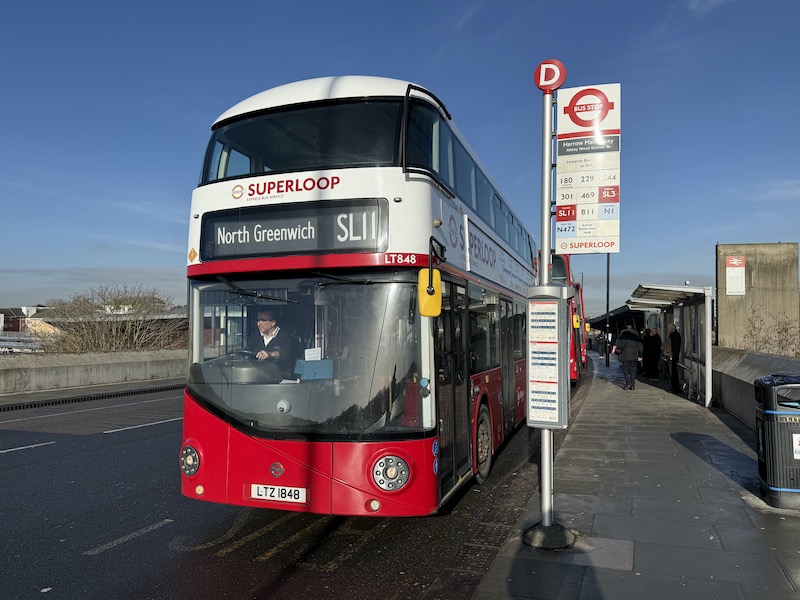
Last weekend saw the eleventh (ignoring Bakerloop) Superloop branded route introduced by TfL. The new Go-Ahead London operated SL11 between North Greenwich and Abbey Wood has merely replaced the now withdrawn route 472 between the same locations with the added feature of it being ‘express’ or more accurately ‘limited stop’ with 25 of the former intermediate stops on the 472 now abandoned leaving just 16 served by the SL11 and a more direct routing through Woolwich town centre.
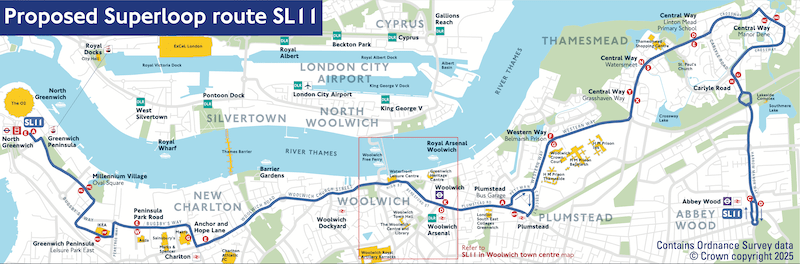
So it’s great news if you live near one of the stops still served and your destination is also still served – then you’re in for a treat especially as buses on the SL11 now run every six minutes whereas the erstwhile 472 ran every 9-10 minutes. But, of course, it’s not such good news if you used the stops no longer served by buses on the SL11 with your journey now destined to take longer and the inconvenience of a change of bus using one of the other routes serving those now bypassed.
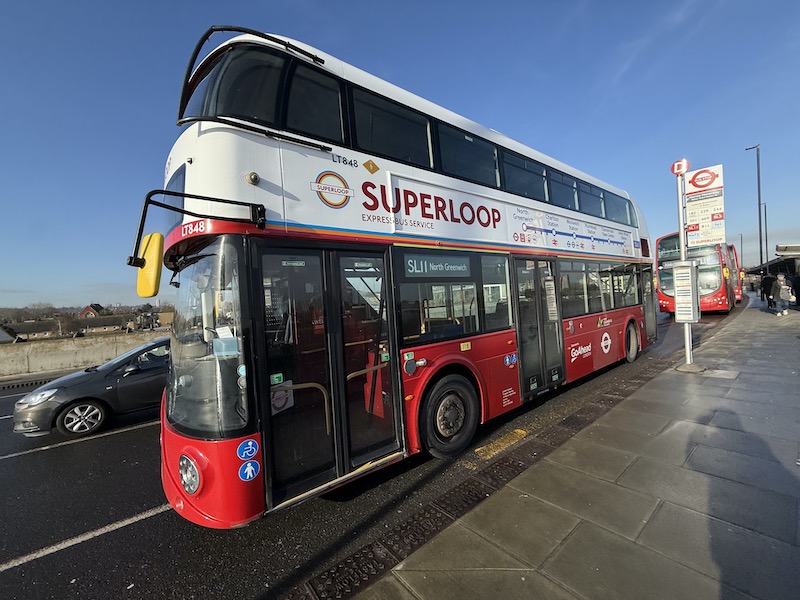
It’s the first time this has happened with the Mayor’s pet Superloop project. A route hasn’t previously been completely withdrawn with other launches – frequency downgrades yes, but not a complete withdrawal.
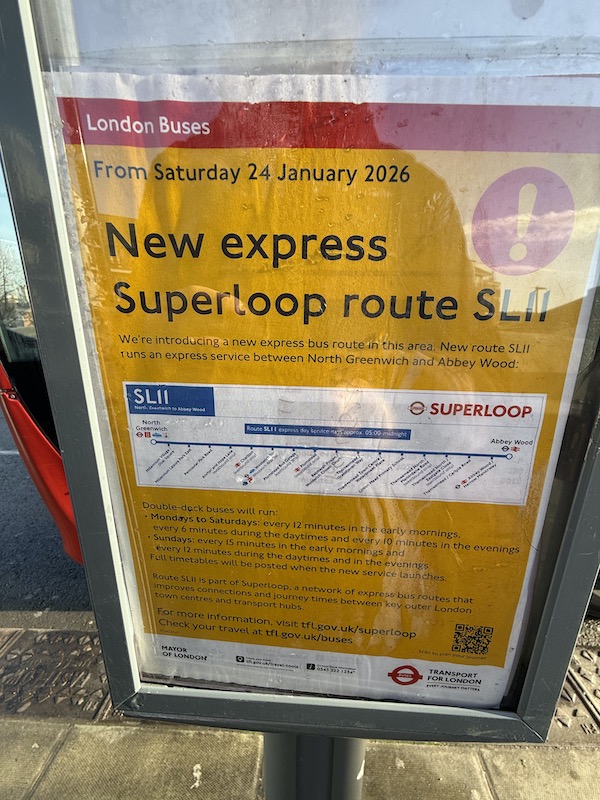
The test will be whether enough passengers are generated by the quicker journey times on the new SL11 to make up for any lost passengers who give up travelling now it’s more inconvenient. Obviously TfL has kept the most popular stops so those benefitting will number more than those at a disadvantage but it’ll be interesting to see how the overall use of the new arrangements pans out in the next few months.
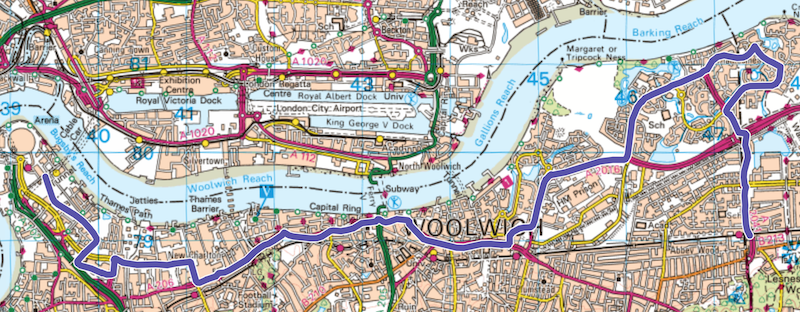
As you can see from the map above, the SL11 serves the all important Thamesmead estate at the eastern end of its route. This residential area has lacked a track based link into central London (National Rail, Underground or DLR) since it was established in the late 1960s, save for the trek down to Abbey Wood station (now also served by the Elizabeth line, of course). Route 472 was therefore a key link for residents living on the eastern side of the estate wanting to reach Plumstead and Woolwich.
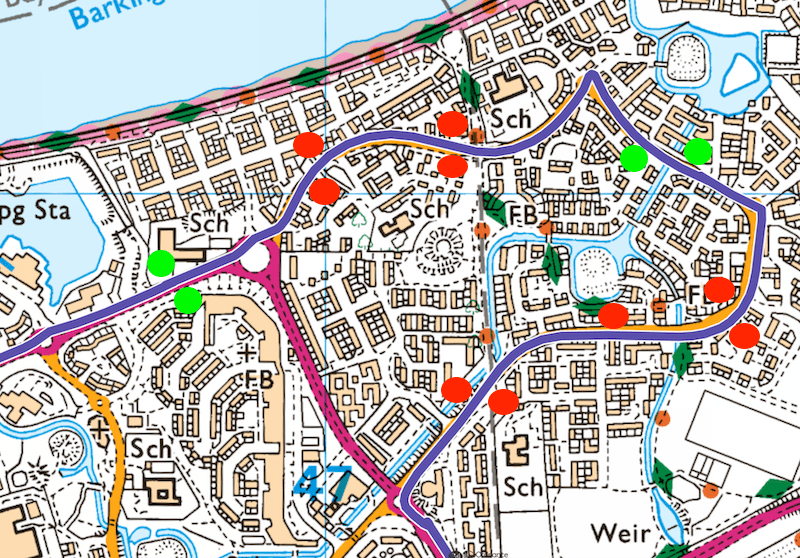
It’s unfortunate, therefore, that the SL11 is only serving one pair of bus stops on the eastern side of the estate (marked in green on the above map). I’d have thought picking up at each stop in that area would have made for a more successful and convenient service for residents living there and then go fast towards Plumstead, Woolwich, Charlton and North Greenwich.

The SL11 hasn’t got off to a very promising start with only a handful of buses in the new high profile Superloop SL11 branding. When I took a ride yesterday morning just three New Routemasters were out in service with the other 14 buses registering on the tracking being a ragbag of life expired 16 year old Wright Eclipse Gemini bodied Volvo B9TLs which have completed their innings on TfL work and must be ready for downgrading to school work somewhere or even a new life in Cornwall.
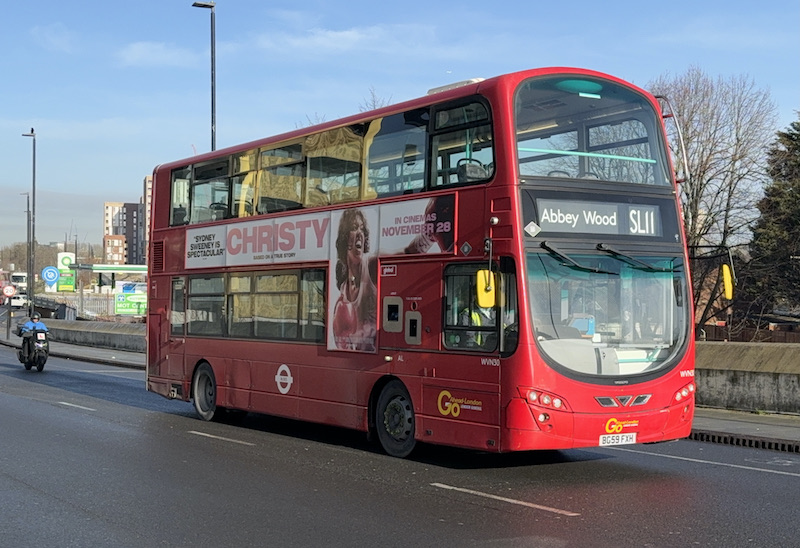
You don’t usually launch a high profile new bus route with your oldest buses which have seen better days.
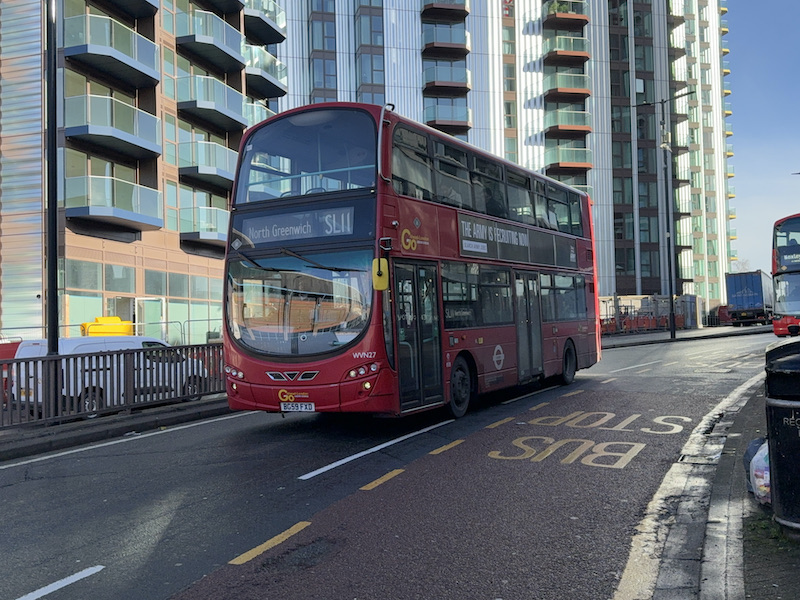
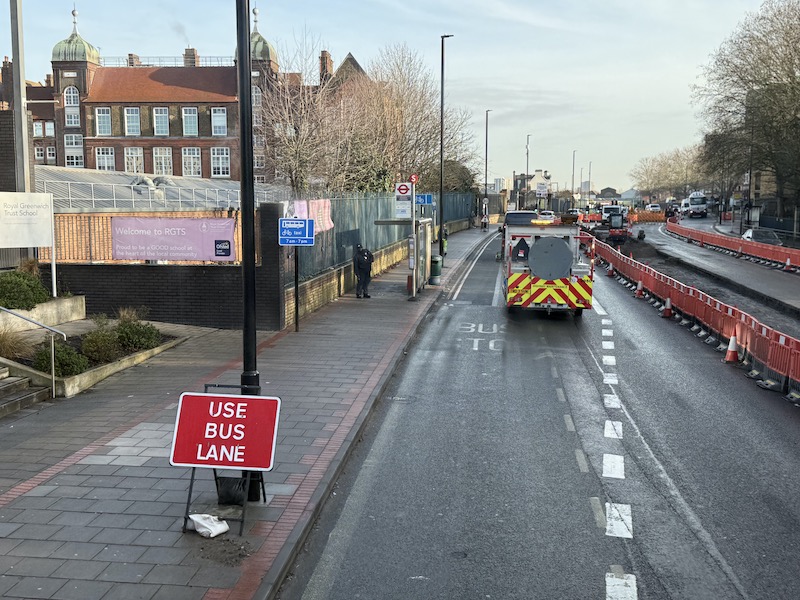
The timing is also odd when there are significant roadworks taking place along a key part of the route between Charlton and Woolwich with bus lanes temporarily out of use while new cycle lanes and beautification of the street environment is taking place.
And you also don’t keep old maps and information on display advising passengers route 472 is very much still part of the network…
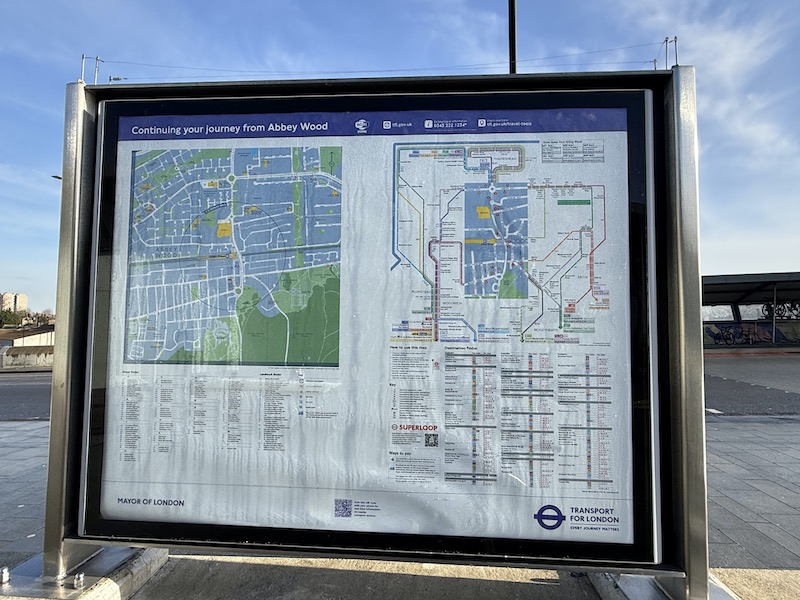
… as seen here outside Abbey Wood station. It makes me wonder why TfL proceeded with this introduction date when clearly not everything was ready. Why not postpone it for a few weeks?
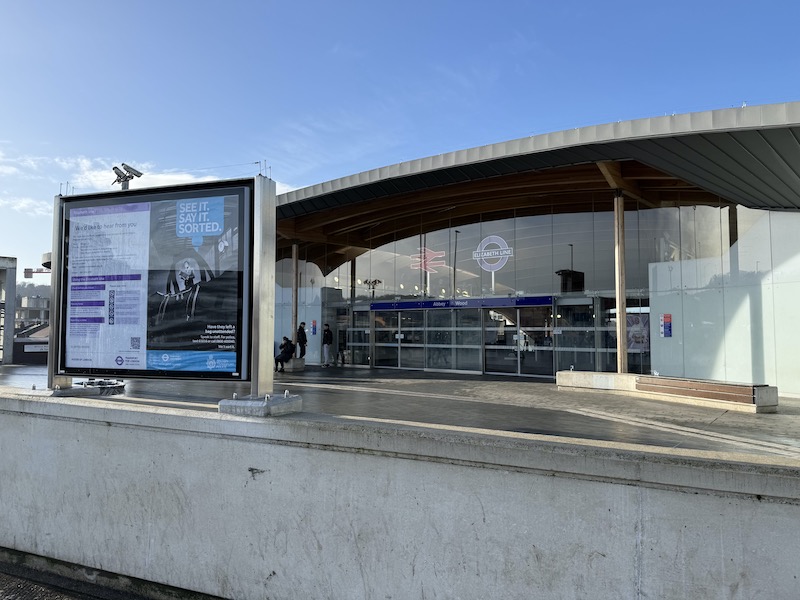
I travelled on a journey leaving North Greenwich at 10:14 yesterday morning. We carried 21 passengers with eight boarding at the terminus, two at IKEA, two in Charlton, five in Woolwich, one at Plumstead bus garage, one at Woolwich Crown Court and two as we skimmed around Thamesmead.
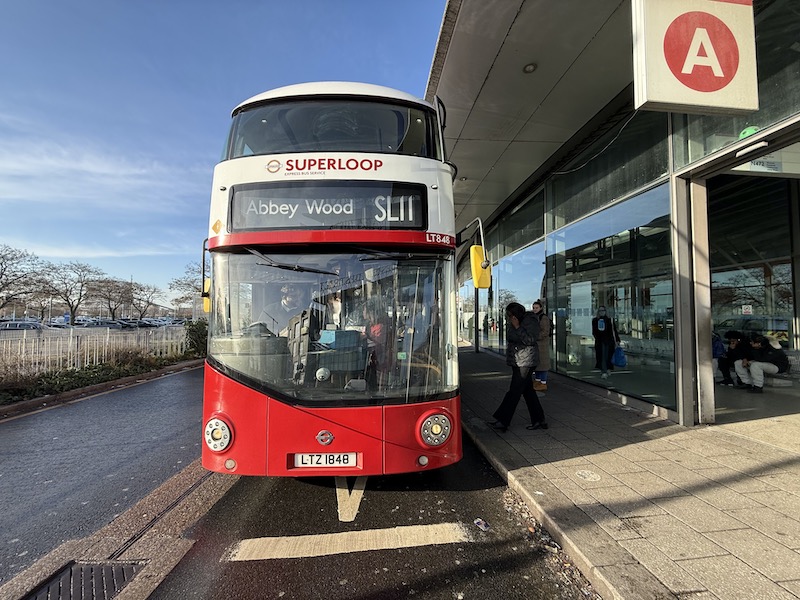
It took just 39 minutes to reach Abbey Wood which was impressively quick with the schedule allowing 43 minutes and the 472 used to take getting on for an hour.
However, I understand the number of buses needed to run this more frequent and quicker service is now 20 compared to 16 on the former 472, so costs have increased by a quarter meaning substantially more revenue needs to be generated.
Looking at the numbers travelling on the many buses I saw along the route yesterday morning there’s a long way to go to justify the frequency and resources now deployed.
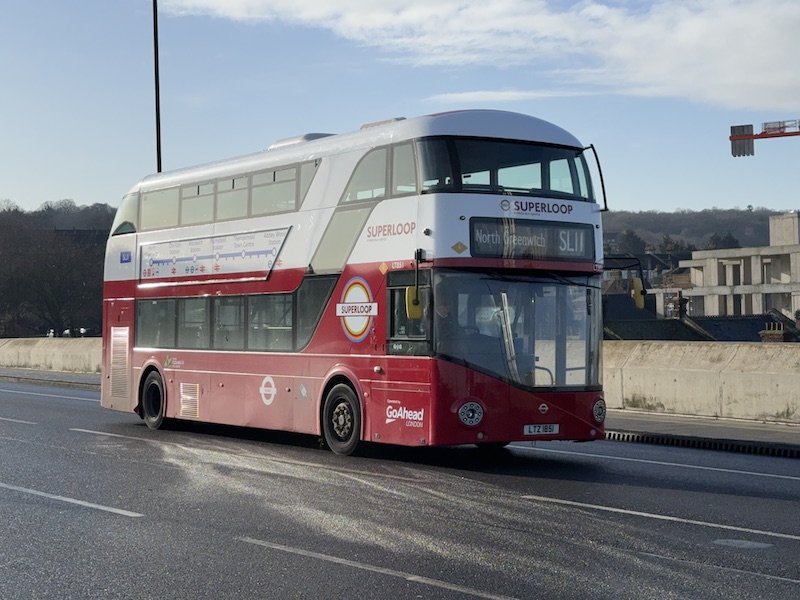
Hopefully once the vehicle allocation is sorted and more branded New Routemasters introduced on to the route awareness of the new improved service (for those for whom it is an improvement) will increase, and so will numbers travelling.
You can’t catch a Tube from Southgate
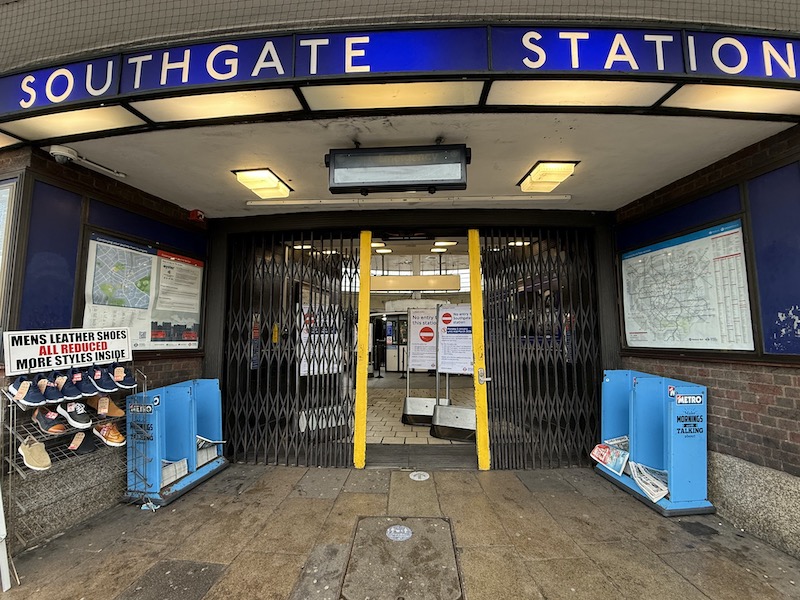
There’s been a fair bit of consternation in my old home patch of north London since the New Year when TfL closed Southgate Underground station for entry to access the Piccadilly line until mid March to allow for maintenance of the escalators.
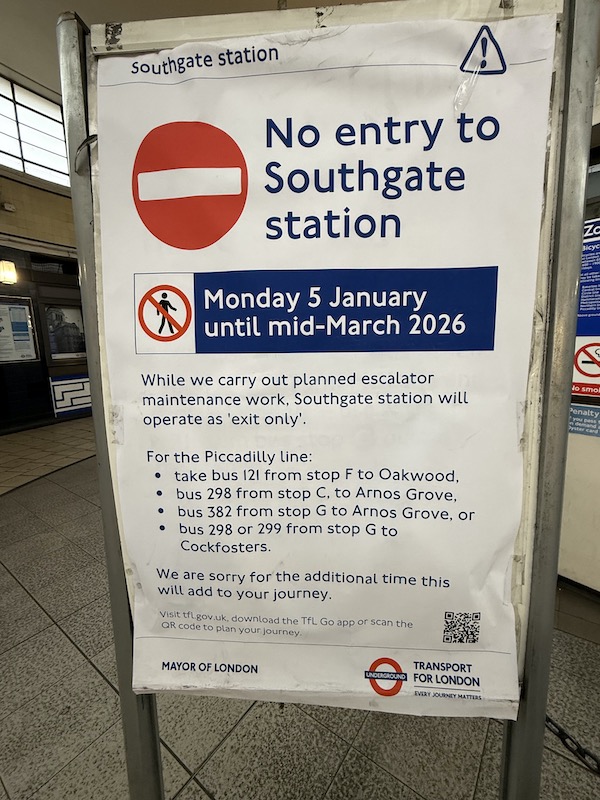
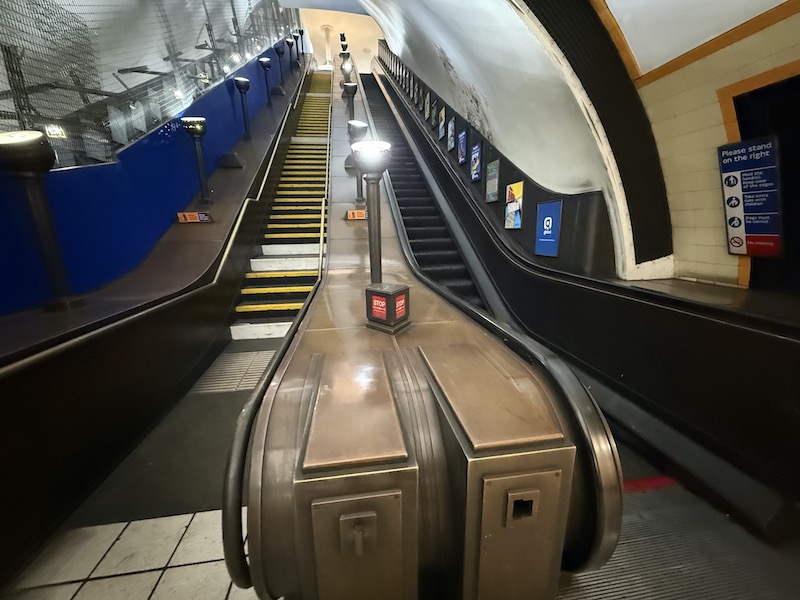
This has closed off one of the escalators allowing the other one to continue to operate in an upwards direction and thereby keep the station open but as exit only.
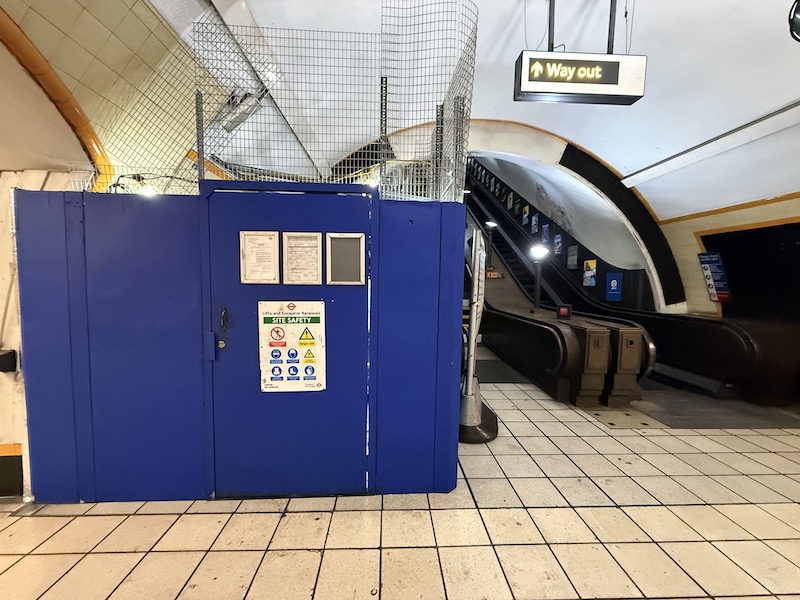
The consternation comes when passengers see the stairs are still available and it’s argued would be satisfactory for those willing to walk down to the platforms.
Instead passengers are offered a choice of catching a bus either southbound to Arnos Grove on the relatively infrequent (every 20 minutes) route 298 taking nine minutes or the more circuitous (17 minutes) route 382 but slightly more frequent at every 14-15 minutes), or head north to Oakwood on the every-10-minutes route 121 with an eight minute journey. TfL also suggest taking the 298 or 299 (every 15 minutes) even further north to Cockfosters taking eight minutes or 13 minutes respectively. (All journey times are off-peak with more time needed in the peaks).
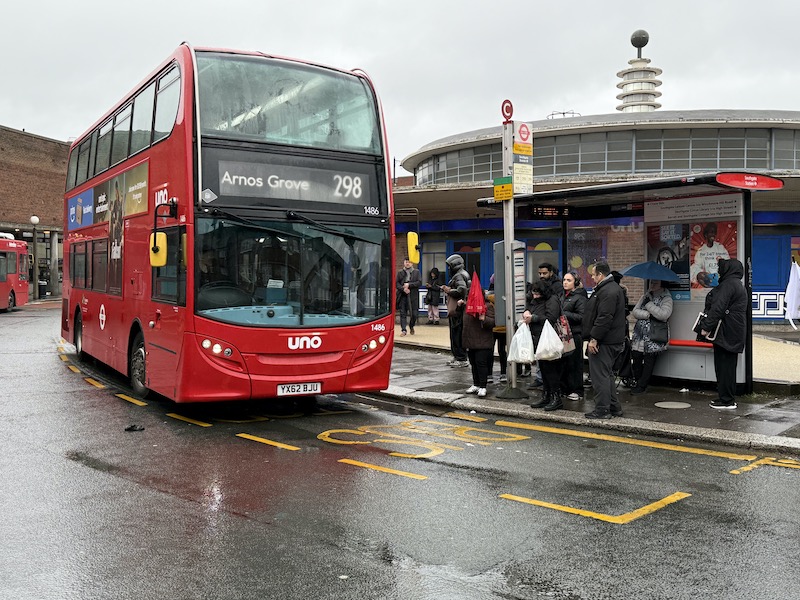
And this being TfL, there’s no mention of the added cost of paying £1.75 for your journey on the bus, although those reaching a daily or weekly cap won’t pay extra.
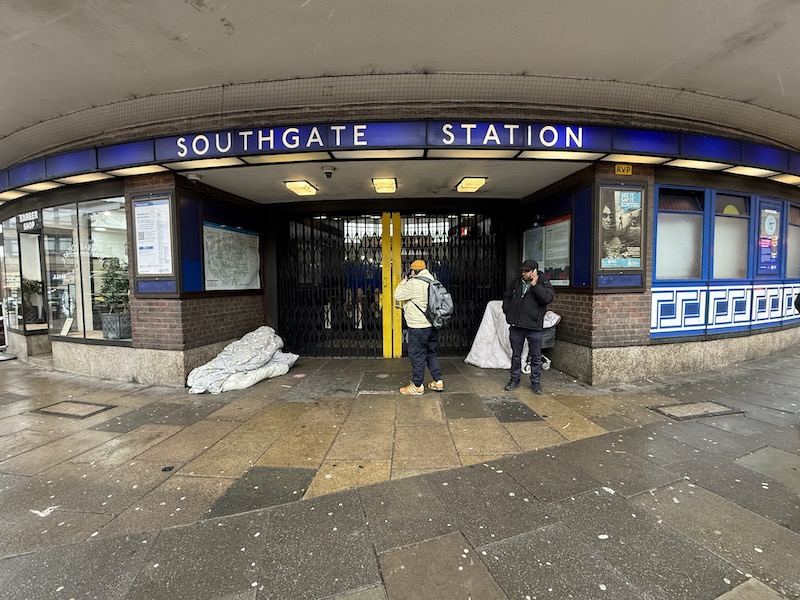
And, obviously passengers living on one of the aforementioned routes in between the stations may not have so much of an increased overall journey time, although others living on bus routes such as the 125 and W9 towards Winchmore Hill will face added inconvenience of a change of bus before reaching an Underground station.
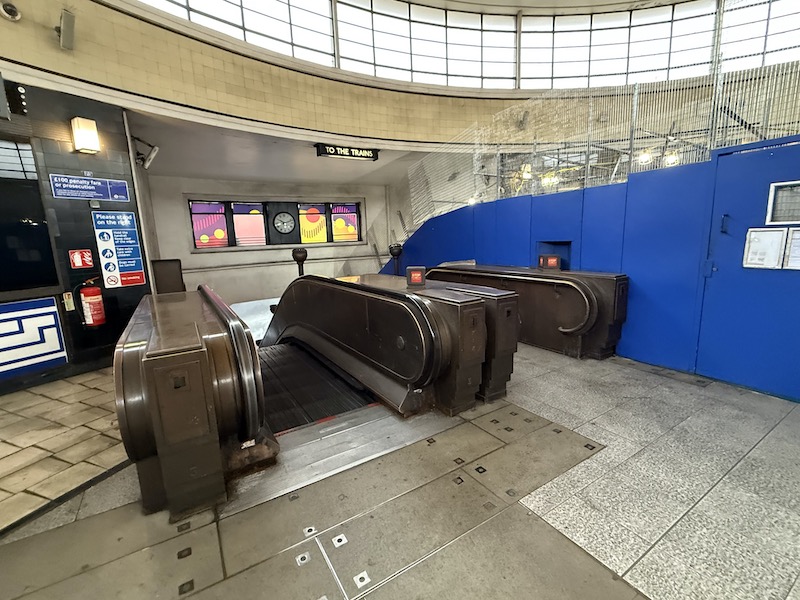
I’m sure they would welcome the chance to nip down the stairs at Southgate and not worry about there not being an escalator.
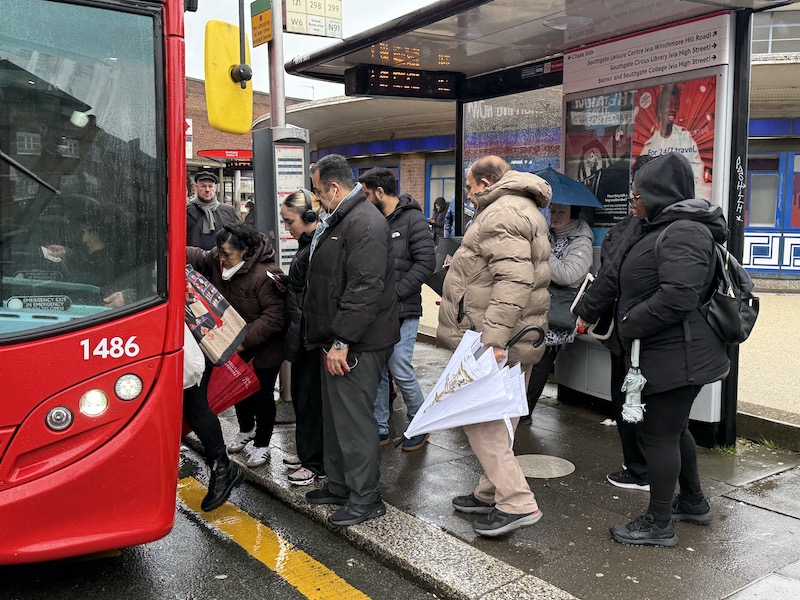
I recently made a journey from Southgate into central London and chose the 298 option as it was the first bus to arrive. As you can see about a dozen passengers boarded with more also picked up along the route all heading to Arnos Grove, where we all alighted to make our way to the platforms.
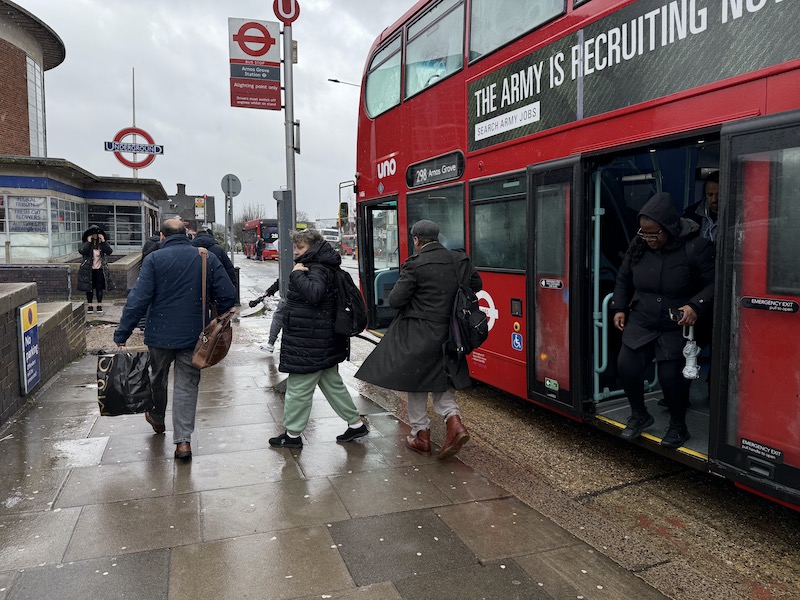
I’ve never seen Southgate’s platforms so quiet – with no-one waiting to board.
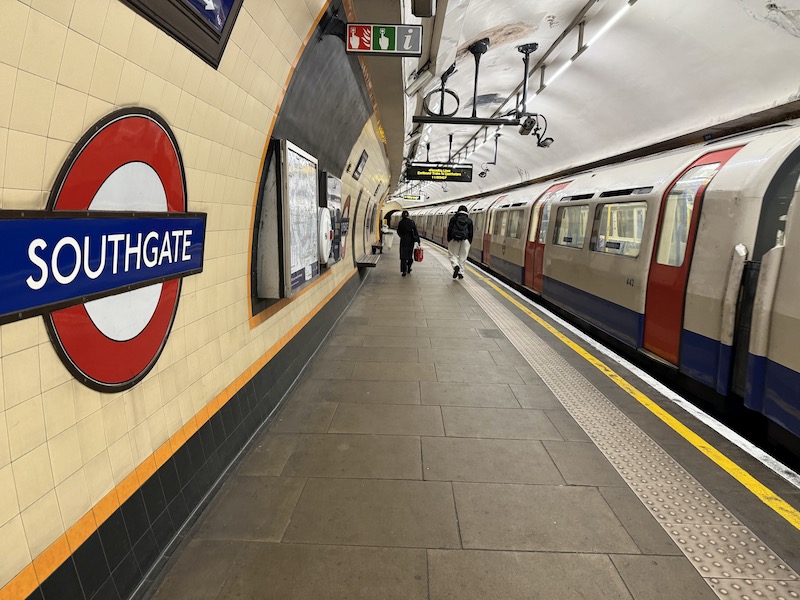
For those unfamiliar with north London’s bus route network, the options present a potentially confusing choice, all the more so if you turn to TfL’s famed ‘Go’ app and journey planner, which yesterday afternoon was confirming a journey between Arnos Grove and Southgate would take three minutes with an additional three/four minutes walk to access and leave the station platforms…
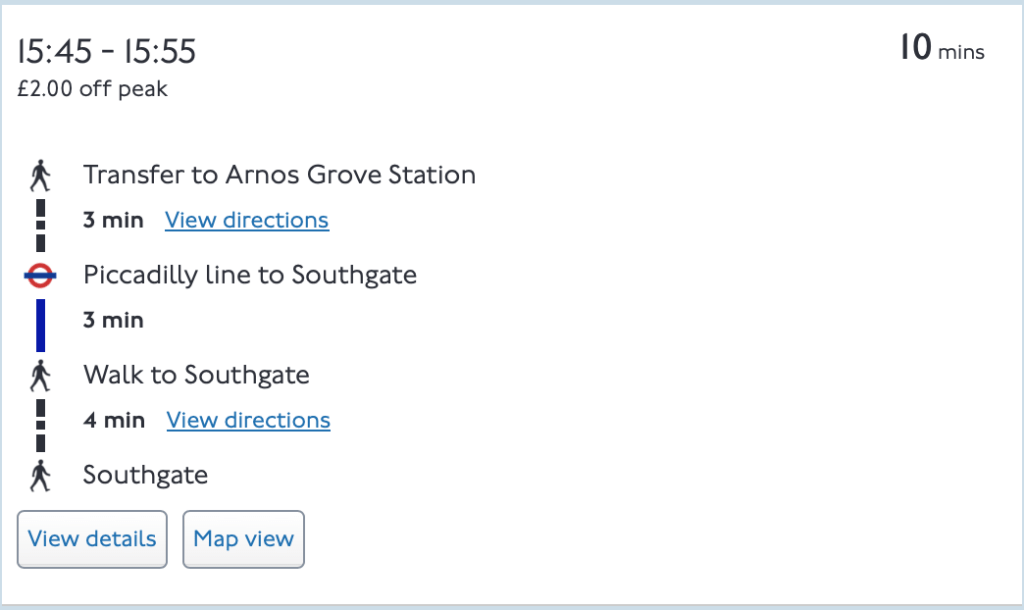
… but in the other direction, the two favoured options were to take a 19 minute walk from Southgate to Arlington Road where you’d catch a bus on route 184 for a one minute bus journey to Arnos Grove.
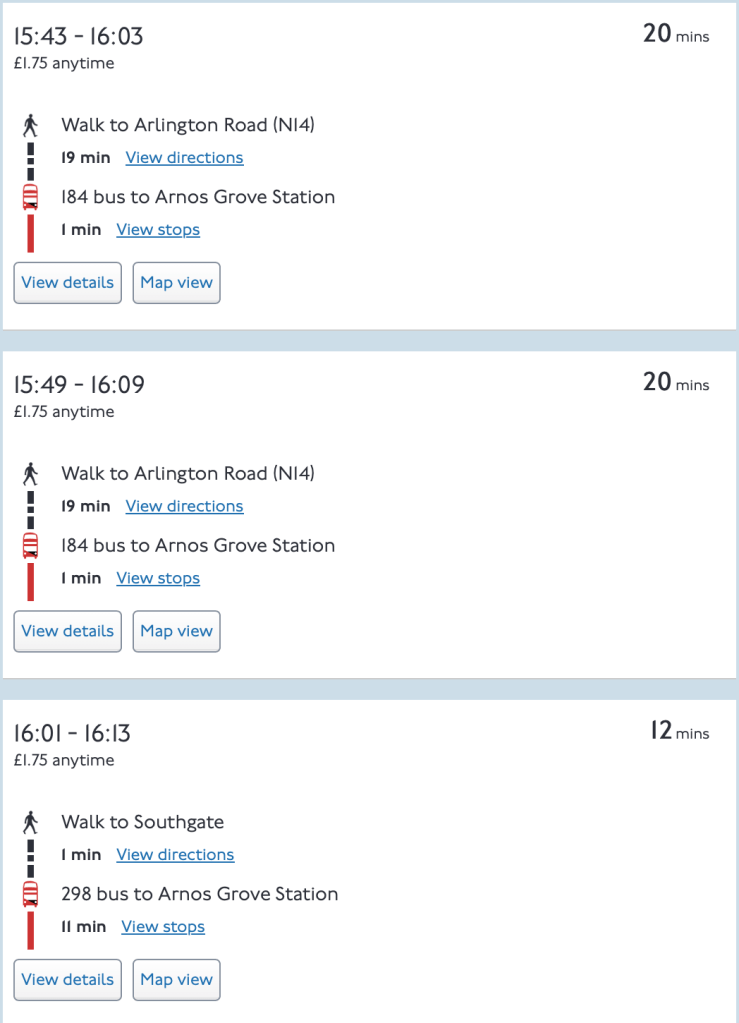
Something not mentioned on the poster at all. And why walk 19 minutes only to wait for a bus for a minute’s ride? Crazy. But that’s Journey Planners for you.
Interestingly, on my way to Southgate I changed at St Pancras from Thameslink to the Piccadilly line and noticed one of the two escalators from the former line’s northbound platform B to the landing level is also undergoing maintenance…
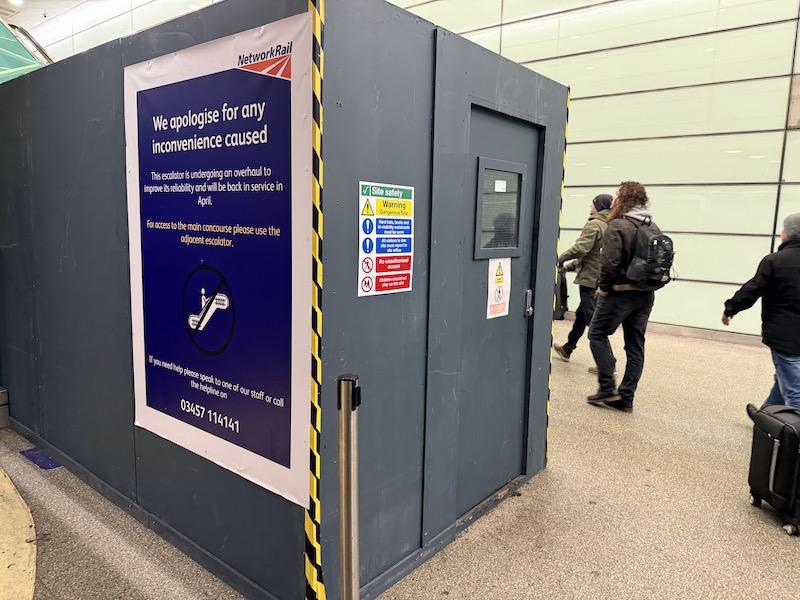
… and in true Network Rail St Pancras fashion they’ve made the one working escalator downwards and are making everyone climb the stairs to exit the station.
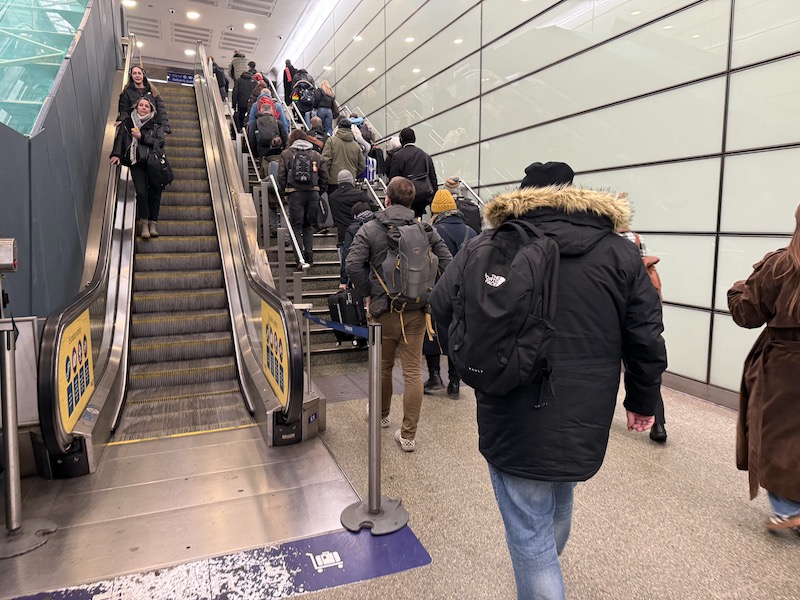
And the sign states wrongly to “please use the adjacent escalator”. But as you can see, there isn’t one!
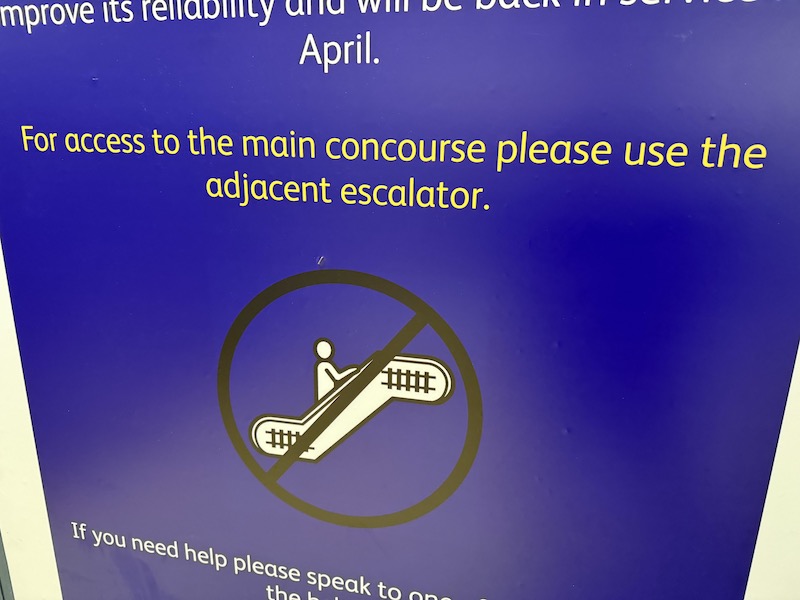
That notice is more appropriate for the situation between the landing level and the main concourse where there’s a bank of three escalators, so taking one out of service enables the other two to offer both directions.
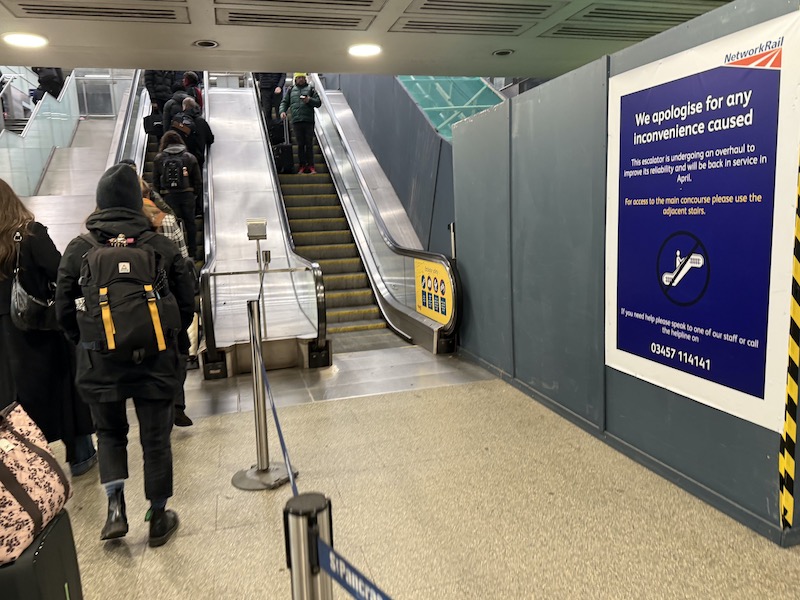
Thank goodness Network Rail didn’t follow TfL’s lead and make St Pancras exit only for Thameslink passengers during the works – as at Southgate. Climbing stairs is a small price to pay (but I’d prefer walking down).
Roger French
Blogging timetable: 06:00 TThS
 BusAndTrainUser
There’s a similar situation at Victoria Underground station. You can only exit from the Victoria line ticket hall. To enter you have to go on a subterranean diversion route which takes ages. To add insult to injury the down escalator which formerly provided the ‘direct’ route is still running but taped off ! You could understand introducing these measures in the peaks to deal with specific flows but not all the time. Even the staff agree that it’s daft. Unfortunately ‘one size fits all TfL’ has not done anything to sort this out. Every journey matters.
Martin W
LikeLike
One of the downsides of TfL owning its own buses (as the LT buses are so owned) and then leasing them to the operator is that, when buses are transferred between operators is that the receiving operator may find that the buses are not acceptable to them. This works fine if the buses are relatively new . . . but the LT buses are no longer relatively new; indeed with the earlier examples now around 11-12 years old, they require more maintenance than before.
My understanding is that the buses selected for transfer were unacceptable to GoAhead without, in some cases, considerable rectification work. The problem with delaying the launch is that the TfL machine, once started, is exceeding difficult to halt . . . as with all monoliths. I’m bound to say that, whilst shabby, the stand-in buses seened to be quite adequate when I rode on an SL11 last Saturday.
My journey (the 1317-ish from Abbey Wood to North Greenwich) was very busy, so much so that I had to share my top-deck seat with other passengers!! Most bus stops had had Route 472 removed and SL11 displayed, although there were some stops that had been missed. I have to say that there were very few instances of excessive bell pushes to ask for stops no longer served, and similarly very few, if any, instances of the bus being hailed at unserved stops . . . indeed, there were very few passengers waiting at such stops, so perhaps the stops selected for Route SL11 were about right?
My journey, despite being very busy, and having a driver-change at Woolwich en-route, was completed in the nominal time, despite substantial roadworks west of Woolwich. I believe the route was “free” on that Saturday . . . but that was only from overhearing other passengers . . . maybe that’s why the trip was so busy?
LikeLike
I believe the intended LTs were, ironically, the vehicles formerly used on the SL3, thus returning them to their Thamesmead habitat! Sadly, and I quite like the vehicles myself, observations appeared to show their performance at Bromley was not an outstanding success. I presumed the sudden change from crawling around more central London streets at 7-8mph to fast running considerable distances on the SL3 had been too much of a culture shock. Some vehicles never recovered as Go-Ahead must have discovered.
I think I am right in saying that since the introduction of the Superloop services, not one has had any alteration to stopping places in the light of operating experience. If so, is this another example of TfL inflexibility, or just getting it “right” in the first place?
The excessive bell-pushing is now par for the course on all London services, and apart from sending most Drivers mad (and me!), I can only presume quite a large section of the population are now simply unable to read or understand the “Bus Stopping” signs on both decks. It is time to make the signal silent, retain the illuminated passenger saloon screens and simply show as a sign in the Drivers cab.
Terence Uden
LikeLiked by 1 person
The bell-pushing isn’t just a London issue – we certainly have it here in Cardiff! I think that people either have earbuds in or are simply “in a world of their own” and don’t seem to notice the bell.
I don’t think one could have no audible alert as that would make difficult for people with poor sight. But could one have a system in which the bell is silenced when the light comes after an initial push?
LikeLike
Especially if riding an ADL vehicle as then you get four bells with each press!
Peter Brown
LikeLike
I wonder who at ADL thought that giving an emergency stop signal each time the bell was activated was a clever idea?
(I’m aware it’s actually 2-2, but even so! Bell signals are still listed in DfT guidance to this day.)
Mind you, who thought a ‘house door’ dong-dong was the right bell signal for a bus in the first place?
LikeLike
a lot of bell pushes are at midriff height hence when standing on a crowded bus some constant presses occur
LikeLike
Stagecoach Midlands has introduced large numbers of electric Yutong single-deckers for use in Coventry. These have bell-pushes some distance down the seat backs. You can inadvertently press then with your knee.
RobertLMS
LikeLike
It’s a shame, as you say, that passenger information at times of repairs is not given more priority. I suppose the excuse is lack of money due to budgets being so tight, but PI is really important, especially in London where public transport is used by so many visitors.
I wonder if TfL or the Mayor’s Office has considered a universal minimum bus frequency of, say, 8 per hour – at least for routes numbered 399 and under. It would make so many journeys easier, and attract more modal transfer from cars, as well as simplifying getting from Southgate to anothe Piccadilly line station when an escalator is out of commission. De-risking journeys involving changes would ‘grow the market’ – after all that is the situation on the tube, where for over a hundred years people have confidently travelled using the well signed interchanges and frequent services, even before the advent of the journey-planner and its vagueries.
LikeLike
Ref: I wonder if TfL or the Mayor’s Office has considered a universal minimum bus frequency of, say, 8 per hour
I understand that average bus speeds in central London have dropped to 6.8mph thanks to a combination of factors such as traffic congestion, deliberate narrowing of certain thoroughfares to accommodate cycling & of course, the ridiculous lowering of the maximum speed limit to 20mph. No wonder the number of buses operating day to day has, & continues to reduce. All the gains achieved between the years 2000 to 2015 (book reference ‘Regenerating London’s Buses’) appears to have been reversed under the current Mayor.
LikeLike
I’d be impressed to see 8 trips an hour on the 389 and 399, a significantly expensive uplift required here for penny numbers of pax, or possibly quite a tight schedule for the current driver with no extra resource deployed!! 🤪🤪
LikeLike
I’d say routes 1 – 299 at least should fit some kind of high frequency, at least 6 an hour Mon to Sat daytimes. There used to be some order to London bus route numbers but now it seems like a mess with some primarily residential routes getting lower route numbers (eg 191 and 192) and high frequency routes getting prefix numbers (eg W8). Always thought the 300s and 400s should be explicitly seen as extra links while prefix routes are local borough links with hail and ride sections.
Whether it really matters or not, who knows? I just really liked when under London Transport 1-299 meant red ‘central area’ buses, 300-399 meant green country north of London and 400-499 meant green country south of London. Had a nice pattern to it.
Interestingly the last route in the 500s, the 533 will be renumbered soon, leaving the 500s free for something else, makes me wonder if TFL will use those numbers for anything eventually?
Also sounds the London bus network is set to be hollowed out just like the city in the coming years if the TFL board meeting next week is anything to go by. If TFL copied real life, they’d be following all us priced out Londoners into the home counties!
Aaron
LikeLike
@Aaron – in some cases, including the W8, the use of prefixed numbers dates from the “Reshaping Plan” of 1968. Prefix letters were used to denote suburban routes which had a flat fare (and had a policy of expecting passengers to tender the exact fare, with no change given). The W8 had previously been numbered 128. During the early 1980s, these routes gradually changed over to conventional ticket machines with drivers giving change and later, to charging the same fares as other services.
There was another phase of using prefixes in the late 1980s and 1990s, often where midibuses were introduced. Although this was not applied consistently. In some cases existing routes were renumbered on conversion to midibus. One example was the 70, which became the P11 on conversion from double-deck to midi. Less than 8 years later, the P11’s midibuses had been replaced by double-deckers. A few years later, the route was renumbered again, becoming the 381, possibly to enable the night service to become N381.
Does the current numbering of routes in London appear messy and inconsistent? Debatable. To the passenger waiting for the W8, does it really matter? Maybe not.
Malc M
LikeLike
I was more playing devils advocate than anything. Route numbers to me seem as firmly established as postcodes and some have been around almost as long as London has had buses, so changing them probably is more hassle than it’s worth and would cause a lot of unnecessary confusion. I practically grew up on the W8 so wouldn’t want the number to disappear.
But when TFL says about ‘simplification’ of buses in Inner and Central London whilst expanding them in Outer London, does sound like a hollowing out and couldn’t help what that would mean for route numbers. Failing to see how they can improve buses in Outer London much further without introducing some new/ restored cross-boundary routes. Chingford for example, is fine as it is if going south or west, but north and east of it is Essex where the links really need vast improvements. Same in other parts of Outer North London and neighbouring areas.
Also thanks for the context.
Aaron
LikeLike
Also, the change from 472 to SL11 seems to really undermine TFL’s commitment to Outer London too. Definitely needs more stops, especially at the Thamesmead End. As it is, no use if someone has to walk ages to the right stop as they regularly fly past. Can see it being reduced in frequency myself.
Aaron
LikeLike
The 500-series is supposed to be used for temporary services (except the now-withdrawn 549 in Essex (originally used for the Red-Arrow routes in the City of Westminster), 600-series for school work, and 900-series for mobility routes. Route 533 is indeed, a very long operating temporary bus service!
LikeLiked by 1 person
the SL11 , 472 should have been switch both to a 7.5min frequency, there is more development coming on the route, and extend SL11 north to Canary Wharf as a cheaper alternative to Elizabeth Line
I have been told in blog comments the St Pancras Thameslink escalators can only go in the initially assigned direction of travel
I assume Southgate staircase is needed for access during the replacement works thus the passenger restriction. Khan was grilled on it in questions last week by assembly members and didn’t have a clear answer. What tfl need is a combined tube bus fare lower than the current two additive
JBC Prestatyn
LikeLike
@JBC Prestatyn – looking at your idea for extending the SL11 to Canary Wharf, why would a transport authority extend an express bus route to compete with and undercut one of its own rail services? Would that be a good use of funding? I’m not convinced.
I do agree with you on the lack of integration between bus and tube/rail fares. Someone travelling the fairly short distance between, say, the Burgess Park area in inner south London, distant from any rail station, and central London, changing bus-to-tube at Elephant & Castle will pay more than someone travelling into central London from, say, Wimbledon Park which is considerably further out.
A truly world class transport system would charge you for your journey, irrespective of the modes you use. I saw that in Munich when I first visited that city as long ago as 1980. I vaguely recall that when the Tyne & Wear Metro opened, fares throughout the county were based on how many zones you travelled through, whether you travelled bus-only or bus and metro. That said, I don’t think it applied for journeys requirjng two buses, although I stand open to correction.
Malc M
LikeLike
Am I the only person (or mouse) who is niggled by TfL’s insistence on calling limited stop urban services “express”? There’s nothing express about staggering along a congested London road ignoring some stops!
And, yes, (for once) I do agree with Roger: it would have made much more sense for the SL11 to call at all stops around Thamesmead then run limited stop along the rest of the route.
LikeLike
well the X68 was express and the X26 long non stop section. It turns road speed into the limiting factor rather than boarding and set down times.
JBC Prestatyn
LikeLike
The change from 472 to daytime SL11 now means that the only bus serving the eastern part of Thamesmead & Abbey Wood station is the wholly defective 229. Frequently the 229 gets bunched up travelling from Erith through Belvedere to Abbey Wood, so that is where the powers that be elect to terminate one of the bunch at the Abbey Wood Road stop, not Harrow Manorway flyover. This leaves potential passengers from Abbey Wood station to Thamesmead with a long wait for an already crowded bus. Makes you wonder if the staff that come up with these schemes lives in the area they affect?
LikeLike
And scheduled frequency of 229 has also been reduced !
LikeLike
The situation at Southgate is particularly interesting as Maida Vale currently has one escalator undergoing refurbishment so to go down to the platforms its the fixed staircase and then the escalator for exiting. This arrangement is expected to continue you to Mid-March. So one can then wonder what is so special about Southgate that they have made it exit only, yet Maida Vale which is in a similar state of affairs gets to remain open both for entry and exit. Its certainly inconsistent. Of course one would want the Maida Vale standard applied, not the Southgate one.
LikeLike
Indeed walk down is normal so there must be some specific reason at Southgate
JBC Prestatyn
LikeLike
Can only assume it is volume of users. Maida Vale is much quieter than Southgate, and being a posh area, probably has less idiots who would attempt to run down, putting others in danger.
LikeLike
St. John’s Wood also lacking an escalator since before Christmas, apparently broken down awaiting parts on a lengthy back order, and potentially also awaiting the new escalator repair contractor to mobilise.
Currently walk down is permitted, just about ok with usual daily volumes.
but if this continues into he cricket season at nearby Lord’s I suspect station will have to be exit only at the end of matches, maybe all day, with the nearest stations (Baker st, Swiss Cottage, south hampstead) a multi-minute, multi stop bus ride away.
milesT
LikeLike
I cannot see a repair happening within 4 months. Perhaps a special bus baker street golders green could be considered
JBC Prestatyn
LikeLike
Why ?
LikeLike
Goodness me; full-on griping this morning.
LikeLike
Well who on earth thinks it’s ok to…
install escalators that only work in one direction, or leave maps and signage for services that have been withdrawn on display, or force your customers on a totally unnecessary 20 minute daily detour whilst actually charging them extra for the inconvenience caused? Only faceless and unaccountable managers who haven’t a clue what it actually means to the travelling public, and just don’t care about the impact it has on them, that’s who.. “your journey doesn’t matter to us at all”
LikeLike
Well said. Maybe a change in Mayor with a more customer focussed management team will reverse the rot.
LikeLike
I don’t think the mayor was responsible for the design spec of st pancras thameslink
JBC Prestatyn
LikeLike
We definitely need a mayor with less tunnel vision, for sure. London is nothing without its hinterland and it certainly cannot solve its pressing issues on its own.
Aaron
LikeLike
@Aaron – the Mayor of London is elected by the residents of Greater London, who also pay a Mayoral precept on their council tax. He or she is accountable to them, and is responsible for Greater London (and not beyond). That’s the way it is.
That doesn’t mean it couldn’t change, but that would require legislation (for example to set up a London and South East transport authority – but that would itself have to have a geographical boundary somewhere)
Malc M
LikeLike
The problem with that is London will increasingly run more transport (especially trains) outside the administrative area within an inflexible and outdated system. Just because my address is now outside London, doesn’t mean I stopped being a Londoner. I was born and grew up there. Did get to vote for the Mayor once but not bothered about that now, I just want these structures to acknowledge all the people who travel in, spend time in London, work there etc. Be flexible enough so all the people crossing the boundary are not negatively impacted at all. I really think the boundaries as they are making things awkward and precisely because in so many places, one street is in ‘London’ and the next is not. Greatly fragmenting services.
It appears there’s now a ‘Transport for Hertfordshire’ (according to Hertfordshire Growth Board) as well as the long established Transport for London, but we need transport from Hertfordshire into London without a car to be made as easy as possible too etc. There needs to be a place based approach to transport, not a boundary based one.
Aaron
LikeLike
The former LPTB special operating area would be a good place to start!
LikeLike
Aaron – you’re not a Londoner. Not now – you live outside London, whether that’s Waltham Cross or Westhoughton is irrelevant. The people of Hertfordshire aren’t voting for Sadiq Khan, Laila Cunningham or any of the other candidates so it they are not going to give you a poorly used, expensive bus service on a whim. Sorry if that’s blunt – it’s meant to be direct not rude.
Not least because the financial troubles of TfL are well documented by Roger on these pages. Click on the London Bus Tracker to see how many services have reduced, amalgamated and/or withdrawn.
It’s not surprising. London’s bus network is failing (and there’s no pleasure in saying that). There are fewer services full stop. Journeys are slower so headways are widened to maintain the PVR (at best) and so passenger numbers are falling (down 1% against a national increase of 5%). The increases of the Livingstone years are now being lost so that ridership is now at 2014 levels. Subsidy has increased by nearly 15% (up £137m to £1075m in the last year) and yet we are seeing Go Ahead throw in contracts as they’re loss making (and First Bus has also noted that some of their RATP stuff is also onerous) – therefore, the costs of operation to TfL is only going to increase.
TfL are not going to be a white knight to ride to the residents of Herts, Essex or any of the adjacent counties. Rather than continually posting on this and other boards in this vein, you probably need to reflect on the reality (financially and politically) rather than unrealistic wishes that won’t be realised.
BW2
LikeLike
“and yet we are seeing Go Ahead throw in contracts as they’re loss making (and First Bus has also noted that some of their RATP stuff is also onerous”.
Do you think this is why TfL is considering setting up an operating company?
Peter Brown
LikeLike
I don’t know TfL’s rationale…perhaps an operator of last resort? The inescapable fact is that the costs of bus operation have increased ahead of inflation and whilst operators have traditionally had contracts that would be profitable in years 1-6/7 before tipping into loss in the last year or so, that point is being reached earlier. TfL can set up their own operator but that’s not going to be immune from these cost pressures.
London’s bus operation peaked some time ago and it may be a mix of trading on past glories (small declines against historic significant gains), the fog of Covid, and chickens coming home to roost (e.g. cycle superhighways, NBfL, removal of western congestion zone). There’s also a lack of agility – change takes eons combined with political consideration, with a reluctance to face into commercial reality (e.g. not increasing fares sufficiently whilst costs have increased by more than inflation).
BW2
LikeLike
Yes I am a Londoner! It’s who I am! I’m very blunt now and you have no right to say I am not. The way Cheshunt is built looks towards London. Almost every time I go out, it’s to London or on TFL services at some point. I am a city person! I have nothing in common with the market towns and villages in Hertfordshire. Cheshunt was apart of London’s bus network for over 50 years, it’s a bigger town now, it was wrong to separate it from that network.
I don’t expect TFL to run everything in Herts or Essex, but I expect them to run at least 1 or 2 routes to Cheshunt and Waltham Abbey, when our neighbouring towns get this level of service. I expect them to use their garage in Potters Bar to actually provide public transport on roads their buses are using anyway but currently run empty. They keep saying about improving public transport in Outer London, improving cross-boundary links is an easy way of doing that. The scope for bus improvements is limited otherwise.
It is certainly not unrealistic to expect the gap between London and the first town or 2 be covered by London Transport, especially in areas where it is continuously built up. And pretending London is separate from its own commuter areas is a big part of the problem and frankly daft. The LPTB was closer to the correct solution. The status quo is what is not keeping up with reality.
Aaron
LikeLike
londons transport may have gone wrong with a GLC political rather than practical construct and the the M25 sending the likes of Potters Bar a red bus garage by accident of LGOC contracts when Middlesex and the LCc had been licencing areas under the Met Police. While Loughton garage ceased in part replaced by the indp
LikeLike
You might ethnically be a Londoner, Aaron, but to all intents and purposes, you’re not. You’re over the border – outside the zone. You don’t vote for the Mayor, you don’t get TfL services. That’s it – bluntly.
As you well know, and you’ve been told as such on other forums, TfL will only run to the first logical place/obvious traffic objective over the border. That’s places like Redhill, Waltham Cross – they aren’t going to run to Cheshunt.
Have you actually read the finances and the other statistics from TfL’s annual report? Do you understand how bleak they are for the bus network? How increasingly unaffordable things are? They aren’t going to running services outside their realm and that is patently obvious.
BW2
LikeLike
@BW2 – You wouldn’t say to a Cornish person that lives in Devon, they are no longer Cornish. You wouldn’t say to an Indian living in Europe, they are no longer Indian. So it’s unacceptable to say I’m not a Londoner, I was born one and will die one. Cheshunt gets the Weaver Line, so I do get TFL services.
Just look at a map, it’s not countryside, it’s London spillover. Because the built area doesn’t stop in Waltham Cross, it’s not satisfactory. Funny how TFL runs to Watford Junction, that’s not the 1st town over the border, Bushey is! Same with Debden! Buckhurst Hill is. This is what I mean by a lack of consistency.
And what is obvious is London can’t achieve a goal like 80% sustainable travel in London while it ignores medium and growing towns like mine. And things are bleak for TFL because they aren’t working with neighbouring authorities.
Aaron
LikeLike
Actually Aaron, I would. As I said, you may be ethnically derived from somewhere but if you move to Cheshunt or Chester, it really makes no odds. You don’t live in London, you don’t have a vote in London. You don’t get TfL bus services which is what you continually cite.
I did specifically say the first place/logical traffic objective across the border so yes, that explains why in some cases, it’s one rule and in others, the other rule takes precedence. It’s whatever makes sense.
Now, have you read the TfL accounts/annual report yet? It makes for bad reading
BW2
LikeLike
@Anon 29/01 13:46 – when escalators are installed, they may well be designed to operate in either direction. As I understand it (I’m not an engineer), over time, if they always run in one direction, the cogs and gears will wear in such a way that attempting to reverse the escalator is much more likely to result in it failing.
Malc M
LikeLike
The life expired Volvo B9s are even more life expired because the batch of Streetliners (DEL 17-36) supposedly for the 131 (where the the B9s came from) were nicked by Bexleyheath for the 269 & 401, and are only gradually moving to AL now. The 131 should have had its electrics TWO YEARS ago. From a long suffering 131 & knackered B9 passenger.
LikeLike
would the delay be a mix of the Me fire situation making a review and getting charging facilities at AL to needed level
JBC Prestatyn
LikeLike
At my age I’ve developed a ‘Phobia’ about escalator travel especially in the down direction fearing loss of balance so this situation at Southgate would really have me ‘unsettled’ which is why I stick to known routes on the Underground with level interchange, short staircases or lifts. So that rules out a lot of Zone 1. And typically TfL doesn’t make provision for those with ‘rail only’ travel facilities or closures on National Rail permitting alternative use of the Underground. With the proximity of Southgate to the ‘Great Northern’ line it must surely have been quoted as an ‘alternative’ in cases of ‘Mishaps’ or pre planned Engineering Works.
LikeLike
Highly relieved to see the ‘see it, say it, sorted’ poster on one of your photographs.
LikeLiked by 1 person
Around 20 years ago, when Ken Livingstone was London’s Mayor, he was promoting “Greenwich Waterfront Transit”, a bus rapid transit scheme which would run from North Greenwich through Woolwich to Thamesmead. That scheme was chucked in the bin (along with several others) by his successor, Boris Johnson. The SL11 might be viewed as a descendant of that scheme, without the rapid transit infrastructure.
Like Roger and others, I am struggling to see the logic of route SL11 running limited stop through Thamesmead. I can’t see the SL11 catering to many journeys between Abbey Wood and places the other side of Thamesmead. Looking at the timetables, the all-stops 180 is several minutes quicker between Abbey Wood and Woolwich, as it takes a more direct route. The 180 also runs to North Greenwich, although it is true that the SL11 is around 10 minutes quicker for that end-to-end journey, even with its tour of Thamesmead. In Thamesmead itself, the stops which the SL11 skips still have links to Woolwich and Charlton, provided by route 177, but these are around 5 minutes slower than the 472 used to be.
It is perhaps misleading to state that passengers whose stops are skipped by the SL11 must now change buses. In some cases that will be true but in many cases, not so. Between North Greenwich and Plumstead, route 180 continues to provide an all-stops service which parallels the SL11 and former 472. Route 161 also largely parallels the section between North Greenwich and Woolwich, again providing an all-stops service. Bearing in mind the 177 provides all-stops links between Charlton, Woolwich and Thamesmead (via a different routeing), and there are other local services between Abbey Wood and Thamesmead, it doesn’t look as though many direct links are being broken. Although in some cases, the alternative services take longer than the 472 did, and passengers who used to be able to jump on a 472 may now wait longer at the stops skipped by the SL11.
Deferring the introduction of the SL11 may have been more complicated that at first sight, as it coincided with a change of operator. Stagecoach had been the operator of the 472, but the SL11 is operated by Go-Ahead.
Malc M
LikeLiked by 1 person
I thought Greenwich Waterfront Transit went back to the planning of the transport links for a certain Millennium Dome. The partly-segregated busway for the route between North Greenwich and Charlton – which at one stage was planned to have buried cables for ‘wire guided bus’ – has long since become a conventional dual carriageway, albeit with bus lanes in some places. However, I see there is still a bus-only road heading southwards to Ikea at Greenwich, which is possibly the only element of GWT actually built and still in use. As for the Woolwich Arsenal development for which it was once slated to run through, that appears to be a complete bus desert.
KCC
LikeLike
@KCC – that is possible. The busway was, as you say, part of the route which connected the Millennium Dome with Charlton station. I can’t remember whether the plans to continue eastwards through Woolwich to Thamesmead existed then or came later.
Malc M
LikeLike
I hope all those using WVNs spot the “First Bus” logo on the glass staircase panel.
LikeLike
I like the comments referring to the LTPB (London Transport Passenger Board) even though it was absorbed by the BTC (British Transport Commission) on 1st January 1948!
LikeLike
I meant the area and original legislation of 1930? That brought it about. As an executive under the BTC I think there were some exchanges with the THC operators in the County Area
JBC Prestatyn
LikeLike
I meant LPTB of course, not LTPB. Today’s blog has addled my brain!
LikeLike
couple of Cambridge routes for the chop soon https://www.bbc.co.uk/news/articles/c4g3y9dw3ejo
LikeLike
Transport for London is currently exploring plans to transform 10 bus routes across the capital. The authority says these changes will improve the network by making local bus routes run both faster and more smoothly.
Five of these changes are centred around Meridian Water in Edmonton to accommodate 10,000 homes set to be built in the area over the next 20 years. The disused brownfield site next to the North Circular Road is undergoing a major redevelopment to address the shortage of homes
LikeLike
They might be life expired but those ex-first B9TLs are probably still the nicest buses in London. Soft comfy seats, smooth engine and ride and the engine purrs beautifully if you ask me. Sad to see them go but definitely will enjoy them on the routes they still serve while I can
LikeLike