Thursday 8th October 2026
Answer: a brand new bus station.
And, unlike Heckmondwike, Liskeard isn’t in a Mayoral Authority. But it is in a Unitary Council which has had two financially attractive Devolution Deals (2015 and 2023); using these to boost public transport through various initiatives all over the County .
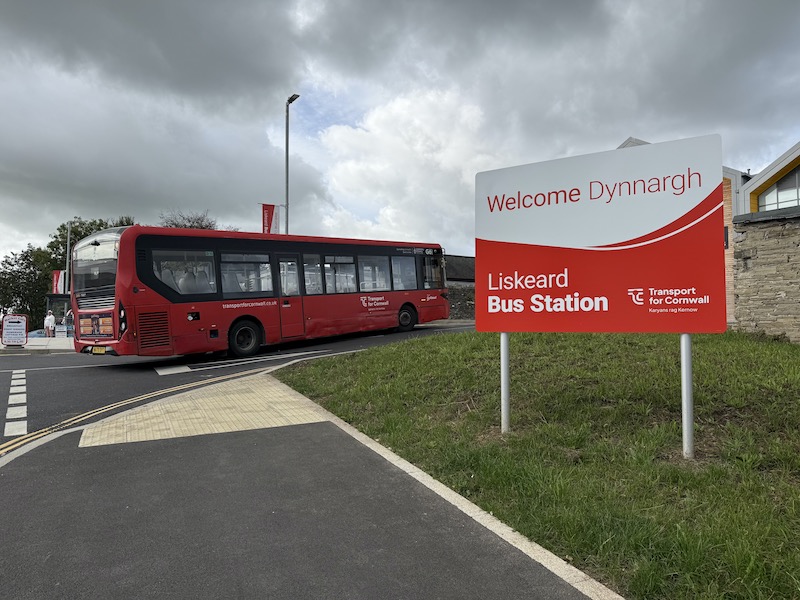
The new Liskeard bus station, which opened in July, is an example of such initiatives. It came about following suggestions made by a local Active Travel Group. Blog reader Peter let me know about this development earlier this year. He’s a member of the Group and explained how he “had expressed concern that the two bus stops in the main road, opposite the Post Office, had been designed in the days of Western Greyhound’s small buses and that Go Cornwall’s large buses were inevitably clipping the kerbstones when arriving and departing. Plus, on occasions when two buses were needing to serve the stop, or coinciding with a National Express departure, traffic would come to a standstill through the town.”
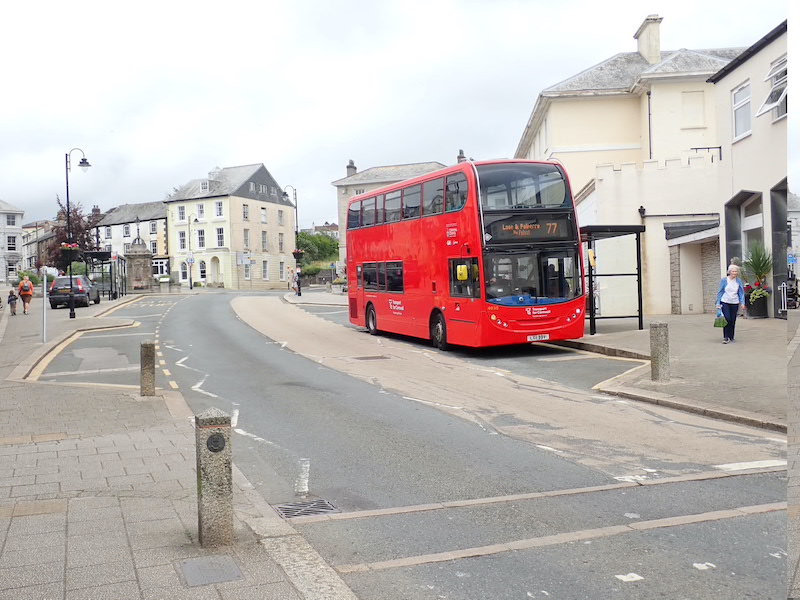
Peter went on to say how “Go South West were asked their opinion and, although the location of the stops was/is ideal as a traffic objective, right in the middle of the town, they suggested a transport interchange, off the main street might be better and could also cater for active travel (cycling) at the same time.”
By a happy coincidence the town’s former Cattle Market nearby had become redundant with a number of new build shared work spaces planned to encourage employment as an alternative use of the site. Following the discussions, Cornwall Council went away and designed a transport interchange to also occupy the site which in a nice touch of modal shift also ousted part of a car park which had used the site. Can you imagine many towns getting away with doing that?
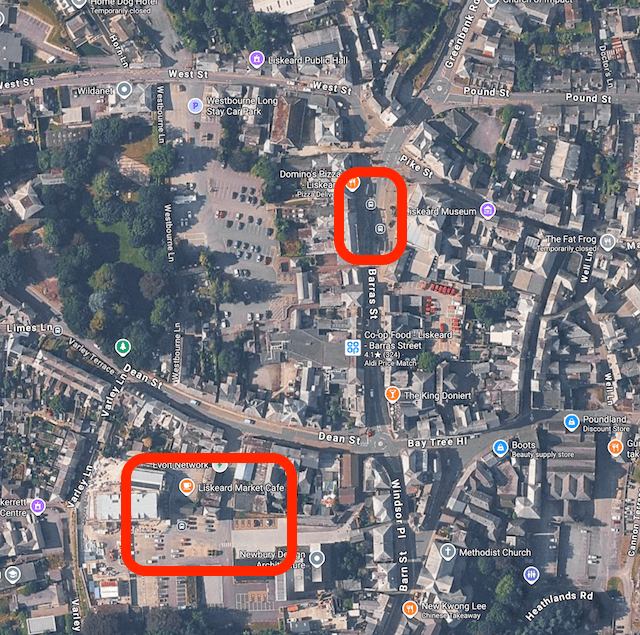
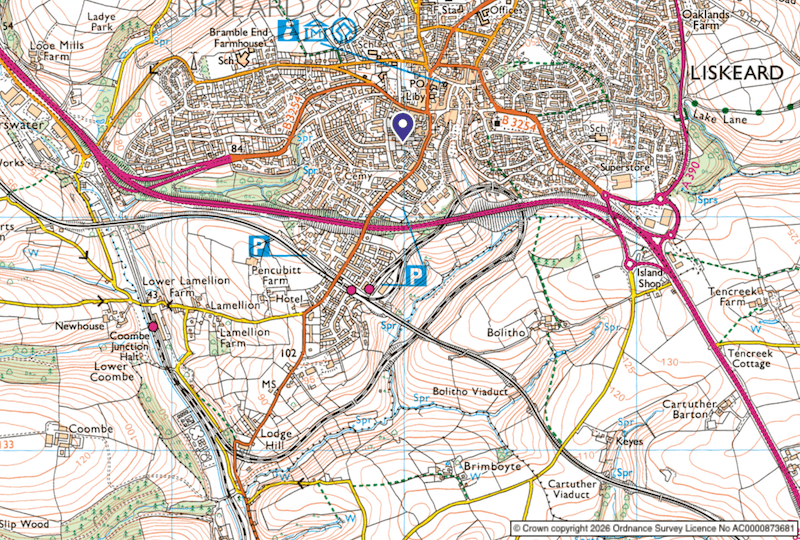
The new bus station is sited bottom left on the attached image with the bus stops by the Post Office in Barras Street continuing to be available but obviously not so busy and congested now there’s space for buses to layover in between journeys in the new bus station.
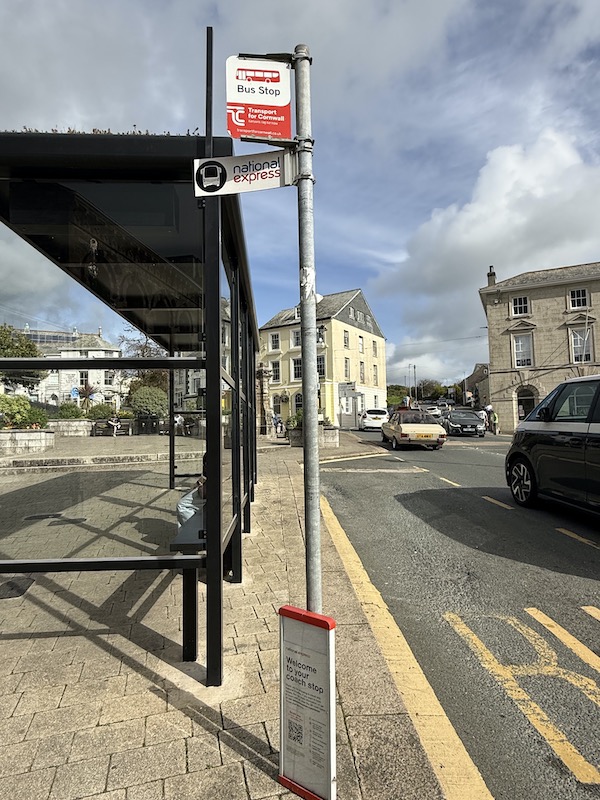
When I visited the town the weekend before last, I noticed National Express still use those bus stops for its routes to Penzance to London and Birmingham.
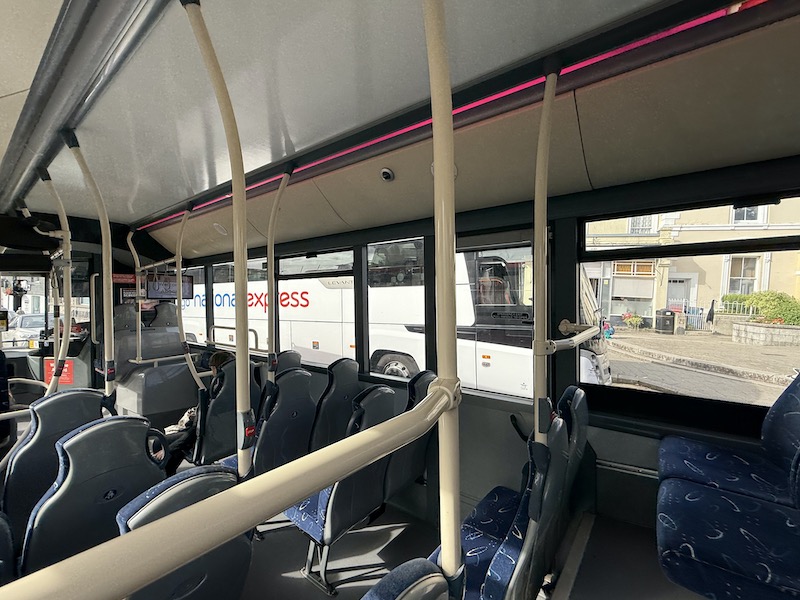
The bus station comprises four stands for buses marked A, B, C and D with a fifth stop for buses to set down alighting passengers before continuing on to one of the layover/departure stands.
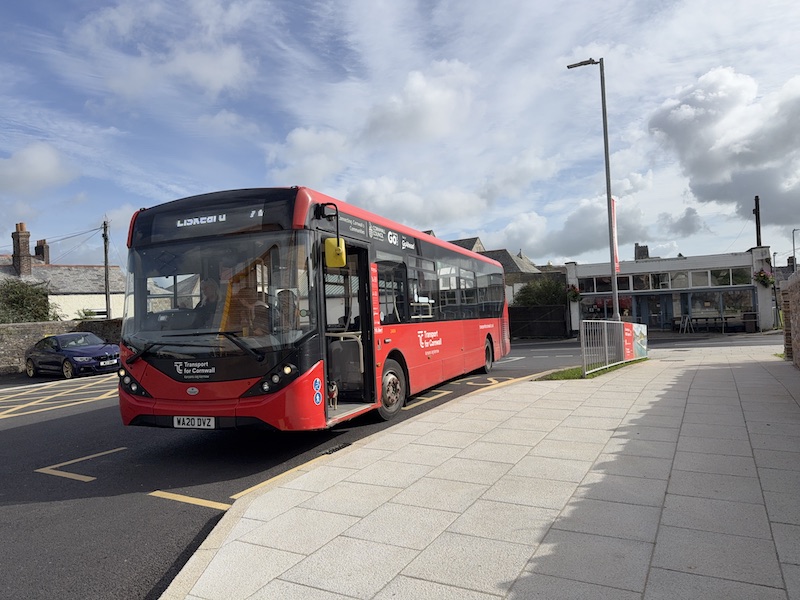
There’s plenty of room for buses to reverse off the stands…
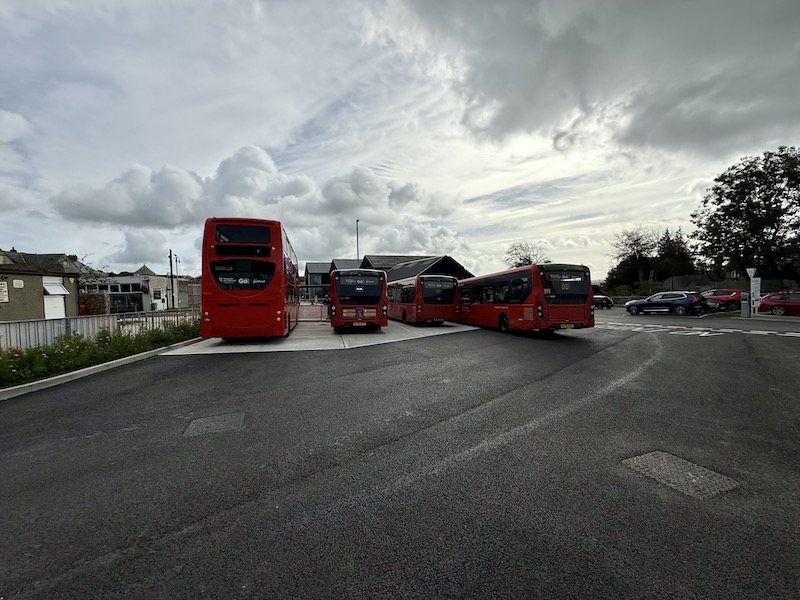
… including a small additional area for those from stand A…
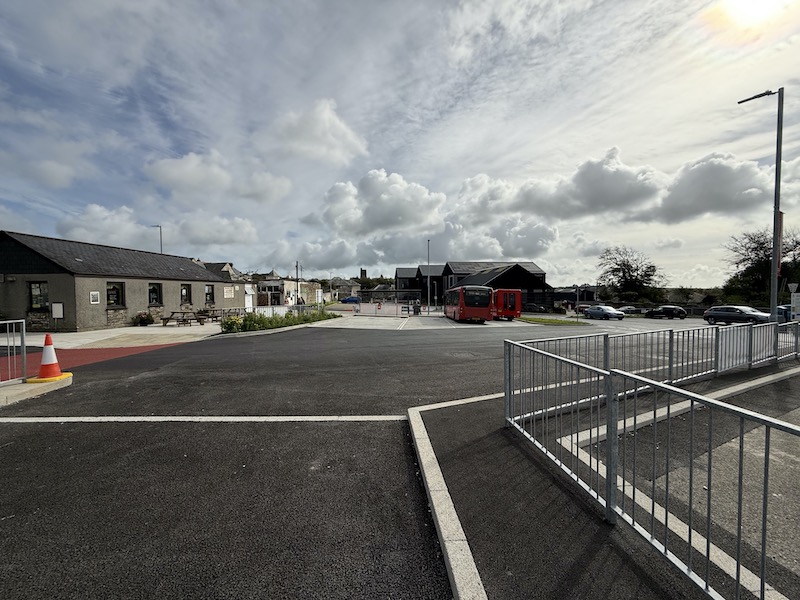
… so as to avoid buses parked on the other stands.
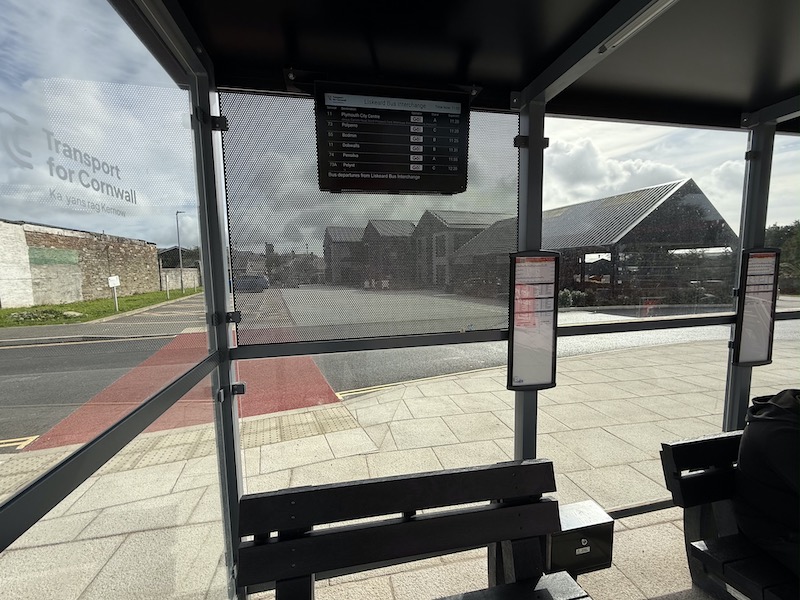
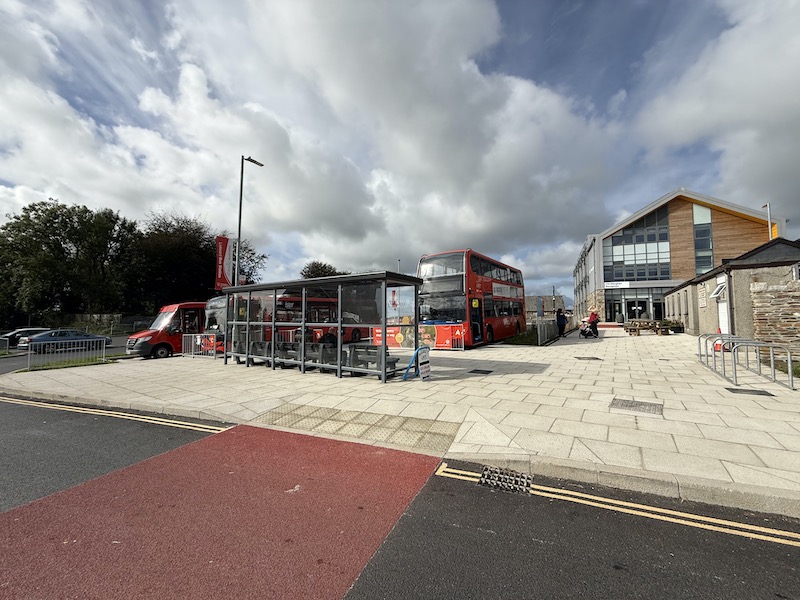
A bus shelter with seats, displays of departure times – both electronic and printed – looks out on to the four stands so passengers can clearly see when their bus comes in.
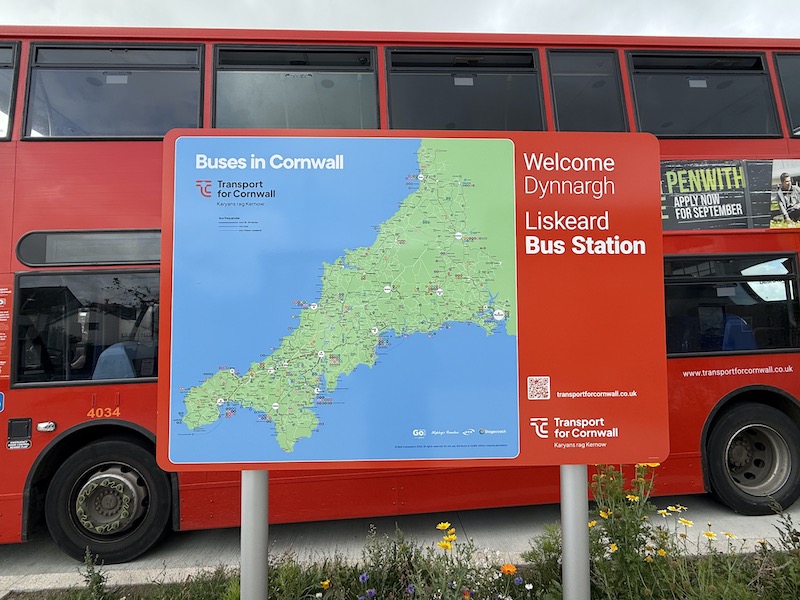
There’s also a countywide network map on display which is great to see, although as I’ve mentioned in previous posts is a bit small to make out for those with ageing eyesight.
And, of course, this being the product of an Active Travel Group, there are five arch stands to accommodate up to ten cycles too, albeit in the open.
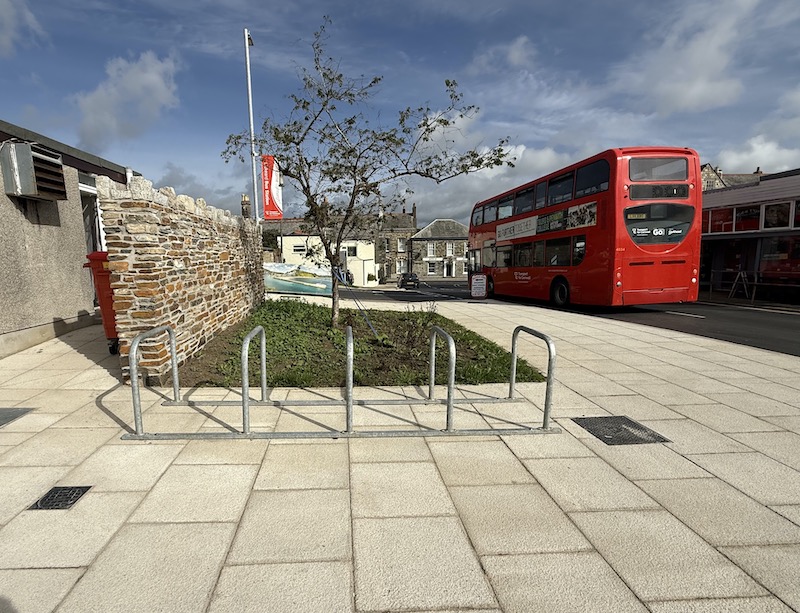
During my visit on Saturday morning there was enough room for everyone wanting a seat or to wait in the shelter but I guess on a rainy day at a busy time it might get a bit crowded. By a happy coincidence the bus station has been sited next to the long standing Market Cafe…
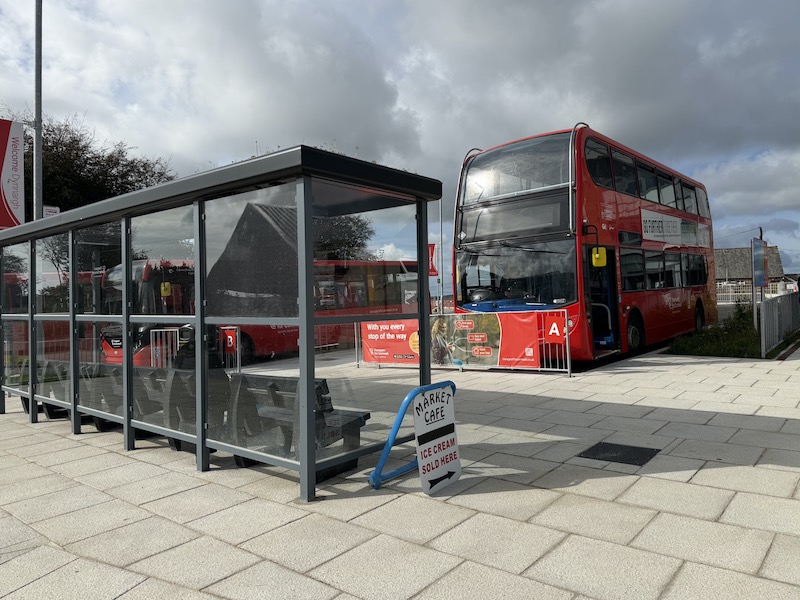
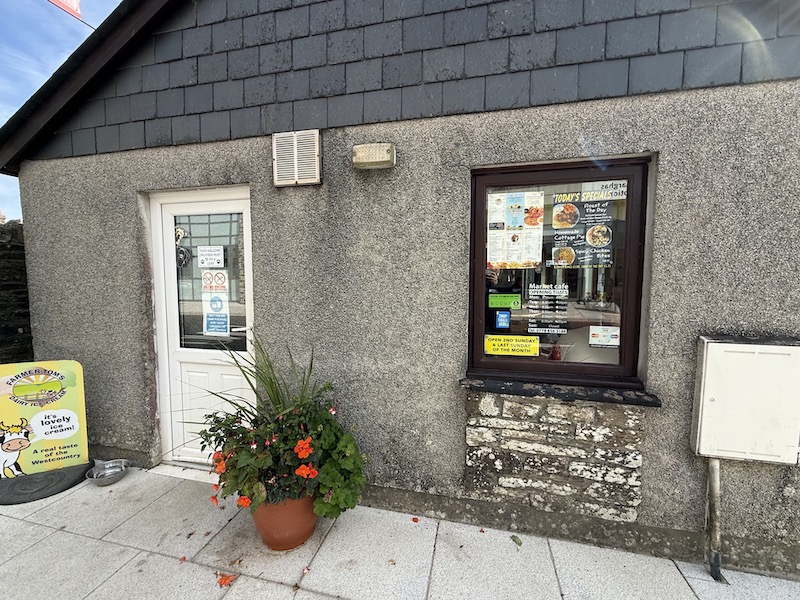
… which must be enjoying a welcome boost in trade from bus passengers and now even opens on alternate Sundays.
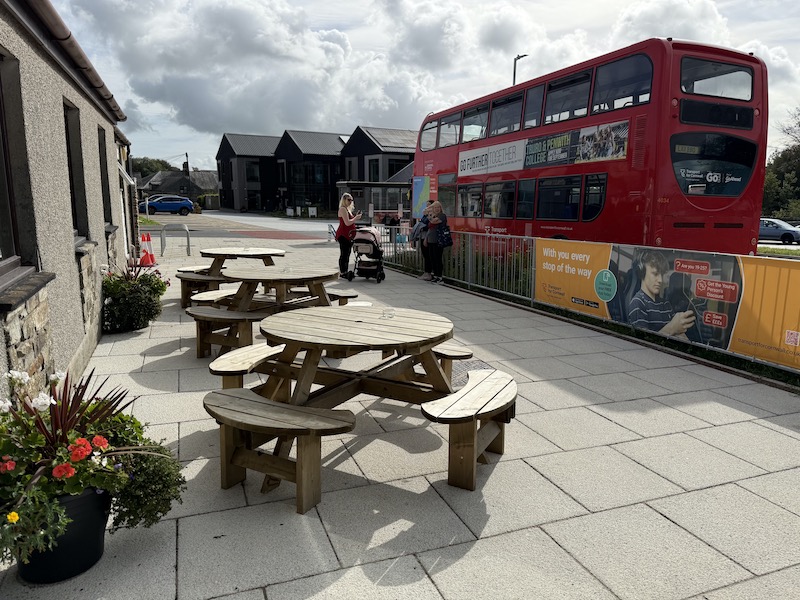
There’s a rather nice area alongside the cafe where customers and passengers can sit enjoying a meal and a drink as well as watching for when their bus comes in.
For a town the size of Liskeard (population around 12,000) it’s a great facility especially as the town enjoys a pretty good bus service with a variety of routes linking it with various villages and neighbouring towns with most routes terminating in the town and only one – route 11 (Plymouth to Dobwalls) passing through.
Back in East Sussex, Lewes (population around 17,000), of course, is characterised with most bus routes passing through rather than terminating thus making the actual siting of a bus station crucial.
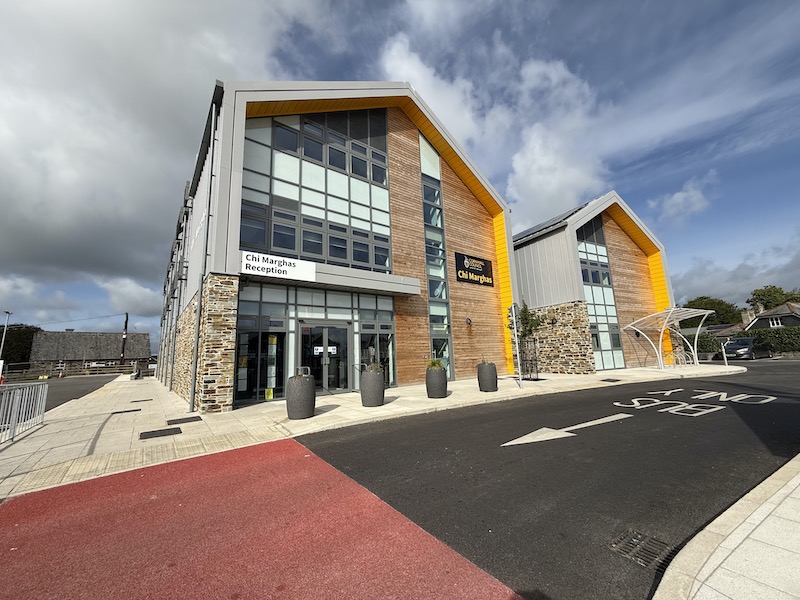
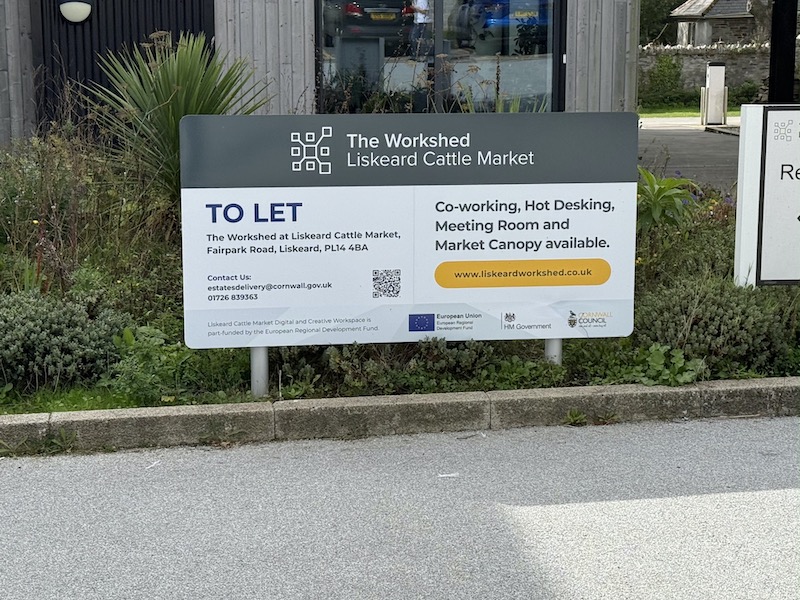
Nevertheless, any Lewes residents visiting Liskeard will be envious of this new facility, which as Peter explained, is also now located conveniently alongside new employment facilities which hopefully will prove popular with the new breed of ‘co-workers’ and ‘hot deskers’.
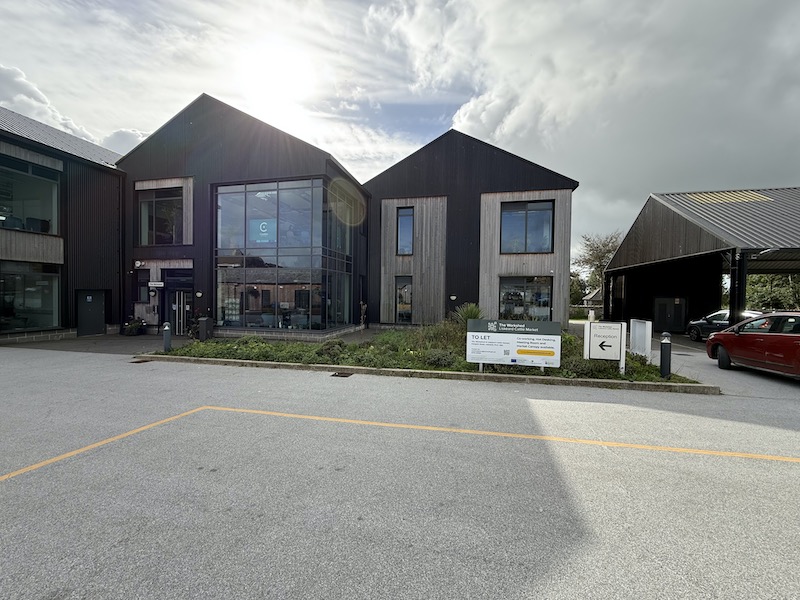
As mentioned, National Express continue to use the main bus stop in Barras Street but you need to get on to your hands and knees to check the coach departure times and then it’s just a QR code.
To finish off this Cornish themed blog I took the opportunity to travel to and from Liskeard on two of Transport for Cornwall’s superb bus routes with lovely scenery and, as usual, very challenging driving conditions for bus drivers with narrow lanes and some thoughtless motorists,
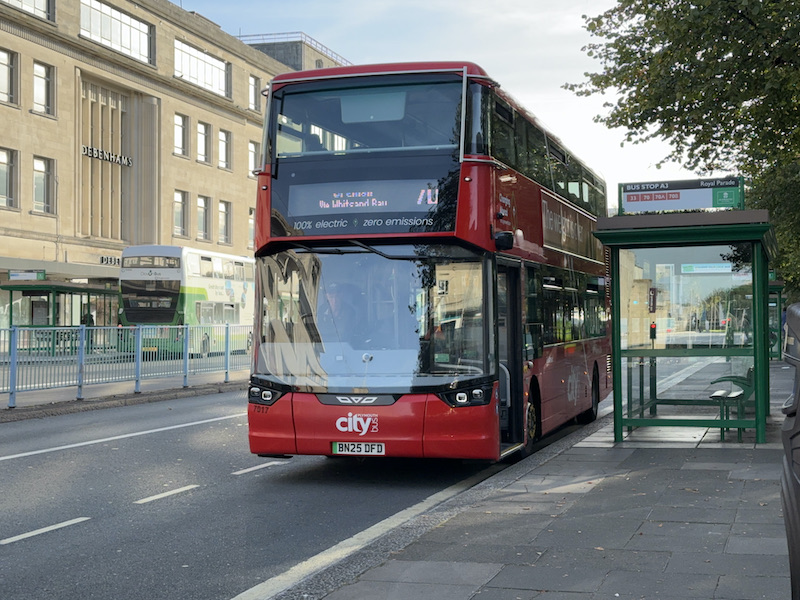
Having stayed overnight in Plymouth I caught Plymouth CityBus route 70 to Torpoint to pick up the delightful Go Cornwall Bus route 75 over to Liskeard. Route 70, operated by a smart Wright StreetDeck Electroliner is one of the very few bus routes in Britain which uses a ferry as part of the journey – in this case linking Devonport with Torpoint across the River Tamar.
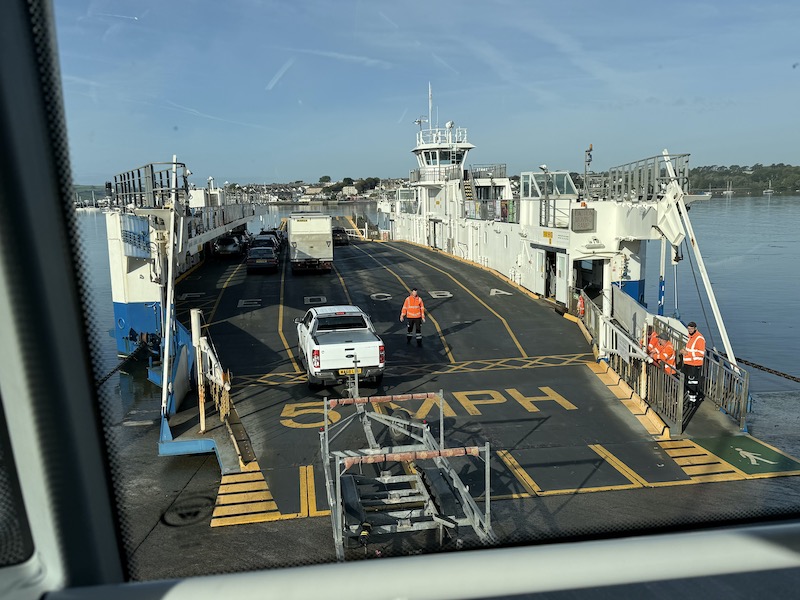
The timetable includes a generous allowance for the bus to link with the ferry and reach the other side making for a stress free connection to route 75 which terminates on the Cornish side of the River.
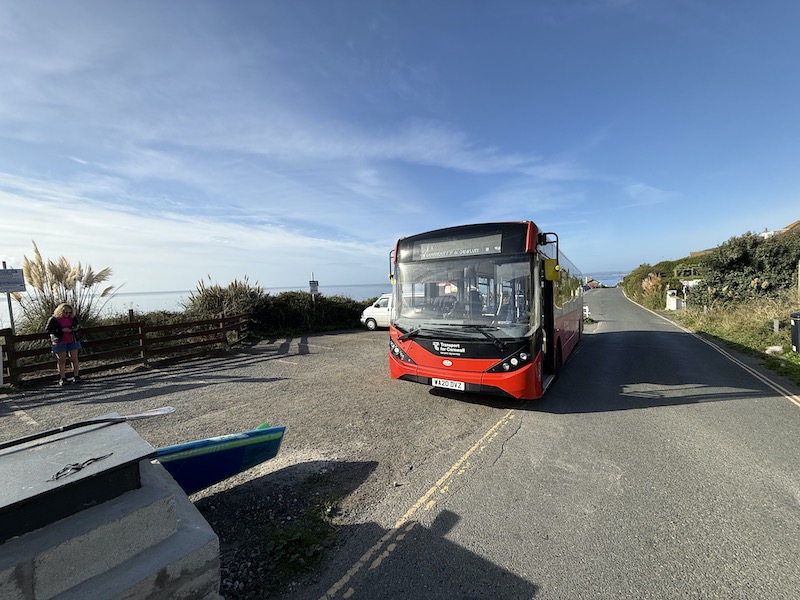
That’s just as well as there are only six journeys a day – roughly every two hours – so you want to be confident of making the connection and I easily caught the 09:50 departure from Torpoint.
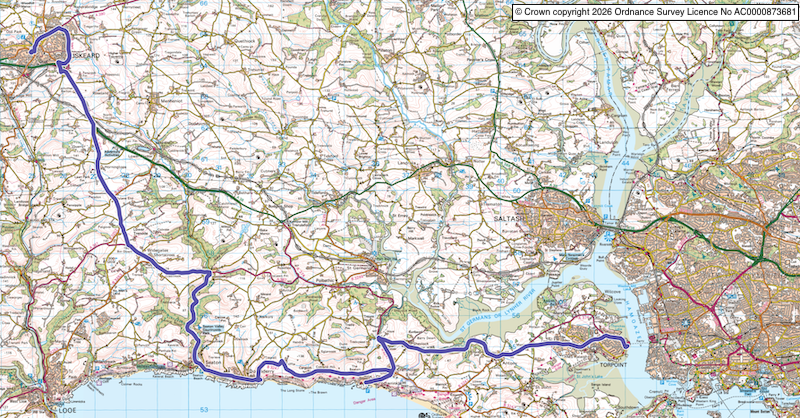
As we headed out of the town past HMS Raleigh I was joined by another passenger who travelled to Seaton. The driver did a fantastic job encountering traffic along narrow stretches of road…
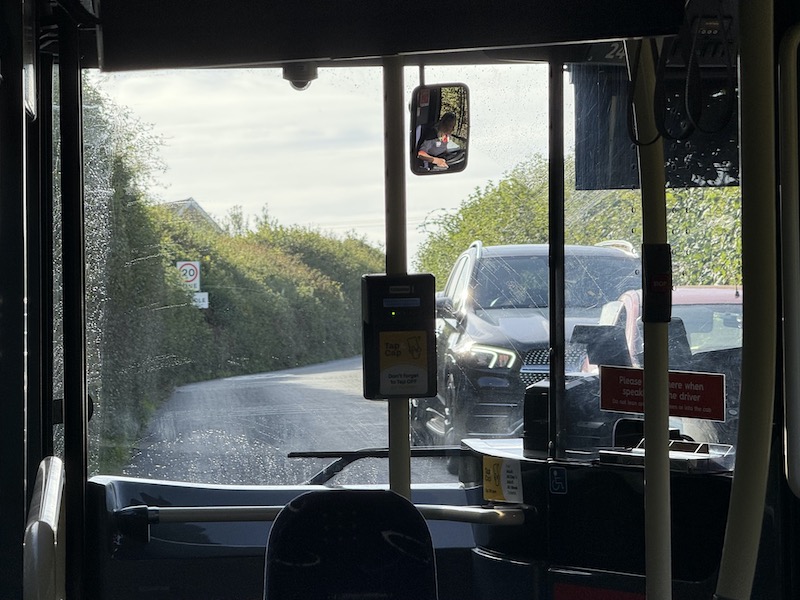
… as well as encountering an awkwardly parked car on a yellow line in Downderry but with excellent precision managed to squeeze the Enviro200 through the gap with the narrowest of margins – even more challenging than passing through Bolton Abbey arch in the Yorkshire Dales.
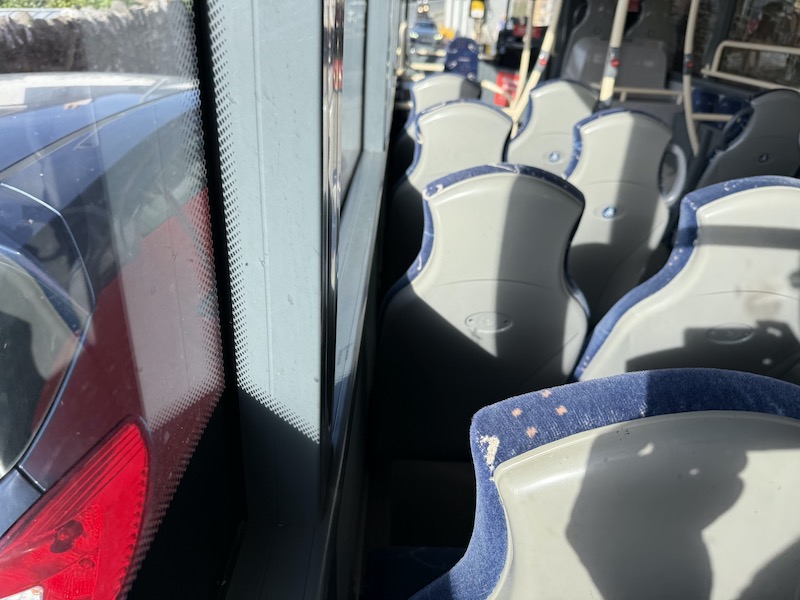
I did congratulate her and say how impressive that was.
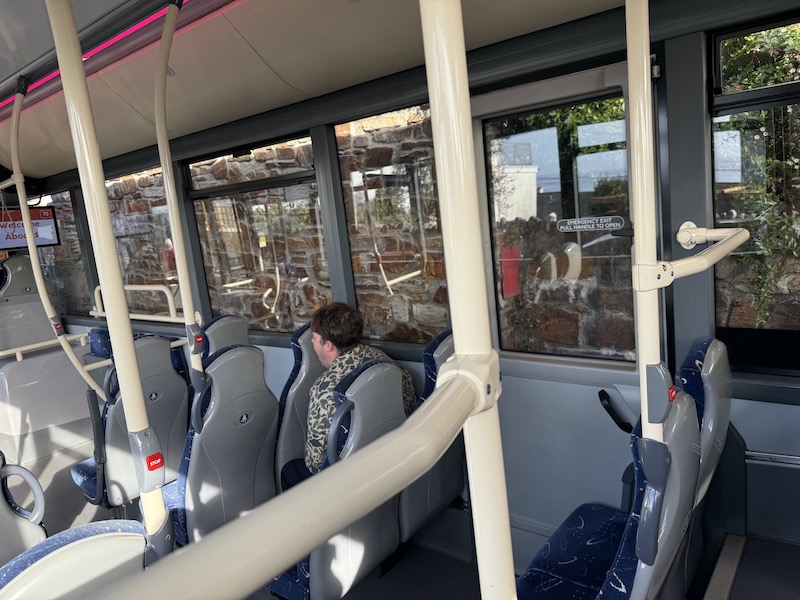
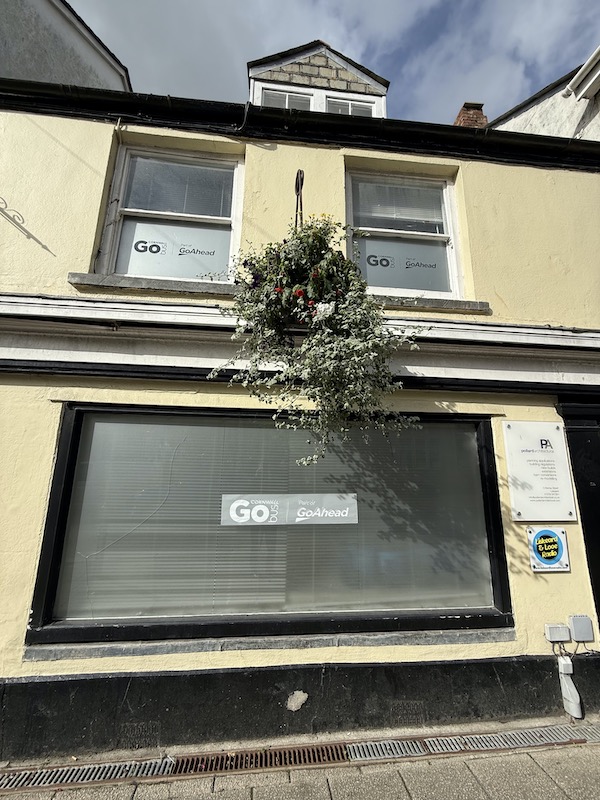
As the one passenger alighted in Seaton, we then picked up another who travelled all the way to Liskeard which we reached on time at 10:58 and where the driver, having parked up, then went off for a break – which I guess was in the facility Go Cornwall seems to have which I spotted in the town centre.
My journey from Liskeard was on route 73 down to Looe as, despite making that journey many times on the train along GWR’s lovely Looe Valley Line, I’d never experienced the parallel bus route which continues to Polperro – a place I have had the pleasure of visiting back in Western Greyhound days.
The hourly route 73/73A was due to depart Liskeard at 11:20 with the bus having arrived on route 74 from Callington at 11:14. In the event this only came into the bus station at 11:18 but although six passengers stayed on the bus to travel through on to the 73 there was a driver changeover and the incoming driver headed off for his break.
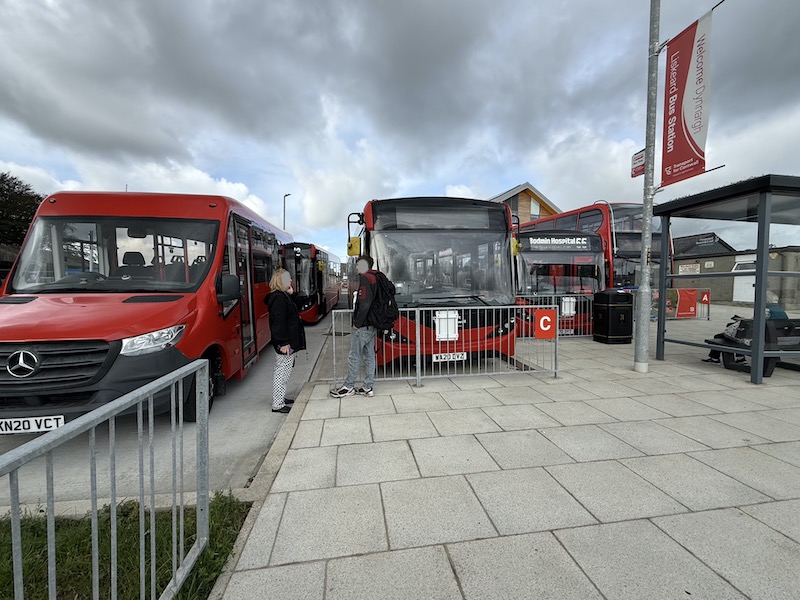
Unfortunately what looked like a bus used for staff shuttles was occupying Stand D and with Stands A, B and C also occupied, the driver had to leave the bus behind the minibus.
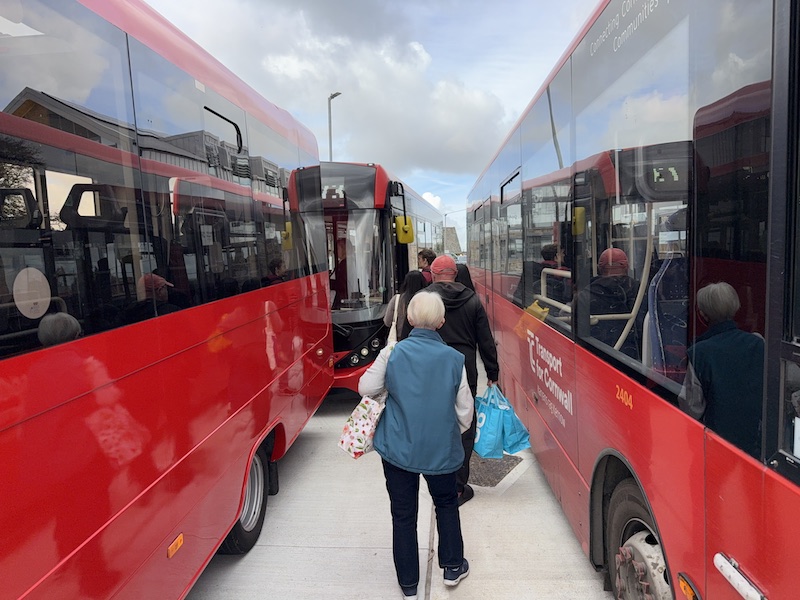
When the driver for the 73 arrived (the same driver of the 75 having had a mini break) it was by now 11:25 and myself and the six passengers boarding had to use the gap between the buses, but we were soon all on board and left at 11:28 picking another passenger up as we passed Liskeard railway station and two more further along the route making for an impressive 15 on board.
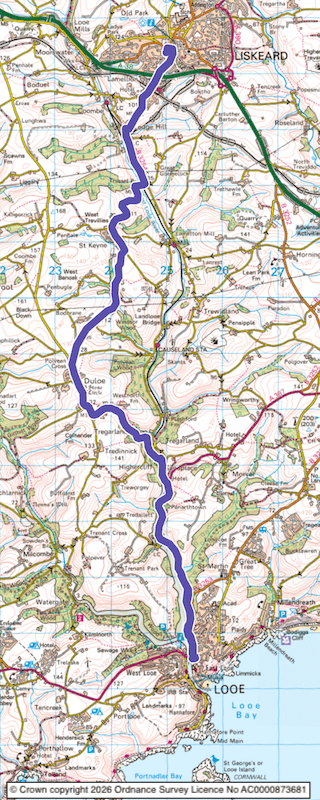
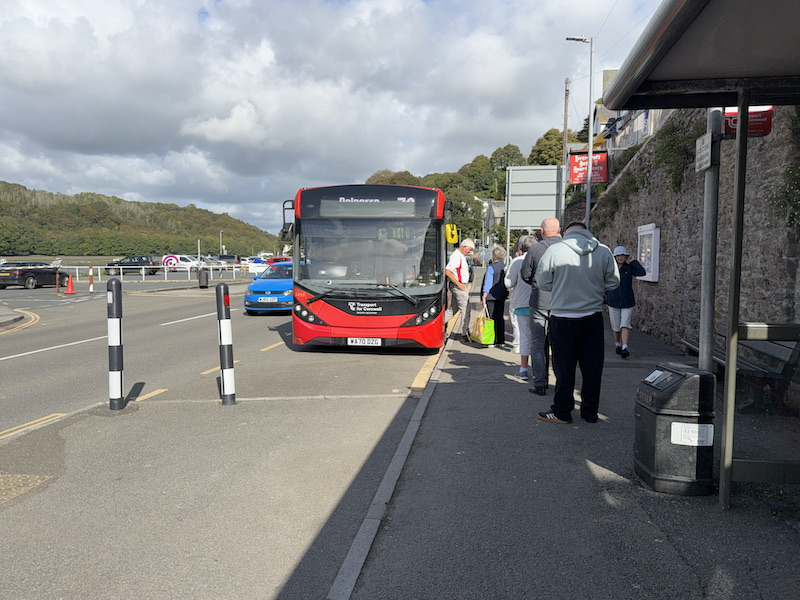
We arrived into Looe at 11:55, 13 minutes late but on what was a very enjoyable journey offering different views of this lovely part of the county to the train and well worth doing as an alternative.
Peter tells me the railway between Liskeard and Looe was saved from the Beeching axe due to the alternative by road along the B3254 being considered unsuitable for a rail replacement bus service due to its narrow sections. I can understand why they thought that with the driver once again doing a fantastic job in challenging conditions on the road. Interestingly although we were running late, the Lisekard bus on the route waited in the village of Duloe for us to arrive as the road north of there is particularly narrow with no scope for two buses to pass each other.
I returned back to Liskeard on the train which had arrived into Looe with around 70 passengers alighting so you can see the benefit of keeping this splendid railway line going, even though there were only around half a dozen of us heading back to Liskeard and there were no takers at the three request stops along the way.
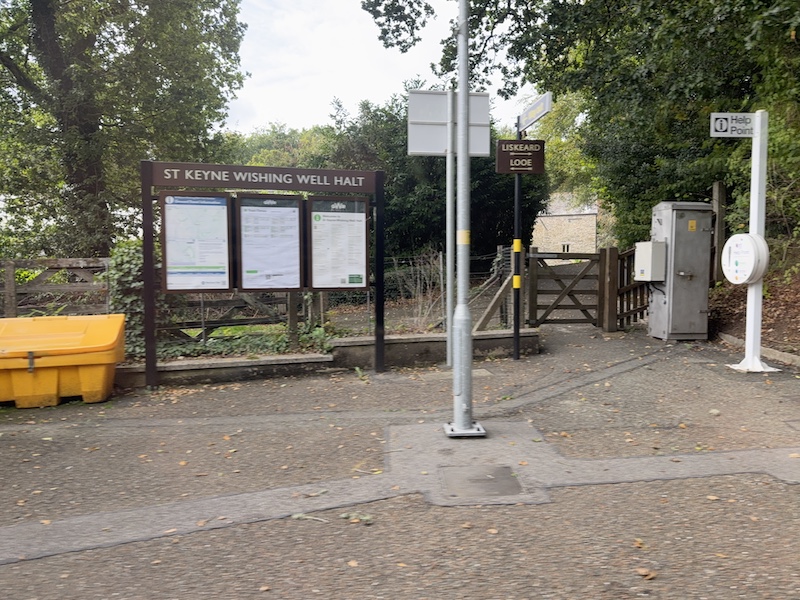
The guard did his usual act of changing the points just south of Coombe Junction Halt (which is now only served by a couple of journeys a day)…
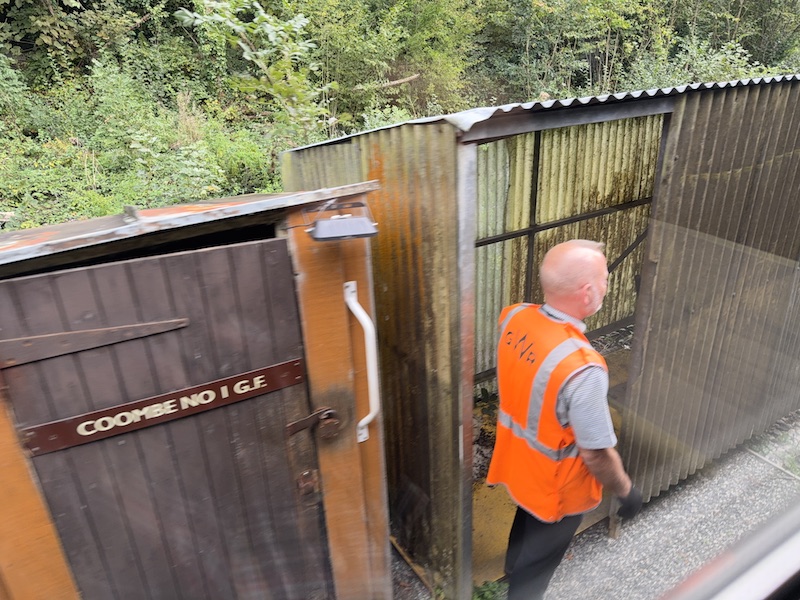
… so we could ascend up to Liskeard on one of the quirkiest approaches to a station in Britain, where the branch line crosses underneath the main line…
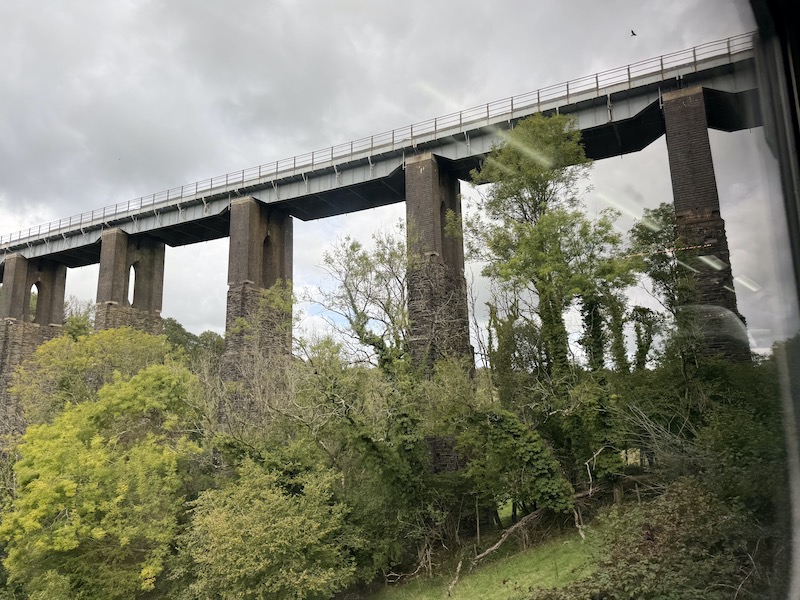
… before terminating at platform 3 sited at 90 degrees to the other platforms 1 and 2 on the main line.
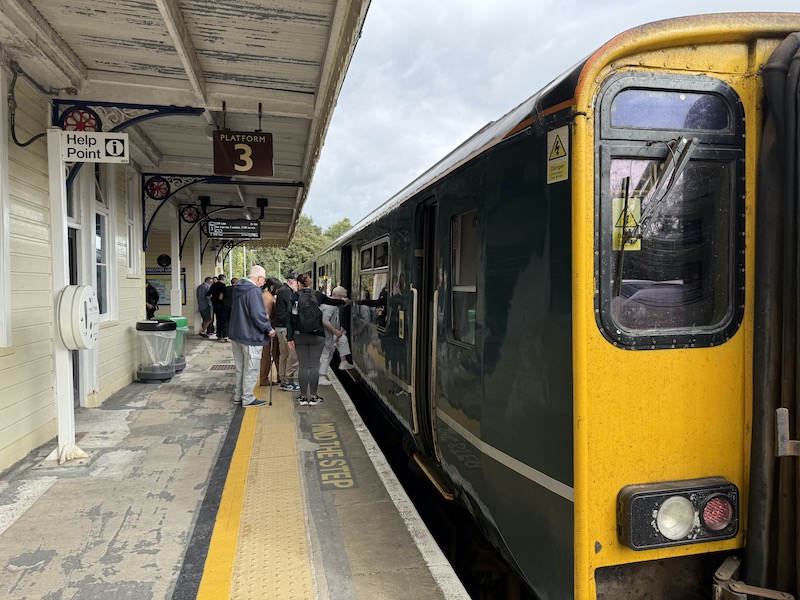
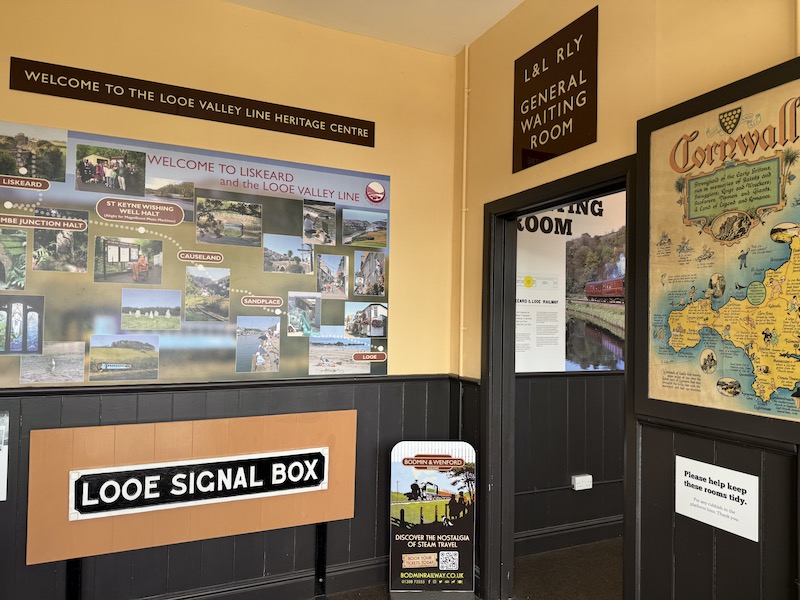
There’s also a wonderful display of heritage memorabilia on the platform too.
What a shame back in the 1960s the A26 between Uckfield and Lewes wasn’t as narrow and twisty as the B3254. Dr Beeching might have taken a different view meaning Lewes lost out on that link as well as in more recent times, its bus station.
Roger French
Blogging timetable: 06:00 TThS


Who on earth could have predicted back in 1971, when the NBC was making large parts of Cornwall busless (not their direct fault but the unwillingness of Councils to support bus services), that Liskeard would see a new bus station fifty-five years later! Relying on memory and thus open to correction by those who know better, I believe Liskeard was one of the places which lost everything! Amazing!
Terence Uden
LikeLike
Yes, Liskeard is fortunate. Some roads, e.g. the B3254 north of the town are very narrow, and this can cause problems. I travelled on the 78 a few weeks ago; in the afternoon from North Hill, see photo. We lost about 20 minutes in a stand off with a school bus coming the other way. I refrained from taking a photo in case it might aggravate the situation!
LikeLike
I dont know if NatEx would be better using the bus station , have they been made aware of it , and at 4 stands is the bus station too small for what looks at school and changeover times could be a little busy , maybe a 5th could have been considered ?
There is something rather charming though about small town bus stations, Seaton (Devon) and Swanage (of Sorts) come to mind. Okehampton tended to use the high street stops with a parking area behind the butter market building in a car park where something interesting could be found.
JBC Prestatyn
LikeLike
To be honest… I’m struggling to really see why Liskeard really needs a bus station? I just had a quick look – between 0700 and 1100 on a weekday, it has 19 departures. Yes, less than one every 15 minutes.
When I visited the town last year, the bus stops on Barras Street seemed to be ideally located for most passengers, and didn’t see the alleged traffic holdups that were being cited.
BW2
LikeLike
I think it is because that is 19 arrivals , mostly waiting over before departure
LikeLike
As I said, I’ve been there and it didn’t appear to be an issue. Most boards interwork on services so there’s precious little layover.
BW2
LikeLike
Looking at Roger’s photos of Liskeard bus station, it would seem that none of the stands would be able to accommodate the wheelchair lift and access to the underfloor luggage area on a long-distance coach.
Perhaps if stand A had been designed without the ‘decorative’ planting and the metal barrier, I could have served for NatEx (or any other) coaches.
LikeLike
Charming small town bus stations: The view from North Norfolk
* Cromer: near to high street and beaches but I find it characterless, lacking any good view
* Sheringham: The heritage bus shelter (next to the heritage railway and close to a landscaped area) was recently demolished despite local protest. I don’t think the new one will have character even though is is located in the same surroundings as the old one
* Holt: Doesn’t have a bus station, but the collection of bus stops around the attractive memorial and streetscape and a large attractive brick built bus shelter (on one side) is pleasant. Many years ago used to have a once a day National Express service to London via Norwich but sadly no more.
* Aylsham: another pleasant market square option with through routes but I don’t recall any well located shelters (well placed pub, though).
I don’t have enough experience of Fakenham, or North Walsham to comment.
MilesT
LikeLike
I actually saw both Fakenham and North Walsham main bus facilities on a recent trip around East Anglia staying in the couple Wetherspoons Hotels in the area (I stayed in Harwich, Great Yarmouth, Beccles and Dereham – 1 night in each).
North Walsham has an appropriately sized bus station, ideally close to the town centre and not that far from the railway either. 3 stands with shelters, seems similar to Liskeard funnily enough.
Fakenham is a couple of bus stops around the town’s cinema, very decently located and impossible to miss. A bit like how you describe Holt, a shame there’s not much to see in Fakenham though. I found Dereham’s main bus stops very pleasant all dotted around the long market square too. I’m impressed and a bit jealous of the 8 bus that seems to time well with trains out of Norwich.
I think the bus stations in both Lowestoft and Great Yarmouth need some improvements, its good they both have bus stations but both seem a bit cramped for the local demand and number of services that exist. Market Gates especially seems grim. Norwich’s bus station does a lot better. Beccles too. Also surprises me that Thetford even has a bus station when evidently bigger towns elsewhere don’t! Norfolk and Suffolk seem to do quite well on this and most facilities have seemingly been tidied up in recent years. Although Suffolk needs more routes, it’s much harder to get across by bus than either Norfolk or Essex.
Also agreed its a real shame about Sheringham, it felt like something was missing when I passed through!
Aaron
LikeLike
Bus interchange from train in Norwich to access buses to the hinterland isn’t great.
The train station is at the bottom of a hill (in the river valley), a good uphill mile away from major interchanges at Catle Meadow (and a bit further to the modern bus station, pretty much on the same site as the prior facility).
There are buses that go up the hill (available on a Plusbus ticket) but that’s an extra fare if you don’t have an ENCTS card.
I’ve found the interchange from train to bus to get to Holt is best done at pleasantly located stop at Tomblands, halfway up the hill, as this has better interchange timings than taking the train onwards to Cromer/Sheringham, where the interchange timings are hit and miss in the evenings.
LikeLike
Chippenham has the last remaining bus station in Wiltshire. It has 8 bays (I think) plus layover space, and was recently resurfaced by the Council.
Pete
https://share.google/0Xsky2fXD8a0LeGMC
LikeLike
Glad to see a hyphen in “co-working”. When the word first appeared I wondered what coworking was – how do you ork a cow? Still not sure what it means though.
LikeLiked by 1 person
NatEx (etc) coaches don’t use the new Cardiff bus station – admittedly it can’t even accommodate all the buses. Nor do coaches use either of Ipswich’s bus stations.
LikeLike
What is even more amazing is that Dobwalls, is now served hourly during the day, has an evening service with the last bus from Plymouth at 2355 and a two hourly service on Sundays. This is an incredible uplift from the days when Rowe’s of Dobwalls stepped in to replace Western National 55 years ago with a skeleton service. No doubt much of the hard work of restoring bus usage in this area is the result of Western Greyhound launching their frequent midibus routes.
LikeLike
What a lovely way to spend a day in a lovely part of England. I was a student in Plymouth and often took the Western National on the Torpoint ferry, although the Cremyll (foot) ferry is a bit of fun when the wind is blowing. Years ago Nat Ex service 315 ran from Liskeard to Eastbourne which would have been a near direct service back home.
LikeLike
That’s the perfect bus station operation – a set down only stop for all routes (preferably with space for two buses, or three buses if it’s a busy bus station), direct movement to a layover area or the pick up stand if time is short (or if it’s a through route), and various pick up stands. However, the set down stop must have a safe and direct ‘desire line’ walking route for alighting passengers and buses must only be allowed on to the pick up stands a minute or two before departure time. This does have implications for data on through routes (two timing points, one set to set down only and one set to pick up only). Various bus stations fail on one or more of the above!
LikeLike
Roger, does Liskeard bus station meet all of the above in my comment? (Particularly the safe direct walking route for alighting passengers).
London Bridge bus station is awful for the latter!
LikeLike
Talking small town bus stations I was very impressed with St Andrews, Fife recently. Super clean, a little toilet and a staff office.
MikeC
LikeLike