Tuesday 22nd September 2026
Answer: a brand new bus station.
(And a Mayoral authority, of course)
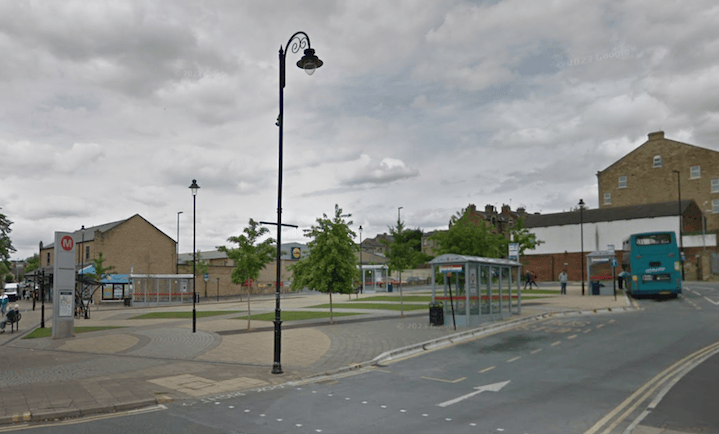
Replacing a smaller ‘Bus Hub’ (which comprised four bus shelters)…
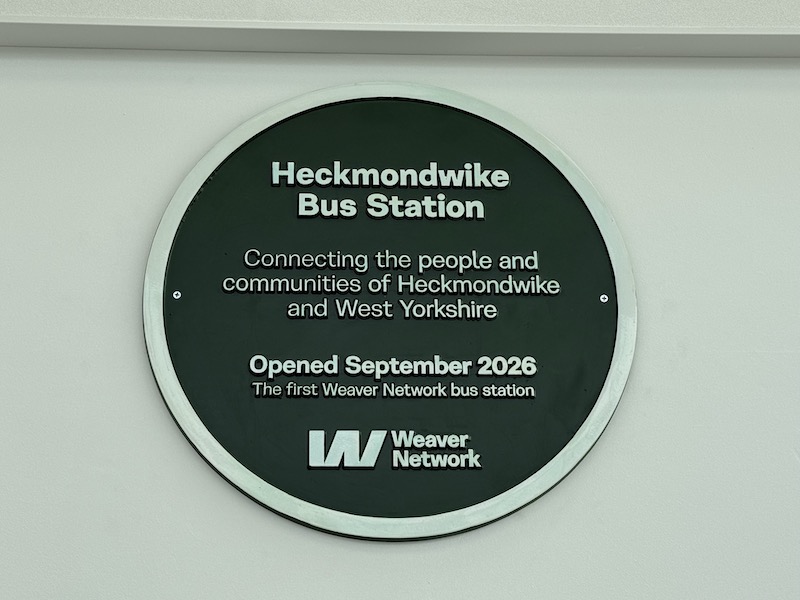
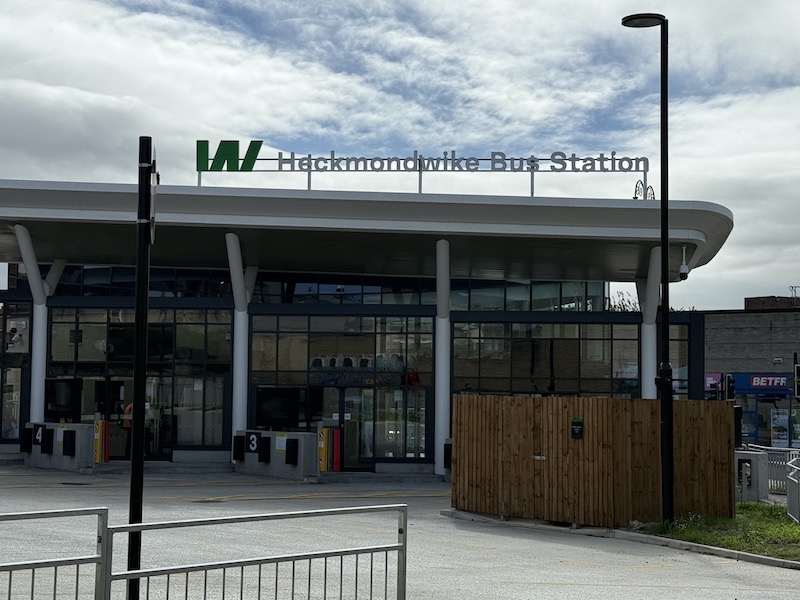
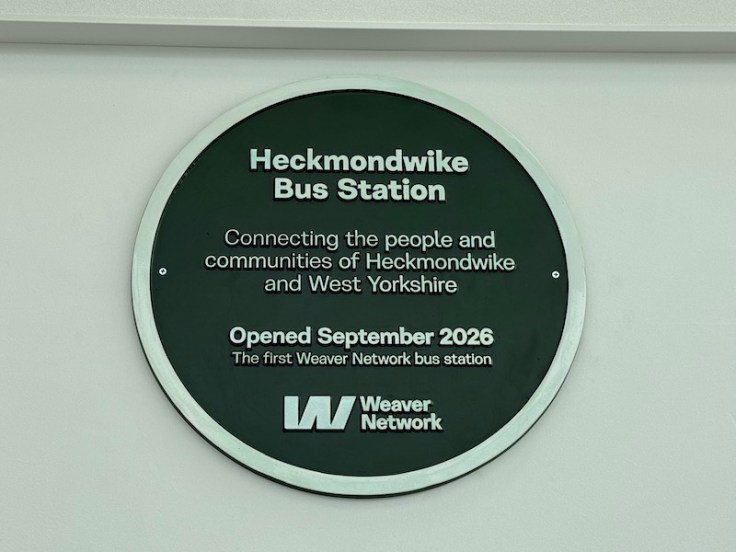
… Heckmondwike’s smart new facility opened on Sunday with Mayor Brabin proudly heralding it as the very first bus station to be introduced as part of her Weaver branded bus network coming next year to West Yorkshire .
The fascinating thing about this development is the town centre location, constrained site and number of buses using it are similar characteristics to the position in Lewes, East Sussex as described in previous blogs, not least last Thursday when reviewing the book just published which chronicles the history of the county town’s bus station and its sad demise.
What a pity leading decision makers in East Sussex don’t have access to £10.5 million from a Transforming Cities Fund (like their counterparts in West Yorkshire) which has funded Heckmondwike’s new bus station. Which is all the more important as the original budget for the project in 2022 was £5 million.
It’s an interesting twist on ‘levelling up’ and rather stands on its head the usual myth the North is starved of transport investment compared to (let’s ignore London) the South.
For want of £4.5 million the boarded up site in Lewes could be purchased from current owners, the Generator Group today (it’s up for sale), and a sum of £6 million (to equate to Heckmondwike’s overall cost) would be more than enough to refurbish the current building and have money left over for a few years running costs – and, even better, the site would then be firmly back in public ownership thus securing its future (albeit that’s what was said in 1968 and look what subsequently happened).
I took a trip up to Heckmondwike yesterday to see what £10.5 million gets you in the way of bus station facilities in West Yorkshire and what it tells us about future developments for Weaver.
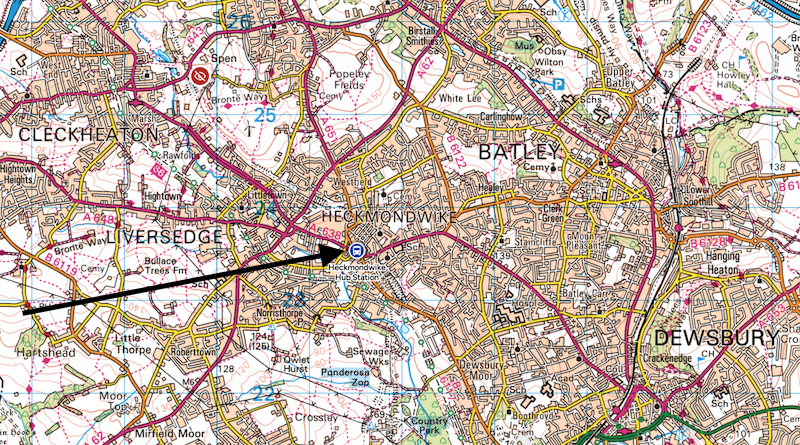
The site is conveniently located in Hekmondwike town centre, close to the junction for Cleckheaton, Liversedge, Dewsbury, Batley and Birstall.
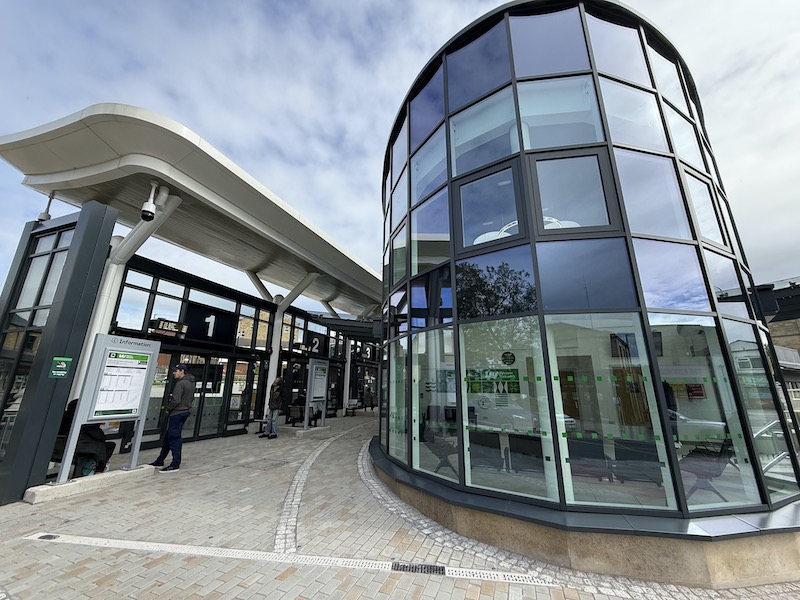
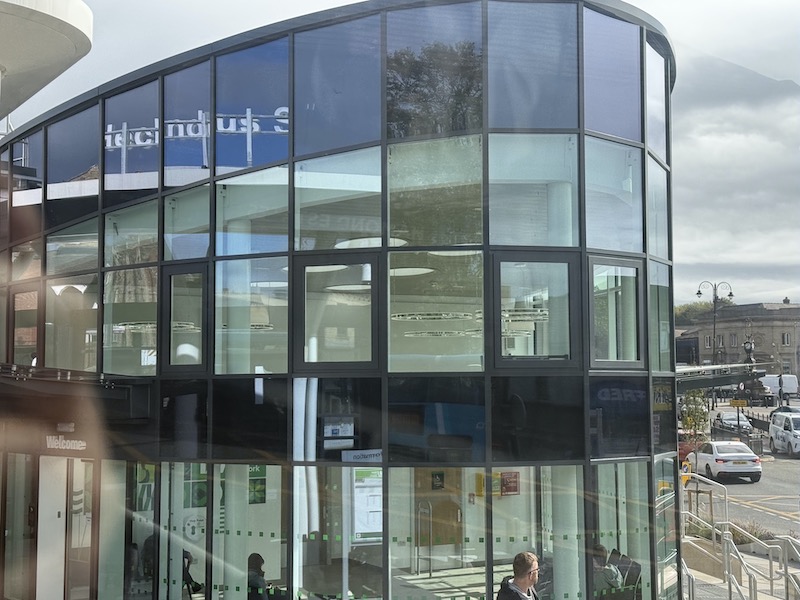
A new two storey building…
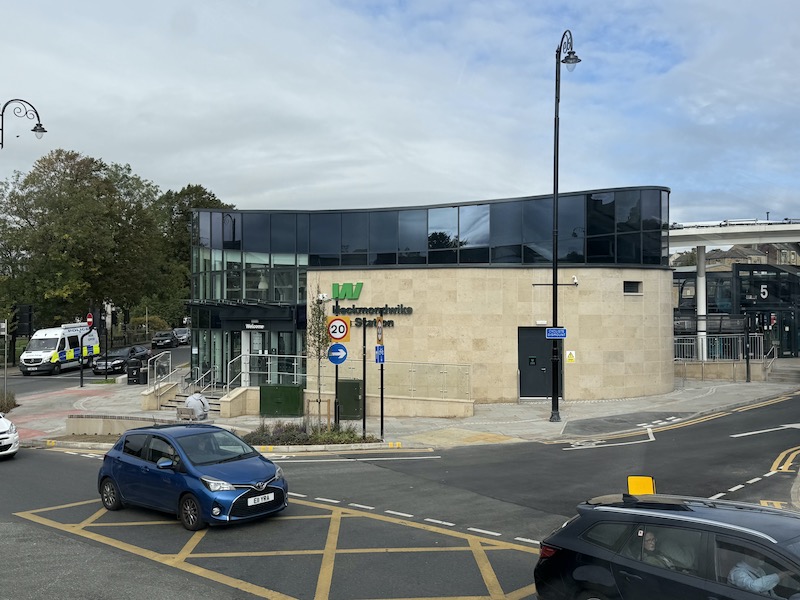
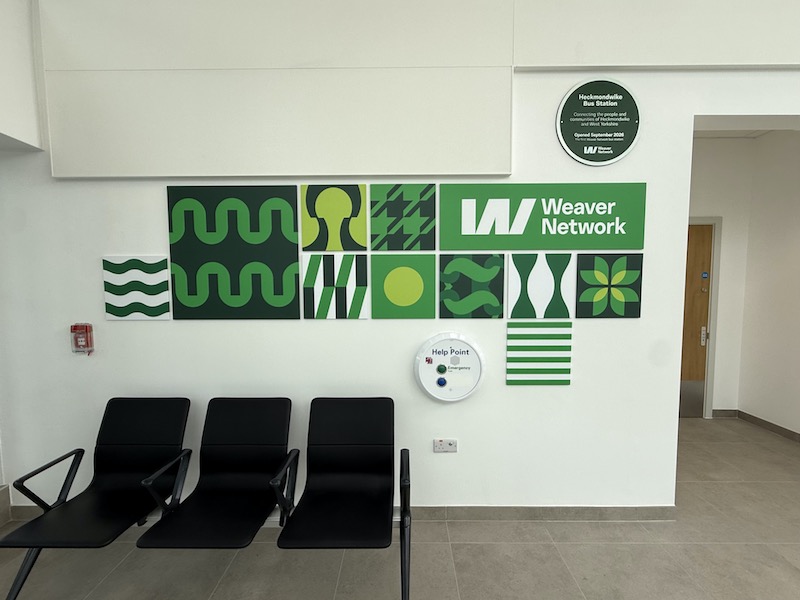
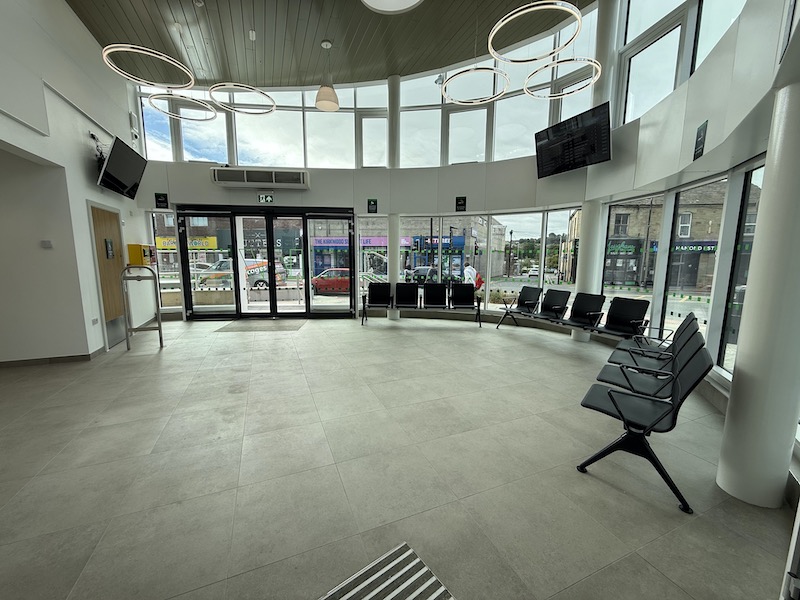
… houses a glass fronted waiting area with the height of the two storeys with 14 individual seats arranged in threes and fours…
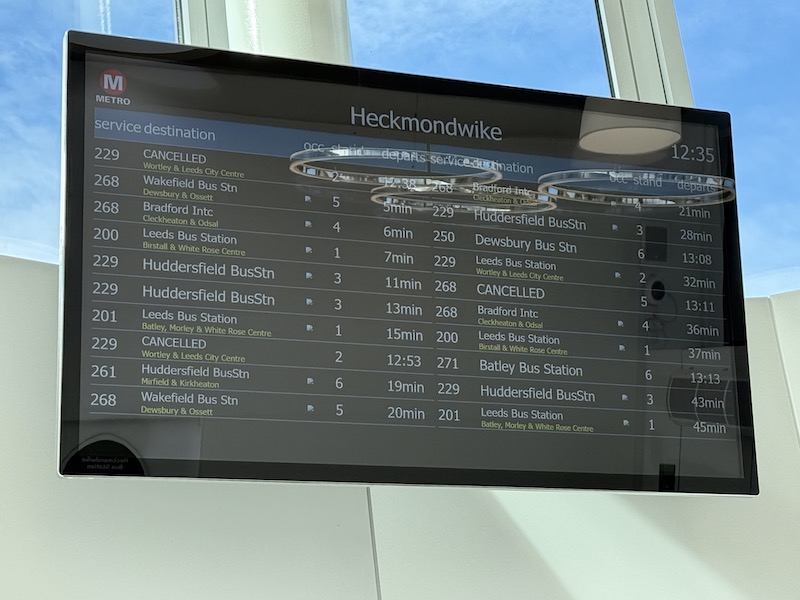
… and two electronic signs showing the next 20 departures (including three cancellations yesterday lunch time)…
… and from where there’s an accessible toilet and ‘changing places’ facility.
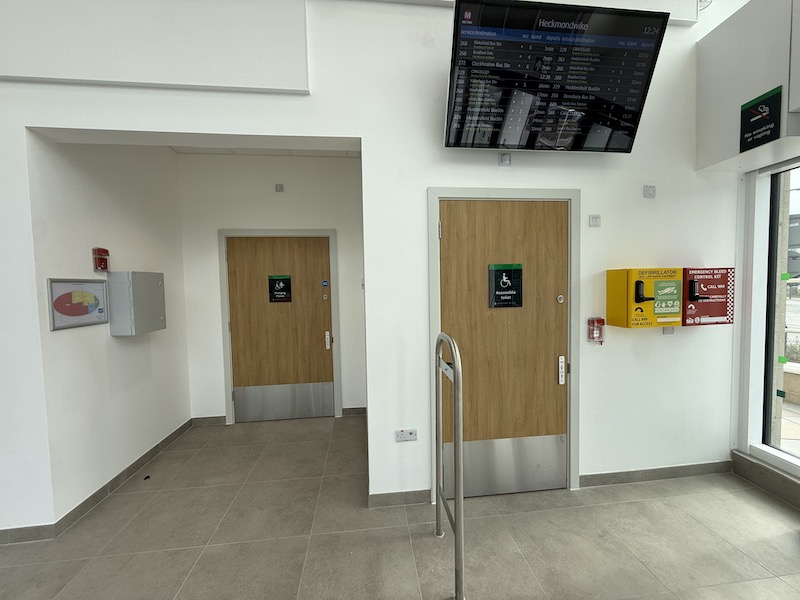
Aside from a Switch Room and a Server Room (both behind locked doors) the only other ground floor utilisation seemed to be a small office for staff marked decisively as ‘staff only’.
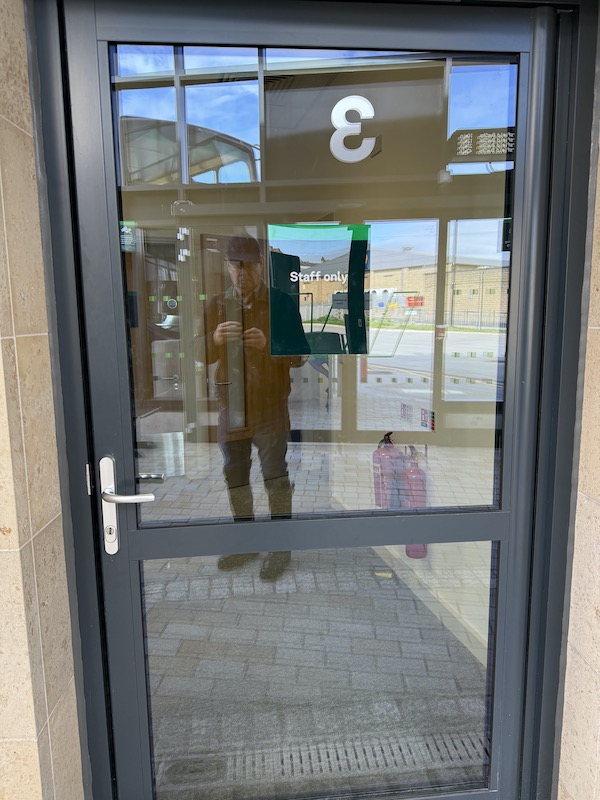
Further along the elliptical building I guess there’s a room on the first floor offering a facility for staff to take their breaks accessed from the staff office. There didn’t seem to be any public access so no hope for a café as in Lewes’s heyday.
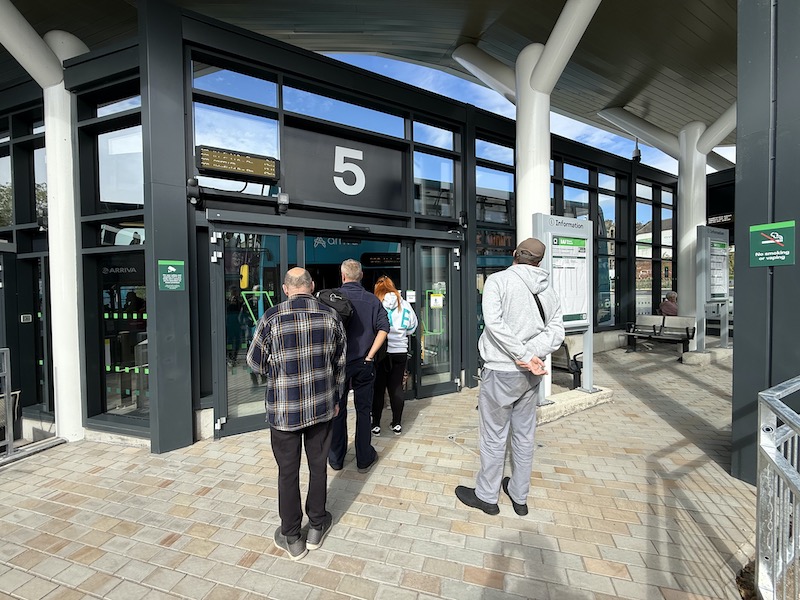
Outside there’s a bus manoeuvring area with five head on (and reverse off) stands…
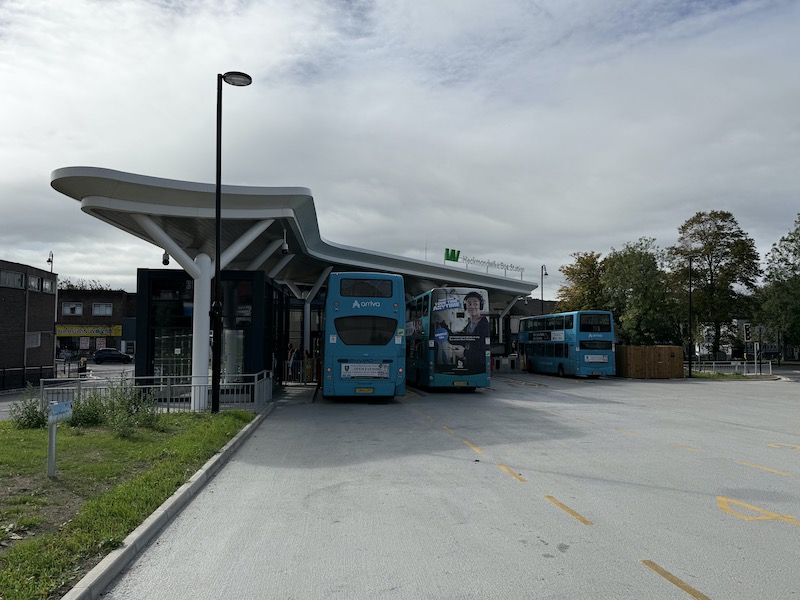
… with a sixth stand as a drive through on the access road.
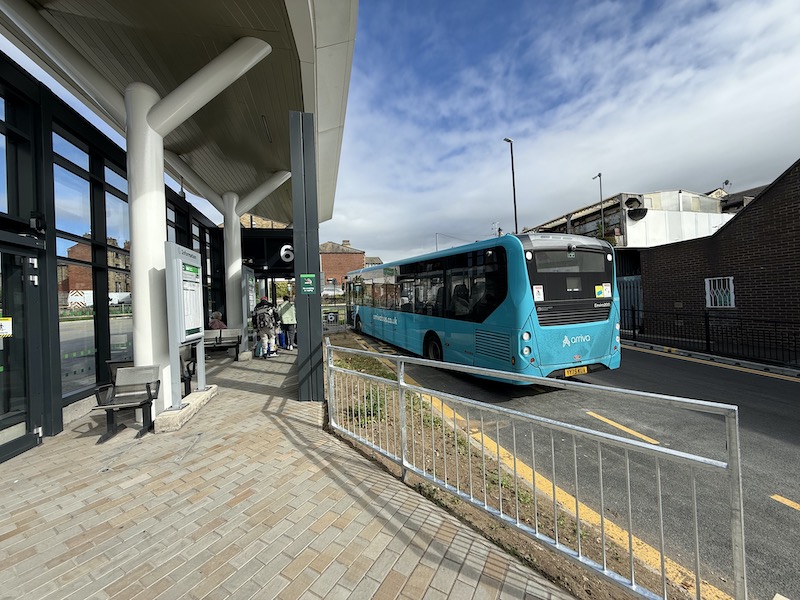
As you can see, the area for passengers to wait is part enclosed and part in the open and seems very constrained with very little room for queues to form.
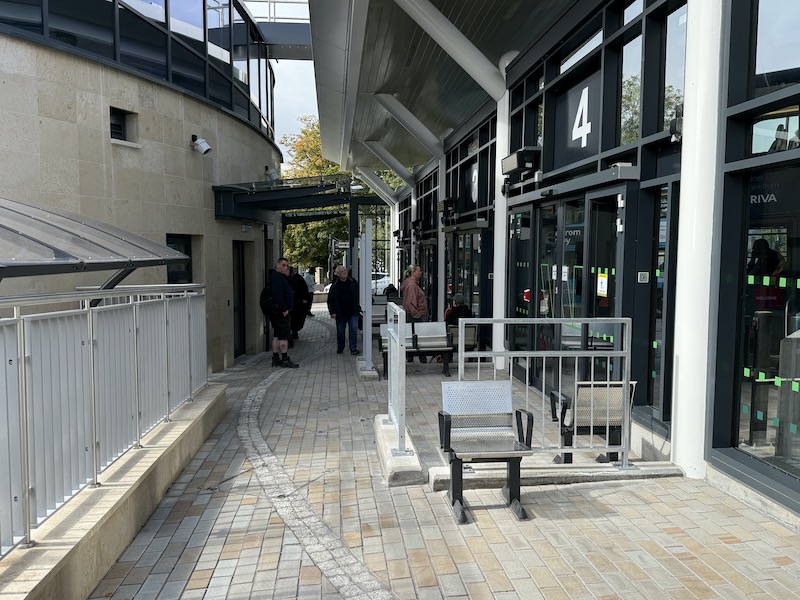
Most of the stands have just three seats although as already mentioned there are 16 seats in the waiting room. There’s an electronic sign showing the next four departures above each stand and a static printed display of departures.
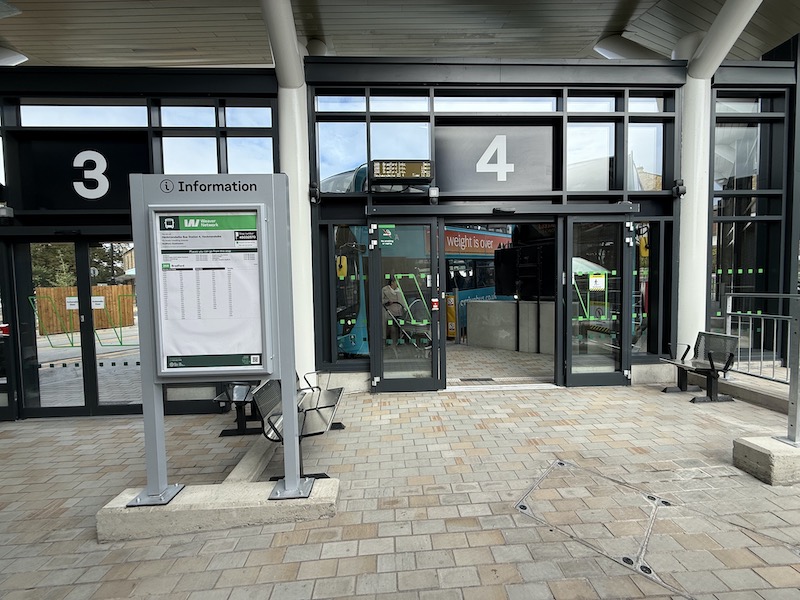
The two most frequent routes, every 15 minutes, being route 229 (Leeds – Huddersfield) and route 268 (Wakefield-Dewsbury – Bradford) each have exclusive use of one stand for each direction utilising stands 2, 3, 4 and 5 with stand 1 having routes 200/201 to Leeds (each half hourly) and the drive through stand 6 seeing hourly routes 250 (Dewsbury). 261 (Huddersfield), 271 (Batley) and 272 Cleckheaton. It all makes for a nice even utilisation of each stand.
I noticed the PR blurb about the new bus station mentioned “enhanced cycle parking facilities installed outside to support active travel connections” but all I could see were these four arch stands in the open.
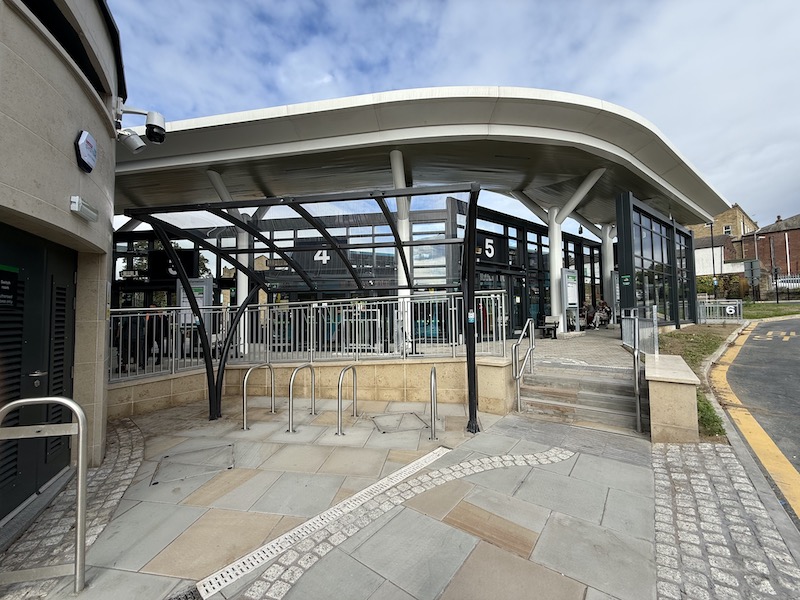
It also extols the benefits of being accessible and it’s true there is a level access into the outside waiting area but there’s also step access too as shown in the above photo.
Sadly there are no toilets for those without a RADAR key – just the locked accessible cubicle and Changing Places facility which made me wonder if that provision falls foul of the Equalities Act in a counterintuitive way.
It’s a great improvement on the previous ‘Bus Hub’ (four bus shelters) and it’s good to see public investment in facilities for bus passengers. Again, the PR blurb extols it being a “green infrastructure” with “a sedum green roof featuring circular roof lights, complemented by a living green wall and new perimeter landscaping.”
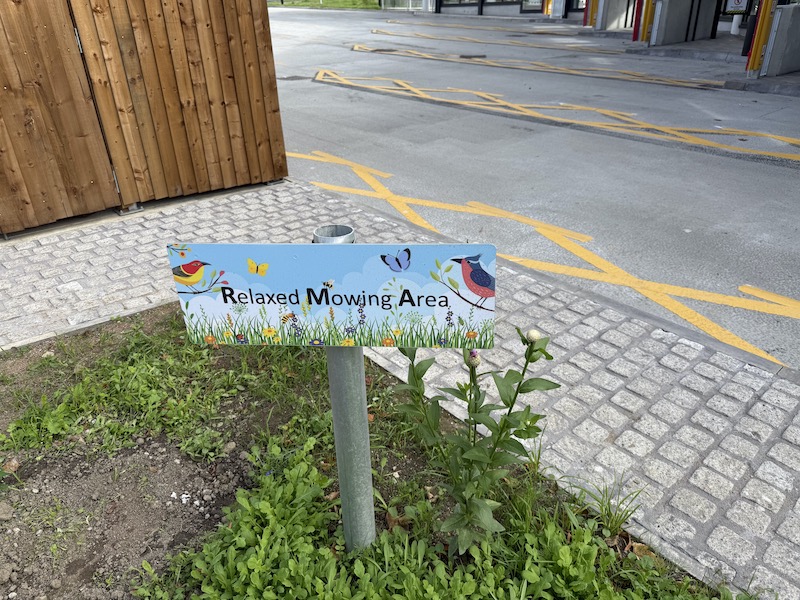
Indeed I spotted this “Relaxed Mowing Area” on the perimeter – whatever that means?
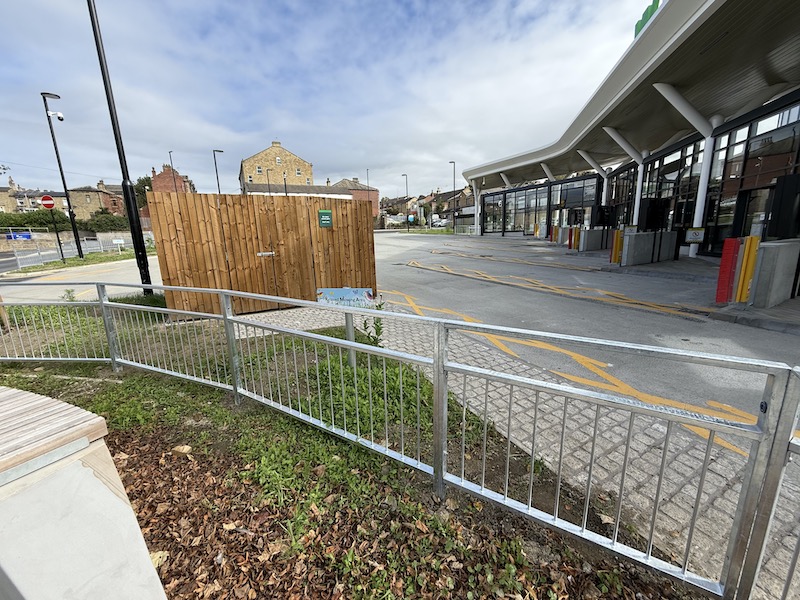
It didn’t look large enough to be mowed.
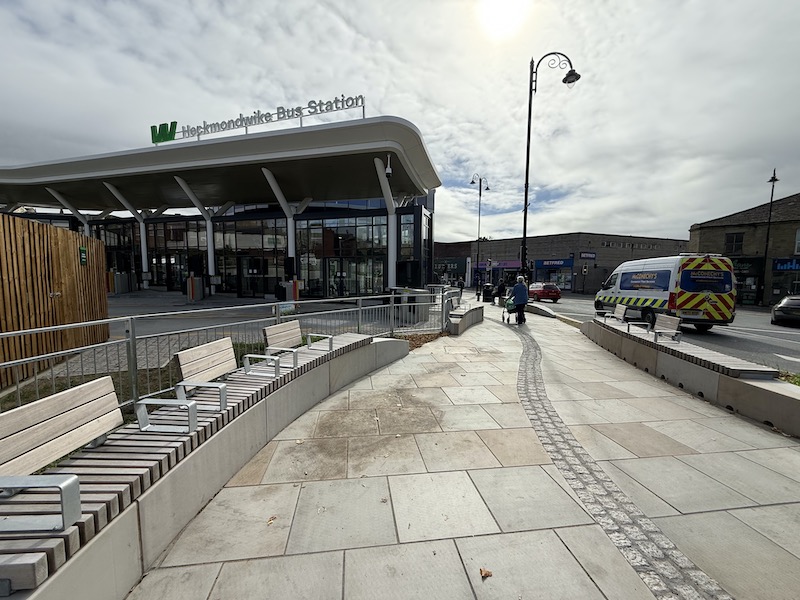
The perimeter landscaping includes some rather nice public realm improvements including wooden seats…
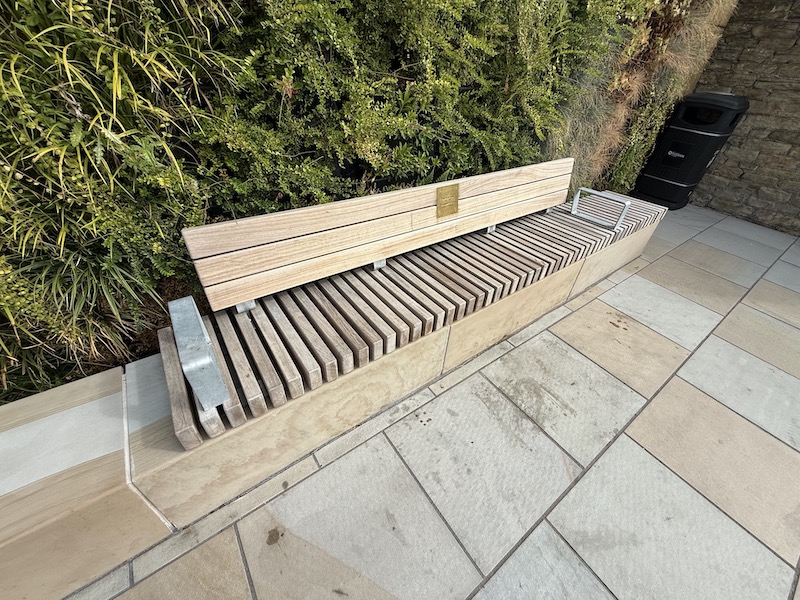
… with one offering a great view of the bus manoeuvring area dedicated to “Phillip ‘Mr Bus’ Carlton” 1949-2020 “a true gentleman, bus driver and a proper bus enthusiast”.
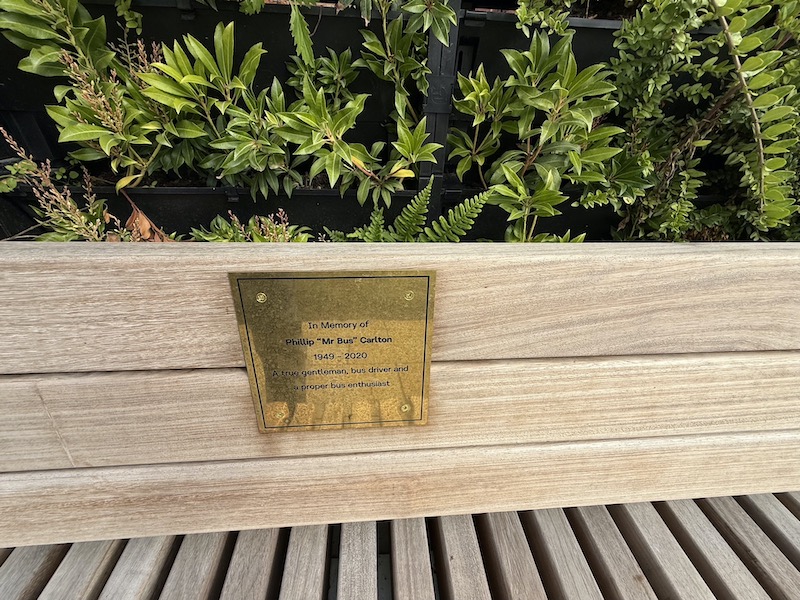
Nice.
As I travelled over to Heckmondwike from Wakefield we passed through Dewsbury where work is well in hand on a £23 million transformation and refurbishment of Dewsbury’s bus station thanks, again, to that Transforming Cities Fund.
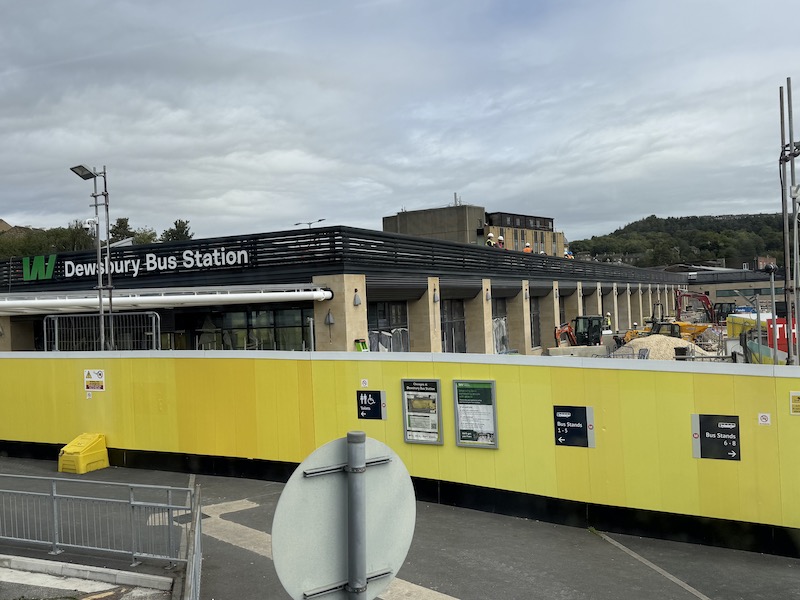
Work began in 2025 with completion expected by Summer 2027.
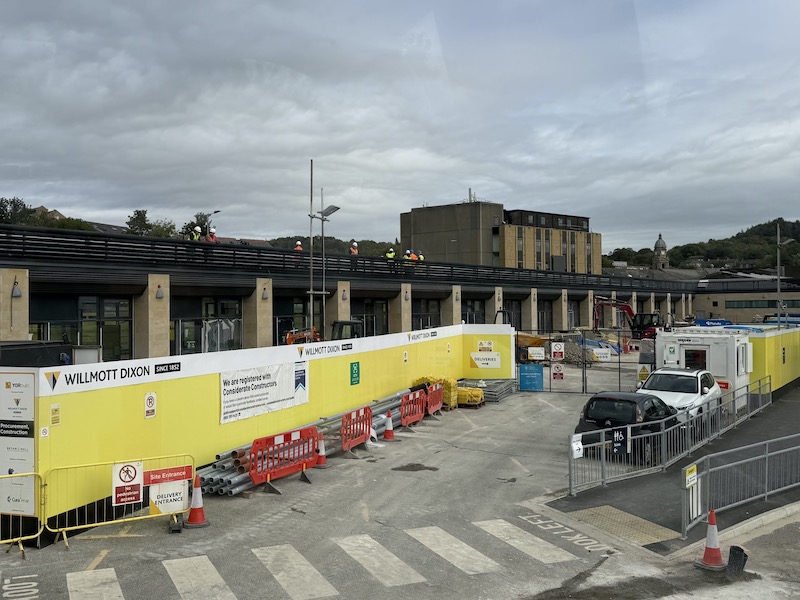
Dream on, Lewes.
Roger French
Blogging timetable: 06:00 TthS


Not just Lewis to dream on….. TfW take note – this is what is meant by bus infrastructure!
LikeLike
Lewes not Lewis.
LikeLike
Good Morning Roger. At least the new Bus Station appears to be a step forward. Is it manned or open to future vandalism, is my only question. All future present and bus stations must insure that passenger waiting facilities must be attractive for the user and staff to ensure they don’t become an eyesore or a local drug seller’s meeting point. I presume it has CCTV at least. The demise of older Bus stations is sad especially in Sussex. In central Bicester the bus waiting point is poor and suffers from adequate cleaning to make it attractive. It’s potentially a good location, but with the local authorities lack of resources suffers from being kept clean and tidy and needs updating.
But I maybe being over critical!?
The Wandering Bus
LikeLike
This is great to see Roger. The old facility was never going to tempt people to use the bus. Other authorities need to take note of this investment as their idea of bus infrastructure falls far short of West Yorkshire’s. Ralph
LikeLiked by 1 person
Visiting Castleford briefly last year, I was impressed by the bus station there: enclosed, well-kept, printed timetable boards, electronic displays, and a café (Gregg’s, I think), all a complete contrast to the rest of the town centre. This clearly pre-dates Brabin’s Weaver Network – or perhaps she hasn’t ventured that far south.
JM
LikeLike
Sadly, three cancellations in the same hour is not uncommon, and has been drawing much criticism of Arriva locally in recent years. Nothing to do with the fact that both the 229 and 268 appear to be destined to go to other operators in the first round of franchising of course – I suspect Arriva is pinning its hopes on retaining Wakefield and taking advantage of the long awaited new depot that is promised (but not yet started)
LikeLiked by 1 person
I have a “relaxed mowing area” at home. My 18 year old cuts our lawn while I watch. 😀
LikeLike
It will be prioritised for wildlife (aka the birds and the bees) rather than for looking neat and tidy.
LikeLike
With possibly a lack of internal space these bus stations are nearly “cookie cutter” in design with places like Rawtenstall and Accrington having similar fashion for the high roofline arrangement , maybe given if not cathedral then chapel like proportions how about some coloured glass , maybe I thinking of Charles Holden’s designs for LT and the green posters/tiles could be replicated in shades of light green or the WN design . Somehow I feel Woollen District may have been more appropriate.
The bus station does look a little undersized and something like a newsagent confectionery kiosk is lacking though maybe a a cafe of the proportions of the one in Preston bus station may be a smell too far. Also something like a travel office – a few NBC Bus Stations had travel agency too , maybe less demand these days but Cwmbran maybe a reasonable example of integrating tightly the bus station into the town centre shopping area that perhaps gives better economic growth opportunities at little extra cost. I am not sure when Heckmondwike is due to get added to the Flixbus network but I hope some coach services have the potential to serve these new bus stations too.
One problem I was musing with the taking into various types of public ownership – now being mooted in London too – was bus companies that have their private hire fleets within their bus garages – I am thinking the likes of London General especially with its Wimbledon Tennis and Chelsea flower show services – will cope with the likes of fueling and maintenance – some have the luxury of premises that are not significantly dedicated to the franchised network but some will either need sub letting arrangements or find new premises – First’s acquisitions of coach companies looks a smarter long term move than I initially considered.
JBC Prestatyn
LikeLike
Your comments could also apply to Folkestone and Hawkhurst bus stations! However, Lewes was on a very cramped site and, were a new one to be built, would be better positioned near the railway station. At present no buses go anywhere near the railway station!
LikeLike
Lewes town centre has a one-way road system and some circular bus routes. Some roads have bus stops on both sides and some only on one side. And the road outside the train station towards the town has weight restrictions due to being a bridge. Outside the train station are bus stops on either side of the road. The 123 and 23 use these both sides/25 arrives at one side and turns around to departs on the other side. 129 as a circular – serves one side of the road towards town.
The bus stop at the road is on the left side only and is served by these routes and also the 127/128/132.
So you have routes to housing estate/The town center or through the town center.
some of these bus routes will take you to housing estate sport in
LikeLike
Correction. The bus stop at the to of the road.
LikeLike
Sorry for the mistakes in this comment
Please ignore the better the bottom that says some of these bus routes will take you to housing estate sport in
LikeLike
West Yorkshire seem to be spending a lot on bus stations. Apart from Heckmondwike and Dewsbury, they have just started rebuilding Huddersfield, due to complete Spring 2028.
AHS
LikeLike
Thanks for this review. One difference between Lewes and Heckmondwike is that Lewes does have a railway station (Heckmondwike had two, both closed) so a bus station does fill a gap, as a place to go to to find and find out about travel. The towns are roughly the same size, both with reasonably frequent, services to a big city about half-an-hour away – though Heckmondwike could really do with some express buses in addition to the stopping services; perhaps the ‘must be like London’ will extend to that some time.
Certainly the old Lewes bus station was far more customer-friendly than the new Heckmondwike version. But the poor connectivity with the railway station remains. It’s a shame, seeing as both the buses and trains are and have been operated by Go-Ahead companies that the local managements have not come up with a better solution than the ‘if you want to connect, it’s only a ten minute walk’ one. I don’t think that has got many people out of their cars.
Rick Townend
LikeLike
To be fair, Lewes Railway Station is very difficult to serve on through buses, for example the Brighton & Hove “Regency” routes, owing to narrow one way streets and some turns banned or unsuitable for buses. A couple of the local services run by Compass Bus do go quite near, and their service to Newhaven via Rodmell actually goes past.
Anthony Holden
LikeLike
Also Cuckmere bus 25 arrives & departs from the train station.
& CTLA 129 serves the stop towards town as it is a circular service.
LikeLike
It is good to see the tribute to Philip Carlton, a true enthusiast. Back in 1974 he was working for Southend Transport and was part of a group of staff (and a young enthusiast – me) who took one of the two remaining lowbridge Leyland PD3s to the annual Trans Pennine Run. We left Southend on the Saturday night after the auxiliary traffic office (aka the Park Inn, opposite the garage) closed, and drove through the night. Arriving at Manchester Hyde Road depot around 0600 we found the canteen open – very welcome on a Sunday morning.
After the run ended in Harrogate on The Stray, Philip drove the bus on a diversion via Heckmondwike, to surprise his parents by parking outside their house, before the long drive back to Southend.
Happy days!
Richard Delahoy
LikeLiked by 1 person
We have those outdoor wooden slatted type seats appearing in the centre of Carlisle – loads of them – as part of a ‘grab some government funding money’ for redoing all the pedestrianised paved area in the city centre.
And those inverted, or northern railway ‘ n’ logo style cycle ‘racks’.
LikeLike
In fairness to West and South Yorkshire, both have always been very good at providing bus stations and long before Mayor Brabin and her Counterparts came on the scene to spout their political dogma. I have yet to visit, but looking at the pictures, whoever planned the boarding areas clearly has never had to queue for a bus on a wet day, although at least there is a well covered waiting room. But at little short of £11 million, to not provide toilets for all borders on the ridiculous.
Terence Uden
LikeLiked by 1 person
I suppose people with IBS and similar can apply for a RADAR key it is nearly discriminatory not to have enough toilets for people that are marginally disabled. I assume it is a fear of potential vandalism and cost of repairs, unlike railway stations bus stations cannot really restrict entry to ticket holders only
JBC Prestatyn
LikeLike
Of course, TU never spouts ‘political dogma’!
LikeLike
Another thing about Lewes train station was that the road in the direction of the town center has weight restrictions due to being a bridge. It’s had work done on it over the years. You can use roads near by to go around this. Route 25 does this as a circular loop it’s only crossing the bridge in one direction.
LikeLike
Speaking of bus stations, it seems Derby has had contactless payment options finally added to the toilets.
John Stokes
LikeLike
Isn’t it funny how things go full circle, Just every Town/City had a bus station, but on privatisation a lot were Dropped city centre stops became the big thing, now new purpose built bus stations seem to be making a big comeback
LikeLike
Before deregulation many bus stations were owned by the bus company [particularly NBC operators] not the local authority, the first thing to go after deregulation was the bus stations as the the operator saw them as a behemoth in the race for cutting costs as much as possible.
Also a lot of bus stations before deregulation were grim & inhospitable places to wait for a bus [some still are nowadays] best thing they done was demolish them, although the replacements have hardly been adequate often just left to stop in the street
SM
LikeLike
Not quite sure from your photo, Roger, but those cycle stands look suspiciously like thief-friendly infrastructure. They appear to be bolted into the ground, enabling anyone with nefarious intent and a powered socket-spanner, to rapidly remove stand and cycles.
When done by two people in hi-viz (the ultimate cloak of invisibility/authenticity) who would challenge it?
In Cambridge we had a similar problem with the original cycle infrastructure at Cambridge North Station.
LikeLike
This new bus station doesn’t appear to be a very practical piece of architecture. Just look at the wasted space inside and as already remarked upon, lack of accessible toilets, manned travel information facility and refreshment area. The latter two would at least have given some comfort to older citizens. The outside is no better. Those wooden seats will soon deteriorate in one way or another and don’t look particularly comfortable either. Even the paving in one area appears to have already be spoiled by some form of spillage.
The bus station concept probably looked good on the architect’s auto CAD and on subsequent artist’s impressions to impress the decision makers. I gather there were public consultations, but the end result probably doesn’t match what was expected by those that will use it regularly.
LikeLike
Next door to West Yorkshire the York & North Yorkshire Combined Authority has just launched a consultation into its “Local Transport Plan”. 65 pages of ambition and aspiration but short on detail, especially cost and where the funding will come from. You might be interested in looking at it. The Mayor’s Local Transport Plan consultation > York and North Yorkshire Combined Authority
John
LikeLiked by 1 person
Dear Roger,
Unless I am wrong, it doesn’t look like there is any kind of information office, which is a shame!
Kind regards,
Ben Walsh,
Cambridge.
LikeLike
I commented at length on the earlier post about Lewes bus station which, for the record, I agree with Roger that it really should have been retained. Indeed, the cost of £4.5m and then a refurb would be good value compared to Heckmondwike, or the £4m spent on Porthcawl.
Bus stations are a particular interest to me. There are some regular comments (often from the same posters) but they seem to be rather ideological rather than based on evidence:
There isn’t an absolute rule on what works and what doesn’t. It has to be appropriate to the level of use, and other factors like one way systems.
It’s been mentioned that Metro (West Yorkshire) has a long history of investing in bus stations and there are some excellent ones, not least Leeds that replaced the rather grim Central and Vicaar Lane bus stations. However, one only has to look at Batley and Cleckheaton to see modern bus stations built at great cost, their retail units shuttered for years, and having all the life and ambience of Lenin’s tomb. And, of course, Heckmondwike didn’t even have a bus hub for years (I think it was built around 2000?) let alone a bus station.
This year, we’ve seen Liskeard get a bus station. AFAIK, it has never had a bus station. It never needed one and when waiting for a bus there last year, it didn’t strike me as needing one.
I’d definitely like to see improved facilities in places like Peterborough or Guildford (which are long overdue) and the restoration of bus stations in places that have lost them (like Darlington) but a proper bus station in every town? The funds would be better used elsewhere.
BW2
LikeLike
A few bus stations in Transdev Lancashire area show how mainly town councils have placed theirs. Barnoldswick gets a bus hub of effectively two shelters one made of a bit of nice ironwork, had the town still had its branch line it would be opposite the station as it is it is near a main supermarket and close to the town centre, at Earby a turning circle doubles up again with a collection of stops for services departing in three destination end directions , Skipton in Yorkshire fits in the gap between the high street the bigger supermarkets and the rail station a short walk away not needing due to it open design shops or other facilities but has the space for routes on lay over for a busy terminus bus station. Colne gets a few stops off road with a short walkable slope to the main town facilities plus a couple of on street stops for routes passing in a eastward direction, the rail station is at the other end of town and its two on road shelters for buses suffice. Nelson got its bus station fairly recently (well time flies) built next to the rather ornate rail station and opposite the main pedestrianised town centre but a little way away from the larger supermarket locations , I cannot recall if there were specific cafe facilities there as good one in an adjoining street, Brierfield just needed on street stops ( like many of the towns in the upper valleys of South Wales) but Burnley has its town centre substaintial bus station which has the cafe , toliets, travel information and newsagent open more hours than some of the town shops , a very large supermarket is opposite along with civic centre and main housing provider offices close by too, rail stations including the route to Manchester due to the geography of the town are quite difficult to serve by bus although some longer distance and local routes do attempt to call at them at reasonable Monday to Sat Times
In London recently noted is Romford – on street stops in the main town centre close to the elevated railway station but the main Hospital site manages to get a concentration of stops and terminating bus services creating a bus station but facilities are effectively at the hospital campus.
Really bus stations work best where there is interchange possibilities for other routes or a need to keep stops out of busy roads and closer where possible to useful destinations. The ability to interchange with rail can only depend on where the rail station is compared to the geography of the area – Bolton for example got its bus interchange located to the rail station area but was that at significant expense of being a little further from the civic and main shopping areas ?
JBC Prestatyn
LikeLike
Has WYCA fixed the leaky roof at Leeds bus station yet?
https://www.yorkshireeveningpost.co.uk/news/traffic-and-travel/leeds-bus-station-toilets-to-reopen-as-plans-drawn-up-to-repair-leaking-roof-5420466
LikeLike
The photo of Hecky’s previous expansive four-stand bus hub shows all too clearly the difference in land value compared to such as Lewes. It was as roomy (and windswept) as the one at Bishop Auckland.
The problem with unsupervised free to enter toilets is vandalism, though it’s a puzzle why the scrotes don’t all get a RADAR key online for a few quid, then they could break up most of the locked toilets too.
LikeLike
Indeed – go back to Google Maps in 2012 and the land was derelict.
https://www.google.com/maps/place/Heckmondwike+Hub/@53.7081562,-1.6754553,68a,75y,177.52h,78.58t/data=!3m8!1e1!3m6!1s07R_pkMGqeILg85vZdctfg!2e0!5s20121001T000000!6shttps:%2F%2Fstreetviewpixels-pa.googleapis.com%2Fv1%2Fthumbnail%3Fcb_client%3Dmaps_sv.tactile%26w%3D900%26h%3D600%26pitch%3D11.420621013214557%26panoid%3D07R_pkMGqeILg85vZdctfg%26yaw%3D177.52165640530353!7i13312!8i6656!4m14!1m7!3m6!1s0x487bdf4a2cb82545:0x4cc2158514a22716!2sHeckmondwike+The+Green!8m2!3d53.7077273!4d-1.6762254!16s%2Fg%2F11rc4g_3zg!3m5!1s0x487bdfea3c633d81:0x87c3daada1dc79bd!8m2!3d53.708096!4d-1.675298!16s%2Fg%2F1thtp47m?entry=ttu&g_ep=EgoyMDI2MDkxNi4wIKXMDSoASAFQAw%3D%3D
LikeLike
And what Google Maps shows which maybe is less clear from the OS map is the some what climb up to bits of the town from the Bus Station . I did suggest Woollen District as a better name than Weaver Network but maybe Hilly District would be better having driven around Halifax Bradford and Dewsbury in the past.
JBC Prestatyn
LikeLike
Heckmondwike is only a small town so I wouldn’t expect an information office. However Dewsbury used to have one, but Arriva closed it at Covid and it never reopened. It’ll be interesting to see if Metro/Weaver Network open one when the new Dewsbury Bus Station opens.
Also as others have said, that covered waiting area looks like an ideal hang out spot for teenagers, particularly after dark. I doubt there will be any security staff on site, the only personnel passing through would be bus drivers doing changeovers. Cleckheaton was rebuilt at similar large cost in a previous era and now is overrun by feral teens, so much so it’s been known for buses to be diverted away due to anti social behaviour.
LikeLike
Some of the bus stations and for that matter, garages, were closed over the years because the company accountants realised they could add a lot of money to the coffers, albeit on a one-off basis, by selling the land to developers.
When London Transport was broken up and the constituent parts sold off, a separate state owned property company should have been set up to take up ownership of all the garages and land, thereby, thwarting the liquidation of ‘assets’ by the emerging groups at that time. Yes, some garages were past their ‘sell by’ date but at least they could’ve been re-developed and then let to the operators. It might also have had the benefit of reducing the amount of ‘dead mileage’ that has occurred over the years in the capital. Then again, privatisation was instigated by a Conservative government who would’ve found the thought of a state owned property company anathema. Oh well.
LikeLike
Indeed, and there is the celebrated example of Southampton bus station that was sold by Stagecoach effectively paying for Hampshire Bus… but here’s the rub. It was originally slated for closure by the NBC in the early 1980s.
As regards the closure of London bus depots… most were closed between 1985 and 1993, before the London Buses firms were sold off. Places like Hornchurch (1988), Sidcup (1988), Victoria (1993), Muswell Hill (1990) and Finchley (1993) to name but a few were all closed under public ownership as competitive tendering was brought in. Aside from Alperton, not many have bitten the dust in the last 30 years as the London bus fleet grew albeit it has contracted in recent years.
BW2
LikeLike
One of the benefits of London’s privatisation being later than the NBC was that the operators had to purchase the properties as part of the sale. There was a covenant on the properties that prevented their sale for at least 10 years afterwards.
This contrasts with several NBC sales, where the properties were sold separately to the operations … and the services suffered accordingly.
The best example was London Country North East, which (apart from Harlow [covenanted again]), had to continually seek out new premises to operate from, which no doubt contributed to its well documented problems during its short life.
LikeLike
I’m loathe to contradict you but I think the problems of London Country North East were many and were evident well before privatisation. Not least the industrial relations issues and the ruinous 1988 strike just before the business was sold, and the related poor performance of LRT contracts.
The separation of property from ops may have caused issues, I don’t doubt, but even without that, LCNE was a very troubled business.
LikeLike
Indeed … LCNE was always troubled, and would’ve been unlikely to survive even without having no “home” to operate from in Hertfordshire.
I think it is fair to say that LCBS North and LCBS South would have been a better split … of the four companies created, three were sold on with almost indecent haste … they simply couldn’t survive on their own.
LikeLike
It’s the fate of LCBS SW which always shocks me. It’s effectively completely ceased to exist, carved up between Metrobus, Falcon, Whites, Stagecoach and the various Slough/Windsor operators. At least the descendents of the North West and South East companies still exist in an identifiable, albeit smaller, form.
LikeLike
It’s a shame that Acton Tram Depot perished. Given its age and significance in the history of London United trams on the Uxbridge Road, I’m surprised a preservation order wasn’t applied to it. As for Alperton, was that closed because of too much capacity or a case of ‘let’s us make some money’ guys?
At least Chiswick/Stamford Brook and Fulwell have survived for those interested in their original tram heritage.
LikeLike
Alperton was closed for a number of reasons. Yes, the site was worth a bit of money (£25m) so definitely a consideration. However, it was also a relatively small depot and the last allocation of forty vehicles was doubtless a low obstacle to close and relocate to a smaller, cheaper site.
BW2
LikeLike
We have discussed the sale of properties before, including specifically the former Hants & Dorset depot at Grosvenor Square in Southampton. Stagecoach sold this soon after purchasing the company ( by then, Hampshire Bus ), and, in that case, a quite significant proportion of the proceeds of the sale had to be paid back to the Government. The politicians were possibly not quite as stupid as we sometimes think they are!
I cannot remember exactly when that discussion took place – it was probably a couple of years ago. I am also unsure if a similar arrangement would have applied to the bus station ( at West Marlands ), since that area was incorporated in a new shopping centre, and had, as I understand it, been marked for inclusion in the new development several years earlier. My understanding was that the bus station had been built in 1964 for a planned 10 year life, so that the closure plans that BW2 refers to probably dated from earlier than the 1980’s.
Nigel Frampton
LikeLike
oddly , in part as the PVR of TfL operations increased , the number of operating bases increased, in part on industrial estates expanding some coach operators , some ex LCBS and similar acquired sites and some new locations again on mainly industrial estates – which could be argued reduced the amount of industry within London , places like Mandela Way effectively replacing Peckham, The Beddington Lanes in a jiggle around of services replacing Streatham and Sidcup , but the big loss to me is that of two garages efficiently operating longer routes ( a bit of a pinch of salt on that as some garages attempted to sent their worst vehicles off to finish a duty at the other garage.
JBC Prestatyn
LikeLike
@JBC – Mandela Way didn’t replace Peckham. The previous Peckham garage site closed in 1993 (or thereabouts), but its operations moved to a nearby site where it remains to this day.
London General opened a base at Mandela Way in 2007 to free up space at Stockwell, following the award of the contract for route 24. Mandela Way subsequently also housed route 453, won in 2008. East Thames Buses (TfL’s in-house subsidiary) also had a base at Mandela Way. As far as I know the former East Thames Buses base remains with TfL, housing some of the Dial-a-Ride fleet; the London General base closed in 2017.
Malc M
LikeLike
@anon 22/9 20:48 – do you mean London Transport or London Country?
As BW2 has already commented, the closure of garages in London happened mostly whilst London Buses was still in public ownership. Some closed after losing most/all of their work to other operators through tendering (Loughton, Hornchurch, Walthamstow all come to mind), others as tendering losses reduced LBL’s fleet size, and others through general rationalisation at a time when London’s bus usage and fleet size were both declining.
I can think of two examples of former London Transport garages closing since privatisation – Upton Park and Alperton. There may be one or two others, but they are heavily outnumbered by the closures whilst still in public ownership.
London Country is a very different story indeed. Harlow, Northfleet and Crawley (sold by Arriva to Metrobus) survive, Swanley did spent some time closed (originally closed by London Country when they opened a new Dartford garage in early 1986), but is now used by GoBus.
Malc M
LikeLike
If you are critical of those bus stations come and see the £12million pound disaster that is to be Hereford’s transport hub. 4 stands to replace 12 so no dedicated bays, hardly any layover space and a shelter with no sides aka the wind tunnel.
LikeLike
Bus stations have an inbuilt problem. They provide an excuse for urban operators to terminate their routes there, so that cross-town passengers are both forced to interrupt their journeys there (ie travel slower than they would wish) and to pay twice. Here in Basingstoke, we have a comprehensive urban bus network, but AFAIK only one route deviates from the norm and it’s more of an outer circle than cross-town. That feature does put me off using the buses for anything other than for home-town centre journeys.
Stuart S
LikeLike
That might be your experience in Basingstoke but that might not be the reason. In Birmingham, there are hardly any cross city routes that’s nothing to do with a bus station as it hasn’t had one for years and the city routes didn’t use it. Bath has a bus station and yet has cross city routes nonetheless.
The lack of cross town/city routes has much more to do with a) the demand b) the road network c) the level of congestion. Many cross town routes suffer dreadfully from delays so why cause a world of pain for relatively little benefit as most passengers only want to travel into the town centres anyway.
BW2
LikeLike
I totally agree with Phil Stubbington. I recall the area very well from my childhood during the 1960s when travelling on Green Rovers and visiting the various LT Country area garages (Guildford/Dorking/Leatherhead/Reigate etc.). Then later when travelling on business in the area and noting the LCBS services right up to the 1980s by which time I had an office on Monument Hill in Weybridge and witnessed first, LCBS then London & Country liveried Nationals passing by. Then, as you say, it all seemed to disappear overnight. Great shame. PB
LikeLike
Oddly for LCSW it has been TfL red bus services that have filled in with the likes of routes from in London to Dorking , somewhat how London General originally operated from within London to outside then for a change of the Country Area running the Leatherhead Kingston area services and so on , at the same time though Red buses to Staines and Esher diminished in favour indeed of now White Bus and Falcon. Stagecoach merged bits of the Guildford area into the Alder Valley south operations. I cannot Drawlane could have done any better financially other than selling off real estate and maybe Metrobus just had lower operating costs to make their mix of TfL and Surrey and West Kent area operations workable.
JBC Prestatyn
LikeLike
An interesting debate on investment or expenditure – a bit like the 1980s when spending on motorways was seen as an investment but spending on railways was seen as a cost.
This looks to be a bit over the top for what is needed and, as it is the UK, at a high cost.
Even if Lewes had access to money for a bus station I doubt it would spend the money on one, buses don’t have the right image.
Richard Warwick
LikeLike
Richard, when you say ‘buses don’t have the right image’ are you referring to the public or/and local politicians? As I’m sure you’ll be aware, great strides have been made over the past 30 years by most operators (large & small) to improve the image of the bus. For example, Roger’s Brighton & Hove being an exemplar of this, with the able input of Best Impressions. The latter has a great record for improving not just the image, but also creating many enhancements for various bus companies up and down the land. Bus design has obviously improved greatly during this time too. Low loading, disability access, room for pushchairs along with wi-fi and phone charging being just some of these.
As for political support, we’ve probably experienced more bus related policies in the last ten years or so, than all the previous de-regulated years put together. So that’s a positive too.
The ultimate challenge, as always, is getting non-bus users to leave the car behind (even if only for some journeys), hence the need for continuous focussed marketing, bus priorities, good communications and passenger facilities. PB
LikeLike
Horsham Bus Station is a good example of a compact but useful facility. When I was there recently I noted that the building (like at many bus stations, sadly) is closed late evening and overnight, but I couldn’t see any way the stands could be accessed from the outside – can you Roger or anyone else explain how one boards buses on Metrobus’ routes after 2300 approx.?
LikeLike
Bus Stations or their equivalent have a value beyond that of the physical facilities – and that is a single location for locating services in terms of information. A town centre on-street facility may work perfectly well for locals but if the buses leave from a variety of different streets with different names there is nothing for the stranger to indicate that they are next to each other – Vincent’s Walk could be the other side of the city centre from Hanover Buildings (to use a Southampton example), as far as a stranger is concerned, and yet they are actually very close, enabling easy interchange between routes from Woolston and routes from Winchester and Eastleigh. If the roads are grouped together for information purposes and named something like ‘Bus Hub’ with stand letters but not the individual street names then information systems can treat all the stops as a single location, easing journey planning and minimising the number of separate steps (eg walking legs). But on-the-ground wayfinding needs to be extremely good, especially where streets are not visible from each other.
To summarise – bus stations are not just physical buildings, they’re also simple hubs for journey planning. And in that sense they don’t actually have to be buildings at all, as long as the stops making them up are very close together on-street.
Stephen H
LikeLike
This blog has resulted in many very interesting comments. What I can never get over is the cost, £10.5m to replace 4 shelters around a square. For that kind of money you can buy 55 new single deck buses, probably with a similar life. Will the new bus station, with its unknown running costs , actually increase the number of passengers? I doubt it very much. One of the problems that buses have had over the past many years is that their stopping arrangements have been marginalised from town/city centres and they have been slowly pushed away from the main retail areas. And the more recent problem they face is that town centres are losing the retailers to which bus passengers go to, leading to another spiral of decline. Very few out of town retail parks, as opposed to shopping centres, have been good for the bus, but have been good for the car with free parking being a big draw. To revitalise buses their stops have to be part of the overall planning process to get shops and stop close together. Wether it’s a fancy Bus Station or not seems irrelevant to me
LikeLike
It would be interesting to compare boarding numbers at Lewes and Heckmondwike. Whilst WYCA/ Metro have a strong record of investment in bus stations, this one feels a bit like overkill. “Hecky” has never been a strong destination and will be less so with the national decline in high streets. Perhaps the £10m would have been better spent on bus priority which, outside Leeds, is very limited in West Yorkshire.
Reading between the lines of the design, the lack of a retail/ cafe space is likely because of difficulties retaining tenants at other bus stations. The RADAR only access to the toilet is because they fear ASB/ drug taking etc
This is the first physical manifestation of the “Weaver” branding – it doesn’t seem an upgrade on the current “Metro” branding, Manchester’s Bee Netowrk or that planned in South Yorkshire. But what do I know about design?
LikeLike