Thursday 17th September 2026
Full disclosure: Historian Ruth Thomson (co-author of this wonderful new book along with husband Neil) contacted me in June 2025 explaining how she was compiling “a history of Lewes bus station (including the garden of Trinity House on which it stands) and … wondered if you would be interested in being involved?” I was delighted to share recollections of my involvement over almost 45 years with this iconic structure in the town but more importantly put her in touch with others (employees and bus enthusiasts) who I knew would be only to pleased to help. Ruth went on to explain “as editor of the recent, award-winning illustrated book: Grown in Lewes, I am keen to include voices and photographs of those who used the bus station as passengers, drivers, conductors, workers, etc. and to include as wide a variety of material – photographs, maps, tickets, artwork, posters, timetables and other ephemera, etc as I can to add visual interest to the account.”
Fifteen months later Ruth and Neil have just published their book – All Change! Lewes Bus Station. And what a superb production it is. As Ruth hoped, it’s full of ‘voices and anecdotes’ of the many local people who’ve had a connection with the bus station from its opening in 1954 until it closed for good, exactly four years ago, in September 2022.
The new book is copiously illustrated with photographs and artwork charting not only developments in transport provision across the decades but also the many changes in social values, attitudes and habits.
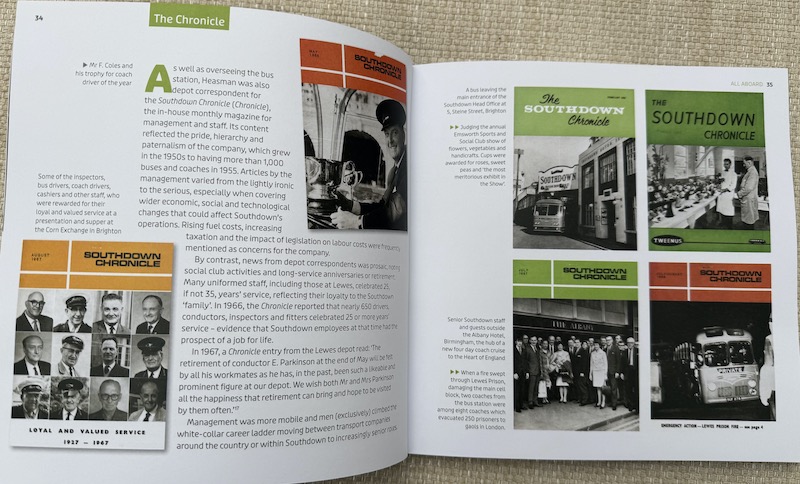
Much of the early transport history has been gleaned from contemporary local press cuttings across the decades as well as back copies of Southdown’s staff magazine, the Southdown Chronicle. There’s a fascinating historic background explaining the location and opening of the bus station, being situated in what was once part of the extensive garden of 213 High Street – a prominent building in the town occupied by successive lawyers for more than 200 years, as it still is today. You can only imagine the legal processes Southdown therefore had to go through to build a bus station in such a location.
Architects for the new building were a Brighton based firm who’d also designed bus stations for Southdown in Bognor Regis in 1934 (now a supermarket car park) as well as both Chichester (bus station and garage still standing) and Haywards Heath (now a Waitrose).
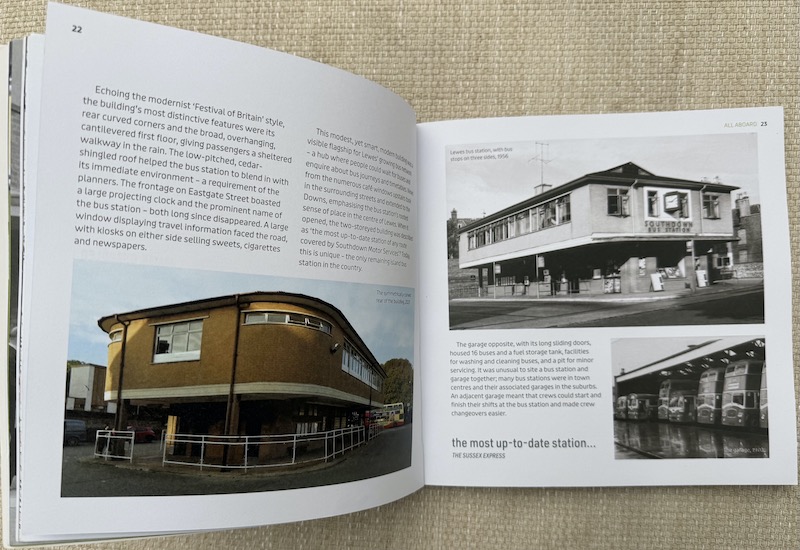
To make best use of the confined space an island footprint was designed, around which buses circulated in one direction and on which the building sits with its distinctive features such as a sheltered walkway for passengers under a broad, overhanging, cantilevered first floor as well as rear curved corners. As Ruth and Neil observe, the building became a “visible flagship for Lewes’ growing bus network – a hub where people could wait for buses and enquire about bus journeys and timetables”.
The garage opposite, with its long sliding doors, housed 16 buses and a fuel storage tank, facilities for washing and cleaning buses, and a pit for minor service.
Ruth and Neil uncovered the original internal plans for the building which brought memories flooding back for me, as I’m sure they will for everyone who worked or visited the premises. The layout included a public café and toilets on the first floor as well as a kitchen, staff canteen, social club area for staff and toilets with the ground floor housing a waiting room for passengers with two telephone booths, two kiosks selling newspapers, sweets and cigarettes, a booking office and staff facilities comprising a paying-in room, cashier’s office and Inspector’s room. Public toilets at the far end were accessed from outside.
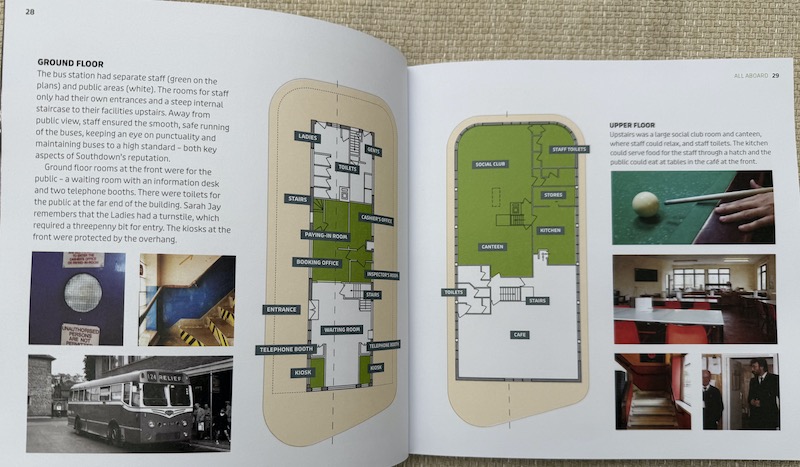
It’s not hard to see why, with all those facilities and its central location (a stone’s throw from the junction of School Hill, Cliffe High Street, Eastgate Street and Friars Walk), Lewes bus station became a much loved focal point for the town and explains why there’s been such an outpouring of emotion and sadness at losing it.
It’s interesting to be reminded, even at the opening ceremony of the brand new bus station in March 1954, Southdown’s chairman, Raymond P Beddow, told the gathered VIPs and dignitaries to mark the occasion, as quoted in the Sussex Express for 5th April 1954, that “it must not be expected by either (Transport) licensing authorities or local authorities that the Southdown Company would be able to provide new bus stations often. The particular factor existing at Lewes does not apply generally. Bus stations are costly to provide and do not bring more revenue. In one way or another, passengers have to pay for bus stations and it follows that, from our point of view and from the point of view of most of our passengers, bus stations are to be avoided, if possible”.
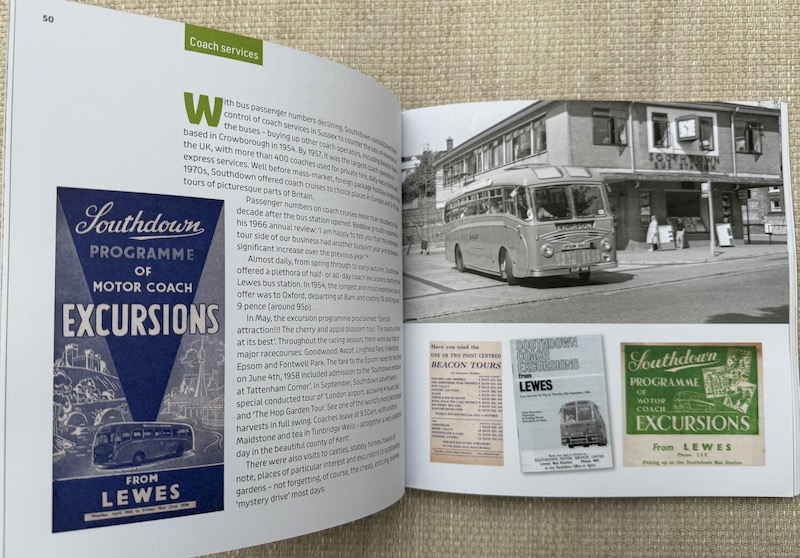
A somewhat controversial stance but the ‘particular factor’ Beddow’s referred to was no doubt the town’s challenging traffic congestion, even in 1954, in School Hill/High Street with the Sussex Express observing a bus station “will enable buses to wait and pick up and to discharge passengers completely off the highway and do much to relieve congestion in the crowded High Street”.
Reading the book from cover to cover you soon realise how in some ways everything changes over the decades, but in other ways, nothing changes.
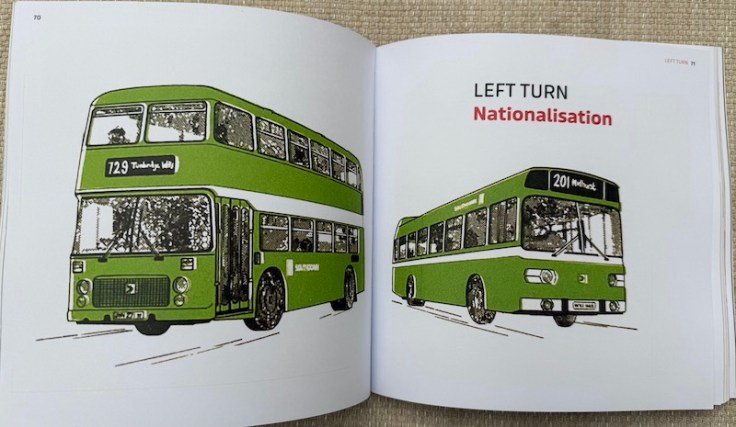
Ruth and Neil have divided their very readable account of the history into five sections. The first 70 pages cover the heyday of the bus station including many wonderful personal reminiscences from staff who worked there (including relatives of those now deceased) and passengers who regularly used it for their travels, followed by 26 pages featuring the “Left Turn – Nationalisation” era from the late 1960s, followed by a further 28 pages covering “Right Turn – Privatisation”, with the end of the story told in 14 pages covering “No Through Road – Closure”. Another 20 page section covers the interesting period after most buses ceased serving the bus station but the building was used for a range of community activities and eateries. There’s also a section highlighting the Lewes personalities immortalised by having a Brighton & Hove bus named after them.
‘All Change!’ covers the various ownership changes which have impacted the bus station across the decades including Southdown’s move from the private sector (part of British Electric Traction) to nationalised ownership within the newly created National Bus Company in 1968 then back to private ownership, initially to its management team in 1987, from whom Stagecoach bought the business to add to its expanding portfolio of bus companies in 1989, and crucially for this story, that purchase included the ownership of Lewes bus station.
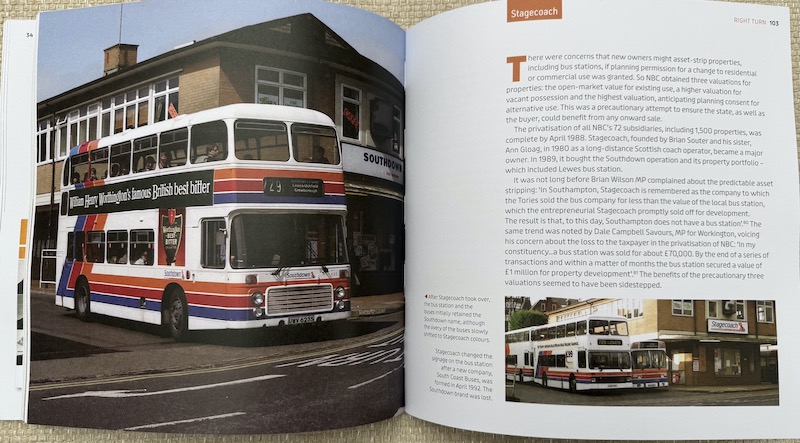
Ten years later in 1999 what was described as Stagecoach’s “continuing lack of interest in the depot” was highlighted in the Sussex Express: “everyone knows that Lewes bus station can be a pretty depressing place to wait after dark. It is beginning to look pretty dismal during daylight hours as well. It needs some tender loving care. Or, alternatively, demolition and rebuilding. The general air of shabbiness is letting the town down.”
With echoes of Beddow’s speech at the opening ceremony in March 1954, 51 years later, in September 2005, Stagecoach decided it could no longer justify the overheads of a garage and bus station with 25 buses and 70 employees. The company sold its routes to Brighton & Hove which we were pleased to buy especially as it enabled us to develop the inter-urban routes along the A27/A26 corridor between Brighton and Tunbridge Wells as well as to Ringmer. But we could accommodate the buses and staff at our garage in Lewes Road, Brighton along with an expanded outstation which Stagecoach had inherited from Southdown, in Uckfield, so we no longer needed Lewes bus station as a base for staff and buses.
Inevitably, within a year, Stagecoach had sold Lewes bus station to a property developer, Rees Elliot, based locally in Lewes. To begin with Rees Elliot kindly allowed buses to continue using the bus station as a goodwill gesture but once the company wanted to charge £23,000 per annum, just like Beddows, I felt passengers would not appreciate paying that additional cost for what had become a dubious benefit of standing under a cantilevered roof with that “general air of shabbiness” to wait for their bus to arrive at what was effectively just one bus stop.
With Norman Baker’s help (the well respected MP for Lewes who later became a Transport Minister in the Coalition Government), a compromise was found with Brighton bound buses continuing to use the bus station (along with local routes provided by Compass Bus for the County Council) and Tunbridge Wells/Ringmer bound buses using a new bus stop located immediately opposite, outside Waitrose.
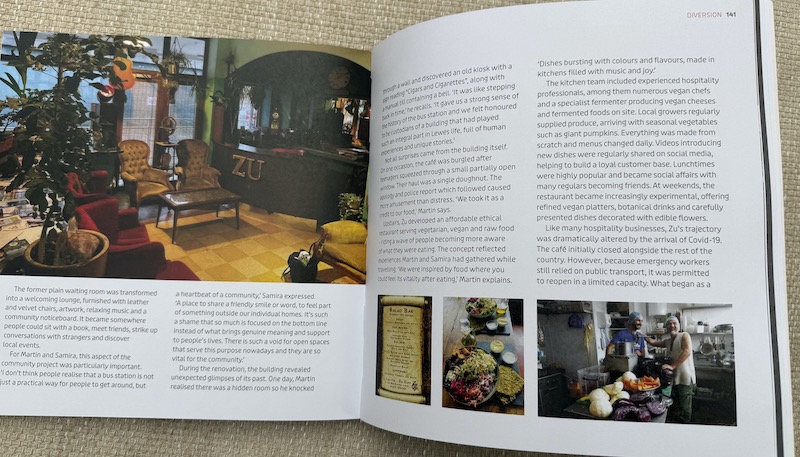
Meanwhile the cafe continued to trade and in the ensuing 16 years (between 2006 and 2022) experienced a succession of interesting developments including, for a time, an artisan baker who opened a pizzeria in 2012 which, together with a successor called BusClub Pizza, lasted until 2019 when Zu Café arrived in the premises creating a “lively hub for food, conversation, creativity and community life”. The former waiting room was transformed into a welcoming lounge, furnished with leather and velvet chairs, artwork, relaxing music and a community noticeboard. Upstairs Zu developed an affordable ethical restaurant serving vegetarian, vegan and raw food – riding a wave of people becoming more aware of what they were eating.
The story of Lewes bus station entered its final chapter in 2021 when Rees Elliot sold the property to Essex-based developers, the Generator Group, which promptly submitted a pre-application proposal to the South Downs National Park Authority for a mixed-use development for the site. It was initially refused but following subsequent amendments (32 flats, three houses and 198 sq.m. of ground floor commercial space) was approved in 2024.
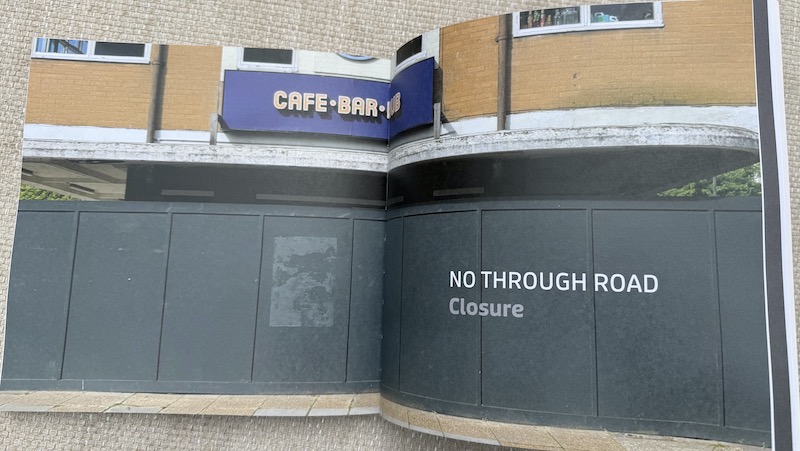
Meanwhile the Generator Group completely closed the site to public access in September 2022 with the remaining bus departures dispersed to bus stops in School Hill/High Street and Friars Walk and the Zu Café closed down. High black hoardings and a gate were erected across the front of the site and the building was locked and left empty. The garage remains in use as a storage facility and furniture workshop. And the book records “congestion caused by bus stops on School Hill has come full circle since the bus station was conceived in the late 1940s”.
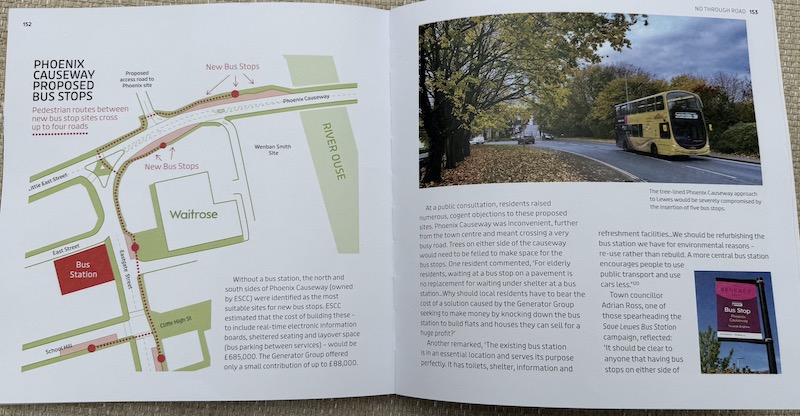
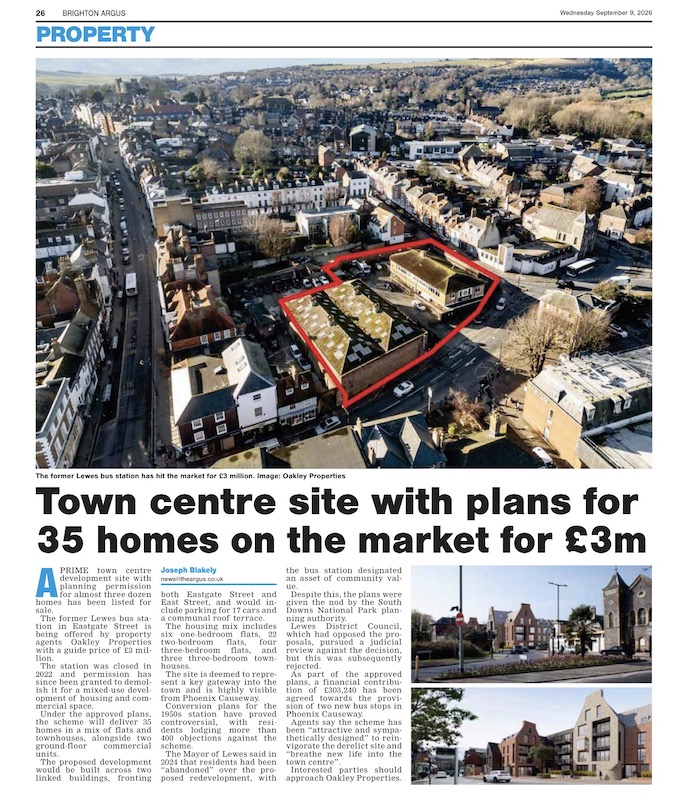
Bringing the story completely up to date the bus station is again up for sale (for £4.5 million) and there are plans to spend £300,000 to relocate two bus stops further away from the town centre on Phoenix Causeway as replacements for those causing congestion in School Hill.
It’s a fascinating story told in a very engaging way and I heartily recommend the book not only for anyone with a local interest in Lewes but also those with an interest in social history and the role of bus stations in our town centres.
Ruth and Neil are launching the book at an event in Lewes next month but it’s available to purchase now through the Lewes History Group at this website. All Change! costs just £16.50 + £2.95 postage and packing. It’s also available from Leadbetter and Good, a shop in Cliffe High Street, Lewes as well as from the Southdown Enthusiasts Club.
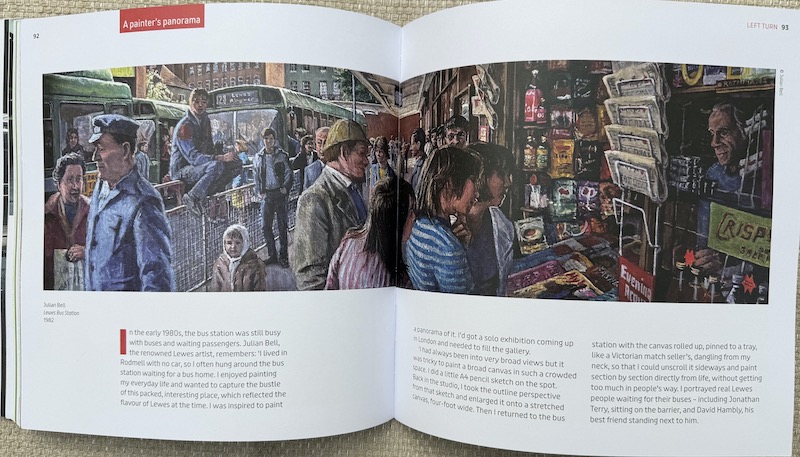
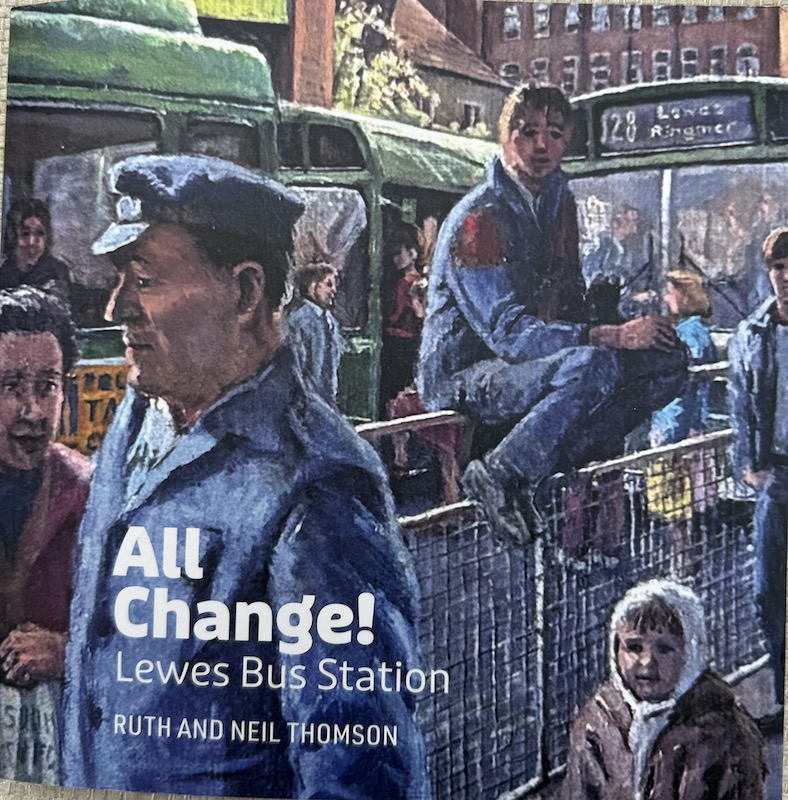
And that front cover? It’s a painting from the early 1980s by renowned Lewes artist Julian Bell who “wanted to capture the bustle of this packed, interesting place, which reflected the flavour of Lewes at the time. I was inspired to paint a panorama of it …. portraying real Lewes people waiting for their buses including Jonathan Terry, sitting on the barrier, and David Hambly, his best friend standing next to him.”
Roger French
Blogging timetable: 06:00 TThS


The Wandering Busman has read your comments and thought my career history was London and the suburbs, I lived in Mid-Sussex for 39 years and remember Lewes and Haywards Heath Bus Stations very well. The book looks a great read Roger and I will certainly buy a copy.
LikeLiked by 1 person
I well remember Lewes bus station in the 1980s when Richard ran the information office. He was always very friendly and helpful in supplying printed timetables – remember whe bus companies produced such things?
There was a good cafeteria in Haywards Heath bus station which I occasionally used in the 1970s
john St. Albans
LikeLike
My late friend Andrew Wickham would have been delighted to see this book. As a local, it was a place dear to his heart.
DJ
LikeLike
“…and there are plans to spend £300,000 to relocate two bus stops further away from the town centre on Phoenix Causeway as replacements for those causing congestion in School Hill.”
That statement reveals just how much – more precisely, how little – the politicians really care about improving public transport, and making it more attractive to users.
RC169
LikeLike
Rather strange remark from Mr. Beddow regarding Southdown’s attitude to providing bus stations, as it did rather well in that aspect. They provided both bus and coach stations in many locations, including County Oak within hallowed London Transport territory! Not only that, they were very much in the art deco style of quality that Southdown was famed for, unlike some of it’s neighbours.
But hindsight is a wonderful thing, and I somehow think that Stagecoach possibly regretted withdrawing from the area after seeing what a good job Brighton and Hove made in developing services both through Lewes and certainly along the Coast (service 12). Ironically, and as pointed out, service levels have remained high in Lewes and never has that back garden bus station been more missed! How nice this book has been such a tribute, and the story not lost.
Terence Uden
LikeLike
A very interesting account of a facility that I am sure is greatly missed. A story that can be repeated in numerous towns and cities across the country.
The comment from Mr Beddow really shows how out of touch some bus managers were, even then. That was made at a time when patronage was starting to decline and perhaps such people were complacent.
I for one think bus stations are an asset that all towns and cities should be proud to have. Imagine if someone suggested closing all the car parks! It is necessary to have a central hub for buses to permit interchange.
One big loss is the facilities for the staff. No canteens or sports facilities let alone toilets. Often see uniformed drivers wandering aimlessly in town centres having their breaks – something else to make the job less inviting.
Richard Warwick
LikeLike
People of Mr Beddows standing were of course ferried around in chauffeur driven cars, and other than the odd photo opportunity, possibly never stepped on a bus since leaving school…..if ever in some cases.
Terence Uden
LikeLike
Not so Terence and Richard – if you read the excellent Venture Publishing vols 1 and 2 history of Southdown, the context of Mr Beddows statement was Southdown’s policy was that if they built bus stations across their area in every town or city, then the cost of that would be reflected in the fares levied to passengers. They were acutely aware of costs to the passenger as well as benefits. Instead, they would only build them at key locations…like Lewes.
Hence, they were very selective in building dedicated bus stations. Yes, they had small ones at Pool Valley in Brighton and Pevensey Road in Eastbourne, and in Lewes, Chichester and Haywards Heath; places like Bognor and Uckfield may have been listed as bus stations but were essentially the depot with a few customer facilities. However, they didn’t have them Worthing, Littlehampton, Horsham (notably), Hailsham or smaller spots like Emsworth or Heathfield etc.
Contrast that to a similar albeit Tilling behemoth like United that had separate bus stations at Ashington, Blyth, Redcar, Scarborough, Newcastle, Whitley Bay and Hartlepool (granted, adjacent but a distinct structures) and even in small towns like Hexham, Ripon, Alnwick, and Whitby.
There can’t be a hard and fast rule that a bus station HAS to exist in a town. It’s got to be guided by the level of activity, the nature and structure of bus services, the road network and other topography etc. Otherwise, you have some of the absurdities that Roger has rightly drawn attention to – Barry and Porthcawl are just two places that have gained bus stations that really didn’t need them. On the flip side, it would be beneficial to have them in other places such as Darlington or Salisbury rather than have services scattered across various stops.
BW2
LikeLike
If you add the Coach station in Brighton (not Pool Valley which was for buses only) and County Oak, nine sounds a pretty reasonable number to me. Uckfield and Bognor had all the facilities required for passengers, and thus should not be dismissed,
LikeLike
Midhurst was an interesting bus station in that buildings were few at best some shelters from memory only existing because it was on land that had previously been railway the town having lost its once quite widespread rail network
Petworth didnt really need to have a bus station as the road arrangement around the town hall and square rather handily was laid out in a way to accommodate bus stops for services appropriately. The same for Littlehampton as the main high street saw most routes pass through or could turn around due again to the road network.
Given in Lewes the shops in the bus station building and I assume the offices above were used by the company saving some space of the moderate sized bus garage giving some real and notional income for the site . I am not sure what business rates were levied on bus stations.
JBC Prestatyn
LikeLike
Bus stations should be seen as a gateway to any town that has one, first impressions on arrival etc. If bus operators operated networks rather than collections of stand alone routes bus stations could become interchanges rather than termini. I can’t remember where it was but Roger wrote not long ago about a town centre combined cafe with travel office. That idea would be ideal for towns without bus stations.
It’s interesting that the northern transport authorities continue to support bus stations, and new ones seem to be built regularly.
Pete
LikeLike
It was Colchester (also Norwich).
LikeLike
I was always impressed by Lewes bus station and its architecture. Unfortunately as I was nearly always passing through whilst driving the 28 to Ringmer and the 729 to Tunbridge Wells, or returning to Brighton, I rarely had the chance to sample its facilities.
I thought the closure was very disappointing but this book will be a splendid reminder.
Paul from Leicester.
LikeLike
Yes Terence, I remember County Oak. It was a refreshment stop for the coaches plying between London and the south coast. I don’t think there was an information office there or if the facilities were available to.non Southdown customers.
Horsham has a small bus station now well more of a hard standing. In Southdown days the company had a small shop for an office on Carfax where their services
John, St. Albans
LikeLike
Was also a bus garage for Southdown’s Crawley based services, albeit small in number. Even had Conductors based there!
LikeLike
During my time working in the bus industry, I once attended (as an observer) a meeting to discuss plans for a new bus station in a town that, at the time, did not have a bus station – Pontypridd. The proposal as it stood was that the local municipal services would pass the proposed station, but not call in, since most were cross-town services. The NBC, other municipal and independent operators’ services would be required to use the planned station, since most of them terminated in the town centre.
The operators’ representatives were unimpressed by the proposal, seeing it as an additional cost that would bring no benefits to their services. You have to remember that the vast majority of bus passengers are not employees of the operating company, and nor are they bus enthusiasts – so that they don’t actually have any particular reason to go to a bus station. They want to get to their places of work or leisure, or to shops, or to the location of some other appointment.
Granted, when people are returning from those activities or appointments, the provision of adequate places to wait for a bus is desirable, but those need to be in the right locations. In the case of the proposed bus station in Pontypridd, the location was at one end of the main shopping street, but it was the stop at the other end of that street that always seemed to be busier. The “…town centre combined cafe with travel office” that Pete refers to above may actually be not only a suitable alternative to a bus station, but in fact a solution that is more satisfactory from the operator’s perspective.
RC169
LikeLike
I agree with the foregoing comments suggesting that most main towns should have a bus station where a network of services can sustain them including cafés, toilets & information facilities. Sadly, too many bus companies or town councils often saw an opportunity to sell these off over the years because they sat on prime land. Bournemouth bus station being an example. Where once stood one of the finest bus and coach stations in England, now hosts a cinema and shops. There isn’t even a travel information office situated in the square any longer. That disappeared when Yellow Buses went into receivership in 2022. PB
LikeLike
Yes though Bournemouth lost its bus station in a fire. In fact, if you listen to the most fundamentalist enthusiasts, they’d be arguing that it has a bus station exactly where it should be… next to the rail station!
If there’s one thing that we have learned (or should have) from Roger’s missives over many years, there is a litany of bright and shiny bus stations that are built without any real business case or justification.
I’ve mentioned Barry and Porthcawl as two examples but his most recent trip to Bishop Auckland again illustrates the point. A lovely, attractive facility but is it actually needed given the level of bus services (and overall decline) in that town.
Yes, have them in key locations – absolutely agree. One in EVERY town and, assuming that you want something substantial, the costs that come with them (Utilities, Maintenance, Security, etc) would be a questionable use of money. If we have £4m to spend (as in Porthcawl), I’d sooner see the funds used to improve bus priority. It’s horses for courses.
BW2
(ps to that end, I do recognise that some places, like Gosport, have been given something rather substandard)
LikeLike
@BW2 – the present day Bournemouth bus station (or Bournemouth Travel Interchange, to use its official name) is used by only one bus route, the 50 to/from Swanage which terminates there. Otherwise, it is used by coaches.
Most other routes heading north or north west out of Bournemouth serve stops outside. That includes buses to/from Wimborne. However, routes to other destinations beyond Bournemouth/Poole – Ringwood, Salisbury, Christchurch, Lymington – give the Travel Interchange a miss.
The Travel Interchange is right by the railway station, as you say, but not particularly conveniently located for the town centre – or for many of Bournemouth’s hotels. The bus/coach station in the town centre, destroyed by fire half a century ago, was in a far more convenient location.
It may not only be fundamentalist enthusiasts who argue that bus stations should be located next to rail stations. There is talk at present of relocating Poole railway station, bringing it closer to the town centre and bus station. That story has provoked plenty of comment from readers of the Daily Echo, with many suggesting the bus station should be moved to be next to the existing rail station instead. That would make it less convenient for the shopping centre, high street and Poole Quay. Presumably those suggesting the bus station should move don’t think people use buses for anything other than making connections onto trains.
Malc M
LikeLike
I well remember Lewes bus station, a most useful place to get a coffee and snack when changing buses. How sad that bus companies no longer value bus stations. By coincidence I was reading today that Telangana State Road Transport Corporation, based in Hyderabad, which has 10,284 buses at 31 July, has just announced that it is to rebuild 13 bus stations into integrated transport bus stations including shopping, gaming! and entertainment.
malcolm chase, Buses Worldwide
LikeLiked by 1 person
Something else that can influence the need for bus stations is that driver changeovers have to take place somewhere and it is better to park a bus properly rather than dump it by the roadside and hope that another driver will turn up eventually.
LikeLiked by 1 person
My town, Chippenham has the only remaining bus station in Wiltshire. It’s a modest facility, consisting of a long shelter serving some drive on/reverse off bays, a toilet for the drivers, and some layover bays.
https://share.google/40txMuswvtnSzVIfL
Pete
LikeLike
Mr Beddows view on bus stations is one shared by Brian Souter and Ann Gloag. I recall a staff meeting not long after Stagecoach purchased Southdown and one of them referred to a bus station as a rambling mansion which was expensive to maintain.
I got my copy earlier in the week and have almost finished it. It is very interesting, written as a layman rather than with a bus person or enthusiast. There are a number of quotes by politicians, whether you are for deregulation or regulation or privatisation or nationalisation don’t think it’s the place for political comments. Otherwise nice book.
LikeLike
I know Roger you are scornful of the “hub” name designated to so many tiny bus “ stations” these days , and also “ interchange” where all too often there is no real interchange but personally I’m in favour of a proper bus station with toilets , information and a cafe .
Warrington is one of my favourites, and I so wish the developers of shopping city in Runcorn had perceived the possibility of having one there instead of two seperate sets of stops with an annoying walk through the shopping centre between them .
From my youth I loved the (long demolished ) Fareham bus station and always loved seeing there occasional Southdown buses at the extreme western end of their operational area .
By contrast my home town of Gosport built a far too big bus station on possibly the most important area of land adjacent the harbour which unsurprisingly became a grim and neglected place over time , so it will be interesting to see if the new smaller facility to be built is a success
LikeLike
“To be built”… They have built a new Gosport bus station (aka Gosport Interchange) which has 6 stands but with a single concourse building that is not much more than a large bus shelter really. It’s rather basic for its 13 buses per hour though toilets are available at the Ferry terminal with a cafe across the road.
Porthcawl is perhaps the more egregious waste of money – https://busandtrainuser.com/2024/12/10/bus-station-bonanza/#more-68553 – £4m for a bus station for 5 buses an hour
BW2
LikeLike
The artisan baker/pizza guy got his yeast from Harvey’s brewery down the road. Rather nice and very “Lewes-y”.
Steve Thomas
LikeLiked by 1 person