Saturday 27th June 2026
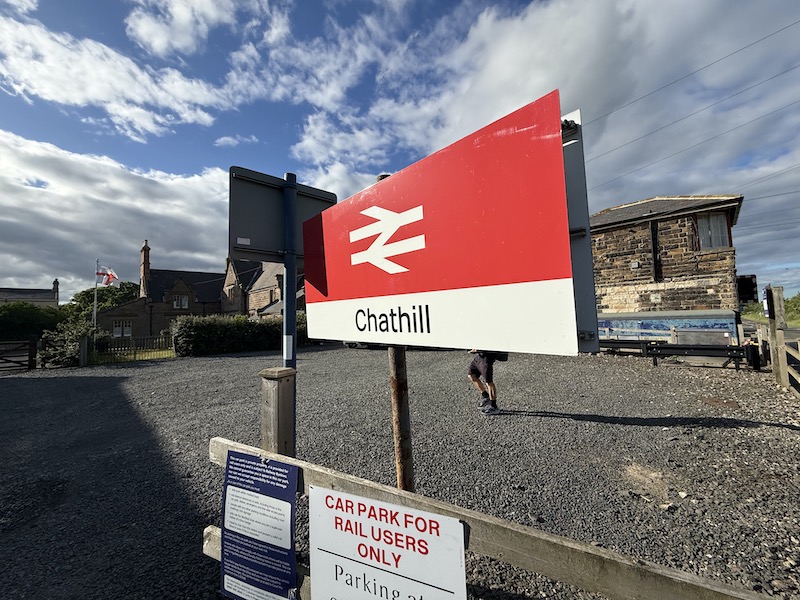
During last year’s countdown of Britain’s Top 10 Quirky Bus Routes, blog reader Stephen got in touch with an intriguing question….
“Not sure whether this meets the criteria for ‘quirky bus route’ or some other category but next time you’re in Northumberland you might like to check out Chathill station and its two trains a day, both connected with the North Northumberland coast by Borders Buses (NCC contracted) route 918. This, to me, seems the ‘perfect’ rural bus-rail commuter link and I wonder how much used it is?.”
I couldn’t resist the proposition to take a ride on both the ‘quirky’ train and ‘quirky bus’ and answer Stephen’s question about usage so a couple of weeks ago found myself in Northumberland to check it out.
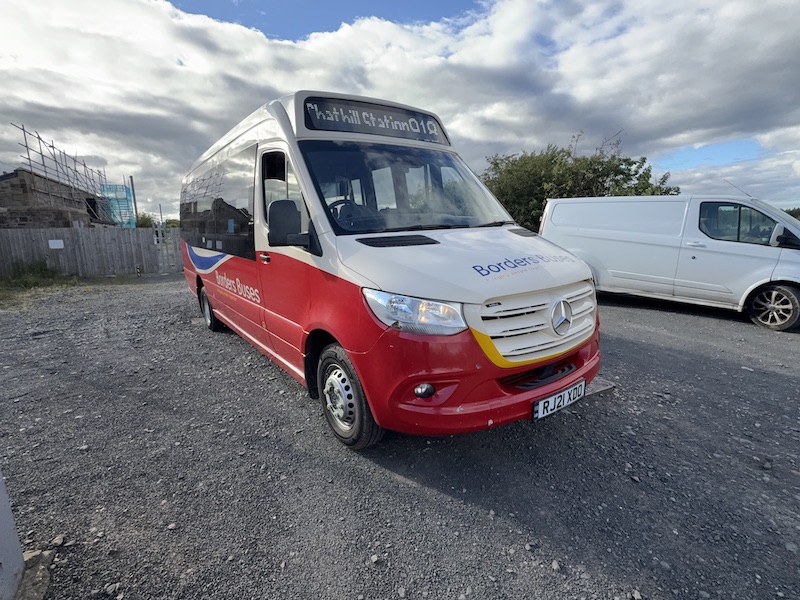
This bus/rail link is what could be described as a Mini ‘Mini Switzerland’ providing ‘seamless integrated connections’ between bus and train, but the catch is it’s for just two journeys a day – one in the morning around 07:00 and one in the evening around 18:30. Because that’s all the trains Chathill station sees on Mondays to Saturdays with nothing on Sundays.
Why just two journeys along with associated positioning journeys to and from Newcastle?
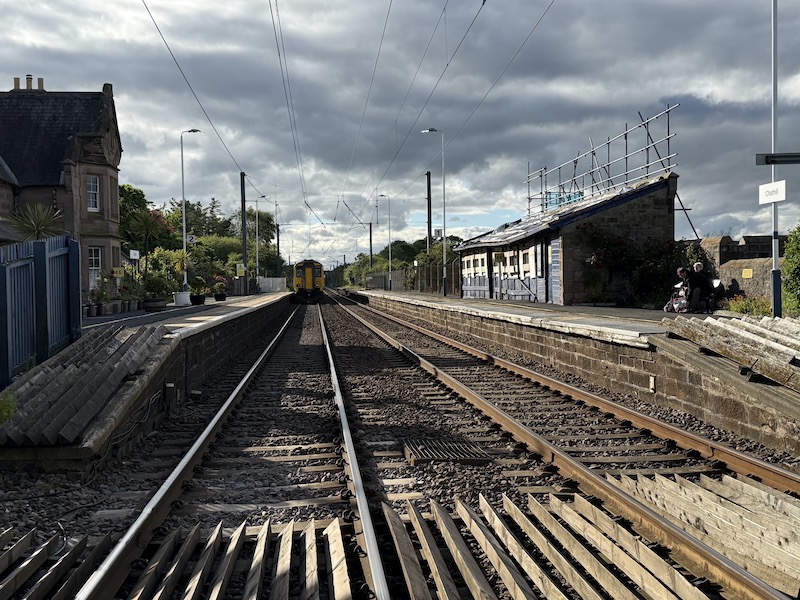
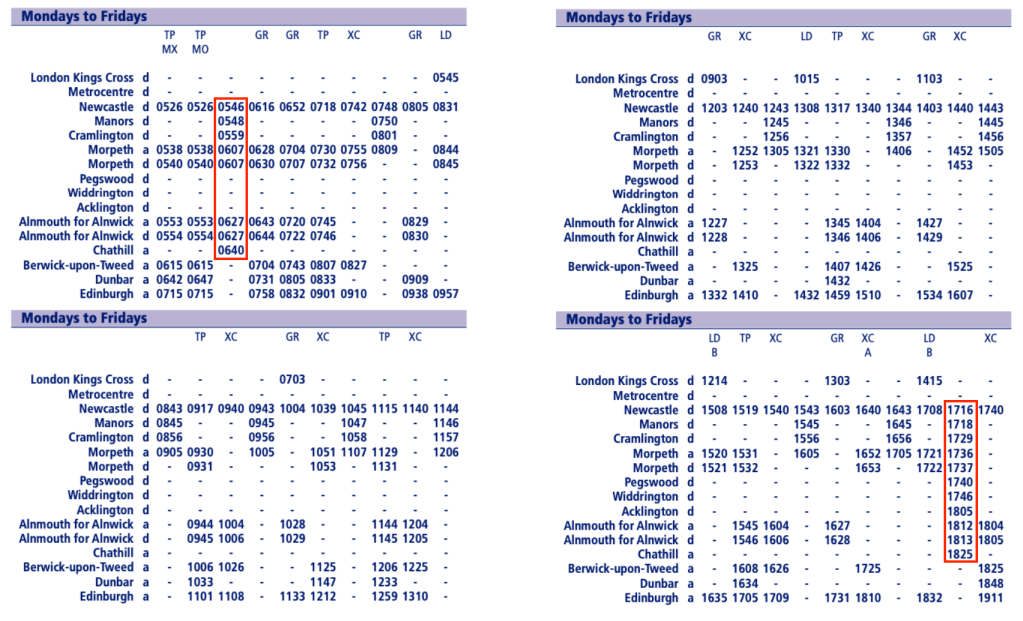
It reflects the problem of pathing trains on this busy stretch of the East Coast Main Line with LNER, Cross Country, TransPennine Express and Lumo all vying for slots on the tracks between Newcastle and Edinburgh. Northern’s hourly stopping service between Newcastle and Morpeth has to be squeezed in between the expresses some of which also call at Morpeth and Alnmouth. Taking account of these constraints Northern manages to extend just two of its Newcastle to Morpeth return trains to serve all the stations as far north as Chathill (Pegswood, Widdrington, and Acklington as well as Alnmouth) as can be seen in the timetables below showing the two northbound journeys from Newcastle at 05:46 and 17:16…
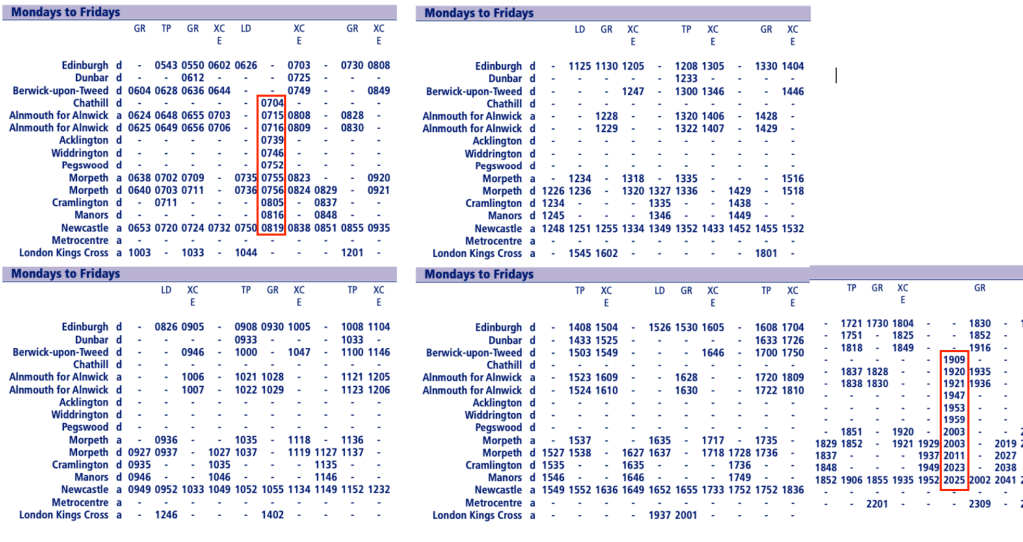
… and the two southbound ones from Chathill at 07:04 and 19:09.
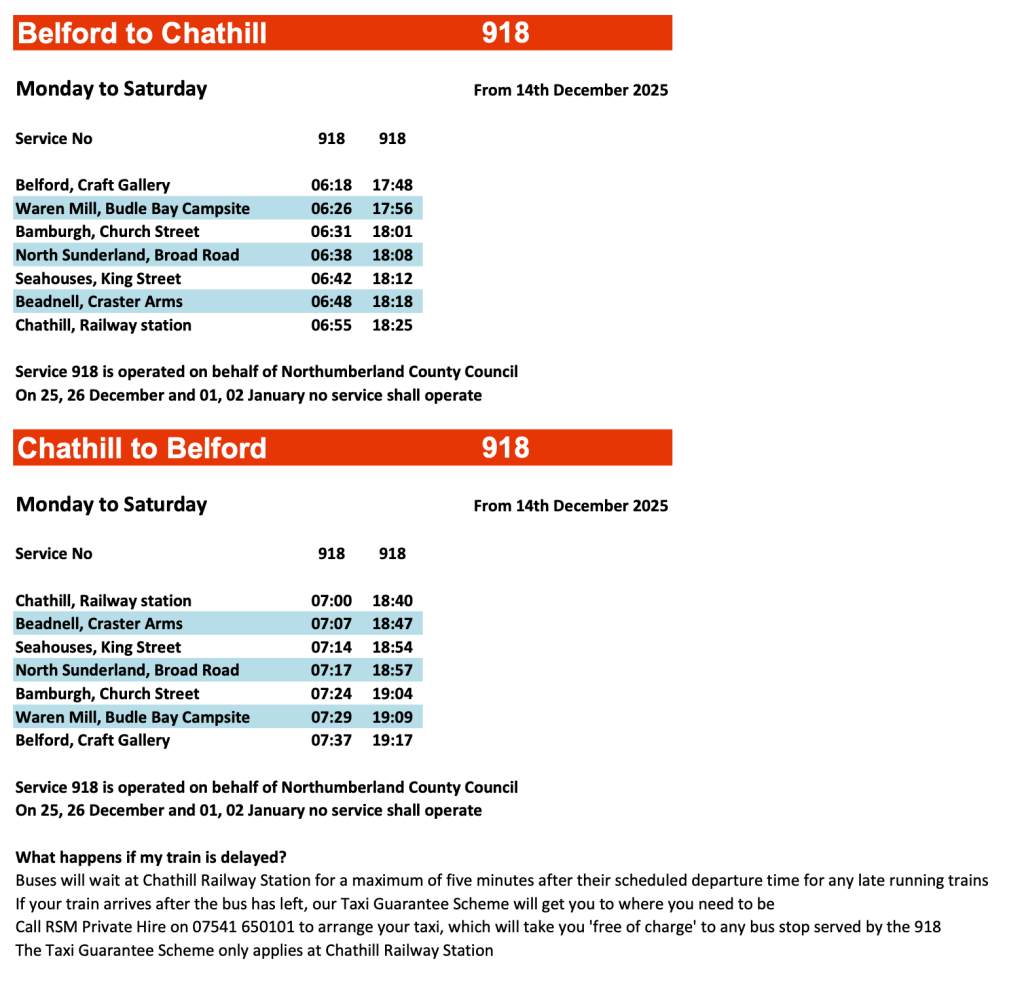
To complete the picture, in September 2024 a new bus route numbered 918 was introduced linking Chathill Station to the coast by providing bespoke convenient connections with these two return train journeys…
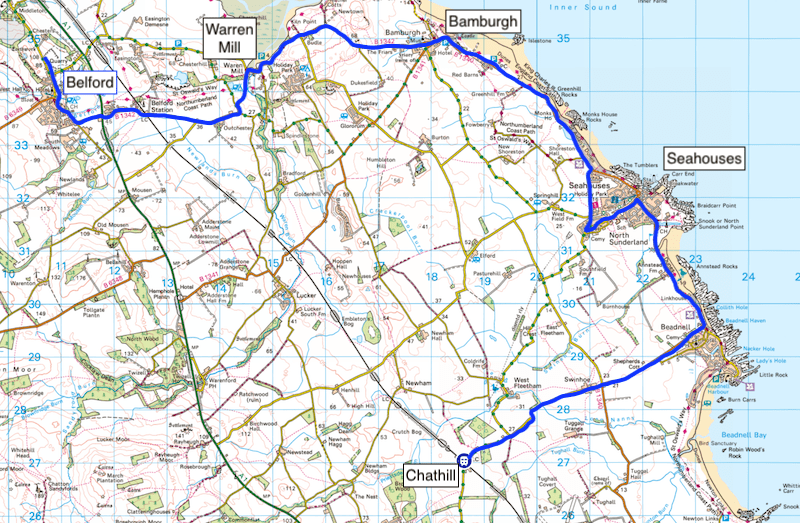
… so that coastal communities of Seahouses and Bamburgh as well as inland villages of Waren Mill and Belford are connected into the rail network, albeit with very limited journey options.
Northumberland County Council is funding the service and county councillor Guy Renner-Thompson, for Bamburgh ward, which covers this area told the media “it’s a vital connection which means people in these towns who don’t drive can get to Newcastle for work and college. It’s not perfect, but it’s better than nothing and we’ll continue to campaign for more services from Chathill and the re-opening of Belford station.”
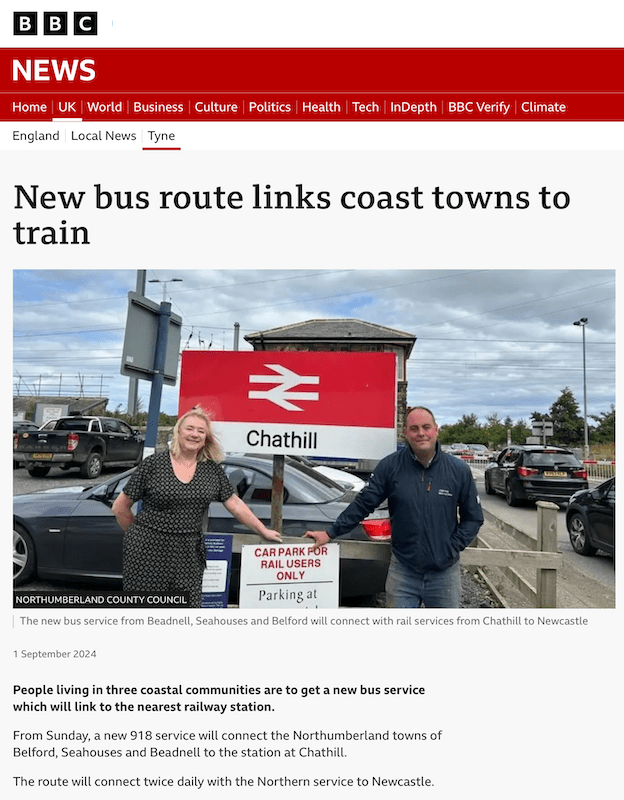
So, getting on for two years since introduction, I wondered how the new route was going and as Stephen asked, how many people are using it?
I travelled up to Newcastle on the Friday before last to catch the 17:16 departure for Chathill full of anticipation and intrigue.
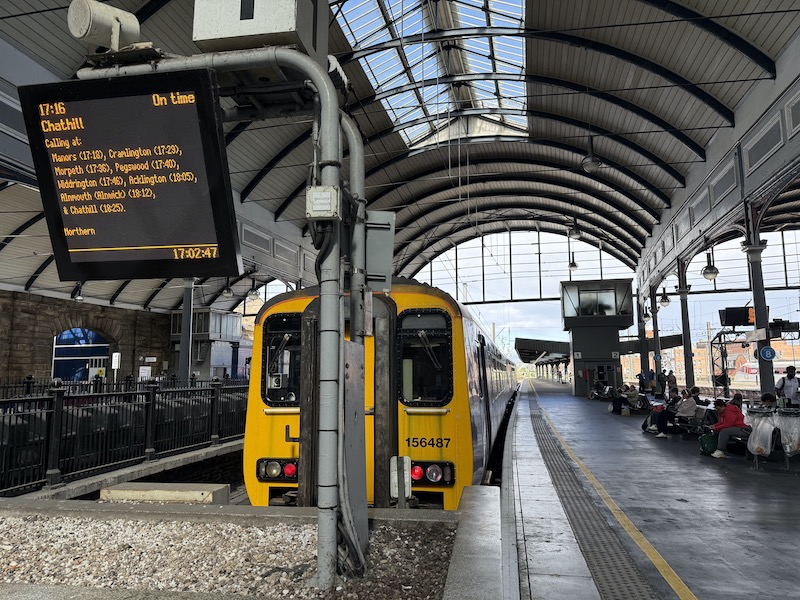
The train arrived into Newcastle’s platform 1 at 16:49 from its previous journey into the city from Morpeth with the driver and conductor shutting the doors as they left and soon after 17:00 when I arrived there were already quite a few people waiting for the new crew to turn up so the doors could be reopened, although I’m never sure why they can’t be left open as happens at other stations and other train companies.
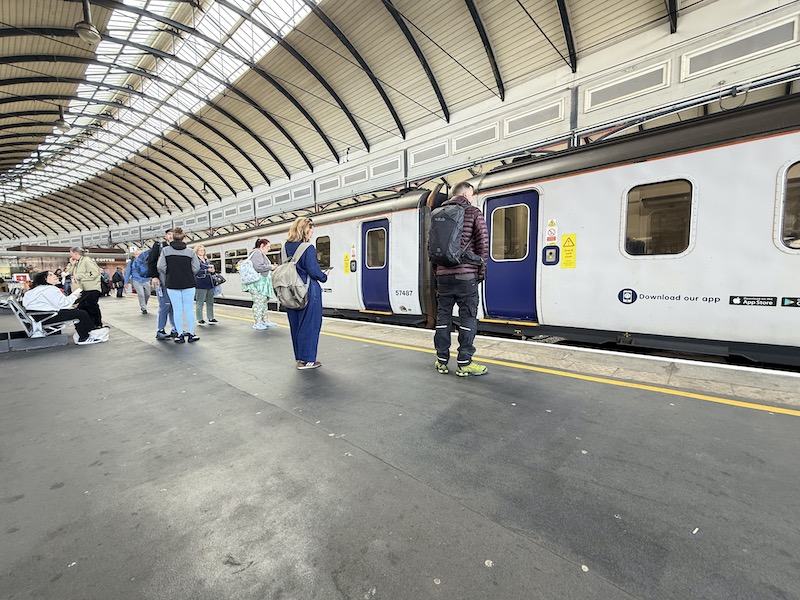
However, by 17:10 we were all on board waiting for the 17:16 departure but the busyness of the East Coast Main Line made it look as though we’d be delayed as I noticed the 17:11 LNER to Edinburgh (14:30 ex King’s Cross) was running seven minutes late having been delayed at York, such are the intricacies of the pathing constraints, so we didn’t get away until 17:20 picking up a few more passengers at Manors giving an estimated 20-30 on board.
Quite a few alighted at Cramlington and Morpeth with just threes and fours alighting at the lesser served Pegswood and Widdrington then halfway on to the next minor station at Acklington we slowed up and pulled off the main line track into Chevington Loop where we were scheduled to pause for 10 minutes to allow a Cross Country train to rush by on its way from Plymouth to Edinburgh. This had left Plymouth at 10:27 and kept good timing on its journey north until Darlington where it began getting behind schedule and didn’t pass the Loop where we were patiently waiting until 18:07, 10 minutes later than scheduled at 17:57 meaning we pulled out of the loop shortly after that, being six minutes down.
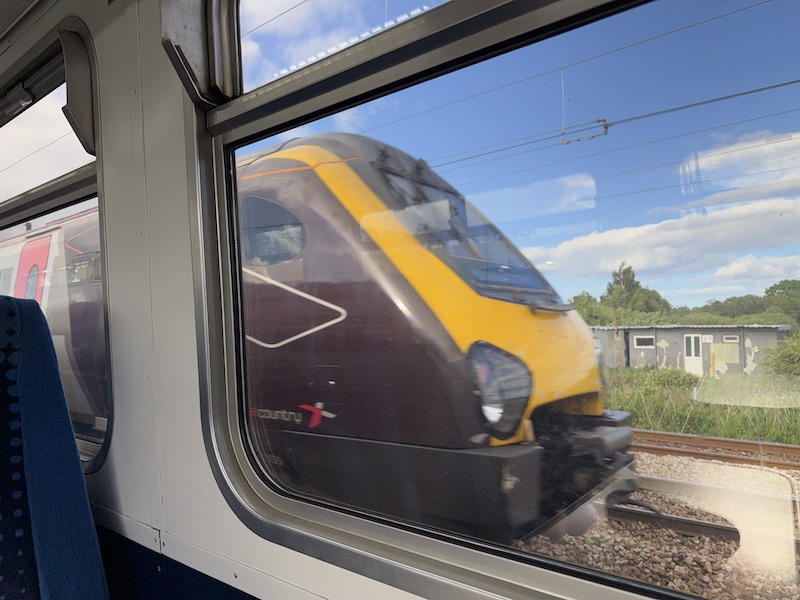
Another two or three left us at Ackington with the same at Alnmouth – where that Cross Country train had also stopped, presumably taking the majority of passengers from Newcastle, as it had left 14 minutes after us but arrived before us. I did notice two passengers board at Alnmouth which I made a small bet (with myself) would be likely candidates to transfer to the bus at Chathill, the next station, as where else could they be going?
We were now running seven minutes late and pulled into Chathill at 18:31, six minutes behind schedule. I didn’t worry about the bus departure, since a generous allowance is given for the connection before it departs at 18:40 and I noticed in the information online as well as a notice at Chathill station that a free taxi is guaranteed in the event the train is late and the bus, having waited five minutes, has departed.
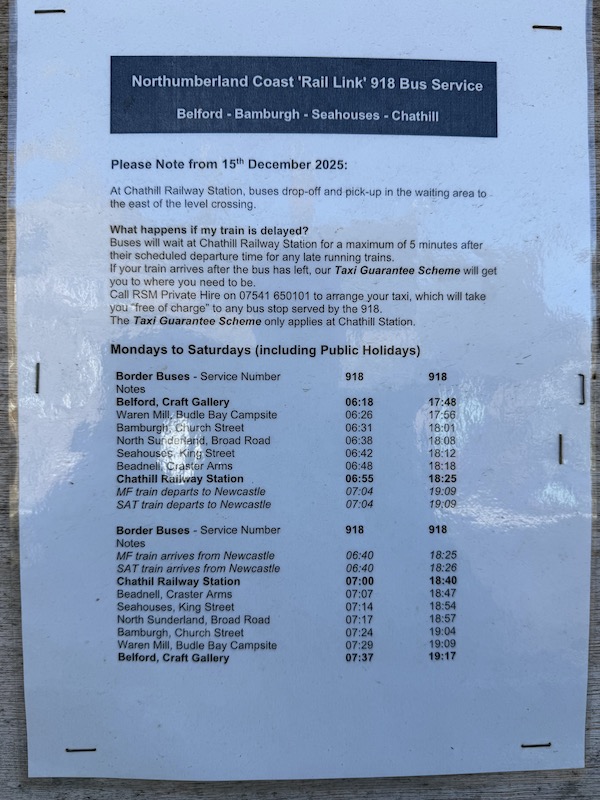
This is very reassuring to know, as well as the fact Northern’s Regional Director Jason Wade has given his permission – although I didn’t know whether that’s permission for the notice to be posted and not to be removed, or permission to summon a taxi…
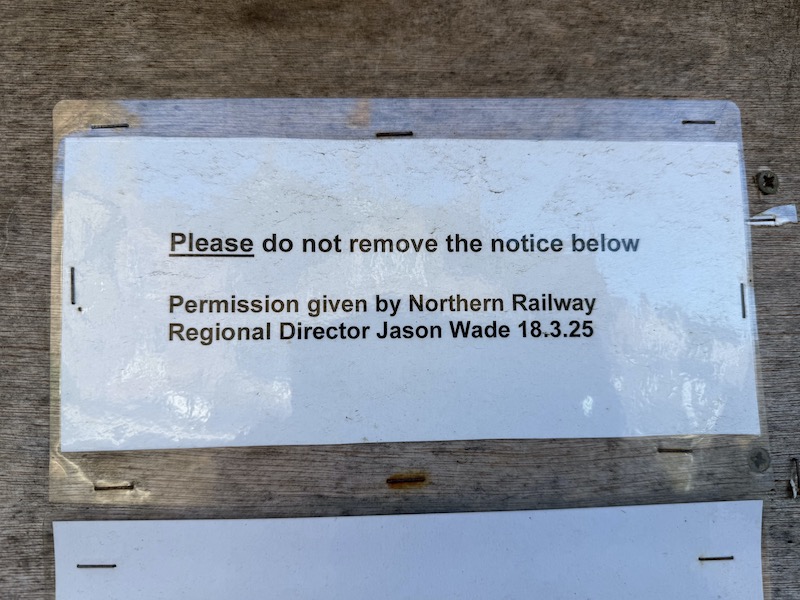
… either way, good on Jason.
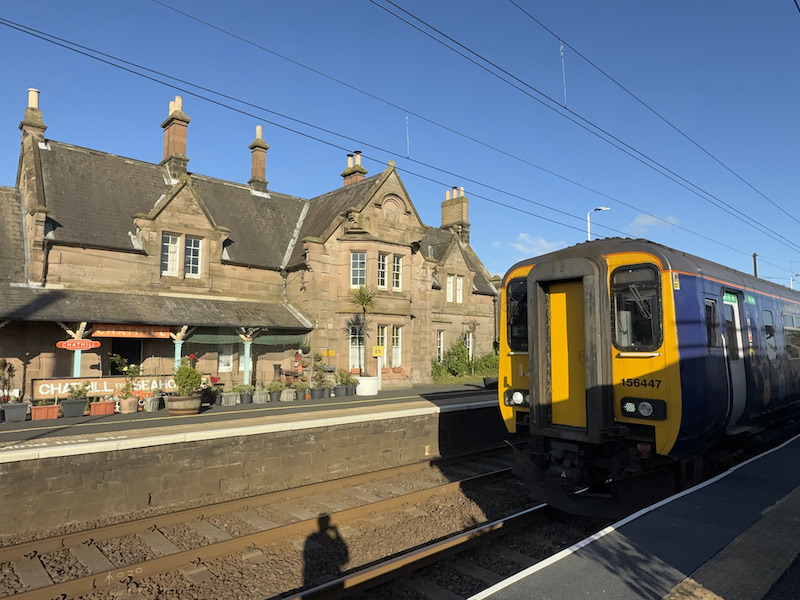
It’s a great shame the splendid northbound platform and its former railway buildings at Chathill only ever see trains speeding by with just the two Northern arrivals each day…
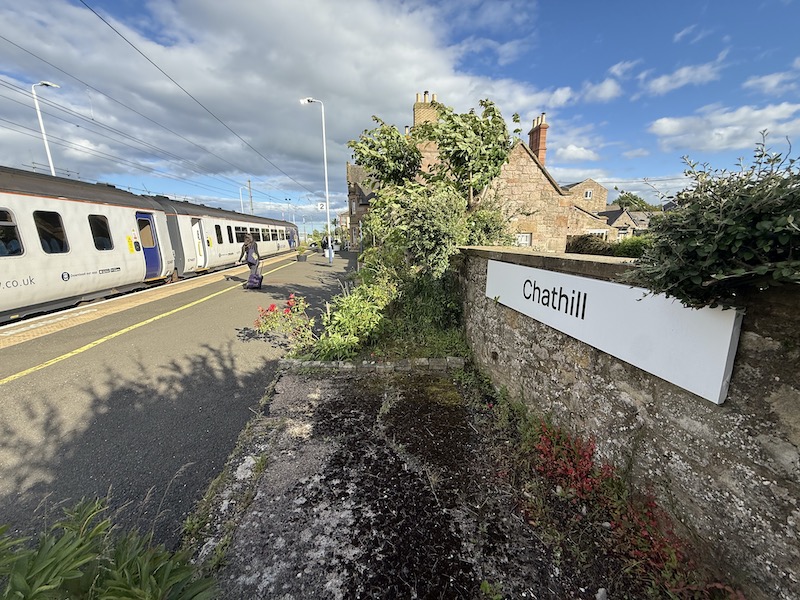
… as most passengers miss out on the wonderful signage…
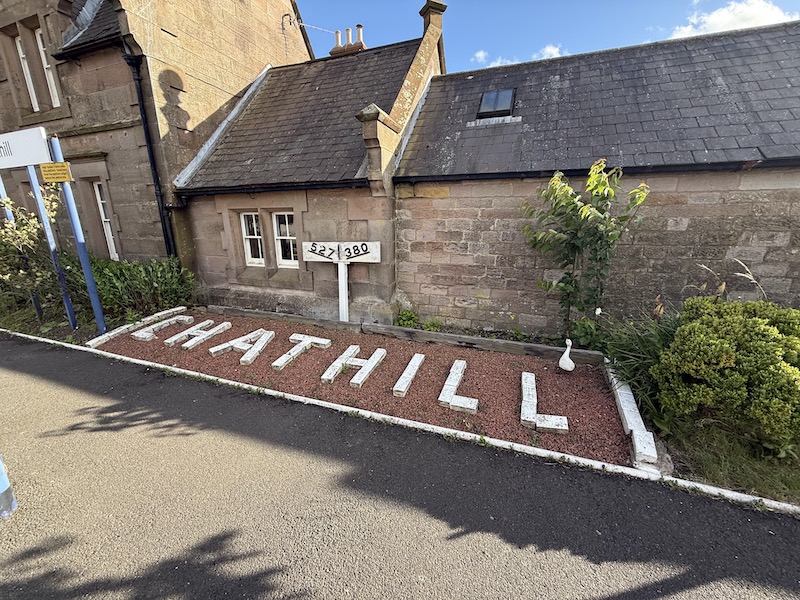
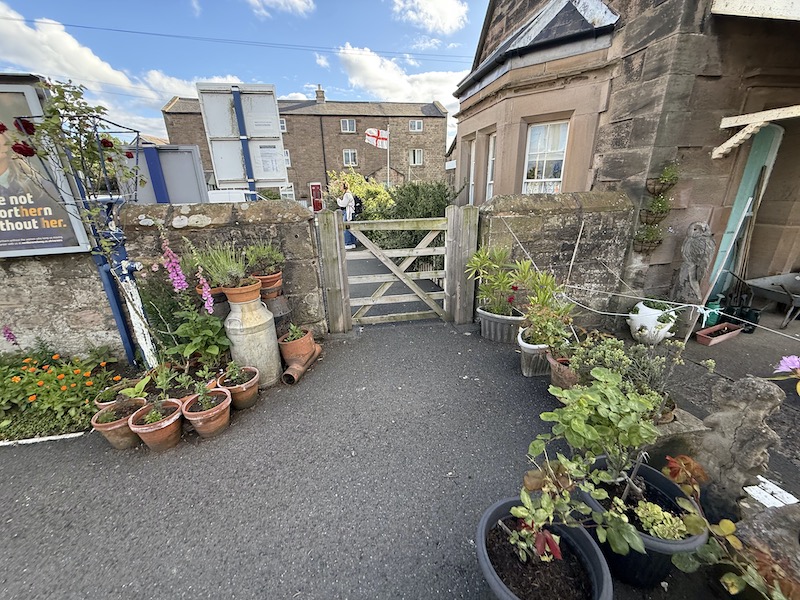
… and floral displays.
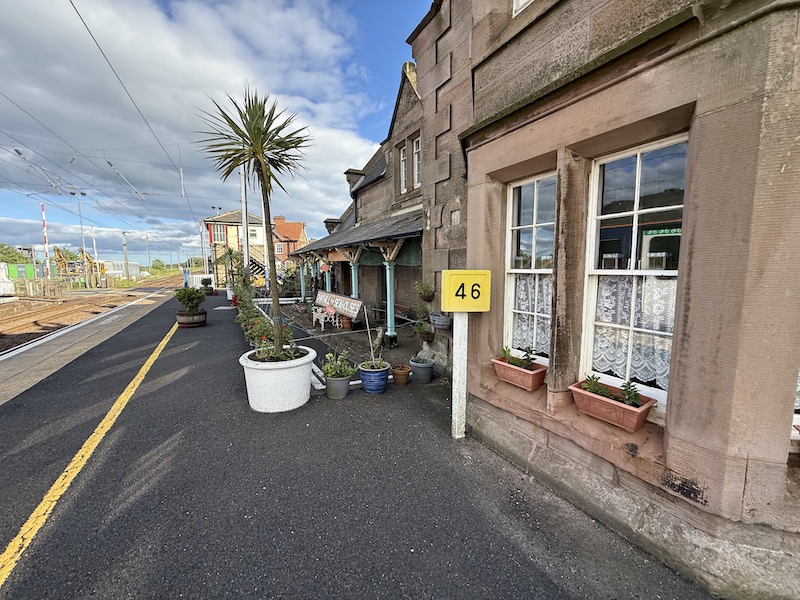
Just imagine what it must have been like back in the day…
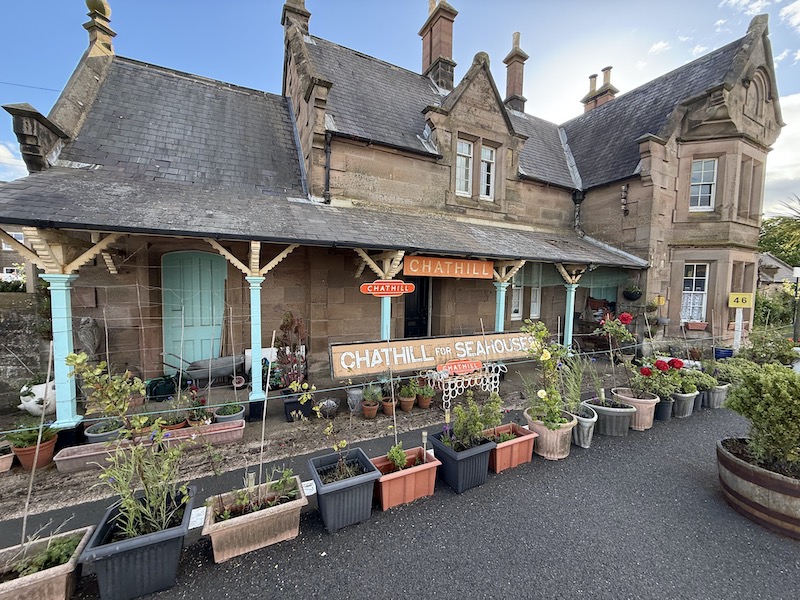
… when the station master lived here and there was a ticket office and other facilities.
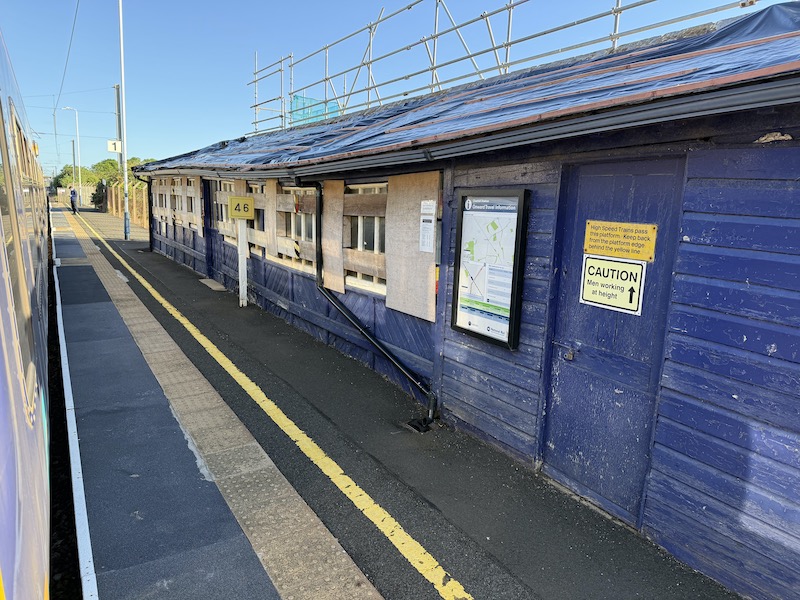
The ramshackle building on the southbound platform provides for a stark comparison.
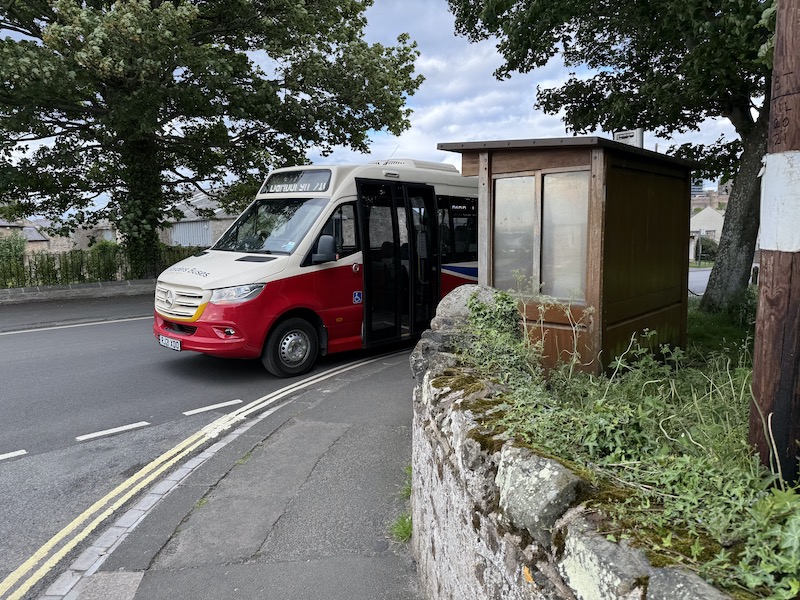
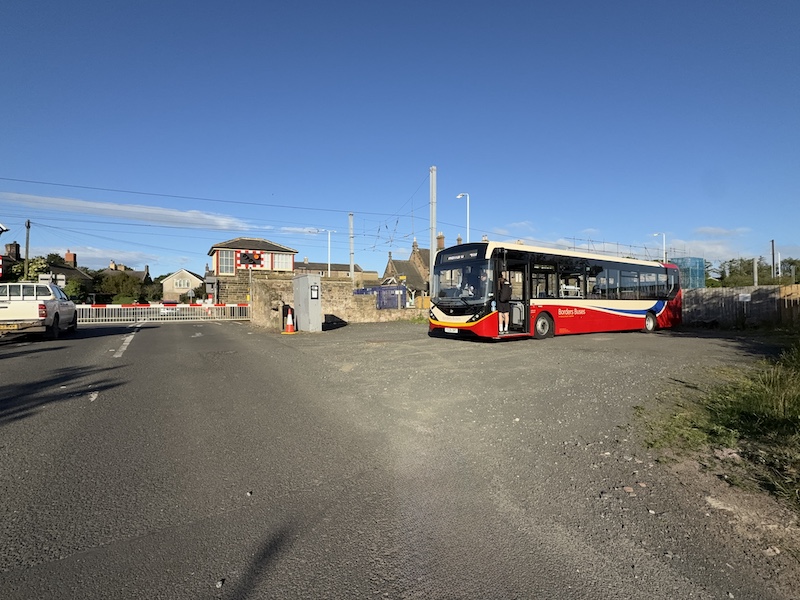
Anyway, back to the journey and I was pleased to see the Borders Bus bus sitting in the car park on the east side of the level crossing so having taken some photos and noted five passengers had alighted from the train, I crossed over the tracks and boarded the bus.
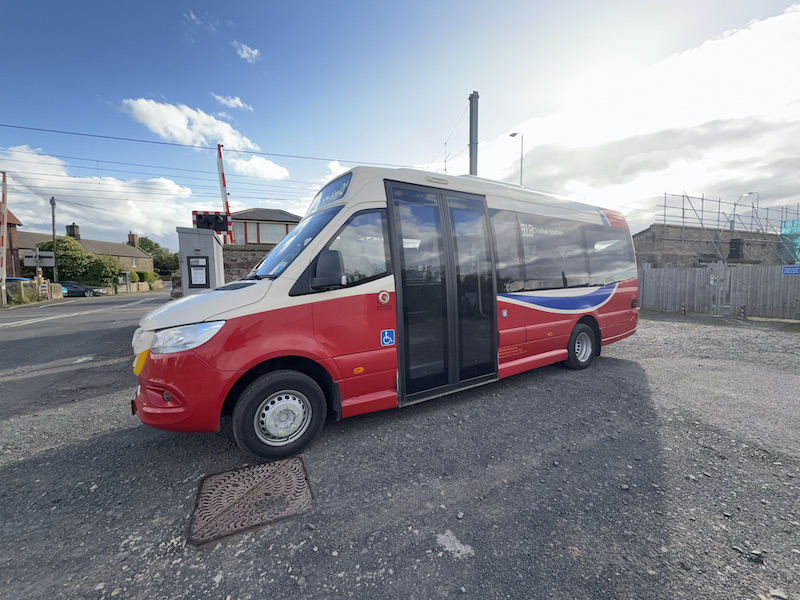
And, I was right (!) two passengers were already on board being the ones who’d boarded the train at Alnmouth – the other three alighting passengers from the train had been met by people in cars and headed off.
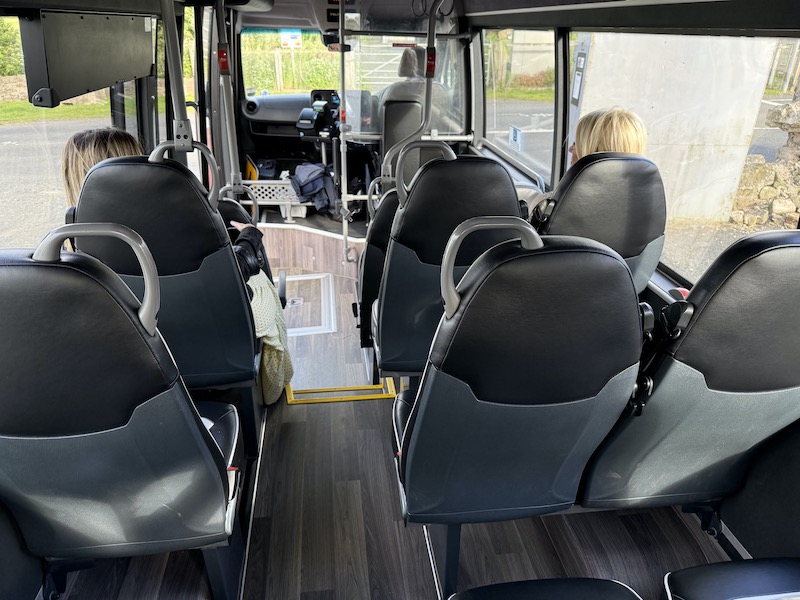
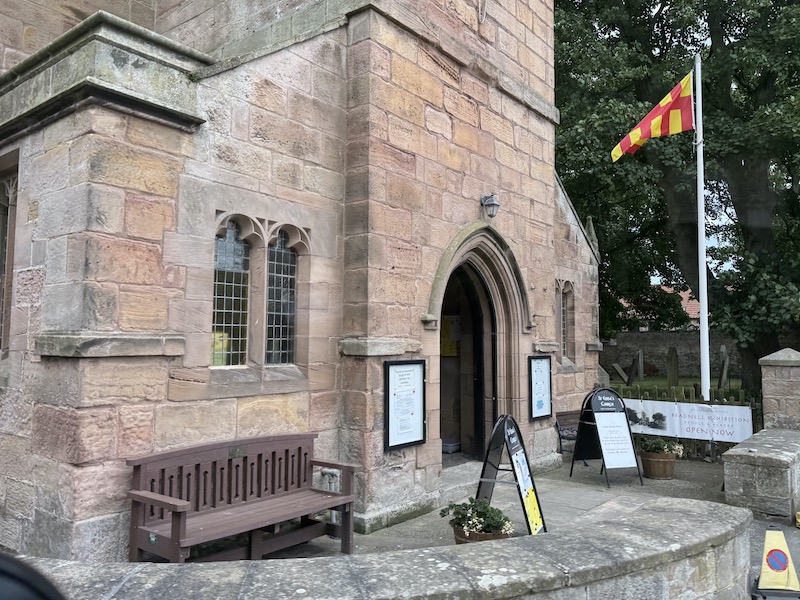
At 18:40 we set off towards the coast passing through the delightful village of Beadnell with its imposing church…
… before arriving at Seahouses where the two passengers alighted, and, surprisingly at the next stop, two boarded who told the driver they were tourists out for a walk but now needed to return to Bamburgh so were pleased to see the bus come along. That stretch of road is also served by Arriva’s four journeys a day route X18 (four hours Berwick-upon-Tweed to Newcastle) and Borders Buses three journeys a day route 418 (Alnwick to Wooler) so not overly well served.
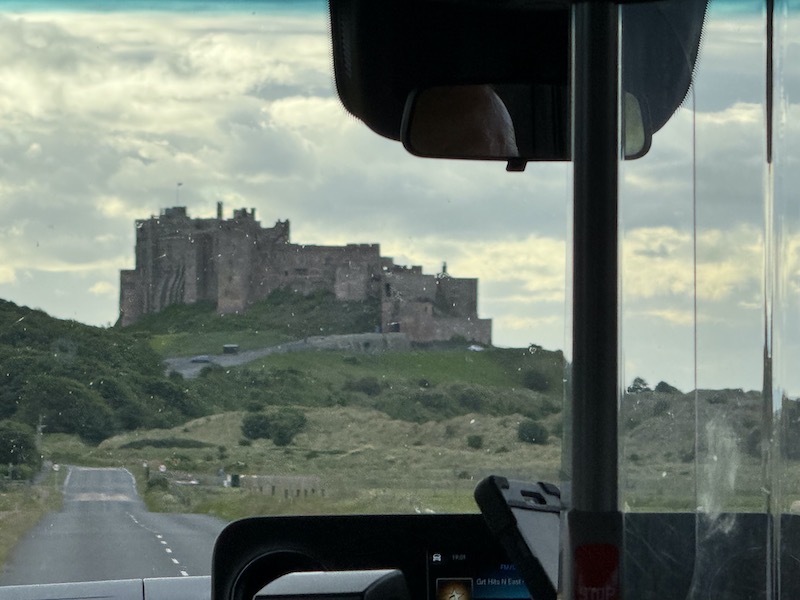
As we approached Bamburgh, famed for its wonderful coastal castle, the two tourists alighted as did I at the next stop as Bamburgh seemed a better option to stay overnight than the terminus at Belford.
Meanwhile, the train which I’d left at 18:31 wasn’t due to leave Chathill for the second departure of the day back down to Newcastle until 19:09 but has to get out of the way of the next express coming fast up the tracks – LNER’s 15:03 King’s Cross to Edinburgh due to speed through Chathill at 18:35 – there’s not much margin for delays on this busy line.
So the Northern train continues six miles further north travelling for another eight minutes to the next loop at Crag Mill where it sits for 28 minutes allowing the LNER train to pass as well as a southbound Cross Country Edinburgh to Birmingham to come through without hindrance. The Northern train then leaves Crag Mill Loop at 1901 for the 19:09 departure from Chathill for Newcastle, which I’d noticed two passengers already waiting for at 18:31 and wondered if they’d arrived on the bus – almost certainly so.
However, by 19:00 I was arriving in Bamburgh for an overnight stay ready, bright and early on the Saturday morning at 06:31 to catch the bus back to Chathill to connect with the 07:04 to Newcastle. Being a Saturday I didn’t think there’d be any other passengers and indeed Bamburgh was still very much asleep as the Borders Buses Enviro200 arrived having set off from Belford at 06:18 and, sure enough, no-one was on board.
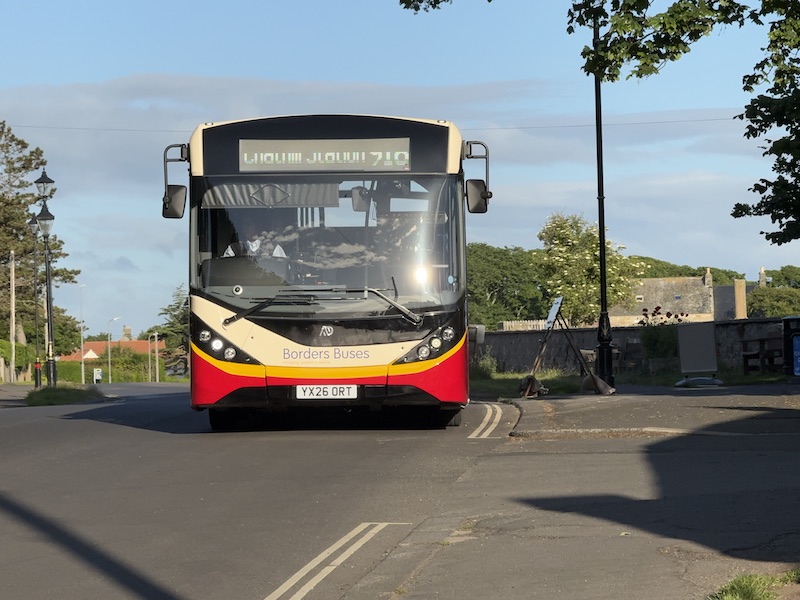
However, we did pick another passenger up in Seahouses who travelled to the station and waited for the train to come from Crag Mill Loop into the southbound platform. It had arrived from Newcastle into Chathill at 06:40 and, as in the evening, continued on to the Loop but only stayed there for six minutes this time before returning for the journey south to Newcastle at 07:04.
As the bus arrived at the station, two passengers were also waiting to board for its journey back to Belford having come off the train that had arrived from Newcastle.
The train set off on time and soon stopped at Alnmouth at 07:16 where one more passenger joined the two of us on board and then, not surprisingly we needed to get out of the way of two southbound express trains so pulled into another loop at Wooden Gate Junction at 07:19 where we sat until 07:32 to let Lumo’s 06:26 Edinburgh to King’s Cross…
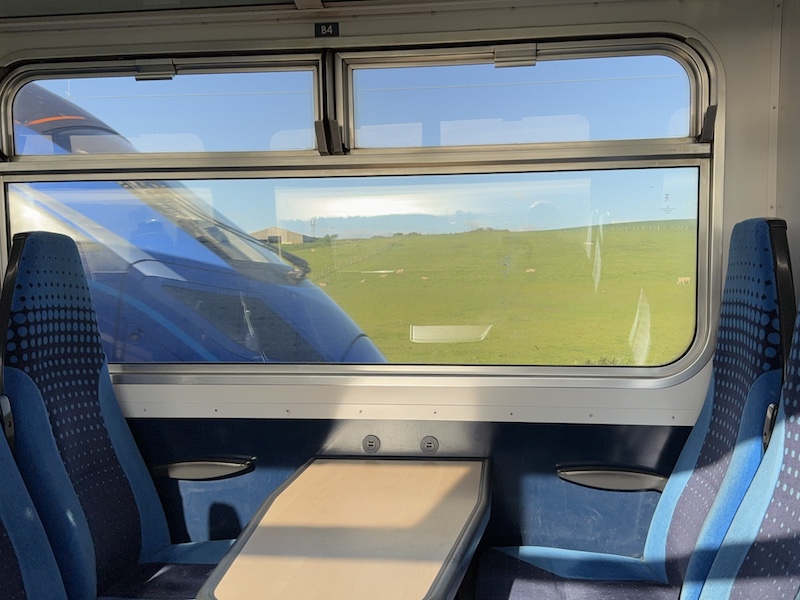
… and LNER’s 06:30 Edinburgh to King’s Cross, hot on each other’s tails, speed by. I was impressed the Conductor on the train came round and spoke to the three of us individually to explain why we were pausing the journey for around 10 minutes which was very reassuring.
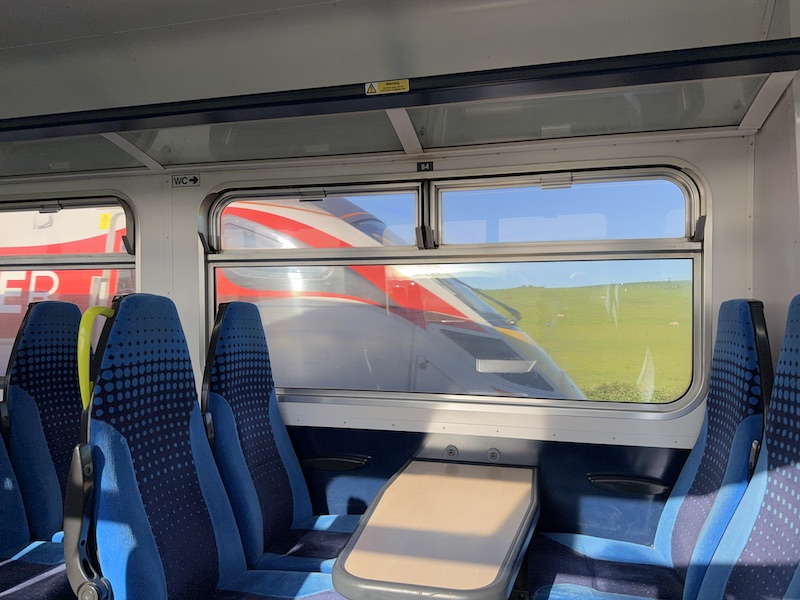
Once those trains had passed we continued down to Newcastle with no takers from Acklington and Pegswood, one from Widdrington (to Morpeth) and seven from Morpeth and a few from Cramlington. Not bad for an early Saturday morning train.
And, not bad for this “perfect rural bus/rail link” and now we know the answer: one, or two, passengers use each of the four journeys.
And I also know how freight train drivers must feel when they have to keep pausing in loops to let passenger trains speed by.
Roger French
Summer blogging timetable: 06:00 TThSSu


Having stayed near Craster a few years ago, I know that the public transport along the Northumberland coast is sparse, but well organised and can be reasonably easily used both to access the area and to get about for day trips. Northumberland County Council is to be praised for the efforts it makes to ensure that remains true.
LikeLike
Many thanks for these facts! And it seems to have been a pleasant experience overall with staff on the ground, and in the back office, aware of the needs of passengers. I don’t think much can be inferred, except that it is possible. Integrated services are only used by large numbers of passengers when people generally feel that integration is the norm rather than the exception – on e.g. city networks such as the London Underground, which for over a century has offered easy connections with clear, large way-finding signs, frequent and consistent services, and The Map. Now, if rail and bus managers were prepared to talk to one another (and it needs both to do this) we could perhaps break out of the ‘only 15% of travel is by bus/rail’ syndrome.
LikeLike
This is an excellent solution to a problem that people have in small numbers across the country.
The railway has prioritised journey time over more stops, as evidenced by paths being given to open access operators on the ECML over stopping at more stations . This is exacerbated by the approach to station parking, which has changed from an amenity to a revenue stream, which is a further deterrent for those unable to use a local station.
Having a 15 minute delay to allow faster trains to pass shows how long distance passengers are prioritised over local ones.
With the primary purpose of this bus service being to connect with the train, it is unfortunate that licencing means the bus would not wait for a very late train and this explains the generous interchange time at the station.
Gareth Cheeseman
LikeLike
Fitting stopping trains around faster services can often be challenging (and uneconomic), which is why Dr Beeching closed many of the smaller stations on the East Coast Main Line.
I note that the local councillor, in addition to campaigning for better services at Chathill, would like to reopen the station at Belford. Whilst it would be very hard to justify two stations in relatively close proximity on such a busy stretch of line, I would suggest that Belford would be a much better location for a station – which would, in turn, require the closure of Chathill.
Belford could then be a calling point on Trans Pennine Express services between Newcastle and Edinburgh, and would benefit from more trains than the current service at Chathill. The connecting bus service could still operate, starting from Belford to Bamburgh, Seahouses and Beadnell. The station could even possibly be called ‘Belford for Bamburgh?
Carllo
LikeLiked by 1 person
The connection times only work well here since the train terminates at Chathill, so that the arrival and departure times are close together. If it was a through station, you would have northbound and southbound passengers alighting at, probably, different times, which makes useful bus connection times difficult.
But if works here, so all is good.
MotCO
LikeLike
Thank you for checking out this service, following my suggestion. It was a nice surprise seeing it here today, as I’d forgotten about it!
The numbers travelling are not too disappointing. I’d like to know how many typically use the Monday to Friday southbound morning service but that’s an incentive for me to check that out myself.
Thanks again!
Stephen H
LikeLiked by 1 person
Look forward to hearing how you get on, Stephen!
LikeLike
Given the train proceeds further north anyway is there better location for a further north calling terminal point ?
Some effort could be made with timetables to find a midday lunchtime train service giving actual out and back connectivity likewise Sunday with the tourist opportunities it seems untapped for potential travelling of I would think 30 passengers using the train and 15 the bus link .
The bording and leaving train at Cramlington Morpeth and Manors must be influenced by the more recently (re) opened line to Bedlington as more trains can mean more people happy to turn up and go knowning they dont have to wait too long at peaks particulary for a service home or to work
JBC Prestatyn
LikeLike
Some years back I was able to stay at Chathill station. The upper level is a very comfortable flat.
Had a great holiday in a very beautiful area – glorious beaches. The bus link existed then, as this connection goes back a long time. Once it was a postbus – remember them? I think it was a mini bus of a local taxi company when I was there. I would wander out to see the connection but I don’t recall the usage.
There used to be a railway connection from Chathill to Seahouses, the North Sunderland Light Railway. This company was responsible for the wooden building which seems to have deteriorated a lot since I was there.
As the bus is effectively a rail replacement it might explain it’s existence.
Richard Warwick
LikeLiked by 1 person
Amazing; thanks Richard.
LikeLiked by 1 person
I’ve never understood why Chathill can’t be served by stops on Cross Country or TPE services especially since TPE now have so many more journeys. No doubt there is a good operational reason but it would reduce the timetabling issues Roger refers to and provide a better service including hopefully a middle of the day journey. Scotrail manage to stop HSTs at places like Monifieth and only open one door so there must be options.
An early win for GBR ?
LikeLike
No other trains stop at Chathill because there is no point. It’s a village of about 6 houses and there’s nothing else nearby. Northern only serve it because they have to. Delaying passengers travelling to Edinburgh for such a remote station that would see penny numbers of passengers would be ridiculous. While the buses to Belford, Bamburgh, Seahouses and Beadnell could do with being improved, they provide an adequate link to the railway stations at Berwick-upon-Tweed, Alnmouth and Morpeth, for those who want to make onward connections.
LikeLike
Chathill’s train service has been sparse for decades. That probably has much more to do wth the size of the place (it’s a small hamlet) than pressure for train paths on the East Coast Main Line.
The present service level, of two trains a day, dates back to at least the mid-1990s. Checking a couple of timetables from the 1980s, these show 2 x northbound and 3 x southbound, running to and from Berwick-upon-Tweed. Even in the 1960s, it was 3 trains a day (running Newcastle <> Edinburgh), plus the overnight sleeper to London (which called southbound, but appears not to have called northbound).
Malc M
LikeLiked by 2 people
Exactly what I was going to say – the station had the same 1 down / 1 up in the morning peak and the evening peak back in 1995 when there were only 1–2tph running on the mainline. It isn’t about difficulty in pathing the service, but just that there’s absolutely no reason to run trains to Chathill other than the legal requirement to do so! It isn’t even on the regular bus routes along the coast so without a dedicated feeder bus it is entirely a park & ride station.
LikeLike
Waren, not Warren Mill as shown on the route map.
LikeLike
Thanks; corrected.
LikeLike
What a delightful blog, Roger! I am sure you must have thoroughly enjoyed the experience – in good weather too!
It’s heartening to see such a well-oiled set up on such a small scale.
I stayed in the area for the first time three years ago (in Embleton). There is a boat trip you can do from Seahouses which goes to Lindisfarne and then on to the Farne Islands, which I can strongly recommend. I travelled up by car, but did use the local bus service once there.
Brian Musgrave.
LikeLike
At one time the Post Office had a sorting office next to Chathill Station with vans and a Postbus arriving and departing for villages around the area. I would have expected Chathill to have been closed by Beeching like so many stations on main lines so maybe the mail Saved it.
Alan JS
LikeLike
A very interesting article indeed, all the more so as me and my girlfriend recently visited Lucker in Northumberland just a few weeks ago. Lucker is but a short walk from the ECML but of course there is no rail station, nor is there a bus stop, the nearest one being some 1.5 miles away at Warenford just off the A1. So regrettably, this necessitated making the trip by car from our Midlands home. We did at least redeem ourselves a little bit by using the very good X15 bus service to Berwick on one day, and also to Alnwick on another. The X15 commendably connects with Berwick rail station. What a pity there is no longer a rail service to Alnwick and Coldstream, what short-sightedness yet again!
We would have liked to have gone further by public transport, such as to Holy Island, Bamburgh, Seahouses and Craster. Well forget it, no chance!
It is very evident from your article, as indeed others have noted, the huge conflict of interest between the needs of inter-city rail travellers and local passengers, and I note with a little wry smile your description of the Chathill bus/rail interchange being a mini mini-Switzerland.
The UK generally prioritises the needs of inter-city travellers to such an extent, that local passengers get little or nothing. “But that’s how markets work”, so we are told. The Swiss adopt a different view, prioritising public service over purely commercial concerns. They aim to provide a regular public transport outlet within 10 mins walk from most Swiss peoples homes, even in rural areas. They look at whereabouts there are capacity issues on the rail (and other public transport) network, and have a regular annual budget fixed by law, committed to addressing such issues.
So, the UK prefers to amble on, pretty much in the same vane as always before, offering a few sticking plasters here and there, but without any fundamental permanent improvements. The attitude is very much “If you want to go anywhere, it is best to go by car. And, if you want to go anywhere quietish or rural, then it’s an absolute necessity to go by car”.
I often wonder if we could do anything in the UK to break such a mould, but this is practically impossible due to the inherent widespread confirmation bias. “Let’s not provide a regular reliable service to local passengers because there is insufficient demand”. However, there is insufficient demand primarily because the service is unreliable and/or infrequent! I wish I had a pound for everywhere that could be said across the UK!
Furthermore, it is blindingly obvious (at least to a sensible person!) that we need to integrate our public transport, something which is part and parcel of the superb Swiss model. However, integration remains a distant dream for most places in the UK, because it’s too much like hard work for rail services to connect with bus/tram services and vice versa. It was never meant to be like that, what with competition being thought to be the ‘be all and end all’ that will improve services. Really, or does it just suit the operators anxious to cut their costs to the bone, without sacrificing too much revenue?
LikeLike
It isn’t so much about prioritising long distance passengers over local passengers, as prioritising actual passengers over imagined passengers.
Chathill sees an annual ridership of about 1500. More than 10 times as many passengers as that will pass through the station every day. Even if a regular service was provided, the number of passengers using it would be a rounding error set against the number of people travelling between Edinburgh or Berwick and Newcastle or beyond. There is no sensible rationale for even retaining the current service, let alone expanding it.
LikeLiked by 1 person
And this is it in a nutshell. Chathill is a Parliamentary service which exists through a combination of previous GPO (Royal Mail) activity, the lack of a turnback loop anywhere suitable further south and the fact that it’s so painfully difficult to withdraw any pre-Speller railway service in this country.
The logical thing to do would be to put a crossover in at Alnmouth so a Newcastle – Alnmouth local service could operate, possibly pulling the local stops at places like Morpeth and Alnmouth out of express services, but that would involve levels of investment which are simply unlikely especially as the benefits of an improved local service would be drowned out by the screams of outrage about the closure of one relatively unused station.
The screams of outrage coming from people who have never used and never will use the place, of course, as we see with all the protests about withdrawing little used bus services.
LikeLiked by 2 people
on 2 trains a day, a low ridership is hardly surprising,
LikeLike
The point I am making is that public transport should be made more available, as well as convenient, reliable and affordable to more, indeed a lot more people. And I am not just talking about Chathill, or even Northumberland, but generally across the UK. This of course requires energy, commitment, dedication (to public service, not just profit) and coordination, all of which is in short supply in most of the UK. Which is a shame really. The car is simply too convenient and our whole society has been designed around it, so why bother changing? Well, go to Switzerland, The Netherlands, or any one of many countries which have efficient public transport, and you’ll find out!
LikeLike
The town of Coldstream in Scotland never had a railway station. It was served by a station at Cornhill on Tweed which is in Northumberland around a mile away. I understand that prior to closure passengers were few but freight levels held up though not enough to ensure retention of the line.
LikeLike
At some time the Department of (?For) Transport has to sort out the mess that is PHV/Taxi Licencing and the cross over to sub 21 seat accessible buses. IF every regular bus service is going to be franchised there is going to be a need for small vehicles from some very local locations. Maybe sub-contracting of franchises should be allowed. But for me all Taxi Operators and PHV ones should come under the traffic commissioners and a single maintenance inspection regieme ( which could be quarterly per many local authorities ). Maybe an additional Driver “ticket” for local taxi knowledge is needed ( but is it in these days of GPS ? ) . Allowing any public service transport provider to have O licence up to various numbers of various sizes too and 17 year olds (for employment and economic growth) covering any vehicle up to 11 seats. This would vastly expand the competition for franchise awards (or independent services where a franchise is declined to be enforced by a local transport authority). This may mean the over-ride of “political” localism but I think would give a safer , cheaper more reliable and flexible set of public road passenger transport solutions as a means to the Mini Switzerland ideas that are currently floating about.
JBC Prestatyn
LikeLiked by 1 person
If you’re thinking of something like “the Knowledge”, I believe that’s only ever applied in London. Most taxis nowadays are ‘private hire’ cars rather than ‘hackney carriages’, and owing to licencing loopholes many across England are now licenced in Wolverhampton rather than by their local authority.
Which is a long way of saying that I doubt there’s a justification for a local driver “ticket” except maybe for historic reasons in London and perhaps some of the other big cities.
LikeLike
I think Chathill was indeed saved as a station because of its use for Royal Mail purposes.
As the daily trains run past Belford to reverse, there has been local agitation to reopen Belford station as well as, or instead of, Chathill. Despite it’s better location the chances of this happening seem very remote however.
Fortunately for the area calls at Alnmouth station have increased considerably in recent years and is a usable railhead from Alnwick and much of the coast.
The coast has reasonable bus services to Alnwick, the main town for the area but these do not seem to extend to Alnmouth station unfortunately. There are regular buses from Alnwick to the station and direct to Newcastle , but of course the bus takes much longer than the train.
LikeLiked by 2 people
Since the whole point of the bus seems to be to provide a connection with the train, wouldn’t it be a good idea to include the Newcastle train times in the bus timetable? It seems odd to present information for only the bus part of the journey that passengers are being encouraged to make.
Just a thought…
LikeLike
Yes, and include this information at bus stops too, perhaps “buses to Chathill for trains to ….”
Pete
LikeLike
I’m sure I read somewhere that the person who lives in the former station master’s house at Chathill sometimes gives the train drivers a coffee on arrival.
LikeLike
they don’t leave the doors open on a DMU, because then they have to stay too, with the key on, running the engine to maintain lighting, toilets, air con etc. Which they are not rostered for. They could leave them open after leaving the train, but then the engine would shut down after a few mins, and with it everything else, including closing the doors. Leaving the passengers trapped in a dark train with no toilets. Someone may try egressing on the non platform
side. Northern have probably learned the hard way it’s easier to leave the unit shut down and out of service if there is a period without a crew rostered on board.
LikeLike
An excellent, positive report. The X18, which I used recently with friends to enjoy a meal at The Jolly Fisherman in Craster, having travelled from Alnwick, does what I would describe as a Cornish-style reversing manoeuvre at The Heugh. Late evening, in the gloom, waiting for the bus to arrive and reverse into the stop, was really rather memorable.
LikeLiked by 1 person
This is a very interesting report, and it’s encouraging to know that the bus to and from Chathill station is used by even a small number of passengers. It would be interesting to discover how many people use the connection in the winter, when both the morning and evening connections take place in darkness, and Chathill has no trains during daylight hours!
The attractive building next to the station, now presumably in private ownership, is the former Royal Mail sorting office. I think it gives clues to the station’s history and suggests why it survived the Beeching era in the 1960s, when other stations on the line including Belford (for Bamburgh) and Beal (for Holy Island) closed.
I believe Chathill station experienced something of a boost during the 1980s, when the Royal Mail sorting office was still active. At that time the station had two departures a day in each direction, running between Newcastle and Edinburgh; the two pairs were at roughly the same times, at about 9 am and again at 6.30 pm. The newly-introduced Postbus was then able to connect with the trains in both directions, twice a day. During this period there was no “commuter” train as such; the local train from Newcastle turned back at Alnmouth. I think this practice became no longer possible when trains were prevented from reversing on the main line and could only turn back by entering a loop siding.
This arrangement during the 1980s illustrated an excellent if relatively sparse example of “Swiss-style” integration. In Switzerland I believe it’s common practice for main postal sorting offices to be located close to railway stations; the renowned Swiss postbuses run between the railway stations and numerous local sorting offices in rural villages, carrying passengers as well as the post. Sadly, when the Chathill sorting office closed the postbus transferred to Alnwick and the service became much less attractive for train passengers. It’s interesting to see the postcode NE67 indicating Chathill for addresses in the Beadnell area is still in use.
The North Sunderland Railway was always operationally distinct from the main line and closed in 1952. I don’t know whether it carried any postal traffic.
LikeLiked by 2 people
Thank you Roger for your excellent article.
You might be interested to know that there is a Chathill Rail Action Group (CRAG) and we have been active for over three years lobbying for an improvement in train services at Chathill. As you pointed out we have no northbound services and we believe (and a train planner has confirmed) that it would be possible to stop some Trans Pennine Express (Edinburgh/Newcastle) trains at Chathill to provide a service that actually goes north and faster to the south.
The Upside waiting room is planned to be repaired and departure screens installed but this is a slow process!!
We do have a Facebook page which brings people up to date with what is happening.
LikeLiked by 1 person
Thanks very much for your comments John and the work you’re doing. Good luck and thanks for letting everyone know.
LikeLike
Great read! Reliable first and last-mile connections can make a huge difference, especially in rural areas where transport options are limited. We see the same importance in local travel through our Chauffeur Service Morden, where dependable pre-booked journeys help people connect with stations and airports without the stress. Thanks for sharing these insights!
LikeLike