Thursday 11th December 2025
Has TfL given up on Putney High Street?
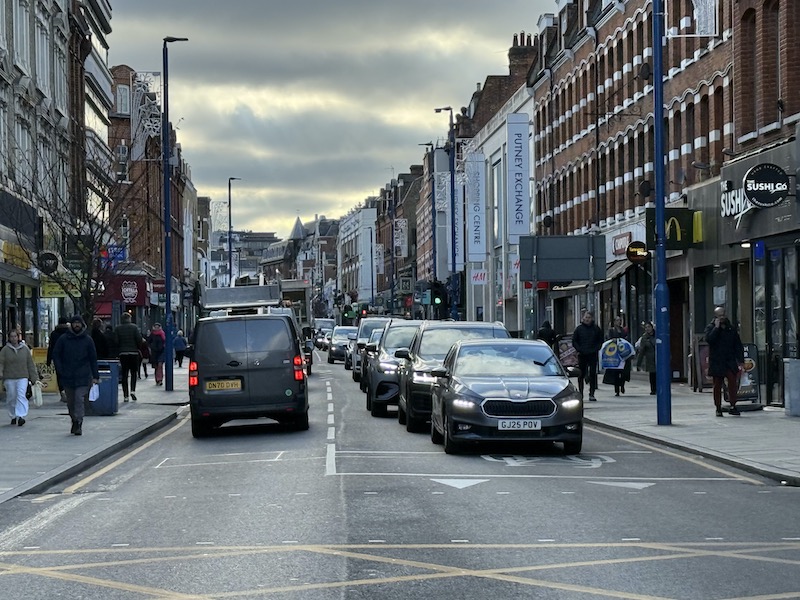
Never mind Oxford Street, it’s Putney High Street that’s got the bigger problem of air quality from slow moving traffic. The south west London shopping street leads south from Putney Bridge and is notorious for almost round-the clock daytime congestion and just like Oxford Street, where bus routes have been removed by stealth over the last ten years or more, a new consultation from TfL proposes to split a route into two that currently passes along the road with one half operating south of the traffic hotspot and the other north.

It’s the infrequent ’round the houses’ route 424 which links Putney Heath and narrow residential roads south of Putney High Street with back roads in Chelsea, Sands End and Fulham in one of TfL’s specialty ‘circuitous side road tours’.
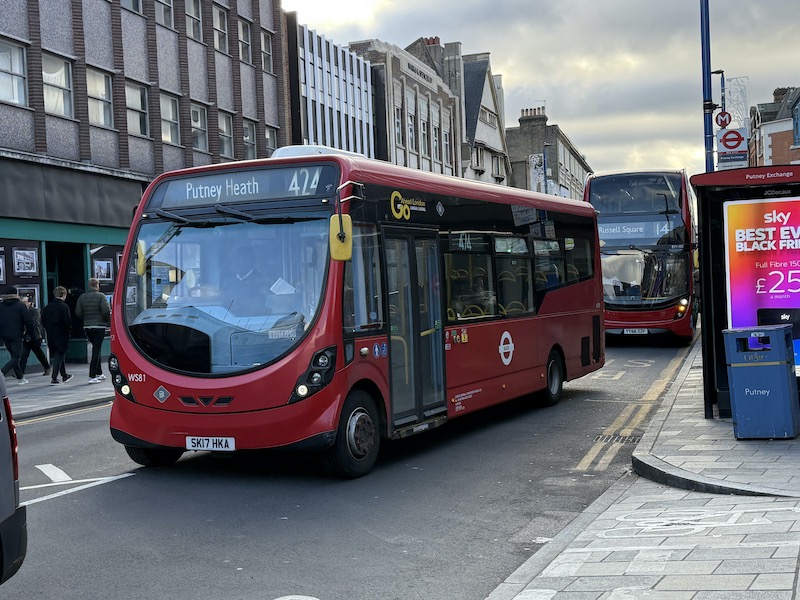
OK, it’s not one of the long standing big hitter routes linking Putney with central London (14, 74) nor trunk routes to Kingston, Wandsworth, Wimbledon, Shepherds Bush, South Kensington and Tolworth (85, 93, 220, 265, 430) nor a strategic local route to Clapham Junction (39) – all these make for around 45 buses an hour in each direction passing through all or part of High Street during daytime hours and I am sure will long continue. Route 424 on the other hand runs somewhat inconveniently every 35 minutes so it’s withdrawal won’t make much of a dent in the bumper to bumper queues.

Withdrawing route 424 from High Street will however have the boon of providing a more consistent and reliable service for passengers using the two truncated replacement routes if the proposal goes ahead. Indeed TfL’s consultation explains “these proposals will address the reliability issues that existing route 424 faces due to congestion on Putney High Street. The proposed routes would no longer serve this area which should lead to improved reliability of the bus routes in the areas that will continue to be served. This is consistent with the Mayor’s Transport Strategy to reshape the London bus network to redistribute resources to reflect changing patterns of demand.”
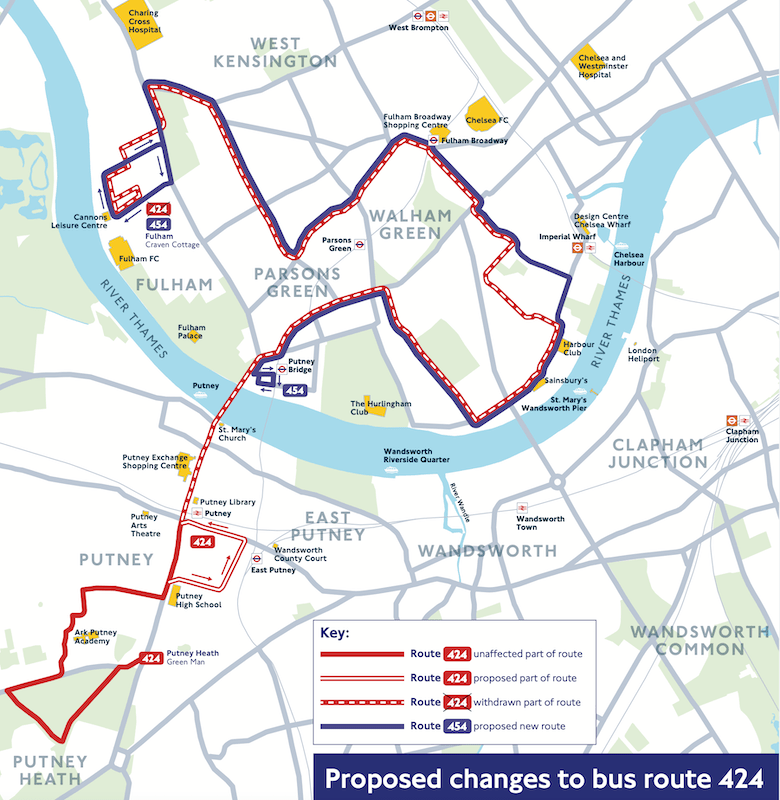
I won’t pick holes in that statement as I understand the tenor of what it’s trying to say but if the Mayor’s “Transport Strategy” really is based on avoiding rather than tackling congestion then the long term consequences are concerning.
As you can see from TfL’s explanatory map, there are also plans to amend the northern part of the existing route in Sands End close to Imperial Wharf station so larger buses can be used on the newly numbered route 454 and a tight corner and narrow street will no longer pose a challenge.
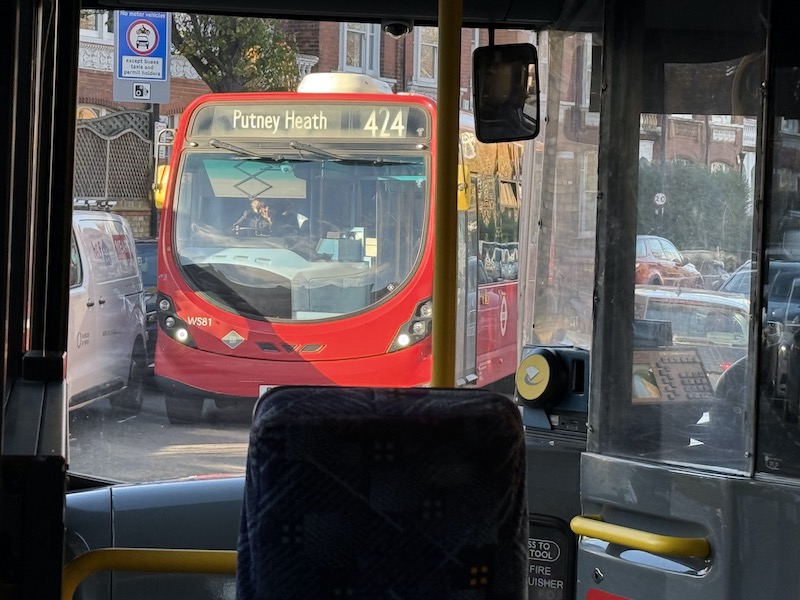
I took a ride on the route earlier this month to see how many passengers will be inconvenienced by the withdrawal of the cross Putney facility.
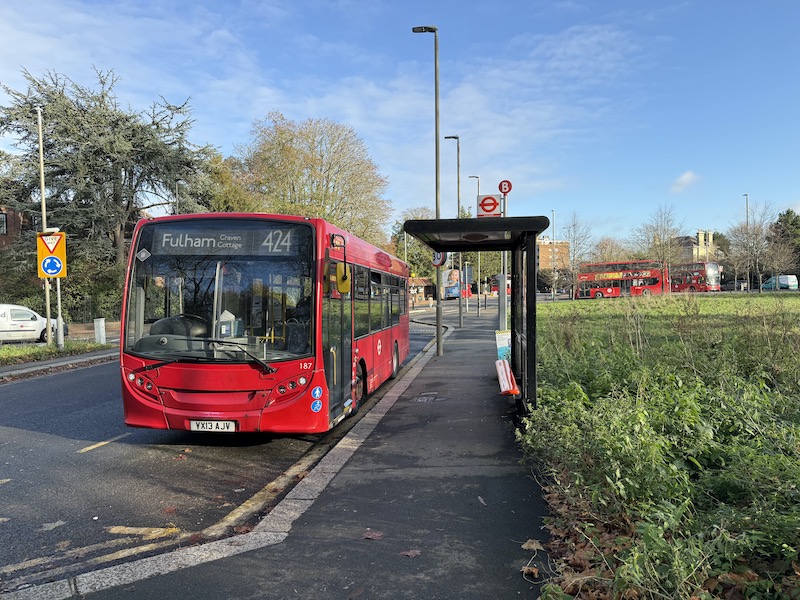
TfL states “196 unique trips per weekday on existing route 424 would be broken. This means passengers would need to walk further to a bus stop and change. These journeys are mainly to/from Sands End Sainsbury’s, Putney Hill and Putney Station.” That works out at an average of four passengers on each of the 47 journeys per weekday.
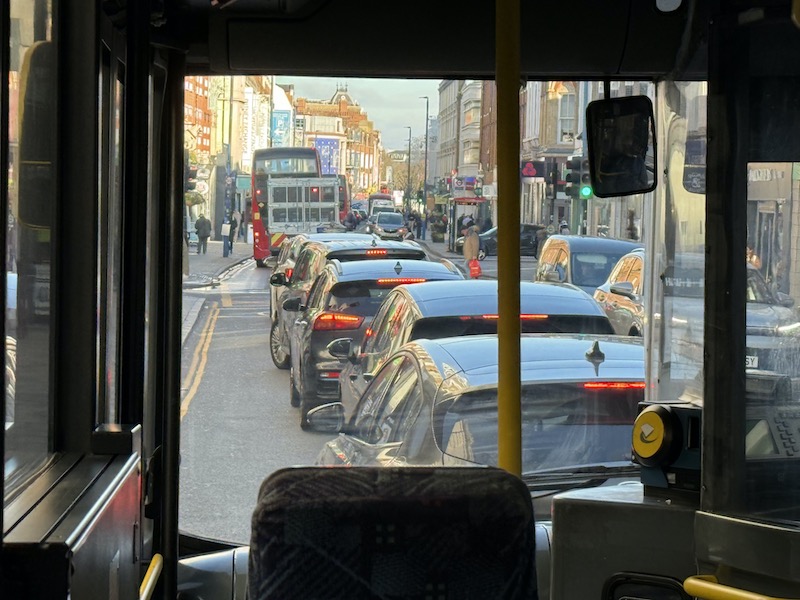
The journey I sampled – the 10:43 from Putney Heath over to Fulham’s football ground via Chelsea’s football ground – was definitely a route of two halves. Just four passengers boarded in Ashburton Estate in the twiddly bit of Hail & Ride route south of Putney High Street with two of these alighting as soon as we reached Putney station at the southern end of the High Street, and when the driver played out the announcement there’d be a change of drivers and the engine was turned off, the other two promptly left, leaving just me on board for the three minutes it took for the two drivers to do the necessary handover.
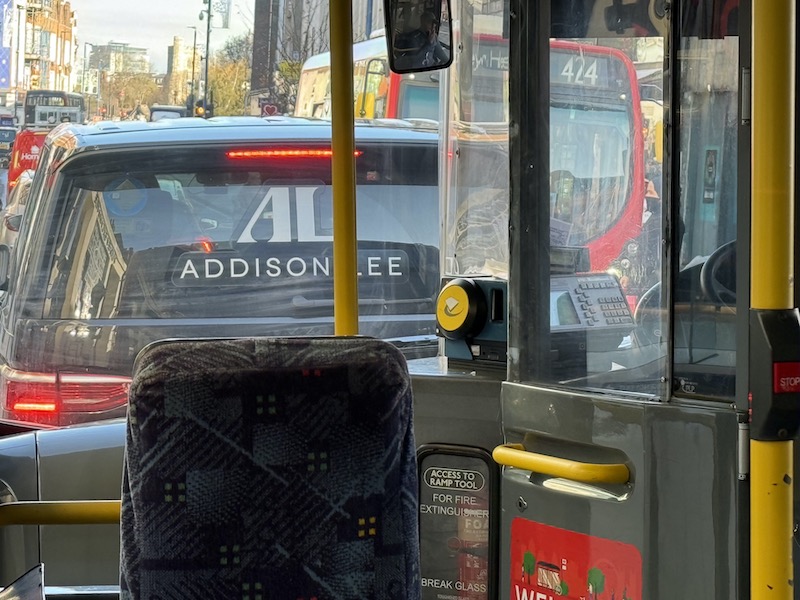
We set off for the crawl northwards along High Street at 10:59 reaching the next bus stop at the Putney Exchange shopping centre (370 metres/404 yards away) at 11:07 making for an average speed of 1.7 mph on that short stretch. No wonder the other two passengers alighted, and no wonder TfL are drawing a line under this.
After that it was plain sailing for the northern half of the route as we wandered around Sands End, Chelsea and Fulham. Indeed, that part of the route also fell into two halves with 19 boarding at various bus stops with a maximum number on board at any one time of 10 but we emptied out again by Fulham Broadway with two travelling from there for a couple of stops and three more travelling over to the back streets by Craven Cottage where the route terminates.

During the journey we passed the other four buses on the route all with similar numbers on board as the bus I was on at each location.
The 424, along with its soon-to-be-partner, 454, serve a particular need for very localised travel linking otherwise unserved back street residential roads with nearby shops, facilities and stations and as there’s very little need for a link either side of Putney Bridge it makes sense to split the route as TfL are proposing to improve reliability. Indeed I reckon almost all those 196 people TfL found are only travelling to one of the bus stops in the High Street itself, either just north of Putney station (towards Fulham) or just south of Putney Bridge station (towards Putney Heath), so the inconvenience will be minimal and the reward of a more reliable service welcomed.

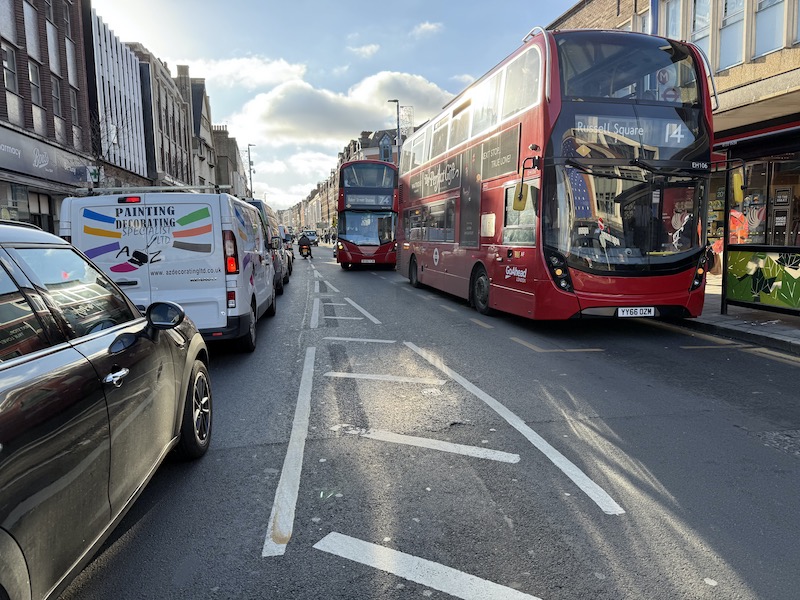
But it does make you wonder about the reliability of the other routes that pass along Putney High Street and the padding that must be added to the schedules to counteract the congestion. Five minutes worth of congestion I observed at the northern end of the High Street was caused by a protracted driver changeover of a bus on route 14 which wasn’t a good advert for the impact of buses in the area.
If you want to let TfL know what you think about the changes to the 424 the consultation is open until Sunday 11th January.
Has TfL given up on Central London bus routes?
TfL has also launched two more consultations. One proposes yet further reductions in frequencies and links across Central London and the other reduces frequencies along a key North London corridors.
I’ve included two explanatory maps that recently appeared on Diamond Geezer’s excellent daily blog, as these are so much easier to understand that TfL’s offerings.
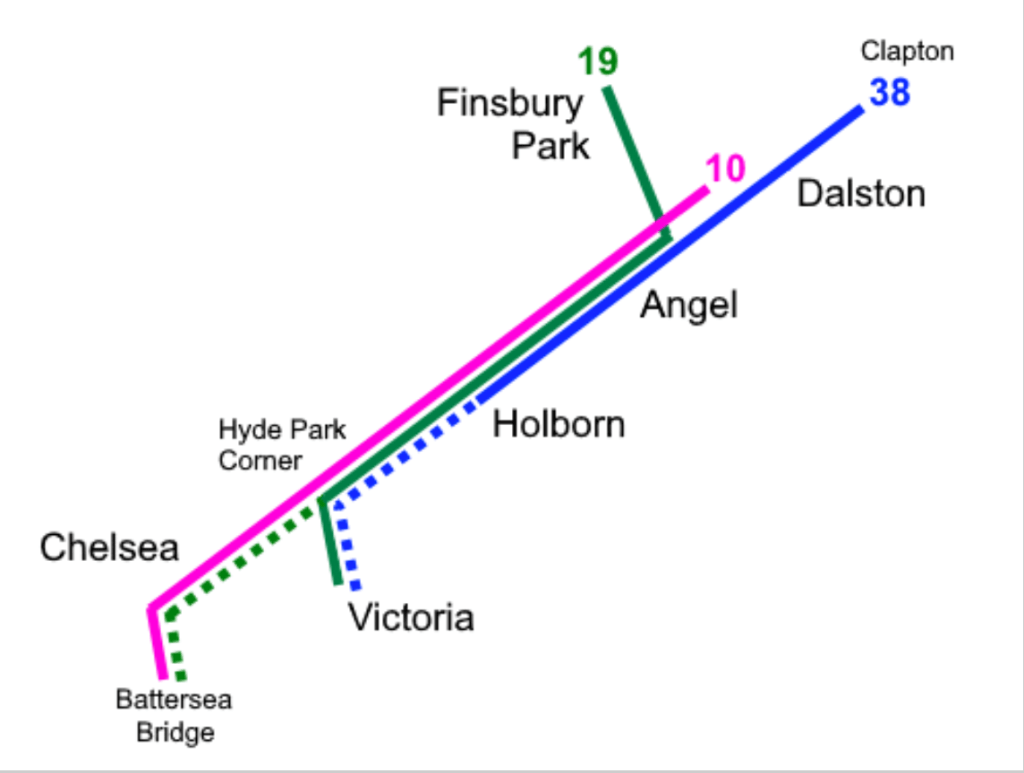
Long standing route 38 has provided a high frequency link between Clapton Pond, Hackney, Dalston and Islington to Holborn, Piccadilly, Hyde Park Corner and Victoria for over a century.
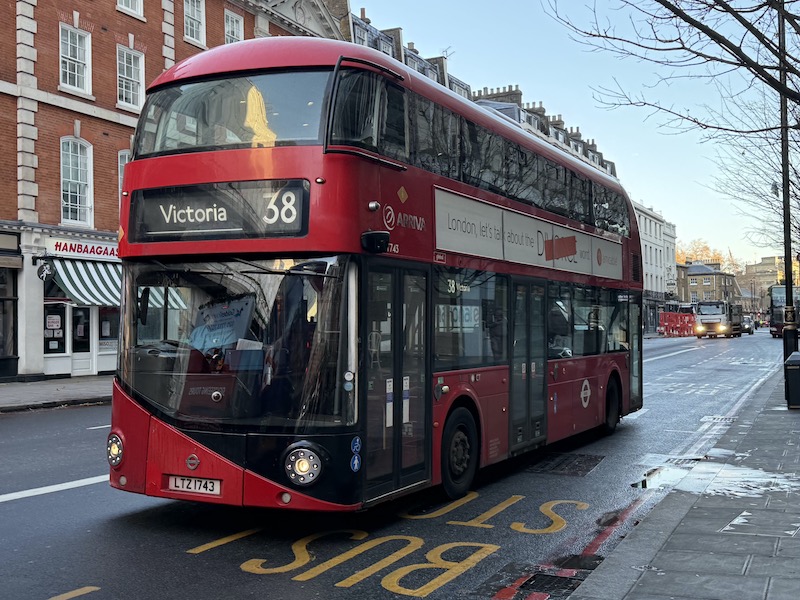
At one time it was one of London’s most frequent bus routes clinging on to its Routemasters until 2005, hosting Mercedes articulated buses until 2009, followed by New Routemasters. In the ‘good old days’ it would have been unthinkable to cut the route but it’s a measure of how much Central London’s bus network has fallen out of favour through intolerable slow speeds and continual thinning out of frequencies that it’s now just one of those things you expect every few months from TfL, which shows all the signs of having given up on Central London’s bus network.
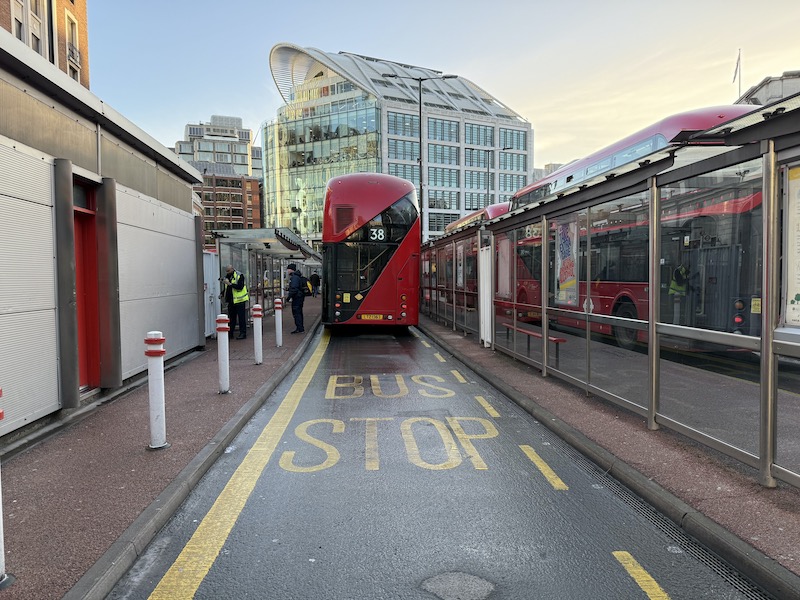
The proposal will see route 38 cut back at its southern end to Holborn but the link to Victoria will be retained for passengers boarding south of Islington through a diversion of route 19 which parallels the 38 as far as Hyde Park Corner and will head down to Victoria instead of Battersea Bridge.

As part of the package there’ll be a new numbered route 10 to replace the 19 to Battersea Bridge which will commence in Balls Pond Road. The last time that route number was used was in 1988 when it replaced a truncated route 73 west of Hyde Park Corner as far as Hammersmith. It didn’t survive a previous Central London bus cull in 2018.
Suffice to say this latest proposal is once again all about reducing frequencies along the corridor which could easily have been achieved without messing around with route numbers and termini if TfL wasn’t so hidebound by its self imposed rule every bus on every journey must operate the full length of the route with no short workings timetabled, even though the reality is passengers are turfed off buses every day with hundreds of journeys cut short to get back on time and ironically at the northern end of the 38 there’ve been short workings scheduled for many years with alternate buses turning at Hackney Downs just short of Clapton Pond.
The other similar themed consultation is a proposal to thin out frequencies along Tottenham High Road, Seven Sisters Road and Caledonian Road. And if that sounds familiar it’s a rehash of a similar proposal back in 2022 which in the event TfL shied away from.

These three key arteries once had buses running so frequently there was always one in view and again it’s a measure of how far London’s bus network has fallen from its Mayor Livingstone peak glory days that frequency reductions are being considered for this important corridor.
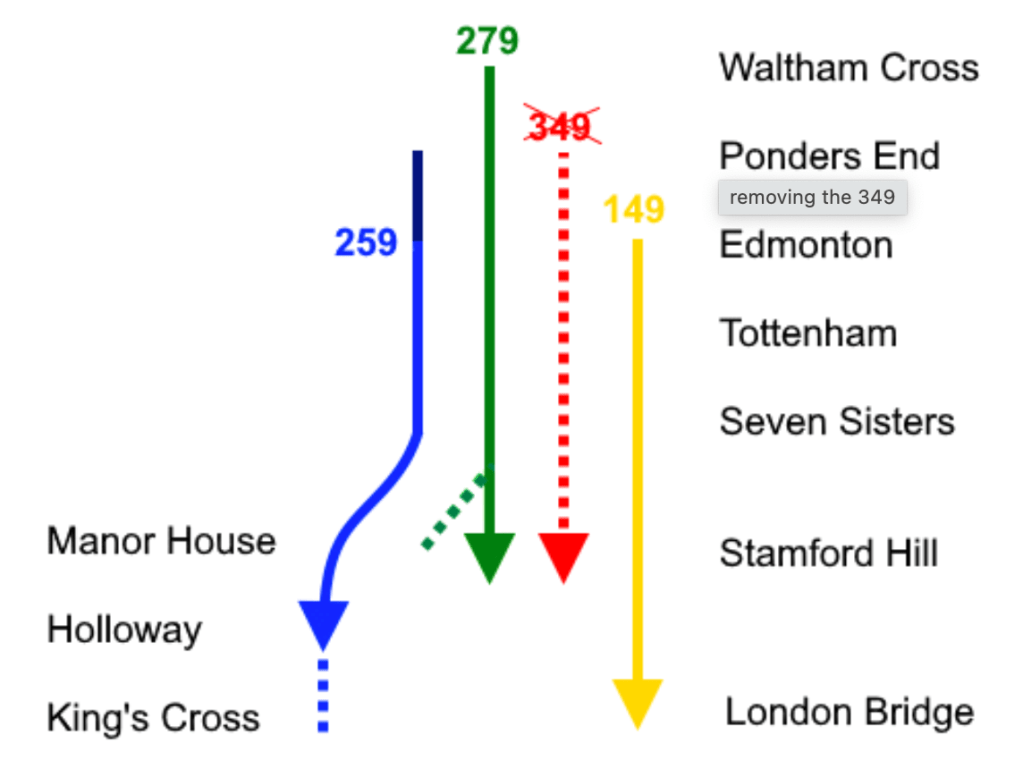
The reduction will be achieved by withdrawing route 349 (introduced as recently as 2004) and diverting route 279 to terminate at Stamford Hill instead of Manor House and, as a separate strand, cut back route 259’s southern terminus to Holloway instead of King’s Cross, but in part mitigation of losing the 349, its northern terminus will be extended back to Ponders End instead of Edmonton. Again a decade or so ago, before the relentless vicious spiral of decline in London bus ridership, severing the direct link between north and south of Holloway along the Caledonian Road would have been unthinkable. Now it’s the reality.

TfL say the proposals have the benefit of improving reliability on a shortened route but there’s no doubt both proposals are all about frequency reductions.
TfL has lost the plot on running buses in Central London, and its continual downward spiral of reductions in frequencies leading to reductions in passengers leading to more reductions in frequencies is clear for all to see. Instead of dealing with the problem, these actions will simply exacerbate it.

Goodbye to route 283

And finally for these three mini London bus blogs, just to record this Saturday sees another route number disappear from the Capital’s bus network (I nearly typed ‘map’, but of course that disappeared back in 2016), and that’s over in west London with the removal of route 283.

TfL consulted on this change back in the summer with a closing date of 7th September, thus making for a very quick turnaround from one of its consultations. In essence it runs two routes between East Acton, Shepherds Bush and Hammersmith.

Route 72 sticks to the main roads and route 283 diverts off to serve the White City Estate on another circuitous side road routing pattern. Because other routes serve the main roads (Du Cane Road past Wormwood Scrubs and Wood Lane past the BBC’s former Television Centre) TfL wants to divert the 72 around the White City Estate and consequently withdraw the 283, making for a neat saving.
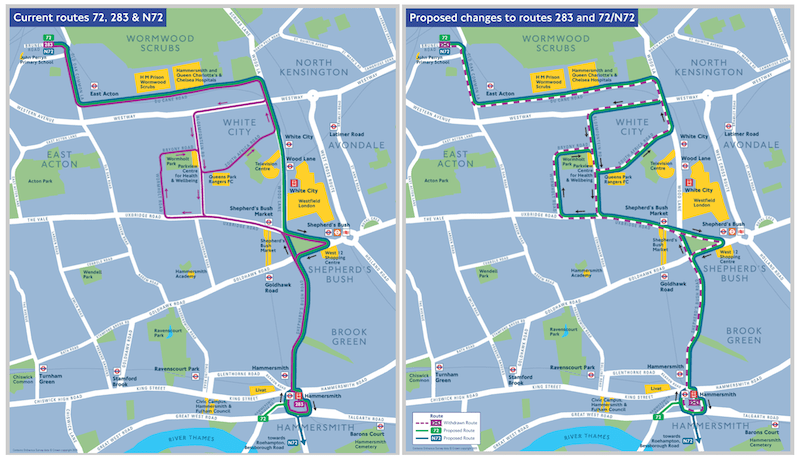
However, it received 709 responses to the proposal in the consultation with 75% negative about the idea, 13% neutral, 8% mixed and only 4% of the comments were positive. Some of the key concerns were the impact on patients and staff attending Hammersmith Hospital, loss of direct links to White City and Wood Lane stations, potential for longer journeys and overcrowding and reduced access to Wormwood Scrubs and Westfield.
Notwithstanding those responses the new arrangements go ahead from Saturday achieving more cost and frequency reductions for London’s beleaguered bus network.

Roger French
Blogging timetable: 06:00 TThS
 BusAndTrainUser
How things have changed in North London. Used to be 627 Waltham Cross to Tottenham Court Rd. 659 Waltham Cross to Holborn Circus 679 Waltham Cross to Smithfield 649 Waltham Cross and Liverpool St
LikeLike
I rarely if ever catch buses in Central London now. When I’ve attempted to catch a bus in a place I’m familiar with I find the bus stop has been moved away from a junction or isn’t there anymore.
Recently while walking in the City of London I found a stop in Bishopsgate for Threadneedle Street had been closed to assist the movement of cyclists and pedestrians!
Intending passengers are being turned away by the rationalisation of bus stops. I’ve had similar experiences in Edinburgh and Brighton recently where access to bus routes has been reduced to speed up services. In Princes Street it’s called “skip stopping”.
Probably one of the reasons behind the reduction in Concessionary pass use too.
We love the Underground was a reply I got when speaking to visitors about London … “It’s frequent and it’s fast” …
John Nicholas
LikeLike
Renaming home-to-school transport could help tackle costs, MPs told
MPs have been told home-to-school transport should be renamed to manage parental expectations as part of a scrutiny session on the rising cost of home-to-school transport.
The session, a hearing of the Public Accounts Committee on 8 December, follows a National Audit Office (NAO) report that earlier this year gave an overall exceedance of £415 million from a total spend of £2.32 billion by local authorities in England.
Rose McArthur, Chair of the home-to-school transport working group at ADEPT, says the name “home-to-school transport” brings a problem with linguistics, implying it is a door-to-door service.
Quite why taxis have to be provided is somewhat baffling
LikeLike
Taxis are usually only provided for children who can’t travel independently, such as those with severe special needs or disabilities, and where it would be inefficient to use minibuses because some pupils live a long way from others.
LikeLike
Not true outside of London . Taxis are widely used by councils
LikeLike
The recent NAO report states that of the 6% of all pupils who receive free home to school travel, more than 1/3rd have special needs, but cost 2/3rds of the budget. In many shire areas, the shortage of special needs places at nearby schools results in long individual journeys which cannot be consolidated with other pupils. Inevitably these will be by taxi.
The NAO report says “Over 90% of actual expenditure by London and metropolitan borough councils is on ‘SEN transport’, compared with 69% in county councils and 68% in unitary authorities”.
KCC
LikeLike
London bus speeds ‘worst we’ve seen in 40 years’, assembly told
Slower bus speeds are sparking a dramatic decline in ridership in London which will have a knock-on effect on the Mayor’s active transport goals and Transport for London’s (TfL) revenue, the London Assembly has been told.
Average bus speeds on the capital’s streets in 2024/25 were just 9.17mph – down from 10.27mph four years ago, according to data obtained by City Hall.
In August – the latest month for which data was available – the mean speed of a London bus was just 9.06mph. Meanwhile, passenger numbers fell for the first time since the pandemic last year, from 1.869 billion to 1.842 billion.
LikeLike
The 349 was introduced when the 149 was converted to bendibuses, presumably as it would have been difficult to turn them at Ponders End Garage and there was money in those days for what was effectively an overlapping section. It does seem weird to have the 279 (as successor to the 79 tram and 679 trolleybus) no longer going down Seven Sisters Road, but following the 149 to Stamford Hill instead.
LikeLike
The 424 splitting into two looks like a perfectly reasonable idea but the southern end will become useless, with it’s frequency reduced to just one every 45 minutes running on an extremely short route. I wouldn’t be surprised if that part were to be cut in the future.
LikeLike
Sight of northbound 85s and 93s showing PUTNEY HEATH is commonplace. I am not surprised that trolleybus route numbers have already been quoted by another writer concerning the A10 & A1010 corridor. It is not a “decent book about London trolleybuses” unless it includes a picture of the packed streets outside the THFC ground after a match with one only able to count the trolleybuses present through the forest of booms, with incidentally a diesel 76 almost appearing to be an interloper on this north London scene. Through wires of course and the additional southbound siding which needed boom swings at the northern end for trolleybuses to join. As to the swansong for Route 283, I remember the extraordinary livery carried by the Scancoaches vehicles in the early days of tendering. Those were indeed distinctive vehicles.
LikeLike
The 279’s quirky terminus arrangement at Manor House has always amused me (a U-turn on a busy road).
Ian McNeil
LikeLike
For while TFL extended the 279 to Finsbury park but that did not last long
The wide road at Manor house goes back to the days when there was a tram stop in the middle of the road
Clearly the 279. 259 and 349 changes are just a cost reduction
LikeLike
Manor House Tram stops
LikeLiked by 1 person
The U-turn at Manor House dates back to 1936, when the 623 trolleybus was the first to terminate here. It continues to exist due to ‘Grandfather Rights’ as it is a known hazard; it would not be sanctioned today.
The 623 ( and from April 1960, its successor the 123 bus) was busy carrying passengers from the Walthamstow area to the Underground at Manor House, before the Victoria Line was opened in 1968.
Julian Walker
LikeLike
So I assume this change would see the end of this turn, as presumably a future route being add back in to turn here would have to be found another manoeuvre
LikeLike
There was a time when London’s bus routes were largely unchanged. You always knew what bus to catch from Victoria to Oxford Circus, or Charing Cross to Marble Arch. Now routes are changing so much, you always have to check (on line, there are no paper maps produced by TfL) that the bus route is still running. Coupled with reductions in frequencies, it will soon reach the stage where you can no longer rely on turn up and go. This in turn leads to fewer passengers, then further frequency reductions etc etc ad nauseum. Where the provinces used to marvel at London’s bus service, London seems to now be following the provinces in service reductions. Does “Every journey matter”?
MotCO
LikeLike
Putney High Street was the first low emission air quality bus zone back in 2017 but has steadily worsened since. As Roger points out four minute driver change overs don’t help either. Perhaps if GoAhead lost a few routes there congestion levels would fall ?
Route 38 is slow, buses frequently bunch and as a consequence carries few passengers at times
I think rather than piecemeal cuts is it not time for a radical reshaping of central London bus routes? How about a Red Arrow network with articulated buses too ?
Martin W
LikeLike
I’ve often wondered whether a complete bus network redesign should happen. All these service reductions, route truncations etc looks like random tinkering upon random tinkering with the original logic long gone.
Perhaps the starting point should be deciding what the bus network is for. Then design a network to deliver that objective.
A grid of north south and east west trunk services with easy interchange where they cross would allow most trips to be made with a maximum of only one change. It would be simple to understand, simple for users to visualise, it would be simple to explain on a map! The entirety of the trunk network should be red routes, bus lanes and bus gates should be deployed to favour buses over driving for most journeys.
Peter Brown
LikeLike
diamond geezer has also covered the 72/283 reorg in a post today.
LikeLike
For an air quality zone there was no attempt to make every bus route along Putney High Street / Putney Bridge and Upper Richmond Road totally electric.
The 454 might just be better turned into a complete circular route. The unique roads in Sands End might be missed for local journeys to work but increasing numbers at Imperial Wharf Station area might mean with an earlier joint bus stop some more journeys with less waiting time from the big sainsburys.
The 424 could run toward Wandsworth serving the Osiers Wharf area and increased to every 30 Min linking that area to East Putney Station
East Putney Station needs lifts. So Does Putney Bridge. Which should also be provided each end of the rail bridge for an alternative , nice, accessible active travel corridor accross the thames avoiding Putney High Street ( I always thought a shuttle train like Southend Pier Railway would be of interest but probably not space for it without rebuild.
LT has always messed with route numbers and their tops and tails and looks a bit of a rearranging of deckchairs on the Titanic this time round.
The busiest part of the Elizabeth Line apparently between Bond Street and Tottenham Court Road which must say something about either line interchanges or the poor transport along Oxford Street Corridor. Fortunately there is still scope to add the extra carriage to the Elizabeth Line trains – which is needed.
TfL have replaced the Overground operator Arriva with First from late 2026 . with a command to increase services on one of the lines.
I am thinking that there is a need to actually replace all this franchising -it is a pain and costs at least ten percent more than it should with all publicly owned bus services (other than road service licenced ones) under a London Passenger Transport Board, with an exclusive zone effectively in an enlarged London basically within the M25 and an outer area about 20 miles outside where buses are managed by the board in conjunction with the other local authorities to reasonable out border town destinations
JBC Prestatyn
LikeLike
The last time TfL ran direct operations, East Thames Buses, it routinely ranked towards the bottom of virtually every KPI measure going. And browsing its accounts, appeared to be run at a loss too.
LikeLike
JBC Prestatyn –
I’m puzzled why the Mayor and TFL don’t go fully to public ownership with both the buses and the Overground, as is already the case with the Underground. It’s clear they need to go back to the model where buses ran short sections and garage runs, so busy sections remain well served but the fringes also get buses. What exists now is a bit wasteful and too inflexible. So in places like Potters Bar and Cuffley you regularly see out of service buses that could be carrying passengers where they want to go, missed income due to dead mileage. Directly owning the garages would allow for much more efficient network planning.
I agree with the Outer Area as its broadly in line with London Country’s area (east would cover apart of the old Eastern National though) but would say an expanded London needs to include all continuously built up areas in Herts and Surrey + Dartford and Grays as a minimum, the M25 doesn’t quite cover this.
Interestingly, DFT released a Connectivity Tool today, quite clearly shows cross-boundary gaps all around London, all whilst TFL is hollowing out the centre. As well I think all bus served roads need to go back to 30mph.
Anonymous –
TFL needs to own all its buses and garages to have an effect and really change things. One little company wasn’t ever going to prove anything. They need to insource the buses.
Aaron
LikeLike
TfL are mismanaging what they currently have, as evidenced by passenger numbers going through the floor and successive rounds of bus cuts and your solution is for TfL to actually run the operations.
On what planet would anyone get TfL to do that?
LikeLike
I can remember the days when London Transport did operate the bus services. On many routes, the service was quite dreadful. Waiting up to three-quarters of an hour for a bus which was supposed to be every 10 minutes was far from unusual. London Transport During the late 1970s and early 1980s, lost mileage was running at around 15%.
Not all of the tendered operations were a success, but operators such as Metrobus, Ensignbus and Grey-Green (to name but three) put London Buses to shame, running services more reliably yet at lower cost.
Malc M
LikeLike
The only way to sort out Putney High Street is to reopen Hammersmith Bridge.
Steve
LikeLike
It isn’t only TfL who have lost the plot. Transport planners generally have, too.
Around the country “active travel” seems to exclude bus travel; lavish cycling facilities slow everything down, especially for bus users; and I cannot believe that floating bus stops are considered acceptable. They are not safe for people who don’t have their wits fully around them, and they are not going to encourage anyone to catch the bus. The reality now is that bus passengers are at the bottom of the heap – well below “hard-pressed” motorists and cyclists.
I can, however, understand TfL altering some bus routes to get around traffic congestion and improve reliability. This has happened in other cities and major towns. Another factor (which may or may not apply in central London) is that in this age of internet shopping, city centres are not the draw that they used to be. There must be many passengers who, after a long and slow journey, arrive at their destination, look round the declining retail offer and wonder whether it was worth it.
I can’t expect transport planners to revive shopping centres, but we do need a rethink on urban travel. Buses, which are after all the most used form of public transport, can play as important a role as ever. Instead of having cycling-and-walking plans (the two don’t go together), have walking-and-bus-travel plans.
Peter Hale
LikeLike
Transport planners are, or at least were, bound by the hierarchy of road users. This places pedestrians first, then cyclists, then buses and then motorists. This makes it difficult to change pro-cycling proposals for the greater good.
Cycling groups tend to be well organised, whereas pedestrians are not. Pointing out that bus passengers are pedestrians for at least some of their journeys carried no weight and led to dangerous solutions such as island bus stops.
Shared pathways, where cyclists have a section of footway marked to allow their use, lead to conflict as cyclists want to cycle at speed and some think pedestrians should not be there. Oddly many cyclists treat pedestrians in the way that they complain that motorists treat them.
Gareth Cheeseman
LikeLike
Although if you look at the standard sign for a shared footpath/cycleway, you could be forgiven for assuming that the DfT thinks it’s the other way round as the cycle is shown above the pedestrian, giving implied priority to the cyclist, rather than the pedestrian above the cyclist implying pedestrian priority.
Most vocal cyclists are in my experience utter hypocrites. They’re just like motorists in that respect too.
LikeLike
I can’t say whether or not TfL has given up on Central London bus routes, but I certainly have. Back in the halcyon days of Ken Livingstone (!) I always used the bus when travelling round Central London; the advantages over the Underground were many and self-evident. But now I have completely given up and use the Underground every time. The intervals between buses even on what used to be trunk routes can be huge and then the speed when they turn up makes the journey not viable, due to delivery vans, bicycles, roadworks and a whole load more reasons. On top of that, you can find yourself waiting at a stop for a route which is shown on the timetables but has actually been diverted away from the stop, with no indication given by TfL. Frankly, I’m surprised this conversation is still going on, because I’m amazed anyone would use buses in Central London any more.
Bob Westaway
LikeLike
The 279 change is bonkers, why not just extend the 149 back from Edmonton Green Bus Station to Ponders End, Ponders End is 15 minutes from Edmonton Green or is that too simple for TFL?
SM
LikeLike
@SM – your suggestion would leave the 279 still trundling down to Manor House, duplicating the 259. The 149 is more frequent than the 349, so you would then be increasing the frequency north of Edmonton, which may not be the best use of resources or funding.
Malc M
LikeLike
Were not the likes of the 279 and 149 run in overlapping sections sometimes in the 60s and 70s With Waltham Cross the start for the 279 ? And over the same roads but onto Aldgate were the RMC Green Lines from Hertford and Waltham Abbey ?
JBC Prestatyn
LikeLike
The 279 traditionally run in 3 overlapping section
Hammond St to Manor House
Waltham Cross to Manor House
Waltham Cross to Smithfield
LikeLike
I dont think London’s High Streets are as dead as is made out by some. North End Road Fulham Peckham High Street , Putney, Wandsworth Southside and area , Tooting and Balham , Finsbury Park all heaving the recent times I have been around. Battersea Power Station taking a lot of folk more by tube than bus at present time, Vauxhall (and anyone seen the flats around Nine Elms now ? Bromley has high footfall and I dare not visit Kingston which I normally brave once or twice a year. However it is the marginal extra passenger – and shopper – that has gone missing – The days when the strap hangers made the profit and so the bus frequencies get trimmed (not all a few recent London ones have been marginal uplifts) .
The recent bus passenger usage reports in total dont seem useful – which routes have seen the loss of passengers ? I think the 20-30 age group has evaporated though either to cycle or work from home and the rail services of London above and below ground have added to their passenger numbers some will be from bus. I do get the feeling that more buses in some areas especially evenings 7 to 1030pm for theatres and evenings out are still in demand along with routes that need to be 7 day a week and min 20mins on all routes.
JBC Prestatyn
LikeLike
Travelled through London on public transport this morning. Euston to Victoria in 7 minutes on the Victoria line. Average speed 24 miles per hour platform to platform.
Then to Brighton Main Line for trip to Crawley. Next Gatwick Express … 50 minutes!
Overrun of engineering work.
Roger, I look forward to a blog on how Metrobus has risen to the challenge of having to source over 40 vehicles to keep Crawley and West Sussex on the move in light of recent events.
Well done to all concerned.
John Nicholas
LikeLike
FirstGroup snaps up sightseeing bus operator for £17 million
The FTSE 250 company told shareholders it has acquired the UK sightseeing operations of French firm RATP Developpement SA for about £17 million.
LikeLike
Laws need to be introduced that make cyclists use lanes provided for them and away from Bus Lanes, how can they really carry on sharing these lanes….also thought needs to go into Private Hire Taxis (Ubers) there are too many of them and they need seriously cutting….all taxis need banning from bus lanes, there are a luxury not a necessity…Bus stops need to be in the places the public can use and user friendly, not these draft holes glass advertising boards…The bus network needs to be expanded into the counties around London, more passengers would use it…the night network also needs expanding outside as well…
LikeLike
No wonder you didn’t supply a name, with the quality of tosh written!
None of this is realistic, sensible, or would ever be legal.
LikeLike
At one time London had excellent bus services withy a Network of trunk routes plus shorter local routes. Now the trunk routes have largely disappeared so longer bus Journeys now tend to be non viable as they would take far to long with all the changes involved
LikeLike
Putney is a distaster area for bus operation, the traffic jams affecting the 220 and 270 often stretch most of the way down Putney Bridge Road. I’ve timed it and it can be quicker to walk to a Fulham game at The Cottage from as far away as Wandsworth or even Earlsfield on a really bad day.
LikeLike
With major developments tasking place in Cheshunt there may be major changes to bus services with many services extended from Waltham Cross to serve the new expanded Brookfield Centre
Site and Proposals — Brookfield Riverside Consultation
LikeLike
This has been extensively covered on Rail Forums bus pages. There was a lot of hot air about how transformational this development is yet it is a fraction the size of Bluewater or Lakeside – it’s basically London Colney plus some housing. There will be a few s106 commitments and some limited improvements to services in the area but hardly anything to get excited about. Certainly not enough to warrant a major recast of local services.
LikeLike
Traffic congestion in London is not new & the various authorities over the past century or so have all tried various methods of trying to improve the movement of people, whatever means of transport they chose to use. As many here have already identified, private cars today are the real problem as far as bus travel is concerned, whereas deliveries by van & truck are the life line of any conurbation. Even if the congestion charge was doubled I’m sure a lot of companies would still reimburse their employees to drive rather than use public transport, although it might reduce the number of private motorists to a degree. Whatever the solutions are, it seems no politician or transport organisation has discovered them yet.
LikeLike
“Has TfL given up on Putney High Street?”
I might suggest you are being a bit mischievous there, Roger!
That there will still be around 45 buses per hour in each direction does not strike me as giving up on Putney High Street at all.
The 424 is a low-frequency route. The performance report on TfL’s website bus.data.tfl.gov.uk/boroughreports/routes/performance-route-424.pdf shows route 424 is performing badly. On time performance generally only between 55% and 75%. So with the traffic conditions on Putney High Street as they are (no doubt made worse by the closure of Hammersmith Bridge), breaking the 424 in two and missing Putney High Street altogether may not be ideal, but may be the “least worst” option in the circumstances.
“…one of TfL’s specialty ‘circuitous side road tours’”
I could say the same of route 33 – but the route I am referring to is not TfL’s 33. Why not take a trip to Bournemouth and try out route 33, which twists and turns as it tries to serve more-or-less everywhere south of the A338 main road: 33 – Alum Chine to Christchurch | morebus A circuitous side road tour, which is provided without TfL involvement.
Malc M
LikeLike
Isn’t the morebus 33 largely a creation of the local councils (which have been chopped and changed in recent years)?
LikeLike
The Morebus service 33 that Malc refers to was originally operated by Yellow Buses before it went into administration in August 2022. It was then taken over by Eastleigh based Xelabus on a six month contract before Morebus then took it over. In all cases this service received & continues to receive council funding because it is deemed a socially necessary service. The council (BCP) is an amalgamation of the former Bournemouth, Poole & Christchurch councils.
LikeLike
Bounemouth’s route 33 has been wriggling its way between Bournemouth and Christchurch since around 2012, well before the merger of the councils in 2019. The only thing that has changed, as far as I can tell, is it now extends beyond Bournemouth town centre to Alum Chine, enabling the “off-season” service on Morebus 70 to cease, along with a change to the terminus in Christchurch.
I highlighted it to question Roger’s comment about “TfL’s speciality circuitous side road tours”. Is Bournemouth’s 33 a circuitous side road tour? Yes it is. Is it a TfL service? Of course it isn’t!
Malc M
LikeLike
‘Reckless’ county bus company banned for four years after ‘endangering passengers’
A coach company had its licence revoked after having ‘the worst fleet inspection’ the commissioner had ever seen.
Lugg Valley Travel operated bus services across North Herefordshire before having its licence revoked.
In a public inquiry, which took place this November, it was revealed that the Hereford firm had a history of maintenance failures that posed ‘serious safety risks’ to passengers.
LikeLike
Remember when the congestion charge originally started? In the run up new bus routes were created, articulated buses introduced. After launch day traffic congestion reduced to the extent that bus speeds increased and buses were allowed to run ahead of schedule because the alternative would have been a lot of waiting for time.
Perhaps the congestion charge is too low now and needs to increase?
Peter Brown
LikeLike
Why don’t TFL run their own buses? Because the Unions could hold them to ransome. With many operating companies, one striking company can be replaced by another that hasn’t raised wages.
LikeLike
One other goodbye, just before Christmas, is Megabus, where the rump of the network, the Anglo-Scottish services, have now finished. Coaches in Megabus colours are still to be seen on Stagecoach-operated Citylink services, and, like the smile on the face of the Cheshire Cat, the Megabus website is still active, but for Anglo-Scottish journeys, lists NX departures!
LikeLike