Sunday 26th November 2023
We’ve had the SL6. SL7, SL8 and SL9 but they were just aperitifs and starters, being reheated routes X68, X26, 607 and X140, and two of them aren’t even part of a loop so shouldn’t even have been on the menu.

But now comes the main course in the form of the first of five brand new loop segments being introduced over the next few months to all be in place before the London Mayoral election in May 2024.
It’s always interesting how upcoming elections can concentrate a Mayoral mind and I’m sure it’s no coincidence the traditional public consultations on the Superloop bus route proposals were completed in double quick time – a matter of a few months to implementation rather than TfL’s usual practice of a few years.
Lest that touch of cynicism creates doubt about my support for the concept of Superloop let me confirm from the outset and as previously blogged, I’m fully behind the idea of a high profile orbital limited stop bus network around London. I’ve been advocating such for many years.
So I was delighted to give this first of five, the SL10, a try out yesterday on its first day.
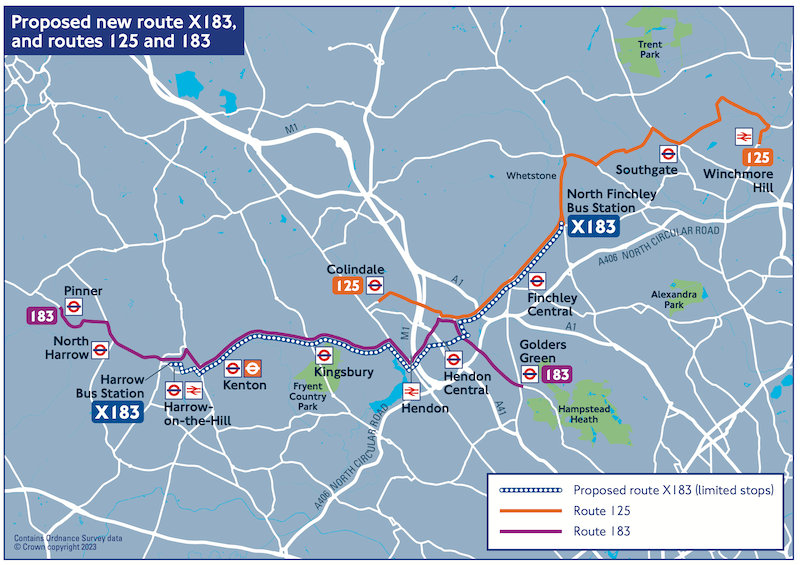
The route provides a quick limited stop (described as an “express service”) alternative to the long standing all stops route 183 between Harrow and Hendon before continuing its route on to Finchley Central and North Finchley providing a quicker option to the 125. It also provides some new links to Hendon Central Underground station which the 183 by-passes on its longer route between Pinner and Golders Green..
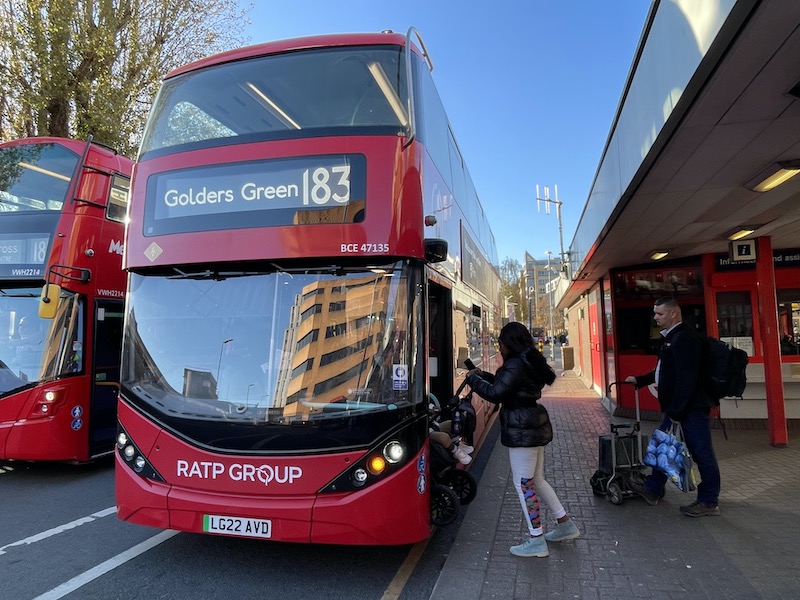
Superloop SL10 runs every 12 minutes Mondays to Saturdays daytimes and every 15 minutes in the evenings and all day on Sundays. Unsurprisingly parallel route 183 has seen a compensatory reduction from every 7-8 minutes to every 10 minutes during daytimes and from every 8 to every 15 minutes evenings and Sundays.

Operated by RATP Group’s London Sovereign’s Harrow bus garage, the new combined Peak Vehicle Requirement for routes 183 (minus six) and SL10 (plus 13) makes for a net increase of seven vehicles but these figures are currently unconfirmed and just my educated guess.
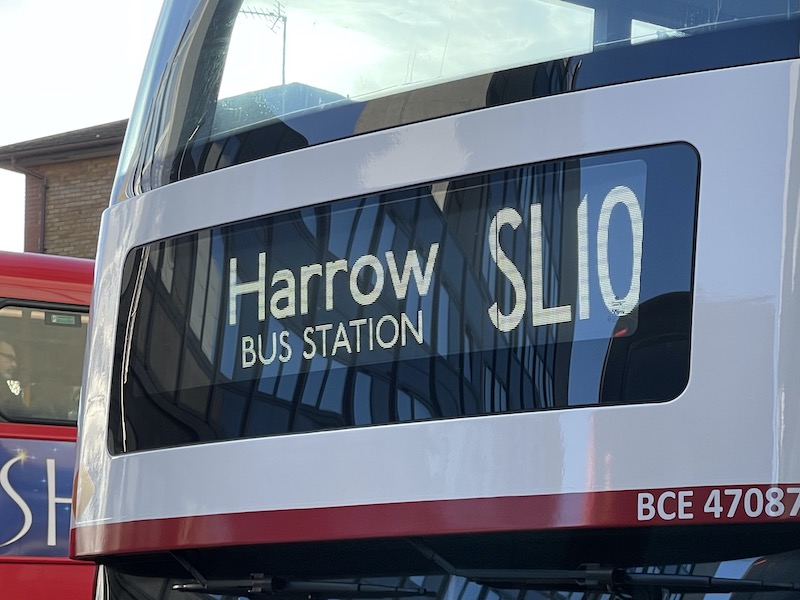
Comparing scheduled journey times between the SL10 and an end to end journey using the 183/125 throws up a saving of around 10 minutes on the shorter 50-60 minute SL10 option depending on the time of day.
That’s a welcome reduction but having taken a ride yesterday the all important perception of time saved is even more dramatic. With just 10 intermediate stops on the SL10 between Harrow bus station and North Finchley compared to 46 on the 183/125 you really do feel as though you’re getting somewhere fast on the journey rather than incessant stopping along the way.
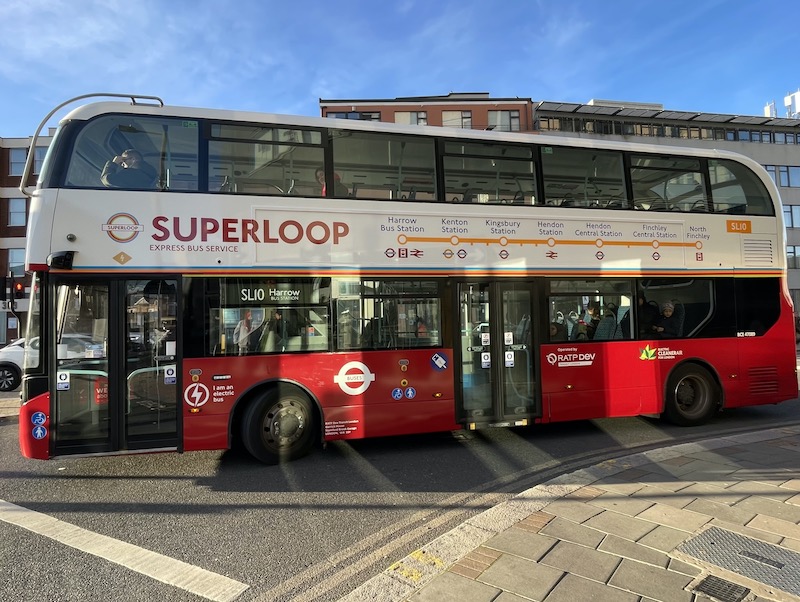
Of course this only works if the ten chosen stops are popular enough to generate sufficient revenue from passengers in their own right to justify the limited stop concept. I’ve no doubt the likes of Kenton, Kingsbury, Hendon, Hendon Central and Finchley Central stations achieve this objective, as well as the other chosen stops, and I’m confident new passengers will be attracted given the perceived improved journey time and attractive frequency of the route.
Another key ingredient is having effective bus priority measures aloing the route and although there are some helpful stretches of bus lane through key bottlenecks I wasn’t convinced there were enough. It was slow going in the southbound direction from North Finchley through Finchley Central for example, even on a Saturday afternoon.

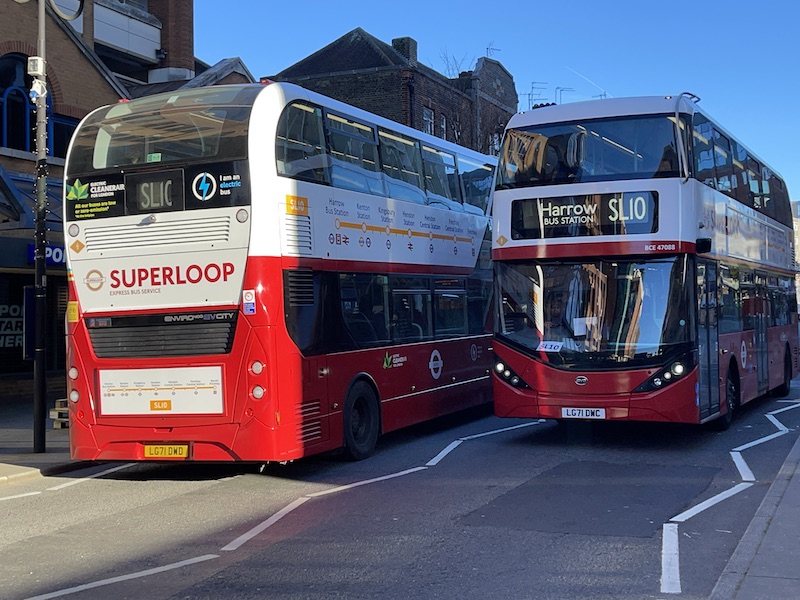
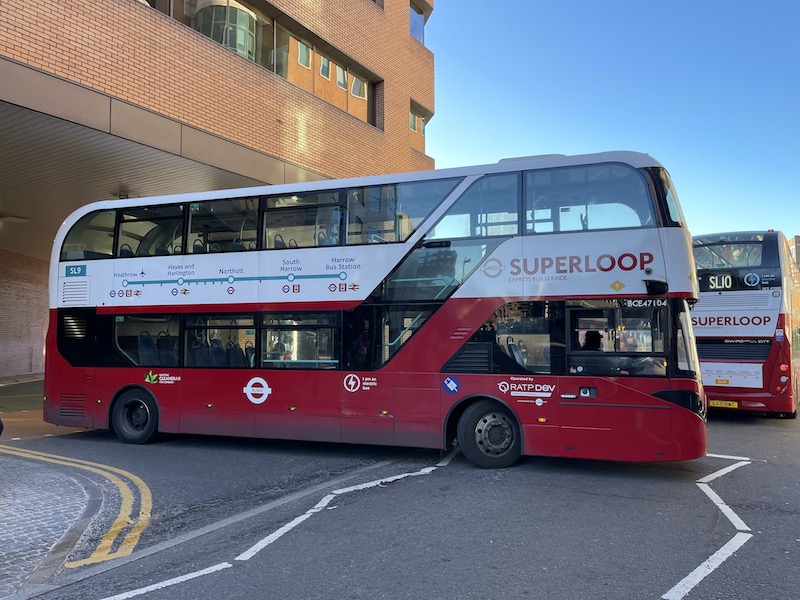
It’s good to see TfL pushing the boat out on promoting the service albeit in its own rather limited TfL way with the high profile Superloop livery including promoting the major points served along the route. I’m not a fan of the actual livery design, but it is what it is.

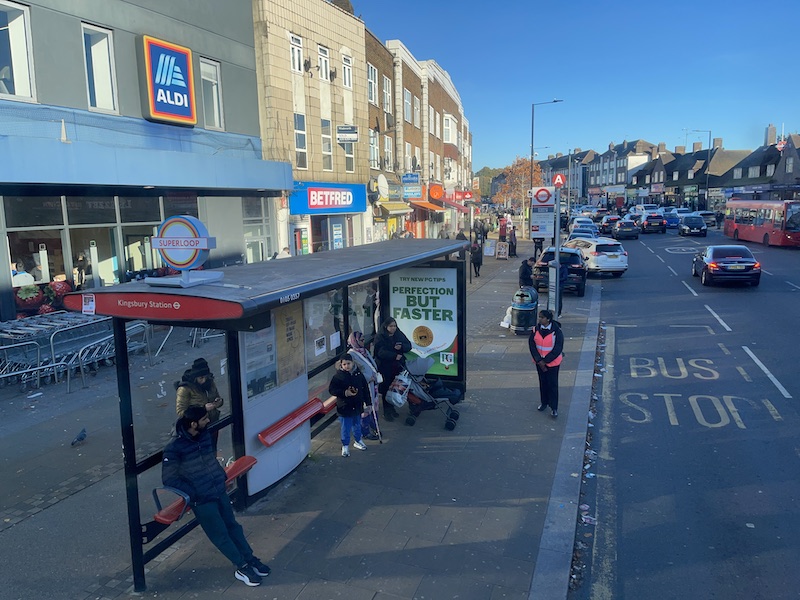
As with the upgraded routes already introduced, bus stops have all had Superloop branding added to the plate including a red SL10 and the Superloop roundel has been added to those shelters with suitable roofs. It was good to see these added for introduction day.
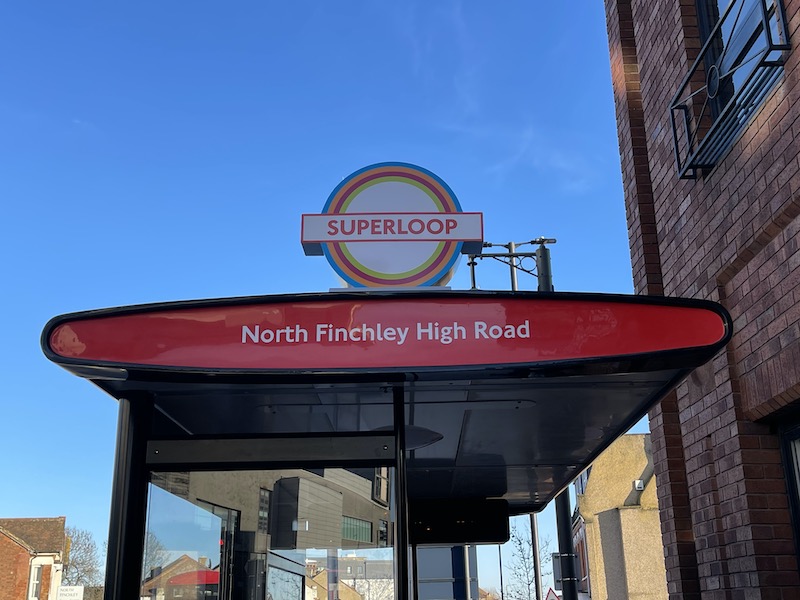
These all helps to show passengers which stops are included and which are by-passed as inevitably on the first day yesterday there was lots of hand waving and puzzled looks as we sped past non observed bus stops as well as on board bell ringing.
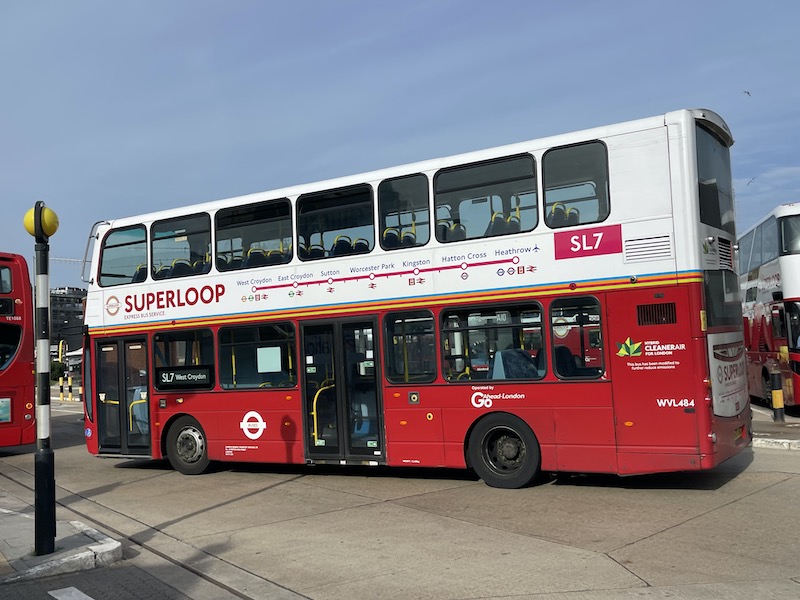
I’m sure this will soon settle down as it has on the X140, now SL9 and is never a problem on the SL7, formerly known as X26.
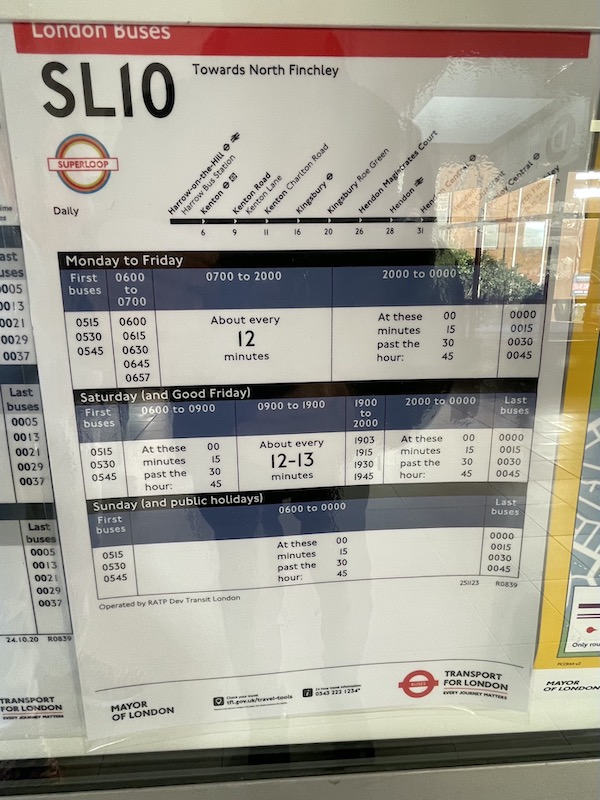
Timetables for the SL10 were displayed at both Harrow bus station and in North Finchley and where I could see, along the route too.
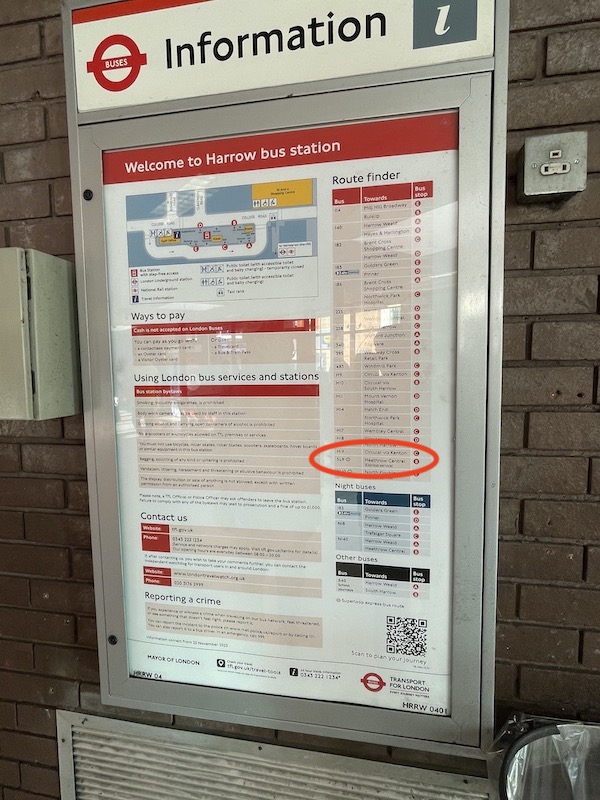
Posters showing where to board had also been updated in Harrow bus station as well as signs at the departure point.

Even the dismal bus station – and that descriptor is being used advisedly – at North Finchley sported updated information…
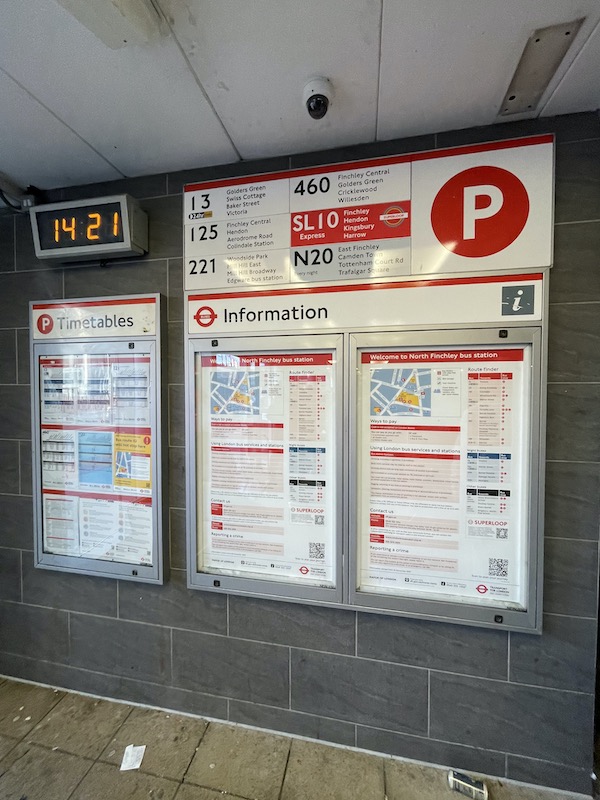
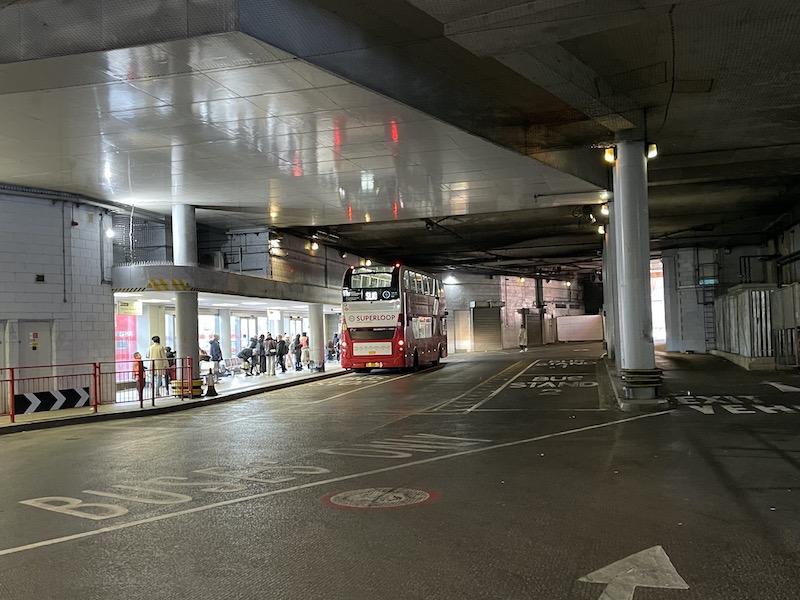
… but it isn’t a very attractive place to wait for a bus and must rank as a strong contender for being London’s gloomiest bus station.
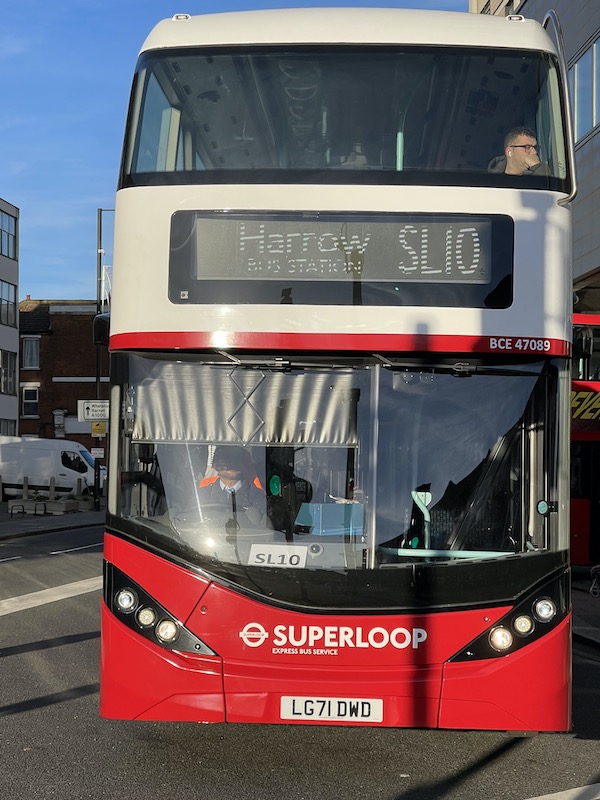
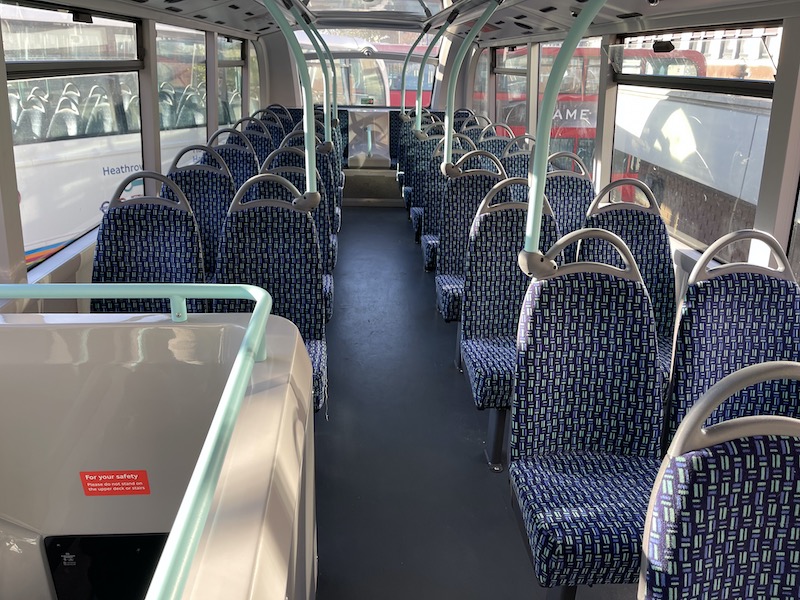
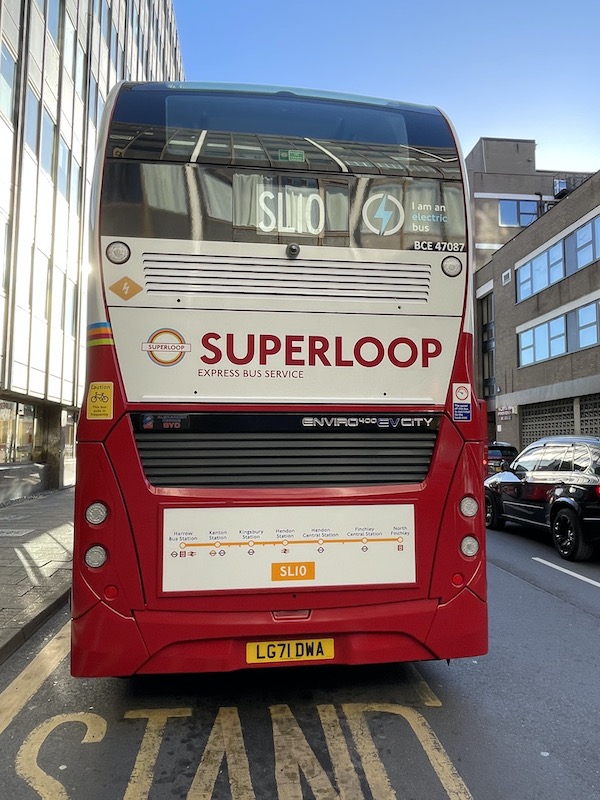
Buses being used on the new SL10 are ’71’ and ’22’ plate electric powered Enviro400EVs to a rather basic RATP Group interior specification.
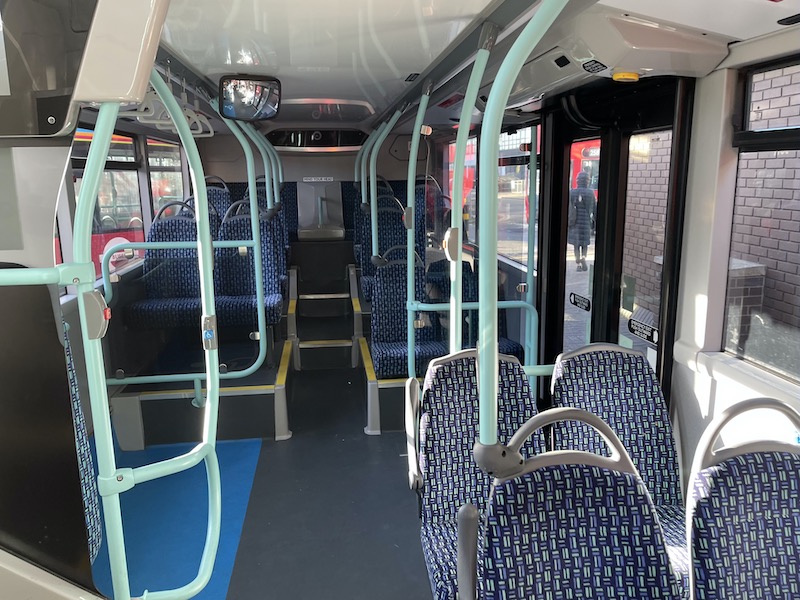
I’m a bit surprised the higher specification introduced on buses used on route 63 last year to much acclaim as the way forward for London hasn’t become a standard specification for the new Superloop routes as that would all be part of making the journey something special for passengers. There weren’t even usb sockets.
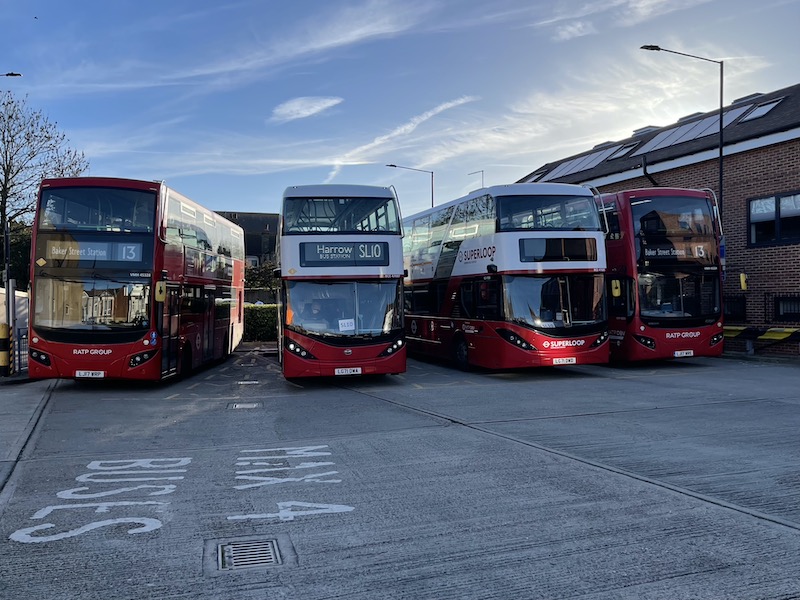
Most of the buses out yesterday were in Superloop branding although I saw at least three in plain red…
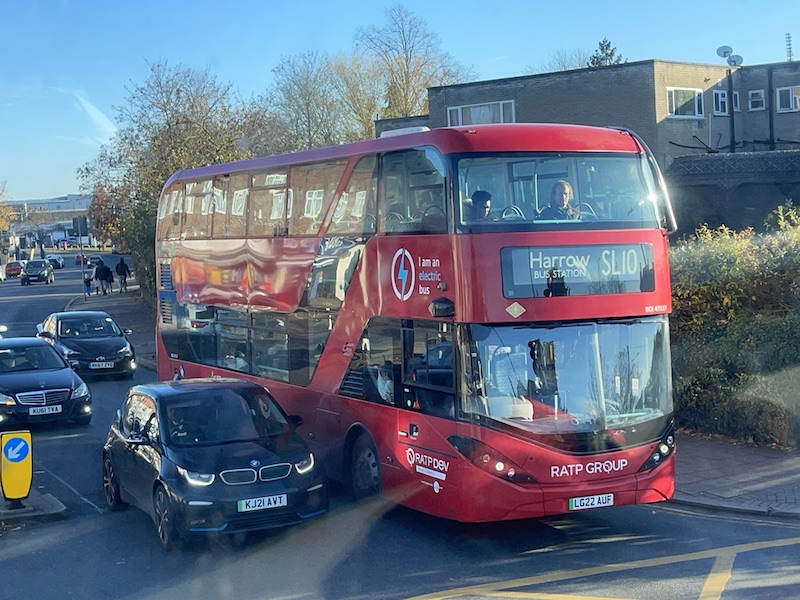
… and not all had consistent Superloop branding on the front lower panel.
In a no expense spared initiative, TfL arranged for high-viz wearing customer information type people to hand out a four page A5 leaflet at all 12 bus stops along the route including the termini.

That’s 22 people which must all be part of the route launch costs, but seems a bit excessive. Many of them looked bored out of their minds.

But money has been saved on the leaflet as it’s not a bespoke one for the SL10 but contains just a Superloop diagram showing all 10 routes so will be applicable to hand out for the next five route introductions too.

What a missed opportunity – it doesn’t even show every bus stop served. Having employed all those people for the day you’d think a nice bespoke leaflet for the SL10 containing a timetable and map could have been produced.
It admirably demonstrates TfL’s marketing people’s obsession with broad brush branding over dull detailed information that’s essential to communicate to passengers (and the all important potential passengers) if you want to grow the market for bus travel.

That aside, I wish the SL10 a successful future, along with the SL7 and SL9, the other two loop segments already running, meaning we’ve now got three Superloops covering virtually the whole of the western side of the loop.
The next section taking us around the top of the loop from North Finchley to Walthamstow on the new SL1 begins in a couple of weeks on 9th December followed by the SL2 from Walthamstow on to Woolwich in March 2024.
The final two loop segments covering the south east quadrant, SL3 and SL5 (Thamesmead to Bromley North to Croydon), are due to begin next Spring, with the final, SL4, not part of the loop between Canary Wharf and Grove Park, not expected until 2025, when the new Silvertown Tunnel under construction opens.
Roger French
Blogging timetable: 06:00 TThS.
Comments are welcome but please keep them relevant to the blog topic, avoid personal insults and add your name (or an identifier). Thank you.


Nice review, and great to see the SL10 is up and running – radial bus journeys from Finchley have never been very fast so it’ll be interesting to see if the SL10 makes a difference and increases the demand for travel between these areas. I agree though that the Finchley stretch of the route badly needs some bus priority measures such as bus lanes etc – I think there are very few bus lanes in Barnet borough in general. The stretch from Victoria Park down from Finchley Central can be particularly bad, as is the road up through Hendon from the A1. You’re absolutely right about North Finchley bus station – it’s a horrible dingy place. I had to get the bus there to/from school for 7 years and it was regularly very overcrowded in the late afternoon rush hour, and the completely unstaffed nature of it meant it didn’t feel terribly safe after dark either. I’m not sure when the staff desk officially closed but it was nearly always shut, and bus information was non-existent, the timetables being out of date for years. Last time I was there the bus station still didn’t have any real-time departure display – and even some of the local bus stops have those now. Walking in from the High Rd entrance the walkway literally goes through the ALDI lorry unloading area. It’s a pity really, because the bus station is very conveniently sited for North Finchley town centre, but TfL really need to tidy the place up.
Nick, Lancaster
LikeLiked by 1 person
Interesting point about the lack of bus lanes in Barnet. Historically I don’t think the council showed a great deal of enthusiasm towards making provision for buses, although there was a change of political control last year.
Malc M
LikeLike
Some terminological confusion here. These routes are orbital, not radial.
But yes, a good idea which will hopefully be of some real benefit
LikeLike
Oops; yes; sorry got confused. Will amend.
LikeLike
Nice the bus route might get loads of passengers
LikeLike
Will be useful for a lot of fare dodgers, usual suspects obviously.
LikeLike
The 183 evening and Sunday service is reduced from 8 to 12 minutes rather than 15 I believe, so not quite so bad..
Jeremy
LikeLike
Thanks; have corrected that.
LikeLike
I don’t think it is entirely accurate to claim that TfL consultations usually take years.
I think you contradict yourself by praising TfL for pushing the boat out to promote the service, only then to be disparaging about the use of customer information people at stops.
It would be a shame if an otherwise interesting and objective post was undone by gratuitous “TfL bashing”. Nevertheless, thank you for all your updates on bus and rail happenings.
Malc M
LikeLike
Just because you think tfl are so wonderful and can do no wrong, Malc, doesn’t mean the rest of us have to think that way.
They may have been an organisation to look up to years ago, but unfortunately they are lacking in many areas these days, are overloaded with far too high a proportion of clueless staff, make many decisions just to suit themselves these days and aren’t bothered in the slightest about inconveniencing the travelling public.
I for one don’t bother with as many days out on the system as I used to, because I just can’t be bothered with the hassle it now can be, rather than the delight it should be.
Mackay.
LikeLike
(By “clueless staff” I meant inexperienced managers making stupid decisions, not the foot soldiers at the bottom, who generally do the best they can in the face of adversity and with very little help or support from those above.)
LikeLike
Let’s hope the 700 along South Coast From Brighton to the West
LikeLike
I’m still puzzled by the line diagram on the SL7 showing West Croydon at the west end and Heathrow at the east end. At least the SL10 hasn’t repeated this faux pas.
KCC
LikeLike
If the Superloops are such a good idea, I wonder why the long established Green Line routes 72
5 and 726 were abolished. Sure, part of the 726 lives on as the old X26, now SL7, but I thought the old routes were cut because of lack of custom and/or revenue not covering costs.
There were also routes operating in North London (724, and 733 from memory) but they operated a bit further out, and were also cut without replacement.
What’s different now?
MotCO
LikeLike
The inner-North London route was the 734 and the obvious major difference is frequency, which is critical on a route like this. The 734 ran hourly and reliability was a major issue meaning there could be hour and half gaps in the service. SL10 is running every quarter of an hour give or take. If you’re going to drive modal shift that’s the kind of frequency you need, otherwise car users will always think its quicker to use the car.
LikeLiked by 1 person
The 724 still runs. Another reason that SL has far greater chance of succeeding than the 734 is that it’s so clearly part of the TfL network and has fares and ticket acceptance on a par with any other bus. Then there is the small matter that I’m sure it’s 30 years since the 734 was withdrawn. The world has changed a lot since then. The right idea (express orbitals in this case) has to be tried at the right time to succeed.
LikeLike
Certainly could not see any on the SL10s I used today. Having caught an Electroliner on the 204 to connect with the SL10, the buses seemed rather a come down. Hopefully the SL10 with catch on, but this evening about 1700 around Hendon the loadings were generally only just into double figures whilst the 83 and 183 were almost all running around absolutely packed out.
LikeLike
Not sure why you couldn’t find the USB ports that are fitted to those buses. It’s been part of the new bus spec since 2019.
Good overall review though.
Steve
LikeLike
It is generally simpler and more beneficial to passengers to run one local route at greater frequency than a low frequency local route and an express route that misses stops. The express/limited stop routes with simultaneous local routes predominately run in areas with high demand and population density. In this context, I do not have any plans to ask TfL to look at additional express cross-boundary routes at this time.
This was Mayor Khan’s response to a question from Assembly Member Emma Best in October 2021.
Flip flop or what ?
Martin W
LikeLike
The question being asked of the mayor was “Would the Mayor consider looking at (part-TfL/part-regional authority funded) express bus routes connecting London with its bordering towns?” and it’s clear that there are still no plans to recreate something akin to the Green Line network of old.
TfL’s Bus Action Plan, launched in March 2021 did hint at more limited stop services ( see https://content.tfl.gov.uk/bus-action-plan.pdf page 67 ) and it is clear that the successful launch of the X140 (now SL9) led to this change of plan. In the 12 months to 31 March 2023 Passenger numbers on the route grew by 36% compared to the previous year On the X26 (now SL7) they increased by 41%. This has to be seen in the context of a network wide growth of 20% as numbers recovered from the effects of various Covid lockdowns. It’s pretty clear that in the case of limited stop routes it is a case of “build it and they will come”.
It is possible that something akin to the Superloop would have been launched at some stage although the adverse media coverage in advance of ULEZ expansion clearly acted as a catalyst.
I do agree with Roger’s observations about the lack of bespoke publicity. A dedicated leaflet, distrusted to all addresses in the area covered by the route should have surely been cost effective, perhaps allied to eye catching posters on all local bus stops, including those not served by the new route. I also dislike the livery – something more eyecatching is called for – and feel that more thought could have been given to the brand name itself. Superloop was quickly ridiculed by critics. Perhaps “Red Express” should have been resurrected?
Overall, however, it’s a valiant effort. Now something needs to be done about delivering effective bus priority. A good first step would be to adopt a zero tolerance approach to breaches of parking and loading restrictions and, perhaps, look at the causal way in which blue badges seem to be handed out.
Mark L
LikeLike
Thanks for the extra report.
I agree that it’s surprising that a higher specification of vehicle isn’t standard on SL routes. Likewise the livery and branding could be more exciting and bolder, especially on the front (not that there’s much room). The enhancements and re-branding of stops is excellent though.
Be careful of suggesting USB universally. Tech standards move far faster than the life of bus, witness the emergence of USB-C as the Apple standard, meaning 90% of phones won’t use old USB within 1-2 years and most charging will be wireless in any case, meaning people won’t carry a lead at all in order to use the USB sockets that operators have hurried to specify.
On the question of timetables, maps and leaflets, their purpose has changed with technology and values. They have a place and an audience but it’s diminishing and shorter-term. When I was young I collected, prized and treasured them (and have a cupboard full of them from the late 70s/early 80s that has moved from house to house unopened for the last 30 years!). About 20 years ago I noticed the trend with many passengers was to grab a timetable or even a 30-page booklet to look up one small thing, such as where do I get the next bus and when, and then immediately discard it.
One question; what were the numbers travelling like, and especially compared to the 183?
Michael Bennett
LikeLiked by 1 person
Traditional Green Line routes were withdrawn because their reliability declined with increasing traffic delays; because their traditional markets had drifted away (railway electrification was a big factor); and because the GLC declined to financially support them. This was all 40 years ago, when life was very different.
Fast forward 40 years . . . London is 2m-3m bigger in population terms; workers travel more widely for employment; there is the ENCTS free travel scheme for over-60s (in London); and the invisible boundary between London and “outside” is much stronger.
Now seems to be the time for TfL to actually be more pro-active in network planning . . . and let’s be honest, they’ve hardly done much “innovating” for many years. The network was the network, and infilling network gaps has been the priority.
If X140 and X26 have been that good in increasing patronage (even after allowing for the Covid factor), then maybe SuperLoop is just the beginning . . . anything to revitalise the offering to the passenger. Reducing current routes with excessive frequencies in favour of providing new routes serving new markets . . . a lot of people have been advocating something like this for a long time.
To be very honest . . . I can’t ever see TfL contemplating cross-boundary routes (other than those historical accidents that have survived so far). And perhaps that is better . . . at least they can concentrate on benefitting “London”.
SuperLoop deserves time to see if it will work . . .
LikeLike
Super Loop was nothing more than a gimmick launched in hurried response to the ULEZ backlash from outer London motorists. I’m still unsure what benefits Super Loop offers the residents of Biggin Hill, Chessington etc, but that’s a separate point.
Where this scheme will fail is that most of the time, if the X26 is anything to go by, they don’t run fast as they end up stopping behind a 213 or 407 etc unable to get past, which will now have even more passengers to collect at intermediate stops with reduced frequencies. Is a journey time reduction of 10 minutes worth ditching the car for? I doubt it. I’d rather the money was spent on tackling the increase in low level anti social behaviour, like loud music constantly being played. Bus travel in London is now quite miserable.
Exiled Northerner
LikeLiked by 2 people
Re the music, and similarly annoying loudspeaker conversations, I cannot see why TfL seem unable to display clear notices that headphones MUST be used. Any time I have complained, they say there is nothing telling them not to play it. The problem is speading to the tube too now that some lines have full wi-fi through the tunnels.
LikeLike
I do feel the North Finchley to Harrow route would be far better served from High Barnet to Harrow..
LikeLike
Any initiative that may increase bus usage is always welcome & one can only wish Superloop every success & as always an excellent piece from Roger. I used the X26 last summer to Teddington from Heathrow so look forward to sampling its Superloop replacement.
LikeLike
Limited Stop services can be very sucessfull if used on roads where the infrastructure can sustain them. In Brum the X8 over the 140 route, X10 over the 137 route , X51 over the 51 & X12 over the 57 have been particularly sucessfull all have Limited Stop on sections of route with bus priority measures on previously all Stop routes.
LikeLike
It’s very tempting to mock up a Leyland Olympian in the DP variant of NBC poppy red and white with SUPERLOOP in NBC type and the double arrows.
Aside from missing the “line” stripes, I suspect it wouldn’t look much different at first glance.
LikeLike
Or even this – not my picture
[Img]https://www.flickr.com/photos/63611615@N06/49358221357/in/pool-824605@N22/[/img]
LikeLike
I am unsure of the benefit of another route pretty much mirroring the existing 34. Most of the route has heavy traffic congestion. Last time I used the 34 was well over a decade ago but most passengers travelled a relatively short distance on it,
LikeLike
Looking forward to it. Looking forward to have a go and give it a Test. But I Think the Superloop Buses Should have a Brand New Direct Bus Service from Enfield Town to Gatwick Airport in the future. 1. To Help people get out of their Cars and unto Public Transport. Especially on the A110, A10, M25, M23, A20, A21, A23, M1, M2, M3, M4, M11, A1, A2, A3, A4, A12, A13 and A406 etc.
LikeLike
I shall continue to use “Traditional” route numbers for my diaries for the foreseeable future: long live Routes X26, X140 , 607, and probably X183.
LikeLike
Have these new non blind displays gone back to the previous/traditional version of Johnston, with the older wider lettering closer together, rather than the narrower “new” version with more spacing between the letters that had started to be used on roller blinds more recently??
LikeLike
The best bit for me? Has to be the livery that brought back memories of Hants & Dorset and Oxford-South Midland dual purpose Bristol VRs!
Keith Briant
LikeLike
North Finchley Bus Station, whilst modern and under cover felt really grim for me yesterday [02/12/23] with the weather so cold. It was a good ride from Harrow and probably a good “revision” exercise for me passing through places not seen for probably decades.
LikeLike