Thursday 12th November 2026
OK, I admit it, the headline is clickbait, but the meaning is factually correct – it’s just not what you might first assume.
It’s about two trams, and one in particular, and a proposal to bring them both back home to Brighton and carry passengers once again.
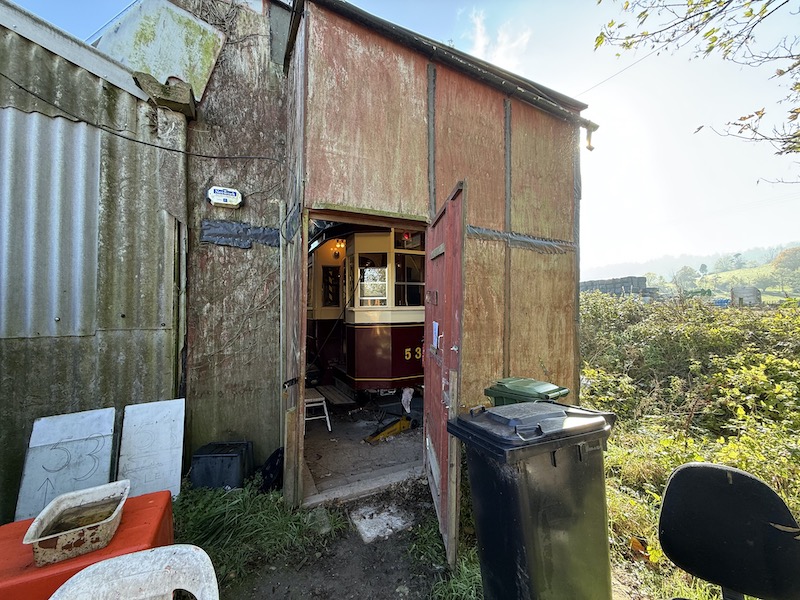
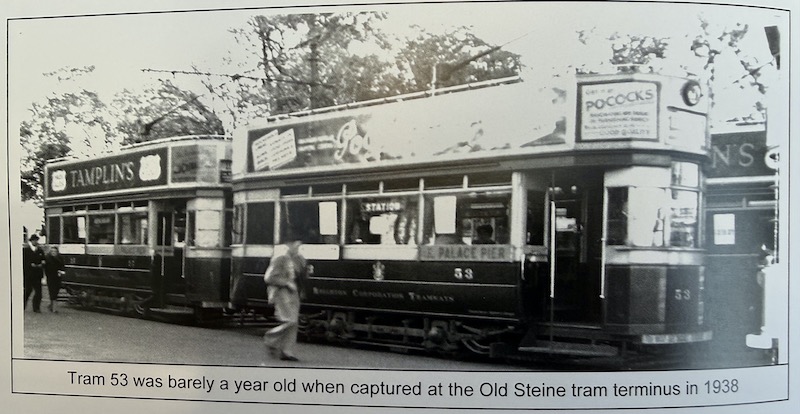
The tram concerned is Brighton Corporation Tramways number 53 which first entered passenger service in 1937 and for the last 16 years has been undergoing restoration towards its original condition.
That work, which began in 2010, has been lovingly and painstakingly carried out by a dedicated team of volunteers working in cramped conditions in a shed belonging to a farmer in Wiston, near Stenning, West Sussex. That’s where the tram was taken thirty years earlier in 1980 from another farm in Ashurst where it had sat exposed in a field for almost 40 years after being sold not long following its withdrawn from service when Brighton lost its trams in 1939.
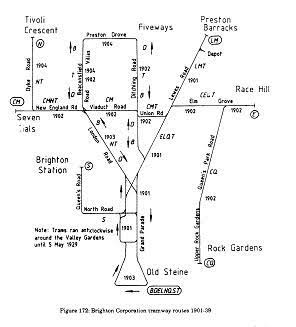
Readers will immediately realise from that brief potted history how Tram 53 (along with two sister vehicles, 51 and 52) had only given two years passenger service from new before being withdrawn for scrap. That’s because the Council’s Tramways Manager, who was due to retire when tramway operations ceased, was a passionate advocate for trams and had carried on overseeing the manufacture of trams at Brighton’s Lewes Road tram depot (still in use today as a bus depot for Brighton & Hove) even though the future of the network was increasingly in doubt as the age of trolleybuses beckoned.
Indeed, Brighton’s Tramways Department had been building new trams for almost 25 years and had refined the design to what became known as the ‘F-class’. Like the rest of the fleet, these were open-top trams but came fitted with air-brakes, silent bearings, lower deck upholstered seats, fully enclosed cabs and other ‘modern’ features. No other tramway operator in the UK was building new open-top trams, making Brighton unique in that respect.
Almost all of Brighton’s withdrawn trams were quickly sold off mostly for scrap but because of its age Tram 53 was one of the last in the queue and by a remarkable stroke of luck, after almost a year sitting idle in the scrap sidings waiting for a buyer, a local farmer enquired if there were any bodies left for sale as he wanted one to act as a shed in a field in Ashurst.
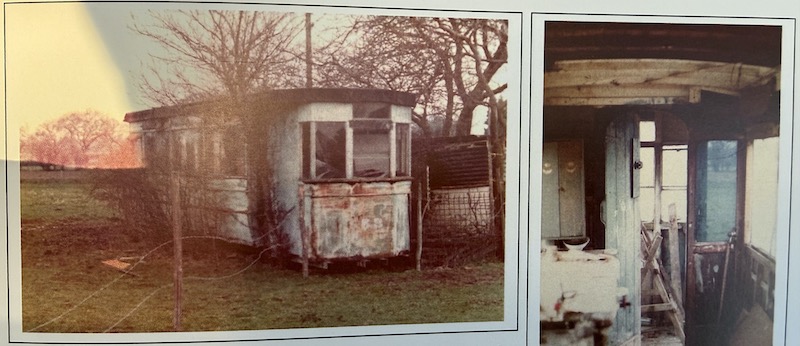
The above photographs shows the reasonable condition Tram 53 was in 40 years later in 1980 helped by the roof having been covered over and therefore making it watertight (rather than left as open-top).
A false hope of rescuing the tram in 1980 for a proposed Brighton Museum of Transport, due to the planned storage facility falling through, meant the tram continued to live in the field for two more years before another farmer, at nearby Wiston, offered to take it to his farm as long as he could become the owner.
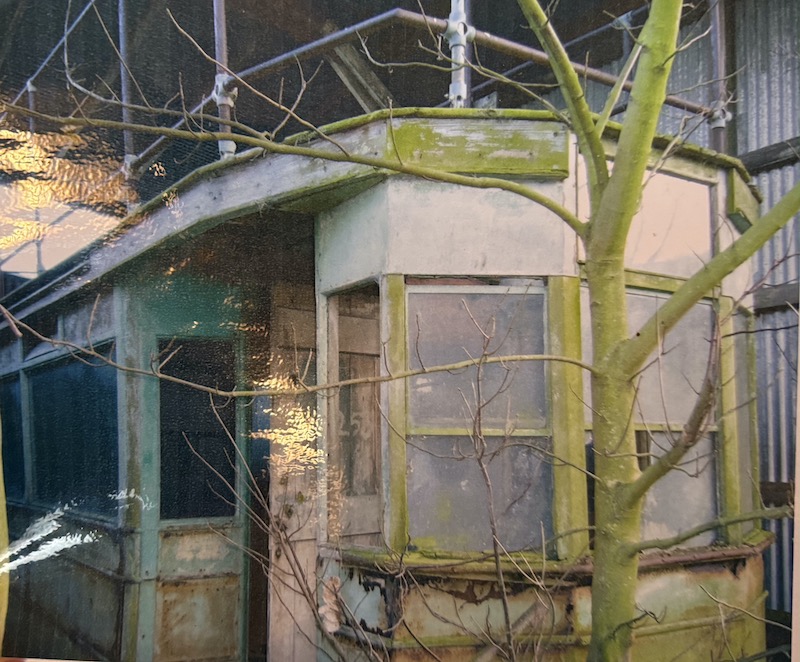
For the next 30 years No 53 languished under semi-cover until late 2009 when a local enthusiast, Guy Hall, came upon its existence and following discussions with the farmer, it was agreed, once a full cover for its stabling had been built and the proposed facility enlarged, restoration could begin from the condition the tram was then in, when photographed below.
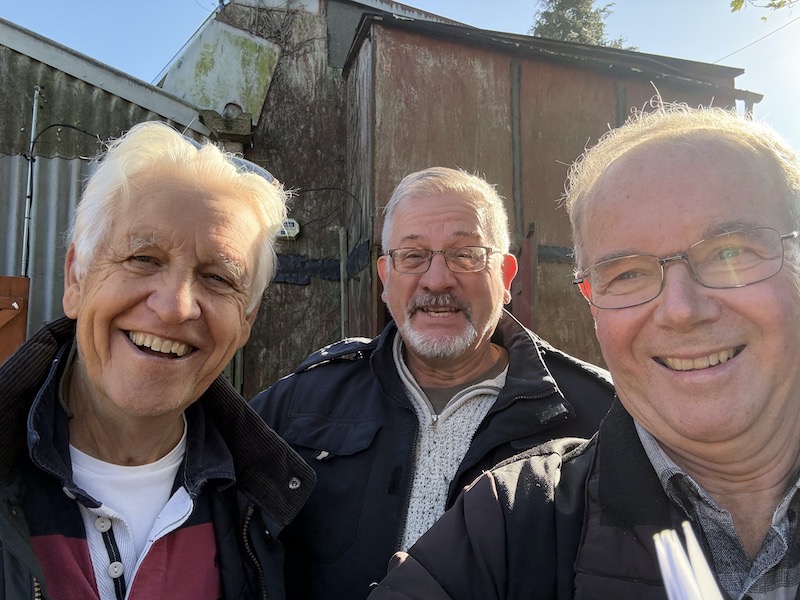
And here we are 16 years later with all the work that can be achieved in the rather confined shed in which it’s been kept having been completed. I had the pleasure of visiting Tram 53, along with my fellow rail and tram enthusiast friend, Nick Owen (and retired ITN/BBC Newsreader), and meeting up with Guy Hall (chairman of the Brighton Tram 53 Society) who kindly showed us around its amazing transformation.
Both externally and internally the work is to an impressive top quality; you’d almost think we were back in 1937 getting ready for Tram 53’s debut into service from the exterior paintwork and finish, not least considering the state it was in.
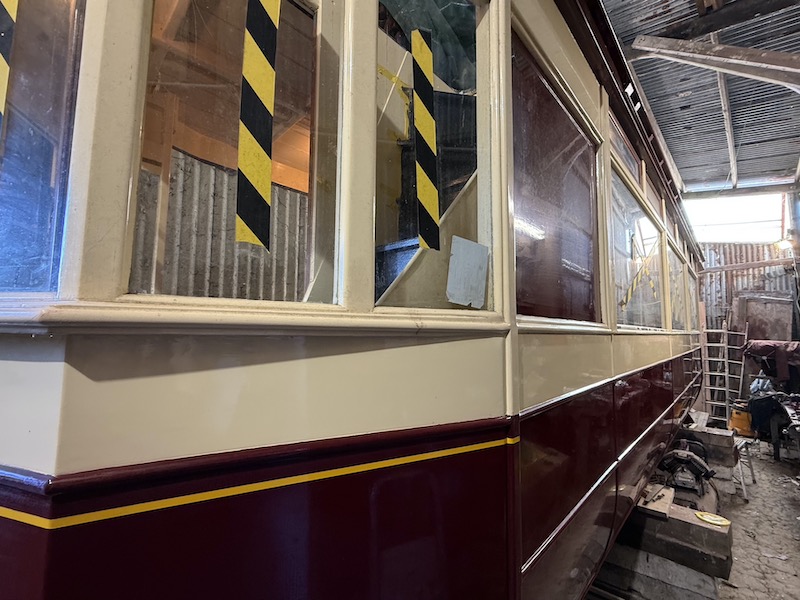
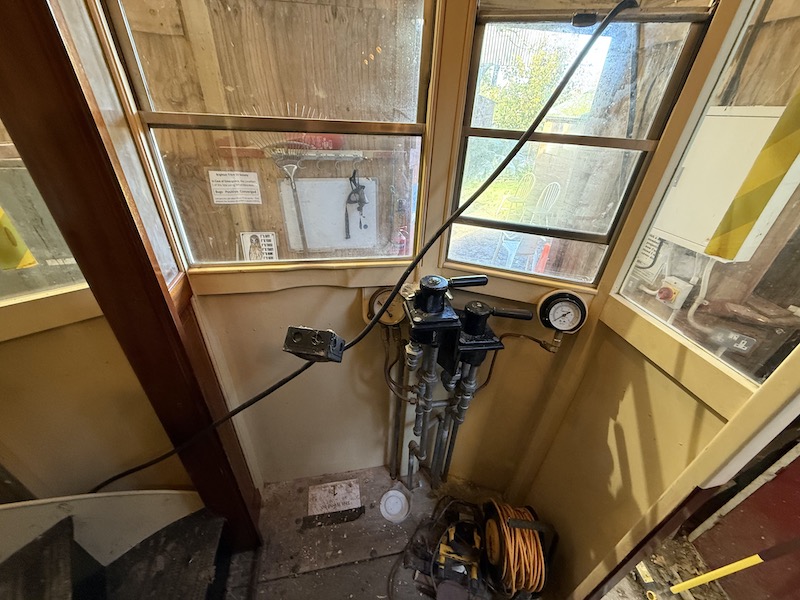
Considering also the restricted space available, which you can see from these photographs, what the team of regulars, who’ve attended the site to work on Tram 53 over the last decade and more, have achieved its truly remarkable.
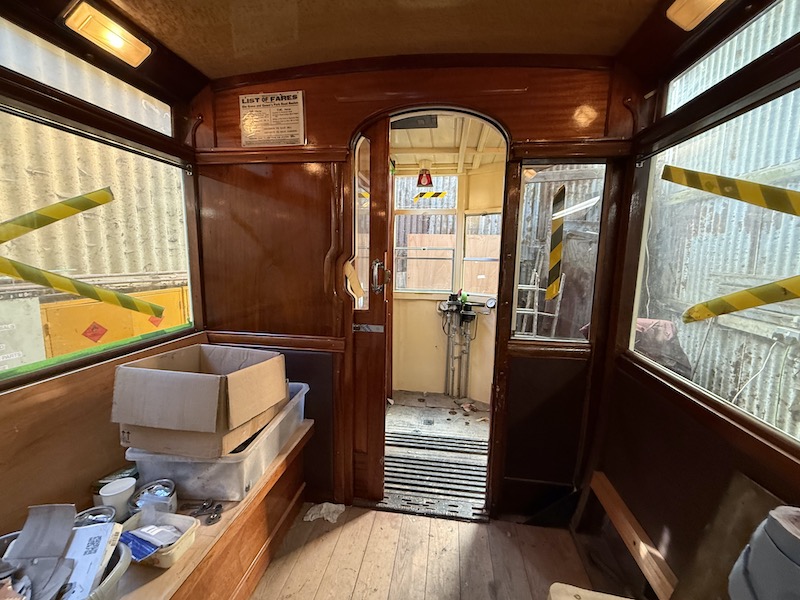
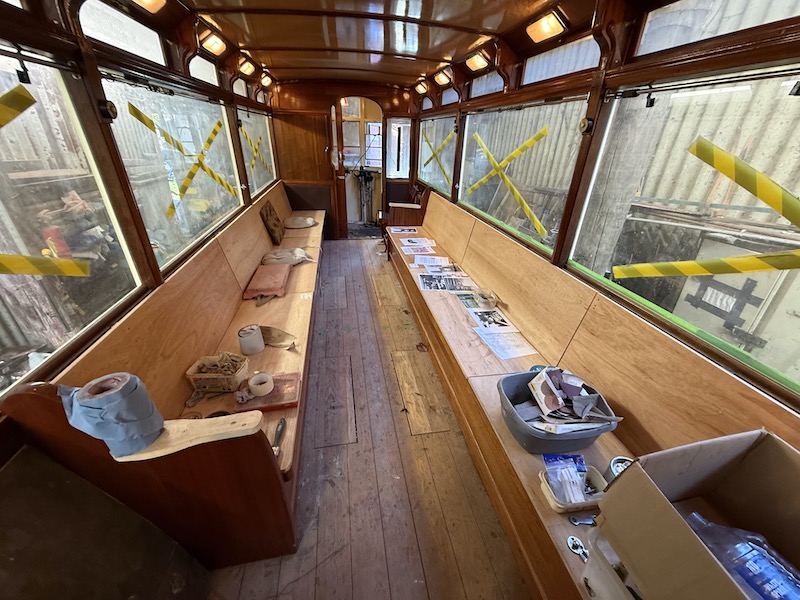
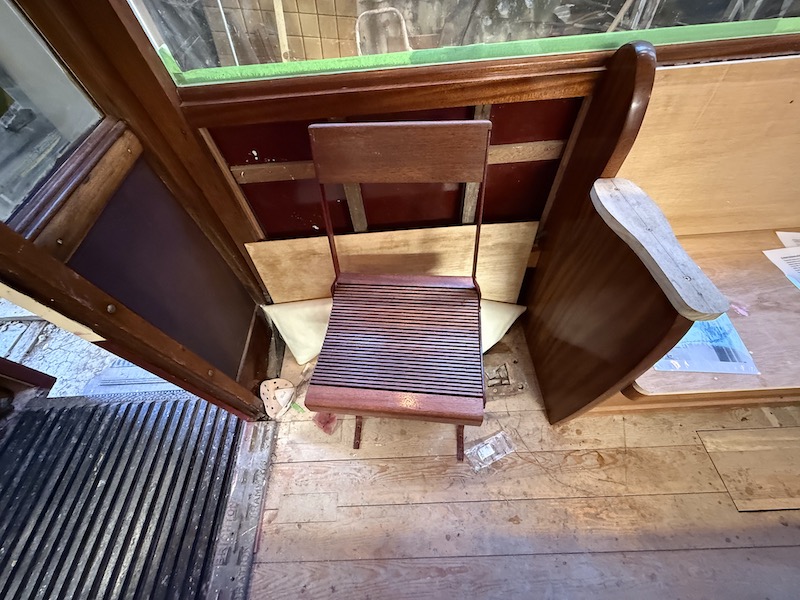
The quality of the workmanship in the wood panelling which has been manufactured from scratch, for example, is top notch. The seating on the lower deck is to the original longitudinal design…
… and the cab areas at either end have the braking mechanisms installed, while…
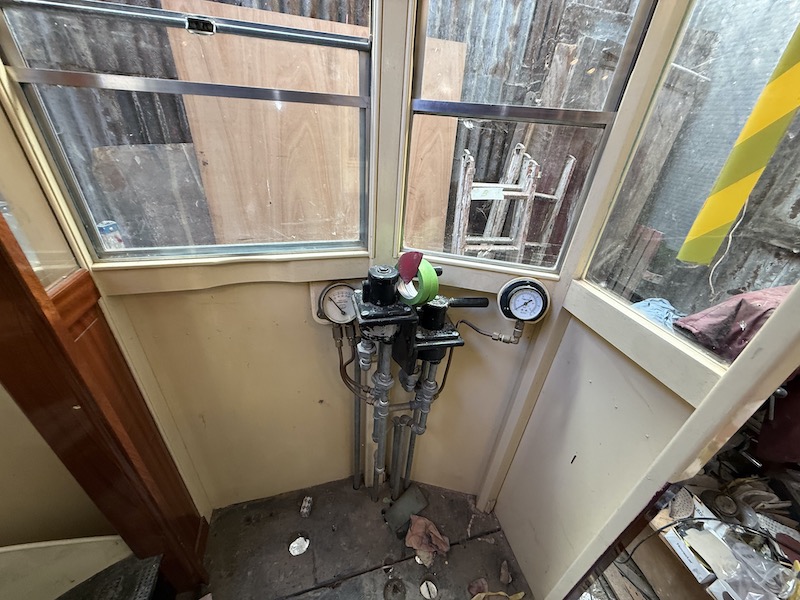
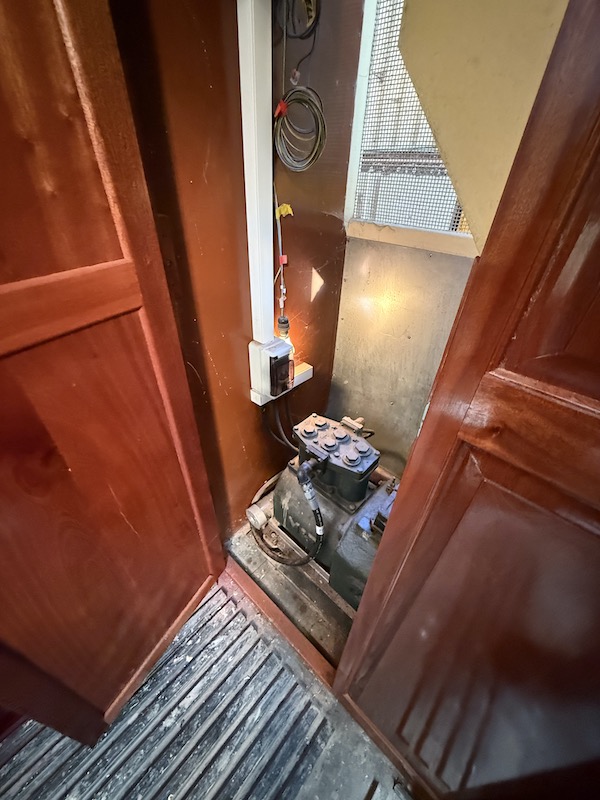
… under the stairs there’s a compressor hidden by wood panelled doors…
… as the stairs themselves to the upper open-top deck have all been built from scratch.
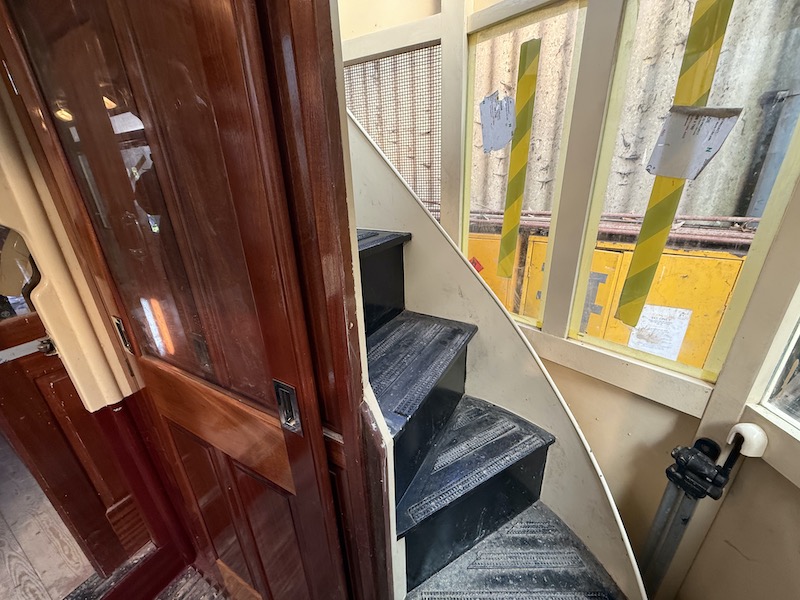
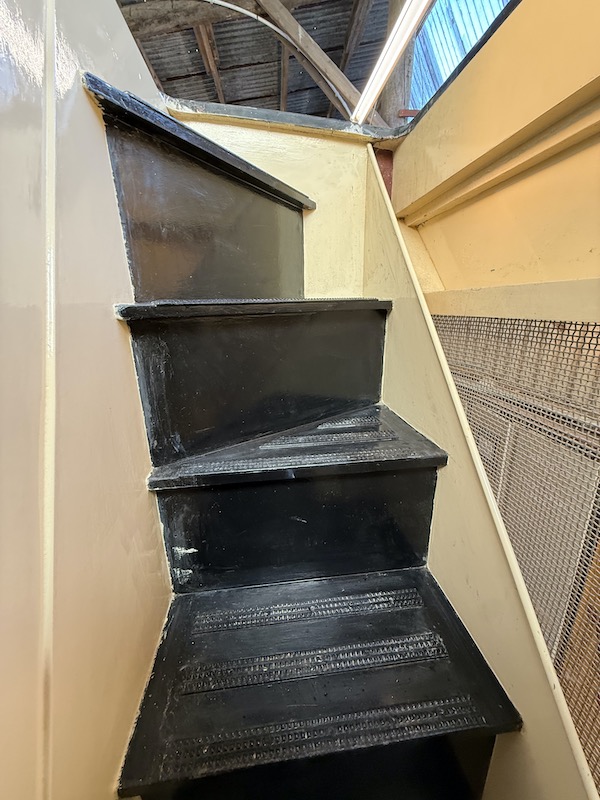
Due to restrictions on height in the shed, the upper deck railings have not been installed yet, but they’ve all been manufactured ready to be fitted along with the seats, both individual and in pairs, which are stored at one end of the roof…
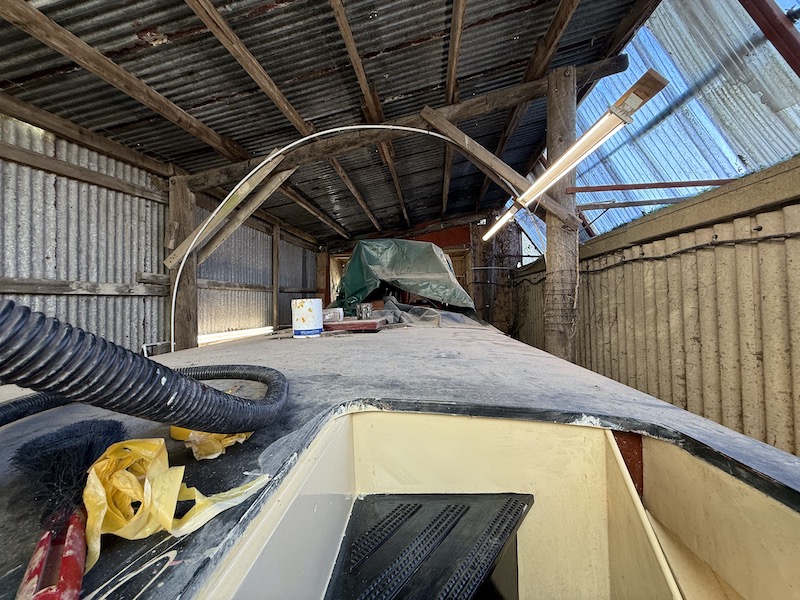
… under a tarpaulin cover.
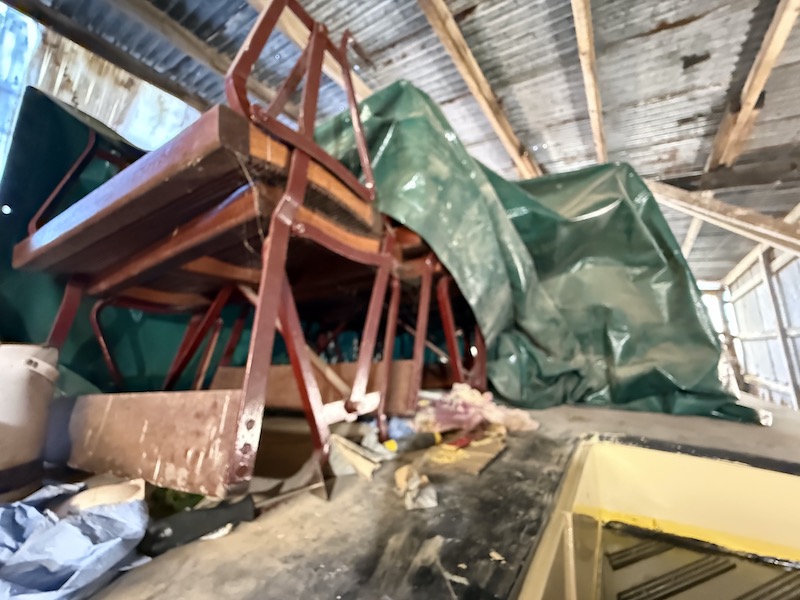
Here’s one of the seats from the upper deck complete with switchable back to take account of the direction the tram is taking, so passengers can always face the front.
Having seen the superb work that’s been achieved to date Guy then explained to Nick and myself the exciting proposals the Brighton Tram 53 Society (a Charitable Incorporated Organisation) has to relocate Tram 53 to a new and much more appropriate location in Stanmer Park, Brighton where it would become part of a new museum for the city on the theme of Brighton’s tramways.
That would act as an educational facility explaining how Brighton’s contemporary excellent public transport network can be traced back to an amazing heritage which not only included the tram network being established 125 years ago this month, but also the city being the proud home of the world’s oldest operational electric railway: ie Volk’s Electric Railway (of which Nick Owen is a proud patron) along the seafront.
Even more exciting is the follow on stage, once the new stabling facility has been established at Stanmer and the full restoration of Tram 53 completed, which envisages installing a tramway running line within the compound where it will be kept and ultimately to extend this to terminate close to Stanmer House within the Park allowing for passengers to be carried.
To achieve this, the Society needs the buy-in and support of the City Council, which owns Stanmer Park and the two buildings the Society proposes to use. In this regard a prospectus was produced last year and distributed to councillors to raise interest and support which was met with a lot of positivity.
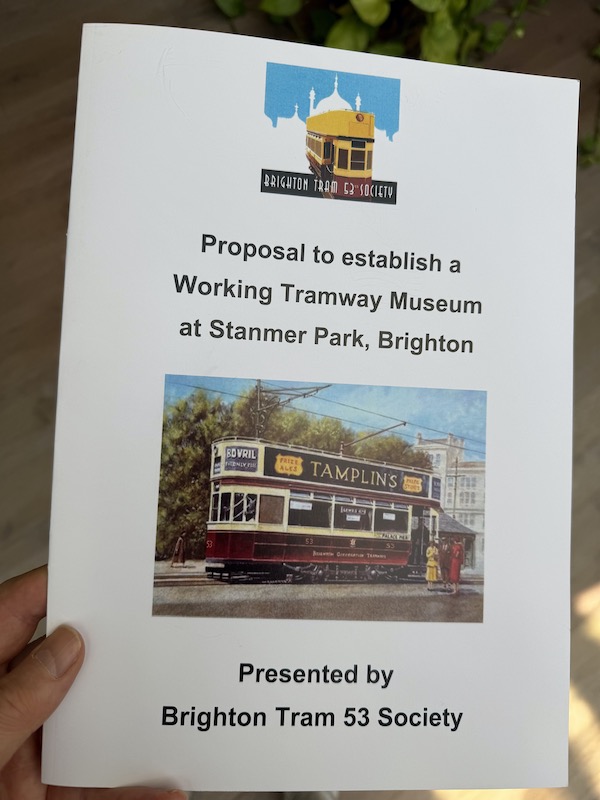
At the current time, a response is still awaited from the leadership team at the Council which is a shame as looking through the very commendable business like approach Guy and the Tram 53 team have put together, the Council’s support for a project of this kind would make much more sense than some of the projects it has supported in the past, not least the illfated i-360 tower on the seafront which has famously led to over £50 million in debt for the Council.
Tram 53 would be a much safer bet and a sure fire winner to support with potentially huge public interest. I do hope a positive response comes very soon – maybe even in a couple of weeks, on the 25th of this month, which marks the exact day 125 years ago trams began running in Brighton in 1901.
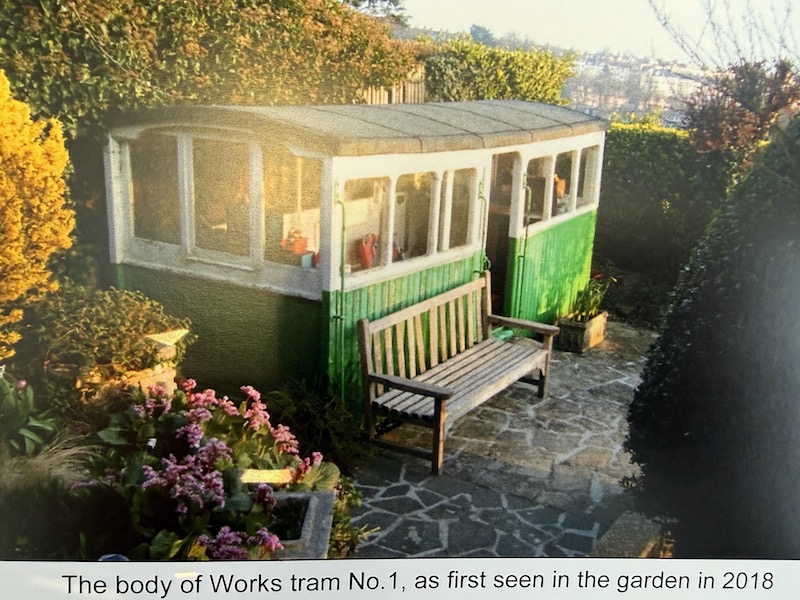
And that second tram I mentioned in the opening paragraph? That’s former Car No 1 which was owned by Brighton Corporation Works and acted as a breakdown and works tram to help rescue trams out on the network that got into difficulties.
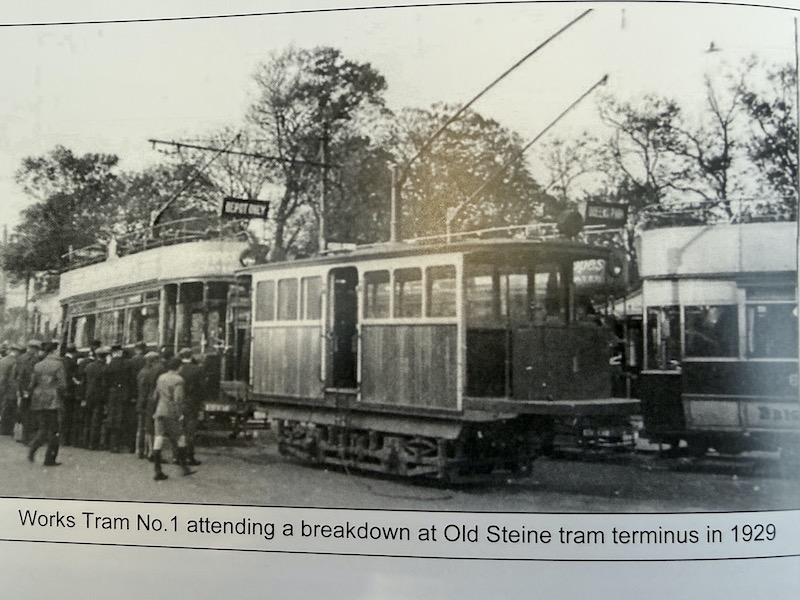
The body of Car No 1 had been used since 1939 as a garden pavilion in the Brighton house of Winston Robinson, a former General Manager of Brighton Corporation Transport and by a stroke of luck was offered to the Society in 2018 which they obviously eagerly accepted. It’s currently stored in sections at Wiston as it was too risky to transport from the garden in one piece but the plan is to put it back together as a static exhibit at the museum, possible used as a shop or parts store, with the ultimate aim of restoring it to working order, and maybe even, act as an accessible tram to run alongside Tram 53.
Guy thinks of everything and is to be commended for what he, and the team of volunteers and 75 members of the Society, have achieved.
Please, Councillor Bella Sankey, don’t worry about “taking back control of Brighton’s buses”…
… leave that to the proven experts at the bus company. Instead give some help where it’s more needed … to this project and bask in the glory as being the Council leader who brought back trams to Brighton.
Roger French
For more information about Brighton Tram 53 Society, including membership, and ways to offer support, click on this link. Business support and sponsorship as well as individual support is much welcomed.
Blogging timetable: 06:00 TThS


Leave a Reply