Saturday 10th October 2026
It’s been a while since I’ve done a blog fact checking one of those headline grabbing negative stories about public transport that appear from time to time in the media. I’m putting that right today, thanks to blog readers Harry and Lorenzo who drew my attention to a news item from Crawley which the BBC covered on Tuesday with a video clip (presumably for its Regional News programme) and online.
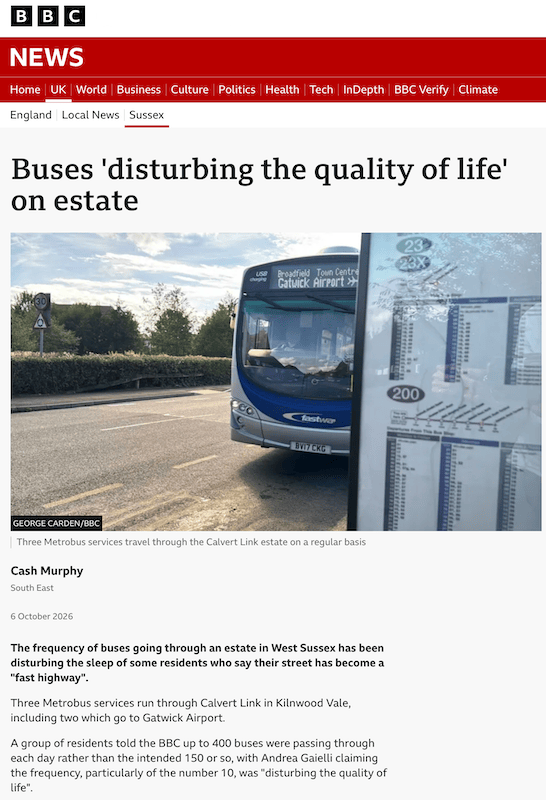
The story was about residents, having moved into a relatively new (and still expanding) residential area west of Crawley called Kilnwood Vale, complaining buses are “disturbing the quality of life”.
It does happen from time to time – whereas the media often feature passengers complaining about the lack of, or cuts to buses. there are also sometimes reports of a NIMBY attitude from others who don’t want any buses past their front door. In my time it often happened wirh the siting of bus stops. “No bus stop to be sited outside my house, thank you very much”; as if householders owned the road outside their property.
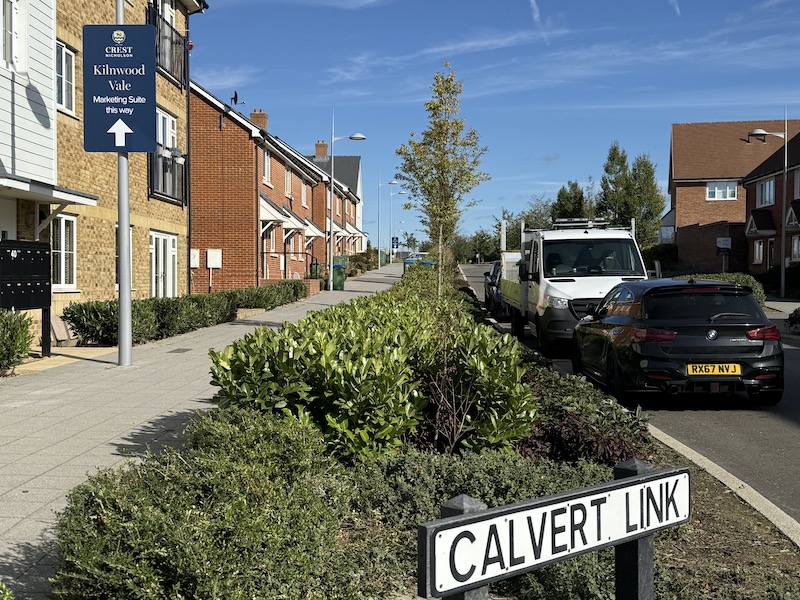
What gave Tuesday’s story added interest was complaints from two residents who couldn’t sleep at night due to the noise and disturbance caused by buses passing by 24/7. One resident, Stuart Ralph reckons Calvert Link, which he calls a “fast highway” (it’s in a 20mph zone), has “400 buses going from Crawley to Horsham past my front door, which is less than five metres away”.
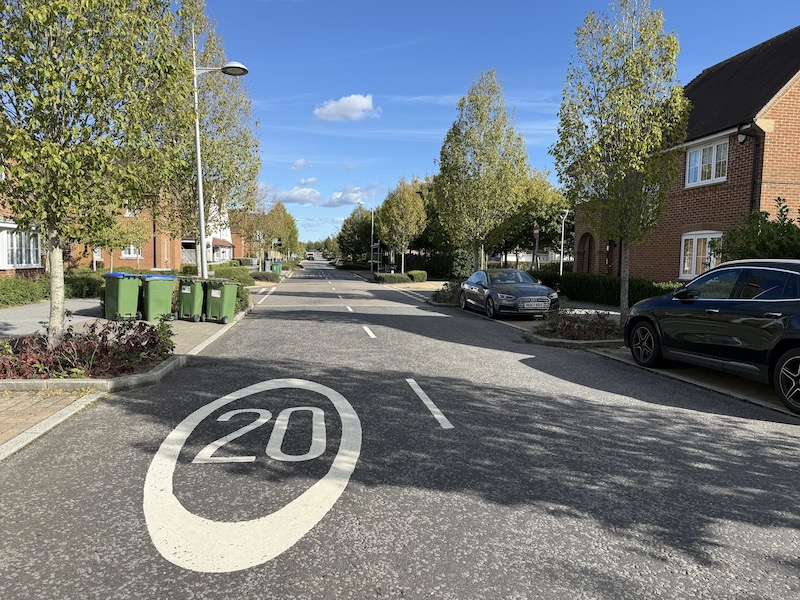
Another resident, Andy Marits described the situation as a “nightmare” and said his wife, who has moved to their spare room, is now “sleeping with earplugs in and a pillow over her head”. Terence Nadin said he has had to add some “secondary glazing” on his bedroom window to improve his sleep quality while Andrea Gaielli claims the frequency, particularly of the number 10, was “disturbing the quality of life”.
The report also stated “residents who are against the frequency of service said it exceeds the level promised in the section 106 planning agreement struck when the estate, which remains unadopted, was built.” But, Crest Nicholson, the developer pointed out “Crest Nicholson does not determine or control the frequency of bus services operating through Kilnwood Vale. We have met all of our obligations in relation to bus services at the development.” And Matt Ashton, managing director of Metrobus rightly observed “the Section 106 agreement sets minimum service requirements rather than a maximum level of provision, enabling services to respond to passenger demand.” Adding “we recognise the concerns raised by some residents and have engaged with them through meetings, calls and correspondence. Services are planned in conjunction with a range of stakeholders, including Crest Nicholson, the lead developer.”
I took a ride out to Kilnwood Vale on Thursday afternoon to see what all the fuss is about.
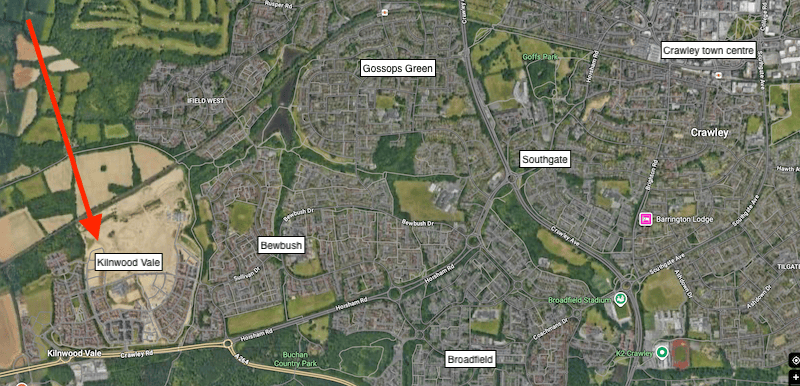
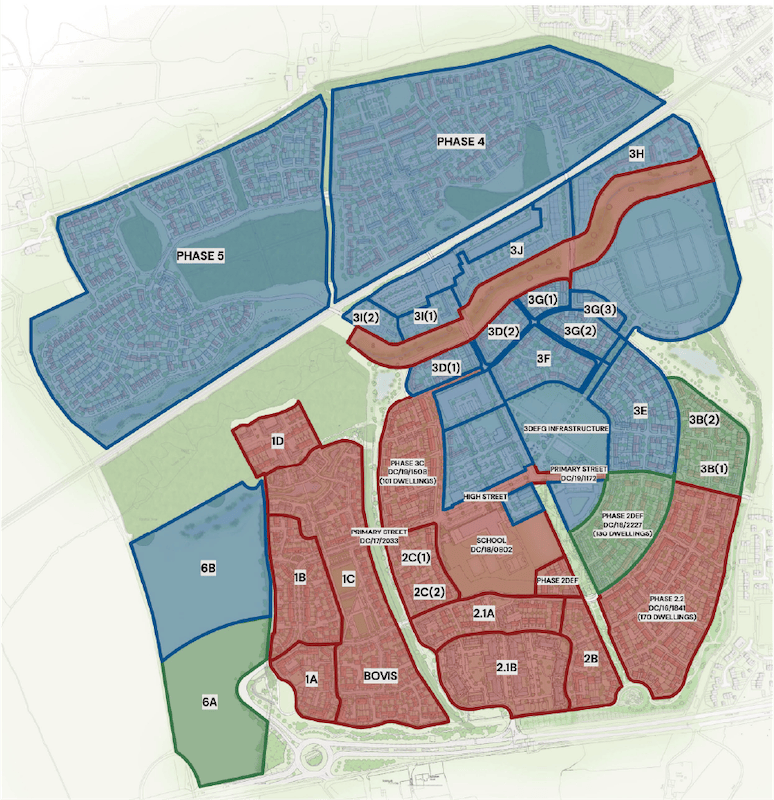
The area lies just north of the A264 Crawley to Horsham road on the western side of Crawley and by the look of the area on Google Map’s aerial view (above image) only around half the planned 2,750 houses have so far been built (Phases 1 and 2 shown in red on the map below) in a project that began with initial planning permission awarded in 2011.
Three Metrobus routes serve the area, using the aforementioned Calvert Link road to run through what eventually will be the middle spine road of the estate. There’s the half hourly longer distance route 23/23X between Crawley, Horsham and Worthing; the half hourly route 200 between Gatwick Airport, Manor Royal, Gossops Green, Bewbush and Horsham and thirdly the frequent route 10 from Gatwick Airport, Manor Royal, Crawley town centre, Broadfield and Bewbush which terminates at Kilnwood Vale. Frequency of the 10 is eight buses an hour for most of the day with hourly departures from as early as 03:00 to 23:30.
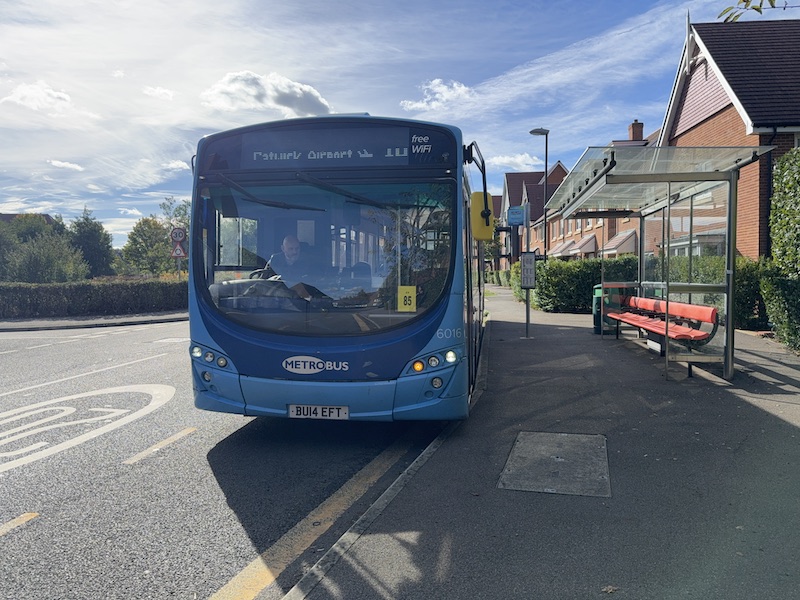
All told, that equates to the quoted 400 buses a day in the news item, with 200 heading along Calvert Link westbound and 200 eastbound (give or take one or two). However, just a small correction it’s not “400 buses between Crawley and Horsham” as quoted, only routes 23 and 200 comprising 144 a day (72 in each direction) continue west to Horsham; it’s the Fastway route 10 that makes up the remaining (approximately) 250 journeys a day and is the main player and hence, no doubt, why that route has been singled out as “disturbing the quality of life”.
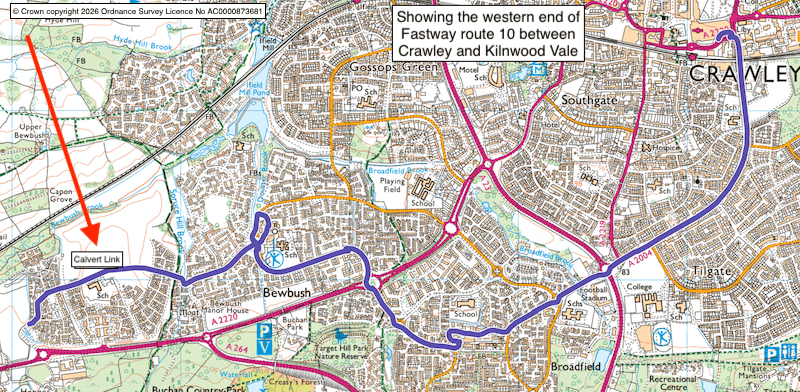
In the early days of construction at Kilnwood Vale buses on routes 23 and 200 between Bewbush and Horsham would divert off the A264 in both directions to do a short dog leg to serve the western end of the development area as no through road was available. It wasn’t until February 2024, when Calvert Link was completed, that both routes could be diverted away from the A264 to instead pass through the new estate and at the same time the 200’s timetable became a 24 hour offer (with support from Gatwick Airport) to “connect Kilnwood Vale residents directly to Crawley, Horsham, and Gatwick Airport”, as Metrobus stated at the time.
A year later, in February 2025, save for some journeys between 23:30 and 03:00, Fastway route 10 was extended from its long standing western terminus at Bewbush over to Kilnwood Vale, again as part of the company’s “ongoing collaboration with Gatwick Airport” and a further enhancement, from May 2025 saw route 23’s “timetable boosted with extra journeys and expanded evening/Sunday services funded by the West Sussex Bus Service Improvement Plan”.
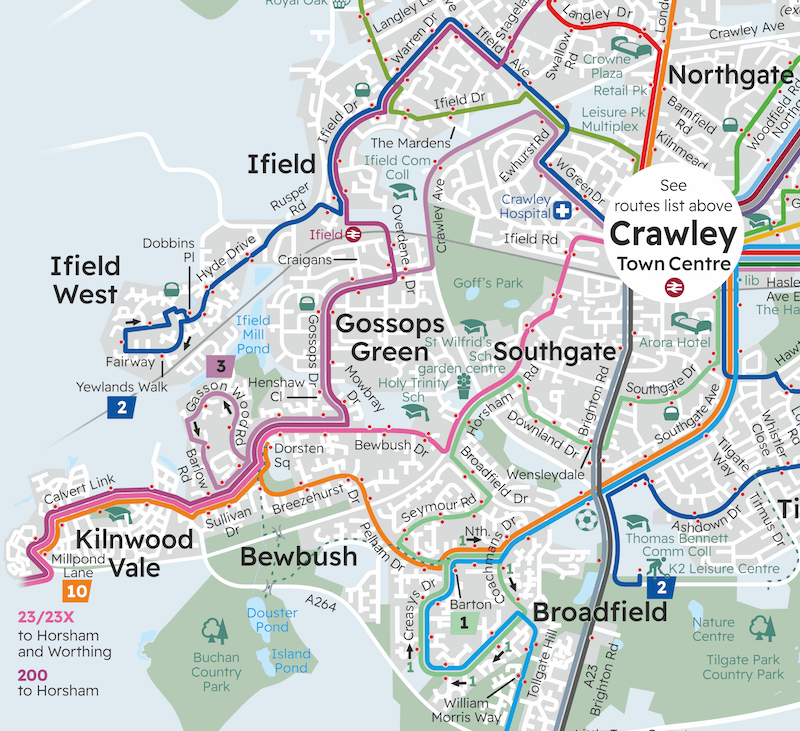
There’s no doubt Kilnwood Vale is very well served by Metrobus, particularly for its current size. But, as we all know, key to serving new residential developments is getting the bus service established before the bulk of residents move in so how refreshing it is to see this being an exemplar of that. Kilnwood Vale has already got a similar level of service to the much more populated parts of neighbouring Bewbush and is still only around a third of its size.
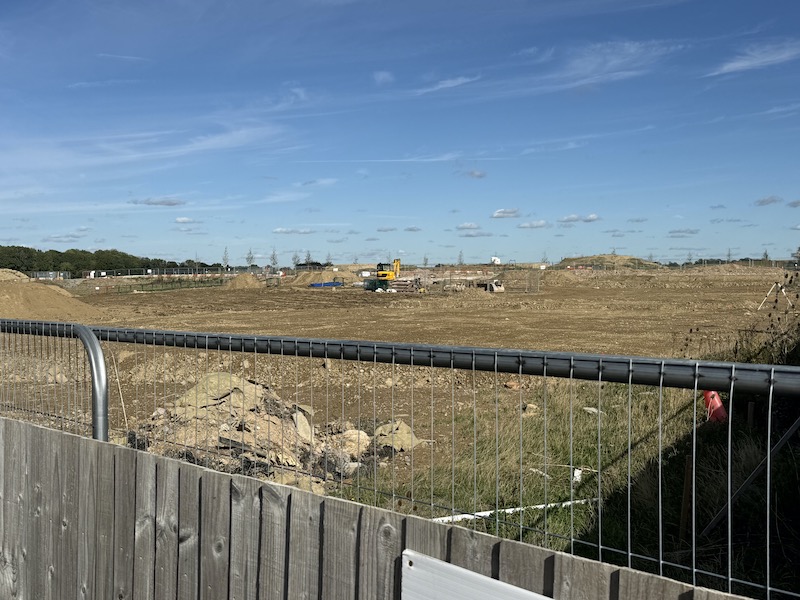
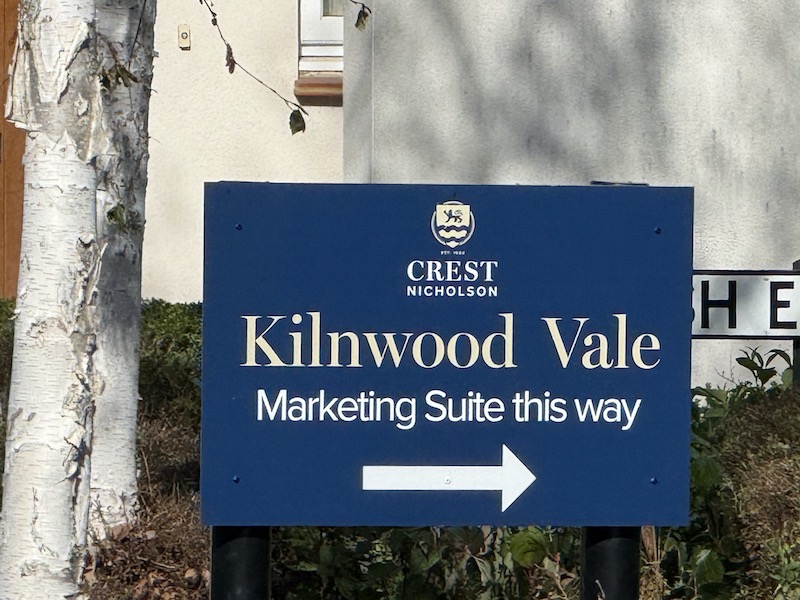
But it will grow. Walking around the area on Thursday it struck me just how much land was still available for Crest Nicholson with Taylor Wimpey to build the many more houses their Marketing Suite is ready to sell.
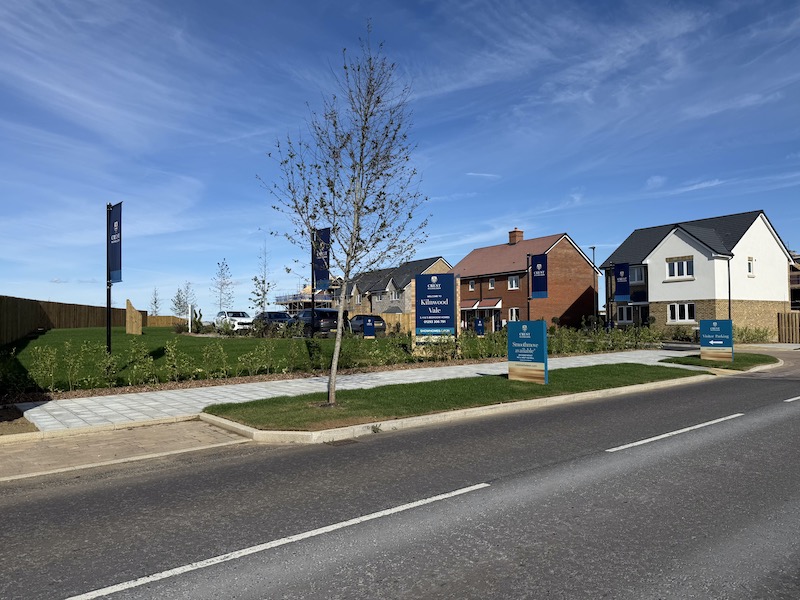
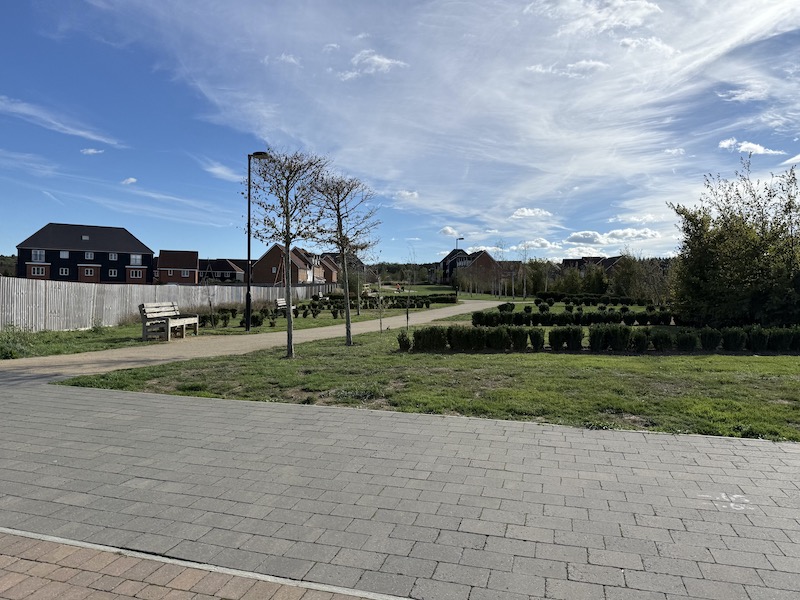
It also struck me, how nicely laid out the area is with lots of trees, hedges and green spaces in between the clusters of houses and flats already built.
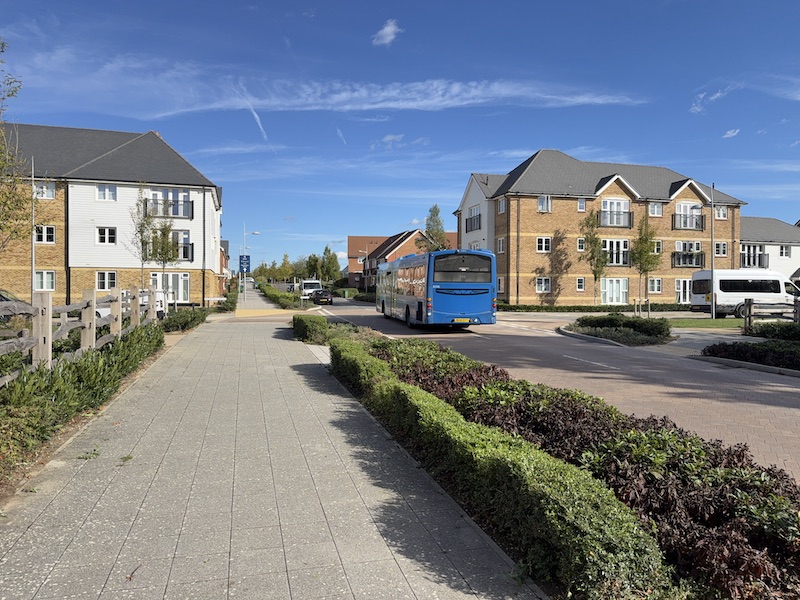
It looked like a very pleasant place to live and what would particularly attract me to live there is the incredible bus service especially if I worked at Gatwick Airport entailing very early starts and late finishes.
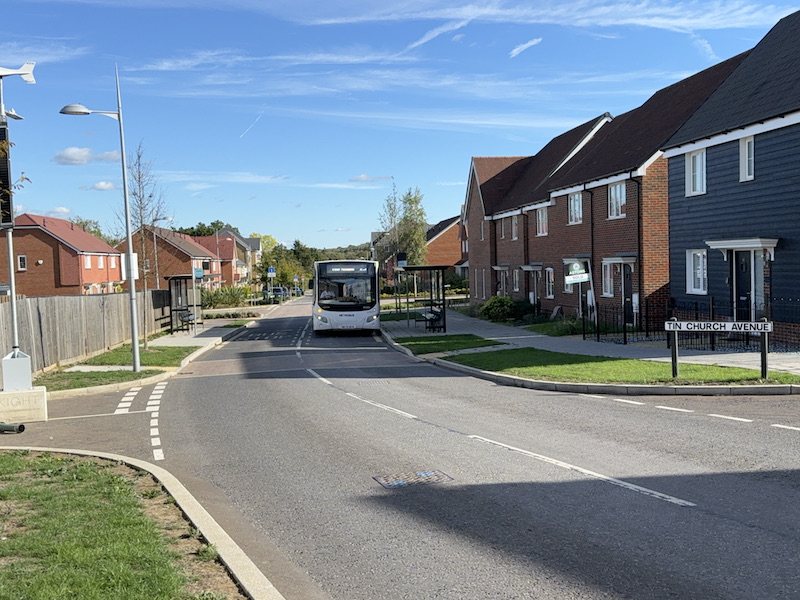
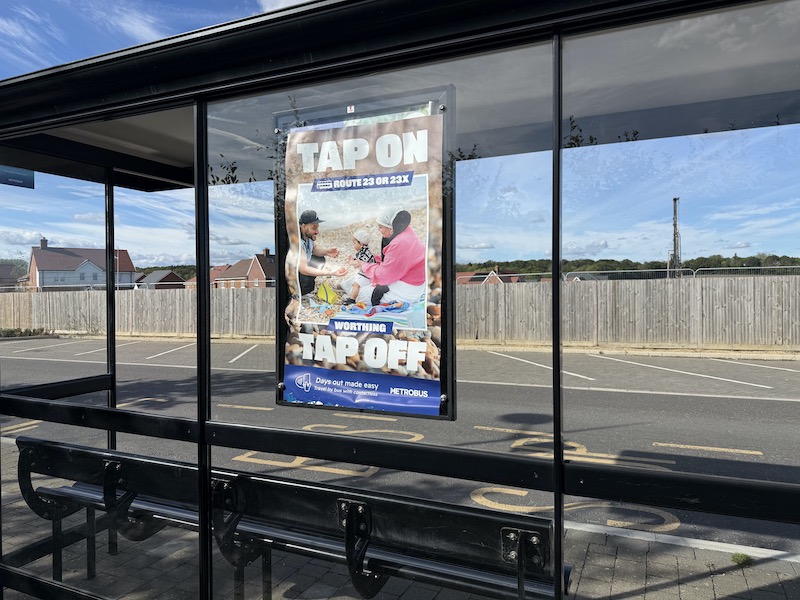
It would also be easy to travel into Crawley town centre (16 minutes on the 23/23X and 20 minutes on the 10) or over to Horsham as well as having a day by the sea in Worthing. Residents are really spoilt for choice.
However, one thing that did strike me was how close some of the houses have been built to the Calvert Link road. Many have tiny front gardens and although there are small hedges between the pavement and the road along some parts of the road…
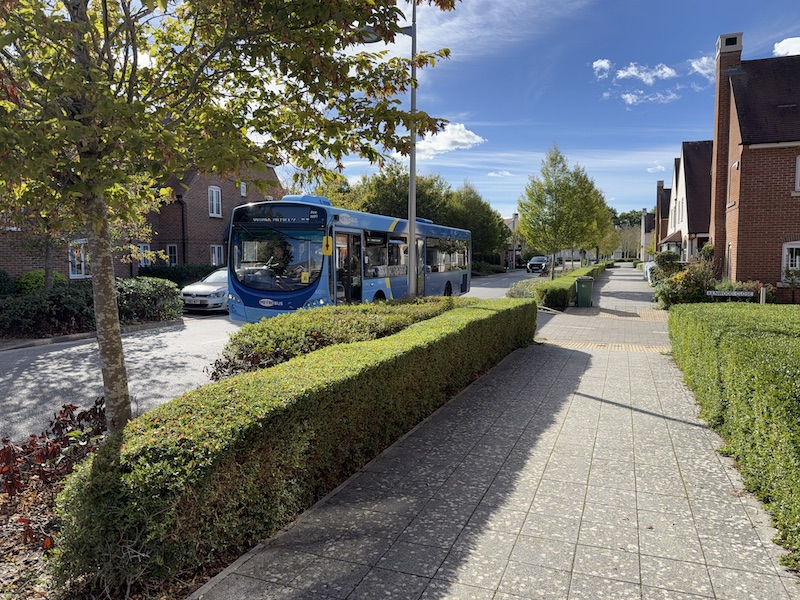
… in other parts, at the eastern (perhaps cheaper?) end of the estate in Somerset Road, houses are much closer to the road although I noticed that hasn’t prevented one from just being sold and where the average price of a two bedroom end of terrace house is £345,000.
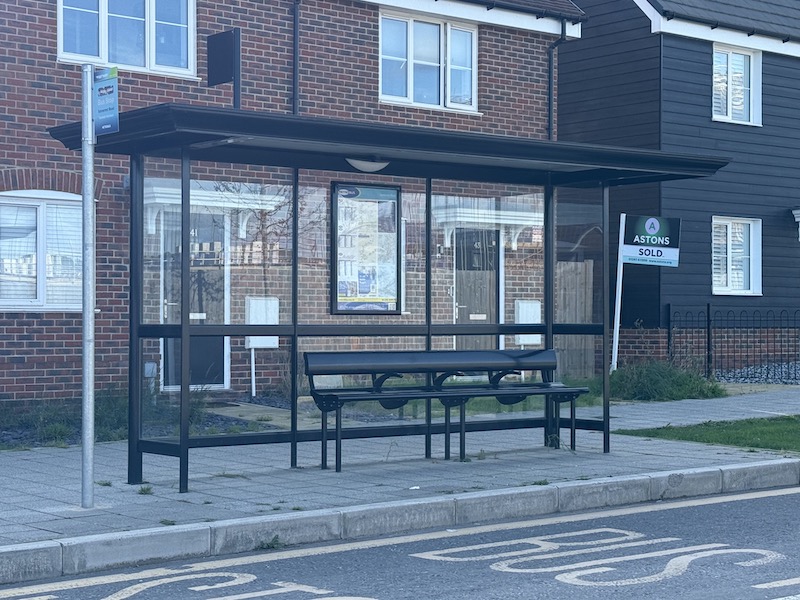
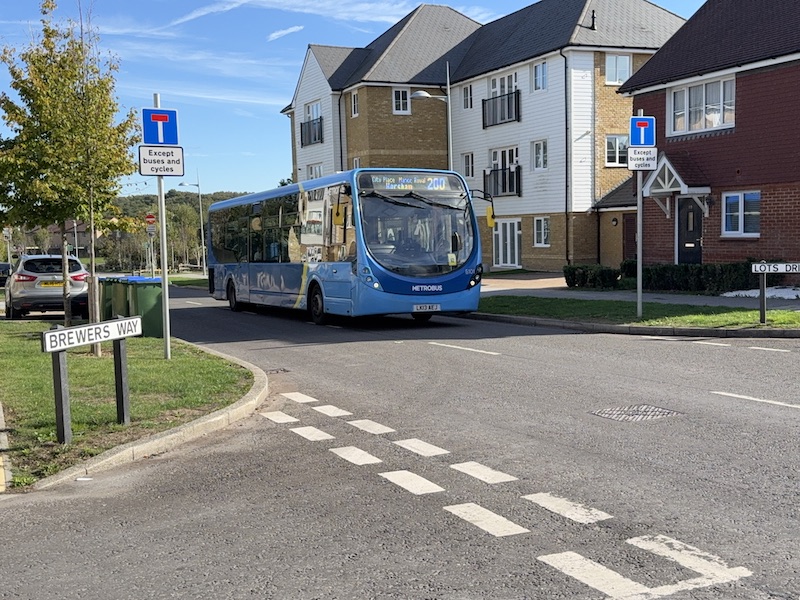
Somerset Road is the eastern extension of Calvert Link providing a connection to neighbouring Bewbush and it’s good to see this is protected as a ‘cut through’ for general traffic by a bus only section of road.
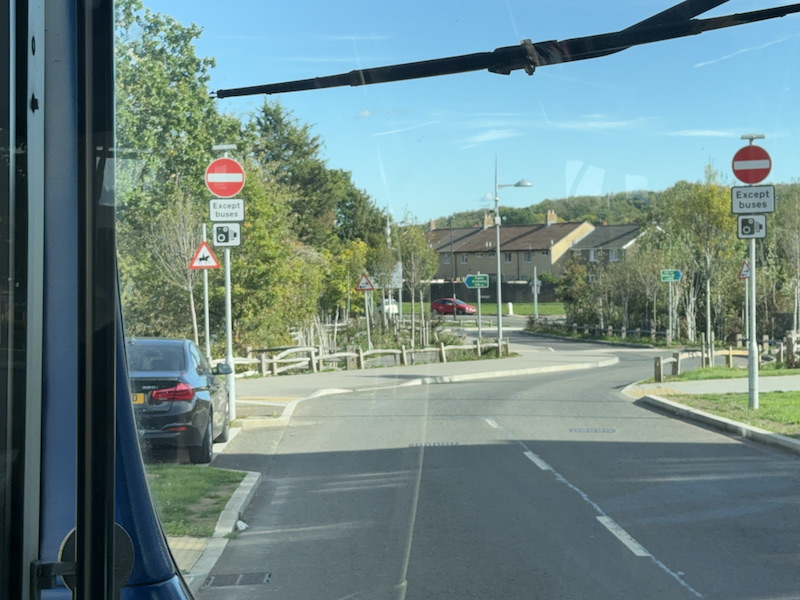
I’m sure this is effective in diverting traffic from parts of Bewbush bound for Horsham, for example, down on to the A264 rather than use Somerset Road and Calvert Link as a cut through.
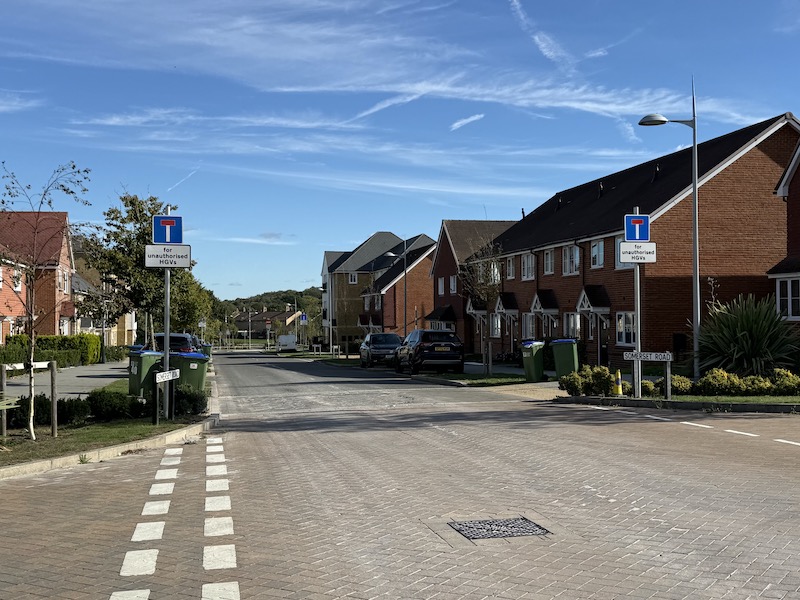
However, what it does do is make buses more visible and prominent as they drive along the road alongside what are otherwise only residents and delivery vehicles making up the other traffic in what effectively is a ‘no through road’. Perhaps that’s why those who aren’t bothered about using buses notice their presence on such a regular basis. Furthermore, Metrobus’s problems with its hydrogen powered single deck fleet – still all off the road since last December – has meant the company has had to use a fleet of much older vehicles than it normally would, including many borrowed from other bus companies. Due to their age, they do tend to rattle more than an otherwise almost silent recently built hydrogen bus would.
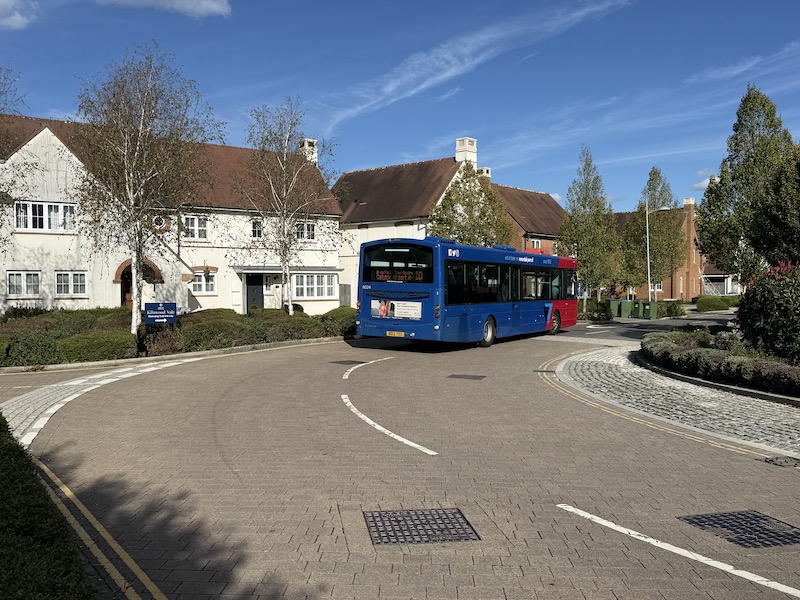
Let’s hope the hydrogen buses can return to service very soon as this would be a great help in reassuring those residents making their voices heard that good bus provision is what living in a lovely green centric area is all about.
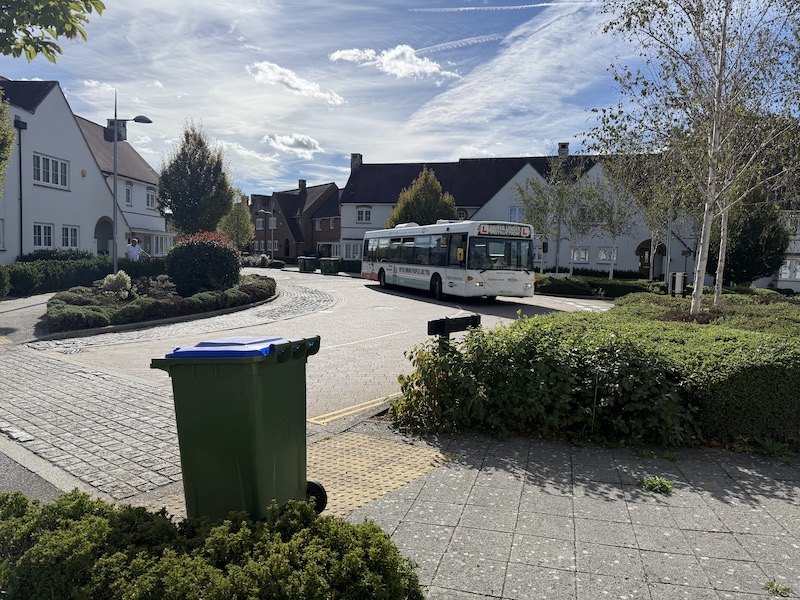
One small suggestion to the Metrobus team. In the current situation, it might make sense to limit the number of times, if at all, driver training buses use Calvert Link which only adds to the 400 buses a day and I note was duly observed by a resident I saw while walking around!
A final positive note about this story: it was good to see the BBC report how other residents are bowled over by the fantastic bus service they enjoy. Elizabeth Allen described the number 10 bus service as a “blessing”. She said: “It gives me safe travel at almost any time I want. If I go into London, for example, and come back as a single person, travelling at 11 at night, I know I’m perfectly safe. So we have to balance that convenience and safety against perhaps a little bit of inconvenience from time to time.”
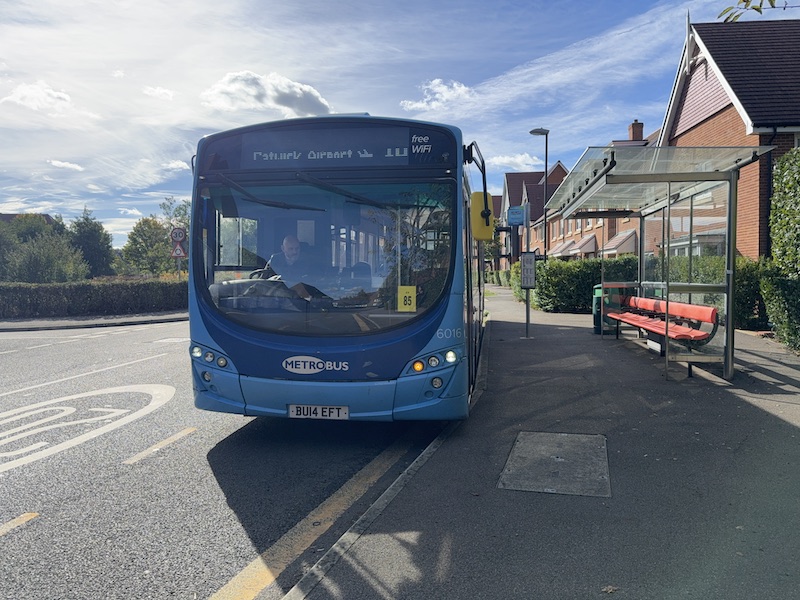
Another resident, Anne Baker, also sees the frequency of service as a positive. She argued that the development “has been sold as somewhere that is close to Gatwick, so the whole thing is geared towards people being able to get there”.
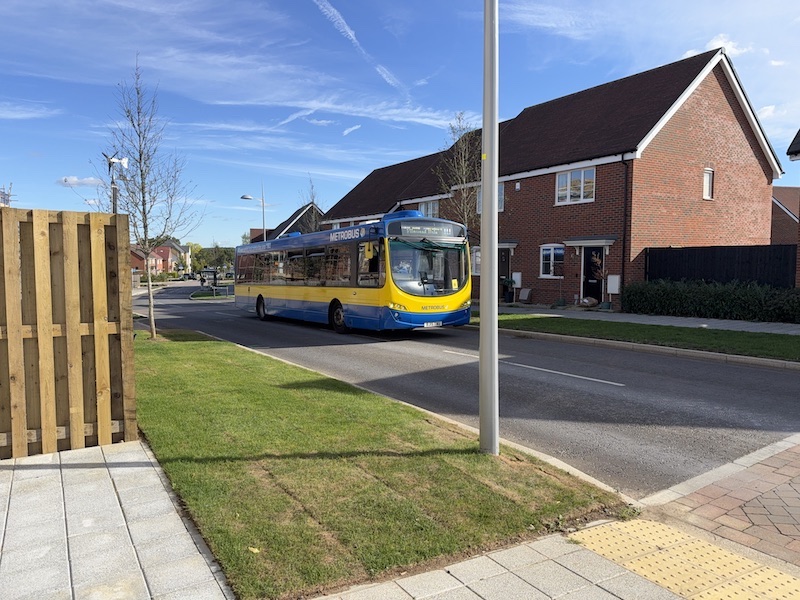
The story quotes Metrobus saying “Kilnwood Vale is ‘a growing community’ and the services provide ‘important connections to Crawley, Manor Royal and Gatwick’ which give residents an alternative to car travel.” Good for them and very well done on an excellent service not only in Kilnwood Vale but throughout Crawley.
Roger French
Blogging timetable: 06:00 TThS


In other parts of Crawley, the older estates, one has the curiosity of buses traversing roads lined both sides with grass verges and continuous back garden fences: the front doors of all those properties giving out onto other throughfares. Short stretches of the Upper Brighton Road in Surbiton have this curious situation too!
LikeLike
TBH this is a difficult one to resolve.
On one side the developers and Metrobus are fulfilling their obligations to support an extensive bus service to do what is agreed, to provide a quality service in advance of most residents moving in … something that commentators agree is desirable.
On the other side is a bus passing front doors maybe every 3-5 minutes all day, and still pretty often at night (and all night at that). What is worse is that there is little separation between the doors and the street; one assumes to maximise the number of houses on the development.
Perhaps one answer might be to reduce the frequency of Route 10 to 4 BPH? That’s still pretty good, and could be increased as more residents arrive?
It’s all about compromise …..
LikeLike
I find these type of people incredibly selfish that because they don’t use the bus it shouldn’t be there denying those that don’t have a car or don’t want one or can’t have one their mobility. Surely, they must have known about the frequency of the services before buying the property.
NT
LikeLike
One thing I couldn’t tell from your photos is if the estate has speed bumps of any sort. They do add to the noise and vibration as buses bump over them.
LikeLike
The issue could be resolved with the restoration on the hydrogen fleet or the bringing in of an electric fleet, so this problem should only be temporary.
Perhaps the housing estate would like to help fund a new electric fleet? That this made it onto BBC news means that maybe the local council could help out too.
LikeLike
Having photographed buses in that section of road they do tend to ignore the 20mph speed limit which probably doesn’t help. But, why buy a place right by the road and then moan……
LikeLike
A glorious mixture of everything slightly wrong…..houses built with pocket handkerchief size front gardens, the hydrogen fleet disabled for almost a year, vocal Nimbys who see buses as a nuisance regardless, and at this stage 400 bus movements a day which seems overkill, but a situation unlikely to remain for long. There is no solution to keep everyone happy here, but if buses are so unwelcome, why on earth didn’t they buy a house in one of the many other “peaceful” busless roads available? Just thinking aloud!
Terence Uden
LikeLiked by 1 person
Spot on. I suspect the buses were there first.
LikeLike
Earlier in the year I was standing on a street corner waiting to photograph a bus in the massive housing development almost adjacent t to where I live. It parallels the Stagecoach 148/ Arriva 158 from Leicester to Nuneaton. Warwickshire County Council has funded a 6A (introduced as the 64 and since renumbered) from Nuneaton Town centre to this Estate, Callendar Farm, every hour Monday to Saturday and it is operated by Arriva Midlands. At the same time, Arriva Midlands North diverted their then 65 Tamworth to Nuneaton service, also hourly, (now the 6) into the new estate occupying the other half hour time slot, giving the estate a bus every 30 mins.
The estate benefits from having a through route, linking the A5 Watling Street to the A47, although the fact you can drive right through hasn’t been publicised locally, but I discovered it thanks to Bus Times and the 6 takes advantage of this.
The 6 uses the full range of full.size single decks from Tamworth depot. Whereas the 6A uses a Hinckley based Wright Streetlite.
The lady concerned challenged my loitering and after I politely explained my reason for standing there suspiciously, she entered into a rant about the buses coming through their estate and their size.
I politely pointed out the family with young children waiting for the bus in the adjacent road!
It’s encouraging to see loadings gradually increasing and with a primary school due to.open on the route next year and planning permission having just been granted for an M&S Simply Food adjacent to this, loadings should hopefully increase.
During August, Tamworth depot used an Enviro400 on some of their journeys. I would have loved to see that lady’s reaction then!
LikeLike
one normally gets used to the noise of buses and other things in essentially urban areas, come Christmas Day and most things shut down the quiet becomes disturbing and losing the lullaby of the roads makes it difficult to actually get to sleep
LikeLike
They won’t have this problem here as Metrobus run Christmas day services 🙂
LikeLike
A similar situation some years back in South Bucks involved residents with off-street parking deliberately parking on the road to obstruct a trial bus service. Similar to this location, Arriva inadvertently didn’t help themselves by using some spare old double-deckers they had lying around, rather than more suitable smaller buses. They eventually gave up as it was impossible to run the service. Ironically one of the main objectors was later unable to drive and would have found the buses useful.
LikeLike
I wonder if one or both of the longer distance routes couldn’t be rerouted down the main road (where presumably they ran until the new estate was built). It’s not ideal, but that level of bus traffic through what is essentially a residential street seems unsatisfactory to me.
LikeLike
You can never win in these situations – too many buses for some or not enough for others.
Given the noise overhead from all the planes at Gatwick I would have thought the new residents would have expected a bit of noise. Says a lot about modern houses with inadequate insulation that will cost a fortune to heat.
LikeLike
Impressive level of service for this new area. In response to the nimbys the following words should be used: “climate change”, “heatwaves”, “flash flooding”, “el niño”, “net zero”, “active travel”, “fossil fuels prices”, “obesity crisis”. The world is changing, people need to adapt, we cannot go on as we are. That means MORE public transport, walking, cycling and LESS driving.
It was good to see proper no entry signage with buses excepted plates instead of vague bus gate wording.
I doubt Metrobuse’s hydrogen fleet will be back on the road. None of the other fleets using this fuel have been successful due to problems with fuel supply. They would be better converting the GB Kites to battery electric and investing in opportunity charging stations at key points if daily mileages require.
Pete
LikeLike
Metrobus’s hydrogen fuelled double deck fleet continues to perform quite satisfactorily; the operator seems to have cracked the problem of a reliable fuel supply.
Also worth noting that the fire on the single deck was not related to the fuel supply but to a faulty battery. And opportunity charging is largely obsolete technology for buses, with ever greater range being achieved from denser (but physically identically sized) batteries.
LikeLike
Presumably as the development continues buses will be rerouted around other, as yet unbuilt, areas. That should give opportunity to mitigate what some see as a problem.
John
LikeLike
Perhaps evenings, night-times and Sundays, the 10 could have layover at Bewbush Dorsten Square and then operate a one-way loop using the A264 in one direction?
Anthony Holden
LikeLike
My cousins lived in Crawley New Town and I often visited in the 60s and 70s. Well planned with buses serving the principal local parades like Ifield so didn’t intrude in residential roads. Proper town planning. I remember travelling on SMWs but the icing on the cake was the transfer of some routes from Southdown and RTs on the 479. Then came the C-Line network which the locals rebranded DCline ! Oh happy days. A good bus network to serve an expanding town. Perhaps in modern times they should be going back to basics.
Martin Welborne
LikeLike
Metrobus and the local authority should go big and go hard here. This looks like an exemplary example of new-build housing with decent transport infrastructure planned to get people to local amenities and employment (especially Gatwick, by far the biggest local employer) and they should be shouting about that as loudly as they can to drown out the idiots.
It is fair though to suggest that they should be electrifying the two local routes, and the residents should compromise by asking instead for the sleek quiet buses that this would bring. Go Ahead are pretty terrible at electrification tbh, so such prompts might also kick them into action a bit.
LikeLike
When I was growing up, I lived near the top of a hill. I didn’t have an alarm clock, at 6.50am the first bus of the day, a Bristol LD5G, changed down from fourth to third as it passed our house and I knew it was time to get up.
LikeLike
The evidence would tend to suggest that Go-Ahead is actually pretty good at electrifying its operations as a visit to Oxford, Salisbury, the Isle of Wight etc will show. Its London operations is also using increasing numbers of BEVs. It faces the same challenges with regard to shortcomings in the power supply provided by DNOs as other operators but this is the product of the failure of successive governments to ensure that the electricity network is fit for purpose!
LikeLike
Sadly, i’m not surprised by the residents’ reactions. To many a bus is irrelevant to them. I’ve even read, at first hand, that buses shouldn’t go into residential areas! Go figure that one!
If i do have some sympathy with residents, however, when it comes to consultation. The problem is the level of bus service provision, location of bus stops etc is all part of the planning documentation which enabled the development to be given permission to be built in the first place. Trouble is, it hides in amongst hundreds of documents, from drainage surveys to traffic impacts on local authority websites. One is also rather suspicious that a developer may not give a completely honest answer about bus services and bus stop provision in order to secure a sale.
LikeLike
I sympathise with the residents here. It’s not really the frequency of buses which is the issue but the design of the estate in this particular location which places houses too close to the road.
LikeLike
I live near an housing estate which is just off a main road.
The estate is served by a circular bus so the last stop in the estate it’s very close to the bus stop on the main road served by several other bus routes I don’t get the point of them being so close.
LikeLike
Excellent journalism, thank you. People seem quite prepared to put up with streams of cars but a bus – no!
On the street next to mine London double deckers ply up and down approximately 340 times a day from 5.00 until 1.15 and very grateful I am too. All the houses are close to the street with gardens small or nonexistent. This is more complicated than just a noise complaint. This is about some kind of inbuilt snobbery about public transport in general and especially buses and a fear of who is supposedly using them.
LikeLiked by 1 person
I remember when LT wanted to introduce a route along Hedge Lane in Palmers Green. This is a busy road leading off the junction of the A10 and the North Circular. All the nimbies protested about the extra traffic, , as if one Metrorider each way every half hour would make a difference.
LikeLike
Related links for “Verify”.
A critical review of Hydrogen in general from Green party transport committee member Mike Jelfs (including the Crawley hydrogen buses)–and a useful survey of electric bus capabilities for UK models based on manufacturer’s data
Three months looking at hydrogen in land transport and what the evidence actually shows – Thinking in Systems
New reference: Battery-Electric Buses and Coaches in the UK – Thinking in Systems
And a OpEd piece from CityAM newspaper about frequency of London bus crashes which in part claims it is down to drivers speeding where they can to make up time to improve stats reported to TfL for the franchise
Why are so many London buses crashing?
MilesT
LikeLike
When I lived in West London there was a lot of objection to the introduction of the 272 service as it would pass through some posh residential areas. Some leading residents said, “Why can’t folk catch the 266?” despite running on a completely different route, half a mile away. Others claimed that the bus service would cause traffic queues or stop children playing in the streets (there never were any). I suspect the unspoken fear was that having buses in their streets would “lower the tone” of the neighbourhood and possibly lower the value of their houses – even though they provided a useful and much-needed link to the local hospital. On the opening day of the service some residents took to the streets to protest, but one brave soul held up a placard saying, “Welcome 272”.
I do wonder if the houses in this development are too close to the road – but that would the norm in many busy inner-city areas where there are no front gardens at all, with the houses adjoining the pavement.
LikeLike
I wonder what the residents would think if the frequent buses were all Bristol REs, they might be justified in their noise complaints, but I would love it 😀
Pete
LikeLike
…particularly the Leyland-engined variety!
RC169
LikeLike
Arriva are pulling out of Colchester they have sold the business to First Bus
LikeLike
I wonder how long before they do the same in Southend area? Both cities it was odd seeing Arriva there with only a handful of routes! Small cities should have only one operator anyway.
Aaron
LikeLike
I’d see it the other way round … First ceding the town to Arriva; perhaps with the interurban routes 25 & 28 remaining with First. After all, they have Basildon garage, which could replace Hadleigh garage quite easily, and would be valuable for housing.
Not immediately, of course, as that might awaken the slumbering giant that us the Competiton Commission … !!
LikeLike
I live on a main road with buses Monday to Sunday but they mostly finished around seven pm. I have no issue with the other traffic. Except certain emergency vehicle sirens. I have no issue with the constant siren goes by because you can hear it coming and go into the distance. But I don’t like when sometimes the vehicle approaches with no sound then right outside my house sounds the siren then it goes back to no sound as it continues. Can be quite frightening.
LikeLike
A very interesting read Roger as always, and one very close to my heart – Both as the Head of Customer Experience for Metrobus, and also a Kilnwood Vale resident who is an active member of the residents’ committee. So, I just wanted to throw some of my personal thoughts behind this too, with apologies in advance for a note almost as long as Roger’s article. It’s something I could say a lot more on though, if I had the opportunity!
As I’m sure you’ll have experieced yourself, there are always two sides to a story like this. The group of 20 or so households who have convened to object to the frequency of bus services continue to make lots of vocal attempts to get us to reduce the frequency of services. They say they don’t mind the odd bus or two, but would like something more akin to a rural village, rather than a large housing development which is effectively an extension to the Crawley urban area – Although technically just over the border in to Horsham District Council, for now at least – Until we get our new unitary authorities… If that ever happens!
The key challenge is around the s106 agreement. The outline planning permission for the development was granted in 2010 on the grounds that by the time just over 1,000 homes were occupied, route 10 would be extended from Bewbush to Kilnwood Vale. That extension in itself has only relatively recently been met. In fact, closer to 1,400 homes had been occupied by the time the developer built the bus gate and we were able to extend the route – Around 3 years later than it should have been, and after it had to be closed for remdiations as it wasn’t built to accommodate longer modern buses (hence the gap between the 23 and 200 being diverted via Calvert Link and the 10 being extended). Meanwhile, many residents, myself included, chose Kilnwood Vale over some of the other new developments surrounding Gatwick (e.g. Forge Wood, Heathy Wood, Westvale Park and Woodgate) purely because of the promise of a high frequency bus for most of the day with an overnight service too, unlike the less frequent bus services to the other new developments.
But a lot can change in 16 years. Two key factors came in to play which no-one was aware of back in 2010 when the initial conversations around the s106 were happening. Firstly, planning permission was granted for a new rail station on the development – Approximately between phases 3I(1)/3J and phase 4 on the other side of the railway line on the masterplan you have helpfully included in your article. That would have had a link road from opposite the school on Calvert Link which would have been used by the extended 10 to the station, where a turning point would have been provided. The ongoing saga about whether a station would arrive, along with the eventual refusal by Network Rail to build the station means that Crest Nicholson delayed building the link road, most of phase 3 (other than phase 3B and 3C), or the bus terminus. As of yet, none are there – Although phase 3 is now being built as per your observation of a newly opened sales suite (in the past few days). The other development was the release of land which had been in reserve for a possible western Crawley relief road a few years ago – This is marked as phases 6A and 6B on the masterplan to the south west of the development. That was then repurposed for housing and introduces around a further 250 homes on top of the initially agreed 2,750 bringing the long term planned dwellings closter to 3000. Phase 6 wasn’t on the radar for housing when the initial outline planning permission was granted as it might have one day had a new road cutting through it, so the initial s106 didn’t cater for it – Indeed it has a separate s106 to the rest of the development. But it did shift the poplation further south and west than had initially been planned at this stage in the development’s growth. 6A has been built, and the 6B parcel has just been sold on to a partner developer called “Places for People” to be constructed.
Altogether, that meant that Crest Nicholson were well beyond the occupancy rates by which the s106 required the 10 to be extended, but in the absence of the bus terminus in phase 3, upon reaching the school, the only option would be to keep going along Calvert Link until you reach the small roundabout by phase 6A to turn, where there are laybys at the stops on either side of the road for buses to take their recovery time without causing a blockage on the highway.
And that brings us to now – For the most part, the residents on the development are vastly appreciative of the brilliant service we all benefit from. But a few on that stretch of Calvert Link in phase 1 are less so. Initially they branded the bus service as “Illegal” citing the s106 document, but through various meetings, calls and e-mails that I was heavily involved in we were able to explain it’s a minimum standard, not necessarly a legally enforcable cap. We did listen to some of their ideas, effectively returning the 10 to terminate at Bewbush and run the 200 and 23 more often, but that would require a far higher PVR demand for a less frequent service through Kilnwood Vale, than extending an already existing high frequency service around a mile or so down the road – Which may look lightly used at Kilnwood Vale given it’s the new start/end, but it certainly picks up passengers at pretty much every stop between there and Crawley town centre. Alternative routings around the development to avoid the section of Calvert Link in phase 1 would also have meant sending buses down narrower roads, many with well documented parking problems, and negotiating turns and corners which are not designed for 12.5m long buses. And would have involved lots of convoluted double runs, taking recovery time outside the school (which doesn’t have a pull in), and people on the eastern side having to go on a long and convoluted loop before getting to their stop when returning to their homes. Plus that would leave the stops closest to phase 6 with a much lower level of service than the rest of the development. So despite some of their assertions to the opposite, we’ve definitely engaged, it’s just we’ve not been able to agree on a solution that they like.
And on that – One very important factor. We’d not run buses if it wasn’t viable. We’ve reduced levels of service to developments in the past where the majority of residents made it clear they were not wanted (I remember an attempt to better connect Sparrow Way in Burgess Hill which was clearly not welcomed in the end, so we withdrew). But to put this in perspective – 20 or so households objecting out of the 1,400 occupied. And when the group tried to drum up support on the residents’ Facebook page, the community certainly had their say. It was made clear by the vast majority of residents objected to their campaign – I kid you not, in their hundreds – with one of the longest set of comments I’d ever seen on that page, making it very clear that they take a dim view of attempts to reduce their bus service. Indeed, when someone shared the BBC article this week, the sentiment of support for buses has not changed. That was heartening to read, and reminded us that although a vocal minority will always have something negative to say about buses, we need to remember that as operators we are here to serve the community as a whole.
And serve we will. It’s less than half built, residents already complaining about parking, and our long running and successful relationship with Gatwick Airport means we know Kilnwood Vale is the go-to development for airport staff and future airport who might be looking for a new home – Espcially relevant with Gatwick’s northern runway about to boost jobs there when that comes in to action. I am confident this will become a thriving bus service in a development, which as you say, is a pleasure to live in (other than the odd drama here and there, like this one) and will be a rare example of how you can provide bus services to new housing areas which are commercially sustainable in the long term.
Not sure about the houses on the eastern side being any cheaper though – It certainly didn’t feel that way when I bought mine on that side a few years back! 😉
LikeLike
Many thanks, Luke, for providing all this insightful and interesting background to the situation. Very enlightening and nicely contextualises the BBC report. Thanks again.
LikeLike
Frequent reliable services through new housing developments is far too rare, with lots of new estates not planned for use by buses, thus forcing people to use the car.
Development companies that plan for the bus are to be congratulated and so are the councils that are interested and skilled enough to insist that developments are bus friendly.
It’s a pity that the buses running through the estate are 12 years old. This will be a significant factor in causing today’s problems. If the buses were travelling silently through the estate none of this would have come to the fore.
The introduction of hydrogen powered buses in the UK seems to be failing due to various problems. However, London introduced them in 2004, the vehicles operating on route 25 and eventually on RV1. I understand that London still operates a more modern fleet on the 7 & 245 routes.
Aberdeen City Council has recently sold its entire fleet of 25 Wrightbus hydrogen double-decker buses, so it’s probably not looking too good regarding the eventual introduction of the Metrobus vehicles. Anyone know what the problems are?
David G
LikeLike