Tuesday 29th September 2026
I’m beginning September’s round up of miscellany with a mini Book Review….
Another book from Timetable World
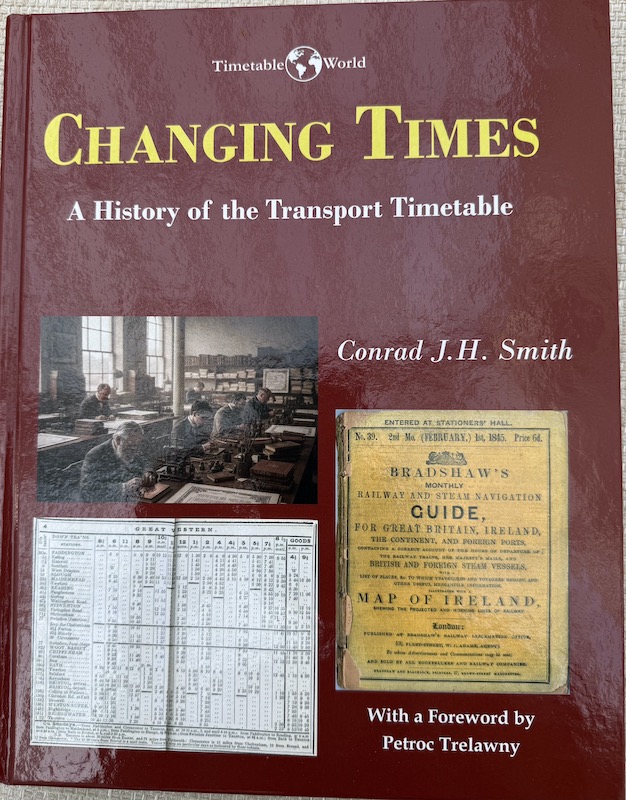
I write ‘mini’ Book Review as I’m struggling to do justice to this latest book produced by the wonderful people behind the amazing Timetable World website, as although they very kindly sent me a copy a couple of weeks ago, I haven’t got anywhere near to finishing reading it – it’s just so voluminous – an incredible 368 pages, with the vast majority all text.
It follows the seminal John Davies book ‘The Rise and Demise of the Bus Map’ published at the beginning of the year. Called ‘Changing Times’, this one is by Conrad J H Smith and covers ‘A History of the Transport Timetable’. And the word ‘History’ is definitely the correct descriptor. It really is a comprehensive analysis of how (particularly railway) timetables have developed since the days of the stagecoach (that’s the original stagecoach mode of transport from centuries ago, not the Brian Souter incarnation from the 1980s).
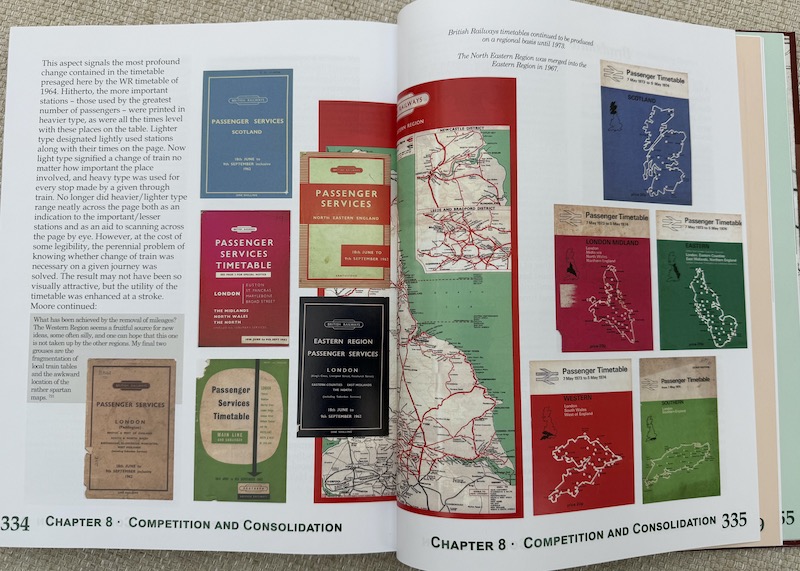
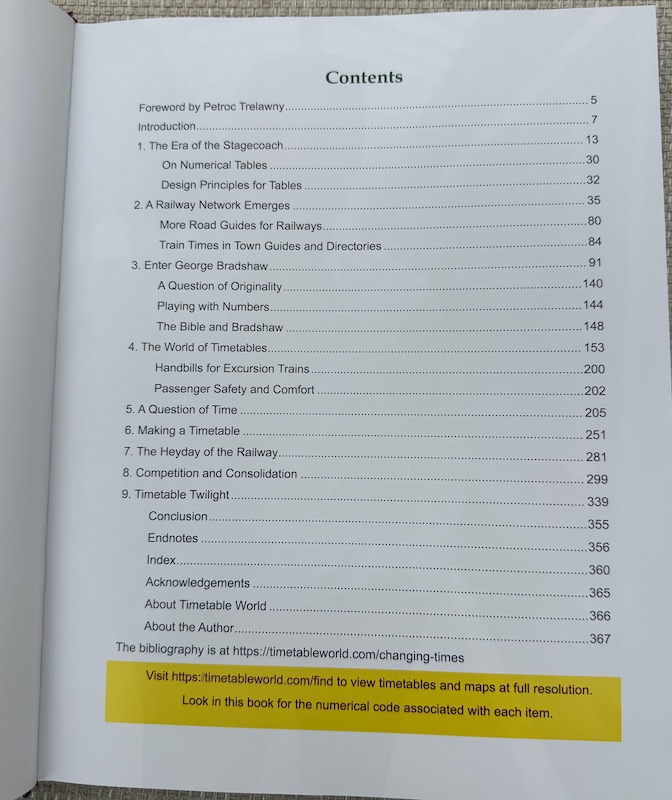
After reading the Introduction, I initially skipped over the chapters detailing the early history of timetable compilation, presentation and production to read chapters 8 and 9 looking at ‘Competition and Consolidation’ followed by ‘Timetable Twilight’ both of which resonate with my living experience of how printed railway timetables have moved from some wonderful publications covering the various regions of British Rail and the much missed National Rail timetable to individual timetables leaflets for each route, to … nothing.
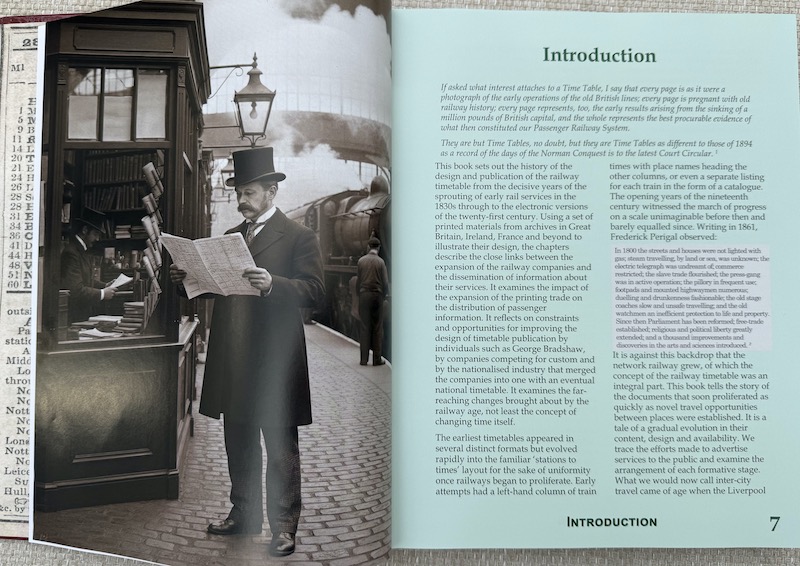
However, I’ve now returned to studying the earlier chapters and they certainly provide a fascinating account of how early timetables were not only compiled but also printed, published and distributed. There are descriptions of ‘Train Times in Town Guides and Directories’ and, of course, a lot of coverage and explanations about the Bradshaw era – “the standard to which all others were compared”.
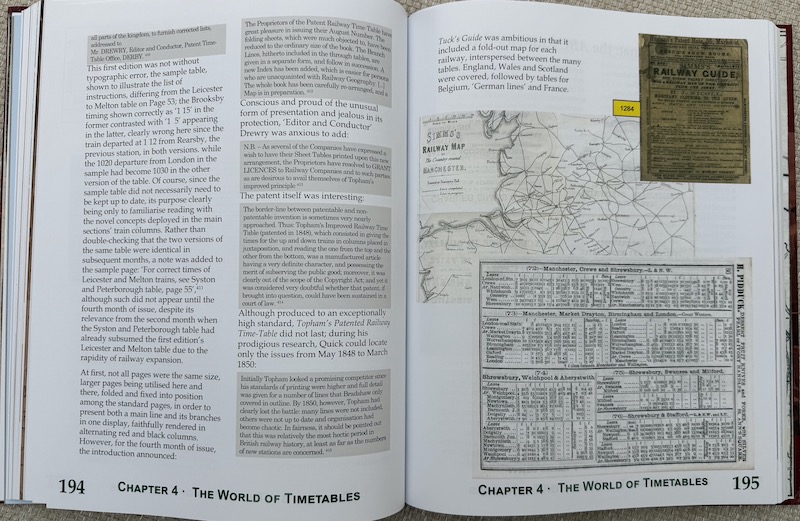
Going even further back in time, Conrad chronicles how the “gradual adoption of both London Time and Dublin Time for their respective parts of the United Kingdom” came about. Because, of course, “timetables played their part in process”. When the London and Birmingham Railway opened throughout its length a table of local times as observed at each wayside station was published in the form of ‘minutes fast from Birmingham’ and ‘minutes slow from London’ because standard time in those cities was different.
It’s fascinating to reflect on that early period as train travel was becoming established and if you like timetables and enjoy a long and comprehensive historical read over 368 pages, then this is definitely the book for you.
‘Changing Times’ retails at £40, as does ‘The Rise and Demise of the Bus Map’, with a bundle comprising both books available at a huge discount of £50 for the pair. And, in addition, BusAndTrainUser blog readers can use a coupon valid until 31st December giving 15% off your purchase meaning each book costs just £34 or £42.50 for the pair. Purchase from timetableworld.com entering the discount code batu. Postage is free, but do warn your postie it’s a weighty volume!
Botley Road reopens at last
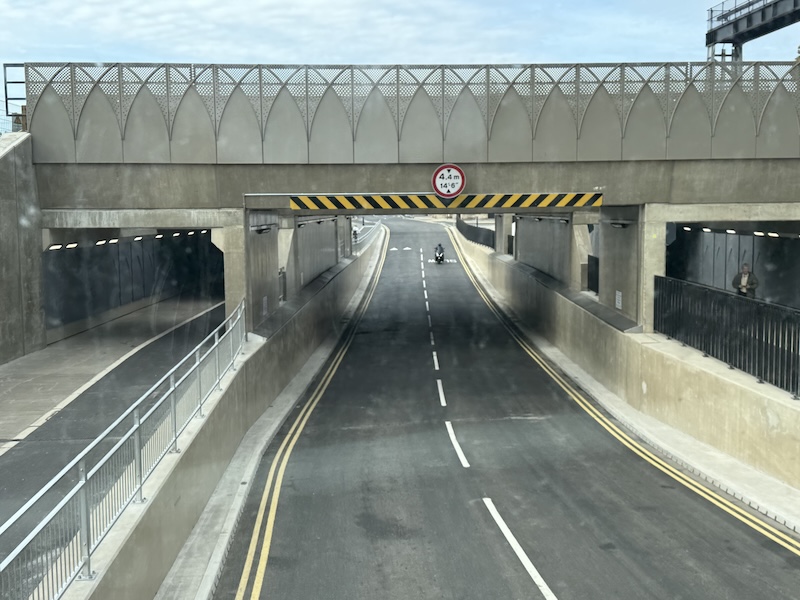
It was April 2023 when Oxford’s Botley Road was closed to allow Network Rail to carry out major works to the railway bridge just south of Oxford rail station as well as a precursor to extensive works to expand the station with a new western entrance/exit.
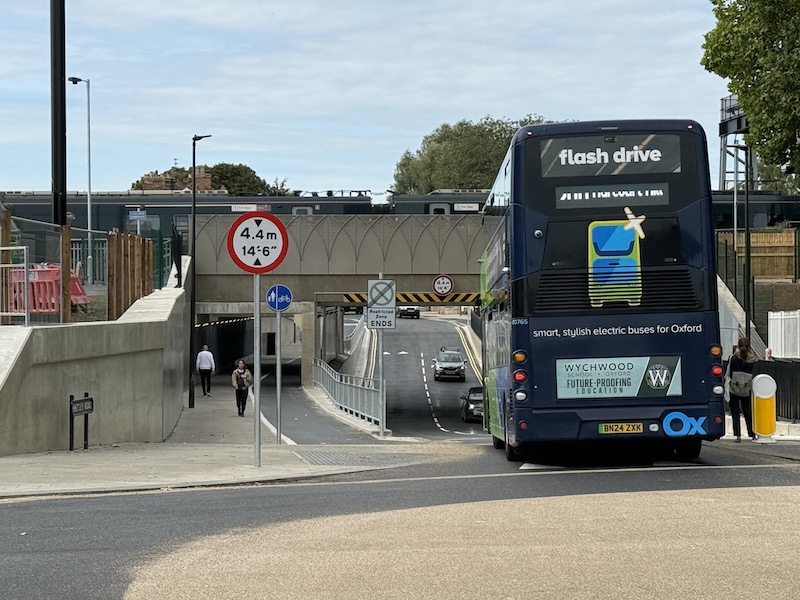
As we all know things didn’t quite go according to plan and what was originally a six month closure to divert utilities followed by a seven month closure to replace the bridge in 2024 ended up as a three and a half year continuous closure leading to huge inconvenience (and cost) to everyone living, working and visiting the area, not least Oxford Bus and Stagecoach Oxford.
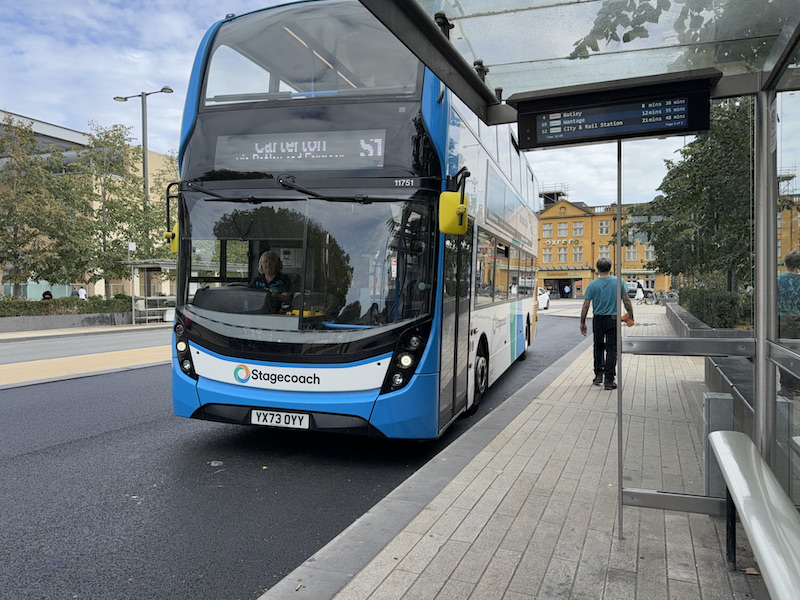
But that’s all now in the past and I popped over to Oxford on Monday last week, just after the road reopened on the Sunday, to admire the £237 million worth of improvements (up from the original budget of £161 million). As concrete bridges carrying railway track and a pedestrian footbridge go, it does the job, with the latter looking particularly smart and a great improvement on what went before.
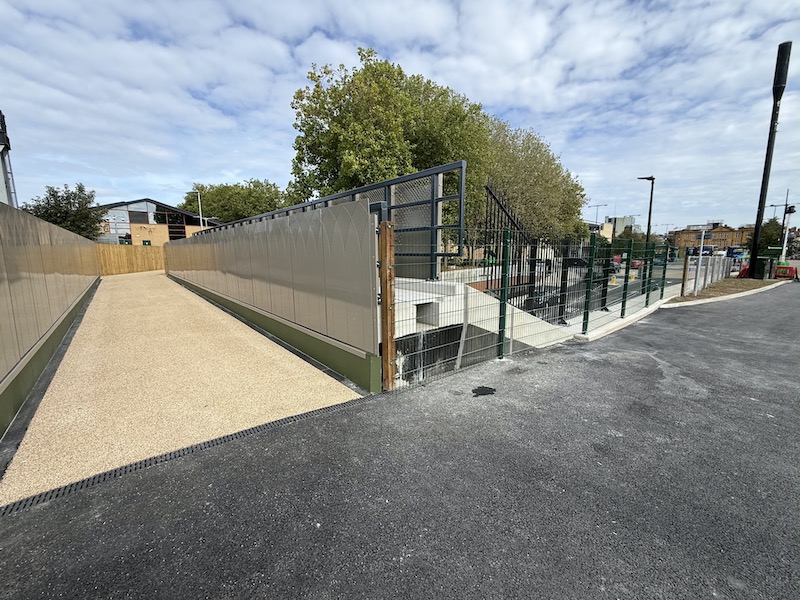
Key to this project is there’s room for expansion with more tracks to enable trains to run on the branch line to Cowley and there’s more room down below with wider tunnels for pedestrians on both sides of Botley Road.
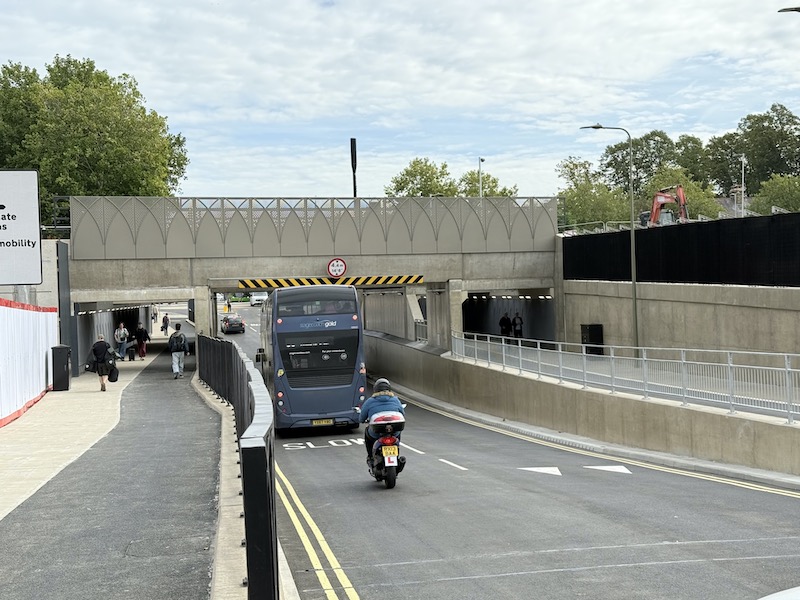
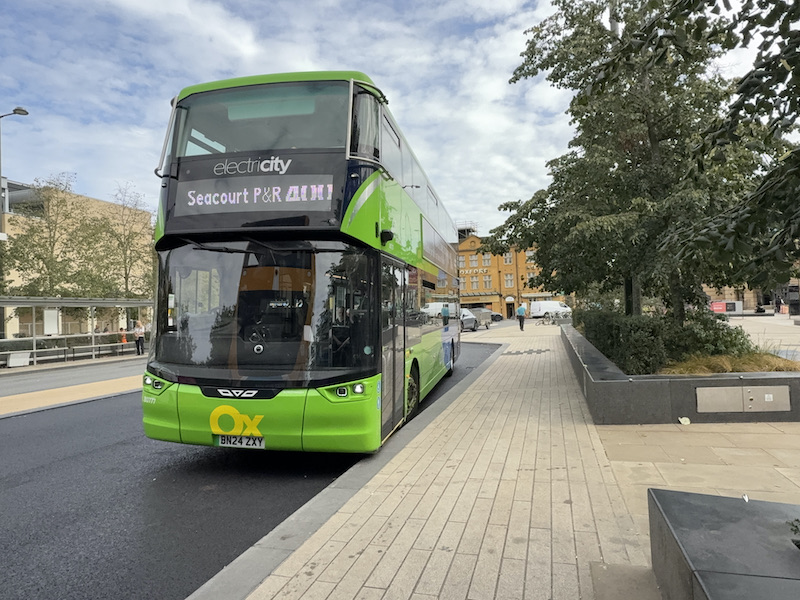
Stagecoach buses are now back on their line of route and Oxford Bus has introduced a number of improvements to its network as well as returning route 400 to the Seacourt Park & Ride car park further west along Botley Road.
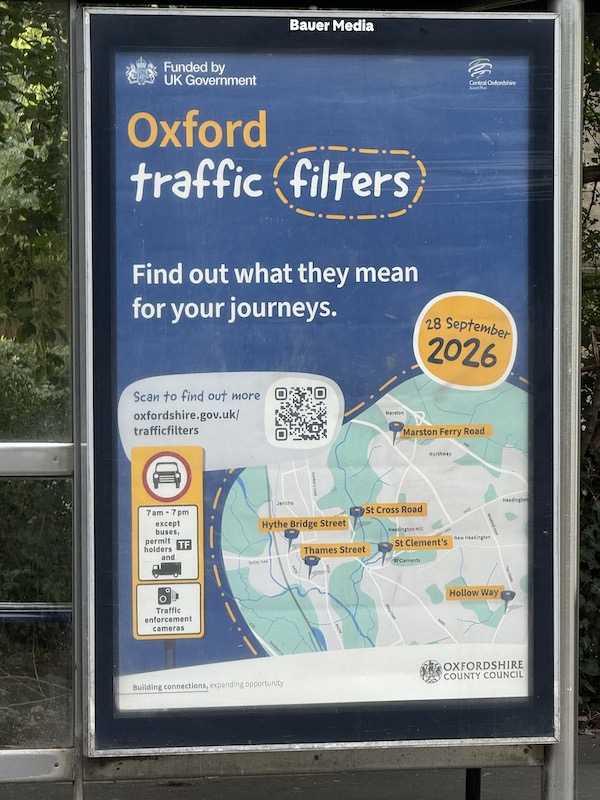
But, also important are the new Traffic Filters which replaced the temporary congestion charge from yesterday. Drive through one of these filters without being authorised and you’ll cop a £70 fine (reduced to £35 if paid within 21 days or increased to £105 if not paid within 28 days). The Traffic Filters will be in place for the next 18 months and it’ll be interesting to see how motorists continue to react to this.
Meanwhile back at the station, work is beginning on that new western entrance.
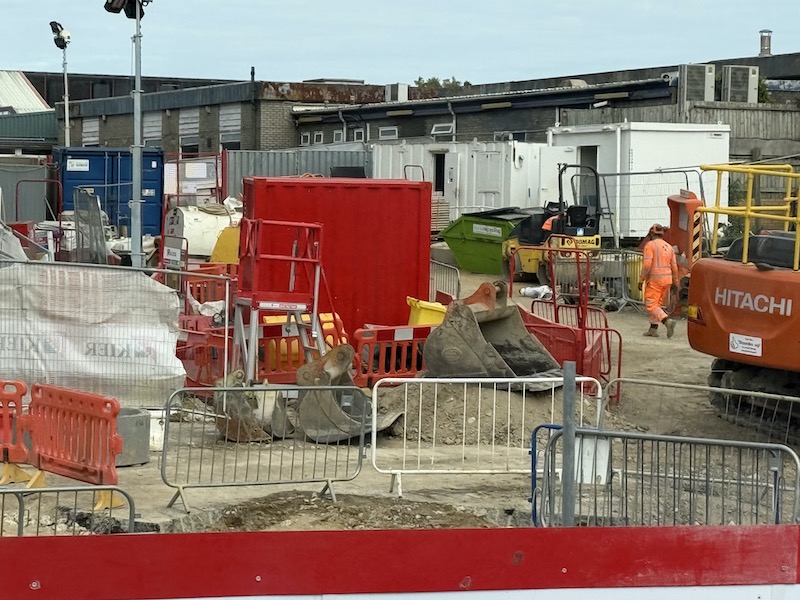
Hopefully it won’t take another three and a half years.
Spalding’s delight
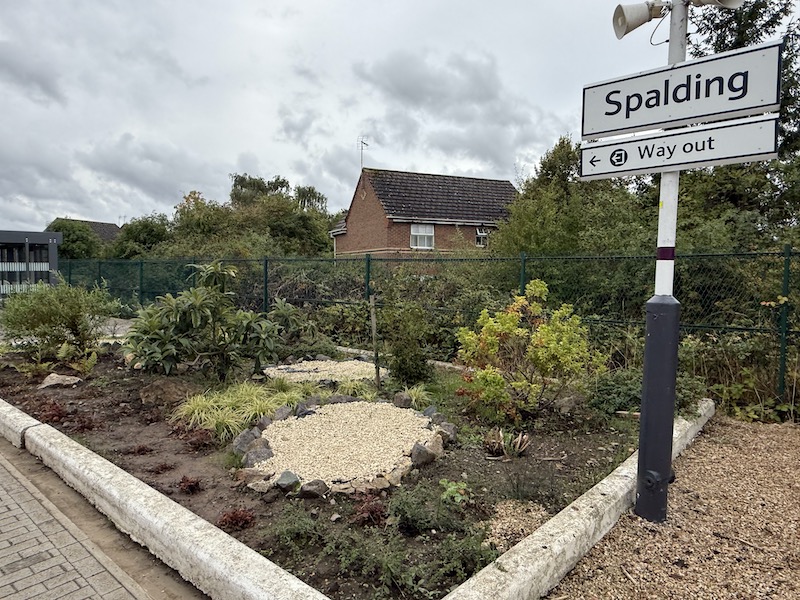
I was impressed when alighting at Spalding’s Platform 2, towards Lincoln, seeing the wonderful display of shrubbery with more planting underway…
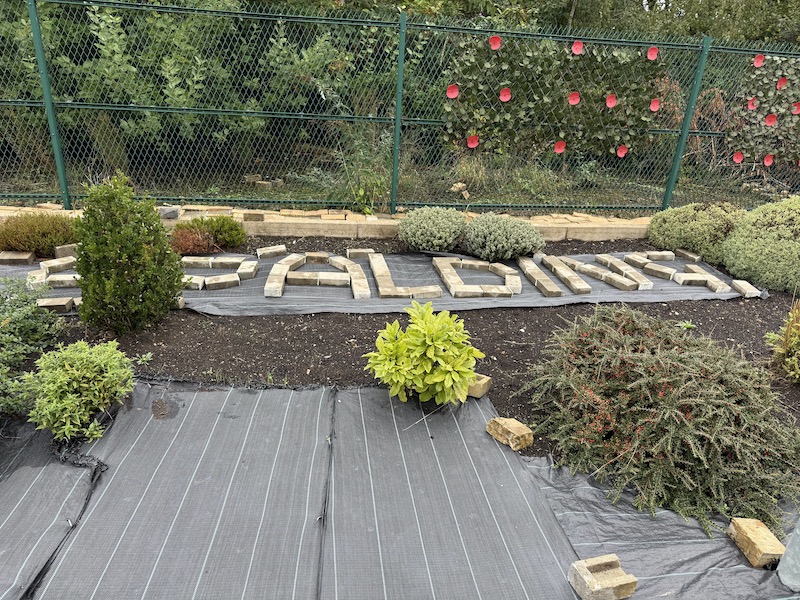
… obviously cared for by dedicated supporters…
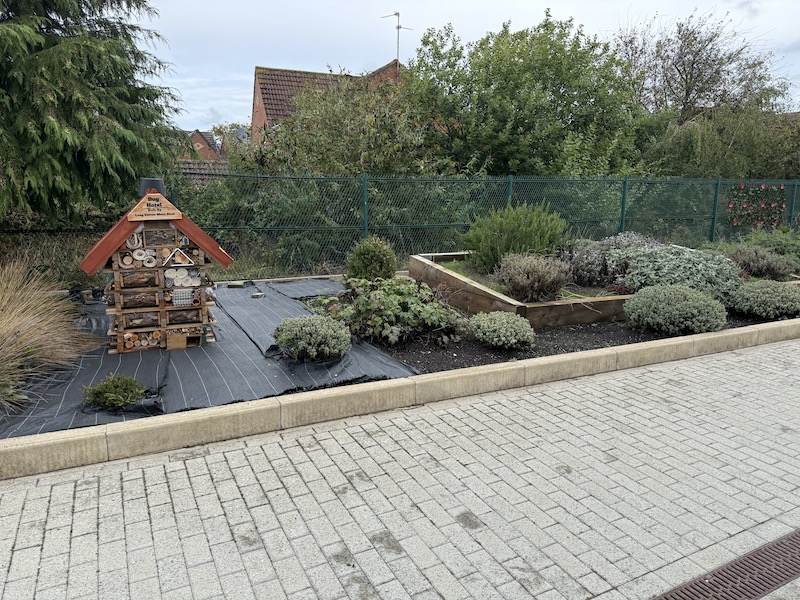
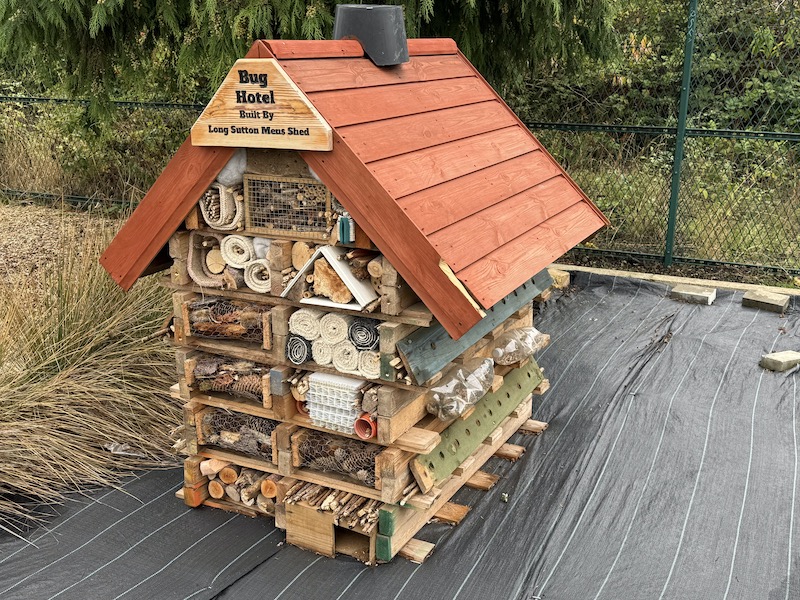
… and even including this fascinating ‘bug house’ to attract nature’s visitors.
The modern looking waiting shelter and lift tower presented an interesting contrast…
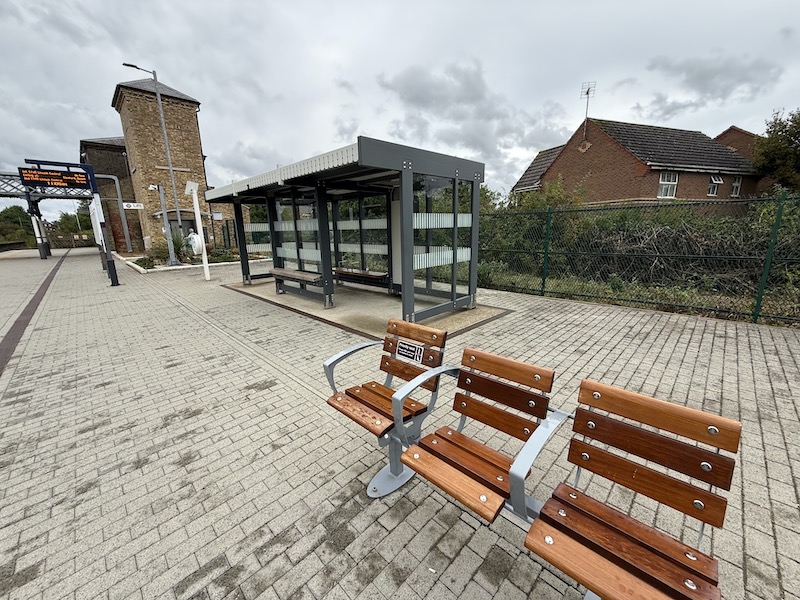
… with the more traditional layout of a platform on the Peterborough bound Platform 1.
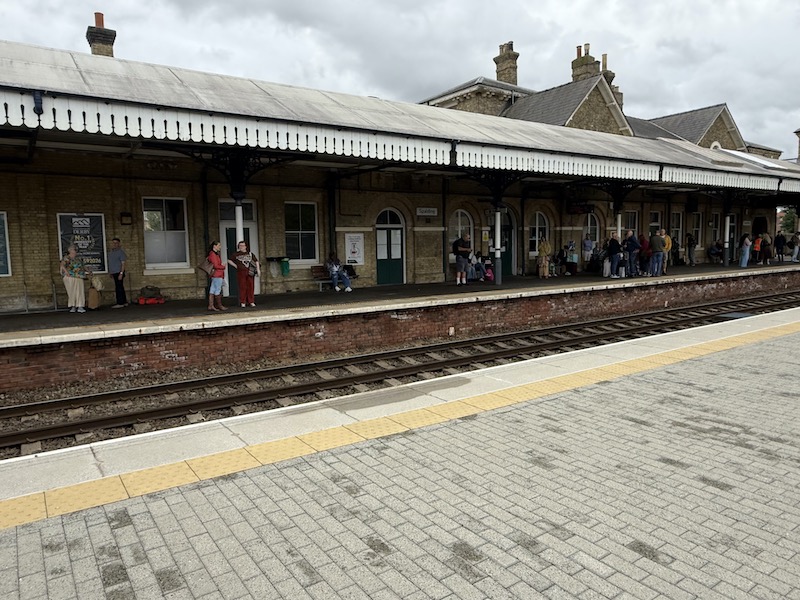
The exterior and entrance to the station is also very traditional and dates back to a time when the station had seven platforms including two terminal bays for the line to March.
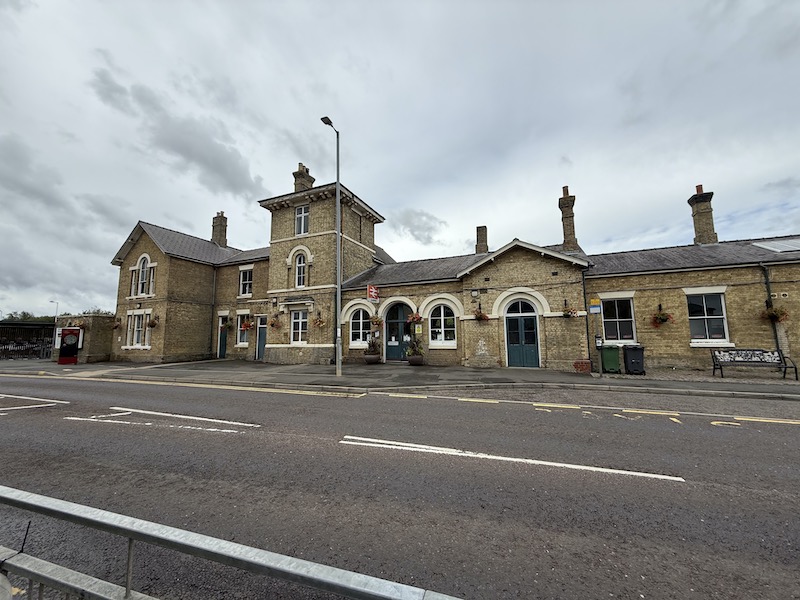
It’s a very pleasant and well kept station except my experience of using the waiting room on Platform 1 became a living nightmare when I came to leave and couldn’t open the door. It was locked shut by an automative mechanism and luckily I was rescued by a passenger on the platform who heard my yelling to summon help.
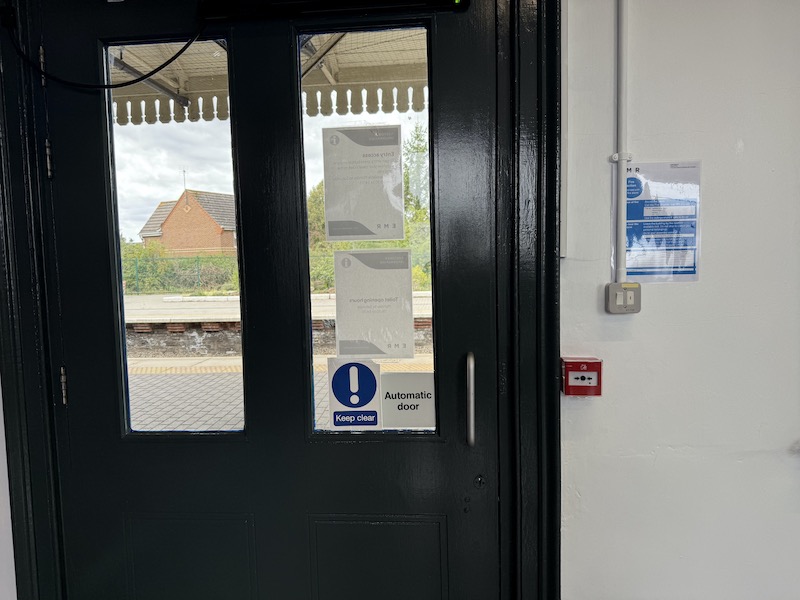
It turns out the door is controlled by a video entry system with a call button but when I entered the door was wide open, presumably from someone who’d exited before I arrived and the door had not had a chance to close and self lock.
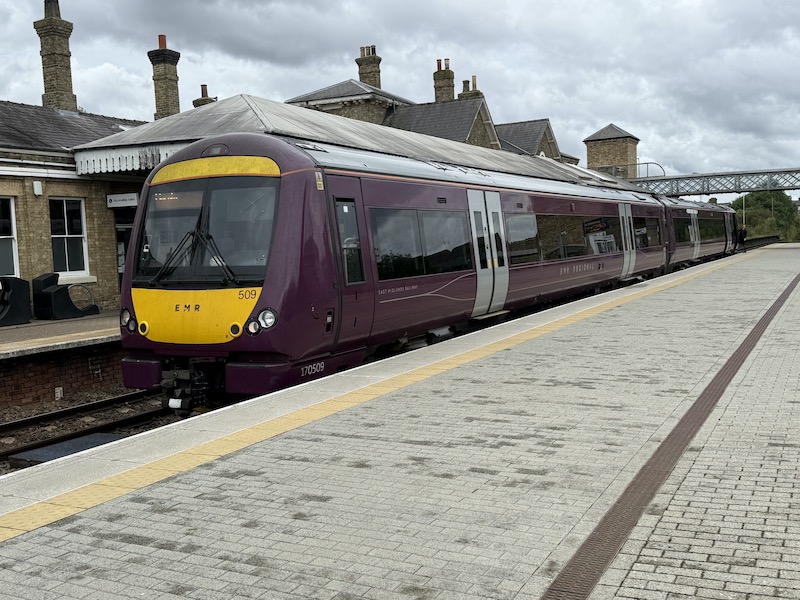
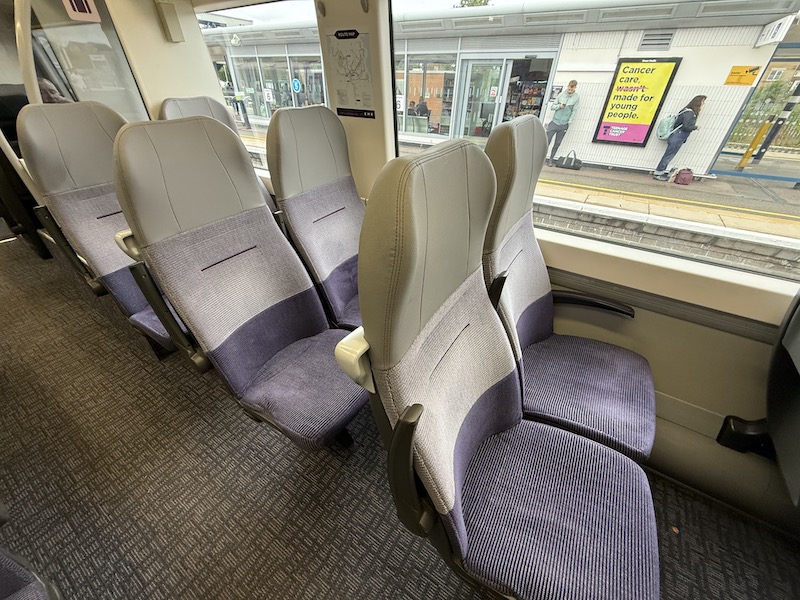
The Class 170 train that took me to Spalding from Peterborough had benefitted from an upgrade as part of East Midland Railway’s £23 million refurbishment programme for its fleet of 44 such trains.
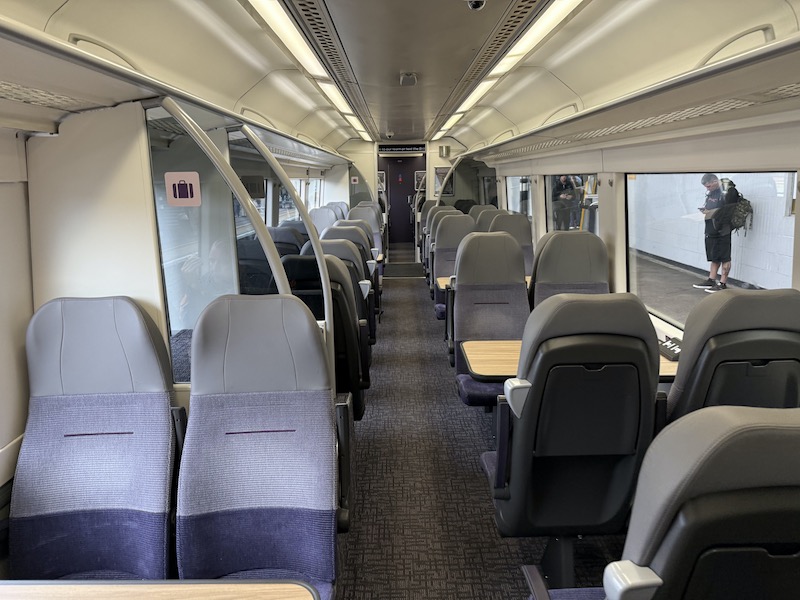
The new seats and decor look very smart…
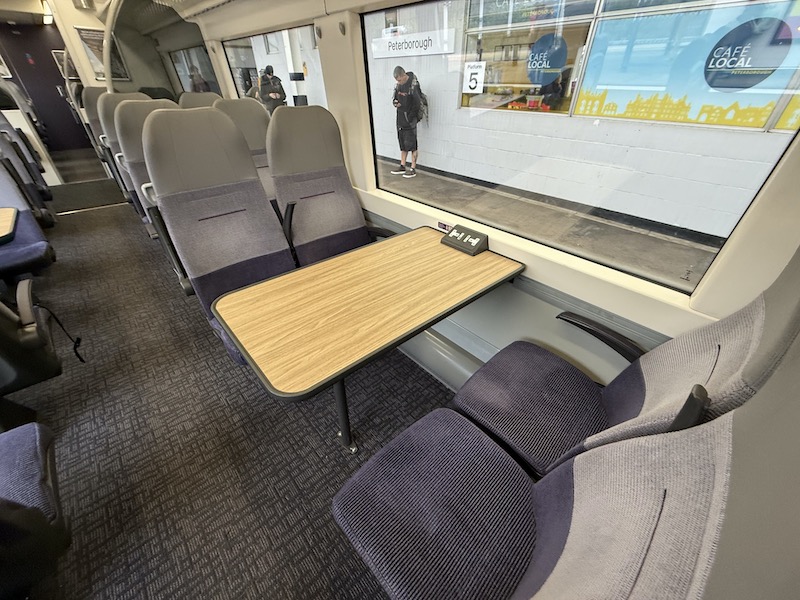
… and offer a noticeable improvement in comfort and ambience.
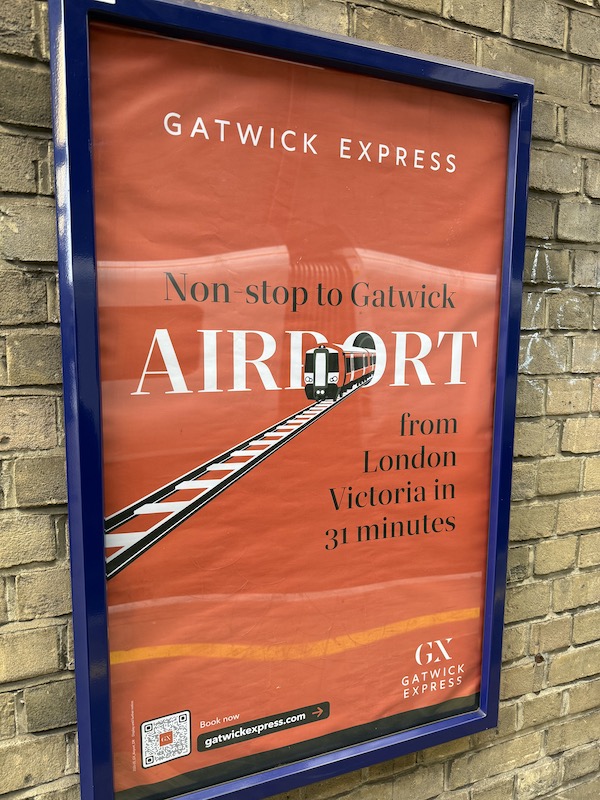
Gatwick Express from Farringdon
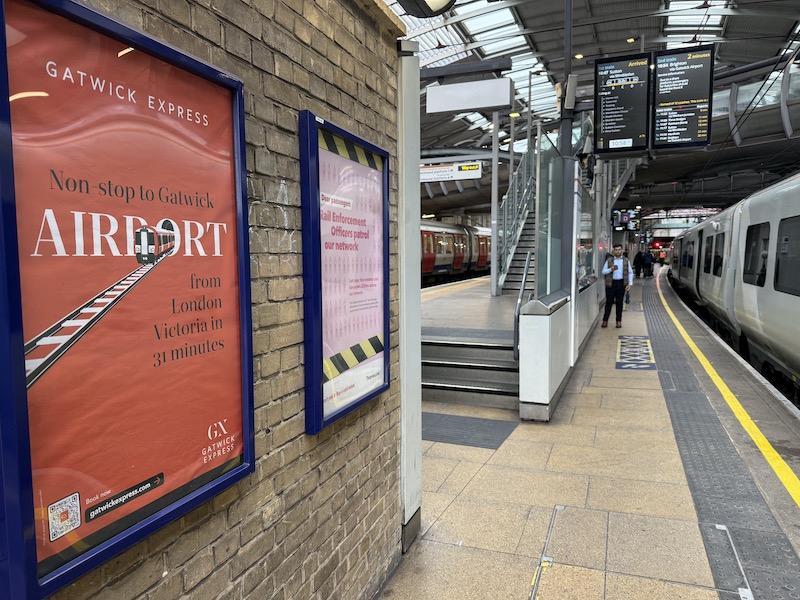
What’s the best way to travel from Farringdon to Gatwick Airport?
You’d naturally take one of the four Thameslink trains an hour taking 40 minutes.
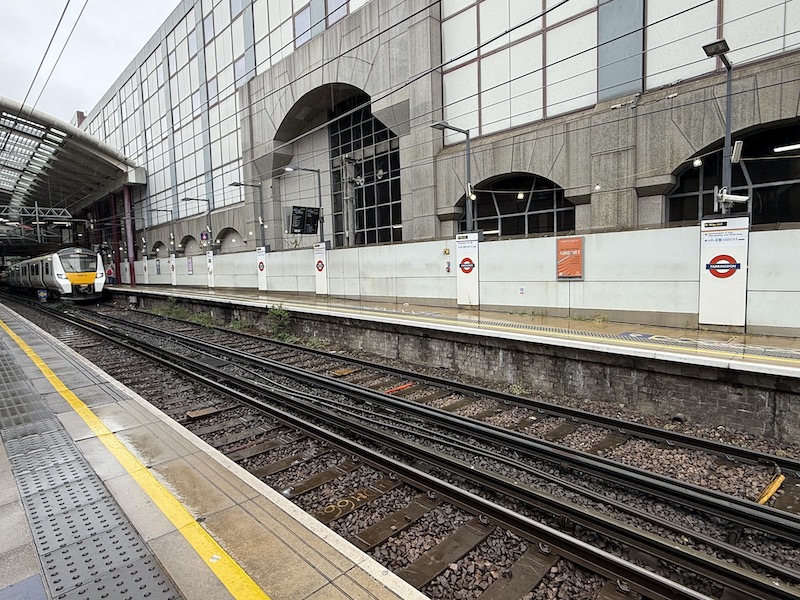
But it would seem Thameslink want you to make your way over to Victoria and take the half hourly Gatwick Express currently being promoted with posters all over the station at Farringdon. It costs more and takes longer (23 minutes just to get to Victoria) with half the frequency. Why on earth are they promoting it like this?
Fleet Buzz lives on
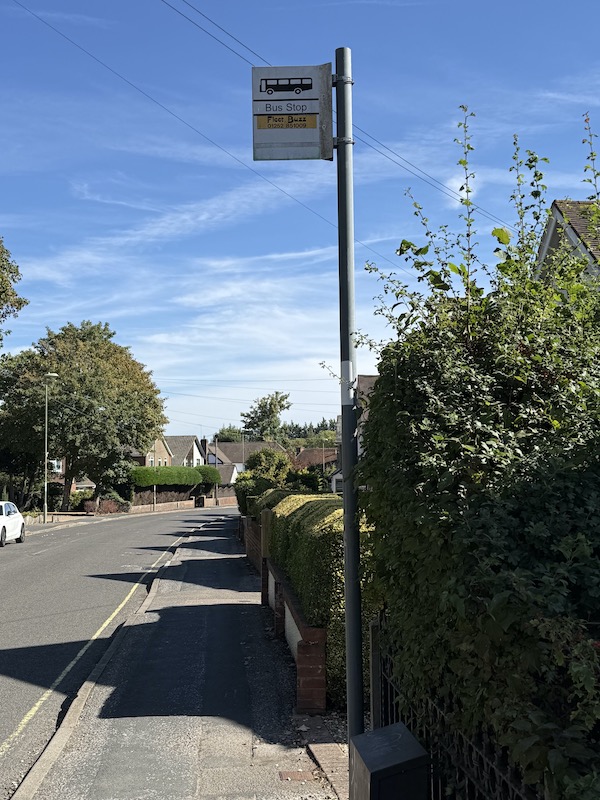
A number of commentators explained how the Fleet Buzz company used to run between Farnborough and Yateley (and on to Reading) in the recent blog about Stagecoach’s new route 8.
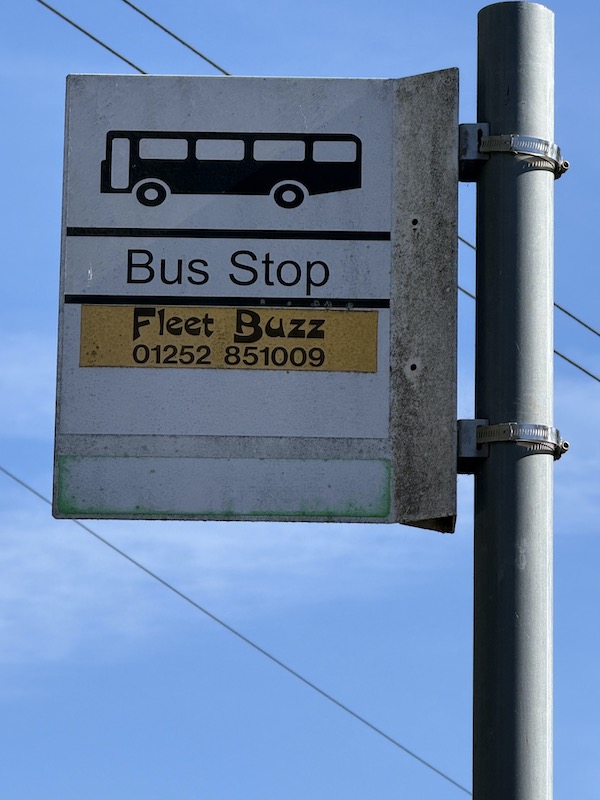
Indeed there are still bus stop flags marked up for Fleet Buzz I spotted both in Farnborough and along the route.
Help Karen finish her jigsaw
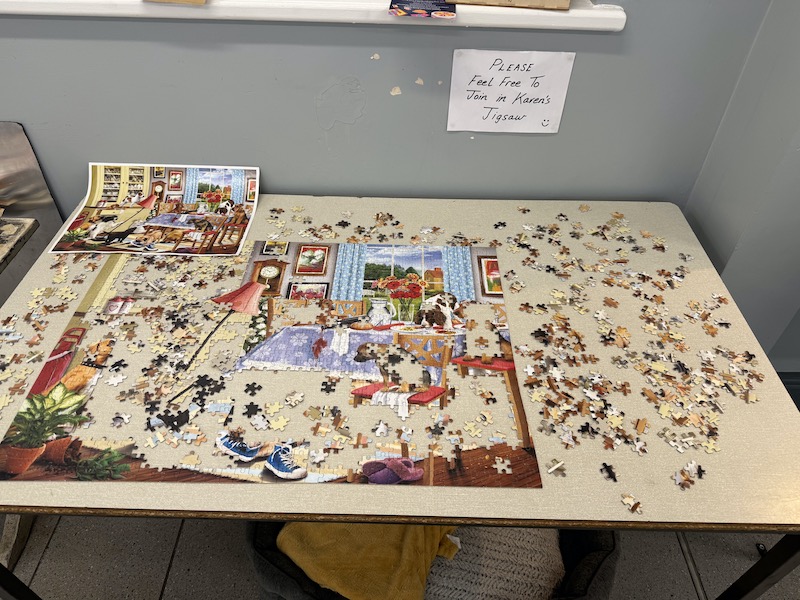
Back in Farnborough Main railway station’s waiting room Karen who runs the coffee stall there has a jigsaw on the go as I found when I featured the station last November in last year’s ’places with two stations’ series…
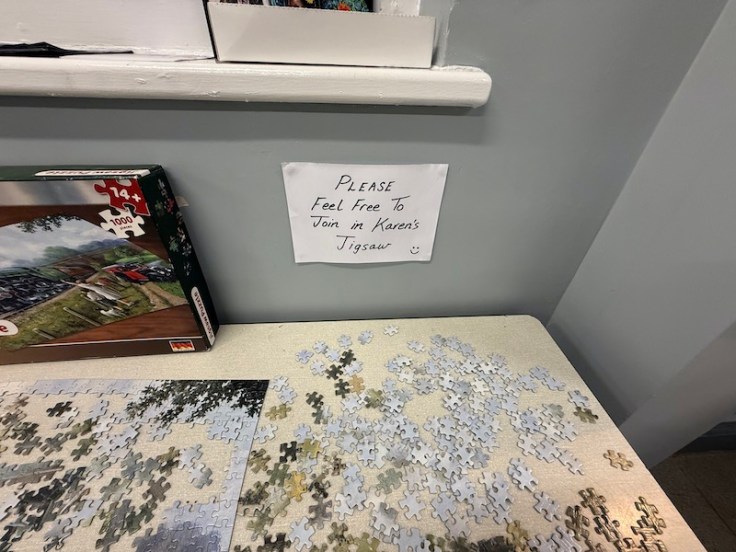
… although that one must have got finished, as this is a different one
Why shorten these names?
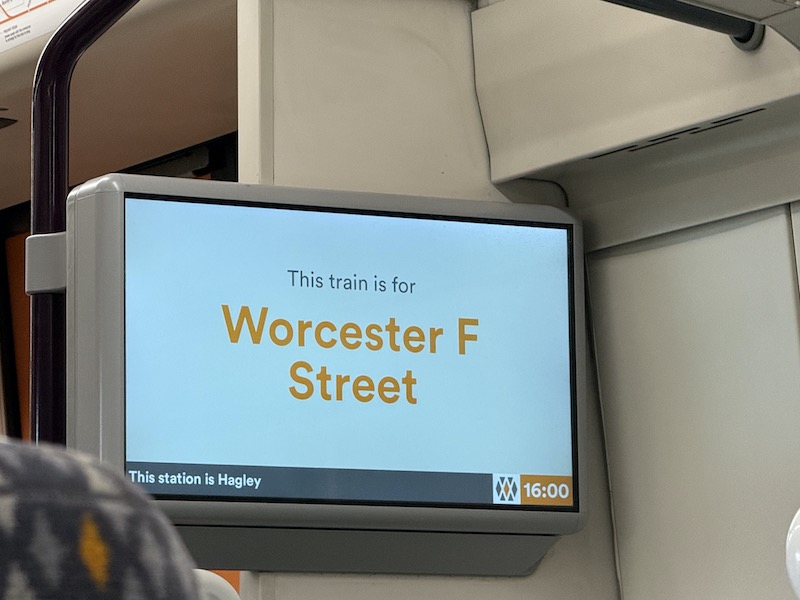
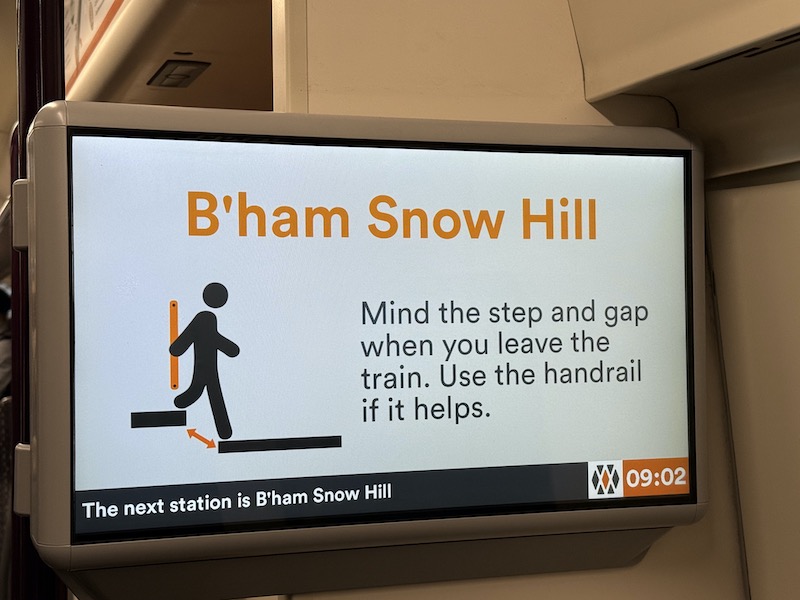
One thing that always puzzles me about interior electronic displays in trains (and sometimes buses too) is why the names of stations are shortened when there’s plenty of room to show them in full?
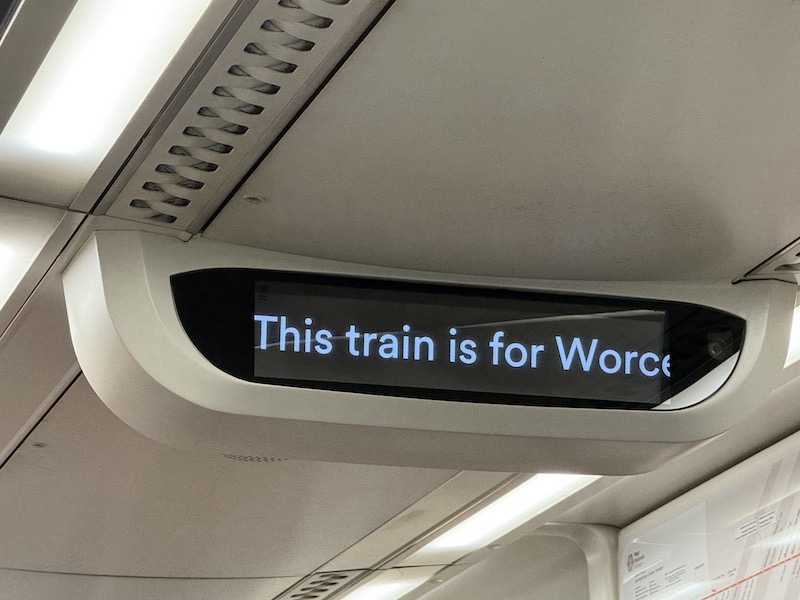
For example Worcester Foregate Street. Why do West Midlands Railway shorten Foregate to display just ‘F’!
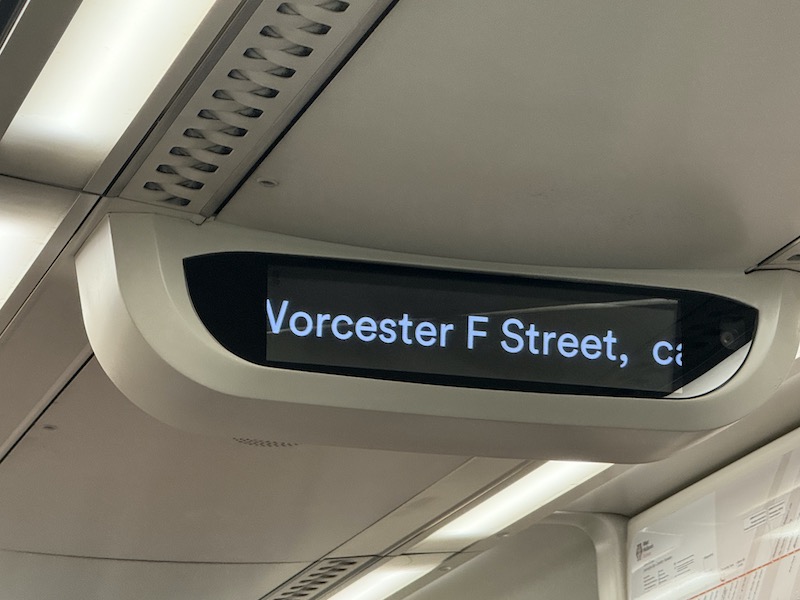
Or Birmingham to B’ham?
Just wait for the door to close
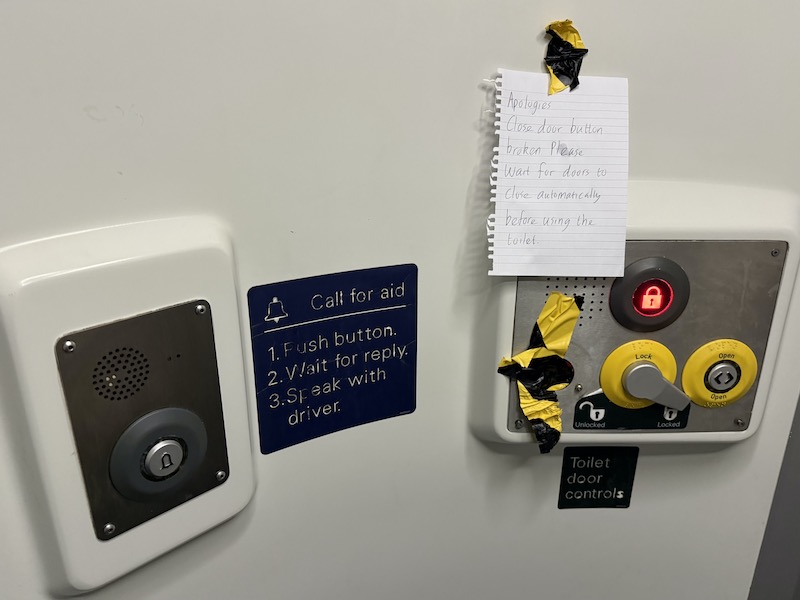
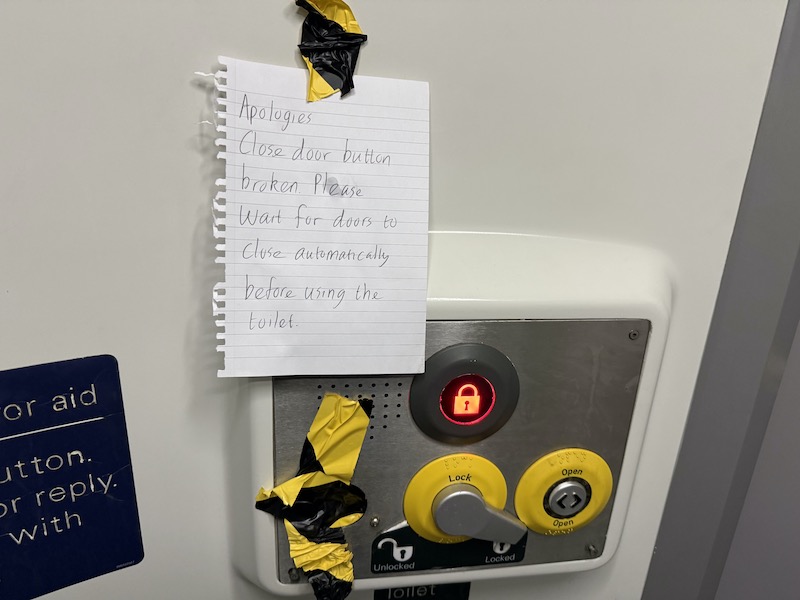
I was impressed with the friendly informal notice stuck inside a GWR Class 165 train on a recent journey from Gatwick to Farnborough. It’s refreshing to see someone take the initiative to ‘keep the wheels turning’ rather than close down a facility because everything isn’t exactly as it should be, or even withdraw the train from service.
Sutterton’s mega size shelter
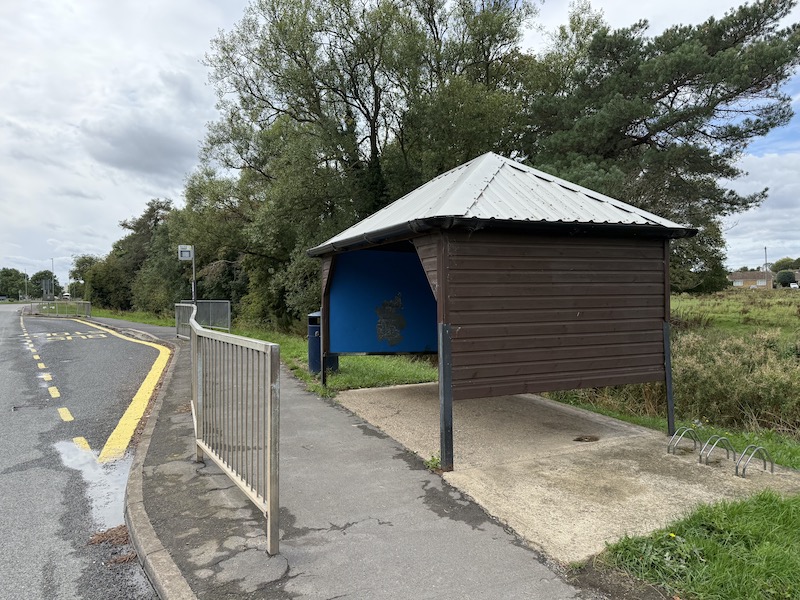
I was intrigued by this extra large shelter at the bus stop in Sutterton, Lincolnshire when changing buses from Stagecoach’s route 3 to Brylaine’s route B3 recently and much to my surprise…
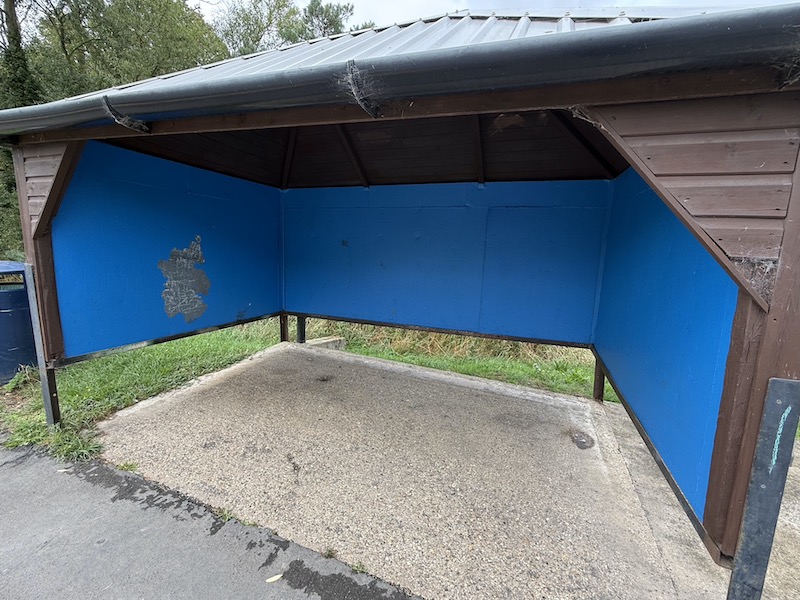
… there were no seats inside it. What a missed opportunity.
Boston’s swing rail bridge
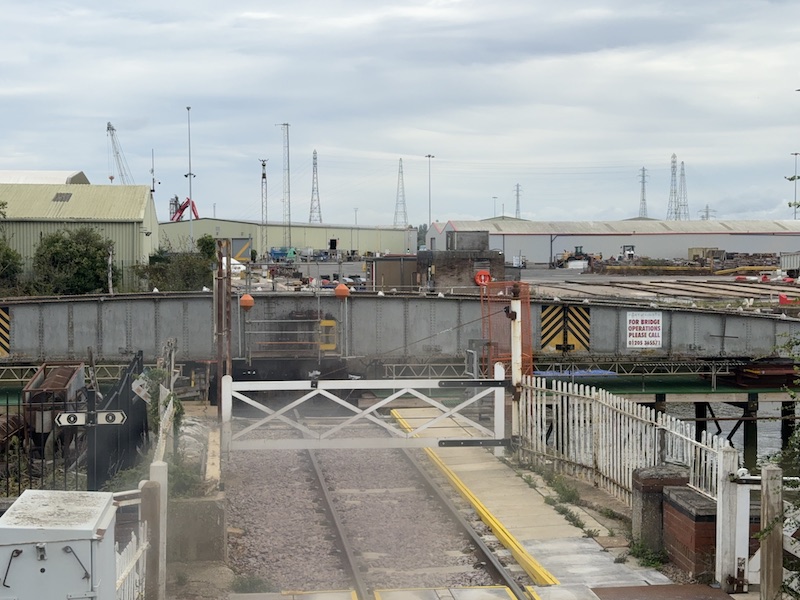
When passing through Boston I spotted the swing rail bridge which connects the short branch line to the ‘Port of Boston’ as can be seen on the map extracts below…
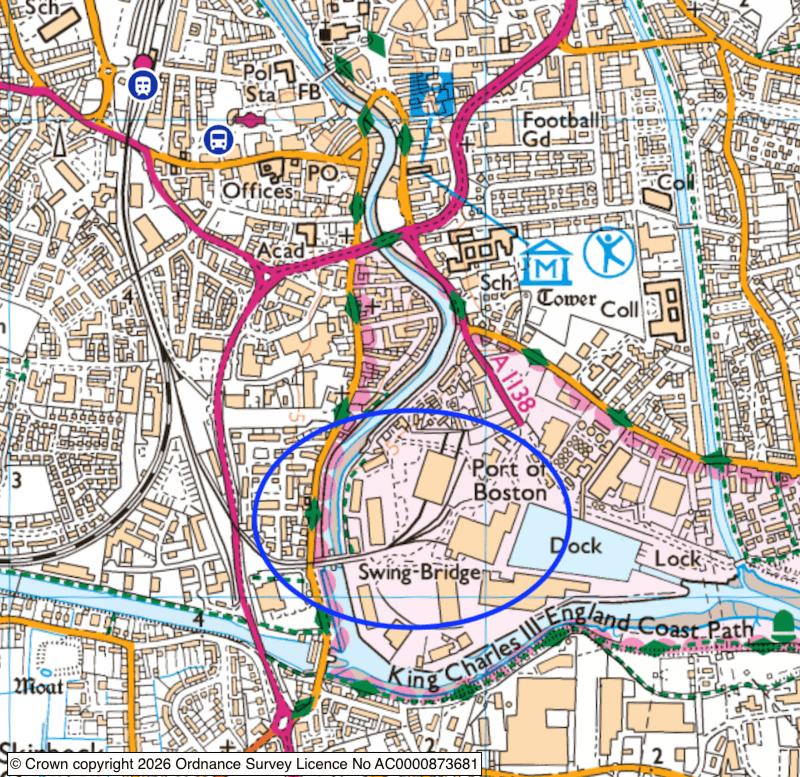
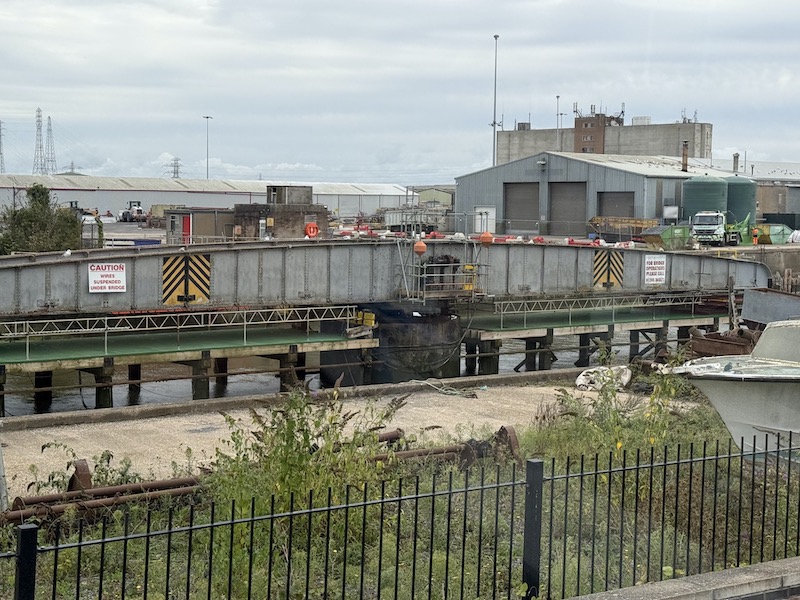
… I’m not sure how much, if at all it’s used but the track ballast looked as though it had been recently renewed and the tracks looked in good condition. There aren’t many such bridges around, especially one you can see from the top deck of a bus.
Water Tower’s over Spalding bus station
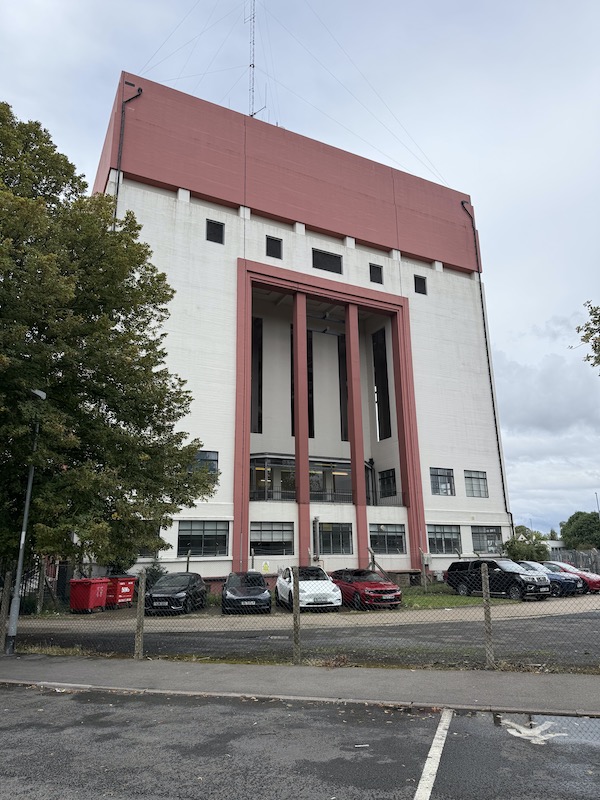
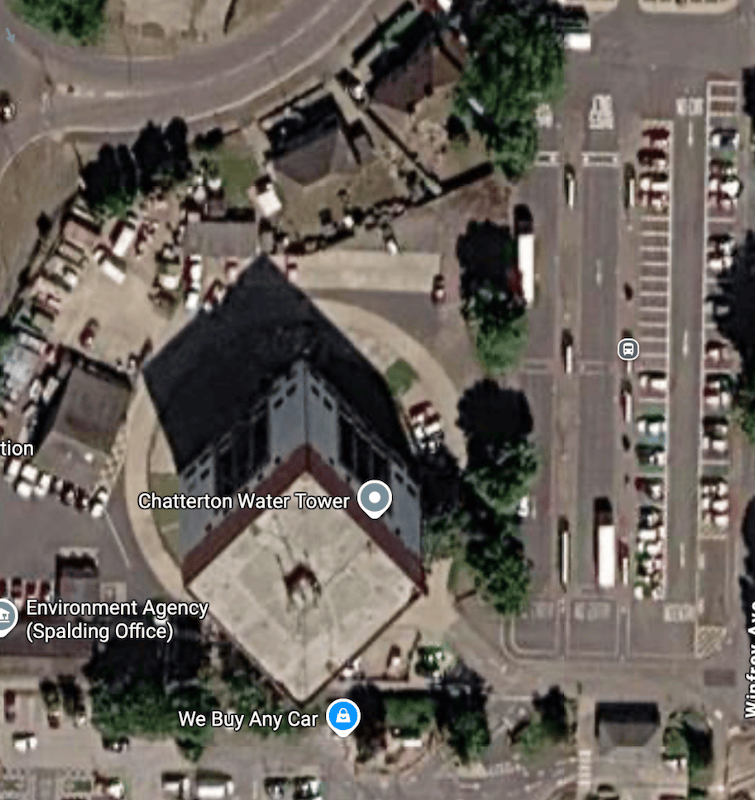
Another interesting structure I spotted in Spalding was the imposing Chatterton Water Tower which towers over the town’s bus station…
… as can be seen in Google’s satellite image below.
And talking of imposing strictures, while taking a ride on TfL’s route SL12 I had to take a photograph of the country’s most extensive bus shelter outside Newbury Park Underground Station.
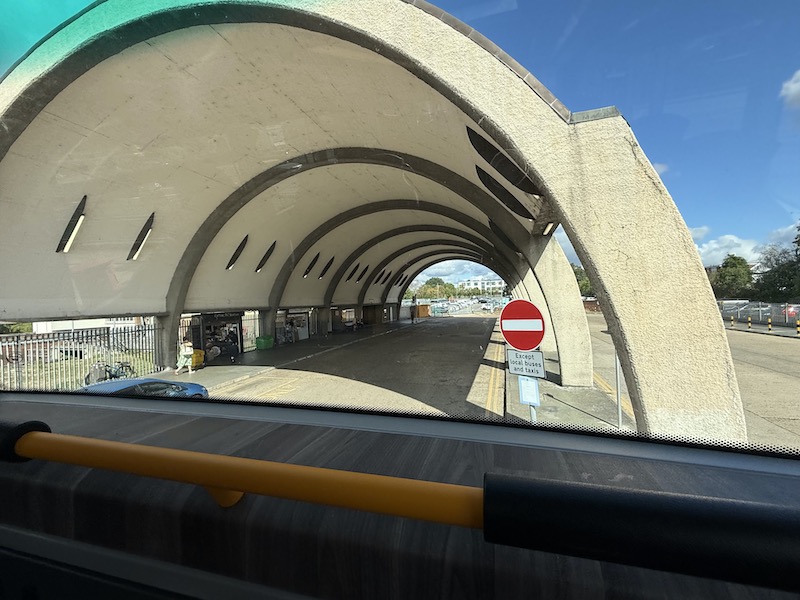
What an amazing structure.
How busy is my train?
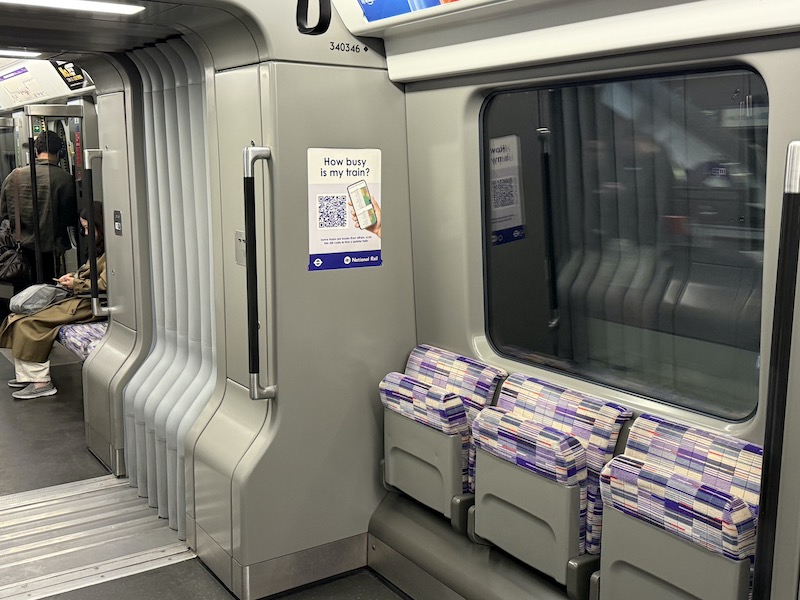
My eye was caught by this poster on an Elizabeth line train the other day, as it’s the first time I’ve seen TfL acknowledge so publicly the line is indeed part of National Rail, rather than block any reference to that association.
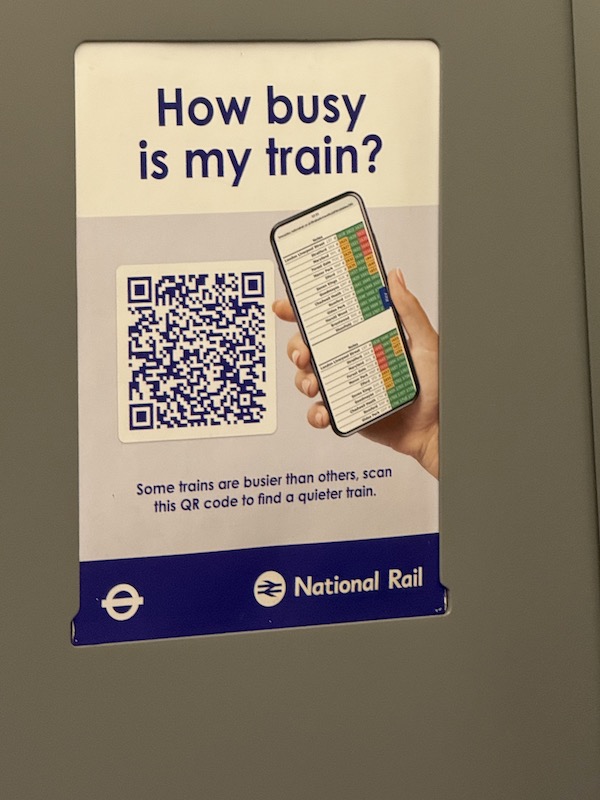
Using the QR code takes you to an annotated full timetable for the service which colour codes every journey according to its busyness in the previous week.
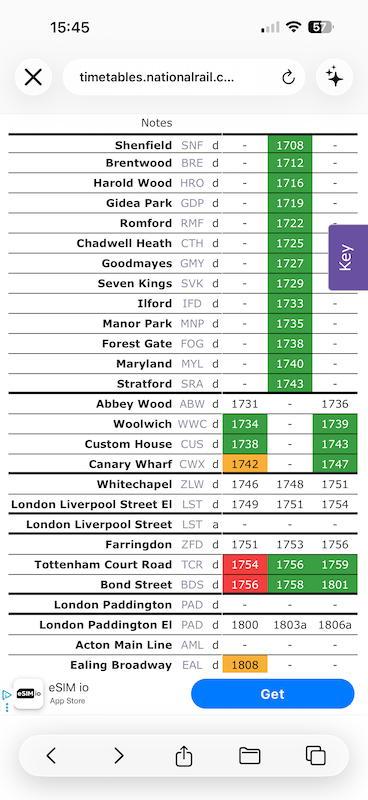
The problem being on a smartphone you only get space for three journeys per screen so to find, say, an afternoon peak journey entails scrolling through dozens of pages. Nice idea though.
GREENLINE Holidays
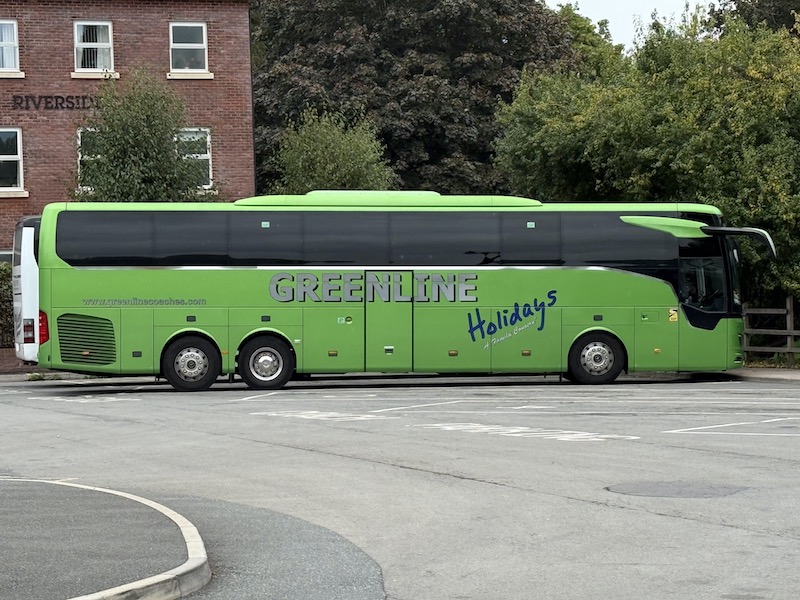
With all the fuss over the use of the Green Line brand in the Heathrow Airport area it was interesting to see Greenline Holidays alive and well while in Monmouthshire recently. The Stourbridge based company offers an extensive programme of day trips, weekend breaks and holiday tours including a day trip to Windsor. (Don’t tell Arriva!).
Abergavenny Delight
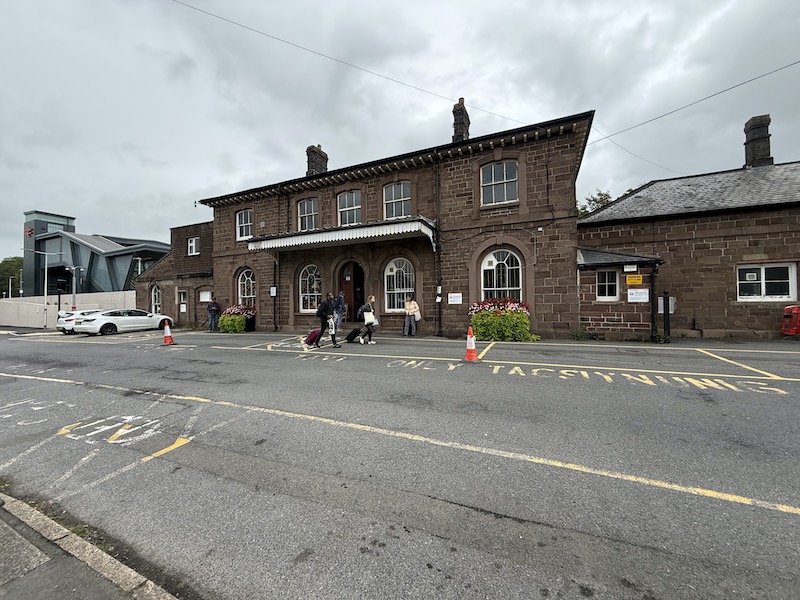
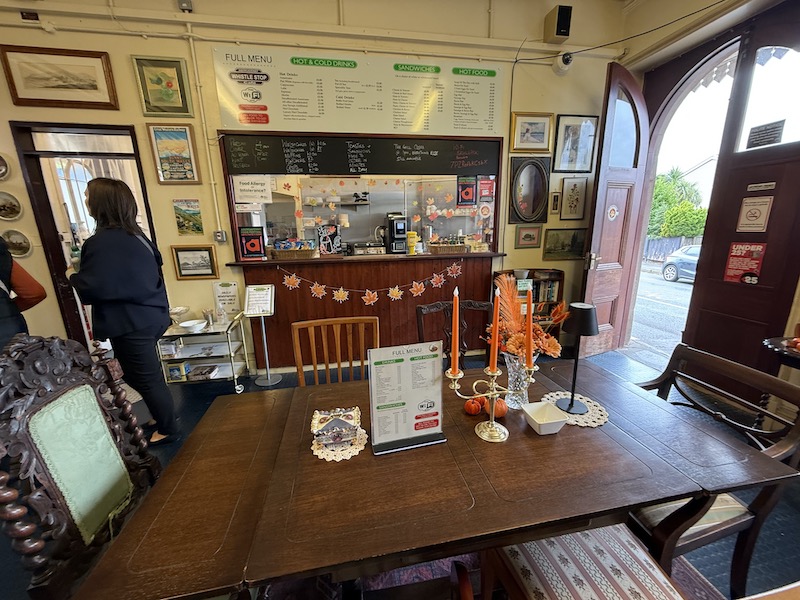
Another lovely station to visit is Abergavenny where the Whistle Stop café on the northbound Platform 1 is an absolute delight…
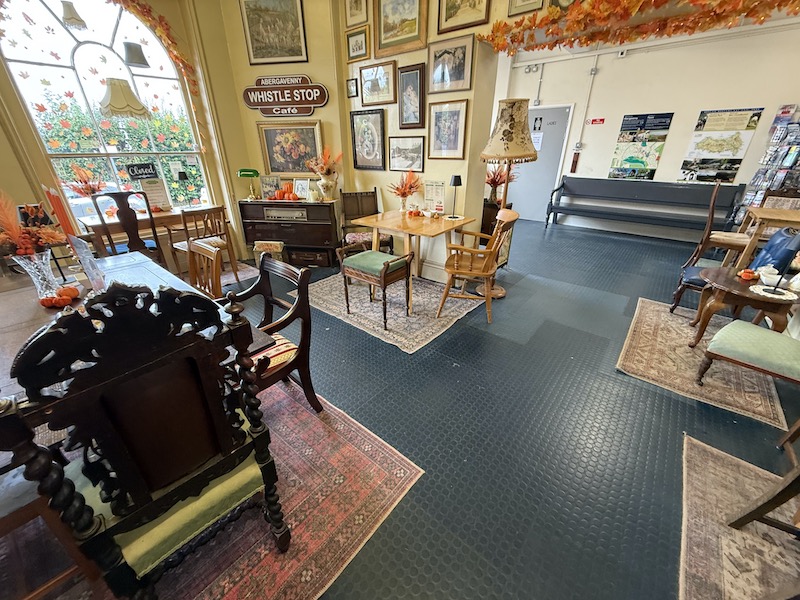
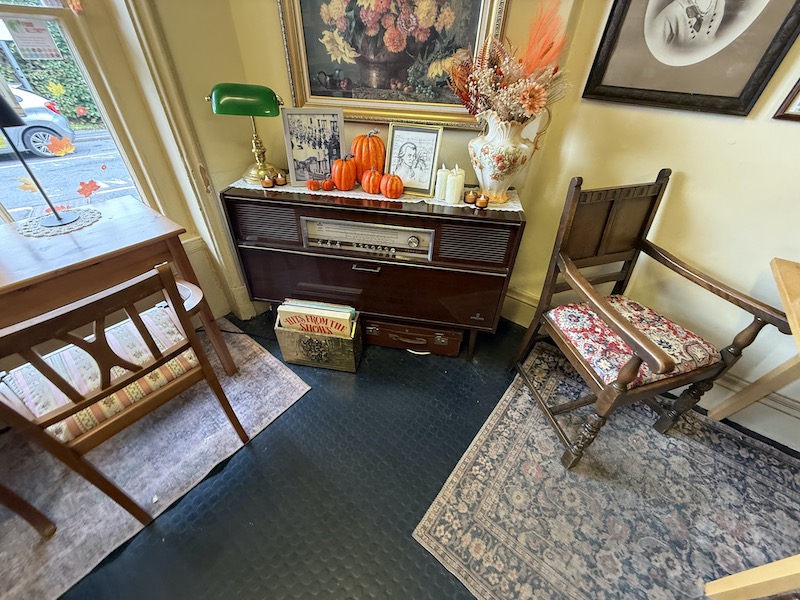
… with the most wonderful retro style furniture including a radiogram straight from the late 1950s…
… as well as some delicious food and drinks.
RML2711 is alive and well
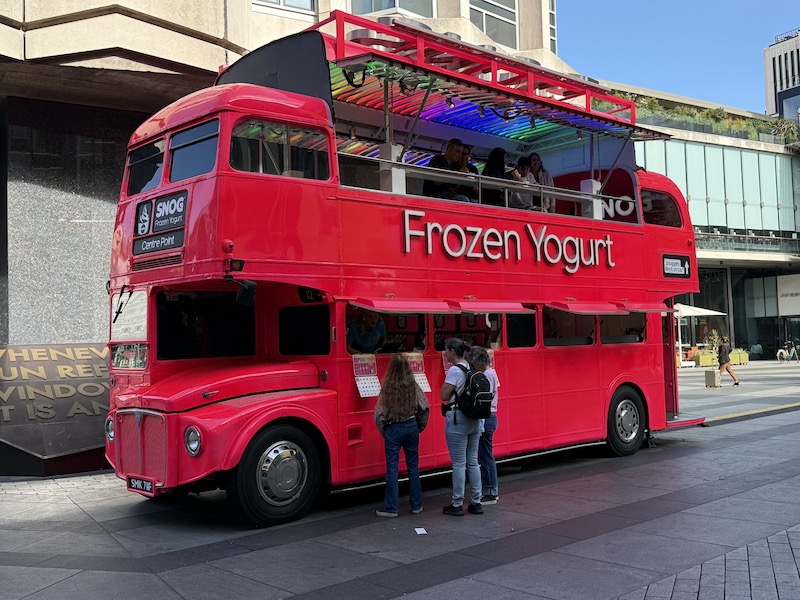
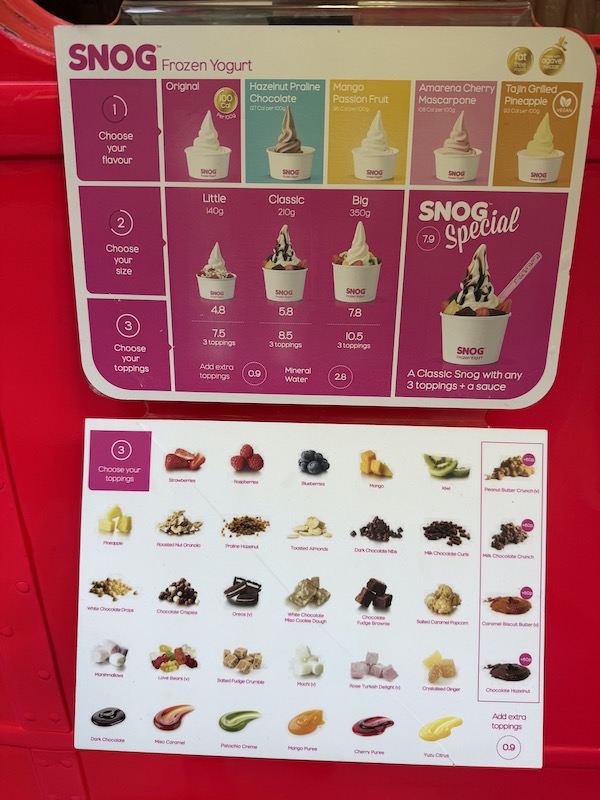
Following last month’s Great British Fudge Company’s bus strategically positioned outside Bath Spa railway station I came across former RML 2711 the other day parked up in the shadow of Centre Point alongside Tottenham Court Road station in its new guise as a sales point for SNOG frozen yoghurt together with a place to sit and enjoy your over priced desert on the upper deck with its raised roof.
And then last weekend I was in the centre of Plymouth and came across this former Bournemouth Corporation 1950 Leyland Titan PD2/3 with Weymann bodywork enjoying a new lease of life as ‘The Clippy’.
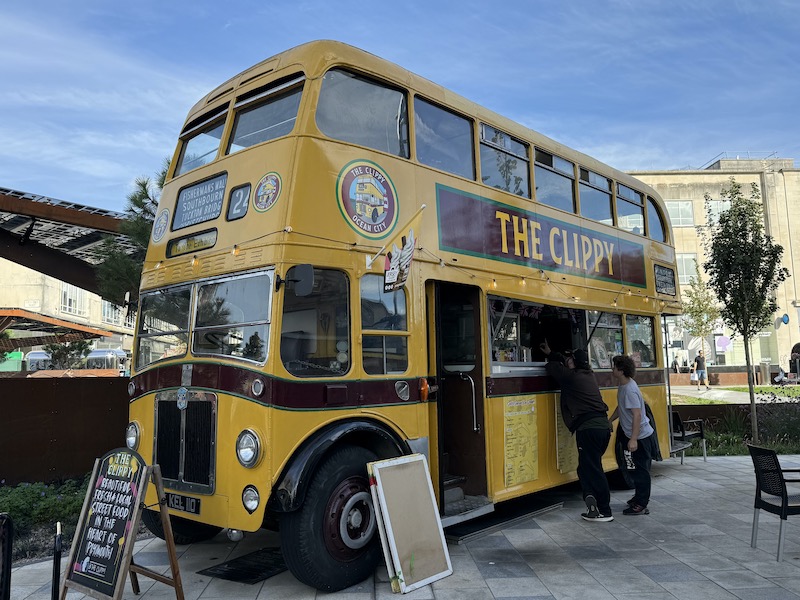
“At The Clippy, we’re all about bold flavours and fresh, feel-good food. From our signature Clippy Smash burger and crispy skinny fries to Gochujang-glazed corn ribs, loaded fries, butternut squash soup, and our festive turkey ciabatta, the menu is full of street food favourites and modern twists on classic comfort dishes. Everything is freshly prepared with care, using top-quality, locally sourced ingredients. Whether you’re after a quick bite on the go or a proper feast, The Clippy has something to hit the spot – dig in and enjoy!”
Permit to Travel
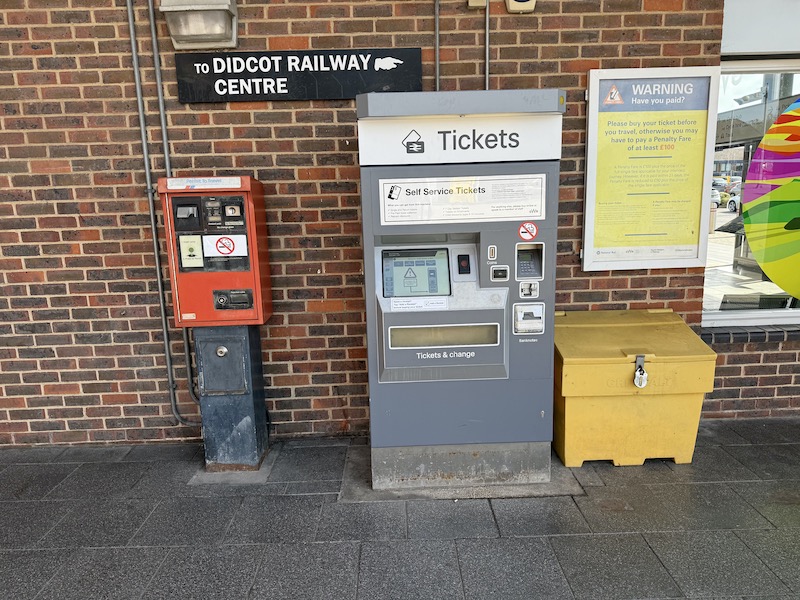
Another blast from the past caught my eye, this time in Didcot where there’s still a Network South East Permit to Travel machine alongside the GWR ticket machine outside Didcot Parkway railway station.
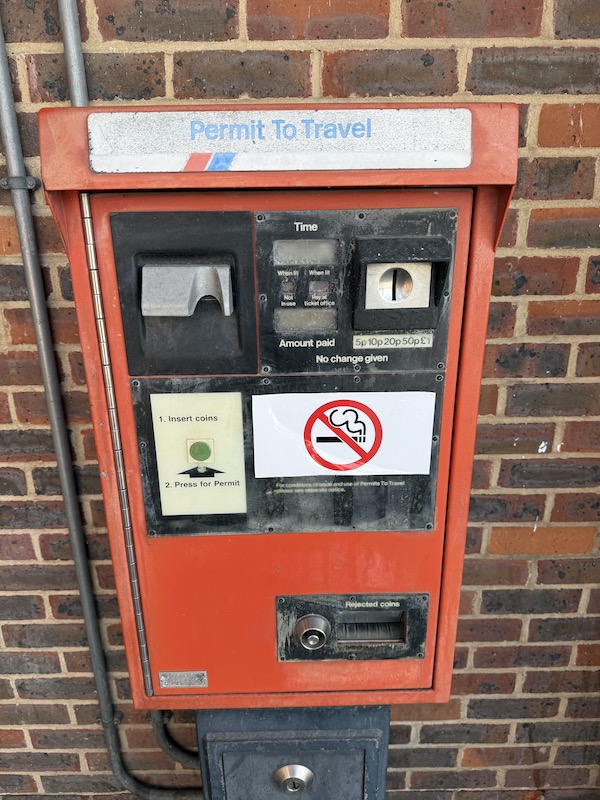
I couldn’t get it to work, and am guessing it’s location is to raise awareness of the Didcot Railway Centre, although that wasn’t clear through any signage.
Is Metro soon for the bin?
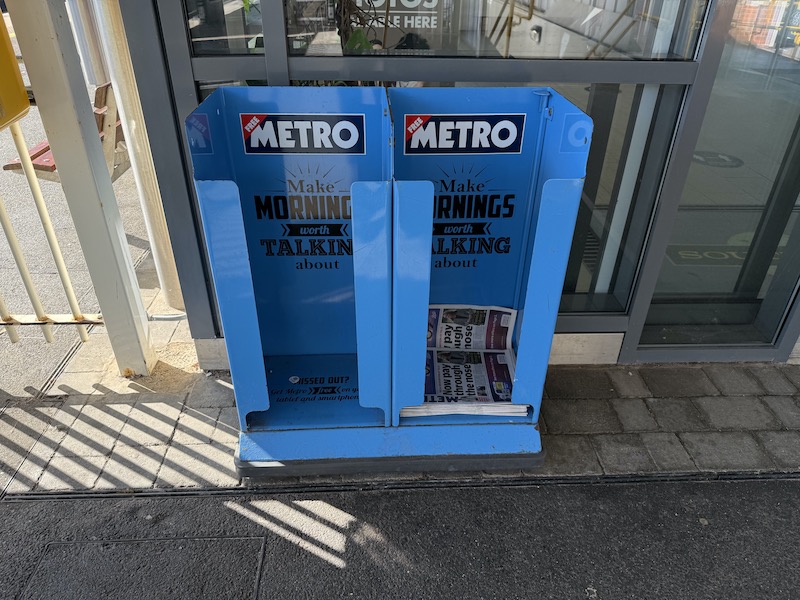
On current trends I don’t think it will be long before we’ll see the demise of the Metro newspaper. There was a time when so many were distributed from railway stations that two container bins were packed full of copies for commuters to take and read on the train. Now, as can be seen one early morning last week at my local station, Hassocks, there’s no more than around 20 copies made available. It’s not surprising really as on trains and buses most commuters are deep into their smartphones and no longer bother with a newspaper.
Teesside Airport to Polesworth
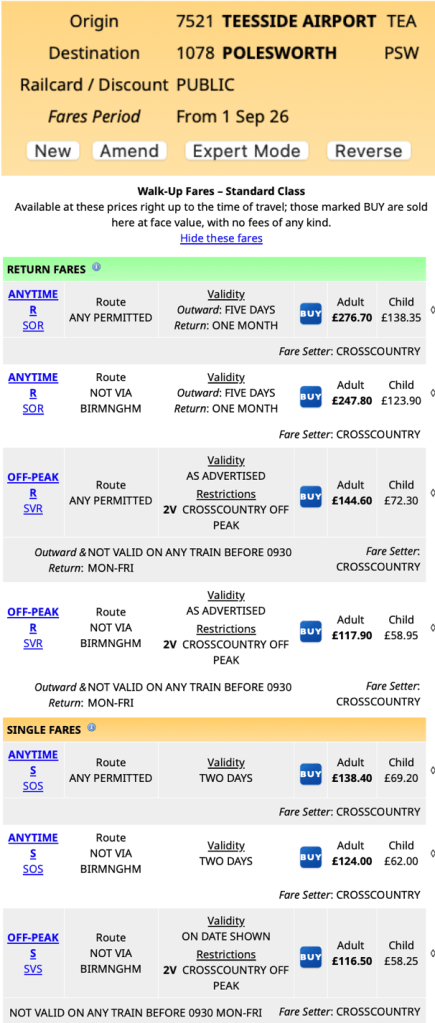
Blog reader John regularly sends me wonderful quirky snippets he comes across including the above wonderful item where he found a fare on brfares.com listing ticket options available in the National Rail database for a journey from Teesside Airport station (fully closed since May 2022) to Polesworth station – a station served by just one northbound West Midlands Railway train a day at 06:48 to Crewe. A snip at only £276 for an Anytime ‘Any Permitted’ return.
Delay Repay update
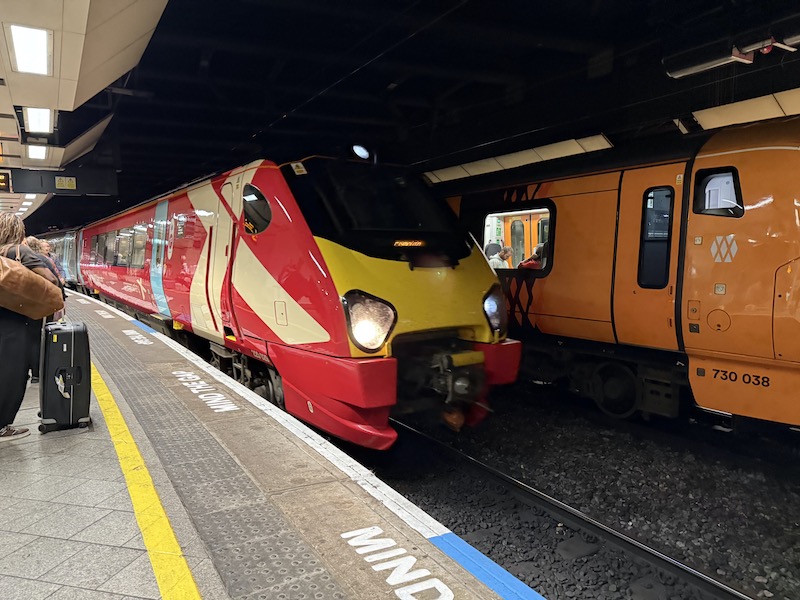
And finally for this month there’s just time for a Delay Repay update and I’m delighted to report following last month’s exposé, on 7th September, Cross Country finally got round to confirming payment for the Delay Repay compensation for a journey on 13th July from Wolverhampton to Stafford, so not bad for them at taking just eight weeks. The not so good news is I had another Cross Country delay when travelling down to Stroud via Cheltenham on 7th September so looks like a delay until early November for that one to be sorted. Interestingly that week was one of the worst weeks I’ve experienced for delays for some time with…
Monday 7th September – Avanti West Coast, Euston to Liverpool, delayed due to a broken down Pendolino at Watford Junction necessitating use of the slow lines for a stretch.
Monday 7th September – Cross Country Birmingham to Cheltenham delayed due to “congestion in the Derby area” meaning I missed the GWR connection to Stroud necessitating an hour’s wait.
Tuesday 8th September – Elizabeth line in meltdown due to arson and vandalism damage to electric cables outside Paddington.
Tuesday 8th September – Delays on Thameslink leading to my train running fast from Three Bridges to Brighton necessitating waiting for the next one. No reason given for delay.
Wednesday 9th September – Broken down train at Purley necessitating all London bound trains on the Brighton line using the Redhill line with consequential cancellation of Gatwick Express and Thameslink Brighton to Cambridge services and delays and overcrowding to all other trains on the line.
Wednesday 9th September – Person hit by a train at New Cross Gate with all trains through the station halted.
Thursday 10th September – A safety inspection of the track at Redhill necessitated my intended GWR train from Gatwick Airport to Farnborough being curtailed at Redhill so had to get a later one due to consequential delays.
I didn’t travel on Friday 11th September but similar delays and cancellations for a variety of reasons impacted travel in the following two weeks too. I’m now well on the way to collecting enough delay repay amounts for another 7-Day All Line Rover.
And, as usual GWR are playing their usual game of deeming delay repay claims for cross London journeys spanning the Elizabeth line as unsuccessful necessitating more time and energy in appealing. At the time of writing I’m still waiting for the courtesy of a reply to my appeal against an unsuccessful claim for a journey back from Bath Spa to Hassocks on 22nd August – an afternoon when signalling problems blocked the line to Chippenham for some time. Goodness knows why a claim in such circumstances is deemed unsuccessful when no trains were running for a couple of hours. But that’s GWR for you.
More miscellany at the end of next month.
Roger French
Blogging timetable: 06:00 TThS


I keep my knowledge up to scratch by assisting passengers. A group with suitcases were standing on the platform at Finsbury Park looking lost.
They were looking for a train to Gatwick Airport. When I suggested they go upstairs and catch Thameslink they replied “no we want London Express”.
I replied “I think you mean Gatwick Express. This is the uptown Piccadilly line, you want the downtown Victoria line, we call it southbound to Victoria where you can catch it”.
Gatwick Express a case study in an excellent brand that lost its way literally.
Now seen in Eastbourne!
John Nicholas
LikeLiked by 1 person
It is good to see a Fleet Buzz sign. Actually one was only recently replaced. We still mourn the loss of our excellent route to Reading thanks to Reading’s policy of scooping up the more populated areas nearest to Reading. The loss of a trunk route was of no interest to the relevant county councils.
malcolm chase, Fleet
LikeLike
The swing bridge into Boston Docks is used by regular steel trains from Wolverhampton.
Niall Spencer
LikeLike
Newbury Park Bus Station and Stockwell Bus Garage are both London Transport design classics of the era running up to our late Queen’s Coronation. Modern Buildings in London – by Ian Nairn (LT 1964) refers. Both sites exhibit daring challenging sweeping arches, but done by different architects.
LikeLike
Another Delay Repay trick that GWR use in my experience is to declare that an actual 30-59 min delay is only 15-29 min, then make the appeal form more onerous than the original claim form so that claimants just give up and accept the lower amount.
Bob
LikeLike
I rarely travel by train these days due to SWR being so bad. However I travelled from Bournemouth to Southampton on a recent Sunday in order to travel on the paddle steamer Waverley. On my return to Southampton Central, I found the service in meltdown following an earlier points failure at Bournemouth.
I ended up having to wait over 2 hours for a train. The following day, Monday, I submitted a claim for delay repay expecting it to take at least a few weeks. To my amazement I received a reply the following day saying my claim was successful and my travel vouchers would be dispatched within 10-15 days. They arrived 2 days later, so 4 days from claiming to receiving my vouchers.
LikeLike
I have to admit, I am more familiar with SWR’s Delay Repay site than I really want to be. However, I do find they generally process claims quickly and efficiently.
Malc M
LikeLike
After all that time and expenditure, I wonder if Botley Road bridge has been Bridge bashed yet
LikeLike
LikeLike
There’s a Permit to Travel machine at Longcross station, on Chobham Common in Surrey. Don’t think it works and there is no ticket machine on the station. There’s no road access either – just footpaths. I travelled without a ticket after finishing a walk there, and the station staff at Staines just waved me through when I told them. I would have attached a photo, but there’s no facility to do this from my photo library.
LikeLike
I must visit Newbury Park so that I can add that bus shelter to my photographic collection. The regional variations and individual quirky ones have long fascinated me. Sadly, some of the most interesting ones no longer serve any bus passengers at all.
Stuart S
LikeLike
On a book reviewing theme (but a rather different tack), I’ve just read a novel that I suspect would appeal to all timetable nutters – it did to me! Railway timetables are central to the plot, with extracts appearing in the book, and one of the characters reads timetables for pleasure (just fancy that!).
It’s set in Japan, and relies on and takes for granted the legendary Japanese punctuality (which in my experience is a reality: the Japan Rail Pass journey planner gave us a one-minute(!) connection after a local train journey of several hours, and it worked perfectly, just as they knew it would), and it’s a good read, but now a bit dated (pre-shinkansen) – Tokyo Express, by Seichō Matsumoto, apparently Japan’s equivalent to Agatha Christie.
And I’ve just ordered both Timetable World books, with your discount: thanks!
LikeLike
Newbury Park’s huge shelter comes to very good use when the GE main line is closed and multiple bus loads of passengers arrive from Brentwood and pour on to the Central line. Quite an operation, at both ends!
LikeLike
Alas, at Oxford, I don’t think work has yet resumed for the new platform 5, still less the new western entrance. The Department for Transport has apparently not yet signed off the budget; and, once bitten, will no doubt be twice shy about doing so. (Distant?) future trains between Cowley and Marylebone will probably use platform 3 in both directions, so that trains from Cowley to Marylebone do not have to ladder across to the down main and back. In other news, Stagecoach S9, extended from Wantage, offers a scenic route from Frideswide Square to the John Radcliffe Hospital, via Old Marston.
LikeLike
Re delay repay I tried to get some from Avanti for a trip my wife and I made . I had two e tickets but after use they “ greyed out the ticket numbers “.
I was then unable to claim online as it rejected a claim using the single booking reference as there were two tickets, and I couldn’t provide the two ticket numbers as they had helpfully ( ie deliberately) greyed them out .
So in future I will always take a photo of the tickets before use .
LikeLike
If you have an Android phone stick them into your Google wallet – they stay there till you delete them
LikeLiked by 1 person
It was a shame to see the ex Bournemouth bus being used as a cafe in Plymouth. I know people say its good to see to still being used and not scrapped, but I would have thought a newer bus or one less unique could have been used, but I think of all the stuff that got ripped out and dumped in its conversion to a cafe and could never be reused.
LikeLike
It would have made an excellent restoration project. Perhaps the exit door and front staircase attracted the cafe owners as being a useful feature, something more urban bus operators should’ve done. Was Bournemouth unique in having front exit doors and twin staircases?
Pete
LikeLike
Unfortunately there are far more people willing to say “it’ll make an excellent project” or “it should be saved” than are actually willing to take the vehicles on.
I can perfectly well understand that, as there’s no way I’d take a vehicle on myself having been involved on the fringes of the preservation movement for decades, but it also means we have to accept that more and more vehicles are going to be lost to preservation.
The way I look at is ‘at least it hasn’t been scrapped’, and if any of the usual suspects wish to criticise that viewpoint I would simply ask how many vehicles they themselves have financially supported.
LikeLike
This also applied to their trolleybuses back in the day. I do know that Newcastle Transport also had some trolleybuses with this feature but as for buses, the only one that readily comes to mind is London’s New Routemaster. PB
LikeLike
Didnt west bromwich have two staircases on a centre entrance exit double decker ?
JBC Prestatyn
LikeLike
JBC. There was a one off Daimler CRC6-36 built in 1968 for Walsall Corporation powered by a Cummins V6 engine. The Northern Counties body had a door at the front and a door in the rear. The body also featured two staircases and had an early version of CCTV to enable driver only operation. The concept was clearly ahead of its time, however, it remained a one off. The bus still exists in preservation I believe. PB
LikeLike
I was probably not paying attention or have become too forgetful (both usually apply!), but I’m not sure what “all the fuss over the use of the Green Line brand in the Heathrow Airport area” is. Could you elaborate, please or point me to an earlier blog?
Thanks!
Richard Delahoy (I can at least remember my name . . .)
LikeLike
Arriva own the Green Line trading name and wanted to charge Reading Buses for its use when they took over the Windsor service from First Bus so instead they used Flightline (a former branding from LCBS days) which Heathrow Airport has subsequently enticed other operators running into the airport to use too thus becoming the standard brand for services from the neighbouring Home Counties into the airport, rather than Green Line.
LikeLike
Many thanks Roger for the clarification, I do recall that now.
LikeLike
For all that Roger, Greenline to me will always mean the LT days, particularly in the 1960s (when I lived in Ealing) watching RFs purr along the Uxbridge Road on the 709/710/711 or on the Great West Road where RFs/RCs/RMCs/RCLs could be seen operating on the 704/705. Maybe Greenline was already in decline then, but to me looking back, those were halcyon days! PB
LikeLike
The supreme irony is that Arriva services 724/5 (Heathrow – Harlow/Stevenage will join the Flightline “family” shortly.
LikeLike
Although it’s good to see that KEL 110 has survived, it’s sad to see that it is no longer in it’s true bus form. It was a part of the long dispersed Bournemouth collection and was later cared for by the West of England Transport Collection. It’s a shame a much more common type of halfcab wasn’t used.
LikeLike
I agree that it’s good to see this former BCT Leyland PD2 has survived and also agree with the earlier comment about its current use. If you’re not aware, there is another one in preservation, also in the west country. No.131 (KEL 131) owned by Jonathan Hawkins. I had the opportunity of travelling in this bus back in July 2025 when it was participating in that year’s Bournemouth Bus Rally. PB
LikeLike
But if you want a typical postwar Bournemouth front-engined decker, rather than a typical UK one, this is it. There were 30 of this fullcab design (originally 224 to 253, renumbered 110 to 139 matching the number plates), and only 20 halfcabs (140 to 159), all Leylands with Weymann bodywork.
I think Pete is right unless someone remembers another operator with dual staircase deckers (not the NRM of course).
Ian McNeil
LikeLike
A large proportion of Cardiff trolleybuses were delivered to such format, but it was abandoned in the 1950s (1954, according to one source, which gives the fleet numbers as 211-230 and 245-274).
LikeLike
Can you apply for Delay Repay when your Repay is Delayed?
I would also be interested to know about the fuss about the Green Line brand. I used to answer the enquiry line when I was at Reigate.
Richard Warwick.
LikeLike
I dont think London General OC had the exclusive use of Green Line for coach services even in 1930 ( can anyone recall an operator elsewhere then ) LPTB got exclusive rights to Green Line in its two areas ( the exclusive operating zone and a outer zone where existing granted RSL and firms could operate – but not with the Green Line ( and possibly Red Line , Blue Line etc that LGOC had registered – but they forgot Cream Line , but was that taken over or did it continue) Thus I dont know how restricted the trade mark was to Arriva from its initial grant from NBC Privatisation. ( Perhaps Green Line should have been kept by LTE/ LRT and licenced for use to NBC !! )
JBC Prestatyn
LikeLike
Greenline Coaches Ltd was formed 9th July 1930 as a wholly owned subsidiary of the LGOC. Greenline along with its parent was absorbed on 1st July 1933 when the LPTB came into being.
LikeLike
LPTB Trademarks were a bit of an oddity. As well as Green Line , the Roundel had copy protection for the external special area plus I think 50 miles beyond that. Notable user of a Wheel and Bar on their buses and bus stops was BMMO as Midland Red. Their D9 front ends fitted well into London when Obsolete Fleet used them on the RLST
JBC Prestatyn
LikeLike
The Green Line trademark is owned by Arriva the Shires (see https://trademarks.ipo.gov.uk/ipo-tmowner/page/search?id=153123&domain=1&app=0&mark=UK00001285773 ). Green Line Travel, which was established in advance of the split of London Country, is a subsidiary of Arriva although listed as a “dormant” company.
The Flightline brand ended up with National Express but it allowed rights to lapse hence it was available to be resurrected for its current use.
LikeLike
JBC. The original circle and bar logo was introduced in 1908 by the Underground Electric Railways Company of London (UERL) and was officially registered as a trademark in 1917. LGOC adopted the logo when it was taken over by the UERL in 1912. The LPTB then inherited it in 1933 upon its formation with the intellectual rights which were then passed on to each successive LT organisation plus LRT, before finally being inherited by TfL on 3rd July 2000.
BMMO’s Wheel and Bar appears to have been introduced after the London logo. PB
LikeLike
Something else also happend I think in 1912. UREL and The Metropolitan agreed on a common brand “UndergrounD” with the name on maps publicity and stations in 2 dimensional or 3 dimensional displays without the roundel in horizontal and/or vertical formats. I am not sure when or where the last one was put in place nor when the earliest disappeared and the last to be removed occured. I assume that the roundel with UndergrounD placed in lettering accross it was introduced to the Met line when LPTB was formed – it was certainly used as well (exclusively?) on the likes of the Northern Line extension to Morden despite the box logo being in place at the time at Clapham North station. During the 1950s for some reason many stations lost the UndergrounD across the bar replaced instead with the Station Name – the two large ones at Morden being notable but all along the Northern Line and some other stations this seemed to be the case , I assume given people knew where they were it was rather tricky to maintain a mulitude of station names and by the mid 1960s the UndergrounD was generally back again on most of the stations. I have no idea why the change was made I assume there is a memo in the London Transport Executive of the BTC giving a reason for it. The use of the white space infill of London Transport started in 1933 carried on through WW2 but again seemed to change out for all white from the late 1960s maybe a little later as London Transport accross the bar was used on the bus roundels until the solid white logo was introduced about 1974 ?
JBC Prestatyn
LikeLike
Abbreviated names irritate me too. Greater Anglia used ‘London Liv Street’ on the destination displays on the old class 321’s and this has been perpetuated on the new 720 units. While I think there was a space limit on the old trains, I don’t think there is on the new ones.
LikeLike
There isn’t a space limit on the hardware (the on-train displays) but there is on the software which is legacy stuff.
LikeLike
And why is the Clippy selling a “festive” turkey ciabatta in September? What festival are they celebrating. Apart from my birthday, perhaps?
John
LikeLike
I’m not. That hazard tape isn’t usually issued to traincrew, so it stands a good chance that’s been done at a maintenance depot!
I think I’d prefer that it was repaired properly.
There’s an advertising campaign on the radio at the moment for an online casino featuring “train toilet door didn’t lock, everyone seen [sic] me on the bog’. Maybe the industry doesn’t need to feed that sort of thing?
LikeLike
The National Rail Timetable has ceased to exist as a printed work, but it still very much exists online. It’s there for everyone – go to timetables.fabdigital.uk
It was first set up with valuable input from the inestimable Barry Doe. It is regularly updated as the year progresses. Each individual timetable is a beacon of clarity, and the whole is easy to find your way around.
Everyone who reads this site (and wants to use a train) should be familiar with it!
Brian Musgrave.
LikeLike
The Oxford underground rail bridge has a height of 14 ft 6 inches.
Can you get a full height London bus through there?
LikeLike
timetables.fabdigital.uk has restricted access. Without permitted access one gets Error 403 message.
There used to pe a Pertis machine on the platform at, I believe, Harwich International about 10 years ago. It was empty
John – St. Albans
LikeLike
I can certainly access the fabdigital timetables and I don’t have “permitted access”.
Nigel Turner
LikeLike
The National Rail Timetable is available at https://www.networkrail.co.uk/industry-and-commercial/the-timetable/electronic-national-rail-timetable/
LikeLike
It has been pointed out (by my brother, who is keener-eyed than me) that the picture opposite page 7 of the book is a muddle. It is AI generated, and acknowledged to be so, but the gent is Victorian, the “gas” lamp has an electric bulb, and the loco looks 1930’s or later…!
Anthony Holden
LikeLike
Your brother is spot on. I just looked again at the photo in question and realised that the guy in the top hat didn’t look quite authentic either. It’s a shame the publisher didn’t take the time to find an original photo to publish. After all, had they done so, the original photographers copyright would have expired by now!
LikeLike
Spalding like so many other period stations, looks quaint. I don’t personally claim to know too much about station architecture, but one of the best U.K. small stations I’ve personally experienced is Wemyss Bay. The bronze boy carrying a model yacht and heading for the ferry is one many wonderful station delights, along with hanging baskets that provide a wonderful ambience.
LikeLike
I recently looked on southeastern’s website at the full timetable for London to Hastings. Because I was looking at the London and Southeast train map and notice they have a limited service to ore.
Going through the timetable it turned out to be a Monday to Friday 6:20 am journey from ore to London.
LikeLike
The scandal of The Go Ahead Group & its accountancy practices keeps coming back doesn’t it?
Its auditors Deloitte’s have been fined £6.05m The fine relates to overpayments made by Britain’s Department for Transport to one of Go-Ahead Group’s subsidiaries, London & South Eastern Railway, under a rail franchise agreement before Deloitte became auditor.
LSER retained the money and did not tell the Department of Transport, which eventually became aware in 2021 and took action to recover the overpayments.
The FRC said Deloitte had “failed to challenge the wrongful retention by (Go-Ahead Group) of over £30 million of public money for an extended period
LikeLike