Saturday 5th September 2026
It doesn’t seem possible a year has gone by since I published a blogpost marking the Diamond, Golden and Ruby Anniversaries of my starting secondary school in September 1965, beginning a career with the National Bus Company in September 1975 and running the fledgling Brighton & Hove Bus and Coach Company in September 1985, so, 12 months on, I’ve dug out my diaries again for another nostalgia fest seeing what I was up to during September in those past decades.
1966
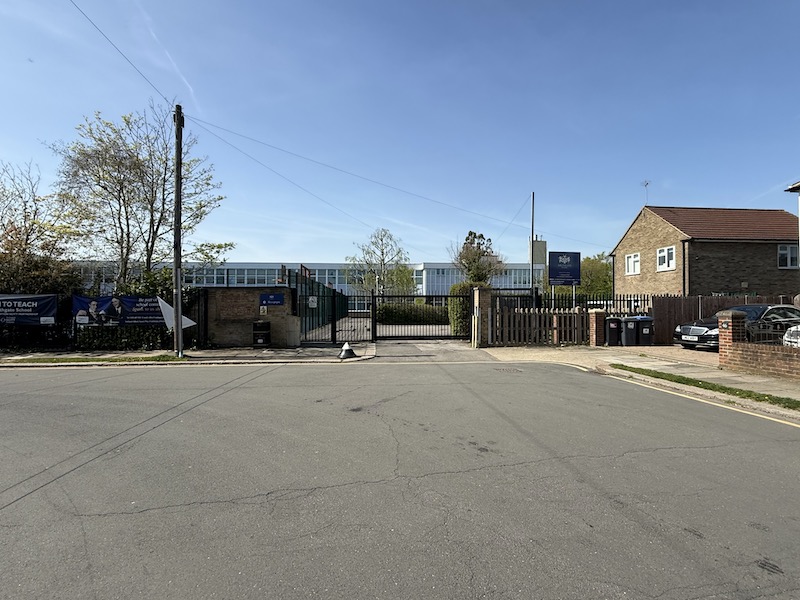
I’ll skip September 1966 this time as I didn’t keep a diary in those days and memories of moving into the second year at Southgate School, north London are a little hazy. However a shout out to Samson Olusanya, the school’s current head teacher and Monwara Cook, School Business Manager, for kindly facilitating a visit during the school holiday just ended for myself and two school friends, Hannah and Steve (and Joe, Hannah’s brother) – still life long friends – to look around the school 60 years on and see all those little things that were still the same despite many other changes over that time.
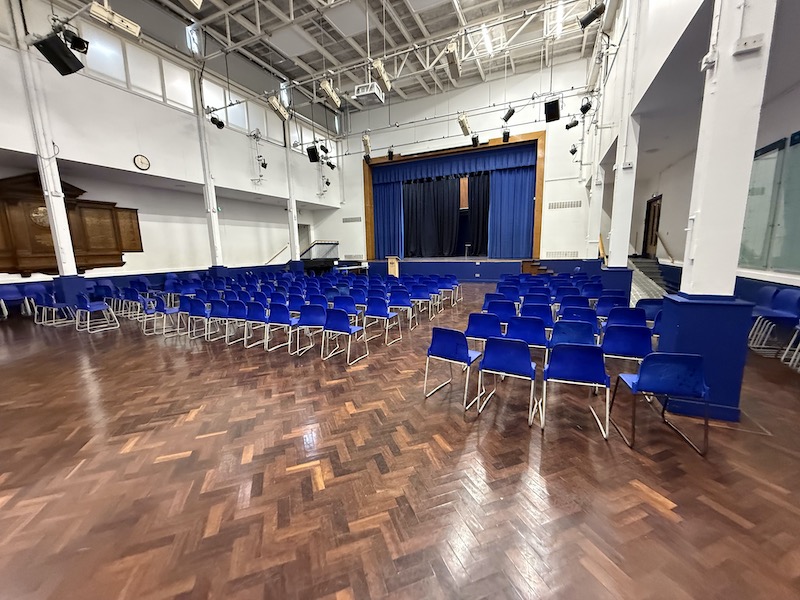
The gym, school hall, and classrooms were still as we remembered them and it’s interesting to reflect how many children have passed through the school’s hallowed corridors as the decades have past – I estimate about 11,000.
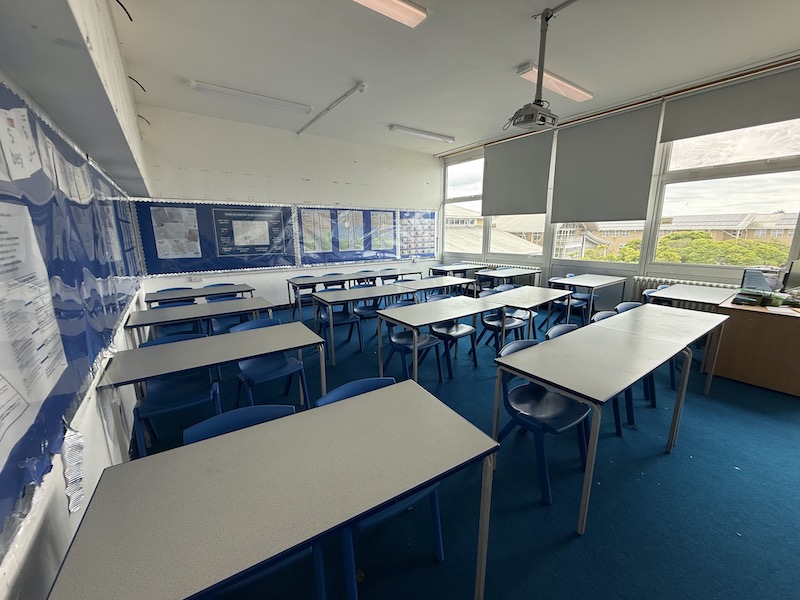
It really was an amazing experience.
1976
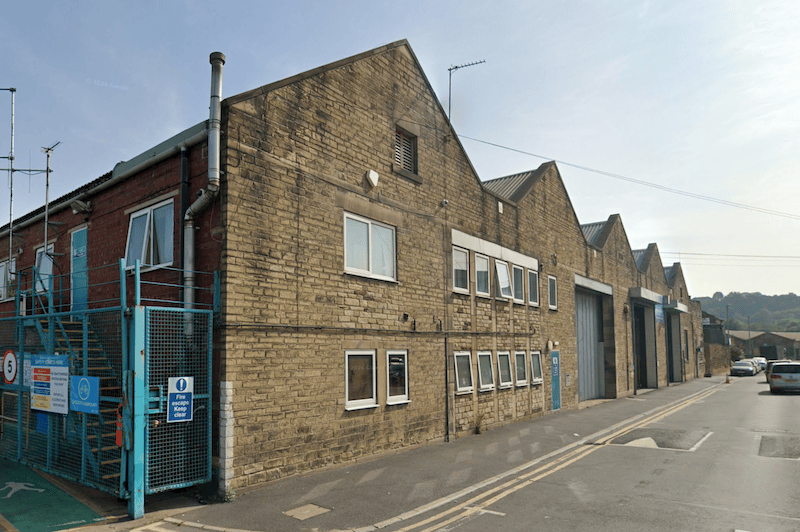
September 1976 saw me commencing the second year of my two year stint at West Riding/Yorkshire Woollen as a Senior Management Trainee with the National Bus Company. My diary reminds me I’d spent the Spring and Summer based at Dewsbury and Heckmondwike depots (within Yorkshire Woollen and also called the Western Area) learning the secrets of effective management of drivers and inspectors and ensuring passengers receive the bus service they expect by overseeing run outs in the early morning and any late evening issues on the road. Having gained my PSV licence earlier in the year I used to spend Saturday afternoons and evenings doing a driving shift from Dewsbury bus depot which usually entailed the crew operated local route from Thornhill to Birstall via Dewsbury and Batley.
I can’t remember the route number now but I see my diary tells me on Saturday 4th September I was on a duty from 13:54 to 23:35 with a 35 minute break at 18:35. I’ve put numbers 593 and 599 by each half of the duty which could be the route numbers, maybe even the fleet numbers – 50 years on it’s hard to recall. I’ve also jotted down D4RF but the relevance of that is a mystery to me now too.
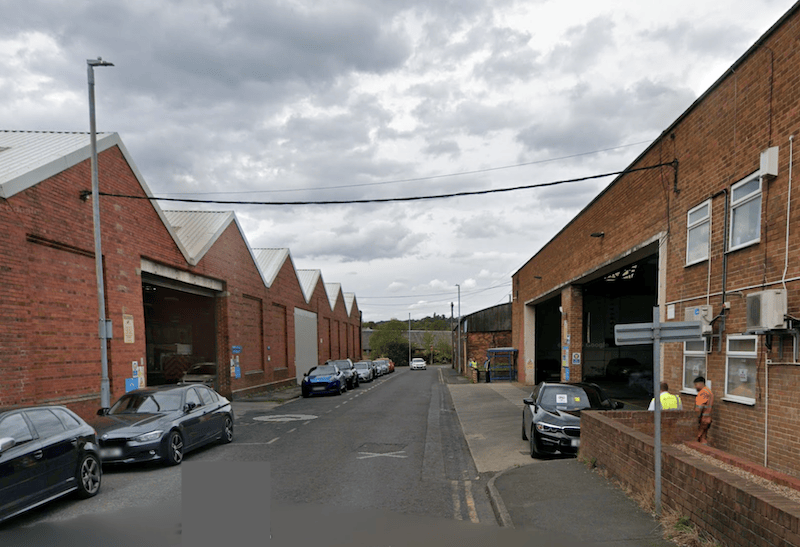
I thoroughly enjoyed those driving stints and in some ways could have happily continued in that role full time, but other duties called and I see from Monday 6th September I was transferred to spend a comparative couple of weeks in what was known as the Central Area which was West Riding’s depots based at Belle Isle and Saville Street in Wakefield. Sadly the former is now pretty much closed following structural problems and asbestos and the latter, by the bus station, has long since been demolished.
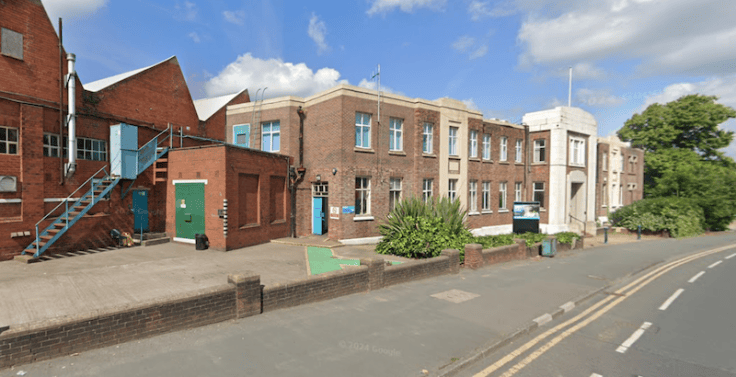
Meetings I attended to gain experience included the Central Committee where the Traffic Manager (David Rabey) and Assistant Traffic Manager (Tim Archer) would regularly meet trade union representatives from all the garages to discuss and negotiate issues. In those days pay and overall conditions of service were off limits to discuss as they were determined and negotiated with the T&GWU (as it was then called) at national level for the whole National Bus Company but there were always a myriad of things representatives wanted to discuss at a local level and meetings used to last quite some time, and of course in those days there was no ban on smoking and I can remember the air would get increasingly toxic as the meeting went on.
On Wednesday 22nd September I attended a hearing at the Traffic Commissioner’s offices in Leeds when another of the company’s application to increase fares was held. West Riding would have been represented by a solicitor expert in this field with the Traffic Manager, Assistant Traffic Manager and the Licensing & Fares Officer in attendance with David Rabey acting as a ‘witness’ having to justify every proposed fare change needed to meet rising costs. Looking back now, these ritualistic sessions were a complete waste of everyone’s time and cost. Nowadays a Prime Minister can just click his fingers and a national fares strategy is determined. Back in 1976 hundreds of hours were spent to decide whether a journey from Batley to Birstall should be 9p or 10p and how much an owner should pay to take their dog with them on the bus.
On Monday 27th September I was privileged to be allowed to head down to London and attend the Commercial Motor Show at the Earls Court Exhibition Centre which had opened the previous Friday. Again my memory is a bit hazy of what exciting vehicles were on show but the Internet has kindly helped remind me innovations on display included “the advanced Leyland B15 prototype double-deck bus (which later became the Titan), Leyland National Phase 2 single-deckers, the Bedford JJL integral midibus mock-up, and the latest luxury coach bodywork from builders like Duple and Plaxton.” It was the last time the Commercial Motor Show was held at Earls Court, moving to the newly opened National Exhibition Centre in Birmingham for the next event in 1978.
September was topped off with a short secondment to National Travel at its offices in Liversedge, Leeds and Sheffield to see what went into running express coaches as well as holiday tours. I recall a fascinating afternoon on Thursday 30th September in the ‘chart room’ alongside the Wellington Street coach station in Leeds when staff had to count up how many duplicate paper receipts for every ticket sold which had been sent in from agents all over the country for bookings over the Friday to Sunday weekend and, based on that and previous experience, determine how many duplicate coaches to order and operate as back up capacity especially on the busy route from Yorkshire towns to and from London. Today’s computerised, online and even AI driven society, is a different world from how we used to work.
1986
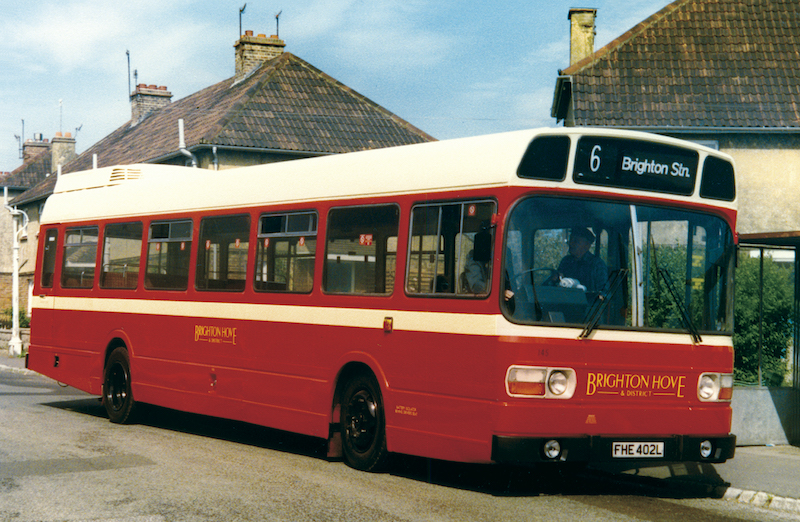
Let’s move on ten years to September 1986 when the reactivated Brighton, Hove & District Omnibus Company Limited (from January), with Brighton based operations included from Southdown Motor Services, was back in full swing and renamed to a more modern sounding Brighton & Hove Bus and Coach Company earlier in the year.
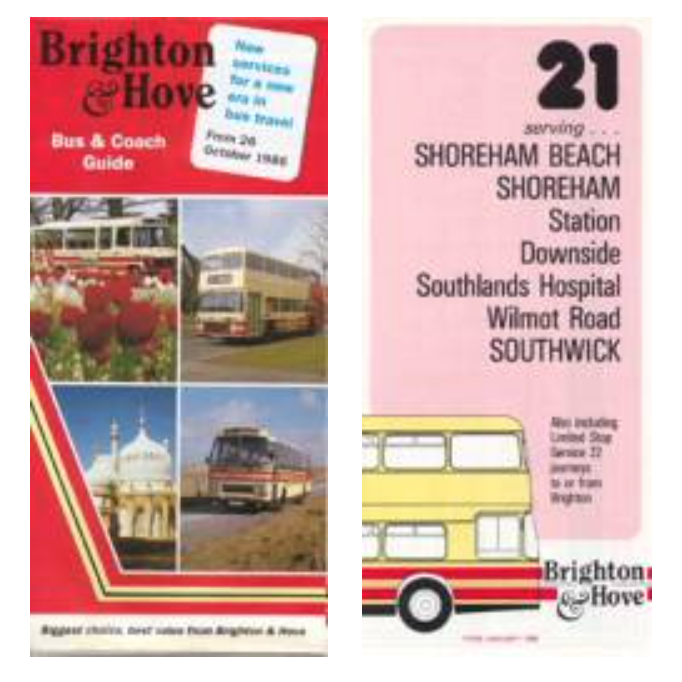
I recall there was much excitement in the air with Deregulation only a few weeks away at the end of October and work was well in hand to prepare publicity for the many changes to services. We initially produced a network map (obviously!) and a timetable leaflet for each route/group of routes as there was much uncertainty at that time over how any impact of competition would play out but in the event we quickly realised the best way to show passengers they could have confidence in the new network of services was to show confidence ourselves, hence the twice-a-year (with fixed dates) Bus Times publication was born in 1987.
My diary tells me I attended two (what I’ve called as entries) Verification Meetings on 1st and 10th September. These were with NBC’s privatisation team when local managements had to justify and answer questions about the information we’d been called to provide in the Memorandum of Sale documents which interested parties wanting to buy the Company could apply to receive from NBC.
On 9th and 30th September we had our own internal meetings of the senior team to progress our own plans for a Management Buy Out because it wasn’t just Deregulation causing much excitement but also the prospect of buying the Company from NBC as part of its remit to sell off all its subsidiaries with MBO’s encouraged but, crucially, outside bidders too so that realistic prices would be obtained with sealed bids ultimately having to be submitted to determine the successful purchaser. So, excitement, yes, but trepidation was also in the air.
Diary entries for Friday 5th September confirm I chaired one of the regular meetings with T&GWU representatives that morning and in the late afternoon headed over to the Roebuck in Laughton where a coach full of Sports & Social Club members (staff, retired staff and partners) were returning from a day out with an evening meal which was always a pleasure to attend.
Tuesday 9th September reminds me I had a meeting with representative of British Transport Advertising which in those days had the rights to all adverting space on Britain’s publicly owned transport, and I think I’m right in recalling, was itself still publicly owned. How times change.
On Thursday mornings during the month I headed out with three manager colleagues to spend a few hours sampling the bus network as passengers – a practice I continued throughout my time with the company and one I greatly valued.
Two meetings in the month – on 3rd and 23rd September were with colleagues from TDD (Transport Design & Development) which was the outsourced Public Transport team at East Sussex County Council to discuss the thorny issue of Concessionary Fares reimbursement – a topic never far from agendas and this was 20 years before Gordon Brown unleashed the free off-peak travel scheme in England. I’m thinking the discussions back in 1986 was to find a way, with deregulation approaching, of standardising the provision of half-fare travel (as it then was) through the issue of an ID card that would be accepted across all operators. I know Peter, who worked for TDD, is a regular blog reader so he might recall what would have been discussed back in 1986.
But that’s enough personal nostalgia for now.
Roger French
Blogging timetable: 06:00 TThS
 BusAndTrainUser
Many Congratulations Roger on such and long a sucessfull carear
Thank you for such an entertaining blog which is much appreciated
I well remember Brighton & Hove selling a number of Leyland Nationals to a local operator here in Brum that also used a similar Red & Cream so they ran in the previous operators livery
It is always a pleasure to read your comments & thoughts & long may it continue- Thank You
LikeLiked by 1 person
Is that the Tim Archer who was at Alder Valley when I was there? I remember him well .He is sometimes mentioned when we have our Alder Valley lunches twice a year
Malcolm Chase
LikeLike
Yes; that’s the one, Malcolm.
LikeLike
Yes, Roger, 1986 was an exciting time for many of us old enough to have worked through the Deregulation and Privatisation of buses.
At TDD, we were busy establishing relationships with operators new and old and soon we would be ‘filling the gaps’, where operators registered their commercial services. But, I’m getting ahead of myself, as that happened in 1987. However, what I do remember from this exciting period was that we introduced brand new technology to identify the gaps in service that were left uncovered by operators’ commercial registrations.
We bought a computer ! It was a French model, a Goupil which I’ve never heard of since. It was a terribly clunky process to have to type in the ‘existing’ timetable and then the operator’s commercial registration and, hey presto !, it would identify the missing trips.
However, as a young, keen timetable-reader, I found it much easier to compare the two timetables alongside each other and beat the new fangled computer every time !
Happy days, Roger.
Peter Murnaghan
LikeLike