Thursday 25th June 2026
I enjoyed another Awayday in the fabulous North York Moors last Saturday and once again came away hugely impressed with the dedication of the volunteer team who put together and oversee the Moorsbus network serving this stupendously scenic National Park.
I’ve blogged about Moorsbus before, in July 2018 and July 2021 as well as mentions in other blogs, not least last month’s round up highlighting the network is celebrating its 45th Anniversary this year…
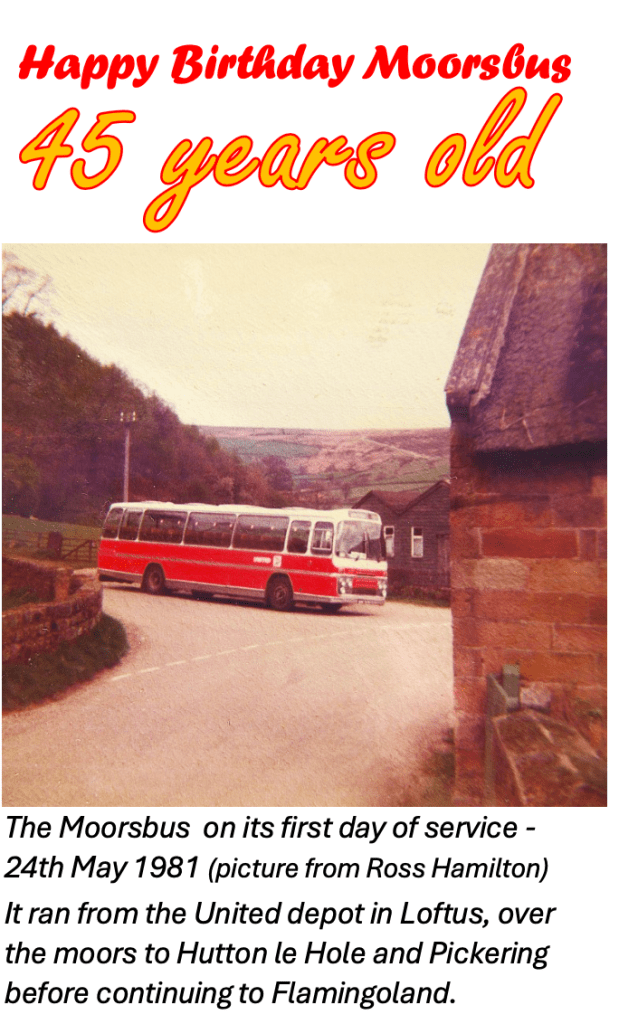
… so will try and avoid repetition from those previous blogs, but here’s a brief resume of the Moorsbus network and its organisation.
Services run on Saturdays, Sundays and Bank Holidays over the six months from the beginning of April to the end of September thereby covering Easter, the two Bank Holidays in May and the one in August – that’s 56 operational days in 2026.
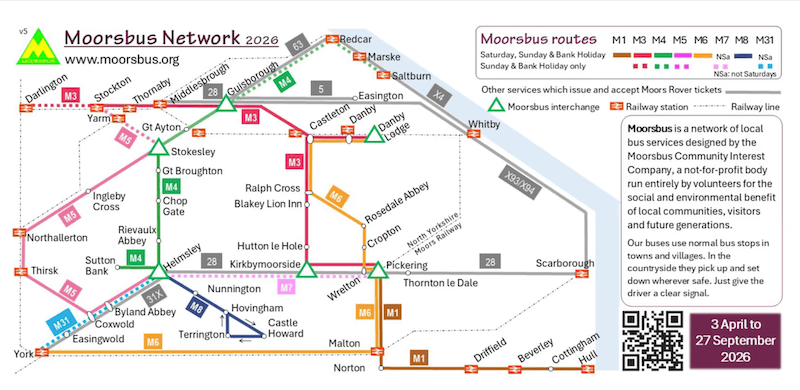
Routes M1 and M6 connect Hull (brown) and York (orange) into the National Park with routes M3 and M4 linking Darlington (Sundays), Stockton and Middlesbrough (red) and Saltburn, Redcar (Sundays) and Guisborough (green) while route M5 provides connections from Yarm (Sundays), Northallerton and Thirsk (pink). On Sundays there’s also an M31 from York via Easingwold, and Byland Abbey to Helmsley (light blue) – route 31X provides this link on Saturdays.
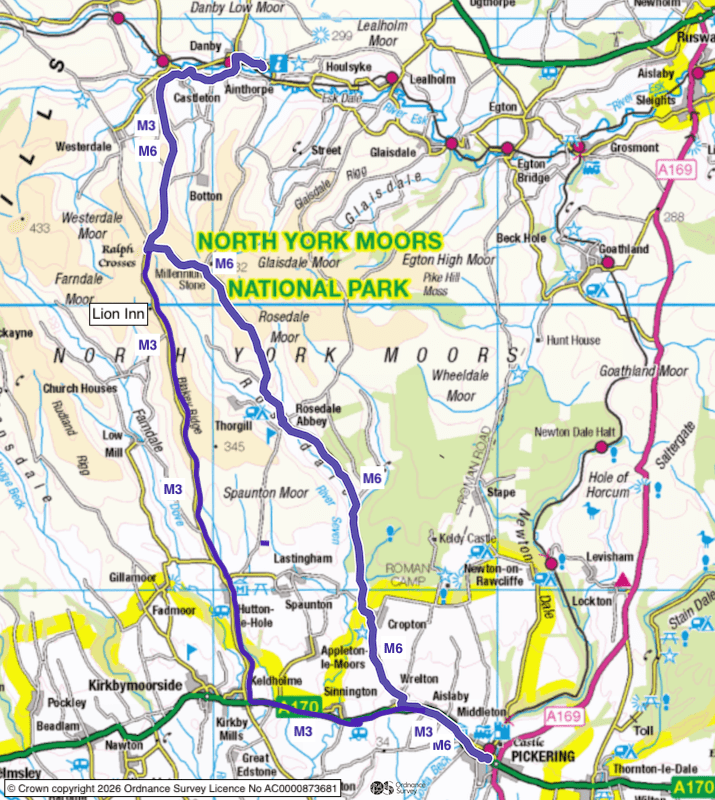
The network within the National Park comprises three corridors running north/south linking, in the west, Guisborough with Revaulx Abbey, Helmsley and Sutton Park (green M4); in the centre, Danby Lodge, Hutton le Hole, Kirbymoorside and Pickering (red M3) and in the east, Danby Lodge, Rosedale Abbey and Pickering (orange M6). There’s also an M8 linking Helmsley with Castle Howard (dark blue).
Helmsby and Pickering act as nodes for the network, as well as connections being possible at Danby Lodge. East Yorkshire’s route 28 (shown in grey) runs across the middle of the area between Hemsley, Kirbymoorside, Pickering and Scarborough, also providing good connectional links.
Even though each route has a limited number of journeys (more run on Sundays than Saturdays) there are many possibilities for accessing all parts of the National Park; for example, below is the timetable for route M6 on Sundays which shows the early morning journey in from York and its counterpart return home in the late afternoon with the bus providing shuttle journeys within the Park between Danby and Pickering during the day, which combined with a similar timetable for route M3, provides six journeys between Pickering and Danby Lodge.
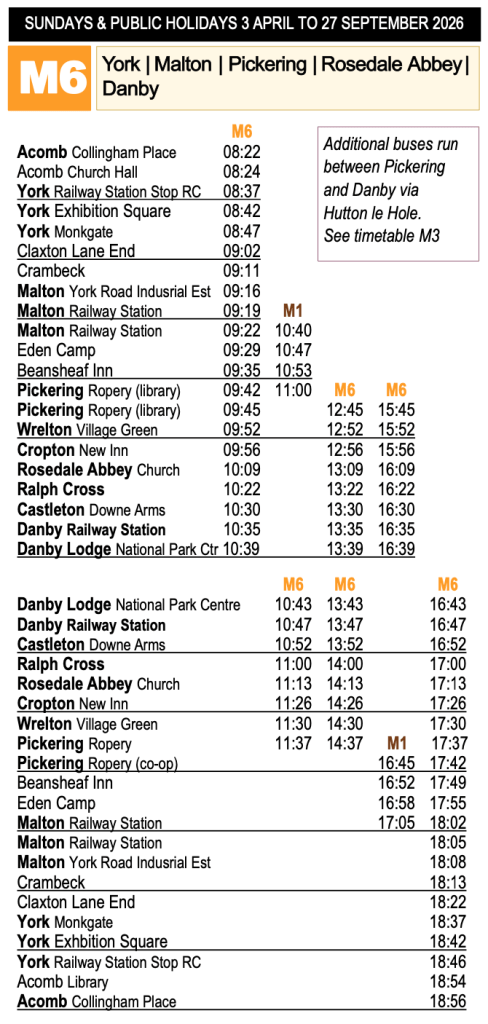
An innovation this year is the extension of the route in York to commence and finish at Acomb which not only extends its reach but is handy for the First Bus York Pullman operational base in that part of the city.
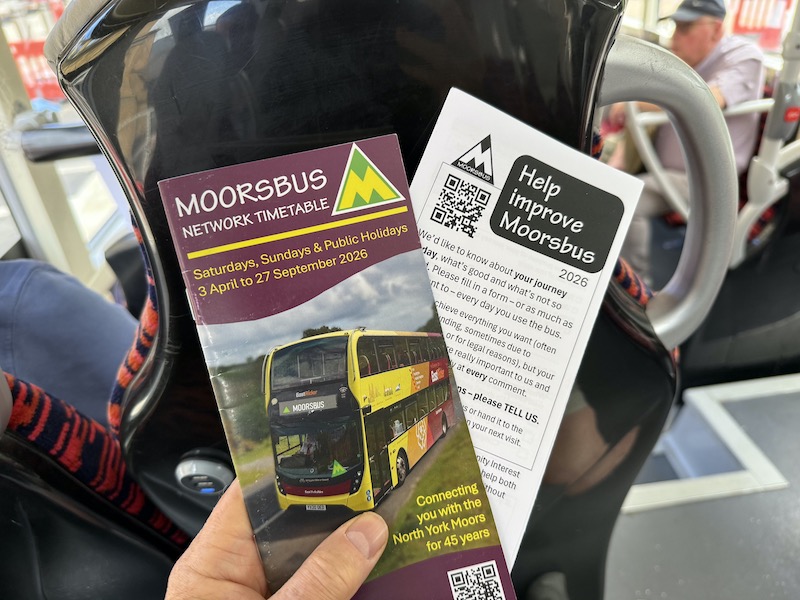
All the foregoing is organised by a dedicated team of three volunteers – Brian Breakell, Eden Blyth and Helen Gundry. They set up a not-for-profit Community Interest Company in 2013 to take responsibility for the network once the National Park ended funding and support; they keenly encourage feedback from passengers so the network can be tweaked and improved each year; they raise the necessary funds from supporters (corporate sponsorship and individual donations) to ensure the network can be afforded; they seek tenders from bus companies to operate the routes; they organise publicity and information including a website and a printed timetable book; and they regularly travel on the routes to see how things are going, speaking directly to passengers and drivers.
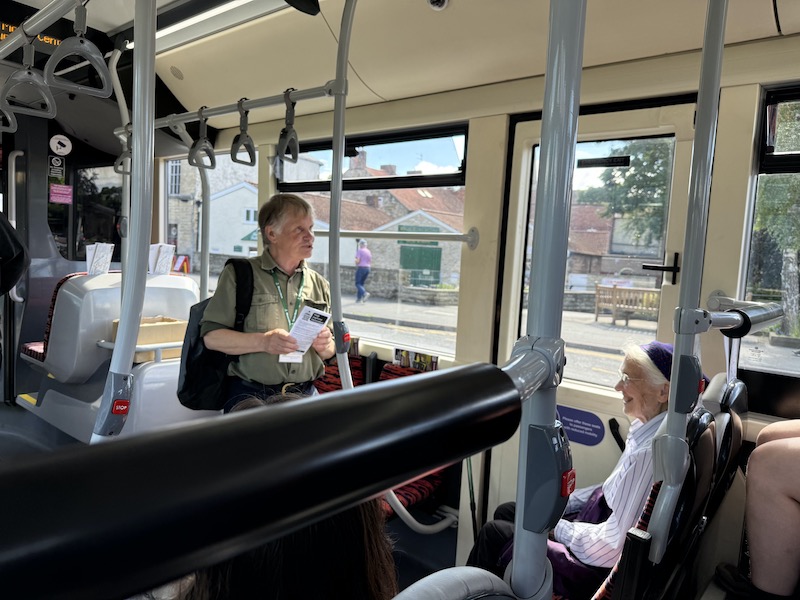
Indeed, on my journey last Saturday morning from York to Danby Lodge on the inward M6 when we got to Pickering where there’s a short ‘comfort stop’, there among the passengers waiting to board was one of the team of three, Bill Breakell, who boarded the bus and encouraged everyone to pass on their feedback on the preprinted leaflet…
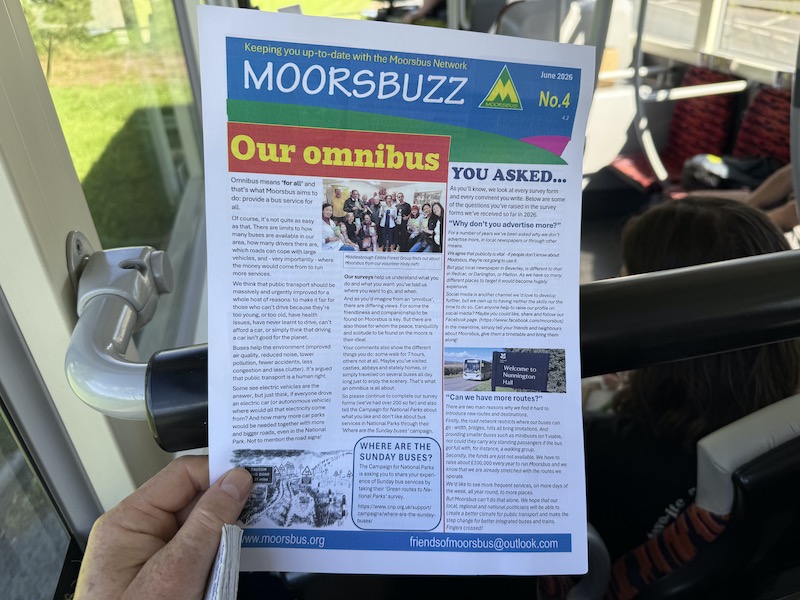
… as well as handing out copies of the latest issue of the Moorsbus Newsletter.
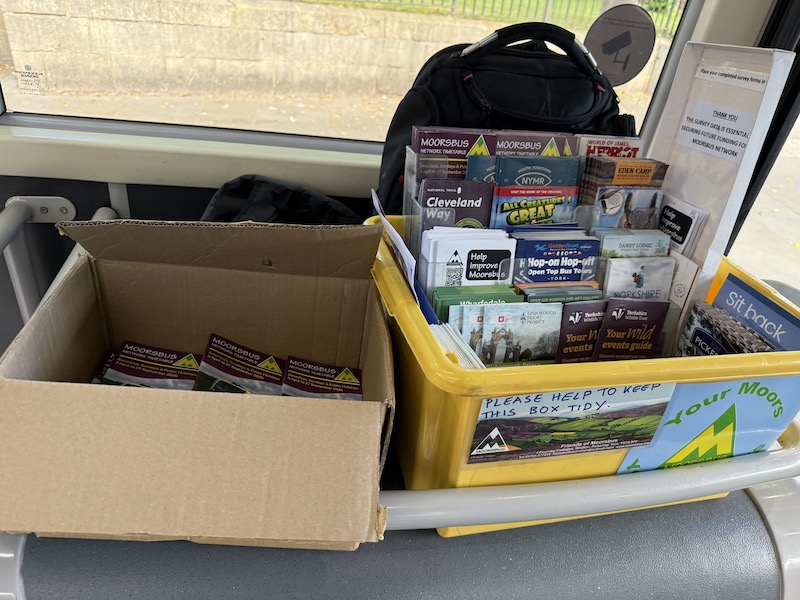
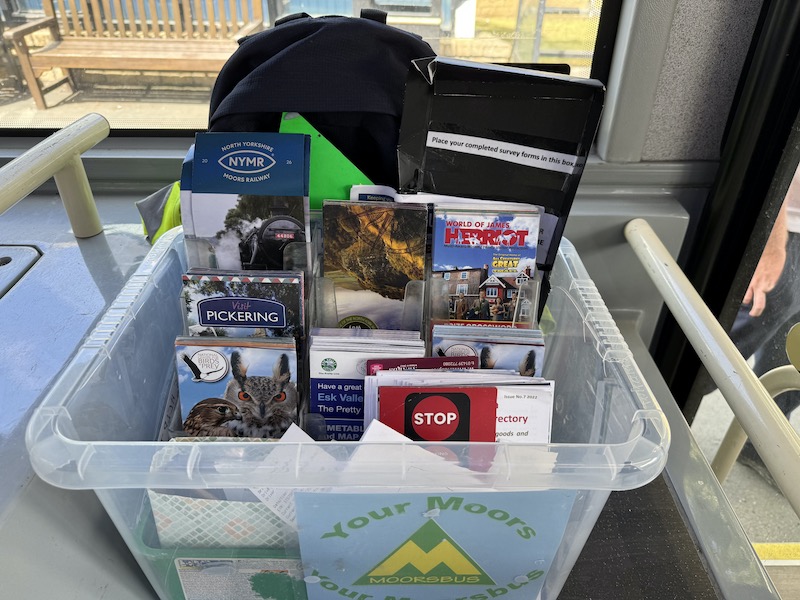
It was already impressive to have boarded the York Pullman bus in York with six passengers on board from Acomb and see not only a box full of Moorsbus timetables and a container with promotional leaflets and information about various activities in the National Park (including the North York Moors Railway and a timetable for part of the neighbouring DalesBus network)…
… but slotted into the top of every seat was a copy of the timetable book and a feedback form.
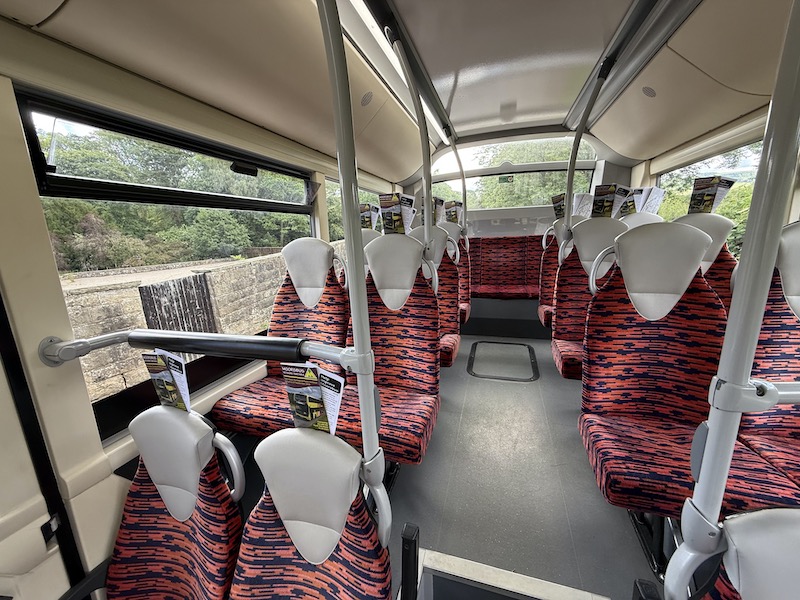
These had been inserted by Ryan, the York Pullman driver, who drives the route each weekend and it soon became evident is as committed to the operation as the volunteer team and the regular passengers. He was brilliant.
How many rural bus routes get this kind of loving treatment?
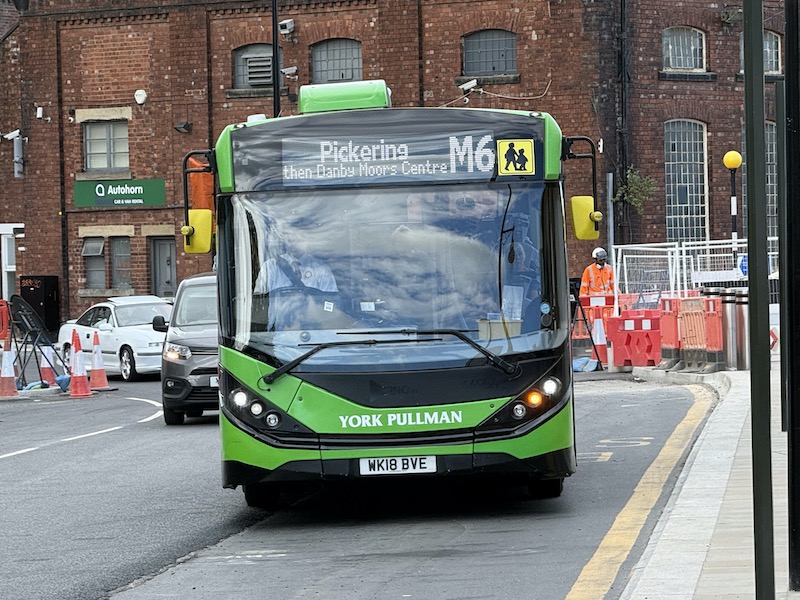
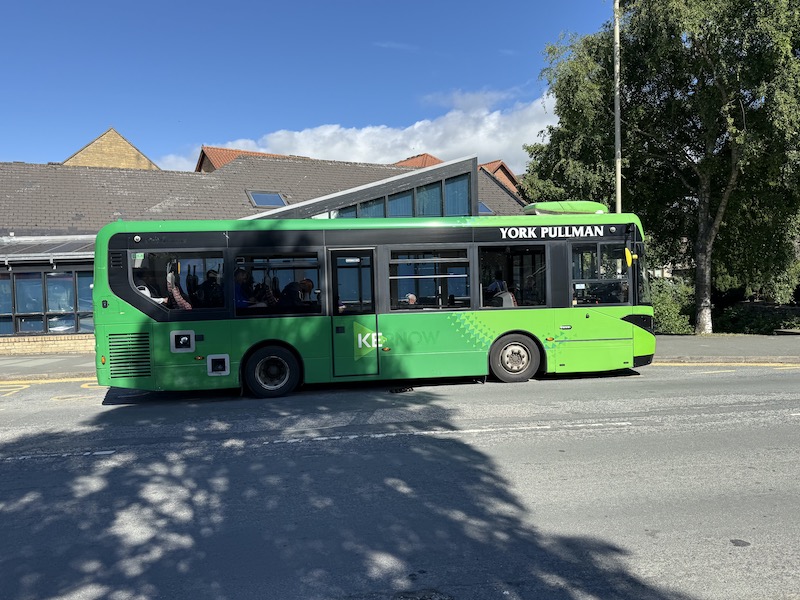
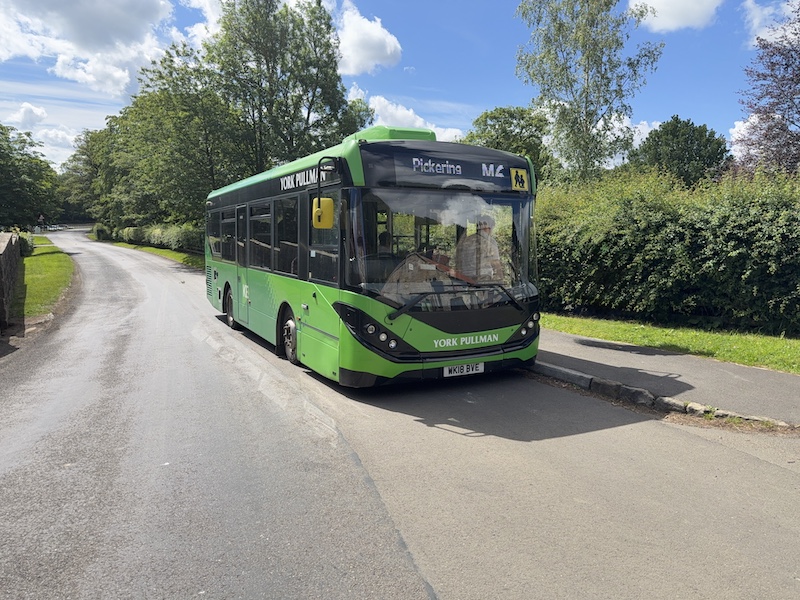
As you may have spotted, the bus on the M6 was a former First Kernow Enviro200 still in its green livery and ‘KE’ part of the logo and now giving good service in Yorkshire.
After York, the journey out to Pickering goes via Malton where four more passengers boarded at that town’s railway station with three alighting, and in Pickering itself, four boarded along with Bill. This included two women with concessionary passes just wanting to enjoy a ride out and had no idea where they should travel to, but Ryan kindly explained all the options and they decided to travel all the way to Danby Lodge, spend two hours there and return on the M3. After that and the short break and a chance to have a chat with both Bill and Ryan, we headed off into the National Park itself where the wonderful scenic views begin and are a true joy to behold.
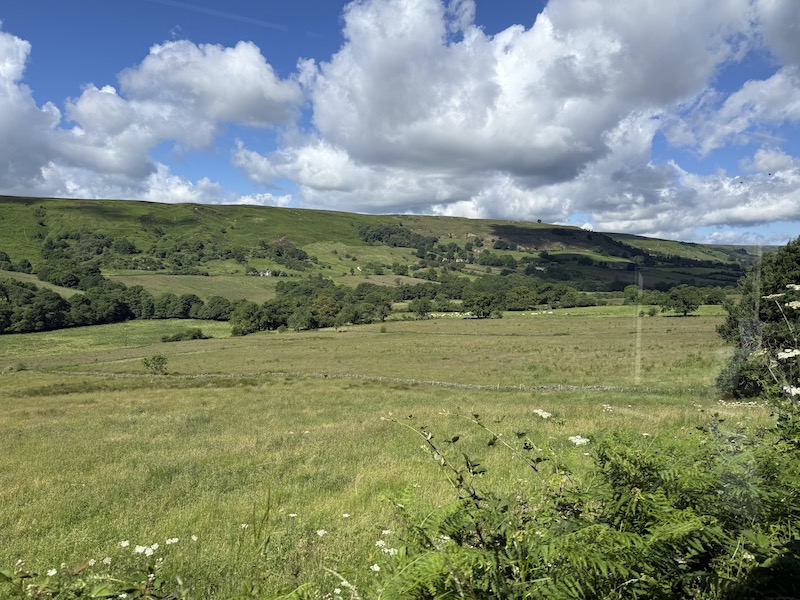
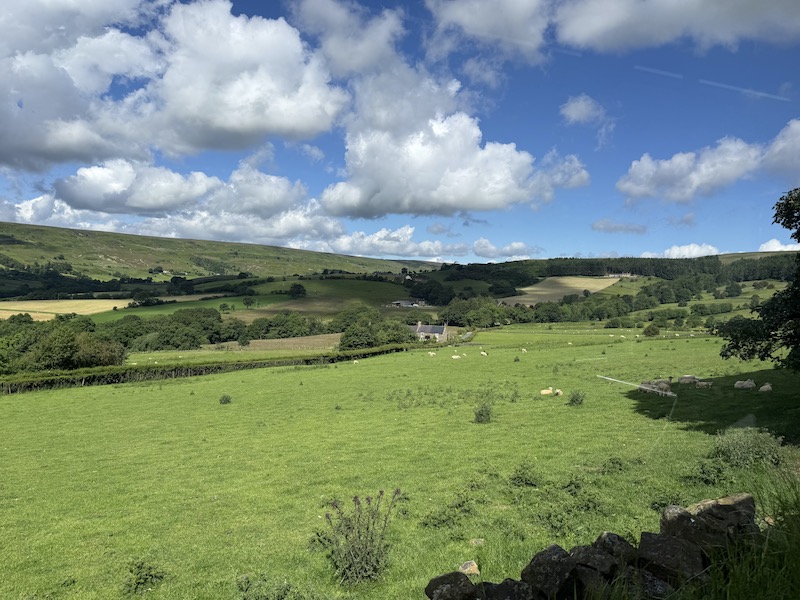
Three passengers alighted in Cropton with another getting off in Rosedale Abbey where two boarded after which the green landscape turns distinctly moorland and barren in character and the only potential passengers are the passing sheep.
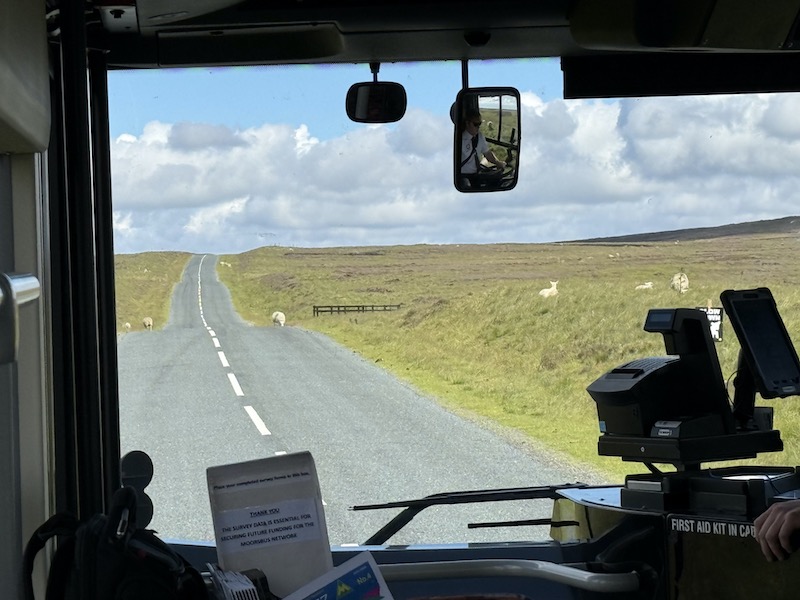
However, the bus route is very popular with walkers and one regular Moorsbus user alighted at the Millennium Stone…
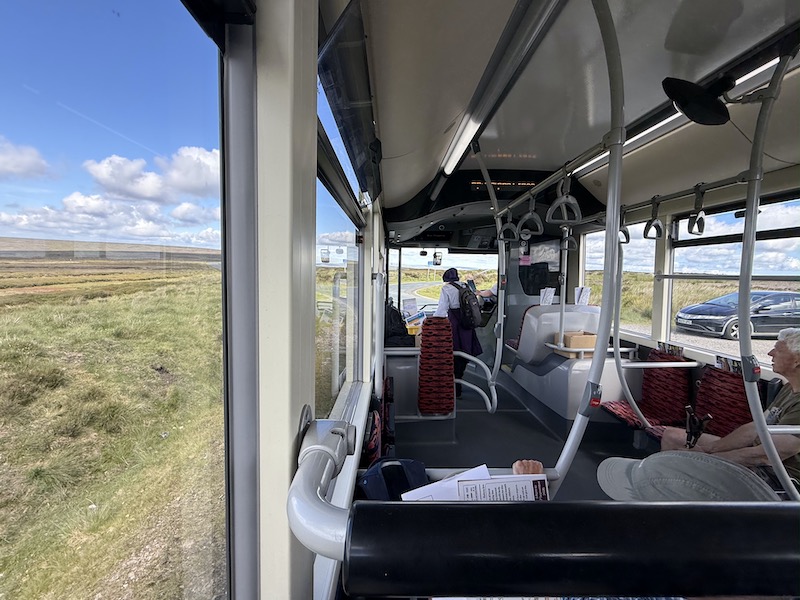
… a seven ton monument commissioned and put in place to mark the Millennium…
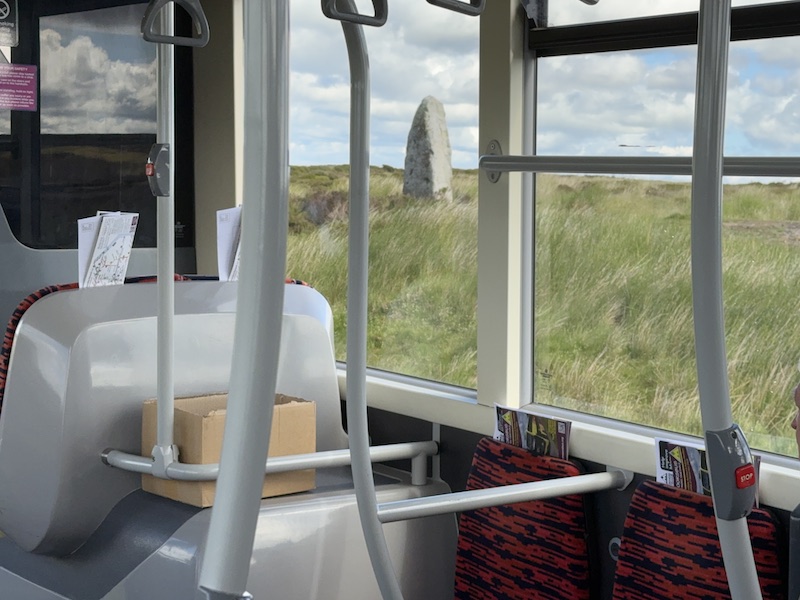
… and a bit further on the new Coast to Coast marked footpath crosses the road and another passenger alighted to enjoy a walk along part of the track.
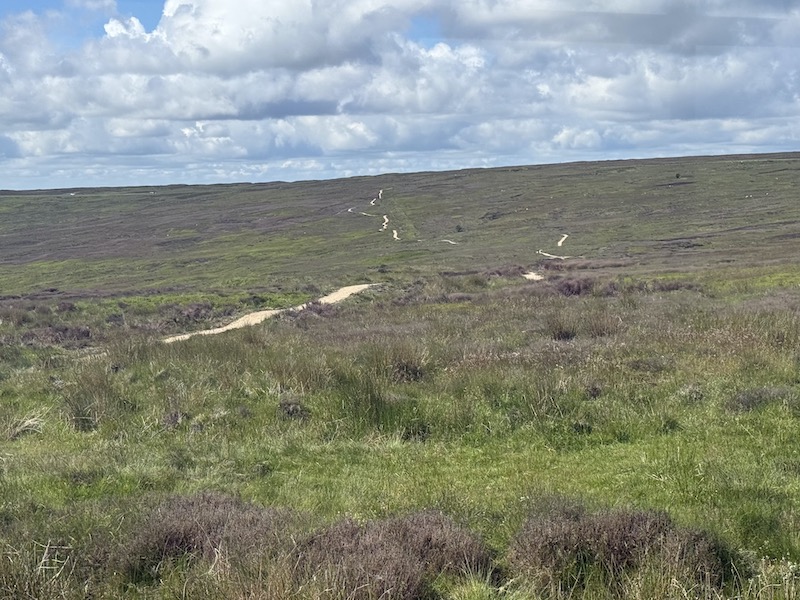
At Ralph Cross where the road joins the road from Hutton le Hole to Castleton three more walkers alighted…
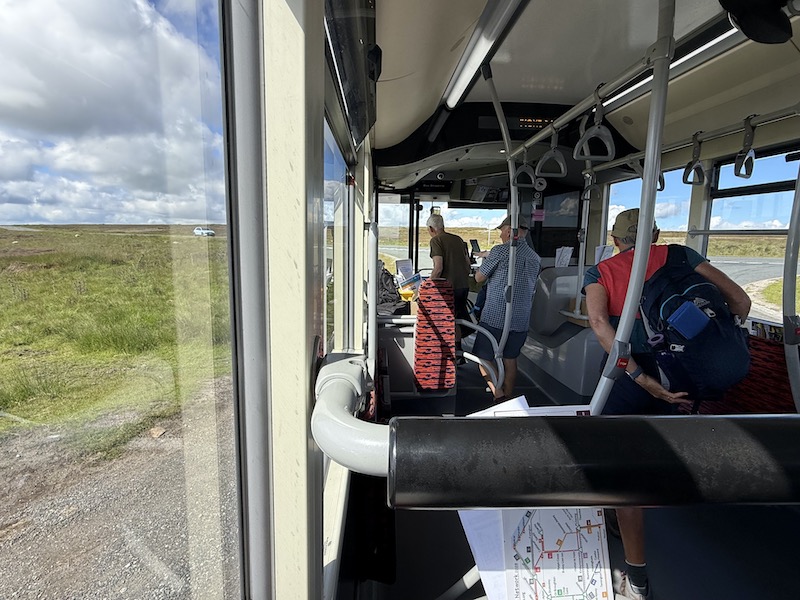
… and then the scenery began to turn lush green again as we headed down towards Castleton itself.
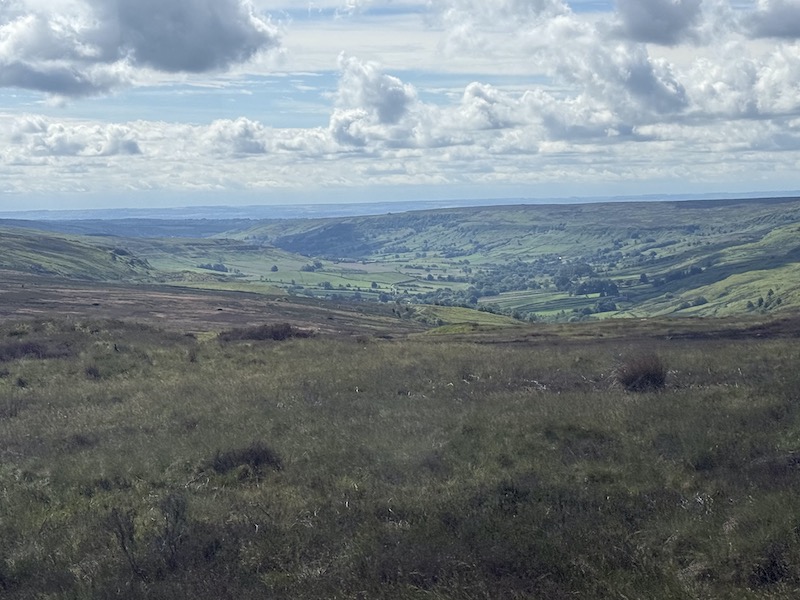
After Castleton it’s a short ride to Danby where the bus passes the railway station on the equally delightful Esk Valley line (Whitby to Middlesbrough)…
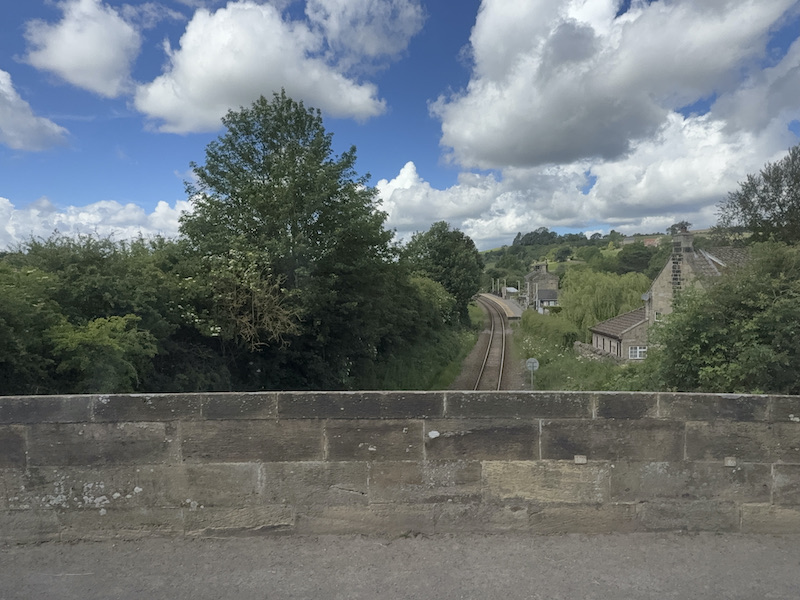
… and after that soon arrives at the National Park Centre at Danby Lodge.
During the journey I’d enjoyed a great chat with Bill who’s been involved in Moorsbus since its inception back in 1981 and he recalled the involvement of a young keen John Austin who was working as an NBC graduate management trainee for United at the time and came up with the idea of running routes to appeal to the leisure market. 45 years later they’re still going strong with John also having enjoyed an illustrious career supporting the industry with his consultancy work.
Bill shared what must be the five secrets of Moorsbus success and what drives the ethos of the operation – they’re the five ‘C’s – confidence, continuity, cost, communications and comfort. Giving confidence to passengers, Bill observed, is essential especially on a network with infrequent routes. Passengers need to be sure they will be picked up in what might be an isolated spot and not be left stranded. Good communications with excellent promotion of timetables (both in print and online) is also key to this and making sure there’s adequate capacity so passengers can be sure they can get on the bus and travel in comfort. As for cost, concessionary passes are accepted (even though reimbursement rates are an issue) and for many years Moorsbus has offered a day ticket which has also been accepted on pertinent routes run by bus operators in the wider area – eg East Yorkshire’s route 28 and Arriva’s X93/X94 as well as others, however the £2 and now £3 fare cap has given great value for passengers but undermined this as well as even more issues of reimbursement rates but as ever, Bill and his colleagues are rising to the challenge.
I left Bill in Danby Lodge where he was visiting a new exhibition just opened in the gallery marking Right to Roam which explores “our relationship with landscape, access and belonging” and headed back to Pickering with Ryan on the M6 which was a quieter journey but nevertheless one passenger travelled from Danby village to Rosedale Abbey; two from Castleton to the Coast-to-Coast walk and one from Rosedale Abbey to Pickering.
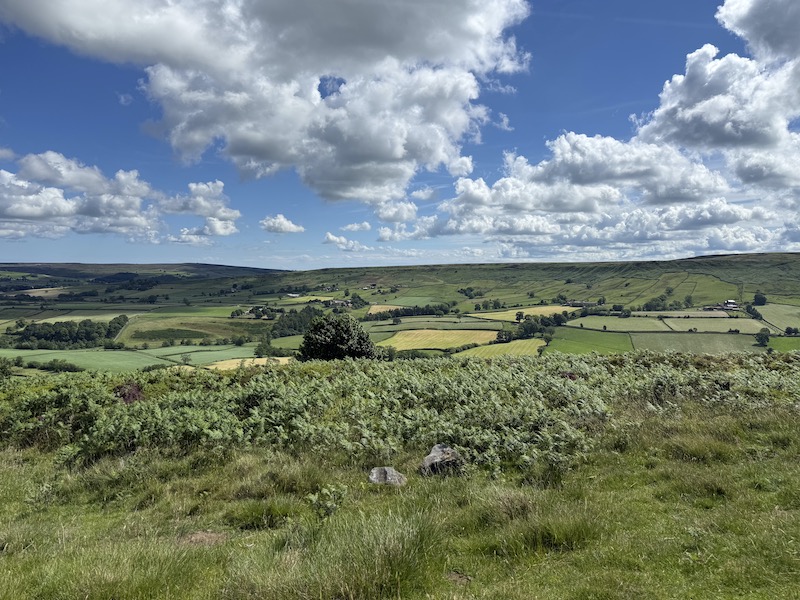
The scenery was once again stupendous.
We got back into Pickering just in time for me to do a quick change on to the East Yorkshire operated route M3 journey heading back north to Danby Lodge but this time via Hutton le Hole (the central spine road) and which, as you can see, for this year is a bonus in being a double deck operation, offering even better panoramic views from the top deck.
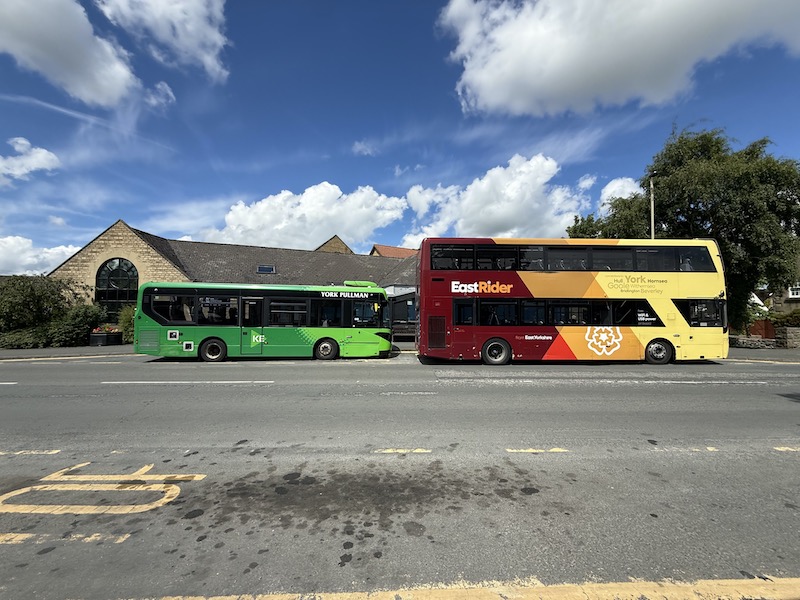
Again, there were leaflets on board and timetables and six passengers boarded with another two joining as we passed through Kirbymoorside who travelled to Hutton le Hole.
It was another great scenic ride…
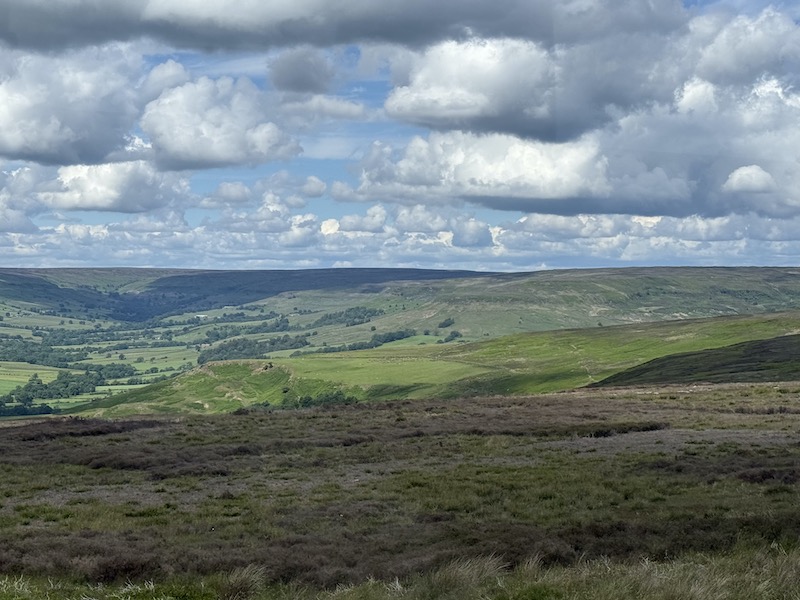
… but I decided to leave the bus at Blakey Ridge to enjoy some refreshment in the famous Lion Inn…
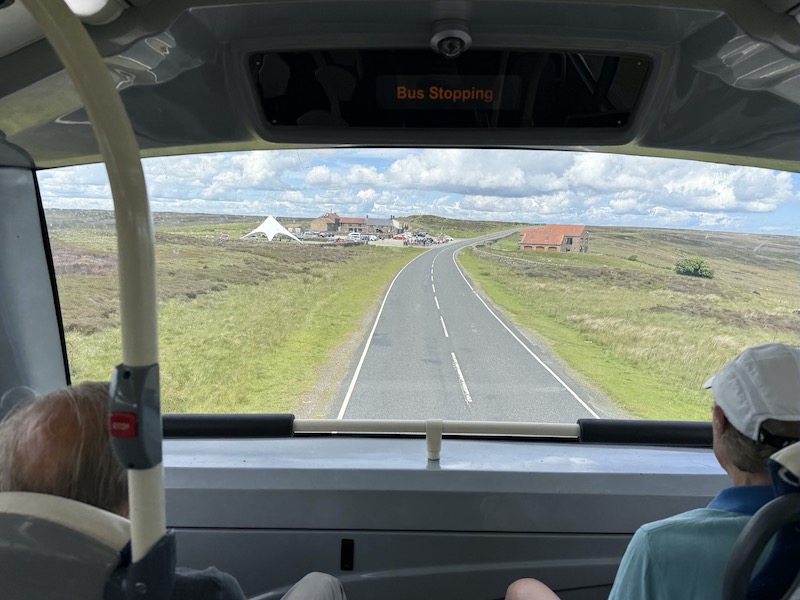
… while the bus continued to Danby Lodge and I’d catch it on its way back having enjoyed the peace and quiet of being on the moors for a while.
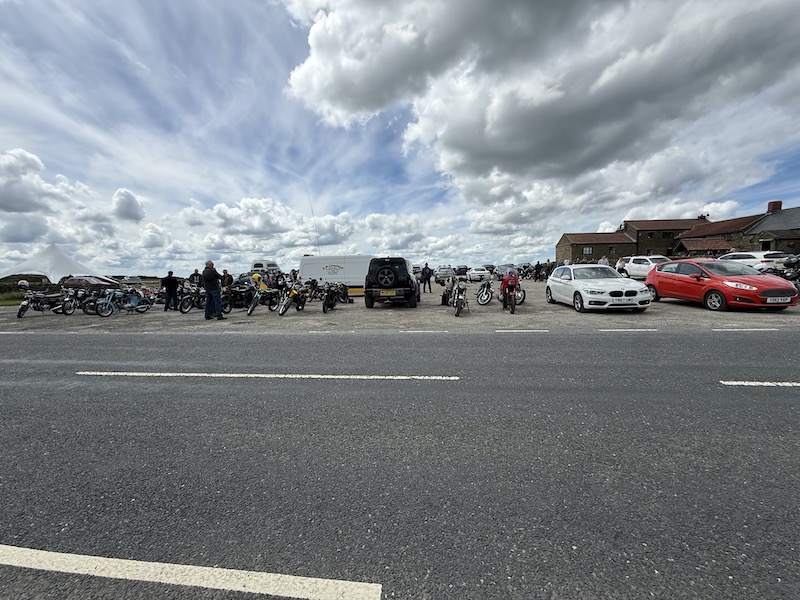
Except, of course the Lion Inn was doing a roaring trade with motorcyclists and motorists as well as those out for a walk.
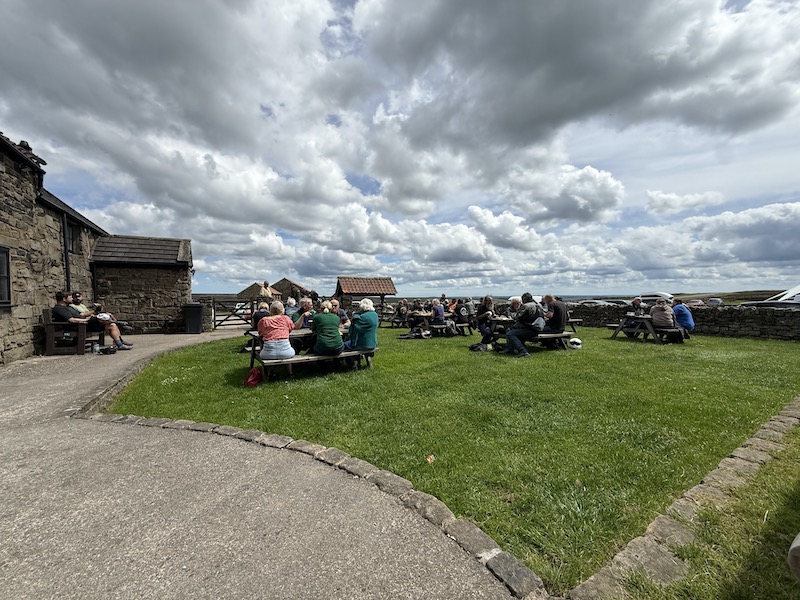
It’s in an isolated spot and also marks the highest point of the North York Moors. It’s famous for getting cut off during bad spells of winter snow with visitors stranded, sometimes for a few days at a time. Indeed when the weather forecast is bad some stalwarts head out to the Lion Inn with the aim of getting snowed in and enjoying the atmosphere.
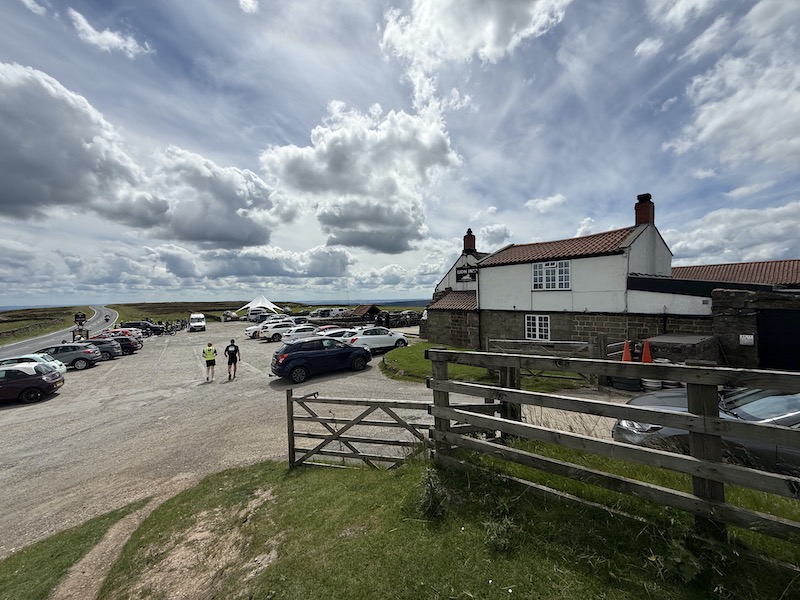
After 40 minutes it was time to wait for the M3 to return back to Pickering and although I’d seen it tracking on the bustimes.org website and knew exactly where it was, it was still a great sight to spot in the far distance as it made progress across the barren moorland to the pub.
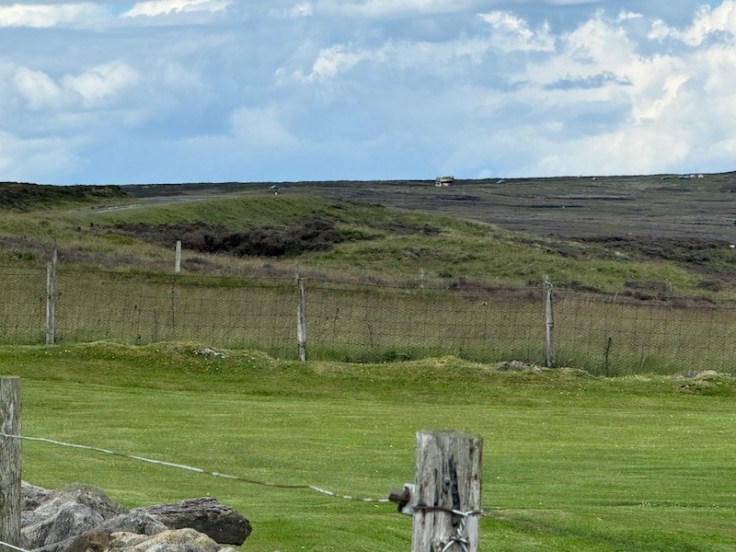
And, as a bonus, Bill was on board again heading back to his home near Pickering as were those two women from the earlier journey on the M6.
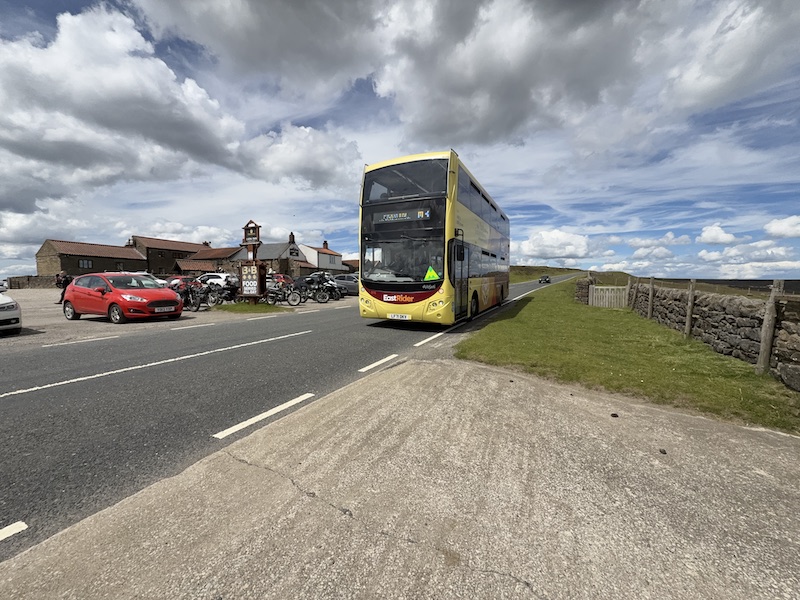
As we passed through Hutton le Hole we picked up four passengers two of whom were the ones who had travelled there from Kirbymoorside on the outward journey and had obviously also enjoyed a lovely lunch in a lovely spot.
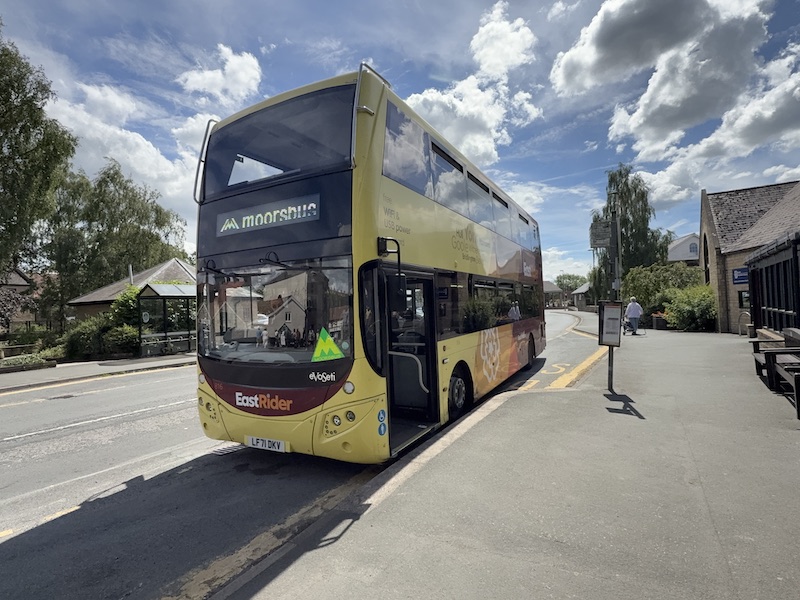
Back in Pickering I began my journey home with Coastliner to Malton, TransPennine Express to York, LNER to King’s Cross (and the Northern line to London Bridge for a Thameslink to Hassocks) having enjoyed a wonderful six hours with Moorsbus and once again seeing a volunteer led operation serving a wonderful scenic part of the country that you just can’t fail to be impressed with – and that’s impressed with … both Moorbus and the scenery. Well done to Bill, Eden and Helen.
I hope one day the bus industry, the local authority and National Park will recognise their great work, which is clearly hugely appreciated by passengers. As to the future, with consultation now underway in York and North Yorkshire Combined Authority for its planned implementation of “a national pilot on rural bus franchising”, it could mean Mayor David Skaith takes over responsibility for the provision of the Moorsbus network.
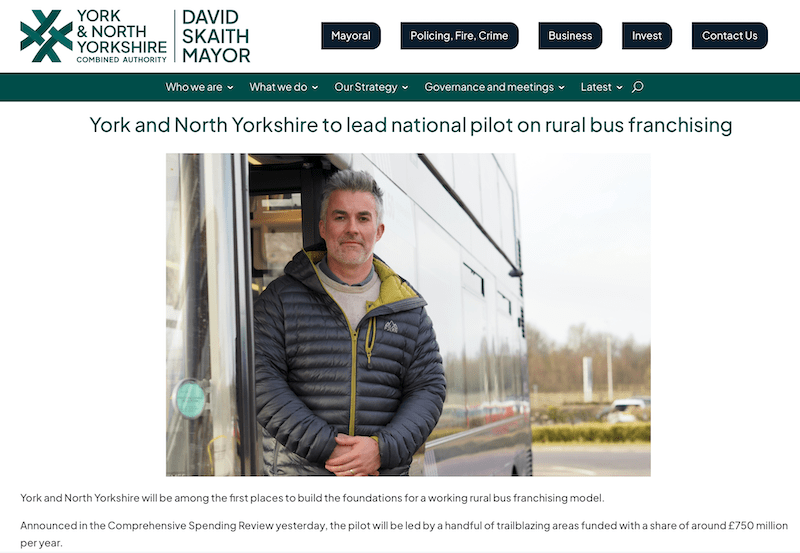
If so, I hope we’ll see him and his team out and about looking after the finer details just like Bill, Eden and Helen.
Roger French
Summer blogging timetable: 06:00 TThSSu
 BusAndTrainUser
What a lovely day out – and many thanks for all the delightful photos.
Confidence, Continuity, Cost, Communication, Comfort – that’s a good list! I remember thinking, while travelling in the early days of de-regulation, that – yes – the bus is in good condition, and is running reasonably to time; but nobody in the bus company seems to care about what happens to me once I’ve left the bus, or while I was waiting for it – or whether I can get back home or make an onward connection, for that matter. The stops were un-cared for, with no timetables (what other industry would ignore a free advertising site?). I wonder if the First and East-Yorks senior management have thought about the ‘five Cs’.
LikeLiked by 1 person
Bill, Eden, Helen and all the drivers do a fantastic job of coordinating the Moorsbus network, and it has been building slowly but steadily since they had to restart from scratch about 12 years ago. There are now 6 buses on the road on Sundays, which I think is the most we’ve had since the restart, although still not as many as the 10 buses on the road back in the days when it was funded and run by the national park, giving more frequent services along the core routes and a greater range of destinations. Like with Dalesbus, which operates a similar model (but includes some year-round services as well), huge credit to the volunteers who organise everything … but I can’t help feeling such an important role should be done by official organisations like the council or the national park rather than relying on volunteers and voluntary donations and sponsorship.
LikeLiked by 1 person
This blog reminds me of a happy Motorcycle Holiday Tour in 1980 after getting a full licence. It started with my “opus magna” (on a Honda CD 175 -MLD411V): Hersham to Edinburgh overnight: north along the motorways and the A702. 440 miles in 15 hours. Three days later I was at a hotel in Whitby. So, on 13/08/1980 I had a joyous time going through the North Yorkshire National Park. WHITBY ABBEY before leaving town, past the Fylingdales EWS “golf balls” and on to visit PICKERING CASTLE. Then onwards to visit HELMSLEY CASTLE, Then onwards to visit RIEVAUX ABBEY. Then to Thirsk Museum an odd, isolated building in the middle of a market square, where I discovered an important sporting connection with London: Thirsk is the birthplace of Thomas Lord who named a cricket ground and his name featured on the sides of a MR electric locomotive. There were quite dangerous driving conditions that day. Sheep were running back and forth across the road and I might have collected one on my handlebars. At one sharply undulating part of the road “United” had erected a sign demanding that their bus drivers selected a low gear when dealing with steep gradients. Sutton Bank was a demanding drive as I was hell bent on overtaking a spoil lorry which was depositing dust over me as I followed it. I got into Thirsk ahead of it. Tourist traps named in CAPITAL were all done using a £6 annual ticket which allowed access to hundreds of sites all over mainland UK. Small tiles depicting Thomas Lord used to decorate the platform walls at St John’s Wood Station but I bet recent developments might have had them taken down.
LikeLike
adding Moorsbus to my to-do list of bus jaunts!
LikeLike