Tuesday 26th May 2026
The Scottish express coach market has become a hotbed of competition as the ever expansionist ember coach company adds more and more routes to its portfolio, all of which duplicate the long established presence of Citylink and Stagecoach, on top of which we now have FlixBus making its presence felt north of the border.
A few weeks ago I reported on ember’s competitive incursion between Inverness and Thurso giving passengers a much greater choice of journeys to and from the Far North as well as competing with ScotRail’s heavily subsidised Far North Line. Coaches have the advantage of being both quicker as well as ridiculously cheaper thanks to Transport Scotland’s generous free travel concessionary scheme for ‘under 22s’ and ’60 and overs’ and in particular the year long £2 fare cap in the Highlands (and Islands) for everyone else.
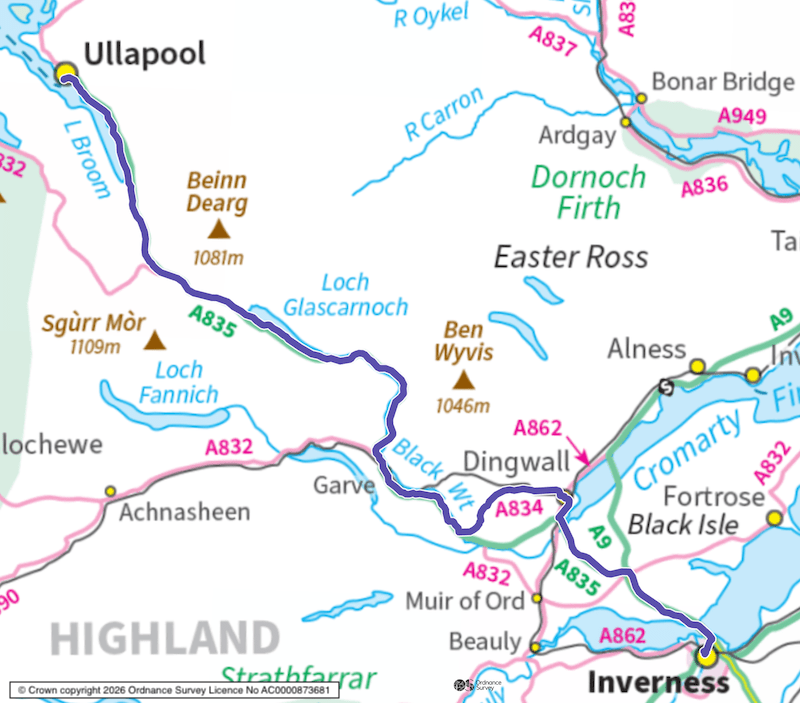
But now the latest network expansion from the end of last month has seen ember go head to head against Citylink between Inverness and Ullapool with exact duplication of the incumbent’s journey times and, as both destinations are in the Highlands, the subsidised fare cap of just £2 applies for the 60 mile journey.
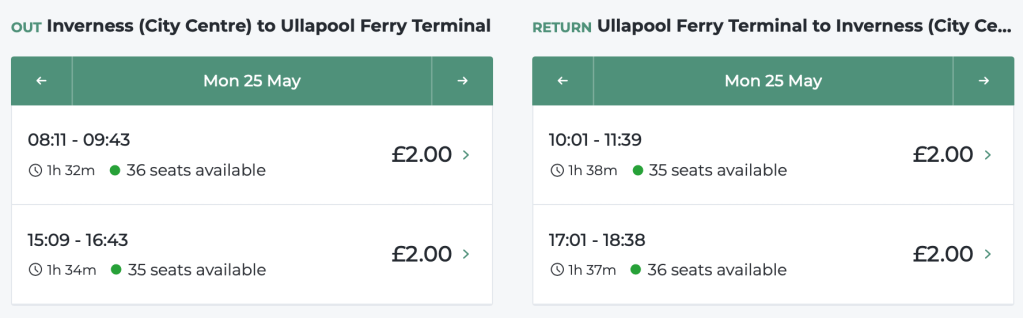
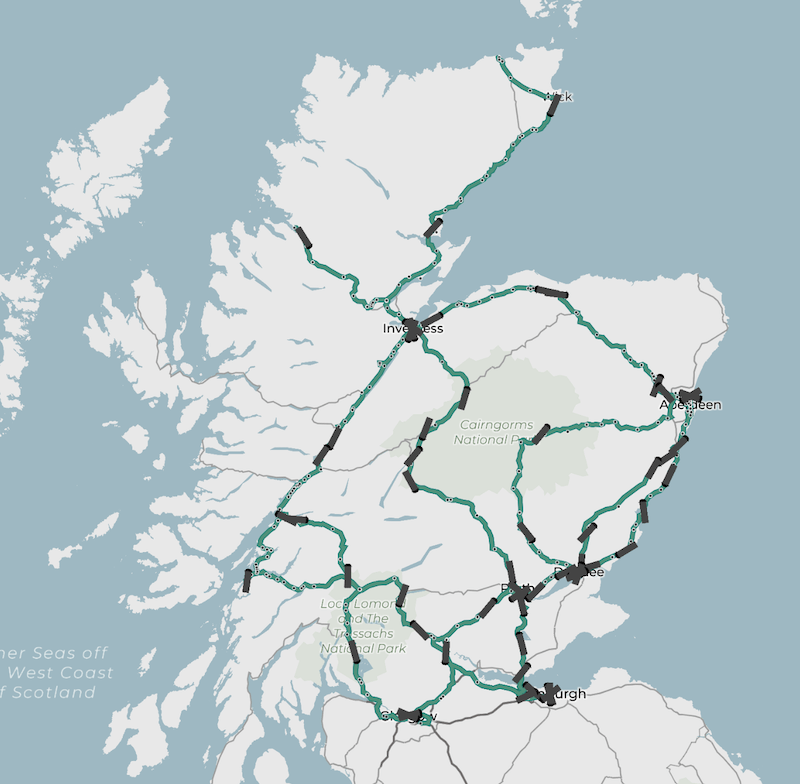
Ember’s coaches leave Inverness twice a day at 08:11 and 15:09, returning from Ullapool at 10:01 and 17:01…
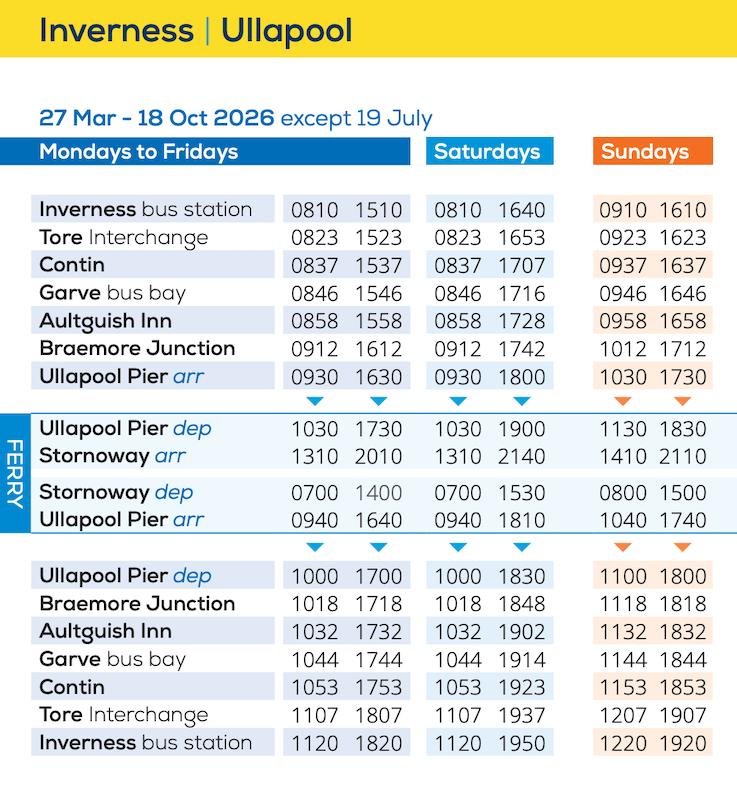
… which are a blatant copycat replica of Citylink’s departures at 08:10 and 15:10 from Inverness and 10:00 and 17:00 return from Ullapool.
There is of course a valid reason for what on the face of it is an otherwise ridiculous situation, and that is the connection to and from CalMac’s twice a day ferry across to Stornoway on Lewis with departures from Ullapool to Stronoway at 10:30 and 17:30 and arrivals from Stornaway into Ullapool at 09:40 and 17:00 (on Mondays to Fridays) with amended times at the weekends.
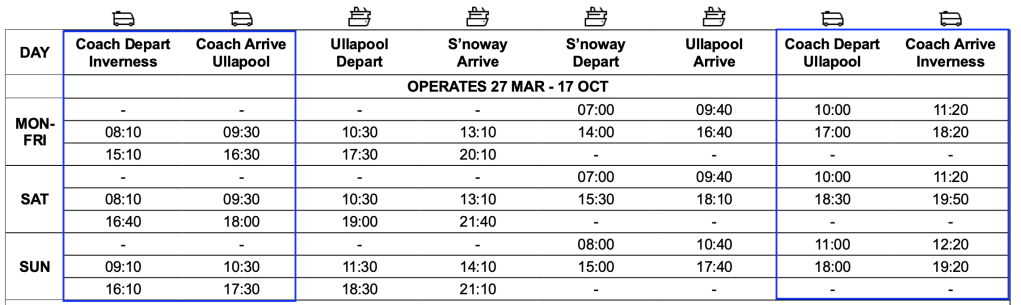
Both Citylink and CalMac show the coach connections on their timetables with, so far, no mention of the ember alternative on the latter.
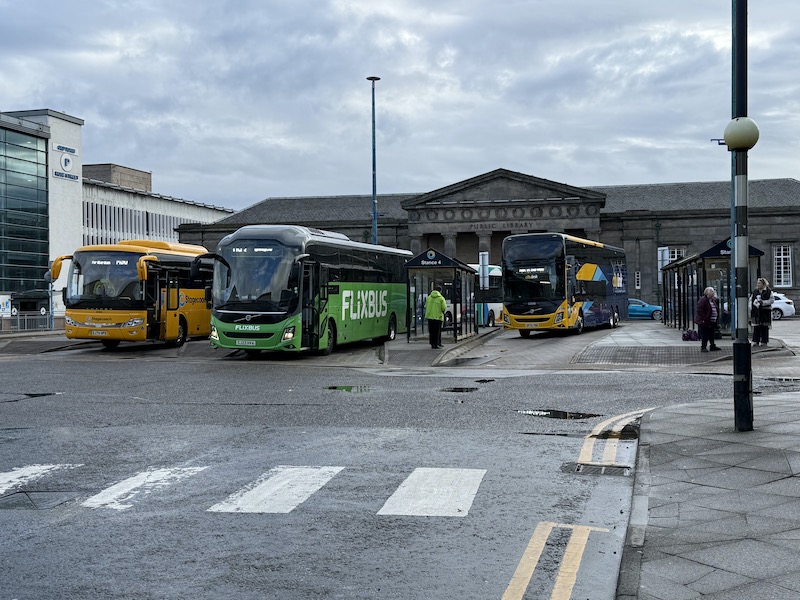
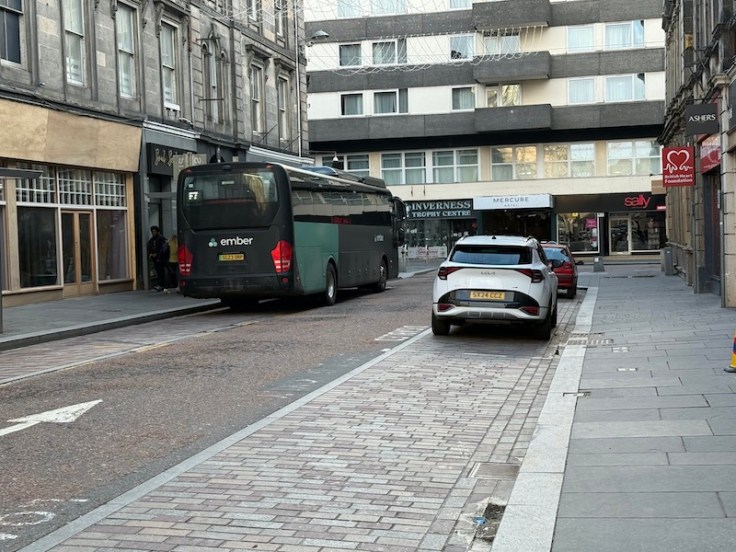
Although Flixbus coaches use the Stagecoach run bus and coach station in Inverness, ember’s coaches arrive and depart from a dedicated bus stop in nearby Union Street…
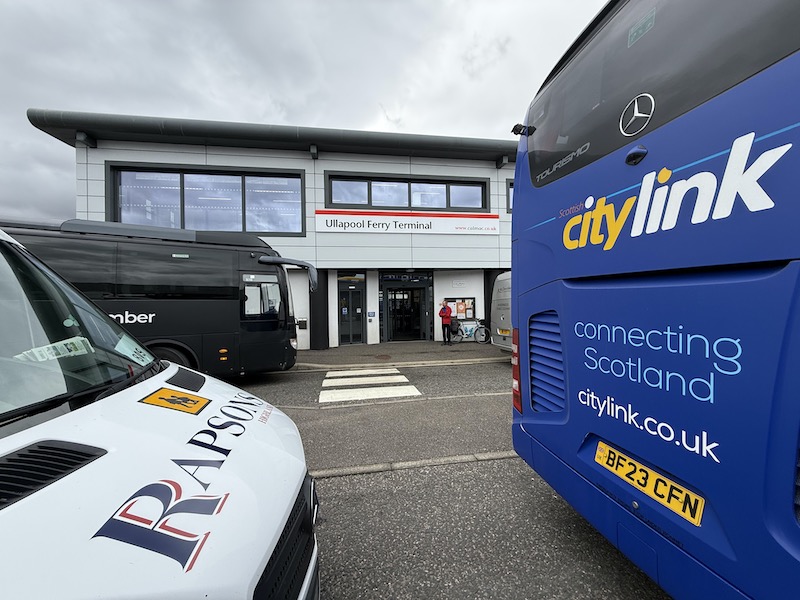
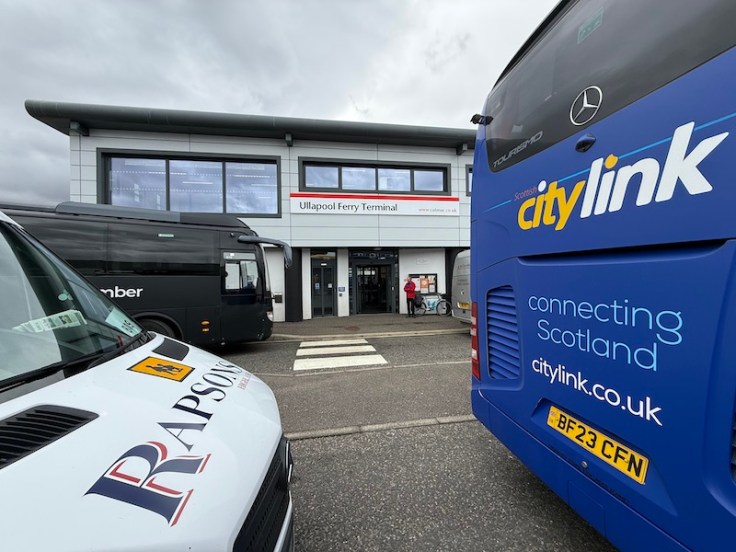
… but in Ullapool both coaches depart from immediately outside the Ferry Terminal Building thus presenting passengers with a clear choice of which operator to travel with.
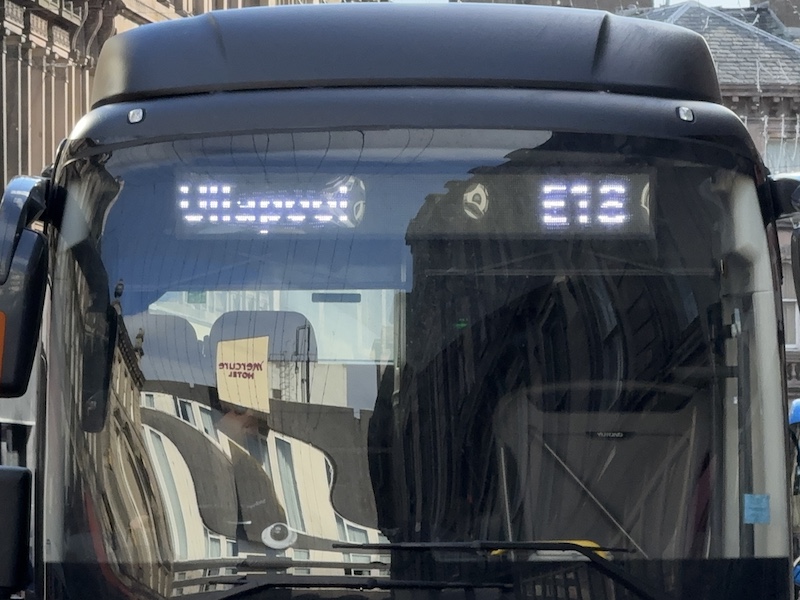
I made a return journey from Inverness to Ullapool last Wednesday to see how the new incumbent was doing, three weeks after the launch of its new route which it numbers E18. The coach arrived at the Union Street bus stop a couple of minutes after the 08:10 scheduled departure and picked just one other passenger and myself up.
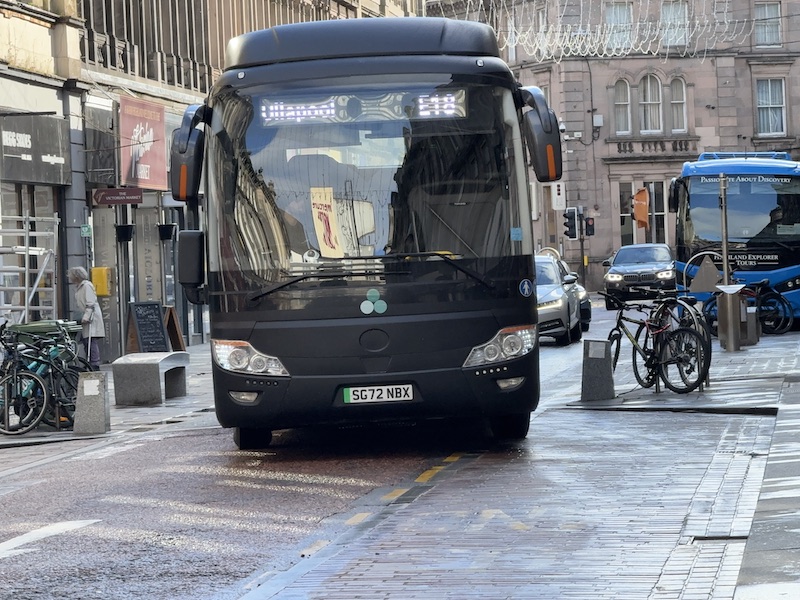
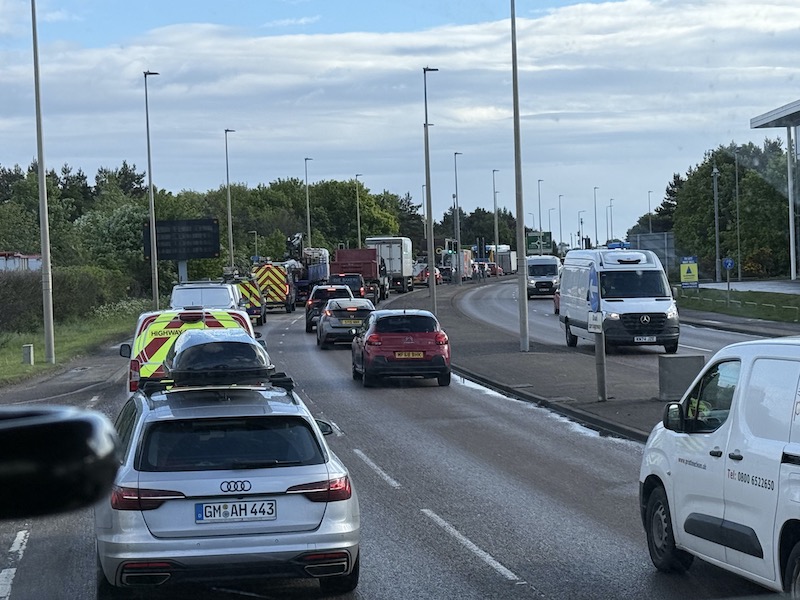
Peak time traffic in Inverness delayed our exit from the city even further and by the time we were heading out along the A9 we were seven minutes down.
You might have spotted ember’s end-to-end journey time is 92 minutes compared to CityLink’s 70 which is because the E18 takes a longer route to serve Dingwall and Strathpeffer as well as a call in, if required, to Conon Bridge.
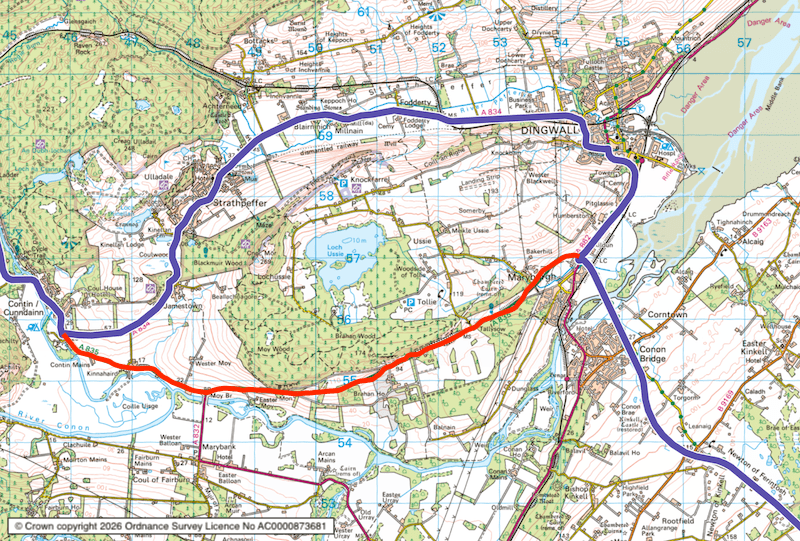
The former proved popular with the second passenger who joined us and took the time to explain to the driver as she boarded, how living in DIngwall and often travelling to the Outer Hebrides, she was absolutely delighted with the new service, especially as the bus stop is close to her house. “I no longer need to get a lift from anyone” she explained. We were now ten minutes down.
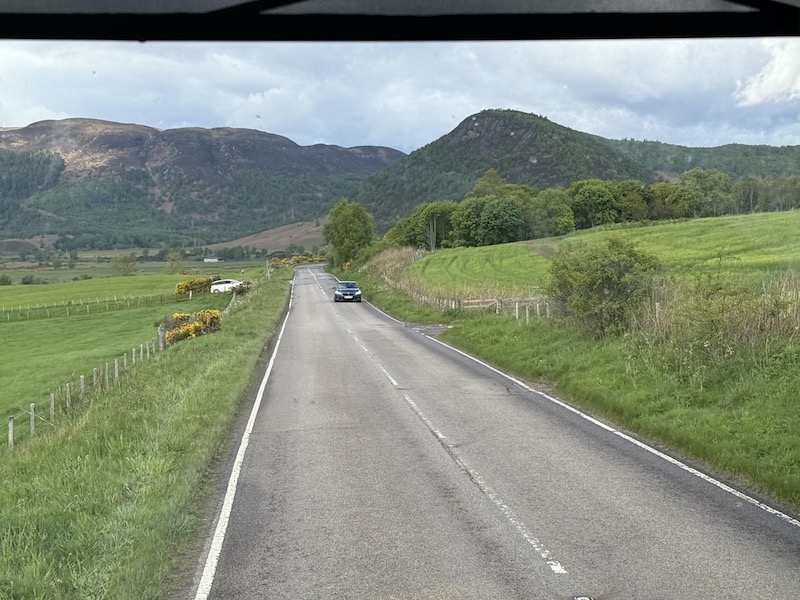
The journey over to Ullapool offers some fantastic Scottish scenery with the A835 a very quiet road for traffic, other than when the ferry has off loaded leading to a flotilla of vehicles one after the other.
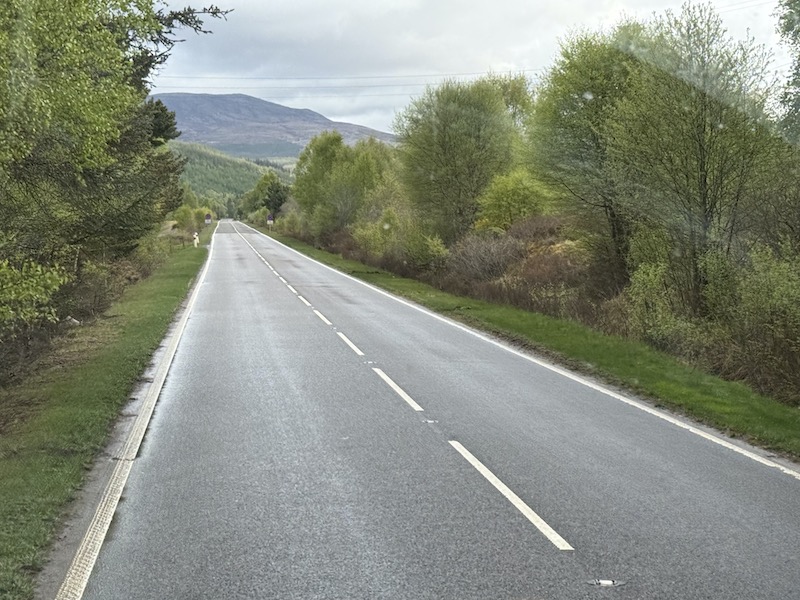
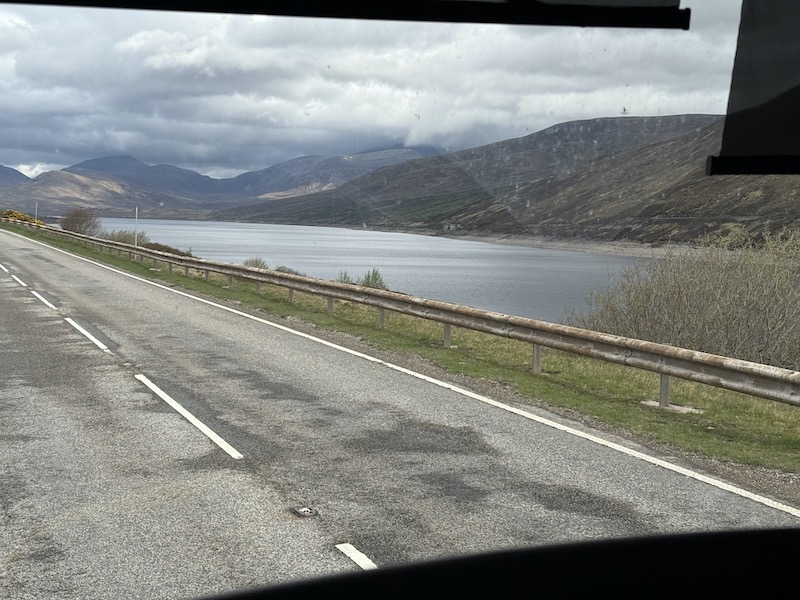
We arrived into Ullapool at 09:51, eight minutes later than scheduled with the two passengers alighting…
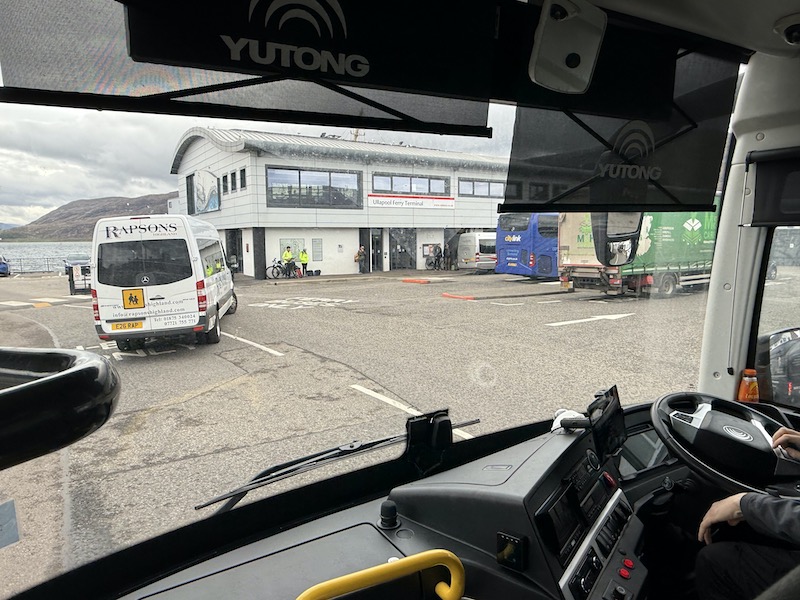
… the Citylink coach was already on the stand outisde the Terminal building loading up passengers and luggage from the ferry’s arrival at 09:40 ready for its 10:00 return departure to Inverness.
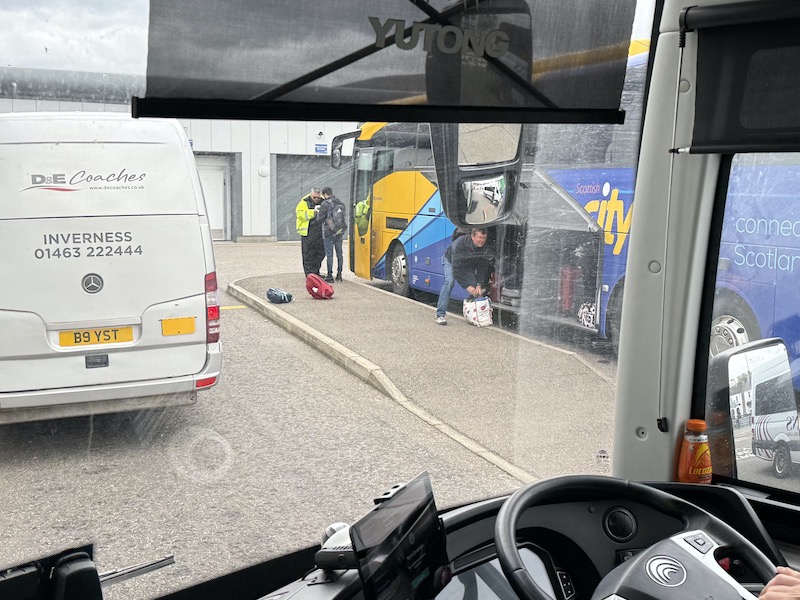
I’d picked up from the ember driver he had 10 passengers booked for his return journey to Inverness at 10:01 but I’d booked for the Citylink departure so climbed aboard to find 36 passengers already sitting in the seats making for a busy coach.
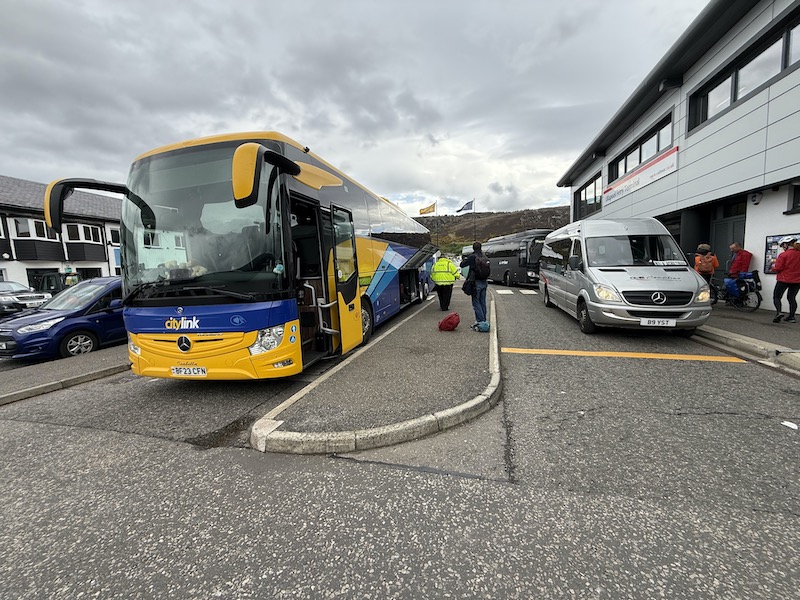
We set off at 10:00 and returned to Ullapool making good progress all the way until the outskirts of Inverness where an accident earlier that morning was still blocking the A9 dual carriageway. Fortunately after half an hour sat stationary it was cleared and we got moving again arriving into Inverness bus and coach station 30 minutes down with everyone alighting.
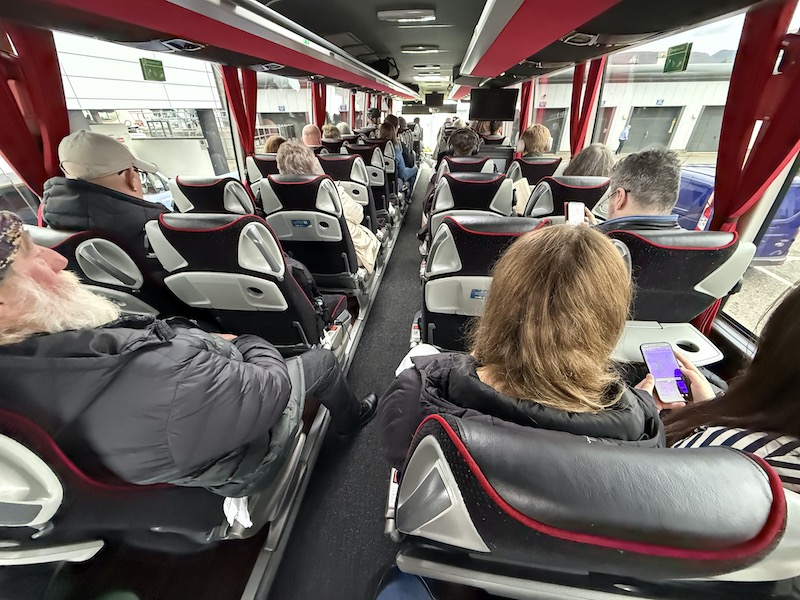
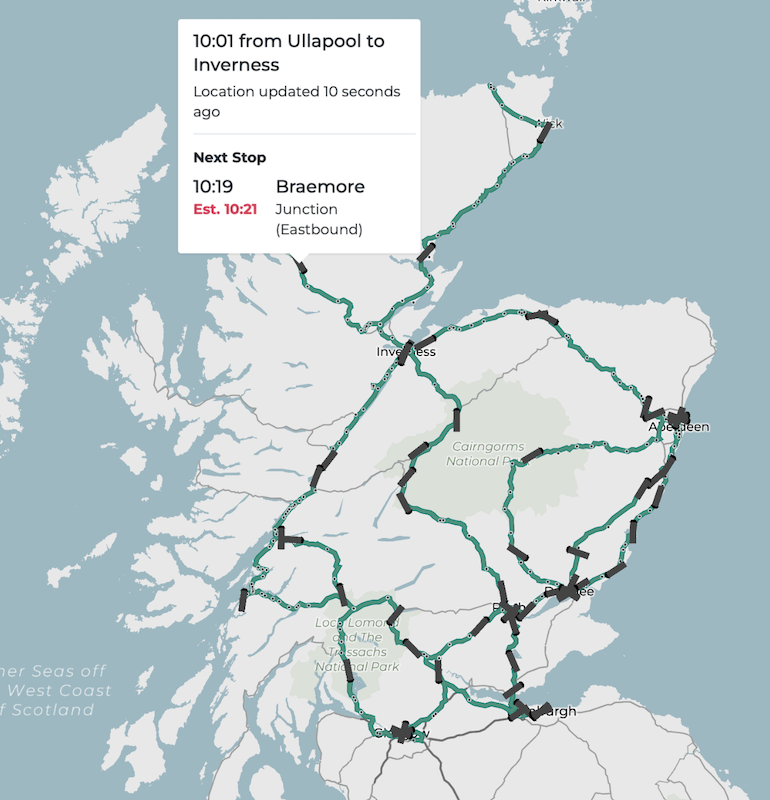
Two of the passengers had alighted at Braemore Junction, 12 minutes after Ullapool who were in cycle gear including wearing their cycle helmets while inside the bus which was strange to see but the driver unloaded their cycles stored in the coach’s luggage compartments when they alighted and off they went.
As regular readers will know I’m a big fan of ember always finding my travel experiences to be to a very high standard and everything about their service is first rate not least the comfort and ride quality of their electric/battery powered coaches, the ease with which they make it possible to book and the information on real time tracking they make available on their website.
The company’s continued expansion indicates a confidence they’re on the right track (as well as still enjoying funding from equity backers) but all this has increasingly come with controversy, the latest being a grant award of £13.1 million from the Scottish Government to buy 100 more Chinese built Yutong coaches from the £45 million ScotZEB3 funding pot.
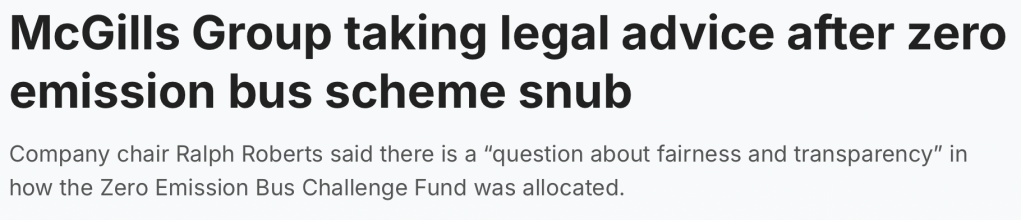
Understandably operators such as McGills, which lost out in the funding round, are upset, with its Chairman Ralph Roberts saying there is a “question about fairness and transparency” when “the original purpose [of the funding] was to convert diesel buses to zero emission … it now appears the fund is being used to support new competing services … which raises serious questions about whether it is delivering its stated aims”.
He has a point, not least when the ambiance of travelling out to Ullapool on ember’s lovely new coach was impressive although its sparse loading may have helped.
It’s difficult to know how much the £2 fare is generating extra passengers but I’m sure as the summer progresses numbers wanting to travel between Inverness and Ullapool for onward connections to the Outer Hebrides will only increase in which case it’s just as well there are two coaches following each other along the road – albeit competing at Transport Scotland’s expense.
With 100 more coaches on order it’s clear ember’s expansion will continue and for the first time on my visit to the Highlands last week I spotted a number of Flixbus coaches and noted they’ve established a depot/parking area almost opposite Stagecoach/Citylink’s long established garage in Inverness.
With ember now ’embedded’ and Flixbus on the scene, Scotland’s inter-urban travel market is going to be an interesting one to watch in the coming months.
Roger French
Blogging timetable: 06:00 TThS


I am no expert on the novels written by John Buchan, but I wonder if any of Roger’s fellow passengers might have had a finger missing and a German passport in a pocket? The Highlands always remind me of The Thirtynine Steps. Spotting the BHF shop in one of the pictures: did Roger get any transport book bargains there? The Kingston store has supplied me with real gems in mint condition such as “London Transport Garages” [Capital Transport] £4.50 rather than £25.
LikeLike
I think the missing finger was in the film version. The book notes the villain’s ability to ‘hood his eyes like a hawk’. But Richard Hannay (the hero) made his northernmost Scottish journey by train in ‘Mr Standfast’ from Kyle of Lochalsh to Muirtown (fictional, but probably Inverness) – not a great journey, as the train kept stopping in the middle of nowhere. The train-journey in The Thirty Nine Steps was in Galloway, on the famous but now abandoned Port Line. I’m glad to see that the 500 bus (Dumfries – Stranraer), which is the modern replacement, has started operating again!
LikeLike
A recent chat with a Citylink driver brought a comment that Ember drivers were often stressed out by the fear of running out of power on longer runs. I have no idea how common or accurate this is ! It’s worth noting that Bustimes has full timetables for Ember, even though Ember’s own website apparently doesn’t.
LikeLike
Sounds like absolute rubbish to try and scare people away from EVs!
LikeLike
Thanks for another interesting blog and update. The long distance coaching scene in Scotland today is comparable to the developments in the early 1980s when following deregulation of coaching there was a sharp increase in quality and quantity of coaches on what was then a much quieter motorway and trunk road network, competing with a rather tired rail offering. Back then, the railway responded with creation of the ‘Scotrail’ brand under Chris Green, which carries on today (as ‘ScotRail’, note capital R!). A memorable marketing slogan was ‘training beats coaching’. ScotRail must be one of the longest surviving rail brands, and will of course continue to exist, along with their livery, following creation of GBR.
Today the rail offering perhaps also compares poorly to the developing coach completion, with almost 50 year old HSTs competing with these new electric coaches, albeit replacement of HSTs with ( c20 year old) class 222 Meridians is now confirmed. Rail also has to compete with the free travel for children and over 60s on the coaches, and of course the £2 fare cap in the highlands. Journey times are also poor on some routes compared to road. It will be fascinating to watch if and how ScotRail responds to the developing competition.
LikeLike
You make a fair point about rail being the loser in this competition. But, in my experience, south of the border, I would consider the replacement of HSTs with Class 222s to be the polar opposite of an improvement.
Petras409
LikeLike
The involvement of public funds in this route isn’t limited to subsidising the fare and largely paying for the electric vehicles, and possibly the recharging infrastructure. There is a third operator on the route, Council-owned D & E Coaches, whose two return journeys serve all stops. Interestingly, the journeys on this 61 that don’t deviate for the schools are actually faster than than Ember. More still, most passenger fares on the 61 will be funded by the Scottish government or Education Departments. I think Ralph Roberts has good cause to be concerned; the spirit of Brian Souter does not appear to live in the Highlands.
Robin Bence
LikeLiked by 1 person
D&E Service 61 is a registered school service taking pupils to Ullapool High School from the settlements along he A835.
On Mondays to Thursdays it provides a return journey to Inverness between the schools, allowing shopping or medical trips, allowing three hours in Inverness.
It does not operate on Non School Days, although when Stagecoach had the school tender, they did provide the shopping service on Non School Days.
LikeLike
D&E Service 61 is a registered school service, operated under tender to Highland Council, to take pupils into Ullapool from the settlements along the A835, normally operated by a Temsa midicoach.
On Mondays to Thursdays, the vehicle returns to Inverness, providing a link for locals for shopping or medical appointments.
However, unlike when Stagecoach had the school tender, the shopping service does not operate when the schools are off.
LikeLike
I think it is OK, maybe encourage, to spend public funds on charging infrastructure open to all operators. ( how long does one bus take to charge up to 95percent ?)
JBC Prestatyn
LikeLike
Shame on the company for not supporting UK builders for their huge order of new coaches.j
john
LikeLike
Which UK manufacturer of electric coaches would you suggest Ember use, John?
BW2
LikeLike
Ember’s directors are on record as saying they would like to buy British built electric coaches & have approached Alexander Dennis on the subject. AD apparently responded by saying they had no immediate plans to offer such a vehicle & have already paused Plaxton coach production to focus their efforts on producing electric buses. Whether Wrightbus were also approached is not recorded. I can only assume that European electric coach manufacturer’s products are more expensive. Not surprising since it is well known that the PRC have been subsidising their electric car, bus & coach industries for some time now. How grateful Pelican/Yutong must be to receive further subsidies not only from the Scottish government as Roger mentions, but also the U.K. government in the form of ZEBRA funding for England & Wales. Meanwhile, Alexander Dennis in particular, is now counting the cost with little support from the Scottish government thanks to these subsidies courtesy of U.K. taxpayers. Remember, the Scottish government can only provide these generous handouts (incl’ free travel for certain groups) & subsidies thanks to the ‘Barnett Formula’ which incidentally, has been set at £47.6 billion for 2025/6.
LikeLike
It is interesting that the coach companies will arrange their timings around a ferry, but not integrate with rail services. Has no one thought that there might be more revenue to be had from a combined operation which makes many more journeys possible? And the money the Scottish government is throwing at all of this could provide a superb combined – and simpler – service. ‘Put the Passenger First’ is a good slogan, but only if everyone actually makes it happen.
LikeLike
Ferries are not in competition with coaches, trains are, it’s as simple as that.
LikeLike
My point was general – passengers generally would get a better public transport offer if bus, coach and rail operations were co-ordinated to provide a more comprehensive (over space and time) network of routes. As things are, you are quite right – it is commercially logical for coaches (and trains, where the rails exist) to meet ferries. But, if one of the aims – nationally, is to break out of the ‘only 15% of travel is by bus/coach/rail (and ferries)’ then it would be in the interests of all the operators (and subsidising authorities) to co-ordinate public transport as much as possible; the era of internal competition which we seem still to be in, needs to change into offering a service which matches private transport, but we have built up a ‘tradition’ where bus/coach and train managers don’t talk to one another.
LikeLike
Where do you feel there are opportunities in Scotland for coach companies to time their services around rail services?
I know that Citylink delayed their first departure from Fort William to Inverness to ensure the train from Mallaig would connect with it: this after ScotRail retimed the train to break the connection!
ScotRail also retimed trains to Kyle, breaking the onward connection to Skye. In this case, Citylink quite rightly maintained their existing times, as delaying the coach would result in the ferry connection at Uig to the Western Isles being broken.
LikeLike
There never was a rail route to Ullapool, so coach connections to the ferries are entirely a public transport plus. If my memory serves me correctly, the use of Ullapool by ferries to Stornoway is something that only happened in the second half of the 20th Century. Possibly a result of the parallel improvement of main roads in the
LikeLike
……. Highlands. (Website paralysis again!)
Some of us remember when many of those in main roads were still single track with passing places!
LikeLike
I’m sorry Roger, but unusually this time I disagree with your praise for Ember.
Credit to them for seeing, and then exploiting, a Scottish Government scheme intended to replace diesel buses with electric ones, thereby creating what is effectively partly publicly funded competition against the publicly funded rail network and existing (and new in the case of Flix) commercial coach services.
From what I have seen, their service delivery is poor, as evidenced by your coach arriving at the departure point late, and on some routes there are daily cancellations, despite the services being registered. Many drivers are quite scruffy and offer no assistance to passengers with luggage or bikes.
Other than in Glasgow, where they had no alternative, their departure points are on street, and the Aberdeen and Inverness are woefully inadequate, with minimal passenger facilities, and the pavements often blocked as a result.
Admittedly their tech is good, but other than their electric credentials (seriously underwritten by SG funding) what else are they bringing to the party?
LikeLiked by 1 person
I cant work out what’s more stupid. 1) Using public funds intended to reduce emissions. In urban areas to subsidise a VC backed coach operator to buy Chinese made coaches (2) Ignoring all the evidence that fare reductions generate significant modal switch and subsidising bus and coach operators to compete with the state owned railways.
LikeLike
“Ignoring all the evidence that fare reductions generate significant modal switch…”
I am not sure if I am understanding this comment correctly, but my understanding is that most of the evidence has shown that fare reductions do NOT generate significant modal switch. Perhaps this has changed in recent years, but can you provide any of this evidence?
RC169
LikeLiked by 1 person
Opps, stupid lack of caffeine. Missed out the crucial “not” there. I agree with you totally.
LikeLike
OK, thanks for the clarification.
Enjoy the coffee!
RC169
LikeLike
Large sums of public money being given to Ember, to subsidise what appear to be loss-leader services being funded by big tech in order to undermine existing bus, coach and rail services, does leave a nasty taste in the mouth – how much more good could that money have done if it was used to pay for upgrading diesel buses to electric, or subsidising new routes or those where they will benefit from being significantly improved?
LikeLike
As a former Flixbus driver and current Citylink driver I’ve seen a lot of questionable driving from ember drivers including nearly wiping out a campervan on the A9 who I was following. Mounting a pavement in pitlochry because they didn’t have the patience to wait for oncoming traffic to pass and parking on zig zag s so the driver could run into the petrol station before starting a duty add that to the increasing amount of scratches and dents appearing on their coaches makes me wonder about the standard of driver they recruit.
Yes I get that not all drivers are perfect but I don’t get this love in that ember gets from the press I’m one of many drivers who simply don’t see the appeal of working for them.
LikeLike
You should see Select Bus Services in Staffordshire Their driving is appalling. Along with dirty old busses
LikeLike
I was in the Frinton area last week. Some of the stuff put out by Konnect makes Select look like limousines.
LikeLike
Konnect must be really bad then. But do Konnect have good drivers that know how to drive and not be rude?
LikeLike
I would prioritise public money into electrifying urban bus services as this would give the greatest improvement in air quality and noise. A twice daily electric coach travelling across swathes of open countryside is going to have negligible effect. The same goes for the Welsh government electrifying Traws Cymru.
Peter Brown
LikeLiked by 3 people
Totally agree. In Wales, it is crazy that you have EVs on relatively lightly loaded TC routes and yet nothing in Swansea and Wrexham.
I really can’t agree with the public funding of Ember when these are used for competitive services when existing local services should be the priority.
LikeLike
How busy a bus is makes no difference whether you want to power it with diesel or electric – what is more relevant is where the bus runs, you want routes running through urban areas with low air quality. How many people are on the bus in irrelevant!
LikeLike
The conversion of TC routes to electric is even more stupid than just the emissions issue and the (probably solvable) issues with the duty cycle. Firstly, because much of the TC network is run out of smalll depots it’s a very wasteful use of electrcity infrastructure since it can’t be leveraged for a large fleet. Secondly, if the incumbent (and now electrified) operator loses the contract the charging infrastructure is a probably a write-off since it can’t be reused for anything. My assunmption is the whole plan will probably be quietly kicked down the road.
LikeLike
Just a few observations at this current interesting situation.
With fare caps as well as fierce competition between four companies, all offering far cheaper fares than ScotRail to start with, this reminds me a little of “musical chairs” just before the music stops! At some point Someone is going to end up without a seat! Although the competition is great for the passengers, I cannot imagine it would have got to this had Brian Souter still been operating Megabus, with interests in Citylink, and also on home turf.
As happened in Wales during the last administration, Politicians, who generally haven’t a clue about public transport as never use it themselves, are making grand gestures without a thought of the consequences, and shooting themselves (and the Taxpayer) in the foot in the process. There may be some angst when the next ScotRail accounts are examined. But, perhaps it may just encourage many more to travel by both coach and rail which is a big positive and hopefully prove me wrong.
Also interesting to note that Driver shortages throughout the UK seem to have vanished in a remarkably short span of time, although do still exist in a few places. Seemingly only yesterday we were hearing of dire shortages, yet new and increased services are popping up everywhere I look.
Terence Uden
LikeLike
Well Terrence… the driver shortage of 2021/2 was very much a confluence of different factors. The loss of lockdowned drivers who exited the UK and then couldn’t/wouldn’t return; the hiatus in recruiting and training new drivers because of lockdown; the loss of drivers “of a certain age” who had enjoyed lockdown and either didn’t want to return because they’d got used to a quieter life and/or had saved enough money to afford not to come back to work.
This has driven wages up and so driving has become more attractive so yes, the shortage has eased though there are still localised shortages.
BW2
LikeLike
Except the competition isn’t a good thing, the point is it can never last long, it never does. Even if Ember goes a different route to Citylink, it’s essentially duplicate journeys. We could’ve had double the journeys (4/ day) to Ullapool here, in line with the frequency Scotrail offers to Kyle and Wick.
I liked staying in Inverness to explore both Far North lines the other year and would very much like to do day trips to see more of this part of Scotland using the coaches including to Ullapool. It’s disappointing no one saw the need to run an afternoon/ midday journey to and from the town, same in the early morning or maybe later in the evening, something the 2 rail lines in the Highlands provide far better. Just seems like a total waste of resources as a result of this competition, it’s a lightly populated area with a lot of tourist interest, there really should be coordination of the transport options on offer.
All the so called competition leads to in the long term is mediocre public transport.
Aaron
LikeLike
Ullapool’s population is around 1500 and there is nowhere else even of that size on the direct route from Inverness (hence Ember’s diversion via Dingwall). The coach service depends on the ferry connection – there is no point in running at other times through such sparsely populated areas.
LikeLike
What has this to do with today’s topic?
LikeLike
Something has to give. The Scottish inter-city coach market isn’t big enough to support three main protagnatists in Citylink, ember and FLIXBUS.
Ralph Roberts has the additional concern for McGills as they are Flixbus’ sole partner operator in Scotland.
As for 100 new, electric vehicles (not all coaches I understand) for ember where are all the extra drivers coming from? Or do local urban services take a hit as drivers jump ship?
William.
LikeLike
Are these lavish public subsidies paid from funds generated in Scotland, or are they courtesy of taxpayers in England?
LikeLike
Are these lavish public subsidies paid from funds generated in Scotland, or are they courtesy of taxpayers in England?
The U.K. government provide the Scottish government with funds as agreed under the ‘Barnett Formula’ (google for more details). The total budgeted for 2025/6 is £47.6billion paid for by U.K. taxpayers.
LikeLike
Hi Rodger. Will you be trying out the new Lumo service from Stirling to Euston?
LikeLike
Conveniently, the timings for the ferries also means the buses make a great day trip if in Inverness – there are some beautiful walks around Ullapool and some nice places for coffee in town too. When I did it, the Citylink services were almost completely full (mainly to/from the ferries) so perhaps competition might (might!) be sustainable.
I do like ember, despite the perhaps questionable subsidies they receive. The type of tech they use should (and easily could) have been adopted by any other bus or coach company but they just don’t bother. Booking with NX is always a nightmare.
LikeLike
Does all this not show that the Barnett formula is far too generous to Scotland. Their rail network is massively more subsidised than any other English network, and the subsidy will increase as a result of this state subsidised competition where pensioners travel free on coaches ( as do young persons?), neither available in England, and the availability of cheaper electric intercity coaches (not available in England). I accept that Ember will still have to find the cost of a diesel coach but electric coaches will be much cheaper to run that diesel ones especially on fuel. The SNP is bribing their voters with English money , with no transport policy, and undermining the rail network. Fiscal madness.
LikeLike
What? A loss making intercity coach operator gets a bung of nearly one third of the Scottish Government ZEB fund to buy 100 electric coaches so it can expand competitive long distance services against other operators and rail. If that’s not an incipient scandal I’m a banana. Please keep us posted.
MikeC
LikeLike
Not too long ago, I travelled on a Highlands & Islands Travelpass from Inverness to Ullapool, using the afternoon departure. Two competing coaches ran on each of the morning and afternoon departures – one was Rapsons service, whilst the other was the Citylink service, operated by Rapsons. It didn’t matter what ticket you held, as the passengers were divided between the two coaches. The Rapsons service was, I believe, operated with a Van Hool coach and the Wayfarer ticket machine was mounted on an unattached piece of wood and was wedged between the windscreen and the cab instrument binacle, whilst the coach was in motion.
LikeLike
I think Ember running Inverness to/from Ullapool in competition is not going to end well.
As the Ullapool to/from Stornoway ferry is what you would call a lifeline service and runs all year round, what will happen outwith the tourist season when passenger volumes will drop off?
How many coaches does Citilink operate on each service in winter? probably one per trip in which case not enough passengers for 2 operators and the residents of Lewis and Harris will be up in arms if there are coach connections.
There are continual complaints fro Mull residents about ferry times and train times Oban to/from Glasgow not connecting or being too tight particularly at the end of a day.
So Ember cherry picking is not good.
LikeLike