Saturday 11th April 2026
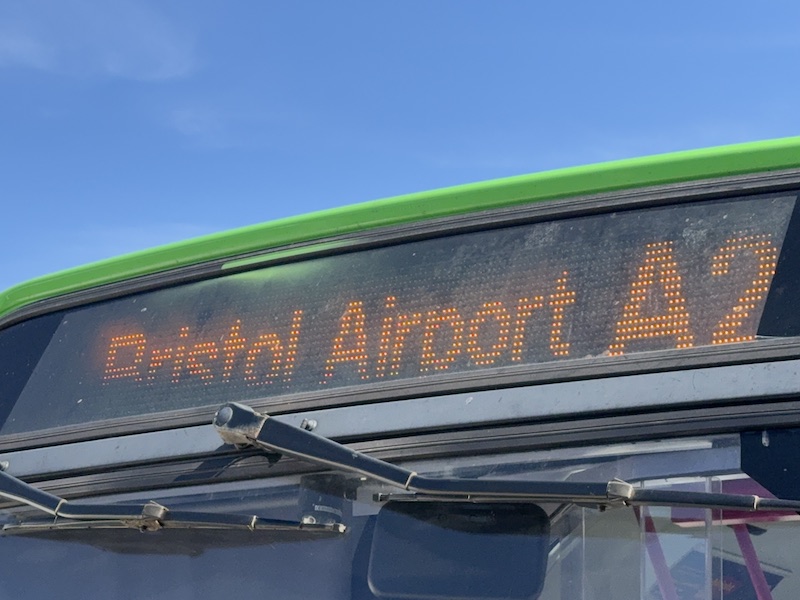
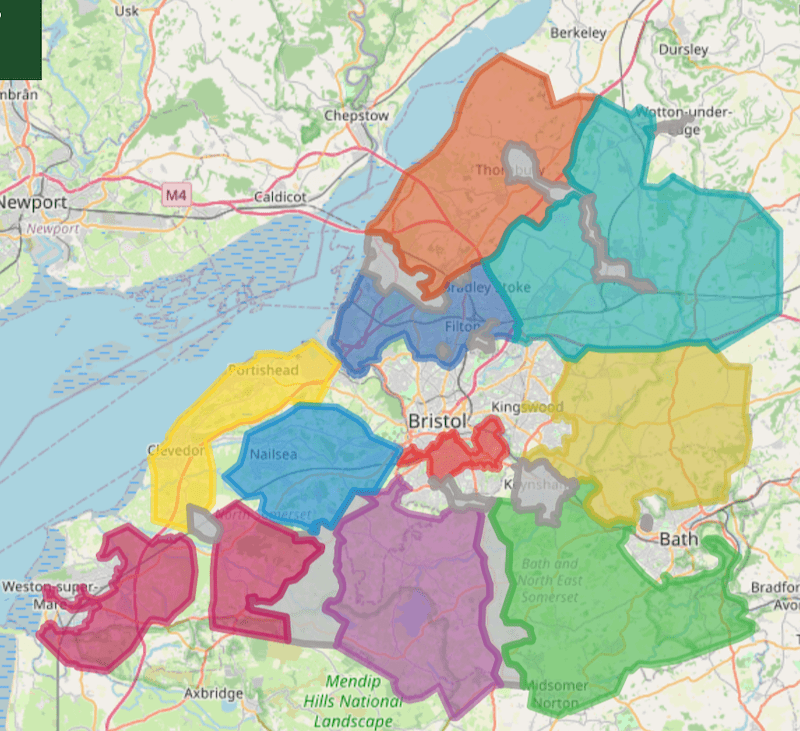
Another new bus route launched over the Easter weekend, this one linking parts of North Somerset with Bristol Airport. Funded by the Airport and operated by First Bus, the timetable comprises an hourly service seven days a week, twenty four hours a day, giving a significant uplift in journey opportunities for the communities of Portishead, Clevedon, Nailsea and Backwell as well as villages such as Weston-in-Gordano, Tickenham and Brockley.
New route A2 has been introduced coincidental with a number of other changes to First West of England’s network of routes between Bristol and North Somerset including the withdrawal of route X7 between Bristol, Backwell, Nailsea, and Clevedon meaning from a few bus stops in Nailsea and Backwell passengers now have the luxury of a 24/7 hourly link to the Airport but no longer a direct bus to take them into Bristol city centre.
All credit to First Bus for giving full details of the changes on its website well in advance as well as both ‘before’…
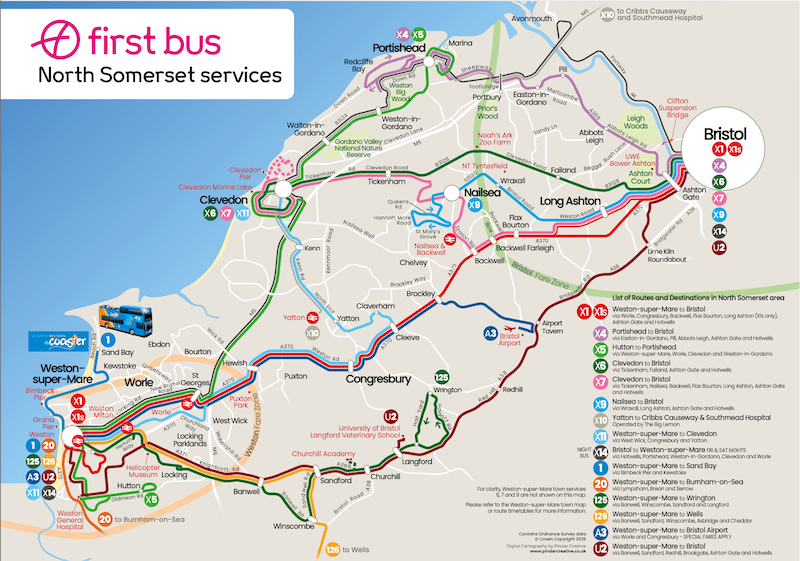
… and ‘after’ network maps.
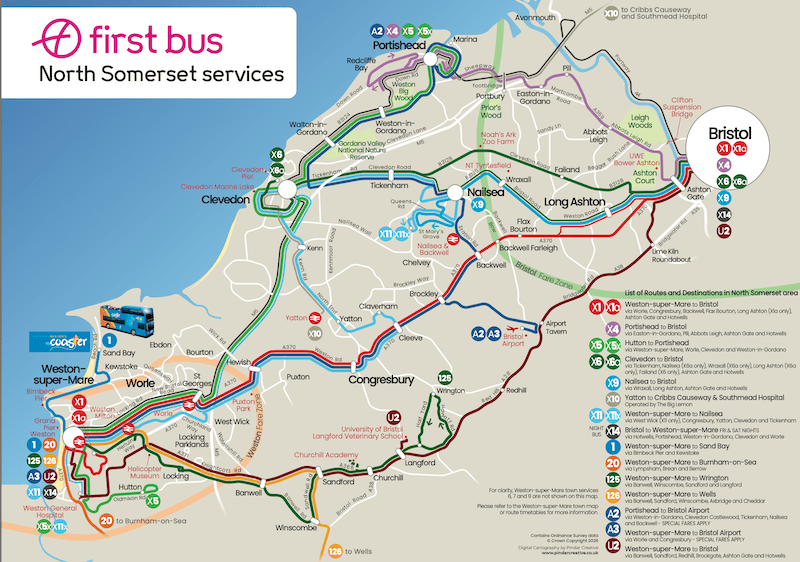
From these, you can see how route X7 (depicted in pink on the ‘before’ map) linking Clevedon with Bristol via Nailsea and Backwell, including the station bearing that joint name, has disappeared and been replaced with new route A2 (shown in dark blue on the ‘after’ map) to the Airport. Residents of Backwell also have the direct route X1 (shown in red) between Weston-super-Mare and Bristol albeit this had a frequency reduction last weekend to every 15 minutes as part of the changes.
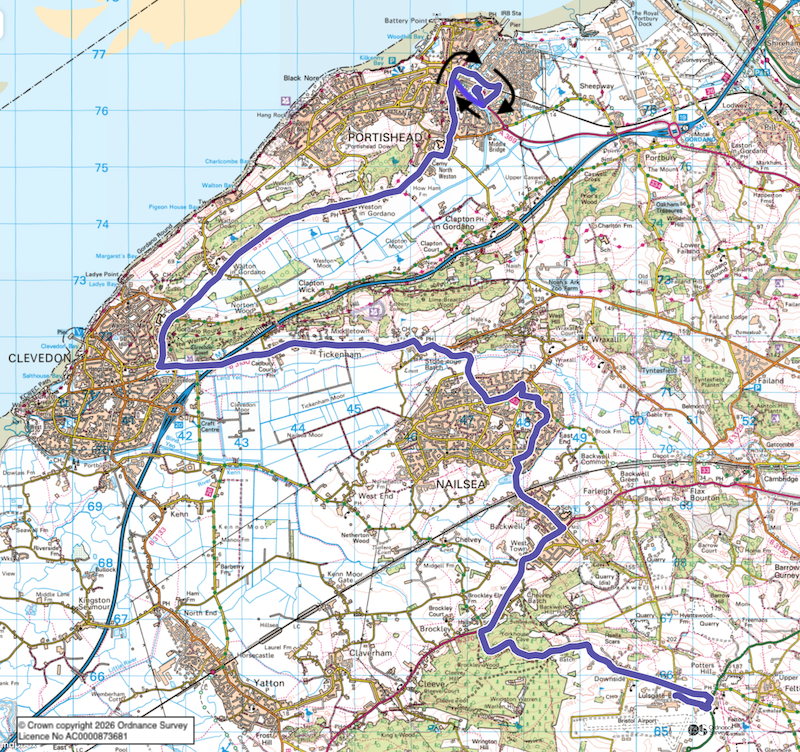
New route A2 only skirts the eastern edge of Clevedon before continuing north eastwards via Weston-in-Gordano to Portishead where it terminates at the town’s large Sainsbury’s store on a clockwise loop arrangement.
The A2 joins an impressive network of frequent routes supported by the Airport which link Bristol City Centre (route A1), Weston-super-Mare (route A3) and Bath (route A4). A diagrammatic map on the Airport’s website also shows longer distance links provided by the South West Falcon to Exeter and Plymouth as well as both National Express and Flixbus into South Wales and National Express to Gloucester, Cheltenham and Birmingham.
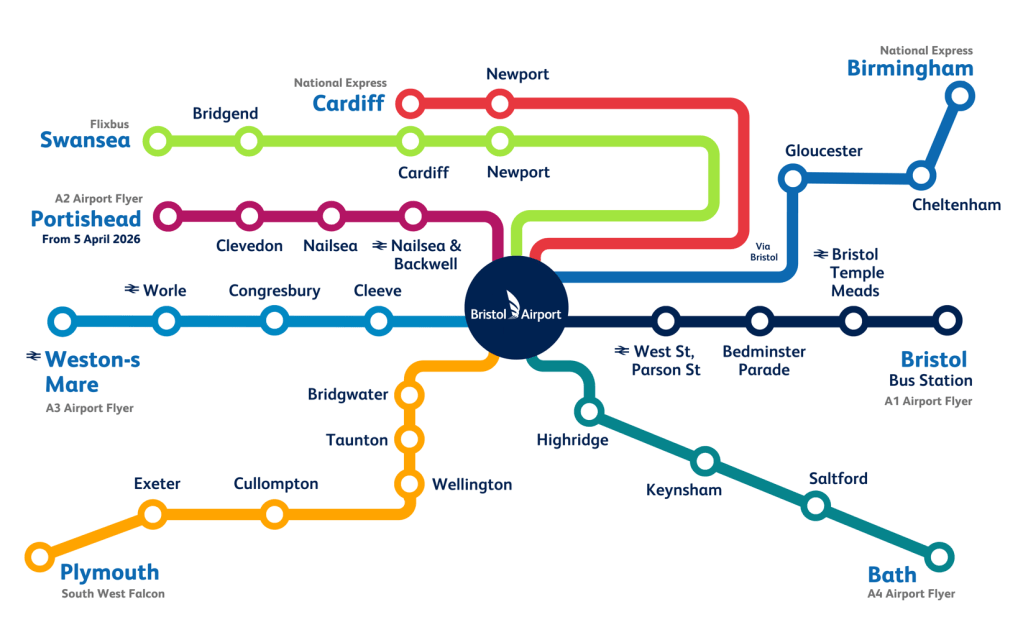
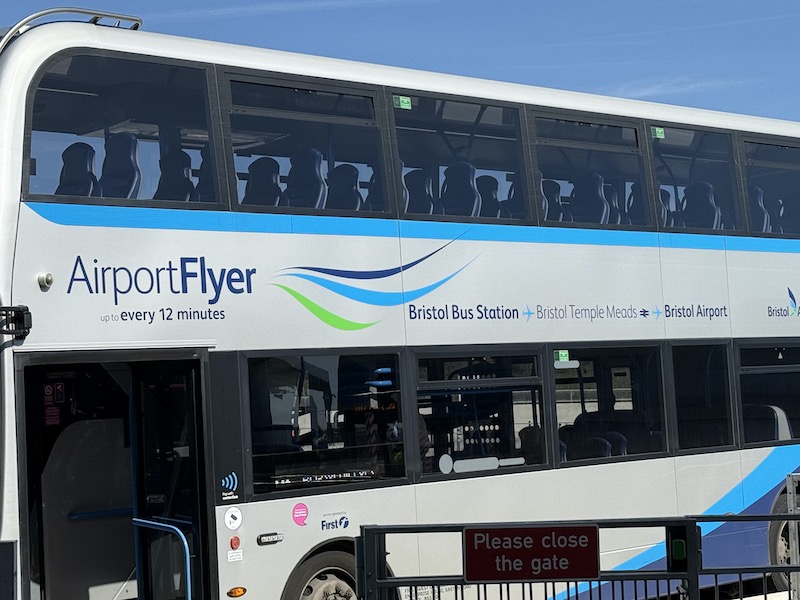
Routes A1, A3 and A4 like the new A2 also operate 24/7 and with impressive frequencies. Last Easter weekend also saw a frequency increase on the A1 from every 12 minutes…
… to an incredible every 8 minutes…
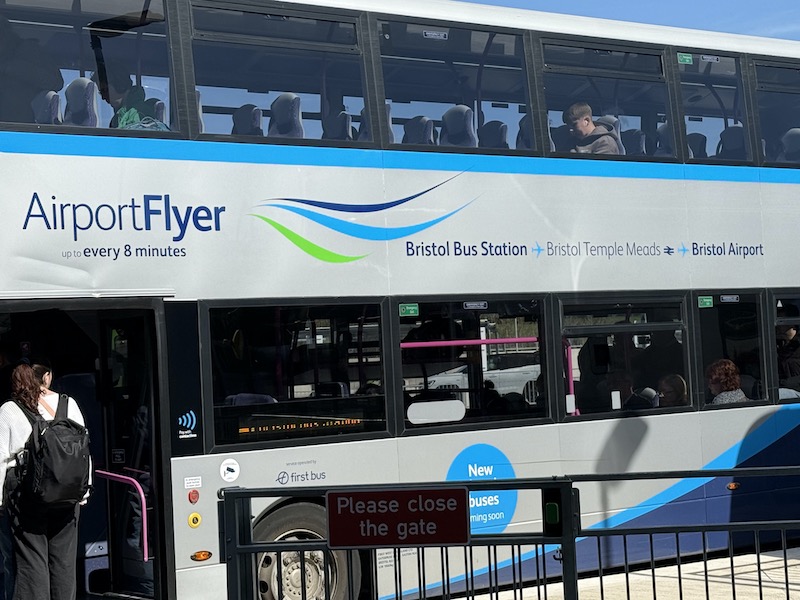
… giving travellers and staff to and from the Airport, as well as residents living along the route into and out of Bristol (Barrow Gurney, Dundry and Bedminster), a fantastic service which now also includes a half hourly frequency throughout the night to both Temple Meads Station and Bristol’s city centre bus station. New battery-electric buses are “coming soon” too, according to the sides of some buses dedicated to the route.
I took a ride over to Bristol Airport on Easter Monday to try out the new arrangements on what was the second day of the new timetables.
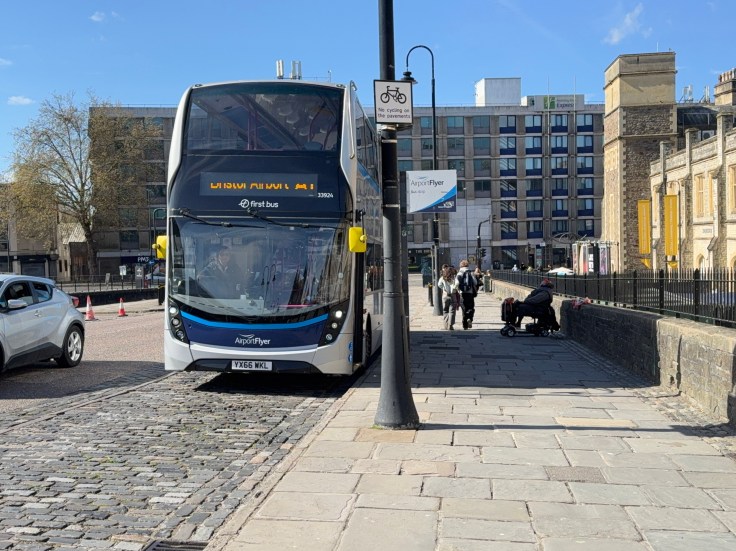
As I exited Bristol Temple Meads Station, there waiting at the bus stop was a bus on the A1 which had left the bus station ten minutes earlier and was pausing for a couple of minutes before setting off on the 30 minute journey to the Airport. There were only half a dozen other passengers on board but we picked up a few more as we headed out through Bedminster towards Parson Street Station. After that I’d expected us to continue along the A38 Bridgwater Road as per the route map…
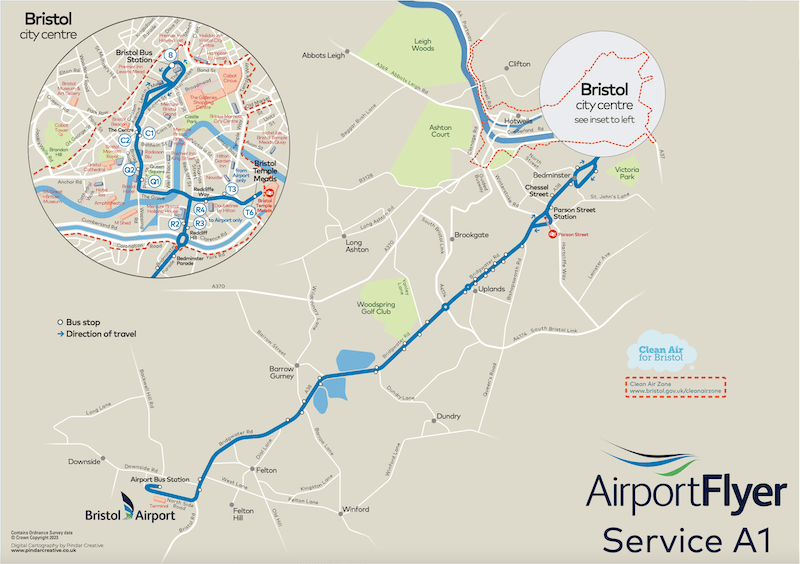
… so was a bit surprised when we headed through Bedminster Down instead along Bishopsworth Road and King’s Head Lane.
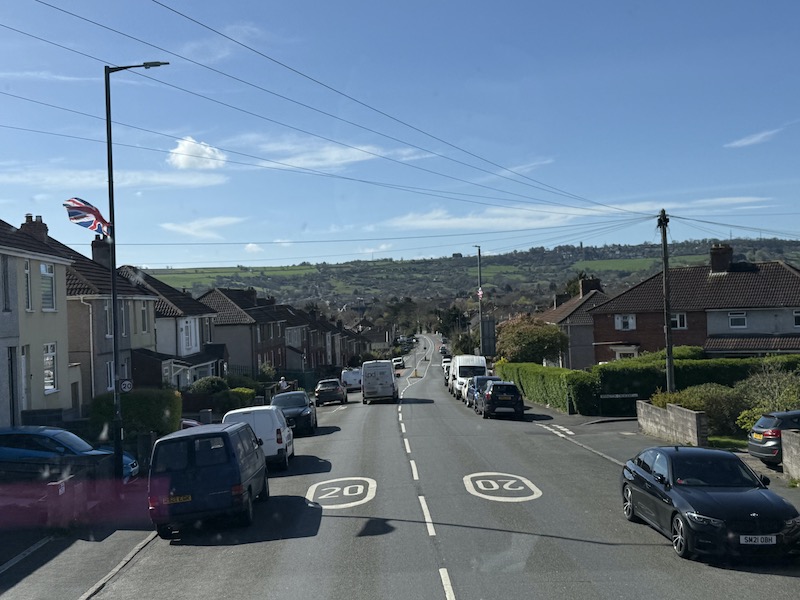
Maybe there was a road closure and I hadn’t spotted the signs indicating a diversion as I doubt the driver would have made a mistake. It didn’t add much to the journey time and, as it happens, a delay was experienced a third of a mile further on by some malfunctioning traffic lights at the roundabout with the A4174 South Bristol Link Road. Luckily there wasn’t much traffic heading out of the city so we got through after only four short green bursts of the lights but there was a very long queue heading into the city which must have been impacting northbound journeys including two buses we passed on the A1 waiting in the queue.
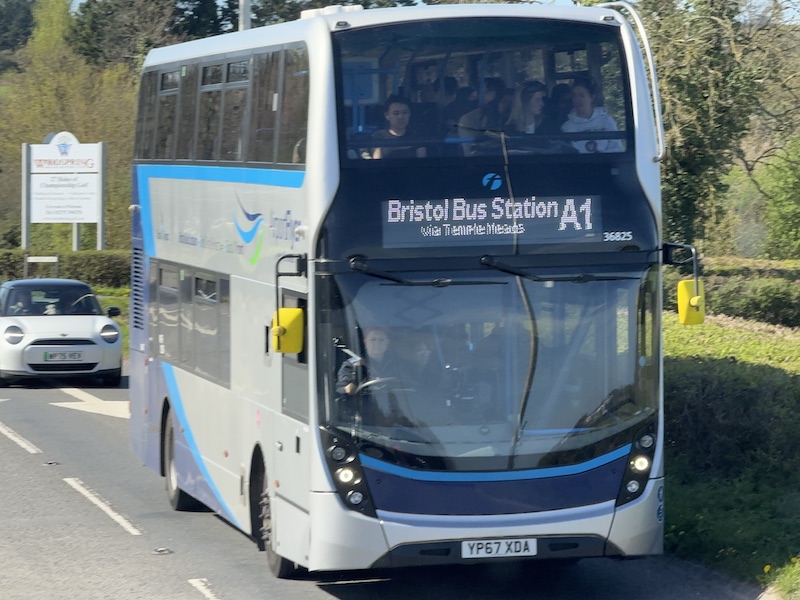
It was noticeable even though we passed buses heading towards the City every four minutes, they all seemed to have a reasonable number of passengers bearing in mind it was mid morning and only the second day of the improved frequency’ albeit a Bank Holiday.
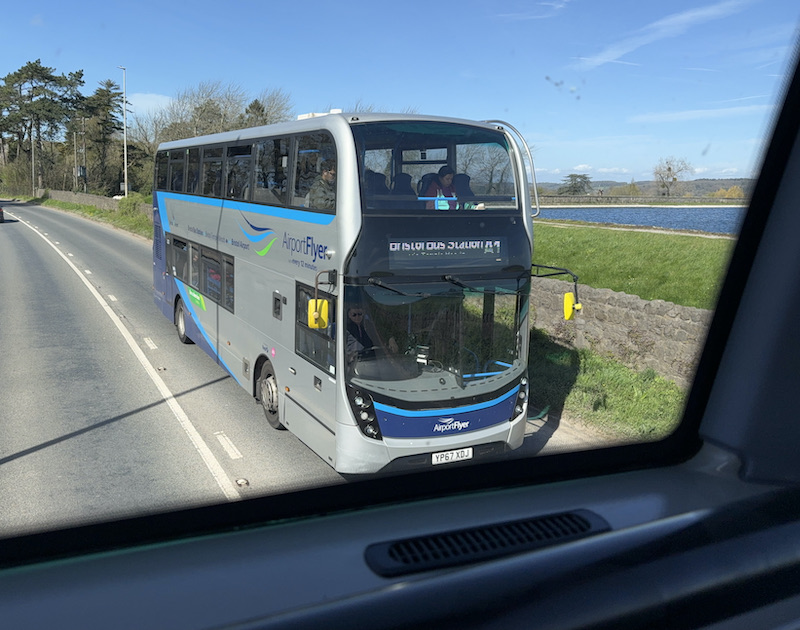
Soon after that we were approaching the Airport itself where there are very clear colour coded signs to segment the incoming traffic…
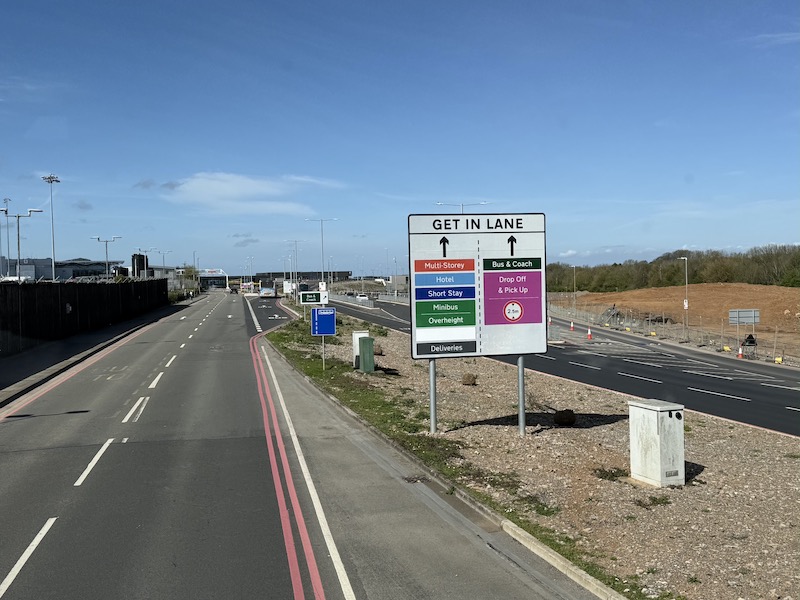
… and it was good to see buses and coaches are given a priority lane protected by barriers with quick access to what is a large ten bay bus station with easy access to the Terminal Building.
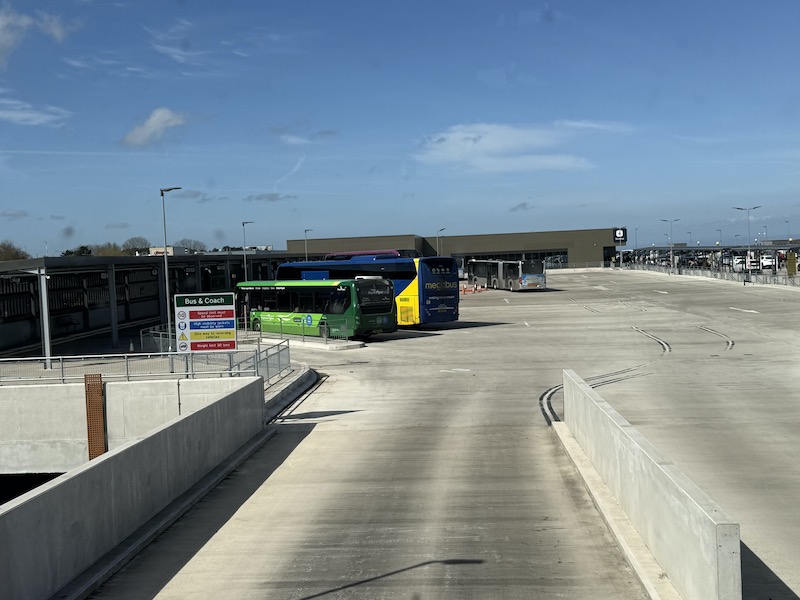
I think the bus station is a fairly recent addition to the Airport scene – it wasn’t there last time I visited although that was a few years ago now. It’s very functional if a bit architecturally brutal and basic.
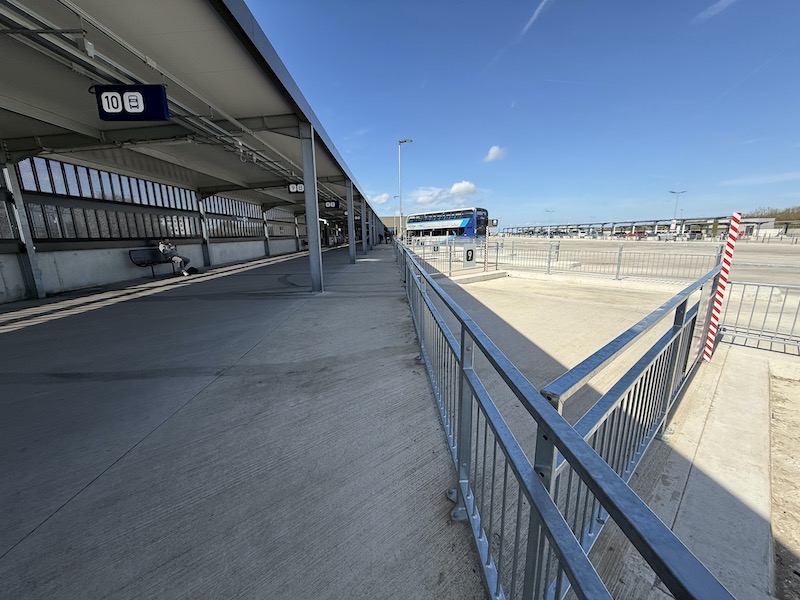
And I was a bit surprised at how few seats there are for waiting passengers.
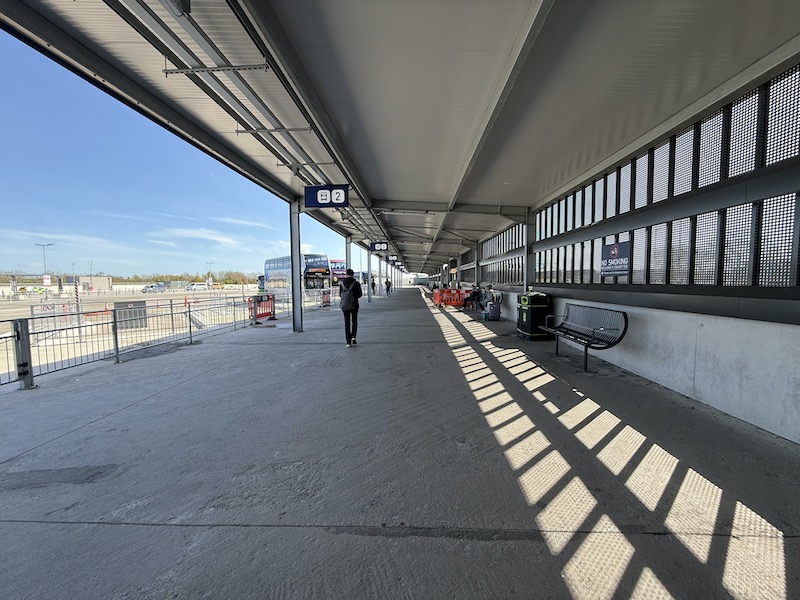
And a lack of printed timetables showing departures. However, there is a blow up copy of the diagrammtic map, although not yet showing new route A2…
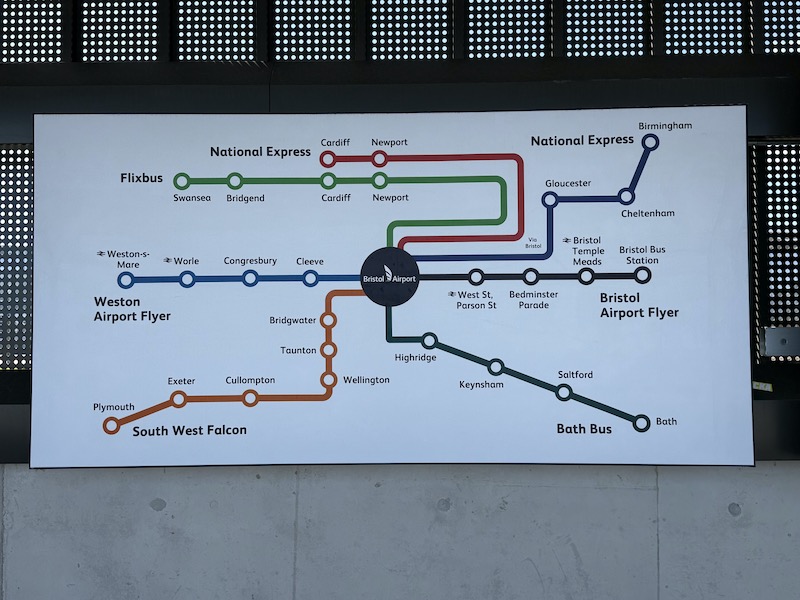
… alongside electronic boards showing upcoming departures for all bus and coach services both on the concourse and by the exit of the Terminal Building.
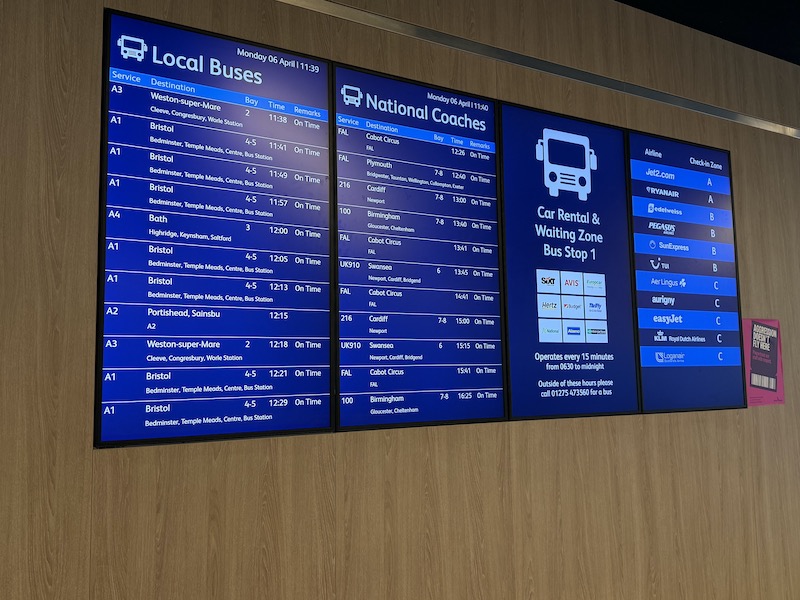
And, it was good to see new route A2 was listed except goodness knows why the Portishead terminus couldn’t have either had the shortened ‘Sainsbu’ deleted or the data field increased to include four more characters (ie ry’s). it just looks silly and unprofessional.
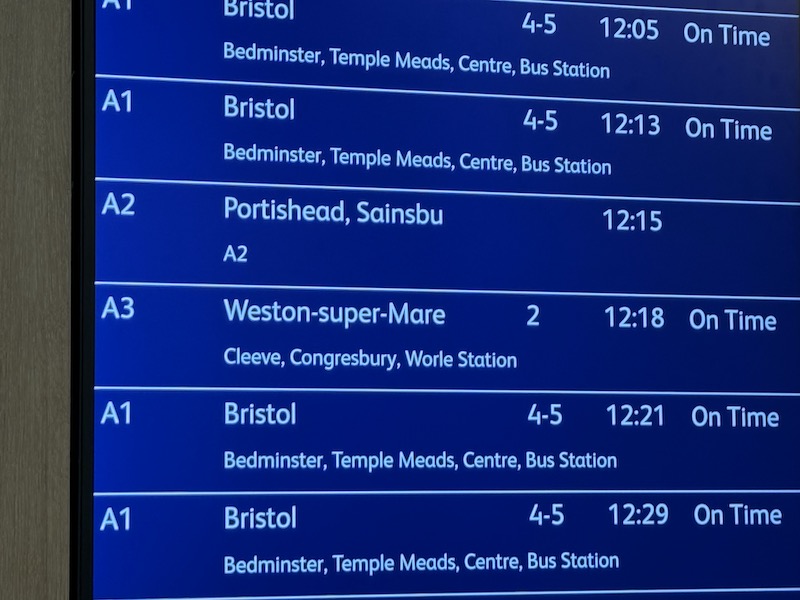
As you can see the departure line was also minus a bay number which panicked me a bit as it was quite a long trek from one end of the 10 bays to the other, not knowing where to wait.
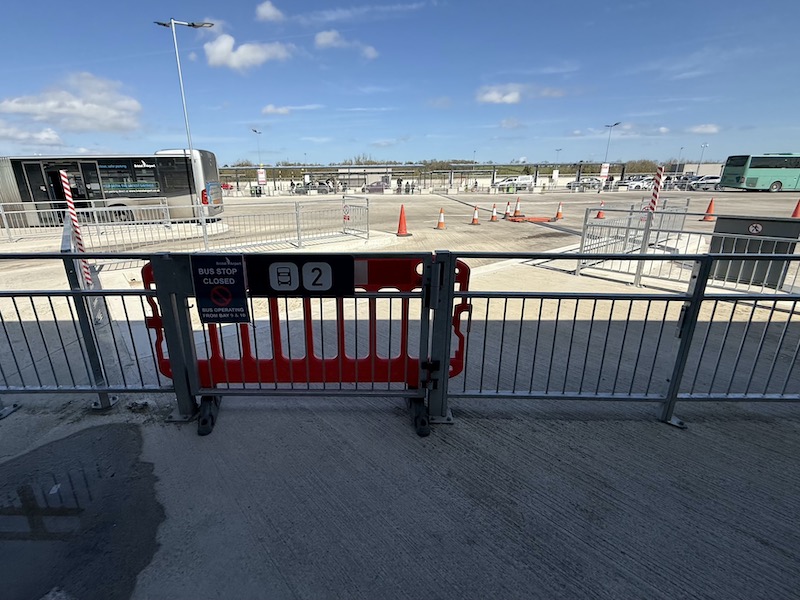
However, I noticed that route A3 for Weston-super-Mare was shown as departing from Bay 2 and route A4 for Bath from Bay 3 and had also noticed they were both closed…
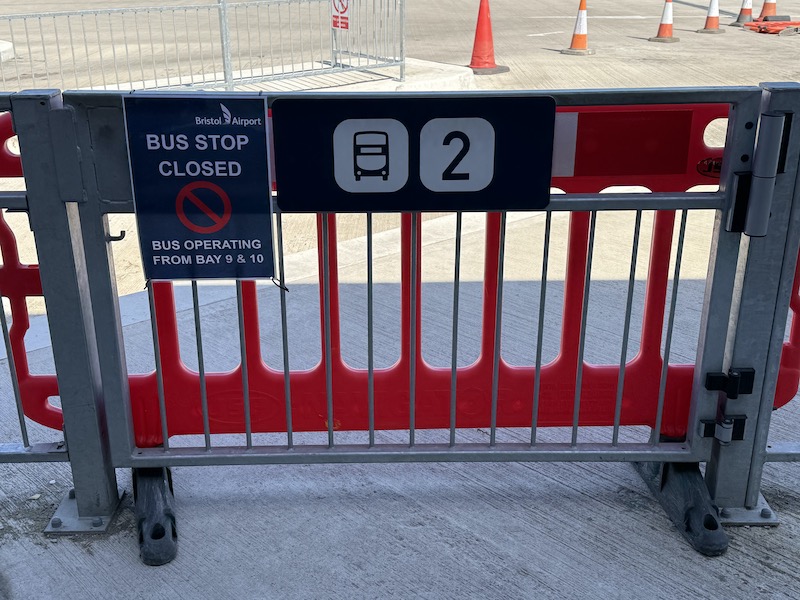
… with a notice explaining Bays 9 and 10 were being used instead.
While waiting and using bustimes.org to monitor the location of the incoming bus on route A2 I twigged that buses interwork between the A2 and A3 as a clever way for First to efficiently get drivers from Weston-super-Mare to operate the A2, thus doing a Weston-super-Mare-Airport-Portishead-Airport-Weston-super-Mare routine on an hourly bases and the other A3 (it runs half hourly) working back on itself.
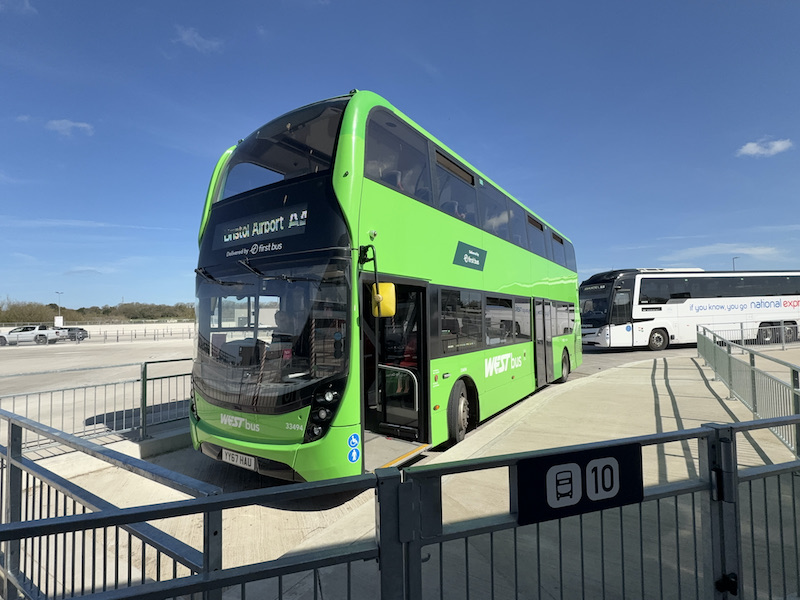
The A4 left from Bay 10, and took about a dozen passengers too, and when the A2 arrived from Portishead…
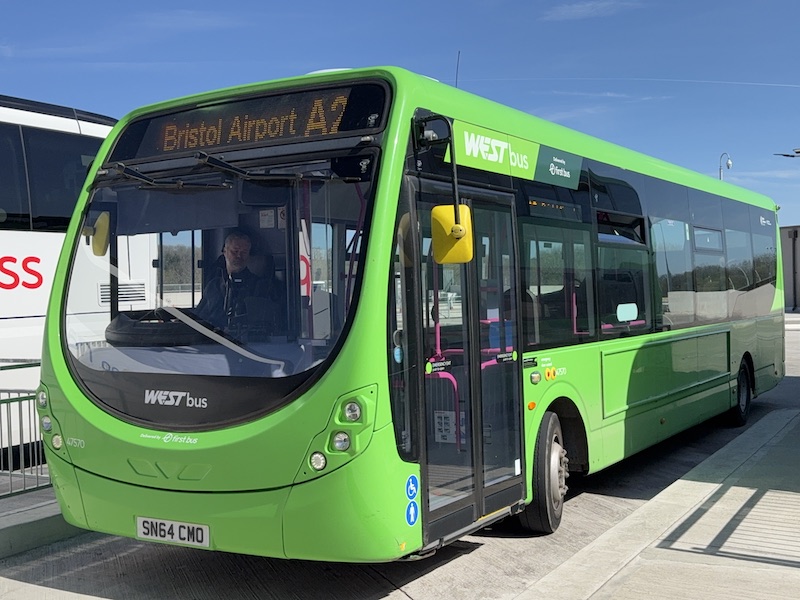
… and turned into an A3 for Weston-super-Mare that also used Bay 10 so I felt confident I was in the right place as confirmed by the driver of the A2-to-A3 bus. That bus left with a good load on too at 12:18…
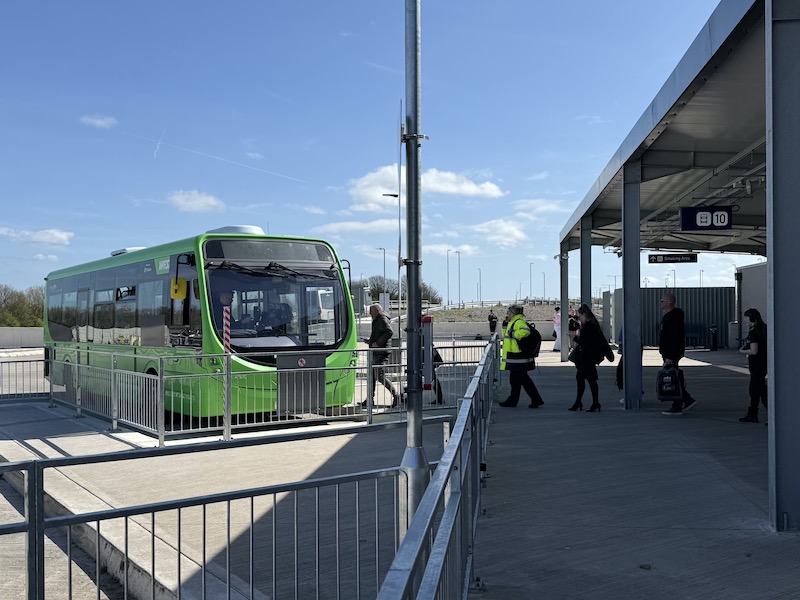
… but my bus, the 12:15 (due in at 12:09) still hadn’t appeared and bustimes.org was showing it as running 12 minutes late. It actually appeared 10 minutes down at 12:19.
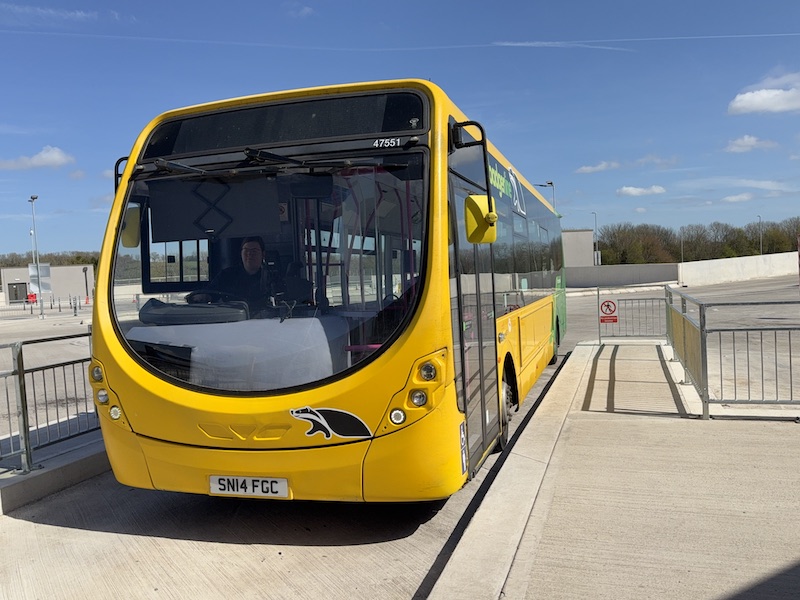
As you can see it was one of First’s Wright StreetLites resplendent in the Badgerline livery now sadly superseded by new First Bus corporate colours.
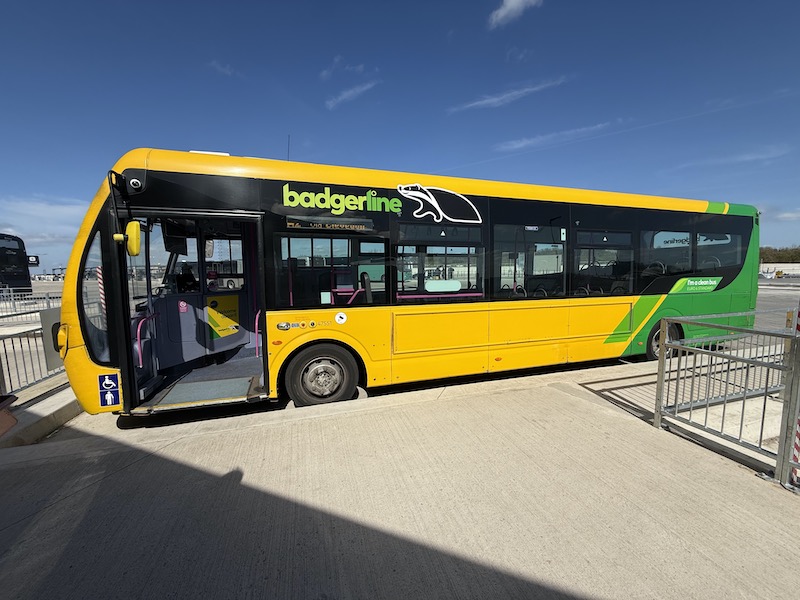
Off we set at 12:23 with one other passenger who had come off a plane and was heading for Portishead, so how convenient was that for him? Concessionary passes aren’t accepted to and from the Airport with special fares applying, presumably set by the Airport itself. There’s a single fare of £5 and a return of £7 for routes A2 and A3 (route A1 is £9 single and £15 return with route A4 a rather whopping £17.50 single and £24 return). Normal fares apply once the bus is away from the confines of the Airport which did make me wonder whether passengers tapping on at the ourter end of the route with their concessionary passes realise they can’t reach the Airport without paying a supplement. Locally based residents in certain postcode areas do travel free if they show a valid Diamond Card plus Bristol Airport’s “travel scheme card”.
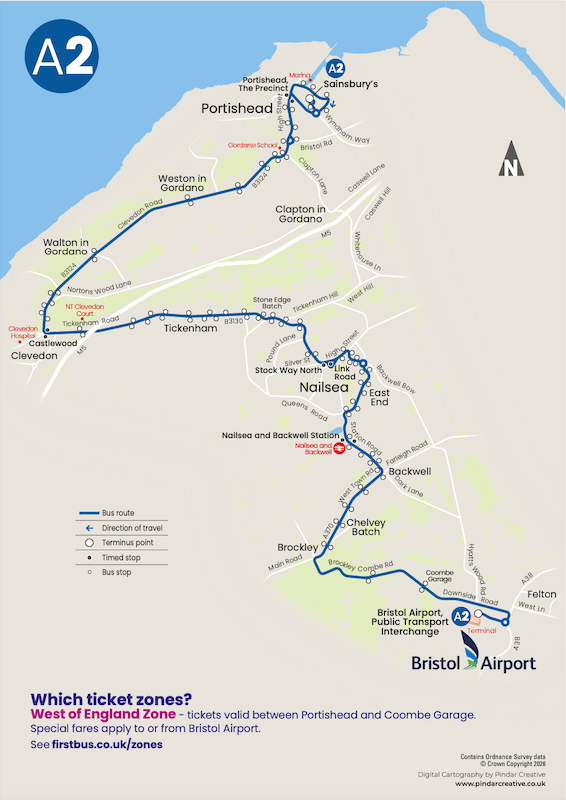
The first section of the route is common to both the A2 and A3 and gives a rather lovely ride to Brockley…
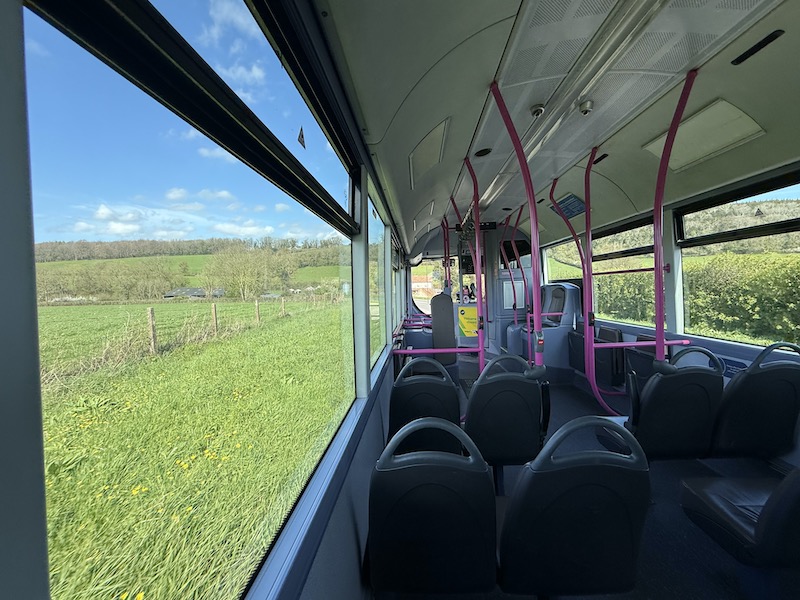
… along what is a narrow winding road in places through a wood as well as open country as can be seen on the OS map earlier.
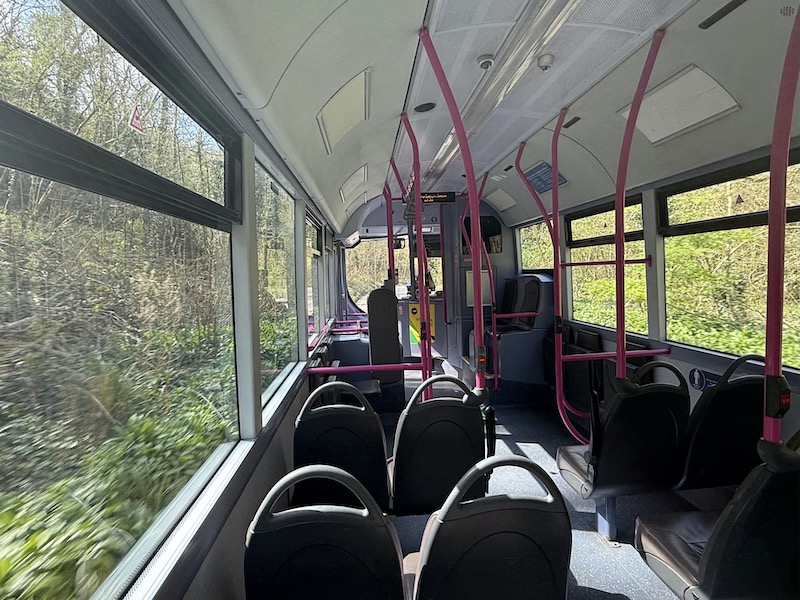
Three other passengers joined us during the journey; one from Nailsea to Clevedon, one from Clevedon and one from Weston-in-Gordano both travelling to Portishead where we arrived at the Sainbu (ry’s) store at 13:18 (four minutes down) and just at the time we were due to leave. However, the driver needed to make a phone call with a query about fares…
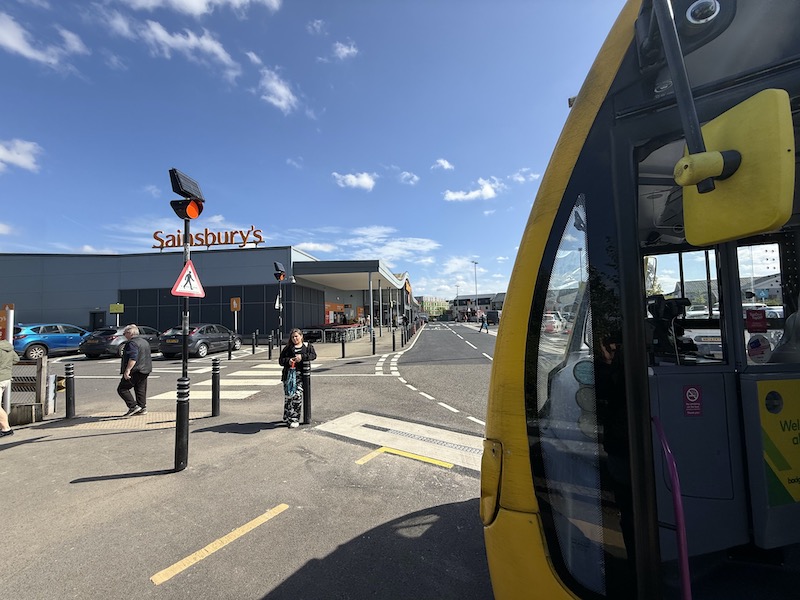
… so I took the opportunity to stretch my legs and then a couple boarded heading to the Airport because they’re flying off somewhere next week and thought they’d give the route a try out and looking like they were concessionary pass holders that was £14 revenue for the route, which will lead to another £14 next week too.
Heading off five minutes late we picked up a young couple travelling from Clevedon to Nailsea and another in Nailsea and then as we arrived at Nailsea and Backwell Station where I decided to bail out and catch a GWR train back to Bristol, we picked another couple up with suitcase obviously travelling to the Airport which would make all those keen on modal integration delighted, especially if they had arrived at that stop by train.
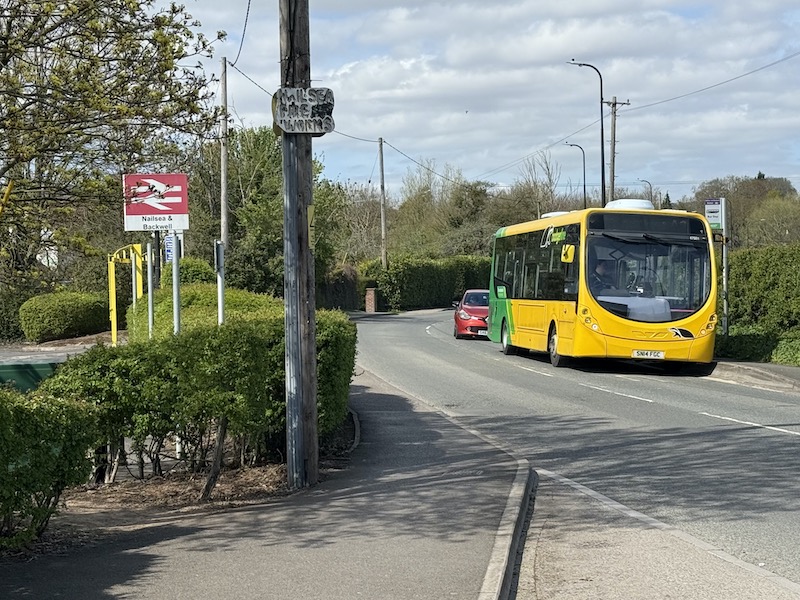
It’s impressive to see the steps Bristol Airport is taking to promote travel to and from the airport by bus and coach. While I was at the Airport I noticed a South West Falcon coach arrive from Plymouth with a large contingent of passengers alighting…
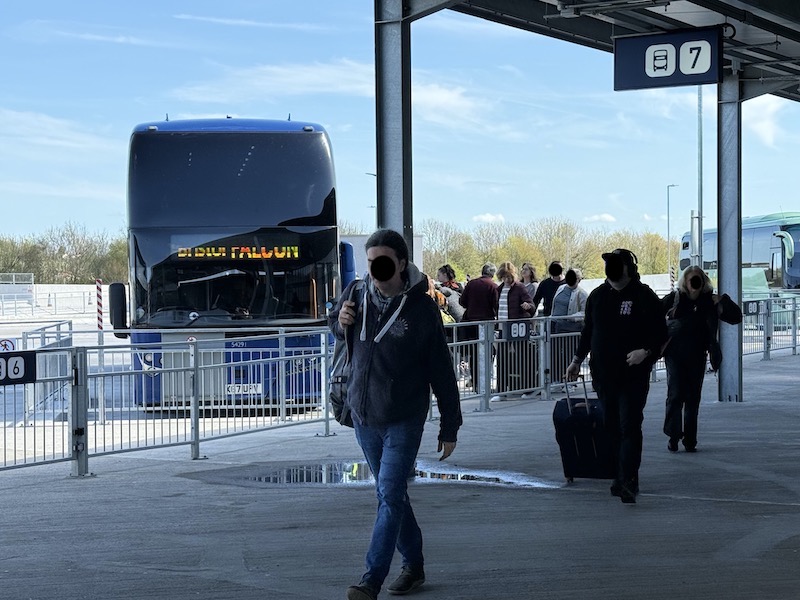
… and also the same from a couple of National Express coaches which also arrived while I was there.
I didn’t get to see the bus stops along the route of the A2, but certainly the terminus at Sainsbu (ry’s)…
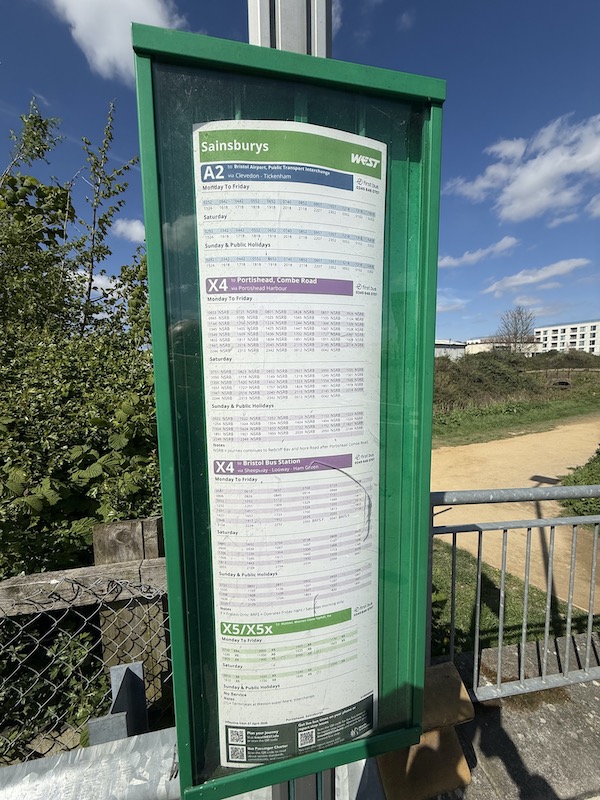
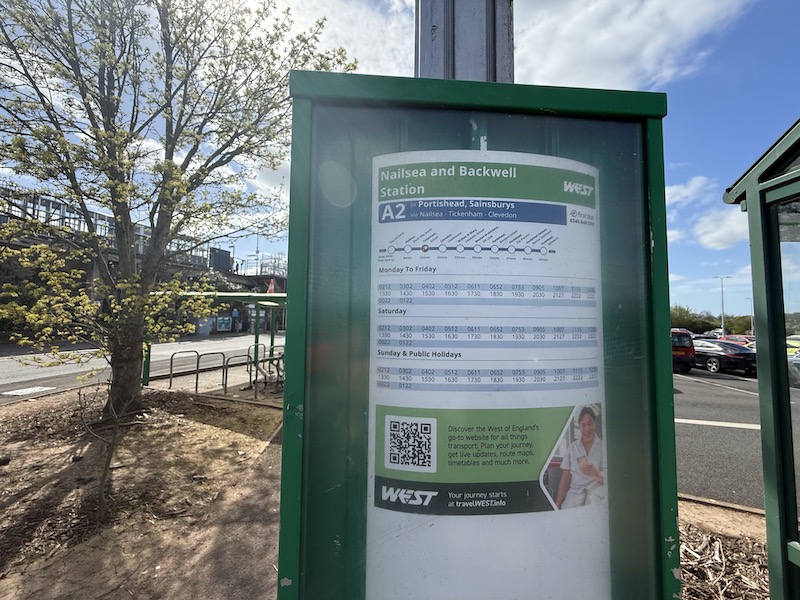
… and the bus stop at Nailsea and Backwell Station had been updated to display A2 timetables which was good to see.
One thing I also noticed returning on the train from Nailsea and Backwell was an automated announcement as we came into Temple Meads Station advising passengers travelling to Bristol Airport to change there for the Airport Flyer Bus route A1 to the Airport whereas, it would be quicker (and cheaper), if times connect, to change at Nailsea and Backwell on to this new A2 on northbound train journeys from the south west.
I also read the timetable has been devised to provide for connections but looking at the times of trains to and from Taunton which call at Nailsea and Backwell, compared to the A2 timetable I must be missing something as integrated times don’t hit me in the face. However, it is good to see through fares are available on the National Rail fares database on both the A1 and A3 to the Airport, but no mention so far of the A2. Perhaps that will follow at the next update.
It might also be opportune to mention that the Airport, as well as Nailsea and Backwell fall within the WESTLink DRT operating area but last weekend saw a significant reduction in service provision in the North Somerset zone with hours of operation scaled back to just Mondays to Fridays and between 09:00 and 14:00 so it can be fitted in between school commitments and operated by North Somerset Council’s in-house staff and vehicles. Individual journeys are also now capped at five miles and only in designated zones.
But, good to see the new A2 providing such an extensive timetable across the 24 hour day for the Airport and the work the Airport is doing to promote travel by bus and coach. Once buses are all in the bespoke livery for the Airport routes it will look very impressive.
Roger French
Blogging timetable: 06:00 TThS
 BusAndTrainUser
Airports, like hospitals, can be great as hubs for bus networks, and it looks like “change at Bristol Airport” could offer some good journey options across the area, especially overnight, if timetables were well managed.
And only if the fares are sensible. The fares structure has to limit the airport premium (higher fares and/or concession limitations) to those starting and ending their journeys at the airport, and leave in-and-out passengers unpunished. Have they managed this at Bristol Airport?
LikeLike
Yeah it’s a real shame certain airports, Bristol among them, think it’s ok to charge through the nose for regular bus travel. I’ve used both Heathrow and Stansted as bus stations for journeys that otherwise wouldn’t be possible and certainly wouldn’t be available later at night, 7 days a week. Both of those airports are impressive in their extensive bus networks.
Also, all major airports should have to accept bus passes on regular bus routes too, otherwise it’s let another postcode lottery.
Aaron
LikeLike
Good morning Roger,
Please note that the vehicle on your A2 journey was a Wright StreetLite not an Enviro200.
Best wishes,
Andrew Sutherland
LikeLike
Oh yes. Thanks for spotting that, Andrew. Now corrected.
LikeLike
There are proposals to build a rail link to Bristol Airport. Nothing decimate though
Bristol Airport is the main airport for the West of England and also serves much of South Wales. Road links to the airport are not great so a rail link would help a lot
LikeLike
it’s really interesting to compare the extensive bus/coach services to Bristol Airport with the more paltry offering at Newcastle, which I guess is an airport of a similar size/function. Newcastle of course benefits from the Metro link to the city centre, mainline station and nearby settlements like Sunderland, Gateshead, South and North Sheilds. It’d be interesting to see what happens to the bus/coach offer at Bristol if a rail link does come to fruition.
LikeLike
High Roger. As you will appreciate, working with Airbus, Speedlink, Airlinks, National Express and TGM(Arriva) I would be very interested to have a look at the Bristol Airport Bus and Coach links at a future date that fits your Observation Planning. It won’t be just yet as I have things to consider, but very interesting indeed.
The Wandering Busman.
LikeLike
Not sure that many non-locals would realise that “Cabot Circus” (Falcon) is actually Bristol…
LikeLike
Thanks for this generally positive review, which I really enjoyed reading.
I certainly admit to being ‘keen on modal integration’, partly as a political choice (it’s the best way to get more people travelling by public transport, which is good for health, traffic congestion, and many other reasons) but mainly because at present I cannot do much of my personal travel by rail and/or bus because the rail and bus operators make it impossible or difficult – mainly due to poor inter-modal integration. Come on, chaps, make it better for me and the travelling public generally, and for your revenue as well: all it takes is to pick up the phone and talk to your opposite numbers about how to really ‘put the passenger first’ … don’t wait for the call from Heidi Alexander, or for dollops of public money to fall in your lap. Integrating your services should be fairly cheap and fairly easy, but requires you really wanting to make it happen, and to be prepared to negotiate fair shares of the extra revenue generated. Just think how difficult and expensive it is to purchase, learn to drive, and keep a car on the road and fuelled – you must be doing something badly wrong to drive so many potential customers to that! Again, think: only 15% of travel is by public transport: what sensible commercial organisation ignores the 85% of the market that you are not currently getting? Take a trip on the London Underground: for over a hundred years it has offered simple network-wide travel with clear and large wayfinding signs at its interchanges, amd frequent, consistent services – all you need is the familiar Map.
LikeLike
The Percentages Statistic has little usefulness, but does offer some guidence. The upheaval of Post Covid Travel patterns is starting to revert toward pre 2020 patterns so we can make a few rough guesses. A lot of that 85percent is doing journeys that are unfeasible by time, carrying of goods or other passengers , or destination to undertake by public transport. Although I make that statement I can think of plenty of journey routes that public transport is (locally) missing even in London despite my constant (why do I bother) calls for it both in missing days or times (If I buy a car – cheap second hand – for weekend leisure journeys – then I will probably use it too for a work commute where the bus service just does not join up). Even say the Tramlink that drops to a low evening frequency and was not built at new addington to reach the employment area leaving that for buses , an annoying change. Where the tram is busy at peak times it becomes unpleasant to use . I am sure south western railways longer 10 carriage trains are going to be full too soon though for now they give a bit of welcome space. The Elizabeth Line too is over demanded for passengers , few people are driving Romford to Central London, but driving from Brentwood to Romford does occur – the faff of getting to a train station for a short journey or a bus that takes longer shows the trade off made. So the whole 85percent wont be moved much , even if bus usage doubled the percentage of non public transport passenger miles with fall only a tiny amount. and passenger journeys percentages only a little more Urban areas are also aiming for more cycling and walking , but we can see in Oxford a small swing to bus usage from the congestion charge the city council has brought in. As you say , there is a potential market , the question is it profitable and achievable to serve more than a small proporation of that market. The integrated transport policy and the guideline from First/Stagecoach etc to rail operators quoted in comments on tuesdays HL1 blog perhaps show a way forward
JBC Prestatyn
LikeLike
I realise that the ‘before and after’ maps are to publicise the new journeys, but I am surprised that the A1 was not also included for completeness. It looked as though only the A2 and A3 went to the airport.
MotCO
LikeLiked by 1 person
It will probably be a bigger success if they charged a better fare, is there still the loophole where if you walked outside the airport grounds to board the bus at the first bus stop outside it’s a lot cheaper?
Just look at Stansted Airport & other routes for bus routes which come into that £3 fare cap scheme and don’t charge a premium by the money grabbing airport.
LikeLike
The A1 frequency increase actually happened last year, it’s definitely a big shift in the attractiveness of the service especially evenings/nights.
The £17.50 price on the A4 is the old Bath Bus Company price, since last weekend it’s been fully integrated into the First West of England operation and Airport prices dropped to match the A1 Bristol price.
The new electric buses entered service on the A2/A3 just a couple of days ago!
LikeLike
Many thanks for these updates.
LikeLike
This bus service to and from the airport seems to have missed out Long Ashton community.
LikeLike
How would you suggest it does that?
LikeLike
It is good to see airports supporting local bus links but their usefulness as a hub is undone by the fares structure.
Strange thought to encourage less car use to get to an airport to use the most polluting form of public transport there is – planes! I do hope the fliers are going over water and not using internal flights to Glasgow or Edinburgh for example.
Richard Warwick
LikeLike
But does this new bus, the A2, accept pensioner’s free bus passes?
LikeLike
Yes, except to/from the Airport itself.
LikeLike
Can’t see any buses from Bournemouth there. Oh, sorry, not that sort of More buses.
John
LikeLike
As others have commented already, I do also find it a bit absurd that fares to/from the airport are more expensive.
In recent years Birmingham Airport has provided some funding in conjunction with TfWM to support the introduction of more bus services to serve the airport, as well as the neighbouring NEC and Birmingham International rail station.
As well as the long-standing X1 (Birmingham to Coventry) and X12 (Birmingham to Solihull) services, the last few years has seen the 97A and 17A services introduced, which are extension variants of existing 97 (Birmingham to Chelmsley Wood) and 17 (Birmingham to Tile Cross) routes respectively, while at evenings and all-day Sundays there is also the 96 service to Erdington and Kingstanding.
But normal fares and pass conditions apply, as these are ‘normal’ public bus services. However it’s my understanding that the Airport funded these routes more for the benefit of employees/staff, rather than for passengers heading off on a plane – I couldn’t see many families with lots of luggage being happy squeezed onto a cramped single-deck bus twisting its way through east Birmingham!
Personally, as a solo traveller with a small suitcase, I’ve made use of the X1 bus to get to and from the airport to head off to sunnier climates – while the bus stops themselves are a bit dismal, they are at least located right in front of the terminal buildings, so are actually more convenient than the taxi pickup/drop-off points!
Would I be happy to pay more to get a bus from the airport though? Probably not!
LikeLike
A nice dual truncation in the writeup: Sainbu (ry’s) store at 13:18 (four mintes down)
Re. fares, Edinburgh airport is known for two things, a deadbeat chief executive and chiselling as much money as possible by all means possible from users.
LikeLike
Thanks – mintes now corrected.
LikeLike
Good to see your bus was in the rather attractive Badgerline livery, but surely if it’s a Weston-based vehicle it will in due course acquire the rather insipid WestBus green colour rather than the equally-uninspired First corporate livery.
LikeLike
Interesting that there’s a premium payable for bus journeys to Bristol Airport.
Contrast with the mighty Heathrow where there are none for the many bus services, but they are applied for train journeys!
LikeLike
First of all, thank you to Roger for a very comprehensive article, and I know he’s been through and made some amends. However… the comments… I live in the area so here’s my two penneth
Yes, you can walk to the Airport Tavern and catch the A1 from there and avoid the premium fare. It’s three quarters of a mile and I’ve done it in the rain. It is not a pleasant experience and if you fancy doing that with a heavy bag/case and your partner and children in tow… well, that’ll be an interesting start/finish to your holiday!
The idea that it’s some sort of transport hub. Yes, it is… Bristol Airport support these services in order to enable visitors and staff to get to the airport. They’re paying for these uplifts – why on earth should they look to provide additional services at bargain prices to enable people to change and they get no benefit? In fact, that the local burghers of Barrow Gurney and Lulsgate Bottom get an unbelievable service to/from Bristol and can use their passes is quite something but no… we have people complaining because they can’t roam around via the Airport!
As for the question of premium fares and the accusation of price gouging… The whole model of Bristol Airport has been to attract the budget airlines so it is totally different to Heathrow. To attract and retain those airlines/flights, they charge a much lower level of ground handling fees and the like to those budget airlines. Guess how Bristol Airport therefore recoup this lost revenue… they get it in premium bus fares like those quoted. Please note the different path that Cardiff Airport took and how that panned out!
Now, of course, the argument is that shouldn’t public transport fares be cheaper in order to incentivise that rather than car travel? If you want to park your car and fly out one morning and return the following evening… £70 to park your car. Of course, get your partner to drop you off at the kiss and ride…. £8.50 for 10 minutes. Drop them off on the airport roads – you get a £100 fixed penalty (reduced to £60 if paid within 14 days). So yes, the bus fares are actually much lower.
Bristol realises that they can only get the flights if they have lower fees, and that is how they achieve it.
BW2
LikeLike
I assume Airport Workers would have lower fares at a season ticket rate, Indeed an employer loan to purchase a season ticket used to have no tax BIK on the notional interest I think that still applies
JBC Prestatyn
LikeLike