Thursday 19th March 2026
At a meeting of Cambridgeshire & Peterborough Combined Authority’s Transport Committee in January, a recommendation was made to the Combined Authority Board to approve the withdrawal of five funded bus routes (13B, 19A, 65, 117 and 129). In the grand scheme of things they’re fairly minor league routes and indeed the Report to the Committee explained “these routes achieve savings with minimum customer impact due to the low number of passenger journeys or the alternative options being proposed.”
The Committee were told 35 routes in total are currently “in scope” for review, where the cost per passenger is higher than £10 per journey, but it’s only these five under immediate risk of withdrawal.
Route 13B (Nosterfield End-Linton) is a one early morning journey anachronism operated by Star Cabs with an average of just 3.2 passenger journeys per week. I doubt it’ll be much missed. Route 19A (Landbeach-Waterbeach-Cambridge) is a two-return-journeys-per-day service now duplicated by a new half hourly route 100 introduced with developer contributions last year making the 19A superfluous. Routes 117 and 129 are Thursday market day services in the Ely area connecting Wickden and Prickwillow and the proposal is to use a Tiger on Demand minibus to replace the journeys and crucially “provide the same fixed journeys … making efficient use of the vehicles with fixed links for residents”.
So far, so good. These sound like sensible changes (provided it is fixed Tiger on Demand journeys in Ely). However, it’s the withdrawal of route 65 that caught my eye and the subject of this blog.
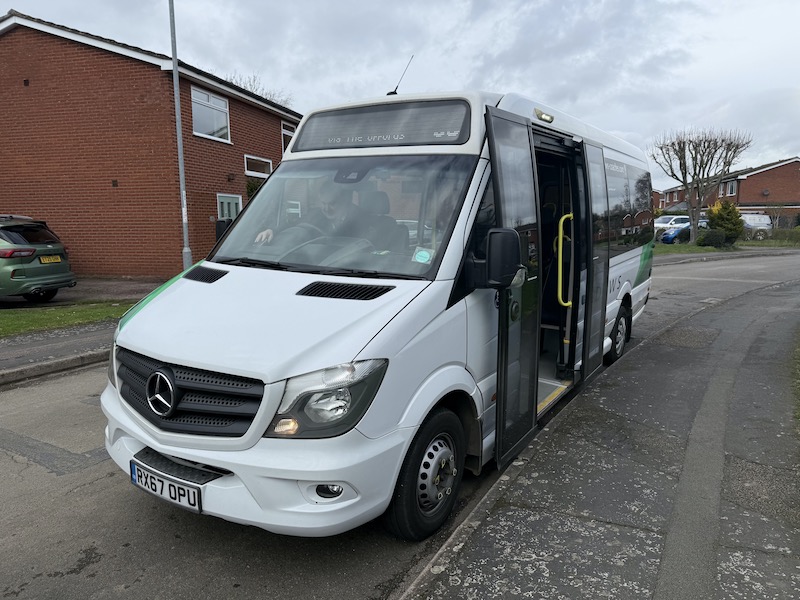
This is an off-peak three-return-journeys per day, Monday to Friday service operated by Dews Coaches linking Buckden and the villages of Offord Cluny, Offord D’Arcy and Great Paxton, which lie on the eastern side of the River Great Ouse, to the market town of St Neots. Much of Buckden is also served by the half hourly Whippet operated route 66 which connects St Neots and Huntingdon via the west side of the River Great Ouse and serves the larger communities of Little Paxton and Brampton but the villages on the east side of the river have no alternatives.
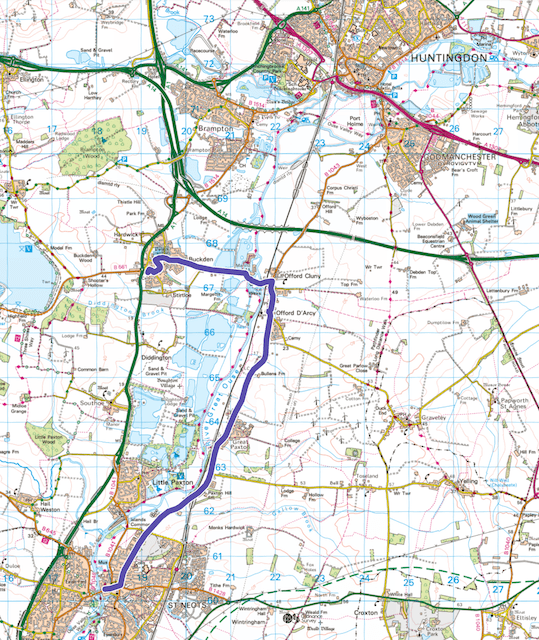
© Crown copyright 2026 Ordnance Survey Licence No AC0000873681
The Report admits “the service scores reasonably well via the framework” – that’s a reference to the “Bus Services Review Framework” agreed in November 2025 for how all Authority funded bus routes will be reviewed with various scores given to characteristics of the service and the area served (known in posh terminology as ‘social value’) as well as value for money – but the Report adds “there is considerable overlap with the existing Tiger on Demand service”.
It continues to the killer (literally) recommendation …. “the journeys that are and can be made on this service are also viable on the Tiger on Demand service, with an average of 2.53 passengers per trip. As such removing this duplication would improve value for money in this area. Therefore, it is proposed that this service is withdrawn with 112 days’ notice to the operator and Traffic Commissioner. However, strong passenger communications will be required to communicate the change.”
There are a number of flaws in the foregoing logic, which I’m pleased to read from the minutes of the meeting some of the Councillors present spotted and raised their concerns.
The first is the assertion there are three return journeys a day “with an average of 2.53 passenger per trip”.
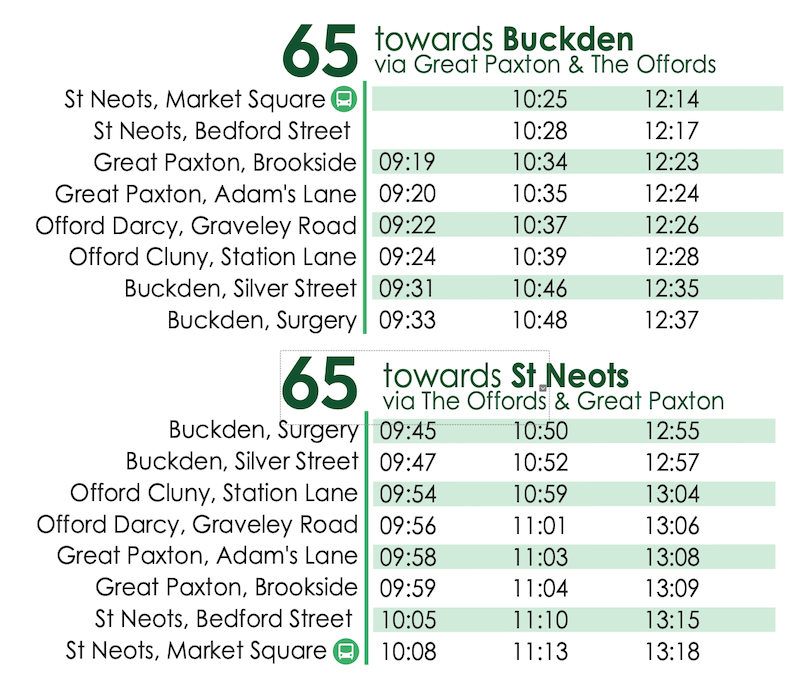
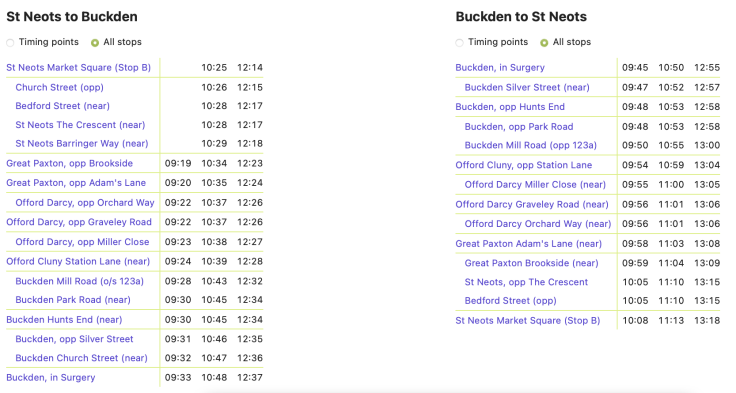
Looking at the timetable, there are indeed three journeys in each direction, albeit the first northbound trip commences at Great Paxton rather than St Neots, but crucially on an off peak shopping service of this kind, the only productive and useful journeys are the first one south from Buckden (at 09:45) arriving into St Neots at 10:08 paired with the last northbound return journey at 12:14 leaving St Neots back to Buckden for 12:37 giving a rather generous (for the size of town) two and a half hours in St Neots. The other productive journey is the second southbound trip from Buckden (at 10:50) arriving into St Neots at 11:13 giving an hour’s shopping time before returning on the aforementioned 12:14.
The other three journeys are essentially positioning journeys to enable the three highlighted to offer convenient travel times for an hour or two in St Neots.
Many shopping type services of this kind (eg the R17 in Hertfordshire/Harrow I highlighted last week) don’t include such journeys in their timetable presentations, but on the other hand, there’s no harm just in case there’s an outside chance someone wanted to get to one of the villages ‘against the flow’.
But, what would be more useful is if the “passenger per trip” statistic only took account of the productive journeys which would improve the scoring. For example, in the case of the 65, annual patronage is 3,943 with a stated 30 “trips per week”. If this instead was expressed as 15 trips per week, passengers per journey would double from 2.53 to 5.06.
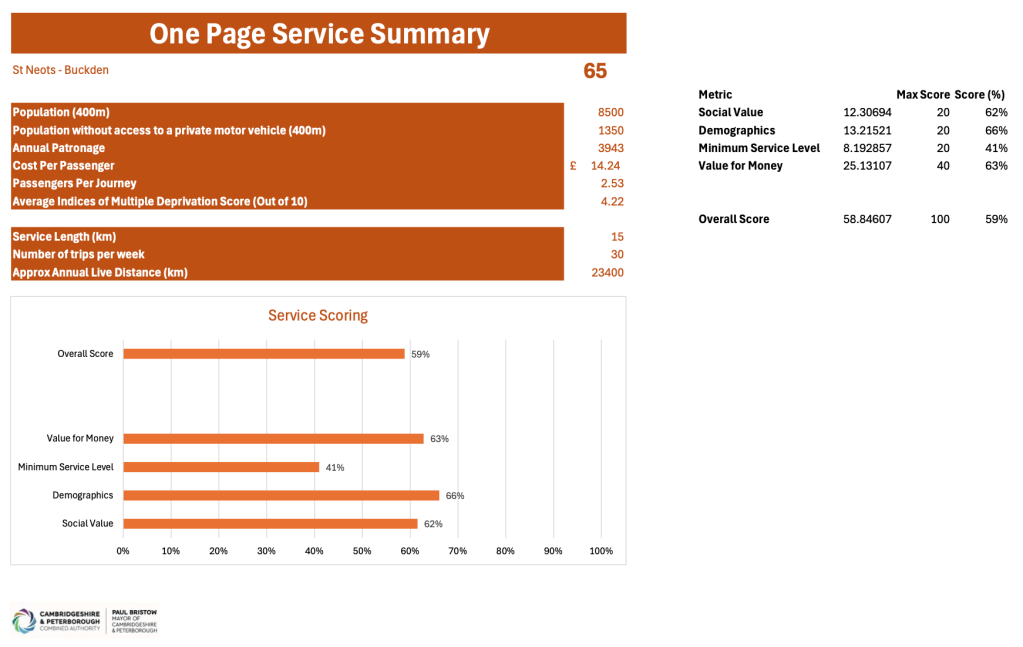
Granted it wouldn’t change the “cost per passenger” of £14.24 but taking account of “Social Value, Demographics, Minimum Service Level and Value for Money” (as per the ‘Framework’) the route scores an overall creditable 59% (as shown in the above graphic) which elsewhere in the Report is described as being “to note and constantly monitor performance and patronage”. There’s no mention of immediate withdrawal – for that a score of lower than 35% is needed or, if significantly amending a service isn’t an option, then a score below 50%. But, 59% should make it secure. See the scoring table below for all the routes costing more than £10 per journey.
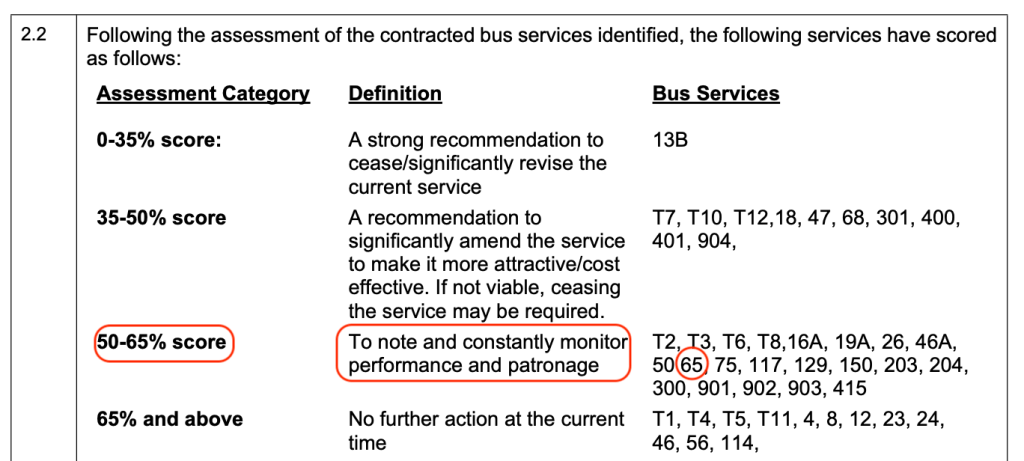
What stands out from all this is officers (and their consultants) proposing to sacrifice the 65 to help bolster the Authority’s beloved Tiger on Demand DRT operation in which the West Huntingdonshire zone includes the villages concerned and St Neots.
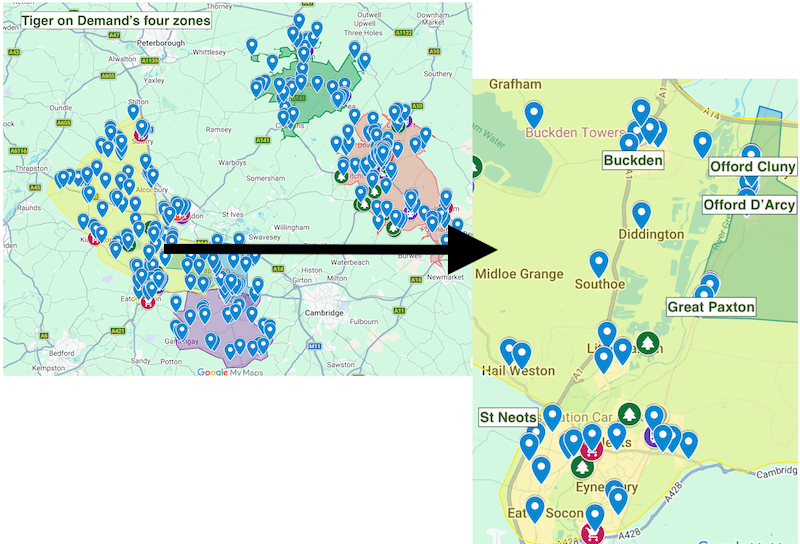
But, back in July 2025 the Authority’s Transport Committee received an update on Tiger on Demand operations which “currently averages 1.53 boardings per service hour across all the services, which tracks well with national and international benchmarks for Demand Responsive Transport. The Huntingdonshire service, which has been established as an On Demand service for much longer is performing the best of all the schemes, demonstrating stability can encourage growth for these types of transport services.”
It was against that background that I thought I’d take a ride on the threatened route 65 and see how many passengers are using it and whether they’re likely to embrace the idea of having to try their luck at booking a journey either by using an app or calling the Tiger-on-Demand “customer service line”.
I arrived in St Neots in good time to catch the famous 12:14 northbound journey back to Buckden, which as explained above, is the only effective journey to get shoppers home. Interestingly the timetable displayed on bustimes.org shows the bus departs from St Neots Market Square Stop B…
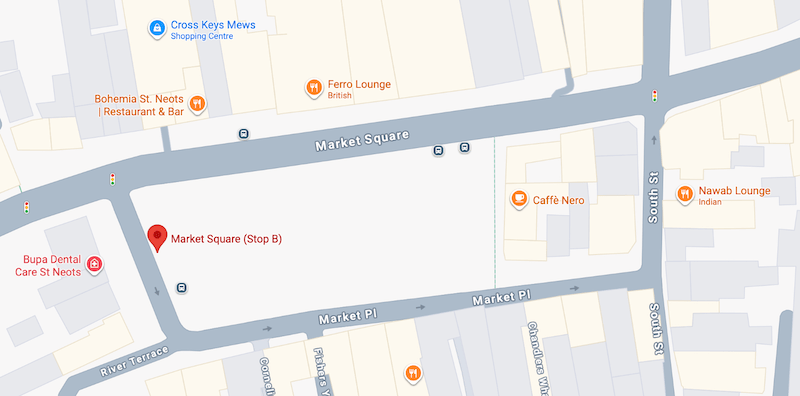
… and when I looked on Google Maps, sure enough Stop B was shown on the west side of Market Square…
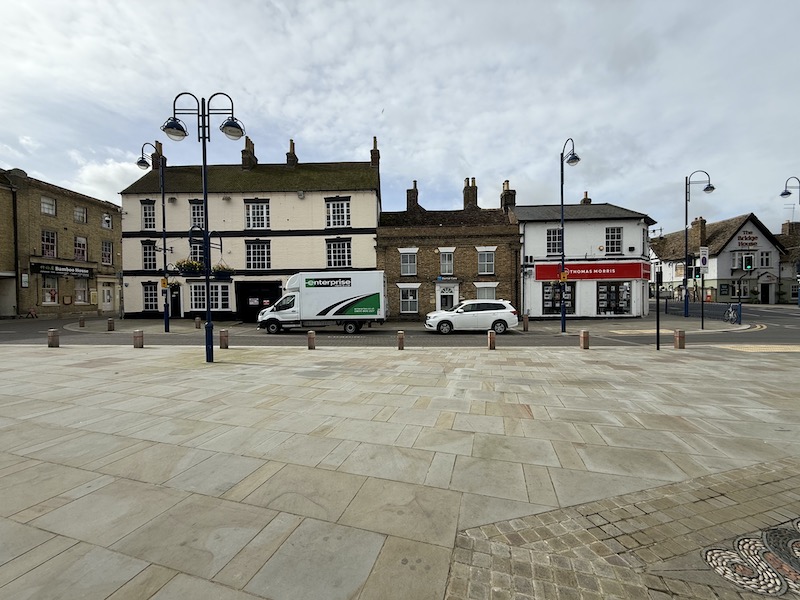
…but on the ground there’s no such bus stop, nor is there a Stop A which Google reckons is the one shown just below B.
The minutes of the main Board meeting record seven voting in favour and one against a resolution to “undertake appropriate resident engagement on the proposals affecting contracted bus services ….. and to include the routes listed below where services are due to be considered with a Tiger on Demand solution: 117 and 129 Ely to Upware and Ely to Black Horse Drove, 65 St Neots to Buckden”.
Back on the main road, on the north side of Market Square there’s a lay-by and bus stop just outside Greggs…
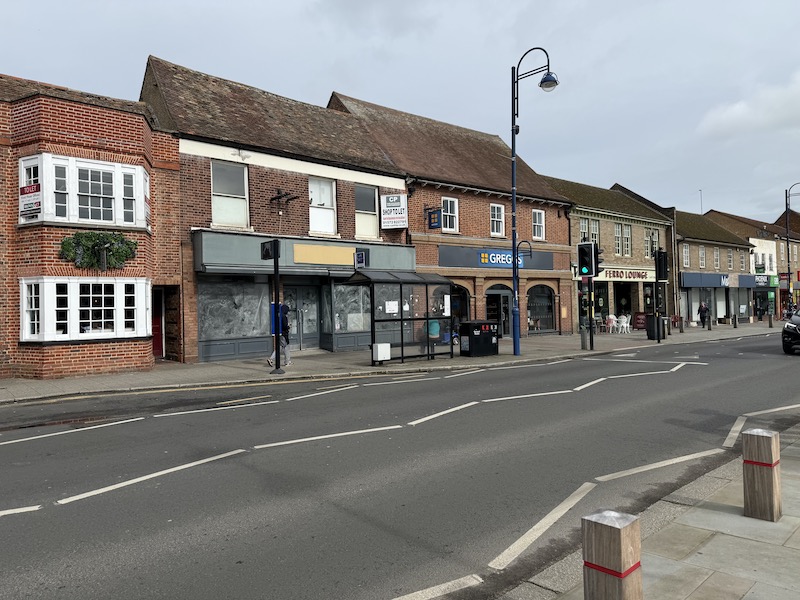
… where I’d noticed both Whippet and Central Connect buses picking up and despite there being no timetable on display for the 65, I made the reasonable assumption that must be the best place to wait. It’s unusual for both bustimes.org and Google to be wrong, but in this case they are.
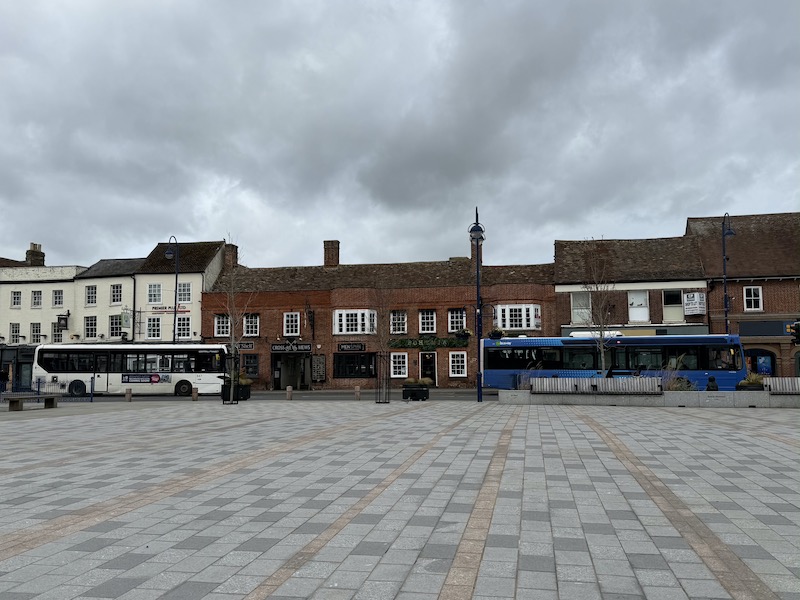
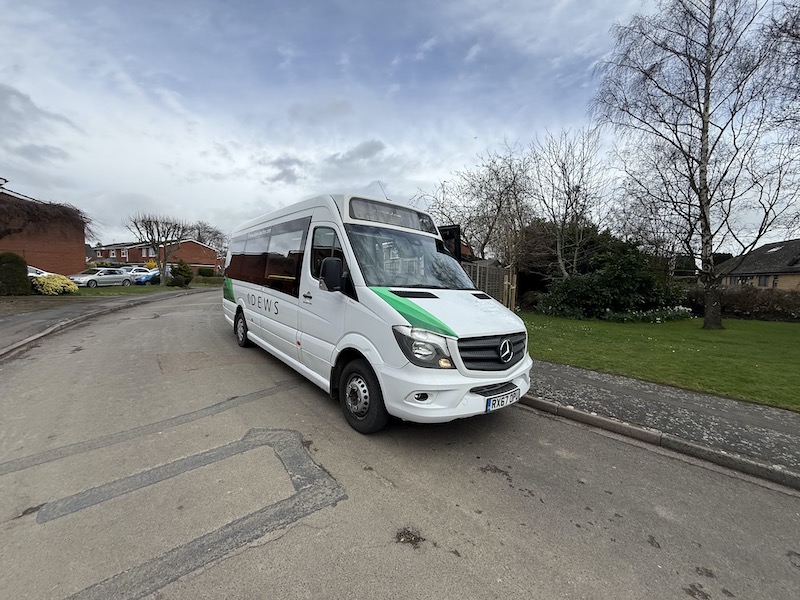
And sure enough, at 12:07 a smart looking Dews minibus pulled up outside Greggs with 65 Buckden displayed on the blind and six shoppers who’d been chatting away by the shelter all made their way on board.
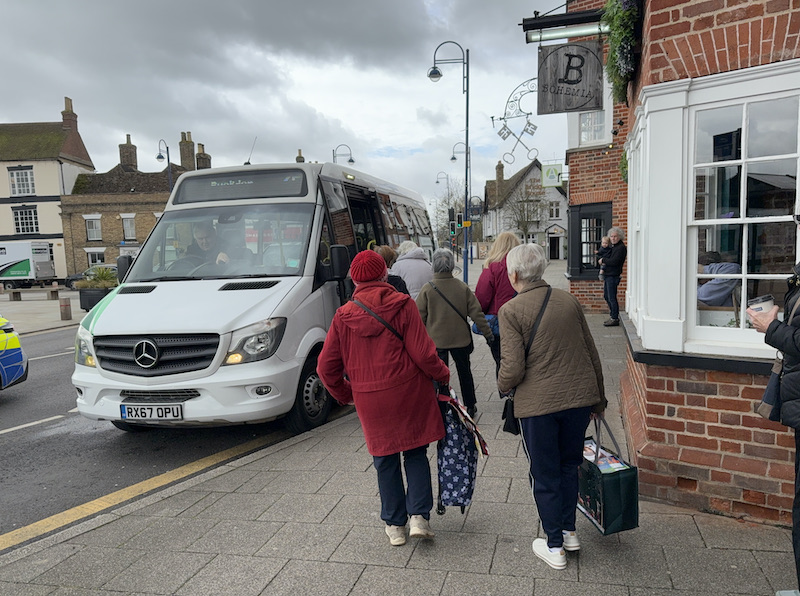
We were all welcomed by a very friendly driver called Ali but soon everyone was wondering where one other of their number had got to. Thankfully as 12:14 approached a gentleman appeared with a heavy shopping trolley and looking quite fragile as he was helped on board and it seemed we were now all present, with myself giving what the statistics would show as a record number of eight passengers on board for the journey. But, assuming all seven had come into St Neots on one of the southbound journeys, that makes for 15 passenger journeys in total, and spread across the six journeys in the timetable gives a statistical result of “2.5 passengers per trip” – exactly in accord with the earlier highlighted documentation.
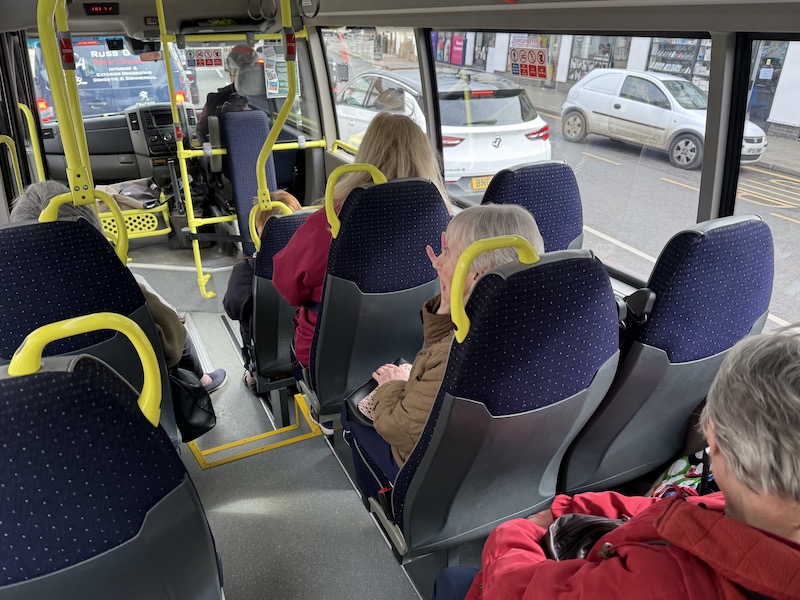
Three of our passengers alighted in Great Paxton, three in Offord D’Arcy including one who Ali kindly drove right up to her front door to save a walk …
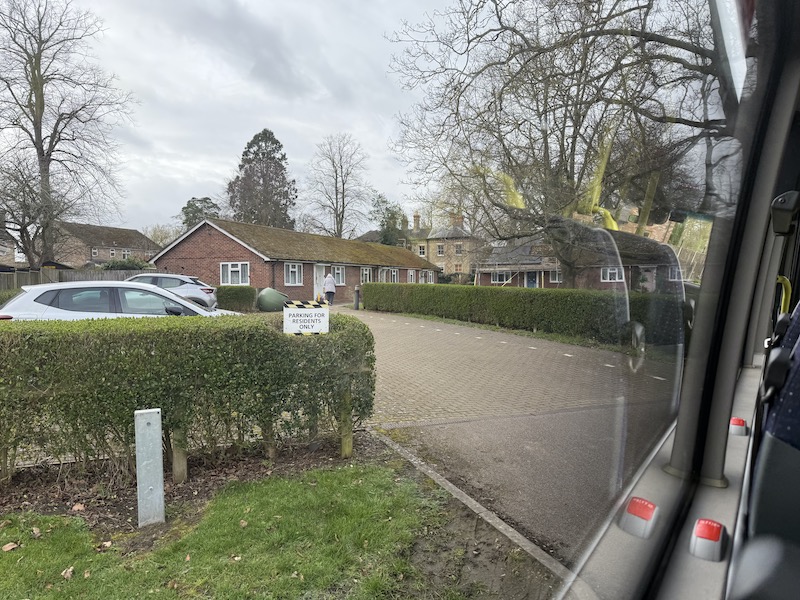
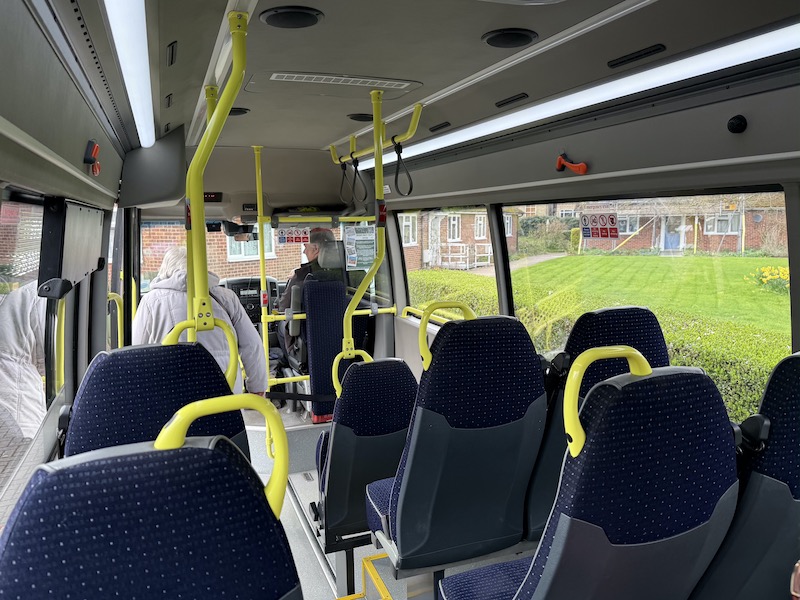
… and the seventh alighted on the eastern side of Buckden as we entered the village, at a stop not served by the 66.
It was another of those journeys where everyone knows everyone. They’re all regulars and telling Ali, as they alighted, when they’d next be travelling, mostly on Friday, but some on Thursday, market day. There was a great social atmosphere on board and once again it came across just how completely inappropriate it would be to go ahead and replace a route like this that’s well patronised and well loved by a regular band of passengers, with a hard to use unreliable, no guarantee the bus will be available, DRT option that entails calling someone or using a smartphone app to book a place. As Ali told me, he doubted whether many of the regular passengers even have a smartphone.
Interestingly all those seven passengers have a choice right now of using Tiger-on-Demand and could even book a journey at any time of the day, as I tried to do for tomorrow when I got home – at 10:40 from Offord D’Arcy – and succeeded.
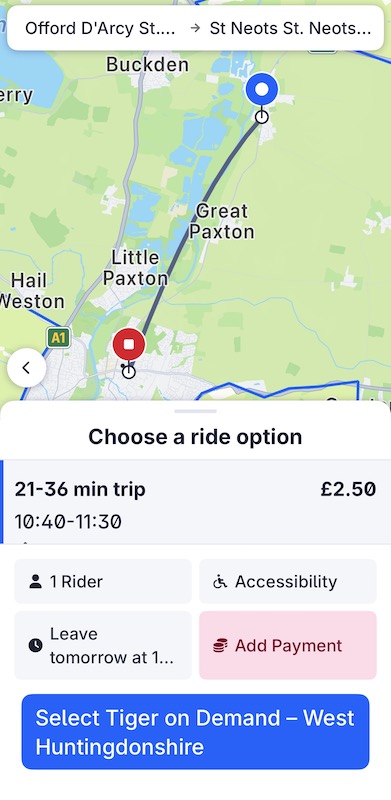
But, they don’t. Their preference is clearly for a fixed timed bus without any booking hassle where they can meet all their friends. Perhaps it should be Tiger-on-Demand with its paltry “1.53 boardings per service hour” that should be up for withdrawal?
As I alighted in Buckden, I left Ali at the terminal point by the Surgery while he paused before returning to St Neots.
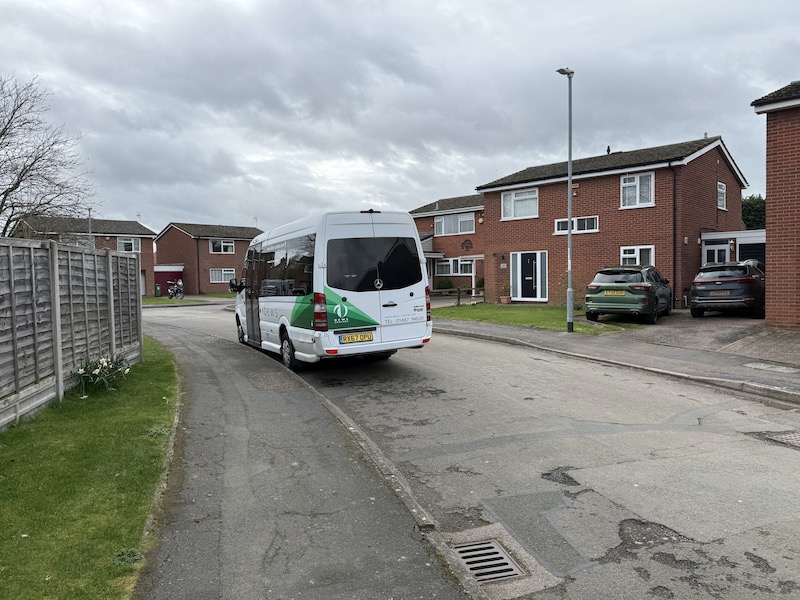
Thank goodness in this case it sounds like some Councillors are switched on to the limitations of DRT and the social value from running routes like the 65 aimed at off-peak concessionary passholding shoppers who have no other transport available.
I really do think some of these Authority officers making recommendations of this kind need to get out more and actually travel on some of the routes they’re so fond of publishing statistics about and learn first hand what passengers want, like the seven I travelled with on Monday this week.
When the recommendations went before the Combined Authority’s main Board later in January, that report confirmed at the Transport Committee two weeks earlier “officers outlined the high-level resident engagement strategy, both in the paper and in response to questions, with clear feedback on engagement with Parish Councils and Members to take place within that strategy. This would then take place in the spring and reviewed in late Spring and taken to Committee and Board”, indicating a softening from the original recommendation of immediate withdrawal, albeit it sounds to me like “high-level resident engagement” could well miss out those passengers actually using the bus at “ground level”.
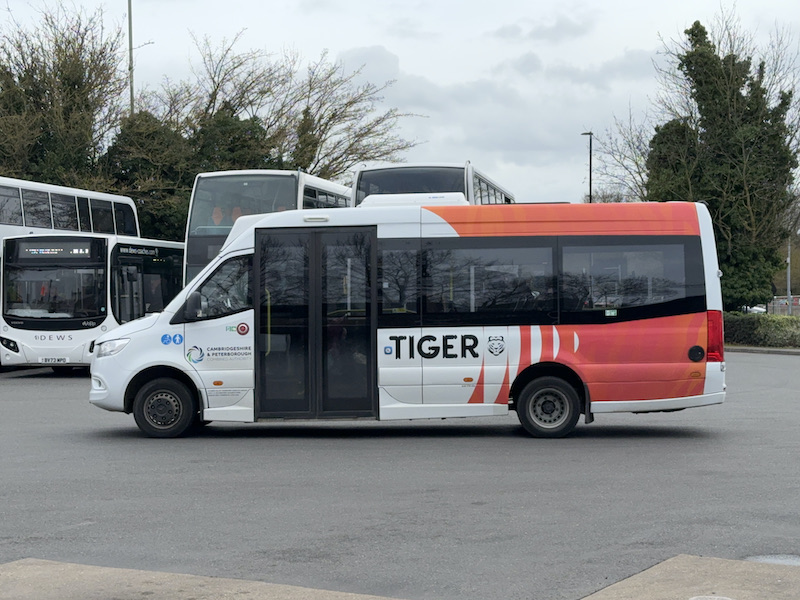
It looks to me the 65 is still very much at risk.
The obvious solution is to save the cost of Dews’ minibus and use the Tiger-on-Demand minibus that wanders around West Huntingdonshire waiting for bookings to operate the three productive timetabled journeys on the 65 as a fixed commitment with no need for passengers to book.
Effectively making for a scheduled and regular DRT block booking …. thereby keeping the 65 as it is.
Roger French
Blogging timetable: 06:00 TThS
 BusAndTrainUser
Your blog I fancy highlights the vast demographic differences between councillors and certain sectors of the community who travel 100% by public transport. My late father was a borough councillor (Elmbridge) and a county councillor (Surrey) AND a car driver. Living in Hersham with County Hall in Kingston, I doubt if he ever attended a committee or a full-council meeting using buses! I do not know which committees he sat on, but what I do remember was his observation as to the cost of London Transport serving the Fieldcommon Estate in Walton on Thames with its then Route 211. He was flabbergasted at the cost London Transport required as a subsidy. He joked to me and mother that it might be cheaper to supply each Fieldcommon Estate household with a free bicycle than pay London Transport the money they demanded. I now traverse Fieldcommon Estate roads usually twice a day on Falcon Route 461.
LikeLike
looking at an old whippet map, the route 65 operated through to huntingdon via godmanchester, but omitted buckden with 2 return journeys M W F and 1 return journey T Th. I Wonder if serving the larger town of huntingdon would increase patronage.
LikeLike
The appearance of the 904 in the 35-50% band is interesting. It runs hourly on weekdays between Huntingdon and Peterborough and was formerly operated as part of the Busway B route. Most of the buses used are in Busway green and appear to be Stagecoach but now belong to Dews who operate the route on behalf of Stagecoach East (and occasionally use their “own” buses).
I understand that this arrangement was designed to address staffing and capacity constraints at Fenstanton depot.
The 904s always seem to be well patronised at the northern end of the route where they provide the main links from Peterborough to Sawtry and Stilton. End-to-end travellers are much more likely to use the half-hourly Thameslink.
Ian McNeil
LikeLike
Thank you for highlighting this serious issue. The 65 is an essential service and as you right point out no where near meets the criteria for immediate withdrawal. The obsession with the Tiger in Demand in the area is devastating. I am surprised you managed to book a journey at all as I haven’t been able to successfully book any journey for about a year. When it changed to Tiger, I understand that the idea of virtual bus stops (whereby you could have a bus stop almost outside your own home) was removed and it now only accepts existing bus stops. Great if you have a bus stop nearby!
LikeLike
The Lichfield DRT, over a period of 16 months, carried 1362 passengers at a cost of £200k, a bit under 4 passengers a day.
At least Cambridgeshire review their services and publish their deliberations, although you do wonder how some of these were retained for so long. The 65 is indeed a strange choice and as Roger so clearly says could be simply covered by a Tiger on demand vehicle
LikeLike
That’s unbelievable. A subsidy of around £150 per passenger.
LikeLike
One of the issues of a service which runs only a handful of return trips is what do you do with the bus and driver for the rest of the day. Does the existing DRT show any regular traffic flows which could be converted into another fixed route to utilise the existing 65 bus? Could the service change to a 3 day a week service, and the bus be used on orher similarly threatened routes on the other days? Could it be transformed into a community volunteer-run bus service as in a recent blog post?
MotCO
LikeLike
So make a paid employee redundant ( assuming there is no demand in the area for other driving work ) and loose a bit of profit to a company that probably earns a little bit for weekend work elsewhere in the area. And then expect the problems already noted of getting volunteers grants for new vehicles , training . management , quite simply other than getting a free driver the costs are not going to be much less )
JBC Prestatyn
LikeLike
The Route 13B (Nosterfield End-Linton) passenger might be a little annoyed at having to pay a taxi fare if reliable DRT is not avalible instead of £3 present max fare.
Does the Dews Minibus (or Driver) operate school service before and after or is it supplying a nice between schools duty for someone who has home care responsibilities ? As it is looking at the service it basically takes 25mins for a single journey which basically suggests enough scope for a hourly service pattern with an afternoon driver break making it attractive for some commuters too. I couldnt really see how to tweak the existing timetable any better and it has a bit of slack in it for the shopping help and minor off route to a door that DRT does anyway.
Perhaps the concessionary fare people need to think about making a few trips just for the sake of sitting in St Neots square for an hour to boost the passenger journey numbers as I doubt at present they all go shopping every day Th and F being it seems the shopping days unless its bank and doctor on Tu and W.
JBC Prestatyn
LikeLike
A very interesting article about a debate that must be replicated in local councils throughout the land.
It seems strange that the council would compete with itself by providing an on demand service and a tendered shopping service. Experience has shown that semi flexible routes are more successful in meeting these demands.
What is strange is that the 66 will run down the A1 and not really serve much. I wondered about the state of the road between Buckden and Offord and wondered if the 66 could be diverted to replace the 65? A local town service between St Neots and Little Paxton would also be needed. So often routes are looked at in isolation rather than as a network.
Richard Warwick
LikeLike
“Obvious solutions” when being decided by those who never use buses themselves rarely result in favour of existing users. A basic timetabled shopping journey from Buckden to St.Neots and return using a “Tiger” minibus would be the sensible answer, but sadly, unlikely.
Whilst I have no knowledge of Dews’ driver duties, it is presumed the vehicle performs school contract work either side of 65 service work, a situation pertaining to virtually every other rural shopping service in the UK and thus savings may be considerably less than our brave Councillors imagine.
Terence Uden
LikeLike
Surely where vehicles work crosslinked schedules a “shadow” route number could be applied , eg 65S which is not public necessarily but for reporting and possibly contracting / franchising routes needs to be considered as a whole for passenger needs and passenger numbers.
JBC Prestatyn
LikeLike
Whilst the limitations of DRT have been much-discussed on these pages, I can see how DRT catches the imagination of politicians and I think I know why.
Last Saturday I travelled on the CPCA supported A2B service 17 between Royston and Cambridge. A more torturous bus route can hardly be imagined; the journey taking over an hour as it criss-crossed the A10 numerous times. It’s the kind of route that would put a non-bus user off travelling this way again, though the driver was pleasant enough and drove very well through some lovely countryside. Ironically, the most we had on the bus at any one time were five passengers who boarded in Hertfordshire. There was some inter-village travel, but it was all rather depressing to find out I was one of only three passengers actually making it through to Cambridge on such a bright and sunny Saturday morning. Of course, the preceding 26 service may have been full going into Cambridge, but he CPCA should be worried about the 17 if this is the norm.
To get back to my original point, the bus used on that Saturday was an Optare Metrocity whose capacity is inevitably required during the week but was providing in excess of thirty-three odd seats more than demand. Politicians notice a single-deck bus squeezing through rural villages with penny numbers on them. They are attracted to a DRT scheme where the bus only runs if it needs to, often forgetting the incredible mileage buses operate just to reach their pick-up points and negating any environmental benefit.
Dan Tancock
LikeLiked by 2 people
The German concept of an “Anruf Sammel Taxi” (AST) is probably a better solution than the more or less complete flexibility of DRT (or Dial a Ride). AST services that I have been familiar with are operated with taxis (including 8 seat minibuses) and have a set timetable, but the journey will only operate if it is specifically requested. Only stops that have been requested are served, so that diversions may be omitted. The fares are generally the same as the corresponding normal bus fares, with a small supplement.
Thus avoidable costs are saved by not operating journeys that would have been completely empty; while those that do run are operated with the most efficient vehicles. Nevertheless, the passenger has a set timetable, so that they know in advance what journeys are possible. From the operator’s perspective, there is no need for complex software systems to plan routes and timetables “on the fly” – a simple booking system is all that is needed. This does not completely eliminate the need for passengers to phone their bookings (highlighted by Roger as a problem for some users), but I would suggest that it simplifies the process as far as possible.
One potential downside is that in some cases the journey is operated by a taxi, where the driver takes the booking while driving or waiting time. In that situation, things can be missed by the driver whose attention may be partly elsewhere, as happened the last time that we tried to use such a service. In that case, the Verkehrsverbund apologised to us, saying that they had given appropriate instructions to the operator! I guess that we will have to try it again some day, to see if the lesson really has been learned!
RC169
LikeLike
I strongly agree with the suggestion that council staff should actually ride the buses they are making decisions are. Even if these older people can drive, they clearly value their bus to the weekly market, it may be the only time they see each other or even leave the house on their own! Change it to DRT and that group is probably broken up for good. Bureaucrats need to understand social value a lot more.
In Essex, the trio routes of 319/ 320/ 321 are under threat between Audley End station, Saffron Walden and Haverhill, with just the 319’s 5 daily journeys left intact! Having used it once myself, I saw 8 people use it but it easily carried double for its trip, with people getting off in every village and town on the way. It does seem crazy these counties have money to introduce lightly used new routes but somehow want to cut long established actually used routes. The way buses are funded seems a right mess. The blog said about the T2, T3 and T7 being silly routes before. What a shocker to see them on the list scoring so poorly!
If a route is consistently carrying no one, then fair enough, it shouldn’t exist, but if even a handful of people regularly use it, it has value. The alternative is social isolation and all the problems that come with it. Surely it’s cheaper to subsidise a bus.
Aaron
LikeLike
I don’t understand, why I can’t like this post
LikeLiked by 1 person
I normally really value these blogs and the balance of narrative but the level of condescending attitude in the Essex Park and Ride Blog and now this one against local authority officers conveys perhaps some bias in how these issues are interpreted!
LikeLike
Roger has an unfortunate long-term tendency to dislike local authority staff at all times and to look at his ‘chums’ (including his former employer) with rose-tinted glasses.
That doesn’t make the overall insight less valuable, it’s just something to be aware of and allow for. We all have our foibles, our likes and dislikes; I certainly have plenty of my own!
LikeLike
I think part of the problem is that, while the advice given by local authority officers should be technically correct and impartial, they do, in practice, need to take account of the general line of thinking of the politicians involved. There would be little point including a proposed solution in a report to the council or committee that was contrary to a current policy of the council. Such a solution might, perhaps, be included as a footnote, but not be treated as a realistic proposal.
In this case, it appears from Roger’s description that the council officers have done that; but the politicians have subsequently changed their thinking. The subsequent report from the council officers would appear to reflect that changed thinking.
I guess that the politicians may have been influenced by the availability of central government funds for DRT when they looked to promote the “Tiger on Demand” solution. However, perhaps a few angry pensioners, calling to say that they are not happy with having to switch to an uncertain DRT system for their weekly shopping trip, may have prompted a rethink by those councillors.
RC169
LikeLiked by 1 person
Whilst I too value and enjoy Roger’s blogs and respect his views, I also find his attitude to local authorities a bit jarring, they are the paymasters after all. He jumped the wrong way on Essex – a local authority investing in building and managing a Park & Ride facility should determine how the bus service element is delivered.
Roger is however 100% correct on DRT. Officers sold DRT to politicians as being flexible and innovative which can be funded with someone else’s (DfT’s) money. Reputational and political capital is invested so when the service fails to take off the imperative is to push passengers towards it as in this case.
DRT is a solution looking for a problem. The inflexibility of scheduled bus service is balanced by its simplicity and certainty. As Roger often illustrates, booking a DRT journey is a leap of faith- if you can afford a taxi why not book one instead?
The TeesFlex approach to an exit strategy for DRT has merit – retain the resource to schedule the most popular journeys. Roger has given the officers a solution to this particular situation- will they take it up?
LikeLiked by 1 person
I agree with the DRT sold as the dream point. However, I do think in a lot of the areas everyone went into schemes with eyes wider open on the merits and trade offs.
One technical point, most DRT schemes I’ve seen allow passengers to book the outward and return journey at the same point, especially if there is a call centre that is even easier! If Leap of faith applies more to the vehicle turning up, I haven’t seen anything to suggest DRT is more unreliable than a fixed route subject to congestion.
What if, for example the group of regular passengers identified on this service had a group booking guaranteed on the DRT, they could even travel a few minutes earlier or later if they wished. It could be advertised wider and the full vehicle booked up as a group.
LikeLike
I think the issue on bustimes and Google Maps with the phantom bus stops will be down to data supplied, I assume, by the local authority as they both use data from the same source (NAPTAN?)
There are plenty of bus stops which appear when you plan journeys using Traveline, Google Maps or indeed by looking at timetables (through any online source, including the operators) which when you look at the location on StreetView aren’t at that location but somewhere else or simply don’t exist – which then leads to the questions of “Is there really a stop there? Will the bus stop for me?”, something which hardly encourages bus use.
LikeLiked by 1 person
The St Neots phantom stops appear to have vanished in a spot of urban renewal. Google Streetview shows that they were both there in May 2023 https://maps.app.goo.gl/sgTDrFyW9dD5RxBn7 but unless it is temporary and they are due to be reinstated, the route should have been re-registered to reflect reality.
LikeLiked by 1 person
120 circular town route in Seaford East Sussex is shown to go two different ways depending what maps you look at – the operators own/Brighton and Hove/Google maps & online sites. I hard one reason for it was because there was no actual bus stops between the first 2 destinations.
LikeLike
A lot of NAPTAN (bus stop database) data is based on surveys that were carried out by (or for) local authorities getting on for 25 years ago, in many cases the local authority that did it then no longer exists due to local government disorganisation (or should that be reorganisation) and it’s probably about time a full re-survey was done, but of course nobody wants to pay for that.
Some authorities take their responsibility to keep it up to date more seriously than others, some have staff resources to do it, but some authorities don’t see it as a priority, or don’t want to pay for the software to do it. (when it all started, you could keep it as an Excel spreadsheet and upload it from that. you now can’t so there are a few authorities who just aren’t doing it at all.)
Likewise, local authority highways people don’t always communicate with local authority passenger transport people when bus stops get moved or removed, and most passenger transport departments no longer have staff who get out and about on buses – combination of budget cuts then covid making it less of a good idea to go out riding on buses and talking to passengers. And management thinking you can get all the information you need from ticket machine / tracking data.
Some operators have the resources and the commitment to get their data right, some will make a reasonable effort but lack the staff or skills or software to do it well, others see it as a burden and will just do something that looks vaguely right in to BODS as quickly as possible. And with the big groups a lot of scheduling is done at regional level so the local knowledge can be lacking.
If you have an operator who won’t engage with local authority or vice versa then you are going to get data errors.
The attitudes of ‘we are too busy running buses to give our passengers accurate information’ or ‘our regular passengers know when and where our buses run, why should we make an effort for anyone else?’ are still out there as well.
To the best of my understanding, both Google and Bus Times take their data mainly from operators’ data rather than get too actively involved in checking it and pursuing anything that doesn’t look right.
You can also get anomalies in Google if local authority has moved / removed a bus stop but one or more operators hasn’t updated the NAPTAN data they use, so you can sometimes get two operators serving what’s really the same stop, but showing in two different places.
At one time, local authorities were responsible for getting data in to the Traveline system – while a number still do, the official line is that operators feed BODS which feeds Traveline and everything’s going to be fine.
Yes, a bus stop change – especially a town centre terminus point – should have been picked up. Although I’m not sure there is clear guidance whether a route terminating at stop A not stop B in a bus station or cluster of stops warrants a traffic commissioner registration, or just a refresh of BODS data.
But outside town centres, there is a legitimate NAPTAN category of ‘unmarked stop’ – these are not uncommon in rural areas, either where the stop on one side of the road shows ‘both sides of road’ stop, in which case the opposite direction is an unmarked stop for NAPTAN, or where neither stop is marked. Hail and Ride points (in theory the middle of each street on the H+R section) also appear in NAPTAN as ‘bus stops’. Snag is that I don’t think any information source, including Google Maps, makes it clear to potential passengers when a stop is unmarked.
DFT have a desire to improve the existing NAPTAN data so that potential passengers can get more information about stops, including how accessible it is for wheelchair users etc, but so far, are talking about doing this with Street View (which can be 10 years old in some places) and AI (hmm.)
(Yes, I have been dealing with this either from the local authority or bus operator end for most of the last 25+ years. Opinions my own of course.)
RC.
LikeLiked by 2 people
Thanks for the inside view, RC.
I would like to see the ‘unmarked stop’ category given an entirely separate indicator from marked stops in open data, although whether that would be picked up by Google Maps with its American-centric view of everything I don’t know. It might stand more chance of being picked up by OpenStreetMaps, but who knows?
In my experience, too many operators and authorities don’t know the patches they work on/are responsible for, with a long-standing assumption by too many people that whatever they are used to is the way it is everywhere; witness the assumptions by many London-area-based people that public transport everywhere is at Metropolitan frequencies! Partg of every role should be getting out there to see what the patch is like, rather than just maybe looking at StreetView from the office or making assumptions.
LikeLike
Thank you, Roger French, for yet another very interesting blog.
As the Chairman of the CPCA Transport Committee I find the idea put forward in the last two paragraphs of your piece to be very appealing, at least at first sight. I’ll follow that up, so thank you for the suggestion.
Cllr Chris Boden
LikeLiked by 3 people
If I was CPCA, I’d be asking why my officers didn’t think of this themselves!
LikeLike
It seems to me that local authorities love to use data and statistics as a means to justify making cuts and ‘cost savings’.
But as with anything, this ‘data and statistics’ does also need some additional context.
I do wonder myself how many of the people who make such decisions actually use the bus services themselves. “Real world experience” adds so much more to the ‘raw data’.
Instead of asking the question of “how can we cut this route to make it financially viable”, why don’t they ever ask the question of “how can we improve this route and make it more attractive to bus users to get more people to use it and make it financially viable as a result”?
LikeLiked by 2 people
The other routes mentioned in the article, 117 and 129, are similar market day only routes whose users are generally older people who do not now drive. I travelled on the 129 about 15 years ago. The schedule and route was the same then. Although it is a generalisation, I doubt that many of the users of those two routes would want to book their journeys. They also formed a little community of regular travellers. The proposed solution using the Tiger on Demand vehicle looks good provided that CAPCA does set up the fixed timings – essentially using the DRT vehicle to provide a scheduled service. It should increase the number of journeys on the DRT service. I have never seen more than one passenger on the DRT vehicle at anytime since it’s introduction so having an average of four on several journeys on a Thursday should improved the results. Using one vehicle for the two or three market day routes will involve some changes to the schedules.
LikeLiked by 1 person
An interesting comment from Councillor Boden, chairman of the CPCA Transport Committee. His next step might be to hire Roger as his Transport Consultant and sack the obviously useless ones that CPCA currently uses, because this kind of lateral thinking would be obvious to any competent busman.
It great he follows Roger’s blog, full of common sense
LikeLiked by 1 person
I was really pleased that you took the time to travel on our no 65 bus service by Dews.
I wrote 7 emails to Cambridge CC, Huntingdon CC, local councillors, a local MP, Parish council in January. The only answer thanking me was from my village clerk. Not very happy that nobody thinks my time trying to save our only transport, is worth answering my emails. We use this bus to shop, get to the doctors and even meet a friend for a quick coffee, I also use it to get connection buses to get to Addenbrookes hospital at least twice a month, and the dentist in Brampton.
We are told use the Tiger bus, well I booked the tiger bus 2 days in advance for a dentist appointment. On the morning I checked what time I needed to be at the Bell pub (note not a bus stop near where I live) to find my lift on the tiger had been cancelled. I was left a text which I didn’t see until I was going to leave to get picked up.
I still needed to get there with only an hour to do so. I had no choice but to get a cab so £24 later I arrived in Brampton.
Yes I did get the Tiger bus home but you can’t rely on it. We need our 65 bus, its not always ideal but the drivers know us and we are all friends. We get concerned if someone doesn’t turn up on a day usually travelled.
Thanks again for your blog, from a concerned Gt Paxton no 65 bus user.
LikeLiked by 1 person
Many thanks for explaining your use of the 65. I do hope the Combined Authority take note of what you’ve written. The comment added to the blog from the Chairman of the Transport Committee was encouraging so fingers crossed the 65 continues for you and all your fellow passengers.
LikeLike