Saturday 17th January 2026
Following all the suggestions after last month’s originally planned final blog in this series, I’m able to prolong the feature a bit longer with a few monthly posts this year to tick off all those additional places which are blessed with two stations on completely different lines and not connected by regular trains.
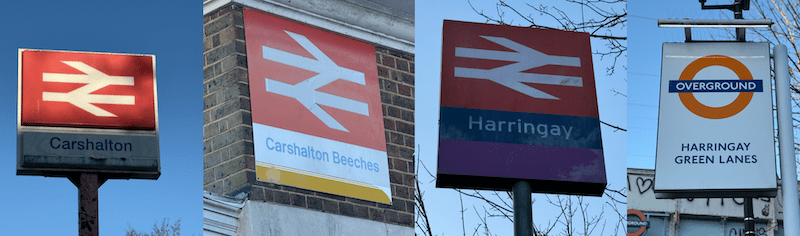
First up for 2026 are two more to add to last month’s London’s suburban bonanza: Carshalton in the south and Harringay in the north.

In Carshalton’s case I should say it depends how one is defining ‘place’ as Sutton and Wallington are very close by and could all be considered one place with four stations, but Carshalton does have an individual geographic feel to it, so in my judgement it does qualify as being a ‘place’ in its own right.

Carshalton and Carshalton Beeches are both controlled by Southern being located just under a mile apart on almost the same line of longitude and about a mile and a half east of Sutton.
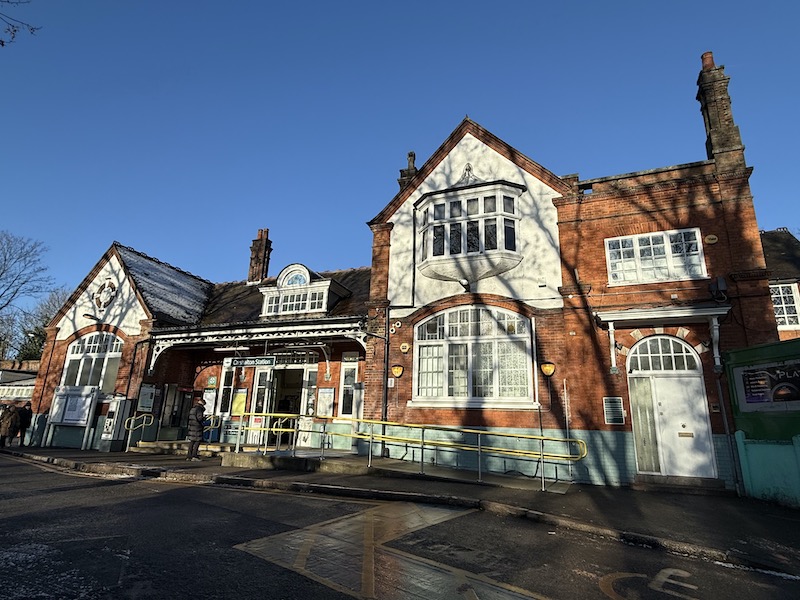
Carshalton itself is the busier of the two stations and as you can see from the above photograph has a rather grand station building welcoming passengers and sees both Southern and Thameslink trains with the former providing half hourly trains northbound to Victoria and southbound to Epsom and Dorking with alternate hourly journeys continuing to Horsham while Thameslink trains give a half hourly (northbound) link to Herne Hill and Elephant & Castle then to Blackfriars and through ‘the core’ to St Pancras and on to St Albans City. Southbound Thameslink (and Southern) trains go to Sutton (the next station) then the former continues around the loop via Morden South to Wimbledon and back via Tooting and Herne Hill through ‘the core’ to St Albans City. There are additional departures in the peaks including a ‘fast’ Southern train to Victoria and another to London Bridge.
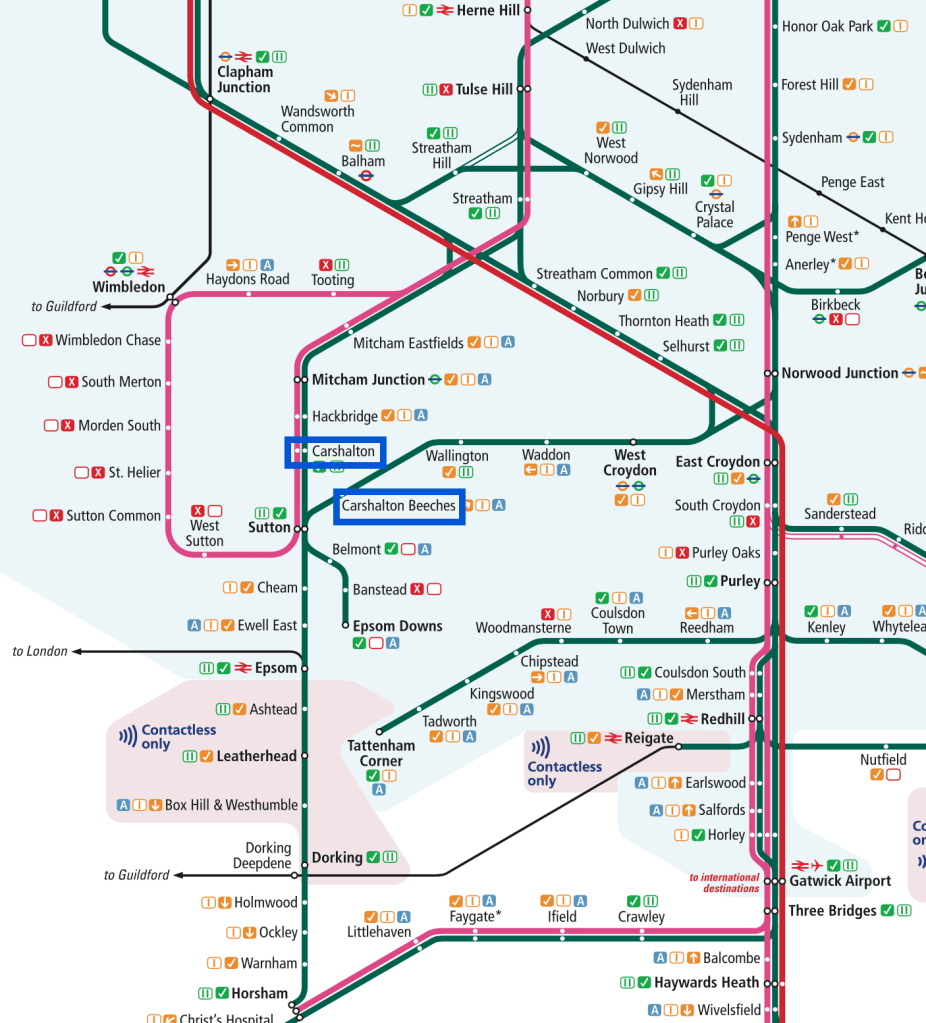
Carshalton Beeches with its more modest building to welcome you (as shown in the photograph below) just sees Southern trains calling but does offer options of both Victoria (via West Croydon and Selhurst etc) or London Bridge (via West Croydon and Norwood Junction) both half hourly northbound, and Sutton (the next station) then either Epsom or Epsom Downs, each half hourly southbound with enhancements in the peaks providing a combined 10 minute frequency.
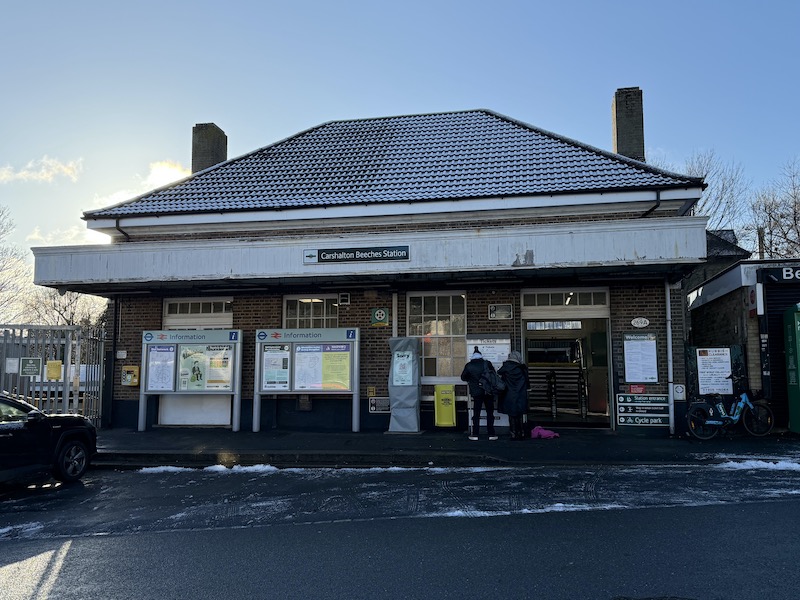
Carshalton opened in 1868 and in 2024/25 had 1.139 million passengers passing through whereas although the line through what we now know as Carshalton Beeches opened much earlier in 1847, the station itself, originally called Beeches Halt didn’t appear on the scene until 1906, being renamed in 1925. It saw 0.787 million passengers in 2024/25.
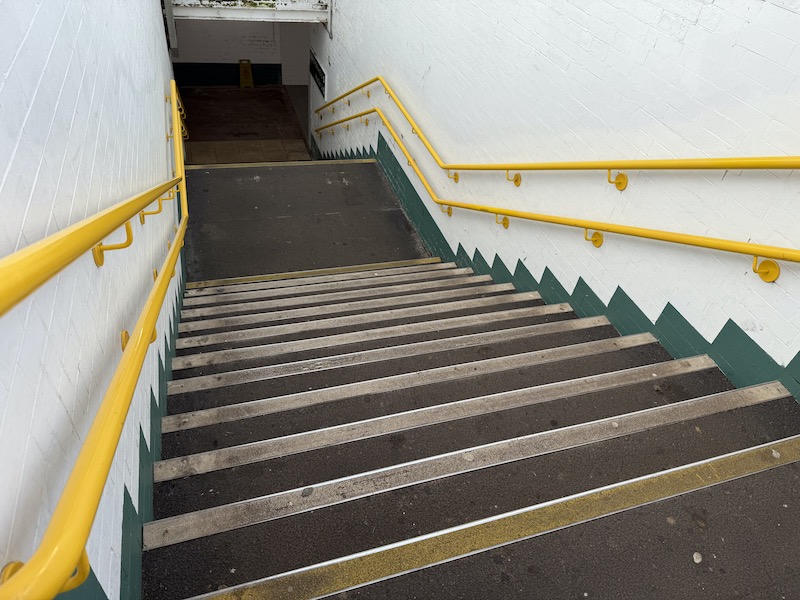
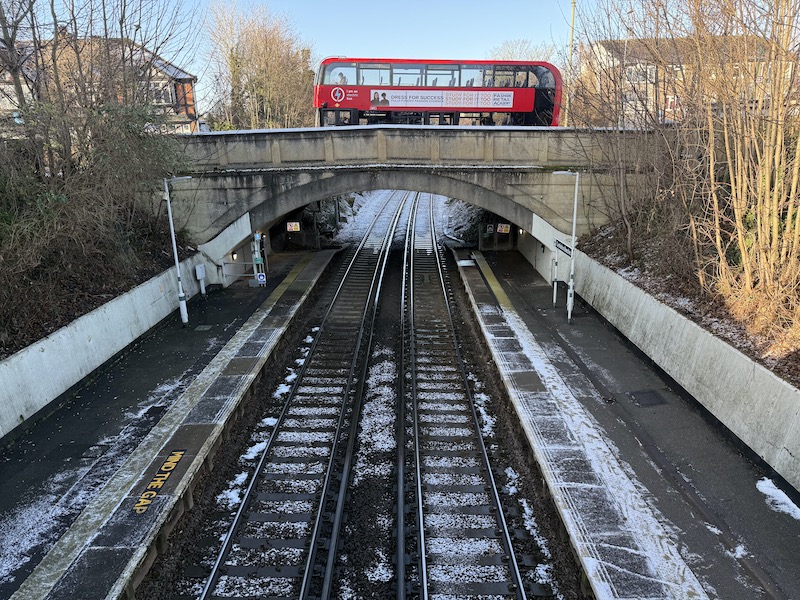
Carshalton is accessible with a lift as well as stairs to the subway…
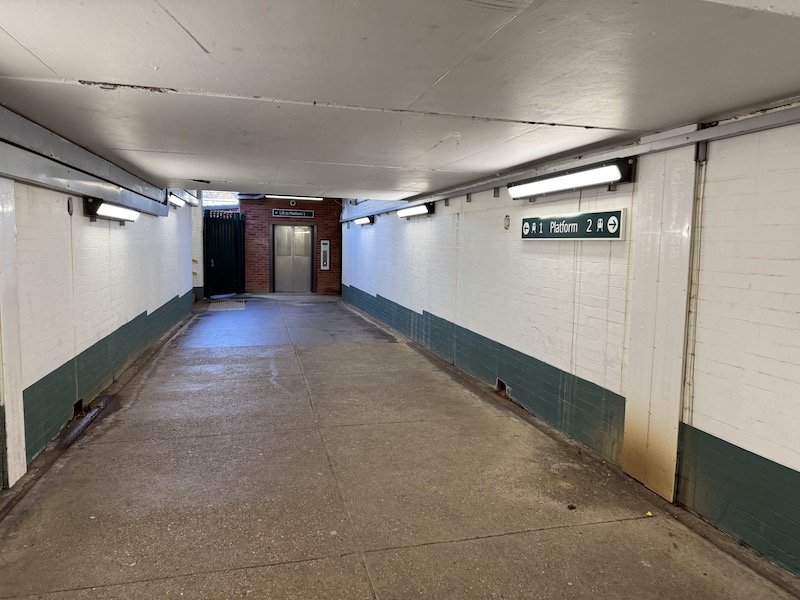
… joining the two platforms whereas Carshalton Beeches has a non-accessible footbridge at the western end…
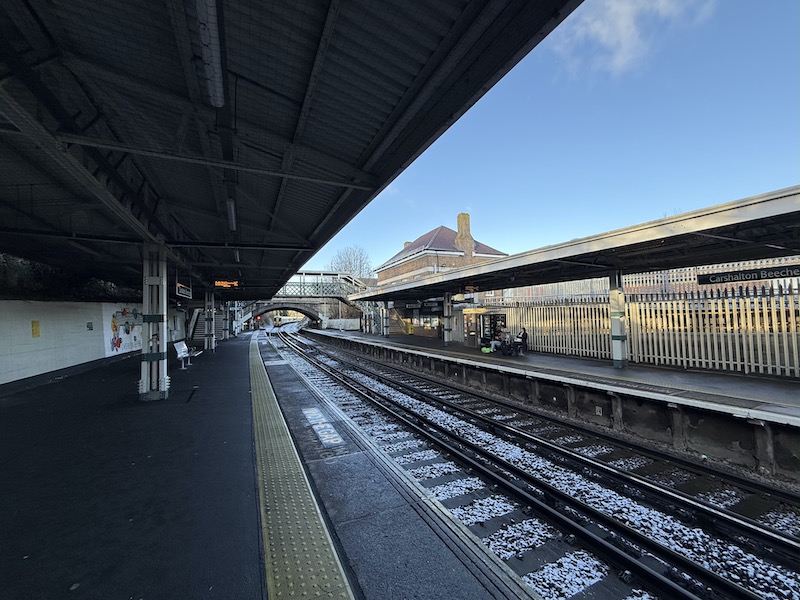
… depicted in a rather nicely painted graphic on the wall.
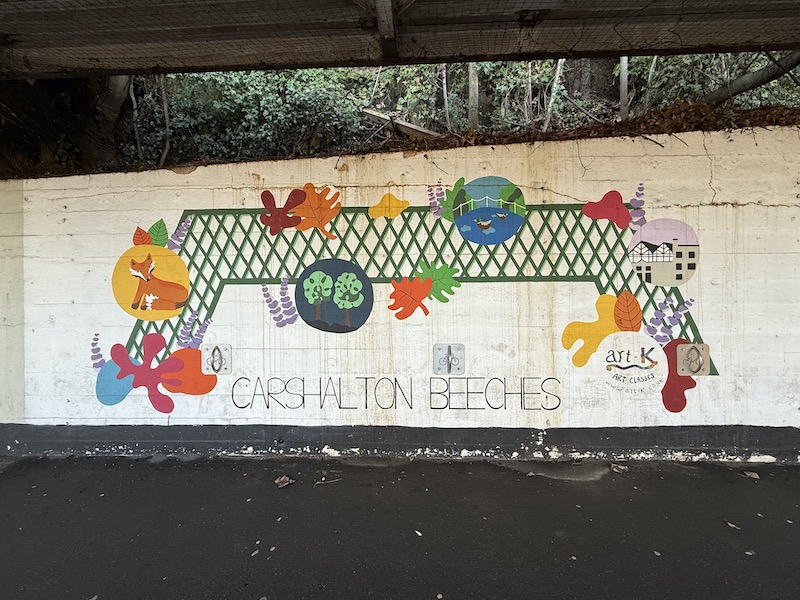
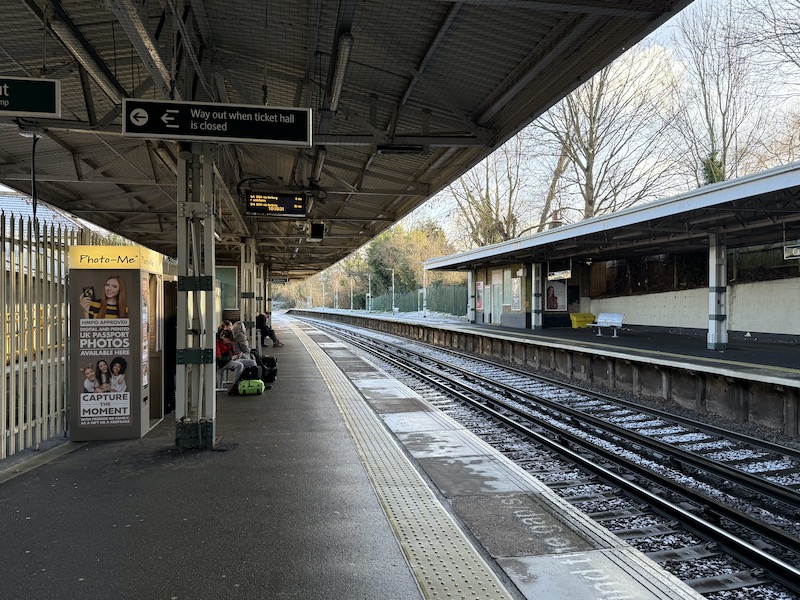
As you can see Carshalton Beeches also has plenty of covered waiting area for passengers to wait…

…although not a huge number of seats on the Sutton bound platform.
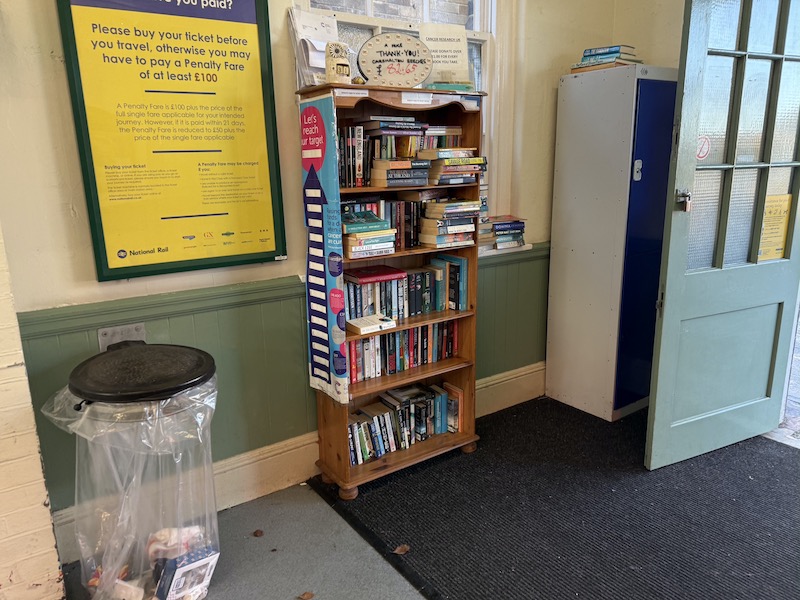
The ticket office and gateline at Carshalton Beeches…

… has one of the most well stocked book libraries I’ve seen on these station tours…
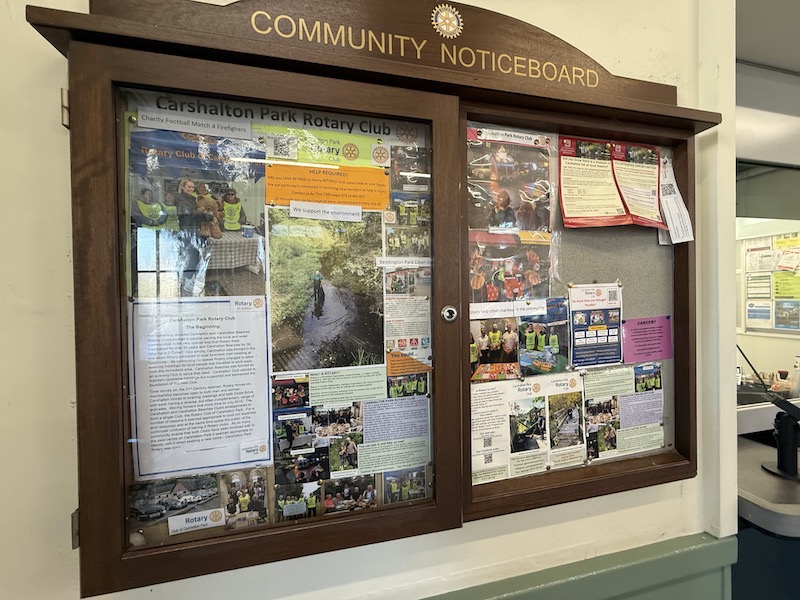
… as well as a very informative Community Noticeboard.
I should also add there is accessible entrance/exit to/from the London bound platform (platform 1) through a side gate which can be unlocked if needed.

TfL bus route 154 passes by outside the station.
Back at Carshalton there’s also a ticket office with a smattering of seats…
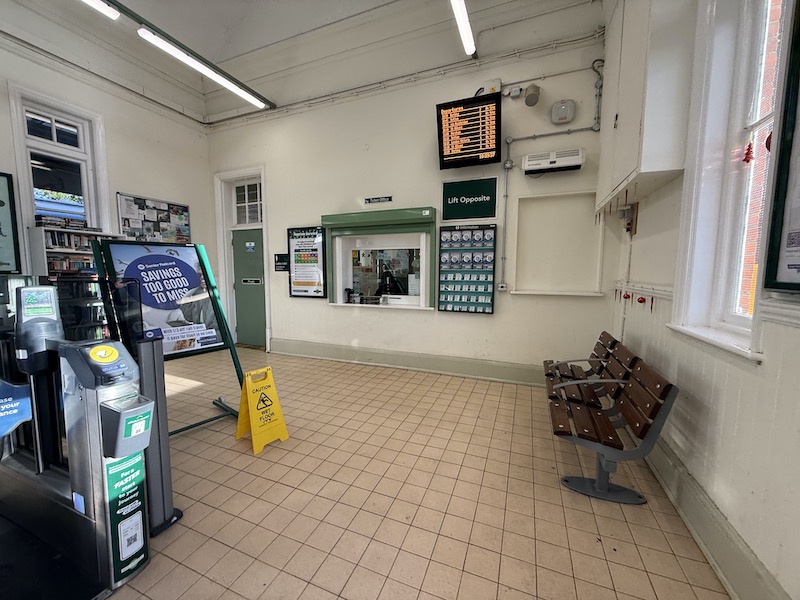
… either side of the gateline…
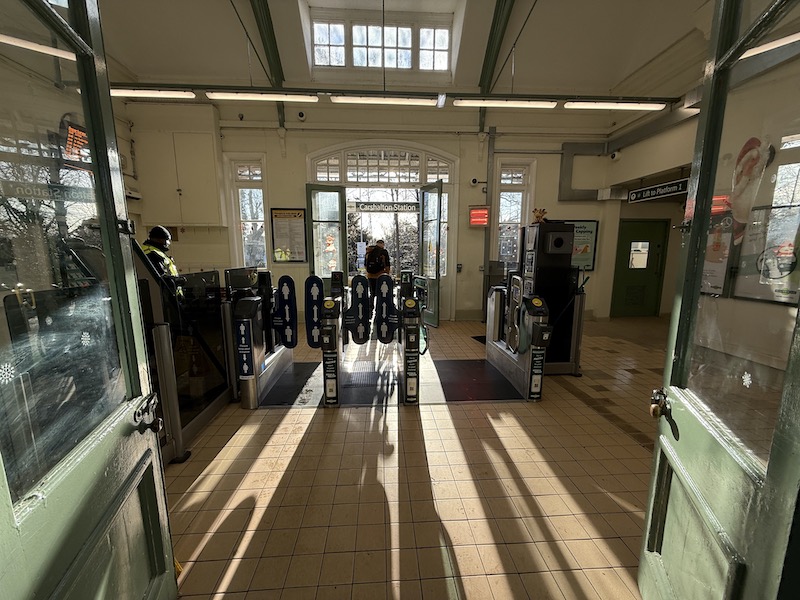
… for passengers to enjoy a wait in the relative warm on a cold winter’s morning like the day I visited.
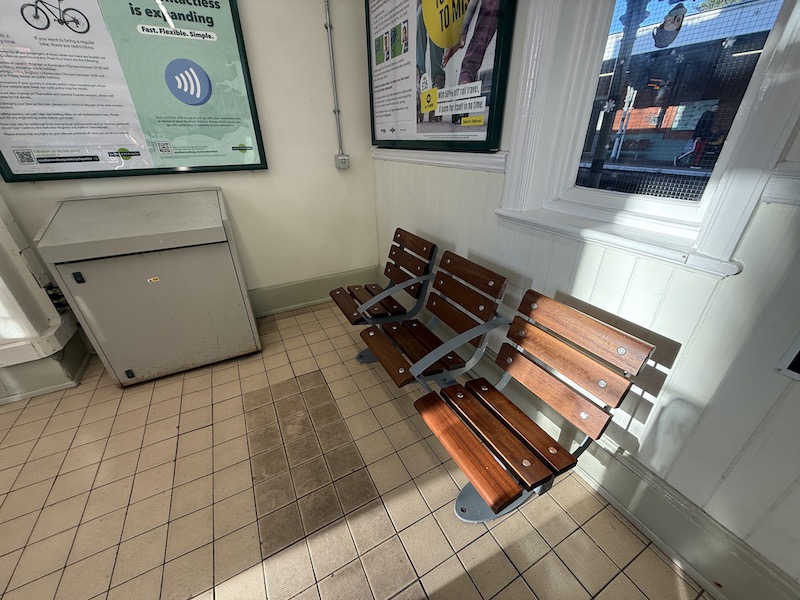
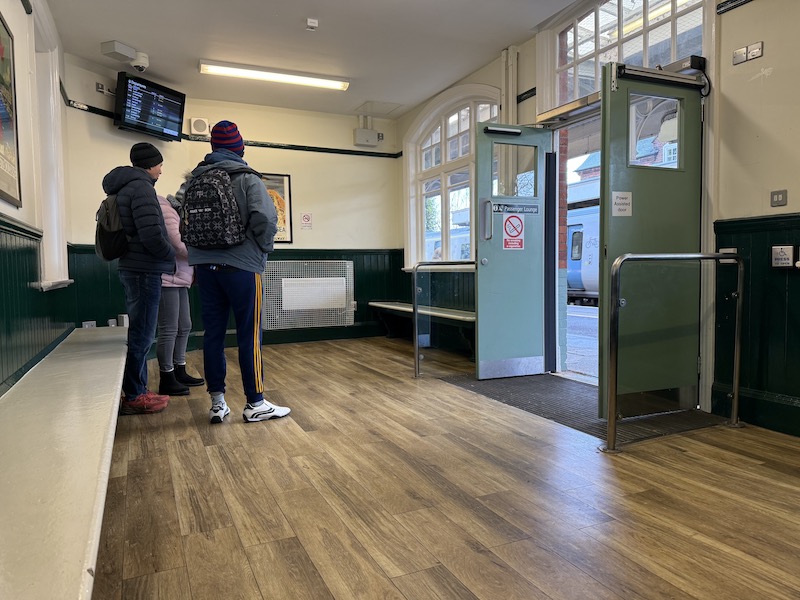
Although there’s also a waiting room on the London bound platform 1.
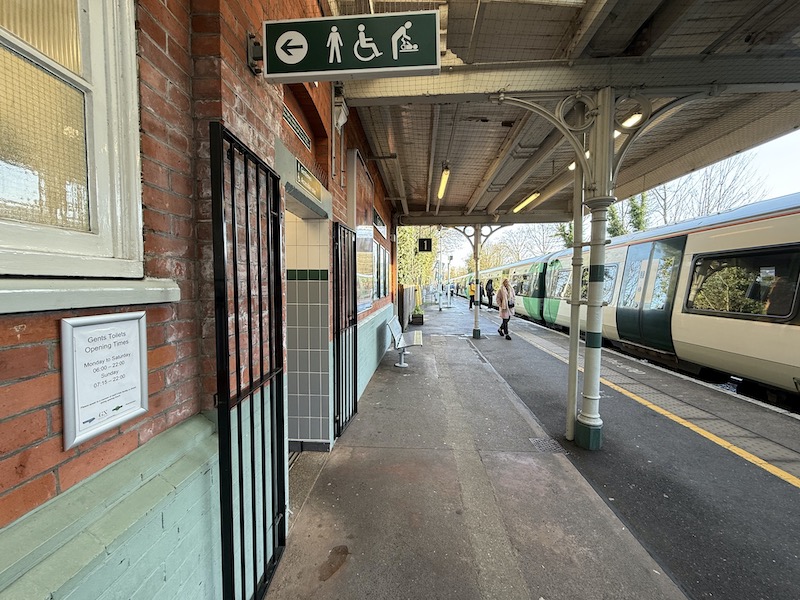
There are also toilets on this platform.
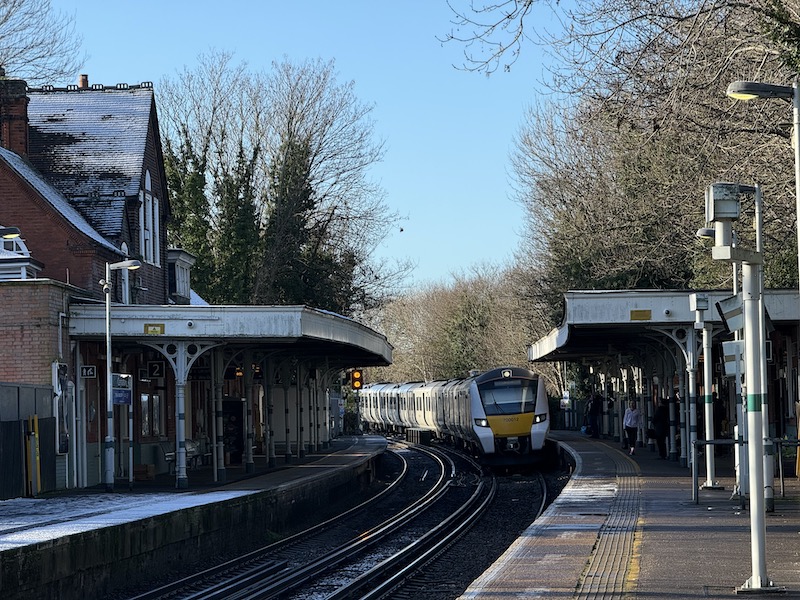
The covered areas on the platforms are not quite as extensive as at Carshalton Beeches but do look rather splendid as period architectural pieces to savor.
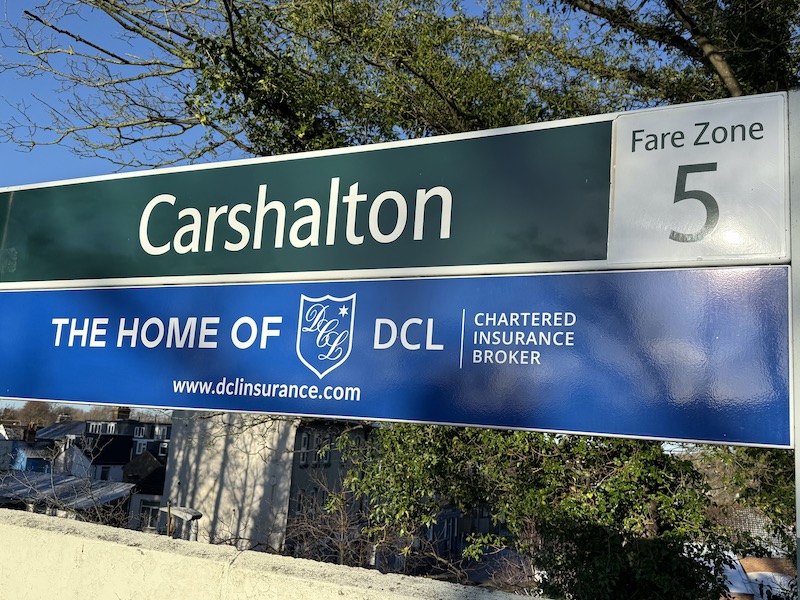
Finally, the station is apparently the home of an insurance broker.
Let’s go north of the River and take a look at Harringay’s two stations.
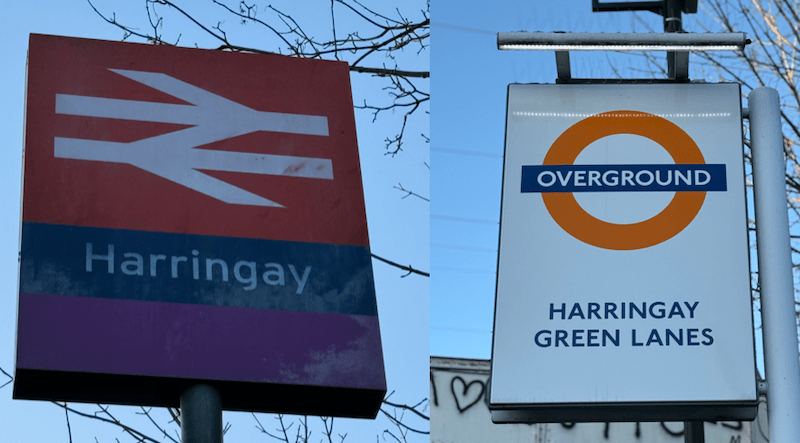
And you might be surprised to know, as I was, that it’s the Overground station Harringay Green Lanes which is the busier of the two with 1.425 million passenger entries/exits in 2024/25 compared to its near neighbour (600 yards to the west), Harringay, which mustered 1.14 million passengers that year.
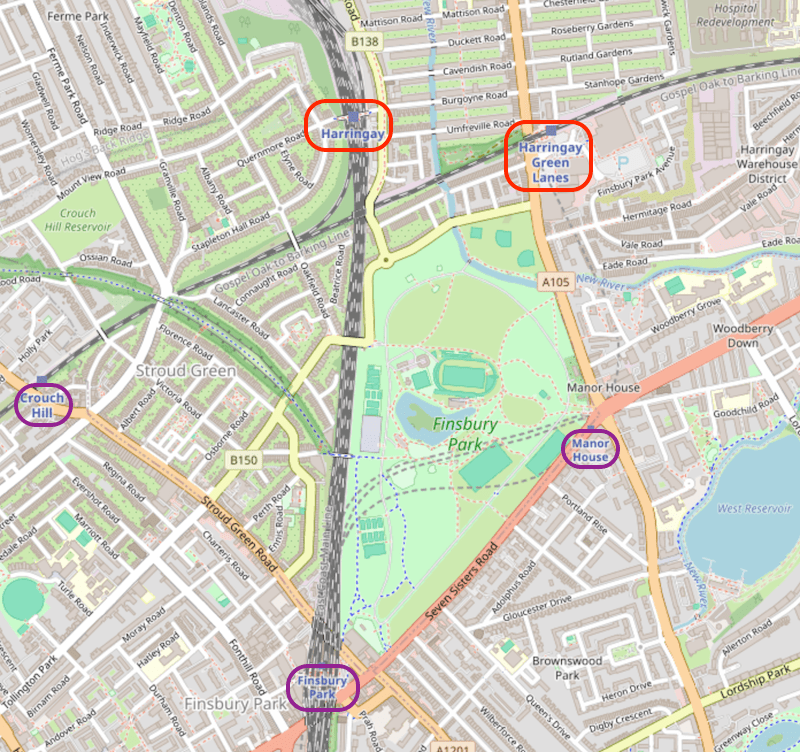
Of course, my impressions are way outdated from the days when the former was an awfully run down station called Harringay Stadium on the Gospel Oak/Barking line when I grew up in this part of north London during the 1950s and 1960s whereas Harringay offered direct trains to King’s Cross, and in peak hours to Moorgate and Broad Street making it far more useful.
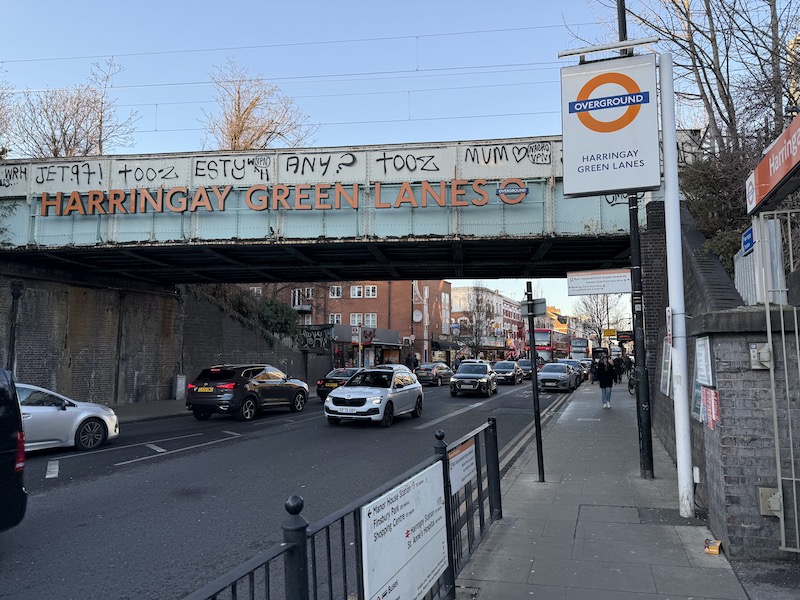
Harringay Green Lanes shook off that old image in the 2007 when it became part of the Overground and received a full makeover including making it accessible with extensive ramps…
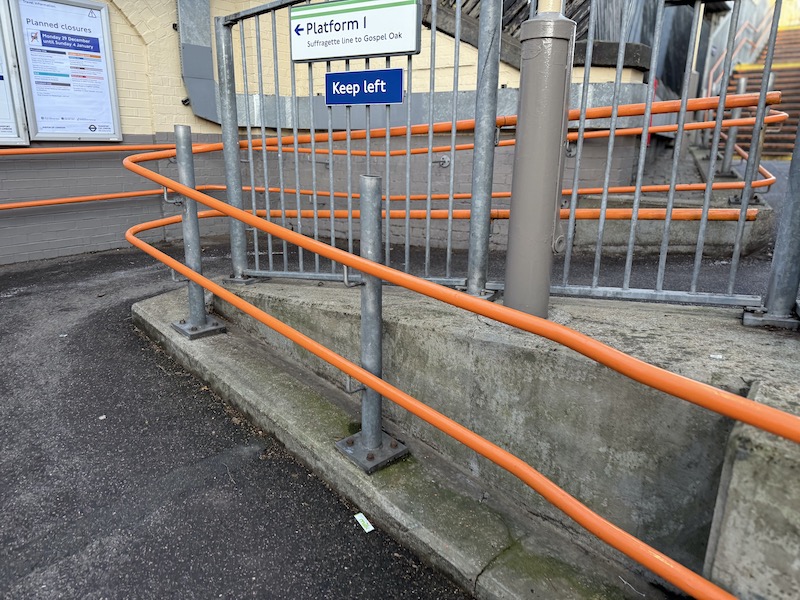
… installed to take passengers to and from the platforms either side of the railway bridge over the very busy Green Lanes.
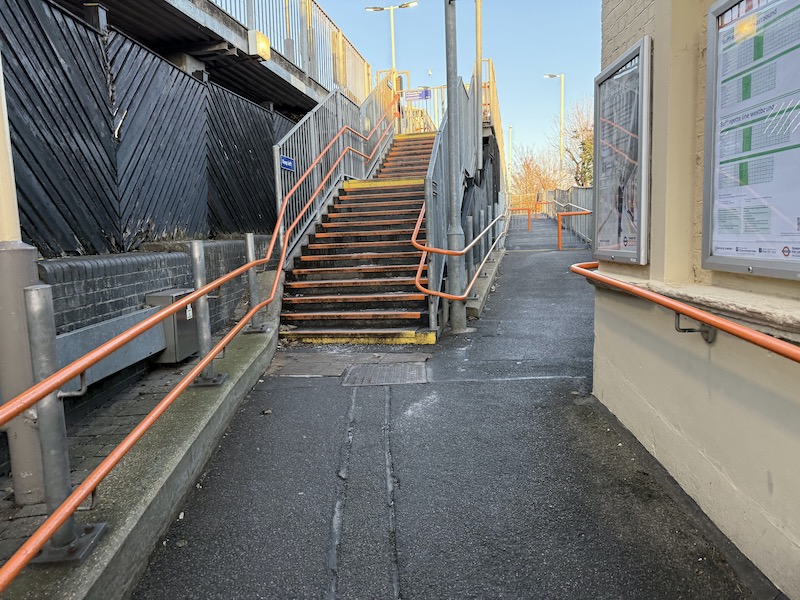
It’s also located adjacent to the popular Arena Shopping Park on the site of the old Greyhound Stadium and offers passengers four trains an hour.
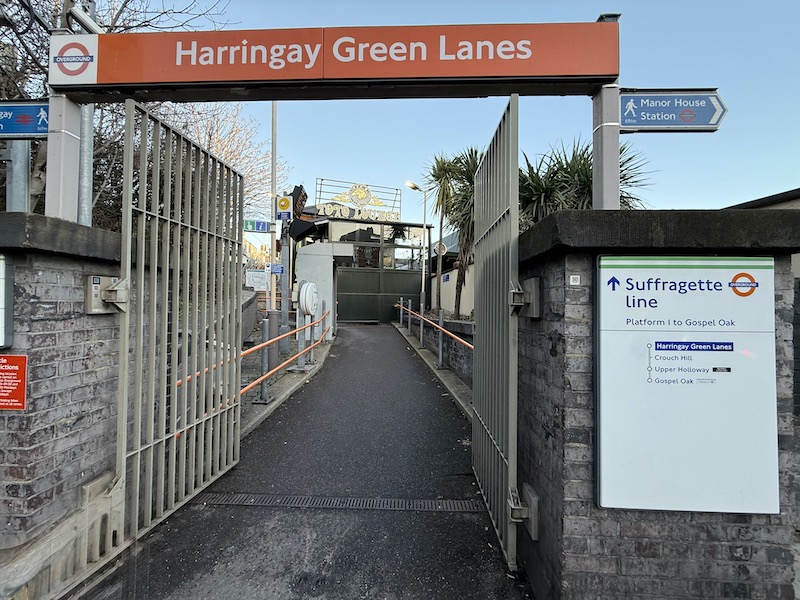
There’s no ticket office, nor gateline, but being an Overground station it does have a staff presence.
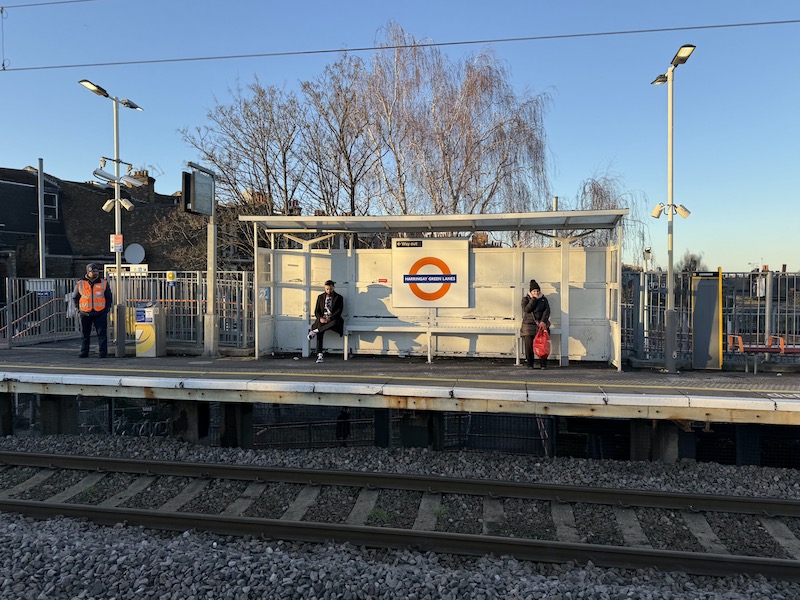
Indeed, on the day I visited a member of staff was on both platforms but they may have been an exception.
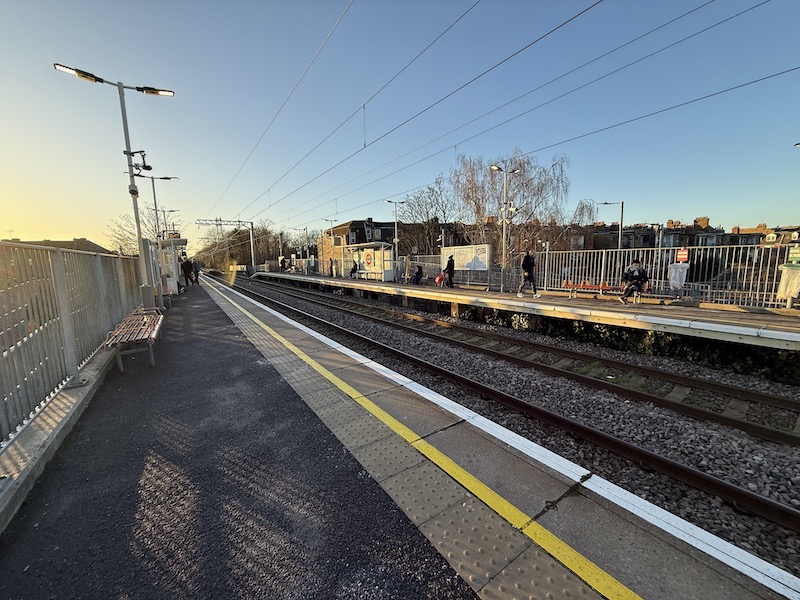
As you can see the station won’t win any prizes for facilities…
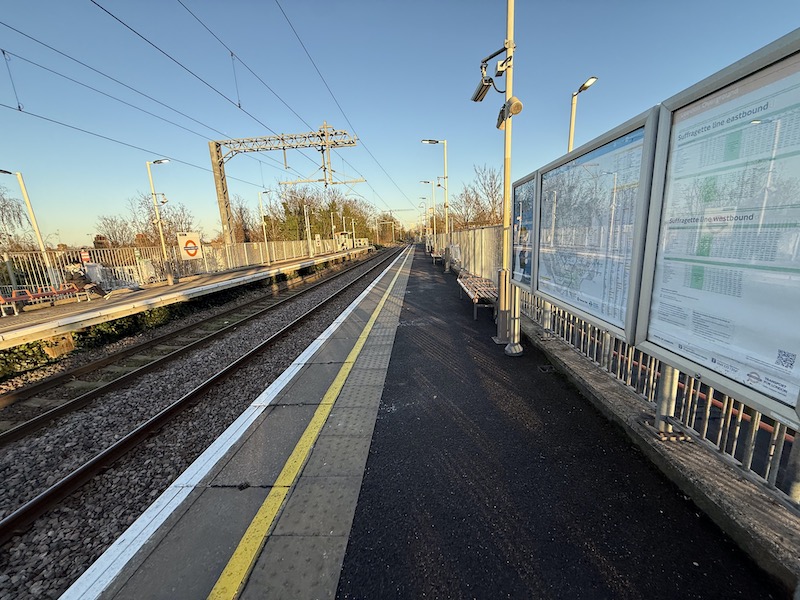
… but I can assure you it’s a much more pleasant place to wait than in the 1950s/60s and you also don’t have to wait very long either with a best ever service on the line.
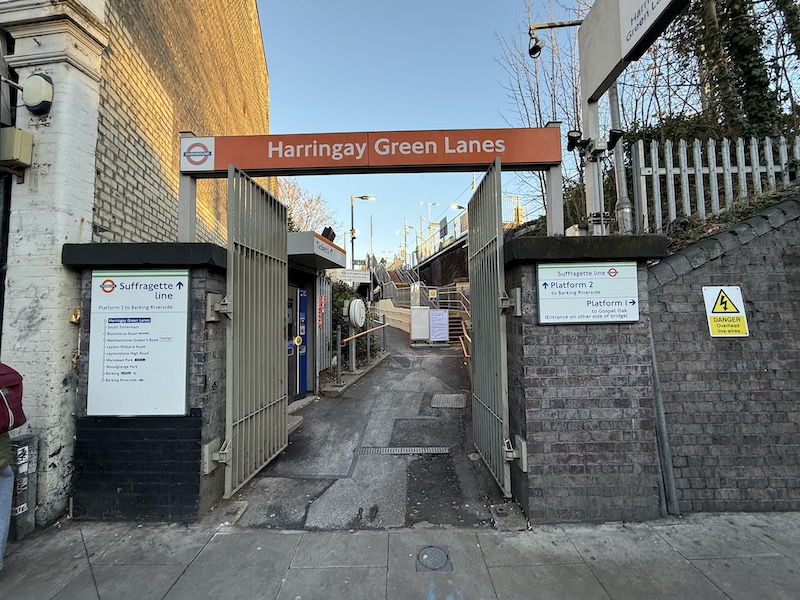
A ticket machine and departure board greet passengers at each entrance…
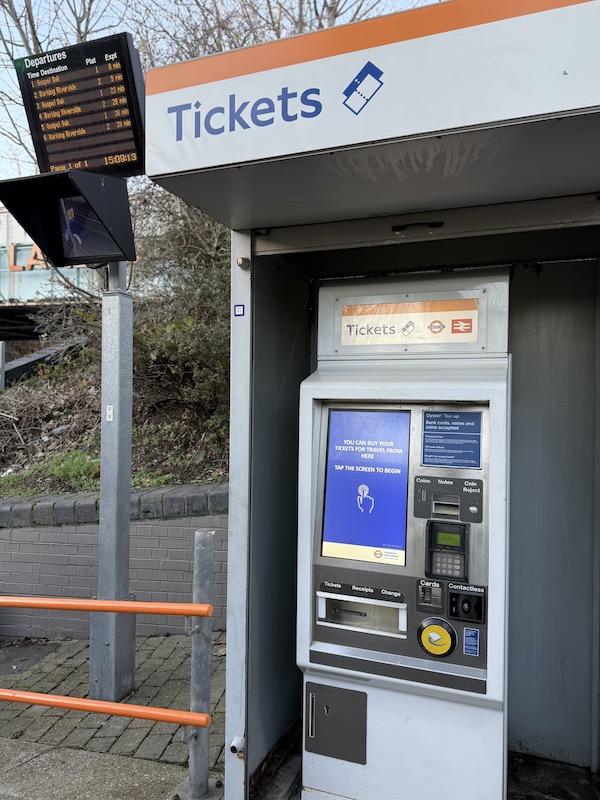
… but that’s about it.
At nearby Great Northern run Harringay, the facilities are equally sparse with no ticket office or gateline, just two ticket machines and a ‘meeting point’…
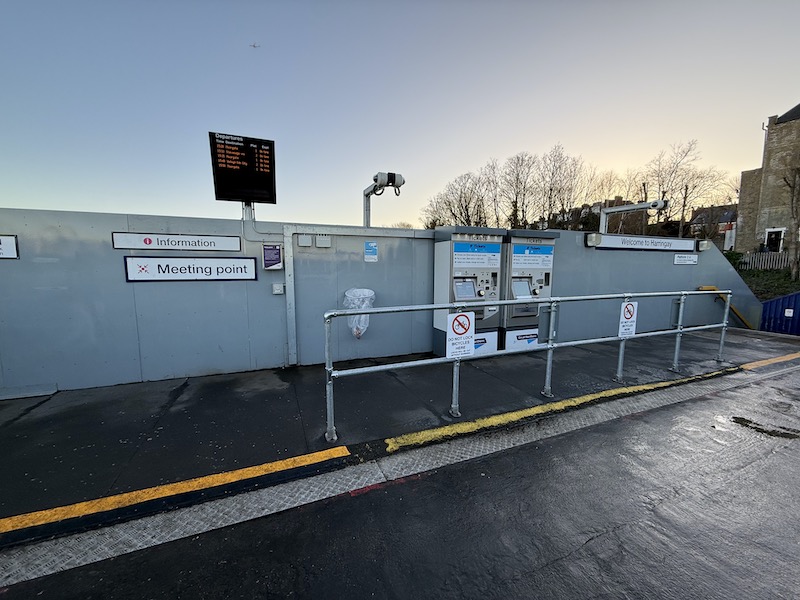
… nor accessible either, with steps down to the platforms…
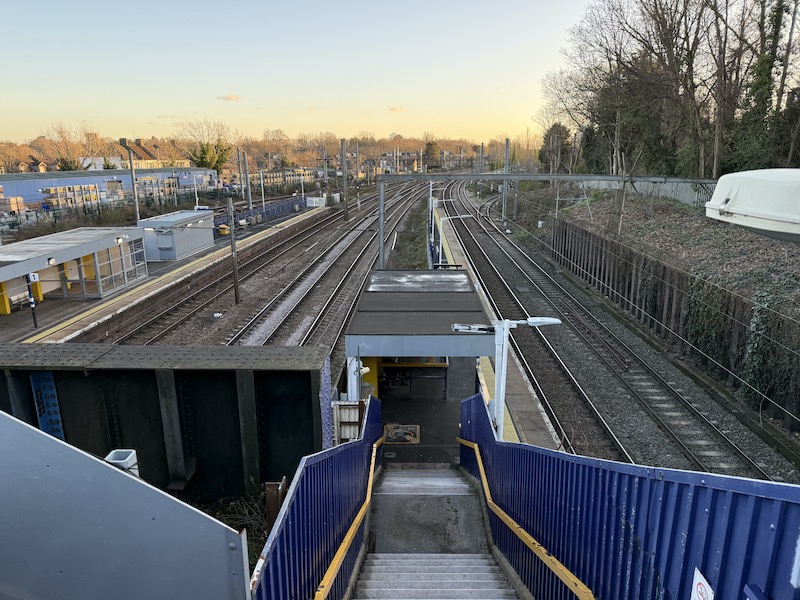
… from a footbridge linking residential roads…
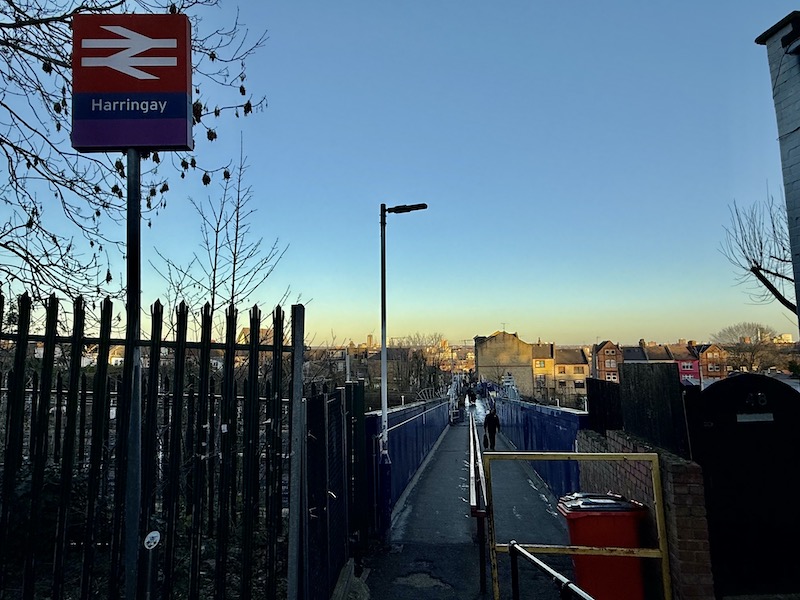
… either side of the extensive and wide East Coast mainline at this point with its service tracks alongside the main and suburban lines.
It’s one of the few stations in Britain where both platforms are west facing.
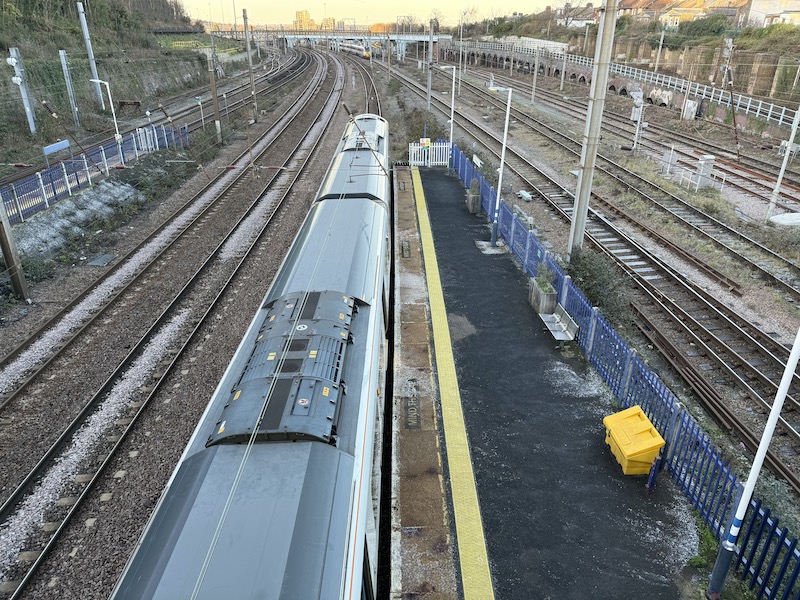
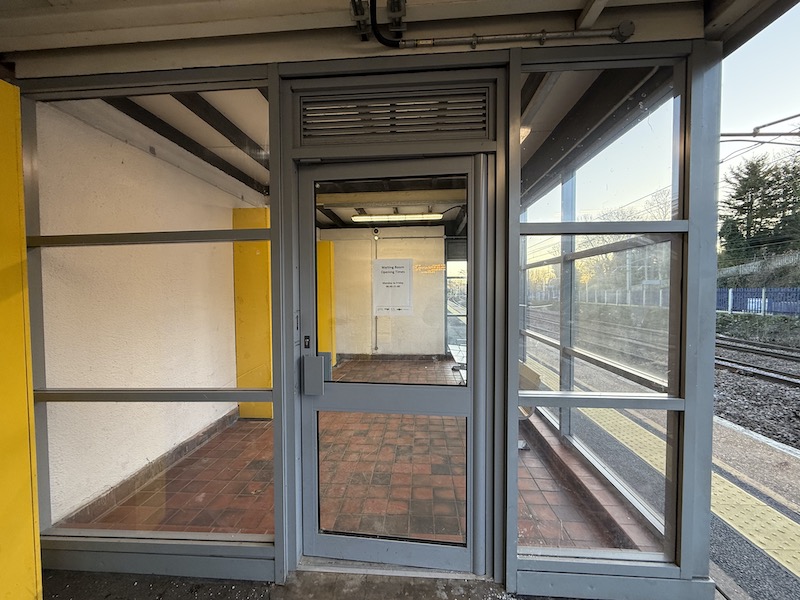
… and there is an enclosed waiting room but only open on Mondays to Fridays.
And a rather narrow northbound west facing platform 2 too.
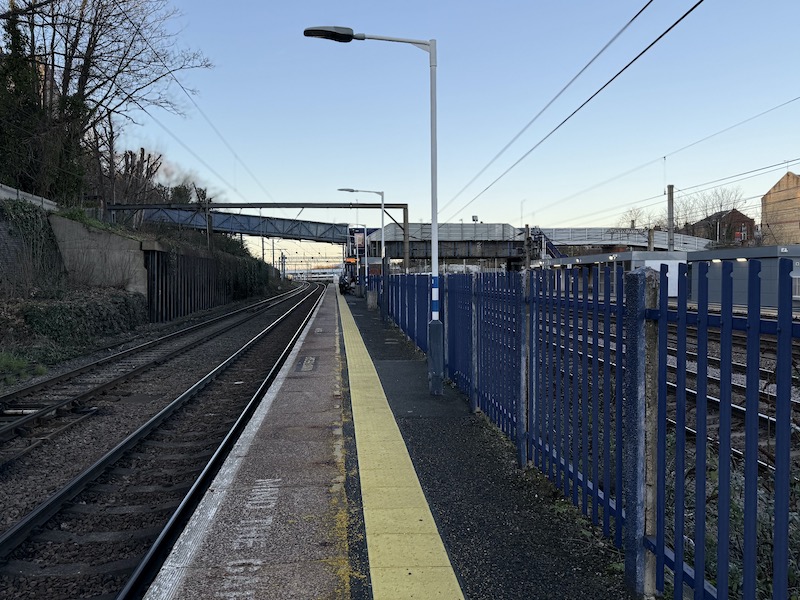
Great Northern trains run every 15 minutes southbound to Finsbury Park and along the old Northern City line via Highbury & Islington to Moorgate with northbound trains running half-hourly alternately to either Welwyn Garden City or via the Hertford North line to Stevenage. Additional trains run in the peaks.
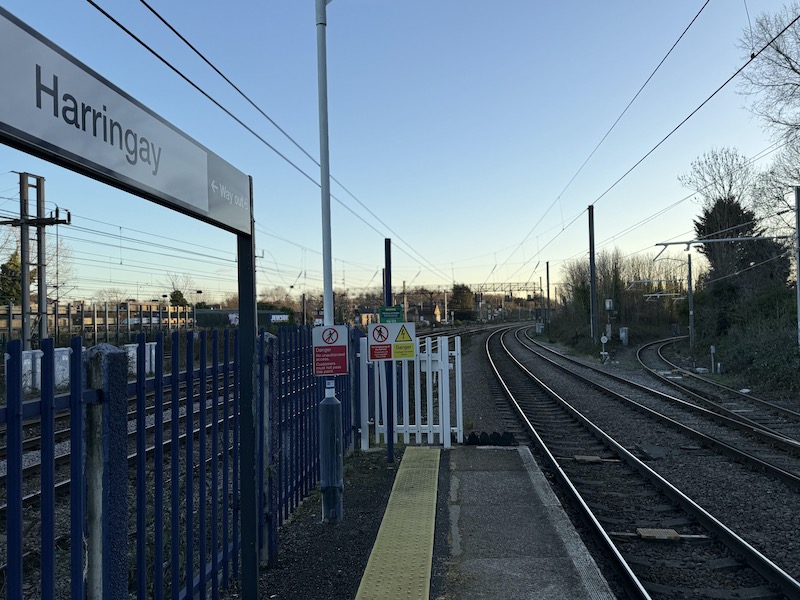
Just south of the station alongside the northbound platform 1 is the track providing a link from the Gospel Oak to Barking line featured earlier as seen on the right hand side of the photo below.
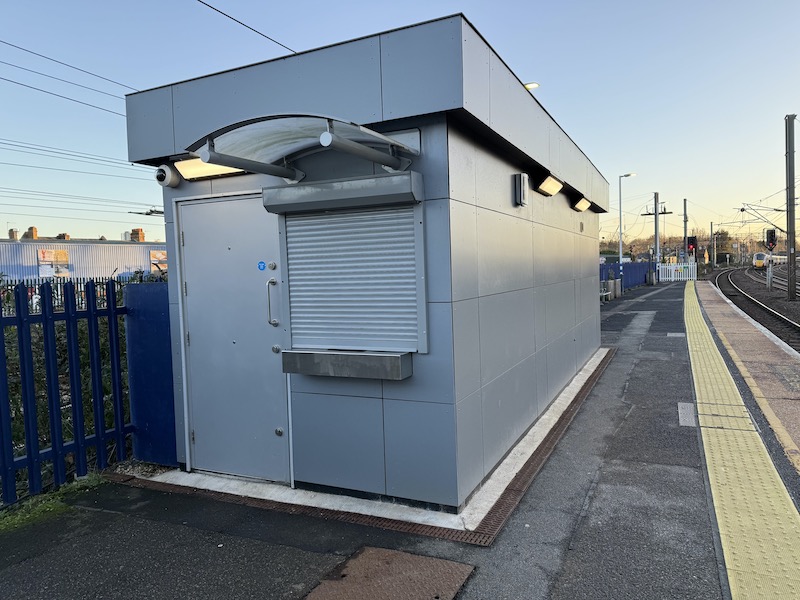
Back on the southbound platform 1 is a locked hut with a shutter which looked as though it was permanently shut.
And that completes all the places in London with two stations. More from elsehwhere in Britain next month.
Roger French
Blogging timetable: 06:00 TThS
 BusAndTrainUser
Carshalton is definitely a “place”, IMHO, with Carshalton Ponds being in what a much younger me thought was ther centre. It also had the 654 trolleybus, which crossed both of the railway lines – and, most importantly for any transport enthusiast, the Mecca that was Lens of Sutton, latterly just down the road from Carshalton station.
In an earlier incarnation the shop was nearer Sutton, and many a happy hour was spent browsing the books/maps/photos they had in stock, with magazine back numbers a specialty (I completed my run of Modern Tramway, to which I started subscribing in 1964, back to its 1962 transition to a “proper” magazine there).
Happy days!
LikeLiked by 1 person
Carshalton was its own district council prior to 1966. My uncle worked in the parks department and also famously had a joint board for the cemeteries with I think Sutton and merton
LikeLike
What is now the B271, and especially Ruskin Road, was where the tramway went as the local authority prohibited access through Carshalton High Street (A232). Indeed, part of this alignment was specifically built so that trams could get through from Sutton to Croydon. The River Wandle extended south of the High Street all the way to a spectacular waterfall inside Carshalton Park where is held annually an Eco-Fair with Sutton Garage laying on a special network of free feeder routes for the event. I have an extensive collection of Wandle Walk leaflets and did a lot of walking after getting free bus travel. Honeywood House and Little Holland House are both a mecca for culture vultures interested in Carshalton history and both a free. Harringay Station is a good stepping off point for the Parkland Walk (aka “Northern Heights”).
LikeLike
Harringay Green Lanes became an Overground station in 2007 when TfL took over, not in the early 1990s.
LikeLike
Thanks for that correction – now updated.
LikeLike
For your London collection – how about Wimbledon, Wimbledon Park (District Line) and Wimbledon Chase (my local station)
Robert Vidler
LikeLike
Thanks Robert. I’ve ignored underground stations in this series and also looked at stations on different lines. But thanks again for the thought.
LikeLike
There’s also South Wimbledon on the Northern line.
LikeLike
The thought of a direct Barking to Stevenage or Cambridge train would be interesting
JBC Prestatyn
LikeLike
The series shows how many stations need disabled access, a must to increase economic growth
JBC Prestatyn
LikeLike
The cost would be very high and the benefit very small
LikeLike
one picks the doable or the needed. Batterseacpatk and Peckham rye for example
LikeLike
I disagree that stations need disabled access specifically, because that mindset is where station stairlifts come from, a box-ticking exercise which are utterly useless to all except a tiny demographic.
What stations need wherever possible is to be made accessible generally. That is to say accessible to everyone who may struggle with staircases, whether that’s a person in a wheelchair, one with baggage (which can include shopping, not just suitcases!) or someone with a pushchair.
All benefit from ease of accessibility, and where it’s possible at a cost that isn’t ridiculously high then it should be done as a matter of course.
LikeLiked by 1 person
ideally design station so they dont need lifts o=r footbriges as that saves a fortune
LikeLike
In this country we’re adapting stations that were built anything up to 200 years ago rather than designing from scratch. It’s not as simple as “design stations so they don’t need lifts or footbridges”.
Plus you always need a way for people to get from one platform to another, so – unless there are ramps (which will be very long) to a road bridge – there will always be lifts and footbridges even on the newest builds.
LikeLike
Not if Island platform
LikeLike
You mean an island platform which, being between the tracks, would need steps, a lift or a long ramp to get to in the first place?
I assume you’re just contradicting me rather than trying to make a cogent argument, but I’m here for the full half hour if you wish to continue.
LikeLiked by 1 person
for ramps see Barking, ok to walk but a hand wheelchair up them would be tricky. That said I wonder why Wimbledon Stratford and Clapham Junction didn’t have ramps, the lifts are often out of order on on platform at a time
JBC Prestatyn
LikeLike
I guess that it depends what else there is under the platforms – drains, water pipes, electrical conduits, etc. Ramps also inevitably require a considerable length, so that they may not necessarily be cheaper to build, even if the operating costs are less, and there is less to go wrong.
RC169
LikeLike
Elizabeth line has lifts built in as matter of course but in central core too few for the number of wheelchair users ii see. Indeed the trains too are too crowded and I don’t think dft has realised success of policy has brought additional challenges
JBC Prestatyn
LikeLike
As someone has pointed out, Carshalton used to have its own UDC before the creation of the London Borough of Sutton. As did Wallington & Beddington to the east. The historic parishes squeezed between Croydon and Epsom are all very narrow east-west and longer north-south, being set on the dip slope of the North Downs astride the spring line. That dates back to Anglo-Saxon times.
Wallington station on the 1847 London & Croydon Railway extension to Epsom was originally opened as Carshalton. It was renamed after the LB&SCR opened its direct line from Peckham in 1868. Beeches Halt was built in 1906 to serve the housing developments springing up on the old lavender fields. It was served by a push-pull shuttle between West Croydon and Epsom Downs. The station was rebuilt in conjunction with the extension of the overhead electrification from Croydon to Cheam.
Carshalton Beeches was my local station for 30 years until we moved away in 2024. Latterly I much preferred the London Bridge trains; running fast from Norwood they were a good 10 mins quicker to reach central London. The Victoria services are 10 mins slower than they were with the old slam door trains pre-1984 for the same number of stops.
Chris Jackson
LikeLiked by 1 person
Kers Alton or Cress Alton for the wandle ponds etc watercress beds, the lavender being at Carshalton on The Hill , which the Beeches station effectively serves. Name Alton or Ewell Town refers to a place with rising springs and thus is a pair with the Ewell done earlier , and related to the watercress line Alton
LikeLike
thanks Roger for another interesting post. Your Carshalton pictures show a real bugbear of mine which is Southern has spent lots putting in gates everywhere (good) but too often they are left wide open. Some stations have gates but freely accessible side gates (West Norwood and Gipsy Hill to name two) which completely remove the point of the gates, while others like my local station Peckham Rye always have a wide gate open. Gates do need to be used and supervised if there’s to be any point investing in them
LikeLike
I saw the sign saying “Suffragette Line” and cringed, even after all this time.
Peter Brown
LikeLike
mainly because the person in Barking they found wasn a suffragette
LikeLike
An interesting point about Harringay Green Lanes being busier than Harringay. Thinking on it, it does make sense.
Harringay is not that far away from Manor House and Turnpike Lane stations, where the Underground service is a lot more frequent and offers better connections into most of Central London. From the area on the west side of the station, Finsbury Park with two tube lines is a walk or a short bus ride away.
For occasional travellers, fares policy doesn’t help matters – fares using only TfL services are considerably cheaper than fares for journeys using both TfL and national TOC (with one or two exceptions). Harringay does have the advantage of a direct service to Moorgate for the City of London but even there, the TOC-only fare is more expensive than the tube fare from nearby stations.
Harringay Green Lanes, on the other hand, offers orbital journeys which are less convenient by tube, and avoiding Zone 1 therefore offering cheaper fares.
Malc M
LikeLike
Holloway road mainline station closed when the Piccadilly line station took all its traffic
traffic
LikeLike
I wouldn’t say that Harringay station is “near” either Manor House or Turnpike Lane stations (indeed the gap between the two is, I understand, one of the longest on the “tube” sections of the Underground). According to Google maps, it’s 1.2 miles to Turnpike Lane, and about 0.9 miles to Manor House – many people would consider those to be fairly long walks!
LikeLike
That may be, but those distances are from Harringay station itself. Whilst some people might start their journeys from points more-or-less right outside the station, the station’s catchment area overlaps with that of Manor House and Turnpike Lane.
Some people may choose the shorter walk to Harringay, but for a less frequent train service at a higher fare. Others living, say, 5 minutes’ walk from Harringay may choose to walk a bit further for a tube service that is more frequent, cheaper and runs to a wider choice of destinations. What would you do if faced with that choice? Different people may make different choices.
Interesting point about the distance between Manor House and Turnpike Lane. It is indeed unusually long (2.32 km according to the Piccadilly Line working timetable on TfL’s website). It is beaten by Finsbury Park to Seven Sisters (3.15 km) in the same part of North London.
Malc M
LikeLiked by 1 person
You managed to describe Harringay Green Lanes station without making any reference to the Suffragette line or “GOB”!
Steven Saunders
LikeLike
When I were a lad growing up in Cuffley (in the 60s), Harringay station was known as Harringey West, which you haven’t mentioned – nor when the name changed. As you’ve been pretty consistent about including name histories elsewhere, shouldn’t there be one here too?
LikeLiked by 2 people
Carshalton and Carshalton Beeches less than a mile apart? Well, if you say so, but it certainly feels a lot more than that when you’re walking it! Anyway, as you say Carshalton Beeches has two half-hourly services, but you don’t mention the service interval, which for up trains is five minutes and twenty-five minutes (down trains are a rather better twelve minutes and eighteen minutes). The reason for this nonsense is that until recently there were actually six tph between Sutton and West Croydon and whilst they weren’t even-interval they were close enough to be ‘turn up and go’; but come the lockdown they just withdrew one pair and left the others alone, resulting in the daft uneven interval. The withdrawn trains were never reinstated nor was any attempt made to produce a more sensible timetable.
Michael Wadman
Sutton, Surrey
LikeLike
Who remembers South West Trains running non-stop between Sutton and West Croydon? On a Travelcard jaunt many years ago I arrived in Croydon on SWT and then left for London on a Connex South Eastern service from East Croydon. 455s of SWT and delightful slam door stock from CSE!
LikeLike
I remember there used to be train services from: ●Guildford to Croydon via Sutton. ●London to Tonbridge via Croydon & Redhill. ●Horsham to Tonbridge via Gatwick and Redhill.
LikeLike
Those Tonbridge services mentioned may of also went to Tunbridge Wells at some point.
LikeLike
Carshalton is my local station, which I use on a regular basis. As a child I lived nearer to Carshalton Beeches and didn’t know then that many years later I would retire from working on the railways after almost ten years in the ticket office here. In 2006 I was instrumental in arranging displays to commemorate 100 years since Beeches Halt was opened. One thing which is missing from both stations in Carshalton (and probably all Southern and many other stations) is the display of a timetable. This should be mandatory. If the Overground stations (also part of National Rail) can display full times (sometimes with every journey listed) then why not all stations?
John Parkin
LikeLiked by 2 people
indeed miss the timetable sheets at Wimbledon
LikeLike
Hi Roger
I’ve enjoyed this series as I enjoy most of your other posts. How about towns with 3 stations? Can’t be many but Dorking springs to mind although 2 stations (West & Deepdene) are on the same line.
Regards
Ian Johnson
LikeLike
Harringay’s waiting room seems to be an easily-cleaned, indeed hoseable empty space apart from one small seat, partly hidden in the photo. Why not open seven days? Why locked at all? Do local feral youth arrear only at weekends?
LikeLike
Roger If you are now continuing this series of blogs why don’t you go to Exeter and Glasgow which meet the criteria of two stations which in the case of Glasgow (Central and Queen Street) are not directly connected by rail with each other. Had you attended the visit to Fasttrack at Bluewater last week I would have mentioned this then. Robert
LikeLike
Thanks for the suggestion Robert; good to hear from you. Both those cities have more than two stations so I haven’t included them in the list (I know London also has many more than two stations but I’ve taken identifiable ‘places’ within London as the definition of a ‘place’.)
LikeLike
New Malden and Malden Manor, also Ash and Ash Vale, should meet your criteria for stations which are on different lines.
LikeLike
The worst thing about Harringay is it’s appalling frequency, only every 15 minutes. For an inner suburban London station that’s embarrassing, look at tube equivalents. And it isn’t just the low attractiveness of the frequency it’s the fact that at Harringay because of the poor frequency it’s often a struggle to actually get on the train as it’s so crowded. Before the 2018 timetable meltdown the promise I believe was at least a train every 10 minutes and every 6-8 minutes in the peak. I hope for more ambition from GBR.
MikeC
LikeLike