
Thursday 1st January 2026

A Happy New Year to all readers and before we lose sight of 2025 completely I wanted to follow up the abortive arrangement I’d made with my friend Ray back in April to pay a visit to all of Acton’s seven stations (three National Rail and four London Underground).
So, welcome to a new series featuring ‘places with seven stations’. It’s a short series as there’s just the one place. Acton.
Welcome to Acton’s Action Stations.

Readers may recall April’s planned expedition was a complete decoy to lure the unsuspecting Ray out of his office-come-home to nearby Askew Road in Shepherd’s Bush so he could be ambushed by an open-top bus full of friends who’d gathered to mark his 75th birthday.

Finally, at the beginning of last month, along with colleague Michal from Best Impressions, Ray and I spent a fascinating couple of hours comparing and contrasting Acton’s roll call of seven stations.
This is what we found.
1. West Acton
We began at West Acton, a short bus ride on route 218 from Askew Road, although Ray and I still associate that number as a long standing route linking Kingston and Staines.

West Acton is the penultimate station on the Ealing Broadway branch of the Central line. It was built by the Great Western Railway and opened in November 1923. The line through to Ealing Broadway had seen freight trains since 1917 with Central London Railway trains using the line from 1920. Although the current station looks almost Holden-ish in design it was in fact designed by GWR’s architect, Brian Lewis, being completed in November 1940.

The entrance area is characterised by the large glass ‘Oakwood/Acton Town style’ projection above making for an airy space full of daylight streaming through the numerous glass window panes.

There’s a coffee stall immediately outside…

… and down on the platforms another Holden-ish touch being the waiting shelters with their rounded ends…

… and rather nice curved wooden bench seat inside.
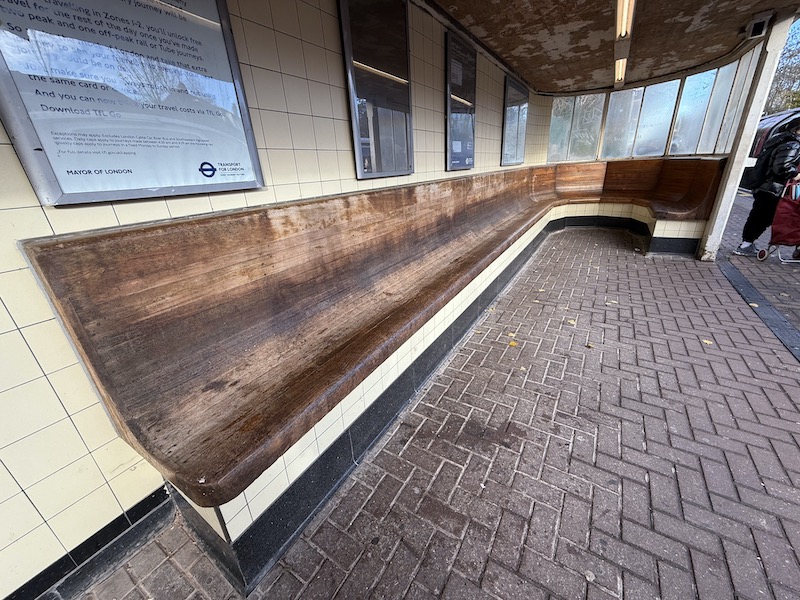
But, as you can see the station and facilities could do with some much needed repainting and a general spruce up, but as with everything to do with the Central line, there doesn’t seem to be any budget for care and maintenance.

What could have been a wonderful station looks sadly dowdy and down at heel.
We jumped on the next Central line train for one stop to our next station on the tour…
2. North Acton

Sadly North Acton was even more dowdy than West Acton.

There are three platforms here with an island platform used for terminating trains from the east with both tracks leading to a siding between the running tracks.

First impressions after alighting from the train were not good with a very uninviting waiting room on the island platform…

… which has seen better days.
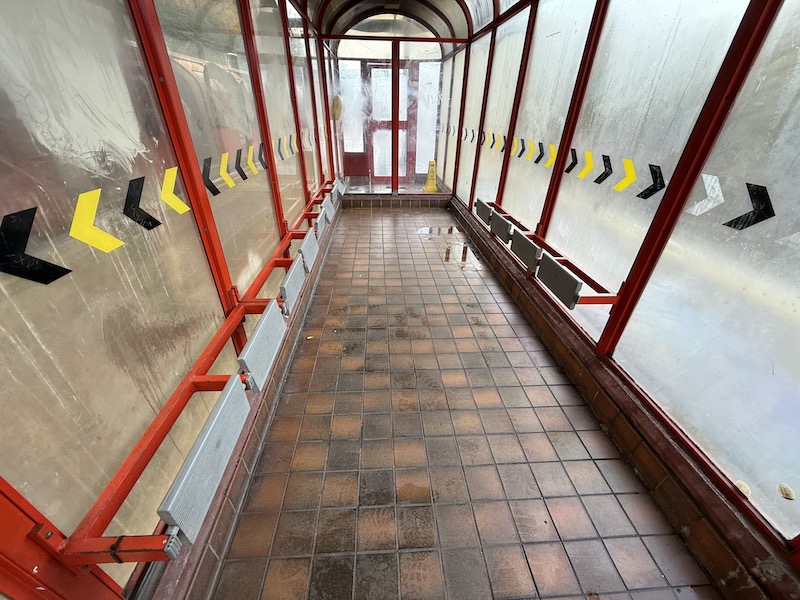
Part of the western end of the waiting room was partitioned off behind a locked door as though it was for staff but merely consisted of a seat surrounded by very dirty windows.

The stairs to the footbridge…

…carry a dire “Travel information” warning but only once you reach the top of the stairs…

… and the footbridge itself could do with brightening up.
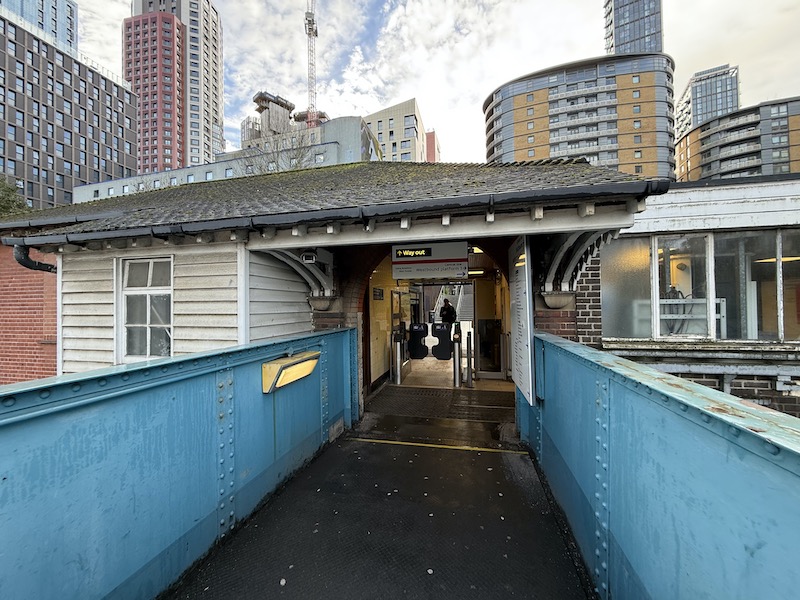
The gateline area is squeezed into a very confined space, and is divided into two…
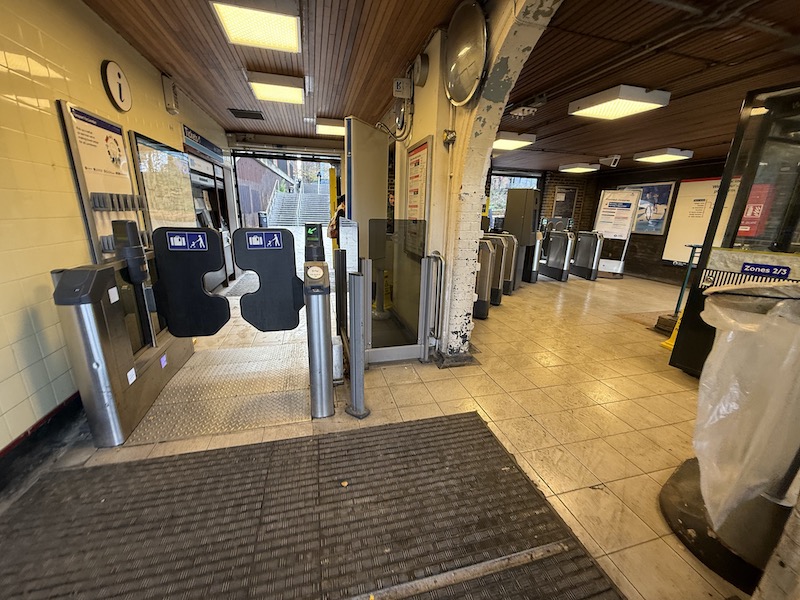
… while the outside entrance to the building is very much understated…
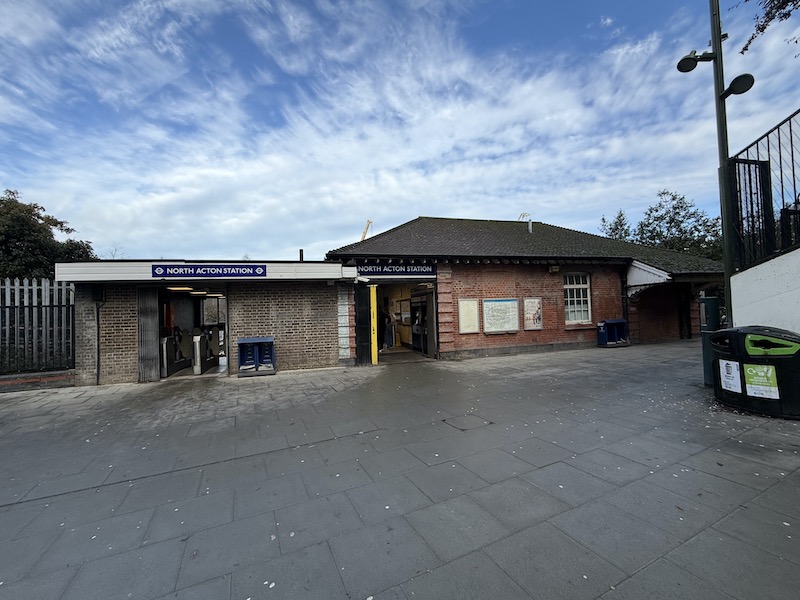
…especially compared to the extensive developments that have taken place around it over the last few years.
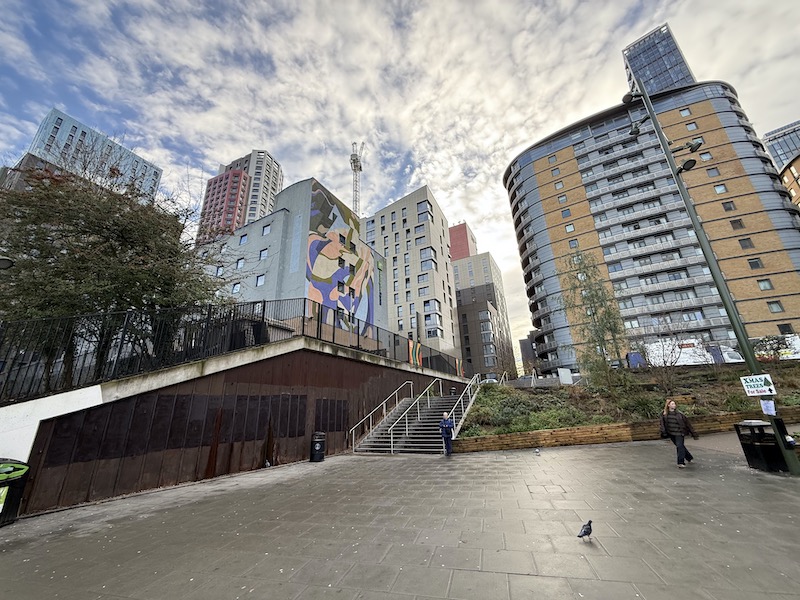
We weren’t impressed so jumped back on the next train to take us one stop further east to our third station….
3 East Acton

Alighting from the train you immediately become underwhelmed at East Acton’s eastbound platform which must be one of the narrowest on the network.

Although there is room for some wooden slatted seats at the western end….
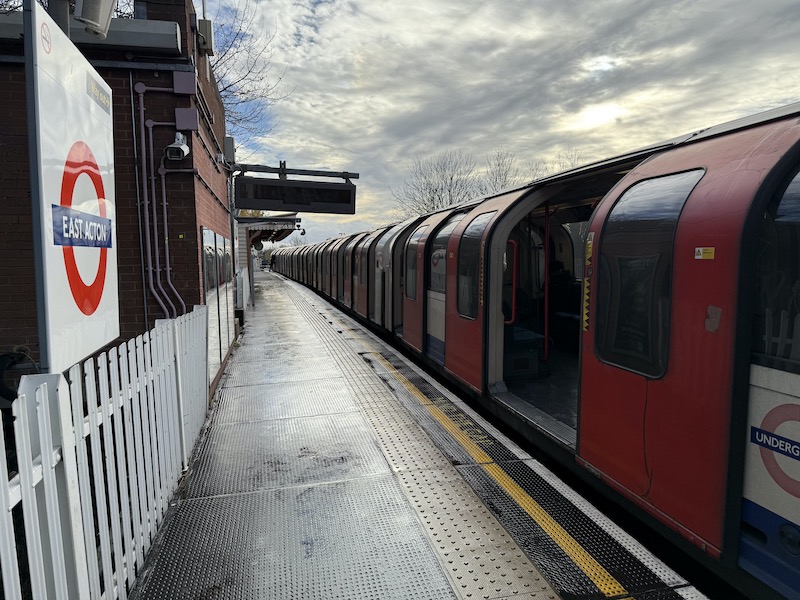
… and towards the exit at the eastern end is a well protected brick building…
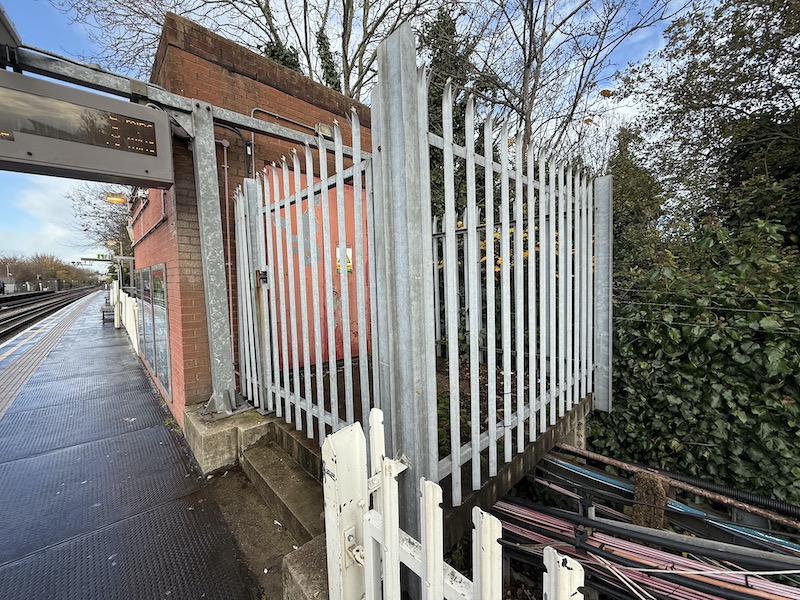
… which must contain some electrical installation, followed by a rather quaint looking waiting room….

… with rather rudimentary seating…

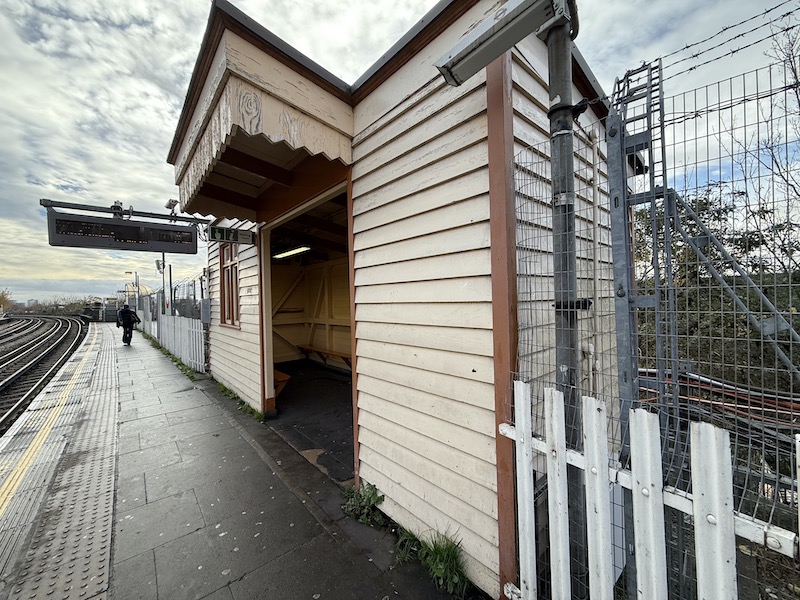
… which reminded me of the kind of shelters you see preserved in museums of times gone by.

The exit/entrance to the platforms are at the extreme eastern end and are rather dowdy looking…

… with a number of A4 printed warning notices …
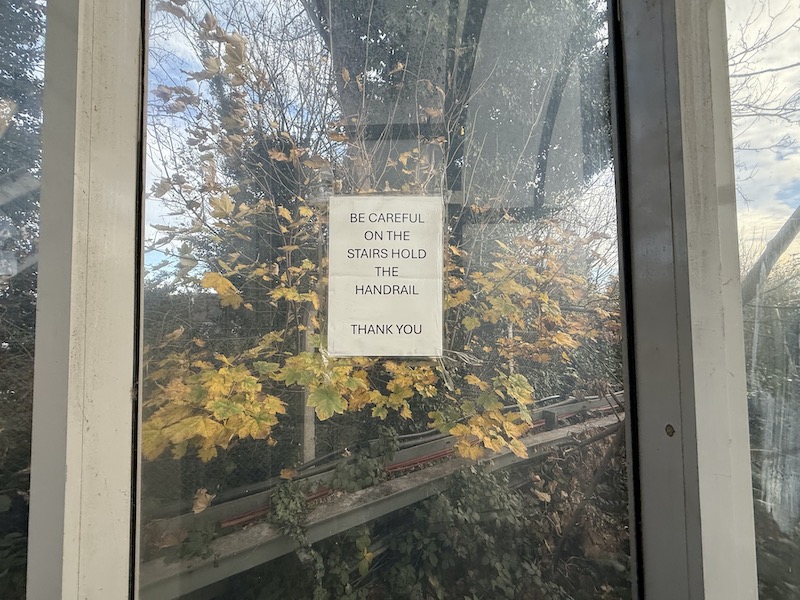
… stuck to the dirty glass (plastic?) panels as you approach the stairs…

… which are indeed rather steep.

Suffice to say, this station, like the previous two, is not accessible. The gateline is another in a rather confined space…
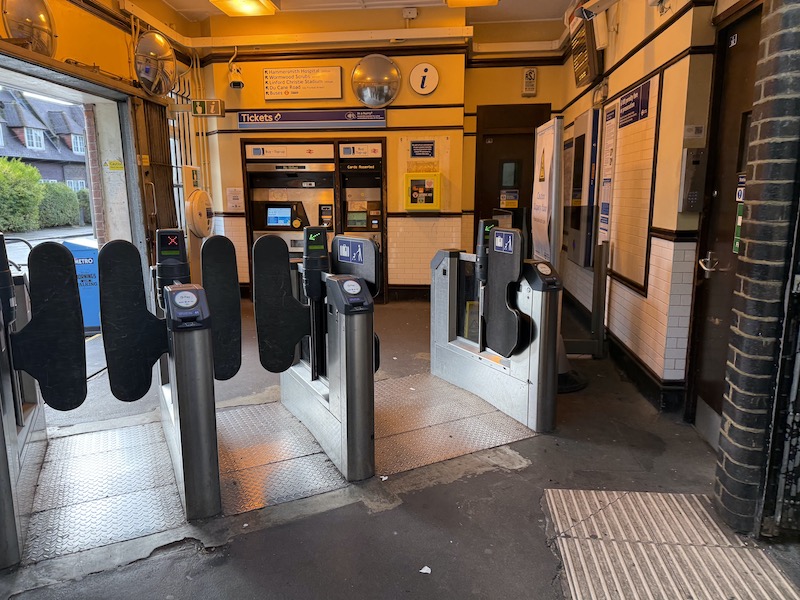
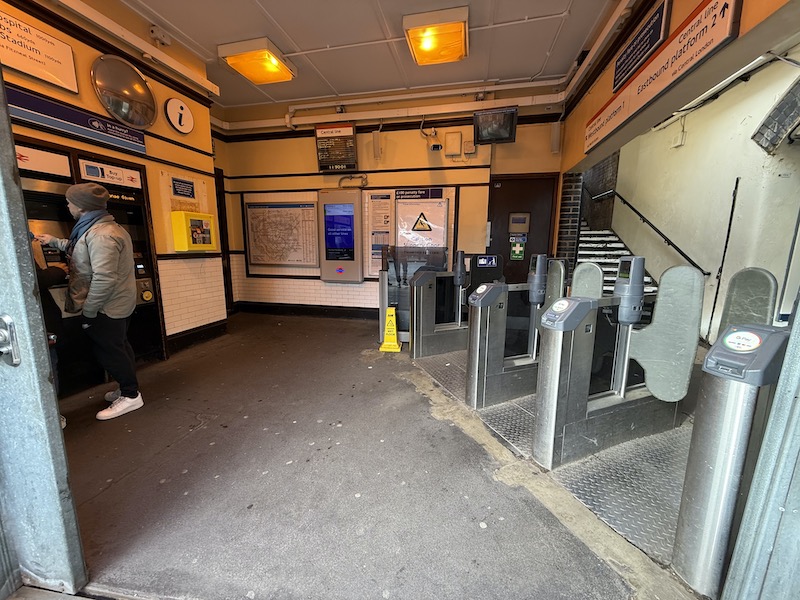
…while the subway under the tracks is at least fairly brightly painted and lit.
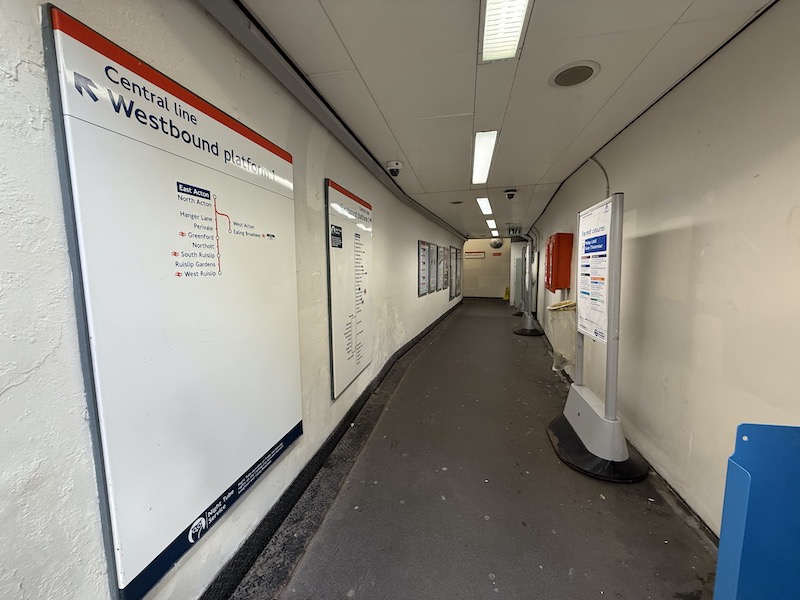
The westbound platform has a similar waiting shelter to that on the eastbound with the same bench seating.
We didn’t stay long as there wasn’t anything more to see, so left the ticket office…
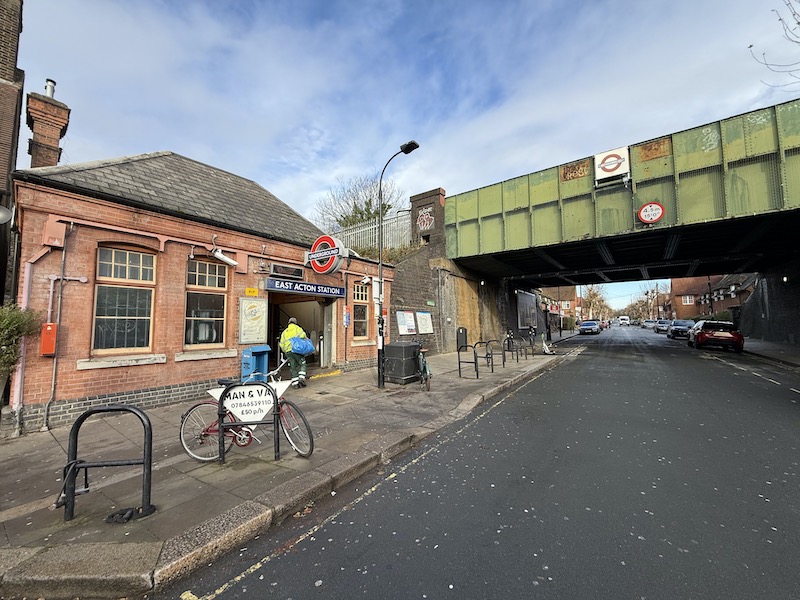
… and made our way to catch a bus on route 70 over to our fourth and final Underground station, Acton Town.
4. Acton Town

Acton Town is an interchange station on the District and Piccadilly lines with the latter missing out the following four stations eastbound giving a non stop run to Hammersmith (ignoring the exception of Turnham Green at certain times of the day) (towards Cockfosters) with westbound trains continuing to Heathrow or Uxbridge. District Line trains head west to Ealing Broadway and east to Upminster.

The station opened in 1879 initially as a terminus for its first four years and originally called Mill Hill Park, being reconstructed and renamed Acton Town in 1910 and rebuilt again in 1931/2 with a typical design by Charles Holden.
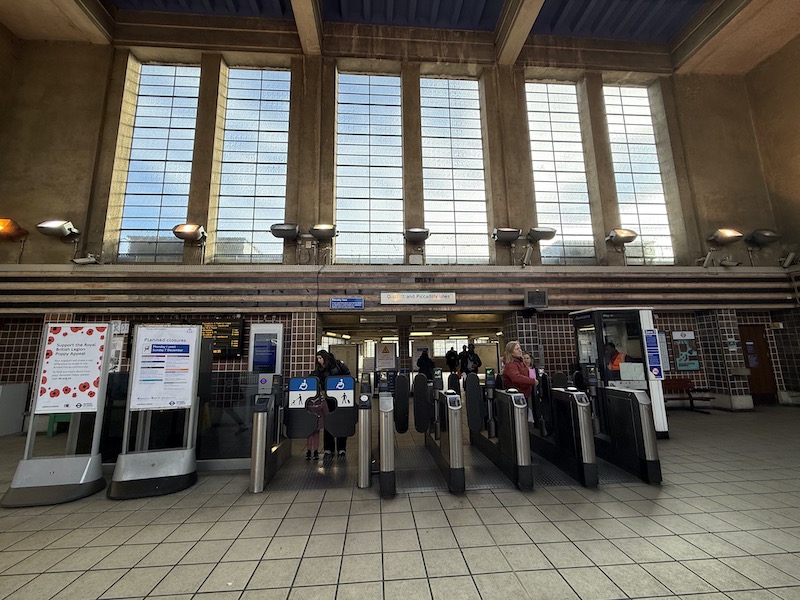
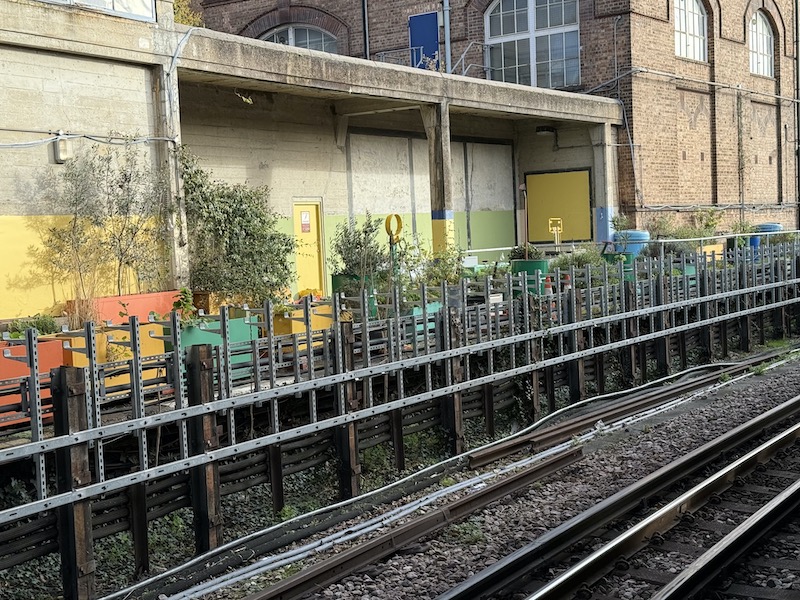
The station has four platforms either side of two islands but used to have a fifth platform to the north of the eastbound island platform for the short branch line to South Acton from where a single car train shuttled up and down. It closed in 1959 and the remnants of the platform are still visible today with a variety of trees in planters.
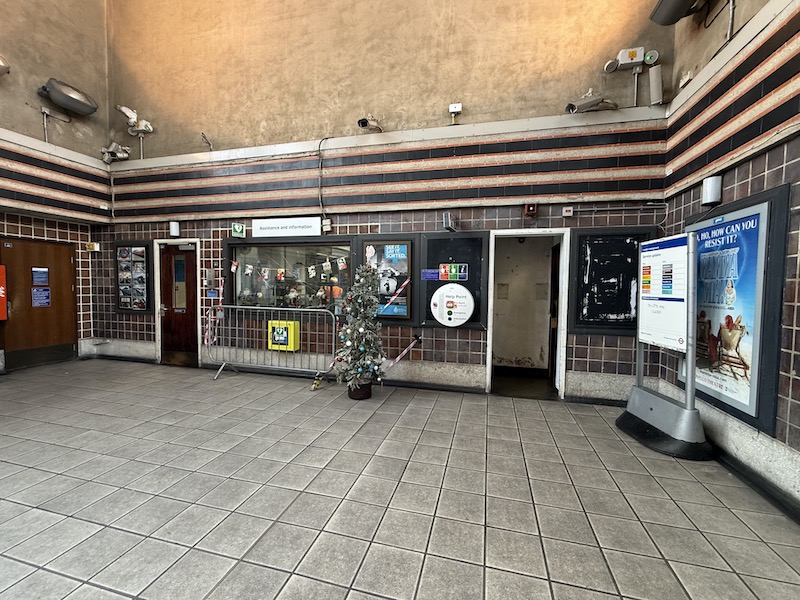
Back at gateline/street level there are toilets either side of a glassed office for staff to keep an eye on things and somewhere to site the small Christmas tree.
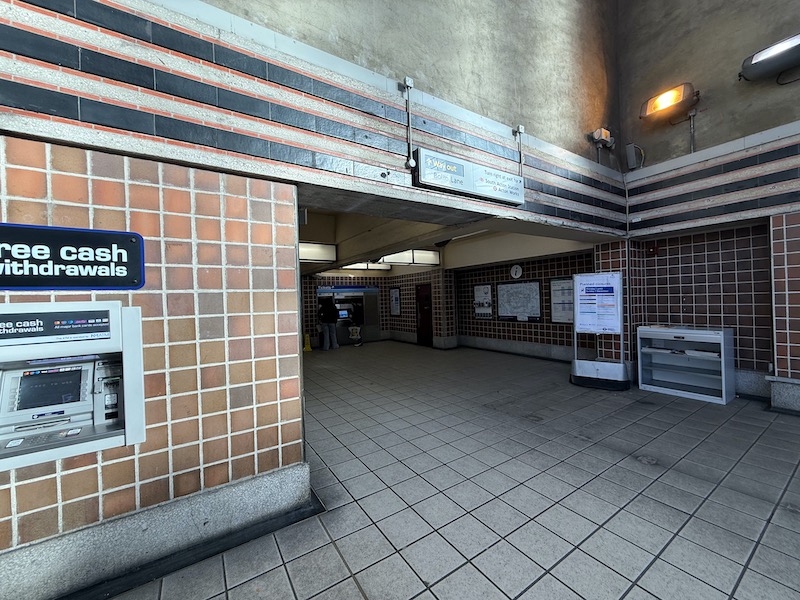
… and a small book library on the other side of this area which has a side access.
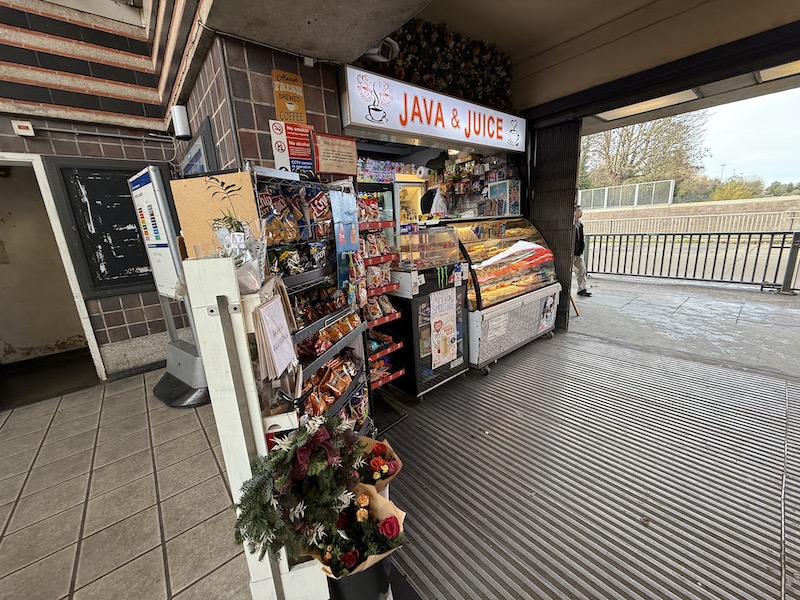
There’s a minicab office…
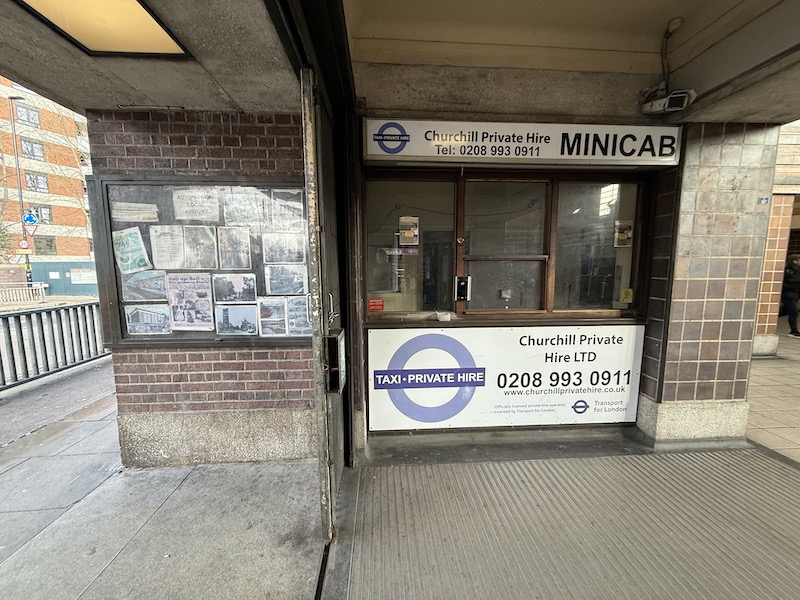
… and a small kiosk either side of the main entrance/exit.
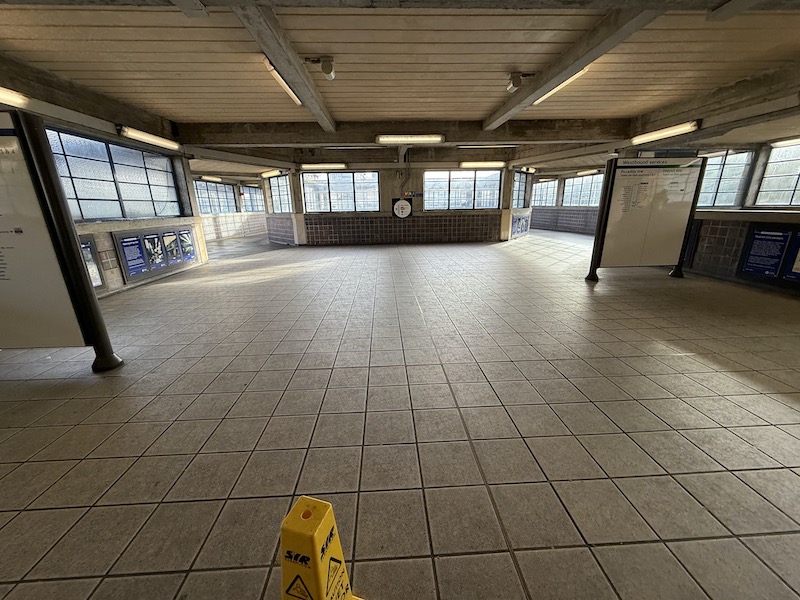
Beyond the gateline there’s a large landing area…
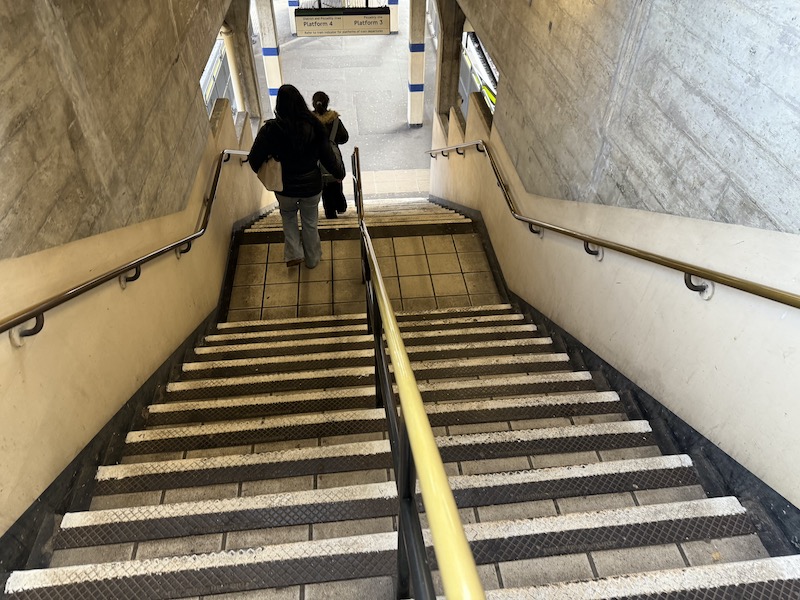
… with stairs down to the two island platforms…
…and a connecting bridge between the two…
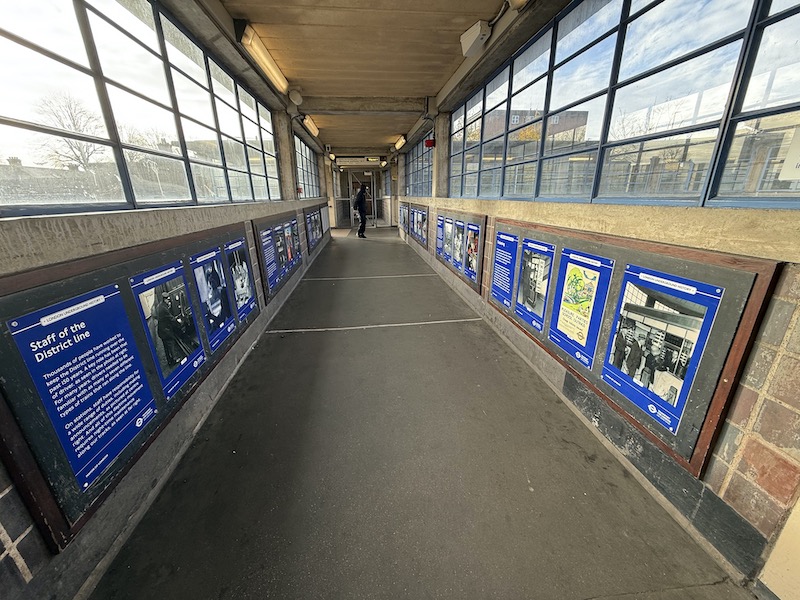
… and all adorned with historic images from the London Transport Museum which has its Acton depot on the other side of the road alongside the London Underground depot.
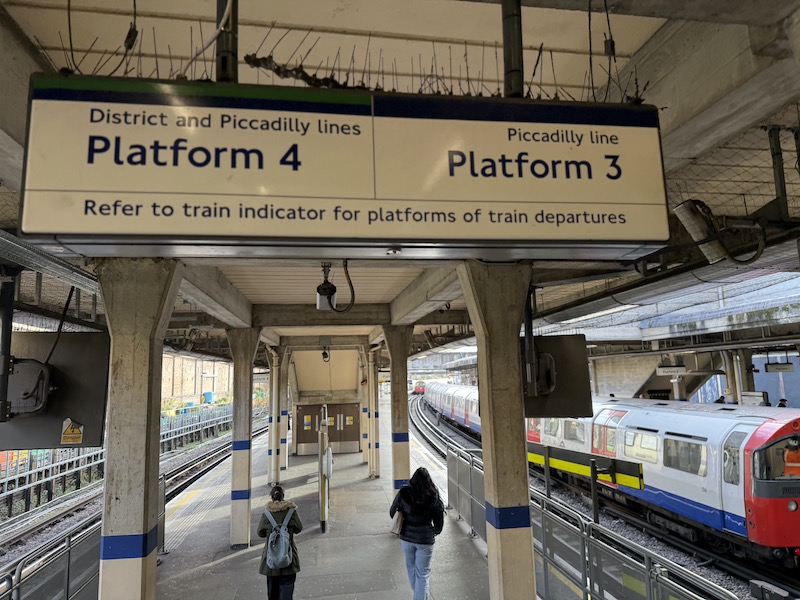
DIstrict line trains only use platforms 1 (westbound) and 4 (eastbound)…
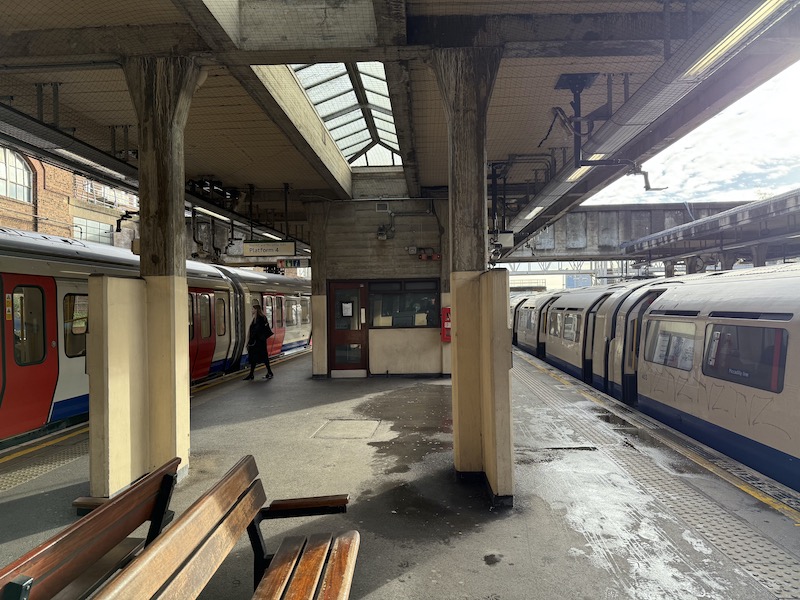
… but Piccadilly line trains can use all four but generally use platforms 2 (westbound) and 3 (eastbound).
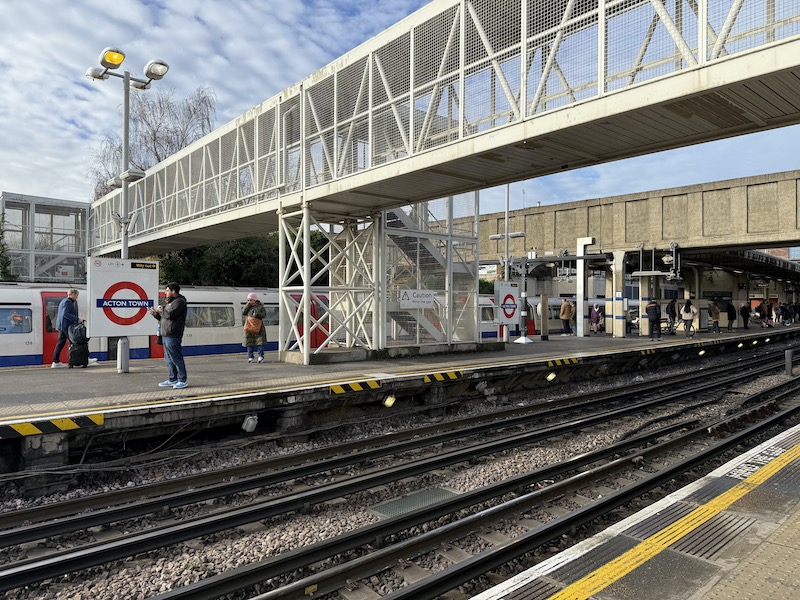
At the eastern end of the platforms there’s quite a complex and secure footbridge for staff to use to reach the facilities and offices either side of the tracks.
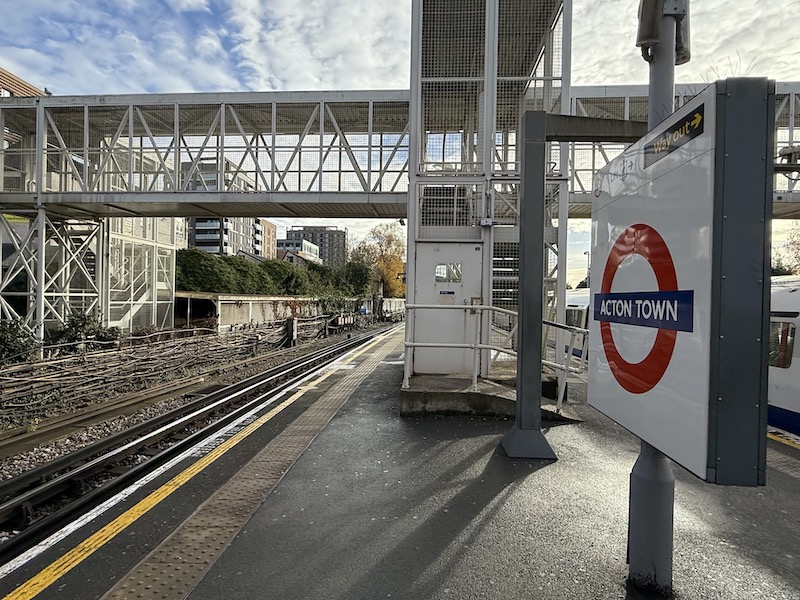
The Risk Assessment people have definitely been all over that structure. There’s a small kiosk selling “eats and bits” on the westbound island platform…
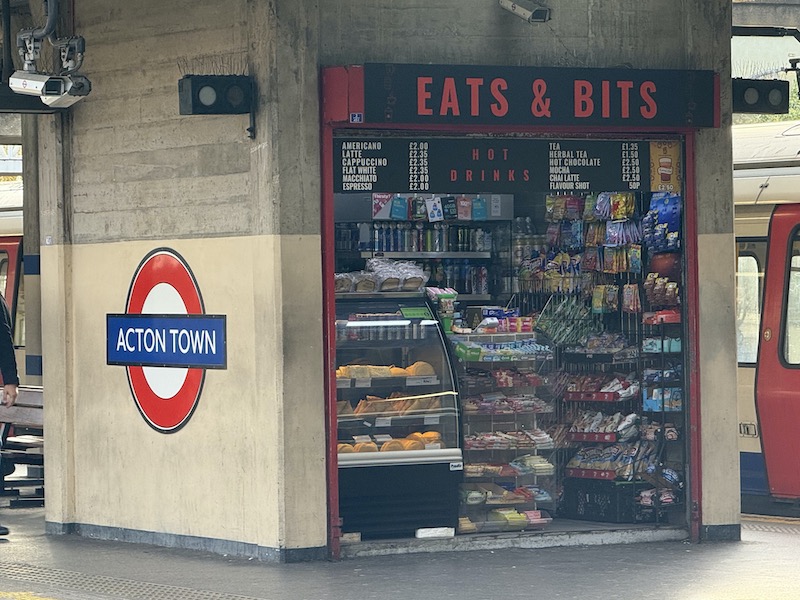
… and both platforms have bench seats.

It’s a typical busy Holden designed station with plenty of nods to its heritage, which is nice to see.
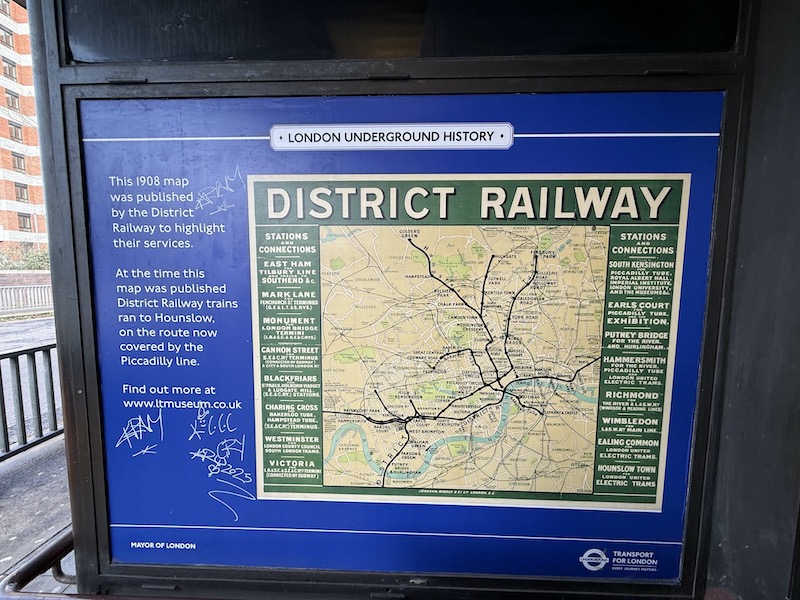
After a short refreshment break we then made our way on foot the short distance along Bollo Lane… admiring what remains of the old branch line between Acton Town and South Acton…

… where a bridge took the track across the road…

… then we passed over the two level crossings…

… taking, firstly, the freight only connecting line towards Kew and the SWR lines…

… and secondly the MIldmay line to where it meets the District line towards Gunnersbury and Richmond to the first of Acton’s three rail stations at South Acton.

5. South Acton

South Acton is on the former North London line, then Overground and now branded as the Mildmay line.

It’s a traditional two platform affair connected with a footbridge but with level access either side…

… from the surrounding roads.
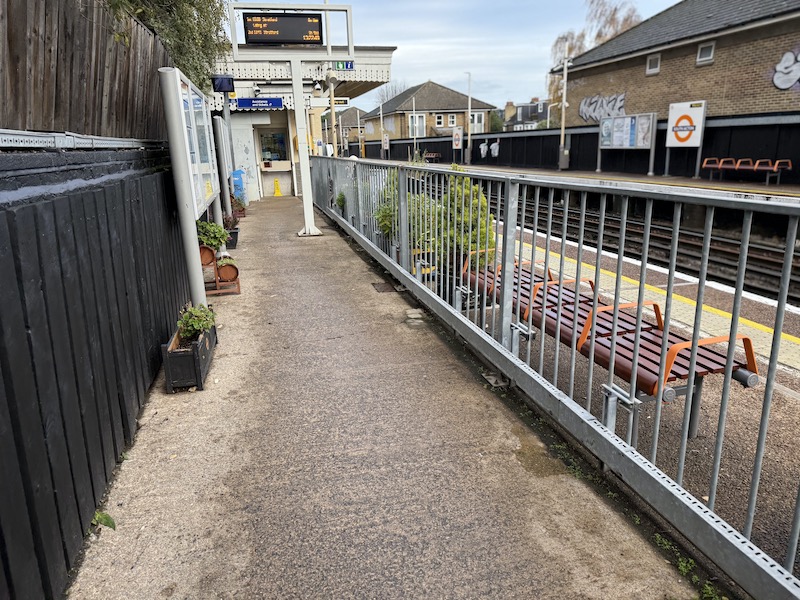
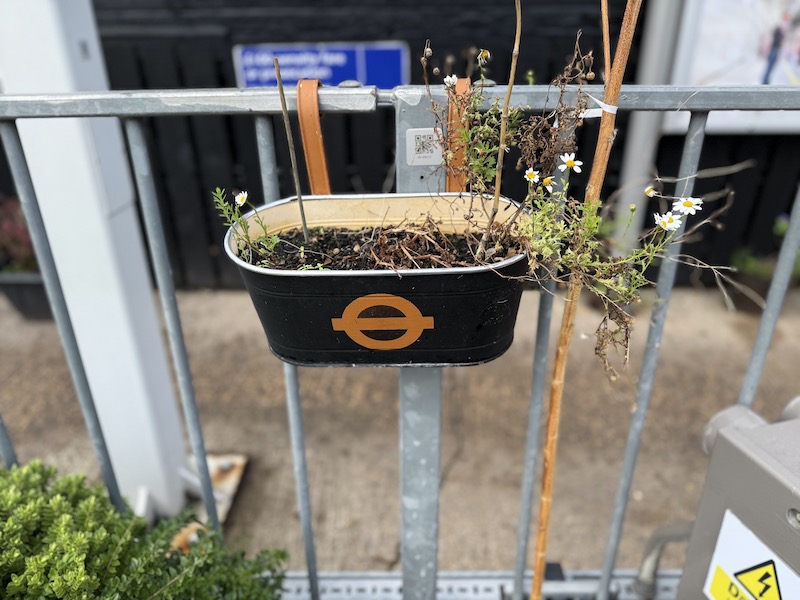
It’s a station with fairly narrow platforms but the staff have made room for some planters alongside the seats…

… and managed to keep it all very much on brand.
There’s a ticket office…

… alongside a ticket machine and Oyster readers.

On the southbound platform there’s an interesting looking enclosed waiting area…

… and various offices on the northbound (eastbound?) platform.

A pleasant station indeed, but we didn’t stay too long as the next train soon arrived and took us one stop north to Acton Central.
6. Acton Central

A more substantial affair than its nearby southern neighbour, it sees roughly double the number of passengers mainly due to its more central location, as its name implies.
The station sits alongside a busy level crossing in Churchfield Road at its eastern end…

… and again comprises two very typical platforms of a bygone era when substantial offices and covered waiting areas were provided as standard.
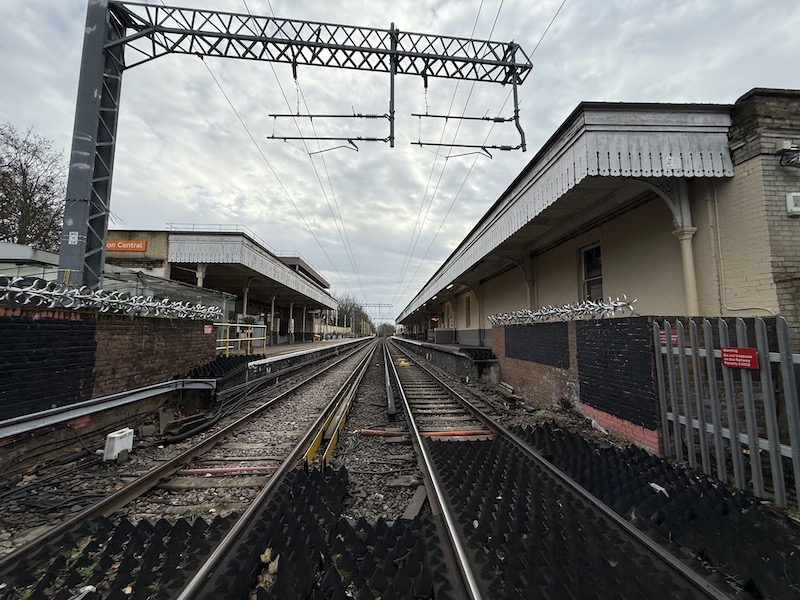
There’s an original building alongside the station entrance called ‘The Station House’ now a popular pub…

… alongside access to the northbound platform containing the ticket office…
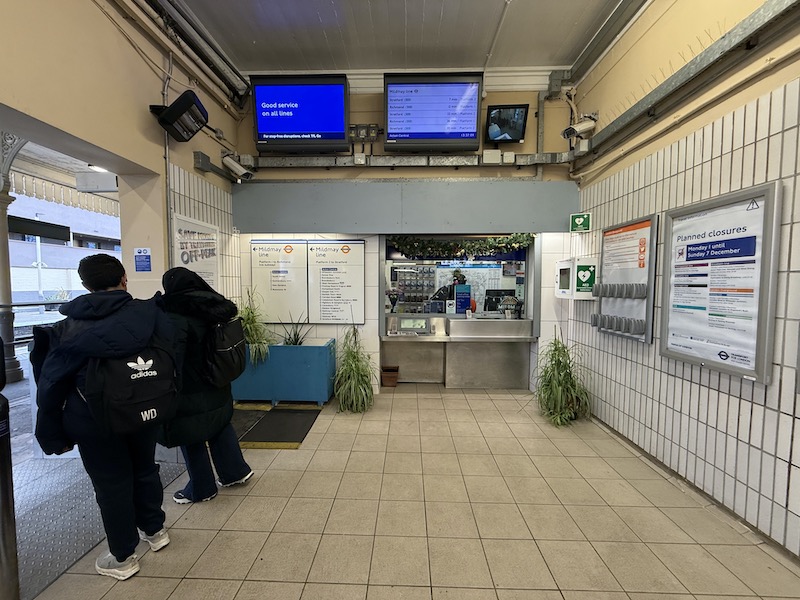
… gateline…
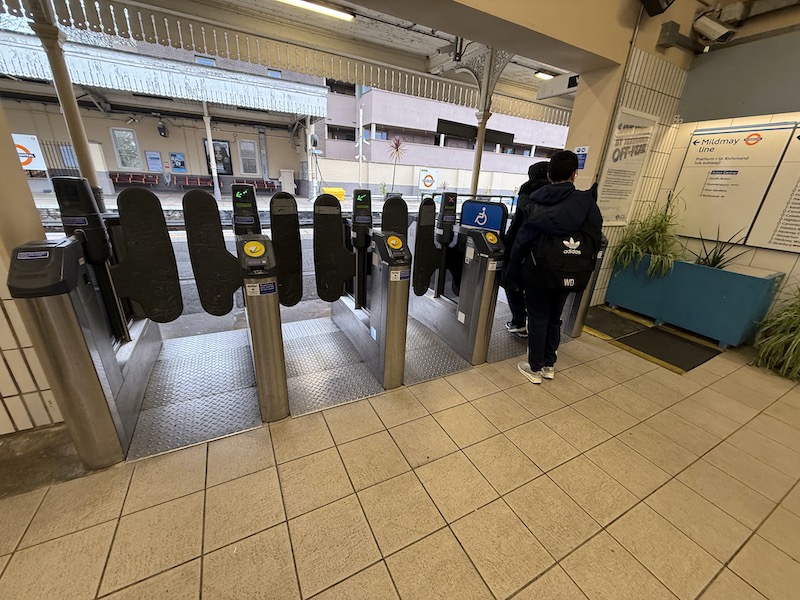
… book library and photo display.

There’s also a gateline on the soutbound platform with level access from Churchfield Road.
Like South Acton, the platforms have some rather nice plants to admire…

…and you’ll notice in the above photo the pantograph has been raised as from here to Stratford trains are powered by overhead electric current rather than the third rail down to Richmond.

The station canopy roof could usefully be painted in the upcoming months…

… and the staff obviously take pride in their station with interesting historic displays…
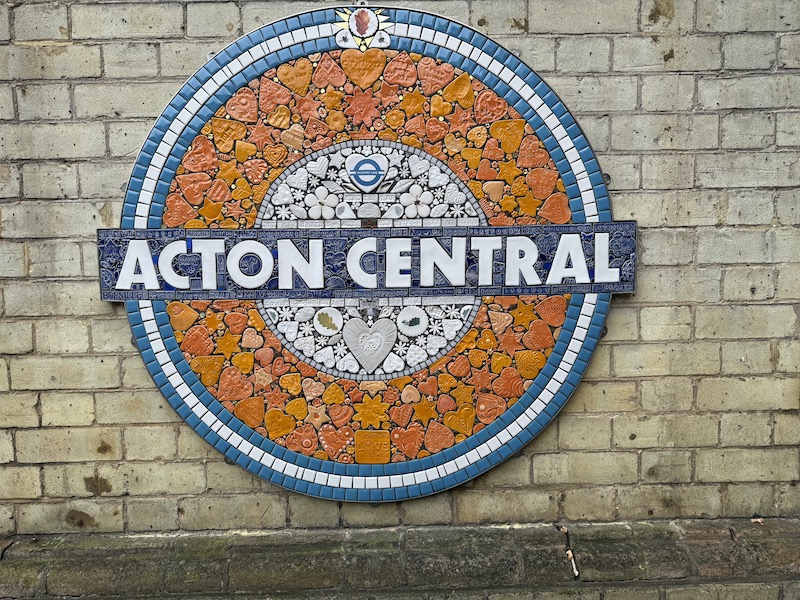
… of photographs…

… and a map to enjoy…
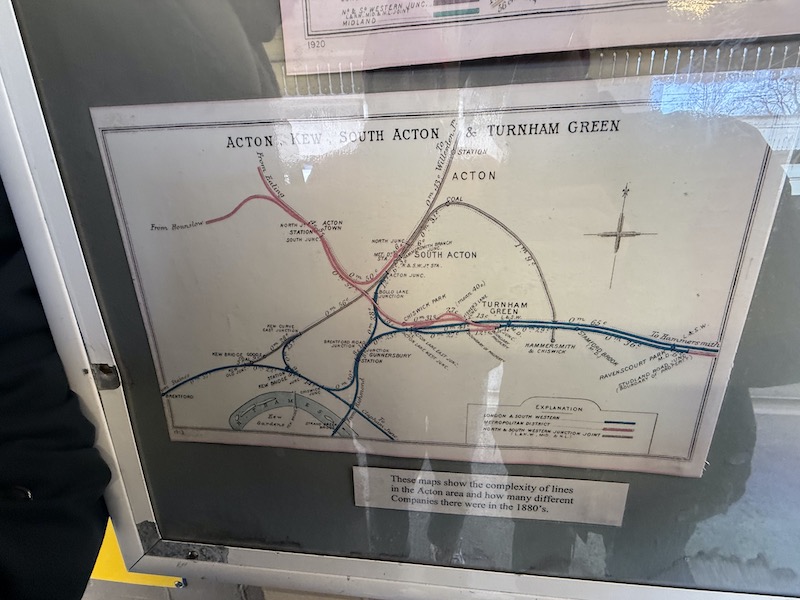
… which we did, before moving on and the short walk to our next and final station. Acton Main Line.
7. Acton Main Line

As its name implies, Acton’s seventh station is on the Great Western Main Line linking Paddington with Reading, the West Country and South Wales. It’s a busy station with passing trains on the fast lines, as well as the two slow lines which see Elizabeth line trains heading west to Heathrow and Reading and east to Stratford and Abbey Wood and freight and marshalling lines alongside too as can be seen in the photo below looking westwards.

However the station only sees a small proportion of all those passing trains stopping and that makes for a daytime 15 minute frequency service to Heathrow Terminal 4 (west) and Abbey Wood (east).

The station was completely rebuilt for the Elizabeth line opening and the new building makes for an interesting comparison to the rather primitive facilities which passengers used to endure and can still be seen.

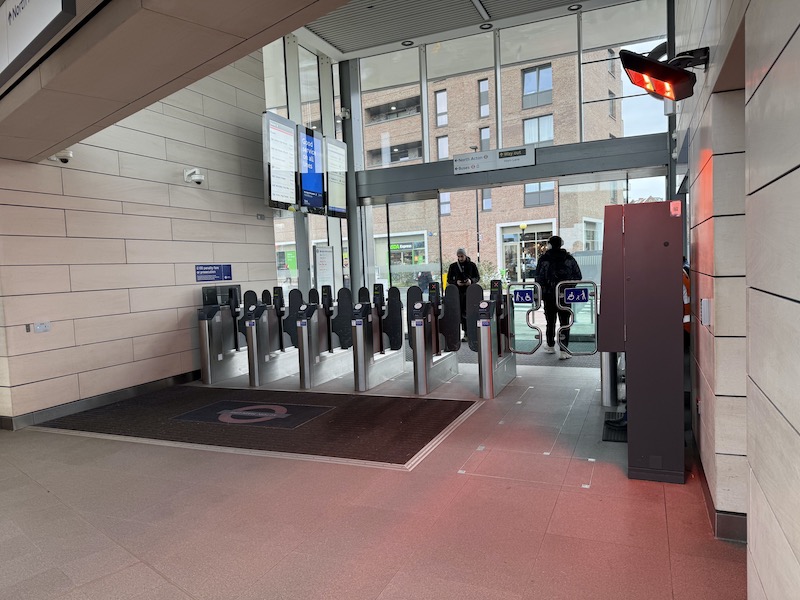
The new arrangements are far superior and include full accessible arrangements…

… a much larger ticket office…

… a toilet….
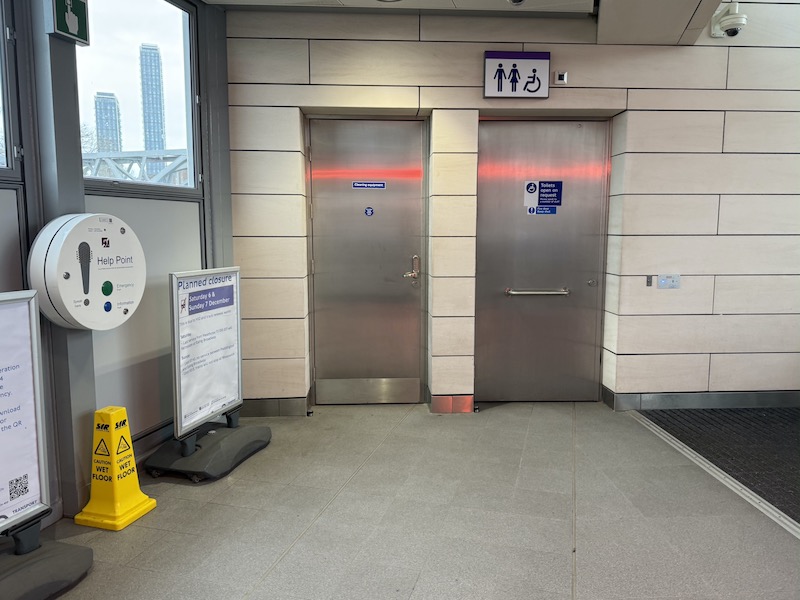
… and gateline…
… and even departure boards showing buses from nearby bus stops.
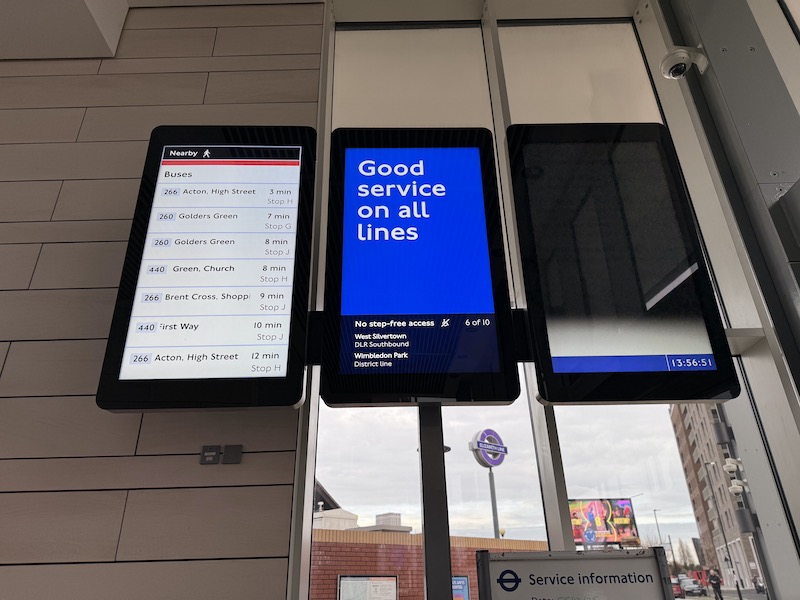
It’s truly transformational compared to the old arrangements and typifies the step change (fully accessible step change) London’s transport has seen with the Elizabeth line, including, of course, Acton.

And after a two hour wander around that completed our tour. I voted Acton Central as my favourite with West Acton a strong contender if only it could be given a lick of paint and some TLC – perhaps it will in 2026.
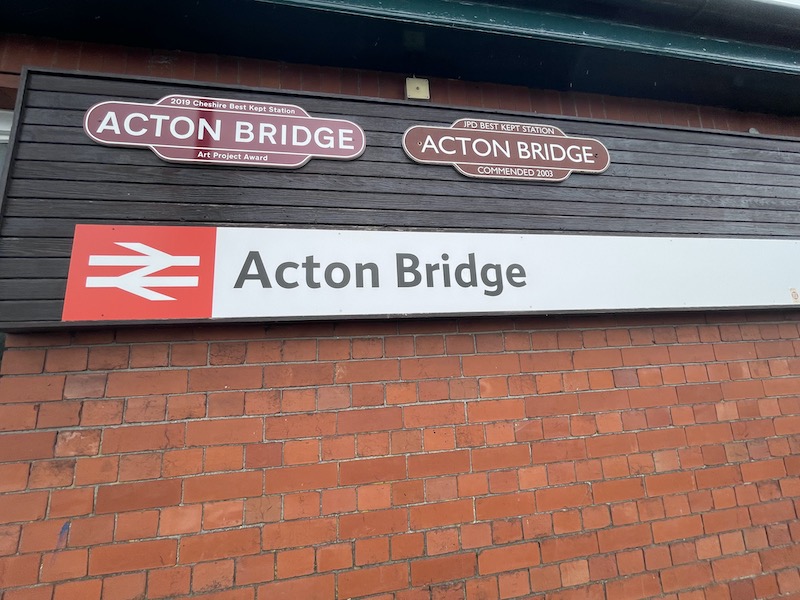
Finally, for completeness, there is one more station called Acton Bridge but it’s 200 miles north of the London suburb with the same name in Cheshire West.

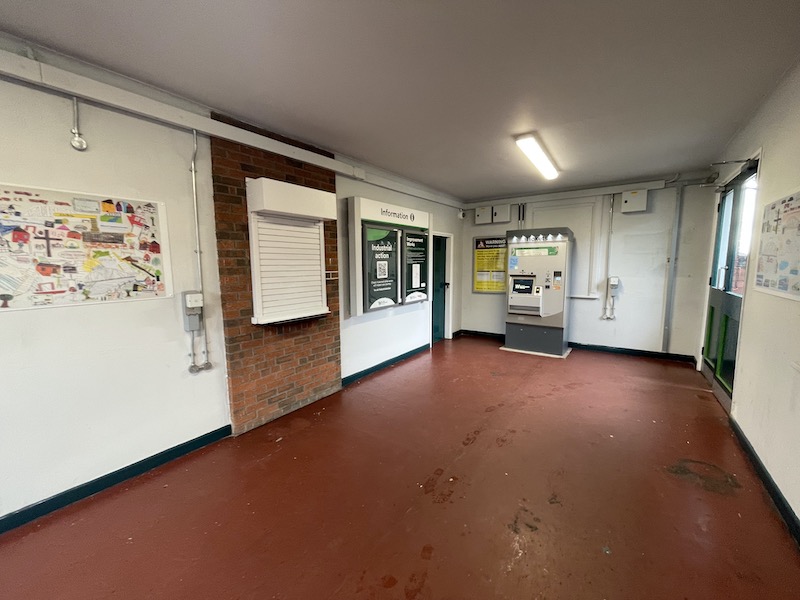
The station sits on the line to Runcorn and Liverpool and is served by London Northwestern as I found when I visited in September 2023 and also got stranded there in May 2024 checking out the itravel DRT scheme.

It’s a rather desolate place and won’t win any prizes for being a noteworthy station named Acton.
Roger French
Blogging timetable: 06:00 TThS
 BusAndTrainUser
Highlighting these various Acton stations and their varying degrees of condition, really brings home the enormous costs that are/should/not always be incurred in maintaining railway infrastructure. Knowing what is costs just to keep a family home and garden shed up to scratch, the amounts needed even for a modest station must be eye-watering.
In one of my past lives, I was sent several times to do passenger footfall at Acton Bridge. It was always mid-Winter (these sorts of jobs always are!) and I nearly froze to death, escaping back to Crewe where possible just to keep alive. Needless to say a second hand of fingers to assist the count was not required.
Terence Uden
LikeLiked by 2 people
I was thinking on this a few days ago waiting for a train at Earls Court, that TfL seems to be unable to maintain what are relatively small, but very high profile, parts their stations looking smart. Obviously canopy repaints are a major peice of work needing scaffolding work and possibly platform closures, but it really should be possible to keep pillars, poster frames and waiting rooms looking smart within TfL’s budget envelope.
LikeLike
Not sure if you’ve visited, but the small post industrial town of Hyde in Greater Manchester has Central, North, Flowery Field, Newton for Hyde, Godley and arguably Hattersley all within the town. It’s a remarkable number for such a small place.
Peter Black
LikeLiked by 1 person
Wonderful story of seven stations at Acton. I didn’t realise there were so many. Have a excellent New Year.
All the best
The Wandering Busman(retired)
LikeLiked by 1 person
Many thanks for this entertaining New Year traipse around Acton’s stations; also much appreciation for all your 2025 blogs, which always start off Tuesdays, Thursdays and Saturdays (and some Sundays) with a trustworthy (not a hint of AI), accurate, and interesting news read.
I think Acton must have been the inspiration for Pagwell, where Professor Branestawm lived in Norman Hunter’s books. Pagwell had the edge, with Upper, Lower, Great, Little, and also Pagwell Green and Pagwell Gardens; Acton scores though with Main Line; nor was there a Pagwell Bridge! It’s a shame that the new Old Oak Common station on the Mildmay will not be called Acton Wells. Chiswick Park on the District line could be counted as being in Acton. The real missing link is an interchange where the District and Piccadilly cross above the Mildmay; maybe we will get an Acton Junction when the West London Orbital gets its other stations built.
Re the WLO, it will be difficult to squeeze in many trains – as you say, the level crossing at Acton Central is busy, and there are the two others you mention. More exist as problems in the Mortlake and Barnes area, and I read in the latest Buses magazine that the level crossings on the Coastway West line are a severe headache for Stagecoach buses. It’s difficult to see a generic solution other than making the railway underground or elevated, but until something is done it will limit rail, as well as destroying bus reliability, so I wonder if there has been any research on the costs caused by level crossings (special equipment, signals, staff time, lost potential income (bus and rail), value of lost time for car and lorry drivers (which has been a major factor in road-scheme evaluations), and of course injury and loss of life. All of that might start to weigh against the cost of new infrastructure.
Very best wishes for 2026
LikeLiked by 1 person
Thanks Rick, and for all your comments/contributions. Best wishes for the New year.
LikeLike
Do closed or renamed Acton stations count? Chiswick Park started life at Acton Green, then Acton Green and Chiswick Park and finally Chiswick park.
LikeLike
Quite a long time ago, now, the “freight only” link mentioned was used by Anglia Railways for a passenger service between Ipswich and Basingstoke. This was a rather fun ride using a Travelcard. The longest “Travelcard ride” on this service would have been a direct service between Romford and Feltham. As to the tavern next to Acton Central Station, I remember a very happy event there, drinking with my favourite footballers after a game at the nearby “Club Des Sports” on East Acton Lane.
LikeLiked by 1 person
I used it many times from Stratford to Basingstoke on my way home to Salisbury whilst on my travels. It was the slowest possible way to do the journey, but did it because it was there! Always something interesting to see and on at least one occasion due to engineering work the trains were diverted via Liverpool Street. A direct train from Liverpool Street to Basingstoke really was worth the journey!
LikeLike
On a Network SouthEast Day: 16/04/1988 my train from Shenfield to Milton Keynes was likewise diverted into Liverpool Street. So, I had the novelty of joining the WCML from Liverpool Street. Two traction exchanges were needed. One at Liverpool Street and another along the North London Line. All this fun for £1.
LikeLike
Happy New Year, Roger.
Typo for East Acton : the seats should be slatted.
And the “large landing area” at Acton Town brought to mind a different transport mode.
Ian McNeil.
LikeLike
Thanks Ian; now corrected.
LikeLike
A number of new stations in the general area are planed as a part of the Old Oak common redevelopment
LikeLike
So these stations are all being constructed in wood…..appropriate given the name of the area.
LikeLike
Why can’t those individuals, convicted of minor crimes be tasked with , under supervision, cleaning up these stations, and bus shelters etc. Thus repaying to the community at least to a small extent, their debt to society?
LikeLike
Community Payback, as it’s called, is already a thing in at least some areas of the country, but the railway’s safety rules and procedures make it far more of a faff than it’s worth for “outsiders” to come in as a one-off.
By the time they’d gone through inductions, safety training and all the other requirements, they would have served their sentence!
LikeLike
I’m surprised you weren’t more taken with East Acton. The “rather quaint looking waiting room” is pure Great Western, even down to the rudimentary seating, and it’s been quite well looked after even if the approach steps at the platform ends are incongruously naff 1980s. There’s a gorgeous Arts & Crafts housing estate around the station.
LikeLike
GWR-ish, as l believe, as these shelters were replicated c1970, though well done. Quite a contrast between the money-no-object Crossrail Acton Main Line and the decaying LUL
stations, many not redecorated since the early days of the PPP, or were never done before its collapse. No wonder the wooden canopies at Barons Court, with their peeling paint, have been found in a far worse state than first thought. Also noticeable the LU gatelines unstaffed and fully or part open. Truly managed decline under Andy Lord.
LikeLike
I found your travels around the Acton stations interesting as well as provoking fond childhood memories from when I lived in South Ealing. My nan lived in Willesden & my mum often took me there & back by bus. The 55 would take us to Acton High St (via Acton Town station) where we would alight & then walk round the corner to Horn Lane to catch either a 660 or 666 trolleybus (or latterly, a 260 or 266) to Willesden passing Acton Main Line & North Acton on the way. My older sister lived in Churchfield Road & I recall many times walking over the level crossing to visit Acton Park, a location where years later, certain scenes for Steptoe & Son Ride Again were filmed.
As for Acton Town, I remember feeling quite nostalgic when alighting here a couple of years ago (having left London in 1967) to visit the Bus & Train museum collection across the road.
Thanks for another interesting report Roger. Happy New Year!
LikeLiked by 1 person
I know you’re not a huge fan of DRT(!) but to the best of my knowledge, the Cheshire West iTravel scheme continues to run.
LikeLike
Ah; yes, I think I’ve mixed up the West Cheshire and East Cheshire schemes. Thanks.
LikeLike
Think you missed a trick with the title of this post, Roger.
I’d suggest Acton Stations – The Magnificent Seven.
RW
LikeLiked by 1 person
I used to live a short distance from Acton Main Line station and used it nearly every day in the early 1960s. In those days the station buildings were fairly grand in GWR style, built across the roadbridge to impress passengers. There were four platforms, though numbers 1 & 2 on the fast lines had not been used for several years. The buildings were later demolished, presumably to lessen costs, and replaced by the miserable ‘hut’ which gave the impression the station was scheduled for closure.
Incidently, from the standpoint across the road from the station entrance, the painter Lucien Pissaro painted the GWR railines leading to Wells Farm (1907).
LikeLike
Whilst house hunting in Cheshire I foolishly said to my wife “ wouldn’t it be nice to have a house near Acton Bridge , Hartford or Winsford stations so we can enjoy the restaurant’s, bars , theatre/cinema in Liverpool at weekends “ . Then reality hit !
Last Saturday evening train ex Lime St is 21.33 ! Fortunately there are 22.31 and 23.31 departures on a Friday .
LikeLike
Welcome to the world outside London.
Reality for Acton Bridge 30 years ago was two or three trains a day.
It was a favoured point for detraining fare dodgers as they couldn’t just get on the next train and cause further hassle for the crew of that train.
LikeLike
I think there are also 7 stations with Harrow in their name but they might not all be in Harrow (but probably close enough).
MKIan
LikeLike
Excellent look at all the stations. I lived in the area and had cause to use all of the stations at various times for real reasons. There’s the usual joke on why so many – but Acton is a big area, and used to be a huge industrial area rivalling Birmingham (it carries thru to Old Oak Common and the like – its still a huge light industrial sprawl), with the stations serving different areas and different lines that cut through it.
Worth noting that the South Acton station now there isnt the South Acton that the one car shuttle used to run to, tho the site of that isnt far off it.
Acton may well get a new line soon too: the West London Orbital. From South Acton it’ll run over one of the level crossings on Bollo Lane (the northern one will be closed I think permanently, leaving the Chiswick business Park link Road accessible via the other (I may have got them switched over as which gets closed). The line at the moment just has the odd freight train, but will get Overground trains running on west after South Acton to Brentford and beyond.
LikeLike
Bus Time.Org Errors
It looks as if Bus times.org is giving erroneous information if special bank holiday timetables are in place instead of the modified schedules it just shows the standard schedules
LikeLike
Bustimes.org was giving correct info for January 1st yesterday, at least for the services I was looking at. Interestingly, the PIS at Gt. Dunmow (Essex) was showing the First Essex Stansted Airport services but not the Central Connect service 333 whereas at Braintree the PIS showed the 333 as well as First Essex X20.
It was fascinating to look at the bustimes map yesterday and see which parts of the country had almost normal services and others where not a single bus was on the move.
Nigel Turner
LikeLike
I note the poster at one statiopn, reproducing the appropriate “Railway Junction Diagram” for the area.
HERE is a link:
https://commons.wikimedia.org/wiki/Category:London_RJD_1914#/media/File:Acton,Kew,_South_Acton&_Turnham_Green_RJD_102.jpg
Which should give you that historical picture in greater detail., though it does not cover the more northern statiuons, such as Acton Main Line
LikeLike
I enjoyed the inclusion of Acton Bridge, a bit like Barry Dock, Barry, Barry Island…and Barry Links.
LikeLike
Thanks for this review, Roger.
Re Acton Main Line: what you call the “fast lines” are the Main Lines; your “slow lines” are the Relief Lines, both as named by the original GWR.
My two memories of Acton ML are (i) passing behind it near the end of a steam excursion (railtour) in 1974, hauled by D1069 Western Vanguard from Didcot to St Pancras (to return the coaching stock to the LMR); (ii) trainspotting on the station in about 1978 and finding not much freight around.
John M.
LikeLike
Brings back memories of a Goon Show episode set in Darkest Africa and featuring “the great walled city of Ayees Staktoon”.
LikeLike