Saturday 13th December 2025
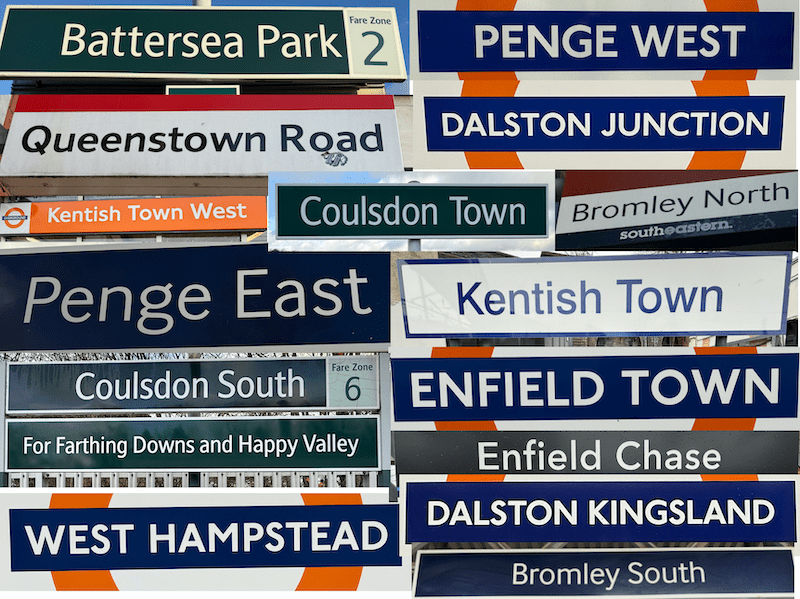
Something a little different to conclude this year’s fortnightly series. I spent a couple of days this week visiting those London suburbs which are blessed with two stations located relatively close to each other but on completely different lines, offering a choice of destinations.
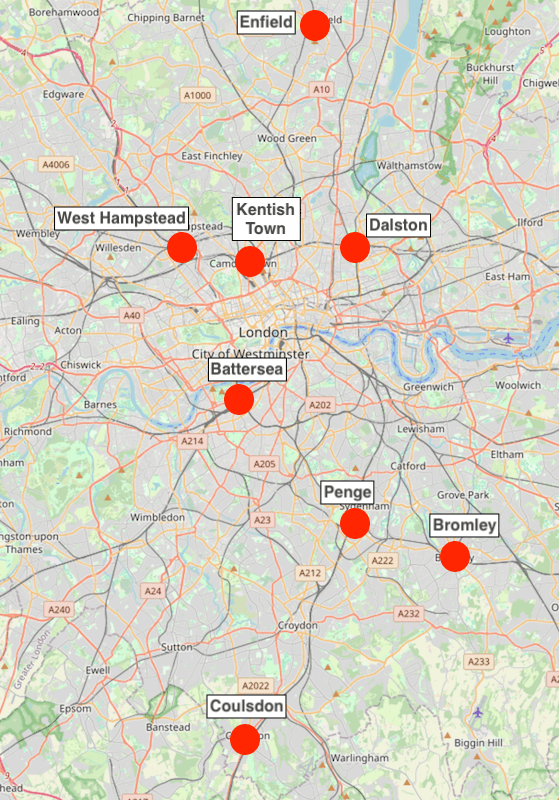
Many of these have kindly been suggested by readers and make for an interesting comparison of destinations and facilities and not forgetting in some cases passengers also enjoy the option of using an Underground station close by.
I’ve taken as read an Overground station, even though run by TfL, is a National Rail station and pertinent to include in this analysis.
So join me on a wander around the Capital visiting eight pairs of stations.
Enfield
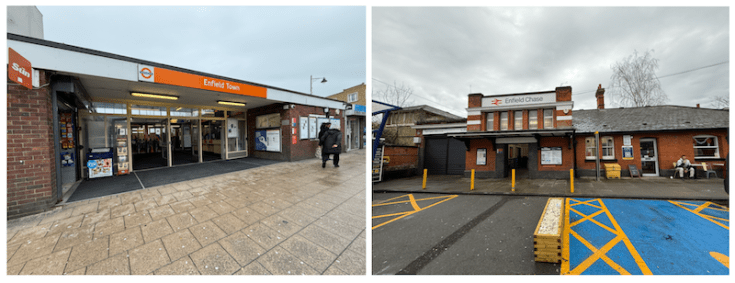
And we begin our travels in the north of London in Enfield, where its station pair, Enfield Town and Enfield Chase, are located half a mile apart on the main east-west A110 axis (Southbury Road/Church Street/Windmill Hill).
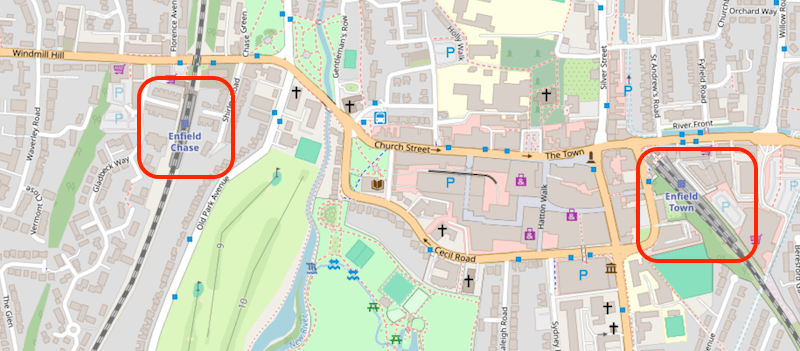
- Which came first? Enfield Town opened in 1849 with Enfield Chase 22 years later in 1871, relocating slightly east down Windmill Hill in 1910.
- Which is the busiest? Enfield Town with 2,343,000 has almost exactly double Enfield Chase at 1,166,000 passenger entries and exits in 2024/25.
- Who operates each station? Enfield Town is TfL Overground and Enfield Chase, Great Northern.
- How do the train services compare? There’s a similar service from both being half hourly during the day with 15 minutely in the peaks. Enfield Town is the terminus of the Weaver Line to Liverpool Street taking 34 minutes and Enfield Chase is on the Stevenage/Hertford North to Moorgate line taking 35 minutes to reach the London termini.
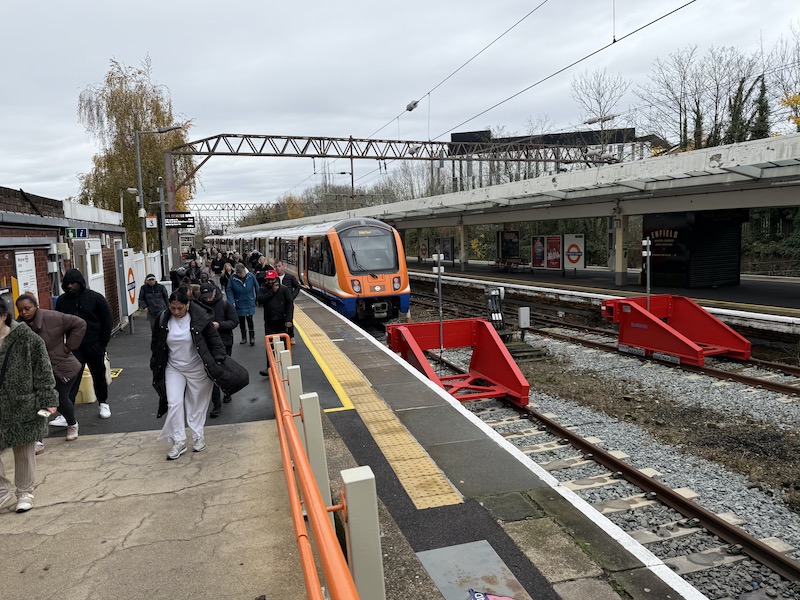
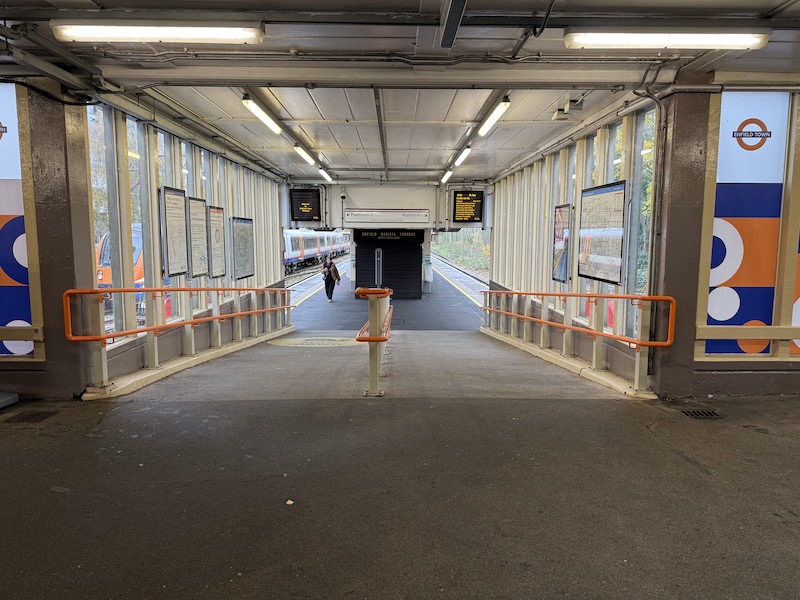
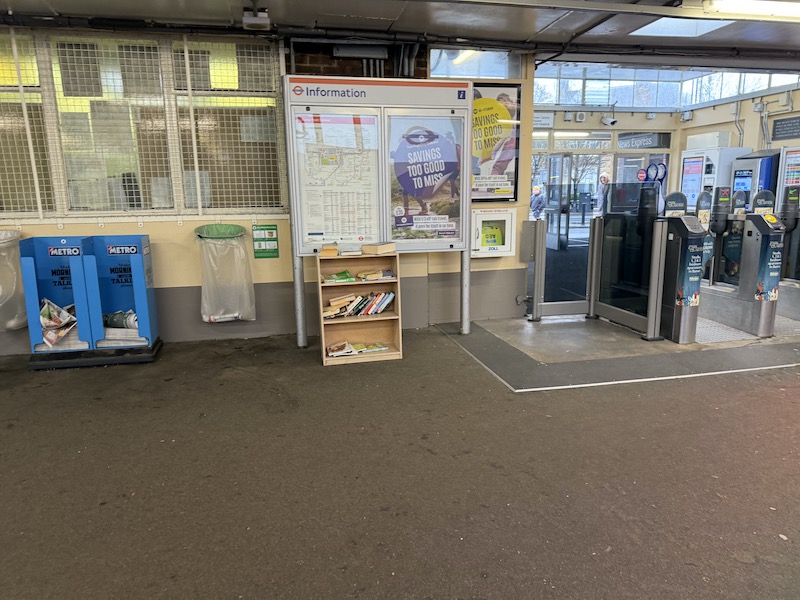
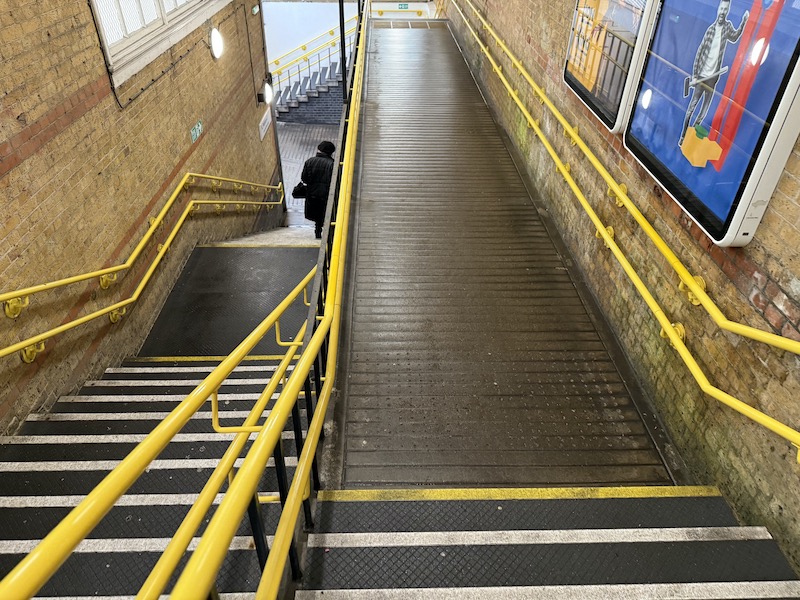
- What about the facilities? Both have a ticket office, gateline and toilets. Enfield Town is at ground level with three accessible platforms (two covered and shelters on the third) while Enfield Chase has many steps up to two high level platforms with a traditional canopy cover and a small coffee stall on platform 1 and waiting area.
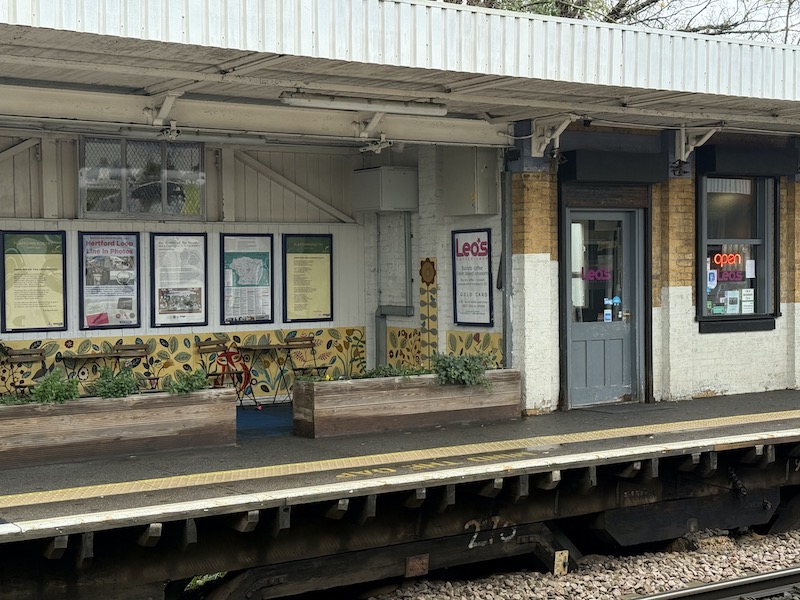
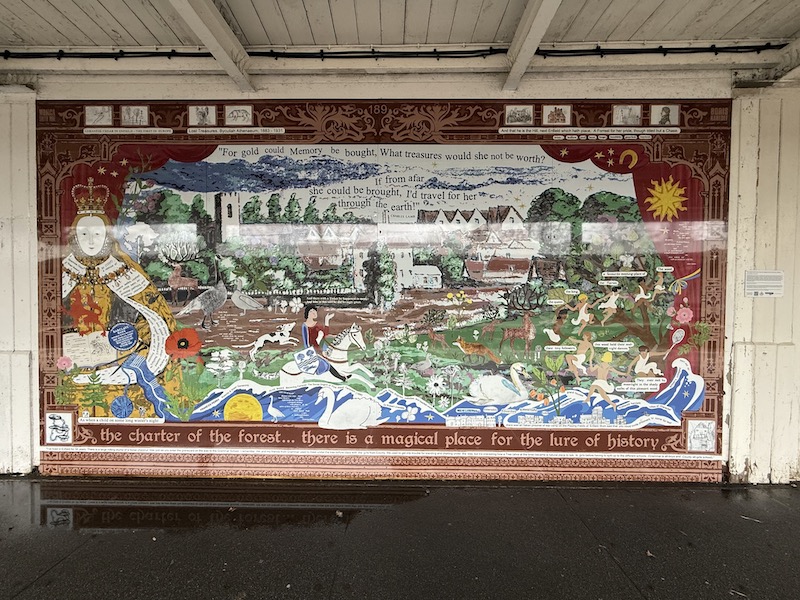
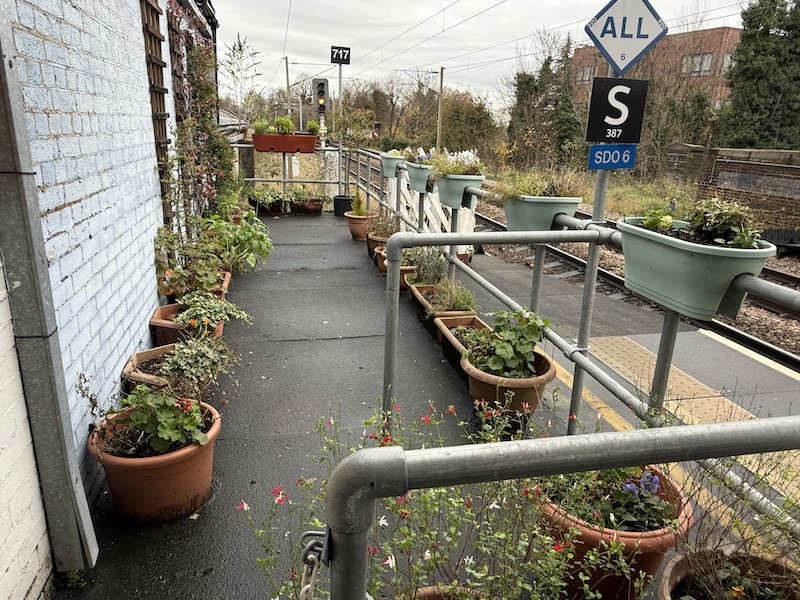
- Anything else? Enfield Chase is obviously looked after by a dedicated team with interesting displays of both artwork and greenery on show.
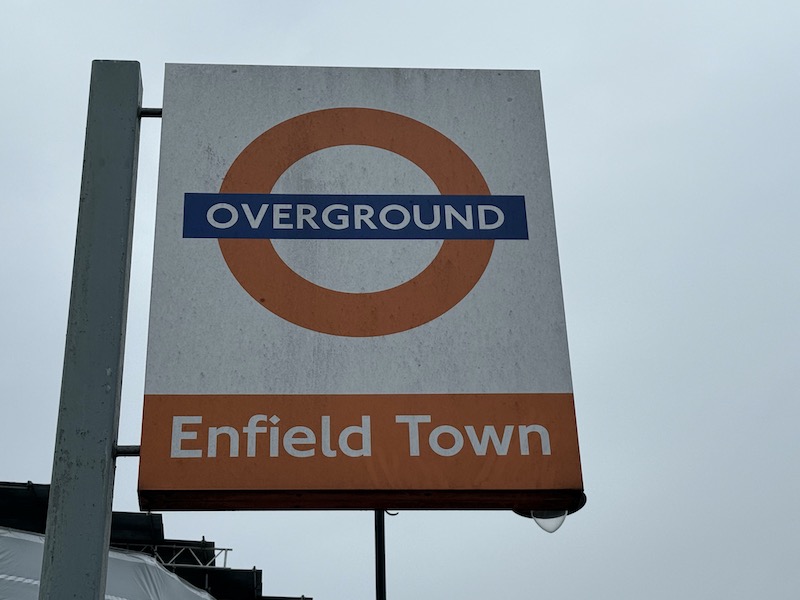
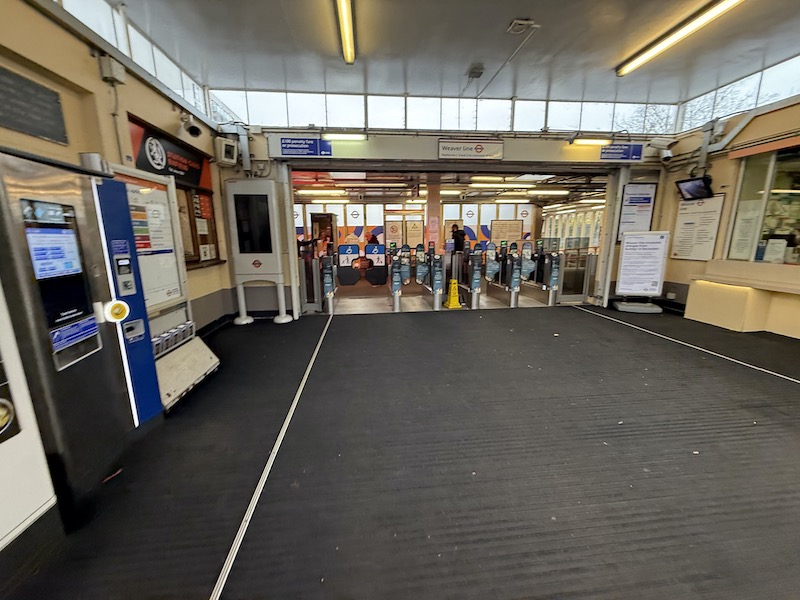
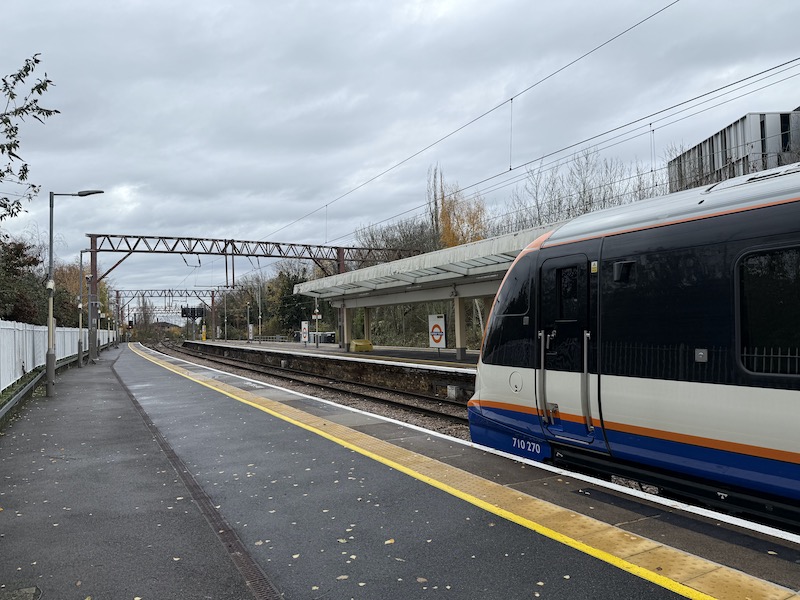
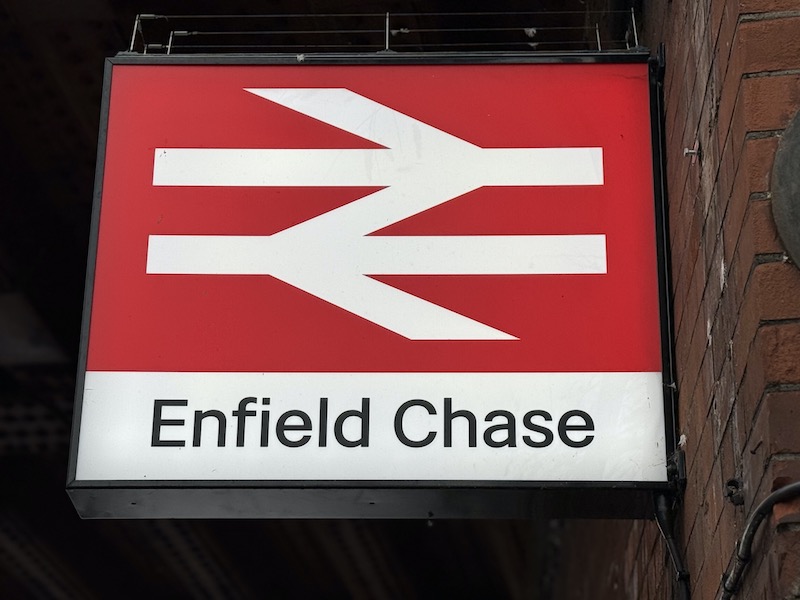
Here are a few photographic highlights.

Dalston
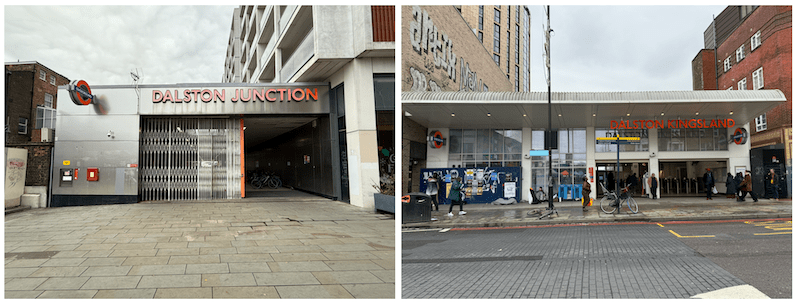
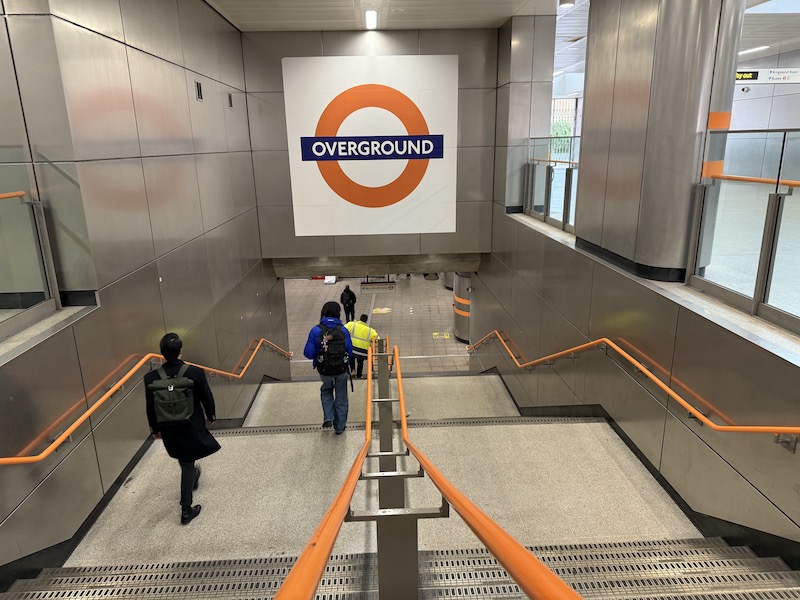
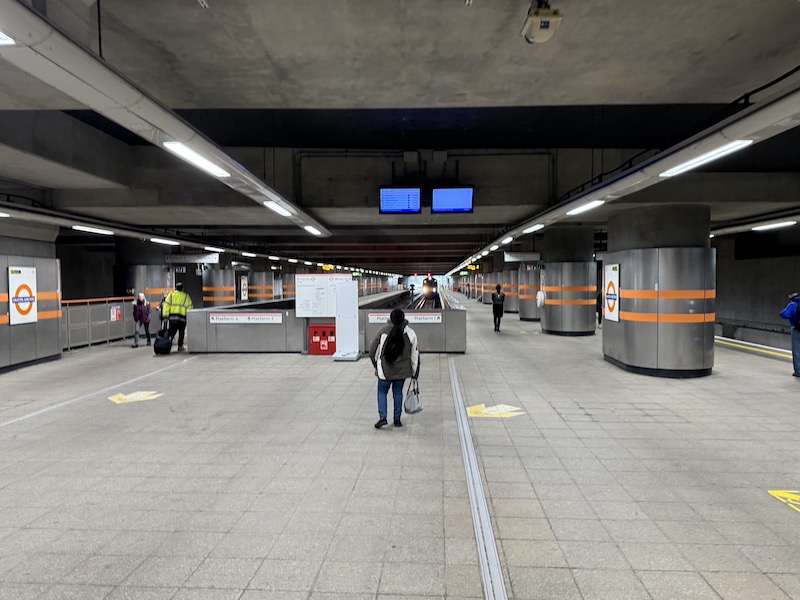
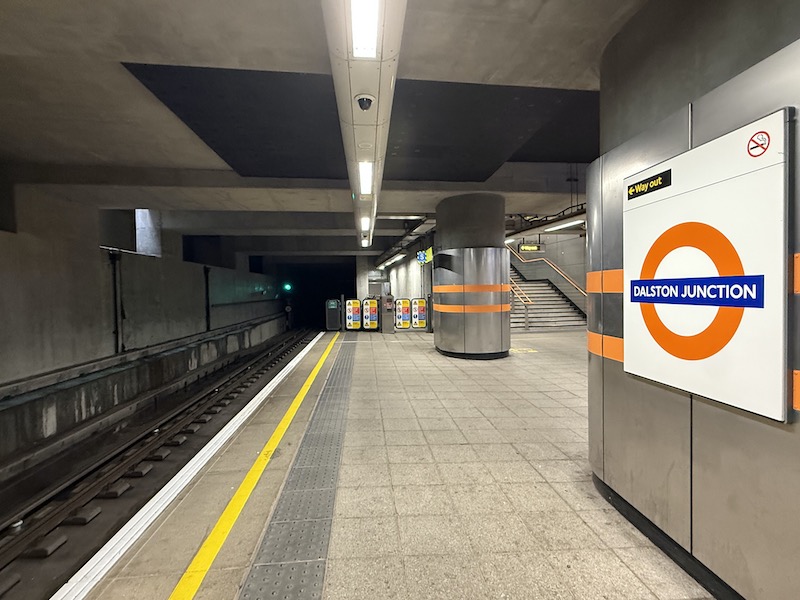
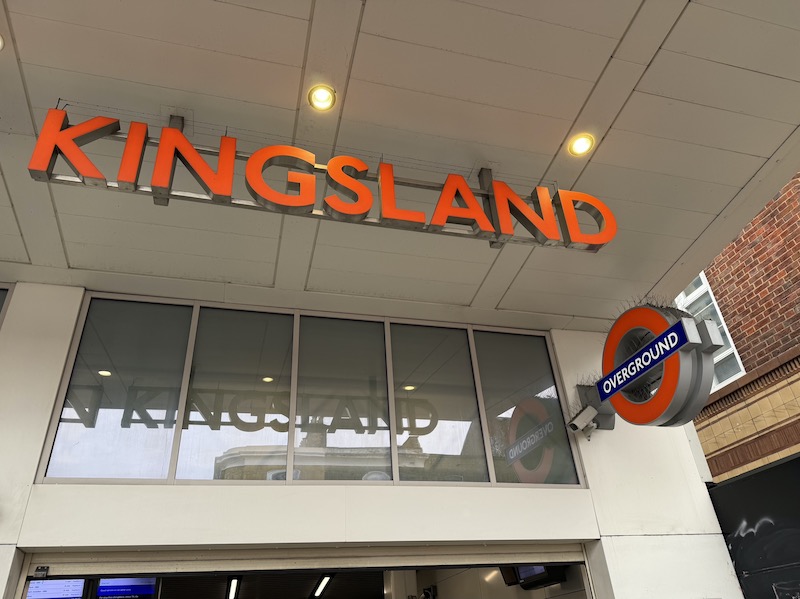
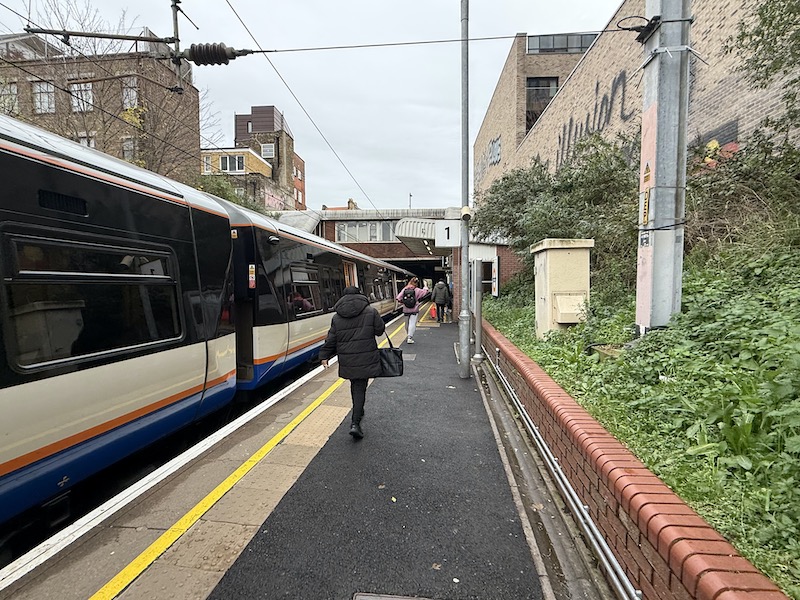
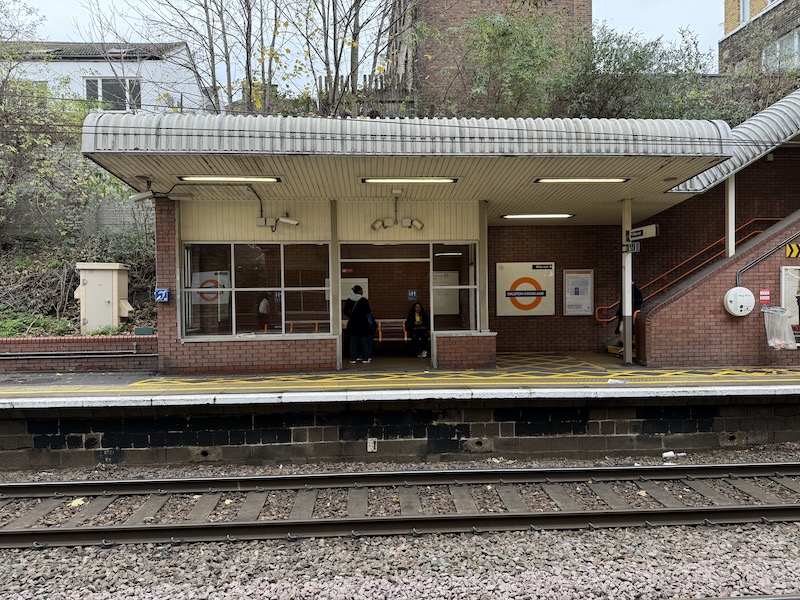
Moving nine miles south where Dalston Kingsland and Dalston Junction are both located in the heart of the retail area just 100 yards apart on Kingsland High Street and Dalston Lane.
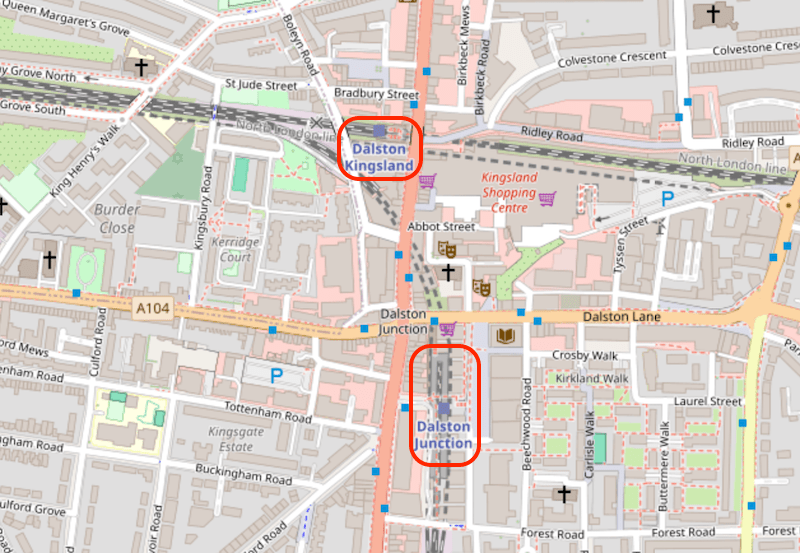
- Which came first? An interesting history with Kingsland opening first in 1850 but closed in 1865 when Dalston Junction opened but that closed in 1986 because Dalston Kingsland had reopened in 1983. Dalston Junction reopened again in 2010, initially as a temporary northern terminus of the East London line but fully reopened in 2011 with through services on the restored link towards Highbury & Islington.
- Which is the busiest? Dalston Junction saw 5,649,000 passengers in 2023/25 with Dalston Kingsland not far behind on 5,134,000.
- Who operates each station? Both are operated by TfL Overground.
- How do the train services compare? Dalston Junction has 16 trains an hour southbound with four each to New Cross, West Croydon, Crystal Palace and Clapham Junction operating through Wapping, Rotherhithe and the Thames Tunnel. Northbound, eight of these terminate in Dalston Junction (from New Cross and Clapham Junction) and eight continue through to Highbury & Islington. Dalston Kingsland sees 9-10 trains an hour eastbound to Stratford and westbound to Willesden Junction where alternate trains run to Clapham Junction or Richmond. Passenger travelling to Clapham Junction can travel either via Shoreditch (from Junction) taking 49 minutes or via Willesden (from KIngsland) taking 58 minutes.
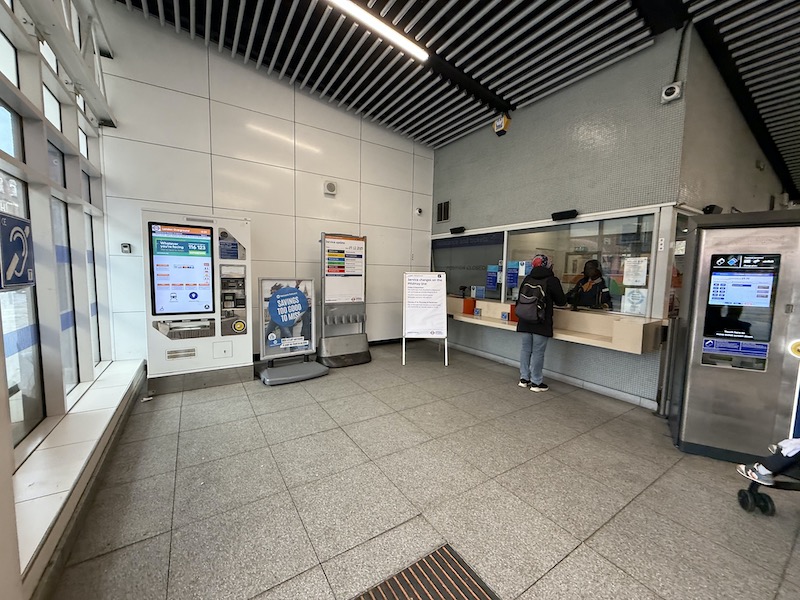
- What about the facilities? Both have a ticket office and gateline but no toilets.
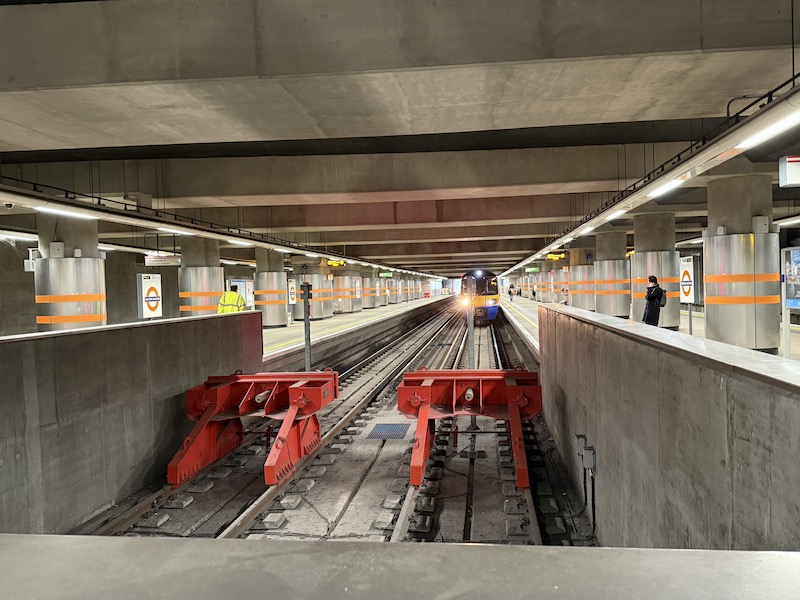
- Anything else? Dalston Junction is fully accessible but Dalston Kingsland isn’t. There are two street entrances to Dalston Junction which has four platforms two of which are bay platforms for terminating trains.
Here are a few photographic highlights.
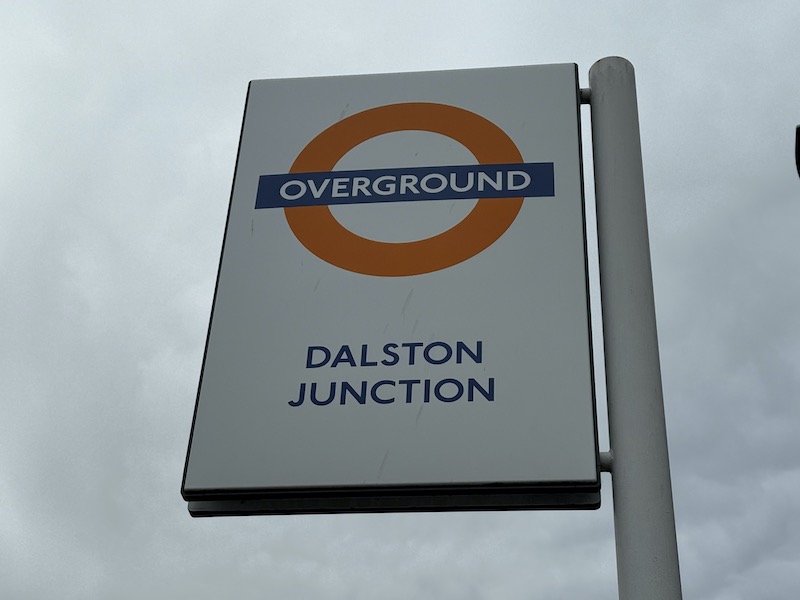
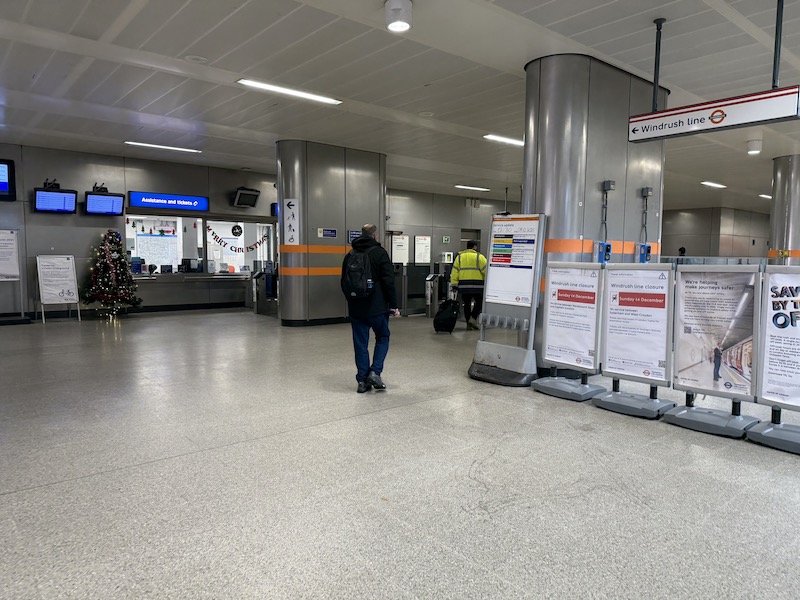
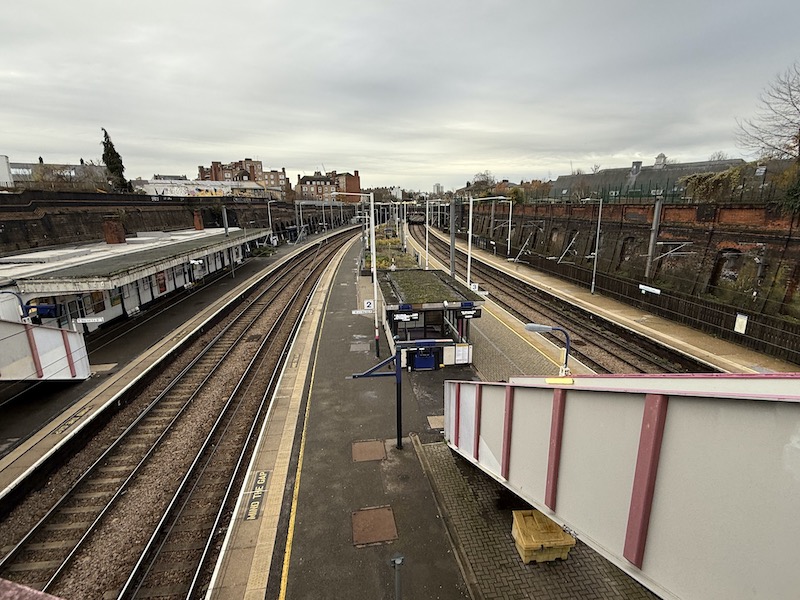
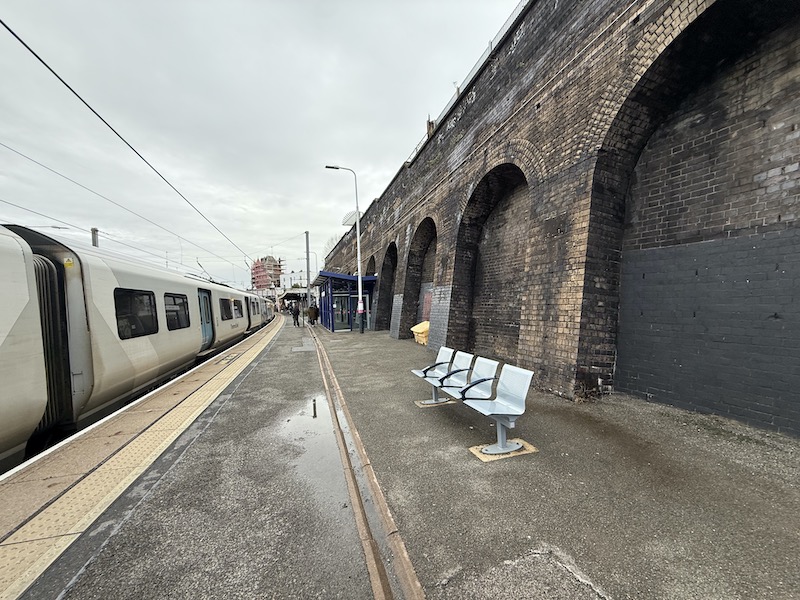
Kentish Town
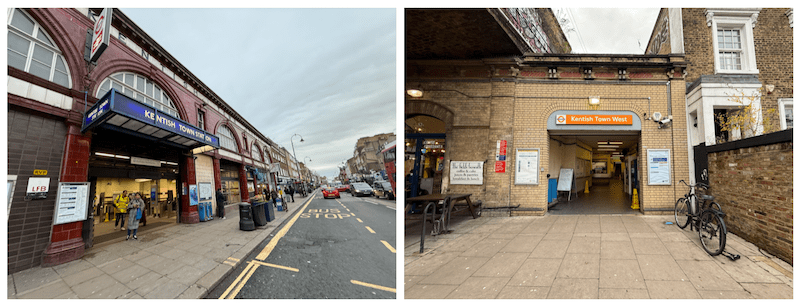
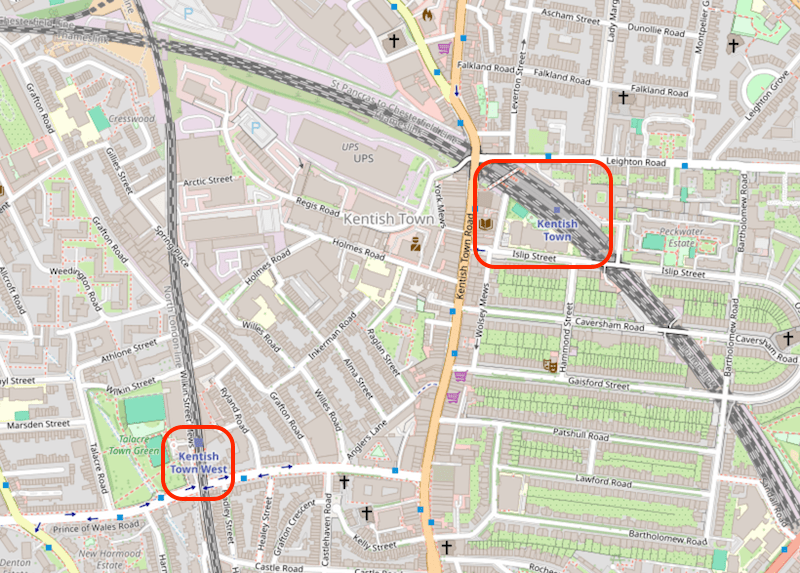
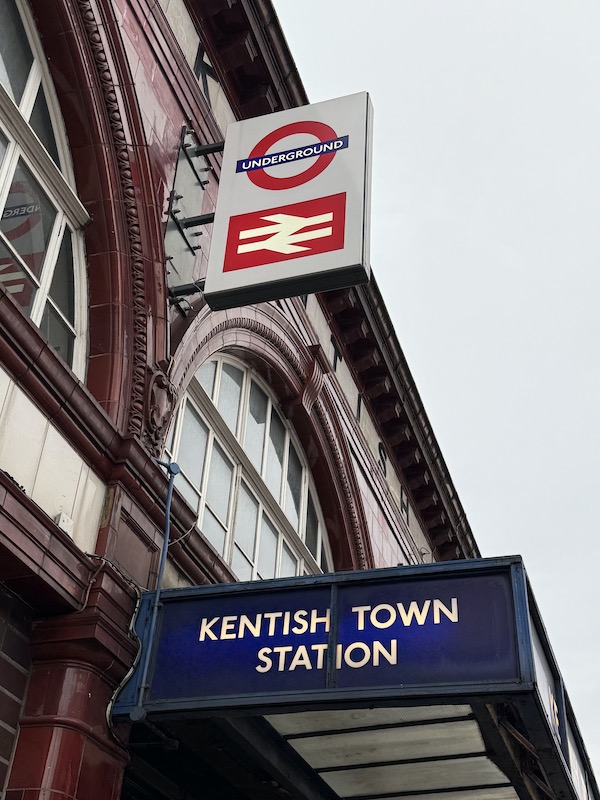
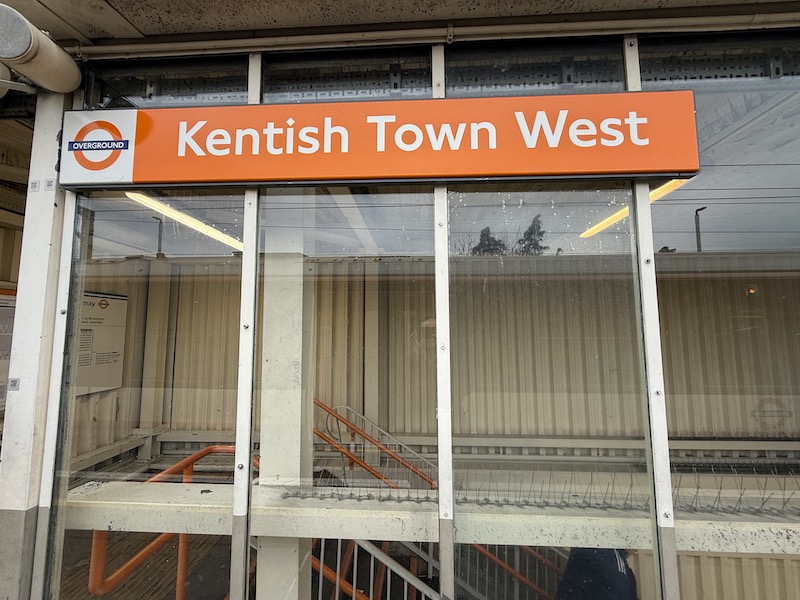
Moving almost three miles due west from Dalston brings us to Kentish Town which has one station named Kentish Town and another half a mile away, south west, unsurprisingly called Kentish Town West.
- Which came first? Kentish Town West opened in 1867 beating its neighbour Kentish Town by just one year although the now integrated entrance for the Northern line Underground station didn’t come along until 1907.
- Which is the busiest? Kentish Town seeing 2,590,000 passengers in 2024/25 is much busier than Kentish Town West at 1,886,000.
- Who operates each station? Kentish Town is run by Thameslink although the main entrance is integrated with the TfL operated Underground station and TfL Overground run Kentish Town West.
- How do the train services compare? Kentish Town has four Thameslink trains an hour on the Wimbledon/Sutton loop, and northbound stopping trains are four an hour to St Albans City.as well as some peak hour Orpington services and occasional Rainham trains before the morning peak and after the evening peak. Over at Kentish Town West, Overground trains on the Mildmay line see 9-10 trains an hour east to Stratford and, as with Dalston KIngsland above, westbound trains head to Willesden Junction where alternate trains run to Clapham Junction or Richmond.
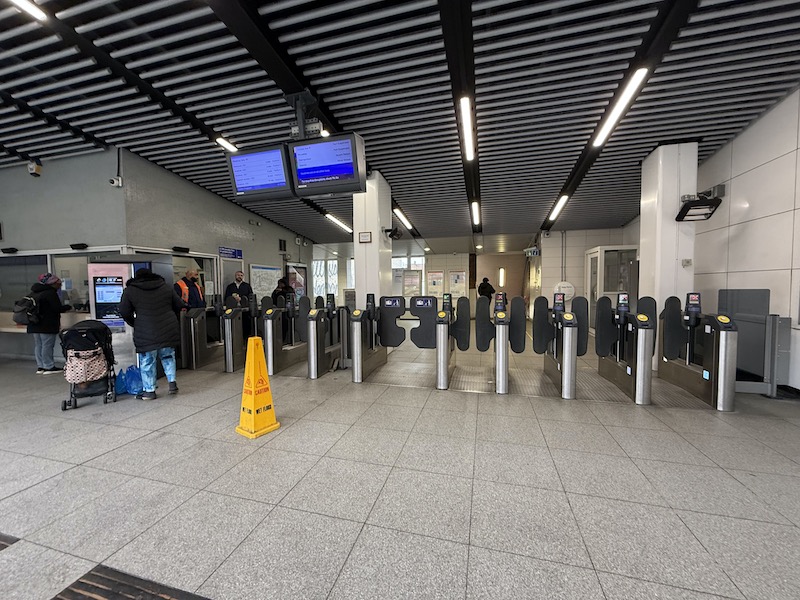
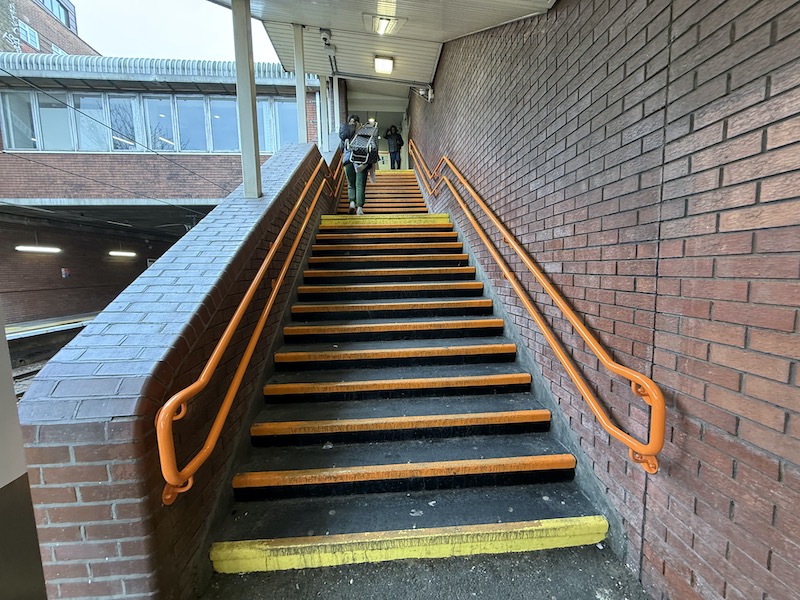
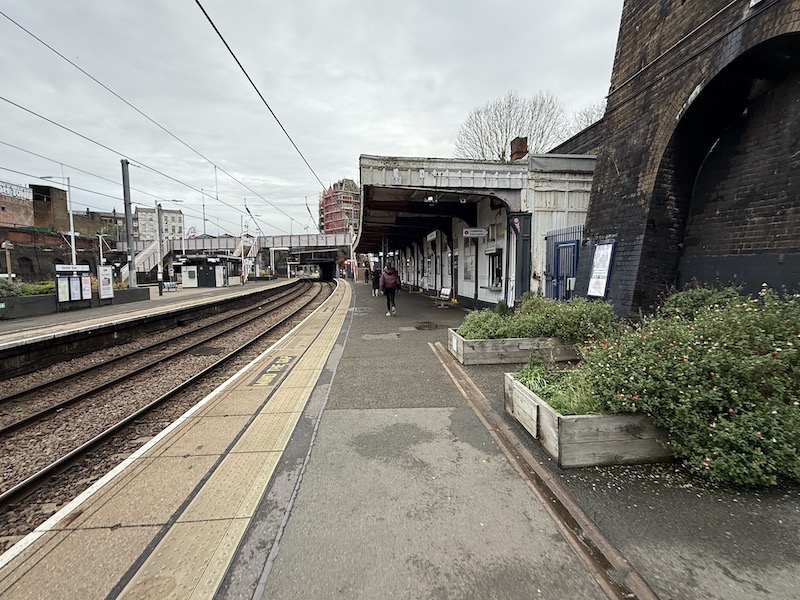
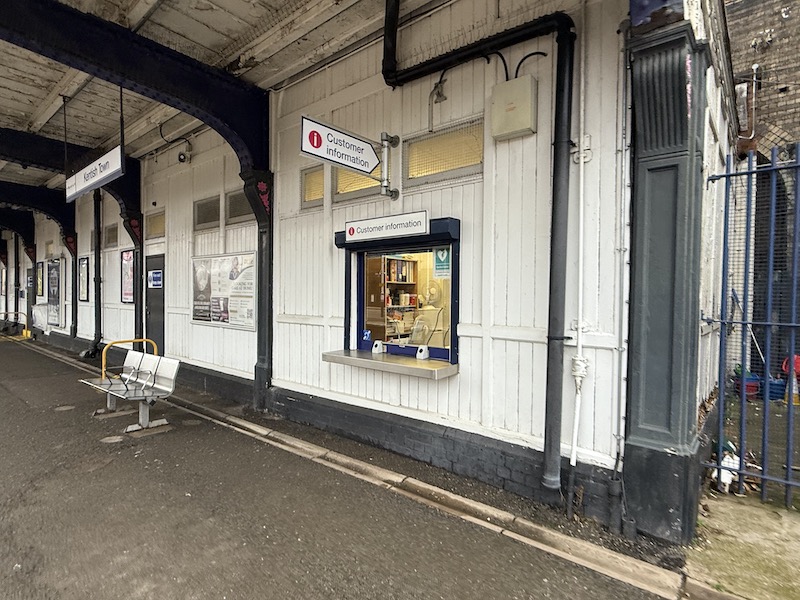
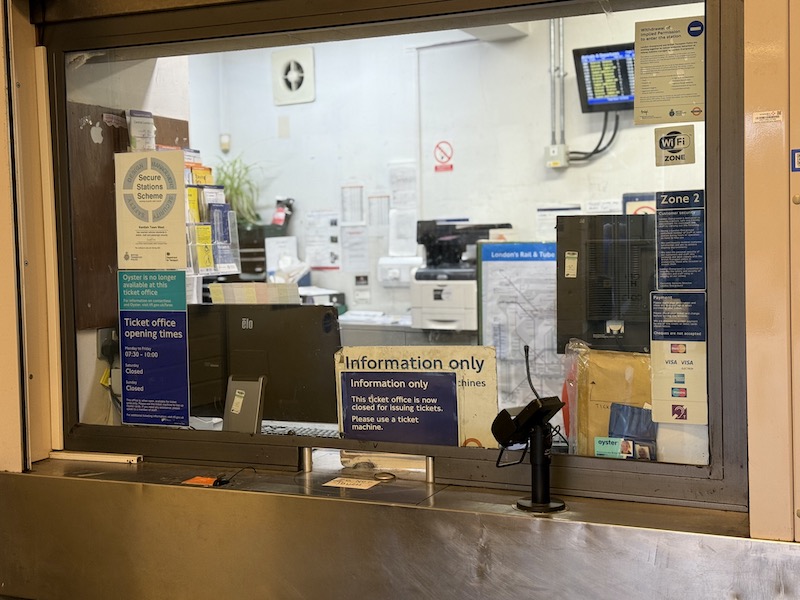
- What about the facilities? Kentish Town uses the TfL entrance but has an information point on the southbound platform while Kentish Town West’s ticket office “is now closed for issuing tickets”. Neither stations has toilets or are accessible but there are waiting areas.
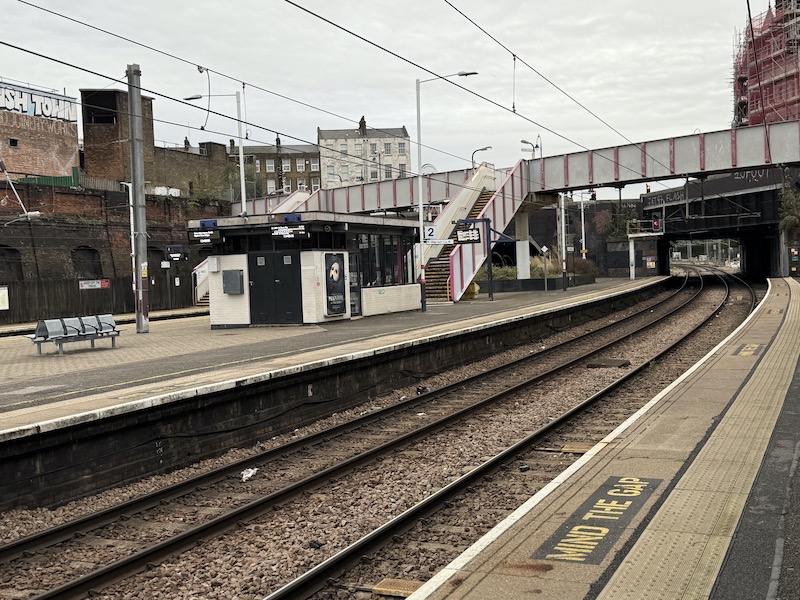
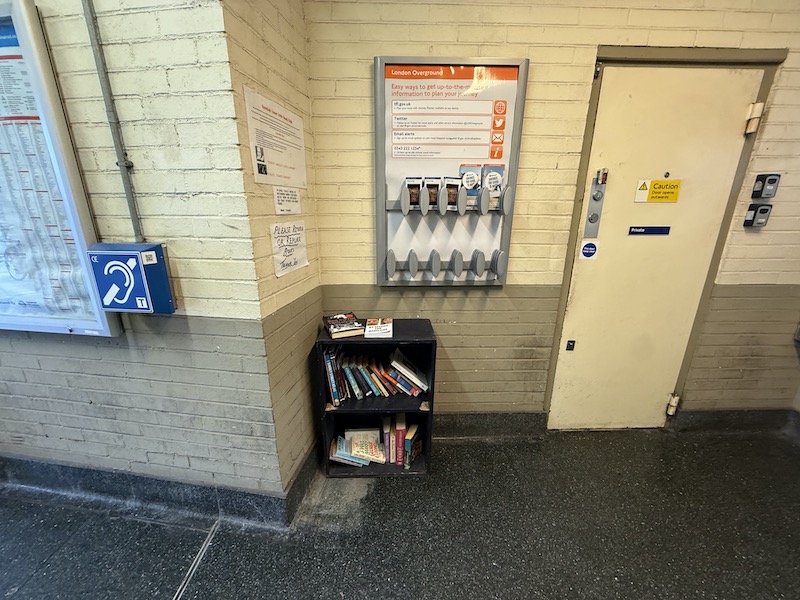
- Anything else? The two platforms for stopping trains at Kentish Town sit alongside two platforms on adjacent lines for fast Thameslink and EMR trains. Kentish Town West has very limited facilities but there is a book lending library.
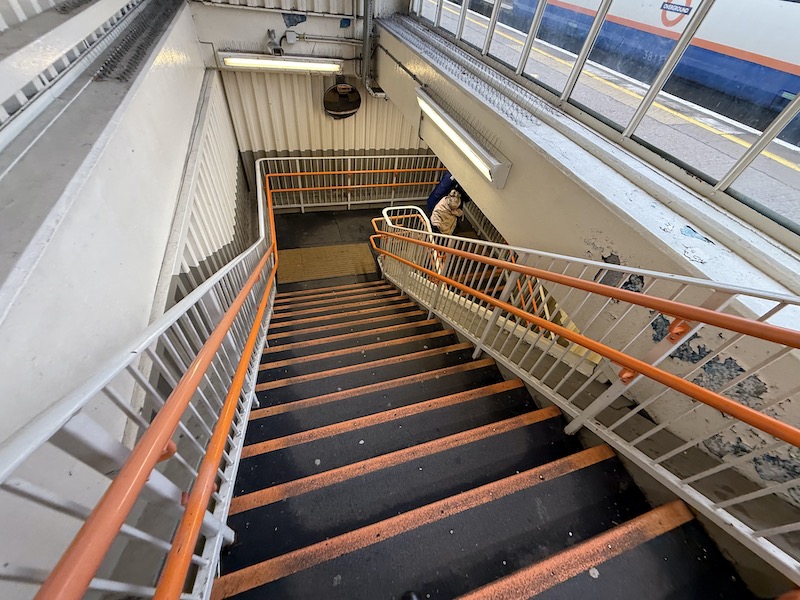
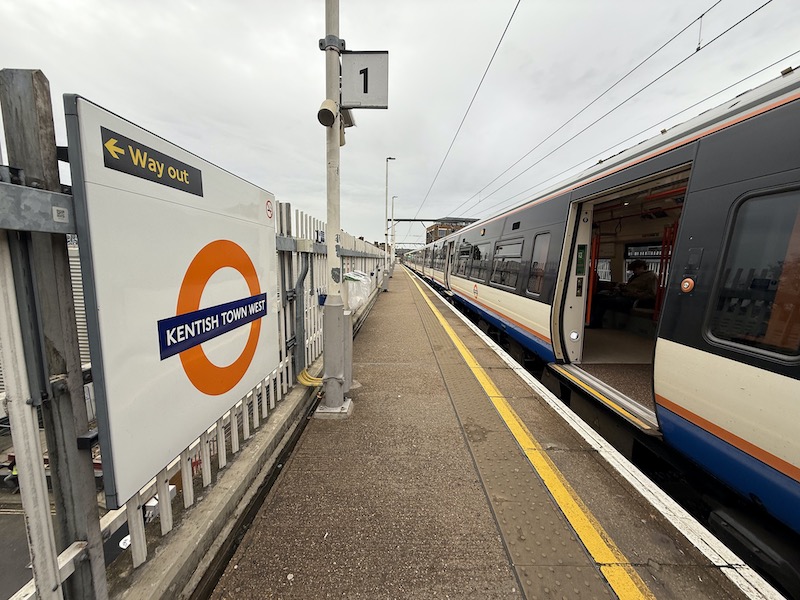
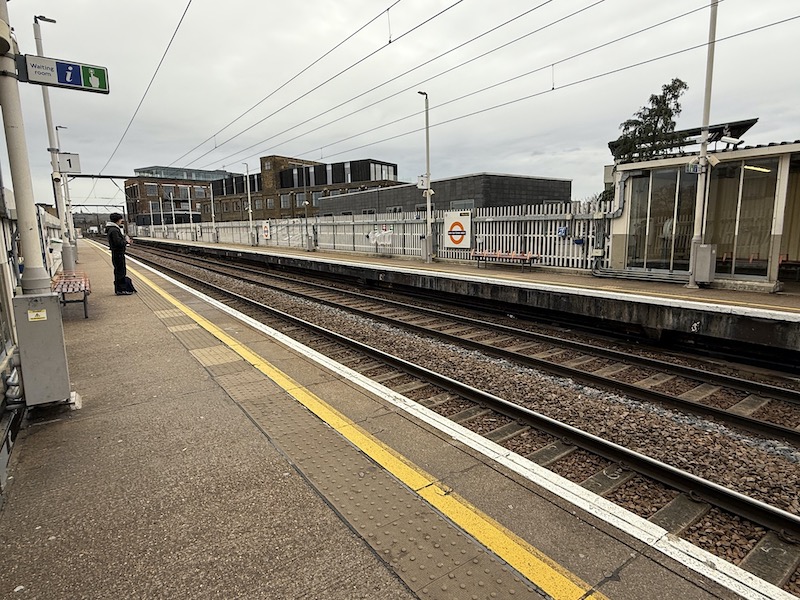
Here are a few photographic highlights.
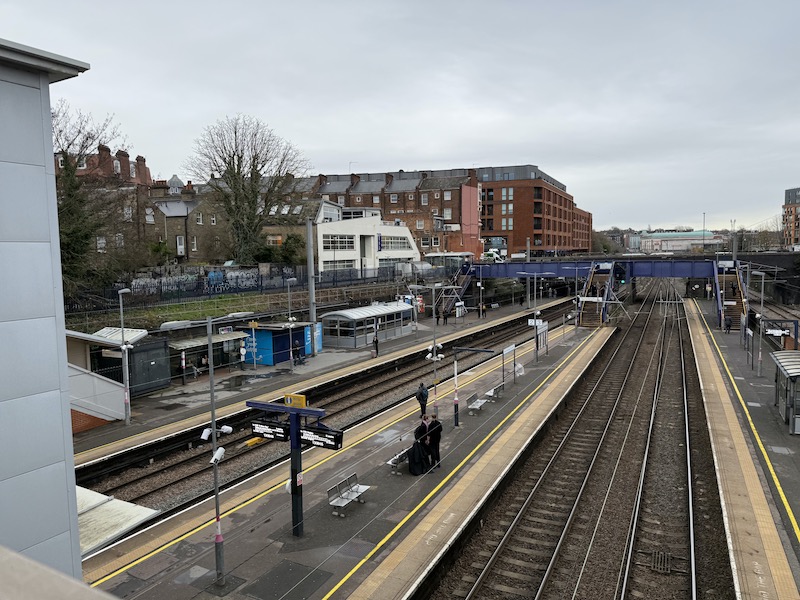
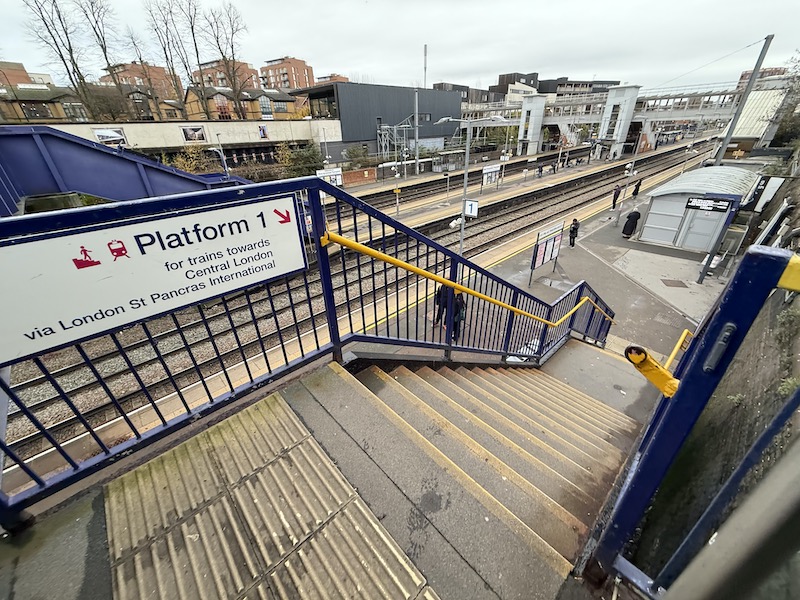
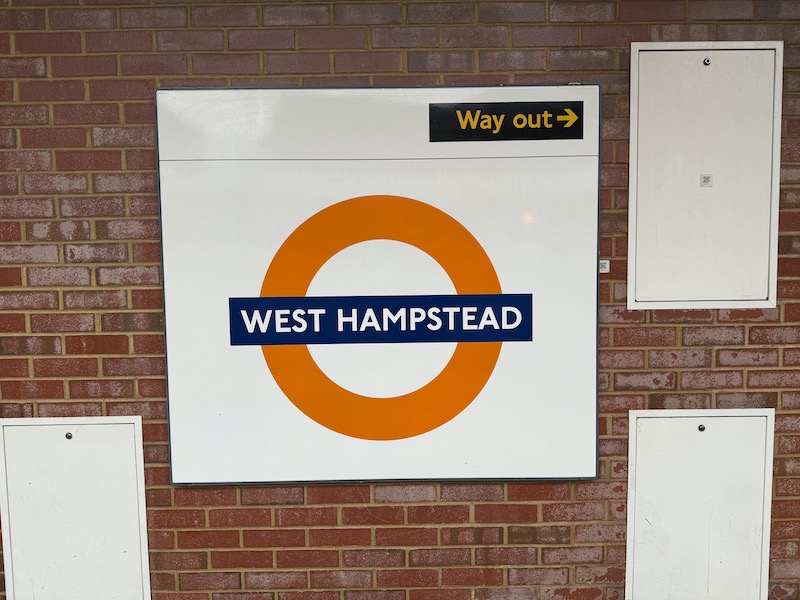
West Hampstead
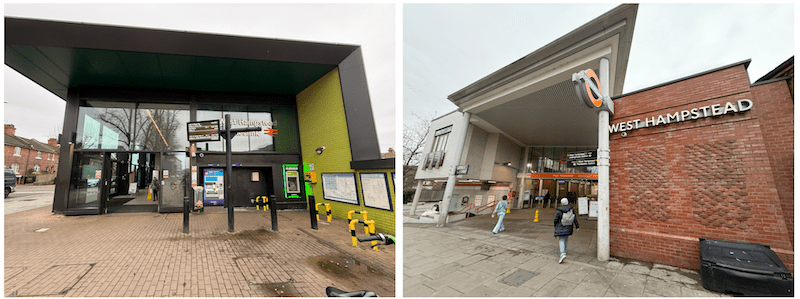
Moving two miles due west again and we soon come to West Hampstead, perhaps most famous for having its two stations (West Hampstead and West Hampstead Thameslink) literally a stones through away from each other on West End Lane and, of course, the Jubilee line is an even shorter stones throw further on which sits alongside the Metropolitan and Chiltern line tracks.
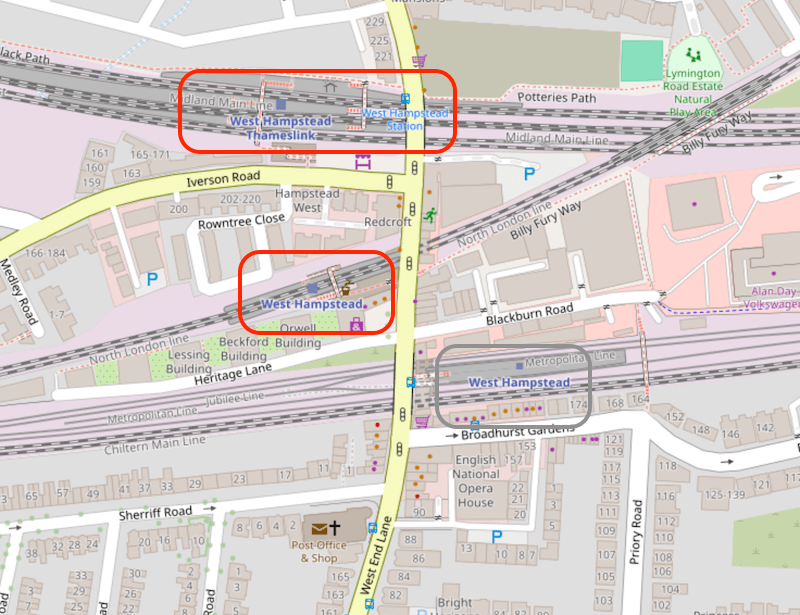
- Which came first? West Hampstead Thameslink (originally called ‘West End for Kilburn and Hampstead’) opened in 1871 with West Hampstead (originally called ‘West End Lane) opening 17 years later in 1888.
- Which is the busiest? West Hampstead Thameslink is roughly double as busy as West Hampstead with the former having 936,000 entries and exits in 2024/25 and the latter 574,000. By comparison the Jubilee line Underground station sees 8,423,000.
- Who operates each station? As with Kentish Town it’s a Thameslink/Overground split with the former unsurprisingly running West Hampstead Thameslink and Overground runs West Hampstead.
- How do the train services compare? Again, it’s a similar picture to as desribed above for Kentish Town/Kentish Town West with West Hampstead Thameslink one station north of Kentish Town and West Hampstead three stations west of Kentish Town West on the Mildmay line.
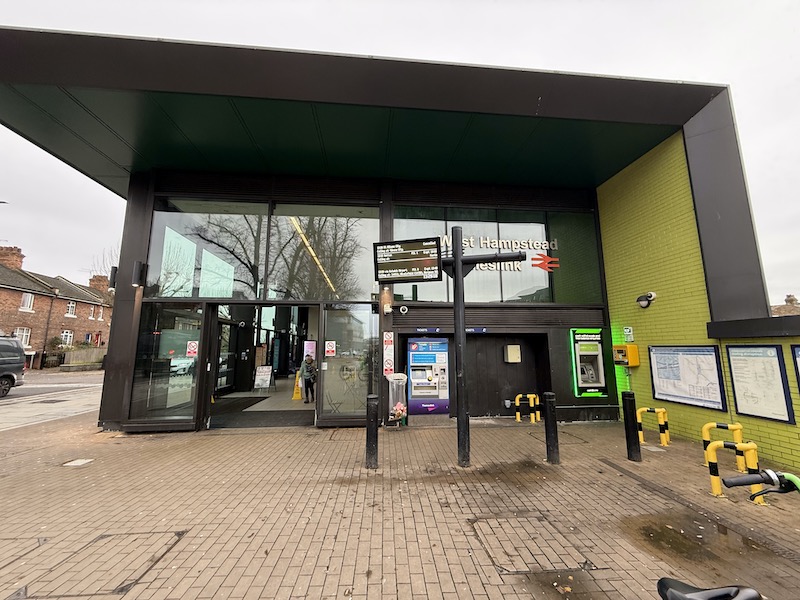
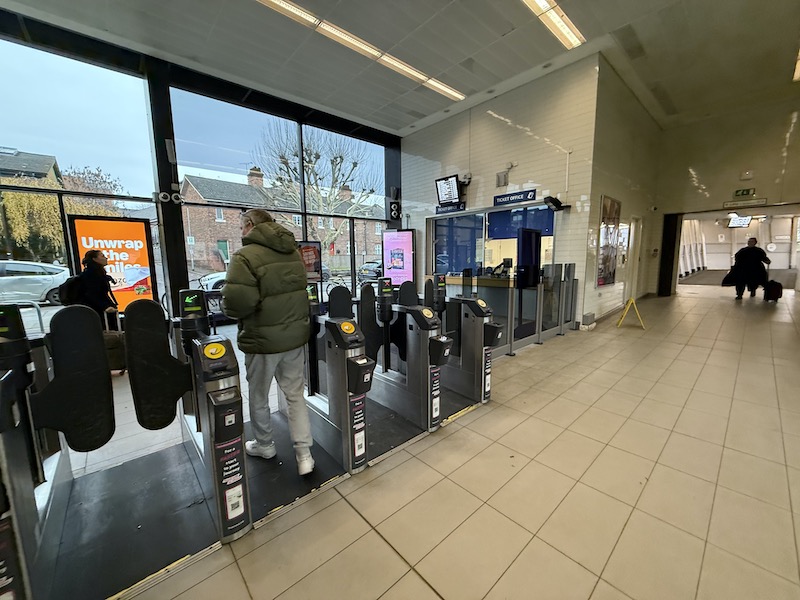
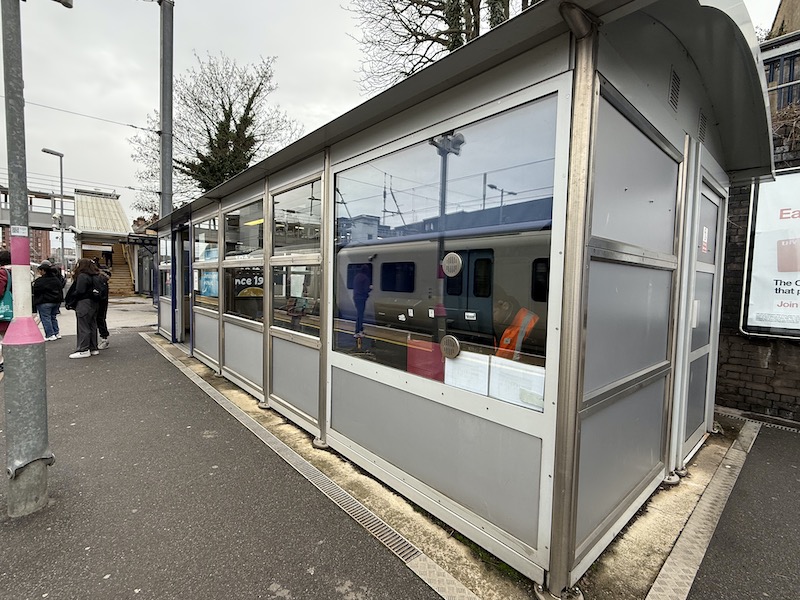
- What about the facilities? Both have a ticket office although I wonder for how much longer that will be the case at West Hampstead as it’s located in the old entrance building to the station which looks very much as though it’s on it’s last knockings with the more recently opened entrance next door without a ticket office facility, whereas over at West Hampstead Thameslink there’s a new entrance building incorporating a ticket office. Both stations are accessible with lifts and footbridge installed as part of the revamped entrances.
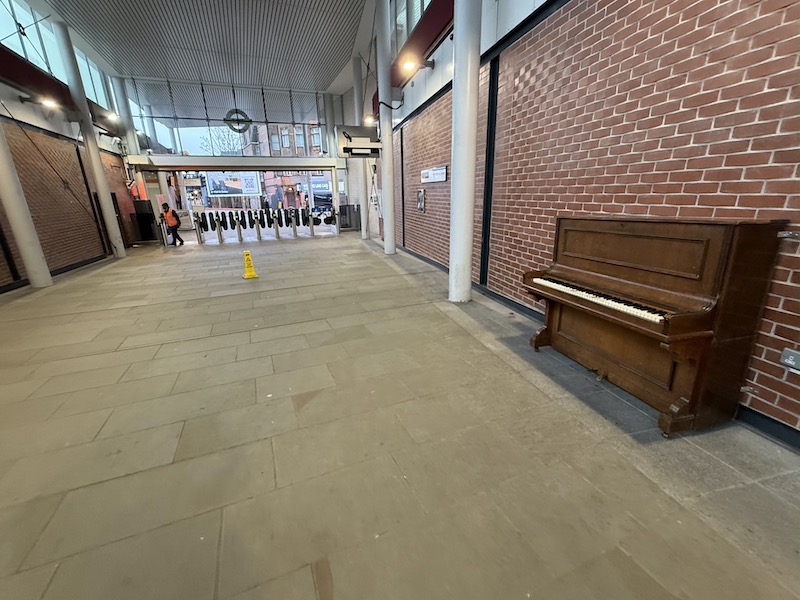
- Anything else? There’s a piano in the vast area behind the gateline of the new West Hampstead entrance and over at West Hampstead Thameslink the original entrance from West End Lane and footbridge is still open with a gateline. As at Kentish Town the two platforms for stopping trains sit alongside two platforms on adjacent lines for fast Thameslink and EMR trains, with the former using them to serve the station.
Here are a few photographic highlights:

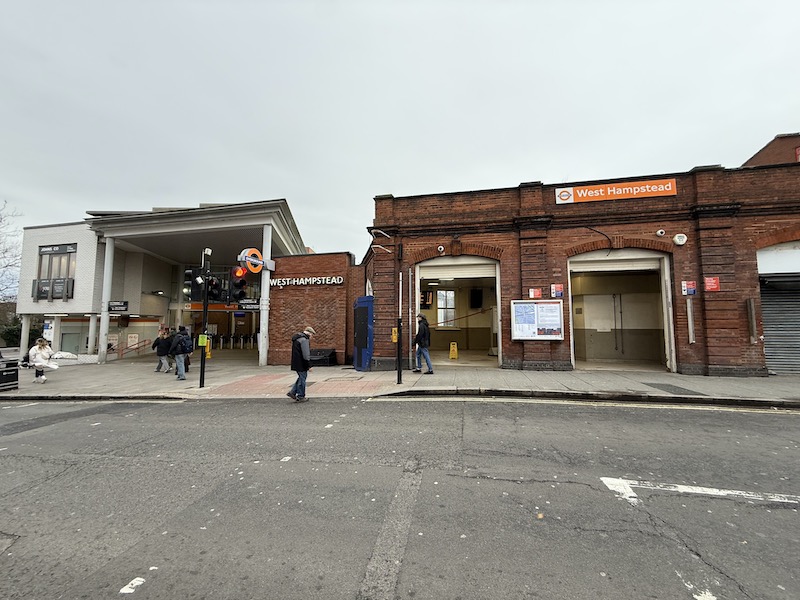
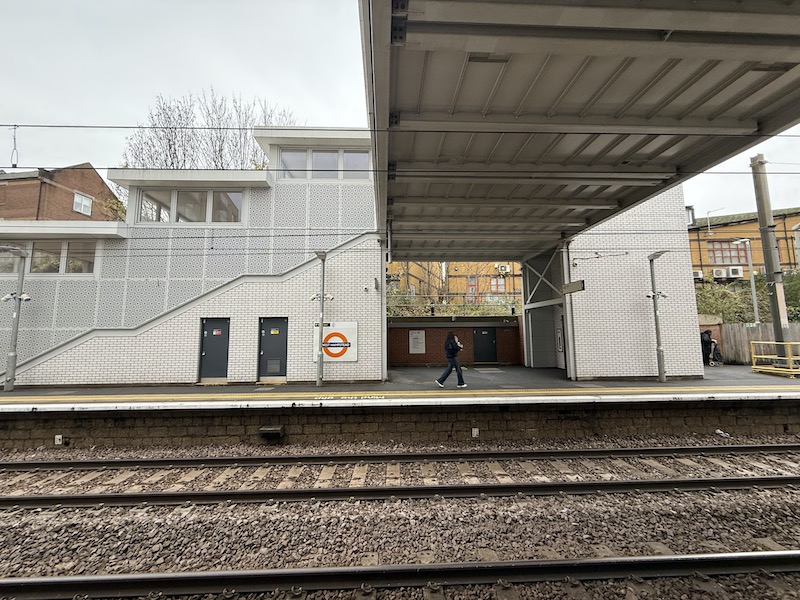
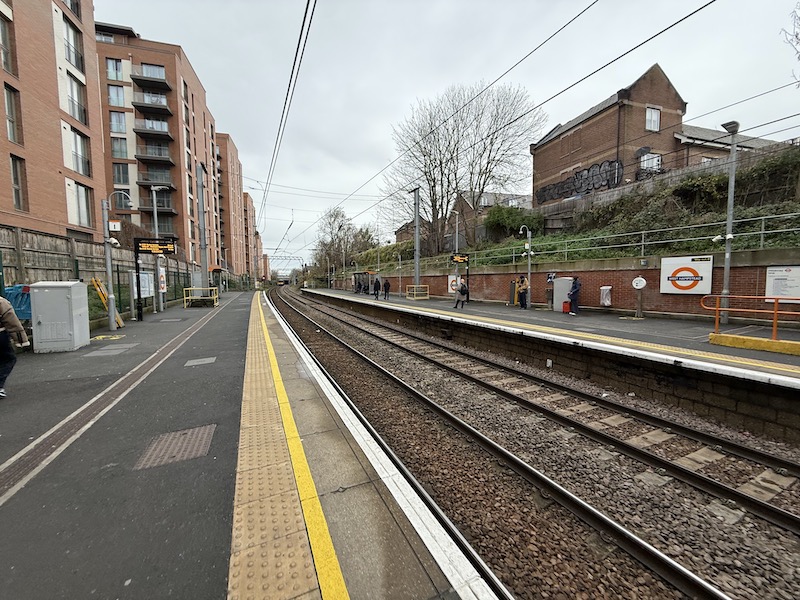
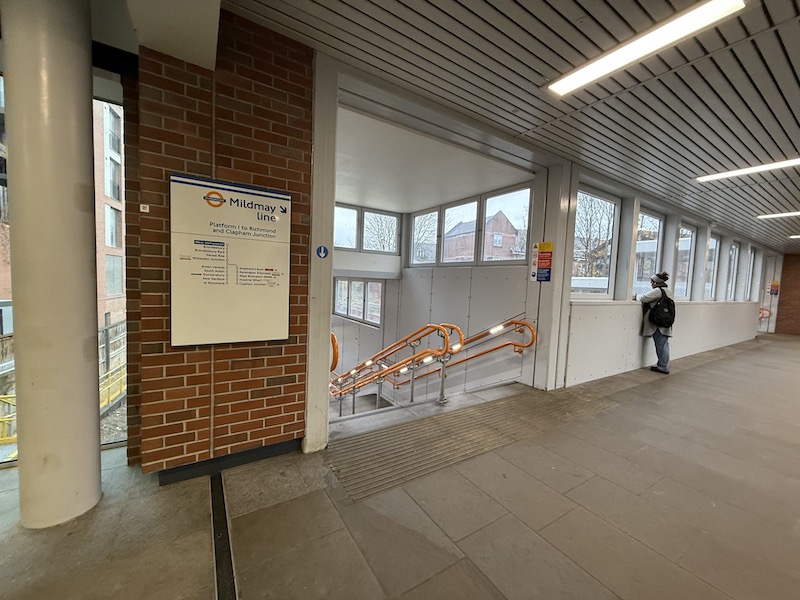
That’s it for north London, let’s head south of the River, but only just, as we reach…
Battersea
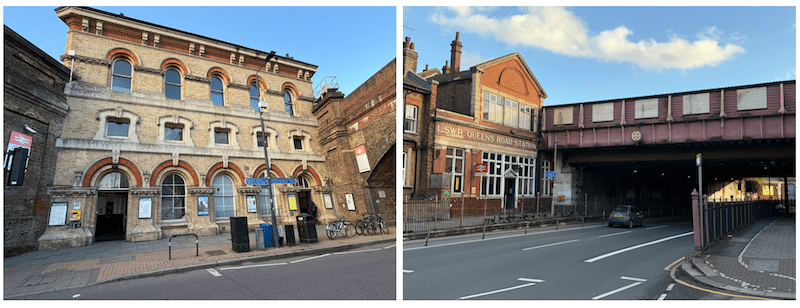
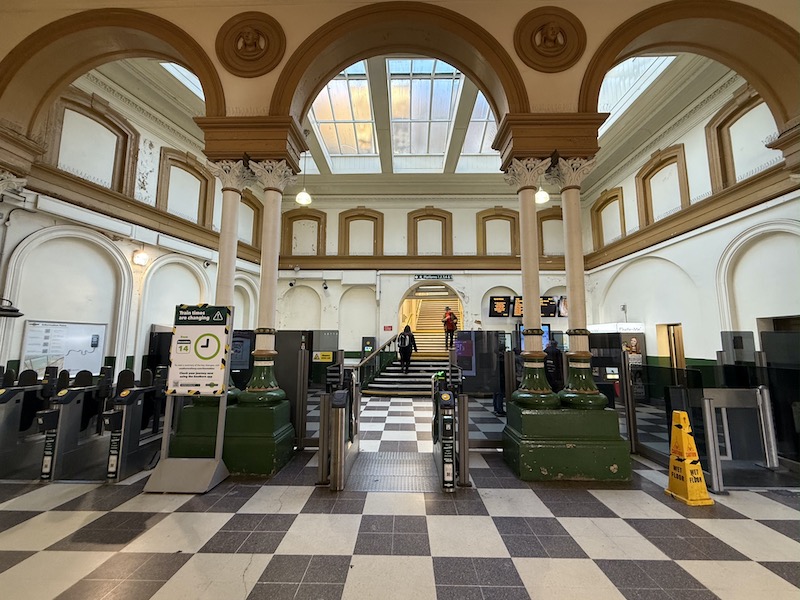
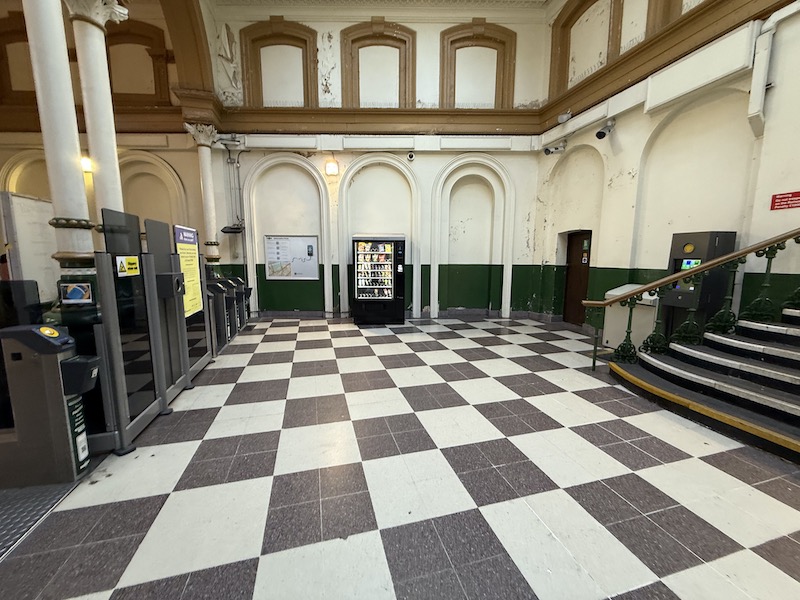
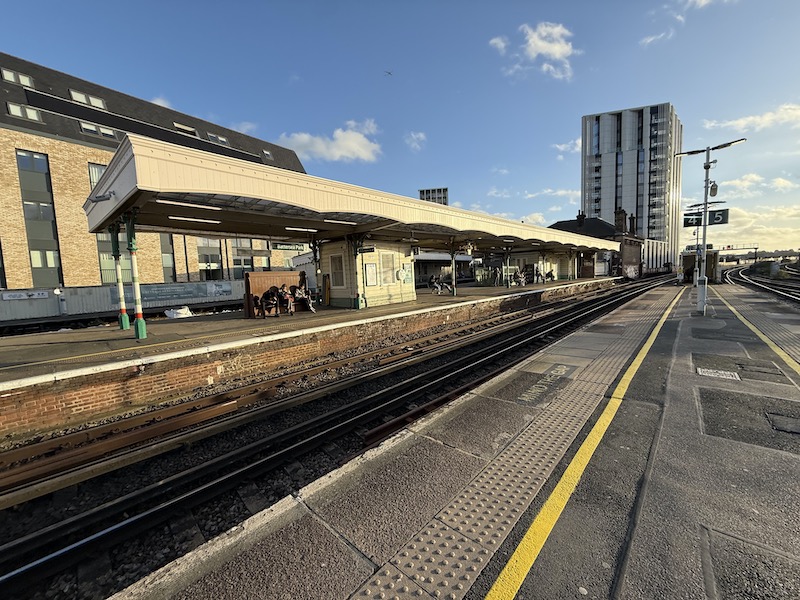
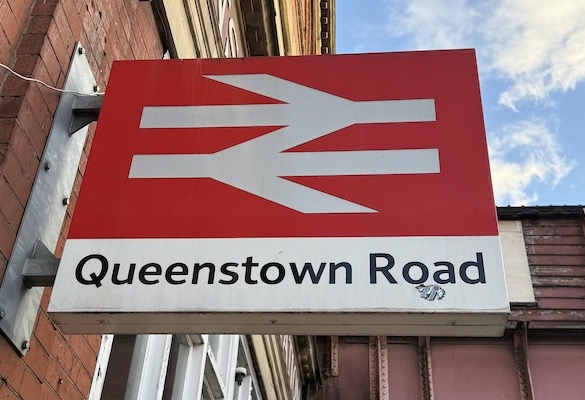
Another two stations located very close together (350 yards apart) are Battersea Park and Queenstown Road (Battersea) both of which offer architecturally impressive entrance halls but very basic platforms alongside multiple lines heading into Victoria and Waterloo respectively.
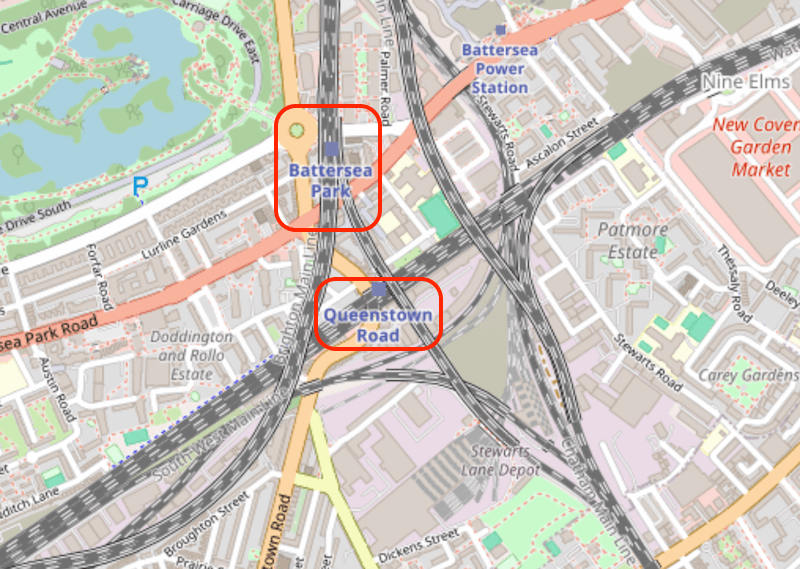
- Which came first? Battersea Park opened in 1867 beating its near neighbour by ten years which when it opened was simply called Queens Road as inscribed above the entrance.
- Which is the busiest? Battersea Park is by far the busier of the two with 2,184,000 passengers compared to Queenstown Road (Battersea) on 806,000 in 2024/25.
- Who operates each station? Battersea Park is a Southern station and Queenstown Road (Battersea) a South Western Railway one.
- How do the train services compare? Battersea Park has an off peak pattern of six trains an hour northbound to Victoria and in the other direction half hourly via Crystal Palace and round to London Bridge, half hourly via Crystal Palace to West Croydon and half hourly via Norbury, West Croydon and Sutton to Epsom Downs, while over at Queenstown Road trains four trains an hour go northbound to Waterloo with two an hour south to Richmond and Teddington (before returning to Waterloo via Wimbledon) and two an hour to Weybridge via Hounslow and Staines. Peak hour extras run between Battersea Park to Victoria from/to Sutton and East Croydon. Trains from both stations take you one stop south to Clapham Junction but on completely different lines. In addition there’s a quirky arrangement at Battersea Park, which sees an early morning and late evening London Overground Windrush line journey terminate in the bay platform (Platform 2) rather than Clapham Junction to keep driver knowledge of an alternative destination during times of disruption.
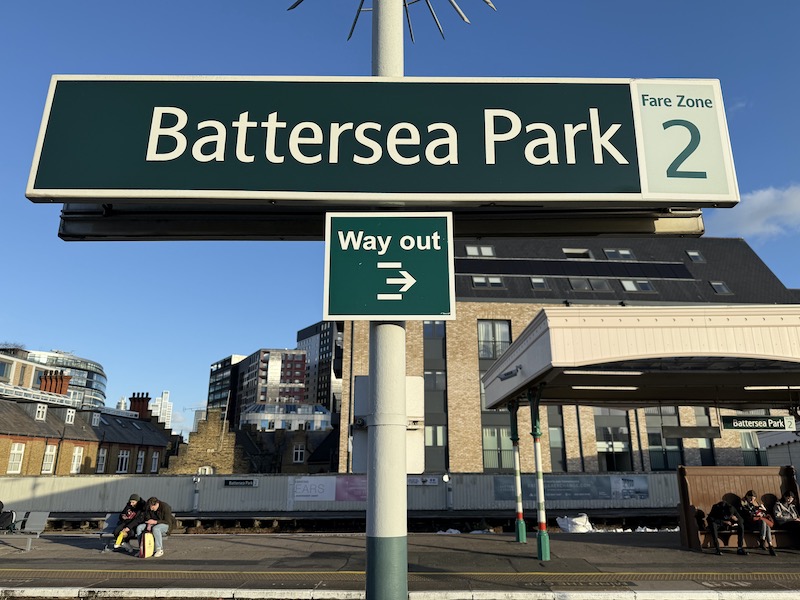
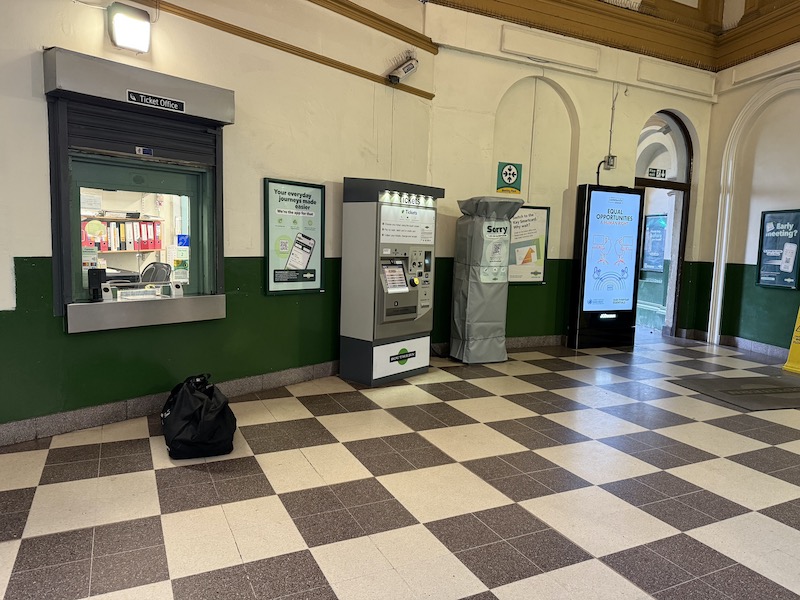
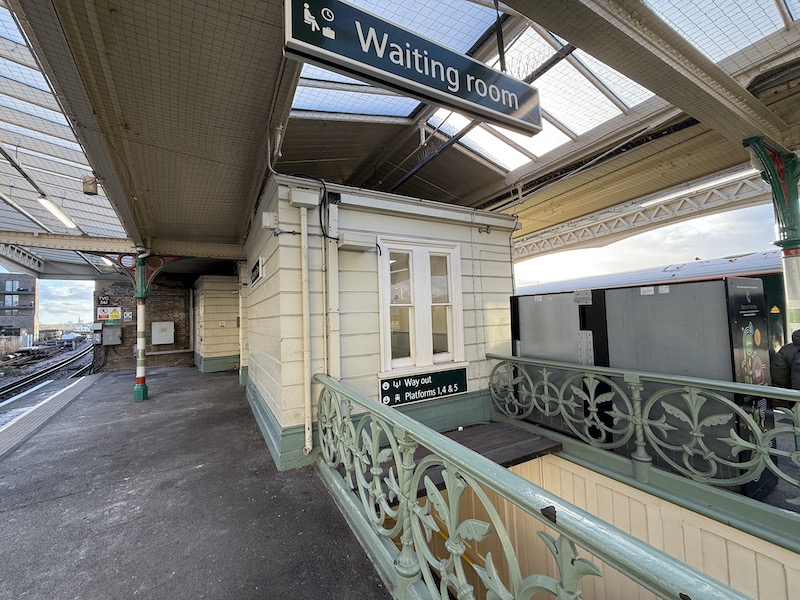
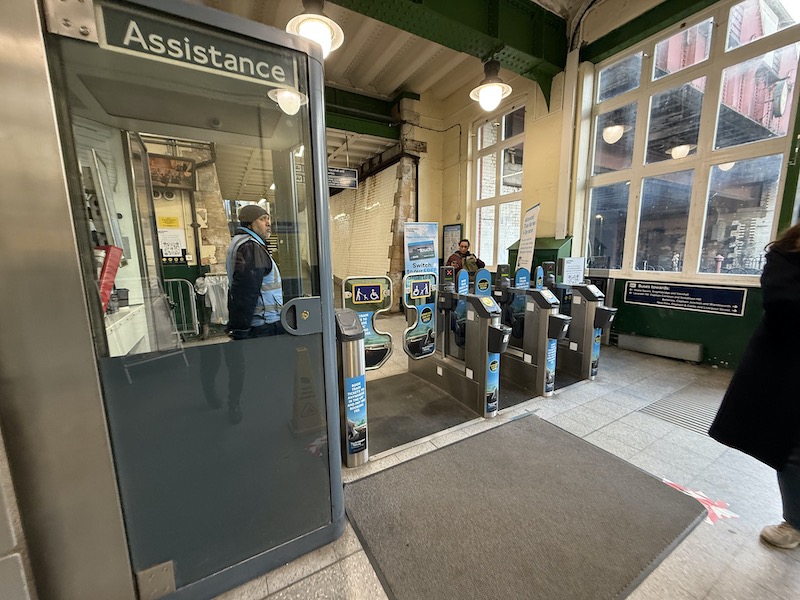
- What about the facilities? Battersea Park has a ticket office, but not Queenstown Road. Battersea Park has toilets off the ticket hall and both stations are characterised by narrow staircases and neither is accessible. There’s a waiting room at Battersea Park and shelters at Queenstown Road.
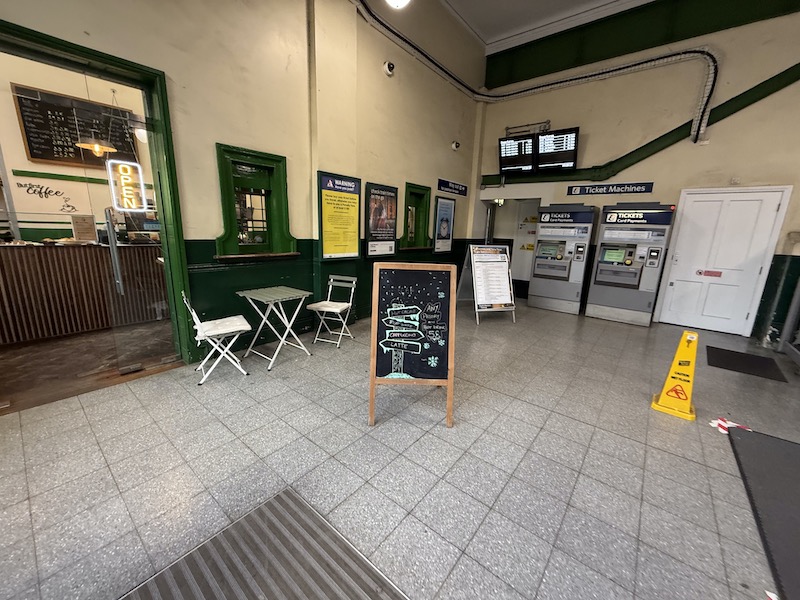
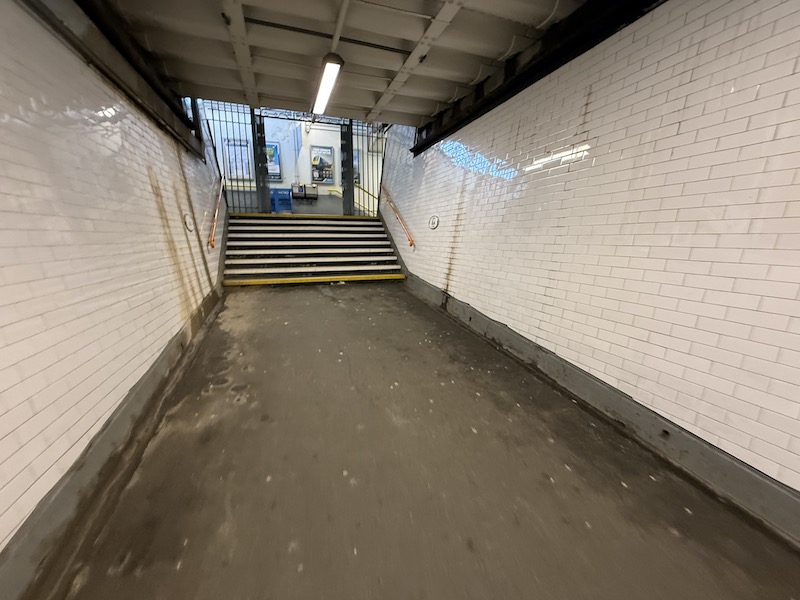
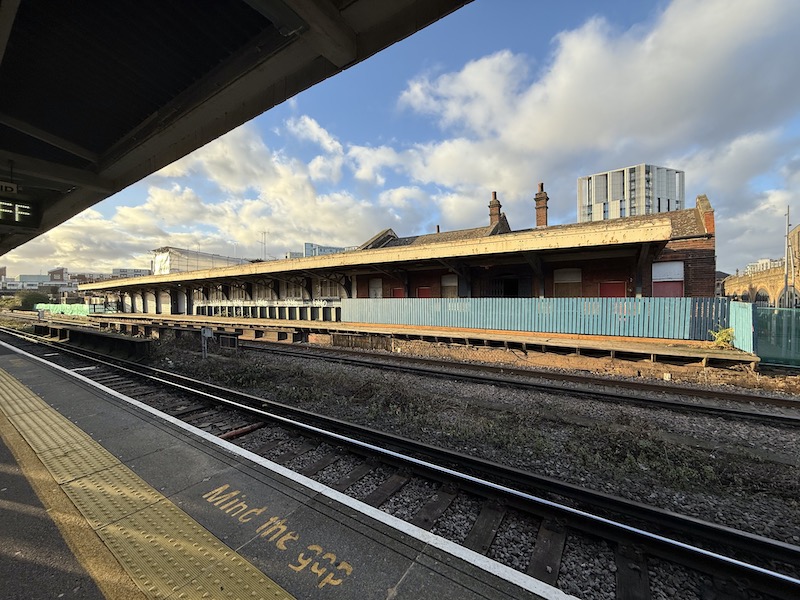
- Anything else? Both stations sit alongside the fast lines to and from Victoria/Waterloo and both have an abandoned platform. At Battersea Park this is opposite the platform that now forms the bay terminating area for the occasional Windrush line trains. Queenstown Road has a lovely café/coffee stall occupying the former ticket office where the original windows into the booking office are still in situ as in the photo below.
Here are a few photographic highlights:

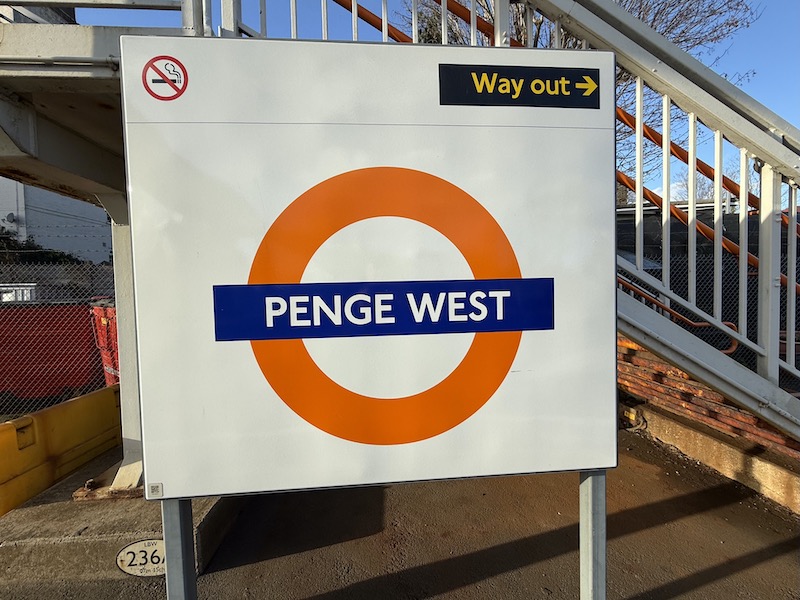
Penge
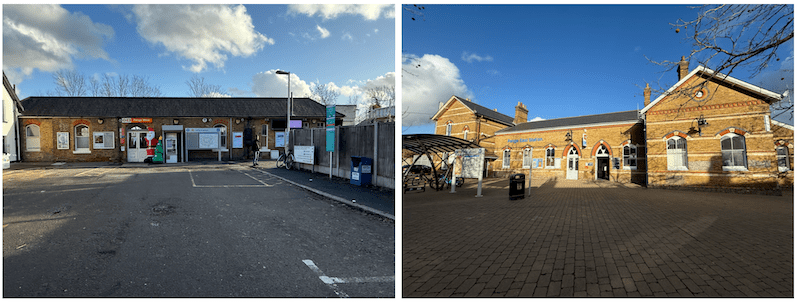
Moving south eastwards from Battersea brings us to Penge which has a traditionally named pair of stations in Penge West and Penge East located 530 yards from each other.
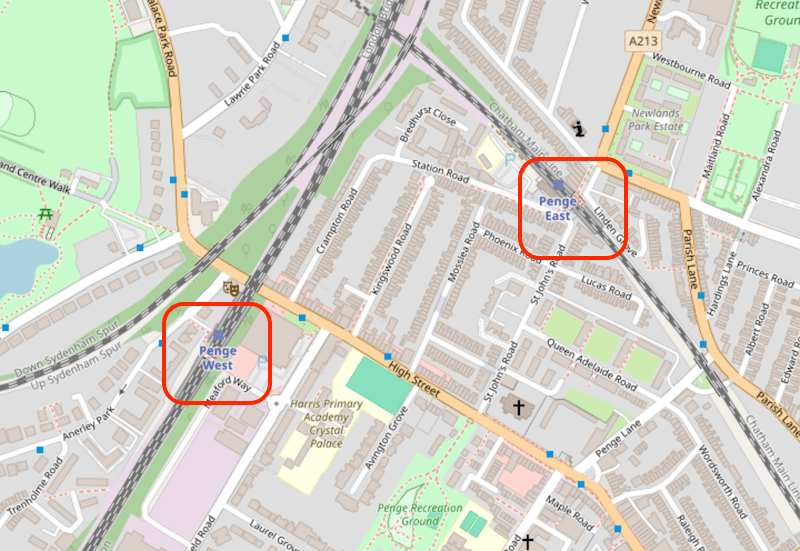
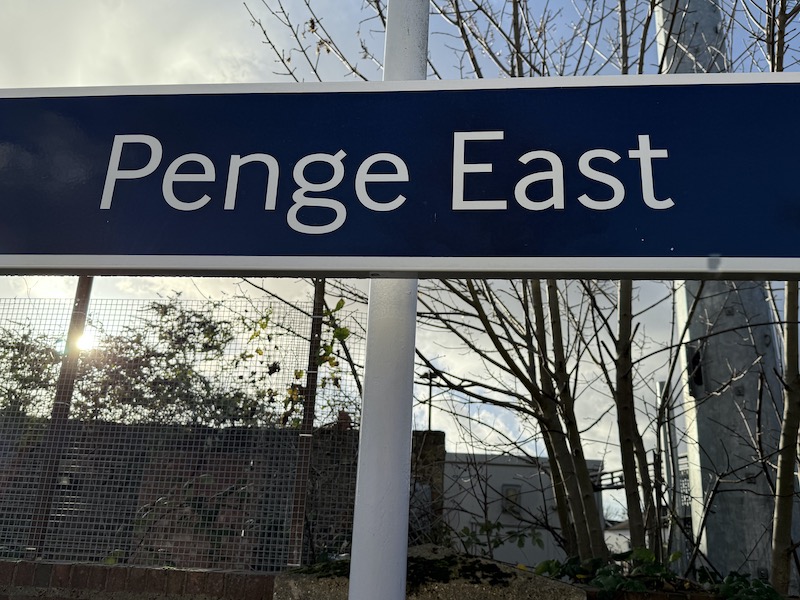
- Which came first? Penge West opened as early as 1839 with Penge East arriving 24 years later in 1863.
- Which is the busiest? Penge West had 1,236,000 passengers in 2024/25 roughly double Penge East’s total of 635,000.
- Who operates each station? TfL Overground runs Penge West and Southeastern looks after Penge East.
- How do the train services compare? Penge West has four Overground trains an hour on the Windrush line between West Croydon and Highbury & Islington supplemented in the peaks by Southern trains between Norwood Junction and London Bridge. Penge East has four trains an hour northbound via Brixton to Victoria and southbound via Bromley South to Orpington .
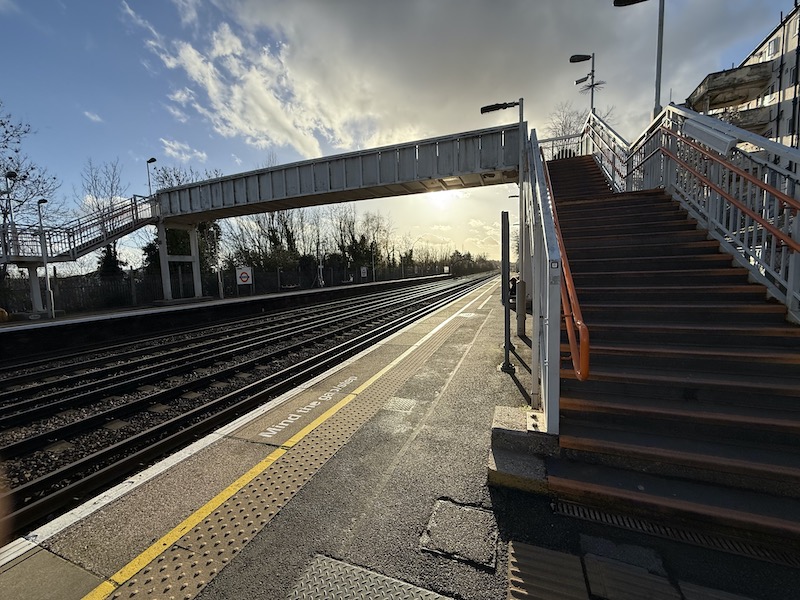
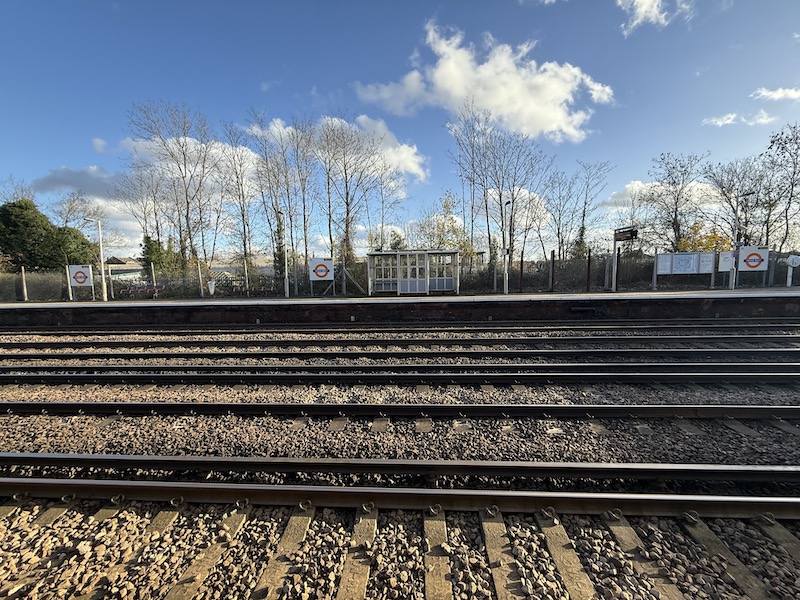
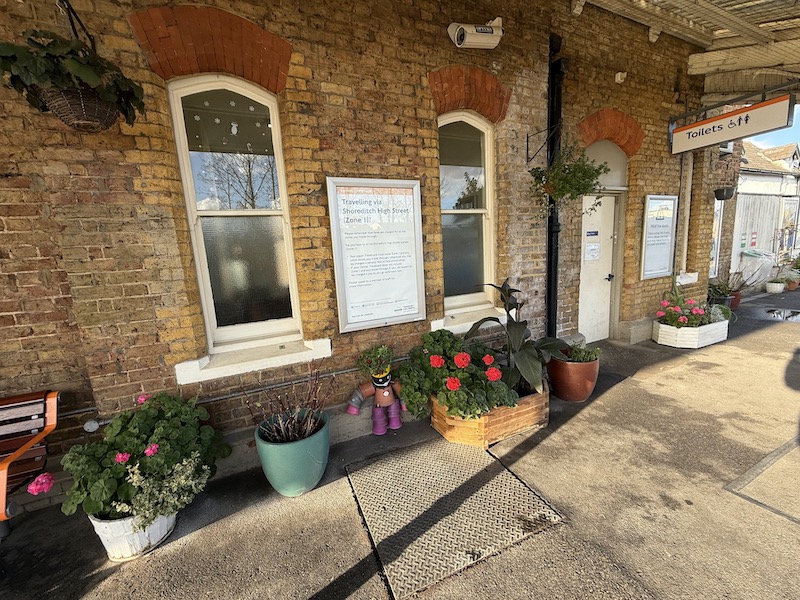
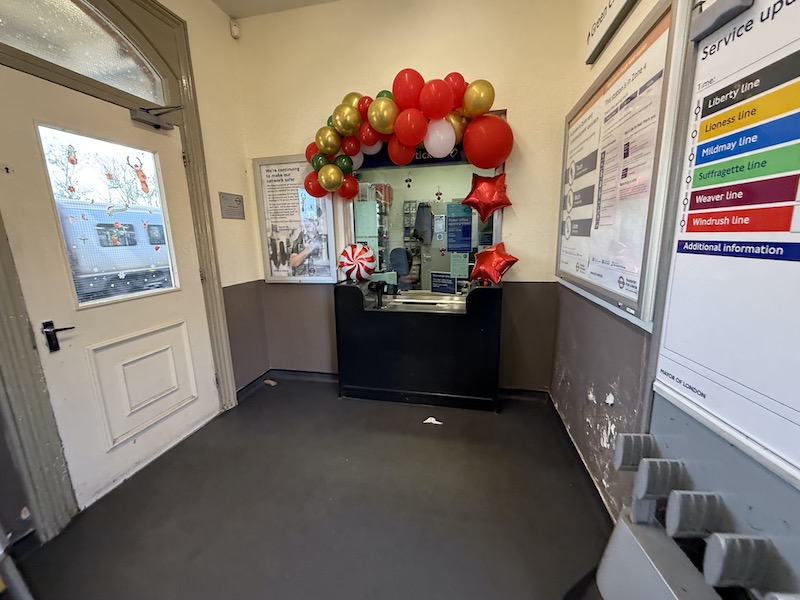
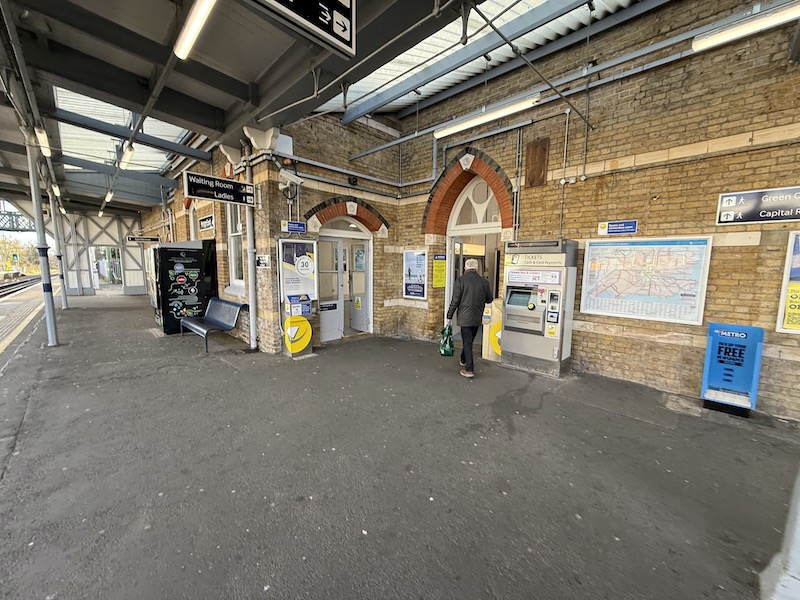
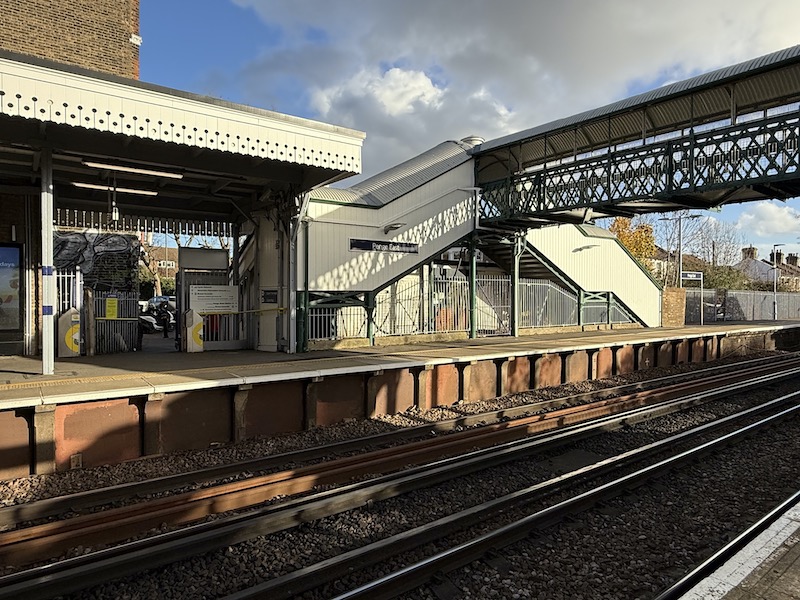
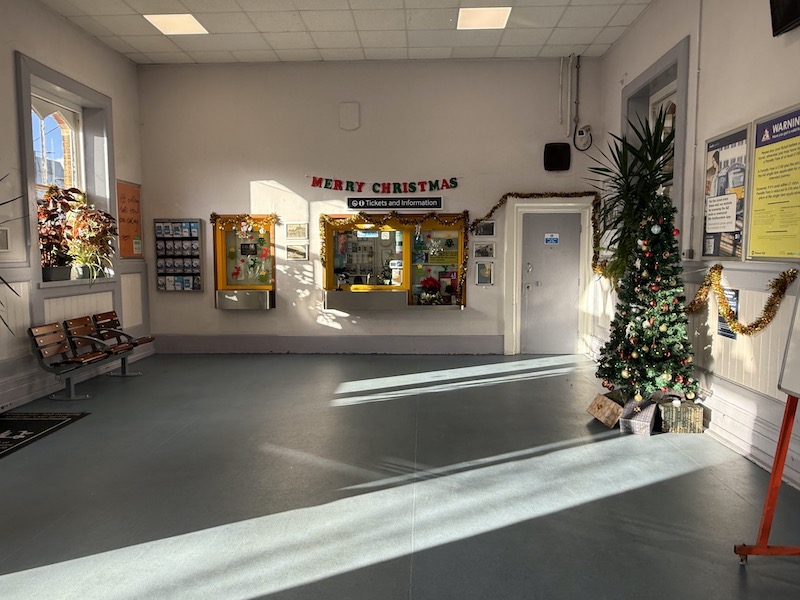
- What about the facilities? Both stations have ticket offices (both being currently suitably dressed for the festive season) and both have toilets. Both platforms at Penge East have an extensive covered canopy and a small canopy is available on the northbound platform at Penge West and a shelter on the southbound platform. There are ground level pedestrian entrances to both platforms through a gateline and there’s a footbridge but with no lifts. The footbridge sits outside the gateline whereas the footbridge at Penge West is inside the gateline and there’s just the one entrance for the northbound platform.
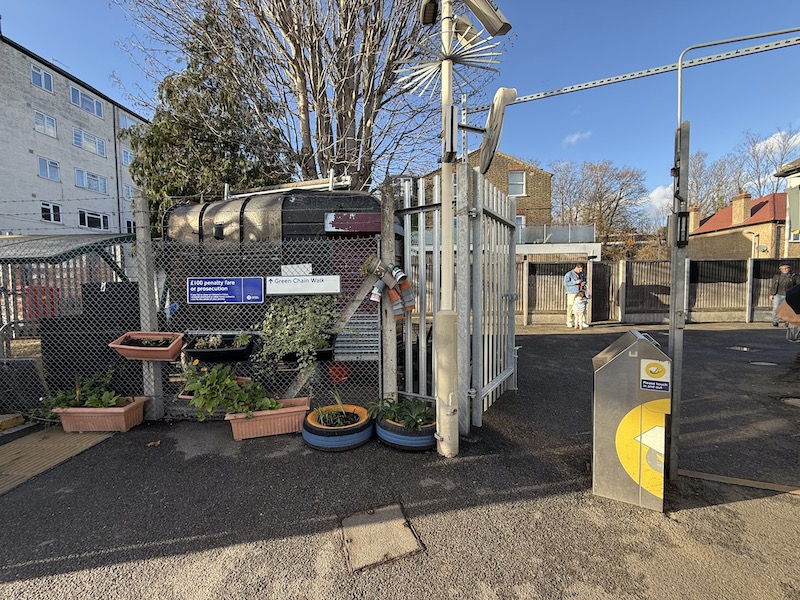
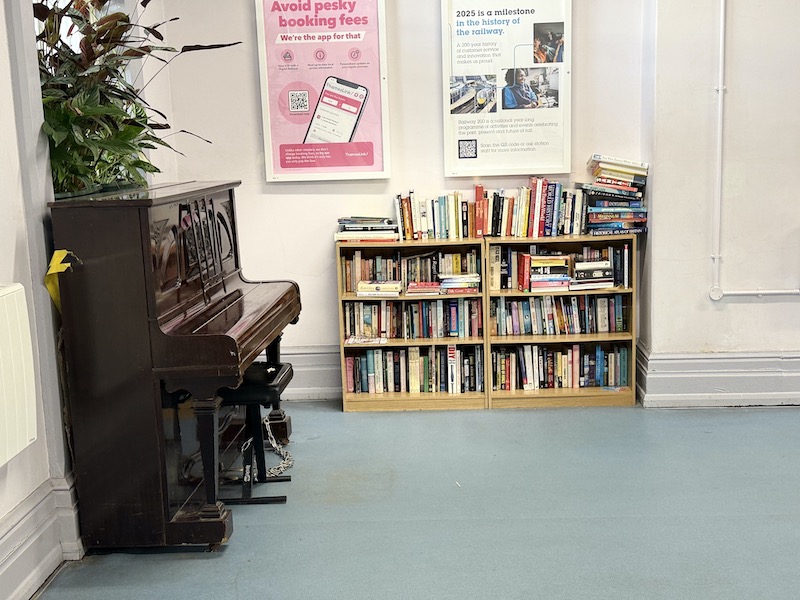
- Anything else? There’s a substantial library with many shelves packed with books in the waiting room at Penge East together with a piano. Penge West has a lovely floral display on the northbound platform which is even colourful at this time of year. Both stations are clearly well looked after by the staff.
Here are a few photographic highlights:

Bromley
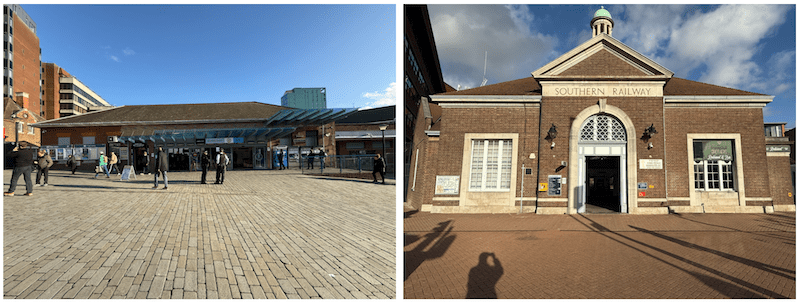
It’s not far to head further south eastwards from Penge to arrive at our penultimate suburban station pair located at either end of Bromley’s retail centre which explains their geographic names of Bromley North and Bromley South.
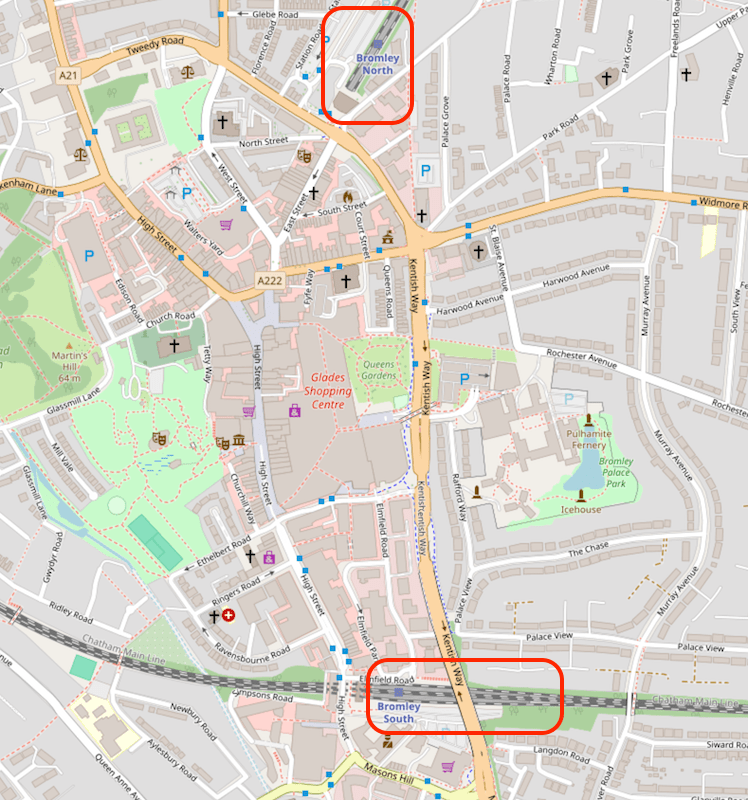
- Which came first? Bromley South opened as simply Bromley in 1858 with Bromley North opening 20 years later in 1878. Bromley was renamed Bromley South in 1899.
- Which is the busiest? There’s no contest as Bromley South recorded 6,194,000 passengers in 2024/25 whereas Bromley North saw just 226,000.
- Who operates each station? Both are operated by Southeastern.
- How do the train services compare? There’s a huge difference between the half hourly shuttle service between Bromley North (with a stop at Sundridge Park) and Grove Park (an extra departure runs in the morning and evening peak) and the plethora of departures to a wide selection of destinations available at Bromley South. These include four trains an hour between Orpington and Victoria (via Herne Hill and Penge East – see above), two fast trains an hour to/from Victoria from/to Kent via Chatham (one via Canterbury East to Dover and one to Ramsgate each hour); an hourly service between Ashford, Maidstone East and Victoria and a half hourly Thameslink service between Sevenoaks and Blackfriars with peak hour extensions to Luton or Welwyn Garden City as well as a link to Orpington making for four trains an hour. There’s also an hourly semi-fast between Gillingham and Victoria.
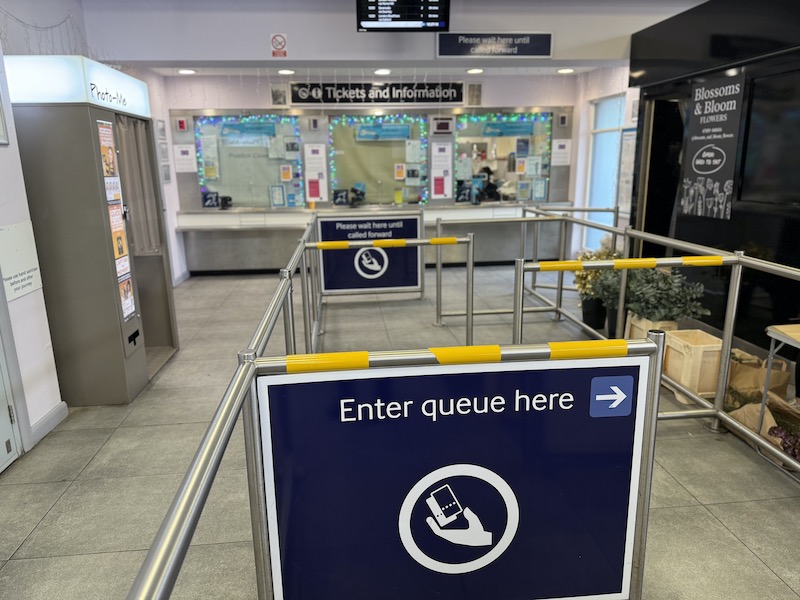
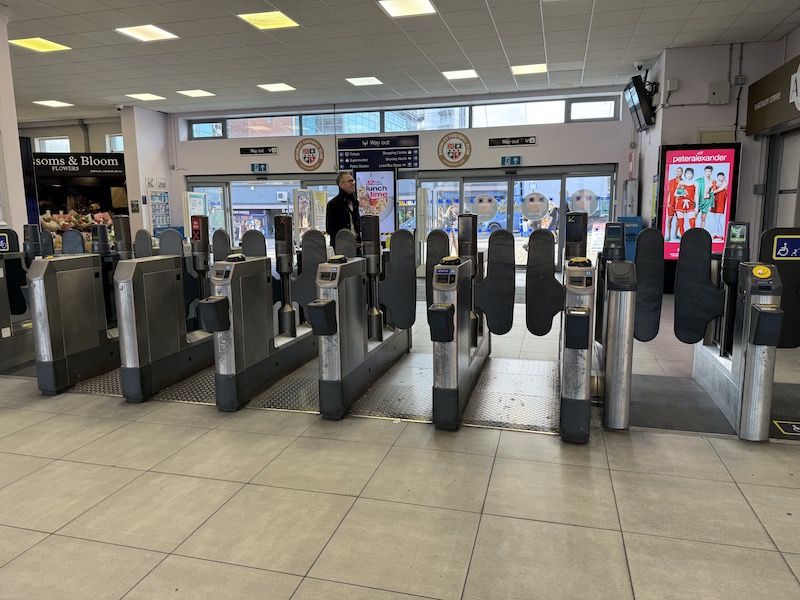
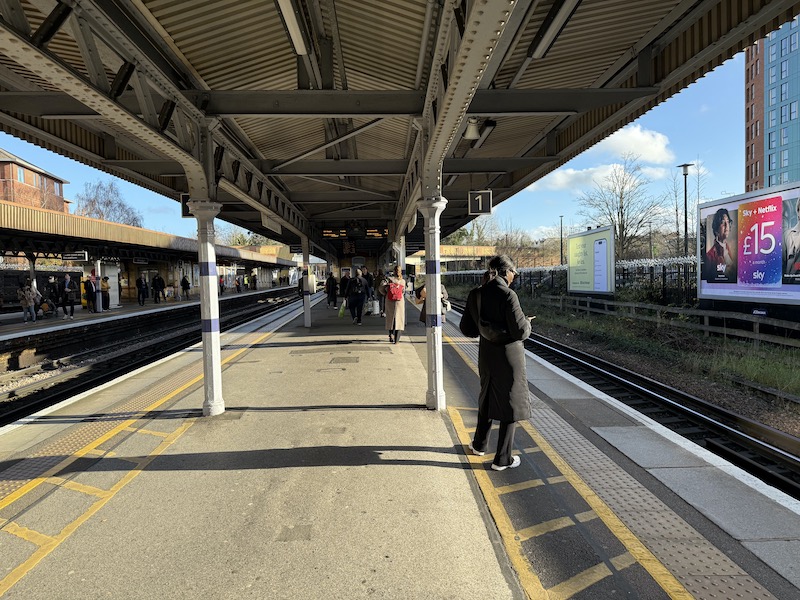
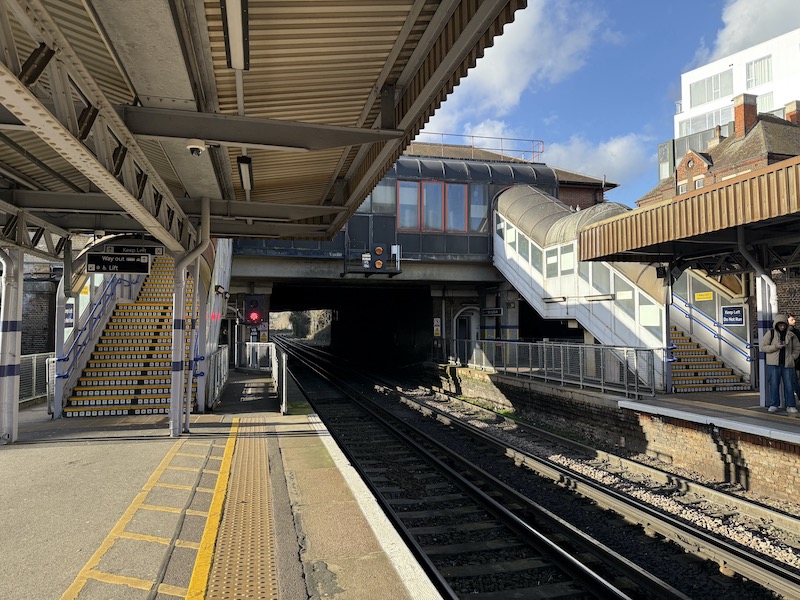
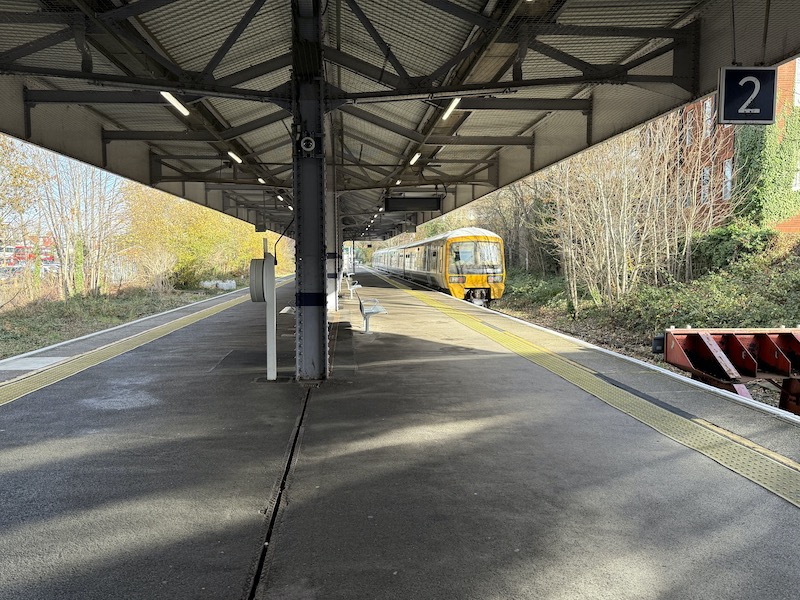
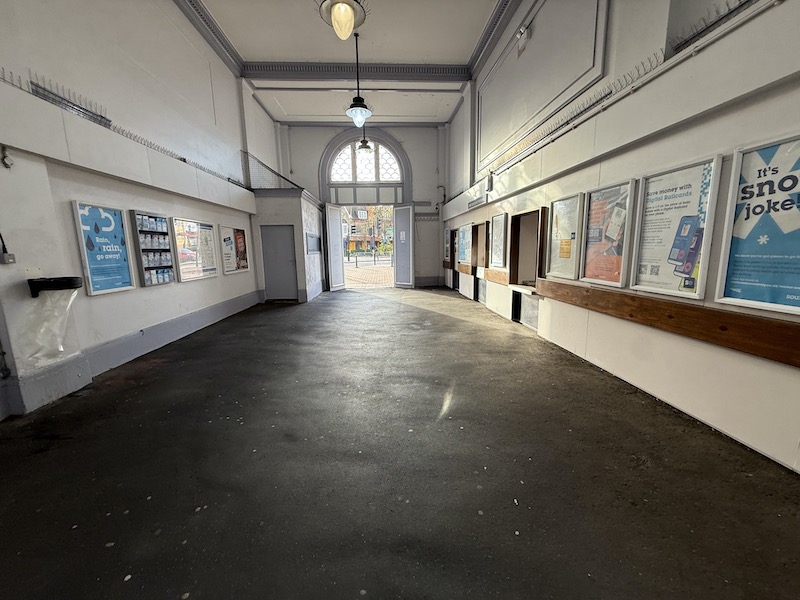
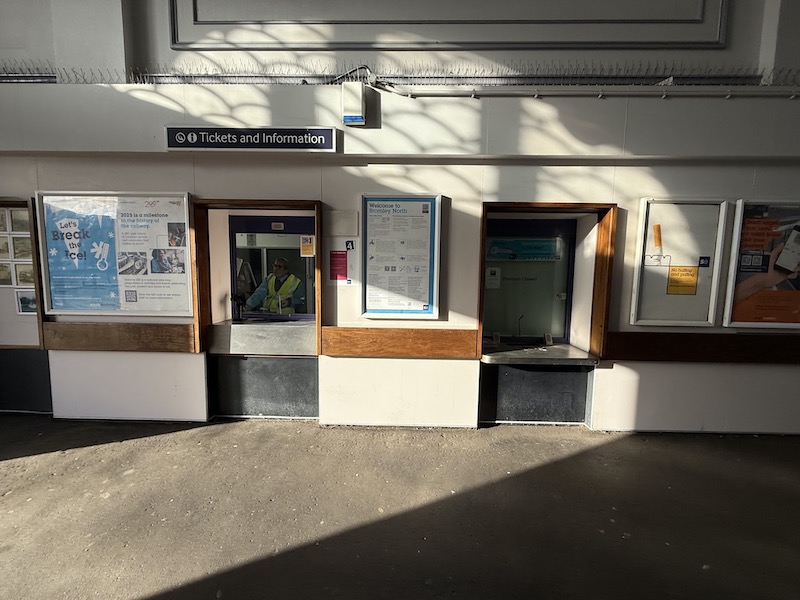
- What about the facilities? Both stations have a ticket office including an extensive queuing system at Bromley South. There are toilets at Bromley South with ladies on both platforms but gents on only one. Both stations are accessible with lifts at South and North being at Street level.
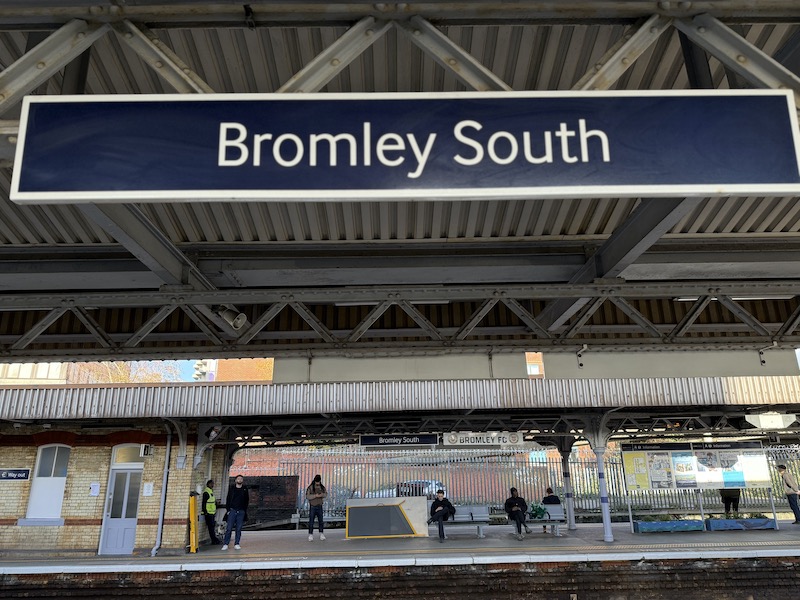
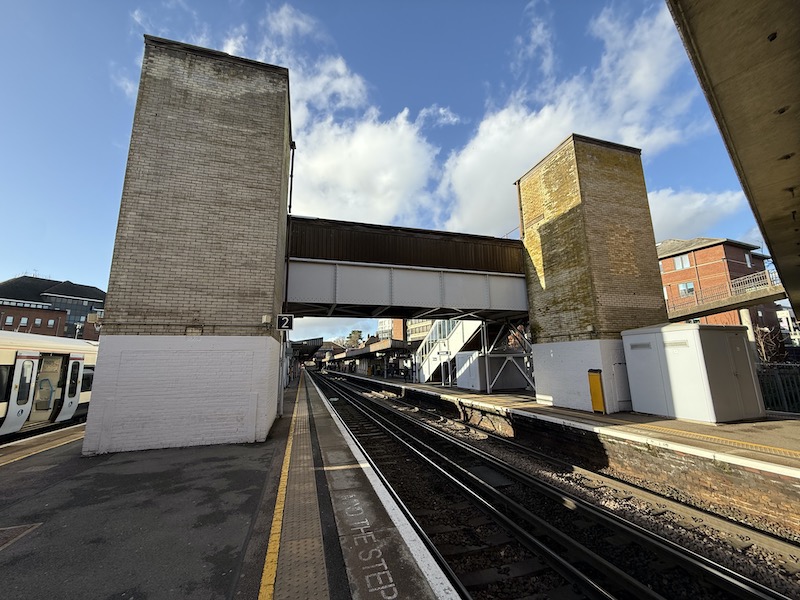
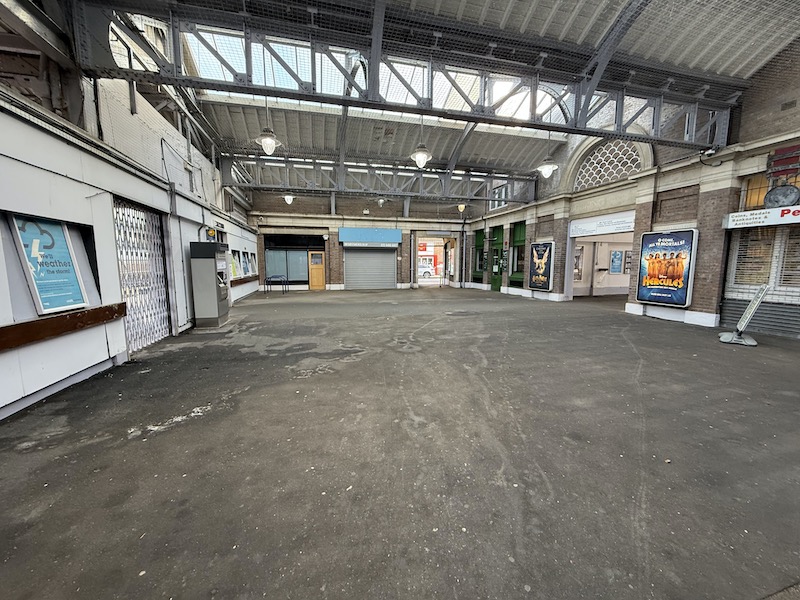
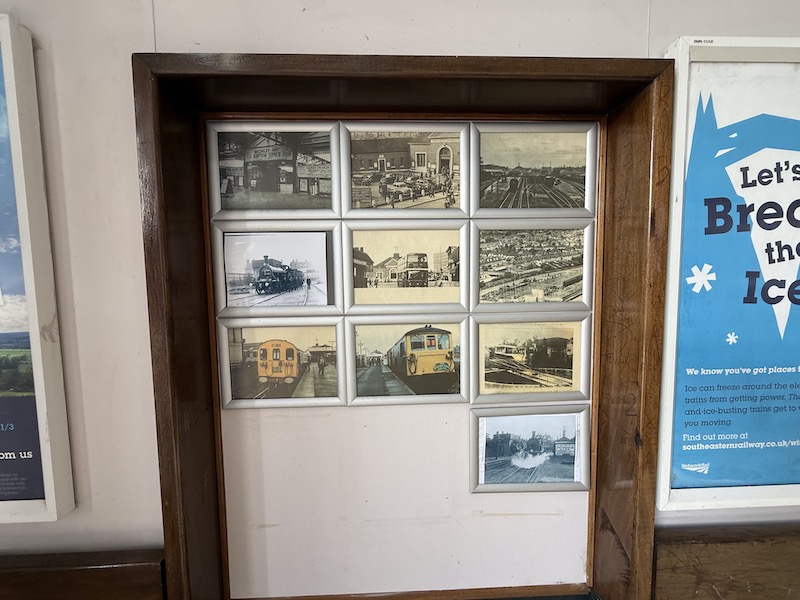
- Anything else? Bromley North is a shadow of its former self with the entrance area now dominated by closed down retail units and looking rather sorry for itself. There is an accessible toilet. On the plus side the front of the building retains its former glory and there’s a rather nice montage of historic photos on the wall next to the ticket office window. Over at Bromley South there are four tracks going through the station with two island platforms and buildings on both which make for quite a narrow area to wait ‘behind the yellow line’. There’s a footbridge at the western end of the platforms with what looks like a lift shaft but is not in use if it is one. Lifts are at the eastern end of the platform by the entrance hall.
Here are a few photographic highlights:
m

Coulsdon
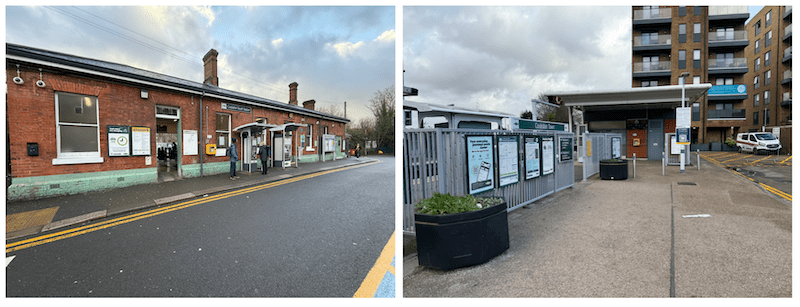
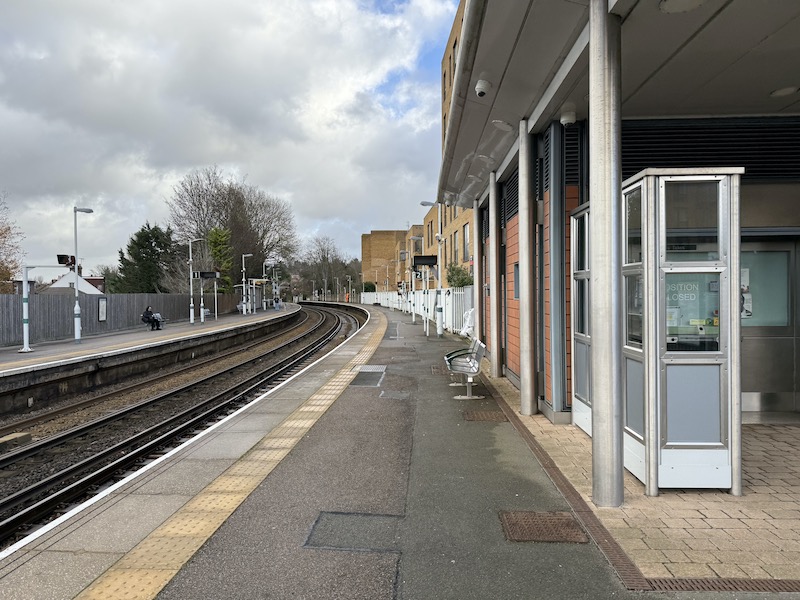
And finally we move south westwards to the most southerly point of our travels and arrive in Coulsdon which has Coulsdon South and Coulsdon Town.

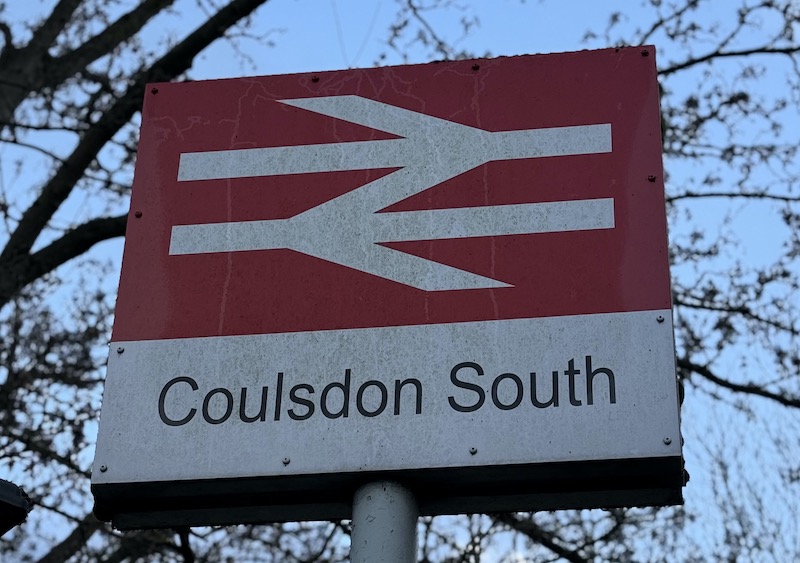
- Which came first? Coulsdon South opened in 1889 with Coulsdon Town opening 15 years later in 1904 as Smitham being renamed to Coulsdon Town as recently as 2011.
- Which is the busiest? Coulsdon South is another ‘by far the biggest of the pair’ example seeing 1,960,000 passengers in 2024/25 with Coulsdon Town only seeing 97,562.
- Who operates each station? Both are operated by Southern.
- How do the train services compare? Coulsdon Town sees just a half hourly service between London Bridge and Tattenham Corner with five coach trains joining/splitting from the half hourly train serving Caterham at Purley whereas Coulsdon South has the half hourly service between Victoria and Reigate as well as the half hourly Thameslink service between Peterborough and Horsham with journeys between Bedford and Three Bridges also calling in peak hours.
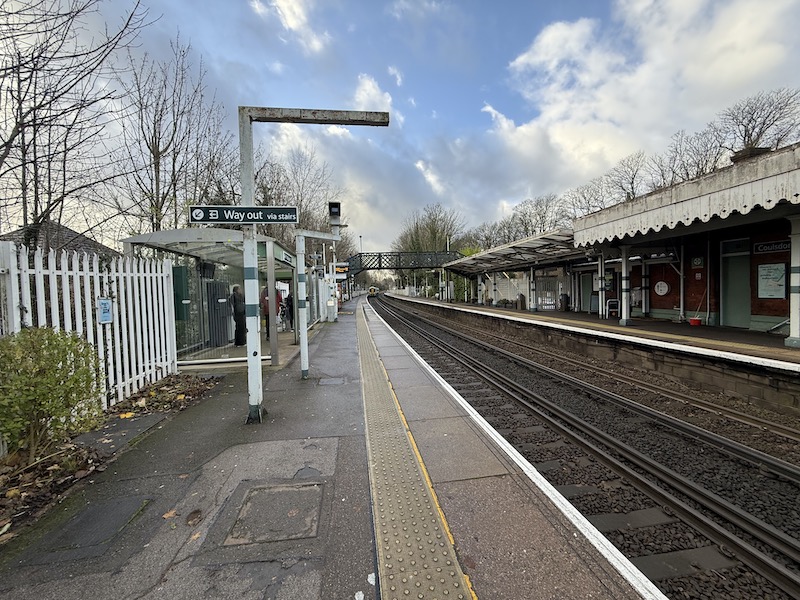
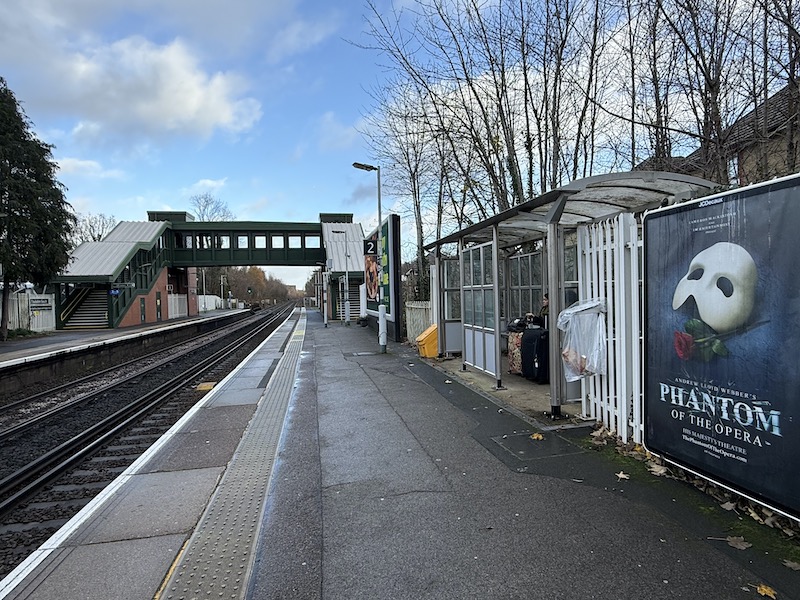
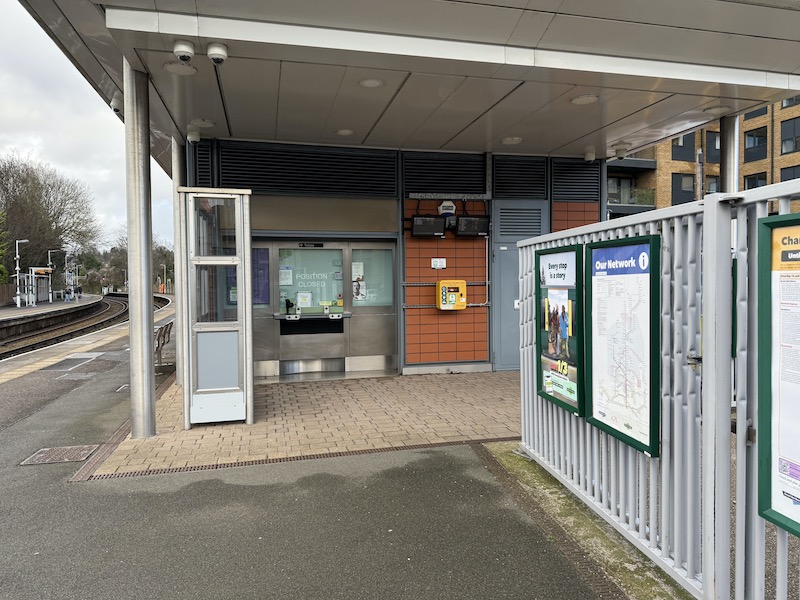
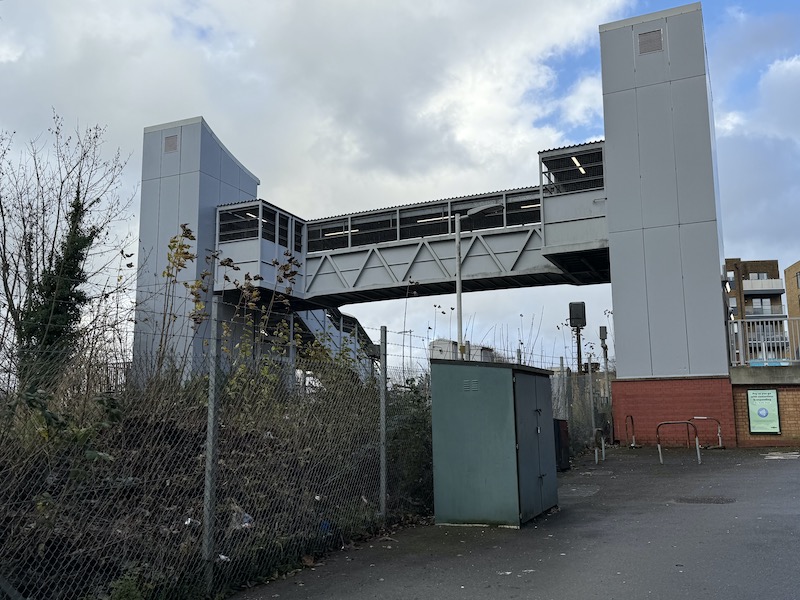
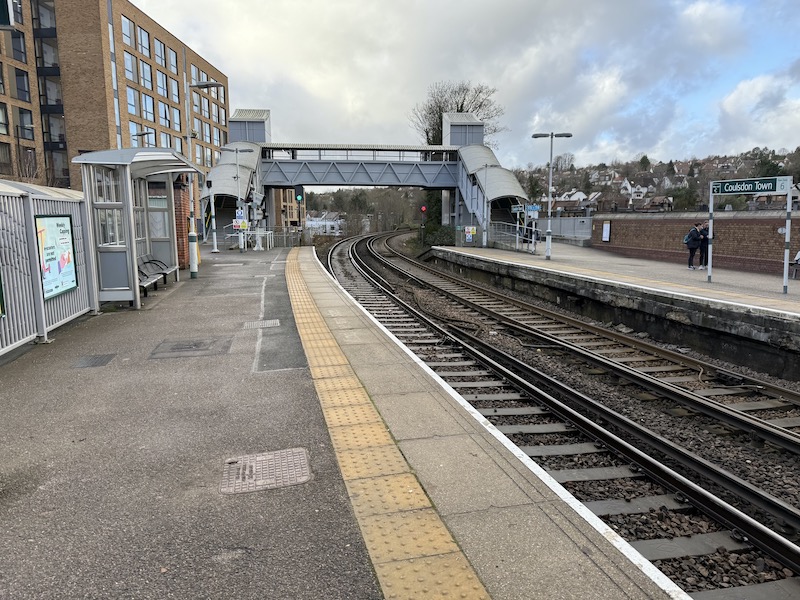
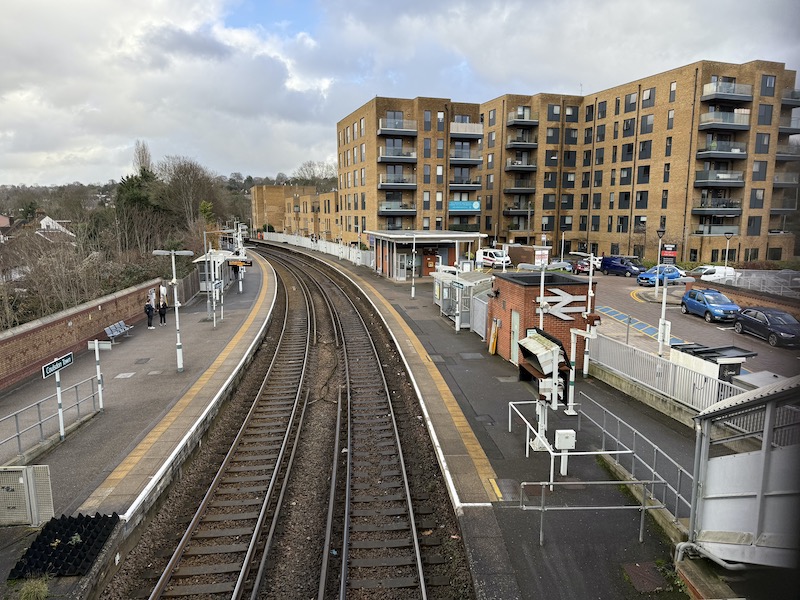
- What about the facilities? There’s a ticket office at Coulsdon South but at Coulsdon Town a ticket office window is in a small modern building but was closed the day of my visit. There are toilets at Coulsdon South but not Coulsdon Town but the latter is accessible with a new footbridge and lifts whereas over at Coulsdon South there is level access for pedestrians to both platforms as well as a new footbridge with lifts at the southern end of the platforms with the original footbridge at the northern end.
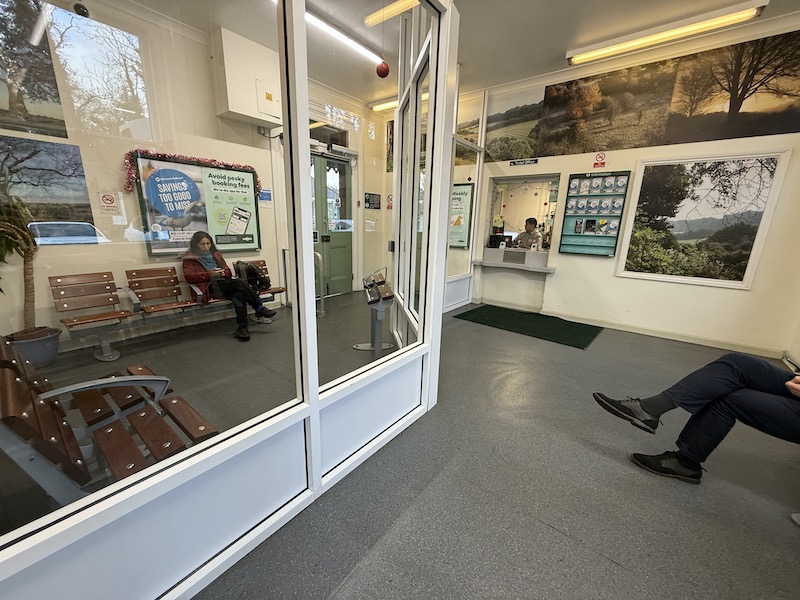
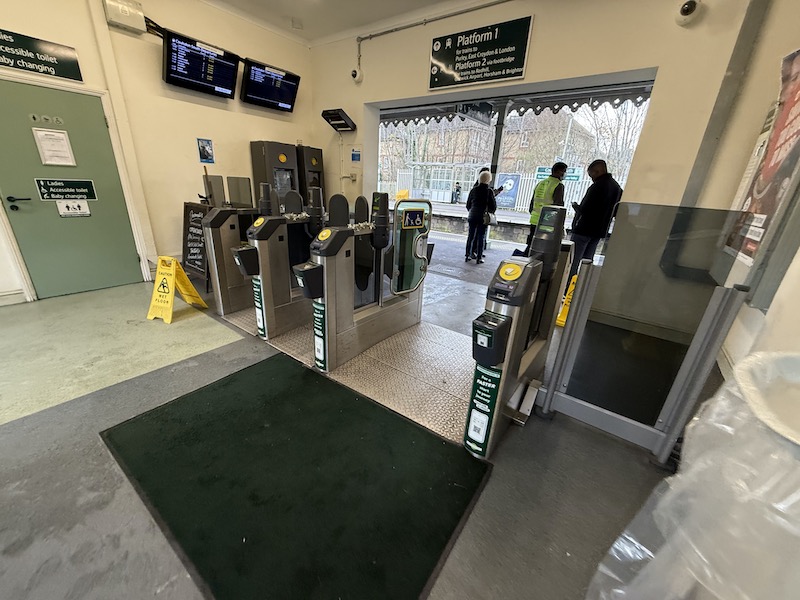
- Anything else? A strange arrangement for waiting rooms at Coulsdon South has one either side of the gateline with a dividing glass partition separating the one room which also houses the ticket office window. There’s a gateline at Coulsdon South but not at Coulsdon Town.
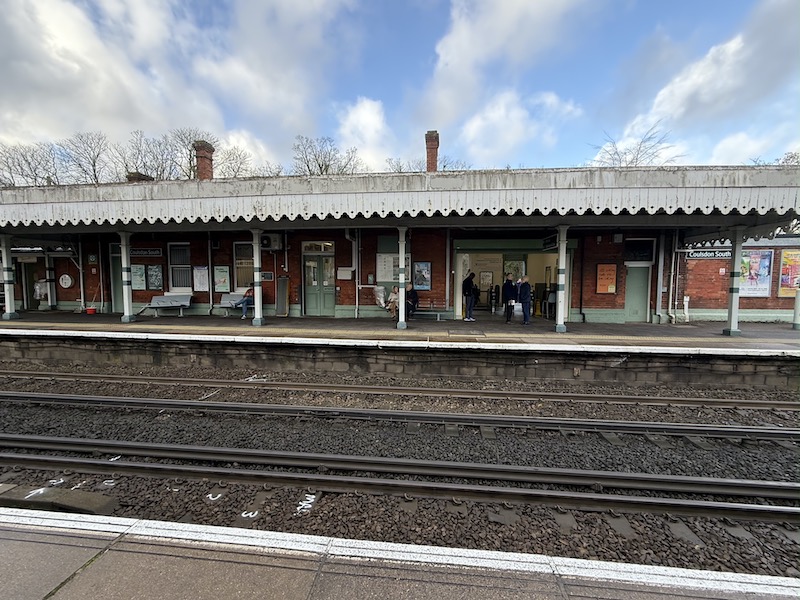
Here are a few photographic highlights:

And that completes this year’s review of what ended up as 33 places characterised by having two stations on separate lines offering a range of destinations.
Thanks for the suggestions of places to include next year. So far I have six more to visit: Burscough, Marple, Oulton Broad, Heath, St Budeaux and Thorne and Lichfield and Rugeley may also qualify. Let me know if there are any more.
And finally, here are those places previously featured in this series, in case you missed any.
1: Hertford; 2: Canterbury. 3: Wigan, 4 Dorchester, 5 Windsor, 6 Wakefield, 7 Reddish, 8 Yeovil, 9 Newark-on-Trent, 10 New Mills, 11 Tyndrum, 12 St Albans, 13 Falkirk, 14 Catford, 15 Helensburgh, 16 Gainsborough, 17 Edenbridge, 18 Bicester, 19 Worcester, 20 Epsom and Ewell, 21 Wrexham, 22 Runcorn, 23 Farnborough, 24 Bradford.
Roger French
Blogging timetable: 06:00 TThS
 BusAndTrainUser
As the nominator of Battersea thanks for visiting. There have been discussions about making BP accessible for ages but because of the width of platforms 4 and 5 (the island platform used by Victoria bound trains) it is almost impossible. I think the last idea mooted was to add lift shafts to the north end and exit onto Prince of Wales Drive. That would be an insanely expensive solution and this is a classic example of where the ideals of a 100% accessible network run into reality. The other very obvious point is just how inadequate services are at both stations now, at a minimum they should have a clock face 6 to 8 trains an hour to Waterloo and Victoria respectively.
LikeLiked by 1 person
Putney and East Putney,and even Putney Bridge – you were there recently I recall!!! Also the Wimbledon’s – including Chase, Park and South.
Peter
LikeLike
Good thought, Peter although ‘East’ and ‘Bridge’ are Underground stations and ‘Chase’ is on the same line as Wimbledon, albeit with more limited journey options.
LikeLike
Harringay and Harringay Green Lanes and West / East Croydon seem to meet the criteria.
LikeLike
I like the Harringay’s but Croydon also has a South and Selhurst is close by.
LikeLike
Wimbledon Park does see non calling SWR trains
LikeLiked by 1 person
That’s true.
LikeLike
Inc two of the end of class specials on Sunday 21st Dec 2025 as IanVisits page pointed out – with AM times for the passing – on weblog today
LikeLike
I was going to suggest Mitcham Junction and Mitcham Eastfields
Lots of 2nd Stations Lost when Tramlink took over BR routes – South Merton and Merton Park , Morden South and Morden Road as two to mind.
JBC Prestatyn
LikeLike
Agreed, with the Victoria Battersea Park (well basically SLL) reinstated as the flats go up around South London.
Also re-open Battersea Park Road for Battersea Power Station
JBC Prestatyn
LikeLike
The SLL can’t be reinstated through to Victoria since when platform 3 was extended to take ten car trains it was built across the tracks. Moving the platform southwards would require a new bridge over Battersea Park Road.
LikeLike
Yes, 100% station accessibility is not practical. Particularly when the ready answer at Battersea Park is to catch an accessible bus to either of the nearby accessible stations at Clapham Junction or Victoria.
LikeLike
Battersea Park station has toilets in the ticket hall.
A new entrance at Queenstown Road station is used to open soon making the walk between the two stations even shorter.
LikeLike
Thanks; I’ve amended the text.
LikeLike
Couldson Town twice and Couldson South.
I thought modern technology was here to help. When I Googled Couldson it came up with Coulsdon!
LikeLike
Thanks; updated.
LikeLike
Enfield Town station is on the Weaver line. The dedicated volunteers who initiated the artwork at Enfield Chase and look after the greenery are members of The Enfield Society.
LikeLike
Thanks; corrected.
LikeLike
I have enjoyed this series, Roger. Thank you.
irrespective of relative distance, Enfield Lock is in Enfield, albeit only about a mile from the Hertfordshire border. It’s also quite important as a station on the Cambridge main line unlike Turkey Street where trains terminate at Cheshunt.
Dan Tancock
LikeLiked by 1 person
Enfield Town is on the Weaver Line, not Mildmay Line.
LikeLike
Thanks; corrected.
LikeLike
Underneath the arches at Kentist Town West is a wonderful plant based cafe, The Fields Beneath and next door the original Camden Town Brewery.
Daniel
LikeLike
Yes; saw that. Delightful.
LikeLike
Very interesting as always Roger, thank you. Hate to be the party pooper but Enfield actually has three stations, there’s also Enfield Lock on the line from Liverpool Street via Tottenham Hale. The imbalance in services at Bromley is even greater than you state as there’s also an hourly semi-fast to Gillingham as well as Thameslink going to 4tph in the peak as you imply. Battersea Park’s old South London Line platform 2, now a bay as you say, sees a lot of use during engineering work at Clapham Junction – including tomorrow!
LikeLike
Fair point but Enfield Lock is further away than Bush Hill park, Southbury and Turkey Street! Thanks for the Bromley additions. I’ll add to the text.
LikeLike
I would throw in Ponders End too
LikeLiked by 1 person
It’s not “semi fast” though. It’s a stops at every station after St Marys Cray to Gillingham before running fast to Bromley South from Denmark Hill.
LikeLike
Very good survey, well done. My nominations for Pt 2: Two pairs right next to each other, Sudbury Town/Sudbury & Harrow Road and Sudbury Hill/Sudbury Hill Harrow. Two real contrasts in service levels and station facilities! Graham L.
LikeLike
Thanks for the suggestion/s – they are rather unusual. I may do a separate feature some time on them. Thanks again.
LikeLike
Newcastle Central & (Newcastle) Manors?
interesting to see this run of pairs, and striking that in almost every case the earlier station remains the busier. Possibly because they had a clear run and were better sited.
LikeLike
Good thought, although they’re on the same line.
LikeLike
Manors and Manors (Tyne and Wear Metro)! The later is well worth a visit just for the “art” in the booking hall.
John Nicholas
LikeLike
Good Morning Roger
I would add Oxenholme / Kendal for your consideration.
Oxenholme (technically “Oxenholme – The Lake District”) is on the outskirts of town – but both stations are within the town boundary.
All the best,
Geoff Cook
LikeLiked by 1 person
Not sure if that one passes the “they have to on different lines” rule, does a branch line count? I wondered about Watford Junction and Watford High Street and rejected them for the same reason.
LikeLike
And of course there’s Junction, making it a town with three stations.
LikeLike
Watford North ?
LikeLike
Good thought, Geoff; although they’re on the same line.
LikeLike
True – I had forgotten that was a condition.
LikeLike
Dorking with its east-west and north-south services. Two stations in close proximity with no physical connection.
LikeLike
Good thought, although the town is one with three stations.
LikeLike
Another vote for Dorking as being a nice place with interesting railway geography. Either for a potential series on places with three stations, or if you could find an excuse to exclude Dorking West, or perhaps to regard Dorking and Dorking Deepdene as one station given they are adjacent to each other
LikeLiked by 1 person
I too can’t remember which Overground line has which name. To an occasional user they sound very similar. As a former Enfield resident I read the section on Enfield Town and Chase with great interest without realising Mildmay wasn’t right.
LikeLiked by 1 person
Glad I’m not the only one!
LikeLike
Living on one of the lines, I’ve never heard anyone call it by its new line name (good in my opinion as they are so painfully woke/political). It’s always still ‘the overground’.
LikeLiked by 1 person
I guess if Boris Johnson had adopted these names they would have been praised as ‘historical’ rather than condemned as ‘woke’. Naming comes into it’s own during service disruption. ‘Severe delays on the London Overground’ was never very helpful.
LikeLike
@anon 10:19 – in fairness, many people go “to the tube station” and “on the tube” rather than referring to the individual line name.
As a previous user of “the Overground”, I share Anon 17:59’s view that “severe delays on the Overground” was far from helpful, as it didn’t indicate which of the Overground routes was affected.
Malc M
LikeLike
Loving this one. I spent 12 years in the 1980s-early 1990s commuting from Bickley or St Mary Cray through Bromley South to Sutton by changing between Penge East and West. A handy route now made less convenient by the ‘Overgrounding’, which has imposed an extra change at West Croydon. Incidentially, Penge West is on the Windrush Line, not the equally unmemorable Mildmay, which is what most of us remember as the North London Line.
Coulsdon South (SE&CR) used to be ‘twinned’ with Coulsdon North (LB&SCR) on the parallel Quarry Line, where the Brighton overhead electric services terminated. North was closed in the mid-1980s during the Croydon area remodelling and was swept away to make room for the A23 bypass. It was much later that Smitham got renamed Coulsdon Town, reflecting its position at the top end of the high street.
Other minor points: the old parcels footbridge at Bromley South is at the eastern end of the platforms, while the main entrance stairs (and new lifts) are at the west end. Bromley North used to be busier when it had through peak-hour services to/from Charing Cross, but these ended after the main line junction crossovers at Grove Park were removed to facilititate platform lengthening. It was also platform lengthening that truncated Platform 2 and closed Platform 1 at Battersea Park, where the old South London Line services (now Overgrounded) used to run through to and from Victoria.
Suggestions for a second series: Cardiff (General/Queen St), Warrington (BQ/Central), Shotton (HL/LL), Exeter (Central/St Davids), and various Glasgow suburban (Pollockshaws E/W, Pollockshields E/W, Coatbridge Central/Sunneyside). I’d also vote for Maidstone East/West, but that’s another town that technically has three if you include Barracks.
(Oh, and it’s 34 not 33 as you also did Epsom and Ewell as a double pair … keep up the good work.)
Chris Jackson
LikeLiked by 1 person
Many thanks Chris; I’m not doing very well with Overground names! Now updated. Thanks for the suggestions. It comes down to a definition of “place” and whether to rule out places with three or more stations! Thanks again.
LikeLike
Dear Roger,
When ‘Cambridge South’, gets going, in 2026, you may want to visit all THREE stations – ‘North’, ‘Central’ and ‘South!’
However, you could start off by visiting ‘North’ and ‘Central’, at the moment, because they are open!!
Thank you.
Kind regards,
Ben Walsh, Cambridge.
LikeLiked by 1 person
Cambridge Central doesn’t exist (yet) to my knowledge.
Ian McNeil
LikeLike
West Hampstead is one of those “if only” stations.
If only Chiltern and Metropolitan Line trains stopped there and there was better integration of the three separate stations it could easily rival Clapham Junction and Stratford as a major interchange in a very useful orbital position in London.
LikeLiked by 1 person
Agreed! Came here to make this very point. Would be a very complex and expensive but fascinating project!
LikeLike
not forgetting the potential West London Orbital overground line (one of the proposed terminations is west Hampstead although I think that’s a hostage to further value engineering for the significant cost of change to the thameslink station.
milest
LikeLike
All the Actons .
Smitham was famously one of the Capitol Radio travel announcements of cancellations of services just about every morning.
Trying to get to Bromley (SE London generally) from SW London (Richmond , or even Wimbledon) is a pain of a trek that fastest ways (excluding interchange walk) is to get to Victoria then fasts out. Tramlink when working is OK but still a pain
Queenstown Road being renamed due to Royal Mail trying to eliminate at lot of postal districts duplicate road names , hence the change from Queen’s Road
JBC Prestatyn
LikeLike
Acton Action Stations is coming soon!
LikeLike
Carshalton (once the nearest for missed Lens of Sutton) and Carshalton Beeches not wholely on same line.
LikeLike
Note too the bus terminations at Acton Green and Acton Town Hall (pity we lost the Acton Tram Depot to more housing) (any other bus terminal points ?) and Acton Works of the District Line.
Maybe one year train stations with Bridge or Quay in their name.
JBC Prestatyn
I also get confused in Wales between Tywyn (which has too given one is narrow guage) and Towyn
LikeLike
With regard to your Acton bus terminals you can add Acton (Old Town Hall), Acton Vale (Bromyard Avenue), East Acton (Goldsmiths Arms) & North Acton. Like you, I miss the old tram depot that was Acton (High St). A great shame that it didn’t enjoy listed status, given it’s history in relation to the Uxbridge Road Feltham trams & it’s latter role as a bus garage & terminus.
LikeLike
Acton Tram Depot also famous as a store location for the LT Historic Fleet (when it wasnt in Reigate or Stonebridge Park or on display at Clapham). One could make a long list of missing London Area Tram Depots . Acton was fairly large for I think a single span apex roof – the trusses were simple I beams bolted together with profiled roof panels. The front wall with the brick cartouches perhaps the most interesting bit of it
JBC Prestatyn
LikeLike
@JBC Prestatyn – a quick search on National Rail suggests Wimbledon to Bromley South is just as quick (if not a couple of minutes quicker) via Herne Hill as it is via Victoria.
That said, the connections via Clapham Junction and Victoria are more frequent.
Malc M
LikeLike
Depends how many suitcases I am carrying. This rules out changing at places like Peckham Rye and Elephant. Waterloo Waterloo East is often a useful change place. Clapham Junction I can never find much going to SE area stations (and Engineering work everywhere today restricted routes but also gave some interesting running on alternative routes.
At Victoria changing between the Southern Gateline and the South Eastern ones is horrendous. Maybe Victoria should be an April Fool Places with Two Stations
JBC Prestatyn
LikeLike
Watford Junction, Watford High Street and Watford North, or are you planning on a series of places with more than two stations?
LikeLiked by 1 person
“Watford Junction, Watford High Street and Watford North, or are you planning on a series of places with more than two stations?”
– That would be a great series, I think Ruislip holds the crown for the most number of stations in the locality. A total of 5 with Ruislip in the name, you’d think from the outside observer’s perspective it’s a massive and happening place.
LikeLike
Maybe something for the future.
LikeLike
Equalled by Ealing and exceeded by Acton (7), as highlighted by J Betjemann! Harrow also features in 7 station names, Hampstead in 6 and Finchley in 5. There may be other examples….
LikeLike
There’s probably enough for a mini-series of places with three stations – two bigger and one smaller. Croydon, Watford, Cardiff, Maidstone, Exeter, Dorking spring to mind.
LikeLike
What about Pontefract? Baghill on one line, Monkhill and Tanshelf on the other. And none of this boring north and south business in the names!
Nigel Kavanagh Brown
LikeLiked by 1 person
Also Blackpool North and South.
LikeLike
Has a third station called Blackpool Pleasure Beach.
KCC
LikeLike
A sterling task recorded in an excellent way. It seems that another way of finding towns with two stations is the index of a BR timetable – up until 2014. I have a copy!
Gerald D, Fleet.
LikeLiked by 1 person
Ealing Broadway / West Ealing (physically close and walkable)?
LikeLike
Not forgetting Ealing Common & although a bit further to walk, South Ealing.
LikeLike
What about Streatham with three stations?
LikeLike
And on three different lines, albeit with a lot of connecting curves.
LikeLike
Thank you Roger.
I have enjoyed all your blogs and especially this series so much and look forward to more similar series.
When reflecting on other possible pairs of stations I thought of Portsmouth & Southsea and Portsmouth Harbour, but then I thought “how about stations with two levels?” e.g. High level and low level at Portsmouth and Southsea. I think there are several examples of two level stations – for another series?
Stephen
LikeLike
As another commenter has stated, the bridges at Bromley South are the other way round.
Also of note at that station is the almost impossibility of keeping behind the platform-edge yellow lines when walking to and from the lifts (thankfully there is a railing for most of the distance but at the start of the railing one feels fairly exposed to the trains
LikeLike
Can I mischievously suggest another place with two stations on different lines?
London.
Admittedly it does have rather more than two stations but, if you refer to the terminal stations without their “London” prefix, only two stations have “London” in their name – London Bridge and London Fields 🙂
Malc M
LikeLike
you have missed Merton Park and South Merton (tram and Thameslink), also nearby Morden and Morden South (Northern line and Thameslink).
LikeLike
Nor should it ever be named ‘Central’. It isn’t.
RW
LikeLiked by 1 person
Thinking on it, isn’t Stratford another London suburb with two stations on different lines?
I am assuming Stratford High Street (Stratford’s third station) wouldn’t be included, as it isn’t served by National Rail/London Overground services.
Malc M
LikeLike
One should consider Maryland . Closer to parts of Stratford and less hassle to exit at ticket hall level
JBC Prestatyn
LikeLike
While that may be true, I would compare Stratford to Battersea, which Roger has counted as a place with two stations – Battersea Park and Queenstown Road (Battersea). There is a third station in Battersea, Clapham Junction.
Presumably Battersea has been included as only two of its stations include Battersea in their name, so I would imagine the same logic applies at Stratford.
Malc M
LikeLike
There are eight “International” stations. The St. Pancras one has trains to Paris etc., and the Birmingham one arguably to Wales, but I believe none of the other six currently has rail services to foreign parts.
LikeLike
These comparisons bring back many memories, Roger. I had 2 friends in Bromley. One lived just in Ravesbourne about 15 minutes walk from Bromley South. The other lived at Sundridge Park. As Sundridge Park was closed on Sundays, visiting on that day meant walking back from Bromley North.
The North London Line has seen a massive transformation over the last 50 years into what is now the Mildmay line. The line ran every 20 minutes from Broad Street to Richmond and was on the Beeching list for closure. Nothing ran east of Dalston. Since the line through to Stratford reopened the trains are full. At West Hampstead a proposal to link the 3 stations together and on to the Chiltern line by subway was explored but not progressed because of concerns about possible attacks and rapes happening.
Mention was made of Acton tram depot. The power supply was fed from the District line traction supply so, when they were connected up, all the office computers blew.
John C
LikeLike
two very minor corrections – kentish town only sees the sutton loops trains, none of the other mentioned services stop there, and the victoria to gillingham trains at bromley south run all day not just in peaks
LikeLiked by 1 person
Foe completeness, Kentish Town has some peak-only Orpington services, and occasional Rainham trains before the morning peak and after the evening peak.
Steven Saunders
LikeLike
Thanks Stephen; will add this into the text.
LikeLike
Thanks; text updated.
LikeLike
I suggested stations with Bridge in the Name, maybe with Hill too as ideas
JBC Prestatyn
LikeLike
Are Tottenham Hale and South Tottenham missing for a reason ?
JBC Prestatyn
LikeLike
For National Rail (are we really going to call it GBR? (sounds like a baby food) . Is it West Ealing and Ealing Broadway , sort of both on same line generally but the bay at West Ealing gives it its present day uniqueness
JBC Prestatyn
LikeLike
Other places with pairs of stations on the SW lines are Ash and Ash Vale, (although North Camp is near to Ash Vale); New Malden and Malden Manor; Hampton and Hampton Wick, with Hampton Court just across the river.
Thank you, Roger, for an excellent series.
AlanN
LikeLike
Ay one time Liverpool Street Mainline station had a connection to the metropolitan line
The old Metropolitan Railway connection to Liverpool Street was a significant development in London’s transportation history. The Metropolitan Railway, which operated from 1863 to 1933, was the world’s first underground railway, connecting the City to the suburbs. The connection to Liverpool Street was part of the railway’s expansion, which included the opening of platforms 1 and 2 in 1875. The connection was used for special workings and was removed in 1904. The original plan for the connection included a curve off the current Met Line, which is still visible today. The connection was removed, but the historical significance of the route remains a point of interest for those exploring London’s transport heritage.
LikeLike
More true to say the Met had a connection to Liverpool Street.
JBC Prestatyn
The arrangement appears to be accross much of the present concourse much like the London and South Western connected to the South Eastern at Waterloo /Waterloo East
LikeLike
A non-exhaustive list of suggestions from Glasgow:
Pollokshaws East and West – although Shawlands is closer to Pollokshaws West than East is
Pollokshields West and East , both on the Cathcart Circle
LikeLike
west hampstead notes
the thameslink ticket office is part time (annoyingly) and ticket machines have been reduced from 3 to 2 (one is at the entrance the other side of the road bridge)
Nearby (controversial) development may be funding West Hampstead (LU) to become step free (has been low down on the list due to the proposed solution..a station rebuild..costing more than £12m and needing land acquisition I think, where the land already has permission for housing development, under control of the builders merchant that owns the land). There is also a TfL “ransom strip” on the edge of the road paralleling the station.
A nearby pedestrian bridge across the underground has the lovely name “Granny Dripping Stairs” (shortcut access from South Hampstead to west hampstead which also has a station..so that’s 6 Hampsteads overall: Hampstead, heath, South, west x 3, with west and heath separated by a hill/tunnel and a station called Finchley Road and frognal).
The missed opportunity for development in the area is to overdeck and refurbish both Finchley Road and West Hampstead (LU) stations to make one merged “super station”, and maybe overdeck the nearby rail line the other side of the former goods yard that became the o2 centre. No viable business case to create behind the gateline links between all the West’s, so an OSI has to suffice.
MilesT
LikeLike
Catford and Catford Bridge
LikeLike
LikeLike
Hi Roger – one for the future. When Old Oak Common opens, and if the West London Orbital also opens, the latter will have a station “Old Oak Common Lane”. Here, Section 2 and beyond:
https://content.tfl.gov.uk/wlo-strategic-narrative-oct-2021.pdf
CH (Oxford)
LikeLiked by 1 person
Wembley (Central and Stadium); Aylesbury (and Vale Parkway); Oxford (and Parkway)
LikeLike
Why no Acton Main Line – Acton Central?
Not to forget the other find stations and the 3 the lines
LikeLike
In London and much the same area Clock House and Kent House
If it were not Met/Jubillee the contrast and distance between Willesden Junction and Willesden Green is noticable
New Malden and Malden Manor were mentioned by others – both (Like half of Motspur Park) in Malden and Coombe Council area prior to 1967 merger into Kingston.
Kingston Upon Thames Itself has many stations thus but the Pair contrast of the North Bitton (Farm/Wood) and South Bitton of Norbiton and Surbiton is a grand thing.
JBC Prestatyn
LikeLike
Brixton and Loughborough Junction
JBC Prestatyn
LikeLike
The number of towns with two bus . coach operators garages in must have reduced over the years
Guildford ( Alder Valley and London Country , with Safeguard and Blue Saloon for good measure)
Storrington – Southdown and Belsey
Wood Green – London Transport and Eastern National (also Crouch End Coaches but they didnt really operate local services)
Stamford Hill Grey Green and London Transport (Similar Brixton Orange Luxury and London Transport up the hill) (Merton had Adnams Coaches , Eggletons and London Transport – during WW2 Mr Eggleton ended up working as Inspector ?for London Transport) but otherwise the road service licences of most London Coach companies were for tours or day trips – like Timpson at Catford (Rushey Green) down the road from Catford (did Tilling ever have a garage in Lewisham or TL used to avoid clashing with TC for Croydon ?)
Okehampton -Okemont and Born’s (Bruce and Parker)
Tunbridge Wells – Maidstone and District and Green Line
Did Luton have London Country and United Counties as well as Luton Corporation ?
Aberdare had Cynon Valley Council and Red and White facing each other
East Grinstead London Country and Southdown
Were White Bus in Windsor when London Country was there ?
High Wycombe Thames Valley and London Country ? (Did United Counties have a base in Aylesbury with Red Rover being the main town bus operator ?
Plenty of other municipals with the local BET or Tilling Company of course.
JBC Prestatyn
LikeLike
Tilling did have a Lewisham Garage, they retained the TL code when they relocated to Catford in the 1920s. London Bus blinds display “Bellingham, Catford Bus Garage” these days as the garage is some way to the south of Catford town centre and close to Bellingham railway station; also showing plain “Catford Garage” from the south could confuse unfamiliar travellers who might assume the bus is going to serve the centre of Catford.
Julian Walker
LikeLike
…. and yes, Luton did have three bus garages – the Corporation, United Counties and a small London Country Garage at Park Street West (code LS). This was inherited from Strawhatter Coaches after the London Transport Passenger Board was given the exclusive rights to operate coach services between Luton and London (Green Line). In return LTPB had to accept a restriction on carrying passengers locally within the Borough of Luton, so the garage was only able to support a small bus operation, consisting of a share of the busy trunk route 321 to Watford and Uxbridge and sparse services to villages south of Luton which lay inside LTPB territory. The garage closed in January 1977, with what little work remained by then reallocated to St Albans and Garston or absorbed by United Counties.
Julian Walker
LikeLike
What about Glasgow? That must be the biggest place with just two stations (albeit both complex ones) to its name.
LikeLike
what about a feature of stations with the same name but in completely different locations like Gillingham (Kent and Dorset),Rainham (Kent and Essex) and London Road (Brighton and Guildford)
LikeLike
Thanks. I have thought of that as an idea for an upcoming year – there’s a surprising number of them.
LikeLike
Nick Bradley’s YT series covers a good number of them
Chester and Chester Le Street
JBC Prestatyn
LikeLike
An amazing series of comments to enjoy. But it leaves an image of your poor Blog Master rushing about the country trying to cover all the suggestions. Have pity, folks : he does a wonderful job and we don’t want him worn out !
LikeLiked by 1 person
Your kind consideration and thoughtfulness is much appreciated!
LikeLike
Feel free to delegate some write ups to other collaborators.
Maybe an agreed Two Station list as one of the standing pages on the blog press like some other topics
JBC Prestatyn
LikeLike
Not sure if already suggested, but what about Darlington and North Road (Darlington)?
LikeLike