
Saturday 22nd November 2025
All this year, month by month, I’ve been counting down Britain’s Top 10 Quirky Bus Routes and today I can finally reveal the prized holder of the coveted top slot – the one that’s truly the country’s Quirkiest Bus Route of all.
Readers will have seen at No 10 the bus route that penetrates into Windsor Great Park taking bus passengers on an exclusive drive, not available to motorists because it’s off limits to them, even serving the now famous 30 room Royal Lodge residence (new tenants welcome for 2026)…

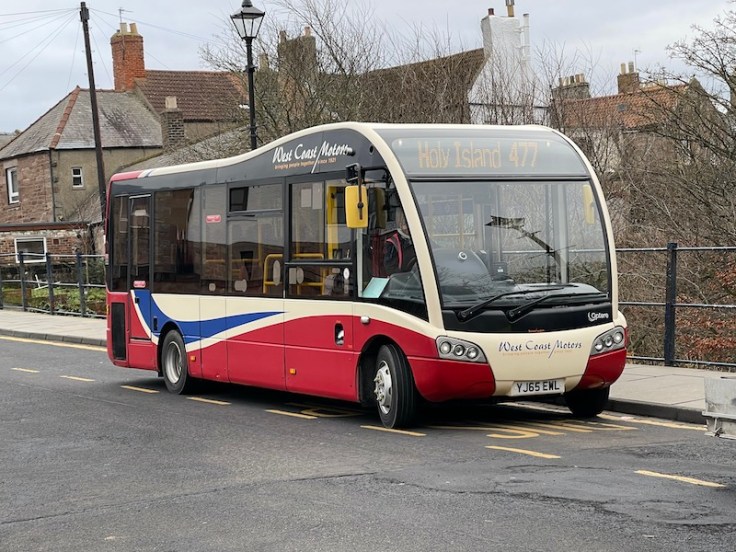
… at No 9 we saw the bus route that runs just two days a week to five separate timetables depending on the tides as the route links the mainland with Holy Island across the causeway off the Northumberland coast.
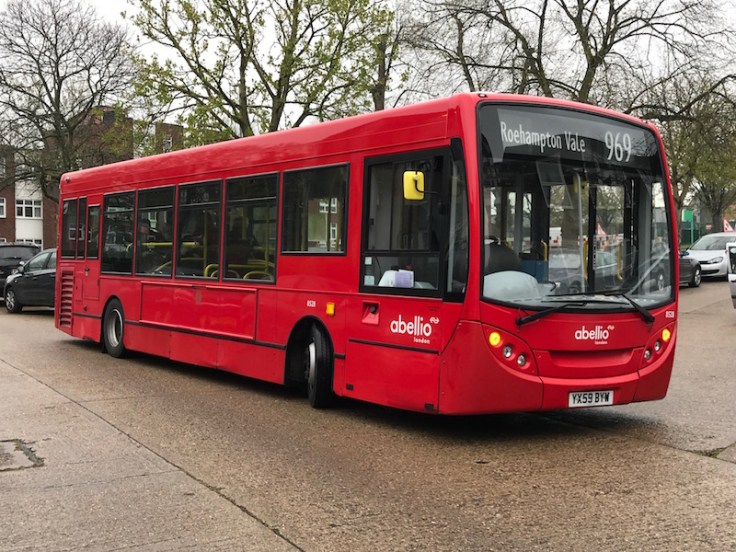
At No 8 was London’s least frequent bus route with TfL still running what was once called a Mobility Bus as a hangover from when buses were not accessible for wheelchair users and now takes a convoluted route through the Borough of Richmond before reaching a small residential area where a handful of regular passengers use it to reach an Asda at Roehampton Vale.
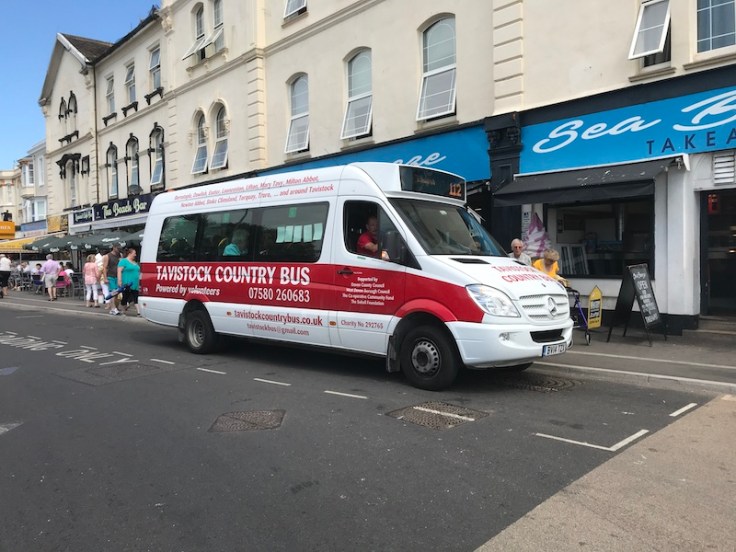
At No 7 was Britain’s least frequent bus route, the 112 operated by Tavistock Country Bus which operates one return journey between Tavistock and Dawlish on the fifth Saturday of the month between April and September thus meaning it runs just twice a year – but is always full up.
That was eclipsed in sixth place by the wonderful Royal Parks route RP1 which provides a free scenic circular link all around the circumference of Richmond Park including deviations outside the park in three places which entails in one case the driver opening and closing a locked barrier (twice – out and back) adding 20 minutes to the schedule.

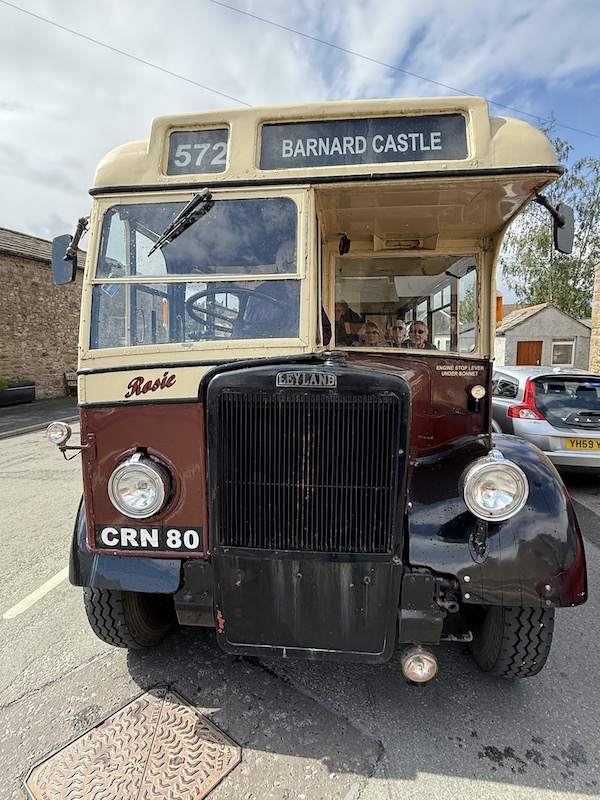
Meanwhile at No 5 was a route which sadly came to an end this year after many a year’s operation – the Wednesday only heritage vehicle operated route 572 from Ravenstonedale to Barnard Castle over Lune Moor and Lune Forest via Middleton-in-Teesdale
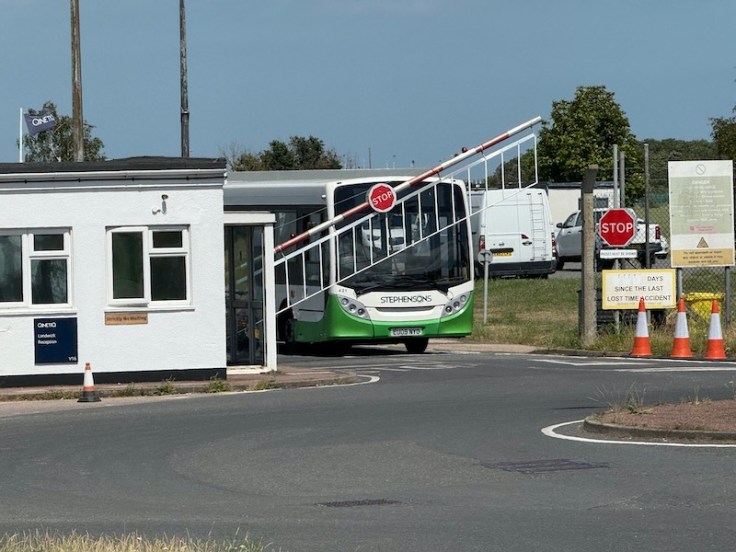
At No 4 is the bus route you need written permission from a resident living at the terminus to be on the bus to get past an MoD checkpoint on Foulness Island otherwise you’ll be asked to leave the vehicle, it being Stephenson’s route 14 from Southend-on-Sea operating four return journeys only on a Saturday (aside from an early morning and late afternoon schoolday journey in the week) to the small communities of Churchend and Courtsend on the Island.
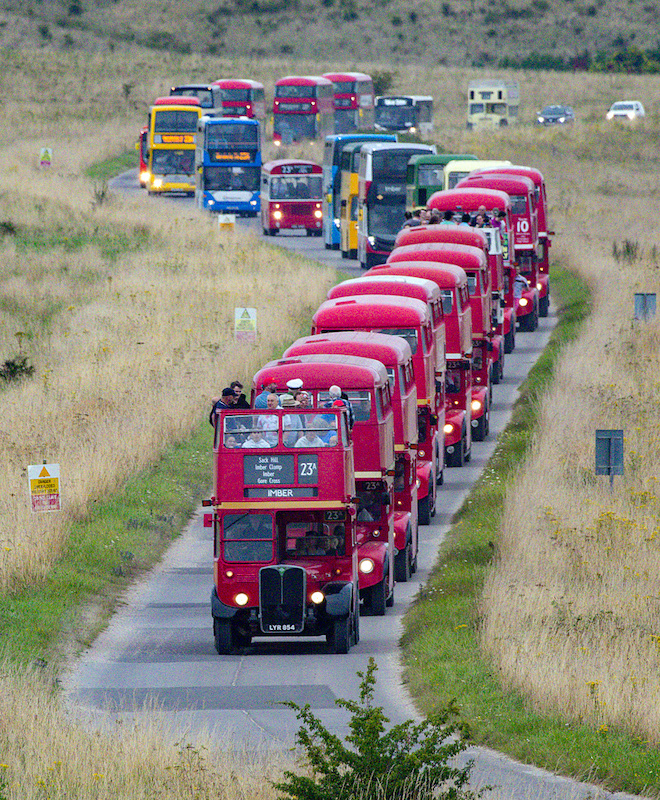
At No 3 is of course the famous one-day-a-year only route 23A from Warminster to the isolated and otherwise inaccessible abandoned village of Imber with shuttle journeys provided by a multitude of volunteer driven heritage vehicles during the day to neighbouring villages across the otherwise forbidden area of Salisbury Plain.
At No 2 is the summer only minibus service that’ll meet the small passenger ferry across the Kyle of Durness to take passengers on the 15 mile ride along a rough track at no more than around 10 mph to the north west extreme point of mainland Britain at Cape Wrath. Operation is dependent on tide times (to cross the Kyle), that there’s a minimum of six passengers and the MoD are not carrying out training exercises at the time.

Which brings us to Britain’s No 1 Quirkiest Bus Route.
And it just has to be north west London’s once a week bus journey between West Ealing and West Ruislip because there is absolutely no point to it.
No point to it at all.
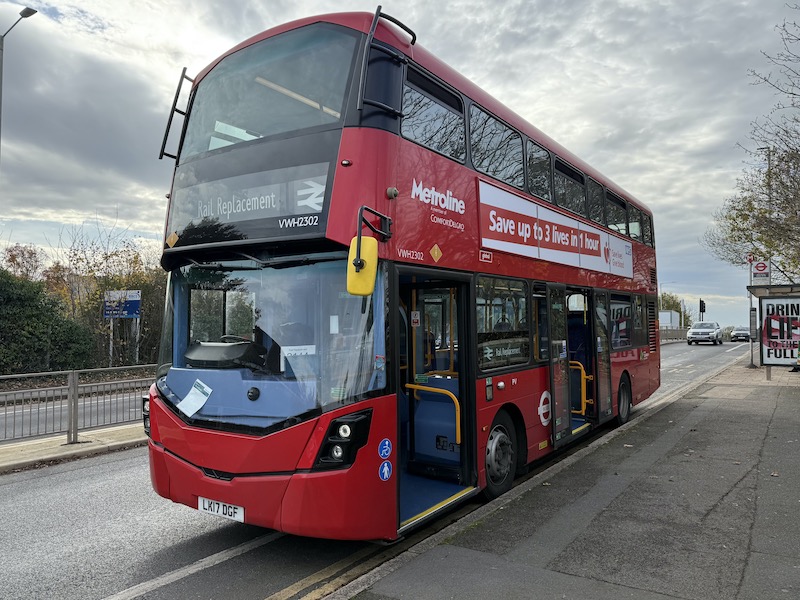
It serves absolutely no purpose other than providing an oddball travel experience for nerdy bus enthusiasts and Quirky Bus Route Blog Writers, oh, and satisfying some legal small print.
The route is officially a Rail Replacement (“Ghost”) Bus Route but among its many quirks since being introduced in January 2023 is the fact the rail service the bus journey is replacing is itself an unnecessary quirk in that it too was one isolated journey in one direction operating on one day a week as what is known as a ‘Parliamentary Train’.
It’s only existence was because no-one can be bothered to go through the formal legal process of officially closing a stretch of railway track, part of which no longer exists in any event, as a significant section has been removed to make way for HS2.
So, you couldn’t run a train even if you wanted to as there is no longer any railway track for part of the route, yet a Replacement Bus Route is in regular operation.
As they often say. You. Just. Could. Not. Make. This. Up.
Here’s some quick background history before we take a ride on the bus….
Until May 1992, as well as Marylebone, Chiltern (and its predecessor British Rail) ran some trains from Paddington via what’s called the New North Main Line line (Acton to Northolt) linking Old Oak Common and Greenford to South Rusilip then on towards High Wycombe and Bicester. That 1992 timetable change saw all such journeys diverted from South Ruislip into Marylebone with the regular service to Paddington ceasing.
But to keep open options for using these tracks as an alternative route should Marylebone be inacessible, Chiltern Railways began running one return journey from South Ruislip to Paddington and back.
By the 2010s this journey ran mid morning each weekday with the train returning from Paddington at 11:36 to West Ruislip from where it would run out of service.
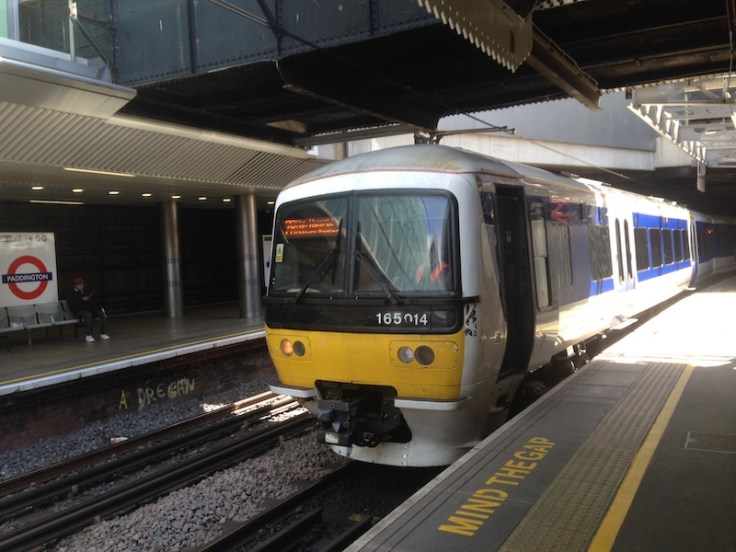
The idea was to keep up Chiltern driver’s knowledge of the tracks into Paddington in case it needed to be used as a diversionary route as well as avoiding the need for the long drawn out procedure to close those tracks.
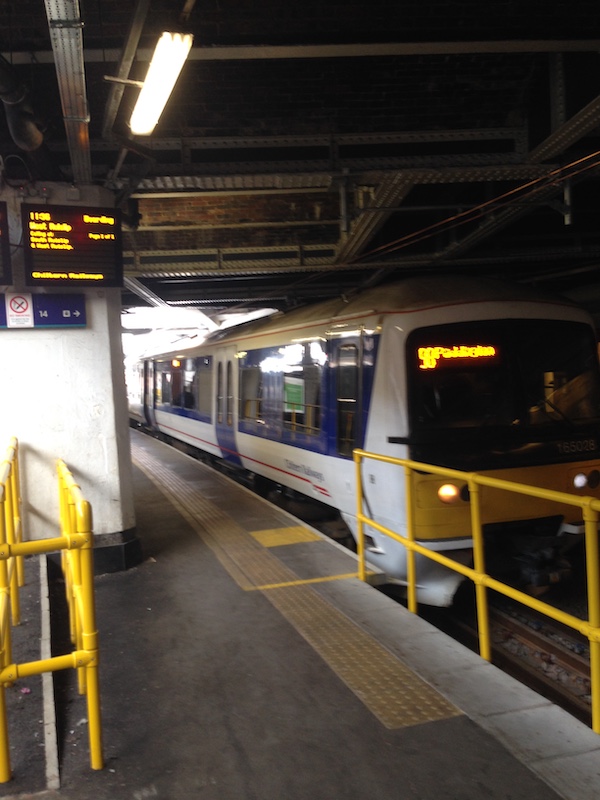
In May 2017 the return journey was changed to run non-stop from Paddington to High Wycombe.
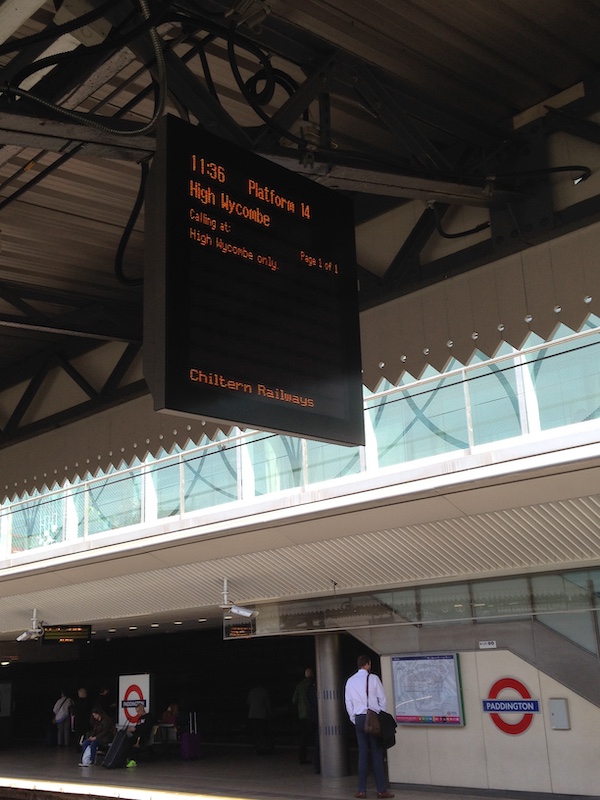
Work on constructing the vast Old Oak Common complex for HS2 began in 2019 which severed the line meaning the Chiltern train could no longer reach Paddington as the track was removed.
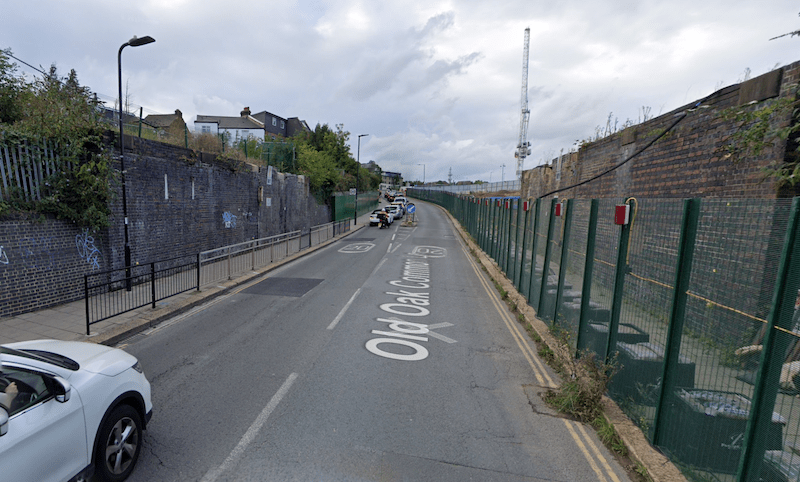
If you take a look on Google Maps for September 2022 you can see the bridge taking the tracks over Old Oak Common Road…
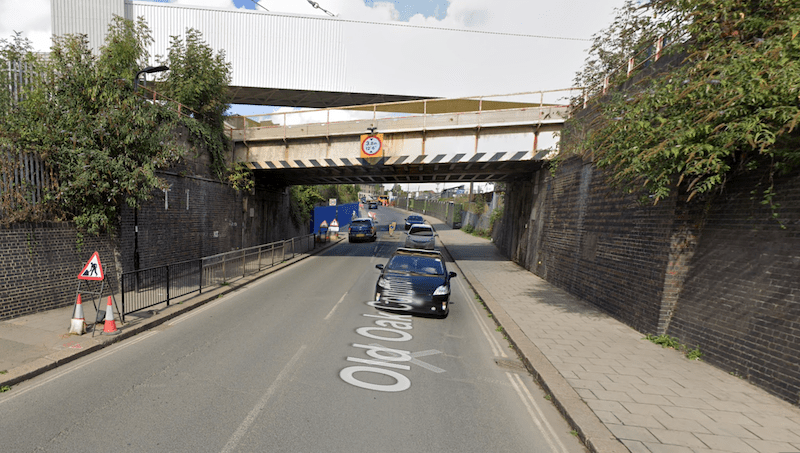
… but the latest image shows the tracks and the bridge have both gone.
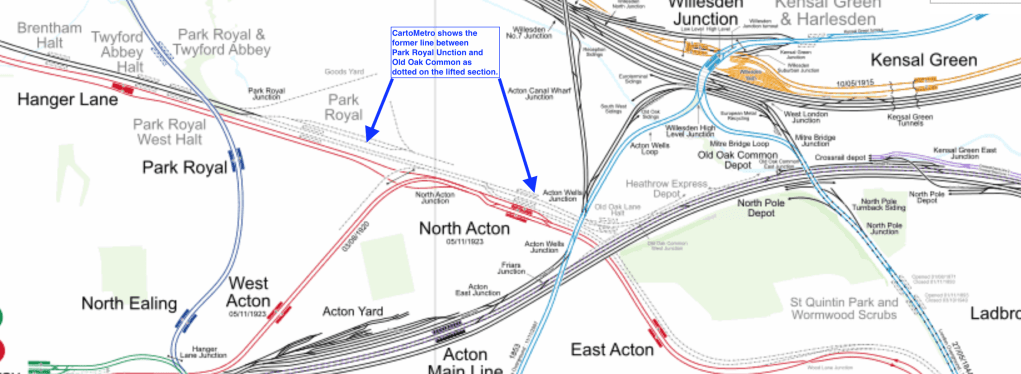
CartoMetro also shows a significant section of track between Park Royal Junction and Old Oak Common has now been lifted and the line severed.
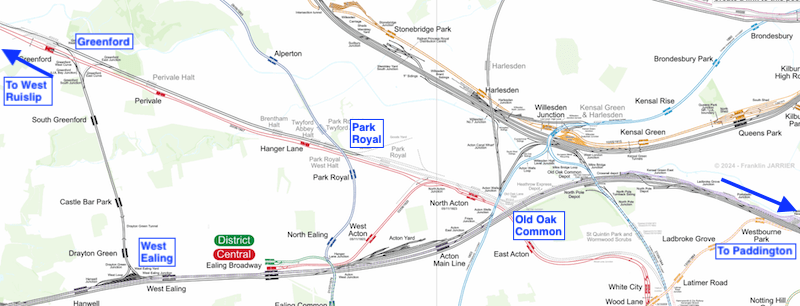
But instead of calling off the farce by officially closing the line, from December 2018 Chiltern diverted the train at Greenford via the short branch used by GWR trains to terminate at West Ealing where it shared the short bay platform with GWR.
Although in theory the train could have continued to Paddington from West Ealing, it would have taken up valuable paths used by the Elizabeth line, which obviously couldn’t be justified by a superfluous empty train. This rather negated the whole reason for running it as the idea of Chiltern using that branch line and then West Ealing as an alternative terminus to Marylebone just added to the farce of the whole thing.
The service was suspended during Covid and when it returned it was reduced to operate only on Wednesdays and only to West Ruislip with no southbound positioning journey passengers could travel on. This made the whole thing even more ridiculous since passengers wanting to travel by train between West Ealing and West Ruislip could take the regular half hourly GWR train to Greenford and change there to a frequent Central line train to West Ruislip throughout the day.
I guess legal minds into the minutia of railway processes will say the operation of this once a day train meant a section of track linking the Greenford branch with the New North Main Line was still used, even though further south, towards Old Oak Common, the tracks had disappeared, yet haven’t been officially closed.

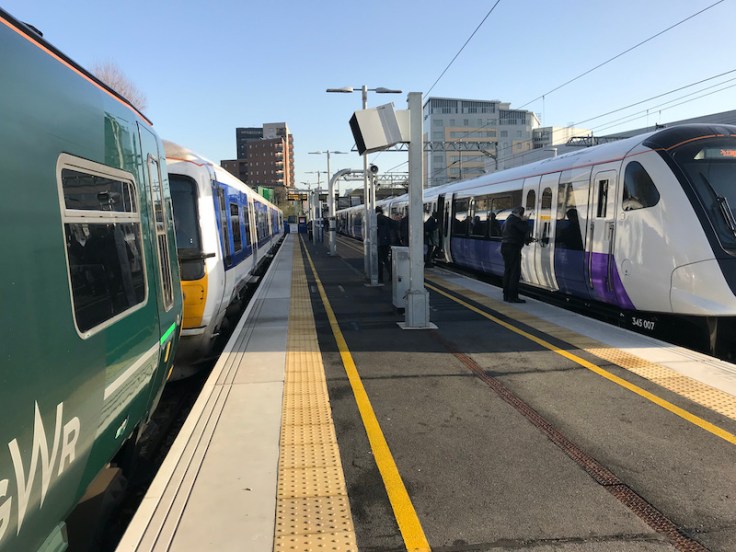
In December 2022 the farce took on a new twist when the train ran for the last time as captured in the above photo with scores of Quirky Train riding enthusiasts out in force. Chiltern Railways had worked out it was cheaper to run a once a week Rail Replacement Bus for the once a week train journey which doesn’t need to run anyway.
I’ll just repeat that for added effect……it was cheaper to run a once a week Rail Replacement Bus for the once a week train journey which doesn’t need to run anyway.
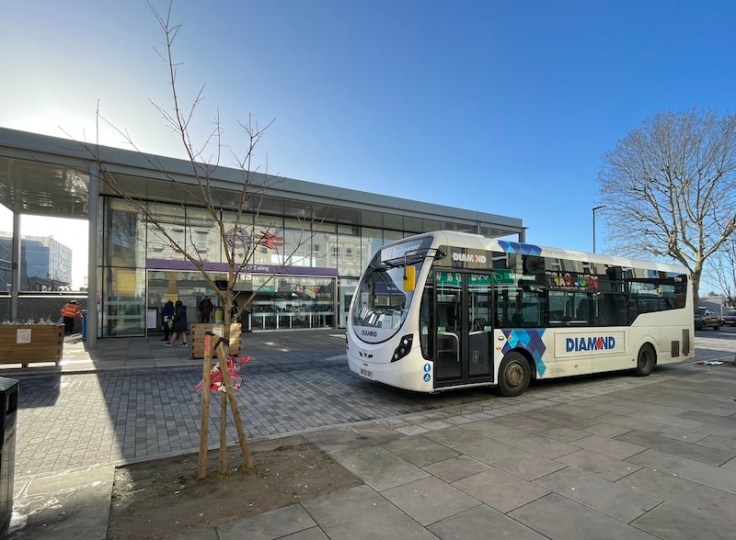
And so in January 2023 Britain’s Quirkiest Bus Route took to the road for the first time with Arriva (Chiltern’s owners) awarding a three month contract to DIamond Bus to provide a single 25 minute bus journey at 11:17 on Wednesdays from outside West Ealing station to inside the car park at West Ruislip, arriving at 11:42.
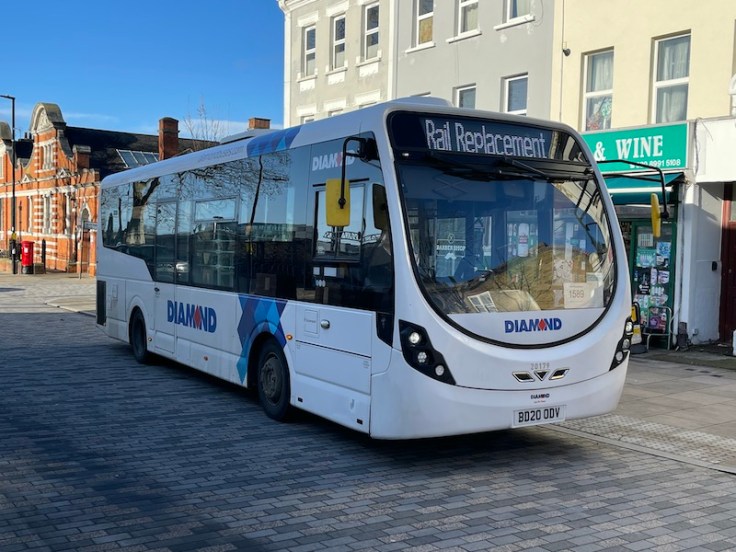
That three month contract passed to Stagecoach in Spring 2023 which began operating the journey with one of its tri-axle Oxford Tube ADL Plaxton Panorama coaches, fitting it into the schedule in between trips between Oxford and London.

It could only happen to the Quirkiest Bus Route that a brand new double deck coach ended up operating a service that no sane passengers would ever use.
However, that arrangement didn’t survive a shake up of Oxford Tube’s timetables and schedules in Autumn 2023 so Stagecoach sub-contracted the contract it had with Arriva (which in turn is on behalf of Chiltern) to Metroline who use a bus from its Perivale garage that’s otherwise used on peak hour TfL operations. The Wednesday only 25 minute journey is driven by two staff based in the office each taking a turn on alternate weeks.
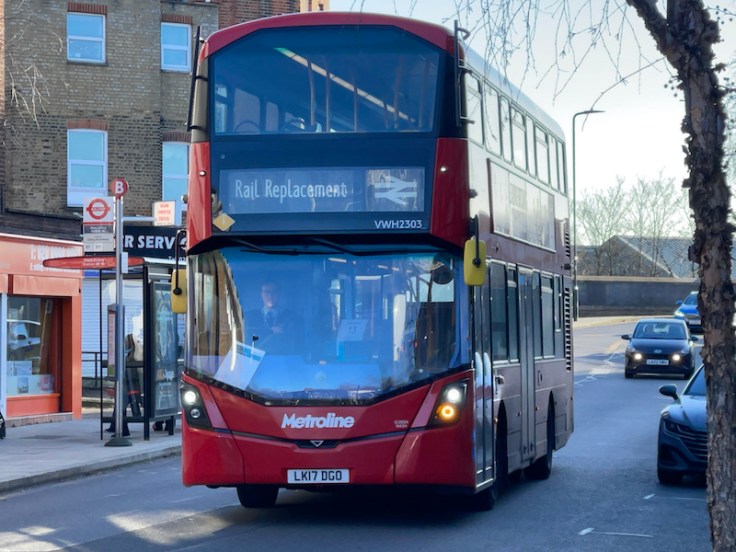
I’ve travelled on all the incarnations of this service over the last ten years …. the train from South Ruislip to Paddington, the train from Paddington to West Ruislip, the train from Paddington to High Wycombe, the train from West Ealing to West Ruislip and the bus provided by Diamond Bus, Stagecoach Oxford Tube and Metroline.
Its quirkiness never disappoints.
Last year I took a ride on the first anniversary of the service which was marked by a live broadcast into BBC Radio London on board.
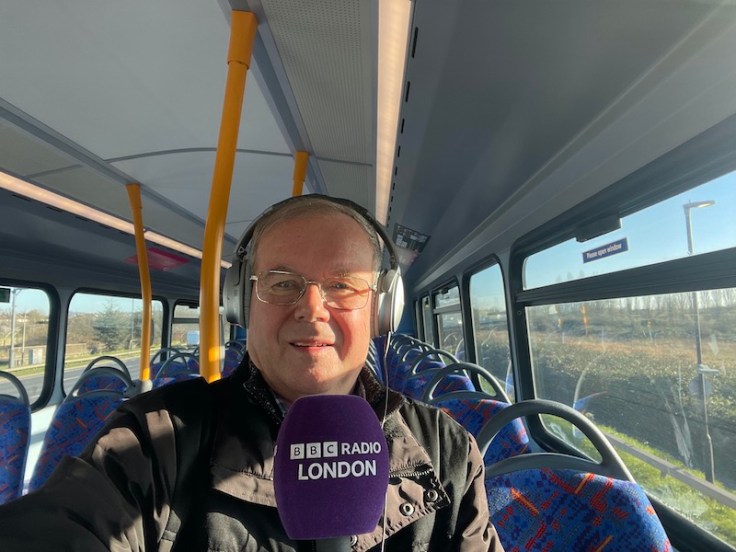
That’s when I met Metroline’s Tommy who drives it on alternate weeks and diligently makes train style announcements about the journey over the bus PA to add to the authenticity but thankfully not the “see it, say it, sorted” one.

My most recent trip was a couple of weeks ago with my friend Geoff Marshall who was making a video about it for his YouTube channel.
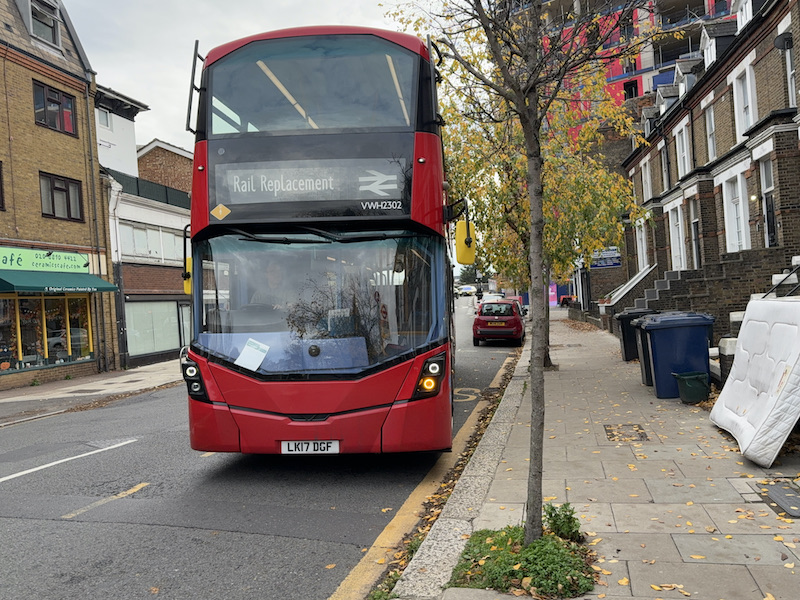
Two other passengers were waiting to board, both only there to appreciate the quirkiness of the journey. One lived in Barnet and just wanted to say he’d ridden it while the other loves the quirkiness so much he’s now a regular.

There’s obviously never been a passenger genuinely using the service. There’s no point to it.
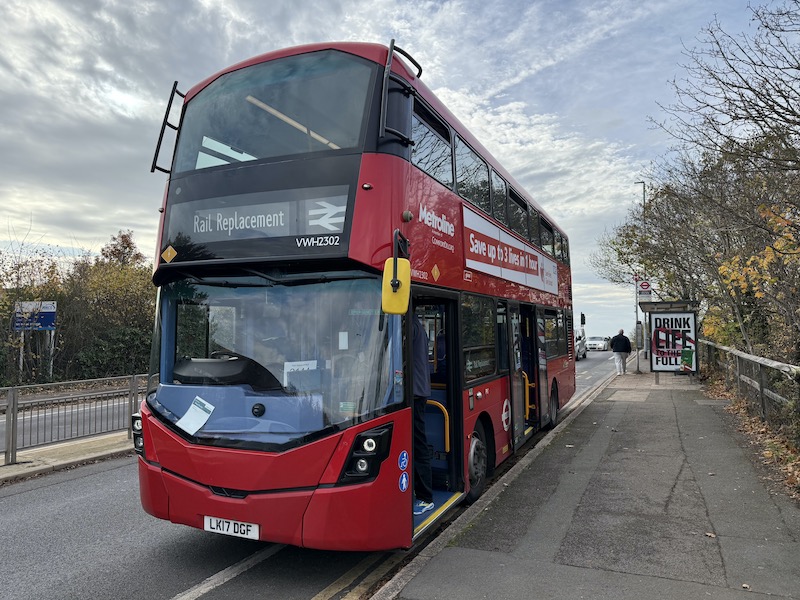
It’s a complete waste of time and money. It’s only purpose in life is to be Britain’s Quirkiest Bus Route, and so in that regard it’s now a tremendous success, receiving the ultimate accolade of being awarded this title.
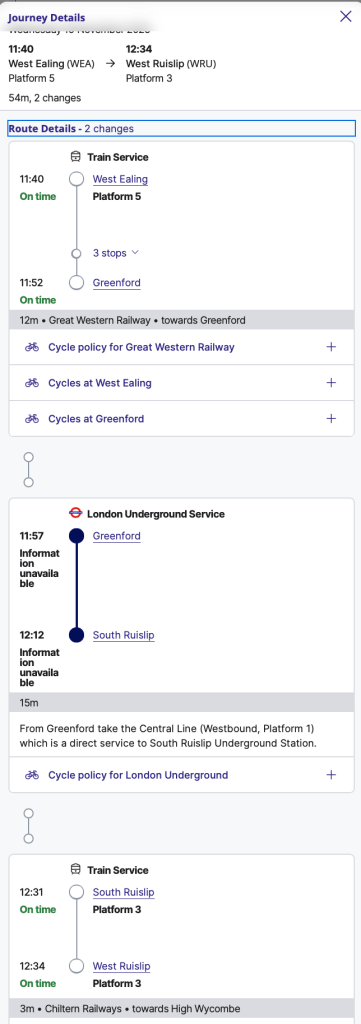
As already mentioned any passengers wanting to travel by train from West Ealing to West Ruislip have the regular half hourly GWR service to Greenford where Central line Underground trains whisk them on to West Ruislip, although National Rail bizarrely advises passengers to only catch the Tube to South Ruislip, alight there and wait for the hourly Chiltern train for West Rusilip.
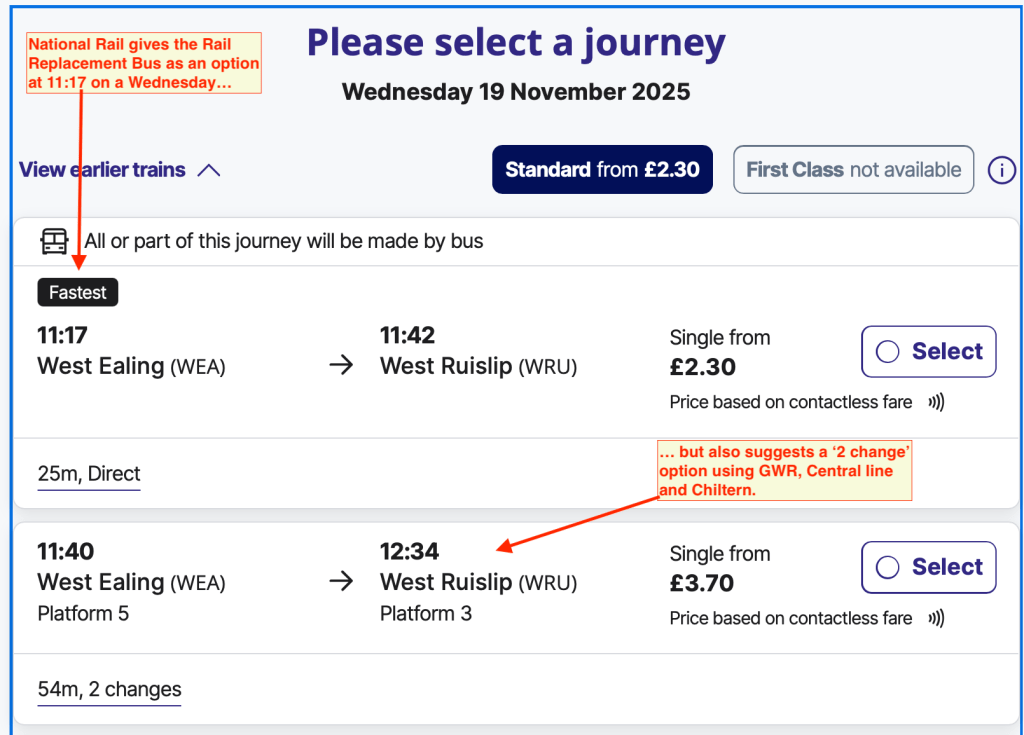
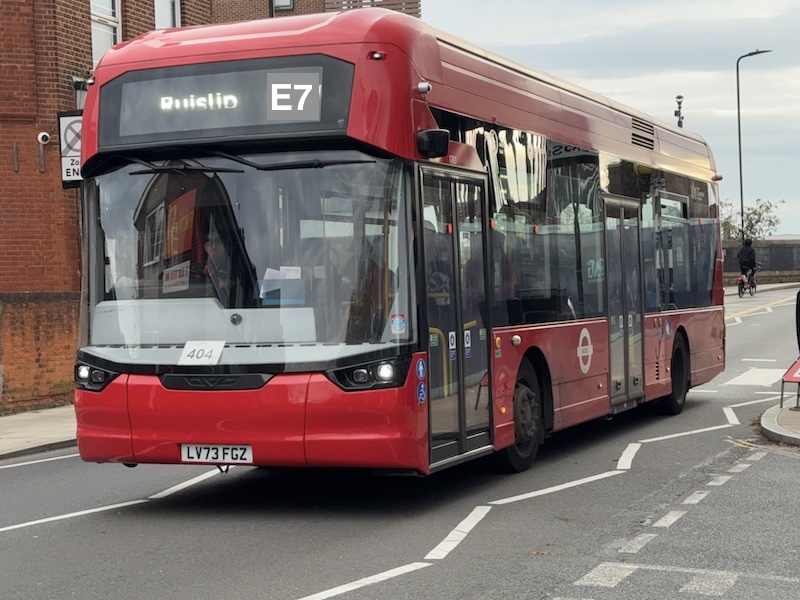
TfL’s Journey Planner ignores the Rail Replacement Bus (even on Wednesdays) and suggests taking an E7 to connect with a 297 at Cleveland Road for Perivale and then the Central line to West Ruislip or the E7 all the way to Ruislip and change to a 298 for the three minute ride to West Ruislip.
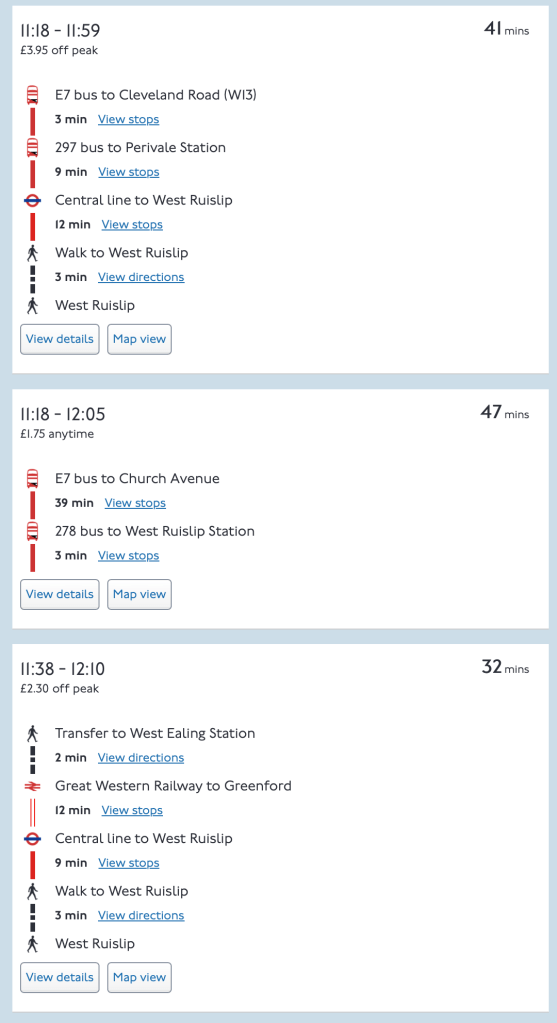
Its quickest suggestion is the GWR train to Greenford and the Central line all the way to West Rusilip taking 32 minutes rather than National Rail’s nonsensical 54 minute suggestion for the same journey.
Which just sums up the ridiculousness of the whole situation and notwithstanding the need to cut costs and avoid wastage in the rail industry I can’t see this arrangement changing any time soon, so if you fancy a ride on Britain’s Quirkiest Buys Route, it’s there for the 25 minute journey experience every Wednesday from Stop A in Argyle Road, West Ealing.
Don’t forget to give Geoff’s video now live on his YouTube Channel especially as last Wednesday Geoff took the alternative option of riding the GWR departure from West Ealing to Greenford at 11:10 which arrives there at 11:22 just as a Central line train is due to West Ruislip. Would taking that be quicker than catching the 11:17 Rail Replacement Bus? Watch his video to find out.
Roger French
Blogging timetable: 06:00 TThS
 BusAndTrainUser
Thanks for this – at least it brightens up the start of the day! One factor – which I suppose is commercially confidential – is how much does Chiltern actually pay for the bus – I suppose I could find that out by calling up various bus companies and asking what they would charge for a similar once-a-week operation not in peak hours somewhere in outer London. I suppose the actual extra cost is the diesel fuel, and an allowance for wear and tear – perhaps not so very much, if the staffing is actually by people who are regarding it mainly as a break in office-routine …
As a child I was familiar with West Ruislip – lower quadrant signals, and King class engines roaring through on the Shrewsbury and Birkenhead expresses. The main-line station had half-hourly steam trains to Marylebone then, pretty well used, and I also remember the push-pull train on the Greenford branch. West Ruislip is one of the great missing links in the London rail network – the Met-Piccadilly Uxbridge line runs under the ‘New North route’ just south of the West Ruilip platforms; if there was an interchange station there, maybe Chiltern’s Birmingham and Oxford services would call, as it wiould be a connection for much of northwest and west London.
LikeLike
A great series, thank you. Who could resist these buses. A quirky contender back in the day would have been Southport Corporation number 25 ( ? I think), which I remember clambering up on as a child. It was an amphibious vehicle that served Ainsdale Beach in the 1950s.
LikeLike
So a bus story that is really the story of what is wrong with railways in Britain, and to some extent buses.
When TfL makes cutbacks (never mind Oxford Street proposals), including adding a faster SL bus service at the expense of reducing a more local one in an area of residential development, the cutting off of communities in the far east of Greater London and an unwillingness to serve bits of Sutton to the south into Banstead and Epsom more regular (S4 ? going from 20mins to 30) it really puts one off traveling
On rail , in order to provide a not really needed bit of time saving to get London to Manchester (well Birmingham now so even more of a lack of a coherent , costed or at least fully scoped plan) alternative , more local and with potential other connections are severed rather than considered for use as say GWR Paddington to Birmingham using either of the lines. We also lost the direct connection route potentially to Clapham Junction , and Beyond. Really services that would have fitted into an expanded overground network from Orpington to Beckenham Junction as part of Boris? promised orbital rail systems onwards to Clapham and Ruislip. Old Oak Common area could have been even more massive flats,
Also the Elizabeth line , under invested it should have been in new tunnel all the way from Iver , avoiding thus some of the previous Parliamentary routes for better invative services into Paddington ( Birmingham-Paddington and more opportunities via East West Rail to loop and return via Oxford) as it is the Elizabeth Line clashes for paths into Paddington and has to go over some of the flakiest railway in the country for reliability of the signals points and general disruption on the line along with a full four track core tunnel as one can see the line is overcrowded and overused 7 days a week and that will continue even when more train units arrive and a more frequenty timetable put in ( and again full tunnel needed to at least Forest Gate with Stratford being a main passenger constricted station.
JBC Prestatyn
LikeLike
HS2 isn’t just about shaving a bit of time off journeys between the capital and Birmingham. Its core purpose is to relieve congestion on existing railways, not least parts of the West Coast Main Line (and, I imagine, the constrained section between Coventry and Birmingham where local trains and inter-cities share the same double track). I guess the thinking was “if we’re going to build it anyway, we may as well make it high-speed”.
Malc M
LikeLike
Why not take the TRU option of extra tracks next to existing allowing fast and or freight to bypass ?
And given there were multiple routes out of london – at least to Birmingham , via Oxford, Via Marylebone or even using bits of East West Rail the need for capacity never quite made it in my mind (extending EL to cover the Bedwyn services removing them out of Paddington)
Manchester could have been added back to St Pancras via the Peak routes but someone chopped St Pancras down from what it was and the route needed electrification Unless one changes something like Gatwick Express and route that half hourly Brighton Gatwick Farringdon St Pancras Luton (Airport) Leicester Derby Manchester which isnt that stupid at 120mph with careful improvements.
JBC Prestatyn
LikeLike
Because it would have involved knocking down far more houses than the route chosen for HS2 and thus been even more contentious (and even more expensive!)
LikeLike
Series rather asks what other services could have been included , but werent , I think previous in the series there were some comments about services in Ireland or other UK islands. Any service involving reversing turns are worth a visit, services to the remotest bus stops in the country. Obviously a the Cambridge Ride dont park one.
JBC Prestatyn
LikeLike
I can think of a few worthy of inclusion:
Dorset Community Transport’s 200 (previously RN1) from Wareham to RSPB Arne via The Blue Pond.
Thames Valley F53/F54 from Bracknell and Wokingham to Reading Football Stadium.
The Liverpool Combined Authority Christmas Day hospital bus services.
LikeLike
What makes the F53/F54 any quirkier than any of the other Reading football bus services, or those operated to other teams’ stadiums around the country?
LikeLike
I had it as quirky because the route taken by one bus route depends on the number of people boarding the other bus route, and because they ask you to catch the same bus back as you arrived on since the return route also varies depending on the loadings.
LikeLike
e.g. Sanders NC1 from Holt to Carrow Road, Norwich (as a partial express relief for 44/44A; happened to be leapfrogging the bus a few weeks back on my way into Norwich)
MilesT
LikeLike
Lovely series. Many thanks. Perhaps you could suggest the route becomes a DRT.
LikeLiked by 1 person
I like the idea of a pointless service being cut by another one. Yes, HS2, I’m looking at you.
John
LikeLike
A clever comment but ignores the real rationale for HS2 that, as already mentioned, is to relieve congestion on other lines such as the WCML.
LikeLike
Interesting article. Of course, many railway lines were closed with indecent haste decades ago, despite often widespread and very vocal opposition. This no doubt resulted in the rather more protracted closure procedures we see today.
The tactic is to gradually run services down, so most people make alternative arrangements (in most cases, get a car and so rarely if ever use public transport again). Each reduction in services lasts long enough so it effectively becomes normalised, before being cut again to reduce costs (look here, it’s costing us a shed load of money to operate a service that few people are using!).
So it’s the good old British closure by stealth tactic, rather than investing in and improving the service to encourage more usage. The fact that this drives more and more people to use ever more congested roads, is simply overlooked. It’s someone else’s problem after all.
Another very British, though adopted from America, is that of prioritisation. We have limited space, and limited money, so we spend as little of it as possible. Therefore, lines such as HS2 and the Elizabeth Line take most of the available money and capacity, leaving precious little for anything considered as low(er) priority. A case of winner takes all, now what could possibly be wrong with that?
LikeLike
Sorry to be a party pooper, but is it actually a ‘bus’ service? Is it registered as such in Notices & Proceedings, does it have a route number, and can I use my bus pass?
MotCO
LikeLiked by 1 person
It’s a de-facto free bus service paid for by Chiltern Railways as they don’t hire any ticket inspectors to specifically check tickets for this service, nor is there a way for Oyster card users to pay their fare; You can buy the ticket for £5.80 online though.
LikeLike
Which is considerably more than shown on the National Rail web site that Roger reproduced, albeit that is the contactless fare.
LikeLike
But same would apply to the 2nd place Cape Wrath bus, which is more of an excursion or tour (indeed more so now that a minimum of 6 passengers is required). But in the spirit of services that the public can use, I think Roger is fully justified in including both.
LikeLike
There was a similar one some years ago which ran from Wandsworth Road to Ealing Broadway. They did actually get round to withdrawing that one via the statutory closure procedure. On the final day it was packed! Graham L.
LikeLike
If my memory is correct, they only “closed” the 10 metres of track which were lifted between Battersea Park Platforms 1/2 and the main line to and from Victoria. These were lifted to allow the extension of Platform 3 to take 10 car trains since the bridge over Battersea Park Road prevented the other end of the platforms being extended.
The section between Battersea Park and Wandsworth Road is still served by two daily trains (leaving Battersea Park at 06.33 and 23.03 MF, with different times at the weekends). These are now Windrush Line trains and run through to Dalston, being part of the main timetable from Wandsworth Road onwards.
LikeLike
It was the withdrawal in December 2008 of the Cross Country service to Brighton from the Great Western Main Line that left some sections unserved and gave rise to this bus.
The lengths in question were:
Wandsworth Road and Imperial Wharf stations)
Shepherd’s Bush and Acton Main Line stations)
Bush and Acton Main Line stations)
Full ORR consultation report on withdrawal (issued 2012) at:
https://www.orr.gov.uk/sites/default/files/om/closures-ekw-dft-consultation.pdf
LikeLike
The two stretches of line around Acton which lost passenger service when the CrossCountry trains from Brighton were withdrawn are both clearly visible on the map sections in the blog post. As far as I can tell the CrossCountry trains in the run up to 2008 didn’t stop at either Wandsworth Road or Ealing Broadway which adds to the ridiculousness of the whole thing
LikeLike
Dear Roger Hoping you are well. Firstly. Thankyou for your posts which I dive into on a regular basis
Talking of first. The bus company are doing a pull out in Cornwall of all their routes and it’s looking like Go Cornwall will pick up the main business.
Another transition over to the go ahead group. Ala southampton I feel. But a huge more rural.
Back in wiltshire. The salisbury reds are rolling out the new Mercedes little reds into service. Great planning by wiltshire county council to infiltrate them into nearbouring Counties ultimately on current routes. These are replacing 11 year old optare solos being sent off to Morebus and damory in hampshire
I attach a recent image of 154 in Central salisbury
With kind regards
Stuart
LikeLiked by 1 person
Thanks Stuart. You’re welcome to email me the photo at busandtrainuser@gmail.com
LikeLike
So First Group are finally withdrawing their bus services in Cornwall. Surprise, surprise! Hopefully, Go Ahead (with support from Transport for Cornwall) can step in & provide bus services with vital links across the county that are stable & reliable for the people that need them. Time will tell.
LikeLike
According to the BBC, GoAhead will be introducing replacement services. The article also quotes some amazing figures for the decline in passenger numbers on First’s routes, I can only assume this is because they’ve shrunk the network otherwise something has gone very wrong.
https://www.bbc.co.uk/news/articles/c62l47g2mj1o
LikeLike
Very bbc type reporting. The public are the drivers of this not profit. Service reduction is not a solution to meeting the populations needs. More. Buses are a prime example of excellence more buses higher quality newer vehicles. Good luck to all at go cornwall
LikeLike
See Roger’s earlier blog on Go-Ahead in Cornwall. It seems that First had more frequency and ran longer during the day and weekends. The chosen competing by Go-Ahead managed to be the minium to erode the numbers traveling on the First network as a whole and First had already lost college contracts,
Normally I argue that additional competition should grow the market for bus use , but there are some places where the population, its income and the desire places to travel have a fixed upper limit, tourism seems to have been down too
JBC Prestatyn
LikeLike
Among the depots set to close is Summercourt, in which First recently invested £1 million for battery-electric charging infrastructure. When the purpose-built charging hub opened in April 2024 with eight rapid chargers
Maybe Go ahead will take on that depot
LikeLike
Presumably there was a government grant involved, if so & the depot isn’t taken over by Go Ahead, then surely the grant would need to be re-paid.
LikeLike
It is worth noting that whereas there is a protracted process before a rail service can be withdrawn, bus companies have been able to cancel services with just a couple of months’ notice, offering no protection to passengers if the service they depend on isn’t replaced. I understand the recent Bus Services Act goes some way to addressing this, although I haven’t yet understood how this will work in practice.
Whether the statutory process for rail closures is fit for purpose is very much open to debate (not least the way it results in quirky “Parliamentary” trains or substitute bus services as a way of avoiding the formal closure process).
Malc M
LikeLike
Commercial train services – those exempted by the so-called Speller amendment – can be withdrawn too, without following the protracted closure processes. Wolverhampton-Walsall, for example, to say nothing of changing stopping patterns and timetables that transform journeys from direct and frequent to slow and requiring connections on routes, which isn’t actually so different from taking off a bus service.
The Greenford branch itself has seen several timetable changes, including an extension from Ealing Broadway to Paddington before its subsequent cutback to West Ealing. And prior to the arrival of the Elizabeth Line, onward connections at West Ealing were not always that good.
The Bus Services Act offers no protection to services proposed for withdrawal, other than subjecting them to go through a bureaucratic formal assessment by the Local Transport Authority, who without extra money, will not be able to intervene any more than they can at the moment.
KCC
LikeLike
I note others have picked up on this too. But there is a serious side, showing that there are multiple factors and barriers to stopping train services, and so brings a certain resilience. In a way, this should be applauded. Whereas bus services can stop with notice of just seven weeks, which can easily leave users stranded with little warning.
LikeLike
Pleasing to have “done” three: RP1, 969, 01.
LikeLike
Just to add to the absurdity of this situation (if that is possible !) if you book an anytime single for this journey on Chiltern Trains website it tells you that a break of journey is permitted on a service which appears to be non-stop !
LikeLiked by 1 person
Thank you Roger. I absolutely love Parliamentary Train Services and this makes me chuckle
LikeLike
I had hoped that the new Bus Services Act would include a ‘Minimum Service Level’ of provision for villages and towns, with clear guidance of what is expected and ring-fenced funding so that Local Transport Authorities can fund this. Whilst the Bus Services Act, combined with increased funding for buses, will improve both the level of funding and the ability of LTAs to intervene in service provision, there is still no mandated guarantee of bottom-line service level.
Julian Walker
LikeLike
Thanks for bringing this to us. It’s been a fascinating and enjoyable series, particularly the operations I wasn’t previously aware of. Having seen what’s been awarded no.1 spot though, I’m with MotCo in not being convinced it’s a bus route at all! That got me looking back though the list to see what I thought would me my order of quirkiness and I really thought 4 were outstanding:The top spot for me (your no. 2) has to go to the Cape Wrath service. I read it with a degree of disbelief, looking for an April 1st date somewhere, but when one of the commentators recalled his own experience, it became worthy of its own Netflix series!For second place I was stuck between the West Coast Motors service that depends on the tides and the Tavistock 112 that runs twice a year and is full! Who in this day an age would wait for such an operation to go anywhere?My fourth place would go the Stevensons service that you have to get MOD clearance to use! I wonder what conspiracy theorists would make of it?I guess we will all have our own views on what is quirky. Going back to the Parliamentary Rail Replacement, I’m a rule follower by nature, but if I were Chilton railways, I think I’d cease the operation and take a chance that no one will look to enforce this particular nonsense regulation.
Looking forward to finding out what new series might replace this for 2026.
LikeLiked by 2 people
Great thoughts, Michael, thanks for sharing.
LikeLike
I totally agree with your response & suggested rankings Michael with no disrespects to Roger who after all, did all the legwork!
LikeLike
Bit ironic that the Holy Island bus is in the livery of Borders Buses’ parent West Coast Motors, so a bus that should be running on or near islands off the west coast of Scotland is serving an island off the east coast of England! Anyway, the 477 has now been taken over by Glen Valley Tours of Wooler. They are obviously expecting growth, since not for them a Solo, despite having some in their fleet. No, they run it using a coach, sometimes a Plaxton Panorama decker!
LikeLike
Glen Valley operate it using a vehicle between school runs, hence the 477’s 15:xx journeys only operate during school holidays.
LikeLike
Their smaller Iveco Daily RK75 XCV has been branded for the service though.
LikeLike
When I first used the 477, it was on a Northumbria Bristol VR. But more recently Borders decided to try running it with an open topper, which was a great journey. I understand that it only lasted 1-2 summers as regular users complained it was too cold upstairs. Seemed a bit daft as it had the capacity of the current minibus available in the warm downstairs. Although on the lovely day I rode it, you would have needed 3 minibuses to cope with the number of people. Maybe that is why the current incumbant uses larger vehicles some times.
LikeLike
Roger, thank you for this wonderful series. I just hope Metroline has another bus on standby this Wednesday to cope with the number of travellers who will doubtless want to experience this ride, thanks to your blog.
Barry Davis
Bromley
LikeLike
”Farce” is too kind a word, but we must not be blasphemous!
Not at all a good advertisement for the DfT’s micro-management of train operators.
Steven Saunders
LikeLike
I don’t think this is much to do with DfT micro-management, bonkers though that sometimes is. If running an empty bus is (much) cheaper than going through a formal closure process then why wouldn’t you? No-one’s really going to get confused by it. OK it looks a bit daft but it keeps geeks and bloggers happy, and it saves everyone money. Perhaps they should put some posters on the bus to say how much it’s saving.
A very long time ago I was involved in the formal closure proceedings for Epping – Ongar and the Aldwych branch, two little-used parts of London Underground infrastructure that had, shall we say, outlived their usefulness. It was expensive even back then, and we only got it approved because the infrastructure maintenance costs avoided could just about make a business case over 10 (possibly more) years, and there was some spare money sloshing about that year! It’s a while since the Big Railway thought that long-term, or had all the figures in one place. Hence….
Ricky
LikeLiked by 1 person
Roger has effectivelly writtent the closure proposal consultation document here for the DfT Directorate that deals with this subject. All they need to do is top and tail it with their own heading and address and wait for the responses to come flooding in!
LikeLiked by 1 person
On a Travelcard jaunt on 22/08/1987 I discovered the Marylebone services were being diverted to Paddington when I got to West Ruislip. I eagerly hopped aboard car M51899,DMBS, Class 115 refers.
LikeLike
Wasn’t there also an issue with the installation of battery charging infrastructure on the West Ealing bay which effectively reduced its length so that it was no longer possible to park the Chiltern train on top of the Great Western one?
I feel sorry for the Greenford branch. Cut off from its obvious traffic objective, its pax are now turfed out in the middle of no-where to wait on a cold platform for a poor connection – or forced to trudge over the footbridge when going home. It’s hardly surprising that its usage has plummeted. It’s hard to see that it fulfils any useful function in its current form: they might as well just close it and put it out of its misery.
Michael Wadman
LikeLike
Be careful, you will have all the people out claiming that closing or amending any train line is the work of the devil! Look at what has been proposed for the Marston Vale line, 9 stations and a slow trundling useless service transformed into 5 stations and a fast frequent modern service… and lots of people who have never used the line and would never use the line in the current form complain on behalf of those who live at the stations! Well I live opposite one of the stations to be closed and think it’s good for the overall line, I’d rather see it thrive than close due to lack of passengers!
Daniel C
LikeLiked by 1 person
As a regular Marston Vale Line user I’d certainly agree with you for some of the stations, but not all.
Bow Brickhill one of the proposed closure, is a big employment hub with Red Bull Racing being a big local employer as well as other warehousing that’s just been built. For a city (Milton Keynes) that’s rapidly expanding closing transport links doesn’t seem the way forward.
LikeLike
Or Full run from High Wycombe for easy transfer to Elizabeth Line and LHR avoiding Central London every half hour
JBC Prestatyn
LikeLike
The sad thing is that with a bit of foresight, the New North line could have been put to great use. Almost half of Crossrail services currently terminate at Paddington, with extension for some (most?) of these planned to Old Oak once it opens. But they could have continued to Gerrards Cross (or even Wycombe), linking underserved parts of west London and Bucks with no additional central London infrastructure required. Would have been a great excuse to electrify the last remaining mainline into London as well.
LikeLiked by 1 person
My favourite bus is the Citi Matt bus that goes from Sawston Library to Wakerley Avenue to Grante Terrace specifically for Matt. It only goes on Thursdays on the 3rd week of every 2 months at 9am. You should definitely check it out for the one time. Appreciate the list thought, it gave me hours of good quality reading. Cheers from Tally Wacker
LikeLike
bus shelter now proudly carries the award information on its departure time leaflet
JBC Prestatyn
LikeLike