Saturday 7th June 2025
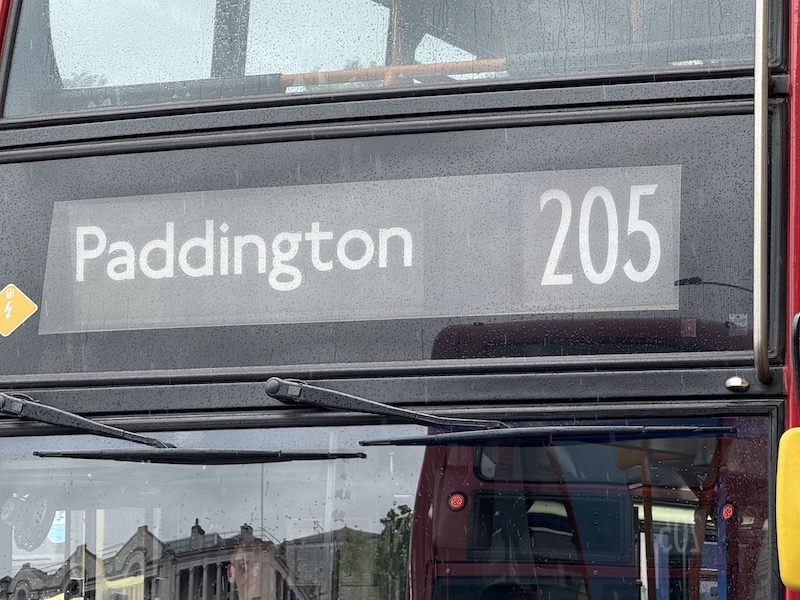
TfL are introducing another cut to its beleaguered central London bus later this month involving a diversion to route 205 which currently links Bow, Mile End, Whitechapel and Aldgate with Liverpool Street, Kings Cross, St Pancras, Euston, Marylebone and Paddington stations as well as St Mary’s Hospital, Paddington.
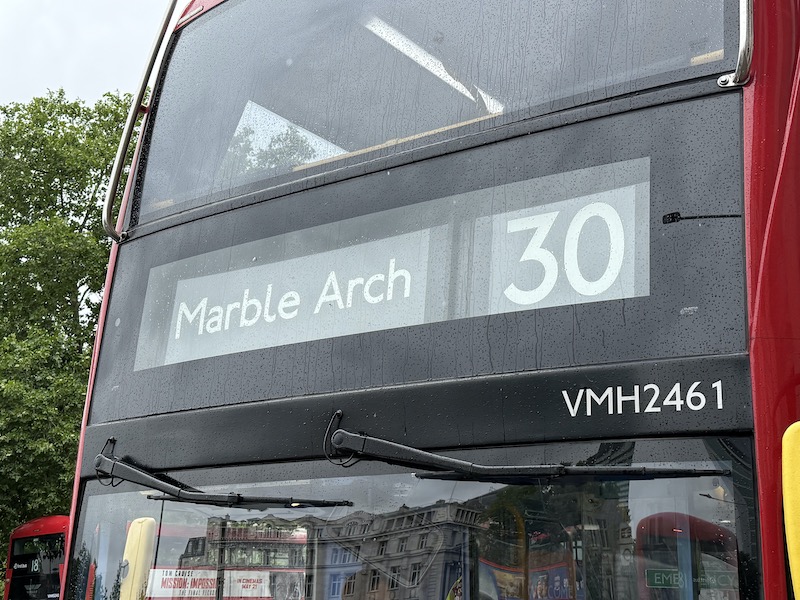
From a date yet to be confirmed later this month the western terminus will change from Paddington to Marble Arch with buses diverted via Baker Street/Gloucester Place and the western end of Oxford Street (shown in red on the map below). This replaces the western end of route 30 (a dotted blue/white colour on the map below) which currently runs between Hackney Wick and KIngs Cross, St Pancras, Euston and Marble Arch but is being curtailed to only run as far west as Euston making a useful saving for TfL’s challenging finances.

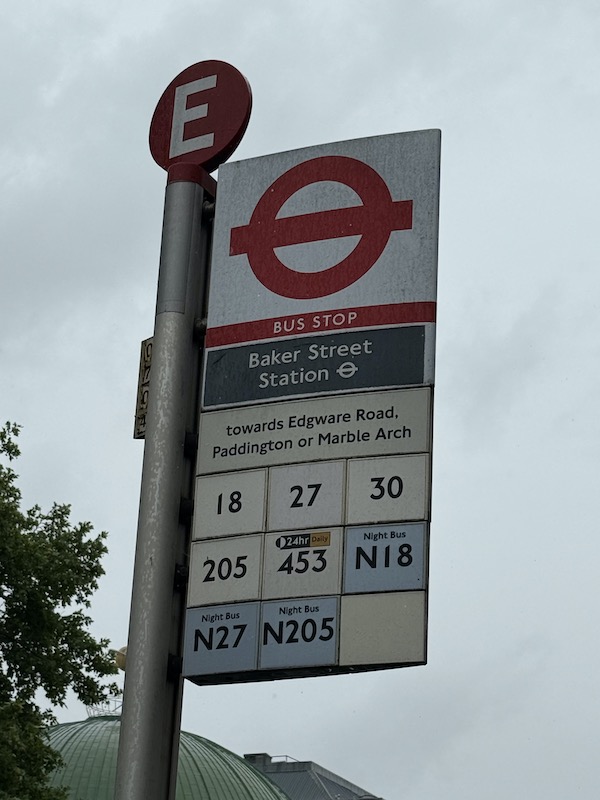
The change means there’ll no longer be a direct bus linking Liverpool Street, Kings Cross, St Pancras and Euston stations with Marylebone and Paddington stations and St Mary’s Hospital. TfL say passengers currently using route 205 to reach Paddington can change buses along Marylebone Road and catch a 27 instead (green on the above map).

Before enacting a change of this significance TfL is obliged to go through a formal consultation process and did so between 21 October 2024 and 10 January 2025. The overwhelming response to the consultation was against the proposed cut and rerouting yet TfL are going ahead regardless. This highlights the useless nature of these formal consultation processes which end up being a tick box exercise and a very costly, bureaucratic and resource intensive exercise too.
All told 571 stakeholders were consulted. An eclectic mix of potentially interested parties ranging from Abeny Public Hall to Woodgrange Infant School including groups as diverse as Attitude is Everything, BT, Catholic Parish of the Royal Docks, Dogs for Good, McDonalds plc, Princes’s Trust and many more.
In addition, around 50,000 emails were sent out to passengers using routes 30 and 205 (as well as 18 and 27) on TfL’s database as well as to those living in pertinent postcodes and locally based Freedom (and Disabled Freedom) Pass holders plus another 873 emails to targeted stakeholder groups and community contacts as well as people who’ve asked to be kept up to date with relevant news about buses.
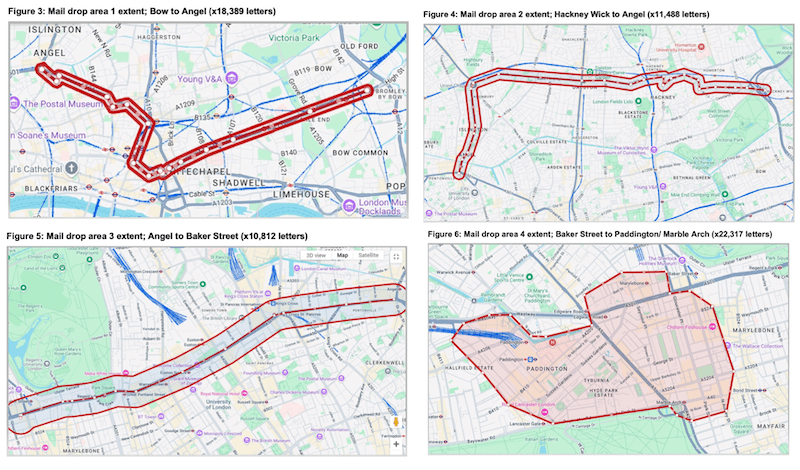
63,006 letters were delivered to all business and residential addresses along, and adjacent to, the full route lengths of the 30 and 205 plus a wider area around Baker Street and Paddington.
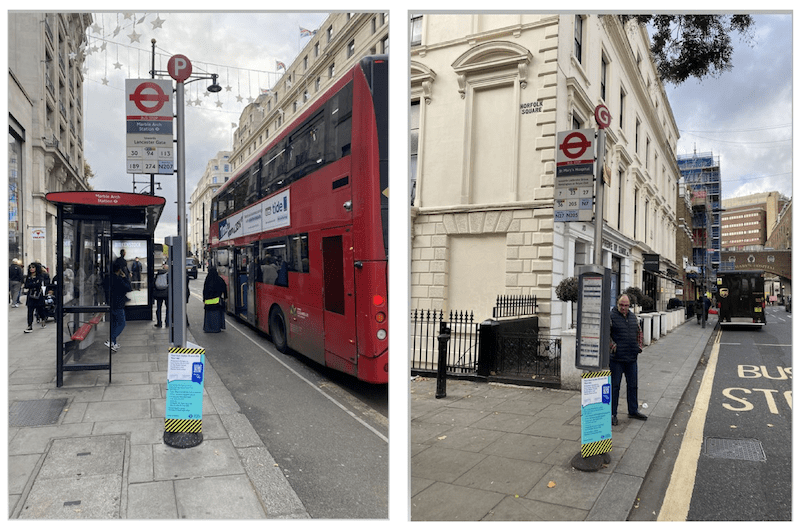
286 bus stop posters were placed in bus stops along routes 18, 27, 30 and 205 (where space was available) as well as 42 3D ‘Toblerone’ style adverts at bus stops in the Paddington/Marble Arch/Baker Street area.
TfL also held a drop in event at St Mary’s Hospital on 13th November.
TfL’s 110 page ‘Consultation Report’ which is available on its website goes into inordinate detail of the steps it took to consult, the processes involved and the responses it received. You can’t fault TfL’s consultation process for its comprehensiveness, that’s for sure.
There must be a huge army of staff devoted to the task at considerable cost to the organisation.
After all that effort 22 stakeholders responded with 1,337 responses from members of the public. The overwhelming response was against the proposed cut to route 30 and the diversion of route 205.
For example, Chiltern Railways stated it “strongly opposed the changes” pointing out the direct connection between Marylebone and other major London termini needs to be maintained “ensuring accessibility, supporting integrated links and providing passengers with a reliable and convenient travel option“. They highlight the 205 as being particularly important for passengers with mobility impairments, those carrying heavy luggage, parents with buggies, and wheelchair users, as well as those with less visible disabilities who prefer to avoid the Underground, noting the Bakerloo line station has no lift access.
Great Western Railway responded with similar comments adding “HS2 construction work at Old Oak Common in the next decade will mean services diverted to London Euston frequently. Having multiple methods of transport available for passengers to make the interchange to /from Paddington/ Euston will reduce obstacles resulting from this engineering work.”
London Travelwatch in its response state “this proposal will mean that 3,676 passengers per day (1,721 on route 30 and 1,955 on route 205) would need to change bus in future to complete their journeys. This equates to 11% of passengers on route 30 and 9% of passengers on route 205.”
City of Westminster Council registers its “strong objection to the proposals”. The London Borough of Camden “strongly objects to the loss of a direct bus connection between KIngs Cross and Paddington”. The London Borough of Hackney suggested route 205 be retained as is and rebranded as a Superloop route with some of the less busy stops skipped and be extensively marketed and branded, pointing out “during engineering works on the Hammersmith & City line additional buses on the 205 could run and this would obviate the need to run a costly rail replacement service”.
And so it goes on with all 22 stakeholders who responded objecting to the proposals. Similar objections are raised in most of the 1,337 public responses.
If the change went ahead 75% of passengers responded YES to the question about whether it would mean the need to change buses with only 15% responding NO (10% didn’t know). 49% stated they would no longer use route 205. 74% stated the proposals to route 205 would have a negative impact and 66% said the same about route 30.
In the light of such negativity why are TfL continuing with the change?
Its response is: “we recognise some passengers may need to change bus to travel as a result of these changes and have recommended convenient locations along the bus routes where interchange could take place at the same / adjacent bus stop. As a result some journeys will get longer.”
It continues: “our current strategy is to make savings in inner and central London, where the bus, rail and Tube networks are denser and better, so the outer London bus network can be expanded and improved, particularly in areas where other public transport options are not available.”
TfL reckons capacity on route 27 is well able to cope with passengers displaced from the 205, which I’m sure is correct, but the frequency reduction from having a choice of only one, instead of two routes, and the fact passengers will have to change buses are certain to have a negative impact on passenger numbers travelling.
I took a ride between Kings Cross and Paddington to get a feel for just how inconvenient the new arrangements will be. It was a miserable Tuesday morning with drizzling rain most of the time during last month’s school half term week so many families were out and about along with lots of tourists.
As usual, the traffic along Euston Road and Marylebone Road was one long slow moving crawl and although there are sections of bus lane, buses were still getting delayed and it was obvious routes 27, 30 and 205 were disrupted with poor ‘excess waiting times’ so it was difficult to assess what would be a typical bus ‘load’ of passengers.
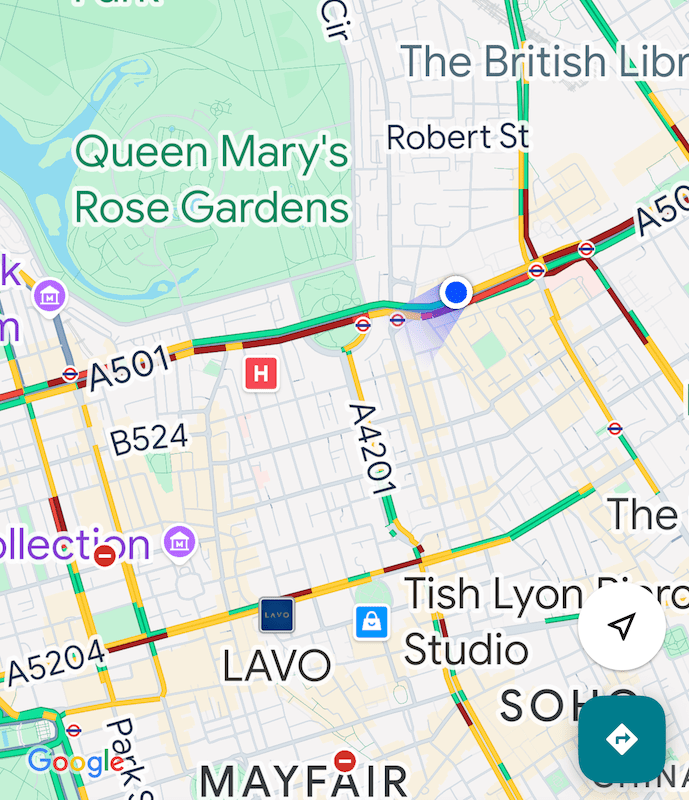
As the Countdown display was showing a long gap before either a 30 or 205 was due I decided to walk from KIngs Cross and got as far as Euston before two buses on both routes turned up.
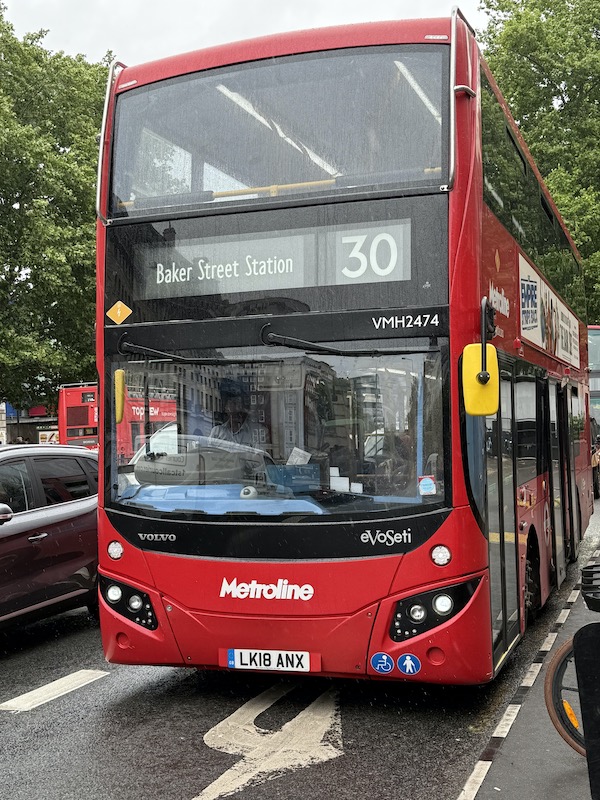
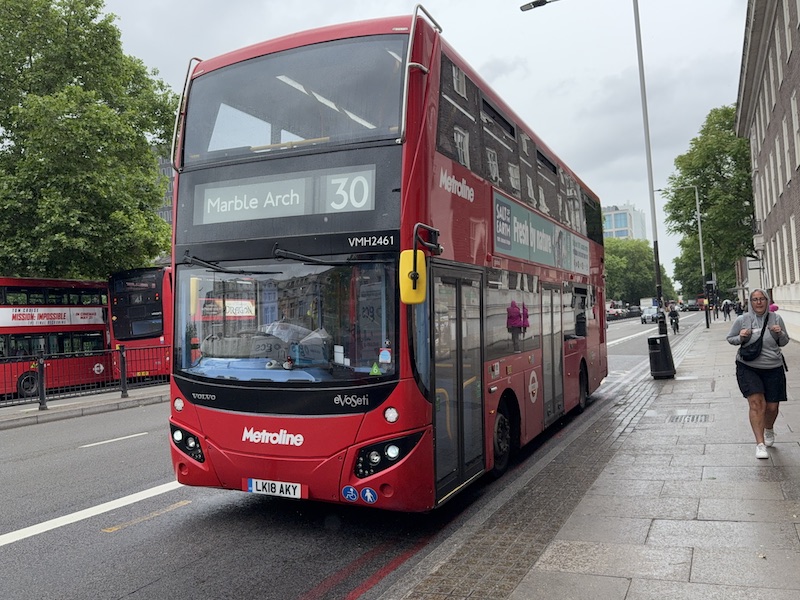
I caught the busier looking of the two route 30s as the one behind was terminating ‘short’ at Baker Street station. On leaving Baker Street for Marble Arch it had 13 on board.
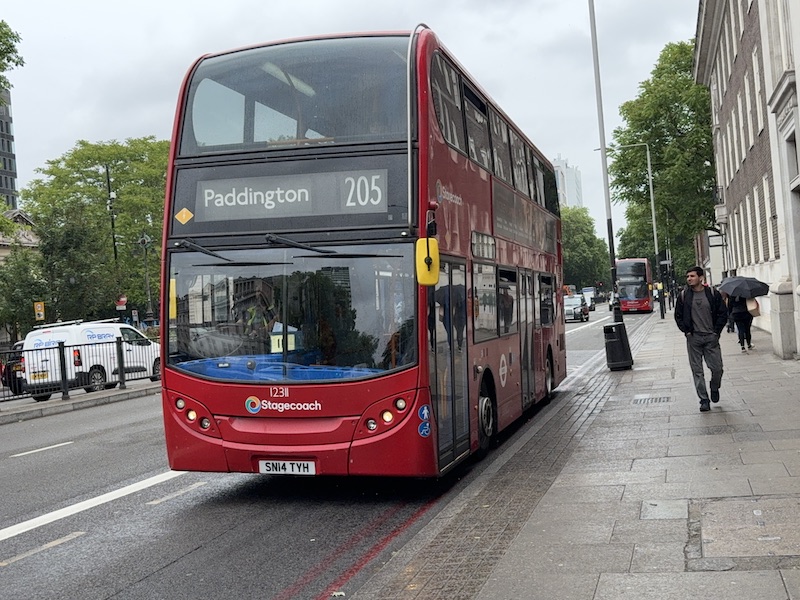
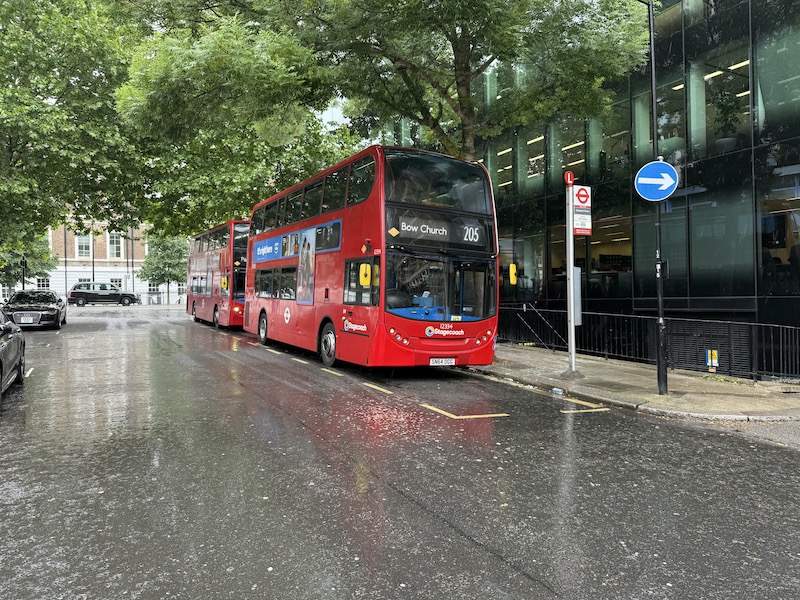
I then caught the next 205 which came along fairly soon and only four passengers continued to Paddington. On that ridiculous sample size of two observations, TfL are quite right to make the changes and ignore the consultation responses. But, I’m certain it wasn’t typical and more likely represented the impact of disrupted operations – a hallmark of central London bus routes and a reason why passenger numbers have reduced.
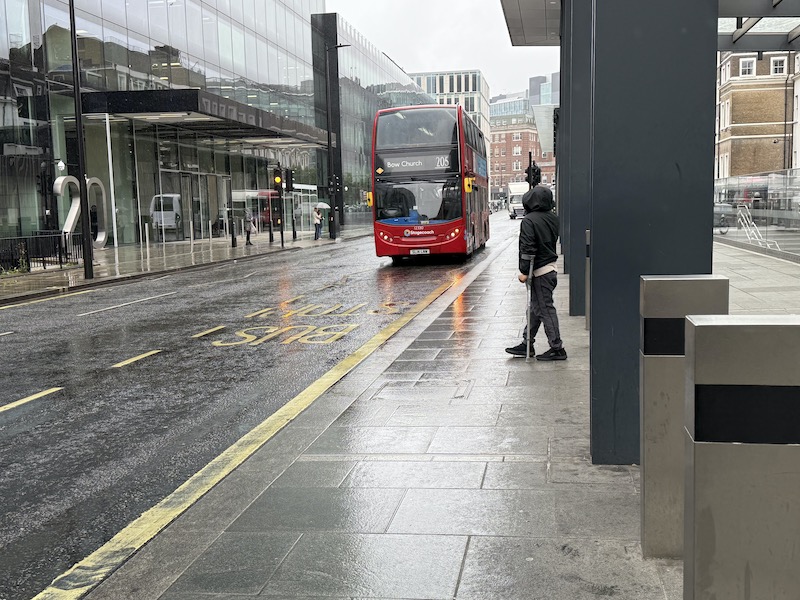
Heading back from Paddington towards Baker Street we picked up 18 passengers. I don’t know how many of these travelled east of Warren Street (where route 27 turns off) meaning they’d have to change, but it looked like a good proportion.
There was more congestion travelling between Paddinton and Baker Street with particular slow moving traffic past London Transport’s old haunt at Griffith House by Edgware Road Underground station.
To give you some idea of the degree of congestion, it took the 205 I was on 20 minutes to travel the one mile from Paddington to Baker Street. That’s a speed of just 3 mph. Thanks to bus lanes the one mile journey from Euston to Baker Street on the 30 took 13 minutes – so a 50% improvement at 4.6 mph. But both completely unacceptable, confirming why buses in central London are hemorrhaging passengers.
Journey times are not much better than walking speeds.
It’s ironic route 205 was introduced in Ken Livingston’s time as Mayor in 2002 prior to the Congestion Charge beginning in 2003. Along with a number of new bus routes through the central area, it’s aim was to provide a decent alternative for motorists not wanting to pay the new charges.
Two decades on and you wouldn’t know there was a congestion charge aimed at discouraging cars; the congestion is so bad. And now routes like the 205 are being cut back (on its Paddington section of route) despite a huge backlash from the consultation.
Still, we’ve got lots of new Superloop routes in the outer suburbs to look forward to and that seems to be what it’s all about now.
Perhaps a better way of making cost savings to fund the Superloop expansion instead of cutting services, would be to cut the consultation. It’s so obviously a pointless exercise.
Roger French
Blogging timetable: TThS


something from experience the late evening and early morning journeys in particular are very quick and convenient on the 205 to get to major rail terminals and is heavily used by those avoiding a Zone 1 fare on the underground to cut across London. Something that’s completely missed is the cost of living and the cheap alternative that the 205 provides. yes there is the Hopper fare but hardly compensation for the inconvenience of changing buses and lengthening journey times. Consultations can change the proposals sometimes TFL listens but this is one is certainly a tick box exercise on cost cutting
LikeLiked by 1 person
So the TfL consultation was purely academic, the outcome ignored and the public get what TfL wanted, regardless. Hertfordshire County Council did a similar constitution around 2010, and stuck with the changes, one part mentioned how good the 700 Stevenage to Stansted Airport was and another about the service frequency and that it wouldn’t go to Stansted Airport nor run in the evening.
LikeLike
One answer as to why TfL might legitimately ignore the responses is that they are such a small proportion of all consultees. Sure, very few people responded to say “Yes please”, but why would they bother to do that? We all know that people are a hundred times more likely to complain than to compliment, so it may be reasonable to say that some/many/most of the people who could have made a response but didn’t are happy with the proposal. I’m sure TfL will have a threshold at which they deem a number of negative responses to be significant.
But if buses are only managing walking pace then it’s hardly a good use of resources to be filling up central London with lots of near stationary buses. I don’t know what the answer is for the 30, given that Euston Road is outside the congestion charge zone and so may not have benefited from any reduction in traffic, but I can completely see the rationale for prioritising buses onto routes where can actually move…
LikeLike
Nobody was likely to say “yes please” because there was no aspect of this change that was positive (other than the new link from City Road to Selfridges!). Every aspect of the change was negative – broken links and travel opportunities, and having to change buses with all the uncertainty that gives.
LikeLiked by 1 person
True, but there could have been thousands of people whose response, if asked directly, would have been “Fine, it makes no difference to me” or “It’s slightly less convenient but I’ll still use it just as much”, and these are the voices that aren’t captured in consultations.
LikeLike
If the 205 is to be curtailed, then it should really be done at Marylebone, rather than diverted away. Apart from Fenchurch Street, it must be the worst major station in Central London for public transport links.
The blame for demise of the 205 can be laid squarely at the door of the active travel policies of Camden Council and TfL, with bus speeds reduced to a crawl – they’ll never admit it.
LikeLike
Looking at the map there seems to be little time saving in diverting the 205 away from Paddington so it seems to make no sense
LikeLiked by 1 person
Its cars that are blocking the roads for buses, especially the Euston Road/Marylebone Road axis, not any “active travel plans”. The average occupancy of cars in London is still ludicrously low, barely reaching 1.5. Making the Congestion Charge a lot more effective would be a much better way of speeding up buses than closing a few bike lanes ever could.
LikeLike
Thanks so much, Roger, for skewering the uncaring TfL management. I will really miss being able to get the 205 from Eastbourne Terrace (not the stop a long way along Praed Street misleadingly called Paddington) to Euston or Kings Cross, even though it can be slow. Getting to Bishops Road Circle Line platforms with a suitcase is a pain. And if the Circle Line breaks, I fear being stuck for an hour and missing my onward train.
LikeLiked by 3 people
Almost a fifth of bus routes in rural areas of England have disappeared over the past five years despite government pledges to improve services, with county councils arguing they have lost out on bus funding to cities and towns.
Rural areas have received about half the extra state funding per capita than that awarded to urban areas with more comprehensive services, according to analysis by the County Councils Network.
LikeLike
The bus 30 is an important route even more so as the 277 was stopped from going to Highbury and Islington. You would of thought they would of increased the number of bus 30s on the road but haven’t and sometimes being forced to wait 20-30mins for the 30 is stressful.
LikeLike
@Anon 11:22 – if the 30 were running reliably, you wouldn’t be waiting 20-30 minutes for one, unless you are travelling at around 05:00/06:00 on a Saturday or Sunday morning. The scheduled frequency is 10 minutes Mon-Sat peaks/daytimes, 12 minutes evenings and Sundays.
Much as I struggle to see anything positive from this scheme, I do wonder if shortening the 30, freeing it from traffic congestion on Euston and Marylebone Roads, could help the route run more reliably.
Malc M
LikeLiked by 1 person
Regardless of who’s doing it, “Consultation” usually means “We’re obliged to go through the motions but then we’ll do what we always intended to do anyway”. And the attitude of “TfL knows best” is still all too prevalent. Graham L.
LikeLike
This consultation was a complete sham. TfL had already made up their minds and nothing was going to change them. Not even bothered to take up any of the suggestions made. Turning the 205 into a Superloop route seems a sensible and innovative idea and would speed up what is essentially an inter station service. Good that the rail operators also commented on that. But why are all the Councils , local councillors and Assembly Members silent on this ? Why aren’t they asking questions. They should be holding the Mayor to account. London’s bus service, certainly in inner London is in terminal decline and TfL seems to be happy to reduce bus frequencies and cut key links. Perhaps they now need to take lessons from Manchester. A tale of two cities ?
Martin W
LikeLike
I stand to be corrected but isn’t it the London style bus service that the Mayor of Greater Manchester so desires? Maybe he should start by painting his buses red ahead of the decline.
LikeLike
@Martin W – as someone else has already commented, a consultation is not a referendum. It is to check whether any issues come to light that TfL hadn’t already taken into consideration.
If traffic speeds on Euston/Marylebone are at a snail’s pace, surely a red/white Superloop bus is going to be held up just as much as a plain red one?
Malc M
LikeLiked by 1 person
Fair point but if stops are omitted as suggested on Euston and Marylebone Road then buses will speed through rather than stop at traffic lights. As many have commented that section may well be over bussed and terminating the 30 at Baker Street could have been the compromise. But why destroy an inter station bus route as well ?
LikeLike
The loss of the Paddington link on the 205 will inconvenience many whereas the 30 is not well used between Baker Street and Marble Arch and there are plenty of parallel routes. I commuted between Angel and Paddington for two years. Slow journeys along Marylebone Road are largely because the traffic lights are linked and designed to provide a ‘green wave’. Buses lose out because each time a bus stops at a bus stop it loses its place and hits the next red light. Phasing’s could be changed of course when buses are detected but that doesn’t happen.
The tube journey from Paddington is to Kings Cross or Euston is not straightforward, you have to chose which platform at Paddington (Circle or H&C which are completely separate) and often get delayed at Edgware Road. The 205 can be fast off peak and is much easier for those with mobility issues. It doesn’t help that the Praed Street bus stop has been moved further away from the station.
LikeLiked by 1 person
It did used to be the case that the Circle and H&C left from different sets of platforms at Paddington. That has since changed – the Circle Line now starts from Hammersmith, so all trains continuing beyond Edgware Road now call at the H&C platforms, while all trains from what were the Circle Line platforms terminate at Edgware Road.
Malc M
LikeLiked by 1 person
Sadly, in spite of many efforts to control traffic in Central London, congestion and the resultant lowering of bus speeds have driven all but the hardened “no other choice” passengers away. If it were not for Tourists, many buses would run empty in Zone One.
Coupled with the now blatant abuse of the ZIP card system, people producing phones, oyster and bank cards without credit or, as seen only this week in the ticket hall at Rayners Lane, several people merely barging through the exit gates, TfL finances must be falling fast.
Perhaps the army of people involved in useless “consultations” may be better employed at enforcing revenue protection.
Terence Uden
LikeLiked by 4 people
I totally agree with your comments about fare evasion. Surely the time has come to double the numbers of BTP officers to patrol trains as well as stations while adopting a zero tolerance approach to those blatantly shoving through barriers. The same should apply to people defacing trains & property.
LikeLiked by 1 person
The alternative to the consultation is usually a very dodgy statistical shaky survey of passengers. Hampshire CC did this years ago on several routes (most obvious 26 Fareham to Hedge End) by doing an on bus passenger survey in the school holidays when working people numbers were also quite low & henceforth service is cut off from funding & ends
LikeLiked by 1 person
Sadly, the point made about mobility impaired access to public transport is a very valid one. The whole of the original Circle Line should have been made a priority for Access for All from the start, plus all central interchange stations. I have little experience with wheelchairs but was in charge of a toddler in a buggy for a few years, and the buses were the only realistic way of getting around central London. The Tube was, and still is, a real obstacle course for anyone impaired in any way.
Stuart S
LikeLike
Consultation is not a referendum. If it was then overall negative impact schemes would never go ahead. Consultation enables an organisation to make a better informed decision. In this case TfL undoubtedly knew that there would be a huge swathe of negative responses, but clearly nothing that made them think again. TfL does abandon or modify schemes if consultation raises significant issues that hadn’t been fully accounted for when developing the schemes.
Having said all that, I think this is a very poor scheme. I objected myself and had hoped that the delay to the issuing of the consultation meant that the scheme would be abandoned. Sadly not.
Steve
LikeLiked by 1 person
unfortunately it is annoying but it is what it is. We have to get used to it. That is all I will say
LikeLike
Reducing the number of buses on roads will reduce the number of passengers who will find alternative means, eg cars, adding to the congestion, making the remaining buses even slower and less attractive.
Is there also a political angle to this? The suburbs are less likely to be left-leaning than the centre of London, where votes for Labour are almost guaranteed. Moving resources to the suburbs could mean more Superloops, which could sway some voters to Labour next time round.
MotCO
LikeLike
“Reducing the number of buses on roads will reduce the number of passengers who will find alternative means,…”
Presumably you mean…
“Reducing the number of buses on roads will increase the number of passengers who will find alternative means,…”
RC169
LikeLike
I don’t get the ‘moving resources from central London to the suburbs‘ line that TfL spout – improving services in the suburbs can be done independently of changes to bus routes in central London, these are unrelated other than from the financial aspect. I doubt the drivers saved at King’s Cross depot by cutting Route 30 will be put to use in Edmonton, Harrow or Romford! And I don’t believe improvements in the suburbs have to be paid for exactly by a commensurate reduction in central area costs.
The reason Route 30 is used less these days at the western end is because TfL have an obsession with turning routes in central London rather than giving them an objective at both ends by through running.
LikeLiked by 1 person
“These are unrelated other than from the financial aspect”
That is the only aspect that is relevant! Each pound can only be spent once, so each pound spent on buses in central London means one less pound available for outer London.
LikeLike
@Mike Harris – the drivers saved at King’s Cross may not be redeployed directly in the outer suburbs. However, it would not be impossible for Metroline to reallocate work from other garages to King’s Cross. Were they to do so, that could then free up capacity at suburban garages.
There are routes which have been extended to provide “cross-town” running – routes 1, 21 and 88 all come to mind – joining routes 19, 36 and 148 which also provide cross-Central London links.
Malc M
LikeLike
I thought for a moment this was going to be an article asking what’s the point of the big 4 consultancy forms! Lol. One for another day!
LikeLike
A potentially interesting topic but probably for another forum!
Michael Bennett, Global Strategic Sourcing & Supplier Manager – Professional Services.
LikeLike
Clearly the outcome of the consultation could have been predicted, as is the case with so many of them, but I assume TfL are required to do them. In truth, the ridership statistics say more about the impact than anything likely to come out of the consultation, which I have to agree, is a box-ticking exercise.
The bigger tragedy to my mind is that TfL are reacting to the reduction is usage rather than looking at the underlying cause, which, as many have said, has a lot to do with speed and reliability.
LikeLike
This is the joy of blogs. Comments are made, responses are received, and, somewhere in and amongst all of that, short statements from an organisation are received.
TfL has its faults. Every organisation has its faults. even this blog has its faults, using the plural form when describing a singular – as in ‘TfL are…’. But there are always (almost always) reasons why organisations and bloggers do what they do.
It would be beneficial, and if anyone can, then Roger surely can, to get together with a luminary from TfL and ask the questions that are raised, not only in this blog post, but in earlier ones. It would be an opportunity for TfL to put its side of the story.
Of course, if TfL decided that engaging in this was wasn’t appropriate, then it deserves all the flak it receives. But somewhere, and based on my old relationships with LT back in the day, there are individuals trying to do the best they can. It would be good to give them an opportunity to explain their thinking.
LikeLiked by 1 person
Er, one of the strengths of modern English is that we have freedom to choose between singular and plural verb forms for collective nouns (except, possibly, trousers). Back on topic, yes I am sure there are good people doing their best. But TfL collectively is locked into pointless consultations, determining bus routes by incremental tinkering from what Mr Shillibeer thought would be profitable in 1829, and bus fares which are too low, because no one can think of a way of providing cheap travel to people who really need it.
LikeLike
Dear Mr. French,
I am broadly in line with your thoughts on the alterations to the 30 and 205. I agree that consultations are a waste of time if they are then ignored. I have long thought this.
A similar unwanted scheme applied at Highgate (Archway Station) and the stand behind the station. Not only are they now clogging up roads by taking stand time on them, but there is now a long stop between the station and the next one on Highgate Hill. Not funny if one has mobility problems.
Ultimately, TfL and buses exist because there is a demand for such transport. Therefore in my mind, “customer is king”. And as a Consequence TfL should respond positively to the needs and demands of passengers. Abd there is demand for the 205 to go to Paddington.
It is not lost on me that financial costs need to be considered. Therefore can TfL justify duplicate routes ? The 44 and 270 along Garratt Lane and Mitcham Road being one example. The 44 could be extended over the 270 between Tooting Station and Mitcham. And the 270 withdrawn. I would not expect many (if any) people from Putney, wanting to go thru to Mitcham. There are 16 buses on the 44 and 15 on the 270.
Thank you for all the bus blogs that you do (I`m not a train person I`m afraid).
Have you ever considered a blog on night buses?
Cheers for Chivers,
Brian Hawkins
LikeLiked by 1 person
Route 220 along the Putney Bridge Road is awfully unreliable. To deny passengers a Route 270 service along this road would be disastrous.
LikeLike
Interesting to see history repeating itself here. Route 30 was cut west of Euston in 1991, being diverted to run southwards to Trafalgar Square instead, only for the route to be restored as far as Marble Arch less than eighteen months later
What surprises me with this scheme is that it has identified over-capacity between Euston and Paddington, so it mucks around with route 30 in order to muck around with the 205.
In doing this, it:
And yet, it breaks links from Hackney, Dalston and Mildmay Park to points west of Euston, despite the lack of direct alternative tube services.
Malc M
LikeLike
At least TfL bother with such things as consultations. Here in the West Midlands, a number of significant service changes took place at the start of this month, without any public consultation.
Of course, I appreciate and understand the reasons for these changes, namely to keep the services operationally and commercially viable. But still there are some areas and roads where passengers no longer have a bus service, or bus service provision is no longer convenient for them.
On the other hand, the case of Cofton Hackett is an interesting one. A village just over the border in Worcestershire, which was previously served by NX West Midlands’ 20A service. NX’s own passenger data showed the service was barely used there. So when introducing its new X20 service from Birmingham to Bromsgrove, replacing both the 20 and 20A services, it was decided to omit Cofton Hackett. Cue the inevitable angry comments and a Change.org petition, which soon gathered hundreds of signatures. Cofton Hackett does continue to be served by Diamond’s 145 and 145A services which combine to provide a mostly hourly service during the daytime, and does connect with nearby Longbridge and Rubery, so the village is not completely “left without a bus service” as has been claimed! It’s also worth pointing out that Diamond did want to make changes to these services earlier this year due to ‘lack of use’.
Would a consultation have made any difference? Probably not, the changes would have happened because they needed to happen, but at least passengers would have been given an opportunity to have their say. Ticketing/loading data only tells half a story though; it gives you an idea of which services are doing well, but it doesn’t tell you about ‘lost journeys’, maybe people don’t use a particular service because it doesn’t go where they want to go, or it runs at times that don’t suit them.
I understand there are further changes happening in Birmingham next month, as well as in August, though July’s changes are mainly being driven by Stagecoach handing back contracts to TfWM, presumably as it is no longer viable to run them all the way from Rugby.
Stu – West Midlands Bus Users
LikeLiked by 1 person
These things are annoying. If I get a train into Paddington, I frequent then get the 205 to onward destinations. But I guess the problem in London, post-COVID, is passenger numbers are simply not rising as fast, unlike elsewhere. I’m sure many readers have seen it, but if not, the Department of Transport offers timelines of passengers since COVID. Link below (CH, Oxford):
https://www.gov.uk/government/statistics/transport-use-during-the-coronavirus-covid-19-pandemic/domestic-transport-usage-by-mode
LikeLike
Lancashire County Council recently carried out a public ‘consultation’ exercise on major revisions to rural routes in the south of the county after the contracts for the new operators had been let.
LikeLike
As a few people have mentioned, people are more likely to complain than complement (in a sample of 1, 100% of me agreed). Perhaps more significant are the responses from Councils, which are also on the delivery end of consultations, and businesses, who have a commercial interest in keeping the area accessible and viable.
John
LikeLike
Why doesn’t TfL just say that they’re encouraging Travel Mode Dissonance instead of hiding behind these “we’re making the network better” facades?
Research has shown that you can physiologically manipulate people into taking whatever mode of transit you wish by making their current trips less convenient. https://www.sciencedirect.com/science/article/abs/pii/S0965856420306339
In this case TfL has probably decided it needs more money and a way to do that is to force people onto the H&C, Circle and Metropolitan lines.
LikeLike
Hello Roger,
Fantastic piece, as ever.
Bearing in mind potential predilections in relation to pseudonyms… what would your perspective be on the evident case to sort out the chronic congestion on the Marylebone/Euston Road with a tram? There’s a good case to use the 18 route, for example. A lot of these issues could be sorted.
Ironically, a consultation would likely result in lots of respondents being anxious about disruption! But it sure would sort out a lot of the current carnage. As you rightly point out, the congestion charge is ironic considering the consistent congestion on that road, being the only survivor of the attempted London ring road dream… Apparently the A40 Flyover loses TfL money now, and the slow-moving buses are overcrowded (to be more so with this).
Tram & bus can be friend not foe, as Manchester, Notts and other countries demonstrate well.
Interested to hear your thoughts, particularly at a relatively favourable moment for trams in the UK.
Best,
Michael
Sent from Outlook for iOShttps://aka.ms/o0ukef
LikeLiked by 1 person
There are many issues here apart from the one of consultation. It is by “consultation” rather than giving the public a veto over something that either a public body all the free market has to determine. Nonetheless you do wonder why we have to spend so much money doing it if TfL and others are so often going to go so much against the grain of the responses.
(a) next to no integration between bus and Underground or indeed National Rail routes.
(b) Congestion being built in through the modern orthodoxy of supposed “traffic reduction” , removing one way systems, gyratories at every turn, however well these worked, contra flow cycle lanes, closing off side streets to traffic, all while bus priority measures either cannot or are not anywhere close to being sufficiently provided. Buses obviously cannot just take another route around congested sections of street, which might sometimes be possible for other traffic
By the way, most traffic in Central London is not private cars, and some traffic is inevitable and indeed necessary; deliveries, plumbers, and many more.
LikeLike
The BL1 consultation has lead to TfL making a change to the proposal.
LikeLike
The UK is very anarchic when it comes to urban planning and street design. The Dutch use traffic circulation plans to separate cars, public transport and cycling with street design. There is a nationwide uniform approach, the road design varies depending on the desired behaviour.
I wonder if there is even an overall logic to London’s bus network and whether it could do with a complete redesign, perhaps by introducing a grid of intersecting north -south and east – west cross city routes enabling most journeys to be completed with a minimum of one change?
Peter Brown
LikeLike
The news about the retreat of the 205 from Paddington makes very sad reading and, above all, would appear to highlight the loss of collective corporate memory at Transport for London following the departure of many experienced busmen there in recent years.
In the 1990s, London Transport’s Unit for Disabled Passengers, under the inspired direction of Andrew Braddock, led the way in a huge variety of initiatives, creating the shape of accessible transport that we take for granted today on bus and rail throughout the UK. Andrew’s team spotted that journeys for those less fleet-of-foot and involving London main-line station transfers remained difficult, and Stationlink evolved, using the earliest accessible buses but operating at a low frequency.
Stationlink clearly proved the need for better bus links east from Paddington serving the various main-line stations along and beyond the A501, and high-frequency accessible bus 205 was the result, running from Paddington, Marylebone, Euston, Kings Cross et al towards Liverpool Street and Whitechapel, its introduction being linked to the start of congestion charging in 2002.
We now see the handy bus connection from Paddington severed from 21 June, Marylebone being previously sacrificed some years ago. TfL dogma dictates the deletion of a bus operating in parallel with the Circle Line, but – even with today’s accessibility improvements – the Underground is not always easy for everyone making inter-station transfers,
Digging further back in history, Shillibeer provided the first ‘London bus’ in 1829, running east from Paddington along the Euston Road to the City. Later, accessible cross-London links were tried by the National Bus Company in the 1980s and early 1990s.
Norman Kemp
LikeLiked by 2 people