
Tuesday 13th May 2025

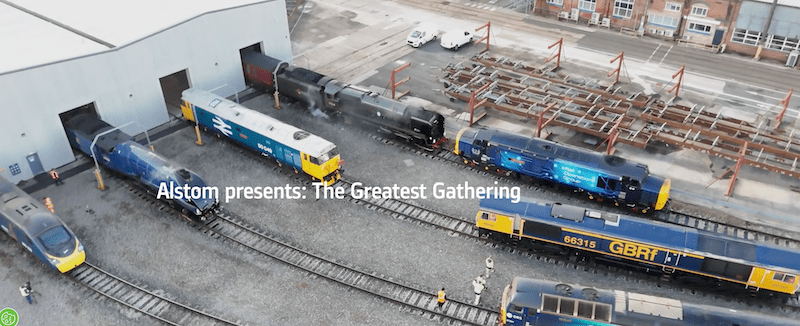
It can’t have escaped blog readers’ notice the railway is “commemorating 200 years of the modern railway” this year involving a whole series of events up and down the country including ‘The Greatest Gathering’ in Derby over the first weekend in August (which is sold out) and an ‘Inspiration’ exhibition train touring the country for 12 months from 27th June (tickets still available).
One event my friend Ray and I had the pleasure of attending last Thursday was the first in a series of guided tours taking place of three London main line termini – London Bridge, Victoria and Waterloo – taking place between now and November.
Thursday’s tour was the first one of Victoria and, as with all the upcoming tours, was led by celebrated historian and author Rachel Kolksy.

Network Rail describe it as “a two hour immersive walking tour of the station” and I can confirm you’re definitely “immersed” thanks to Rachel’s infectious enthusiasm and bountiful knowledge not just of the historical background to the station with key dates and facts tripping off her tongue but also the fascinating social history surrounding the railway’s development and its impact on the surrounding area, not forgetting more recent developments for retail and offices.
As well as a full walking tour within the station itself Rachel led our group of 15 participants into surrounding streets to demonstrate railway’s influence on surrounding architecture, the development of the adjacent Grosvenor Hotel (now The Clermont)…
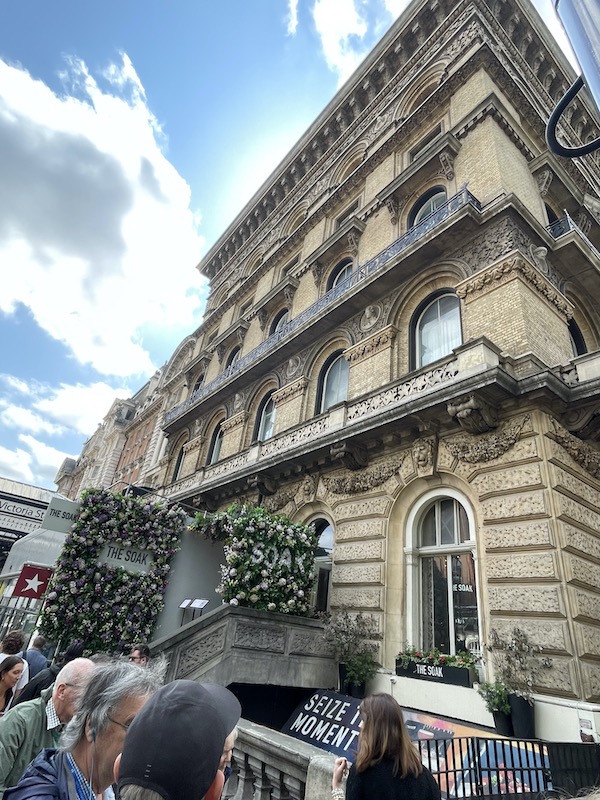
… and how Victoria became a transport hub with its bus station and the arrival of the District Railway as well as the nearby coach station and many airlines locating their offices and non airside terminal facilities including Imperial then BOAC and BEA.
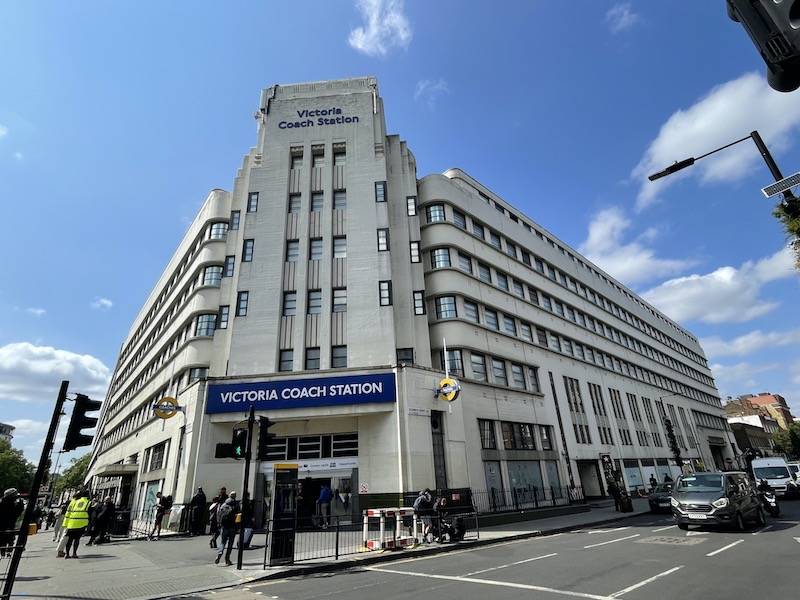
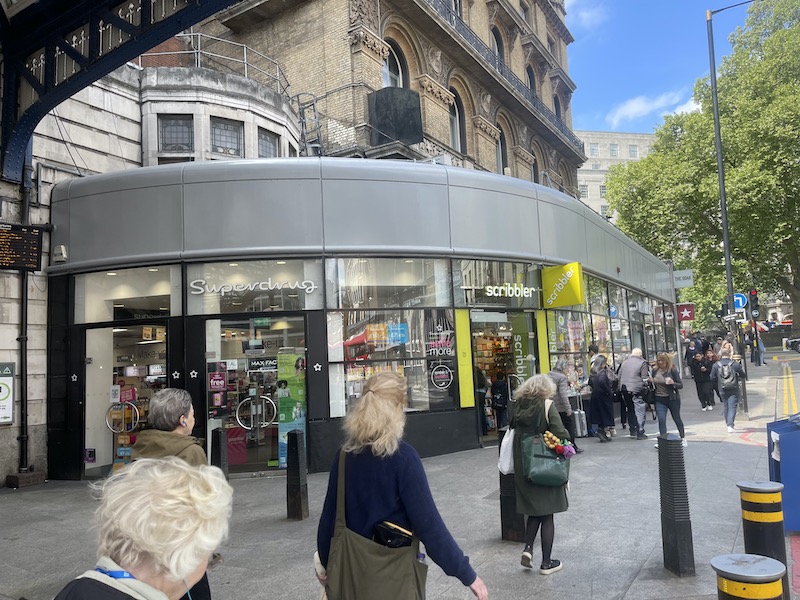
Rachel reminded us the retail unit at the front corner of the station was once a ticket and booking office for the pioneering Freddie Laker and his Laker Airways venture.
Rachel explained, and demonstrated by showing us the comparative architecture, how what we know today as Victoria Station began life as two completely separate and independently run stations with the London, Brighton and South Coast Railway opening in 1860…
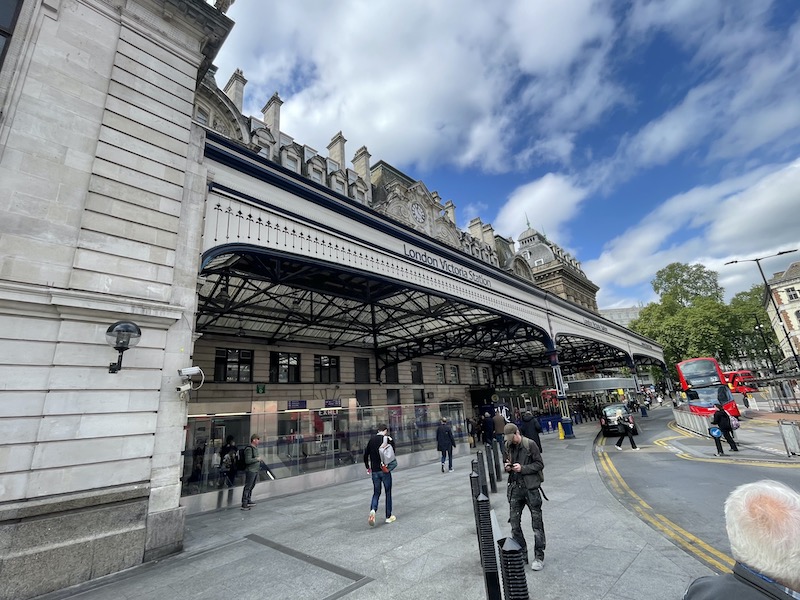
… outclassed by the London, Chatham and Dover Railway’s arrival two years later in 1862.
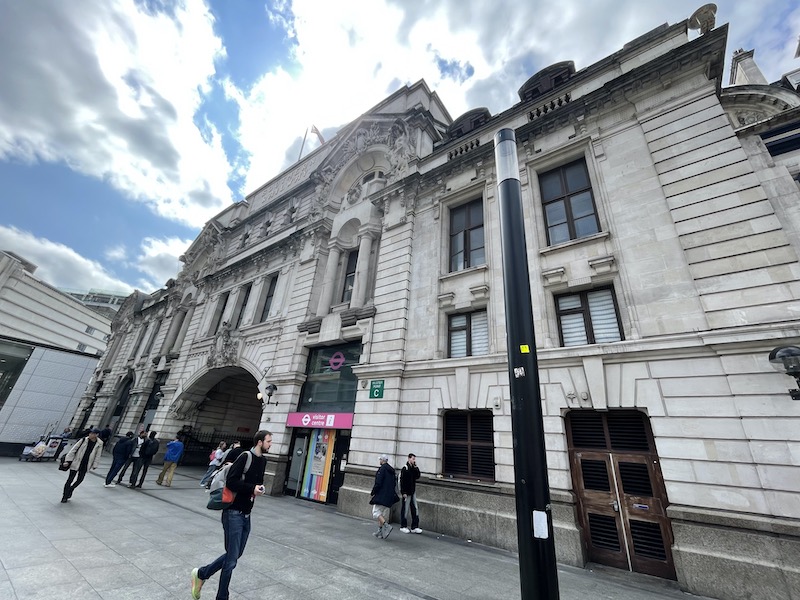
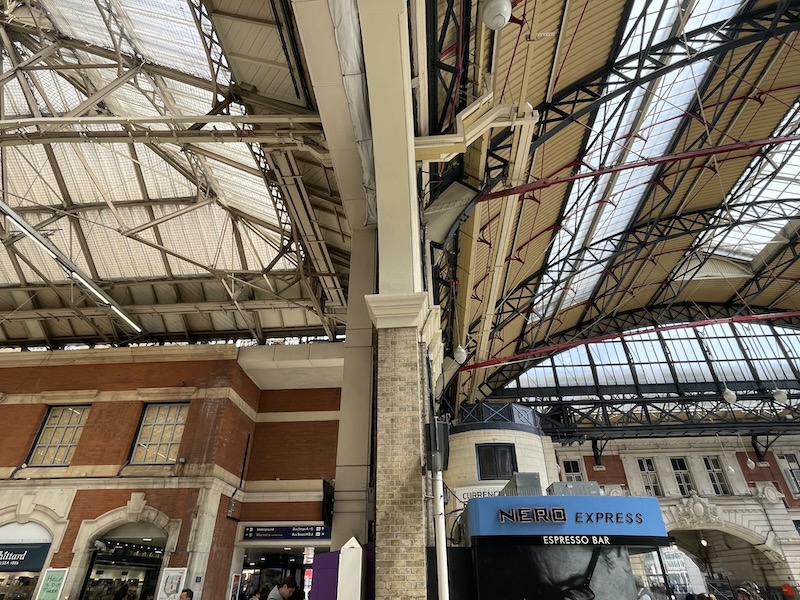
The separating wall between the two stations was knocked through soon after both companies became part of the Southern Railway as part of Railway Grouping in 1923 and steps were taken to merge staff and facilities into one coordination team with one Station Master. You can now clearly see the different architectural merits of the two stations by comparing either side of that former wall.
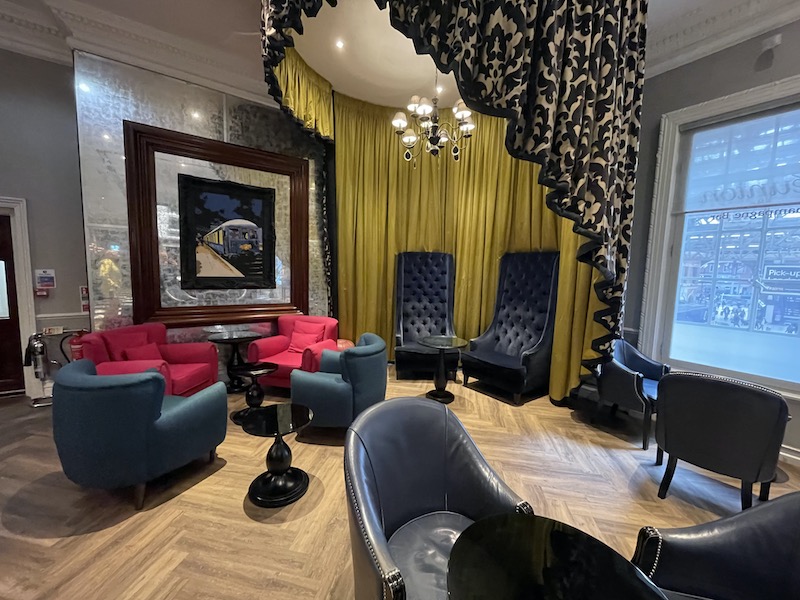
The tour includes a visit to the four star luxury Clermont Hotel with Rachel explaining its close links to the station including what is now a luxuriously appointed Réunion Bar for champagne and cocktails on the first floor…
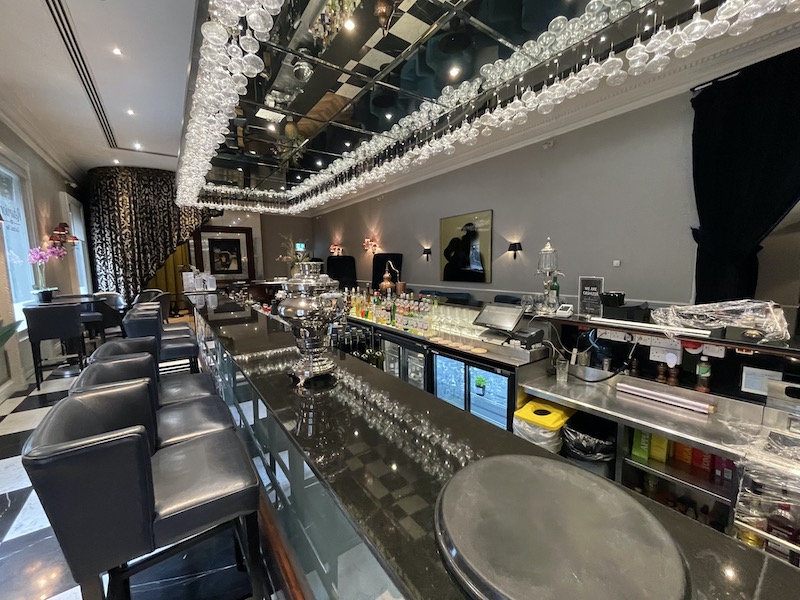
… overlooking the station concourse and what was once the first class waiting lounge for the Brighton Belle.
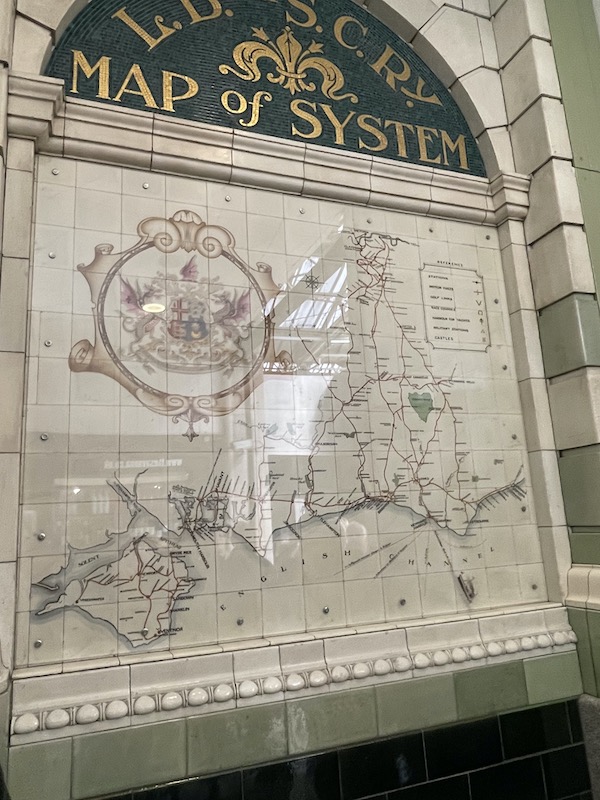
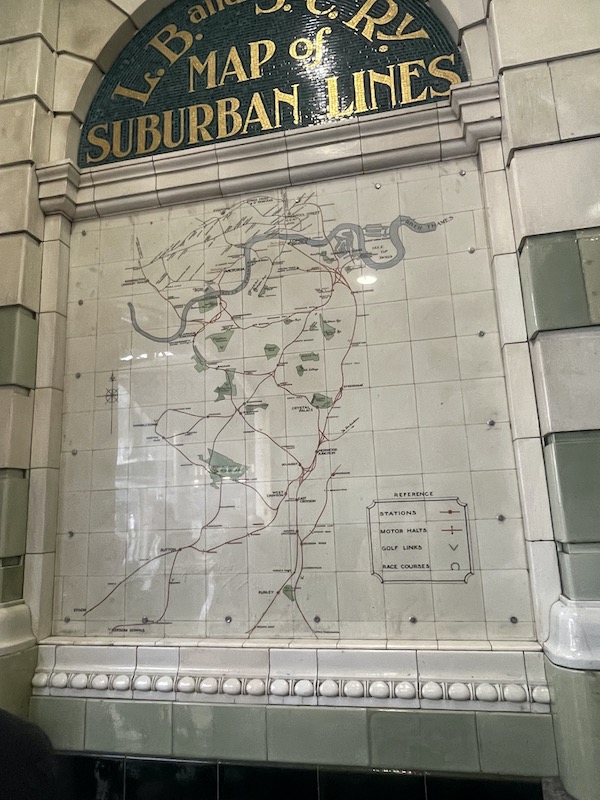
During the tour Rachel points out the recently exposed two huge historic London, Brighton and South Coast Railway route maps which have been hidden for so many years by telephone kiosks, now removed…
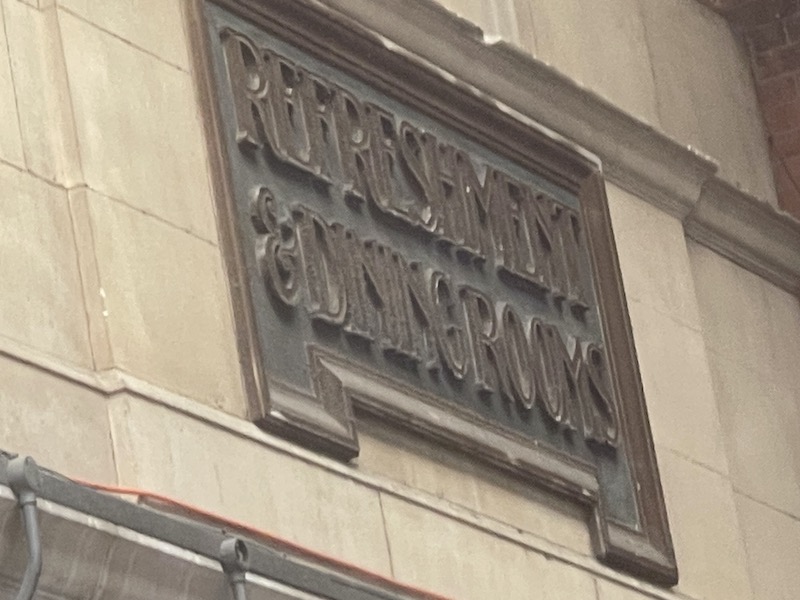
… as well signage for the station facilities such as booking office, refreshments and dining rooms which passing through the station most days I’d never spotted before.
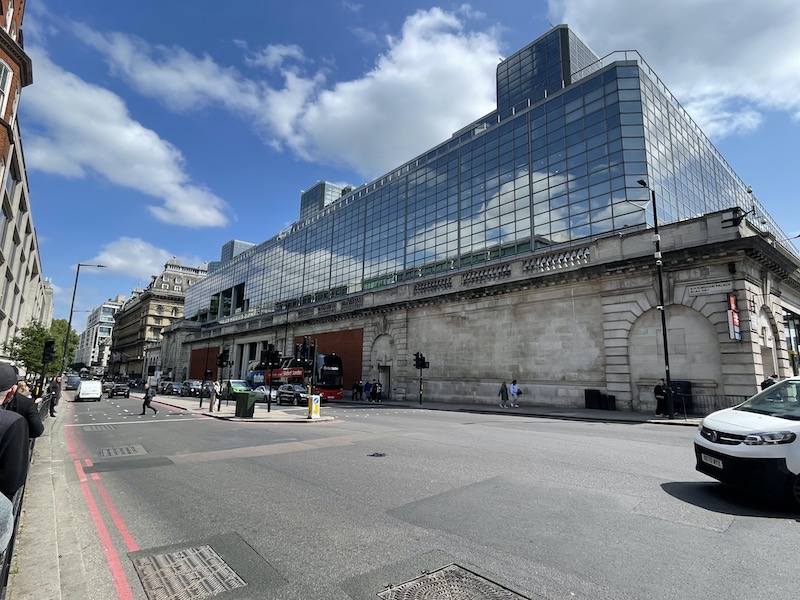
More recent history has seen significant development over the former London, Brighton and South Coast Railway side of the station with retail and offices and Rachel demonstrates how the ‘air rights’ were sold off and the impact this has had on the station by including this in the tour.
It’s a fascinating two hours, all the more so because of Rachel’s wonderful approach to imparting a wealth of information conveniently done through individual headsets as she leads the tour round.
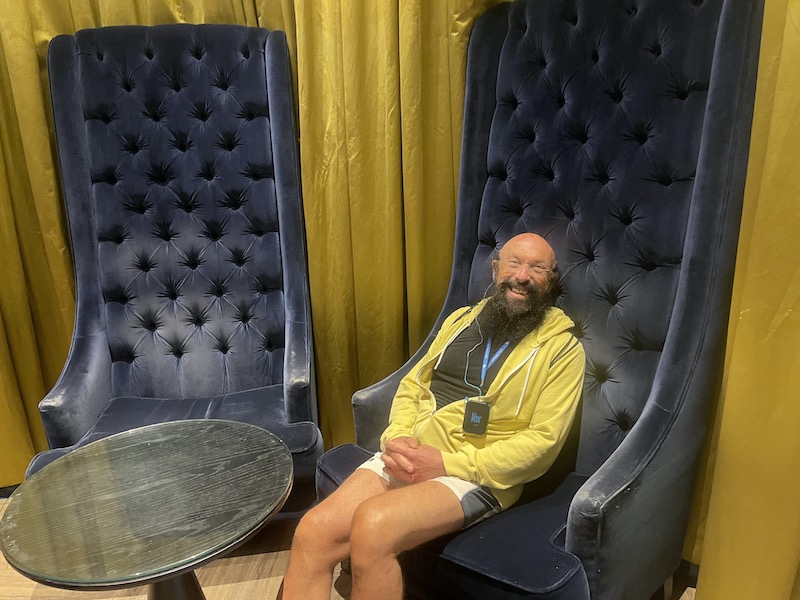
Ray and I are on our next tour of London Bridge this Thursday followed by Waterloo next month and we’re already looking forward to both.
I’d encourage readers to book but I see the Waterloo dates are all booked up and there are just a few places left for Victoria and London Bridge so hurry before they go too as word spreads how good the tour is.
It costs £25 but it’s good value compared to Hidden London’s outrageous pricing policy with its latest tour just announced (Charing Cross: Into the Overun) taking place next month, to mark 10 years of the format. It costs £100 for the dubious pleasure of sitting on a static train stabled partly in the ‘overrun’ at the end of the disused Jubilee line platform at Charing Cross and with a £25 extra charge to sit in the driver’s cab for a few minutes. What a complete rip off.
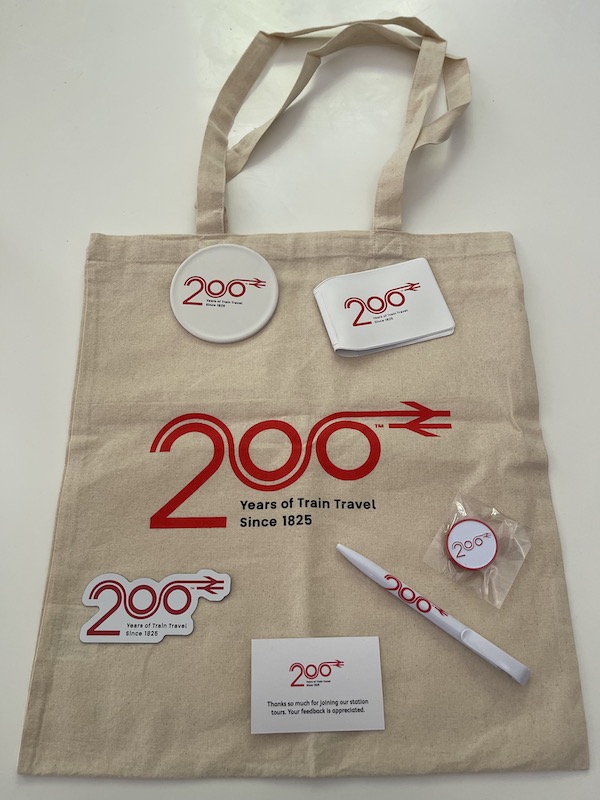
Finally, it was great to meet blog reader John on the tour and also come away with a ‘Rail 200 Goodie Bag’ containing the usual cheap plastic items I never knew I needed or wanted (I ate the chocolates).
Roger French
Blogging timetable: 06:00 TThS
 BusAndTrainUser
I did what I think was Rachel’s first tour at Waterloo in 2023 for the station’s 175th Anniversary; the headphones sound like a valuable improvement, allowing the group to spread out a little and still hear makes it a lot easier to manage. That said I think its hard for any guide to work a tour of that length solo and I can see why Hidden London tag-team between two guides.
Got to agree with Roger about Hidden London’s pricing, they’ve priced me out of their client base now especially since for a lot of the tours the sunk costs of the initial safety assessments, doing the research and any modifications to the station should been recouped long ago. The relatively small Friend’s Discount and the fact it can’t be gift-aided make it worse.
LikeLike
The “air space” above the platforms at the western side of Victoria Station used to house the British end of the Silver Arrow Service which I used on one occasion. Rail from Paris to Le Touquet Airport (diesel railcar stock), BUA BAC111 to Gatwick and then by rail to Victoria Station. As I live in Surrey, I bailed out at CLJ for connection home. At Le Touquet Airport the line ran across the runway on tram style tracks and as passports and other papers were inspected on the train from Paris there were no airport formalities: one was bundled off the train and up steps to one’s seat on the BAC111! Along with the BUA Terminal at Victoria Station there was the Red Star Parcels office where small packets could be sent via passenger trains in the care of the guard. I worked at TC&S and there were often tickets that needed to be sent to the TC&S branch in Crawley, so I visited the Red Star Parcels office quite regularly. I also needed to visit BOAC at their terminal on ticketing matters and by God weren’t BOAC staff snooty dealing with me a mere travel agency clerk! Visiting the BEA offices at the WLAT (Cromwell Road) was a joy as staff there were ever so friendly. The BOAC terminal as a building was nothing remarkable but I loved the WLAT with profound passion and it may have been the first step free building in the UK: it had inclined planes around the lift shafts instead of stairwells. It is a theory that I have because there may have been bulky and heavy loads needing to be moved between floors on trolleys so the inclined planes may have been a design requirement. At a hospital a long time ago, I saw such a trolley laden with an enormous number of medical files!
LikeLiked by 2 people
If you look at the satellite view on Google Maps you can see where the line to the airport used to diverge – it looks as if some of the rails are still there, albeit heavily overgrown and with the junction removed. Amazingly you can then trace its course right into the airport and across the runway (now I think a taxiway) where it looks is if the rails are still in situ!
LikeLike
No mention of the famous cloakroom (‘on the Brighton side’) in which Mr Jack (alias Ernest) Worthing was found in a hand-bag?
LikeLike
“A HANDBAG!!!!”
LikeLike
Did you notice how the ticket office has now shrunk to a mere handful of windows with a literal wall of self-service ticket machines facing them? And tourists arriving must be perplexed at the notices about where you can and can’t purchase an Oyster. Graham L.
LikeLike
I love your comment about Hidden London. So expensive and filthy environments to walk around. My only comment is Roger, ‘They sell out quickly’ Not for me at LTM’s prices.
LikeLike
I think you mean BOAC => BA. BEA moved from South Bank to West London Cromwell Road. The BOAC building later used at ground level by National Express for certain westwards departures before becoming home to the National Audit Office (NAO for a collection of TLAs)
“Green Line” Aka Bullied Way allows far more european coach services than I can ever remember and the “Collonades” office blocks housed more civil service departments and agencies. I cannot remember what was in that location in the 1970s and earlier but Eccleston Bridge being terminus and calling point for the many Green Line services of London Transport and later London Country (not all – Aldgate, Regent Street Oxford Circus and Baker Street saw some services that never got to Victoria)
Opposite Victoria Rail Station were offices and shops of international travel agencies STA being a rather well known student one
Sammy’s Garage too associated with Victoria and that road also had/has Met Police and I think Government Car repair/maintenance garages in the past behind some of the large wooden doors into the courtyards beyond on the north side.
Like many places mainly rail stations London Transport had a large enquiry office , located not in the District Line station as one might expect but the LBSC side (just) of the Station Exit.
Finally the Victoria Bus Station , gaining roof, loosing roof , getting Red Arrow Services and did Shoplinker and Star Bus ( evening theatre service ) and the 1 1/2 deck Inter station bus service serving it , nowadays bus services seem dispersed over the area.
At a stretch – was the Victoria proximity a factor in the creation of the Office Block at 55 Broadway and Victoria the nearest mainline station to the Passport Office in Petty France.
The only problem I ever had with Victoria is (and only part solved with the Victoria line – and thankfully that now has lift access ) the awkward journey onto the west end – more so Bond Street .OK I can walk it but Hyde Park really is the biggest block to travel from the south of central london to the north IF I have time the walk isnt too bad but its a good 45 mins crossing busy roads
JBC Prestatyn
LikeLiked by 1 person
Have you never noticed the 390 bus outside? Takes you straight to the West End without lifts and stairs.
LikeLike
To plug the gap in your memory, there was “nothing” in the location of the Colonades or where the Victoria Place shopping centre now is. There is an excellent series of aerial photos dated 1950 which shows the canopy for the Southern Railway/Southern Region platforms extending as far down as Elizabeth Bridge.
https://www.britainfromabove.org.uk/en/image/EAW033439
That’s consistent with numerous photos of Green Line coaches at Eccleston Bridge which show a road with brick walls on both sides and the station canopy visible above them.
https://www.ltmuseum.co.uk/collections/collections-online/photographs/item/1998-44409
LikeLike
Oh the other Victoria awkwardness are the higher numbered platforms with the extra walk to them as you try to find first train to Clapham Junction – though is worse the split length departures with half a platform to run to get the far train , even further if it was a two car for the South London Line to London Bridge
JBC Prestatyn
LikeLike
When I joined the London Omnibus Traction Society back in 1967 I used to travel up to Victoria by tube from my home in South Ealing & then walk to the coach station where monthly club meetings took place upstairs. I still recall many of the buildings referred to here as well as the atmosphere generated by passing buses & coaches disappearing into the night. After a typical evening of mixing with fellow enthusiasts & catching up with all the latest news (courtesy of typed news letters) it’s no wonder I became so taken with the hobby & remain so to this day. Keep up the good work Roger.
LikeLiked by 1 person