
Tuesday 8th April 2025
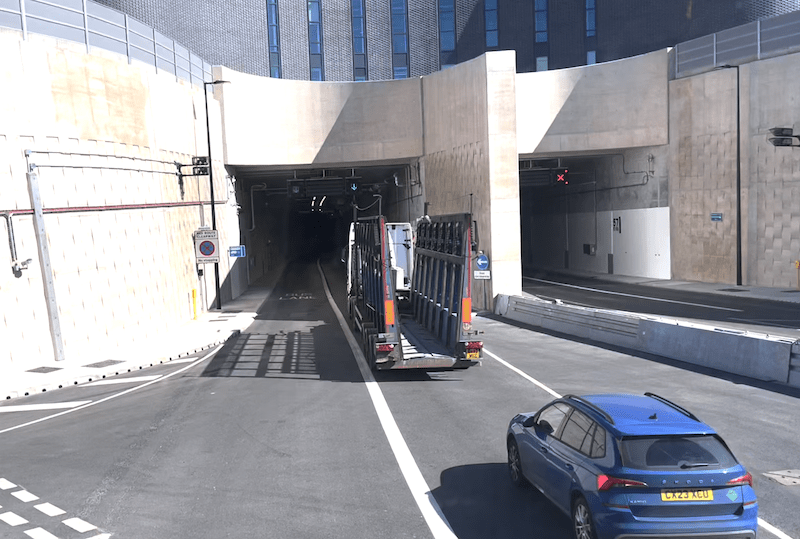
Welcome to the brand new cross-River Silvertown Tunnel linking North Greenwich with Leamouth and Docklands with the aim of relieving congestion in the nearby Blackwall Tunnel.
It opened yesterday, on time and on budget (£2.2 billion). The 0.9 mile tunnel includes a lane dedicated to buses and lorries and sees one completely new bus route (SL4 Grove Park-Canary Wharf) and another extended route (129 Lewisham-North Greenwich on to Gallions Reach) along with a dedicated bus service to carry cyclists and their cycles.
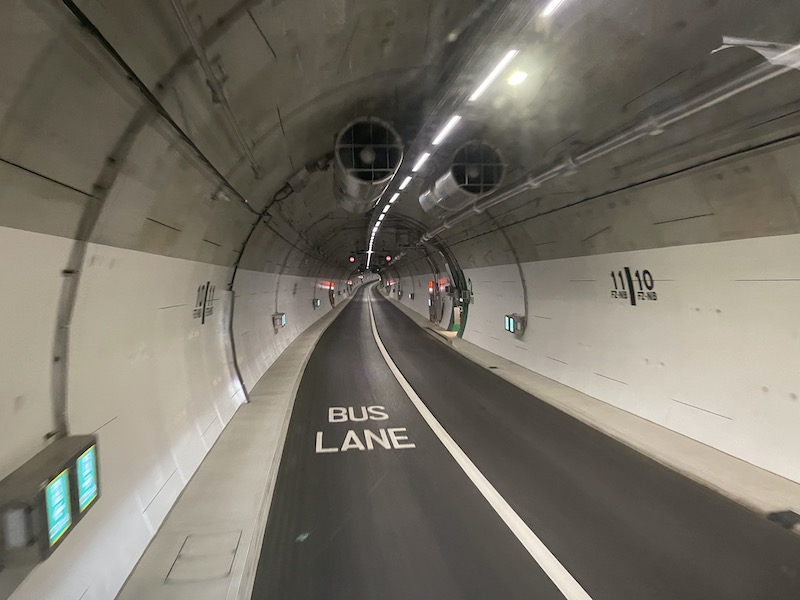
All three bus routes are free to passengers for the first year while motorists pay a toll of £4 to drive in the lane allocated for their use in the peaks (06:00-10:00 northbound and 16:00-19:00 southbound) and £1.50 off-peak with free passage during the night. Lorries pay £10 peaks and £5 off-peak. These charges – and free bus travel on route 108 – have also been introduced simultaneously on the, until-now-free-to-use, neighbouring Blackwall Tunnel.

Expectations are that a quarter of the 100,000 vehicles using Blackwall Tunnel every day will transfer to Silvertown plus generated traffic attracted by the improved cross-River connections now available. It’s the first new vehicle crossing for the Thames since Dartford gained its Queen Elizabeth Bridge in 1991.
Unsurprisingly a project of this kind has generated controversy not least the expectation large lorries attracted to use the Tunnel will add to traffic levels on connecting roads particularly during the night when TfL are waiving the tolls and the Tunnels are free to use. Furthermore, the Victorian built northbound Blackwall Tunnel has a height restriction preventing HGVs over 13 feet (four metres) but Silvertown has a more generous 15.5 feet (4.7 metres) height limit.

Local residents say pollution from traffic in neighbouring roads is already high so more HGVs and generated traffic for the Tunnel will simply add to it.
TfL expect to earn more than £100 million a year from tolls to pay off the private finance initiative which sees the Riverlinx consortium ‘Design, Build, Finance and Maintain’ the Tunnel over a 25-year term with TfL looking after the day-to-day operation.

As you would expect I took an interest in how the new bus routes were operating on their first day, yesterday, and took a ride on both the SL4 and 129 extension.

These were both subject to a TfL consultation between November 2022 and January 2023 and at that time, pre Superloop, the new route between Grove Park and Canary Wharf was tentatively numbered X239 at a generous frequency of every eight minutes.

This has subsequently been renumbered SL4 despite not being part of the ‘loop’ nor being particularly ‘Super’ inasmuch as it’s not limited stop with only a small part being an “EXPRESS BUS SERVICE”. Buses serve all 17 bus stops south of the Tunnel between Grove Park and Blackheath then run non-stop on the A102 and Silvertown Tunnel to Leamouth, then all nine stops to the terminus at Westferry Circus, Canary Wharf. On my 45 minute journey yesterday, only nine* minutes were spent on the non-stop section, the other 36 minutes were just like any other bus route.
(*Update: I originally stated six minutes when this blog was uploaded, but having rechecked the timings, can confirm it took nine – sorry for the confusion.)
With an eye to detail the bus side designer has included 22 small tabs on the route diagram together with five main intermediate interchange points but makes no reference to the Tunnel as it’s irrelevant when it comes to getting on and off the SL4 – there are no bus stops anywhere near it.

The route also includes a twiddle after it exits the north side of the Tunnel at Leamouth which I’ve tried to show on the annotated map below for Canary Wharf bound buses – the same twiddle also applies for Grove Park bound buses.

TfL preferred to keep the route on its trajectory towards Blackwall but the twiddle was favoured by respondents to the consultation in 2022/23 although it’s suspected there was some bias in the large number wanting this feature and their home addresses in the Leamouth area. It certainly adds disproportionately to the journey time having just completed a six minute non stop run from the south.

Back in 2022 TfL explained detailed analysis of which areas north and south of the River Thames should best be linked by the new Tunnel came up with joining Grove Park, Lee and Blackheath with Leamouth and Canary Wharf being a sure fire winner which just shows the value of data as I’d have never come up with that as a plan. As already highlighted, buses on SL4 don’t stop anywhere near Silvertown Tunnel but just use the new crossing as a convenient way to join these two separate areas of London.
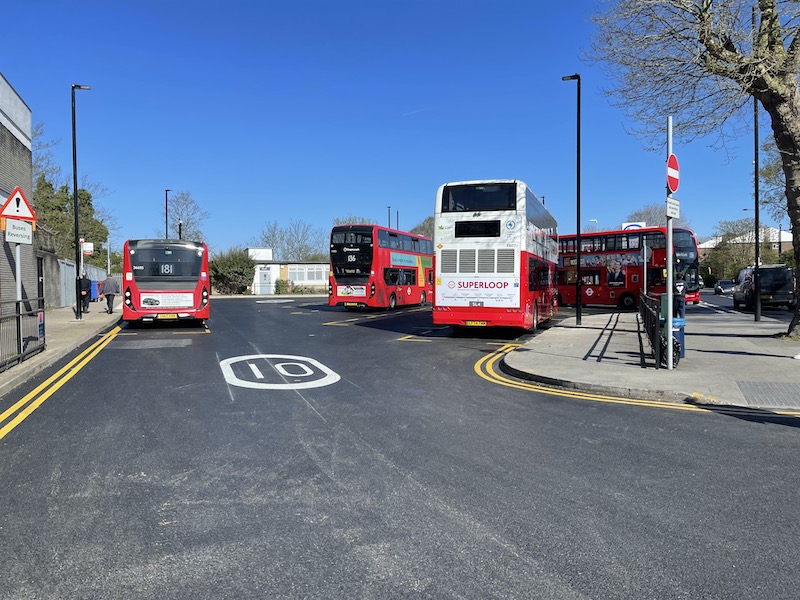
The other route through the Tunnel for bus passengers, the extended route 129 beyond its current northern terminus of North Greenwich, does pick up close to the Tunnel. Indeed North Greenwich Underground station itself is right next to the Tunnel, making for a convenient exclusive access for buses on the route.
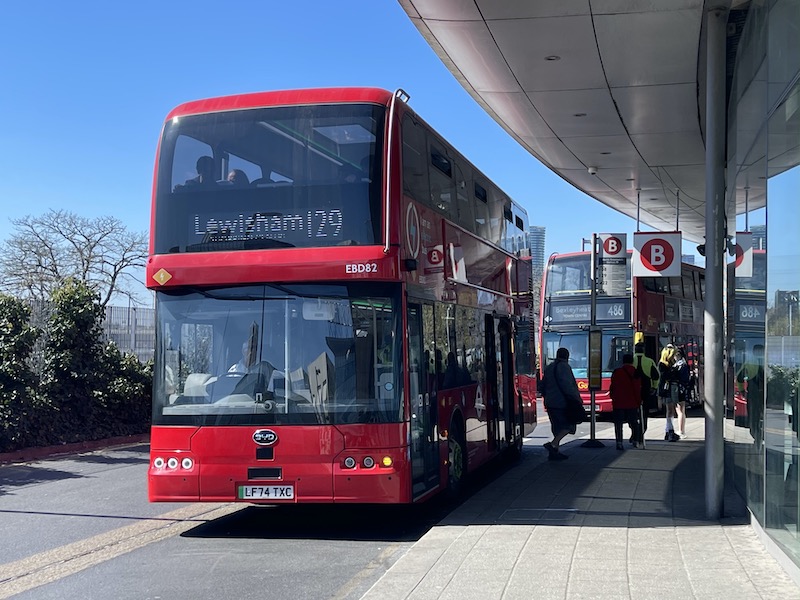
After passing through the Tunnel buses take a meander through the ‘Docklands-to-Becton’ area (taking in London City AIrport), ending at a new terminal point at Great Eastern Quay, by Gallions Reach.

This provides a convenient bus stop…
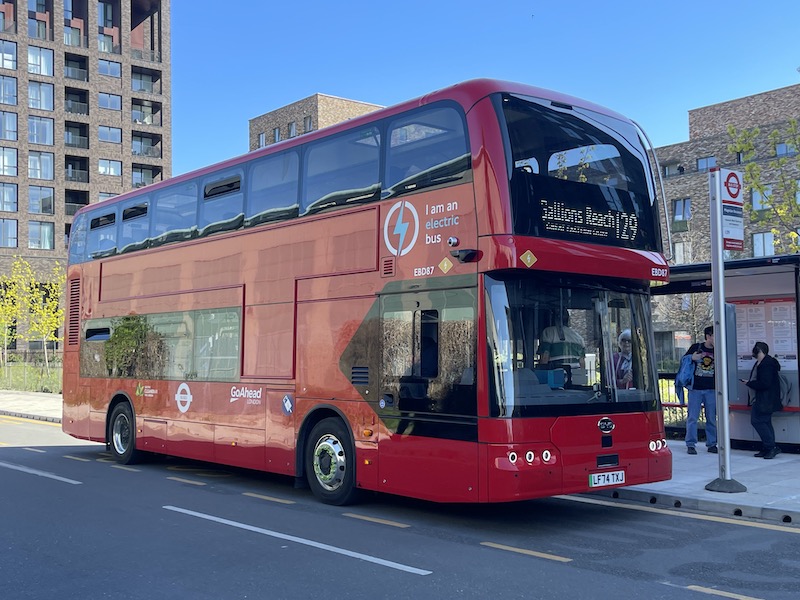
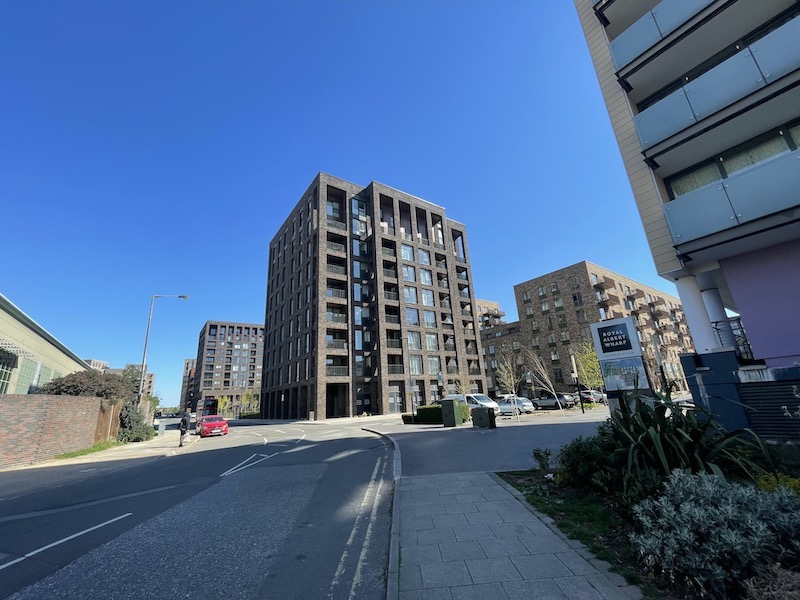
… for hundreds of residents in recently built flats who previously had a slightly longer, but not punitive, walk to their nearest bus route or the DLR.
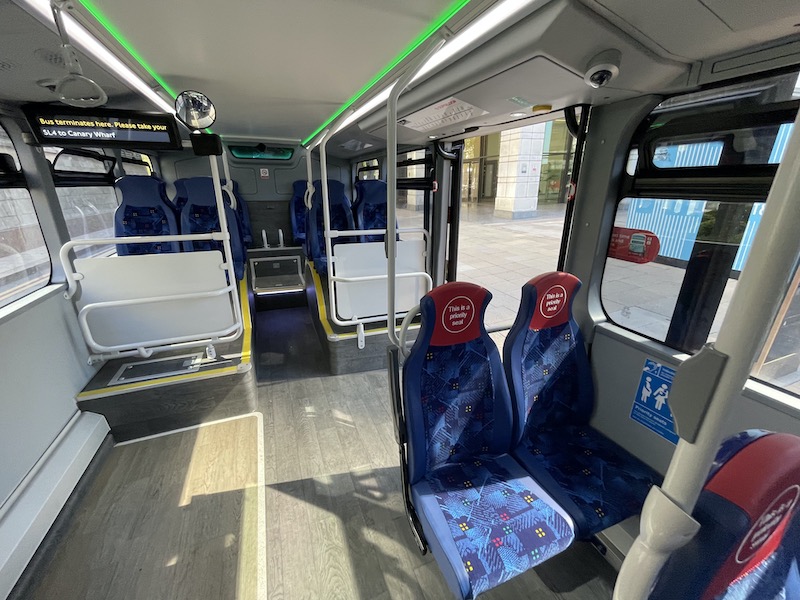
As you can see, both routes SL4 and 129 are operated by Go-Ahead London’s new BYD electric double deckers…

… offering all the improvements which go with new buses these days.
They’re operated by the Company’s Blue Triangle division from its base at Henley Road conveniently located near Silvertown.

Both routes are running at an impressive eight minute frequency representing a significant uplift for passengers on the original section of route 129 where the previous frequency was every 12 minutes. It’s also seen the number of buses required to run the route increase by a whopping 15, from seven to 22, which together with the substantial 18 buses needed for route SL4 means a total increase of 33 buses.

Then there’s the special Cycle Shuttle Service (CSC) for cyclists to use, reminiscent of a similar service which ran when the original Dartford Tunnel opened in 1963. That started with five specially adapted double deck buses but soon reduced to one and was withdrawn in 1965 due to lack of use.
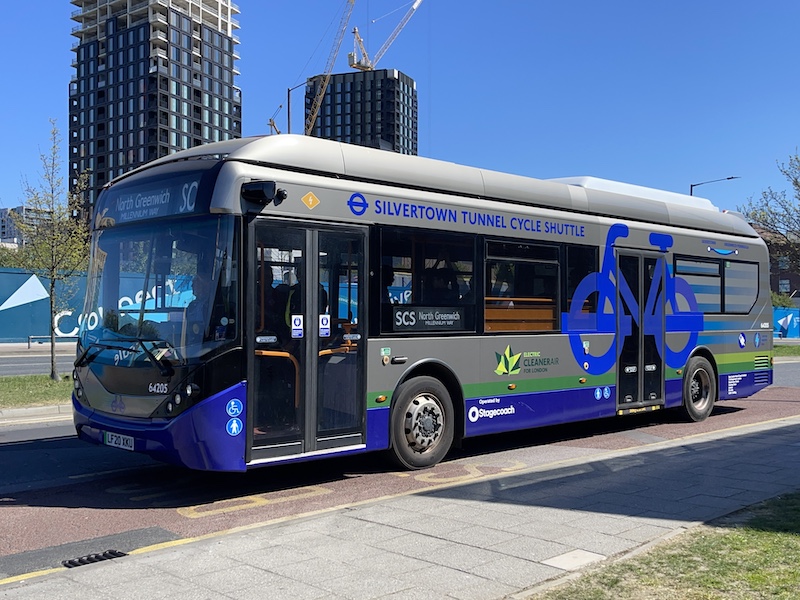
The 2025 Silvertown Tunnel version is operated by Stagecoach using three electric E200s from its West Ham garage. Prior to modification these buses previously operated on that depot’s route 323.
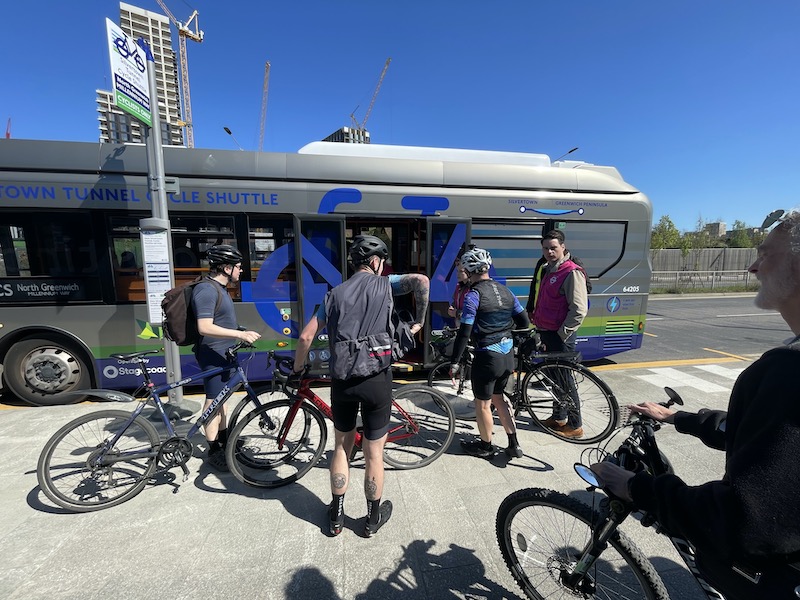
Buses pick up from a newly located bus stop on both sides of the Tunnel which have been sited to be handy for cyclists rather than pedestrians as the latter can’t use the bus unless they have a cycle. Strangely the wheelchair symbol is still depicted on the bus floor, but I assume no wheelchairs are allowed either.
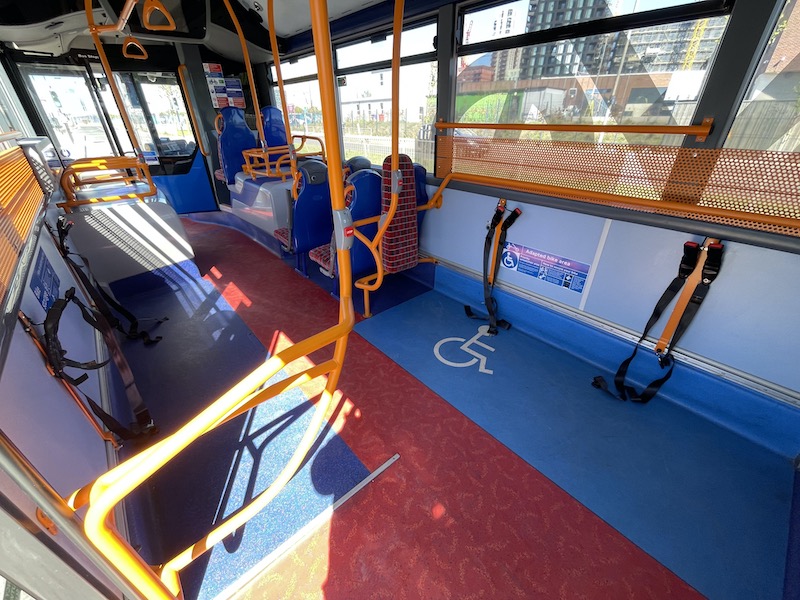
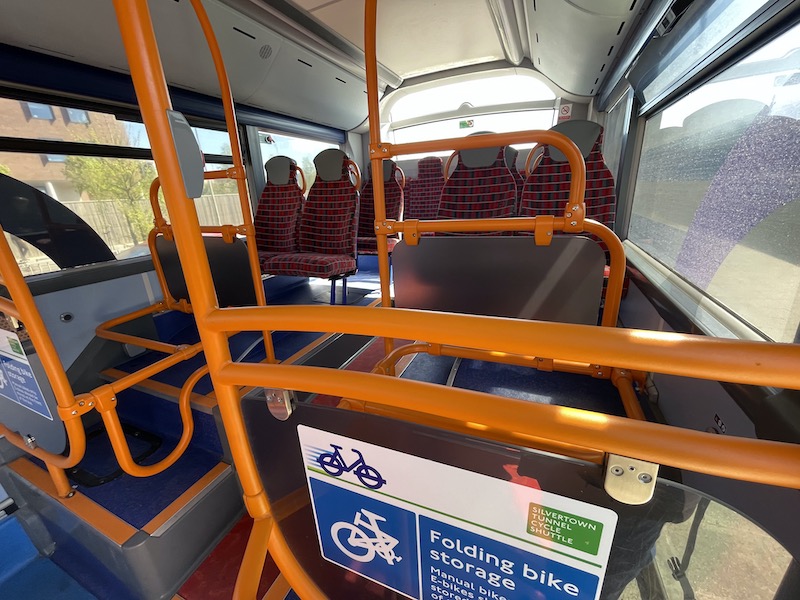
Buses run every 12 minutes and each can carry four standard cycles…

… eight folding bikes and a cargo style bike.
Readers will appreciate the foregoing represents a substantial increase in resources for TfL – 36 additional buses and what must be around 120 drivers and at least £10 million additional annual operating costs especially, as already mentioned, the three routes are free to use for at least the first year.
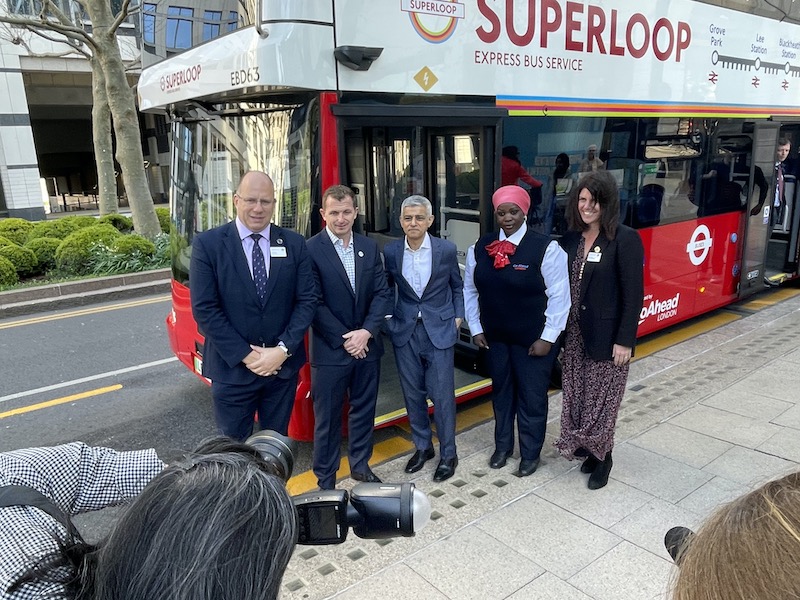
The project originated during Johnson’s tenure as Mayor with continued commitment from successor Mayor Kahn who was on hand this morning taking a ride through the Tunnel and doing media interviews.

As explained earlier, even though the SL4 is not a true Superloop route, it’s been given the full branding treatment, including adding logos to every bus shelter even though buses stop at every bus stop so hardly need distinguishing. I guess when you’ve built a new Tunnel for a couple of billion, the cost of a few roundels is petty cash.

The Tunnel has obviously generated considerable interest among local residents, commuters and today’s opening coinciding with the start of the Easter school holidays and lovely sunny weather, meant buses were doing a good trade with first time Tunnel riders out in force satisfying their curiosity. There are some spectacular views to be had of Docklands travelling along the SL4.


Gaps in service were evident on both routes – perhaps reflecting the challenge of recruiting so many drivers for a substantial overnight uplift – and roadworks were doing their usual disruptive job, Blackheath was a particular bottleneck on the SL4 with Lewisham a hotspot on the 129.
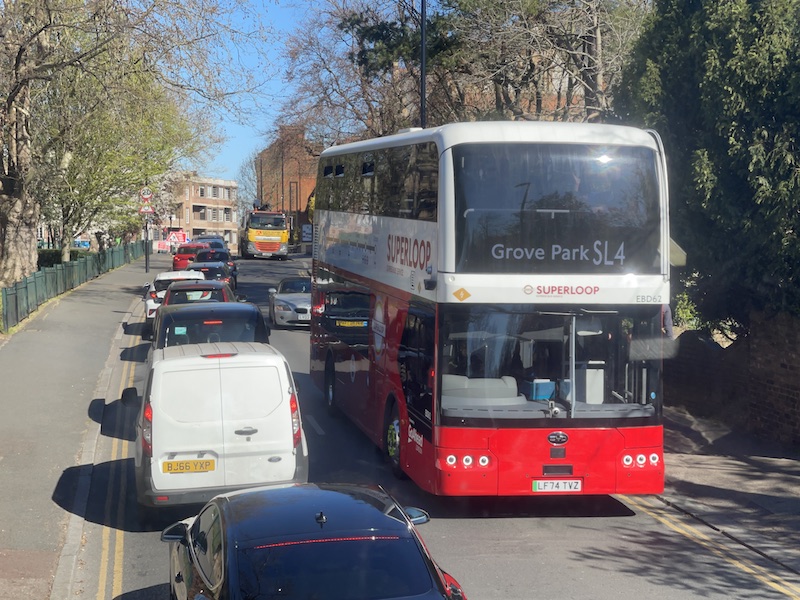
I boarded an SL4 at its first southern bus stop, a short walk north of the bus stand in Grove Park, and we hadn’t moved an inch before the announcement came that the bus was being held “to regulate the service”.

Route 129 was proving particularly popular for regular passengers south of North Greenwich to Lewisham now that it’s both more frequent and free to use while many were exploring the new section north of the Thames to Gallions Reach and finding out exactly where Great Eastern Quay actually is.

The cycle bus was also proving popular with many inquisitive cyclists eager to give it a try but those I spoke to were unconvinced this initial demand burst would last once the novelty wears off.
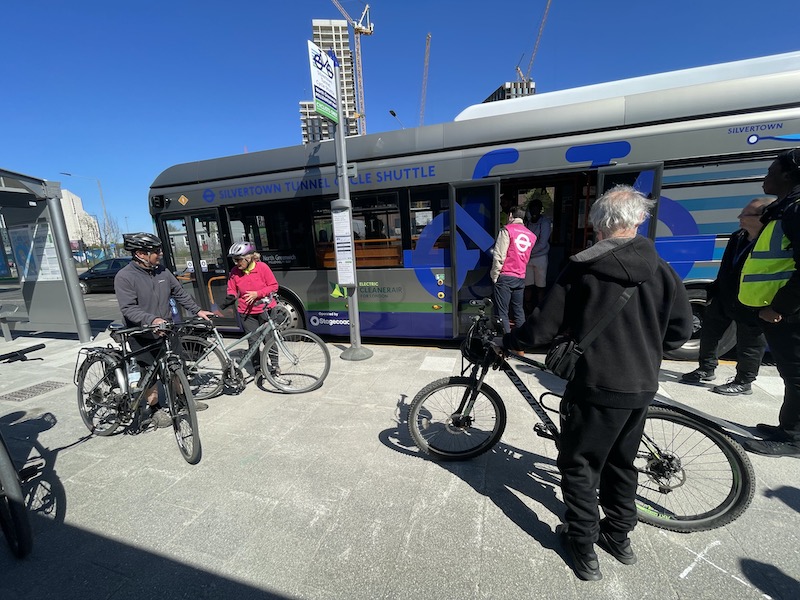
I met up with my good friend Geoff Marshall who was out and about filing a video for his YouTube channel about the Tunnel and his travel experiences on the new routes including taking his bicycle on the SCS. Here’s a link to the video here, and there’s also a members’ only extra – you might recognise a contributor who appears in them.
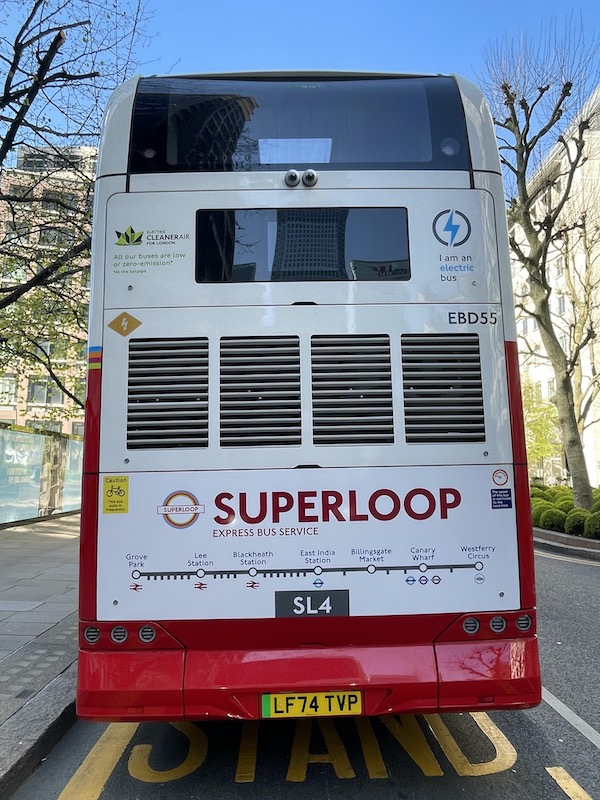
It’s not every day a new piece of road, let alone a tunnel, opens in London. And it’s also not every day, you see 36 new buses enter service on new and extended bus routes. It’ll be interesting to see how these developments pan out over the next few years.
Roger French
Blogging timetable: 06:00 TThS


3 buses for cyclist. That sounds to be Overhill particularly when TfL’s previous attempt found little demand
Why 12 months free use as well . A few weeks maybe but with TFL funding being scare 12 months free use seems a poor use of scarce funding
I suspect as well that TfL is going for overkill with the normal buses and the supply will exceed the demand but we will have to wait and see with that
LikeLike
You understand how idiotic those tunnels are without cycling tunnel, this is 2025 and there should be less and less real estate lost to cars….
LikeLike
“…when TfL’s previous attempt found little demand”
Which previous attempt by TfL? If you are referring to the Dartford Tunnel, that cycle bus ceased 35 years before TfL was created.
Trialling the cycle shuttle bus is probably a political requirement from City Hall, to ensure the Silvertown Tunnel can be used by people using bicycles. Trialling it will provide the answer to whether the demand actually exists or not. You may be proven right, we shall see over the next couple of years.
As for who is funding it, I would imagine and hope that it is paid for out of the revenue from tolls rather than eating into the budget for bus services in general.
Malc M
LikeLike
Whoa, don’t go expecting facts or logic from bob! He doesn’t like those.
Terrance
LikeLike
Like Roger I took a ride through the tunnel yesterday and was impressed by the buses used on the service.
The 129 provides a useful link from south of the river to London City Airport but it’s a pity that this isn’t shown as a pictogram on the spider map at North Greenwich. The route also provides a useful link north of the river for concert goers visiting the 02
At a frequency of every 8 minutes it does seem a bit generous and given that TfL has reduced bus services to the local shopping park at Galleons Reach this doesn’t really make up for that. Why didn’t it terminate there ? This would also obviate the need to weave through parked cars on the approach to the northern terminus as no parking restrictions appear to be in place. Did TfL not request this from Newham Council ?
The SL4 also provides a new link to south London but as Roger says it’s only an express for a short section.
The cycle shuttle didn’t seem to be that well used and I suspect that it won’t be. Also pretty outrageous that the electric buses were robbed from the 323 bus route. But there again when it comes to promoting cycling TfL seems to have an unlimited budget
Martin W
LikeLike
Free buses at generous frequencies, and a free facility for cyclists, for a year whilst motorists pay is exactly what is needed to ingrain the sutainable travel habits from the off. Far better to do this now than to attempt some form of modal shift a few years down the line after car-dependency has bedded in.
Julian Walker
LikeLike
I have seen other reports (from before the opening) that the cycle shuttle, at the south end, is not very accessible for cyclists (the roads needed to access the pick up/drop off are not ideal for safe cycling)
Planned in non-usage to permit later withdrawal without much protest?
MilesT
LikeLike
With the opening of the Silvertown Tunnel can TfL really justify keeping the Woolwich Ferry service going ?
LikeLike
Yes it can. Certain types of dangerous goods are banned from using the tunnels, so the ferry is a principal method of crossing the Thames for this type of traffic.
LikeLike
Anything less then E can travel through the tunnel and thats most goods
LikeLike
Dangerous goods are totally banned from the Woolwich Ferry so your argument doers not stand up
LikeLike
“…can TfL really justify keeping the Woolwich Ferry service going ?”
Providing the Woolwich ferry, free of charge, is a statutory requirement. Possibly the only specific service which TfL is required by law to provide.
Malc M
LikeLiked by 1 person
Those BYD buses are like eye-bleach to me, and somehow they made them look even worse with that horrible Superloop livery. But great article as always Roger.
LikeLike
And zero forward vision for seated passengers downstairs thanks to the single high-backed seat and passenger display screen over the front n/s wheelarch. These buses are a terrible design.
LikeLike
The large and growing community of cyclists say they feel discriminated against – the tunnel was not designed to accommodate cycling and the paltry bus service is guaranteed only for a year. It’s a mode of travel that emits no pollutants, makes almost no noise, doesn’t damage road surfaces, poses next to no physical danger and boosts both physical and mental health.
LikeLike
Some wild and unsubstantiated claims there
LikeLike
From an accessibility point of the view, Wheels for Wellbeing, a charity seeking to breakdown the barriers to Disabled adults and children cycling, have published their full assessment of the bus.
The report states in no uncertain terms that they, “consider this service inaccessible and unsafe to use for most Disabled people using non-standard cycles and do not consider it a viable way to cross the river.”
They go onto say that, “We consider this service unlikely to be accessible or safe to use for many Disabled people using standard bicycles, especially for people using heavier e-bikes or if carrying cargo (including additional mobility aids) or children.”
LikeLike
From an accessibility point of the view, Wheels for Wellbeing, a charity seeking to breakdown the barriers to Disabled adults and children cycling, have published their full assessment of the bus.
The report states in no uncertain terms that they, “consider this service inaccessible and unsafe to use for most Disabled people using non-standard cycles and do not consider it a viable way to cross the river.”
They go onto say that, “We consider this service unlikely to be accessible or safe to use for many Disabled people using standard bicycles, especially for people using heavier e-bikes or if carrying cargo (including additional mobility aids) or children.”
LikeLike
whinge, whinge, whinge…
LikeLike
no doubt pedestrians feel the same! Ps – cycling in London is a white, professional, 20-30 something, hobby.
LikeLike
Some wild and unsubstantiated claims there.
LikeLike
” cycling in London is a white, professional, 20-30 something, hobby”
Why do you think cycling is “a hobby”? It is a mode of transport, used for a variety of trip purposes (including commuting).
Is it limited to “white, professional, 20-30 somethings”? It might be that that there are more people in that group who cycle compared to others, but to turn the question around, why is it that people who are not part of that group less likely to cycle? What puts them off (compared to, say, Amsterdam or Copenhagen where getting around by bike is a way of life, whether you are 8 years old or 80)?
Malc M
LikeLike
If the map is to scale, and I am sure it must be, to take just SIX minutes to travel the distance from “Sun In The Sands” to Leamouth (if I read correctly) seems pretty fantastic going in my book. So being “just like any other ordinary bus route” surely far outweighs such a downside.
Terence Uden
LikeLike
Six minutes from the Sun in the Sands to Leamouth certainly does look impressive! The schedule on London Bus Routes indicates this stretch should take 12-20 minutes depending on time of day: London Bus Routes – SL4 timetable
It could be, of course, that the schedule gets tweaked once the SL4 (and general traffic levels around and through the tunnel) have settled in. Nevertheless, six minutes to do that stretch is less than I would have expected.
Malc M
LikeLike
Sorry Malc; have rechecked the timings and it actually took nine minutes (still impressive though) – have updated the wording in the blog. Sorry for the confusion.
LikeLike
Sorry Terrence; have rechecked the timings and it actually took nine minutes (still impressive though) – have update the wording in the blog., Sorry for the confusion.
LikeLike
Well Roger, nine minutes still looks amazing to me, but is perhaps a little more realistic! One small point to note is that my name does only have one “r’ and thus gets confused with someone else who replies on here, although not giving their full name….and not necessarily sharing the same views.
Terence Uden
LikeLiked by 1 person
My understanding is that TfL have to date put very little funding into this project as it is funded and constructed by the Riverlinx consortium. The main funding from TfL starts once the tunnel is open, and available for use, and is then funded by the tolls.
LikeLike
During my final year at Secondary School (Wayneflete, Esher) I took part as “Speaker” for my House during that year’s Public Speaking Contest. My topic “Free travel on public transport for all”. This was 1968-1969! In posh Esher I had no chance of winning but I now admire my courage to even address all the school from the stage of the School Hall. Never in my wildest dreams would I see free travel for all come to fruition, albeit in a very modest way after the Silvertown Tunnel had opened. The Leamouth (Orchard Place) stop should not be decried as nearby is high culture – the HQ of English National Ballet.
LikeLiked by 1 person
(Try again; pressed the wrong button and can’t see an edit function in WordPress!)
The cycle shuttle seems deliberately set up to fail. It’s not “sited to be handy for cyclists”, in fact just the opposite with no direct link to what little local cycle network there is. Ironically there is an existing cross-river link in the shape of the Dangleway cable car, which carries bikes free in the morning peak but charges at other times when its tourist potential is presumably the priority.
The Superloop brand really is being stretched too far as noted by Roger. It now doesn’t tell you that the route is either limited-stop or orbital, and the number used never seems to have any relationship to previous or parallel route numbers to help passengers know where it goes, which really just leaves “introduced during Sadiq Khan’s time in office”, which I suspect is the main aim.
LikeLike
I guess it is a Superloop as the route has so many loops in it
LikeLiked by 2 people
Thanks for this interesting review. I would not call a bus every eight minutes -WHEN they are running to time – ‘generous’; I know that it’s a frequency many areas of the country would die for, but the game now is to get as many people as possible out of cars and on to public transport. and 8 minutes is the most I would want to wait on a street, with probably no seat, in not very wonderful air quality. Particularly if your journey involves a change of bus.
It’s really good that the 129 in particular has lots of good interchanges, and connects with just about every rail/tube/DLR route it comes near, plus the City Airport, though it does miss the Elizabeth line. The SL4 also manages to connect with most rail/tube/DLR (and Elizabeth) lines – missing out only the north Kent line; however, the A2 tunnel(s) approach road does pass only a few yards away from the platforms of Westcombe Park station – but a link there might be expensive, as it would involve a walkway to get to the A2 southbound stop….
LikeLiked by 1 person
Complaints about the buses being free baffle me.
Free buses while cars have to pay a toll. Why would anyone who wants better public transport and modal shift complain about that? With that sort of attitude it’s no wonder we never get very far in this country!
Steve
LikeLiked by 1 person
Why can’t the SL5 be extended from Bromley to Grove Park to truly make the SL4 part of the loop?
LikeLike
It probably could. The question is whether the additional cost of doing so would be justified by demand (noting that passengers abstracted from existing bus routes is not additional demand).
Is the purpose of transport to produce a map where things join for the same of making them join? Or is it to understand where people travel from and to (or may wish to travel from and to) and provide for that?
If the SL4 did make connections with the SL3 and SL5 at Bromley, what connections would that enable? Croydon to Canary Wharf? Already possible and quicker by Overground and Jubilee Line with a simple change at Canary Wharf. Bexleyheath or Sidcup to Canary Wharf? Already possible (and probably quicker) using SL3 to Abbey Wood then Elizabeth Line.
Malc M
LikeLike
Beckton in the 1960s!
I started working in the Greater London Council’s testing station in January 1966. In that summer my bosses decided to give me an ‘interesting’ site survey for the third river crossing that used the old Beckton Gas Works as the northern approach for the crossing of the River Thames. To reach the site of the boreholes meant trains to East Ham from Harrow and then a bus down East Ham Manor Road to Beckton Road and a long walk through the Beckton Gas Works. There was no Docklands Light Railway nor a 129 to Galleons Reach. Then came the boreholes from a barge moored in the River! It was shout for the launch to fetch me from a quayside ladder. Jump onto the barge. I was warned not to fall into the Thames!! As a Civil Engineer probably one of the more interesting projects in my career. That experience ended in November 1966. The GLC never built the Thames crossing on that site, but a shopkeeper at a stall that I stopped at on the way home one evening said that I looked pale – must have been the chalk that the guys found had rubbed off on me!!!
Allan
LikeLike
“Strangely the wheelchair symbol is still depicted on the bus floor, but I assume no wheelchairs are allowed either.”
Potentially useful for those who use one of these (or similar models from other suppliers):-
https://www.trirideitalia.com/en/power-device/
RC169
LikeLike
How many years before both tunnels are as congested as the Blackwall Tunnel was prior to the new one opening? Induced demand always destroys the “just one more lane” ideology.
The Silvertown Tunnel should have been a new DLR route, or at least exclusively for a BRT.
Peter Brown
LikeLike
You could say the same about the central core of the Elizabeth Line. I don’t see the parallel Central Line is any quieter!
LikeLike
True, but public transport can better absorb the increased demand as it is more space efficient and with much less environmental impact than roads. I’m thinking of noise, pollution (fumes, particulates, CO²), heat island effect of road surfaces in summer.
Peter Brown
LikeLiked by 1 person
so the Silvertown tunnel should have been a Canning Town – Royal Victoria DLR chord? More madness from the Eco loons!
LikeLike
If 36 buses cost £10m a year to run presumably 3 (the requirement for the cycle shuttle) cost approaching £1m. Would it not be better to give this money to the Dangleway to extend the current free travel offer to cyclists beyond the current morning peak only?
What am I missing?
Appreciate the shuttle bus starts half an hour before the Dangleway but this needn’t be a deal breaker.
LikeLike
I thought a 24 hour service was proposed originally but I may be wrong. There should be one. Even a North Greenwich to Canning Town shuttle would do the job possibly operated with the cycle buses.
MikeC
LikeLike
Proposed Bus Service Impartments in Tendering and Harlow areas
Major changes being made to buses in Essex including new services
LikeLike
Whilst cycling is a nearly emission free form of transport the amount of road space that it has been given in dedicated lanes has reduced traffic speeds and made bus travel far less attractive, reducing significantly the number of bus passengers and increasing the subsidy requirement of the bus network. With cycling being 3/4% of journeys my guess is that more passengers have deserted the bus than been attracted to cycling, so the overall non private car numbers have reduced. Paris has recently suffered a similar effect. More eco madness than a thought out transport policy
LikeLike
In Central London where road space is very scare. I would say cyclists and all non essential vehicles should be banned. Leaving the road space for public transport which in general in Central London is very good
LikeLike
I would amend that slightly to include most private cars as non essential vehicles in central London, leaving the roads free for public transport, cycling, and walking. Most car journeys are around 2 miles or less, easily done by bike for most people. Surveys show that many people want to cycle but are deterred by traffic danger.
Cars are not compatible with densely populated urban areas, they take up way too much space. We have a climate emergency and an obesity crisis. Active travel and public transport should be prioritised over sedentary congestion causing cars, leading to more liveable towns and cities, with improving environmental and health outcomes.
Peter Brown
LikeLiked by 1 person
Funnily enough this popped up in my email, very timely!
https://bettertransport.org.uk/blog/transport-and-health-on-world-health-day/
Peter Brown
LikeLike
But cyclists emit more CO2 than bus passengers
LikeLike
Cycling is still as very small miche mode of travel. In London only about 3.5% of journeys are by cycle
LikeLike
“only about 3.5% of journeys are by cycle”
As a percentage, it might seem insignificant, but in terms of the actual number of journeys, it will nevertheless still be a considerable number.
Rather than focussing on the existing percentage, is there potential to increase it? Why is it that cities such as Amsterdam and Copenhagen have higher cycling use than London? What are those cities doing that London isn’t? Peter Brown’s comment (subsequent to yours) is a pointer:
“many people want to cycle but are deterred by traffic danger”.
Malc M
LikeLike
Malc M
This video explains the Dutch approach to making cycling safer quite well I think.
Peter Brown
LikeLike
I found this excellent explainer as to how Dutch toad infrastructure became so well designed. I doubt the Silvertown Tunnel would have met the environmental criteria on approach road noise for example.
Peter Brown
LikeLike
Decided to have another trip today on the SL4. Got lost finding the stop at Canary Wharf not helped by the fact that the local area bus map hasn’t been updated to show it. Anyway eventually found the stop and went for a ride. Terrible traffic around Blackheath otherwise a good journey
Martin W
LikeLike
i don’t think cyclists and cars can share the same tunnel for safety reasons (air, noise, etc). So cyclists would need an additional tunnel bore. Maybe an extra 100M or so. Would they be prepared to pay a toll to cross just like car drivers?
Andrew
LikeLike
As good as this all looks, I cannot see the SCS shuttle being a success.
I can understand not building a cycle & pedestrian tunnel due to cost, but surely adding a set of bike racks for 4 or 6 bicycles on the front of the new BYD BD11s would have been better/cheaper than providing a dedicated cycle shuttle which cannot even accommodate all types of bikes?
Bike racks on buses is very common in the US and Canada. (Images are from Wikimedia Commons).
Chicago Transit Authority (CTA) NovaBus LFS on route 56 to Washington/Michigan showing the bike rack on the front
Toronto Transit Commission (TTC) bus on “The Esplanade” according to the Wikimedia commons description, showing 1 bike attached to the bike rack
LikeLike
Front fitted bike racks aren’t legal in the UK, safety implications in the event of an accident particularly to pedestrians but they would do quite a bit of damage to a car (other countries will, of course, have different Construction & Use rules but since TfL are pushing manufacturers to redesign front ends to minimise impact damage they are hardly going to do that and then stick a load of metal racks on the front and undo all that work). Rear fitted are unpopular with cyclists due to risk of theft from an unobserved storage device whilst being an issue for operators due to some manufacturers invalidating warranty if fitted as an after market feature (and none offer as standard) and bike trailers mean younger drivers need special licenses to drive with a trailer so it limits who can drive them without extra training. When we ran a bike user focussed leisure bus a decade ago we ended up going with internal storage as no external option actually worked when assessed practically.
Dwarfer
LikeLike