
Saturday 21st December 2024
Welcome to another end of year nostalgic look back over the last twelve months of bus and train activity in Britain. For those who are ‘time-scarce’ here’s the customary word cloud summing up 2024 in one easy glance.

But for those with bags of time, we begin with the usual BusAndTrainUser Quiz of the Year to kick things off to test your knowledge and recall of the last twelve transport months (with thanks to BBC’s Only Connect and Have I Got News For You). All the answers are at the very end if you don’t spot them in the write up that follows. I’ve made them much easier this year and regular blog readers should have no problems achieving 12 out of 12 and winning the coveted top prize of a year’s free subscription to next year’s blog posts.
BusAndTrainUser Quiz of the Year 2024
1. Who comes next in this sequence: Heidi Alexander, Louise Haigh, Mark Harper….
2. What’s the odd one out from: 310; 439; 549; S2
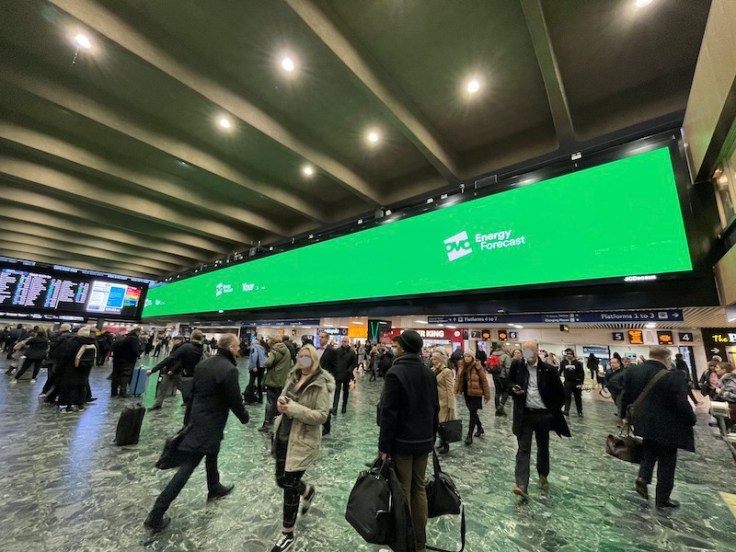
3. What connects: The gigantic mega-size electronic advert beaming down on passengers at Euston station; Stagecoach’s bus route 701 in East Sussex; a Low Traffic Neighbourhood scheme in Streatham; TfL’s off-peak fares applying in the peaks on Fridays.
4. Why were villagers in Kirklington, North Yorkshire able to travel by bus to nearby Masham thanks to sausages in the Autumn?
5. What’s the odd one out from: Irizar’s ie Trams on TfL route 358; White Rose railway station; South Western Railway’s Class 701 Arterios; Cardiff bus station.
6. What comes next in the sequence: SL1; SL5; SL3 ……
7. What connects: the Gravesend/Tilbury Ferry; the Government’s Restoring Your Railway fund; First Bus’s Aircoach between Leicester and Birmingham Airport; WiFi on National Express West Midlands buses.
8. What’s the odd one out from: Bradford Interchange; Arriva’s Belle Isle bus depot in Wakefield; Dudley bus station; Cambridgeshire Busway between Cambridge railway station and Addenbrooke’s Hospital.
9. What connects: Uno in Northampton; Stagecoach Supertram in Sheffield; Derbyshire Community Transport’s involvement in Travel Derbyshire DRT; Arriva’s operation on the Kent Thameside Fastrack
10. Who comes next in the sequence: Joel Mitchell; Martijn Gilbert; Tom Joyner; ……
11. What connects: Stockport; Halifax; Crewe; Kingston-upon-Thames.
12. What’s the odd one out from: A Park and Ride site at Eynsham; Northern Rail’s fax machines; Porth bus station; two electric Optare buses acquired in September 2022 for £450,000 by Flintshire County Council.
2024 in words
2024 has been another busy year in the world of public transport not least with a change in Government in July making clear its intention to bring rail operations back into the public sector. That is unless they’re (a) Open Access operators which seem to be not only welcome but will expand, or (b) contractors to TfL Rail where a new private sector contract was awarded. It might be out of favour in rail, but for bus, franchising is the name of the game with Government regarding the private sector as better at submitting bids than devising bus timetables.
2024 has also seen hundreds of new buses, and even trains, introduced during the year, including many that had been in storage for months and years for various reasons while BSIP and ZEBRA funds continued to flow enabling bus service expansions, reduced or free fares, a continued dalliance with DRT and many new electric buses.
In the corporate world two high profile company ownership changes during the year included Rotala moving from its AIM listing back to private hands in January and the long awaited sale of Arriva to I-Squared finally completed in June. Elsewhere in corporate land Go-Ahead and First Bus seemed to be vying for which could buy the most coach companies. The former added Eastbourne SIghtseeing, Procters Coaches, Esk Valley, Fourway Coaches, Compass Royston, Regency Coaches, Swanbrook and Summercourt Travel (trading as Travel Cornwall) to its portfolio while the latter added York Pullman, Anderson Travel and Lakeside Group comprising Lakeside Coaches, Merediths Coaches and AT Brown Coaches.

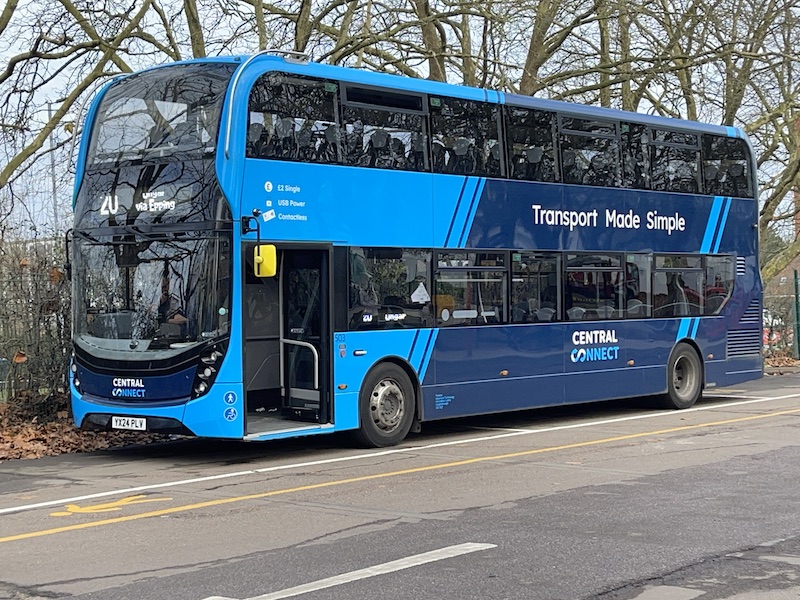
Not to be outdone, a new Coach Travel Group was formed in June “as a result of a strategic acquisition of seven market-leading operators: Alpine Travel, Barnes Coaches, Coatham Coaches, JH Coaches, Johnson Coaches, Swans Travel and The Ready Group”. Meanwhile expansionist Vectare became part of a newly named Transport Made Simple holding company which branded all its bus operations as Central Connect as well as buying Simonds of Diss and Flagfinders of Braintree while over at neighbouring Eastern Transport Holdings, owner Bill Hiron commendably sold Stephensons and NIBS in Essex to an Employee Owned Trust and thereby relinquishing personal majority control but good to know he continues as an employee director and the Wellglade Group bought Littles of Ilkeston. And just to make sure 2025 will see more corporate changes, last week it was announced First Bus will be returning to London with its acquisition of RATP Dev’s contracted operations for TfL expected to be completed during the year, and from mid January Transdev Blazefield takes over bus routes run by Reliance Motor Services.

Other notable changes to portfolios in 2024 included First Group taking over operation of the Cable Car across the Thames (aka Dangleway), South Yorkshire Combined Authority took the operation of Sheffield’s Supertram back in house from Stagecoach and in Kent, Go-Ahead took over the Thameside Fastrack network from Arriva with Comfort DelGro the big winner in Tranche 3 of TfGM’s Bee Network due to commence in January 2025 and Stagecoach commenced the new Dover Fastrack for Kent County Council last month.

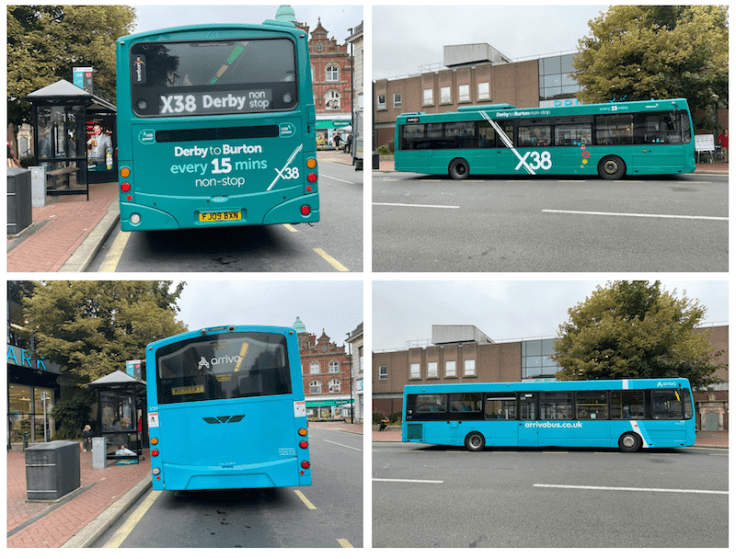
It was perhaps surprising while Metro Mayors in Britain’s metropolitan conurbations and the Combined Authority areas in West of England and Peterborough and Cambridgeshire pursued plans to follow Greater Manchester’s footsteps and ‘take back control’ of buses, 2024 saw competition in true Nicholas Ridley late 1980s visionary style of deregulation in a number of areas. The year kicked off with McGills Group using its Bright Bus brand to launch AIRX as a competitive onslaught against Lothian’s Airlink route 100 between Edinburgh Airport and the city centre while between Derby and Burton-upon-Trent Arriva and trentbarton fell out in the summer over the long established jointly operated route X38 leading to what seems to be a knockout competition for survival on the route.
In Sussex, Stagecoach began a competitive hourly route 701 between Eastbourne and Brighton as an alternative to Brighton & Hove’s long established and frequent route 12 (it didn’t last beyond six months) while new entrant BusLink (from the former Midland Classic stable aka James Boddice) began an X66 between Lichfield and Tamworth competing directly with Arriva’s X65 while the latter began an X1 between Luton and Milton Keynes to challenge Stagecoach’s MK1 with the latter starting up an LAX shuttle between Luton Interchange and Luton Airport, and extending its route 9A/B from Hitchin to Stevenage while in nearby Bedford, Stagecoach’s contracted route 25 with the Council saw competition from Grant Palmer’s same numbered route as that company retained and then expanded its commercial presence to the village of Harrold. Competition between Reading and Henley following Arriva’s withdrawal from routes 800/850 soon abated with Carousel and Reading Buses co-existing on parallel routes.

The railway wasn’t immune from competition either with a multitude of new Open Access applications looking to the future following the new Secretary of State indicating she quite liked that type of privatised train operation. These included an Alstom backed Wrexham, Shropshire & Midlands Railway for a Wrexham to Euston service; a Rochdale to Euston service from Lumo as well as an extension of its existing service to Glasgow; and a Kings Cross to Worksop and Sheffield service from Hull Trains and an audacious come back bid from Virgin Trains wanting to run from Euston to Manchester, Liverpool, Birmingham and Glasgow again. It’ll be just like the old days. Meanwhile First Group bought the rights for a Stirling to Euston service from Grand Union Trains and then bought the entire company including its rights for a London to Carmarthen service which will run using the Lumo brand, as well as its interest in running a Cardiff to Edinburgh service. It has also applied for rights for five daily Paddington to Paignton paths and a sixth to Highbridge and Burnham. Also gaining access rights is newcomer Go-op to run between Swindon and Taunton as well as some journeys to Weston-super-Mare taking in Frome and Westbury from next December.
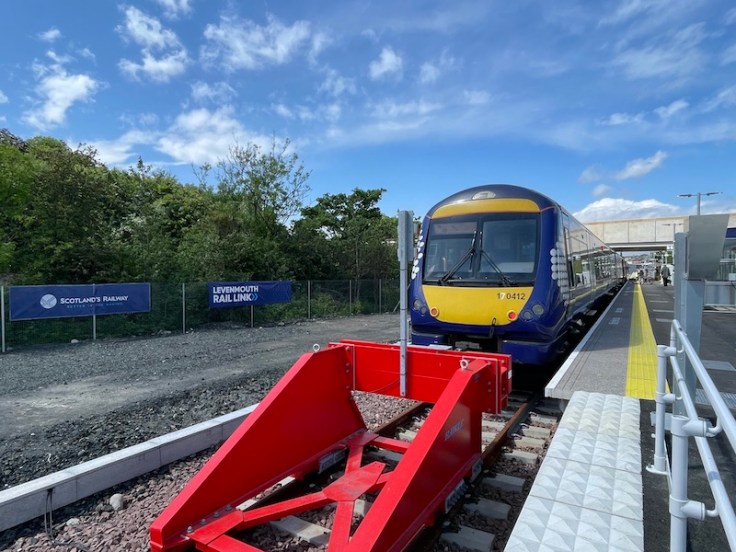
Also on the tracks there was much excitement as the restored railway to newly built stations at Cameron Bridge and Leven opened for business in Scotland while just this week in Northumberland a former freight line was brought back into passenger use but with only two of the planned six stations opening at Seaton Delaval and Ashington (with the other four: Bedlington, Blyth Bebside, Newsham and Northumberland Park to follow in 2025).

A new station at Ashley Down in Bristol opened in September, an extra platform was added to Dore & Totley and a much expanded and rebuilt station at University in Birmingham was completed as was a new entrance/exit to Stratford to/from Gibbins Road and just last weekend Cross Country began a new ‘three nations service’ linking Cardiff with Edinburgh stopping at 22 stations on the seven hour trek through Wales, England and Scotland.
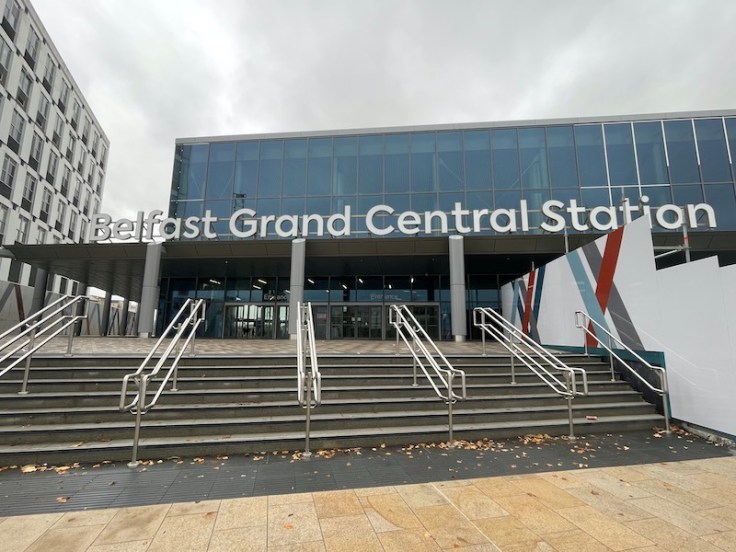
In not such good news Altnabreac station on the Far North Line remained closed for the whole year, and work constructing the new station at White Rose in Leeds came to a sudden halt due to unfunded cost overruns although completion work is due to restart in the new year. More positively, Belfast’s new integrated Grand Central bus, coach and rail station opened for business in October.
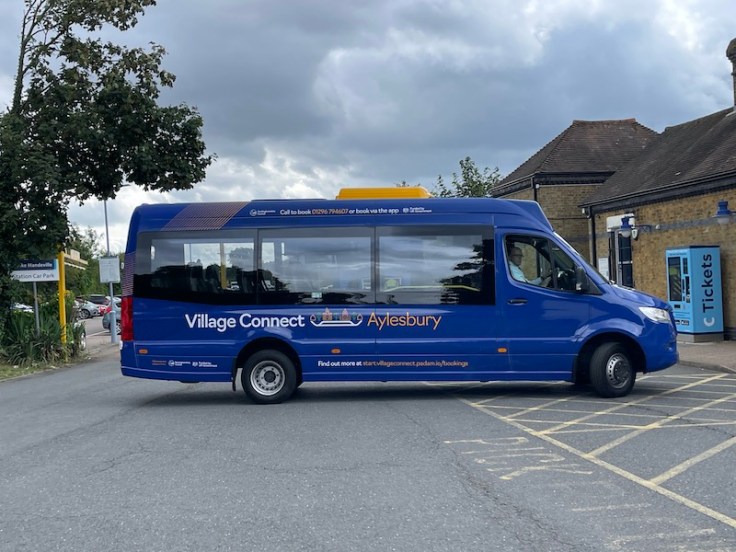
2024 saw more DRT schemes set up as local authority officers’ and politicians’ faith in such ventures never falters. This year’s crop included West Berkshire’s Community Connect (in January), Travel Derbyshire on Demand (in February) operated by Derbyshire Community Transport which ended up in voluntary liquidation in October passing the DRT operation over to CT4N (Community Transport for Nottingham), followed by a scheme branded as Slinky in Somerset in June, a new NottsBus on Demand (Zone 5 in Central Rushcliffe) in July and, after a long wait, the Village Connect branded scheme got going in Aylesbury in August.
In December Vectare (now named Central Connect) ended its contract to run Ting in West Huntingdonshire with the Cambridgeshire and Peterborough Combined Authority rebranding it as ‘Tiger on Demand’ and the number T1 with new contractor WeMove in partnership with operators A2B Travel and Dews Coaches.

Other DRT changes saw Flexibus zonal boundaries in East Sussex disappear and Bristol’s WESTlink zones amended including the North Bristol scheme downsizing to nine seaters with saloon cars used until those vehicles arrived. West Sussex’s Book-A-Bus, Surrey’s Connect and Worcestershire’s On Demand schemes were all extended to include additional areas in the counties while Wiltshire Connect saw a cut back in one of its three zones. The only two DRT casualties were both Arriva Click operations – Watford ended on 31st December 2023 and Ebbsfleet ends on 31st December 2024 being replaced by a fixed route numbered GC1 operated by Go-Coach Hire in the New Year, albeit reverting to DRT style in February.

Over in Blackpool, trams finally started running to and from Blackpool North station while seven sparkly newly built bus stations reopened on sites of, or near to, former premises….in Cardiff (only seven years late), Crewe, Durham, Halifax, Kingston-upon-Thames, Porthcawl and Stockport while elsewhere Hubs became a thing with a new Mobility Hub in Torvean, Inverness and a Transport Hub in Cheltenham. Dudley bus station closed for a rebuild, Walthamstow bus station closed for enhanced safety features and in January Bradford Interchange closed suddenly due to construction issues (but will be reopening in the New Year) as did Arriva’s Belle Isle bus depot in Wakefield later in the year for similar reasons. Colindale Underground station closed for a refit/rebuild in June but reopened yesterday, exactly six months later, albeit there’s much work still to complete and Barry’s infamous bus-less Transport Interchange gained a bus route with town route B3 calling in on its new 70 minute frequency but Porth gained a new bus station without any buses as its opening continues to be delayed.

Many new summer bus services aimed at the growing leisure market were introduced including the most amazing open top route in the Derbyshire Peak District (Stagecoach’s Peak Sightseer to Blue John Cavern) and not forgetting Ensign Bus’s new open top route 99 between Southend Pier and Shoeburyness and the reappearance of Stirling Sightseer and Norwich City Clipper. Other summer delights included route 51 linking Folkestone West station to the harbour, Arriva’s route 701 from Maidstone to Bluewater and Stagecoach’s 500 from Ashford to Camber Sands. In the Lake District the enterprising Sustainable and Integrated Transport for Ullswater Group arranged for route 509 (Keswick and Penrith) to join the return of last summer’s UB1 (extended to run between Aira Force and The Hause) and in East Anglia, Wherry 100 Service reappeared in Great Yarmouth thanks to the Community Rail Partnership.
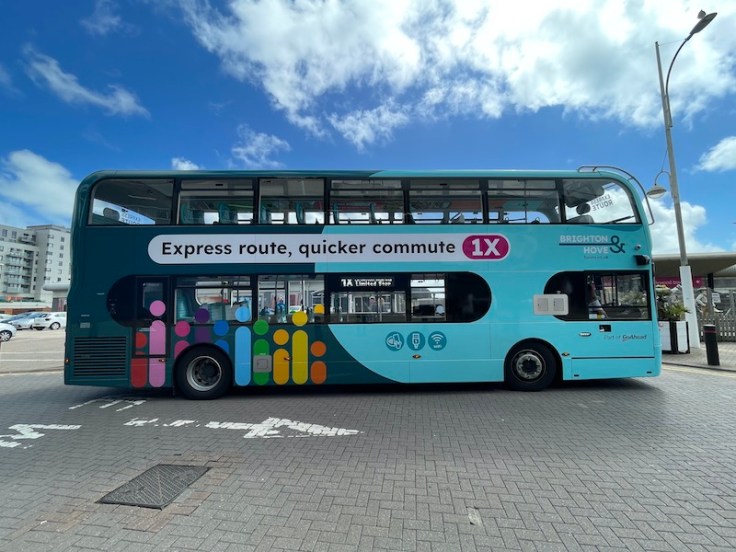
Notable all year round bus route welcomes went to new route 323 in Hertfordshire (Hertford and Welwyn Garden City), TrawsCymru T22 in north Wales (Caernarfon and Blaenau Ffestiniog), Brighton & Hove’s limited stop 1X (Mile Oak and Brighton Marina), Arriva’s 777 (Morpeth, Newcastle Airport and Kingston Park), Stagecoach’s 787 (Newcastle city centre to Newcastle Airport at night), Arriva’s X4 (Runcorn and Liverpool – introduced just this week) while Reading’s route 9 was extended to serve the town’s Green Park station and a new BUZZ 18 began linking Tilehurst and Rivermead Leisure Centre. Thanks to BSIP funding a number of other new routes also took to the road.
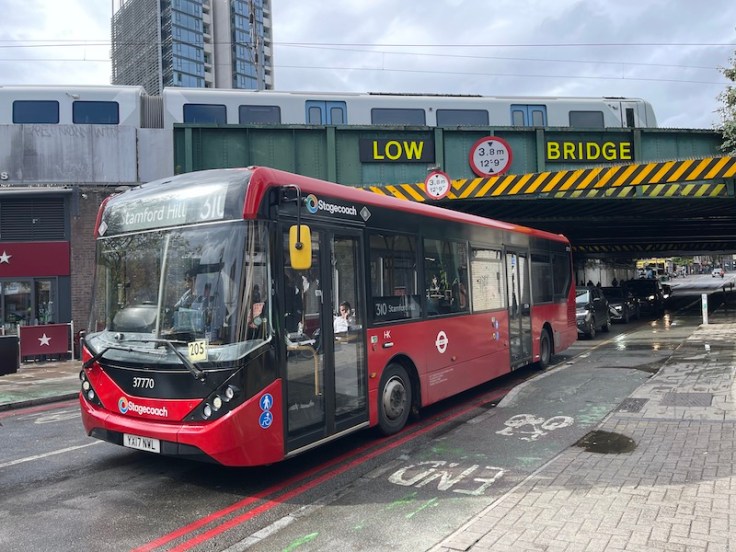
In London TfL introduced new route 310 between Golders Green and Stamford Hill and routes S2 (Epsom and St Hellier) and 439 as part of the much delayed Croydon and Sutton changes while Superloop gained its last three segments with SL5 (Bromley North and Croydon) and SL3 (Thamesmead and Bromley) in February followed by SL2 (Walthamstow and North Woolwich) in March while in June route 211 swapped its Waterloo terminus for Battersea Power Station and in September there were no end of swapped routes and termini in the Woodford area leading to the demise of route number 549 (Loughton and South Woodford) and route W12 being diverted to leave Walthamstow Village unserved. Up in Manchester we saw the Bee Network’s first new route 615 between Wigan and Bolton’s Middlebrook Park, reinstating an old route withdrawn four years ago during Covid and finally, in January, there was also a welcome return to route 126 between Weston-super-Mare and Wells.
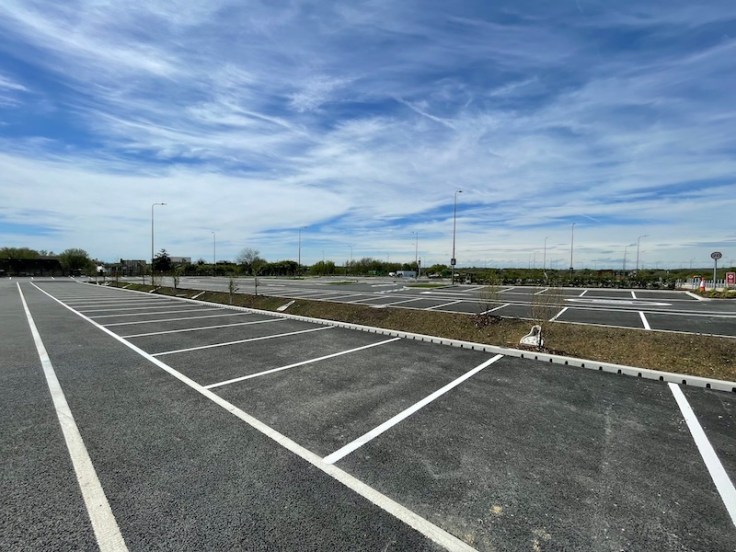
Park & Ride hit the headlines for various reasons during the year with a new £32 million car park completed in Eynsham, Oxfordshire only to be frozen out of use as funding for road improvements alongside has yet to be secured but in better news sites at Winnersh, Reading and Sturry Road, Canterbury, both closed during Covid, were brought back into use but in not such good news, Guildford’s Onslow site closed in August.

Many new buses were introduced during the year with electric propulsion coming to the fore not least in Oxford (aiming to be another all electric city) and London, including the much delayed Irizar ie Tram which finally managed an introduction last month on TfL’s route 358 between Crystal Palace and Orpingron. Hydrogen powered buses didn’t fair so well with brand new buses bound for operations in Surrey put into store in Swindon due to the continuing impasse in commissioning the whole of the supply installation at Metrobus’s Crawley bus garage with Liverpool’s fleet of 20 ADL Enviro400FCEV hydrogen fuel cell-electric double-decker buses still not in revenue earning service.

On the tracks it was a welcome debut to Avanti West Coast’s Class 805 bi-modes named Evero in June with its sibling electric powered Class 807 also recently entering service. TfW’s (and the UK’s first) ‘tri-mode’ Class 756 started operating on the Aberdare and Merthyr Tydfil lines last month and at last there’s welcome progress getting the many South Western Railway Class 701 Arterio trains languishing in sidings into service following a toe-in-the-water introduction in January and an official launch last month (five years late). Just this last week the first of Tyne & Wear Metro’s new Class 555 trains entered service.
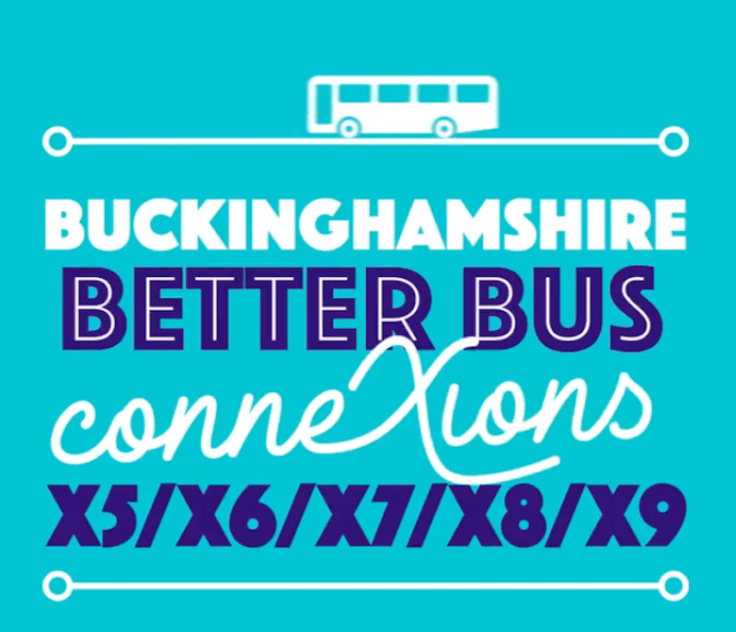
A number of marketing schemes saw Blackpool buses “reimagined” while Arriva renumbered many of its inter-urban routes in Hertfordshire and Buckinghamshire using a ‘connexions’ brand in January only to ditch a couple of them a few months later in the summer when it exited High Wycombe (X7, X9/X90). Vectare began using the Central Connect branding for all its local bus operations while Go North East renamed its MetroShuttle to Supershuttle, East Yorkshire began a North Riding brand in April and Stagecoach Seasiders took to the seaside in Skegness, and First Bus adopted a new logo and branding for all its bus operations, but the biggest renaming of the year saw Mayor Khan launch six new names for the London Overground lines (Liberty, Lioness, Mildmay, Suffragette, Weaver and Windrush).

And talking of London Overground, its trains made a rare appearance in London Bridge station over Easter and GWR trains began running into Euston in November getting ready for a more regular diversion during Old Oak Common blockade works in the coming months and years while both Chiltern and GWR each ran a test train on East West Rail’s new tracks.

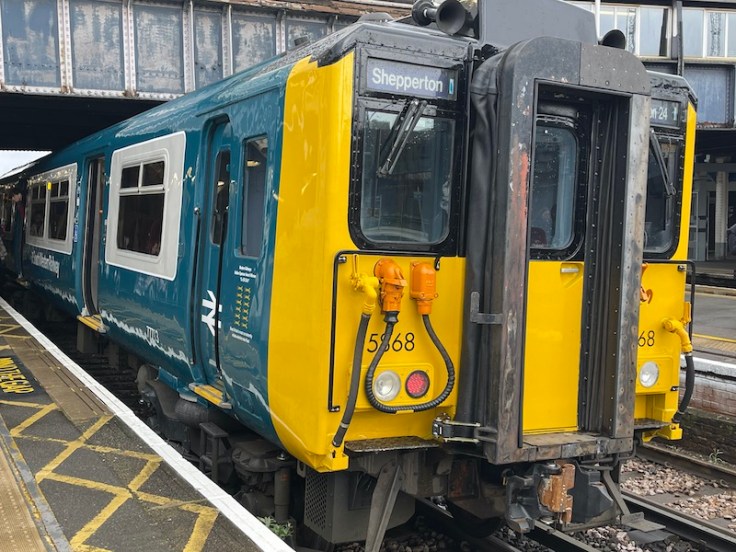
Over in Greater Anglia it was nice to see some tables retro-fitted to the 10 Class 745 trains used on Stansted Express as well as an adapted Class 153 as a bike carrying unit making its debut with TfW on the Heart of Wales line while over on the Marston Vale line there was a welcome back to the full London Northwestern timetable after interruptions following the demise of Vivarail and Class 230s and on South Western Railway how nice to see a Class 455 resplendent in the smart traditional British Rail blue heritage livery.
The first half of the year saw what had become the usual bout of ASLEF strike days disrupting the railway across the country with groups of different companies being targeted on different consecutive days but these ended once the new Government finally settled the outstanding pay claim with a backdated award of 5% for 2022/23, 4.75% for 2023/24 and 4.5% for 2024/25 which, taken overall, wasn’t “inflation busting” as some in the media would have you believe. The deal involved no changes to working practices though.

It was great to see a brand new bus company called North Star launch with former Go North East’s Dan Graham its founder, while earlier in the year Safeguard Coaches in Guildford celebrated its 100th anniversary…

… Compass Travel clocked up 30 years, the iconic Routemaster enjoyed a 70th birthday bash in Chiswick and the Far North Line marked its 150th anniversary.

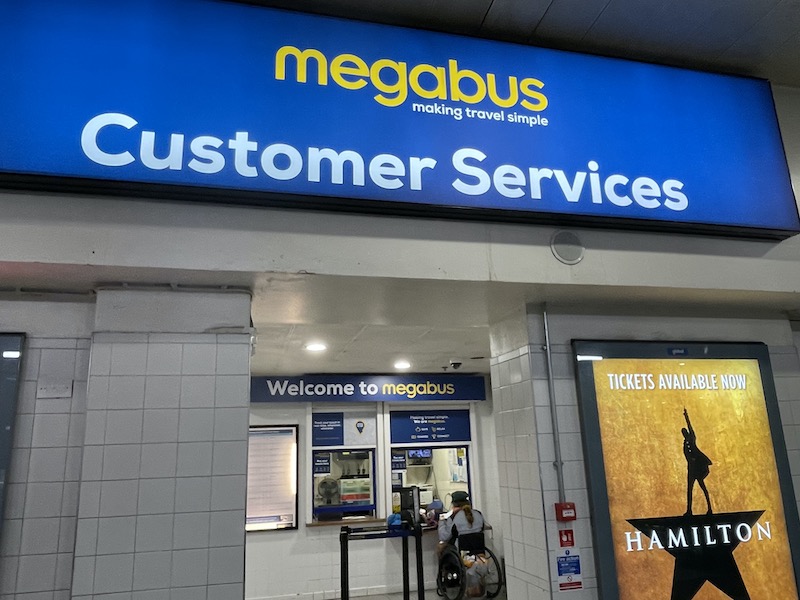
On the debit side we saw a number of companies go under or cease trading including Arrow Taxis and Panther Travel in Essex, the Arrival manufacturing company (which never managed to produce its promised electric bus into service) while Transpora pulled out of Dorset and Bristol, Filers Travel ended its involvement in local bus operations in North Devon and Sullivan Bus pulled out of TfL scheduled work. Other endings included Avanti ceasing running to Shrewsbury, LNER quit terminating trains in Sunderland, Stirling and Glasgow, Royal Mail ended its bespoke Class 325 trains operated for it by DB, Northern ended its Class 319s, Merseyrail its Class 507s and Glasgow Subway said goodbye to its old ‘second generation’ train. Megabus ended its coach express routes in England (as opposed to cross border routes to Scotland, which continued, as did the South West Falcon in Devon) and First ceased its Aircoach service between Leicester and Birmingham Airport.

July’s newly appointed Transport Secretary/Passenger-in-Chief, Louise Haigh, halted the previous Government’s Restoring Your Railway project and made the most popular decision of the year – turning off the overpowering intrusive electronic advert beaming down on Euston’s ever crowded concourse before falling on her sword and resigning over a spent conviction over a decade ago.
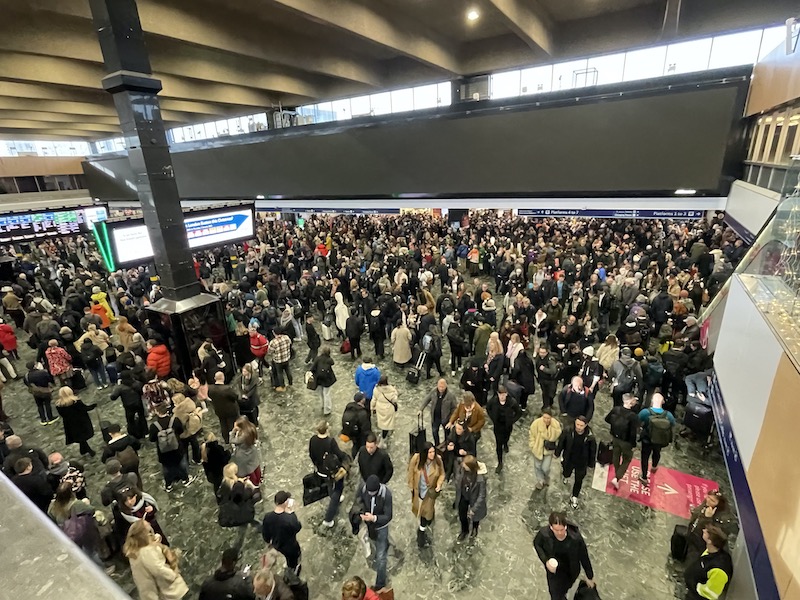
At just four months she wasn’t the shortest serving Secretary of State for Transport as that accolade goes to the forgettable Anne Marie-Trevelyan who served for just seven weeks in the Truss Government. Heidi Alexander replaced Louise Haigh as her memorial act, the Euston display, began showing train departures once again.

Over on the Isle of Wight, passengers had to forgo travelling on the Island Line yet again while it closed for more engineering works during the Autumn with work on Ryde Pier continuing until next Spring.

More positively, both FlixBus and National Express expanded parts of their express coach networks with the former celebrating reaching the 200 coach mark and a promise of doubling that in the future and Great Northern trains between Finsbury Park and Moorgate went digital with track side signals replaced by in-cab European Train Control System operation.
TfL and ScotRail’s dalliance with eliminating peak hour fares (albeit the former only on Fridays) both ended in failure with peak surcharges restored when the trial periods ended and after much speculation the new Government”s October Budget announced the £2 bus fare cap would rise to £3 in January and rail fares would increase by 4.6% next March. Meanwhile in Cornwall more of the much hyped (cheaper) ‘Bus Fares Pilot’ introduced in 2022 came to an end with further price increases introduced in May and no word on how the ‘Pilot’ had worked out. LNER made a name for itself by redefining what everyone thought “simpler fares” meant in January when it withdrew the flexible easy-to-understand off-peak and super off-peak return fares, replacing them with a “simpler” “70min Flex” more restrictive ticket, which on some occasions is more expensive too.

Not satisfied with that, it extended the number of stations where these restrictive “simpler fares” apply from the original three to 27 stations in September. No doubt there’ll be much more of this nonsense to look forward to in 2025 now a chair has been appointed to lead Shadow Great British Railways – a welcome to Laura Shoaf. And talking of appointments…..
2024 saw a welcome slow down in managing director turnover at both bus and rail companies bringing, in some cases, much needed continuity to their management. Those stepping into new seats at top tables were Lorna Murphy as Director of Buses at TfL, David Cutts moving to Transport UK’s London Bus (having left a similar role at Go-Ahead London), Chris Hanson took the helm at Stagecoach West (having been Operations Director), Tom Joyner did the same at Go-Ahead London (going bi-mode having stepped down from leading Cross Country), Claire Mann became TfL’s Chief Operating Officer (having been managing director at South Western Railway), David Martin returned as Executive Chairman and CEO at Arriva Group, James Valance headed up Safeguard Coaches, Tom Waterhouse was confirmed as managing director at Stagecoach Cumbria and North Lancashire (having been doing the role on an interim basis), and Tony Williamson became CEO at McGills Group (with Ralph Roberts becoming Chairman) while over on the tracks Martin Beable newly headed up Greater Anglia (moving from Transport UK), Steve Best did the same at Arriva Rail London (having been Finance & Commercial Director) as did Tricia Williams at Northern Rail with Stuart Meek becoming interim managing director at South Western Railway and Mike Putnam became Acting Chair at Network Rail, as, of course, Lord Peter Hendy of Richmond Hill become Transport Minister.
We bid the usual farewells and best wishes to those top dogs who moved on from their roles for the usual variety of reasons including retirement, promotion and spending more time with their Linked-In profiles. Stepping down as managing directors during the year were Jamie Burles (Greater Anglia), David Cutts (Go-Ahead London) who, as recorded above, reappeared at Transport UK in London, Rachel Geliamassi (Stagecoach West), Andrew Halliday (Safeguard Coaches), Alex Hornby (McGills Group) who also went bi-mode and reappeared as Commercial and Customer Director at Northern Rail , Paul Hutchins (Arriva Rail London), Alex Hynes (ScotRail) who got seconded to the DfT, Tom Joyner (Cross Country) see above re bi-mode transition, Claire Mann (South Western Railway) see above re TfL, Scott Pearson (Newport Transport), actually in late December 2023, when also Louise Cheesman stepped down as TfL Director of Buses. Mike Cooper and David Brown left Arriva as managing directors bus and rail respectively.
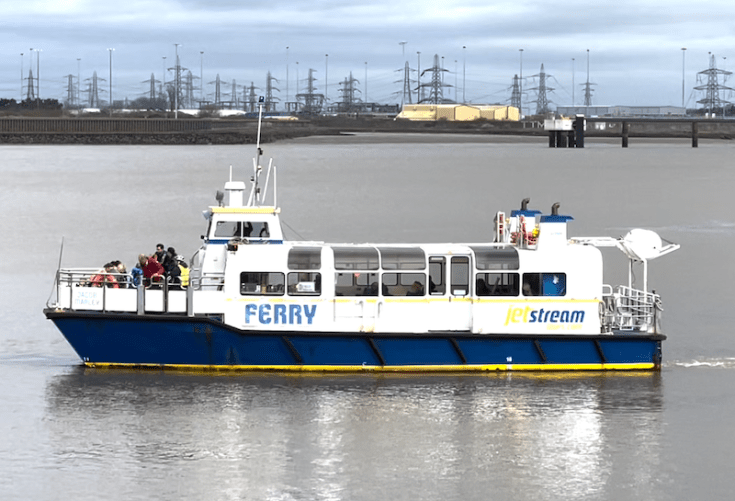
We also said farewell to the Gravesend/Tilbury ferry, most semaphore signals in Cornwall, First Class seating on Cross Country’s Class 170s, joint operation by East Yorkshire and Stagecoach as the former pulled out of route 350 (Hull and Scunthorpe), Wi-Fi on National Express West Midlands buses and an unwelcome freeze to Scotland’s Bus Partnership Fund due to financial constraints, although the new UK Government managed to find the funds to continue the freeze on fuel duty and retain 2022’s 5p per litre cut. Meanwhile in London many facilities powered by technology came to a grinding halt when TfL suffered a cyberattack.
Disappointments during the year included temporary (reduced) timetables introduced for a period at both Scotrail and Cross Country as well as regular weekend messages on social media from Northern and Great Western Railway advising passengers “DO NOT TRAVEL” on parts of those company’s networks due to lack of drivers, as well as conductors (on Northern). Long standing arrangements for Sundays being outside rosters brought home just how fragile the staffing situation is on the railways, and as with many other matters that need action, there seemed no resolution in sight as another year comes to a close, as does this marathon round up.
Numbers of the Year
Numbers which have caught my eye over the past twelve months include……
1% of National Express West Midlands passengers were using Wi-Fi so it was phased out
4.6% increase in rail fares in March
9 mph average speed of TfL’s buses lamented by London TravelWatch
£36 per household Mayoral precept for buses in Cambridgeshire & Peterborough Combined Authority
40% increase in some bus fares in Cornwall in May
50p fare in Milton Keynes between Central station and Midsummer Place shopping centre
£50 fine per e-bike found blocking pavements in proposed TfL crackdown
74,000 rail passenger prosecutions quashed after use of single justice procedure in magistrates courts
£400,000 Swansea Council’s funding of free fares in city during the summer school holidays.
£500,000 cost of repainting the Bee Network buses
£6,300,000 cost rebranding London Overground
£14,166,398 spent by TfW on an aborted train stabling track at Llanwern, east of Newport
£23,500,000 value of Rotala in January when privatised
£24,000,000 cost for the three months off-peak Friday trial in London between March and May
£27,000,000 of the £500,000,000 Scottish Bus Partnership Fund spent before it was frozen
£75,000,000 to fund TfL fares freeze in 2024
£100,000,000 cost of one shed on HS2 to protect bats
£955,000,000 funding for buses in England announced for 2025/26
Quiz Answers
I’m sure you’ve twigged all the answers from the foregoing, but just in case not, here they all are:
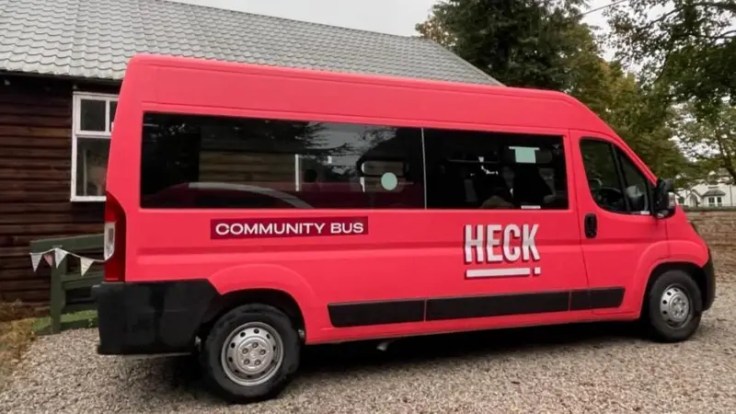
1. Anne-Marie Trevelyan – Secretaries of State for Transport in reverse order of appointment from current. Trevelyan lasted just seven weeks in the Truss Government preceding Mark Harper. 2. 549. TfL withdrew that route whereas the other three routes were new. 3. They were all introduced during 2024 but also later withdrawn. 4. The sausage company Heck, with a nearby manufacturing plant, sponsored a minibus to take villagers to Masham. 5. White Rose railway station – all four projects are excessively late but the other three finally opened or began operation but all work stopped on constructing White Rose. 6. SL2 was TfL’s Superloop route introduced in March after SL3. 7. All were withdrawn during the year. 8. Cambridgeshire Busway – the other three all closed during the year for remedial/rebuild work but the Busway opened after remedial work was completed. 9. All withdrew from those operations during the year. 10. Alex Hornby – the other managing directors have consecutively moved from rail to bus (Joel Mitchell); bus to trail (Martijn Gilbert); rail to bus (Tom Joyner) with Alex Hornby moving bus to rail during the year. 11. All places saw rebuilt bus stations open during the year. 12. Northern Rail’s fax machines which it came to light during the year are still in use whereas the other three projects have remained unused.

And that’s it for this year’s Review and Quiz but don’t miss the much anticipated BusAndTrainUser Annual Awards at 06:00 on Christmas Eve and the annual 100 Bus And Train Events of 2024 (in just 10 minutes) uploading to YouTube on Boxing Day after which blogging will take a short break and return in the New Year.
Roger French
Comments on today’s blog are welcome but please keep them relevant to the blog topic, avoid personal insults and add your name (or an identifier). Thank you.


I am a new subscriber to your newsletter/blog so I just wanted to say that your obvious dedication to this subject should warrant some type of award. It feels like you must dedicate every waking minute to the cause, and for that I thank you 😀 Have a break over the next couple of weeks. Happy Christmas and New Year
LikeLiked by 1 person
Thanks very much for your kind feedback. Much appreciated and welcome along. A very Happy Christmas to you too.
LikeLiked by 1 person
Clicking on the ‘About’ link reveals that you already have some well deserved awards! Well done!
LikeLiked by 1 person
Exceptional work Roger. Keep it up!
Typo near the end – “across Country’s class 170”
LikeLiked by 1 person
Many thanks. And thanks for spotting that typo; now corrected.
LikeLike
It’s Lorna Murphy who became Director of Buses at TfL. Glynn Barton left TfL early this year.
Otherwise, great round-up, and I look forward to next year’s blogs!
Steve
LikeLike
Thanks for that; now updated.
LikeLike
And the Newcastle-Ashington service didn’t manage a first full week of operations before the “cancelled due to staff issues” made its presence felt.
LikeLike
Morning Roger and thank you for sorting my feed out!
thank you for this round up of the year.
Happy Christmas to you.
LikeLike
Good to know it’s sorted. Thanks.
LikeLike
It is quite fascinating that this Government seems to “run with the hare” yet “hunt with the hounds”, and demonstrates that Politics rules over any form of common sense or structure. Just why is open access on the railway suddenly now the best thing since sliced bread, but so frowned upon when it comes to bus services? In Greater Manchester some bus services have even been diverted to avoid crossing the now hallowed boundary, and in Greater London private bus routes have almost ceased to exist. And yes, why are franchised operations now considered akin to poison on the former BR system, yet happily welcomed by TfL?
The argument about the merits and dis-benefits of bus deregulation and railway privatisation will rage forever, but as per usual, our political class will create yet another “half-in, half-out” dogs breakfast of everything, and the mess will just be passed on the the next lot.
Terence Uden
LikeLike
Hi Roger
Just one note – the Eynsham Park & Ride cost £32m. The £51m referred to is the cost of the whole Science Transit scheme which includes bus lanes.
Merry Christmas and a Happy New Year to you!
Dave Harrison, Oxford
LikeLike
Many thanks for that Dave. Post updated. A Merry Christmas and Happy New Year to you too and thanks for all your support/information during the year.
LikeLike
worth a late addendum is that Rachael Geliamassei also went bi-mode hoping GWR as new Customer Services Director (that role formerly held as a combined Customer Services and Operations Director- Richard Rowland – whom is now just Operations Director)
The XC 170 standard class conversion is only temporary whilst the XC fleets undergo their long and over due refurbishment
LikeLiked by 1 person
Thanks for these additional points.
LikeLike
Rachel Geliamassi left Stagecoach to become GWR’s Customer Service Director, though she is not included on the “Executive Team” page of the company’s website.
https://www.gwr.com/about-gwr/our-business/executive-team
KCC
LikeLike
Thank you Roger for another year of interesting posts.
Peter Brown
LikeLiked by 1 person
Thanks Peter.
LikeLike
Abiding memories of 2024
Said hello to yello bus revolution in Liverpool.
Victoria Line remains the true turn up and go transport experience, only one suspension and one train 15 minutes late this year.
Nottingham buses gained extra star within hours of success.
Lost count of £2 sold to ultimate destination when intermediate place requested.
Lost count of journeys delayed by bus passengers not having their ready or even knowing products on offer.
Loss count of customers putting their feet on seats or vaping.
Lost count of wrong information displayed at bus stops.
University students crammed in 25 willingly allowed me to take their picture as 701 sailed by empty.
Travelled from Brighton to Watford Junction on 5 buses for under tenner. It would normally be £7.40 just from Crawley to Epsom.
Most stress free long distance journey with friends that was value for money was in hire car to Imber!
LikeLike
| Lost count of £2 sold to ultimate destination when intermediate place requested.
I found it to be the other way round; I always got whatever stage was already set in the ticket machine, usually a fairly local journey.
When a ticket was issued, of course. Some drivers (TrentBarton!) really don’t like issuing tickets if tap-on, tap-off is available.
| Lost count of wrong information displayed at bus stops.
I was amused by North East Lincs council shouting about their new idea of putting bus timetables up at stops as if it’s something that nobody has ever done before. I can only assume that their marketing/social media people are teenagers. Or have never used a bus in their lives.
On a different topic, my take of the list of senior management movements is that the management merry-go-round is alive and well. Same faces, different job title, and no doubt another switch-around next year.
LikeLike
Thank you Roger for another great year of blogs – with so much happening it’s a great way to (try) to keep up!
Enjoy your holiday break and I cannot wait to see what’s in store for 2025.
All the best, Richard Warwick
LikeLiked by 1 person
Many thanks Richard. Much appreciated.
LikeLike
Hi Roger – here is a “quiz” question. In Oxford, the electric buses are superb. Quiet, no diesel fumes and they pull away smartly from stops. However, a lot of government investment has been made to allow this to happen. Additionally we are about to see many fare rises with the cap changing to three pounds.
What is the correct answer to these two possibilities?:
(1) With such large government investment, providing very high quality buses, it is right and proper that people should pay more to travel on them, and so the price cap rise is not an issue.
or
(2) With such large government investment, places like Oxford should receive a follow-on “recurrent” grant to keep the cap lower locally. Because with such expenditure on all the electric kit, we now need to maximise the number of passengers, which low fares support.
CH, Oxford.
LikeLike
Good question. I’ll have to think about that – a kind of 1.5 answer maybe?!
LikeLike
I think marketing the £2 fare cap as a cost of living mitigation was short sighted. It should’ve also been promoted as a modal shift policy, consistent with government policy on carbon reduction, reduced car use, air quality etc. People should be being encouraged to think about how they travel and the medium to long term trend in used car prices as the number of serviceable petrol cars starts to decline. Supply and demand suggests to me prices are going to increase and I don’t believe EVs are going to replace them one for one.
Peter Brown
LikeLike
| It should’ve also been promoted as a modal shift policy
I agree, but it seems that national government really don’t like doing anything which will realistically reduce car use.
We could run every bus and every train as free-to-travel and road traffic levels would barely go down (although trains in particular would quickly become overcrowded as they’re generally fuller than the TfL-area biased figures claim). Most people are addicted to their cars.
LikeLike
A great report, as always, Roger. We are all better informed and up to date, thanks to your travelling the length and breadth of the country to expose the good, the bad and the ugly in our public transport world.
Your knowledgeable and critical posts are eagerly received, I am sure, by all your readers. We are with you on your journeys and we feel for you on the occasions when DRT schemes leave you stranded in some isolated village for spurious reasons. It’s experiences like those that would turn ordinary travellers off using public transport, but your knowledge and this blog help to expose to the wider readeship.
Let’s hope that a little sanity returns to the industry in 2025.
Best wishes and Happy Travelling !
Peter Murnaghan
LikeLiked by 1 person
Many thanks Peter – much appreciated.
LikeLike
Thanks for another year of excellent reportage.
LikeLiked by 1 person
Thank you.
LikeLike
Thanks for the interesting, insightful and occasionally controversial reviews during 2024.
There are several suggestions for future themes, and here is another: the longest bus routes per operator or per region or even per county (omitting the 35 in Aberdeenshire and others already covered).
The Cambridge and Peterborough Combined Authority is to subsidise retention of the £2 bus fare cap in its area for the next 3 months.
Ian McNeil
LikeLike
Thank you, Roger, for another year of fantastic blogging! One suspects there will be plenty of material for you to comment on in 2025….
Have a great Christmas!
Dan Tancock
LikeLiked by 1 person
Many thanks Dan and a very Happy Christmas to you too.
LikeLike
Apologies for the tardiness in responding – obviously a reflection on my jet set lifestyle. I’d like to congratulate you on another year of providing a suitably critical eye across our public transport landscape. I especially appreciate your grounded approach – always looking at things objectively and without hyperbole. Understandably, you do have a good old vent at times but it’s always proportionate, constructive and informed. Most importantly, you have the humility to take on criticism and I always look forward to your posts.
Have a restful, enjoyable and relaxing festive period and hope to continue reading your informative and engaging posts in 2025. Kind regards, BW2
LikeLiked by 1 person
That’s very kind of you – thank you so much. With very best wishes to you and many thanks for all your comments and feedback.
LikeLike
Interesting that the percentage of young people with driving licences is declining. I think we’ve reached peak car.
Peter Brown
https://www.theguardian.com/uk-news/2024/dec/23/more-uk-buses-to-run-on-christmas-day-than-at-any-time-in-last-five-years
LikeLike
Thanks another briliant recap
LikeLiked by 1 person
Excellent review of the year Roger.
Thank you for your excellent blog its much appreciated & we all look forward to more from you in 2025
LikeLiked by 1 person
Thank you, Richard.
LikeLike