
Saturday 16th November 2024
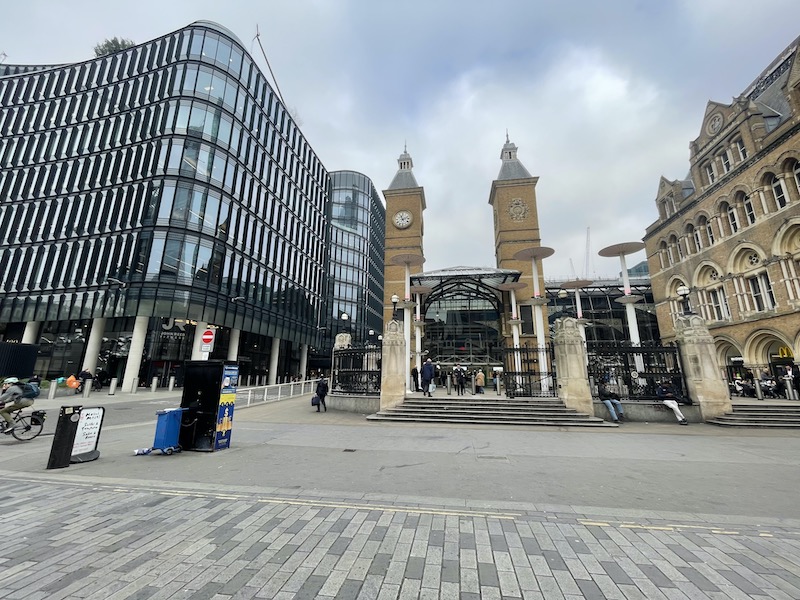
As the Office of Rail & Road is soon to announce updated numbers of passengers using every railway station in Britain for the year ended March 2024, this monthly blog series counting down the previous year’s top ten busiest stations finally reaches number 1 – which, for the first time, is London Liverpool Street with 80,448,194 entries and exits recorded in the year to March 2023. That number was 15.8% higher than the pre-Covid 69,482,532 passengers recorded to March 2019 demonstrating, once again, the very significant impact of the Elizabeth line on travel patterns within central London.
Having visited and mooched around the top ten stations this year it doesn’t come across to me that Liverpool Street is the busiest, nor Paddington the second busiest. Waterloo, Victoria and London Bridge seem much busier. But that’s because wandering around the concourse you don’t get to see the huge numbers arriving and departing deep under ground on the purple trains.
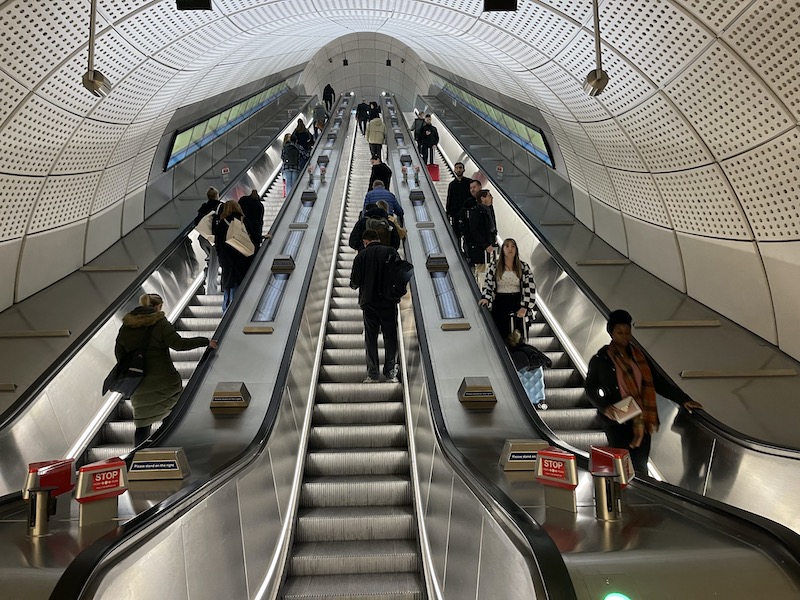
As some have observed in the comments during this series, it does seem somewhat opaque how numbers of passengers using the Elizabeth line are calculated especially when the gate line is the same as the Underground, as it is at Liverpool Street (and as previously noted is the case at Tottenham Court Road – Busiest Station No 7).

There’s no doubt Liverpool Street is busy. Stansted Express trains, with their airport passengers, along with London Overground’s commuters and passengers from the north east Home Counties, Essex and East Anglia see to that.

Today’s station layout follows extensive rebuilding between 1985 and 1991. This brought an eight platform eastern extension, added in 1894 to the original ten platforms that had fully opened in 1875 to become one station, rather than the pre-1985 split where the two halves were connected by a footbridge.
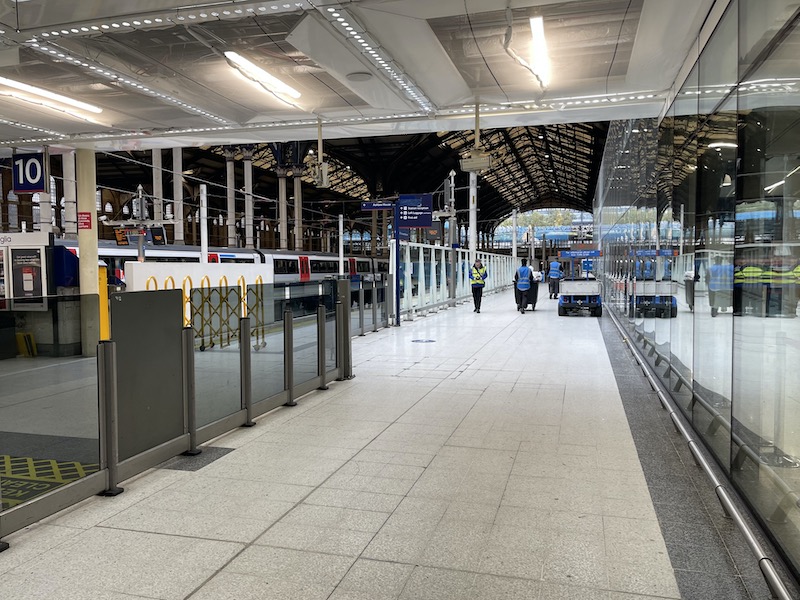
You can still see the join where the ticket office is now located…
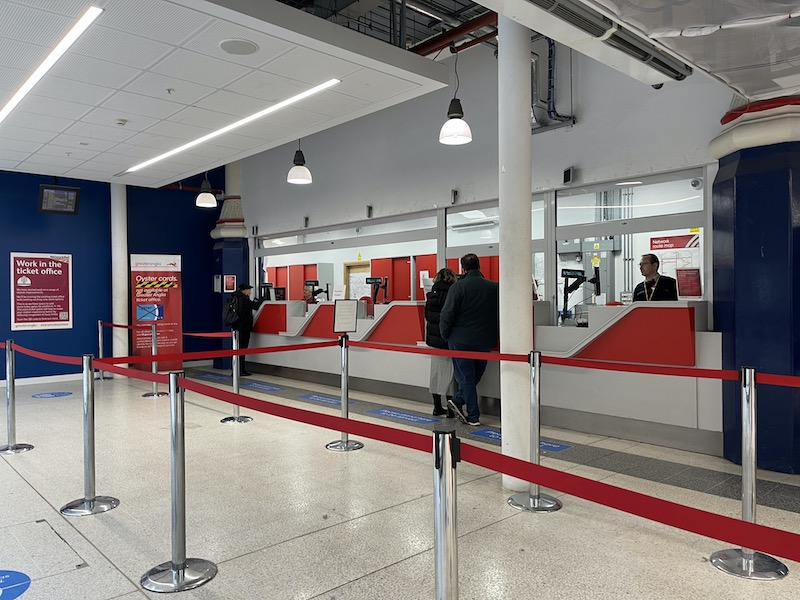
… in the large space between platforms 10 and 11 together with a Customer Lounge hidden away….
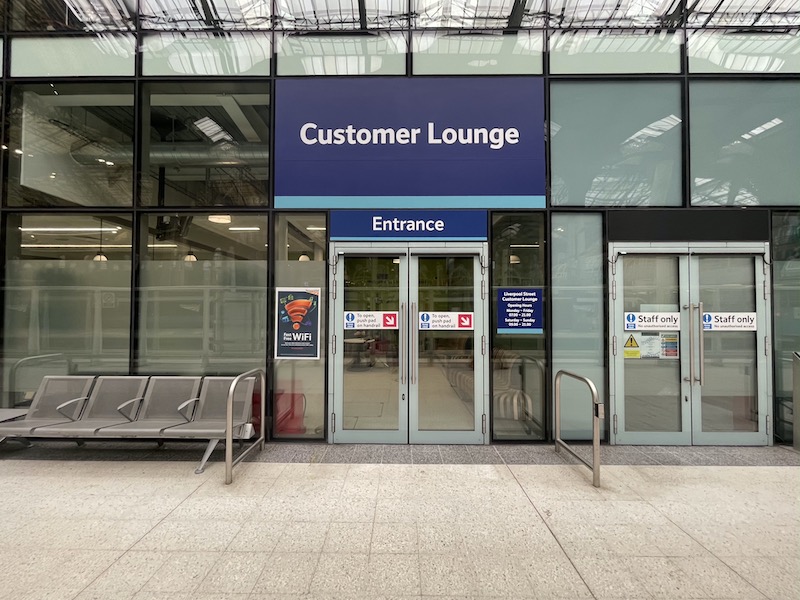
… (albeit the seats aren’t what you might have in your “lounge” at home)…

,,, as well as road access for deliveries.


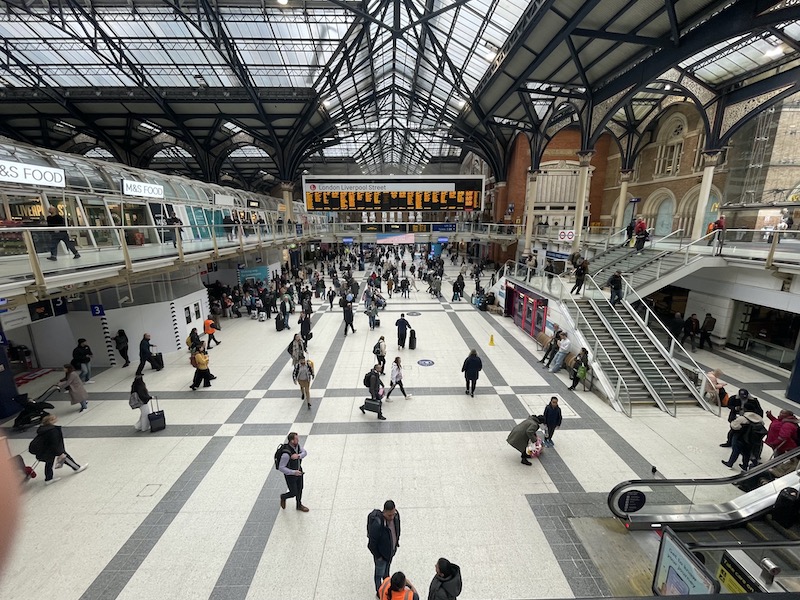
Here’s a photograph showing the 1894 eastern extension, now firmly part of the merged concourse, together with the first floor balcony retail area that overlooks the concourse.

Network Rail’s map of the station layout shows the two original parts and that platform 18 on the extreme eastern side is no longer in use.
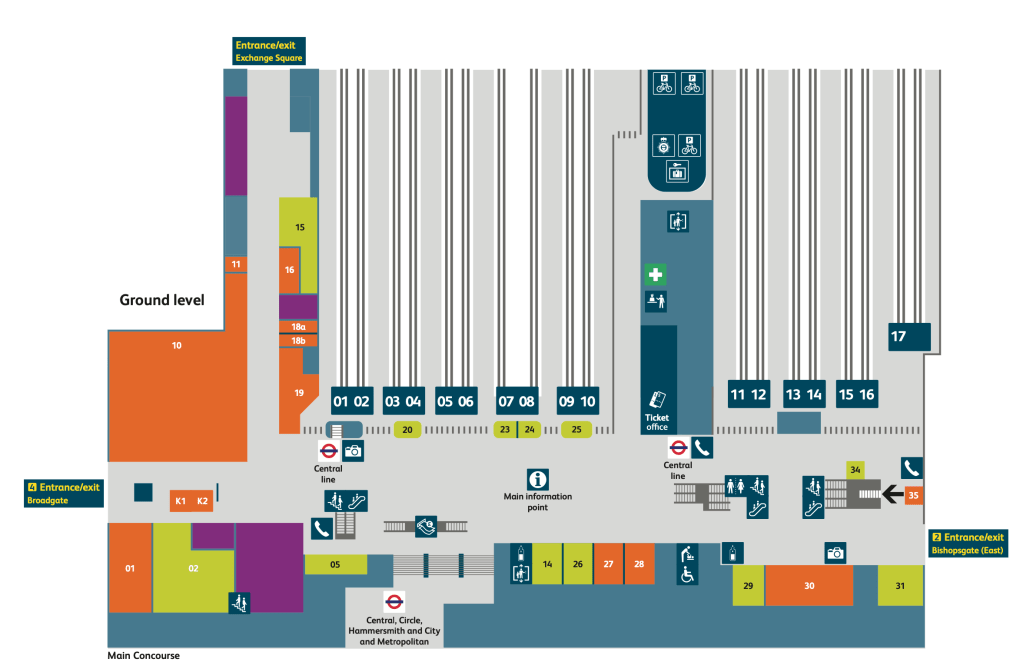
The entrance on the east side of the station from Bishopsgate is also at an upper level…
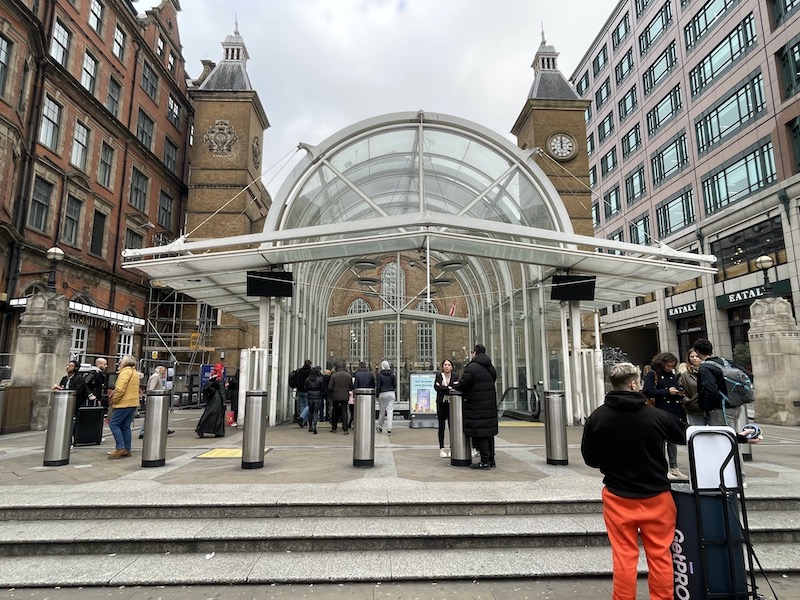
… as is the main entrance from Old Broad Street where you can see the site of the former Broad Street station demolished in 1986 to make way for the Broadgate development (see below). The original entrance to Liverpool Street at this point, together with the taxi ramp, was at the lower level.

Now there’s a pedestrian ramp from the north west corner of the station concourse by platform 1 which provides a link to Sun Street…
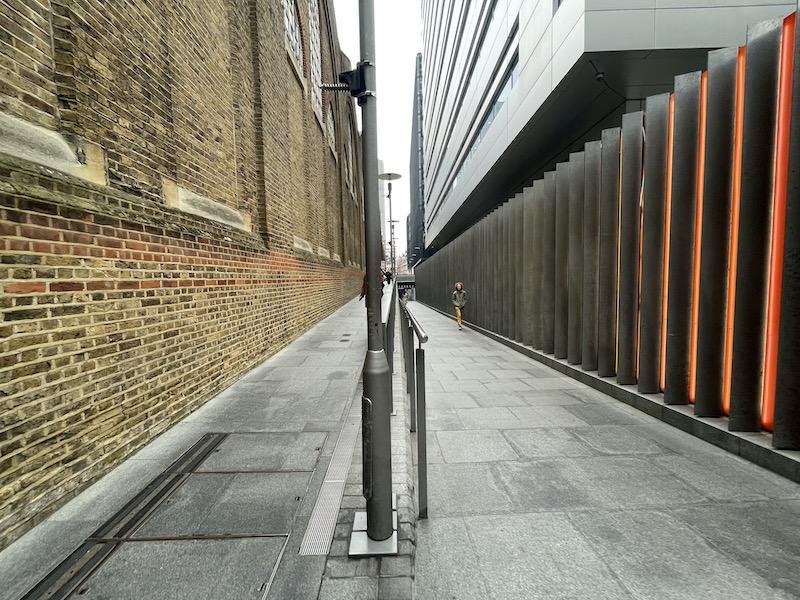
… which is on the north side of Broadgate and as you can see in the above photo passengers can either take the footpath ramp down to that exit/entrance at the lower level (right) or to the upper balcony level (left) which brings you to the bus station.

With its passageway to three bus stops…

… used by route 153, 344 and N133 with rather rudimentary facilities…
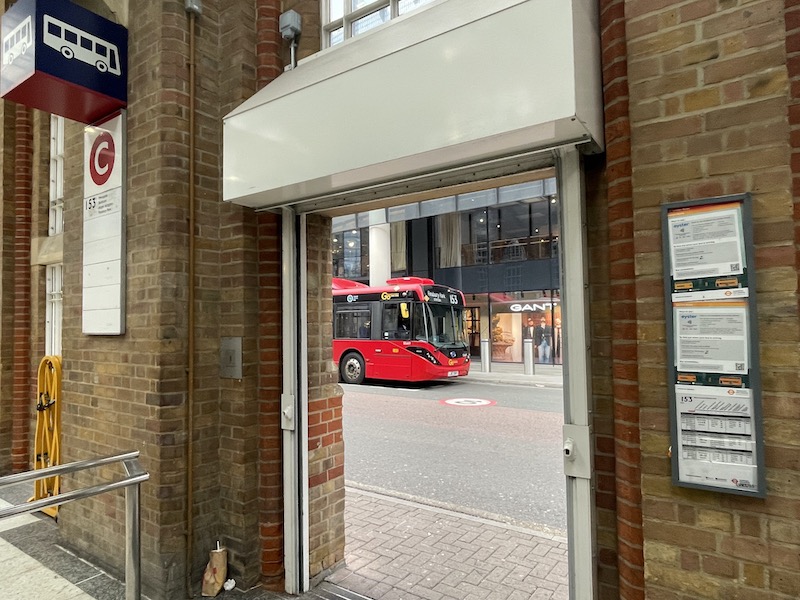
… and, this being TfL, out of date misleading departure information – route 133 ceased using this terminus and was diverted to Holborn in April 2023, but hey, let’s leave the old information up for more than eighteen months (and still counting)…

… but while waiting for a non existent bus route, you do get fine views across platforms 1 to 10 in the original part of the station …
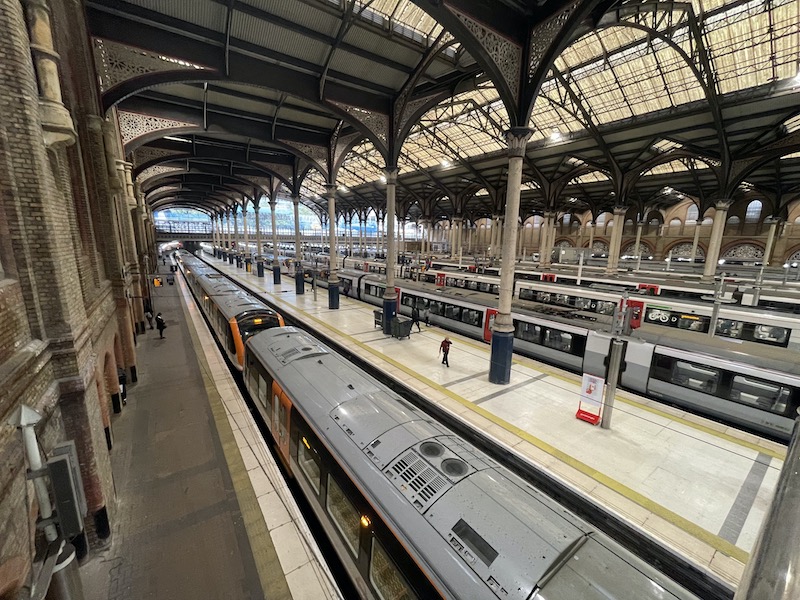
… as well as towards the gateline…
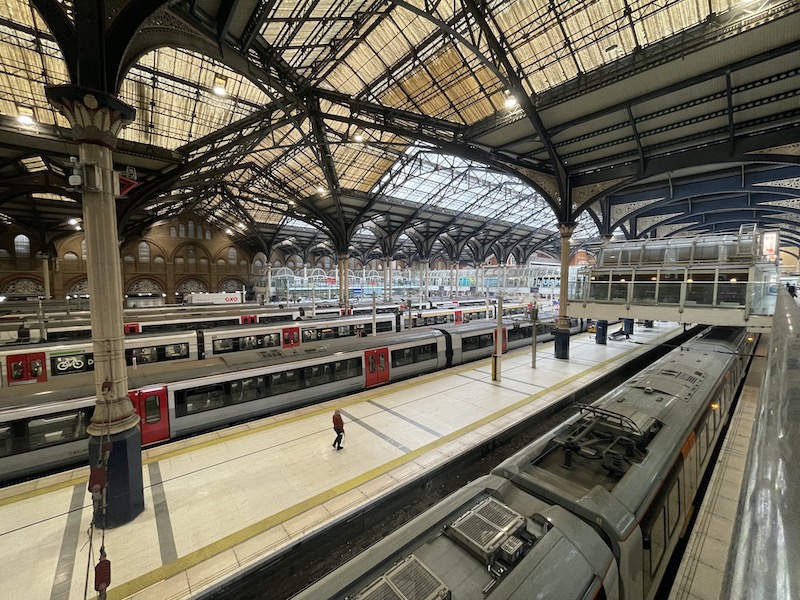
… and across to where platforms 11 to 17 are located the other side of the wall in the distance.

There’s also a subway style entrance/exit to the western side of Broadgate where there’s another entrance to the Elizabeth gateline…

… which can also be used to access the Underground lines serving the station (Central, Metropolitan, Circle, Hammersmith & City).
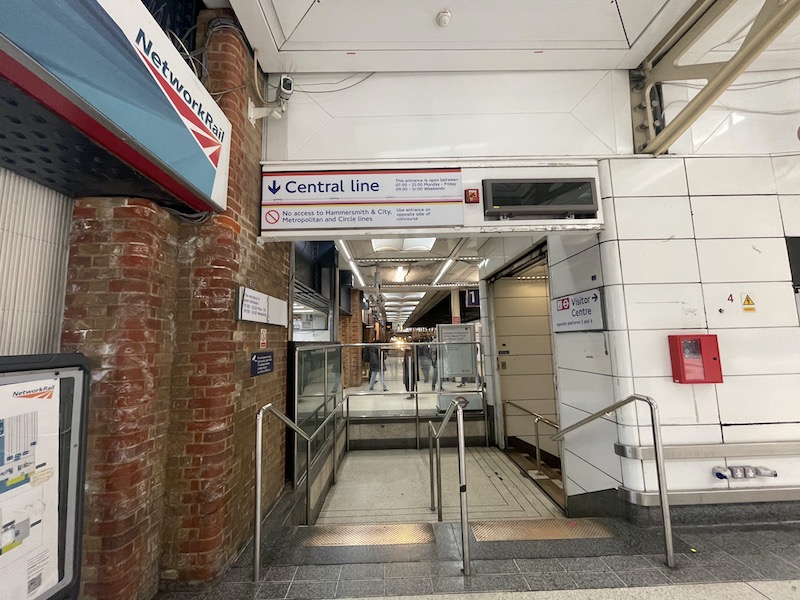
There’s another entrance/exit to the Central line platforms from the north side of the concourse at either end of platforms 1 to 10…
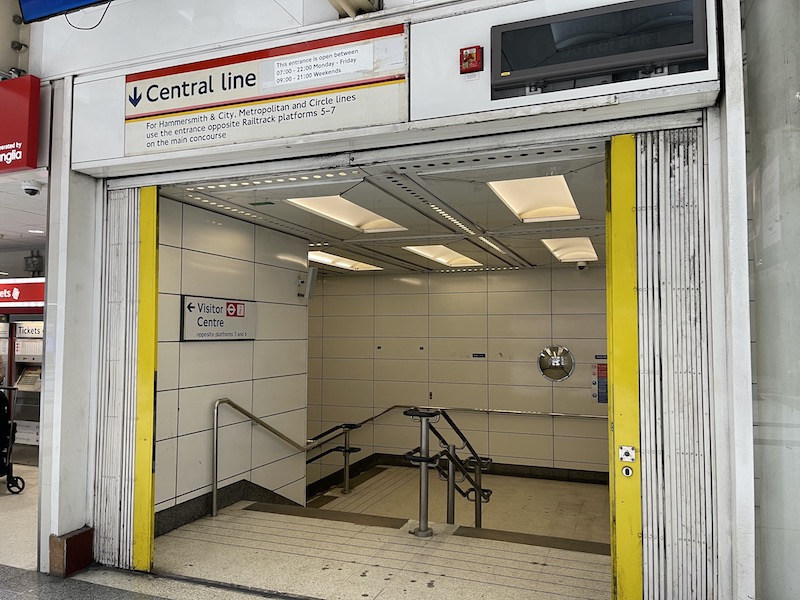
… which has slightly more restricted opening hours.
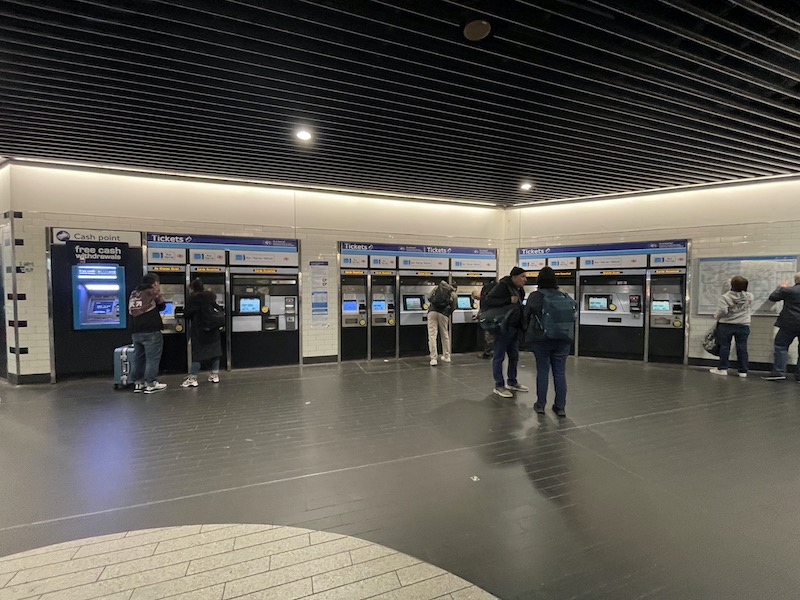
The one thing Liverpool Street has in abundance is ticket machines. Compared to Paddington, LST is TVM Heaven. There’s a long bank of ten across the main concourse…
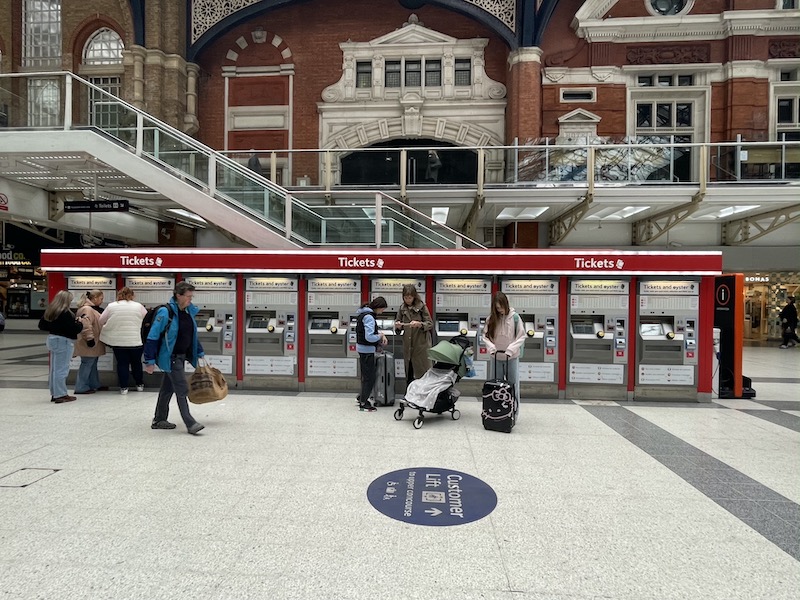
…. with two more next to them…

…. and another five by the ticket office.

Then there’s a bank of 11 TfL machines by the gateline to the Elizabeth and Underground lines which sell the full range of National Rail tickets, although I doubt many passengers know that.
As well as the Greater Anglia ticket office there’s an information point…

… and a desk for mobility assistance…

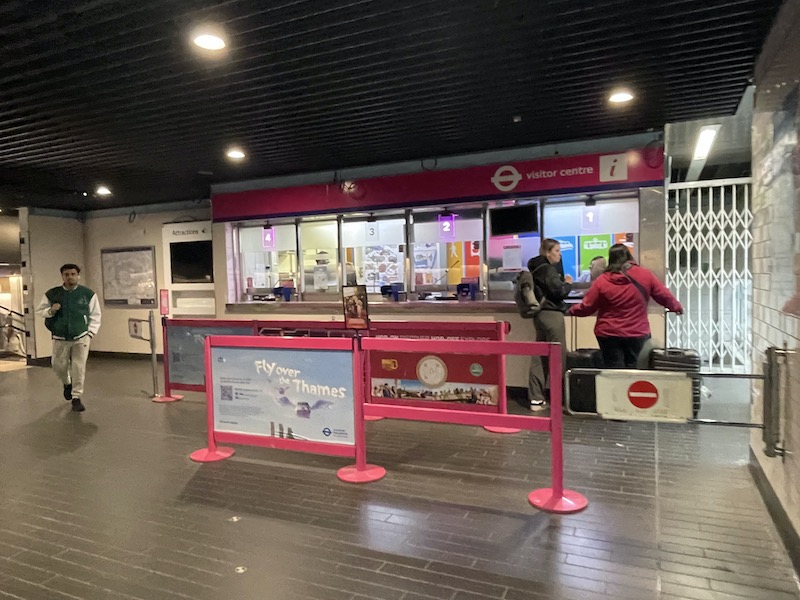
… and there’s a Visitor Centre.
Another plus point for Britain’s busiest station is the toilets, which are down at basement level but have been refurbished…
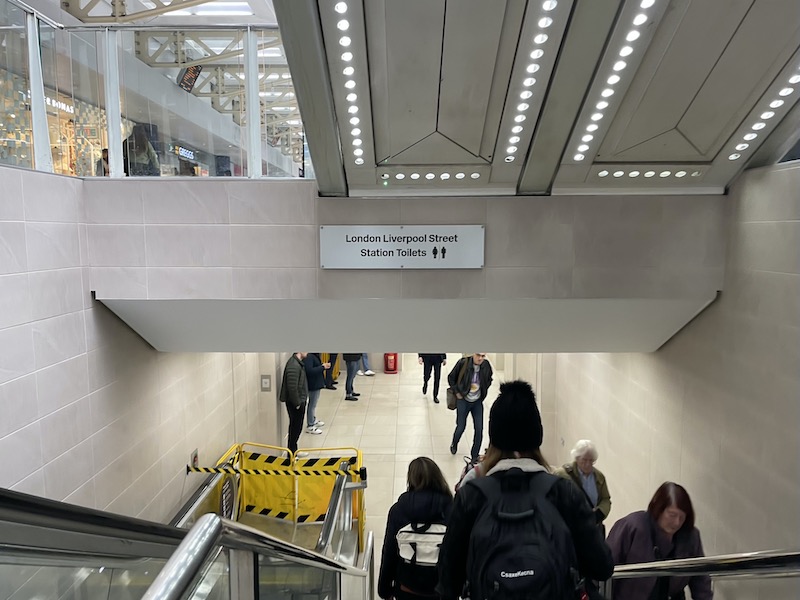
… and are kept in good condition including the noise of a bird of prey (certainly in the gents) to keep pigeons away (I assume).

As you can see, the escalator was out of action on the day I visited.
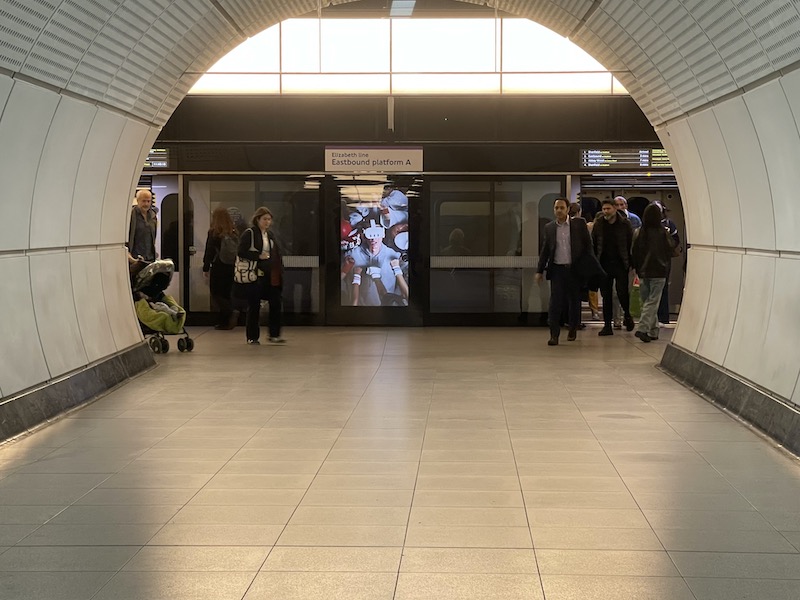
Obviously the Elizabeth line sees the most frequent service with 32 trains an off-peak hour made up of 16 eastbound alternating with eight to Abbey Wood, and eight to Shenfield and western destinations being Paddington (six an hour), Heathrow Airport T4 (four an hour), Heathrow Airport T5 (two an hour), Maidenhead (two an hour) and Reading (two an hour). The ground level station also sees four peak hour Elizabeth line trains driving/departing from/to Shenfield.
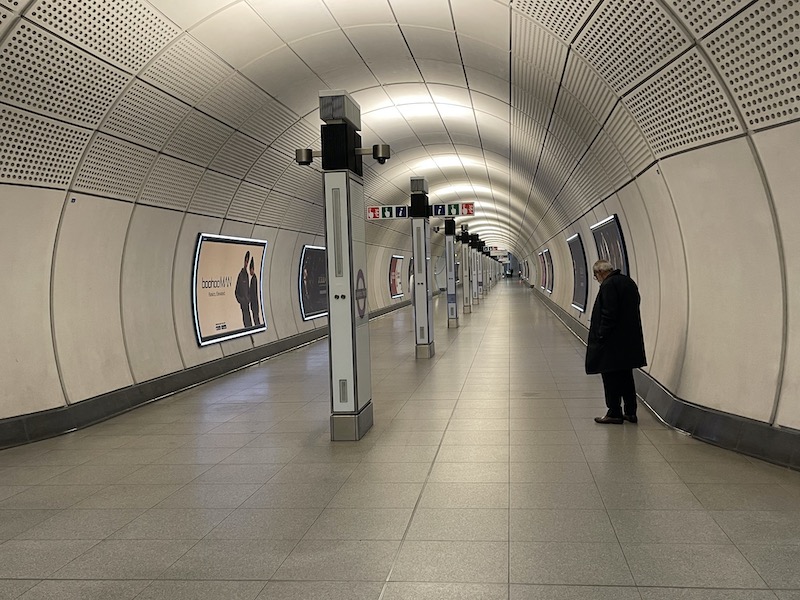
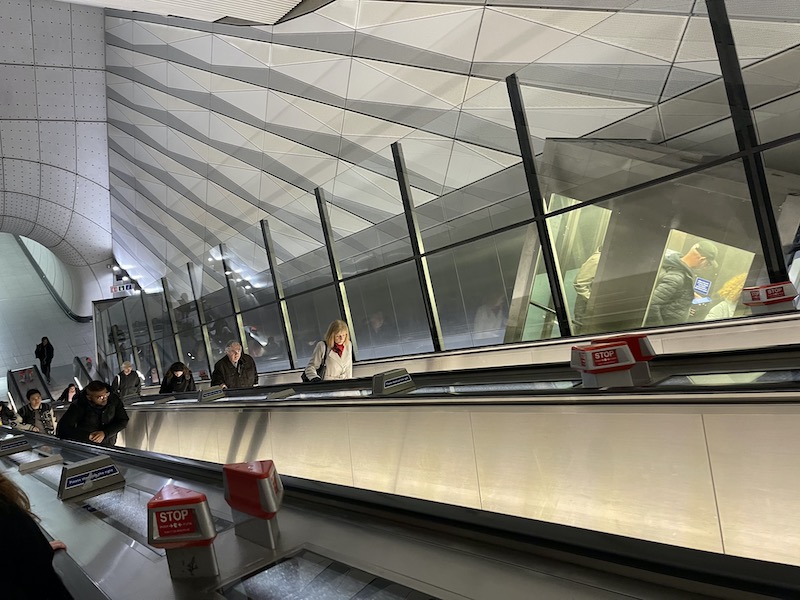
There’s the novelty of one of the Elizabeth line’s incline lifts for those with luggage and accessibility needs.
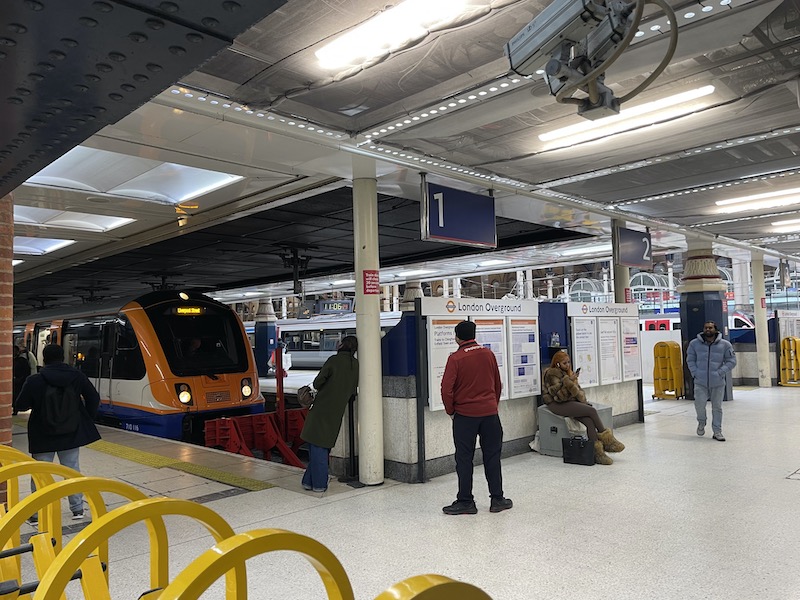
Above ground, London Overground sees eight trains an hour with four going to Chingford, two to Enfield Town and two to Cheshunt combining to provide four an hour as far as Edmonton Green.
Greater Anglia has the biggest presence on the ground floor with 17 trains an off-peak hour to Stansted Airport (four an hour); Cambridge North (two an hour); Southend Victoria (three an hour); Hertford East (two an hour), Norwich (two an hour) and hourly trains to Ipswich (stopping), Braintree, Colchester Town and Clacton-on-sea which combine to provide five an hour to both Chelmsford and Colchester but with varying stopping patterns.

At weekends c2c trains to and from Southend and Shoeburyness (two an hour) also use Liverpool Street.
London Overground and Greater Anglia trains to Stansted, Hertford and Cambridge generally use the lower numbered platforms with trains to Norwich and Southend on the higher number platforms but there’s no real pattern on a typical day.
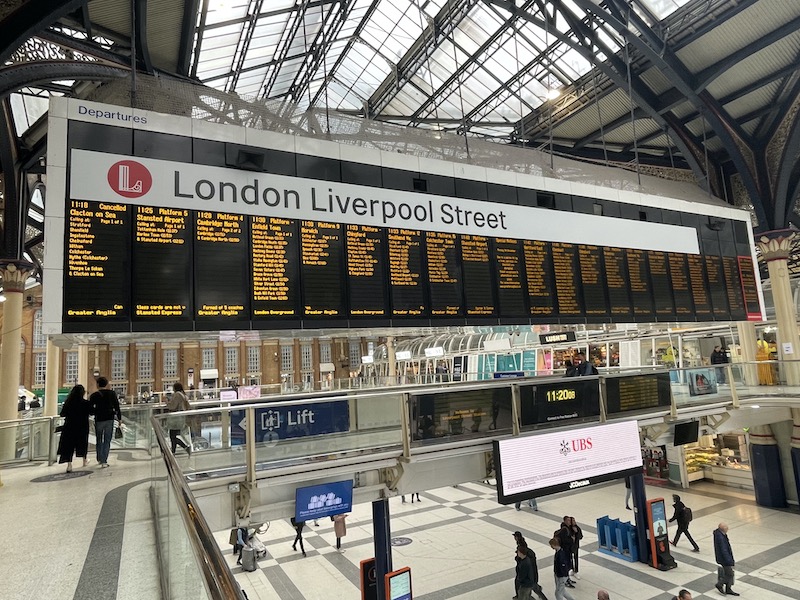
A large back-to-back departure sign is easily seen from the concourse and the balcony level and despite being much busier than Euston, is a more pleasant place to wait and catch a train.
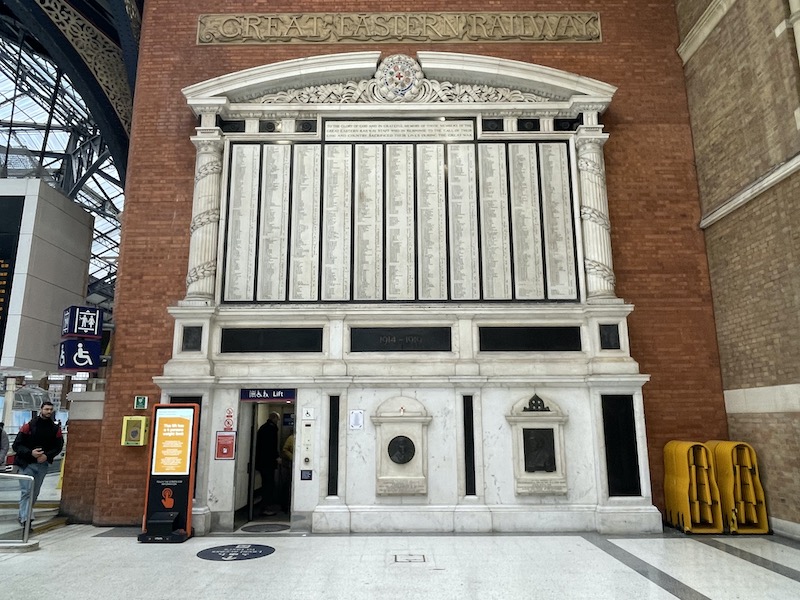
The large memorial to those railway workers who paid the ultimate sacrifice in the First World War was moved in the 1980s rebuild and now adorns a respectful corner on the balcany level by the Old Broad Street entrance. It’s the biggest memorial I’ve seen on the railway.
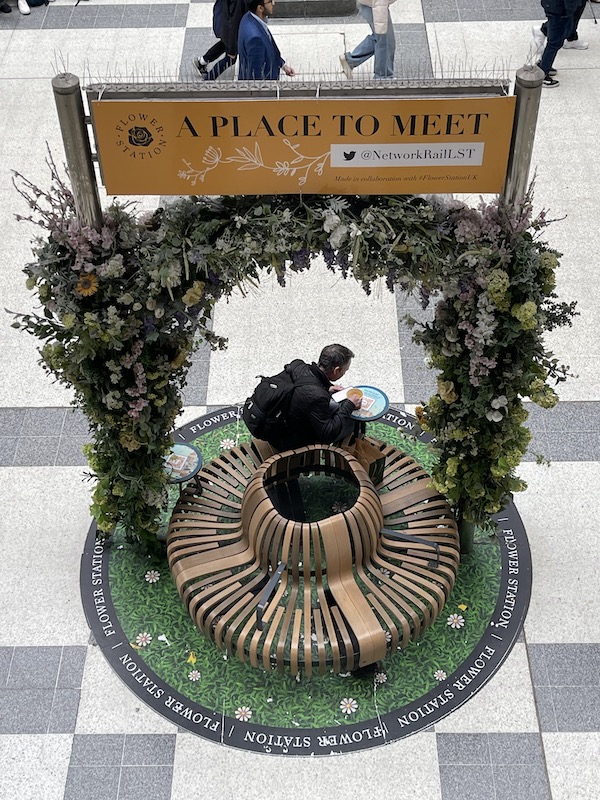
Another nice touch is the Meeting Point on the concourse with its attractive foliage.
The usual retail outlets can be found on both lower concourse and balcony levels and personally, I always find a visit to Liverpool Street stress free and enjoyable, but I’m lucky in that I very rarely visit during peak commuter times and I’m aware Network Rail have plans to develop the station to avoid over-crowding.
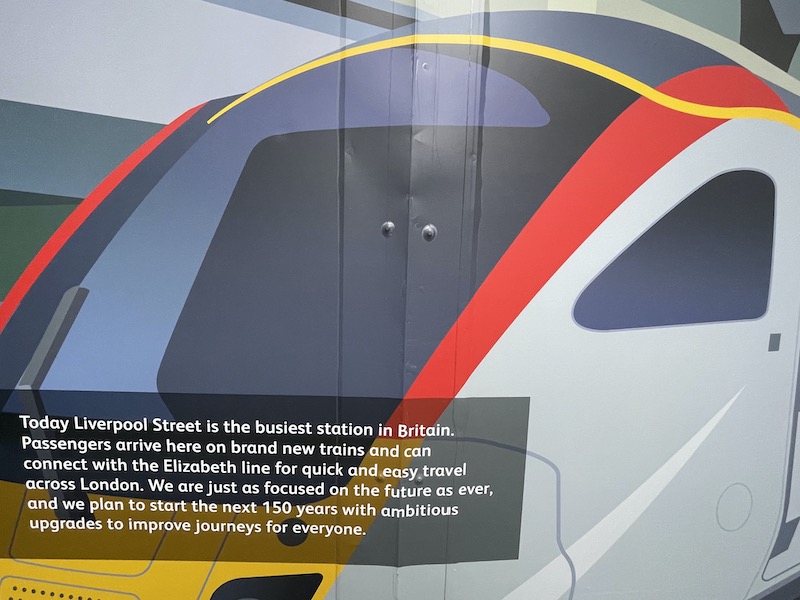
But controversial development plans for the station’s future made public two years ago included partially demolishing the Victorian station and adding a 21 storey office block above with a new two-level concourse. Unsurprisingly, there was a public outcry with over 2,000 objections and a celebrity (Griff Rhys Jones) led campaign against the development. Network Rail officially dropped the scheme earlier this month only to announce a new down-sized proposal and more sympathetic design from a different architect
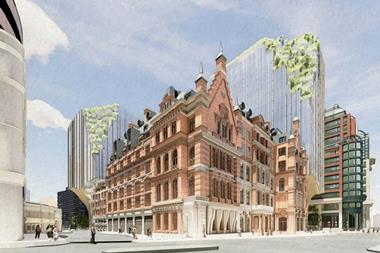
New images released by Network Rail show a glass office building wrapped around the station building and hotel rather than plonked on top as before. The height is now 97 metres compared to the previous 108 metre design, so not particularly down-sized. The new architect, ACME, is reassuringly quoted “we will retain the sense of a tall and airy concourse, with a flexible workspace building above to fund the development of the station at street level”.
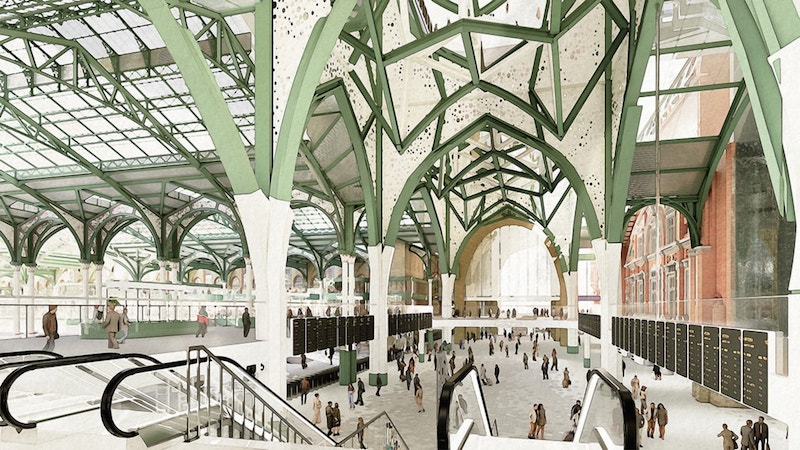
In the more immediate future it’s just been announced £22 million will be spent on cleaning and repairing the roof above platforms 1 to 10 with preparatory work starting during a week long closure between Christmas and New Year. The work is expected to be completed by the end of 2026.
It looks like Liverpool Street will retain the crown of being Britain’s Busiest Railway Station for many years to come with Network Rail justifying these latest plans with the prediction that by 2050 passenger numbers will hit 140 million a year – a 75% increase on last year’s 80 million.
In the meantime, it’s below ground where the growth has happened.

And finally, perhaps Liverpool Street’s greatest claim to fame is not just being Britain’s Busiest Railway Station but also the only station in the top ten busiest stations covered in this series to feature on the Monopoly board.
Roger French
Blogging timetable: 06:00 TThS
Comments on today’s blog are welcome but please keep them relevant to the blog topic, avoid personal insults and add your name (or an identifier). Thank you.
 BusAndTrainUser
Liverpool Street is also used by some C2C trains to Shoeburyness at weekends.
Two an hour from high platform numbers.
This is so that Stratford can be served directly but also provide a useful link to Elizabeth Line.
C2C also use Liverpool Street for diversions, late evening and weekends when Fenchurch Street is closed.
Peter Caton
LikeLiked by 2 people
Many thanks – forgot that. Have added a reference.
LikeLike
Thanks for this … so, roof cleaning – £22m; keeping bus station PI up to date – £0.
Has there ever been a north or north-east entrance? – it would cut down the walk to Shoreditch High St O/G station
LikeLike
While it is the most busy station, it seems to be the station with least passenger using TfL bus departing from the station, it lacks a big terminus like Victoria or Euston, and a lot of people just changed to purple line or other buses passed through Bishopsgate.
KS
LikeLike
You could always walk between the two half’s of Liverpool street station without using the footbridge , It was a longer walk though. It involved walking around the couple of very long platforms
LikeLike
Let’s not forget the subway to the eastern side of Bishopsgate. Quite useful, but with infuriatingly inconsistent (random?) opening hours…
LikeLike
Liverpool Street Stn no longer has a direct bus link to Waterloo. This is frustrating especially at weekends as the Waterloo & City line doesn’t run then so no fast route via Bank either. Some of the bus stops on Bishopsgate still have COVID measures applied too. It’s as if TfL and the City of London don’t care. As long as everyone cycles that’s fine.
Martin W
LikeLike
same feeling as you, can’t see the reason blocking parts of the Bishopgate while closing some bus stops.
KS
LikeLike
Let us not forget how useful that central roadway is when working rail replacement vehicles, particularly given the location and unsuitability of parking outside.
Terence Uden
LikeLike
Martin W Yes, I don’t agree with TfL’s assertion that the hopper fare makes changing bus inconsequential. Of course if arriving from the east there’s a high chance your train may stop at Stratford for the Jubilee line to Waterloo.
Kings Cross and St Pancras are other busy destinations that lost their direct buses to Waterloo recently. Here too the tube option is sub optimal requiring a change.
Another retrograde step at Liverpool Street is the fairly recent closure of the taxi rank at platform level. This was particularly useful for people with mobility difficulties or travelling with luggage.
LikeLike
Liverpool Street also has an hourly off-peak departure to Ipswich (xx.02 past the hour), making a total of 17 Greater Anglia departures each hour.
The main line station also sees four Elizabeth Line trains arriving/departing in the morning and evening peaks.
Carllo
LikeLiked by 1 person
The Elizabeth line effect is quite amazing. I’m a twice-a-week passenger between Langley an Farringdon and I just don’t know where all the passengers have come from! It’s packed, like the old pre-Covid days on the underground. Information displays and announcements on the platform and on board are unfailing. TfL have done something very right with this!
LikeLike
I used to commute from the Hertford East branch in the 1970s, but I haven’t been to Liverpool Street since then so it’s interesting to compare the offpeak frequencies now with what I recall from those days.
The Overground to Enfield Town, Cheshunt and Chingford looks much the same – though I would have said 3 per hour each to Enfield Town and Chingford.
The Lea Valley line saw 2 per hour each to Hertford East and Bishops Stortford (except for a period when Hertford East trains ran via Seven Sisters!) with the hourly stopper to Cheshunt via Seven Sisters and another to Waltham Cross via Tottenham Hale, plus an hourly loco-hauled “express” to Cambridge and King’s Lynn.
The Great Eastern line had 3 per hour to Southend Victoria, 3 stoppers to Gidea Park, 2 to Clacton/Walton (dividing at Thorpe-le-Soken), and an hourly loco-hauled “express” to Ipswich and Norwich.
As well as additional peaktime trains on most routes, there were occasional (1 or 2 per day) loco-hauled boat trains to Harwich (Parkestone Quay).
I always had a weekly or monthly season ticket into Liverpool Street, and for some reason it was additionally valid to Stratford, from Tottenham Hale (which I never used because it was an inconvenient hourly DMU service) and from Liverpool Street (which I often used at lunchtimes).
The 9 and 11 buses started their routes via the West End in Liverpool Street itself, directly outside Broad Street Station (except when they had run in service from Dalston garage) and continued to Mortlake and Shepherd’s Bush garages respectively. The 6A ran from Hackney Wick to Waterloo via Bishopsgate. The 133 at that time started from Finsbury Circus, nearer Moorgate than Liverpool Street.
Ian McNeil
LikeLike
It is all very arbitrary now as to what is Underground and what is National rail
..
LikeLike
Not really, Underground is Underground.
If you meant Overground, the Overground is National Rail.
It’s just that it’s controlled by TfL who like to pretend that it isn’t National Rail for some reason.
LikeLike
Liverpool Street Elizabeth Line Platforms are always heaving. I dont think the Elizabeth Line will cope nor the above ground station with those kind of numbers expected. I do the walk from Moorgate so I dont know If I am counted as boarding at Liverpool Street for EL (as a national rail station) The station needs lifts to Central and Met/ Circle (westbound) platforms
LikeLike
I’m surprised to learn Liverpool Street is the busiest. I’d have thought Waterloo. But given all the information in the article then I guess that justifies it.
LikeLike
A teensy claim to fame is that Liverpool Street (and Paddington) was on the Post Office railway.
Re. the favourable visual comparison with Euston, are the staff pleasanter too?
LikeLike
Growing up in Broxbourne, we used Liverpool St a lot, especially before the Victoria Line opened. We referred to the West side as the Hertfordshire side, while the East was the Essex side. The last train was always too early and you would have to leave a concert before the encore to get home.
LikeLike
The busiest are by far is Kings Cross St Pancras if you count both and the Underground is is about 130M a year
LikeLike
Source for that please?
It isn’t on the report:
https://dataportal.orr.gov.uk/media/axnd1tyj/station-usage-2022-23-statistical-release.pdf
LikeLike
69,4872,532 pre-COVID users? Seems to be a stray extra digit in that!
LikeLiked by 1 person
Thanks; corrected.
LikeLike
Aside from your fully justified criticism about service info in the “bus station”, you’ve been kind about bus information. The bus stops in Bishopsgate also need some close attention, but just as important is the wholly inadequate and confusing signage in the main concourses (both mainline and Underground). The very few signs to “Buses” are hidden halfway down long lists and randomly point to either the east or west. Some serious, but not hard-to-do collaboration between TfL and NR could sort this out but as you would say, I’m not holding my breath!
JP
LikeLike
It would be nice to highlight the two Kindertransport memorials: one at concourse level and the other just outside in the appropriately named Hope Square.
LikeLike
I note an old sign over the entrance to the Central line platforms from the north side of the concourse. “Railtrack” ceased to be the owner and operator of railway infrastructure in 2002.
Re the peak hour Elizabeth Line trains. These are from/to Gidea Park: five in the morning, six in the evening. There are also two arrivals from Shenfield and one from Gidea Park, and four departures to Shenfield in the small-hours at the mainline station.
Also a typo: “driving/departing” should read “arriving/departing”.
Notts Observer.
LikeLike
Thanks for these points.
LikeLike
Plus one train hour to Ipswich, additional to the Norwich trains that also call there!
Keep up the good work with the excellent reads, Roger
Regards
LikeLike
The recording that plays in the Gents is actually supposed to be Rain Forest, not Bird of Prey. I suspect its primary use is not to deter pigeons.
LikeLiked by 1 person
I’ve always loved Liverpool Street. Character, a trait shared by the surrounding area. Bishopsgate up to Spitalfields and the other way towards Bank are ever available for a flaneur. Up until the eighties it was the site of a 24/7 London Transport canteen. There was another one in GM Victoria Bus Garage. I’m somewhat concerned about the development plans but we’ll see.
LikeLike
I’ve often wondered if you ever get questioned as you wander around taking photos ?
LikeLiked by 1 person
Only once, at STP.
LikeLike