Tuesday 1st October 2024

Thanks to £72.6 million funding, Bristol is well on course to benefit from reinstated passenger trains in a couple of years on what is currently a freight only rail line together with the construction of three new stations.
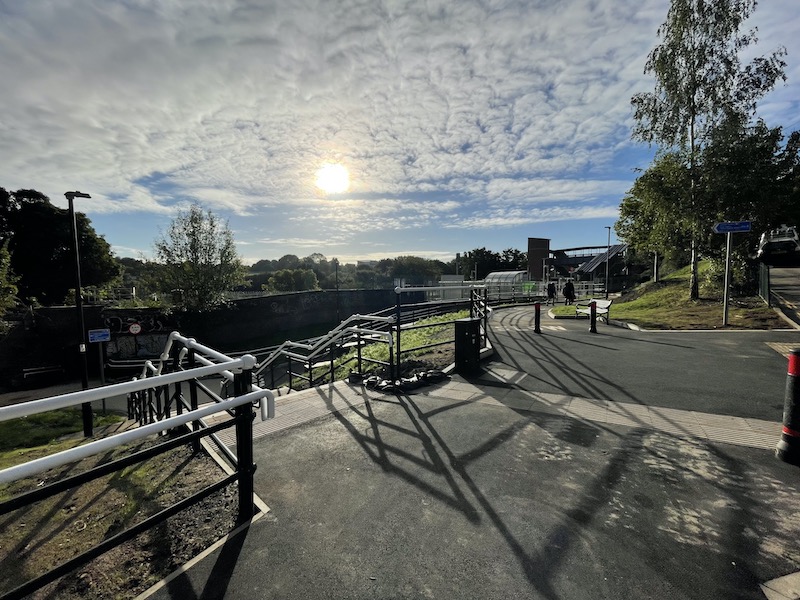
The first of these, Ashley Down, opened on Saturday.
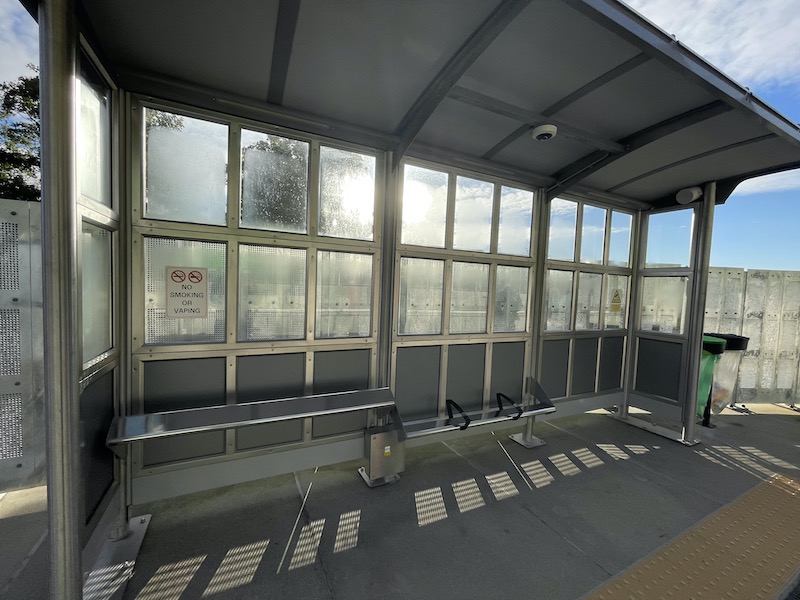
It’s nothing special. Located on the site of the former Ashley Hill station, which closed in 1964, the 2024 version has the usual two platforms (on the two ‘local lines’ on a four track section) supported by a footbridge with lifts, two shelters, six perch benches, a ticket machine, a grit bin, litter bins, cctv cameras, a nice bit of public realm at the entrance and cycle parking for 20 bikes.

As you can see from the above map, the other two new stations will be North Filton and Henbury, both due to open in 2026, when the aspiration is for a half hourly service through to the latter. For now, Ashley Down has been added to the hourly shuttle service between Bristol Temple Meads, Lawrence Hill, Stapleton Road and Filton Abbey Wood.

It only takes 13 minutes to shuttle from one end of the short route to the other.

Sundays sees a more limited two-hourly service including journeys which are part of the existing Cardiff to Taunton corridor (including one journey continuing to Exeter and another to Penzance).
Construction of Ashley Down only started in March 2023 so, by modern timelines of station construction, Network Rail and its contractor have done very well to get it finished in just 18 months.

The £72.6 million for the MetroWest Phase 2 project, overseen by Mayor Norris at the West of England Combined Authority, is coming from South Gloucestershire Council (£34.5 million), the previous Government’s Transforming Cities Fund (£19.9 million) Bristol City Council (£9.2 million), North Somerset Council (£1.9 million) plus other contributions from the Local Growth Fund and a small sum from GWR.
As often with these things the £72.6 million budget has hugely increased since the project’s inception.

Indeed last summer it was reported costs had increased by a third (£18 million). Yes, that’s not a typo, it really has increased by a third. Reasons include a redesign of Ashley Down to make its platforms 19.6 inches wider than originally planned due to updated industry accessibility standards, a redesign of Henbury station car park to reflect emerging flood risk information as well as a redesign of footbridges at Ashley Down and North Filton reflecting feedback from planning authorities, increased provision for risk and contingency and finally, a rise in biodiversity offsetting requirements for Henbury station.
It’s difficult to discern exactly how much Ashley Down has cost as part of the £72.6 million but in January 2023 the West of England Combined Authority approved funding of £13.663 million to cover the construction of the station along with securing planning approval for North Filton and Henbury and tender detailed design and construction works. So, I reckon it will have come in at around £11-£12 million, which is about ‘par for the course’ for ‘bog standard’ new stations.
First Bus’s route 70, between the University of West of England and Temple Meads Station, runs every 20 minutes (subject to AI interference) and also provides a more convenient range of city centre bus stops with a 17 minute journey time to ‘The Centre’.

And, as you can see, it was good to see its bus stop posted route diagrams had been updated to include the new station. And that’s about it for Ashley Down.
Meanwhile over in Lewes in East Sussex the controversy surrounding the closure of the town’s centrally located bus station has resurfaced.

I blogged about this when it closed two years ago but it’s back in the headlines because last month the South Downs National Park approved an application to demolish the bus station and adjacent bus garage and erect a five storey development of 32 flats, three houses and retail space on the site.
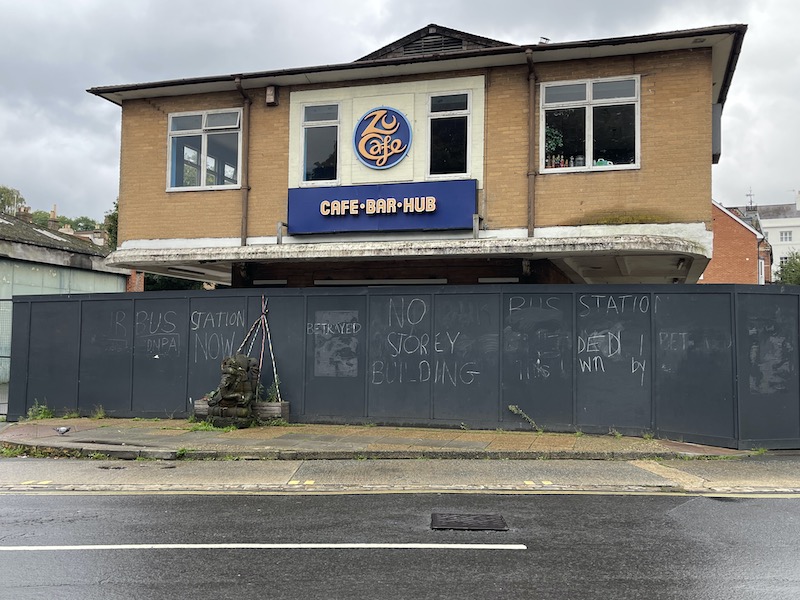
Dedicated and committed local supporters of retaining a bus station in the town are understandably outraged at this volte-face on the part of the Authority which refused permission to a previous application giving campaigners hope for the future. But it seems this new scheme with reduced size, height and scale together with a financial contribution by the Generator Group, owners of the site, of £291,000 towards alternative bus facilities on the southern side of Phoenix Causeway swayed the Authority’s planning committee members.

The “alternative bus facilities” will be two bus stops with shelters and real-time signs which will complement plans already approved for three bus stops, shelters, real-time signs and a kiosk on the north side of Phoenix Causeway being funded by Human Nature Ltd, another developer, which has planning permission for a 685-home development on the large Phoenix site north of the Causeway.
East Sussex County Council also seem to have caved in, reckoning the alternative “should improve bus facilities significantly allowing passengers to alight and board on both sides of Phoenix Causeway. Their provision will remove the need for buses to loop round the one way system, which will improve journey times and reliability of the bus services and have a positive impact of local air quality.”
Hang on a minute. What’s this about “improve facilities significantly“?
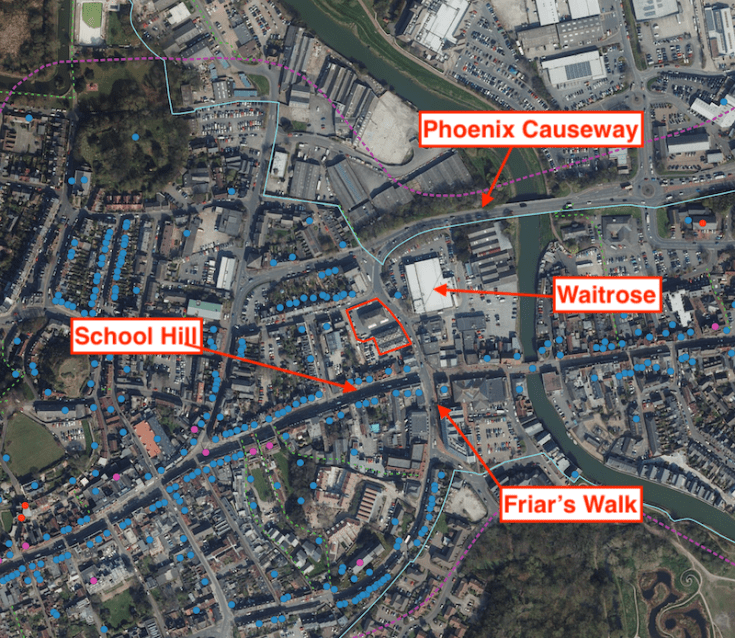
The “alternative” bus stops will be further away from the town centre where the shops are and people want to be. I’m not clear exactly where on Phoenix Causeway the new bus stops will be sited but I’ve inserted Phoenix Causeway and added an X and a Y to show an approximate location on the annotated bus stop map below which East Sussex displays on existing bus stops where buses were relocated following the bus station closure in September 2022.

As you can see whereas stop A (for buses towards Tunbridge Wells and Eastbourne) in Eastgate Street is opposite the old bus station and conveniently sited right outside Waitrose….
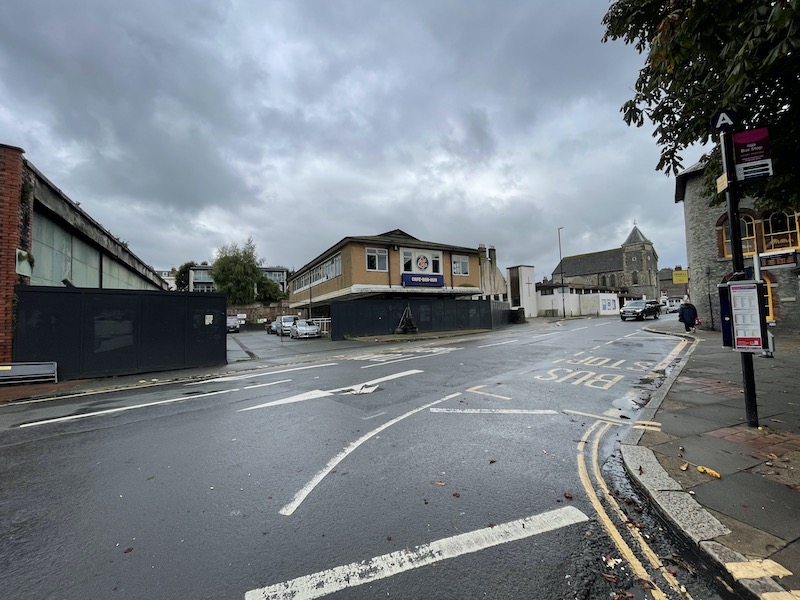
… bus stop B in Friars Walk couldn’t be closer to the High Street and School Hill and all the shops…
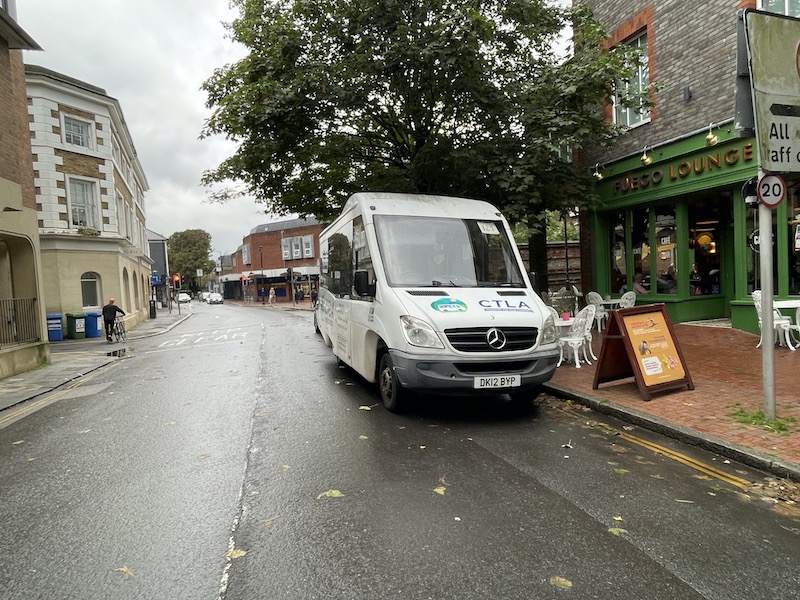
… with bus stops C and D at the bottom of School Hill similarly very close by…

… including new shelters and build outs to make more space…

… the assumed location of the “significantly improved” facilities on Phoenix Causeway are much further away. Phoenix Causeway is a busy road. Here it is from the junction of Eastgate Street looking east with Waitrose on the right hand side….
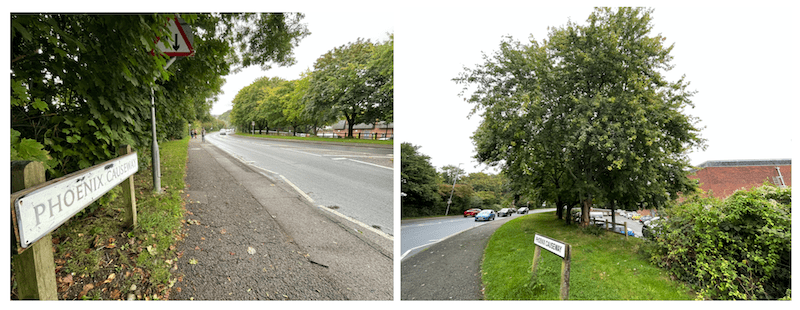
… and here it is looking west back towards Eastgate Street and Waitrose on the left hand side, and as you can see there’s the River Ouse passing under so there’s not a lot of room to construct lay-bys for bus stops and shelters on both sides of the road. (The Phoenix development is on land on the right side of the road.)

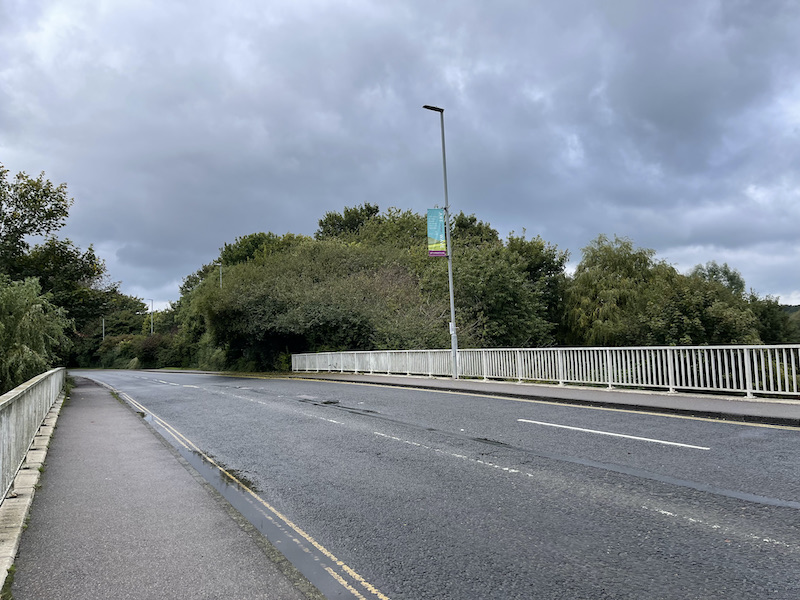
Local councillors and James MacCleary, the MP for Lewes, are calling for the application to be “called in”. “We should be investing more in public transport, not making it worse“, opined James. Of course, he’s right. Anyone with local knowledge of Lewes will appreciate just how unsuitable Phoenix Causeway is as a replacement location for the ‘bus station’.
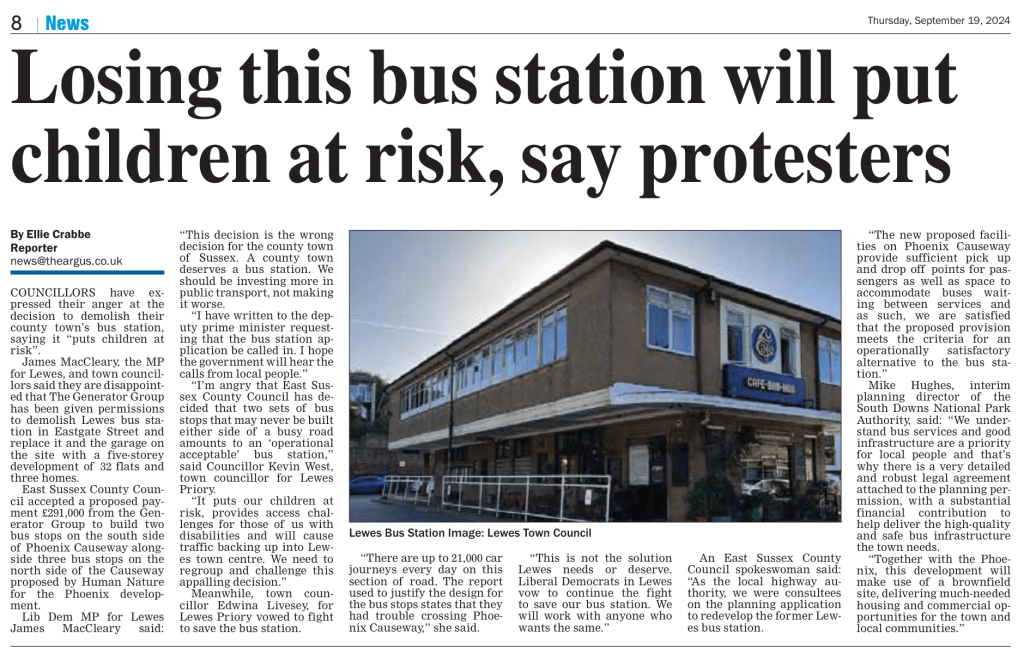
East Sussex reckon it’s the least worst option. I disagree. Having seen the so called “temporary arrangements” since the bus station closed in 2022, I’d say they are ‘less worse’ than what is now proposed. Phoenix Causeway is for cars not for passengers waiting for buses. Physiologically it’s too far from the central focal point of Lewes. The constant traffic using the road acts as a barrier for pedestrians, even though there are traffic lights to enable people to cross.

You’d think a National Park would pay very close attention to the role of public transport and the location of bus stops in the centre of the historic towns in its area such as Lewes. It’s appreciated the former bus station is now in private hands who have no interest in the town’s bus provision, but civic leaders have a responsibility to ensure best and appropriate use of land in a confined town centre.
The Generator Group bought the site four or five years ago from another property developer, Rees Elliott (who’d purchased it from Stagecoach when that company quit the town in 2006). The Generator Group obviously did its due diligence and knew the site’s planning history was controversial. For example, Rees Elliot had tried and failed to persuade Waitrose to move further east to create a space for a bus station on its current site.
Aside from the coincidence of timing, it’s interesting to reflect on £11-12 million spent on the new Ashley Down station (as part of the £72.6 million MetroWest Phase 2) which I doubt will ever see as many passengers as buses pick up and set down in Lewes every hour of every day, and not forget that East Sussex County Council received Bus Service Improvement Plan funding of £41 million, reminding us these things are all about political choices.

Roger French
Blogging timetable: 06:00 TThS.
Comments on today’s blog are welcome but please keep them relevant to the blog topic, avoid personal insults and add your name (or an identifier). Thank you.
 BusAndTrainUser
Thanks Roger for identifying the Lewes bus-stops-move. Putting the stops out on Phoenix Causeway is loopy, but it clearly puts developer profits before public service provision.
High Street shoppers need bus stops right close to the shops not two hundred meters away alongside a busy noisy exposed main road. Bags, buggies, trolleys in use.
‘Parkway’ stations only suit car users and reinforce private car choices and dependency – exactly the opposite of Lewes.
LikeLike
This is part of the wider phenomenon I recently read about of “enshitification” of quality of life by large companies, aided by useless government bodies and regulators.
Peter Brown
LikeLiked by 1 person
There is a pattern to this.
1.Bus operator might own a town centre bus station;
2. Bus operator is forced to allow access to other operators
takes the cash to sell the facility to developers (local authorities start at stage 2).
3.Buses are put on street at central locations.
4. Complaints emerge about buses spewing diesel fumes leading to calls to move the buses.
5. Inconvenient location is found for alternative bus loading facilities.
6. Passenger numbers fall
Gareth Cheeseman
LikeLike
Another BSIP failure , From recollection I am sure it said they would normally approve of the removal of bus stations
LikeLike
Thanks for clarifying that the 72 million is for the whole Henbury spur and not just Ashley Down – other coverage didn’t make that clear and 72 million did seem an awful lot for one station.
It’s quite often the case that the service to a new station is improved after six months or a year if everything is going smoothly so hope it’s not too naive to hope some more of the trains that stop at Filton Abbey Wood can be scheduled to stop at Ashley Down – a direct connection to Bristol Parkway would be particularly helpful.
Chris
LikeLike
Surely our Secretary of State for Transport is “putting passengers first” and “the govt is bringing buses back under local control allowing communities to set routes and make bus travel more reliable.”
A need to remind the LA of govt policy?
LikeLike
All to often Council do away with bus stations only to create chaos
Colchester lot is bus station although the council try to claim the on street parking is a bus station, The facility id totally inadequate and i chaotic with bus blocking streets and stopping wherever they can
LikeLike
This shows how nominating a bus station as an Asset of Community Value as Lewes Town Council did on 21 November 2023 has no effect on a developer determined to build houses on the land. Towns like Lewes need a central point for buses particularly for tourists unaware of the geography of the town and how to get to stops scattered around with little information on where to catch a bus to their destination.
LikeLike
Both items typify public transport in England these days – does any project ever come in at anything less than 30% of the original tendered figure and do local Councillors care about – or ever use – public transport and its basic requirements?
R M
LikeLike
The Green Town Councillors in Lewes clearly care, as does the local Lib Dem MP. Unfortunately all they can do at this point is protest and lobby, as the decision is being made at Local Authority and National Park Authority level. Let’s hope their calls for the decision to be “called-in” are heard at a higher level.
LikeLike
| Both items typify public transport in England these days – does
| any project ever come in at anything less than 30% of the original
| tendered figure
It’s not just public transport, believe me. In this country everyone quotes low prices to get contracts then uses any wiggle room in the contract to increase those prices.
Maybe there should be a requirement for honesty in project costing.
Oh, and a requirement that any organisation which varies a project pays for that variation. That might concentrate minds a little when specifications are issued.
LikeLike
Bristol is planning to introduce a work place parking levy
LikeLike
How sweet and impressive: GWR lay on a “football service” the first day Ashley Down Station opens. The station shall be useful for cricket next year as well as for Bristol Rovers FC fixtures.
Through book purchases recently I have come across pictures of both ends of a dead-end-wire installed by London Transport outside the Tottenham Hotspur FC ground. It could cater for eight trolleybuses needing each to do a boom swing to get on at the north end as crews on this “siding” awaited instructions from Inspectors. With, additionally, the through main wire southbound the local substation must have been working at full capacity especially for night matches with sixteen or more trolleybuses drawing current for traction, MG and lighting – let alone those seeking their northern destinations. No Victoria Line then so many Gibson machines would have issued millions of tickets for those heading for Manor House Station and the Piccadilly Line. For northbound trolleybuses there was the simple destination “Tottenham Spurs Ground” with Snells Park their turning point after dropping off passengers for their football fun.
As to the East Sussex County council: Lewes ought to have a prestigious Bus Station as befits a County Town but bus horrors await us all at Newhaven. Newhaven’s quasi bus station is squalid, and I must comment that BT have not updated the telephone exchange signage since the building was opened in the 1960s! The best thing one can say about Newhaven is that bus doors do close when one is aboard, the driver does use his offside indicators and with a clockwise turn on the steering wheel the delights of Brighton or Eastbourne will soon be within one’s grasp.
LikeLike
This is clearly a crass and retrograde step. The “Lewes Town Centre bus stop guide” is also twisted and with no North arrow, further hindering way finding for some. At least that can be fixed unlike the lack of a bus station that Lewes will presumably be stuck with for ever more.
Lorenzo
LikeLike
I confess that I don’t know Lewes that well. So thank you to Roger for providing some easy to understand maps etc that have added to my knowledge and clarified things in my mind. I can’t help but agree that the proposed Phoenix “solution” is nothing of the sort but an expedient and short sighted means of waving through the bus station redevelopment.
However, in response to some other posters points but a few points that are worth considering. I remember reading that bus stations should only be located in certain locations where it can be justified as they are a cost to build and maintain, and that fares go up to reflect this. This wasn’t 1989 but when Southdown were proposing to build both Lewes and probably Chichester and Haywards Heath during the golden age of bus travel! We have a number of “PTE areas” and even some shire counties who have seemingly no shortage of money to create overly ostentatious and outsized facilities that appear to be built in order to create some sort of “legacy” that really doesn’t extend further than a plaque and some photo ops.
That Lewes is the county town has no relevance. Northallerton, Dorchester and Trowbridge are also small market towns that happen to be county town and haven’t had a bus station for many year if ever (Dorchester).
However, it is definitely the case that even without the former Southdown bus station, Lewes needs to have bus stops that are close to the shops so that passengers can safely and conveniently access the town. Perhaps sacrifice part of a public car park, and create something akin to Uckfield?
BW2
LikeLike
Fortunately my home town of Chippenham still has its bus station (the last one in the Wiltshire Council area). It serves several routes, and provides layover space. Old video clip, First is long gone as is APL Travel, Faresaver predominate today, with Stagecoach and Coachstyle on the Malmesbury service.
Peter Brown
LikeLike
However, Chippenham bus station is actually located in quite a poor spot. It would make more sense to have a bus station by Chippenham station whilst using the stops near the Town Bridge en route, being able to serve the bottom end of the High Street and the Borough Parade shops.
BW2
LikeLike
A lot of services do call at the railway station the 231 to Bath every 30 minutes is one. This stop is ideal for Wiltshire College too. There isn’t any layover space though.
Peter Brown
LikeLike
Interesting, but all too depressingly familiar story.
Like everything with buses this will only be solved by formally linking all national bus funding streams to very clear policies related to accessibility, punctuality and patronage.
Many authorities constantly demand AND receive bus funding, but continue to progress pro-car policies in relation to parking, new developments and highway management. Their patronage continually goes down accordingly, but they still get funding and still whinge about deregulation being the cause.
Why are these LTAs allowed to keep their BSIP funds? They should be reallocated to those LTAs which have far greater potential for patronage growth.
That said, on-street stops with decent shelters, seats, printed and real time information can be a good alternative to a bus station if they are a) better located than the previous bus station for both pedestrians and bus operations b) clustered together for interchange and c) easier and cheaper to maintain d) located to allow for layover and not delay through buses.
Nottingham City Transport (and the Tram) does very well with its on-street City Centre stop locations. These save the not-inconsiderable time of getting into and out of a bus station, allowing multiple pick ups across the centre, with greater accessibility and visibility.
Andy
LikeLike
Another excellent, if depressing, article by Roger French. Essentially large amounts of public money can be thrown at railways to provide very limited services. For some reason although almost every other European town of any size has trams, which might provide a better service for a city the size of Bristol, we can’t provide those remotely cost effectively either.
On the other hand bus service provision is incoherent and fragmented. I don’t mean here that all bus services ought to be provided by the public sector. The public sector certainly ought to be investing in reasonable infrastructure and ensuring that it is well-located within town centres. Provision of a few poorly placed bus stops on a relief road is just a disgrace.
This is something that local authorities could do or campaign to have additional planning powers to achieve. But they’re always more interested in grand standing over ownership and thinking that councils know better than bus operators where to run services
LikeLike
I used Lewes Bus Station quite a lot in the 2010’s struggling out of Waitrose with bags of shopping hoping to catch the infrequent Compass 123 to Southover High Street. A town like Lewes ought to have a bus station as it ought to be a bus hub for the surrounding area but the only really frequent route passes through so does it really need a large facility? The idea of using the Phoenix Causeway is just laughable. But there are two large public car parking facilities on either side of the approach road to Lewes rail station couldn’t part of one of them be given some small but decent facilities for information, shelter, toilets and space for buses on layover? Why should we always build for the convenience of the car?
MikeC
LikeLike
Local press having a moan about Bedminster Down.
Peter Brown
https://www.bristolpost.co.uk/news/bristol-news/its-just-rubbish-new-railway-9623373?int_source=amp_continue_reading&int_medium=amp&int_campaign=continue_reading_button#amp-readmore-target
LikeLike