
Sunday 25th August 2024

After the delayed but enjoyable journey up to Aberdeen (see Part 1 of this two part blog from yesterday) and bought my Travel Pass from Aberdeen station’s ticket office, day one of my Spirit of Scotland adventure began on the 10:08 ScotRail train from Aberdeen to Inverness.
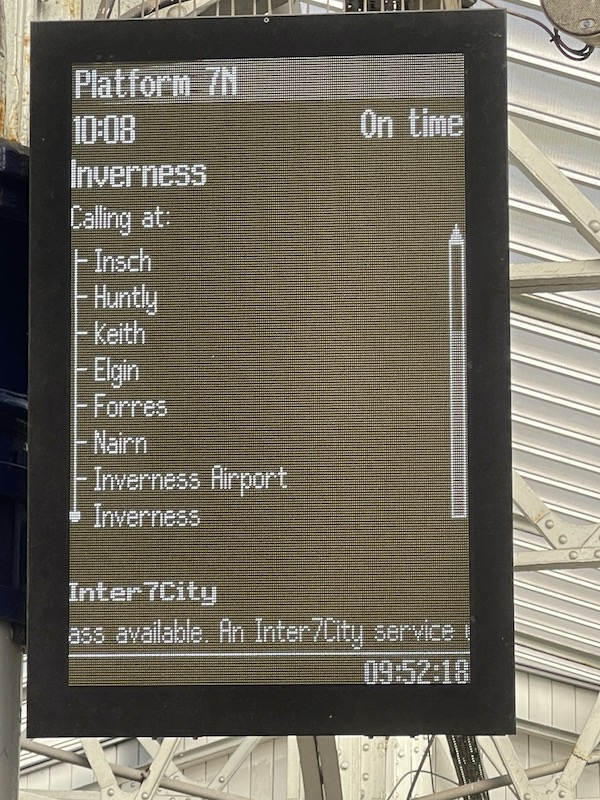
It was a nice surprise to have one of ScotRail’s HSTs for the journey to Inverness which carried a decent number of passengers all the way to Inverness including four to Inverness Airport. I hope they were prepared for the walk from the station to the terminal building, although I hear an autonomous pod and vehicle (like the “road sweeper” I tried in Milton Keynes last year) is about to be trialled, which will be an added attraction.

Buoyant numbers travelling on the line reflect the temporary reduced timetable which has seen short journeys to Inverurie withdrawn. We were particularly busy from the main towns of Keith, Elgin and Nairn.
We’d been due to cross the 10:56 Inverness to Aberdeen train at Elgin at 11:38/11:40 but that was running 10 minutes late so we had to wait for it to clear the single track section. Otherwise it was a good journey.
It’s a lovely ride across Aberdeenshire and Moray with a call at the new stations at Kintore and Inverness Airport as well as the rebuilt station at Forres – all three to the uninspiring modern modular format.

After a pleasant break in Inverness it was on to Wick on the 14:00 departure.
As explained in yesterday’s]blog, the Far North Line has been reduced from four journeys a day to three with the 10:41 from Inverness to Wick withdrawn resulting in a seven hour gap between the 07:00 and 14:00 journeys, so not surprisingly it was a busy journey with lots of passengers.
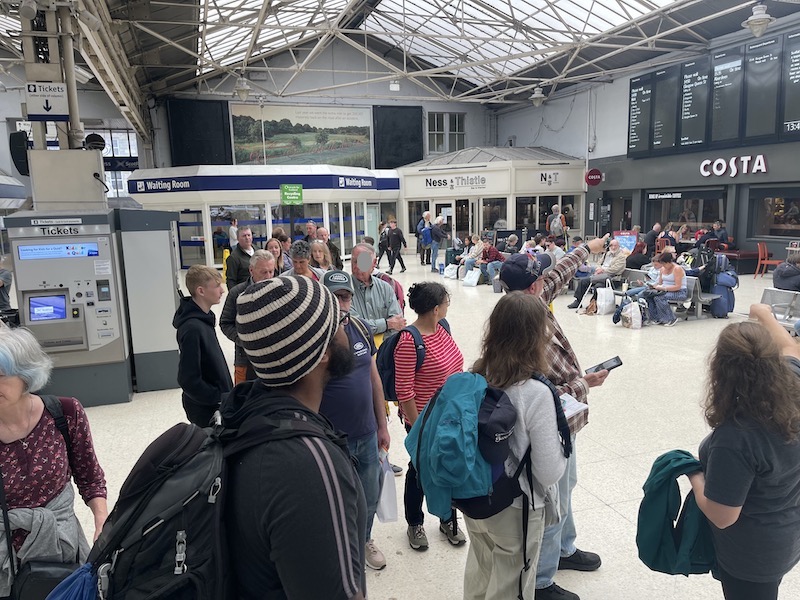
In view of that I was a bit surprised it was only a two coach Class 158. Although it was sufficient for everyone travelling, on such a long journey – four and a half hours – it would have been nice to have spread out a bit.

It’s a lovely ride with gorgeous coastal views as well as of Cromarty Firth…

… and much further north more rugged scenery.
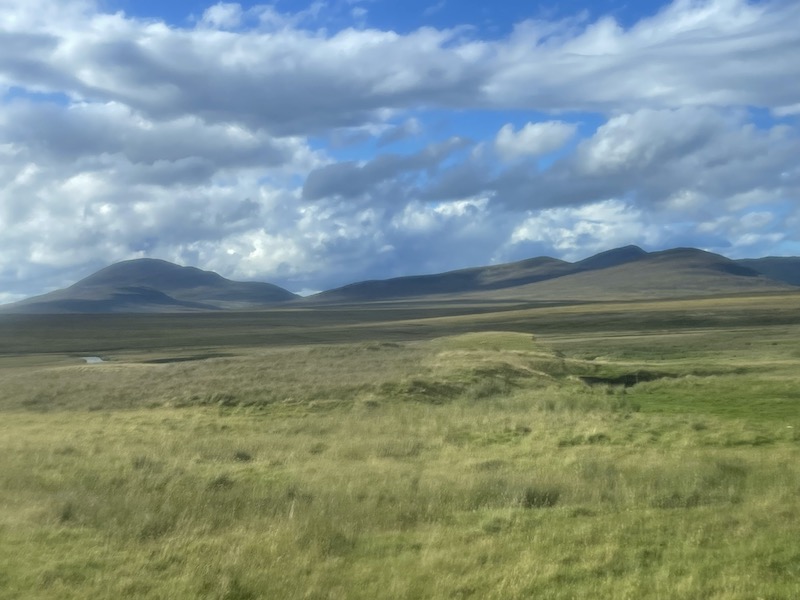
The passenger activated request stop buttons came into their own as we sped through Invershin with no business to be had there and Altnabreac remains closed. Despite this we lost seven minutes on the journey, arriving into Wick at 18:29 instead of 18:22.

The next morning, my original plan was to catch the second departure of the day from Wick at 08:02 and change at Dingwall on to the second daily departure from Inverness to Kyle of Lochalsh. The temporary timetable has decimated the Kyle service from four return journeys a day to just two which depart Inverness at 10:56 and 17:54, returning from Kyle of Lochalsh at 06:11 and 13:46. It’s not a very attractive proposition for tourists who like a day return ride on the line – their only option is to take the 10:56 departure and return 11 minutes after arriving in Kyle on the 13:46.
From Wick back down south, I decided to switch modes and catch Stagecoach’s X99 route which also runs from Thurso and Wick to Inverness, and whereas the train diverts inland to serve KInbrace and Forsinard and further south to serve Lairg, from Wick to Inverness the X99 does the journey in just under three hours – which is two thirds of the four and half hours the train takes.
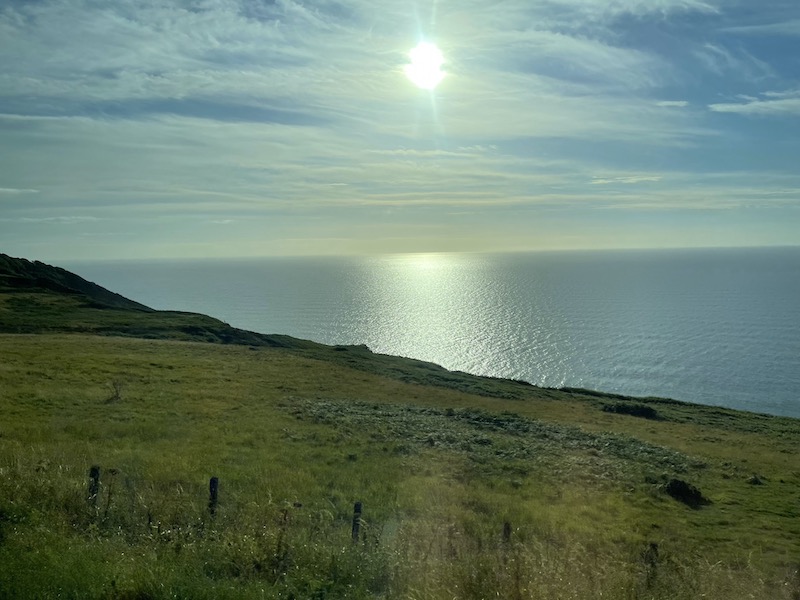
Because the bus hugs the coastline for much of the route it offers some fine early morning views as it runs along the A9.

I caught the 06:58 from Wick (which had started in Thurso at 06:20). It was a very busy journey and by the time we reached Golspie, at 08:34 we were completely full up.

Most passengers were travelling through to Inverness but there was also a smattering of short journey hops, and as luck would have it, no one was left behind with the few alighting being matched by the same number boarding. We arrived into Inverness bus station a few minutes late at 09:59 instead of 09:56 mainly because we paused for ten minutes instead of the scheudled two in Dornoch – I’m not sure why. We’d also waited time for five minutes in Lybster and a few minutes in Dunbeath.
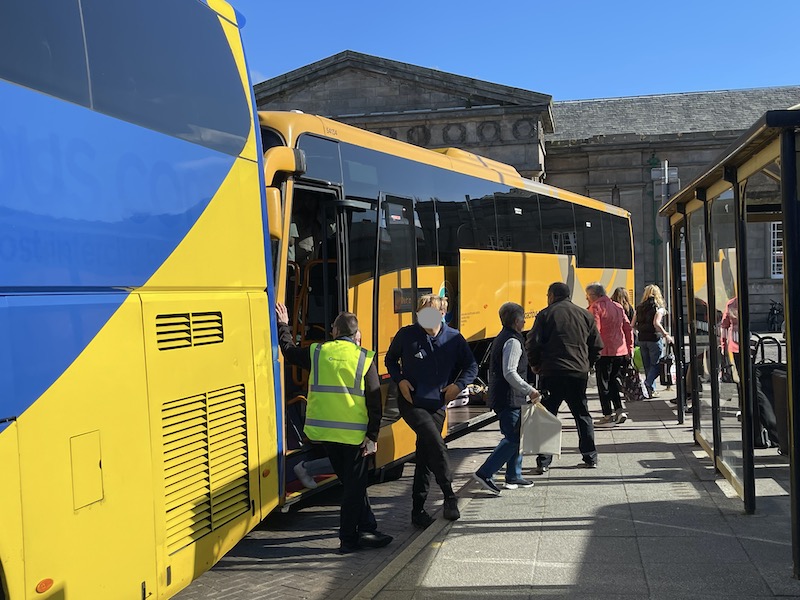
I reckon you could squeeze out ten minutes from the running time and with just three journeys a day it does seem to me this popular tourist route is under served. The views of the coastline as well as the inland countryside are quite stunning and to me it has huge potential in the summer months to attract many more passengers – you only have to stand in Inverness bus station for a short time to see just how many tourists are in the area, hungry for places to visit.
Double deck coaches with usb, WiFi, comfortable seats, a toilet and luggage storage space – a bit like the Oxford Tube, would be a great attraction on the route – and why not a joint ticket with ScotRail so passengers could use the train in one direction (which also offers stunning views) and the bus in the other. The fares are about the same – Stagecoach charge £28 for a single and £29 return between Inverness and Wick with the rail fare being £27 single and £35.90 day return.

Passengers needn’t do the full route as there are plenty of common stops to both modes.
Having arrived into Inverness for 10:00 I had a nice break with a late breakfast (don’t tell LNER – see yesterday’s blog) before catching the 10:56 train to Kyle of Lochalsh.

It was another two coach Class 158, and a good number on board although I reckon a lot more passengers have shunned the service due to the restricted timetable.

It’s a fantastic two hour and 39 minutes ride with some stunning Highland scenery yo savour as the train heads ever westwards. After leaving the Far North Line at Dingwall the train stops at five stations with a further six request stops, although, not surprisingly with the restricted timetable, no-one wanted to alight or board at any of these.
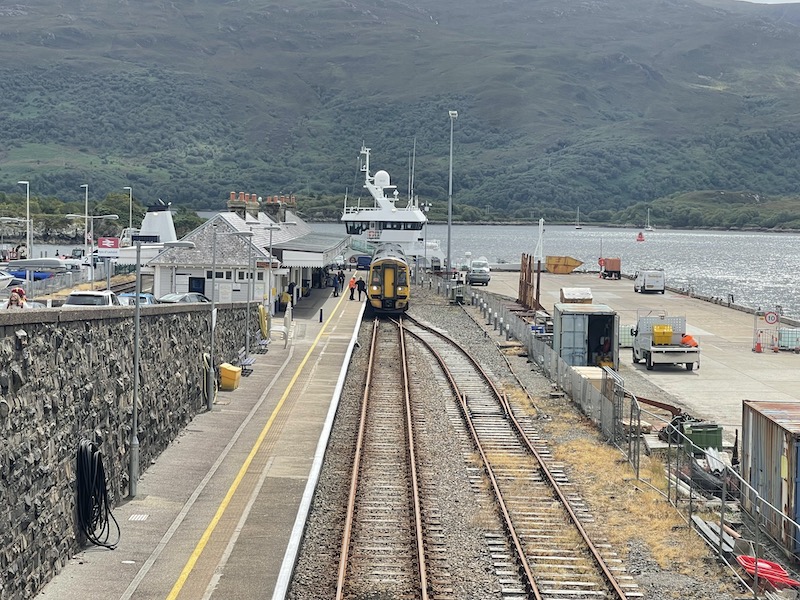
We arrived into Kyle on time at 13:35 and a few passengers got off the train to have a quick stretch of their legs before jumping back on to return at 13:46. The train conductor had been emphasising to everyone on the outward journey they’d only have that brief amount of time in Kyle of Lochalsh as this would be the last train back, so I was surprised to see the dot matrix sign on the platform at Kyle showing a later afternoon departure at 17:13 – as per the normal timetable. I asked the conductor on the 13:46 departing train whether she knew about it but she said it was probably an error and the signs hadn’t been updated.

Having posted a photograph of it on social media, those in the know, and having checked ‘real times trains’, confirmed the train was indeed running and reflected the fact a driver had become available.
This is a ridiculous way to run a railway. It’s hopeless for passengers on such a sparsely served route to reduce the timetable due to a shortage of drivers only to casually reinstate a journey with no proper notice other than an appearance on the station departure board – how are passengers supposed to plan their day? No information was available at Inverness about it. I can’t imagine many passengers actually travelled on that journey having risked waiting for it; I wouldn’t have taken the risk.
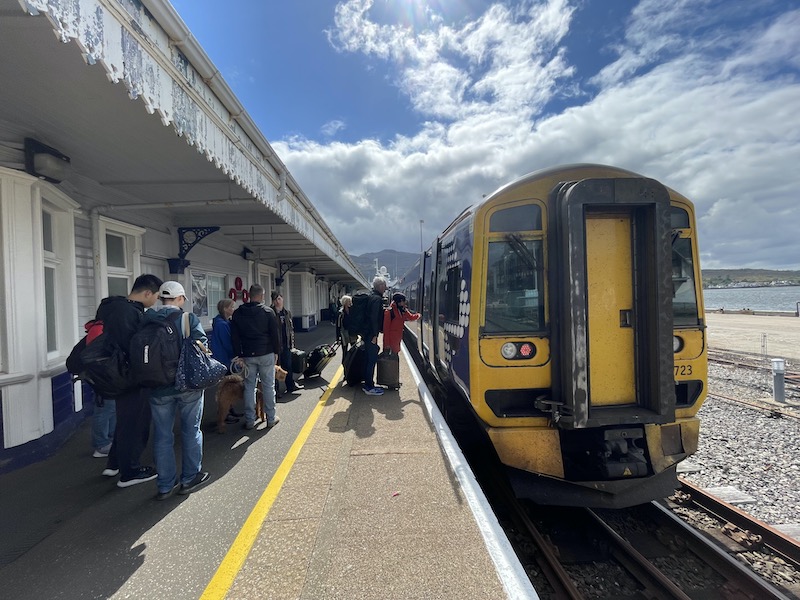
As explained in yesterday’s Part 1 blog, I’d planned to continue onwards from Kyle of Lochalsh to Fort William on the CityLink coach that operates Britain’s longest “bus” route from Uig on Skye via Kyle of Lochalsh and Fort William to Glasgow. Although my Spirit of Scotland Travel Pass was valid for this journey I’d taken the precaution of booking a ticket in advance of travel to ensure a guaranteed place on the coach being unable to visit a CityLink ticket office to reserve a seat in advance, as otherwise required.

In the event, when the coach arrived in Kyle of Lochalsh slightly late at 16:45 there were plenty of seats available so I could have saved myself the £31.10 I’d paid for the ticket.
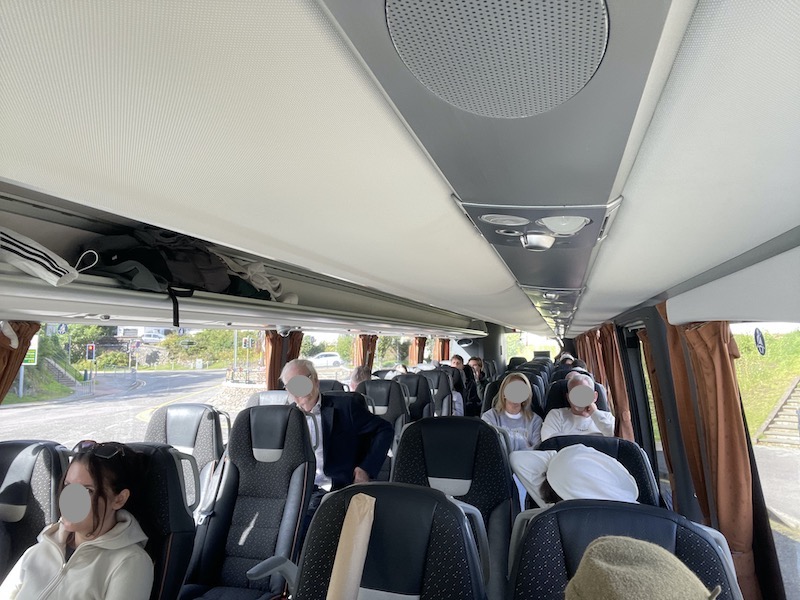
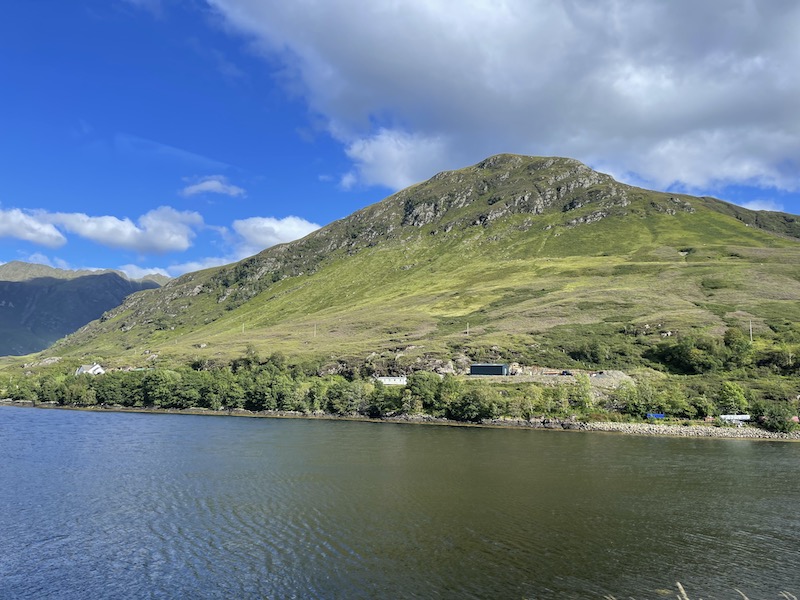
It’s a lovely scenic ride along the A87 to Invergarry taking in Loch Duich, Loch Cluanie, Loch Lyone and Loch Garry then on to the A82 past Loch Lochy and Spean Bridge to Fort William.

On arriving into Fort William there’s a 28 minute break before the coach continues on to Glasgow. All passengers are asked to leave the coach and a fresh driver takes over after the break.
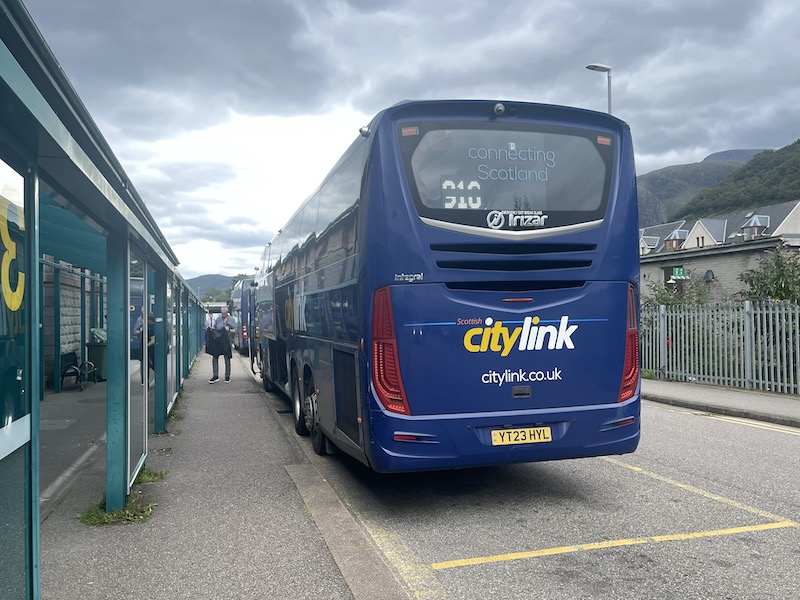
I wasn’t getting back on the coach as I has an overnight stay in Fort William and began my third Spirit of Scotland day the next morning to enjoy a ride on my favourite of all Britain’s railway lines – the West Highland line.

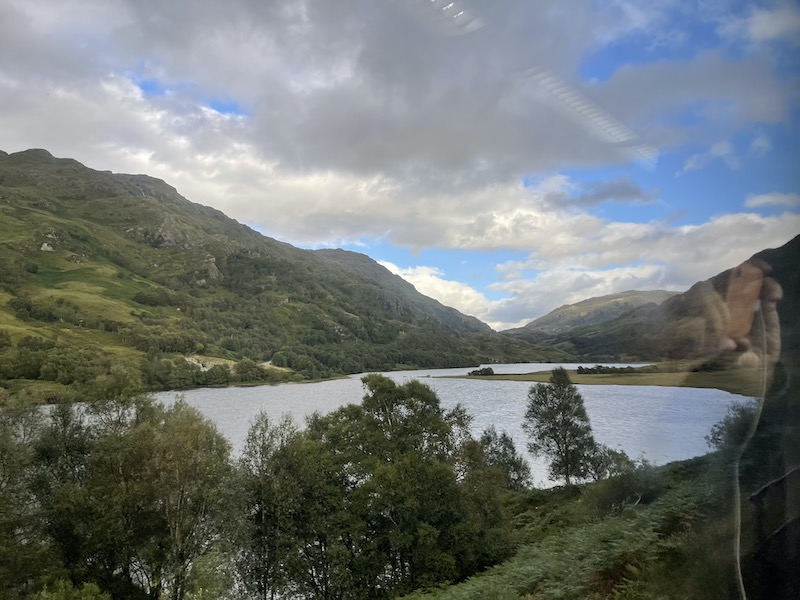
I caught the 08:15 departure from Fort William over to Mallaig – which is my favourite part of the line especially the way the track weaves its way on the south side of Loch Eilt (pictured below) between Glenfinnan and Lochailort. I never cease to be amazed at the logistics involved in the line’s construction as the train takes you along such a scenic yet logistically inaccessible route.
The four coach Class 156 was relatively sparsely loaded on the outward journey – too early for the Harry Potter fans – but I noticed many seats had reservation cards already in situ for the return journey to Glasgow which I also planned to take as far as Crianlarich.
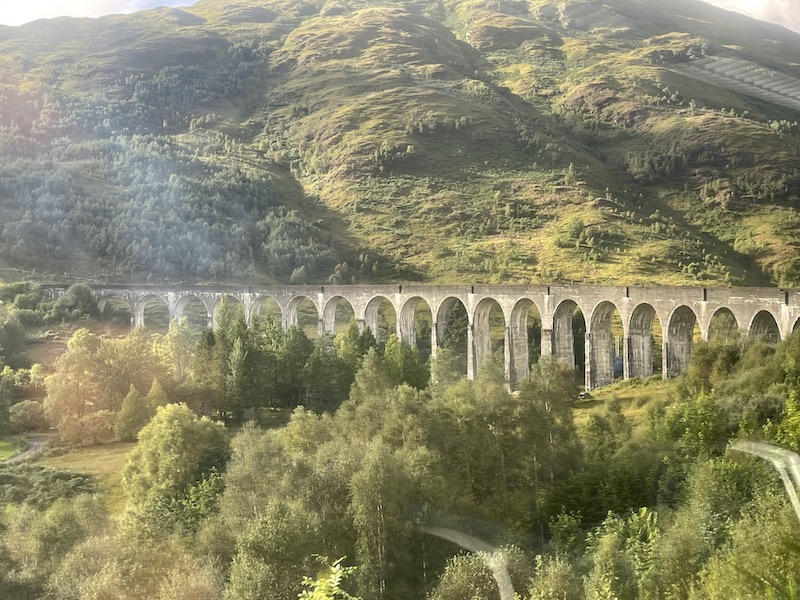
But before that there was time for a half hour refreshment break in Mallaig during the train’s stand time.
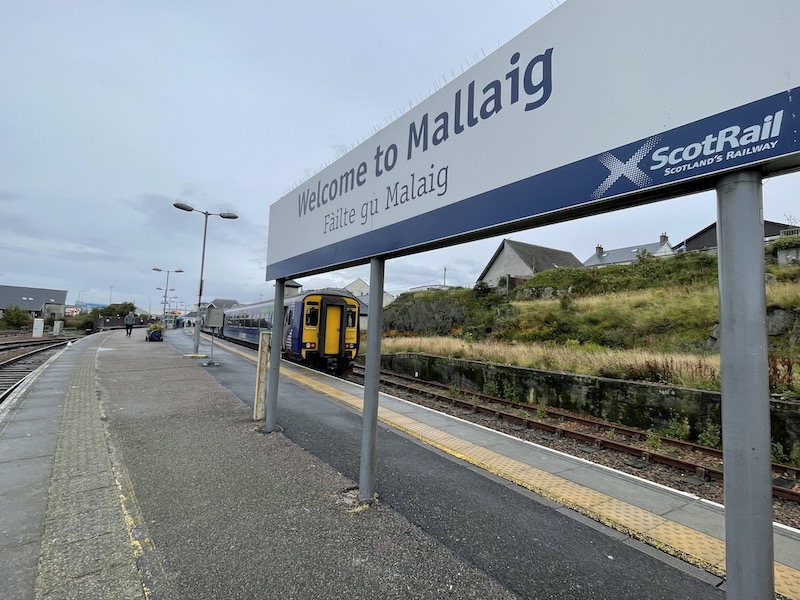
The return journey was indeed busy especially once we arrived in Fort William with a deluge of passengers joining for the wonderful scenic delights that lay ahead.
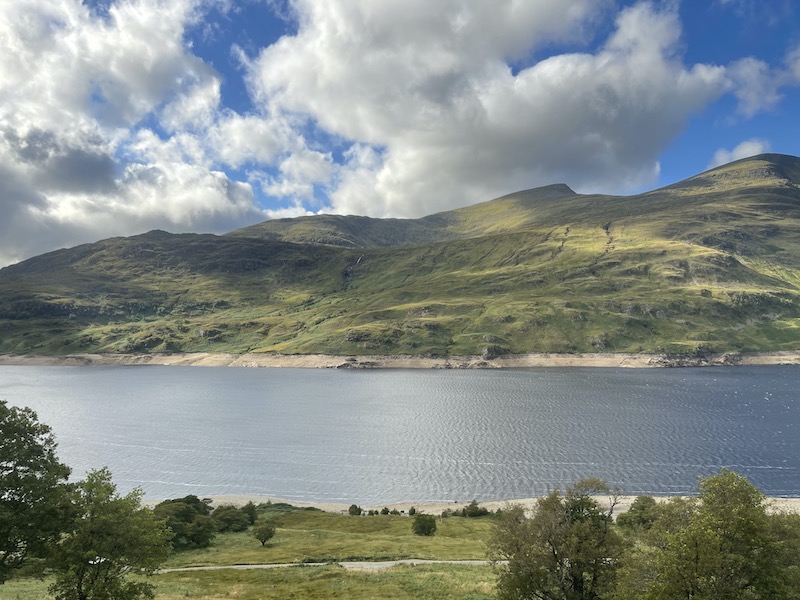
My favourite bits are always passing high up alongside Loch Treig (pictured above), passing through the remote Corrour station; across Rannoch Moor (with another marvel at the construction challenges) and then the horseshoe curve between Bridge of Otchy and Tyndrum Upper.

It’s always fun at Crianlarich to watch the Oban and Fort William trains be coupled together. We arrived first and our Conductor then plays the role of guiding the portion from Oban in as it inches its way forward and then joins.

I’ve not seen this procedure followed anywhere else where trains join together – Southern staff never did it at Haywards Heath when the London bound trains from the East and West Coastway lines joined. I’m sure someone will enlighten me in the Comments why it’s still a thing on the West Highland line.

I then realised the Oban (and Mallaig) northbound train was running over 10 minutes late so it would be safe to continue south to the next station south at Ardlui and catch it there.

Even then there was quite a pause until it arrived and I headed off on the very busy Oban section for an enjoyable ride along this section of the line through Glen Lochy Forest and the impressive Loch Awe which gives its name to a station.
We called at the summer only Falls of Cruachan but no one alighted or boarded but a good number joined at Dalmally, Taynuilt and Connel making for quite a crowd alighting when we arrived in Oban only slightly late at 15:37 (due 15:34).

The train wasn’t heading back to Glasgow until 18:05 although it would do a short return journey to Dalmally (for school children) at 16:11 but you have to be in the know about that as although it’s in the normal timetable it’s been omitted from the temporary timetable.
I decided to change my plans and, rather than wait for the 18:05, do another modal switch and catch the CityLink coach departing at 16:10 for Glasgow as I realised in all the years of travelling in the West Highlands I’d never done this section of route (as far as Crianlarich) by road.
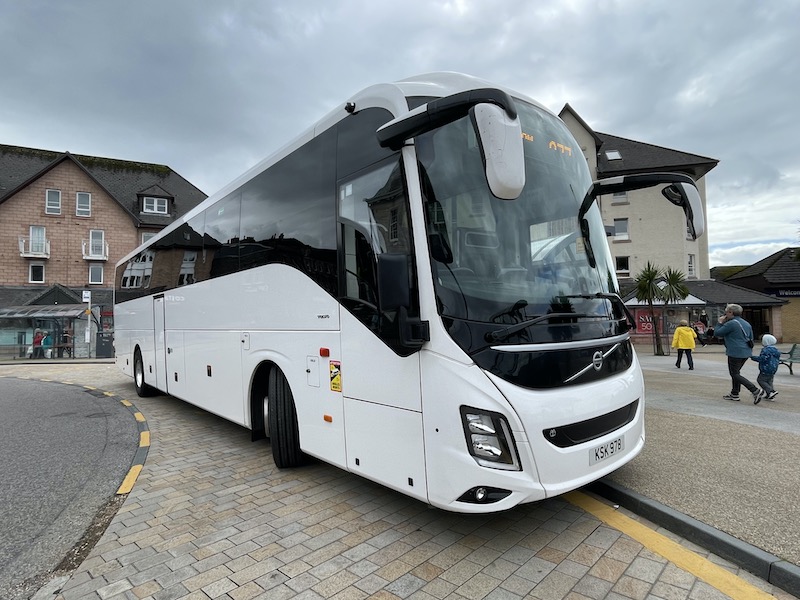
The route isn’t covered by the Spirit of Scotland Travel Pass so I shelled out £25.50 for a single and for that got a vanilla branded, but very comfortable (more so than a Class 156 train), coach from Parks of Hamilton to travel to Glasgow for a journey taking three hours and seven minutes – quicker than the train by 13 minutes.
Three of the six coach journeys a day between Oban and Glasgow are routed via Inveraray but mine (numbered 977) went via Tyndrum and Crianlarich as the train does. It’s another lovely scenic journey along the A85 to Crianlarich and for part of the way runs parallel with the railway line.
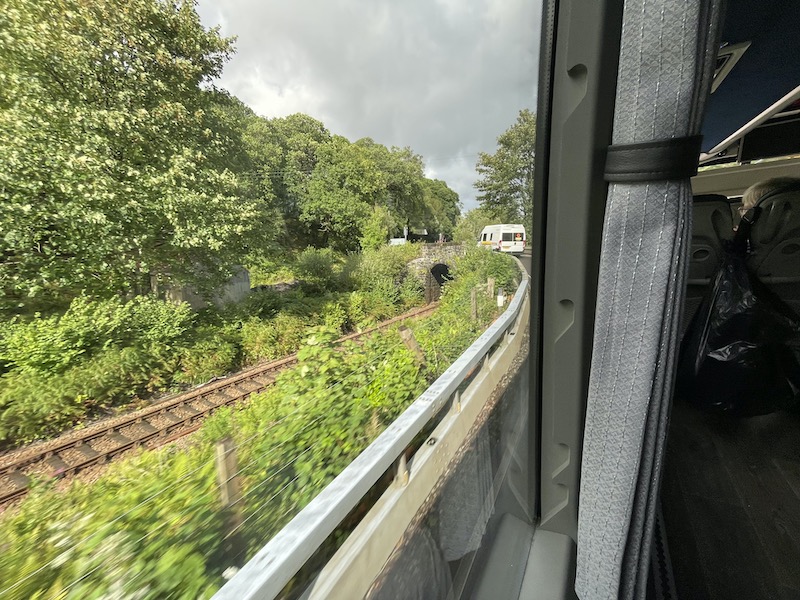
There’s a short connecting stop with the Fort William to Edinburgh service in Tyndrum and it was interesting to see half a dozen passengers make the switch (both ways between coaches).

After Crianlarich it’s down the A82 to Glasgow with its gorgeous views of Loch Lomond for almost 25 miles which, dare I say, are even better than from the train due to being more up close. In the coach and bigger windows.

The journey I caught is routed via Glasgow Airport (that’s why it’s a 977) which only adds a small time penalty but for not much benefit – one passenger alighted and one boarded but the latter had many alternatives.
We arrived into Buchanan Street bus and coach station on time at 19:17.
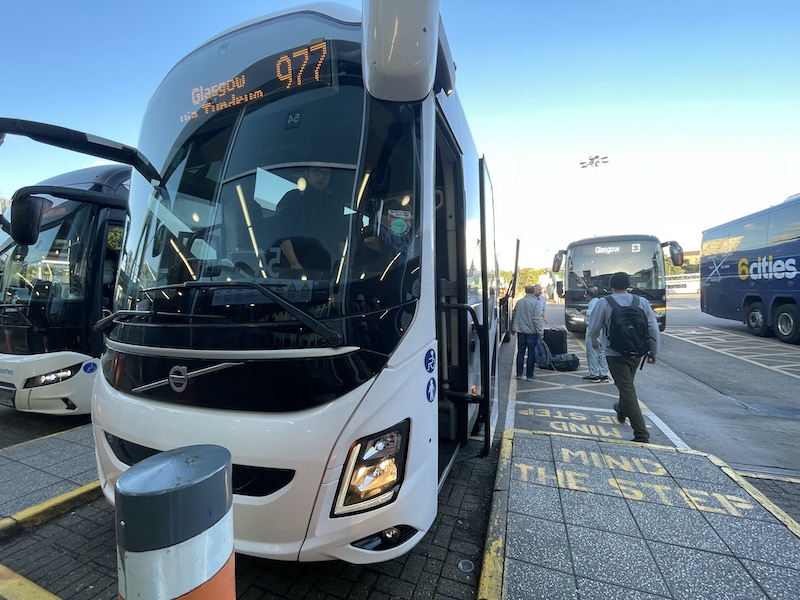
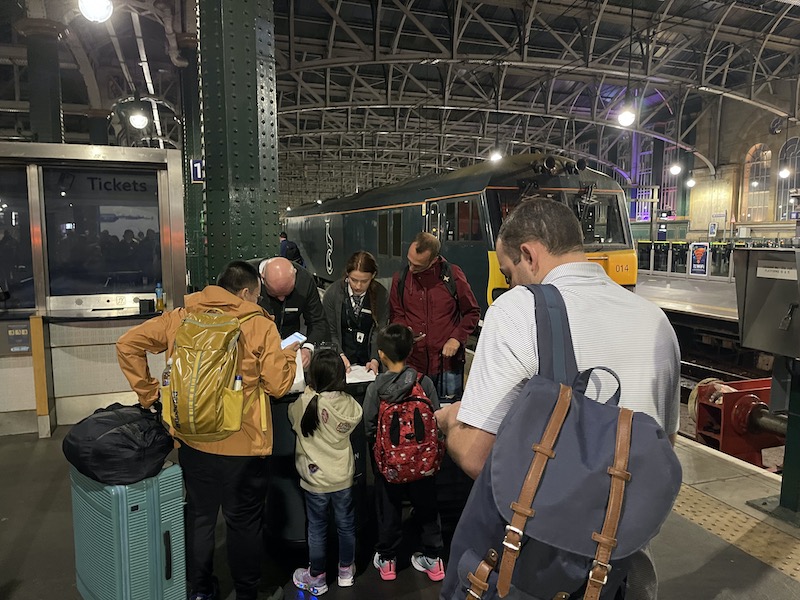
Time for an evening meal before rolling up to Glasgow Central for my last piece of indulgence of this Scottish adventure – a journey overnight to Euston in a Caledonian Sleeper Club Room (en-suite cabin) enabling me to get back for a commitment I had in Sussex on Friday.
I never sleep very well on a sleeper train but did doze off for a few of the seven hours and 35 minutes the journey takes – leaving Glasgow at 23:40 and arriving into Euston at 07:15.

Despite booking an expensive Club Room, I also didn’t bother with the en-suite shower…

… I can’t be done with a combined shower and toilet cubicle, but for a man of my age it’s very beneficial to have an en-suite toilet for those night time visits.

We boarded soon after 22:00 with a very efficient registration system where your hotel style room key is handed out.
When I first travelled on the new Mark 5 sleeper coaches when introduced in 2019 the Club Room was laid out with the upper bunk bed stowed away (as shown below)….

… but now it’s in situ even if you’re travelling alone, and annoyingly, the ladder with a “Please do not remove” instruction is in place which makes it very awkward to get in and out of the lower bunk. Suffice to say I ignored the instruction and unclipped it (putting it back when arriving in Euston, of course). For a £201.30 fare (including Senior Railcard discount), these sorts of things should be sorted – attention to detail and all that.

I got up as we were passing through Berkhamsted and took advantage of the free breakfast and coffee for Club Room users from the buffet coach – it’s probably got a posh alternative name…

… and we pulled into Euston’s platform 1 half an hour early at 06:45.
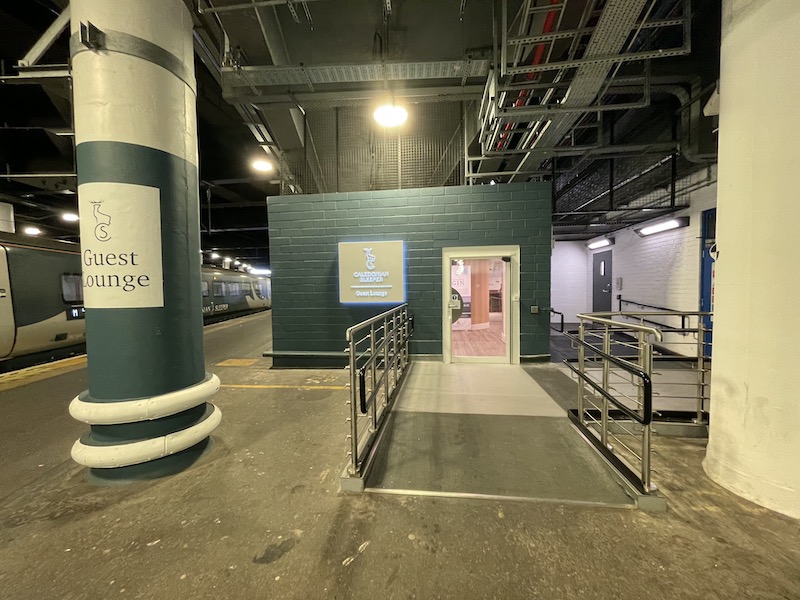
Caledonian Sleeper now has its own lounge on platform 1 offering refreshments and showers…

… but I decided to head over to St Pancras and catch the next train back to Hassocks and reflect on my hugely enjoyable Spirit of Scotland adventure of six train and three coach journeys – and yes, I know I only used three days and spent more than I needed on coach fares but there’s something about the freedom of a ‘Rover’ style ticket which I always enjoy.
Roger French
Blogging timetable: 06:00 TThS with Summer Su extras.
Comments on today’s blog are welcome but please keep them relevant to the blog topic, avoid personal insults and add your name (or an identifier). Thank you.
 BusAndTrainUser
Very suprised the ticket doesn’t cover the Stagecoach 37 (Inverness – Carrbridge – Aviemore). You’d think people marketing a ticket aimed at tourists visiting Scotland would absolutely want it to include one of the main tourist traps. The 201 between Aberdeen and Banchory/Ballater/Braemar seems another huge omission, which would open up a bunch of major tourist attractions.
LikeLiked by 1 person
It’s a ScotRail product and the route Inverness-Aviemore is already covered by trains. The inclusion of coach/bus links in the pass seems to be mainly to cover obvious gaps in the rail network. However your idea about an Aberdeen-Braemar link would seem to fit the bill.
LikeLike
On my 1970s All Line Rover jaunts I had the delights of a first generation DMU from Aberdeen to Inverness with a view through the driver’s cab. I had “haulage” between Inverness and Wick, yet your picture reveals that Wick Station has hardly changed at all. As for travelling as a sleeper: I only did this once with my father and mother on the continent. This was from Boulogne to Milan overnight with the family car chugging along behind the rake of passenger coaches on a kartic. Deluxe CIWL cars for the first- and second-class passengers and also for us in the restaurant car for dinner before our overnight passage across Europe. We were effectively third class in a steel and glass couchette sharing with three strangers.
LikeLike
I only recall taking one sleeper trip, which was a return on the former Motorail between Kensington Olympia and Stirling (or was it Perth?) in the early 1970s. A marvellous facility, long supplanted by the motorway network.
Ian McNeil
LikeLike
Given the congestion between London and Preston on the M6 and London and Leeds on the M1, surely there’s a case for a revival of Motorail?
LikeLike
While CalMac fares aren’t exorbitant, it seems a shame that ferries are no longer included on the ticket as they used to be with its predecessor. At the very least Mallaig to Armadale would be a welcome inclusion.
LikeLike
I fully endorse Rogers comment about using the Stagecoach X99 service between the far north and Inverness. I did as much Roger did but was travelling to/from Orkney. I used the train northwards connecting at Thurso/Scrabster for the Stromness ferry. I just fancied using the through bus-ferry-bus service for my return to Inverness. This started at Kirkwall with a bus to Burwick on South Ronaldsay, connecting with a summer only ferry to John O Groats, connecting with a bus to Inverness via Wick. It was foggy in the Pentland Firth and as far as Wick, but from there on was blue skies, allowing me to be suitably stunned by the beautiful coastal scenery all the way to Inverness.
LikeLike
I failed to mention that the southward journey was all on one (Stagecoach) ticket.
LikeLike
One very interesting line missed out is the Strathspey line
LikeLike
Thanks again Roger. Super article re a super adventure. Very glad you enjoyed the whole experience. Shame though that ScotRail is in such mess with its schedules especially in the holiday season. Sign of the times, I guess 🤔.
On a different note, I’m not fan of busses being branded for a specific route. (Always looks daft when they turn up elsewhere.) But when the Wick-Inverness X99 turns up with the registration “X99 HCB”, I think that’s really cool! How hypocritical am I? !!
All best, John Pinfold, Cheltenham.
LikeLike
There are 5 direct Oban to Glasgow services each day, the 6th requires a change at Tyndrum between the 978 Oban to Edinburgh service and the 914 from Fort William. The 977 is summer only and is the only service up the west coast not to be operated by either West Coast Motors or Shiel Buses. It has been operated by Park’s for a long time, the coach in the picture has been the regular performer this year. The route via Inverary is just as scenic.
Andrew
LikeLike
I did a trip around the area between Edinburgh, Sterling, Inverness, Fort William and Glasgow last year. I had read so much about how attractive the rail trips were in Scotland and the Scotrail map seemed to cover a lot of the same ground but I was shocked by the scarcity of trains and we ended up hiring a car. To hear that they’ve cut still further, and because of, at root cause, decades out of date working practices, is tragic and concerning for the future of a publicly owned and operated system in England.
LikeLike
Michael I agree and I’ll point out how London Underground, then and now publicly owned, sorted out all this nonsense in 1990. No Sunday overtime working, no extra payments for working lates and weekends, all work covered by a rostered establishment. Yet in all the years of a privatised mainline the thrusting, entrepreneurial TOC’s failed to do anything.
LikeLike
Last week I had planned to travel across North Scotland by train. I booked my accommodation well in advance but upon completing this, I discovered the temporary reduced timetable shown in the form of a list of journeys that would operate. I printed off the normal timetables and highlighted the journeys that would still run. I was concerned to note that the 0819 Fort William to Mallaig and 1010 Mallaig to Fort William would not run, as this presumably saves the early crew duty at Fort William.
Fortunately, before I left for Scotland I discovered that temporary timetables could be downloaded that differed from the original announcement, in that the morning Fort William to Mallaig round trip had been reinstated.
Whilst travelling by train in the Inverness area, I discovered that the unadvertised 1335 Inverness to Kyle of Lochalsh and 1713 Kyle to Inverness together with the 1041 Inverness to Wick and 1600 Wick to Inverness journeys, that had been deleted from the normal timetable, were advertised on the station displays and did actually operate on certain days, when a driver was presumably available, as I passed them both at either Achnasheen or Forsinard. The normal online journey planners included these journeys on the days that they were operating but I did not use them, in case they were cancelled at short notice. I didn’t see how many people were actually using these ghost trains, when I passed them.
Conversely, some of the journeys advertised in the temporary timetable did not run. On at least two consecutive days last week the 1234 Wick to Inverness and 1831 Inverness to Wick journeys were cancelled, presumably because there was no Wick late turn driver available and these cancellations were shown on the Scotrail app the previous day. The Inverness station display advised that rail tickets for the 1831 train could be used on Stagecoach buses as far as Tain – not a great deal of use if you were travelling further north. Last Saturday the 1712 Inverness to Ardgay and 1929 Ardgay to Inverness trains were cancelled at short notice. Some Glasgow to Oban and return journeys were cancelled from the temporary timetable last week and replaced by coaches. The first trains from Kyle of Lochalsh, Mallaig and Oban were cancelled last Thursday due to anticipated bad weather, with a 20 seater replacement coach provided from Kyle of Lochalsh. The trains presumably still operated out of service, as all the return trips were advertised and operated and there was no train parked at Kyle of Lochalsh, when I arrived on the next train.
I also undertook a trip from Inverness to Pitlochry and return on the Scotrail HST sets, which still provide a superb travelling experience compared to the very full Class 170 trains used, when an HST isn’t available.
LikeLike
We are planning a train/bus tour of Scotland next year, so this article has been extremely useful, and also thanks for the warning about reduced services, I was unaware of that. Before my husband had to surrender his driving licence for medical reasons (and I don’t drive), we did the North Coast 500, which was wonderful, and we vowed to do it again, but it wasn’t to be. It looks like some of your journey replicated the east coast part of the NC500.
LikeLike
It pains me to say it, as someone who also very much enjoys journeys on the Far North Line, but in a rational world it really should not exist. ScotRail published figures showing that revenue per passenger on the line in 2019 was £6.92 and subsidy per passenger was £25.33. https://www.scotrail.co.uk/about-scotrail/fit-future/detailed-assessment
This only includes train operating costs, not Network Rail infrastructure costs. I remember reading some years ago that with infrastructure costs included the Far North Line is approximately 90% funded by subsidy. In light of the above figures that seems entirely plausible.
Total passenger revenue for the line in 2019 is shown as £1.8m, and train operating subsidy as £6.5m, so the inference is that including infrastructure costs it consumes more than £10m of public money each year (possibly quite a lot more). £10m is around £27k per day.
This is extremely hard to justify, especially when the train is also so much slower than the parallel commercial bus services which as noted are very popular and the mode of choice for many locals.
Just imagine how that £10m a year could revolutionise the bus service on the corridor and throughout the wider area! £10m could fully fund about 160,000 bus hours a year, which amounts to about 30 vehicles operating all day every day. That also assumes that these extra buses would generate no extra passenger revenue. In practice of course there would be a great amount of revenue generation, and therefore the funding should actually also stretch to even more bus hours or to some fairly radical fare cuts.
Maintaining a dedicated railway to enable a few DMUs a day to trundle slowly through some of the UK’s most inhospitable terrain is fundamentally not an efficient or sensible way to provide transport to the residents and visitors to this area and it seems that a different approach here could bring far greater socioeconomic benefits.
LikeLiked by 1 person
A very worthy topic for discussion. I’m always dismayed by the efforts being put into restoring rural railways in areas of low population when putting some serious investment into bus services would give far better value for money. Full integration of specific long distance bus routes into the rail network would surely benefit everyone. By full integration I mean ticketing, information, publicity and livery as well as siting bus stops properly at connecting stations and providing ticket buying, information and waiting facilities at any major communities served.
LikeLike
Refreshing to read an honest appraisal of the reality of the situation. Clearly it shouldn’t continue on this basis. However, before wielding the axe, what if the service were made more attractive (additional and sensibly spaced journeys) and promoted as a tourist attraction in its own right? Even if the costs go up, might the overall subsidy go down? A useful railway might have a positive impact on connecting bus services too.
LikeLike
| We arrived first and our Conductor then plays the role of guiding the portion from Oban in as it
| inches its way forward and then joins.
|
| I’ve not seen this procedure followed anywhere else where trains join together… I’m sure someone
| will enlighten me in the Comments why it’s still a thing on the West Highland line.
I suspect it’s because the West Highland lines (along with the Kyle & Far North) are all signalled using Radio Electronic Token Block rather than conventional signalling.
I’ve never worked under RETB myself but colleagues who have tell me it’s not very flexible and since it was introduced in the late-80s has required a number of workarounds to be added to allow for poor radio signal and for operations not considered when the system was designed – including, I assume, attaching/detaching portions in RETB controlled stations.
Some of the workarounds that I was told were used on the Cambrian lines in mid-Wales during BR days broke pretty much every rule in the book but kept trains moving. Those lines are now ERTMS so it’ll be history, but I’m glad I never had to work there!
LikeLike
The Scotrail document mentioned above is fascinating, I had not seen this before, and highlights mas the comment says, the financial situation before Network Rail costs.
It does show the financial lunacy of certain routes.
An English example would be the line to Whitby, which probably costs more than the entire subsidy for the bus network in North Yorkshire. And let’s not forget that rail gets tax free fuel as well.
Is there a route by route financial assessment for England?
LikeLike
yes will be running on RETB lines no physical signal so guard displays the red flag and correctly guides him to couple
LikeLike