Thursday 8th August 2024
My recent post about The way ahead for buses and trains attracted a large response of more than 80 comments. I’m sure not every reader reads through every comment, particularly those added a few days after the original post, so today I’m reprinting a comment left by an anonymous train driver as a Guest Blog to give it a wider audience. He or she speaks with personal experience and answers two points someone else raised in an earlier comment as well as very aptly illustrating the point I made in the original post about the rail industry’s current biggest (and not talked about enough) challenge: driver availability.
Here’s the comment as posted:
Why is a position that pays £60,000 per annum short of people?
There are a whole host of reasons, starting with the weird and wonderful requirements companies have when recruiting into any role nowadays; I suspect far too many viable candidates fall or give up at the first hurdle because it’s just not worth the hassle.
Medical requirements for train driving are onerous and fail far more people than they pass.
Then you start looking at the job itself.
Shift patterns are bad (not as bad as the bus industry, to be fair, but let’s not compare apples with oranges) which mean that a lot of people simply won’t consider them – you’d be amazed how many drop out when they realise that, yes, trains on Saturdays (let alone Sundays!) need crews. And yes, you’ll be working anti-social hours, you don’t get bank holidays, you get allocated your holidays each year (yes, you can swap with other staff, but…), the standard shift pattern is a week of “earlies” followed by a week of “lates”, although “earlies” just means starting before midday and “lates” just means you don’t start early morning (I’ve known “late” duties starting at 0730), and the weekly switchover means you can finish at 0300 Sunday morning after a shite Saturday evening shift and be back at 0300 Monday morning with your sleep pattern totally screwed.
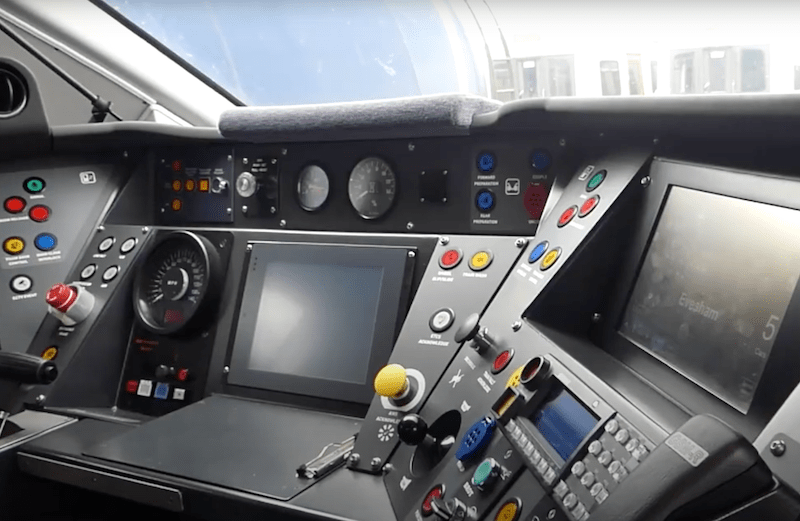
Driving itself is boring. You have a throttle lever and a brake lever (sometimes combined) and that’s pretty much it. Other than that you have little to do beyond monitoring the outside world and being expected to respond instantly something happens despite being bored stupid. What you don’t have are the constant inputs you have when driving on the roads: you’re not steering, you’re not constantly monitoring other road users, and so on.
Whilst being bored stiff, there’s always the knowledge in the back of your mind that you have the responsibility for potentially hundreds of lives; it takes a certain personality to be able to compartmentalise that and not be distracted by it.
You’re given a long training course where you get taught loads of stuff – I felt like I could strip an engine down lineside if needed at the end of my training – but you’re not allowed to use any of it. A TOC I used to work for had signs in the cabs saying “In the event of train failure do not carry out fault finding. Contact control for advice” – even checking to see if a circuit breaker had tripped was banned! It’s demoralising.
Welfare facilities are poor; the railway considers a room with 20 seats for up to a hundred staff, a single kettle for everyone, a single microwave and “access to a toilet” to be a reasonable break facility even if it’s in a yard in the middle of nowhere or half-a-mile from the station you arrived at – and you’ll be given the bare minimum time to get there and back, which means inward delays will result in outward delays. Delays are demoralising too, especially as you’ll rarely know why there was a delay.
Timetabling is poor and getting worse. The last company I worked for brought in a brand new timetable created by external consultants which deleted allowances based on decades of local adjustments and also ignored all infrastructure requirements such as time allowed for level crossing operation at stations – if it takes over a minute for the barriers to activate, lower and the signal to clear then it’s useless scheduling the train to have a 30-second stop. Who was it who got phone calls after every trip demanding to know why the trains lost time? Yep, the drivers. The guards had it worse: they were getting phone calls during the trip taking them away from their other duties such as customer service. Strangely the company refused to accept that the timetable was simply wrong.
I wonder whether the unions have a straightjacket on the training regime to protect their bargaining power?
No, they don’t. The unions have zero say over what training regime the companies introduce.
The companies choose to do the bare minimum of recruitment and training they can get away with, and from experience they do stupid things like transferring work from depot A to depot B without first training staff at depot B, meaning depot A ends up covering the work plus travelling time and it takes twice as many drivers as before. Oh, and depot B loses drivers to training which means they can’t cover their own workload!
If you go back to the preparations for privatisation ASLEF (RMT is basically irrelevant to drivers) proposed keeping both a national training infrastructure and national pay bargaining.
The government of the day insisted that BR refuse, training infrastructure was binned exacerbating the existing driver shortage and that’s why we ended up with driver salaries shooting up as market forces came into play when companies starting poaching drivers off each other.
ASLEF did get into a tie-in with Virgin to set up a driver training school, Millennium Drivers, but unfortunately the general Virgin ethos of the day that everything-BR-was-wrong quickly came to the fore and Millennium got a very bad reputation for poorly trained candidates so it didn’t last long.
Everything a driver does on the train is monitored and you will be criticised for details you have no way of knowing.
Example: train speedos are graduated in 5mph increments and are allegedly accurate to within 2 mph, so you get a 2 mph allowance (at any speed – no 10%+3mph here!). The data recorders record the speed in decimals of mph. If you’re recorded running at 77.1 mph over a 75 mph speed limit for a mile or so, that’s a meeting-without-tea-or-biscuits and a threat of disciplinary action, despite the fact that all you can tell is the needle is just over 75 – and on many trains it’ll be flickering too
The old railway used to have an instruction in the Working Timetable that, in the event of late running, drivers were to use the full capabilities of their train in order to make up time, which meant using full throttle and full brake. Do that today and you will get booked for having “aggressive driving” or “having lost control” of your train.
Attitudes to safety are utterly confused. Example: if a driver has a mobile phone on flight mode in their bag where they can’t see or hear it, that’s a distraction and a disciplinary offence – but if someone is standing behind the driving cab having a screaming argument on their phone and thumping the cab wall, that’s not a distraction at all and the driver should just deal with it.
Oh, and you can sometimes be forgiven for thinking that the railway hates drivers.
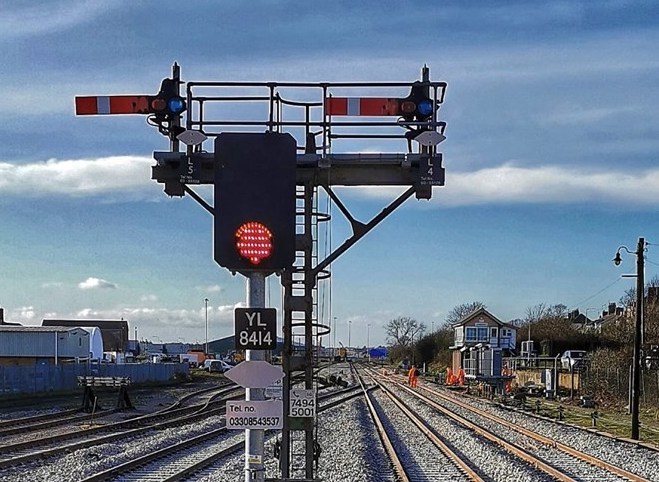
Example: if a driver makes a mistake and passes a red signal, that’s a Signal Passed at Danger. That’s fair, no complaints. However, if there’s a technical fault or a signaller incorrectly changes a signal to red in front of you and you blast past it at 100 mph, that’s a Signal Passed at Red. The railway industry believes that it’s only dangerous to pass a red signal if it’s the driver’s fault, regardless of what has happened to cause that signal to go back to red.
Another example: there’s an ongoing campaign by the railway to fit monitoring CCTV in cabs. That’s not forward facing cameras or even cameras overlooking the cab as a whole; it’s cameras specifically intended to monitor driver’s faces to see if at any time in the up-to-five-hours they’re in the driving seat without a break that driver’s attention moves away from the windscreen – even checking the speedo would trigger it. Why?
How about headlights? The industry always claims that headlights are not for drivers to see with, only for people working trackside to identify an oncoming train. So, those bright lights you see on the front of trains? They’re utterly useless for seeing anything with – but they do blind oncoming drivers.
Remember “Don’t dazzle, dip your headlights?” from the TV in the 1970s? Doesn’t apply to the railway. At night, between burningly-bright LED signals and equally horrendous headlights, you’re driving in an almost permanently dazzled state.
But if anything goes wrong, well, it’s your fault for not keeping a proper lookout. The RSSB did lab tests 20+ years ago which “proved” train drivers weren’t being dazzled, so drivers who complain are just lying.
And then there’s dealing with the passengers, which as far as the companies are concerned is not part of the drivers’ role – but the passengers don’t get given the memo.
People don’t realise that the driver has access to far less information than anyone sat in the train, they expect drivers to magically answer questions and unfortunately some get very, very stroppy when we can’t.
It’s not at all unusual for a driver not to know all the stops a train will make; if they’re only working part of the trip, they only get the stops for the section they drive. They may not even be told where the train terminates!
If a driver gets off a train at a terminus, if they’re not working it back out it’s unlikely they’ll have any idea what the train is doing next because they don’t get told.
And so on. Passengers, unsurprisingly, don’t know about things like that and assume that we’re just being awkward when we say “I’m sorry, I don’t know”.
Again, it’s demoralising.
We haven’t even looked at other safety risks. In my career I’ve had suicides, I’ve had fatal accidents because people thought a train was something they could race, I’ve had fires, I’ve had medical emergencies, I’ve had more near misses with people than I can shake a stick at, I’ve killed umpteen wild animals (a pigeon exploding on your windscreen at 100 mph is utterly gross).
About the only thing you can be certain of as a train driver is that these things will happen at some time – and they always occur in the most awkward place possible. You get great support after a fatality – but you get disciplined if you’re off too long after any other incident even if it’s triggered issues from past incidents.
Some people can’t cope with the idea of that sort of stuff, but it doesn’t become real until they’re actually out driving trains and the first incident happens. I know of an incident where a driver had to be lifted out of the seat and carried out of the cab after hitting sheep because they’d physically frozen and couldn’t stand up.
Oh, and it’s a dead end job. There are no real promotion opportunities for drivers. You’re in that cab until you retire, so if it’s not perfect for you…
Train driving is a great long-term option if it’s a job you can settle into and can teach yourself to ignore all the many little things which are demoralising.
If not, and a lot of people can’t, then it’s absolutely not a good option – but the high salary means that a lot of drivers want out but are trapped by that salary; they can’t get jobs which would allow them to move on.
Because of all the above you end up with fatigued, stressed, unhappy individuals (which in itself is a recipe for high sickness levels); add on companies which won’t recruit adequate numbers of staff, so there’s always shortages, and who generally treat those staff as both juvenile delinquents and rabid imbeciles at the same time, and you also end up with an industry that is struggling to both recruit and retain active, committed staff.
There’s a rumour that something like 40% of train drivers nationally are due to retire in the next decade because of unbalanced recruitment.
The industry’s in trouble.
End of today’s Guest Blog.
Roger French
Blogging timetable: 06:00 TThS with Summer Su extras.
Comments on today’s blog are welcome but please keep them relevant to the blog topic, avoid personal insults and add your name (or an identifier). Thank you.


Thanks for that; some very serious issues for GBR to look at – e.g. about lack of any career advancement structure. On the old steam railway, there were the ‘links’ which you could make your way up through, as well as the ‘cleaner – fireman – driver’ progression. Now there’s just the possibility of moving to a ‘better’ company. In Modern Railways magazine there is an article about Varamis Rail – started by an ex-driver, so – for a few – there’s that way ‘up’. It is shocking when people who are essential to making the railway work don’t see themseves as being valued by the management layer.
Is it very different for bus drivers? Over my lifetime I’ve talked to several, and the happiest seem to be those working for small organisations, where they know the management personally, and there appears to be mutual respect.
LikeLiked by 2 people
Many thanks Roger for sharing this fascinating insight into the world of train driving, which made me think how much we take them for granted.
Ian Marshall, Bournemouth
LikeLike
I would very much like to see the author now comment on this post with his/her constructive suggestions for change.
I can’t help feeling that if the job is so mundane, then perhaps we should be looking to eliminate it (DLR style) as soon as possible.
LikeLike
Well said that man. This should be abridged and published nationally.
LikeLike
| I would very much like to see the author now comment on this post with
| his/her constructive suggestions for change.
The author has none, because I learned during my career that constructive suggestions from the ground level which required real organisational change were consistently dismissed.
LikeLiked by 1 person
Social isolation has been revealed as one of the stepping stones to Dementia! This driver’s tale suggests that a Driving Cab is a remarkably isolating location despite its speed and the driver’s control over his journey. Sadly, full automation on the National Rail network is not an option as it is on metro systems running exclusively through tunnels.
LikeLike
A demoralising and depressing article, which, in the process, shows the dangers of Rail Privatisation (of which, I’m ashamed to say, I was a part…).
I was interested in the comment that the medicals for potential drivers are “onerous” – rightly so, given the nature of the job that the driver describes.
It made me wonder just how onerous are the medicals for coach drivers, who are similarly responsible for the lives of many passengers. My observations from several coach holidays would suggest that many drivers are clinically obese, and the tugging on a fag at every stop doesn’t reassure either!
LikeLiked by 1 person
Very interesting blog. Two comments. Todays drivers have far better conditions than in the days of steam , both on the footplate and in the steam sheds. The first time I went to Nine Elms I was shocked. Secondly driving a steam hauled train was an art and very far from boring. Ask any driver who was there and also any of the current group of main line steam drivers and firemen.,It requires great skill and technical knowledge. Finally driving heavy freights such ax Freightliner surely isn’t boring and requires a different approach. Don
LikeLiked by 1 person
| Secondly driving a steam hauled train was an art and very far from boring.
Indeed it was. Driving a modern diesel or electric, however…
| Finally driving heavy freights such as Freightliner surely isn’t boring
| and requires a different approach.
Freight driving is very different to passenger driving, but believe me it is also very boring.
The days of unfitted freight which required real skill have long since gone, and in terms of driving style a container train is a passenger train with slower acceleration and poorer brakes. It’s only the load factor which makes any difference.
Don’t forget that the days of freight driving meaning that you drive any type of freight thrown at you have long gone. If you work for Freightliner, you drive container trains – and only container trains. If you work for Freightliner Heavy Haul, you drive (well, drove) coal trains and only coal trains, complete with spending hour after hour sitting in loops waiting for your path.
LikeLiked by 1 person
thanks, driver
that really brings it home to us what a great service we actually get from drivers, and at what cost.
There must be managers out there who appreciate what the situation is, and that high take-home pay isn’t the only way to get loyalty from their staff. Let’s hope that they reach positions of influence in GBR and that the magical thinking that accompanied privatisation is put back where it belongs.
LikeLike
I would debate there is no career advancement. Drivers can progress into Driver/Competency Managers (ie. Managers who assess drivers competence – they all come from drivers), Driver Instructors (who teach other drivers how to drive) and potentially intime after one of the previous steps mentioned, work in the Safety and Standards department. Other than that yes, advancement is limited but that is purely due to the high pay meaning any further advancement would involve a pay cut, as it’s not associated with the driving grade.
With regards to training I do agree the initial training needs work and a group in GBR needs to look at best practice, as it varies massively across the industry. One thing ASLEF do have a say on is training courses for traction (ie. different types of trains), and this can be a joke. Sometimes the 2nd week of courses which will involve practical handling/driving involves one on one driving with other drivers on the course basically just having the day off while their colleague completes the course. I know on my local line the traction course has just been extended at the insistence of ASLEF. Maybe that is part to blame for the lack of any trains at all on certain Saturdays over the Summer (after long periods of no service at all since COVID)
LikeLike
I recently applied for GTR who were recruiting about a month ago. The first phase was the usual long application form as well as answering extra questions (almost like an interview) to which you had to give examples.
After this I received an email to the next stage which was 20 multiple choice scenarios. You had to pick the best choice. This took about 15 minutes.
I passed this and began the next stage which was a computer test with letters. There was a grid which looked like a word search. You simply followed along each line looking for certain letters. There were 3 different stages of this test getting harder each time. You also had to be fast and do as many lines as possible. I missed one letter and failed the recruitment process.
I agree with the guest blog today, I wouldn’t apply again. As a bus driver my 4 day shift pattern and £16.83 wage fit my lifestyle very well. The application was completely over the top and I wonder how many people actually make it to the end. It feels like the police force again who I applied for several times in different roles and got nowhere.
I also have a full HGV Class 1 license and yet the bus company I work for pays more than most HGV companies in my area. Those that do pay more are working a lot more hours (I’m on basic 39 and many HGV are on 50/60 a week). Then theres always the option for overtime to increase income.
Train Companies need to be more realistic when it comes to recruiting. If more got through the system due to less tape they’d have a better selection at the end to employ.
LikeLiked by 3 people
The assessments are roughly 50% in testing if you have the skills and personality to drive a train, with the other 50% testing if can you handle the training load to get through the coursework and driver training at their designated pace.
The companies have fixed number of training spaces available each year so delays or failures at any point in the training process creates resource problems further down the line. And at roughly £200k a candidate the assessments are designed to select the candidates that gives the companies the best return on their investment.
LikeLike
The changing shift pattern is just down right stupid and the railway really needs to move away from it. People have preferences and those who work better at night, give them late shifts, and same for those in the morning. Why give a ‘lates’ person early mornings, you know they are going to be suffering from fatigue and you know it’s going to mess with their life, why do it.
Making the change to earlies and lates only would likely help a lot of fatigue issues but also improve work/life balance for drivers as drivers wouldn’t be so tired on days off. It would also enable them to plan things better as they wouldn’t be having to figure out shift patterns each week.
Alternating shift patterns seem so outdated and I think is a major thing holding back the industry. It’s already proven how much alternating shift patterns can affect heath, why does the industry want unhealthy staff?
LikeLiked by 1 person
The bus companies are just as bad for forcing employees to do unhealthy shift work. Look at any 5 day rota and you’ll see turnarounds as short as 31 hours between finishing a late and starting an early duty. Although it’s been proven that shift work is linked to health conditions such as IBS companies aren’t prepared to change. In those 31 hours drivers need to commute home, switch off, eat a dinner and a breakfast, sleep and commute back to work.
LikeLiked by 1 person
My experience relates to buses and coaches, so my comments should be read in that context.
I agree that keeping to similar types of shift is beneficial, especially where nights and really early starts are involved. There will probably be enough people who want to work those “extreme” shifts for them to be self contained, especially as there may well be some sort of wage enhancement for them.
A bigger problem comes with more conventional late turns, as in many places there are not enough people who want to work lates all the time. The answer is therefore to mix everything together so “everyone” does their fare share. For the few that do like lates then a bespoke rota may well be created, but the remainder go in the general pool. When this happens, a conflict can then occur between trains of thought. Do you maximise weekly rest periods by finishing work each week as early as possible and restarting as late as possible, which then means having a run of close to minimum rest periods (as you constantly move from late to early through the week), or do you have better daily rest periods, but then weekly rest periods are less appealing, and switching from a late week to an early week will make a big dent in time off? Neither is ideal!
LikeLike
Plenty more forward thinking bus operators do have dedicated volunteer rotas for unpopular shift types such as lates, extreme earlies or splits and consequently the main rotating rotas will not contain much or any work of those types.
However the problem with going further and putting the majority of staff onto rotas doing purely one shift type is that earlies are generally much more popular than middles and therefore any rota structure which enables a select group to monopolise all the 0600-0800 starts and 1300-1600 finishes would be very unfair on everyone else who would be stuck with all the 1900-2100 finishes. And of course it would likely be all the new drivers who would have to start on that middle rota and join a years-long waiting list for a place on the early rota, which wouldn’t exactly help recruitment either.
LikeLike
Changing to allowing a choice of work patterns (rotating or fixed) make have the result that you need more drivers, with some working fewer hours (maybe even part time), to make the schedule “fit”, i.e. have enough coverage within the expressed preferences. Likely that some existing drivers would be asked to work fewer hours and get less pay in the month.
It’s a choice, but a choice that the current driver community need to sign up for with worked examples, based on their expressions of interest. Tighter regulations on rest days to ensure sensible sleep patterns (maybe supported by wearable tech), and scheduled in regular medicals (fitted into the work pattern on work time) also seems in order
I also wonder if it would be a better outcome for drivers to have a more “professionalised” structure, with national training schemes/certificates and CPD, also welfare (in effect a closed shop). Something more like nursing. The blog seems to suggest that outcome, although there will always need to be training for route knowledge, on top of national training.
MilesT
LikeLike
On FGW Intercity Express Sets, the quiet coach is at the front. The other evening, the guard said “Front coach is a quiet coach – now I know you are all considerate, and if your phone rings, you will head for the vestibules. But please don’t do that in the one behind the driver at the very front – it is a distraction”. When the guard came through, I mentioned it, and she said the drivers always appreciate it if that announcement is made.
I can believe it, because if I am standing at the door behind the driver, you can certainly hear the AWS system operating. The soundproofing is poor. CH, Oxford
LikeLiked by 1 person
Good for them but on Elizabeth line the area behind the drivers cab is often the busiest area of the train and we can hear everything…. Babies screaming, phone conversations, people trying the handle to steady themselves or gain unauthorised access. Buggies, luggage and bikes all get placed across the access door as well. The company put the PA to say don’t block the area but it has no effect whatsoever! Terrible design on these trains!
LikeLiked by 2 people
excellent blog post that ought to set an agenda for change for the railway. I fear it won’t given the bureaucracy that runs the railway Interesting comparison to the bus industry
LikeLike
A good general rule for almost everything on the railway: it’s almost always a cock-up, not a conspiracy. That certainly applies to most of the allegations made in this post, in my experience.
I’d suggest this driver may wish to stand to be their local ASLEF representative and they may be able to sort some of the issues that have been highlighted here if they are elected.
LikeLiked by 1 person
| I’d suggest this driver may wish to stand to be their local ASLEF representative
This driver was a local level ASLEF rep and is amused by your assumption that local ASLEF reps can make any difference whatsoever to company-wide or national issues.
Experience taught me that they can’t.
LikeLiked by 1 person
I’ve had a couple of good friends who were train drivers and known quite a few bus drivers. I think it’s certainly true that train drivers used to have to understand the inner workings of their engine more than a bus or lorry driver would. I can see that train driving has become more boring now that it just a matter of pushing buttons most of the time. I suppose it does become a job for life because you can’t just walk in to any other industry and get £60k a year.
With regards to railway management not understanding the problems that a driver faces, I think that there is a much lower proportion who can actually drive trains compared with bus companies where management quite often have PSV licences.
The larger bus companies do seem to be a lot more flexible than they used to be about rotas and shift patterns. I know a driver who works permanent lates by choice and much prefers that.
Something that I don’t think gets enough of a mention is the proximity of home to work. If you have an hours drive to work then that is two hours out of your day and that can be very tiring. In the “good old days” (1930s to 1940s) a bus operator near to me owned about a dozen houses within a couple of hundred yards of the depot. They were all rented to drivers who had no travel expenses and who could be called upon to cover an extra piece of work at short notice.
LikeLiked by 2 people
My experience is with London Transport where I did shift work and managed station staff and train crew. Maybe it’s my rose tinted glasses but I don’t recognise such a depressing workplace on the Underground. Perhaps it was more of a village. Stations are close together, there are often staff you quickly come to know on the platform to wave at and it isn’t long before you can have a cuppa at the end of the line or the depot. There are plenty of train management jobs or even onto the station supervisory role so there are opportunities to move on and/or up.
The environment is tough and application of rules and procedures strict. But you do get 10 weeks annual leave made up of 30 days plus accumulated extra hours from working a 40 hour week but only being paid for 36. There is plenty of socialising at the depot. The main line job sounds isolating. On shifts you work around the roster but plenty of swapping goes on. It becomes semi-official with ‘mafias’ arranging multiple shift changeovers to help everyone get what they need or want.
mikeC
LikeLiked by 1 person
| My experience is with London Transport where I did shift work and managed
| station staff and train crew.
London Underground was and is a totally different world to “British Rail”. Experiences don’t translate well across from one to the other, in either direction.
So I’m told by people who’ve worked for both networks, anyway. I don’t have personal experience of LU.
LikeLiked by 1 person
Wholeheartedly agree having worked in both. A whole raft of differences which make it very hard to compare. Personally unlike the previous commentator I’ve found LU an exceptionally toxic environment to work in. I do think experience of any company can vary vastly depending exactly where in the organisation you are though.
LikeLiked by 2 people
Yes but it also depends more on the particular manager I think than where in the organisation you work per se. I was at London Transport for 33 years all told in buses, the DLR and the tube. My overall experience was very positive but yes I had the misfortune to work for some utter idiots and worse.
LikeLike
Roger, (and the anonymous poster), that is absolutely brilliant. Thank you.
Eden Blyth.
LikeLiked by 1 person
This was a really informative post with worrying details. The bit about boredom was interesting because drivers have to be able to jump from low workload (just driving along) to instantly respond to an emergency. There was a case on London Underground where a Jubilee line train on the Stanmore to Finchley Road section travelled between stations with the doors open. The enquiry found that the driver had overridden the safety setting preventing this when dealing with an earlier fault, and forgot to reset it. Under normal conditions you just press “start” on a Jubilee line train and computers do everything else.
This reminded me of the following description of the driver training process at London Underground that I first discovered several years ago. Details like the original source for driver recruitment was from guards seeking promotion, who already had a lot of operational and organisational knowledge. And how drivers learn the inner workings of their trains and fault finding.
http://www.trainweb.org/tubeprune/dd-training.htm
Peter Brown
LikeLike
This is a brilliant and very useful blog, which sadly typifies the way this country has gone( and perhaps many other countries as well) where those who run the show have inadequate knowledge of the coal face and are driven by HR and Legal Departments who have zero knowledge or common sense. Most of the bus industry became much more flexible years ago with 3 or 4 day weeks, long weekends, drivers on permanent lates if they wanted them etc etc.In an industry where you run over a 20 hr day this is very easy to achieve but what appears to a ‘militaristic’ approach still seems to rule in the rail industry. Rail reliability is still appalling and must be depressing revenue. What’s not clear to me is it a driver shortage or a staff shortage. If the former then the issues here must be addressed because until there are enough drivers , and those that are there are not pressured to do continual overtime, the shortage may get worse.
This kind of mess is not unique to transport. Look at the well publicised shambles of the water industry. The management is clearly clueless but the regulator was asleep at the wheel to allow it to happen, and is now mounting a pathetic rearguard action. Nor is it unique to the U.K., read all about the mess at German Railways.
Think also of the cost of one years training plus the cost of the staff to train them.
Ownership wether private or state is irrelevant. Unless organisations are run by suitably trained motivated individuals, free from continual political interference , then the organisation of our public services will not improve.
LikeLike
Wholeheartedly agree with the guest blog, it’s mostly why I took early retirement after 40 footplate years, if anything the freight sector where I worked was worse, 11hours stuck in cab, no toilet no washing facility just a tub of baby wipes, no to mention cancelled trains ( “hasn’t anyone told you?”) and the like. Yes there were some great times, but they seemed to get less and less common, and I still miss (after 8 years) the scenic sunrises.
LikeLiked by 2 people
My neighbour was a driver, based at Waterloo. He retired early mainly because he spent most of the day alone, only managing short chats when changing over.
I read about drivers being dazzled by the very bright headlights many years ago when they were introduced, yet nothing seems to have been done to reduce it.
LikeLiked by 1 person
“Here are your driver’s keys” said the training manager to the proud drivers as they pass out after their final assessments, to which he then added.. “the company will now spend the rest of your driving career trying to get those back off of you” and sure enough, that’s how the management then generally behave…
LikeLiked by 1 person
Yup, just confirms the conception that drivers are overpaid and complain a lot.
NPIan
LikeLike
Do you mind telling us what your job is, for context?
-blue
LikeLike
And just to confirm the drivers comments Cross Country is introducing a reduced timetable until November due to a shortage of drivers.
LikeLike
I travelled on a Cross Country train this week. Fortunately only from Bristol Temple Meads to Parkway. The train originated in Paignton and was heading to Manchester, only four cars and was packed. I just stood in the vestibule with three others for my seven minute journey. The train was on time though.
Peter Brown
LikeLike
I love driving trains!
LikeLike
> I love driving trains!
Good for you, and I hope you continue to do so for many years to come.
LikeLike