Thursday 18th July 2024
A commenter recently suggested I publish a blog outlining the logistics of last month’s Rail Rover. On that very theme here’s one I prepared earlier … (it’s been sitting in the pending folder since March) … explaining what happened on a day trip to Weston and Wells.
07:05 Arrive Hassocks station.
Ticket office closed.
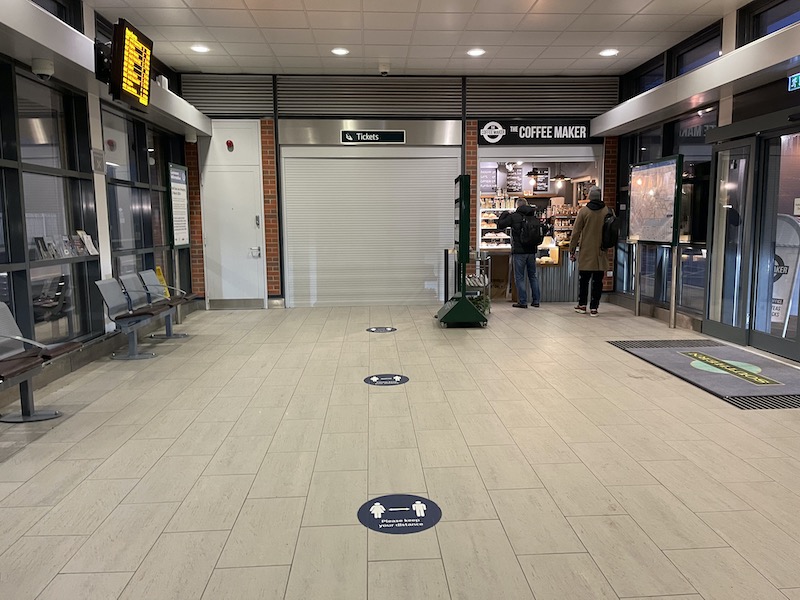
Gateline not in use. Platform open. No staff.
Buy off-peak ticket to Weston-super-Mare from ticket machine. It won’t allow the 30% discount with a Senior Railcard which is ‘greyed out’ as an option wrongly asserting “Not available at this time”.

Have to change the departure time and pretend I’m leaving after 09:00 even though I can legitimately depart at any time from the first train of the morning. First I have to “reset” the date to the current day and change the time to 09:00 and hooray, the Senior Railcard discount can now be applied, being no longer ‘greyed out’.
Off-peak return ticket for £92.45 purchased at 07:07.

Just catch 07:07 Thameslink train departing for Bedford at 07:09. The day ahead starts to look good as original plan was to catch 07:20 train to Cambridge.

It’s standing room only from Balcombe and by East Croydon all 12 coaches showing red on ‘train utilisation’ display and to think at one time journeys such as this often ran with a four coach class 319.
Notice train is switching to slow Up line just beyond Norwood Junction.
Check Traksy website and see track diagram showing late running Thameslink and Southern trains intermingled with Windrush line stopping trains ahead of us and ‘NOGO’ signs on the fast line.
Progress towards London Bridge now varies between a crawl and stationary as Windrush train ahead stops at Anerley, Penge West, Sydenham, Forest Hill, Honor Oak Park, Brockley and New Cross Gate.
Official social media and websites for Thameslink/Southern initially contain no acknowledgement there’s a problem (“good service operating”) then an update appears – there’s a track circuit failure.
Driver gives an apology over PA adding (without the benefit of being able to check social media feeds): “I have no idea why the signaller has routed us on to the slow line”.
Which is a shame, as switched on passengers know.
Arrive London Bridge 21 minutes late at 08:25.
Decide to continue on the train to Farringdon and use the Elizabeth line to travel to Paddington.
Fortunately allowed plenty of time for the cross London connection.
Heading towards Blackfriars overhear a fellow passenger tell his companion “severe delays on the Elizabeth line” as he reads from his smartphone.
Check departure times from Farringdon on my phone and sure enough see many cancellations and delays, particularly eastbound so keep fingers crossed westbound to Paddington is OK but consider using Hammersmith & CIty/Circle lines as a plan B.
Arrive Farringdon 08:35 (19 minutes late).
Head down to Elizabeth line and fortunately only have to wait a few minutes for a westbound train.
It’s the 08:34 to Reading running six minutes late.
Arrive Paddington 08:47.
Still plenty of time to catch first off-peak GWR departure at 09:30 to Bristol Temple Meads.

Leave on time.
Come to a halt at Burnham. Sit for seven minutes.
Train Manager apologies for the delay and explains signal problems are resulting in trains having to cross over to the slow lines and we’re waiting for the train ahead of us to do that.
Crawl slowly forward to Taplow where we wait for a further six minutes before making further slow progress towards Maidenhead.
Eventually pick up speed again and remain on fast lines reaching Reading at 10:08 (15 minutes late).
Had planned an arrival at Bristol Temple Meads to catch 11:15 Cross Country departure to Weston-super-Mare having allowed for a 17 minute connection from the scheduled GWR 10:58 arrival from Paddington.
Now start considering plan B if GWR train encounters further delays between Reading and Bristol.
Fortunately by Swindon we’ve made up three minutes and are now only 12 minutes late making for an updated scheduled 11:10 arrival making the connection “doable”.
Arrive Bristol Temple Meads 11:11.
Correctly guessed which door to wait at to alight from the train on platform 15 and sprint down the adjacent stairs to the subway, moving swiftly through the throng of passengers to the stairs up to platform 8 and jump on the Cross Country train waiting further down the platform at 11:14.
Depart Bristol Temple Meads on time at 11:15.
Arrive Weston-super-Mare on time at 11:33.
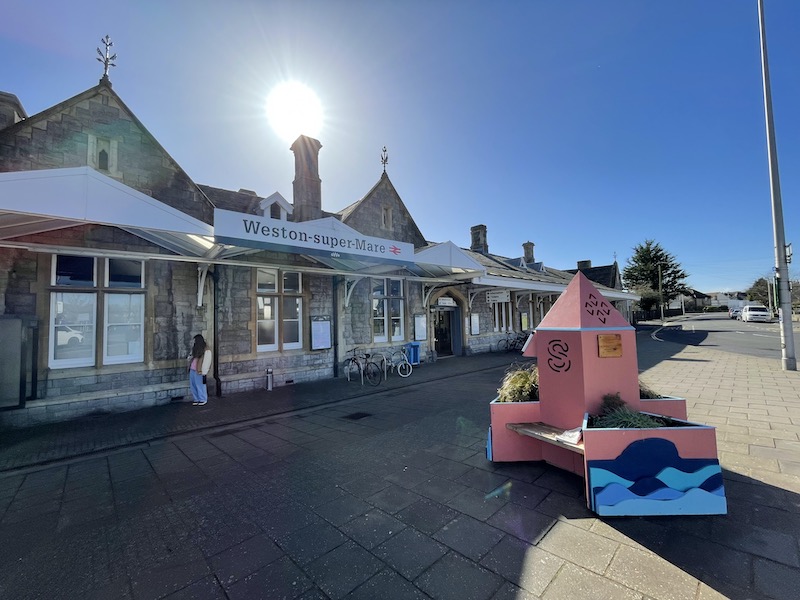
Enjoy around a wander around and a lunch break for an hour in Weston-super-Mare.
Catch 12:28 departure from outside the station on route 126 to Wells.
Enjoy the journey through the Somerset countryside including the diversion via Locking due to a road closure caused by a landslip at Hutton.

Aware the scheduled arrival into Wells at 13:54 is two minutes after a 13:52 departure on route 174 to Bath which would be nice to catch as it takes a particularly scenic route compared to the (following) 14:33 departure on route 173, which I’ve travelled on before.
Make good progress on the 126 including waiting time at a number of timing points increasing anticipation it may arrive into Wells early.
Bus pulls into Wells four minutes early at 13:50.
Notice passengers boarding 13:52 departure on route 174 in adjacent bay in the bus station.
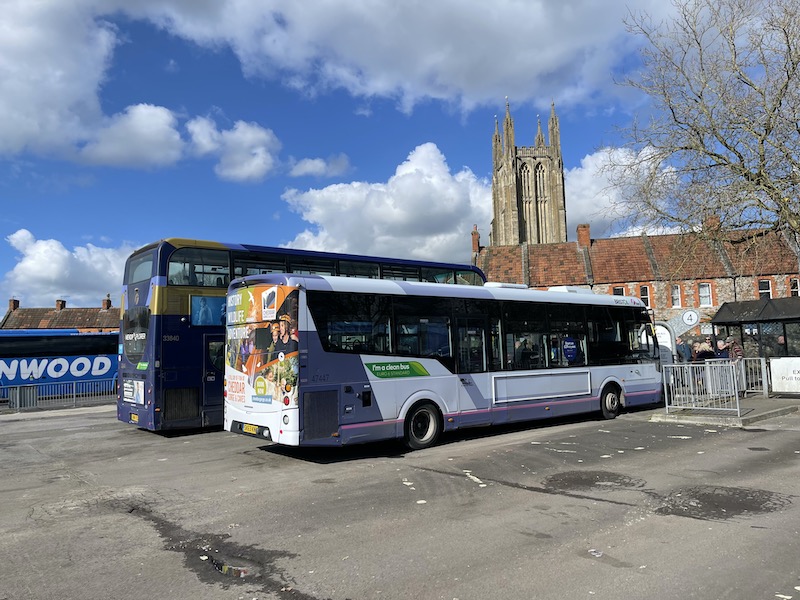
But need a toilet stop.
Fortunately know where the toilets are so make a dash for them, arriving back just as driver closes door to depart at 13:52 and who kindly lets me board.
Note due into Bath bus station at 15:32 and a GWR train departs from the almost adjacent railway station at 15:43 for Paddington. Looks a good connection.
Enjoy the lovely scenery the 174 has to offer and the brief stops in Shepton Mallet, Midsomer Norton and Radstock. Keeping well to time.
At 15:20 arrive into outskirts of Bath on Wellsway to pick up a contingent of college students from nearby St Gregory’s College.

Progress into Bath becomes delayed by bus becoming very busy with school children and traffic delays.
Arrive into Bath bus station seven minutes late at 15:39.
Positioned myself by driver ready to alight as soon as door opens.
Try and make a fast exit through Bath bus station concourse only to find it ‘rammed’ with passengers.
Having cleared bus station, make good progress sprinting over to railway station and rush up the stairs to platform 2 at Bath Spa to find train arriving to form 15:43 departure.
Jump on board and enjoy the 81 minute journey to Paddington.
Work out quickest connection for Hassocks from the scheduled 17:04 arrival would be to catch Elizabeth line to Farringdon for 17:24 departure on Thameslink.
Arrive Paddington two minutes late at 17:06.
Make good progress across crowded concourse to escalators for Elizabeth line.
Arrive Elizabeth line platform A at 17:09 to see eastbound train to Shenfield departing.
Next train bound for Abbey Wood arrives 15 seconds later.
Board train and it departs 17:10 and 30 seconds.
Walk down to rear of train for prompt connection at Farringdon.
Arrive Farringdon 17:18 and 15 seconds.
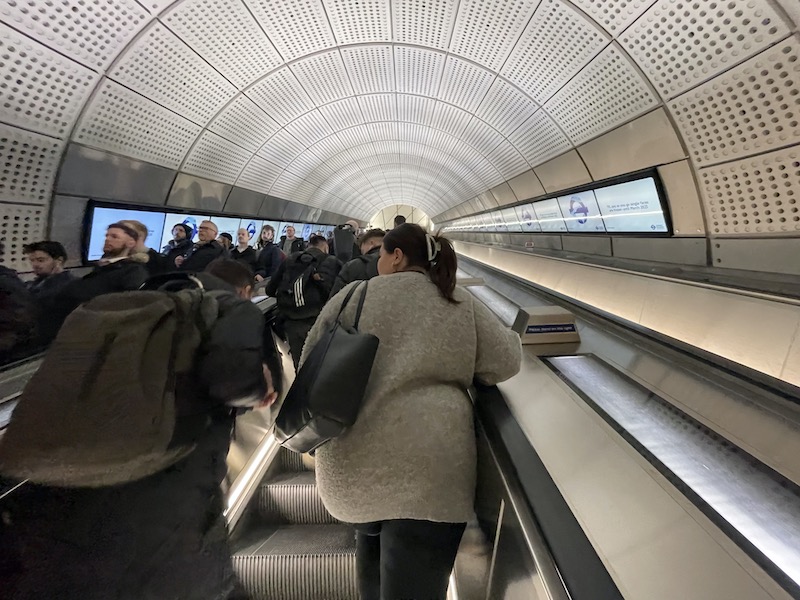
Stand on escalator and at top walk at even pace to the far (western) end of Thameslink platform 3 for 17:24 departure to Brighton.
Train arrives on time. Usual peak time scrum to secure a seat in declassified first class rear coach – no chance of a seat after Farringdon.
Depart on time at 17:24.
Arrives Hassocks 18:35 (two minutes late).
Day complete. Content for two blogs secured. This one and that one.
A frustrating outward journey made up by a slick return.
You learn to take the rough with the smooth when you’re a BusAndTrainUser.
Roger French
Blogging timetable: 06:00 TThS.
Comments on today’s blog are welcome but please keep them relevant to the blog topic, avoid personal insults and add your name (or an identifier). Thank you.
 BusAndTrainUser
I hope Peter Hendy reads this. Rogers blogs over the last 12 months have commented on delayed/cancelled rail journeys on many occasions. An analysis of how many were on time and how many delayed/cancelled out of the total would be illuminating .
LikeLiked by 2 people
Well done – but anyone like me who’s unable to sprint anywhere would have been stuffed. No wonder so many people give up on trying to use public transport. Graham L.
LikeLike
Agree 100%. OK for the younger but not so for us mature travellers!
LikeLike
Brilliant. Just the sort of thing I used to do when I was more mobile not just in the UK but in Germany bashing the steam worked lines in the Saarbrucken area
LikeLike
I can think of a better use for my £92. If I had such spare of course.
LikeLike
What a great article, which sums up the lot of the public transport user. Admittedly most will only have a connection or two most days, but the experienced traveller will pick up tips like knowing which door to alight from when making a dash, likely stopping areas, an allowance for delays when planning and the need for a plan B when making connections.
Add in luggage (either your own or other people’s), the possibility of catering not being as advertised, mobility issues, crowded buses and trains and unruly passengers and it can be a hard life for a bus and train user.
That’s before we add in cancellations!
Gareth Cheeseman
LikeLiked by 1 person
A less savvy and/or mobile traveller would have paid more (Hassocks), would not have made the connections and suffered from a miserable day. We can all think of people who would fit that description (family members, friends, etc.).
As with all bad experiences, the sorry tale would be told and re-told. And even if they knew about Delay Repay, their claim would probably be refused.
A sorry tale of our second rate railway.
Petras409
LikeLiked by 2 people
A brilliant read, but I’m exhausted from just reading it, rather than actually doing it!
LikeLike
Problem at Hassocks: I am so fed up with ticket machines, on-board staff and ticket office staff telling me the ticket I want is not valid that I carry round a screen-print of the journey I am hoping to take so that I can show the doubting (although that is not always believed – even versions printed out by ticket-office staff).
One thing this government could do (and the previous government could have done) is to ensure prices are consistent so that if you arrive at, say, Hassocks at 07:05, you can buy a valid ticket, by whatever means. Not this ‘simplify’ stuff – it doesn’t matter whether it is a ‘simplified’ fare or a complicated one, if a machine/ person who won’t sell me a valid ticket, it is not fit for purpose.
LikeLiked by 1 person
rather ridiculous that all routes are quicker via London, pity too the SWR service from Waterloo was removed as an option to take, would that have been cheaper. Indeed would advance fares have been cheaper
JBC Prestatyn
LikeLike
The only really bright spot in that tale, replicated by Yours Truly’s experiences now almost everyday I travel, is that Bath Bus Station was “rammed”. In spite of all trains never actually running on time or cancelled at whatever time of the day, buses constantly being diverted (with many places literally left busless for days on end!), passengers still keep coming.
A miracle.
Terence Uden
LikeLiked by 1 person
Buses into Bath from Chippenham via Corsham always seem busy. Bath parking is expensive, and prior to the fare cap the return fare was £7, so big savings to be made. I will opt for the fast, direct X31 for £2 each way rather than put up with GWR.
Peter Brown
LikeLike
When Great British Railways takes the lead there will be no more signalling etc problems. So I’m led to believe, anyway.
John
LikeLike
TfL rail is in effect the same as GBR will be so I would not hold your breath
LikeLike
John at 10.58, I wish. Because railway investment was inadequate from 1914 to the invention of Network Rail it will take many many years to catch up. What can GBR do with signalling that Network Rail has not done, it will be the same organisation with (probably) less money. We still run on Victorian infrastructure, I remember one comment that continuing issues on the West Coast Main Line are the result of economies during the Crimean War, still unresolved
LikeLike
because of the issues around tickets I always buy mine on trailine or a similar platform even if an hour before I intend leaving, as they do split ticketing and saves massive aggro.
Do the same n Europe and tecely travelled through Germany and Poland with Spain next week.
Recently enquired price of a ticket at Basingstoke Station which was cheaper on trainline even though I was travelling a few hours later.
Matarredonda
LikeLike
If you buy off Trainline, you’re getting ripped off: never, ever pay a booking fee for UK rail tickets.
By all means use them to find out the cheapest option, but then buy from a different app (take your pick) which doesn’t charge booking fees.
All app & web sales channels get paid commission, so don’t pay them extra for something they’re already being paid for selling you.
LikeLike
Frankly I am more than happy with the service and journey prices provided by trainline.
Matarredonda
LikeLike
Beats me why anyone would stick with Trainline!
-blue
LikeLike
Reminds me of a visit to Scotland last year when Scotrail still had peak and off-peak fares. Whilst there was a ticket office, it was, inevitably, closed and the one TVM refused to sell me an off-peak ticket because they off-peak time had not yet arrived. The train was departing just three minutes after the start of the off-peak hours.
The only way to get round this – and purchase a ticket in good time – was to open the iPhone National Rail app, put in the time of my journey and request an off-peak return to be picked up from…
… the TVM at Wishaw station!
Couple all of that nonsense with the nightmare of trying to select the best kind of bus ticket in areas where there are competing deregulated bus companies and you couldn’t design a better system for encouraging people to use private cars.
LikeLiked by 1 person
My wife and I are regular travellers from Orpington to Bucknell on the Heart of Wales Line where we have a holiday home. Although experiencing delays, we still prefer train to the car. Whichever mode of travel you use, on a long journey there is always potential for delay eg 2 hours stuck on the M25. Our journey to Bucknell involves 5 trains and the secret is to always allow plenty of time between connections and have a ‘plan B’. Always work on the basis that tight connections probably won’t work. Time on stations can be usefully used for refreshments (especially if there is a Wetherspoons on the station or nearby) or people/train watching. We also have less mobility than most so we have worked out where there are lifts and escalators rather than stairs. Indeed with a bit of planning you can get from Orpington to Bucknell without using any stairs.
Finally on tickets, always plan in advance, so as to avoid closed ticket offices and erratic ticket machines. If possible use advance tickets and split ticketing which makes the journey much cheaper. Indeed our journey to Bucknell would be uneconomic without both of these eg Avanti advance to Birmingham, TfW advance to Bucknell.
Brian Willson
Orpington
LikeLiked by 1 person
Oh dear, Roger you’re only a few years older than me I think, but we’re not teenagers anymore, so although I too still sometime run for a train or bus, I hope we don’t die of a heart attack during a valliant attempt to catch a connecting conveyance. But if we did (die) that too might cause further delay for other travellers. Even when I was a schoolboy some of my friends hated the hastle of travelling by pubic transport.
John Xray (East Sussex)
LikeLike
There seems to be no real attempt to deal with the constant delays and cancellation
One problem is the employment contracts of many rail workers which does not require them to work Sundays or nights, For a rail service that’s just crazy
Another problem is the old block signalling system and the poor design of the signalling systems so they fail frequently
Another problem is the historical way rail developed in the UK. Whilst the rail gauge is standard the loading gauge is not meaning rolling stock has to be limited to certain lines
Other problems may be down to trying to fit to many services onto a line and not allowing enough time for passengers to get on and off in the timetable so delays build up
LikeLike
| Driver gives an apology over PA adding (without the benefit of being able to check social media
| feeds): “I have no idea why the signaller has routed us on to the slow line”.
One of the ironies of the modern railway is that the last person on the train to find out what is going on is usually the driver.
Stopped at a red signal? Press the SG button to send the “Standing at signal” message and the reply message on the GSM-R radio simply says “Wait”. Just that one word; if you’re lucky the signaller might ring you to let you know what’s happening, but there’s no guarantee.
Following something? Yeah, OK, you can tell that from the signals, but what are you following? How long for? Why? You have nary a clue.
Of course, if train drivers were allowed to access websites like Traksy, Open Train Times or Realtime Trains, they might be able to figure out what’s going on. But their phones have to be turned off, so that’s not happening.
And yet we’re supposed to make informative announcements telling the passengers what’s happening and with best estimates of delays and so on. How? We haven’t a clue ourselves!
LikeLike
the facility for the signaller to type a “proper” message to the driver in response to an SG was provided when GSMR was first introduced, but was then withdrawn within literally hours, and “wait” has been the only available response ever since. I’ll leave you to consider why this might have been!!
LikeLiked by 1 person
One of the annoyances of current UK rail travel is this obsession with thinking that people do not like the more traditional timetables. So whereas it used to be possible to work out a “Plan B” quickly by moving across columns to the right, now you sort of have to guess what might work by putting individual trial and error queries into a train planner when “Plan A” fails.
There is a similar issue at stations too. For instance, on the main bridge over the platforms at Reading, only “next fastest trains to X” are shown. Knowing the actual stopping patterns of imminent trains can be useful for all sorts of reasons, especially when changing (so you are likely to end up on the footbridge) and again, especially when things go wrong.
CH, Oxford
LikeLiked by 1 person
Sorry – bad form to reply to own post. But just to really make the point about “next fastest train to X”. There are many circumstances where changing at Y might get you to X even quicker. At the minimum, knowing the stopping patterns of the next immediate trains at least allows a check as to whether getting to Y opens up a much faster journey to X. Especially if Y is not included in the relatively curated list of stations “next fastest to…”.
CH, Oxford
LikeLiked by 1 person
Regarding the ticket machine showing incorrect information: There seems to have been a real loss in expertise within the TOC’s as to how to set up the various restrictions correctly on retail systems. It’s far from the only example I’ve seen of that kind of thing. Some people like to attribute this to conspiracy but the old saying about never doing that when incompetence is a feasible explanation comes into play. It doesn’t help that ticketing is a mystery to most members of management!
Surfblue
LikeLike
Changes this autumn in Bristol ready for new electric fleet. Increase in ridership.
https://www.theweekin.co.uk/news/travel/128503/
Peter Brown
LikeLike
I have genuinely found that being car free and dependent on public transport has really helped with my fitness. I routinely run up stairs to platforms or along streets for buses, often a number of times a day.
MikeC
LikeLike