
Tuesday 16h June 2024

TfL introduced the final route change in its Central London Bus Review at the end of last month – the extensive proposals launched and consulted on during the summer of 2022. It never pays to rush these things.
The delayed change involves route 211 which had operated between Hammersmith and Waterloo since its arrival on the London bus scene in 1993 when it replaced route 11 between Hammersmith and Fulham Broadway and Red Arrow route 511 between Victoria and Waterloo – hence its route number.
As you can see from the map below (produced for the 2022 consultation), the proposal was to divert the (orange coloured) 211 when it arrived in Chelsea/Sloane Square (from Hammersmith) to head south over Chelsea Bridge to Battersea Park instead of continuing via Victoria to Waterloo. The new terminus would be at the huge new development surrounding Battersea Power Station.

These changes would also have seen the demise of the iconic route 11 with route 26 diverted at Aldwych to Victoria instead of Waterloo and ‘Red Arrow’ route 507 extended from Victoria to Fulham Broadway as replacements.

In the event it was the number 507 (and the ‘Red Arrow’ brand) that was ditched and the 11 was diverted on its route from Fulham Broadway at Westminster to nip over the Bridge and terminate at Waterloo instead of its longstanding route to Liverpool Street with the 26 extension to Victoria going ahead as proposed.
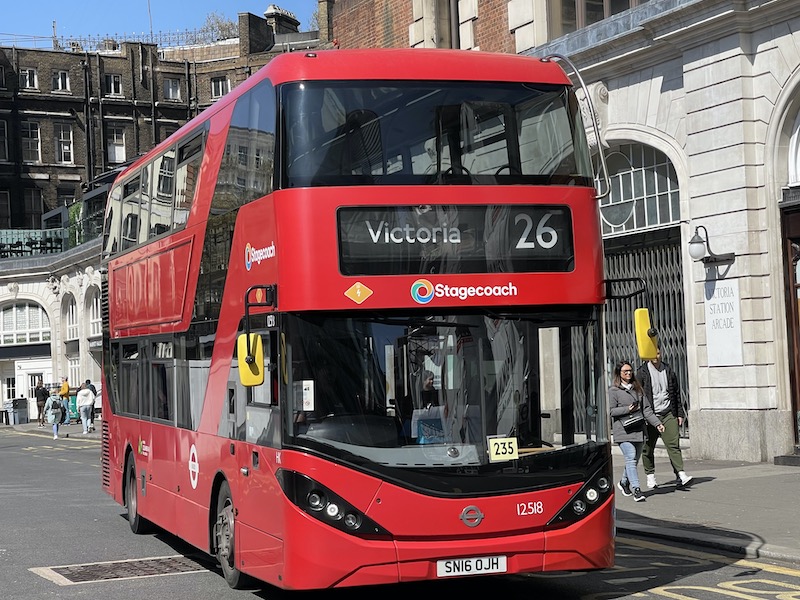
That all happened back in April 2023 but since then the 211 has continued to wastefully duplicate the 11 over much of the entire route west of Fulham Broadway.
Route 211’s changed route and timetable to Battersea Power Station was finally introduced on Saturday 28th June and entails a reduction in two buses due to the shorter route length. The new arrangements have also seen a change of contracted operator which is probably why it’s implementation has been held up for over a year – the joys of franchising.
14 New Routemaster buses used on the route are now operated by Transport UK from its bus garage in Battersea rather than RATP operating it from Stamford Brook garage, beyond Hammersmith, at the other end of the route.

I took a ride on the new section of route one day last week and found bus stops plates, timetable cases and poster frames containing spider maps inside bus shelters had all been updated although one in Sloane Square had escaped and was still showing buses going to Waterloo.


That’s unfortunate as passengers in the Sloane Square area are having to cope with significant disruption to bus routes due to roadworks making Sloane Street (north of the Square)…
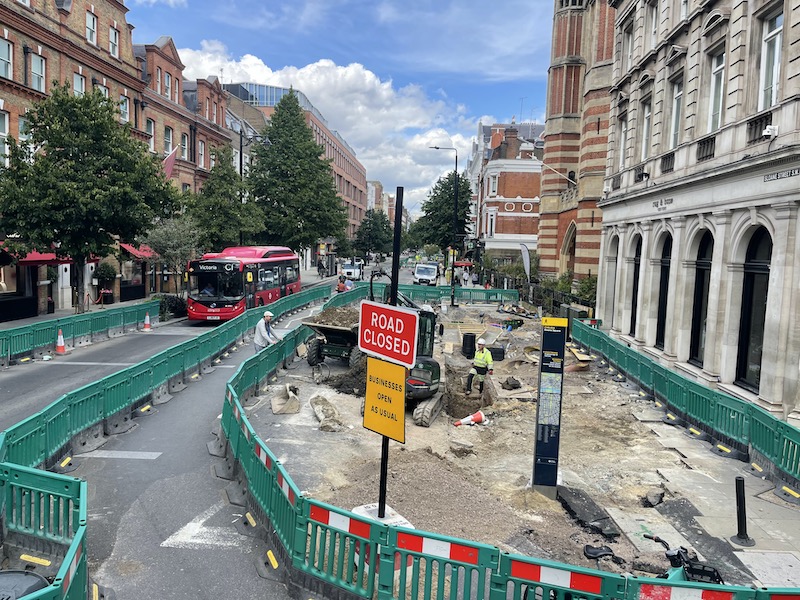
… and Lower Sloane Street (south of the Square) one-way southbound.

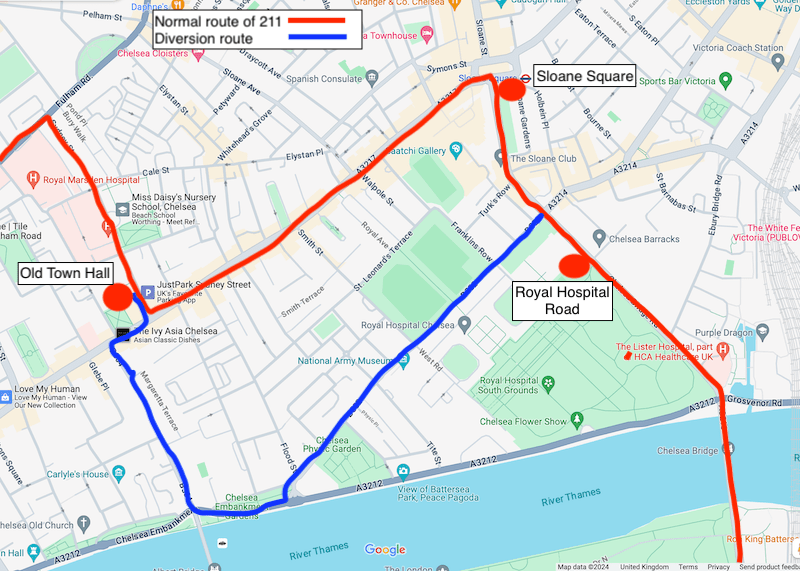
Hammersmith bound buses on route 211 which normally pass northbound along Lower Sloane Street are on an extensive diversion which misses out Sloane Square by a long way.
On my journey back from Battersea to Sloane Square I ended up having to take two buses with the nearest point route 211 (and the same applies to route 11) to Sloane Square being either the bus stop at Royal Hospital Road (before the diversion) or Chelsea Old Town Hall (after the diversion) which is over half a mile from the Square.
If this wasn’t Chelsea you’d think one of the side streets could have been cleared of parked vehicles on one side and made one-way northbound to allow for a shorter and more convenient alternative route.
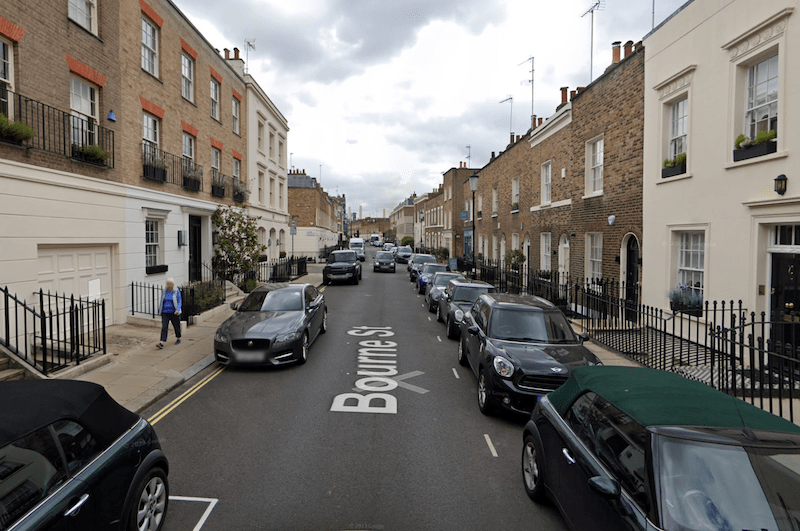
Obviously it’s early days for the new link to Battersea Power Station so passenger numbers on board buses on the new section of route were very few with half a dozen at most and a similar number of confused looking passengers waiting at bus stops asking drivers what route was being taken and drivers not being able to hear due to being sealed in their cabs.
A mother and young child on the bus I travelled on arrived at the terminus at Battersea Power Station wondering where they were, expecting the bus to take them to Victoria.
And when I say “arrived at the terminus” that’s exactly what I mean as in true TfL style the last bus stop for passengers on the route is alongside the relatively new Northern line Underground station…
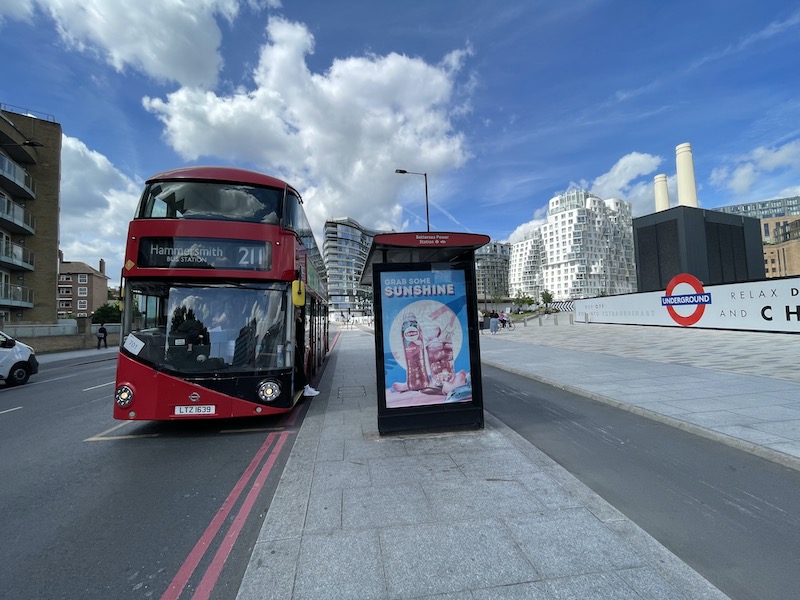
… where I alighted and then walked a short way along Battersea Park Road and turned left into Pump House Lane where there’s an official bus stand. I got there a minute or so after the bus had pulled up…

… and the driver, seeing me taking photos and noting me having done the same at the last bus stop when I alighted, got out of the cab and bizarrely asked me if I’d left a baby’s buggy on the bus, pointing to the empty buggy by the stairs.
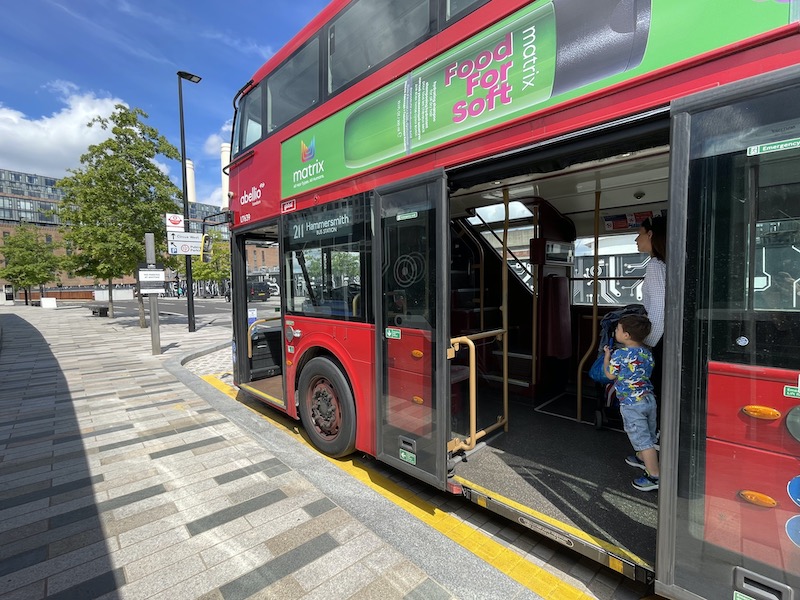
Luckily at that moment the confused mum and young child came down the stairs wondering where Victoria was and reclaimed her buggy (not that I was going to walk off with it!).
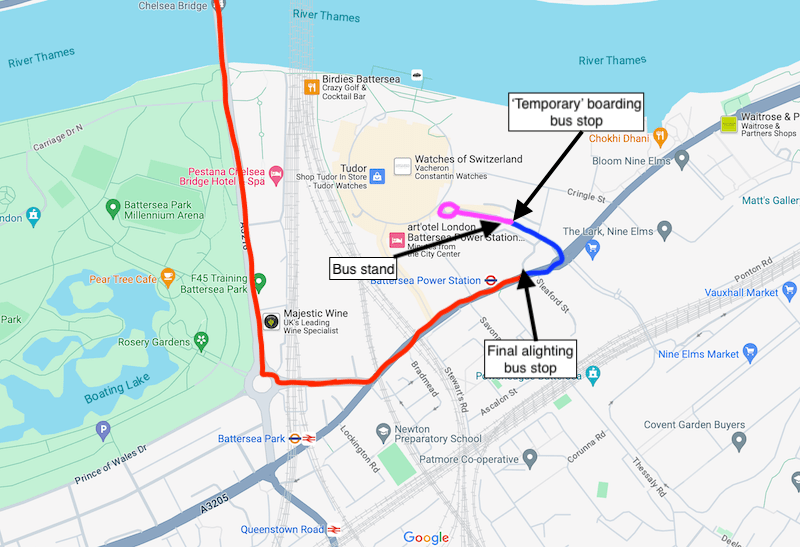
Aside from communicating changes to bus routes to passengers, what this also highlighted was the odd decision to turf everyone off the bus by the Underground station when the bus is continuing much closer to where all the hundreds of flats have been, and are still being, built by the former Power Station including its retail emporium. Indeed the bus then continues right up close to the Power Station as it turns around a turning circle where there’s a nice layby that could be used to layover.
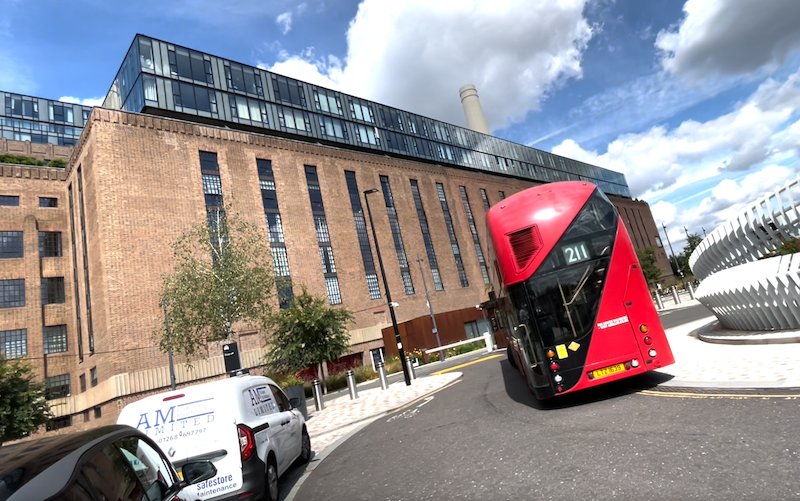
TfL has an obsession with keeping passengers as far away from buses at termini as possible, even when such layover points are closer to the traffic objective, as in this case. Ironically on the other side of the road to the ‘bus stand’ is a lay-by and temporary bus stop flag where buses start their Hammersmith bound journeys and do pick up passengers.
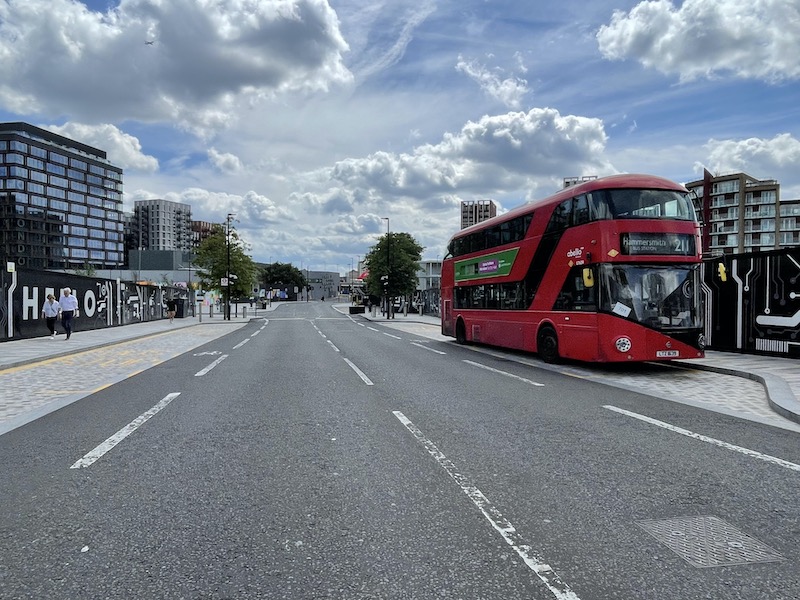
Although you’d never know from the absence of any information and the virtually hidden bus stop flag.

I reckon I was probably the first passenger to risk waiting there and get picked up. (I did take the precuation of asking the driver on the bus stand whether he did pick up there.)
The new residents of Battersea Power Station’s somewhat upmarket surrounding complexes of apartments have three other bus routes passing along Battersea Park Road – 156, 344 and 436 – giving them links to Clapham Junction, Vauxhall, Elephant & Castle and London Bridge as well as the new addition of Chelsea, Fulham and Hammersmith from the newly arrived 211.
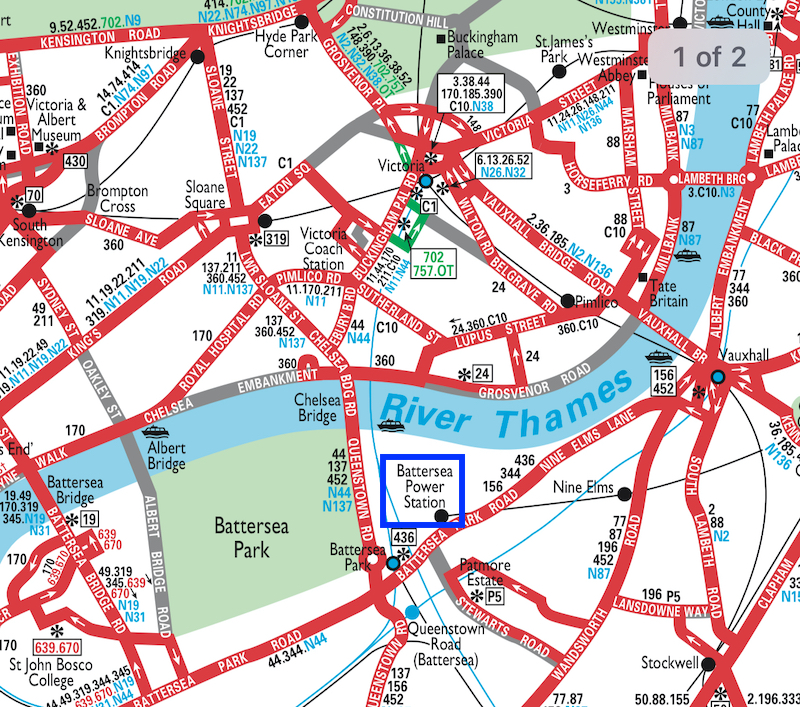
But Victoria is notable by its absence as a direct bus journey possibility although Southern trains provide a link from Battersea Park station. The Northern line also provides links to Waterloo and Charing Cross.
I doubt the new route section and terminus for the 211 makes up for it losing the more substantive traffic objective of Victoria, but TfL’s network planners must have modelled the new route using its vast amount of data to ensure it’s a sensible development. Let’s hope they’ve got it right.
You certainly see some interesting sights on the new section of route including the Royal Hospital Chelsea (home of the Chelsea Pensioners) and the former Chelsea Barracks (now being redeveloped for residential use by Qatari Diar, a subsidiary of the Qatar Investment Authority)…

… Chelsea Bridge…

…Queenstown Road which was once derelict land where National Express and many NBC Subsidiary Companies’ coaches would park up while resting in between journeys on layover from Victoria Coach Station, now part of the Chelsea Bridge Wharf residential development facing Battersea Park, on the opposite side of the railway tracks to the Battersea Power Station development…

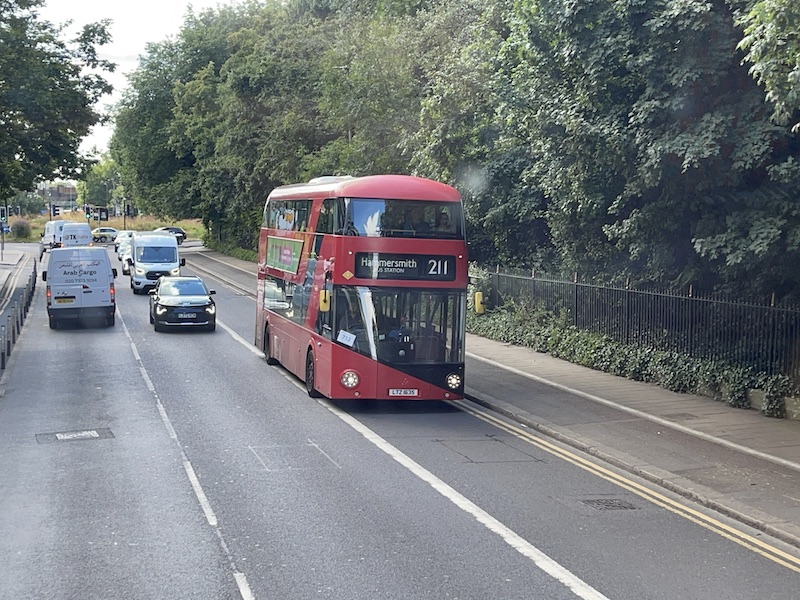
… turning into Prince of Wales Drive and going under the Southern railway lines…


… and where Battersea Park Station sits above terminating buses on route 436….

… going under the neighbouring Southeastern railway lines….
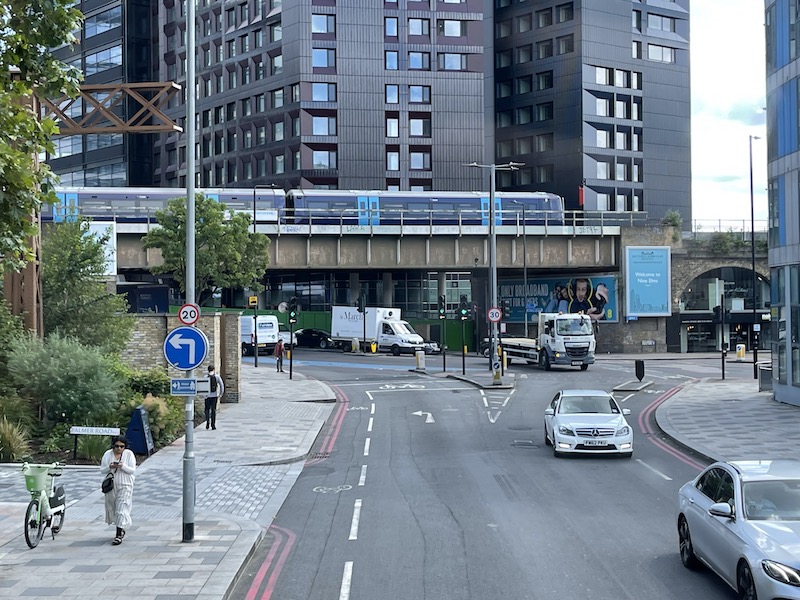
…. going past Battersea Dogs and Cats Home…

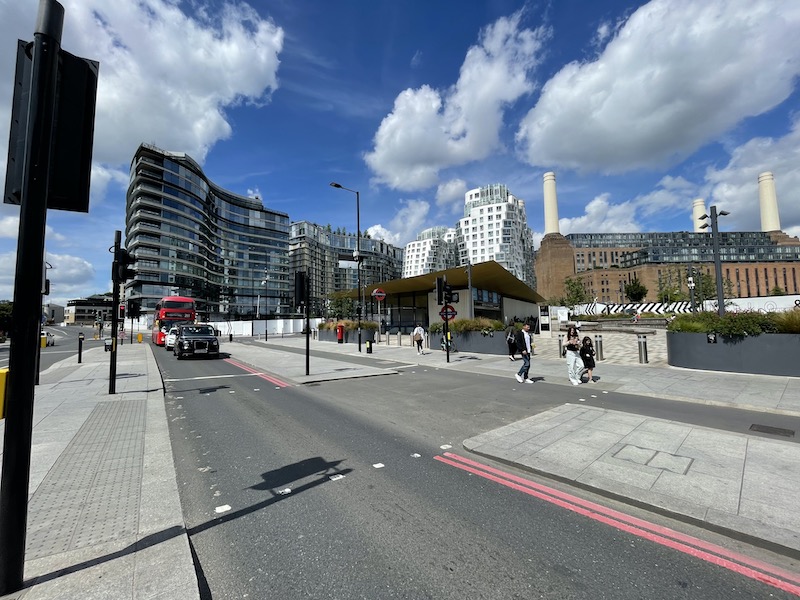
… and the new Battersea Power Station Underground station….
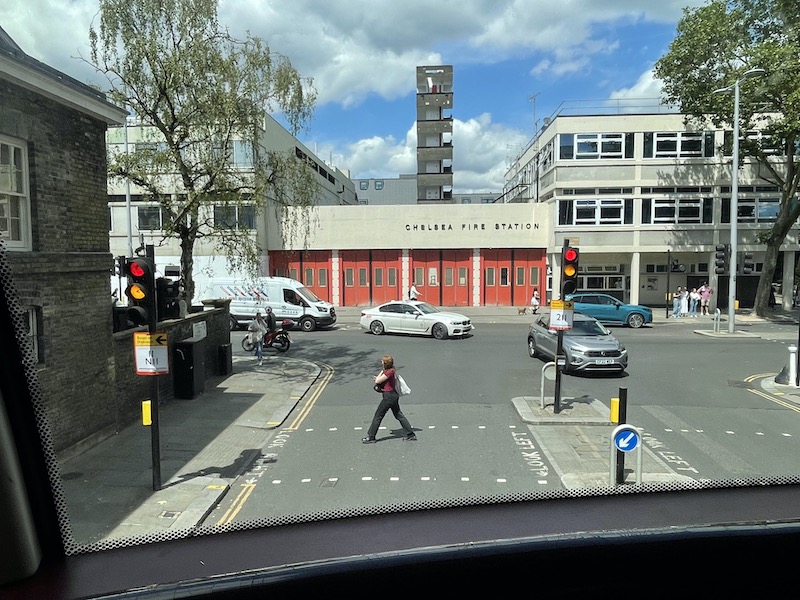
… and, currently, on that extensive diversion, even passing Chelsea Fire Station in KIngs Road.
As Larry & Paul might say on Broken News …. what a lovely route.

Roger French
Blogging timetable: 06:00 TThS with Summer Su extras.
Comments on today’s blog are welcome but please keep them relevant to the blog topic, avoid personal insults and add your name (or an identifier). Thank you.
 BusAndTrainUser
Interesting article. Thanks
On one of the captions to the final images you have ‘new Battersea Park Underground station’ instead of ‘ new Battersea Power Station Underground Station’.
Sent from Outlook for Androidhttps://aka.ms/AAb9ysg
LikeLike
It was always quite complicated to use buses in London, and doesn’t seem to be getting any simpler. In theory the on-line Journey Planners of TfL, Google Maps etc. have solved this – at any rate for the large number of people who use smartphones. Is that true? Maybe the time has come for a new way of designing and mapping public transport. The traditional tube map has also got very complicated, with the OG/DLR/trams etc.. I’d be happier with a ‘fast network’ map of the main routes between local centres – and having better services (more express buses mainly) where there are gaps in that network; plus local bus maps for how to get to/from the hubs of the fast network. In particular, local bus routes need some indication of frequency – 8ph or better, 4-7, 3 or less. I know this may be a headache for route planners, as frequencies change (early/late, peaks, Sunday etc.) but there could be standard combinations of these – a loss of flexibility for the planners may well be made up for in the better usage produced by more confidence in a simpler system.
LikeLike
Your excellent article illustrates a couple of my chief bugbears with TfL: (1) prioritisation of cars over bus users in the prolific road works (seemingly mainly for cosmetic footpath upgrades these days) and (2) sloppy and careless attitude to bus stop and terminal siting in relation to passengers’ actual objectives.
Willy-nilly bus stop and complete route closures are rife, even where there is clearly room for passing traffic or temporary stops. This is particularly nefarious at major interchanges such as currently Kilburn Station, and recently Paddington and Finchley Road in my limited experience, and very evidently seriously affects mobility-impaired travellers as well as affecting all of us and making bus travel a lottery.
LikeLiked by 1 person
My guess would be that the challenge with the parking might be that these are cars owned by residents.
TfL or the Royal Borough will know how many residents have bought permits. There may well be as many or more permits than even the current space allows.
Tricky then to stop them using an entire street to park if they live there and pay (quite a lot) to do so. Additionally, it would cause a knock on effect to residents in neighbouring streets. You can imagine the backlash.
The challenge in inner London is that there is rarely a perfect answer. Always trade offs.
Thanks, great article as ever.
Stephen
LikeLike
One problem that bus planners face is that councils can charge for the loss of income from roadside parking. This means that when capacity is removed, for example for roadworks, it is cheaper to divert through traffic away.
Without wanting to upset anyone, it does seem that TfL is generally not very good.
Gareth Cheeseman
LikeLike
One can only despair at the competence of bus route planners and their clear lack of interest in the travelling public.
LikeLike
Anyone travelling on the route familiar with the area will realise that the best place to alight to go to Battersea Power Station is on the south side of Chelsea Bridge. I’m not sure if the TfL publicity or the bus stop makes that clear. Having said that there is no reason why buses can’t stand and pick up at the terminus and I agree that this does look like poor planning. Similarly Queenstown Road station isn’t far away but both SWR and NR refuse to acknowledge it as a stop for the development. There is no signing for it. Even the publicity at Vauxhall tells you when to avoid travelling to Nine Elms Lane. A notice dating back to it’s construction period ! And of course no one in high office ever checks these things. Thankfully Roger does.
Martin W
LikeLike
With the aid of a Mike Harris map and checking “londonbustimes”, I am surprised that only two vehicles were saved by diverting to Battersea from Waterloo. To still tie up 14 buses for a service in which few are ever likely to travel end-to-end seems generous indeed. I would have thought extending and strengthening the 11 once more to Hammersmith would have made much more sense. The 137 and 452 virtually cover the new section.
I know traffic in the area is appalling for most of the time, but a study of the peak and normal daytime running times shows yet once more the walking pace speeds at which most TfL are operated, and worse, probably required for much of the time.
Terence Uden
LikeLike
I get the source of the 211 which will be providing new corridor regulations lost to Waterloo hopper fare after TFL were a bit generous transport allows 137 and 452 should incorporate roads less guidance for diverting public development areas in BPS london underground since 2021. But Vauxhall are vulnerable when a link anonymous still misunderstands what to pull off one route to relive some stress in Fulham Broadway ahead bus 11.
LikeLike
The first AI comment?
LikeLike
Passed through Sloane Square minutes ago and can confirm the roadworks on Lower Sloane Street are now GONE. The roadworks on Sloane Street are of course ongoing (2 years??). Meanwhile Eaton Square has reopened and the 19 et al are now running up that way rather than the tedious queue on Grosvenor Crescent.
Stephen, Kensington and Chelsea residents to not pay a high price for on street parking. A permit for my vehicle (taxi) would be £74 a year! Clearly this is a highly subsidised price.
LikeLike
| A permit for my vehicle (taxi) would be £74 a year! Clearly this is a
| highly subsidised price.
Only £74 a year in Kensington & Chelsea? Wow, considering the area, that ain’t half cheap and definitely shows the council’s priorities.
As a comparison, Lincoln (not exactly the economic heartland of the country) charges £57 a year for theirs…
Changing the subject a little, when I went to visit the then-nearly-new Battersea Power Station station a couple of years ago and had a potter around the area, I noticed that flats/apartments in the development were being offered with rents of £1,000-£1,500 per week.
Anyone who can afford those sort of rents won’t be using buses.
LikeLike
The anonymous 2.49 pm comment on July 16 may contain the right words, but they are definitely not in the right order. Just what does it mean?
George Standfast
LikeLiked by 1 person
London Buses can be excruciatingly frustrating but we have to recognise that the main problem is the overuse of cars and the resultant lack of and misallocation of capacity on our streets. And so much is just random. Given that, I think, London Buses, on the whole, do a good job of running our services. I do find I need to constantly check and recheck various information sources to avoid where possible unnecessary waits at stops. I use the TfL stops tracker and bus times.org but neither are perfect. I’ve made a number of journeys recently where a bus has been invisible on both websites but nonetheless has turned up at the booked right time!
Without the London Buses level of service night and day my family and I just could not sustain a car free life and a fulfilling one at the same time. I only hope our new government makes extending these benefits nationwide a priority.
MikeC
LikeLike