Tuesday 9th April 2024
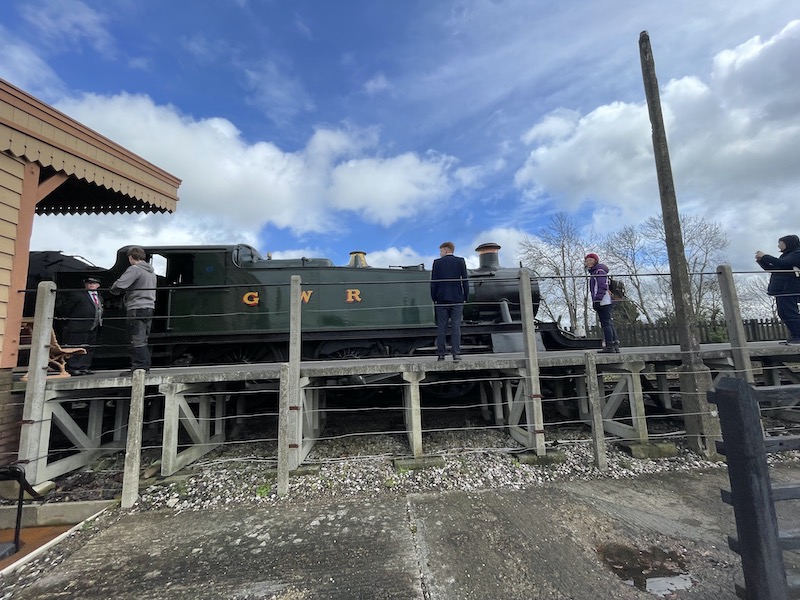
I paid a visit to the Didcot Railway Centre over the Easter weekend. Never having been before, it had been on a list of interesting looking places to visit for a long time having always given it a good stare out of the window when travelling on trains between Reading and Oxford on the Didcot Parkway avoiding line which passes alongside the Centre giving a good view of any activity going on.
A variety of special event days are designated through the year featuring steam or diesel locomotives running on short sections of track within the Centre’s 21 acres on which visitors can enjoy unlimited rides up and down travelling in period carriages from the Great Western era.

It’s easy to access the Centre if arriving by train at Didcot Parkway. Instead of heading south through the subway at the bottom of the stairs from the platforms and exiting through the gateline you just head north which takes you straight into the Centre and the welcoming ticket kiosk.
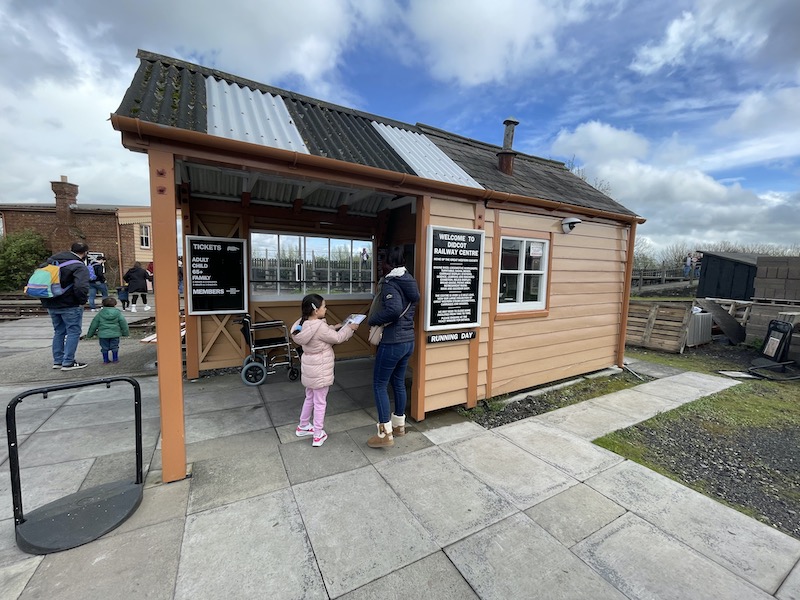
Admission can be pre-booked online and then once you’re through the ticket office, having collected your map and guide, you’re free to wander around the huge site in a relaxed and easy-going style with very few areas off-limits even when a diesel engine is shunting up and down the tracks between the various sheds.
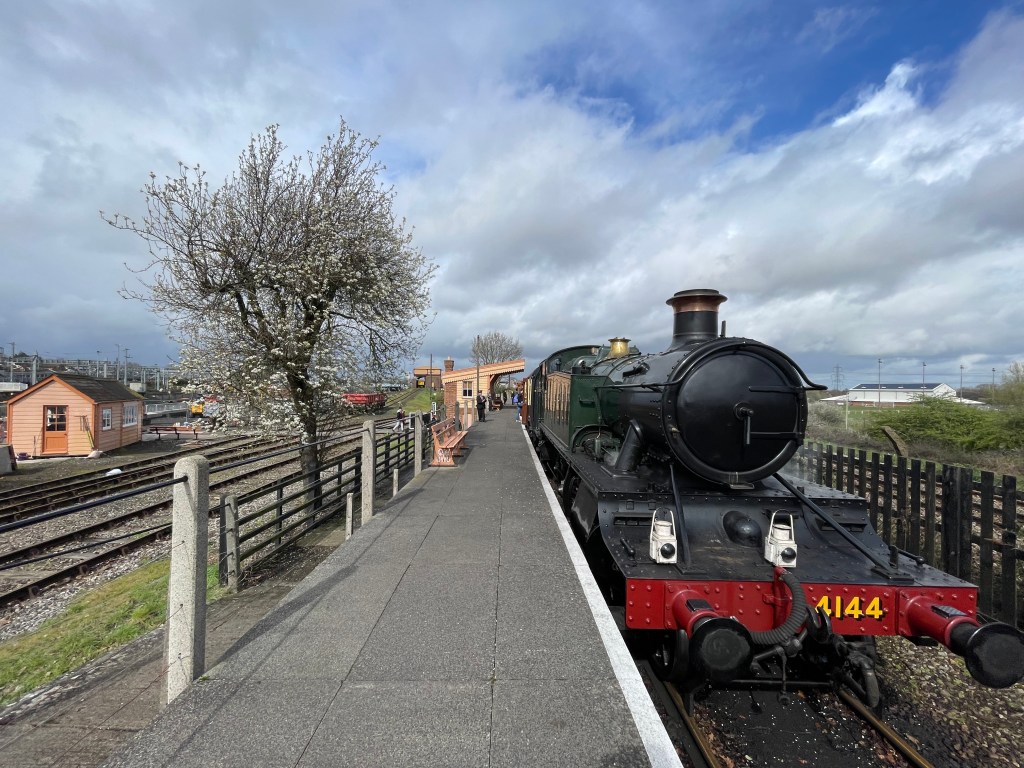
Most visitors head for the ‘Main Line Platform’ just beyond the reception hut and for a ride the short distance to ‘Oxford Road Station’. My visit was on a steam day and sure enough locomotive 4144 was doing the honours.

This locomotive was built in Swindon in September 1946 and, having spent time as the Severn Tunnel banker, was withdrawn from Severn Tunnel Junction depot in March 1965. It was sent to Woodham Bros. of Barry for cutting up but survived until it was bought jointly by the Great Western Trust and one of its members in 1974 and is now based at Didcot.
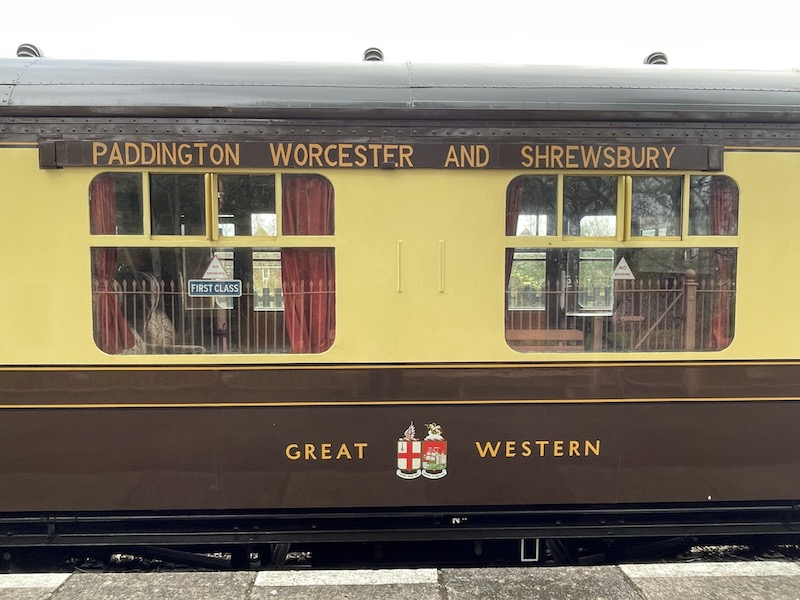
The carriages were sumptuous to travel in and we soon arrived at ‘Oxford Road’ where, after everyone alighted or took another journey, the train headed back to the start again.
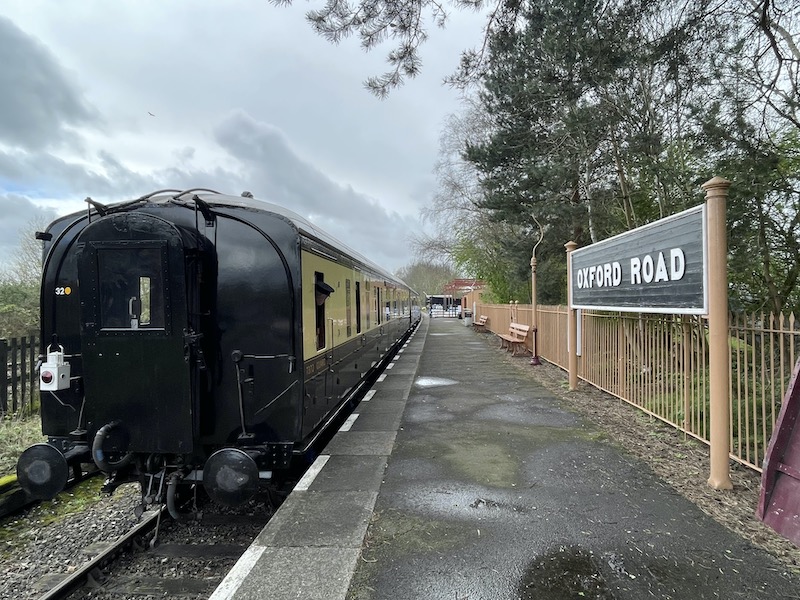
Visitors can then walk over to ‘Burlescombe Station’ on what’s called the branch line, taking in the ‘Transfer Shed’ on the way.
In here you’ll find reminders of the railway’s Victorian heritage with some very early examples of locomotives and carriages.

I don’t think I’ll ever complain about ‘ironing board’ seats in Thameslink Class 700 trains again!

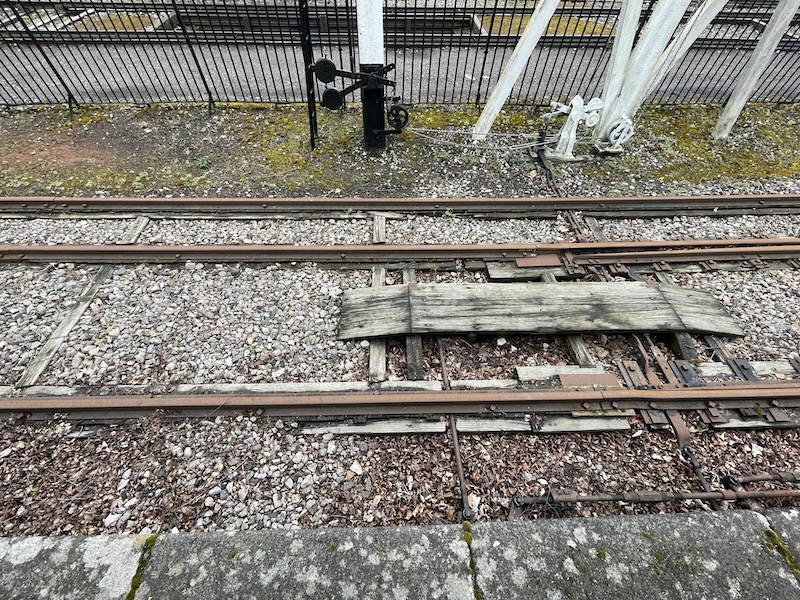
And if you’re thinking those carriages look rather wide. They are. Isambard Kingdom Brunel’s Great Western Railway originally used broad gauge 7 foot track only switching to standard gauge 4 ft 8.5 inches in the mid to late 1850s. This is demonstrated by both tracks being laid into the ‘Transfer Shed’ showing the stark comparison and what could have been.
Doing the shuttling honours on the branch line to ‘Didcot Halt’ on Good Friday was 2409 King George built by Hunslet Engine Company in 1942 and used on colliery work in Nottinghamshire…


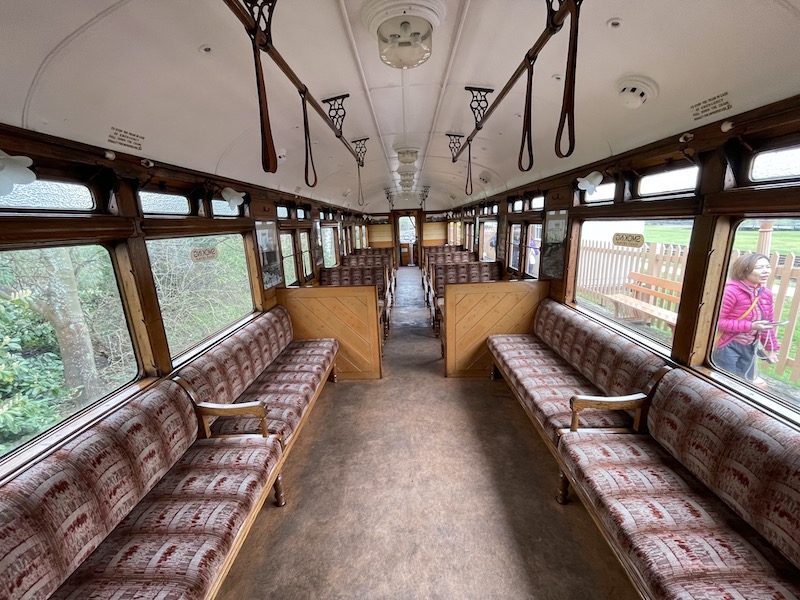
… which was pulling and pushing a quite remarkably restored ‘auto-trailer’ originating from 1933 and is typical of the auto-trailers built in the thirties for the mass of branch lines that the GWR owned. The interior has been completely re-created using in part recycled oak and the upholstery is a replica of the GWR 1937 pattern.
Here’s a short clip of the locomotive and trailer in action.
As you can see from that clip there’s a wonderful collection of semaphore signals to admire from ‘Burlescombe Station’…
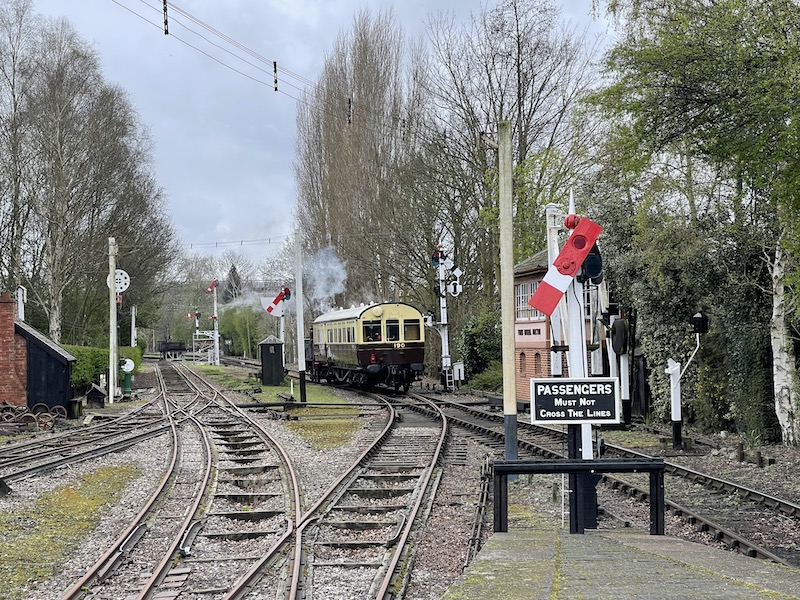
… and as the train heads towards ‘Didcot Halt’ you get a glimpse of some of the sidings on the site where goods wagons are stabled.
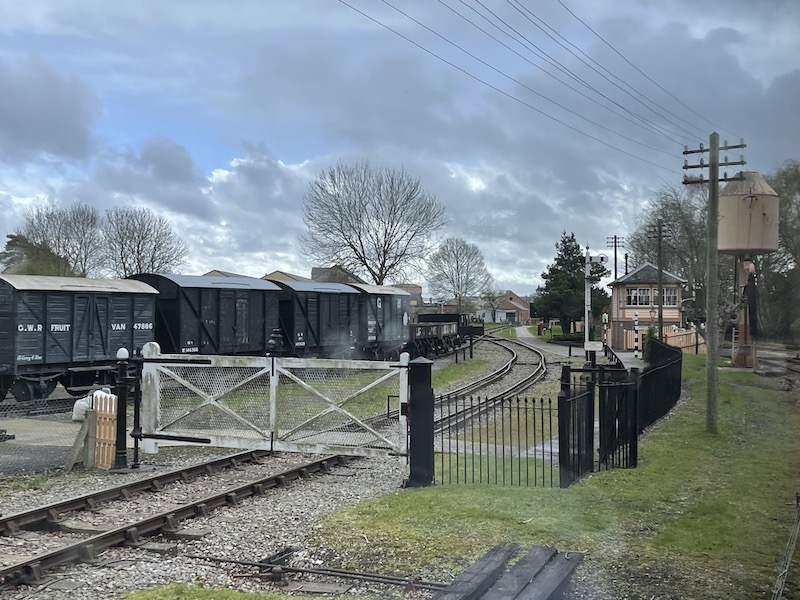
There are some lovely nostalgic images alongside ‘Didcot Halt’ and its platform…
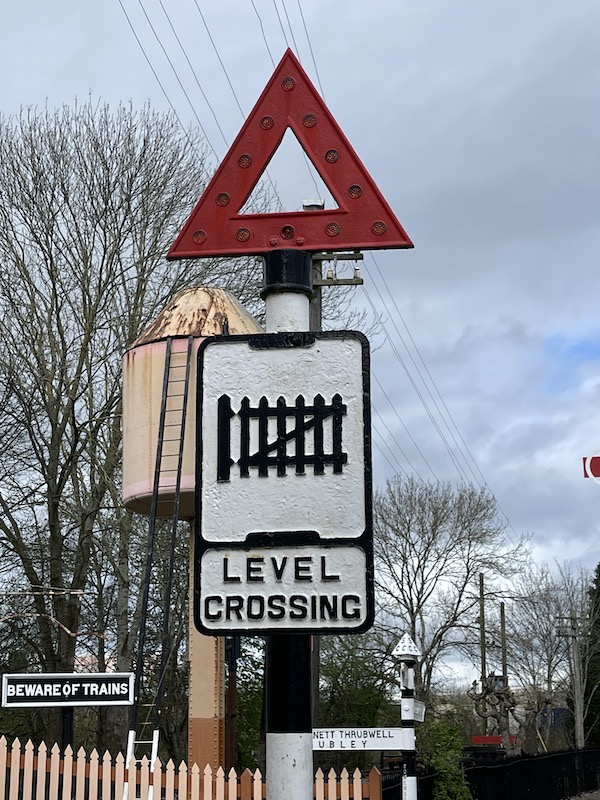
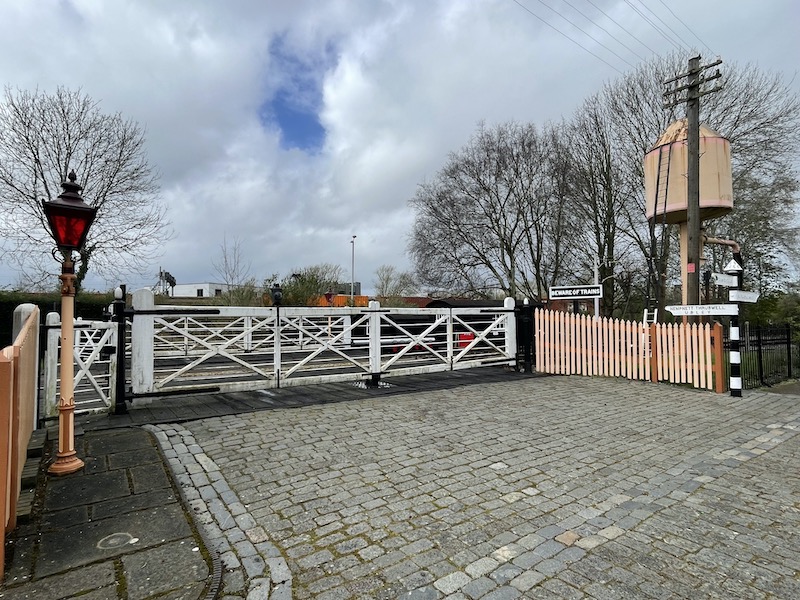
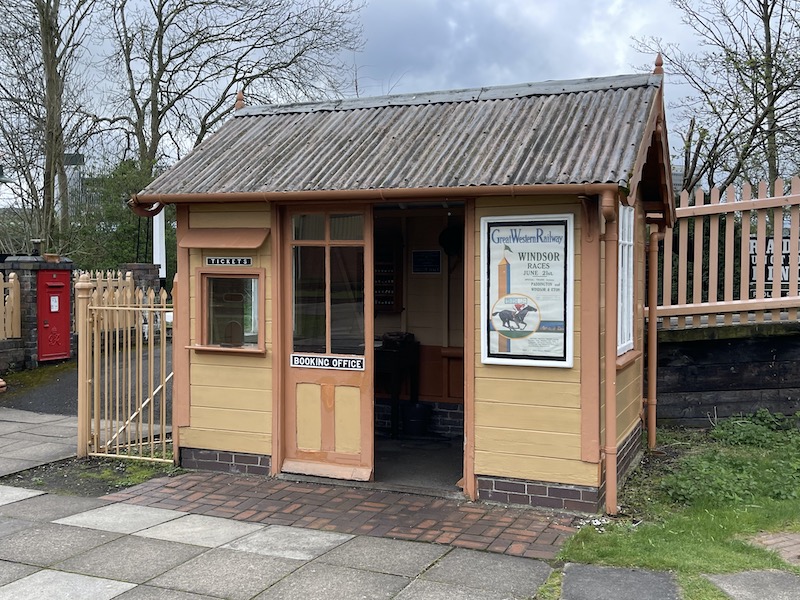
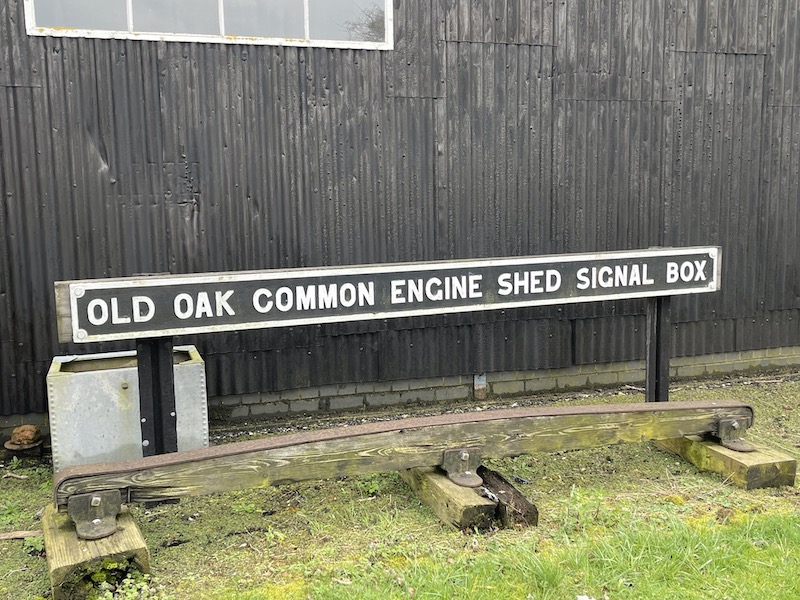
… from where visitors can wander over to the ‘Carriage Shed & Traverser’ …
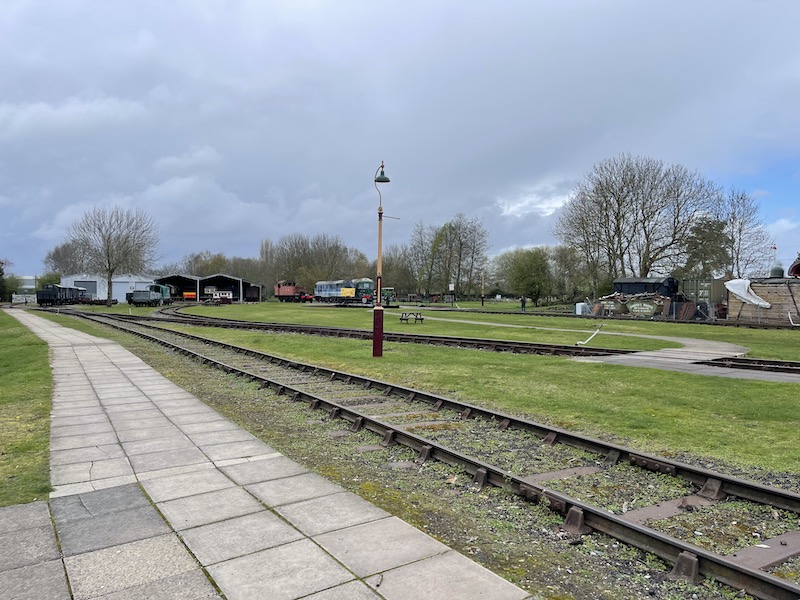
… as well as passing a turntable and some interesting locomotives stabled outside.
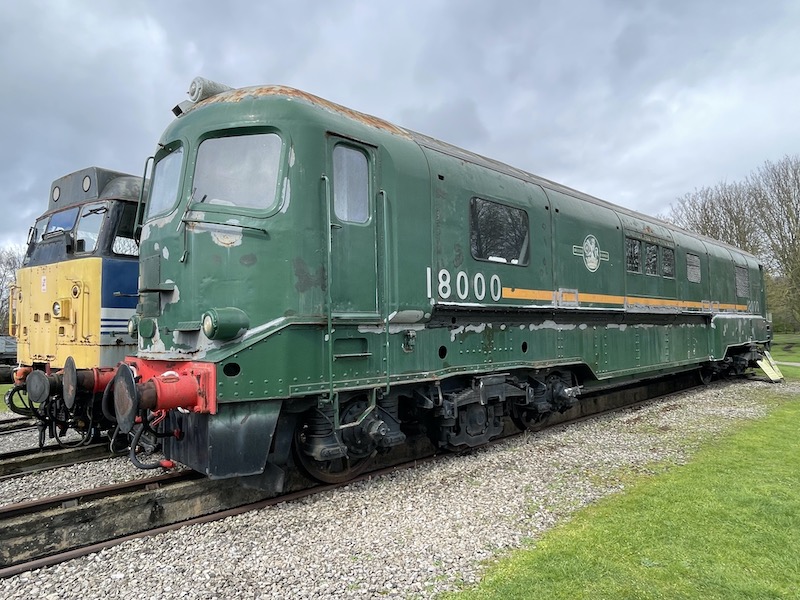
Above is 18000, built in 1949 and was only the third gas turbine electric locomotive working between Plymouth or Bristol via Didcot to Paddington until withdrawn in 1960. The power unit worked by drawing air into a compressor, then through an oil fired combustion chamber, the exhaust driving a turnbine which powered a generator driving four traction motors.
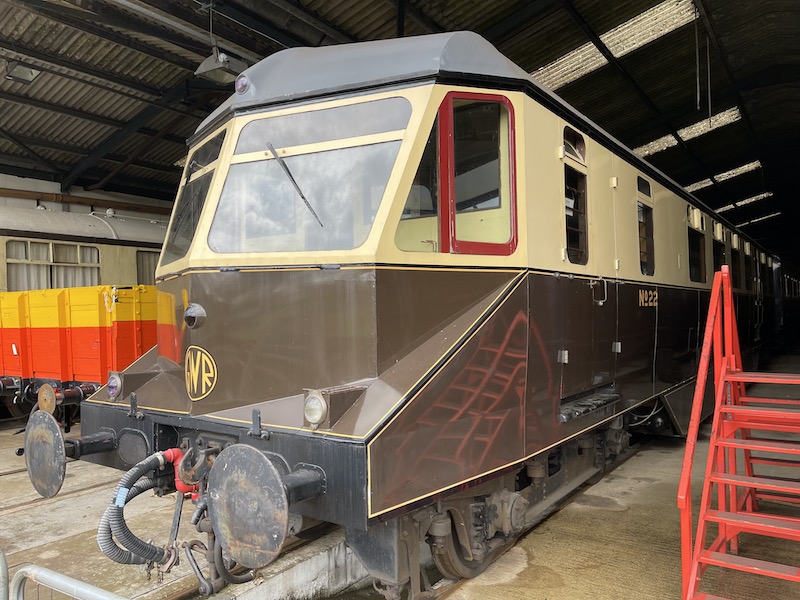
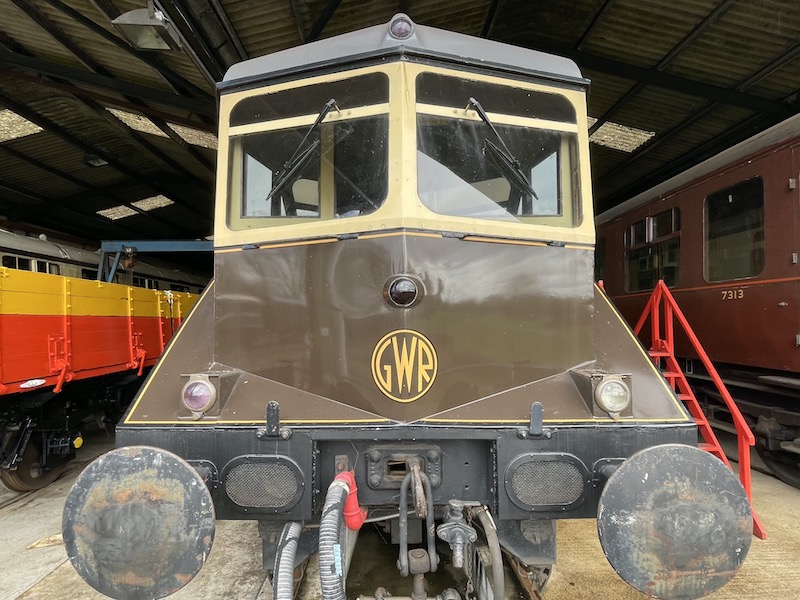
This is one of GWR’s 38 diesel Railcars built between 1933 and 1942. No 22 dates from 1940 and could seat 48 passengers with a driving cab at each end. There are two AEC 9.6 litre engines similar to those used in London Transport’s RT bus class. It was withdrawn from service in 1962.
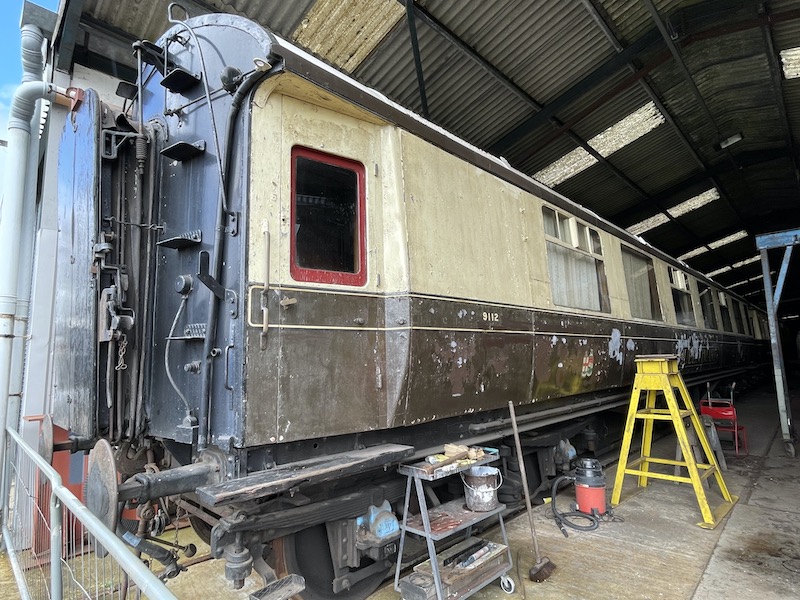
Other exhibits in the ‘Carriage Shed’ included carriages undergoing restoration by volunteers…
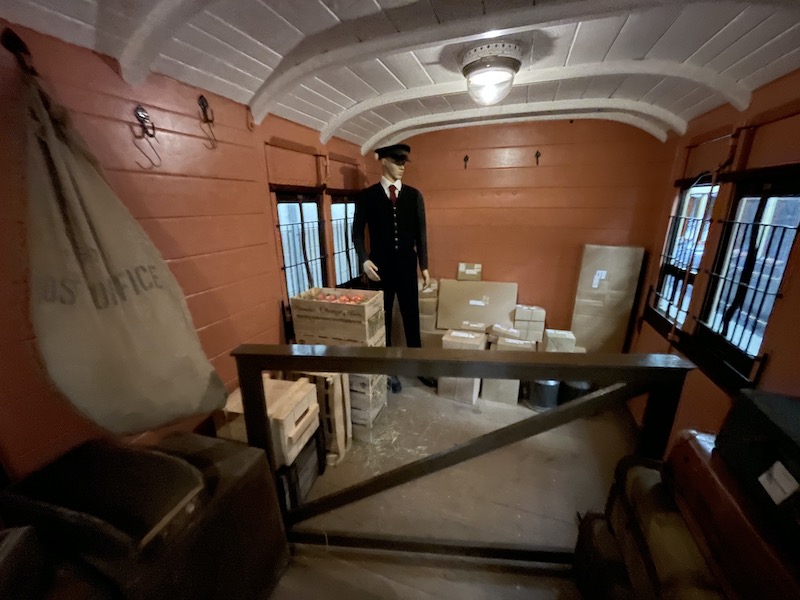
… as well as examples of “what it would have been like to…” work on the railways during the 1950s with audio explanations of the duties of various personnel engaged in moving goods around the network.
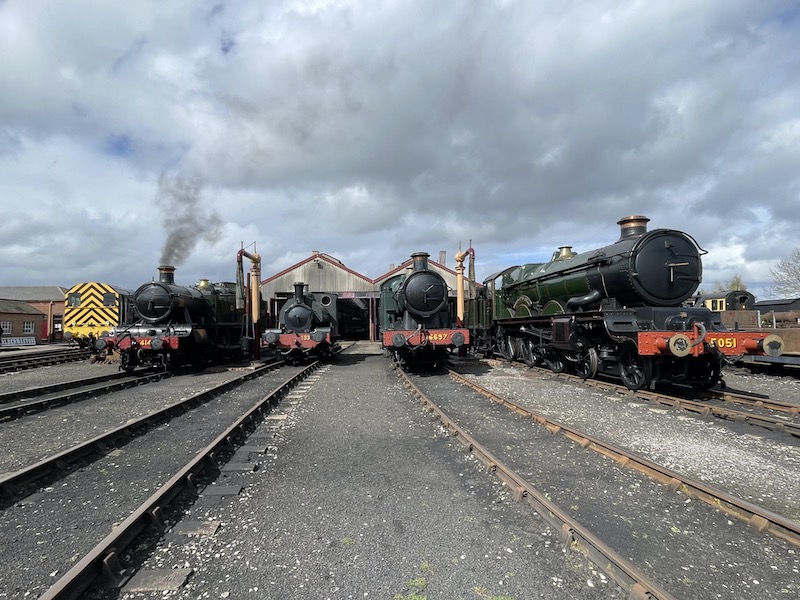
From the ‘Carriage Shed & Traverser’ visitors can pay a visit to the Signalling Centre (which includes the original Swindon Panel), a fascinating Museum and Archive, a Steam Railmotor Head and a Coal Stage as well as a Café before reaching the impressive Engine Shed where you are free to wander around to view the engines in the collection close up…
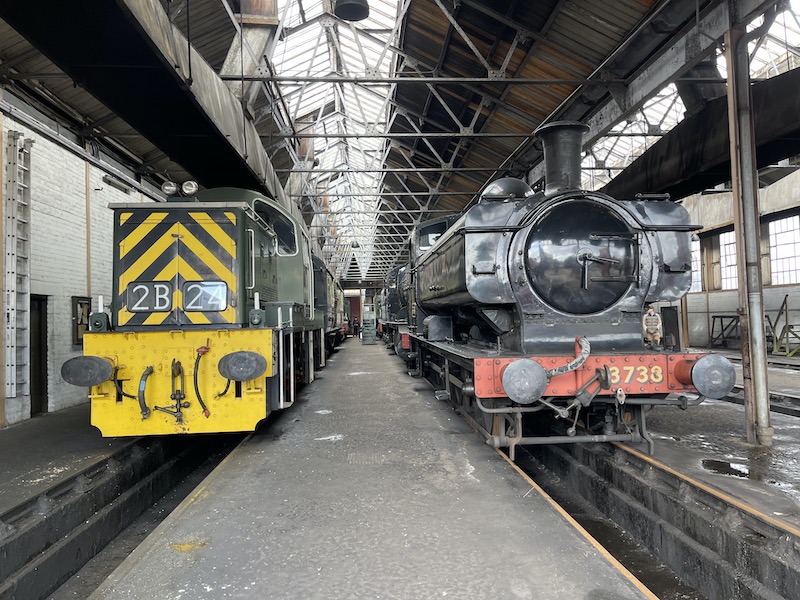
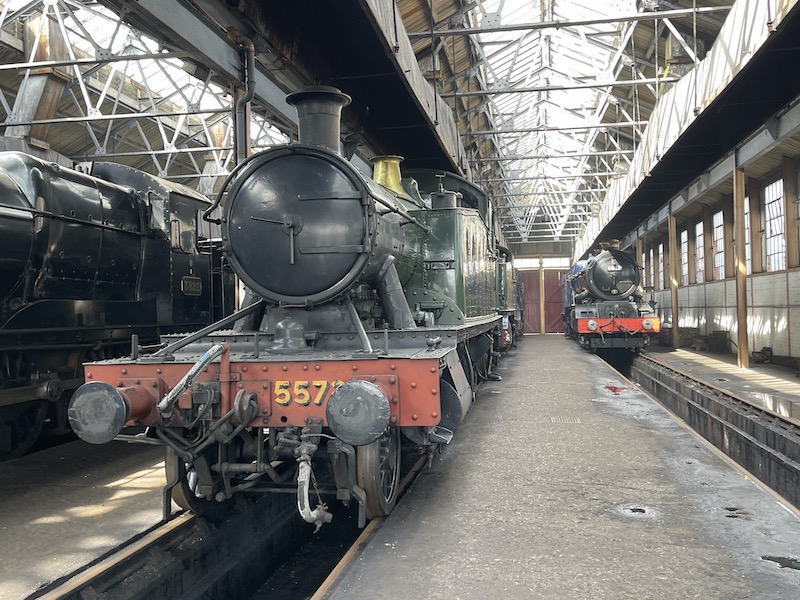
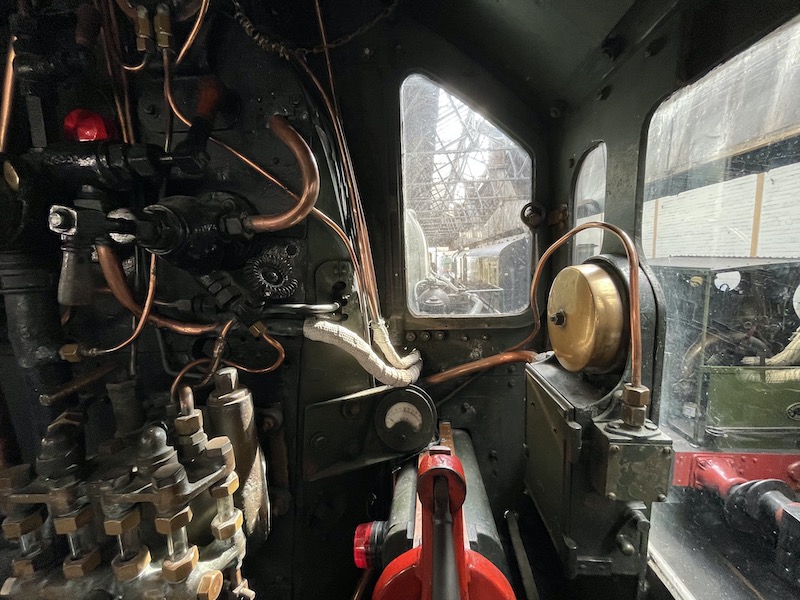
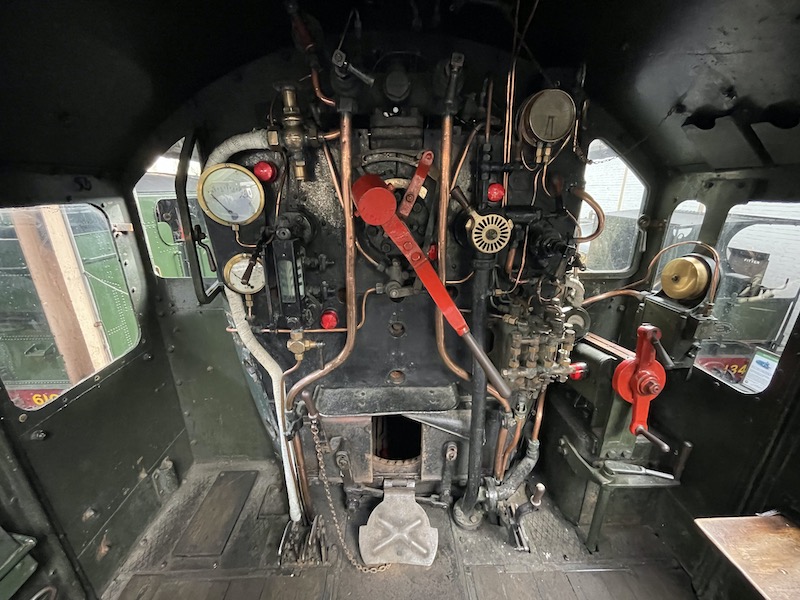
… as well as climb on to the footplate of one.
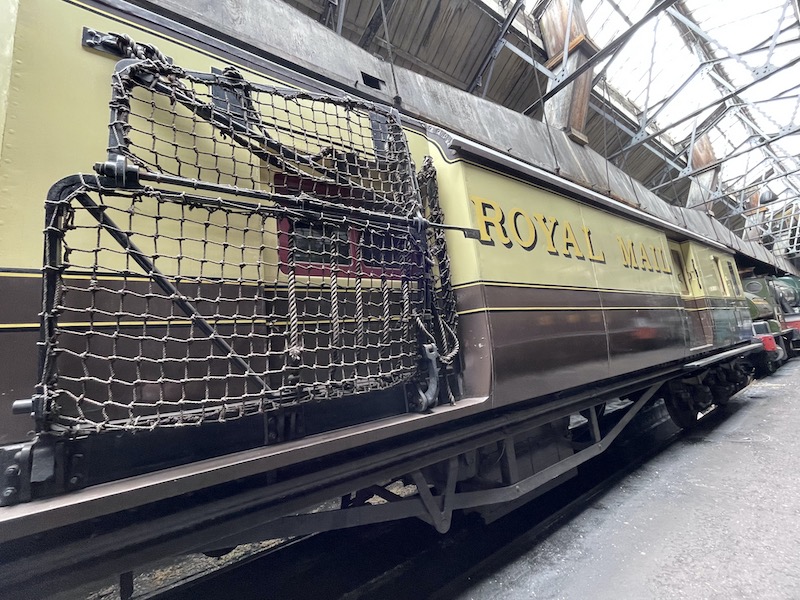
There’s also an example of a Travelling Post Office together with the netting used to collect mail from pouches on the track side as the train passed at speed.
The Didcot Railway Centre is a fascinating place to visit. Its website tells you which locomotives will be in action up and down the tracks for future weekends and Wednesdays so you can plan your visit to have a ride with a favoured locomotive. The Centre is closed on Mondays, Tuesdays, Thursdays and Fridays until mid July.
Admission prices vary according to what activity is taking place. Discovery Days are £11 and Steam/Heritage Days are £19 with reductions for children, over 65s and families.
It’s well worth a visit.
Roger French
Blogging timetable: 06:00 TThS
Comments on today’s blog are welcome but please keep them relevant to the blog topic, avoid personal insults and add your name (or an identifier). Thank you.
 BusAndTrainUser
Sounds like a lovely visit. Do they not have any original GWR buses? – I believe the GWR went in for (motor) buses right at the beginning – and presumably, unlike today, they all connected with the trains!
LikeLike
Most of the rail companies operated buses
The GWR had the interesting concept of slip coaches. The idea being you could serve more stations without slowing the train down, The carriage would be uncoupled automatically and a second guard would allow it down and hopefully stop it at the station platform, They then presumably had to have a shunting engine to move the carriage to a siding or take it back to he depot
Another railway oddity was London Transport was still using steam after it had disappeared from the mainline. They were mainly used at might for maintenance trains. The last steam passenger trains on LU where on the Met line. The steam engines being provided and operated by BR. I think the trains were hauled by electric locomotives as far as Rickmansworth and from there a steam engine took over
LikeLike
I think I shall revisit. The last time I was there was as a 15 year old lad back in 1972!
LikeLike
The last through broad gauge train to Penzance, “The Cornishman”, left Paddington station at 10.15 a.m. on 20th May 1892.
The last broad gauge train to leave Paddington was the 5.00 p.m. train to Plymouth hauled as far as Bristol by 4-2-2 locomotive “Bulkeley” which returned from Bristol to Paddington with the up Mail train.
There was a last up special stopping train from Penzance at 10.00 p.m. which reached Exeter at 5 a.m. It was carrying Inspector Scantlebury who was distributing certificates and instructions to those along the route supervising the work of removing the broad gauge rolling stock and track over the weekend. Thus, the final abolition of the broad gauge took place in the West of England on Saturday and Sunday 21st and 22nd May. I wonder how lonfg they would taker to do that task now? Probably several months
LikeLike
Yes, I haven’t been since 1972 either!
I don’t think the GW was the only railway to use slip coaches – I’m pretty sure that the GE, at least, used them too. They were a bit of a pain, though: not only did the coach(es) have to be picked up after stopping – sometimes to be attached to a connecting service – but they also needed an extra guard to travel in them. I think passengers in the slip coach were barred from entering the rest of the train, for fear of being left behind; and care had to be taken with the whole operation as, once slipped, the coach(es) effectively became a second train in the same block section as the main train. Amazingly slipping was resumed after being dispensed with in WW2 and continued, I think, until 1960.
Was 18000 the third gas turbine locomotive? There was 18100 (which was converted into a prototype 25kV electric loco) but the only other I can think of is GT3 which came later and looked very different. At any rate 18000 is a remarkable survivor!
Andrew Kleissner
LikeLike
I think there were slip coaches on the Atlantic Coast Express from Waterloo to the West Country, for places like Sidmouth.
According to Railway World, the very last slip coach was from the 17.10 Paddington to Wolverhampton on 9th September 1960
LikeLike
Yes, see this video: https://www.youtube.com/watch?v=7NEwrjQtrKo
It looks a bit terrifying to see the coach rolling on its own!
LikeLike
There were no slip coaches on the Atlantic Coast Express. The ACE stopped at Sidmouth Junction, the Sidmouth portion was detached and reattached to the branch line train. We lived in Honiton in the 1950s and my mother would take me by train to Sidmouth. My strongest memory is of the long walk from the station in Sidmouth down to the sea front, which seemed even longer back up to the station in the evening.
JohnC
LikeLike
True too of Ventnor, Ilfracombe and Lynmouth (though the latter has the Cliff Railway), also Robin Hood’s Bay.
The old Ramsgate station was literally by the beach!
LikeLike
The other problem with slip coaches was that the procedure only worked in one direction! So I guess a London-bound express from Cornwall probably needed rather more time than its westbound counterpart.
I would have thought that 18000 was the first gas turbine loco in the UK.
Nigel Frampton
LikeLike
Haven’t been for years, must go again. Nice to see the road signpost to the wonderfully-named Nempnett Thrubwell in one of the pictures!
LikeLike
They do a great job at Didcot and have rescued so much. You can feel the atmosphere of a running steam shed in the ‘good old days’ – mind you, working day to day, as opposed to today’s fun operations, with steam was hard work!
LikeLike
My last visit to Didcot was around 2019, when I felt they were rather resting on their laurels with the place looking a bit neglected. It seems they have upped their game since, though 18000 looks a bit sad and really could do with being under cover.
LikeLike
The other thing with the Western Region is when they phased out steam they went in for Diesel hydraulic locomotives locomotives. From memory they were not very reliable
LikeLike
1976 last time I visited
LikeLike
It is important at railway centres to have at least two stations (not on a loop/circle) otherwise the attraction may be standard rated as a “scenic ride or entertainment” for VAT purposes, rather than “Zero Rated” as scheduled travel by rail and similar (not Private Hire Car) is. This normally means, despite educational/charitiable activities normally being exempt from VAT , that full input tax incurred on expenditure can be reclaimed.
LikeLike
Too many anonymous posts!
LikeLike