Tuesday 27th June 2023

Phase two of the Mi-Link autonomous bus trial in Oxfordshire got underway a couple of weeks ago. It builds on phase one in May which saw the bus circumnavigate roads within Milton Park which I blogged about at the time.
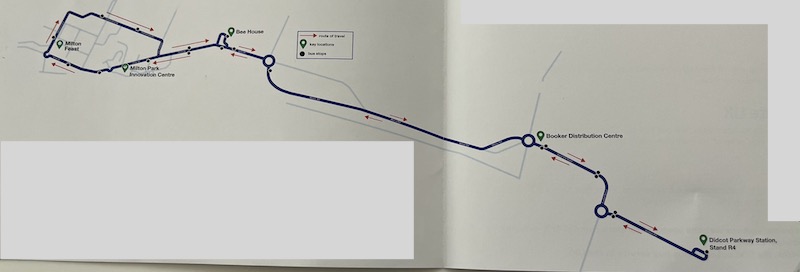
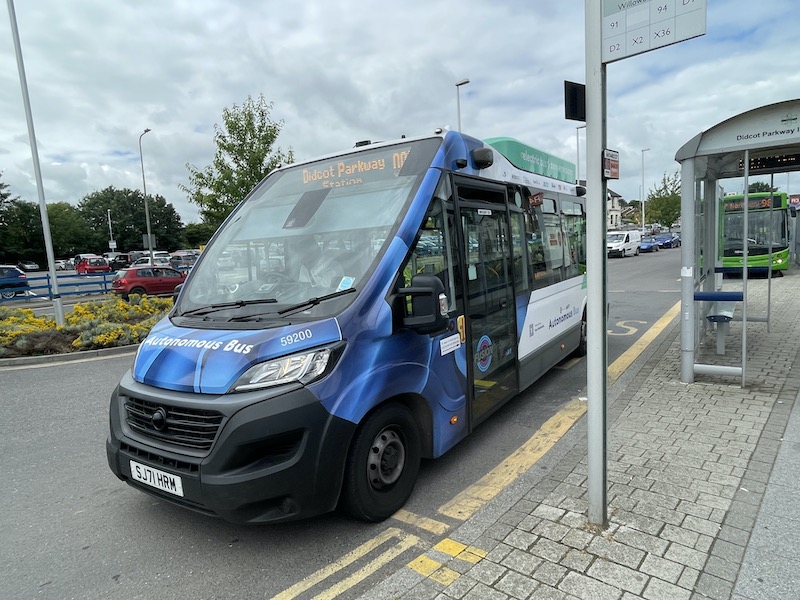
After a fortnight’s break the bus returned on Monday 12th June, this time linking Milton Park with Didcot Parkway railway station using busy public roads.
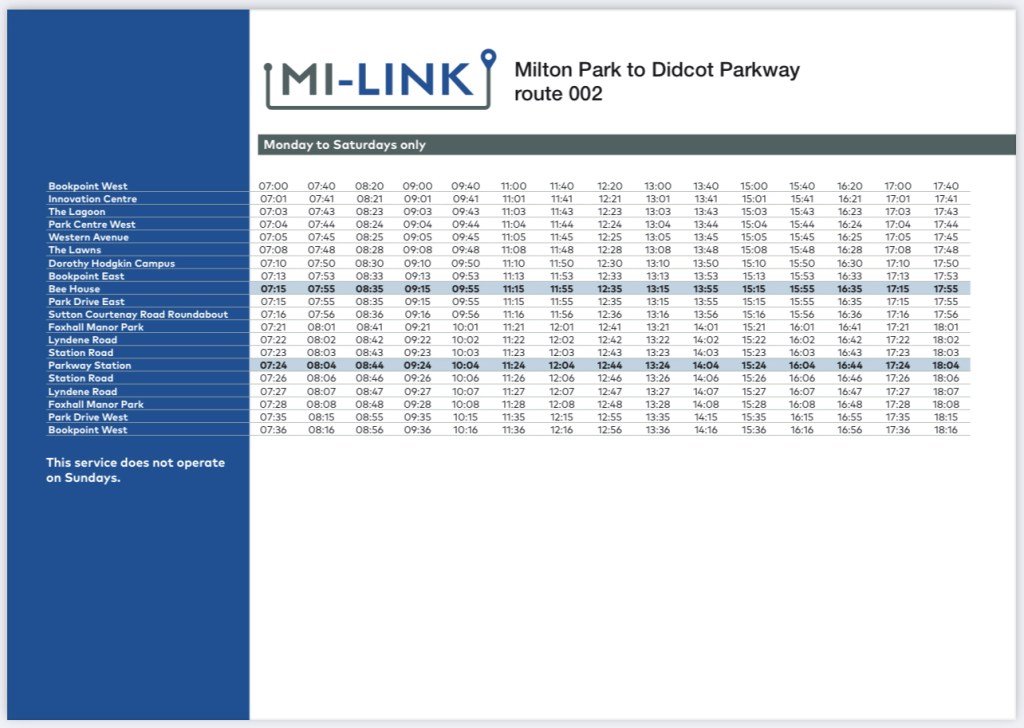
The trial is running on Mondays to Saturdays between 07:00 and 18:30 providing a 40 minute frequency shuttle service with an hour and 20 minute gap mid morning and mid afternoon for driver breaks.
As before the two drivers covering the service working two duties across the day are based at First’s bus garage in Slough, travelling over to Milton Park each day where the electric bus is based and is recharged overnight.
I popped over to Didcot on Saturday to take another look as I was intrigued to see how the bus would cope with the busier public roads and the arrangements outside the railway station where many bus routes pick up and set down.
On my previous visit a fuse blew half way round Milton Park forcing the bus back into manual mode but this time all went well and I was very impressed with the way the bus drove itself for much of the journey.
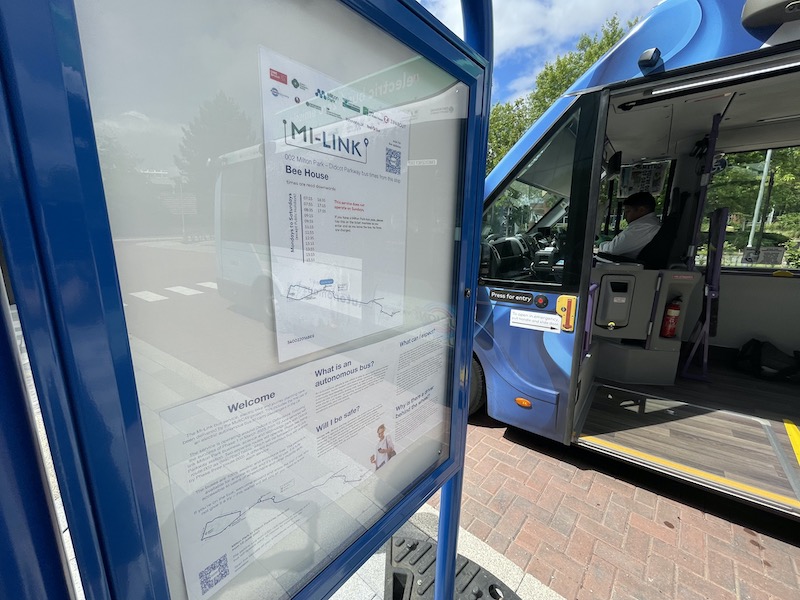
Driver Jas was in the cab overseeing the autonomous driving only intervening at particularly complicated spots, otherwise spending most of the journey with hands alongside the steering wheel and feet off the pedals.
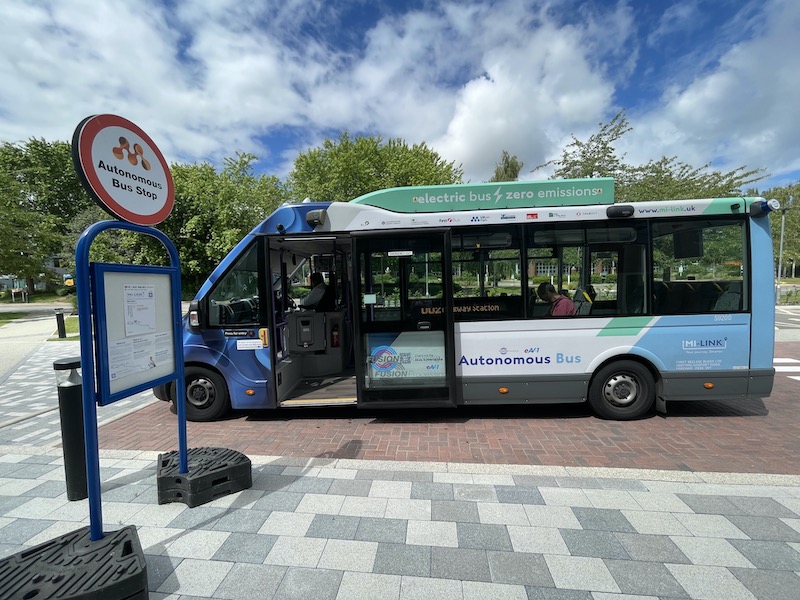
There’s just the one driver on this bus at a time for the trial – readers may recall there are two on the Stagecoach trial between Edinburgh and Ferrytoll – and although someone from Fusion Processing, the tech wizards behind the software, travels on many journeys it was just me and the driver when I travelled on Saturday plus another passenger who I’d got chatting to on the train from Paddington that morning and found out what I was up to so was intrigued enough to come along for part of the way to Milton Park before catching another bus to her destination in Wantage.
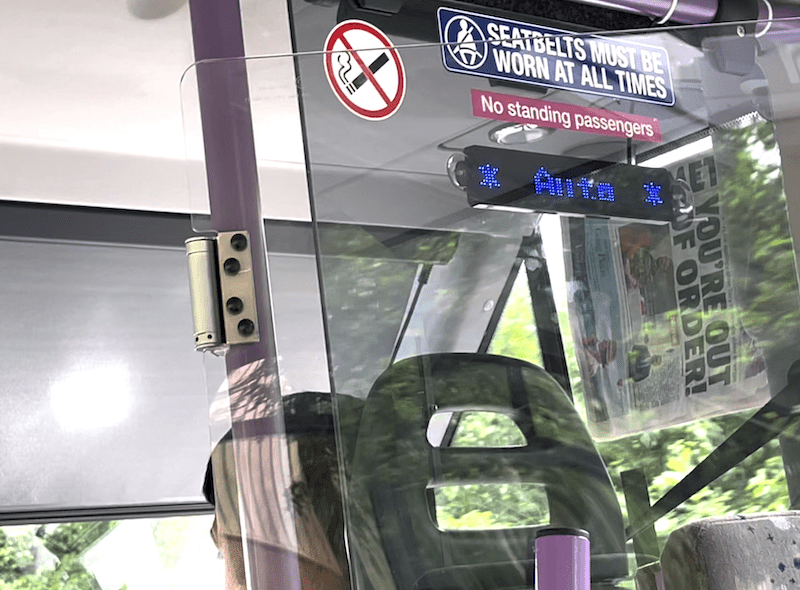
There’s an audible sound and a lighted “auto” sign in blue behind the driver’s cab when the bus is in autonomous mode which is great for passengers to understand what’s happening
It didn’t surprise me we left the bus stopping area immediately outside Didcot Parkway Railway station …
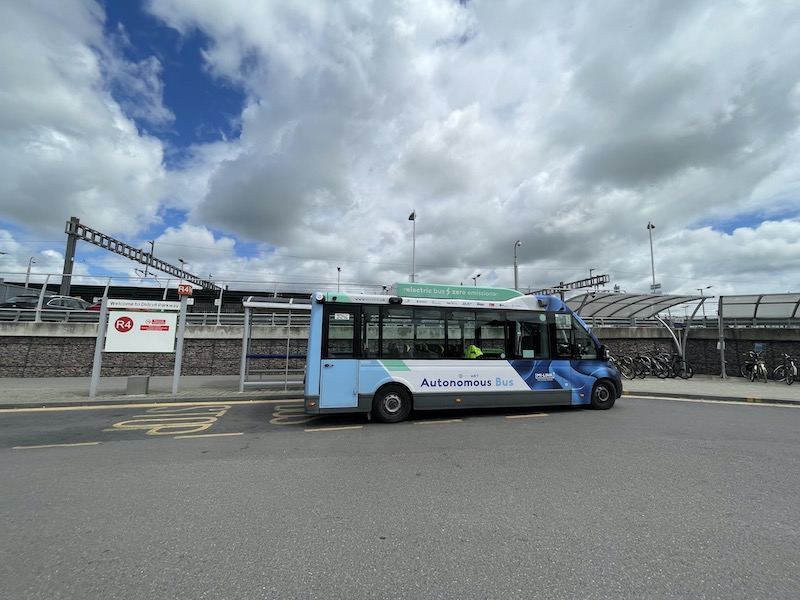
…. in manual mode. Such is the busyness of Station Road we’d never have got going if we’d relied on the autonomous mode waiting for an ultra safe time to pull out.
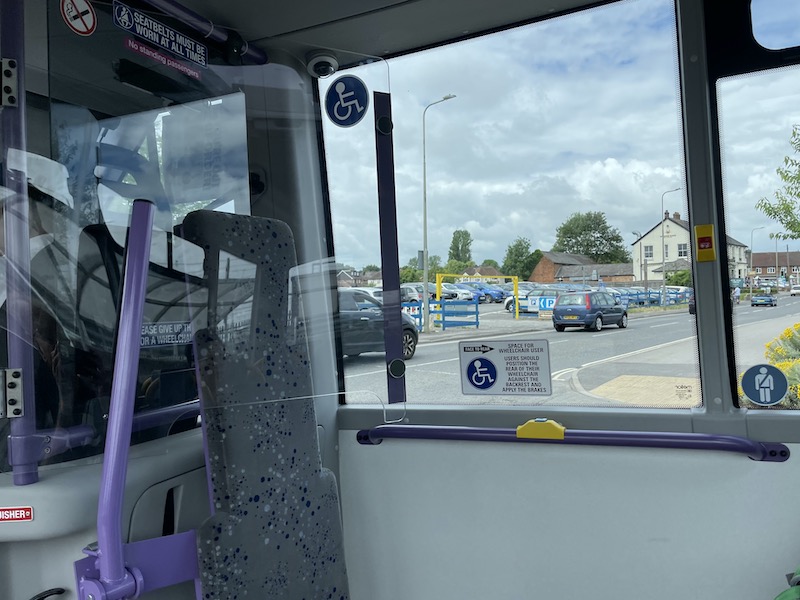
It needs a driver’s judgement of when to go and Jas did just that, pulling forward to persuade onoming traffic to give way.
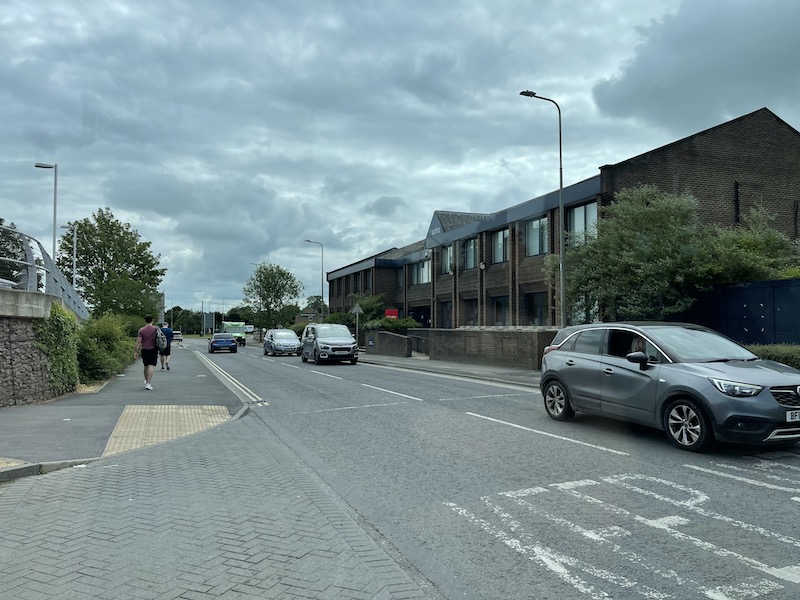
If autonomous buses ever became a reality then vehicle actuated traffic lights would be the obvious answer at this junction.
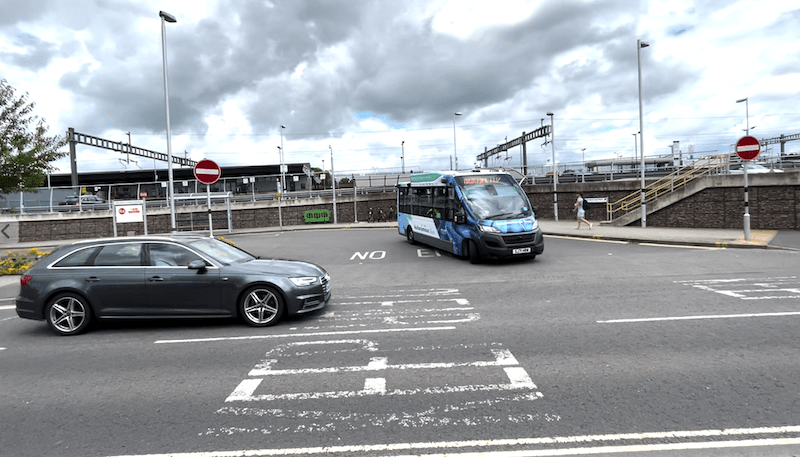
As we headed west along Station Road it was a matter of just a few yards when Jas took his hands off the wheel as autonomous driving mode kicked in …
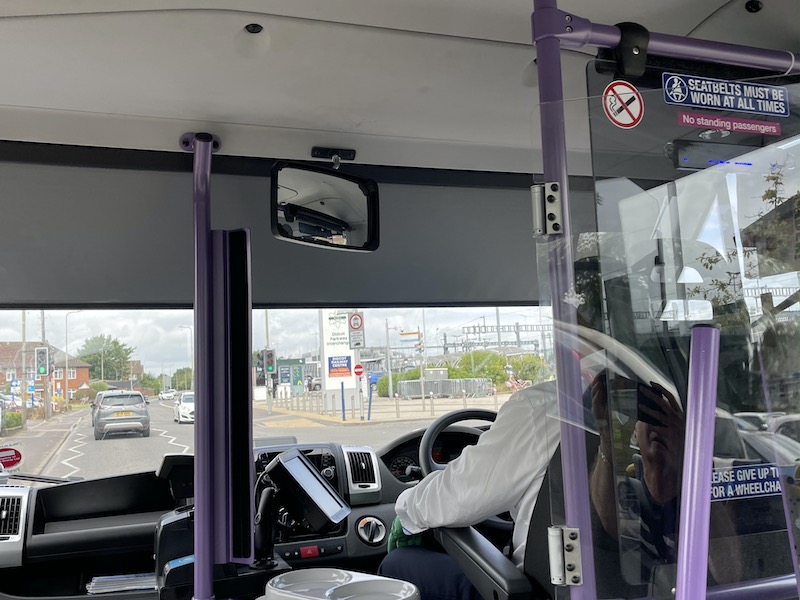
… only kicking out again as we reached the roundabout where the bus turns right to pass over the railway lines where tree pruning was taking place limiting the road width. This was obviously beyond the capabilities of an autonomous bus.
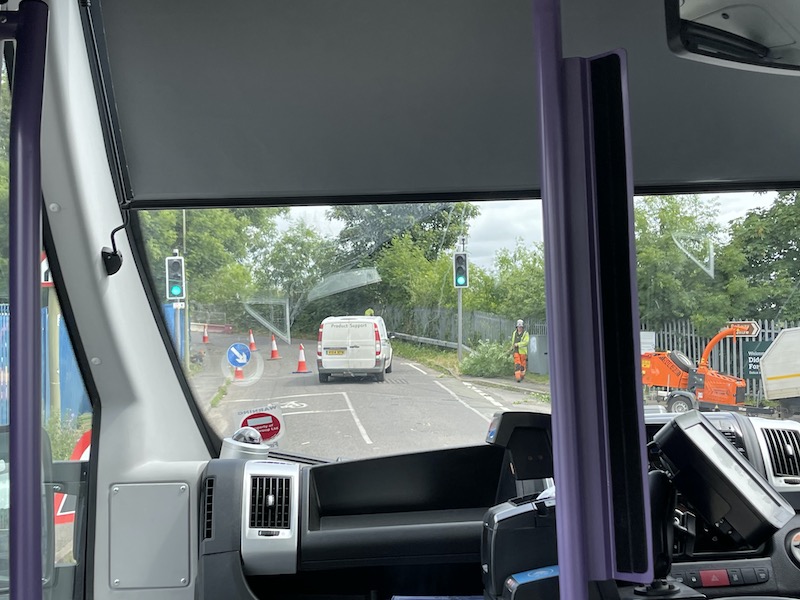
After passing through that we were in autonomous mode again including speeding up to reach the 40mph speed limit as we headed on towards Milton Park.

A little further on the ever alert Jas spotted a pedestrian walking on the pavement with some surface water by the edge of the road so took over the steering to guide the bus around the water and prevent the woman getting a soaking.
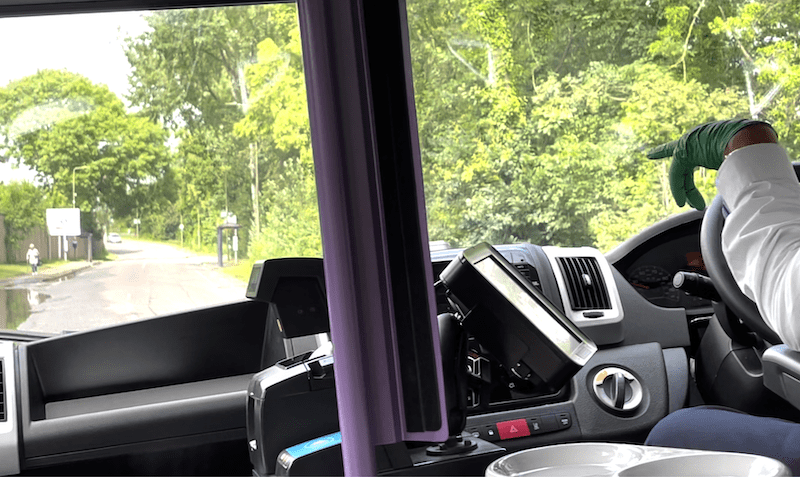
Back in autonomous mode again and as we approached the next roundabout Jas pointed out some overgrown foliage protruding slightly into the road which the software wasn’t aware of so it automatically detected it as an unknown hazard and slipped back into manual mode.
Back in autonomous mode we entered Milton Park which, being a Saturday, was very quiet.
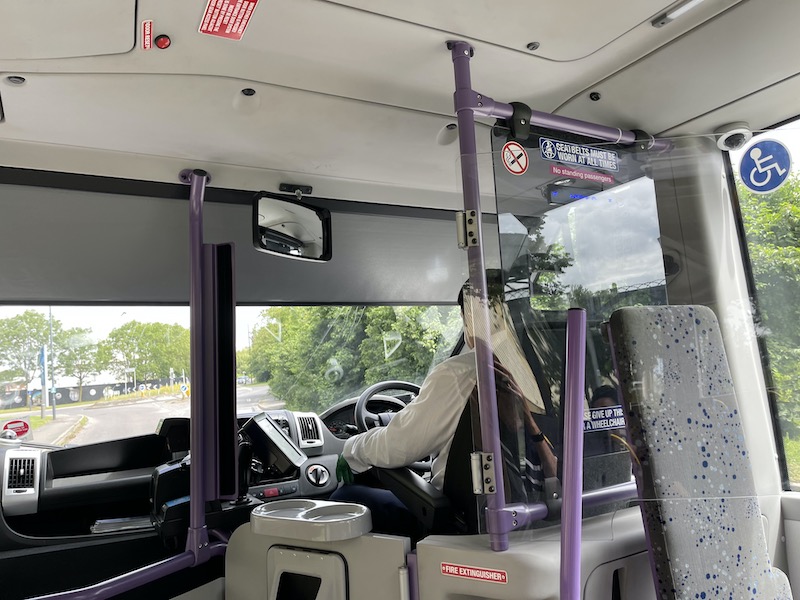
The autonomous software defaults to stopping at each bus stop but Jas overrode this and we only stopped to let my fellow passenger off in Park Drive and at the temporary stop in Western Avenue to wait time and where another passenger joined us to travel to the railway station.

We called into Bee House which was impressively achieved autonomously with the steering wheel freely moving as the bus wheels turned to take us through the 180 degrees manoeuvre to reach the bus stop.
And then it was back on the public roads to the station again and all mostly in autonomous mode.
It was impressive to see the bus cope with varied road conditions (or not) along the route and I am sure this trial will add a huge amount to the knowledge bank of what can be achieved with this clever technology.
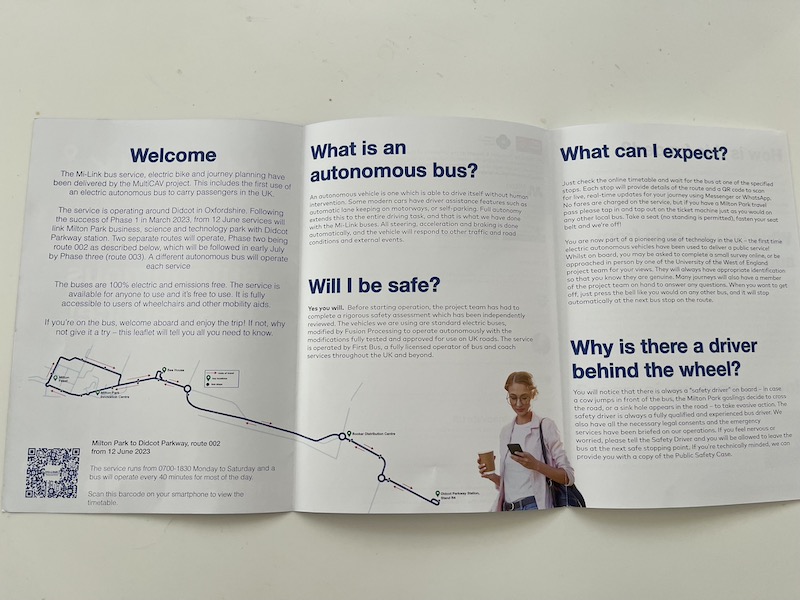
There was an updated leaflet from phase one on board explaining the background to the trial.
Phase two of the trial will be coming to an end soon with phase three due to begin early next month which will see a full size bus introduced on the route, albeit I’m told the route in Milton Park will be modified to avoid tight turns for a larger bus.
If you decide to take a ride while the trial continues you need to be aware the bus departs from bus stop R4 outisde the station rather than R1 which is the normal stop for buses serving Milton Park.

To save you the trouble of visiting though, here are three short video clips to show the autonomous bus in action.
Turning right at a roundabout within Milton Park…
… making the 180 degree turn to the bus stop at Bee House….
… and heading towards Didcot Parkway on busy Station Road.
Roger French
Blogging timetable: 06:00 TThS
 BusAndTrainUser
Is that a newspaper by the window to the right of the driver’s head in the last clip?
Presumably to keep out the sunlight?
Couldn’t the developers of such an expensive vehicle spend a few more pounds on a blind?
LikeLike
Interesting – thanks for all the detail about what the ‘auto’ mode can and can’t cope with. I presume quite a bit of R&D funding has gone into this project, maybe in the cause of driving down staff costs.
I wonder if equal funding has gone to other projects, e.g. how to make the most of drivers by really cutting down the time they spend other than driving. I noted the Buses magazine article on Ticketer, one of whose aims is to make ticket-selling quicker, but artic-buses and trams with multiple doors and the driver free to concentrate on driving safely surely must be a better system – are there no statistics to show the comparative economics of that to ‘traditional’ several-minutes-at-each-stop bus operation? I remember thinking in the 1970s that the bus industry must be unique in degrading its product (slower, less reliable) while the main competitor (cars) were becoming faster and more reliable. Perhaps after all these years IT can give the opportunity for more efficient (in the real sense – not just costing less) public transport, but I’m not sure that it is autonomous vehicles.
LikeLike
I agree, single door buses are not suited for busy urban services. Perhaps tap on tap off will speed up boarding. Alternatively, insist on pre purchased tickets (including via news agents and post offices for packs of tickets). Paper tickets to be validated by passengers. Employ sufficient inspectors to deter free riding. This is how it is done everywhere else.
LikeLike
I’m not holding my breath for fully autonomous buses any time soon if things such as traffic lights at roadworks are seen a complicated, requiring human intervention. I suspect a 21 year old entering bus driving today will be able to enjoy a full driving career without fear of being replaced by autonomous buses!
LikeLiked by 1 person
Interesting that the driver intervened to avoid splashing the pedestrian. I understood that drivers can be charged for splashing pedestrians, so if the driver had not intervened, who would have been charged?
LikeLiked by 1 person
As it happened I had planned to go to Didcot for a ride on the robot bus on Tuesday, so the arrival of your blog in the morning before I set off was a lucky co-incidence.
I arrived at Didcot station in time for the 12:04 departure which turned up about ten minutes late, just as I was starting to wonder whether it was running. Straight away there was a problem as Thames Travel had decided to park a crew ferry bus on stand R4 so the robot couldn’t get on it. I was unhappy about having to wear a seat belt, but after several bouts of harsh braking for no obvious reason I appreciated the requirement.
In the Park itself most of the journey was run in auto, although some driver intervention was required. The driver pointed out several places where the bus thought that roadside vegetation was an obstruction and stopped, requiring him to take control. On the section between the Park and Didcot station much more driver intervention was required, and I reckon at least half the journey was done in manual.
It seemed to me that the sensors weren’t looking very far ahead, so that the bus appeared to be reacting reacting to short-range input, resulting in DLR-style acceleration and braking and thre’penny bit cornering; whereas a human driver would look ahead, evaluate the situation, and take the necessary action well in advance. The line taken through junctions and especially roundabouts seemed quite different to what a human driver would take. And its default response to obstructions seemed to be to stop and wait for the obstruction to go away: unlikely to happen when the obstruction in question was a “road works ahead” sign in the middle of the road.
My conclusion: at present this is an expensive toy. A clever toy admittedly, but still just a toy. It may well have a niche role in an area specifically designed for it, but it would need a much better sensor suite and much better software before it could be used on normal roads without a keeper. And if it has to have a driver anyway, then what’s the point?
LikeLiked by 1 person
Thanks Michael; very interesting.
LikeLike
At the risk of sounding a complete Luddite, I still cannot see how totally autonomous buses can ever operate efficiently other than along their own trackways. And of course, parking up in depots at night, which may save a few staff. In today’s traffic conditions, even the minor problems encountered, will always need a Driver on-board, not to mention fare collection.
Regarding “splashing ” passers-by, it was always my understanding that Local/Highway Authorities are liable, as the road should be in such a condition as not to collect surface water. With the appalling state of most roads now, Manchester’s topping the league, a Court case over the issue would make interesting reading.
LikeLike