
Thursday 8th June 2023

It’s been a strange few weeks for bus and train passengers using Oxford’s railway station. Not only has a long planned closure of busy Botley Road necessitated bus passengers from west of the city alighting short of the station and enduring a seven to ten minute walk under the railway bridge to reach the station entrance on the other side where they can catch another bus for an onward journey, but all trains south of the station have been halted due to Nuneham Viaduct at Abingdon being declared too dangerous to use and having to be rebuilt
The long planned six months road closure began on 11th April lasting through until the end of October. It’s part of a £161 million station and railway upgrade project which includes installing a new rail bridge over Botley Road, diverting utilities and installing new pedestrian and cycle facilities under the bridge along both sides of the highway. This closure is just the first part of the plan which is seeing utilities being diverted; a second closure for much of next year between March and October will involve the rail bridge being replaced and highway work completed.
As well as a new bridge the project includes new station buildings with expanded entrances/exits to increase capacity as well as making the station ready for the new East West Rail services due to commence at the end of next year. Below is an artist’s impression of the new western entrance/exit.

So next year not only will Botley Road be closed again but there’ll be no trains while the bridge is replaced. However, in a bizarre coincidence, just as this April’s closure of Botley Road was about to commence, the railway line through Oxford had to be closed for safety reasons a week earlier on 3rd April after significant movements in Nuneham Viaduct (between Radley and Culham) six miles south of Oxford near Abingdon were detected despite recent ground stabilisation work.
As well as many GWR and Cross Country trains this busy section of railway carries regular freight trains (up to 40 a day) from Southampton to the Midlands and north of England meaning huge inconvenience to thousands of passengers as well as freight companies and their customers. Network Rail engineers and contractors (Balfour Beatty and TMS Maritime Ltd) have been working round the clock to carry out major structural repairs to the two span viaduct structure which dates from the early 1900s that’s involved a complete replacement of the southern bridge abutment. This has meant closing the southern half of the River Thames under the bridge to build a temporary trestle with 24 piles driven into the river bed to support the southern span whilst the 3,000m3 of material of the old abutment was removed and a new one, involving eight piles up to a depth of up to 25 metres, was built.
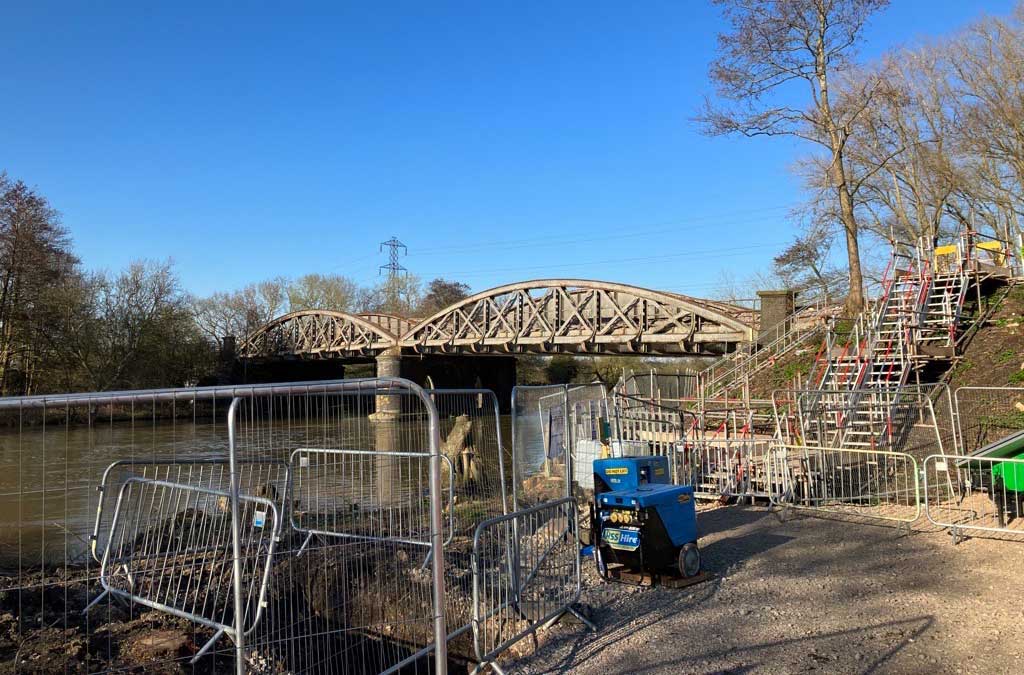
Media reports have claimed when the northern abutment was completely rebuilt with a brick structure in 1929, the abutment on the south bank remained largely unchanged since Victorian times as a cost cutting measure. Nearly 100 years later it looks like that decision has come back to haunt the railway.
However Network Rail says there was no fault in the bridge structure with the failure being in the ground beneath it – the material beneath the structure has been described as being “like porridge”. What caused that is not yet known but thank goodness it was discovered before a major incident occurred.

During the closure Chiltern Railways has strengthened its service between Oxford and Marylebone with longer trains, altered stopping patterns and two additional journeys.
Trains are expected to start running again from this Saturday 10th June so I popped along to take a look at what passengers have been facing with rail replacement services for the past couple of months.

Arriving at Didcot Parkway on the late running 10:31 GWR train from Paddington, I was initially concerned I’d miss the advertised connecting replacement bus/coach on the 11:20 departure but a fairly regular service was running with four journeys an hour taking 45 minutes.

I’d heard reports of chaotic scenes of insufficient buses and coaches for the number of passengers travelling and missed connections for onward travel at Oxford in the early days of the closure as well as a report of problems a couple of weeks ago, but I found a very efficient and easy to use facility and all went very smoothly.

The train manager had given a clear announcement on the Paddington to Bristol train as we pulled into Didcot Parkway and posters on the platform indicated where to go to catch the replacement services with coaches lined up in the area to the west of the bus station outside the entrance.

This has direct access down a ramp from the westbound platform and if it wasn’t obvious from the open door and side lockers and people sitting on the coach which one was leaving first …
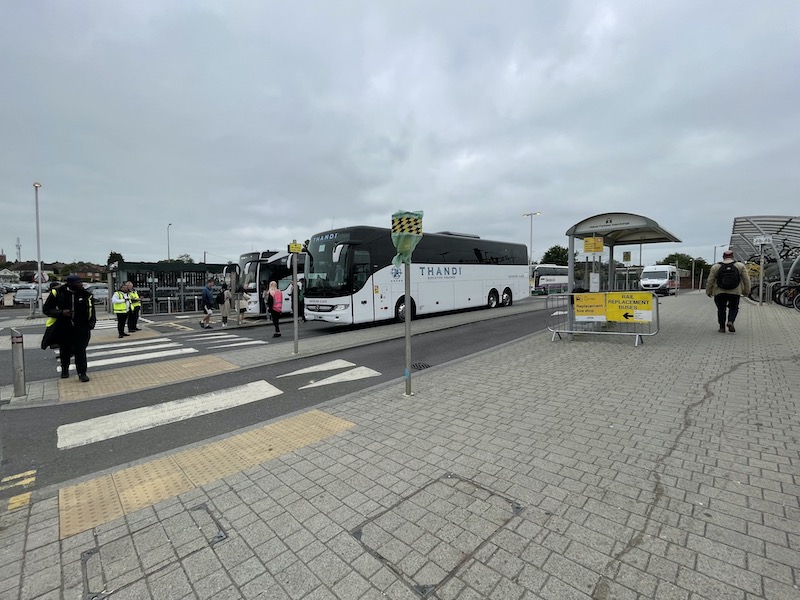
… high-vis wearing staff were on hand to point to the right coach.
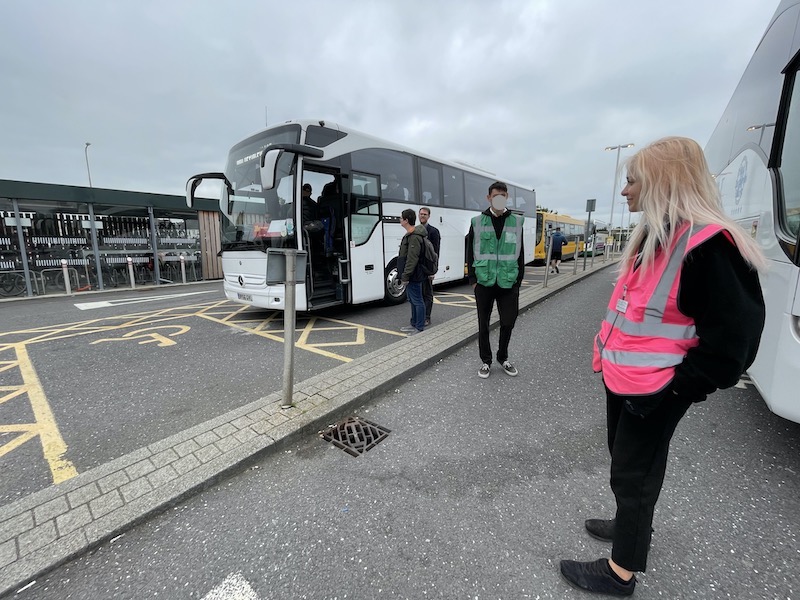
They were also assisting passengers with accessibility needs and luggage.

I’d missed the 11:20 departure and was expecting the next one to be at 11:40 as per journey planners but in the event we were all on board the coach with the driver shutting the door at 11:30 and we left having a good run via the A34 to Oxford, arriving just half an hour later at midday, rather than the scheduled 45 minutes, although I can believe it could take up to 45 minutes in peak times.
With Botley Road closed we took the A34 exit by the Redbridge Park & Ride site and then Old Abingdon Road, Abingdon Road and Thames Street to reach the long stay car park south of Oxford Station where half the car park has been requisitioned for a large parking area for buses and coaches to arrive, depart and layover.

It was good to see tickets were being vigorously checked of all passengers as we alighted from the coach …

… and I noticed passengers heading towards the boarding point also seemed to be having tickets checked.

Signage was again good showing which way to walk to the station taking the footbridge over the closed Botley Road and I noticed in the other direction there were also clear signs to where to catch a replacement service.

Inside the station encouragement was being given to use Chiltern Railways service to London Marylebone…

… as well as an explantion about the rail replacement service and details of ticket acceptance on Oxford Bus, Thames Travel and Stagecoach bus routes which was good to see.

It all came over as a well organised operation but I guess after nine weeks it should be running smoothly.

There were a whole variety of minibuses, buses and coaches in the parking area and there’s no doubt quite a fair number of operators must be pleased for the extra income this work has brought after the barren Covid years for coach operators. However, passengers will breath a sigh of relief when trains start running again on Saturday …. until next year when the line will close again for the Botley Road bridge to be replaced.
The only downside was passengers faced a lengthy walk to and from the southern half of the large car park which is furthest away from the station and where the temporary bus station had been set up.
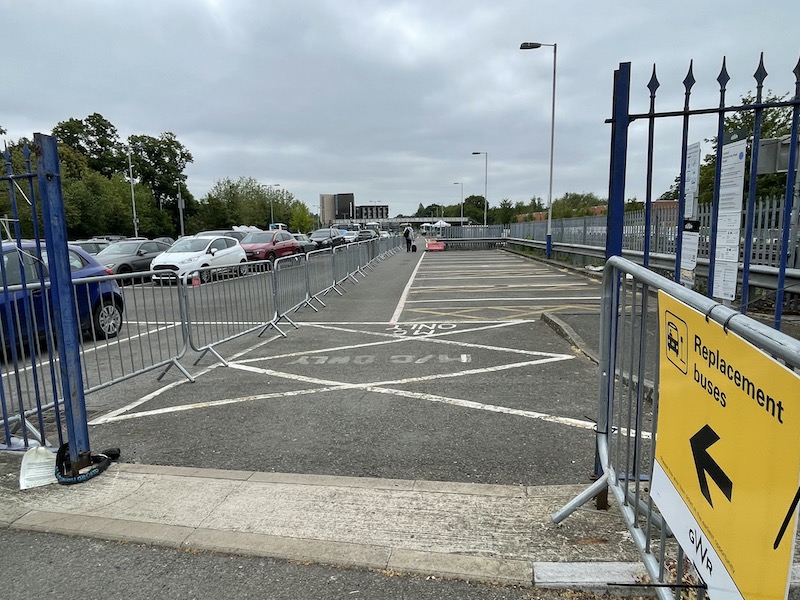
I guess this was due to the location of the suitable access point to and from the car park for large vehicles but it would have been nice if a way could be found to drop passengers off and pick them up closer to the station at the northern end of the car park.

I also took a look at the arrangements for Oxford Bus and Stagecoach passengers who use the many bus routes that are currently disrupted by the coincidental Botley Road closure and again it was pleasing to see excellent signage …
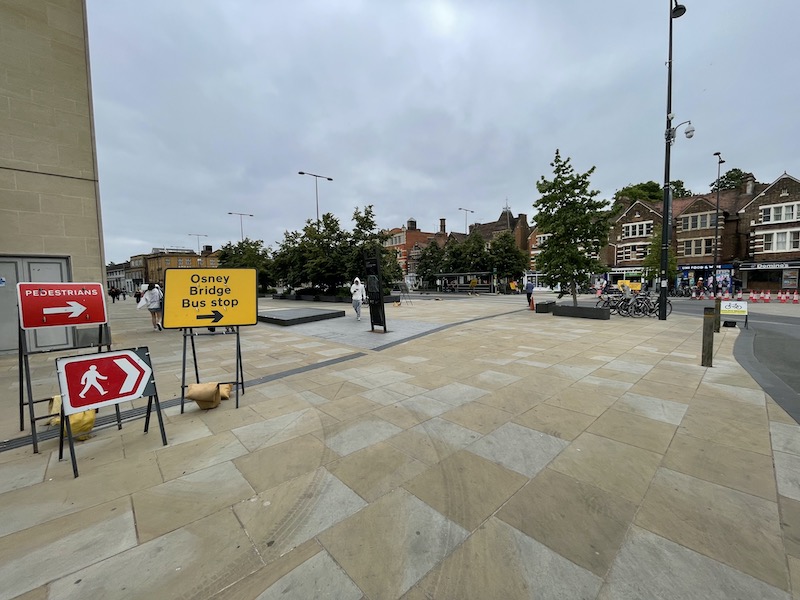
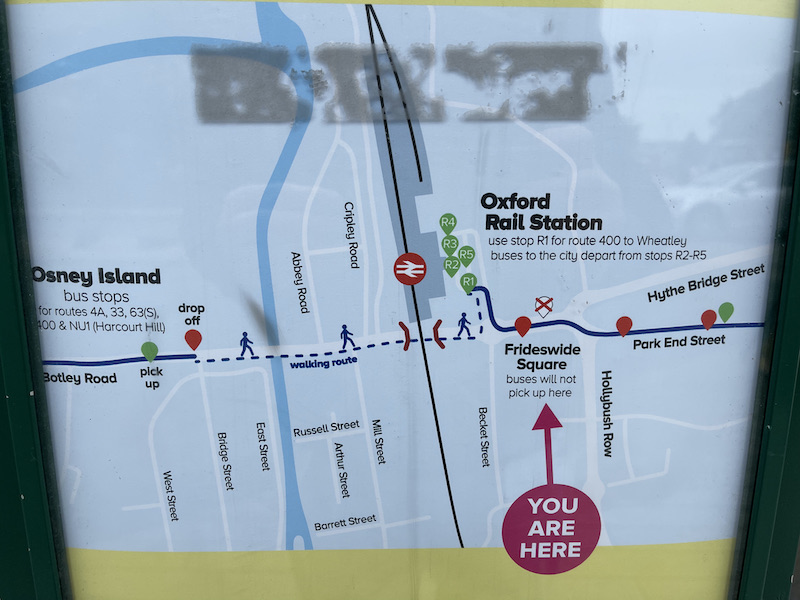
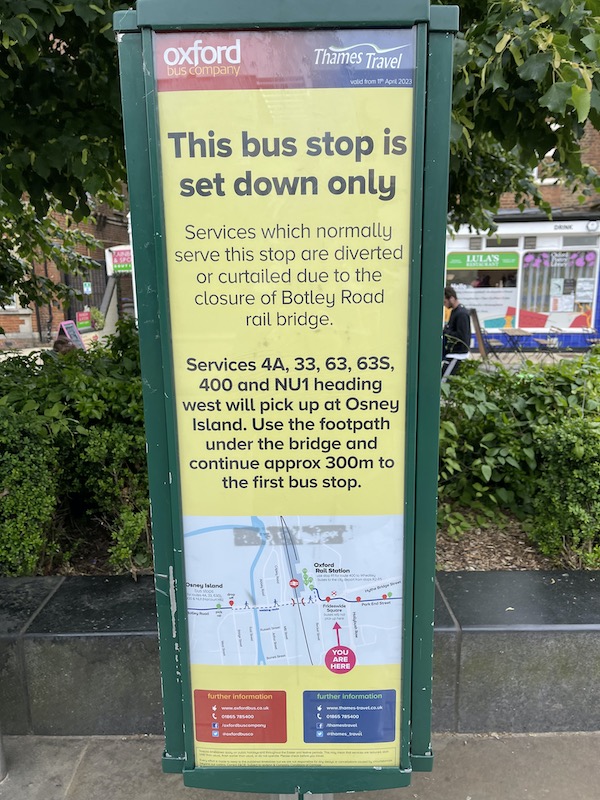

… and lots of high-vis wearing marshals to help travellers and keep them safe as they crossed roads and negotiated the footpaths and road crossing points.

I’d heard reports in the early days cyclists were ignoring the instructions to dismount and walk with their cycle on the narrow footpath tunnel under the bridge …

… and I’m pleased to say this was generally being very well enforced and anyone heading towards the bridge still on their bikes was asked to dismount, and if they did get past the marshals unobserved…

… the sheer narrowness of the footpath …
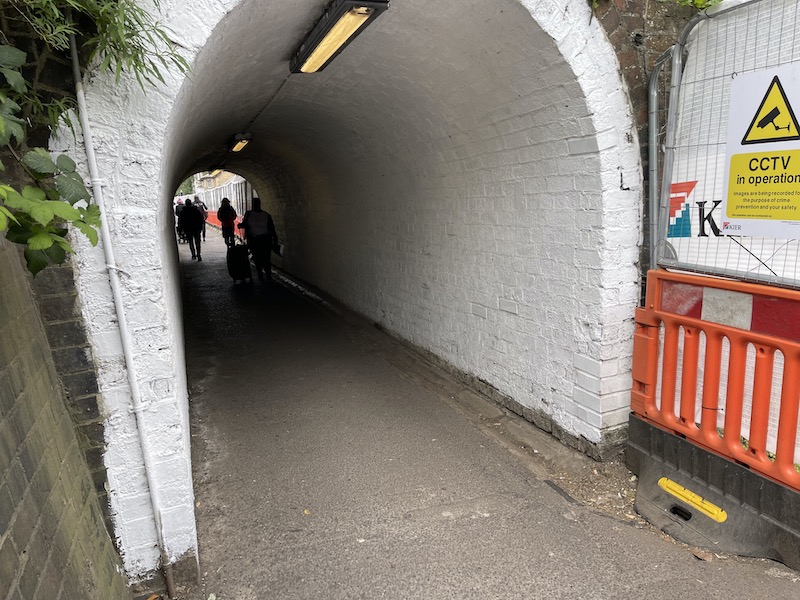
… and number of pedestrians forced them to dismount.

I thought it was a missed opportunity not to let pedestrians watch progress of the works as they walked along the footpath …
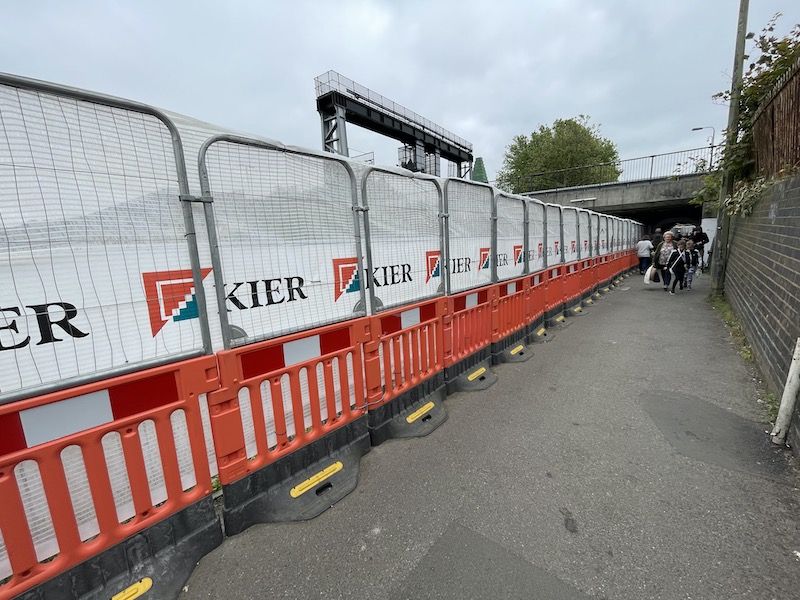
… but a view from the footbridge above from the car park to the station building was more informative of progress being made.


A temporary bus terminal point for laying over buses has been built on the west side of the bridge and a temporary bus stop has been added to supplement the first westbound stop where buses pick up again.

However, there’s no getting away from the fact it’s a long walk from the last stops on Botley Road, to the bridge, under the bridge and to either the station or then into the town centre – it’s at least seven minutes and for slow walkers ten minutes, to the station.


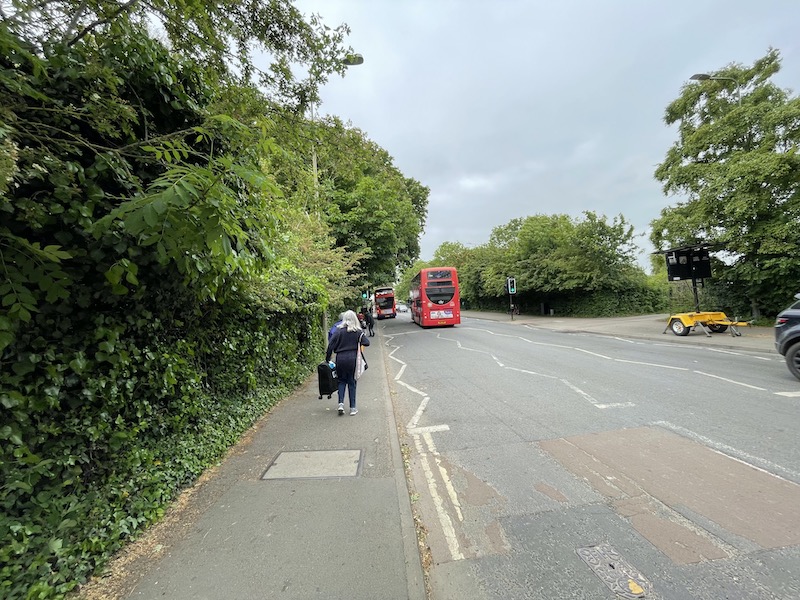
There’s 20 more weeks to go for these arrangements and then the same again next year. Hopefully it will all be worth it in the end with the improved rail services, facilities at the station and better footpath and cycle paths under the new bridge.
When it’s all finished at the end of next year it’ll be a welcome improvement for rail passengers including those arriving/leaving the station by bus but there’s nothing in it for bus passengers heading into the city centre or travelling elsewhere in Oxford who are suffering significant inconvenience during the continuing disruption. But they’ll certainly be pleased when it’s all over.
Roger French
Blogging timetable: 06:00 TThS
 BusAndTrainUser
Four hours since publication, and not a comment. Perhaps news of an efficient and well run operation doesn’t stir people – bad news sells!!
Picking up on the latter comments, the benefits aren’t to the bus user/operator directly. However, increasing the resilience of the railway infrastructure might make public transport per se more attractive, as well as cycling. Trying to reduce reliance on the car is something that Oxford has traditionally been good at, and if this helps, that’s got to be a good thing.
LikeLiked by 2 people
Would it make sense for Chiltern railways to offer a co-ordinated railway bus from Bicester into central Oxford while these works are ongoing, to relieve the pressure? (Train and ride instead of park and ride, so to speak)
LikeLike
Bicester to (for example) the Westgate shopping centre is nor directly affected by these works. As before, you can get a Stagecoach bus to George Street, and then walk (or get another bus for a short hop). Or a train, and then lots of buses to Westgate. Or, in theory (it would be annoying in practice) a train to Parkway and then a bus to George Street or Westgate or (which could be useful) the JR and Churchill hospitals.
LikeLike
Great post, thanks, good to see an objective review. Pity you didn’t have time to try the replacement bus serving Appleford Culham and Radley: an interesting, but lengthy, ride. At Radley, the Great Issue of Our Time has been that the drivers’ ‘Pace’ (I think they’re called?) notes tell them to use the normal bus stop in the road outside the station. And that’s where on-line live departure boards tell people to go. But the drivers actually choose to come into the station car park. I’m hoping this will be resolved in time for the total blockade of Oxford station from 29 July to 6 August, when Network Rail will be doing Big Things to the trackwork, in preparation for the -hyperbolically named – “East West” trains, actually from Oxford to Bletchley.
On a very minor point, I don’t agree that it would be good to encourage people to block the narrow path in order to loiter and view the works under the bridge. Pity you didn’t spot the unintelligible map and times on the panel for the joint OBC/Stagecoach service to Blackbird Leys: a dense list of every (theoretical) time, instead of a simple ‘then about every 5 minutes until … ‘ And OBC’s helpful diagram of stops wrongly crosses out the stop on the N side of Frideswide Square (R7). In fact, Stagecoach are using it for their (diverted) S1 to Carterton.
LikeLike
Good coverage – thankyou! Your 7 – 10 mins is something of a worst case scenario. I did it in 4 not long ago and 5 is pretty standard (and I am of pensionable age).
LikeLike
The diverted S1 service to Carterton is actually good news for a few people as in Cassington for example they now have a bus every 20 minutes. For most bus passengers however a bus timetable is now a work of fiction and buses just turn up when they can. Most roads in Oxford lack a bus lane so there is no escape from the congestion and no compensation for the many facing much longer journey times. It is a very good example of prioritising rail over bus and the worst affected haven’t got a station to use in the first place.
LikeLike
Carterton had a station once … Mind you, it wasn’t that close to the village centre.
LikeLike
When the original bridge at Oxford Station was replaced by the current one in 1979, it was done over a weekend (though it did over-run by a day).
LikeLike
Double deckers used to run under the bridge in the 1960s – I used them regularly – lowbridge type of bus of course. Do why could the road not have just been lowered by a few inches?
LikeLike
Sewers, pipes and utility services, I guess, Malcolm.
LikeLike
Roger – did you get a feel for why buses could not drop off and pick up in the temporary bus area to the west of the station? I assume lack of space?
Also, I wonder whether permanent bus stop facilities are being provided on the west side of the bridge to serve the new station entrance? It would seem a pity to have to walk to / from Osney Island or Frideswide Square when your bus goes right past the new entrance!
I saw some plans a while back for a much more comprehensive rebuild of the station involving a new bus station replacing the large car park currently being used for the Didcot rail replacement buses, and I think bus stops under a widened rail bridge for through routes. Any idea what’s happened to those plans?
LikeLike
I think you;’re right about the lack of space (and reversing manoeuvres etc) re not wanting passengers in the temporary bus area and a good point about the longer term facilities for the new western entrance for bus passengers. I don’t know any more info I’m afraid.
LikeLike
Another bit of local news for Oxford: Go-Ahead is buying Cotswold operator Pulham & Sons which will be operated as part of the Oxford business.
https://newsroom.go-ahead.com/news/go-ahead-expands-into-the-cotswolds-by-buying-pulham-sons
LikeLike