Tuesday 30th May 2023
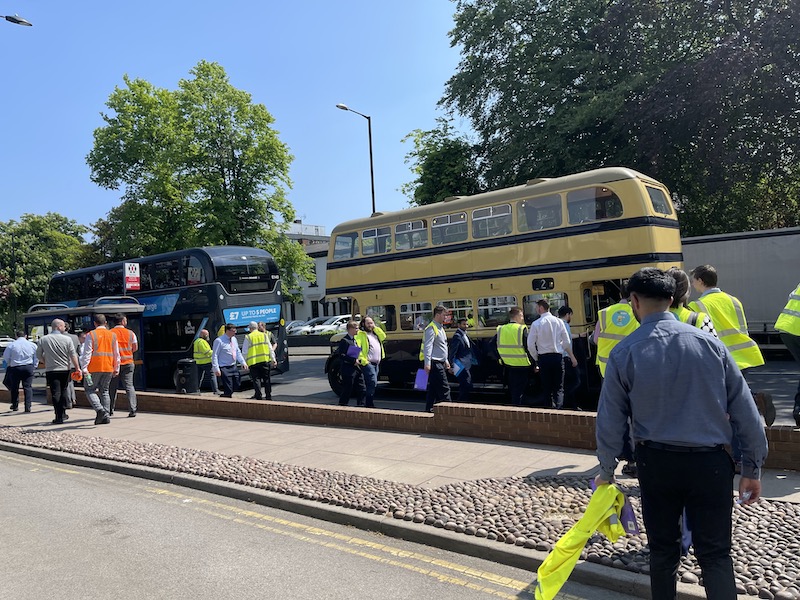
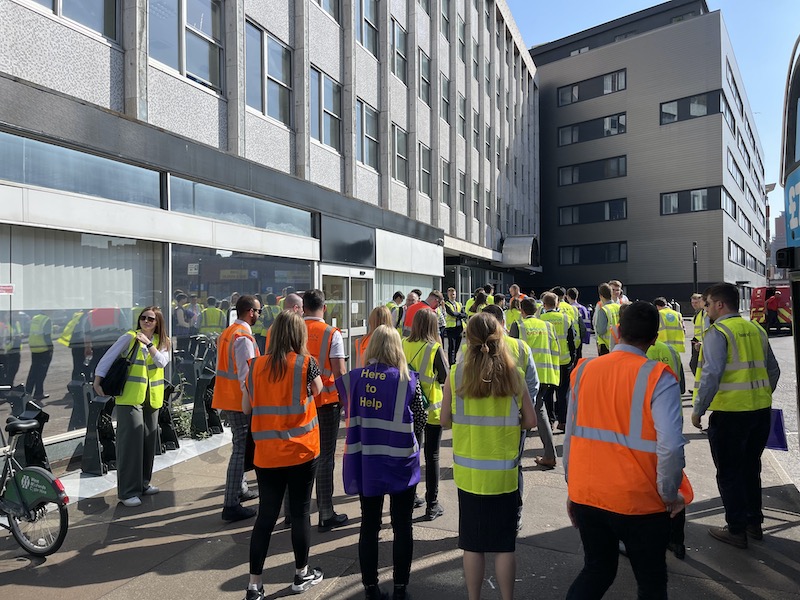
Last Wednesday and Thursday saw another successful Young Bus Managers’ conference which once again I had the pleasure to jointly host with Martijn Gilbert and imbibe the energy, enthusiasm and positivity not only of the attendees who came from a wide range of different size companies from all over the country and beyond (ie Ireland) but also our presenters and site visit hosts.
We were in the West Midlands and it was instructive to understand the contrast in how the vision for first class public transport is being pursued through a strong partnership alliance between the Combined Authority and bus and train operators compared with the franchising plans in Greater Manchester and Merseyside.

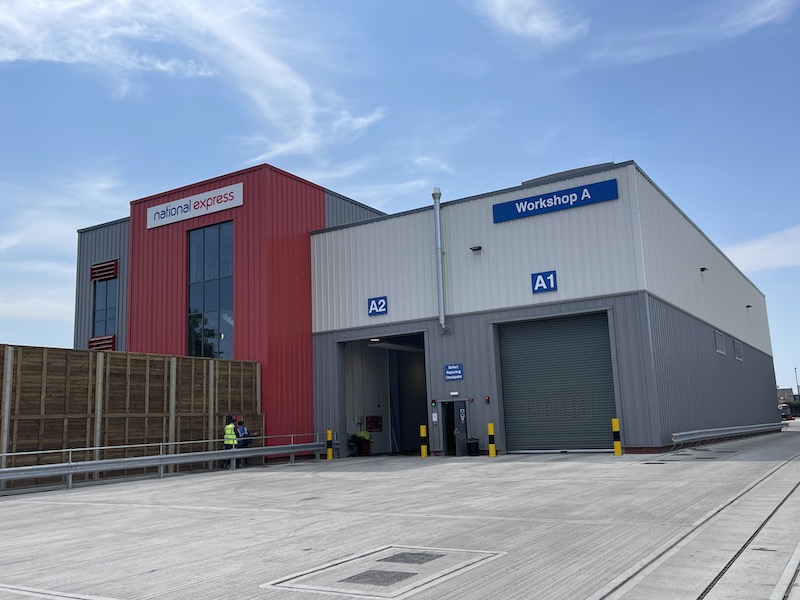
Wednesday afternoon was spent on a fascinating tour of National Express West Midlands’ new bus garage which opened at Perry Barr as recently as last December. And what a transformation from the old site just along the road.
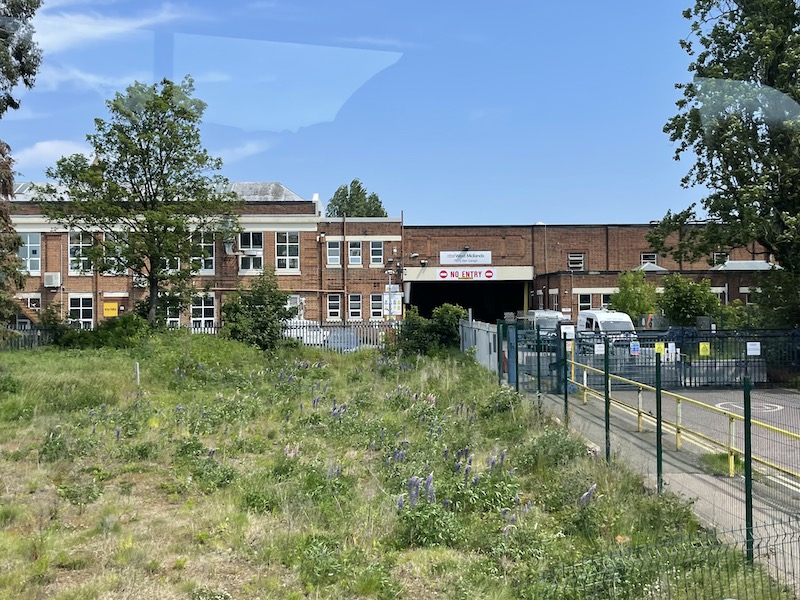
Looking round the impressive facilities it was obvious much thought had gone into the layout and how to make, what is a very large garage, work for everyone based there.
Barriers between supervisors and drivers have noticeably been removed.
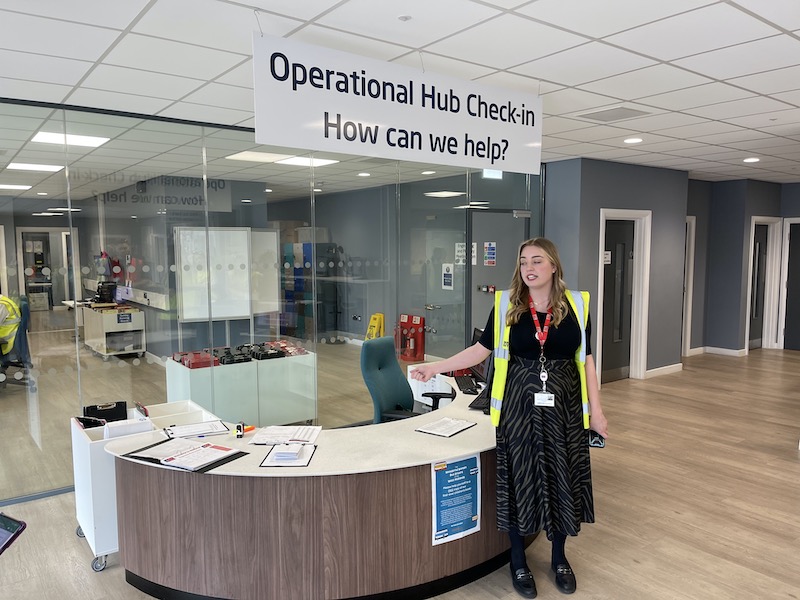
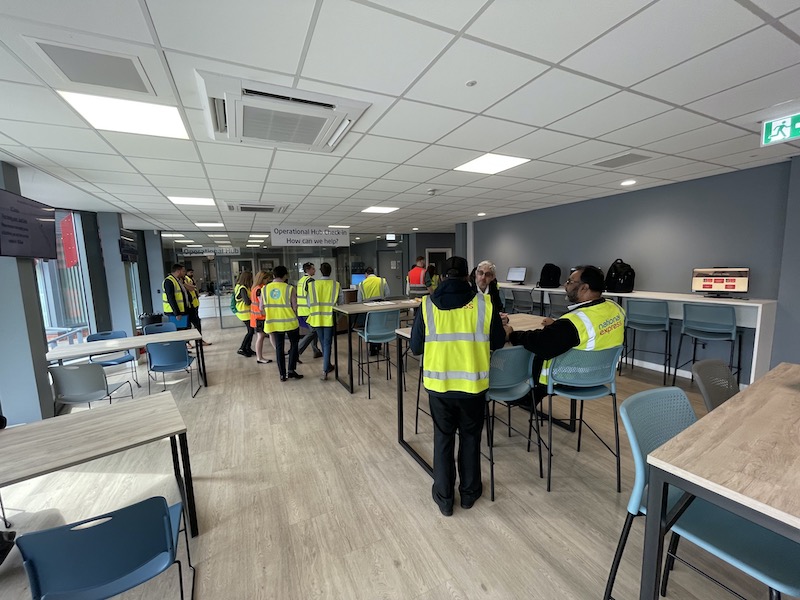
Signage is welcoming and informative.

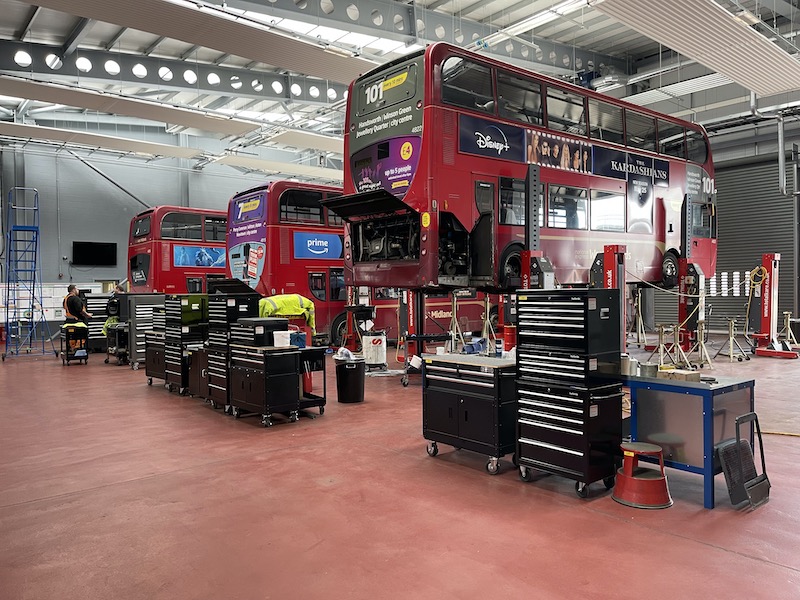
Engineers have facilities to be proud of …
… as well as an extensive recruitment and training resource for drivers including a driving simulator.

It even surpassed the First Bus bus garage I waxed lyrically about at Olive Grove, Sheffield which we visited during last October’s conference. Perry Barr is definitely the most impressive bus garage I’ve ever been in.

And you might be thinking so it should be, being not yet six months old, but what’s interesting is this investment by the private sector of eight figures has been made by a bus company with confidence for the future rather than over in Greater Manchester where the Combined Authority is taking over long standing dated bus garages or setting up new ones with public funds.
We’d taken a ride out to Perry Barr along some of the new bus priority measures installed for the Sprint project which is delivering enhanced bus priority measures along the A34/A45 corridor between Walsall, Birmingham and Solihull.
Articulated buses, either hydrogen or electric powered, are yet to be ordered for the project and will be delivered in 2025 but meantime NatExWM is taking advantage of the new measures on its existing services. 22% quicker journeys are being achieved leading to a 16% increase in passengers.
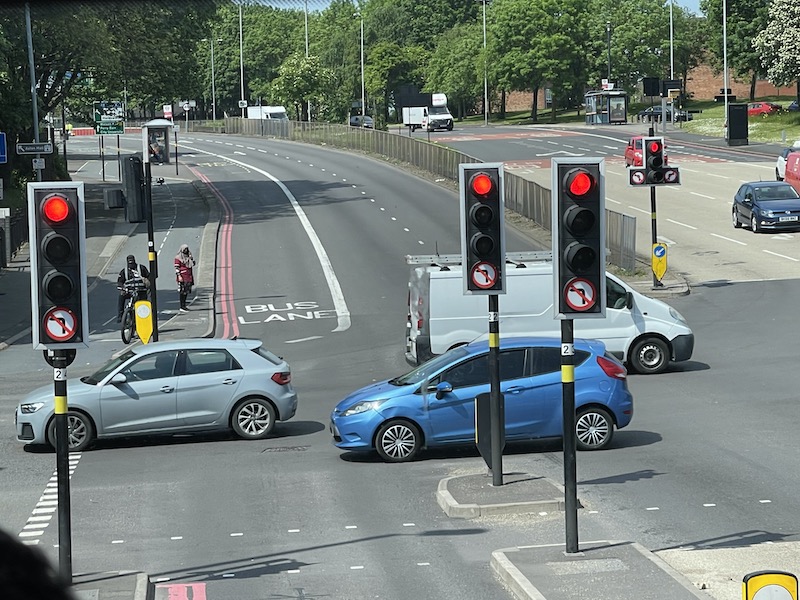
We ended the afternoon with a visit to the Regional Traffic Coordination Centre where staff from the Combined Authority use CCTV and other monitoring technology to get the best out of the existing road and rail networks. NatExWM has staff based in the control room along with colleagues from other partner organisations.
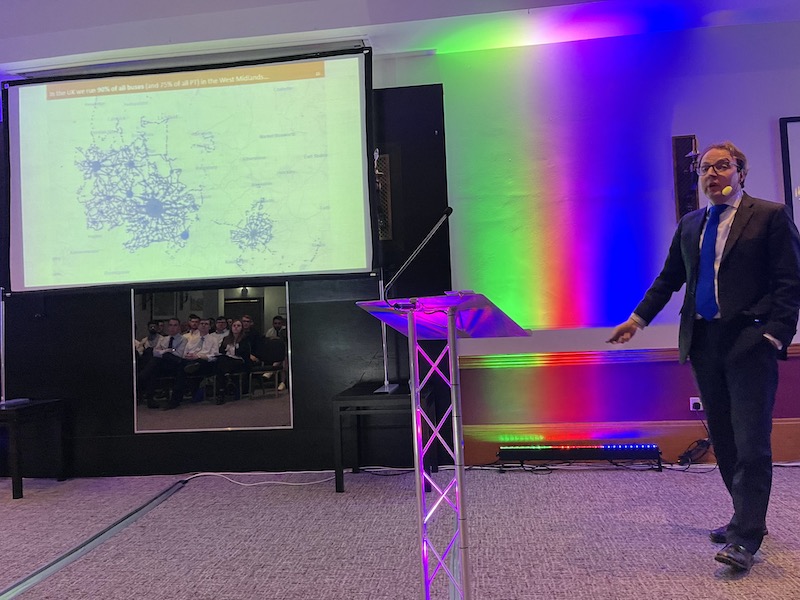
David Bradford, NatExWM’s managing director, kicked off Thursday’s session with an upbeat look at the outlook for buses in the region, but he didn’t sugar coat the tremendous challenges the company faces, not least rising costs (a recent six day strike by drivers secured a 21% pay deal as well as increased prices of fuel, energy and parts) while post Covid revenue is static mainly due to a sluggish return from concessionary passengers but thankfully fare payers are back towards 100% pre Covid.
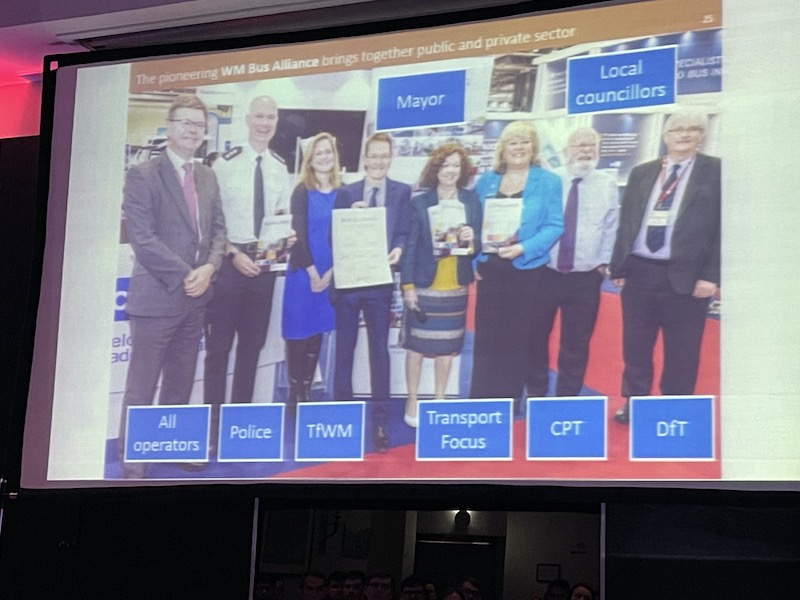
David emphasised the importance of partnership working through the now well established Alliance …
… and also set out an ambitious programme of fleet investment in zero emission buses with 29 electric buses already operating, 20 hydrogen buses arrived and 176 electric buses on order for Coventry as part of the Government’s plans to make both that city and Oxford all electric.

The company is bidding for Government funding to buy a further 124 hydrogen buses for Walsall and has committed itself to buy 300 more electric buses without any Government funds so that half its fleet will be electric or hydrogen powered within two years.
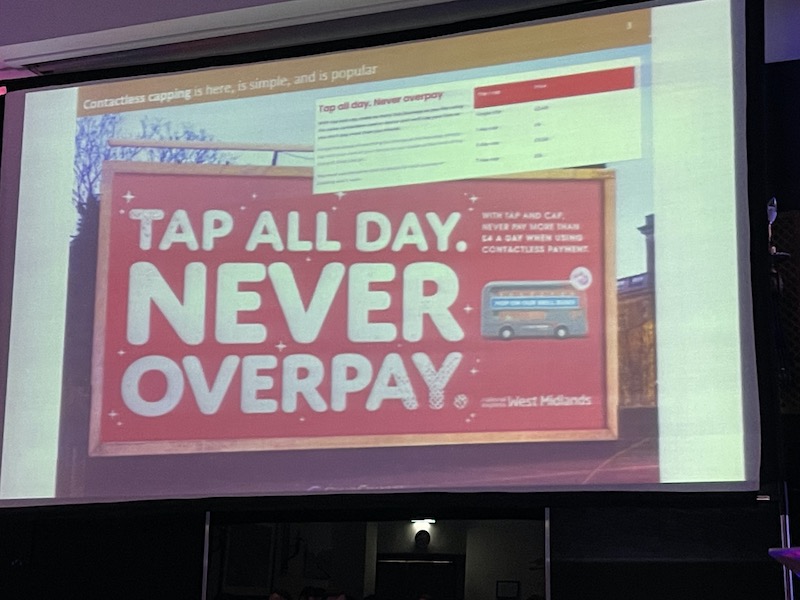
David explained the company had been making travel cheaper way before the Government’s £2 fare cap. To encourage passengers back post Covid, fares were cut by an average 6% in July 2021 leading to 9% growth in numbers travelling and a saving of £250 a year for regular commuters. Now passengers were enjoying the benefit of tap and cap across the network.
Coming very soon is a revolutionary change to ticketing in the conurbation with an all operator ticket priced the same as the hitherto NatExWM’s own ticket price. This is a risky strategy for the company but it’s hoped the simplicity of the one ticket all operators deal at a great price will attract growth in passenger numbers. I’m sure it will and the risk will be rewarded.
It’s fascinating to compare the scale of public funding supporting the West Midlands and Greater Manchester networks. David explained the number of bus trips are 38% higher in the former with funding on tendered bus routes a third of that spent in the latter.

But the challenge for the future is starkly illustrated by David’s analysis showing that while revenue is 93% of pre Covid, costs are now running at 125%. He described “the economics are brutal”. But the positive outlook comes from a Mayor and Combined Authority working with private bus companies delivering “England’s cheapest fares, a network serving every part of the region, half the fleet electric or hydrogen by 2025 and a zero emissions cross city network”.
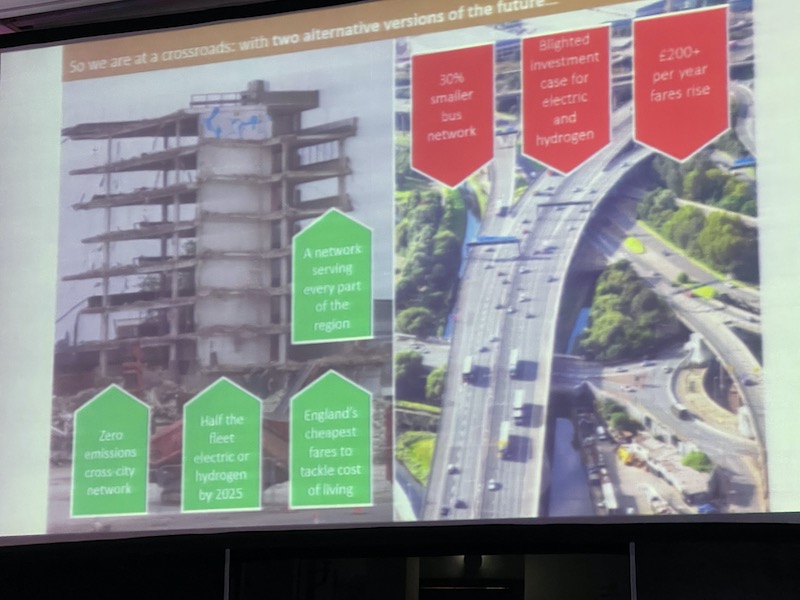
I couldn’t help concluding having seen and heard all that we had … never mind the myth of “London style buses”; what politicians elsewhere should be demanding is “West Midlands style buses”.
The previous evening we heard from Martin Dean, Go-Ahead Group’s UK regional bus managing director who gave a wide ranging insight into how the Group is reacting to the way the bus industry is evolving not least its upcoming expansion with tender wins in Greater Manchester including recent temporary contracts for routes being handed back by Diamond which, as Martin pointed out, helps Go-Ahead gradually build up its expanding staff position ready for September when the new service contracts start.
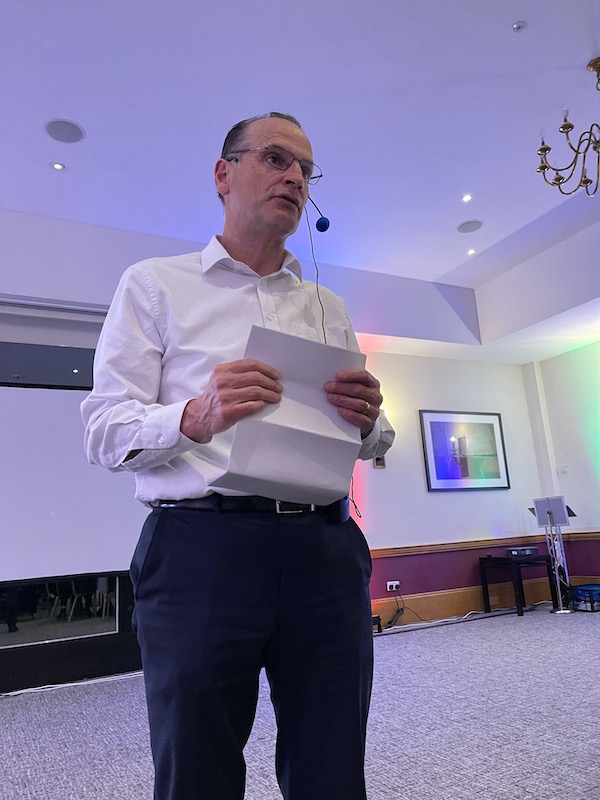
Martin also explained how the Group had expanded from its UK north east origins taking in coastal locations as well as in Oxford and the Chilterns.
As is traditional we also heard from two young managers themselves and this time Matt Davis and Oscar Taylor both currently studying Transport Management at Aston University gave excellent presentations about their industry placements as part of their studies as well as other industry experiences.

Matt completes his degree course this summer and has secured a job at NatExWM where he also undertook his year’s placement including gaining great experience from being involved in the successful transport arrangements laid on for last year’s Commonwealth Games.
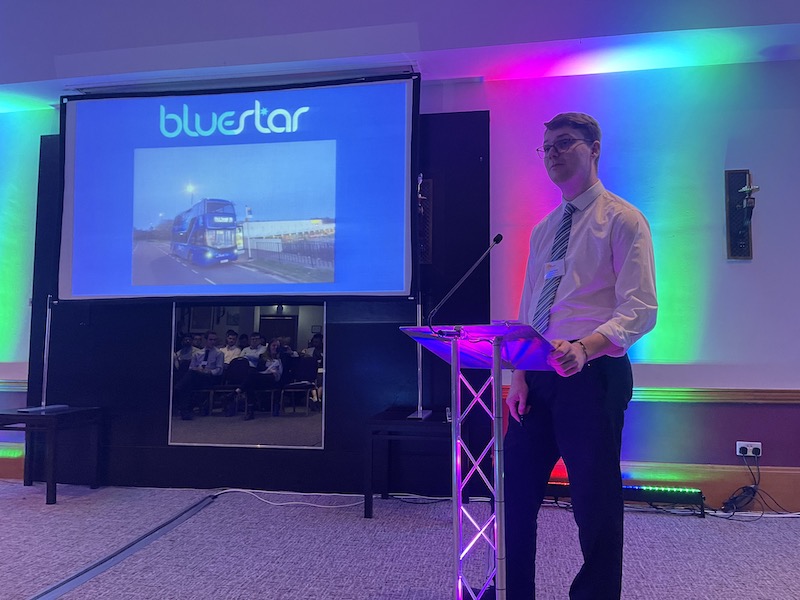
Oscar is currently on his placement year at Bluestar and Unilink at Southampton where there’s been no shortage of opportunities to get ‘hands on experience’ with the recent takeover of former First Bus routes in the city and the even more recent move into that operator’s former bus garage.
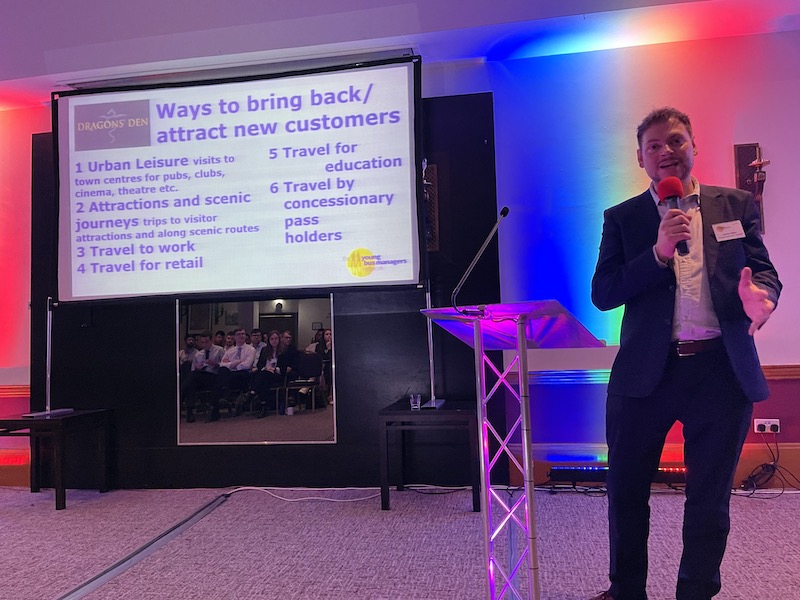
From mid morning to after lunch it’s also now traditional for the conference to break into smaller groups to come up with ideas to deal with an industry issue. This time we asked delegates to come up with suggestions to get those pre-Covid numbers back up again across various market segments.
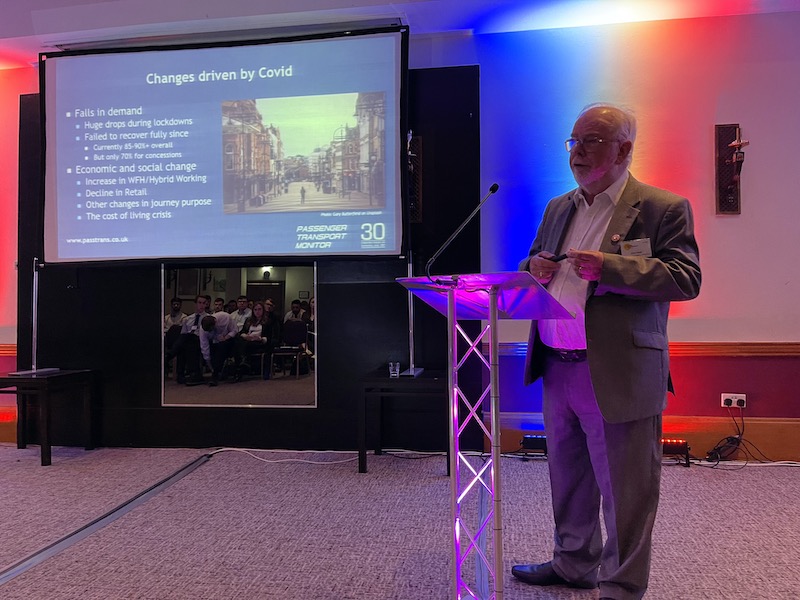
Industry veteran Chris Cheek from Passenger Transport Intelligence (a regular at our conferences) ably set the scene by explaining the latest trends available from official DfT statistics and the National Travel Survey as well as his fascinating insight into future possibilities.
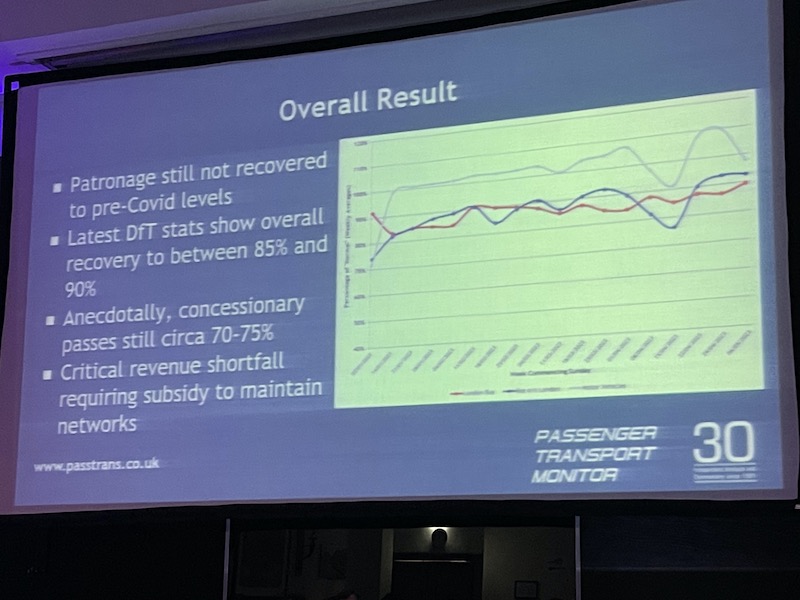

As Chris always reminds us, if the Government’s Net Zero targets – enshrined in law – are to be achieved involving modal shift away from car use (as well as reduced travel volumes), the bus industry has a very bright future. He points out that just a 1% shift from car to bus means a 26.9% increase in bus passengers.

As always our keen enthusiastic young attendees didn’t disappoint and after an hour’s deliberations in groups….
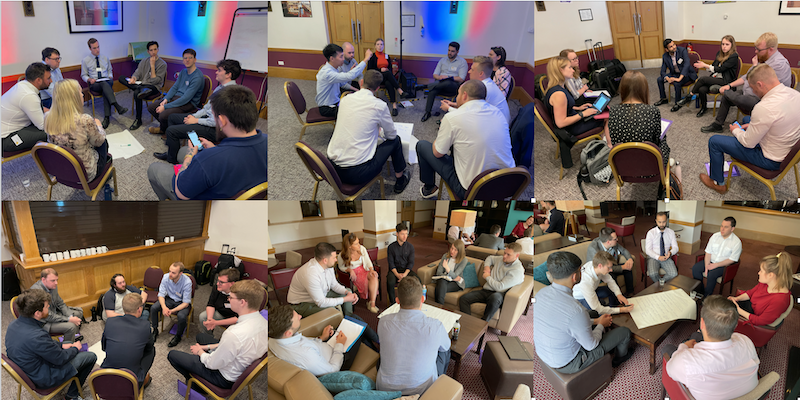
…. came up with a wealth of ideas which I’ve summarised in a list of headings at the end of this blog. Six volunteers explained the rationale behind the suggestions from each group and….
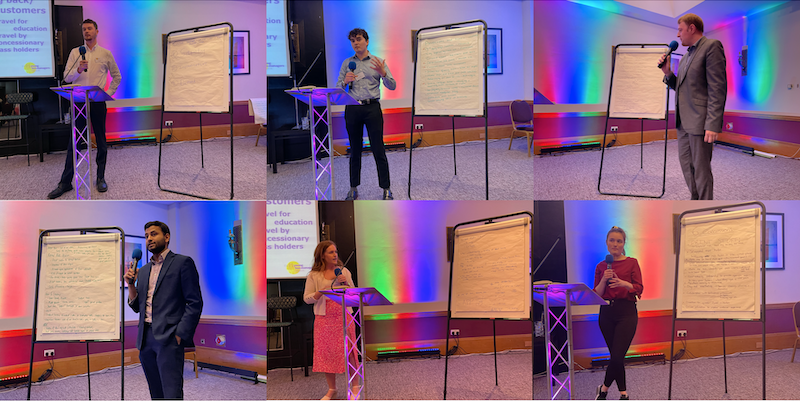
… these were assessed and commented on by our expert panel which along with Chris included Dawn Badminton-Capps from Bus Users and John Birtwistle from First Bus.
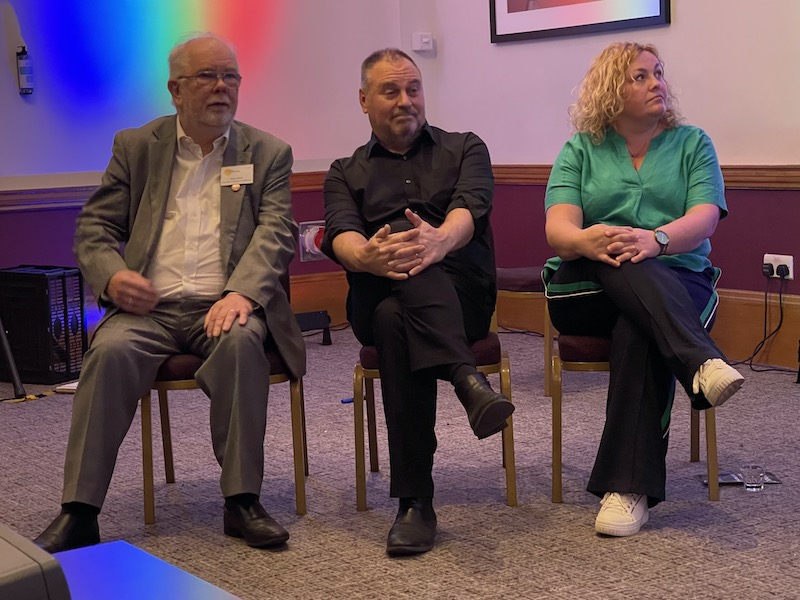
John was also next up on our agenda to explain the background and current status of the MultiCAV Project which includes the autonomous bus trial based on Milton Park in Oxfordshire (which I blogged about in March). In an exciting development the trial begins phase two next Monday when the bus will provide a public service linking Milton Park with nearby Didcot rail station using ordinary roads while in autonomous mode.

This will be followed by phase three in July when the trial will feature a full size bus rather than the existing midi size one. As you can imagine John’s presentation led to a large number of questions from delegates who will surely see much more use of autonomous technology during their long careers in the many years ahead.
And then we came to our conference climax, being a presentation from Peter and Ross Newman who I’d asked to come along and share the wisdom they’d gained over a lifetime of dedicated work at the award winning and hugely respected Ensignbus, recently sold to First Bus.

Peter explained they don’t really do scripted presentations and they didn’t this time. Instead both spoke from the heart of lessons learned and experience gained to pass on to our young audience in the early stages of their careers. It was a stunning performance with rapt attention from all attending.
Peter’s top tips for a successful bus company are all very simple and eminently achievable. He pointed out the benefits of running earlier in the mornings and later in the evenings recalling when Ensignbus first took over the network in Grays it inherited an 07:00-19:00 operation. Now there are journeys as early as 04:30 and as late as 01:00 reflecting changing travel patterns not least fulfilment warehouses and other shift workers. Allied to this Peter emphasised the importance of reliability. Other than the disruption caused by Dartford Crossing issues it was unheard of for Ensignbus to experience lost mileage. It just wouldn’t happen.
Secondly Peter explained how important it is to talk to drivers. Listen to their suggestions and ideas. They live in the community and are aware of changes that can be made to improve things. “They’re the eyes and ears of the company”, Peter pointed out.
His third point was: spreadsheets are about history. They won’t tell you what’s coming or what you’re missing. “Look forward by going out and about; drive or ride buses on early shifts; see where people are walking; where there are new opportunities to tap into”. As well as a restricted operating day the Grays network Ensignbus inherited had hourly frequencies which the Newmans have built up to every 10-15 minutes on the best routes as a consequence of keeping alive to changes in the market and tapping into them.
Fourthly Peter emphasised the importance of a printed timetable book widely distributed to hospitals, schools and libraries as well as available on every bus. “Make it colourful” he said noting Ensignbus distributed 20,000 copies of its book each time.
Peter’s fifth point was to ensure any changes to services are well communicated. “Flood the area with timetables – house to house. We don’t sell ourselves enough as an industry. Use Twitter and use humour in it too”.
Having shared those five points Peter concluded with his three biggest annoyances. Hearing that buses are not able to run due to badly parked cars: “this should never happen as bus companies need to be active in getting this sorted by the police. If a bus can’t get through neither can a fire engine”.
Next annoyance was hearing buses can’t run due to trees being too low. “Council’s have an obligation to provide free transit up to 15 feet high” Peter said, and bus companies must aggressively pursue this “issuing a court summons if necessary to get councils to act”.
And finally when buses can’t run due to no driver available. “We never cancelled a bus due to no driver” Peter proudly concluded.
Ross echoed Peter’s messages adding the benefit of driving buses in service yourselves from time to time to get hands on experience as well as having an approach to helping staff so they’ll help you when you might need it. He emphasised the importance of a smart uniform for drivers and also pointed out the busiest days of the year for Ensignbus had been Christmas Day (at the time the company ran sightseeing tours) and Boxing Day – demonstrating there are markets to be served and exploited.
Peter and Ross fielded many questions especially from those working for the big corporate Group owned bus companies wondering how they could adapt and adopt the Ensignbus approach to service development and staff management.
It was a great exchange of wisdom and experience from two undoubted legends of the industry to those just starting out on their careers.
Which is what the Young Bus Managers Network is all about.
Roger French
Blogging timetable: 06:00 TThS
How to get more passengers back post Covid.
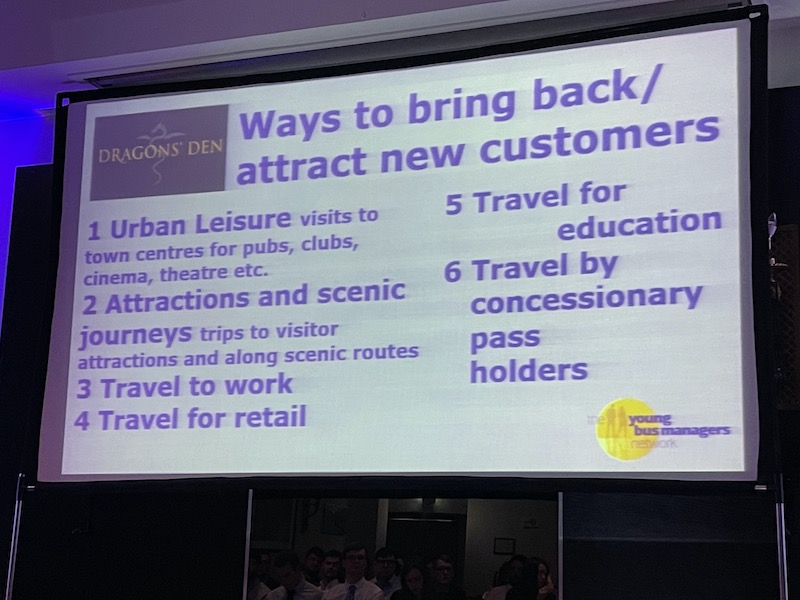
Urban Leisure Travel … improve the perception of safety; improve infrastructure at bus stops, work with destinations to encourage an increase in demand
Attractions and scenic journeys … use influencers on third party blogs; expand open tops/sightseeing offers; work with curators of events eg pub tours/food tours; work with destinations and collaborate with attractions; increase the quality of buses; more bikes on buses for active travel encouragement; multi-lingual advertising of bus services; promote scenic locations on a route.
Travel to work … work with employers on large sites eg Amazon to run bus services to suit shift times etc; encourage salary sacrifice for bus seasons tickets; suggest car scrappage schemes in return for reduced bus ticket prices; one month free travel for employees changing or starting new job; consider scope for more Park & Ride schemes for employees; make driving to work/parking more difficult; parking for work should never be cheaper than taking the bus,
Travel for retail … introduce better access for buses in retail parks; direct routes to retail parks; review locations of bus stops so they’re optimised for shoppers; work with retailers to offer discounts to bus users; bus ticket pricing
Travel for education … target markets – primary and college – encourage more primary school children to school by bus; and use apps and promotions to encourage students.
Travel by concessions … PRINT STUFF – don’t rely on having it online; have staffed information hubs; make the on board experience feel good; make the bus usable for all users – accessibility; have a user pack for new concessionary pass holders; market days out by bus and collaborate with destination attractions – discounts/offers etc; direct to quieter travel times; improve reactions with drivers through training.
 BusAndTrainUser
Brum has the best bus service in England with two major operators providing a comprehensive commercial network working in partnership with a very pro active transport authority and its visionary leader.
LikeLiked by 1 person
Meanwhile in Kent Arriva have announced yet another round of cuts from July. One has to question for how much longer will they be around in Kent ?
The changes can only further reduce passenger numbers
Services 8, 55, 79 and 334 will all be withdrawn (Chalkwell will take over the 334)
School bus on 9 to serve Downswood and Madginford and will no longer serve Bearsted (Downswood and Madginford will leave approx. 30mins earlier than current timetable and will have a longer running time after school time pick-up)
School bus on 4 to cease, to be replaced by 9
Service 5 to no longer serve Sandhurst and terminate at Hawkhurst Moor
Some early evening journeys on Service 5 will no longer run
Some early evening journeys on Service 5 will no longer run
Revised timetable on 71 to improve punctuality
Sunday 71 frequency reduced from 30 mins to hourly
Some school time, peak Service 71 journeys will continue along Malling road to improve reliability
72 new routing in Kings Hill
85 Monday – Saturday frequency reduces from 12 to 15. Sunday reduces 20 to 30
82 Saturday frequency reduces 12 to 15. Sunday from 20 to 30
89 Sunday frequency reduces from 30 to 60
Service 642 no longer serves Langley Heath
LikeLike
Interesting to see that Young Bus Managers believe that to encourage travel by bus, information should continue to be printed and not rely on online provision.
LikeLike
I agree but not just for the concession market. I work in a frontline, customer facing role in a major tourist city and deal with hundreds of visitors on a daily basis, both domestic and from overseas, young and old alike. Apart from the most asked question I face (“where does the airport bus leave from?”), the second is “do you have a timetable/schedule for buses to (insert tourist attraction/place of interest)”.
Following on from Peter Newman’s wise words, perhaps what is needed is an Old Bus Managers event hosted by the Young Bus Managers in order to ensure bad habits are eradicated from the industry?
LikeLiked by 1 person
No printed bus information available anywhere in Torbay. Unbelievable. Or perhaps not, unfortunately.
LikeLike
Another interesting article Roger. Good to see the real journey time savings that will benefit buses in the WM and the fact that bus patronage is almost back to pre- COVID levels. Also that fares represent good value for money. Contrast that with the rapid decline in inner London with slow speeds, constant regulation for timekeeping (why don’t they have differential scheduling) and the lack of any marketing of the bus network. The removal of bus lanes on key . corridors for cycle lanes hasn’t helped either. Your article clearly shows that London is no longer an exemplar for it’s bus network – just managing decline. Apart from the electrification of it’s fleet what else can London”s Mayor boast about ?Perhaps he should make a trip to the West Midlands too ? He might learn something.
LikeLike
Bus patronage in The Black Country is still under pre Covid-19 levels but on many of the BCT trunks such as 11 74 82 87 its actually ahead of Pre Covid-19 levels. Not sure what NXWM Chief Executive was on about the Bonfire of Tickets has been postponed indefinitely & its ridiculous to say TfWM tickets will be priced at NXWM levels as a massive fare rise has been approved for next month on both NXWM & Diamond on thier own tickets.
LikeLike
Not sure what David Bradford was on about now that the proposed Bonfire Of The Tickets has now been postponed indefinitely by TfWM; perhaps no one has told him; mind you its not good when your MD . in addition his statement that fares and passes are to be held at current levels by NXWM is totally wrong as fares across Diamond Bus & National Express West Midlands network are rising by 16% next month as signed off by TfWM. Does he not know what his own company is actually doing?
LikeLike
Yes, I see TfL operators only adopt one of Peter Newman’s best practice suggestions – running early morning and late into the evening. Whilst London continues to account for around 50% of journeys in England it will always have an undue influence on perceptions of the way forward which are gnerally driven by the politicians i.e. franchising and moving to electric. No word on addressing congestion although the ULEZ consultation actually mentions road user charging so the mayor deserves some credit. On the other hand the X183 consultation says nothing about bus priority…..
LikeLiked by 1 person
Looking at the trends in the stats, which start from 2009/10. The West Midlands ridership figures in the presentation are for 2018/19. They had declined by 16% over those nine years. London’s had fallen by 6% over the same period.
Other comparisons – even with the strings attached to Covid bailout by government, London’s fare is £1.75 for any distance, including interchanging for up to an hour. Children (who, let’s face it, generally aren’t earning money) are not charged at all (although older children will need a Zip card). How does that compare with the West Midlands?
LikeLike
16 – 19 year olds can apply for a TfWM Swift Card that allows them to travel for £2 per day on the bus with full time education and training extensions up to the age of of 21 with the TfWM Workwise Concessionary kicking in at 21 thanks to Andy Street CBE Mayoir of West Midlands Combined Authority & lead of Transport of West Midlands.
LikeLike
In the West Midlands you can travel all day for £3 or £4 if you visit the City Centre resulting in the lowest overall Metropolitan fares in England. If you just travel on Diamond Bus commercial services its just £2.85 all day great value given the network in Sandwell.
LikeLike
London’s transport system is very heavily subsidised! But this country is going to have to painfully relearn the lesson that the answer to all problems is not to increase public spending yet further. Record national debt, record tax levels etc…..
LikeLike
1. Surprise, surprise, DRT was not suggested by the young managers as a solution!
2. Did Arriva send any young managers from Kent – it seems as though Arriva could learn a thing or two from the young managers!
LikeLiked by 1 person
Providing Greta Thunberg’s dire predictions c2030 get delayed, (irritating girl that she is, but broadly spot-on as to our fate), it will be very interesting to be around in ten years time and compare the route taken by West Midlands to the alternatives in Manchester and Liverpool. Just don’t tell the unfortunate Ratepayers in the latter about how lucky the former are!
And YES! It is high time bus companies took a very strong line with local Councils who seem to have forgotten their tree height responsibilities.
Always faintly amused by the “surprise” that Concessionary pass holders “have not returned in the numbers expected”. Firstly, many died, and secondly, the age has been gradually and rightly raised to proper retirement age. Thirdly, shopping habits also changed for this class, now many enjoying home deliveries. So why the surprise? For many years Pass holders in this category were derided as “free-wheeling”, making unnecessary journeys etc., but now apparently causing concern as travelling less!!
How times and attitudes have changed.
LikeLike
Transport for West Midlands is currently evaluating Bus Franchising similar to the Manchester model for delivery if required after next May’s Mayoral Elections . The proposals are now at an advanced stage at Centro House
LikeLike
Oh, no!
Not the Greater Manchester franchise model that holds the failing London bus network up as best practice.
As you state in the very first comment, Brum already has the best bus service in England. Why ruin things when things appear rosy as they are?
LikeLike
Ratepayers? I think you’re stuck in the past!
LikeLike
Martin W: London route contracts specify a minimum “excess waiting time” between buses, so a route scheduled at every 10 minutes will probably have a “window” of 1.2 minutes either side of the timings, and that is measured at EVERY timing point, of which there is one every 7-8 minutes on average.
If that metric is missed, then penalties accrue.
Controllers will do everything in their power to run their service to meet targets, NOT to assist passengers.
That is why London buses are so slow and wait time “to even out the service”.
Profit margins on London contracts are now so low that every penny counts …
LikeLike
Could the success of NatEx West Midlands also be due to it surviving privatisation intact. Whereas GM Buses was forced to be split into north and south with each going to different buyers. One of these was competent, the other not so.
There was also an horrendous bus war in Manchester with massive over bussing and a plethora of low quality operators. These factors would have undermined the usefulness of Buses to the public due to the resulting network instability, and fragmententation.
LikeLiked by 1 person
I think that is exactly right. NXWM (should it not be NEWM?) came through deregulation quite strongly, with a few low points, and were in a strong position to invest heavily in new vehicles. They do operate early morning and late evening across the network too.
As a result of being such a dominant operator, there are very few low quality competitors in the market.
Manchester on the other hand became a hotbed of competition and First did not succeed there. Stagecoach seem to be providing decent quality operations but there is a lot less quality to the north of Manchester.
So the fact that one area has a good bus offer does not mean that de-regulation is a panacea. On the other hand, people travelling on London buses regularly would not regard that as a panacea either.
LikeLiked by 1 person
Interestingly compared to Manchester after D – DAY WEST MIDLANDS TRAVEL LIMITED biggest lowest entry rival began on the 27th October 1986 & continues 37 years later sucessfully as Diamond Bus. .
LikeLike
Interesting to compare the figures for West Midlands with those for Greater Manchester. Those appear to be the DfT stats for 2018/19, the last full year before the start of the Covid pandemic. The dataset goes back to 2009/10.
The 2009/10 figures are:
West Midlands – 313 million
Greater Manchester – 220 million
So, West Midlands lost 51 million passenger journeys (16%) over the following nine years, while Greater Manchester lost 31 million (14%) over the same period. The two counties (or “city regions”, as they now seem to be called) have very similar population sizes, thus bus ridership in Greater Manchester has been at a lower level than the West Midlands for a long time.
I’m not sure what conclusions (if any) you can draw from that. But with patronage falling at a marginally faster rate in the West Midlands, this does little to support any conclusion that the West Midlands approach is more successful that that not yet introduced in Greater Manchester.
LikeLike
As ever a post completely fails to understand Brums bus market. Bus use in the WMCA is now more localised. The fall in bus patronage before Covid-19 in the West Midlands is explained quite simply. The massive investment by Centro in local rail saw the Stourbridge line increase from half hourly to up to 6 trains per hour. The Cross City line from Lichfield to Redditch was electrified with up to 6 trains per hour. Walsall to Cannock was reopened with up to 4 trains per hr from Brum. Solihull went also up to 6 trains per hr with the Stratford line. With the launch of the Centrocard there was a massive multi modal switch from Bus to Train and of course there was also the Metro……..
LikeLike
Unlike the pathetic attempts in Manchester by GMPTE . Centro really tried to work with West Midlands Travel Limited, The Birmingham Coach Company, Midland Red West , Petes Travel & Central Trains to produce a coordinated network & with its Busmaster and Centrocards it did a good job with the tools it had.
Now Transport for West Midlands has the devolved legislative powers with the Mayoral System and the WMCA and is building a fully intergrated network of train bus & LIGHT RAiL & in the final period & not published on the orders of HM GOVERNMENT before 23rd March 2020 bus patronage was again in the West Midlands Combined Authority at record levels…
LikeLike
Of those rail improvements you list, how many were done since 2009 (which is the period that I referred to with the stats)? Wasn’t Cross City line electrification done in the 1990s, with Walsall to Cannock reopened before that? Any which are pre-2009 do little, if anything, to explain the loss of patronage since then.
Not disputing that some of the rail improvements may have been implemented since 2009. Equally, there have been improvements in Greater Manchester (not least the extensions to the tram system) over the same period.
LikeLike
The growth of the rail lines since 2010 has been unprecedented. The infrastructure was in place but the huge modal switch only really developed over the last 15 years with on parallel services a switch to rail resulting in the demise of long standing services such as 146 & 192 as well as a reduced frequency on Quinton 9 to Stourbridge. The vast multi modal Ticketing from Centro also saw bus patronage fall together with the end of the 79 Following the Metro bus is now ultimately seen for short journeys now in the West Midlands save for some very sucessfull Platinum routes. At one stage the return fare to Birmingham from Rowley Regis was cheaper on the train than the parallel WMT 140 bus now of course overtaken by Swift Price Capping hence the rapid growth of rail patronage in the West Midlands
LikeLike
Yes, he’s completely ignoring the fact that Manchester opened 19 miles of new tram line over the same period and Metrolink usage went from something like 19m to 44m passenger journey’s per annum.
LikeLike
However, Greater Manchester had a similar transformation, if not greater, with the expansion of the Metrolink.
In the period referenced, the Rochdale line, the Oldham line, the Ashton line, the second city crossing, the Airport line, and the first part of the Trafford Park extension were all opened with the resultant impact on local bus services.
LikeLike
One factor in reduced bus patronage in the West Midlands is traffic congestion and resultant long journey times. Many people I worked withuntil recent times drove (sometimes in the wrong direction) to a railway station from where they could get ever-busier local trains into Birmingham city centre.
The impressive patronage increases on the “Swift-to-come” corridors shows that journey times are important to travellers, and as a West Midlander I only hope better bus priority schemes come soon to other corridors that desperately need them.
LikeLike
Perhaps Roger is being rather modest as he doesn’t like to mention Brighton but they have been the exemplar of public bodies and private firms working in partnership. They tumbled to the importance of effective bus priority years ago. The advantages are obvious…
– Faster and more competitive journey times compared to car or cycle
– Fewer on-road parking spaces make car usage less attractive
– Improved productivity of vehicles/drivers
One of the positive moves in the Reading BSIP (another great example of a superb bus company and a forward thinking local authority) is the extension of bus priority measures. Traffic congestion does not differentiate on the basis of who does (or doesn’t) procure the bus service, and there’s too many BSIP schemes already where money is being spent on service uplifts (eve/Sun) or new links yet fail to tackle the fundamental issues that impact the reliability and effectiveness of services.
LikeLiked by 1 person
The Bus Back Better policy which was heralded as a major turning point for bus services seemed to have just fizzled out.
The more frequent services has not happened. The Rail/Bus Hubs has not happened. The common LTA branding has not happened. The removal of duplicate route numbers has not happened. The integrated ticketing has not happened.
Maybe in the fullness of time it may happen. I am not that optimistic that it will though
LikeLike
West Yorkshire School Bus Cuts
The West Yorkshire Combined Authority (WYCA), which runs the services, said in most cases the buses were carrying only a very small number of pupils.
Services will continue to run until the end of the academic year, but will not return in September, it said.
The move will save around £530,000 a year, according to the authority.Services to end at the end of the 2022/23 academic year
P11 – Bradford – serving Iqra SchoolP23 – Bradford – serving Steeton SchoolP31 – Bradford – serving Cross Flats and East MortenP32 – Bradford – serving Cottingley VillageP34 – Bradford – serving St Joseph’s RC and Trinity All Saints CEP44 – Leeds – serving – St Theresa’s RC P73 – Leeds – serving St Urban’s RCP74 – Leeds – serving Iveson and Holy Name RCP76 – Leeds – serving Holy Rosary & St Anne’s RCP99 – Bradford – serving Ashlands, All Saint’s CE, Ben Rhydding and Sacred Heart Catholic SchoolS13 – Kirklees – serving Kirkheaton
LikeLike
Great blog Roger.
If you ever require use of a meeting room for young bus managers seminars etc, capacity circa 15, you are welcome to use our facility in Tamworth free of charge. Having been a young bus manager myself I’d be keen to support.
Geoff ________________________________
LikeLiked by 1 person
Thanks Geoff.
LikeLike
Arresting the Decline in Passenger numbers
Perhaps the first priority nee to be to try to stem the exodus of passengers away from bus services. So far with few exceptions bus companies have failed to do this. The fragmented nature of bus service does not help nor does treating bus and rail as two totally sperate transport networks
The biggest are where the loss of passengers can be seen is with Concessionary pass usage. This started with Covid as existing concessionary pass holders pass on they are not replaced by new Concessionary pass holders some of it down to the increased age at which the passes are issued but mainly down to more and more older people having cars and the existing bus service not meeting their needs
Councils are also accelerating the decline by replacing timetabled services with very basic DRT services
When will the decline stop? Who knows. No sign of it changing at present
What is needed to change it? Proper integrated bus and rail services that are more frequent and run when people need them and go to where people need to go. No sign of that happening though
Should the Concessionary passes include rail travel off peak at a discounted rate ?
LikeLike
From my experiences in the West Midlands in the mid-nineties, there were a number of low cost (and low quality) ‘opportunist’ operators – Pete’s Travel seemed to let me down all the time – with a number of exceptions such as the excellent Birmingham Coach Company, Smith’s of Shenington and Claribels (the latter only after a brush with the TCs) so not so different from Manchester. Where WMT had the edge was a massive network (no Manchester-esque north/south divide here!) and a well-established travelcard scheme which left rival operators trying to make a living from cash fares, those who needed change and the crumbs from all-operator cards such as the Centro Busmaster (of fond memory!).
The points about improvement in rail services in both cities is well made. It’s a shame the 146 was allowed to whither and die for this occasional user from Alvechurch as the railway station is a good 10 – 15 minutes uphill walk from the village centre and distant from many villagers so it’s a shame neither TfWM or Worcestershire CC looked at the accessibility requirements of residents.
LikeLike
I fully agree with Dans excellent incisive comments and appraisal of the historic west midlands bus market & agree totally about the 146 I believe there should be a business case for TfWM to support cross boundary services to the benefit of all.
LikeLike
Perry Barr certainly is an impressive facility but what matters to Bus Users is the quality of service achieved by those working there. Greater Manchester and Merseyside were forced by government policy to compromise with the bureaucratic option of Franchising rather than municipal ownership capable of delivering efficiencies of operation and harmonisation of conditions of employment for front line staff.
When interviewed for the role of Mystery Customer I was told ”Your standards aren’t going to be good enough for us” after stating I lived in Coventry, responding my standards come from excellent personal experiences in Brighton and Edinburgh. I note young managers referred to their existing and potential customers as passengers with no mention of actively seeking their feedback on proposed changes or those of staff for that matter. They would learn a lot being Mystery Customers in an environment where the “P” word is banned, paper timetables are available on every bus and the Driver is expected to welcome every customer as they hop on board.
My attempts at using these experiences in West Midlands fell on deaf ears. The radical idea that a nominated leader e.g. The Mayor would make a 10p donation to charity for each failure of customer service to cure endemic poor performance was too bitter a pill to swallow.
Poor Performance is poor Management because poor Management is poor Leadership
A quote that should be the screen saver of all Bus Managers devices young or old….
Edinburgh’s tram extension opens next week, you could also catch one of Lothian’s electric buses similar to the Coventry one at the conference and empathise why West Midland’s bus users should expect better.
You might spot me I’m the one with the black woolly hat that doesn’t wear rose tinted spectacles.
Proof read by a friend who advises the Transport for West Midland’s information team striving in adversity to accurately keep pace with frequent service changes required to meet the brutal requirements of shareholders.
LikeLike
Arriva Kent Fast Track.
Arriva have informed the local council that they do not intended to bid for the enhanced Fast track services which probably means they will withdraw from all the Fast Track services
LikeLike
I struggle to understand the antipathy to London Transport. TfL is on course to deliver an operating surplus in 2023/24 after it has cross subsidised bus operations, and believe it or not London’s TfL roads, from its tube income. We subsidise everyone else from our tax take but not ourselves. Spared the rolling disaster of deregulation and following proper investment from 1997 until 2010 we benefit from an excellent bus service in terms of coverage, frequency and operating hours. If London was allowed to keep more of the money it earns we could afford proper maps and timetables. There is absolutely nothing wrong with subsidy if cost benefit analysis shows it has wider gains such as reducing car use. I live in London comfortably car free. I don’t think there is anywhere else in the U.K. it would be as easy.
LikeLike