Tuesday 14th October 2025
Knowing the frustrations I’ve experienced claiming Delay Repay over the years with Avanti West Coast and GWR, when I met up with Alex Hornby during the summer he kindly offered a visit to see Northern’s Customer Contact Centre in Sheffield which deals with Delay Repay.
As you can imagine, I jumped at the opportunity to go behind the scenes at a Train Company contact centre and try and understand how the many and varied contacts, complaints and feedback received from passengers are dealt with.
And so I met up with Northern’s John Smith who is the Operations Manager for the company’s Contact Centre last Wednesday and enjoyed a fascinating insight into what’s involved at a company carrying 100 million passenger journeys a year.
John oversees a team of 66 (full time equivalent) staff who handle around 770,000 interactions with passengers in an average year.
The Contact Centre is located in the depths of Sheffield’s Transport Interchange behind a grey door alongside the Company’s Training Academy.

It’s staffed seven days a week from 06:00 to 23:00 with calls received outside of that time going to the company’s control room.
Around 65% of contacts come in by phone and impressively during the period I visited a screen was confirming no calls waiting to be answered although John was the first to admit this can vary depending on the performance out on the tracks.
For example, only the previous afternoon, as the peak period was approaching a train conductor was sadly assaulted by a passenger on a train at Meadowhall station which meant the line to Doncaster and north became blocked for some time leading to an inevitable spike in contacts received from passengers.
Of the remaining 35% of contacts most are via email or Northern’s web based contact form but increasingly passengers are using the live web chat facility which John explained can mean his staff can handle up to three such contacts at the same time, if needed, by using three different screens.

Staff in the Centre multi task between handling phone calls as well as contacts received electronically during their shifts and, of course, although only small in number these days, letters are also received through the mail to the Company’s Freepost address which are read and responded to by the team.
The team also answer enquiries and questions that come from passengers pressing Help Points at Northern’s 476 stations across its network and also deal with any ‘call for help’ buttons pressed on lifts at its stations.
A more recent facility is the installation of accessible toilet pods at certain stations which can be accessed by passengers with a RADAR key or scanning their ticket, if it has a QR code, or if not, by passengers pressing a button which triggers a video image of the passenger waiting to enter coming up on a screen at one of the contact centre desks from where the team member can release the door to open.

Another member of the team oversees the issue of scholars season tickets on smart cards, in response to parents and students buying them online on Northern’s website as well as also dealing with group bookings.
But, it was the way Delay Repay is handled that piqued my interest. What I was particularly pleased to see was Delay Repay is totally integrated into Northern’s customer contact handling operation.
Indeed, I saw the same staff handling phone contacts and emails and in between also attending to Delay Repay claims. There was none of this ridiculous situation I’ve encountered a few times through First’s Contact Centre (which deals with Avanti and GWR among others) where the staff dealing with Delay Repay are not allowed to talk to passengers and the staff who talk to passengers are not able to deal with Delay Repay decisions leading to a Kafkaesque style dissatisfaction for passengers already aggrieved at being delayed.
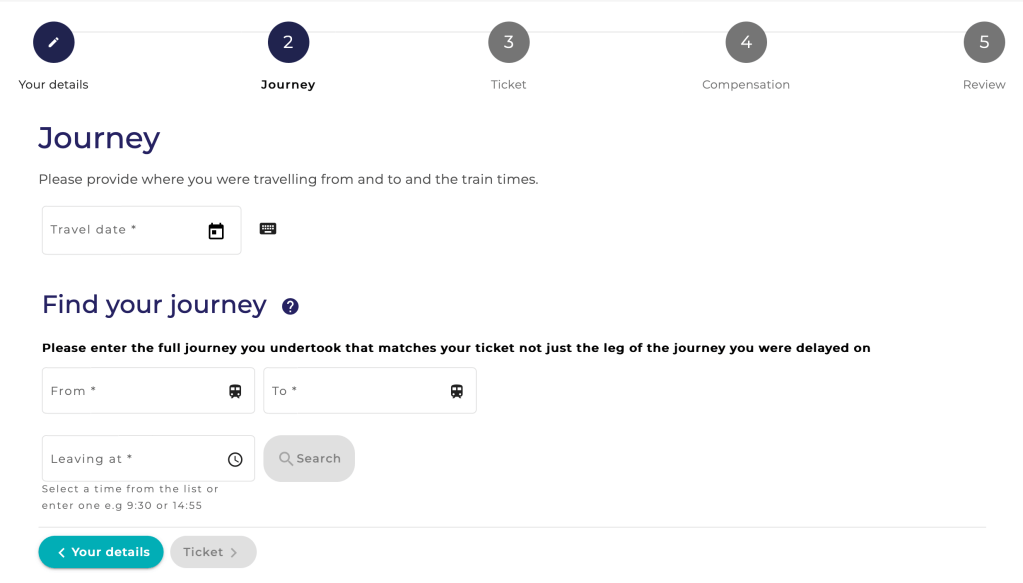
John assessed 80% of Northern’s Delay Repay claims are submitted online with the remainder submitted using a paper form.
The software used by Northern – as well as a number of other Train Companies – will automatically deal with the claim if the information submitted is correct and straight forward. This will include paying any reimbursement into a bank account or back to a credit card.
Manual intervention is required for repayment through slower means such as Rail Travel Vouchers or Cashable Vouchers which Northern also offers.
Of the 221,000 claims received so far since Period 1 in the rail industry year Northern’s software has accepted 157,000 with 75% of these being deal with automatically and reimbursements initiated within 72 hours.

The average length of time to deal with claims including those with manual intervention to resolve queries is seven days, although John did admit some can take longer.
In Northern’s case the follow up to a claim the automated system throws up as needing manual intervention is done by the Contact Centre team reaching out to the passenger. What annoys me about the Avanti/GWR system is the passenger receives an automated generated email advising the claim has been unsuccessful whereas what actually is the case is the automated system has been unable to deal with the claim.
John explained the importance of passengers submitting the correct information to ensure a quick resolution. Often passengers submit incorrect times, invalid tickets or claim for a delay that didn’t exist or submit their claim to the wrong Train Company.
For multi leg journeys, John confirmed the initial Train Company causing the delay is the one responsible for meeting the claim even if a further (and more serious) delay is experienced on a subsequent leg with a different Company.
However, he gave the example of a Northern train arriving into Preston 15 minutes late but still made a delayed connection with an Avanti train as that was running 20 minutes late then the claim would be with Avanti as Northern had got the passenger to Preston in time for the connection and therefore the delay to the Northern service had no impact to the customer’s journey as the Avanti service was running late.
Had that original Avanti train ran to time and the passenger had consequently had to wait an hour for the next scheduled Avanti train which in turn had got delayed later in the journey for another hour resulting in a two hour late arrival then Northern would be the company responsible for the full reimbursement of the ticket, including in this case the price of a return ticket if that was involved.

Which, as a side note is yet another cop out by LNER now it only sells single tickets. Previously a passenger experiencing a two hour delay on a journey from say King’s Cross to Newcastle and held a return ticket would receive a full refund for the cost of the return ticket even if there’d been no issues on the outward (for example) journey. Now, you only receive the reimbursement for a single as that’s all you can buy.
Furthermore although LNER’s software throws up the actual delay encountered from its database of journey times the Company is an outlier in only offering Delay Repay for a minimum of 30 minutes rather than 15.

Each ticket submitted with a claim is checked against industry held records. It’s interesting that the five digit serial number passengers have to submit on old style orange coloured tickets may well be duplicated in the system. John explained that when the destination and origin is added as part of the data for the ticket then it will be a unique ticket.
It was encouraging to hear John explain the online form Northern uses for passengers to submit claims is kept under review with some aspects currently being looked at including the question that asks “are you claiming for more than one ticket” which can be ambiguous as to whether it refers to passengers who are using split tickets for a through journey (they need to submit all such tickets) or two passengers travelling together on the same delayed journey. Making this more clear will help increase the number of claims dealt with automatically.

As with general contact handling, John explained Delay Repay claims can spike in number in response to any significant operational issues on the railway. A period of serious delays into and out of Leeds, for example, can see an instant increase in claims coming in. These are held as pending for the first 24 hours as the data used by the software has to be manually authenticated as well as attribution determined for the cause of the delay/s. For example, John explained in the case of the incident at Meadowhall quoted earlier, the system wouldn’t know the train involved ran out of service towards Doncaster as it would have been recorded as calling at the subsequent stations, but that information would be corrected overnight so claims made are dealt with using accurate data.

John showed me the reason why Train Companies prefer passengers to go for the more direct means of reimbursement into bank accounts. That process is automated whereas my personal preferred option of a Rail Travel Voucher involves manual intervention with a staff member in the contact centre inserting an A4 sheet of four preprinted, but blank value, vouchers into a printer and then getting the details printed out including a barcode as well as a letter to accompany it then placed in an envelope which then has to be franked and put in the post.
I know LNER (yet again) has unilaterally withdrawn this facility but from my own personal perspective I much prefer this system, labour intensive it obviously is, as it gives me satisfaction to make long journeys and opt to have money off the fare paid when I choose including using the sums reimbursed towards the occasional 7-day All Line Rail Rover.

My grateful thanks to John for sparing the time to explain all this as well as to his team who I could see were doing a great job at effectively and empathetically dealing with the myriad of contacts coming in.
Many of these arrangements will no doubt be up for review as GBR becomes a thing and in that process I sincerely hope existing best practice where it’s available will be the exemplar for the future. John’s team at Northern will be a good place to start.
Roger French
Blogging timetable: 06:00 TThS
 BusAndTrainUser
Rather astonishing figures, with 66 staff dealing with getting on for a million “interactions”, I.e complaints, for just one Rail company! Underlines both the costs of rail operation (and the amounts refunded) and the parlous state railway operation is in with so much going wrong.
Terence Uden
LikeLike
As with LNER, Avanti and Cross Country only offer delay repay for 30+ minute delays.
Steve
LikeLike
Avanti Delay Repay starts at 15 minutes. And if you are opted in to automatic Delay Repay, it usually only takes 48 hours for the approval e-mail to come..
LikeLike
Avanti def 15 mins – was delayed by 16 (!!) mins on Euston to Manchester train on Saturday – auto delay repay had told me my refund had been processed and was on it’s way to me by Sunday evening – most impressed
Paul
LikeLike
Northern runs a really complicated network, with varying service patterns and timetables that interact with at least 10 other rail companies. It serves over 500 stations, around 1/5 of all stations, that is a massive operation.
Really, Northern shows all the issues with fragmenting the railway. Also, Northern in some ways is left with many of the railways no one else wanted to run.
Aaron
LikeLike
AI could be very useful for planning an efficient transport network that also meets the passengers needs
LikeLike
This message compiled by a robot?
LikeLike
… a robot that has not yet been taught about punctuation!
LikeLike
Good to read about this centre – as it happens, Stagecoach put out on their social media the other day a feature on their customer contact centre in Perth, which I was able to respond to with a couple of questions which they responded to. One of these related to webforms – I asked why they don’t provide an email address as webforms may be efficient for them but a pain for the customer as they can’t be compiled offline for sending later and often have a limited (patronising) range of drop-down categories as to why people may be contacting them. They replied that in fact they do have a published email address, which is refreshing to learn. And I’m pleased to see that Northern do too.
One infuriating aspect of Stagecoach’s webforms though is that you don’t get a copy of your message once it’s gone into the ether, and even worse their response doesn’t include your original message, which you may have forgotten by the time they reply. Roger – how does Northern treat this aspect of webforms?
Stephen H
LikeLike
Not sure; as I haven’t used it but I suspect not as most web forms seem designed not to give a copy of what they contain to the sender. I always copy the message and save it in a document.
LikeLike
I have used web forms which do provide a copy, either on screen or emailed immediately back to the sender as part of the acknowledgment email, so it is possible. I can’t see any possible reason not to, and especially I cannot see any reason not to include the original message in the response from the company. There should be no need for you to make your own copy (I know that this would have been necessary in the days of writing letters, but with email now so prevalent this practice has become unnecessary and should remain so with web forms). In a similar vein I’ve noticed that some companies send their responses from a ‘no reply’ email address but some (including Stagecoach I think) do use a reply-able email address which makes follow-up correspondence much easier (and one can be cheeky and use that email address for fresh contact later) – what is most infuriating (and patronising) is when the response comes from a ‘no reply’ email address and you have to send a fresh query, referring to the original query and its response, to send any follow-up.
LikeLike
Maybe when all the TOCs have been subsumed into GBR, there will only need to be one unified Delay Repay system?
LikeLike
I suspect GBR will be the holding company and the TOC’s will be wholly owned subsidiary companies
LikeLike
While the Delay Repay system isn’t perfect, its improved vastly over the last decade. Originally you needed to have been delayed an hour, you had to submit a claim manually and you were probably going to get some rail vouchers a few weeks later. Now most TOCs payout for 15-minute delays, have automatic claim systems and will normally decide within a week, refunding you by bank transfer.
For my money, the rail voucher issue is exactly why the industry should treat the preferences of the enthusiast community with caution. The DfT has a bunch of published reports on its web site which show that passengers’ overwhelming preference is to be paid by bank transfer or a credit card recharge. Given the cost of retaining the rail voucher option, it’s clearly the right decision to withdraw it.
However, Roger’s last point about the industry picking what is best practice and rolling it out across the entire system couldn’t be truer. I had the misfortune to be at Waterloo yesterday evening, when yet again the entire inner suburban service collapsed for hours because of an incident at Clapham.
All the problems seen before played out in the same way; inaccurate information on every PIS and online system, intermediate station stops skipped at zero notice, a total absence of senior staff and passengers placed in danger as hundreds of people ran between platforms. Network Rail and SWR have proven themselves completely incapable of learning from numerous similar incidents at Waterloo and outside rail management needs to be parachuted in to fix this before someone is seriously injured.
LikeLike
Well, the current SWR MD was indeed parachuted in from Network Rail Anglia in May to apparently sort things out. All I’ve seen since then is things getting steadily worse.
LikeLike
They seem to have made progress getting the new trains into service, but nothing else has improved and reliability has gone backwards.
LikeLike
Hopefully GBR will mean there is none of the argument about whidh operator is respossible for the delay. ‘Delay Repay’ is really a form of advertising, aimed to get more custom, and the cost of it should be recorded as such, and not as a failure to hang on to as much money as possible.
Missed connections is another bane of the passenger, and again – hopefully – GBR will take the issue seriously, as part of the government’s drive to integrate transport. The standard justification used by management for instructing staff to send off a train dead on time, even if passengers are running for it from a delayed arrival is ‘holding the train two minutres would casue more inconvenience to the passengers already on the train’ – which ignores the fact that the incident will be seen by most of those passengers, and any others on the platforms, who will get the message ‘Don’t bother to make a journey involving a change, as we will not help you!’. In these ways the railway management keeps the lid on the opportunity to break out of the ‘only 8% of travel is by public transport – the trump card brandished by the road lobby.
I note your point that ‘mechanised’ refunds are preferred, but I don’t really see why voucher-refunds could not reach you within 72 hours – franking and posting can be done mechanically or in large batches, as could refunds for major delay incidents. Let’s hope that GBR will be driven mainly by a desire to extend best practice.
LikeLike
I find it infuriating that a train cannot be delayed to allow passengers to make a connection but such a delay would be classed as an on time for their performance statistics.
The asymmetry of how the railway treats mistakes by passengers compared to mistakes by the operators is another annoyance. My favourite this year was LNER holding a train to allow a delayed earlier fast train to leave first and then announcing the delay as caused by passengers making connections being late.
LikeLike
I think you are being optimistic. It will have to come out of a companies budget.
Hopefully though GBR will enforce a standardized system across the companies
LikeLike
I’m amazed that Northern and others have been state run for several years, but all the companies still have separate ticketing systems and repay departments. Incredibly inefficient, and must be ripe for substantial savings.
LikeLike
One of the problems I’ve encountered with (GWR’s) Delay Repay is that it doesn’t work well when one has an “open” (i.e. untimed) ticket rather than one that’s been booked on a particular service. Nor does it cope if one plans to catch a train which is then cancelled, and the subsequent one runs late – it tends only (if one lucky) to deal with the lateness of the later service. To be fair, this was dealt with expeditiously when I contacted Customer Service by email.
LikeLike
Gladly I have not needed to be challenged by a Delay Repay situation. However, two occurrences come to mind after reading Roger’s Blog. 02/01/2024 when on a very windy day SWR declared “Code Black” and I could not get home from Surbiton to Hersham by train, but Falcon Route 461 did the honours, running punctually. 29/11/2024 when the police closed Surbiton Station owing to an alkali incident – Falcon Route 461 coming to my rescue again. On 29/06/2024 I was around +00:31 at Clapham Jnc after a railway journey from Crawley owing to a trespasser on the line somewhere near Streatham Common but I did not bother to pursue the matter as I had had a superb day out on the buses based at Crawley Bus Station [Brighton – Eastbourne – Bexhill – Eastbourne – Brighton]. Bexhill JDW, absolutely superb. I do not travel by train often enough to warrant a Senior Railcard, however I used my ENCTS that day to save on full railway fares. Hersham – Crawley CDR £22.10. Had I chosen to visit Bexhill by rail on full fares that day £44.00.
LikeLike
Not only do the state owned companies have their own separate Delay Repay systems , they will not talk to each other. I recently was very seriously delayed on a journey from Windermere to Doncaster, (Northern to Manchester, Trans Pennine to Doncaster} due to overhead line problems on the WCML to the extent that I stayed overnight at my daughters who happens to live near Preston.
I purchased my ticket online through my LNER account who say that Northern is responsible for any refund. Northern say they cannot process my claim without evidence of my ticket. I have given them the ticket number and details of when it was purchased but Northern say they do not have the means to verify this with LNER.
LNER, Trans Pennine and Northern all state owned. Fans of forthcoming GBR be careful what you wish for!
George Hawkings
LikeLike
Norther are responsible, It is not you problem that Northern do not recognise the ticket that’s Northers problem to resolve
LikeLike
They may well be state owned but they are still three separate companies, and will therefore act as such. As far as we know, GBR will not be separate companies (although it would have been under the original Conservative proposals for individual operating contracts).
In the privatised bus industry, Stagecoach East Midlands and Stagecoach Yorkshire are two separate companies both of which operate in the same areas (Sheffield, Rotherham and Chesterfield for example). Contact the wrong company and from personal experience you’ll get the same excuses about it not being their problem; they won’t even pass you to the correct company.
It’s not private or public ownership that matters when there’s a corporate culture of buck-passing.
LikeLike
i suspect GBR will becone the holding company
LikeLike
Temporarily, yes. Once all the TOCs have been nationalised then they will be fully integrated into GBR (which will in reality be Network Rail renamed, but that’s neither here nor there) and will cease to exist as individual companies.
That’s the plan which is being briefed out (through the grapevine, so it’s deniable, as is usual for the railway) anyway.
Personally I wouldn’t be at all surprised if, given the huge range of different TOC employee contracts and the general unwillingness in the industry to harmonise contracts within one company – Northern and LNER are each running at least three sets of driver contracts, for example – there doesn’t end up being a GBR-subsidiary structure so that former-TOCs can be batched together for HR or legal purposes.
Think something like the way NBC operated the National Travel coach companies for a while in the early 1970s, with ‘GBR Eastern Trains Ltd’ equating to Network Rail’s own Eastern region.
It’s going to be ‘interesting times’ for the staff, with plenty of backroom middle management types seeing the writing on the wall and trying to make themselves appear to be Good Little Managers for the incoming regime by stabbing as many staff as possible in the back for perceived failings, just as happened in the dying days of BR as the TOCs were privatised.
Thankfully I’m out of the industry now.
LikeLike
I doubt it having it as a single company would be manageable
LikeLike
Best bit Chesterfield falls under Stagecoach Yorkshire
LikeLike
Interesting to read this but I can’t help but comment about the generosity of the rail industry in this respect. What other form of transport refunds money for delays as short as 15 or 30 minutes? Bus, air or indeed if you’re driving and caught up in congestion – either nothing is given or it’s a tortuous process and well beyond a 30 minute delay. The railway should be highlighting what it offers not making excuses. Indeed LNER pays me directly into my account in the event of delay.
LikeLike
My issue with GWR delay repay pre pandemic was that they bombarded me with emails asking how satisfied I was with the process before they’d processed my claim! Any email query I sent was allocated a different reference number to the original query.
Peter Brown
LikeLike
Thanks as ever for an interesting blog, but my most recent experience of a delay repay claim with Northern had a diametrically opposed outcome to the “nirvana” you describe! In brief, I was travelling from Whitehaven to Southend on Bank Holiday Monday May 5th. With Euston and the southern end of the WCML closed, I opted to travel via Carlisle and Leeds into Kings Cross, a journey for which no through fare exists, so I needed two tickets – split at Hellifield where I planned a one hour hesitation. The Northern train to Carlisle failed and we ended up 121 mins late into Carlisle, destroying all my connections. I submitted a claim on May 6, it was rejected entirely on May 15 and again on May 21. I then e-mailed a full detailed explanation. On May 30 I was told it was being passed to a supervisor for action. With no action, I chased on July 8 and then received a further (partial) rejection on July 13, only agreeing to refund for the initial Northern segment of my journey and not the entire journey. At that point I was so worn down that I gave up and accepted the partial refund, which came on July 18, 2 and a half months after the journey!! I understand that my journey and tickets didn’t fit their templated idea of what to expect but the experience was appalling. I hope that things are now handled as you’ve described, because they certainly weren’t in my summer experience.
Richard Delahoy
LikeLike
I am slightly surprised by Richard’s comment that “no through fare” exists for a journey from Whitehaven to Southend via Leeds. I have checked now for that journey tomorrow, on the nationalrail.co.uk website, and a single fare is offered:-
https://www.nationalrail.co.uk/journey-planner/?type=single&origin=WTH&destination=152&leavingType=departing&leavingDate=151025&leavingHour=07&leavingMin=30&adults=1&extraTime=0&via=LDS&viaType=via#O
As far as I am aware, the National rail site has offered for fares for all journeys for some time now. Whether it offers the most competitive prices, I cannot say.
Nigel Frampton
LikeLike
So am I; I’ve checked (fought!) the Routeing Guide online and via Carlisle, S&C, Leeds and ECML is certainly one of the myriad of permitted routes for the journey.
Mind you, I’ve found that the National Rail website planner has a nasty habit nowadays of not offering East Coast journeys correctly if seats can’t be booked on LNER segments. Sometimes it’ll offer the journey timing but with no fares (which is fair enough), but at other times I’ve had it not show the journey timing at all.
Looking at the BR Fares site (https://www.brfares.com/!fares?orig=WTH&dest=0411&period=20250907), the breakdown shows LNER priced Advance fares (coded ‘IEC’) which will by definition be routed via the East Coast Main Line into KGX, although the walk-up Anytime & Off Peak fares are controlled by Avanti (coded ‘IWC’) and are eye-wateringly high.
LikeLike
Once LNER and Avanti are Great British Railways surely one fare from Carlise to London will apply ? (probably the higher ?)
JBC Prestatyn
LikeLike
221,000 claims for delay repay from “Period 1 in the Rail Industry year” – in plain English – 1st April. I.e. 6 months. Why didn’t you say that, instead of the meaningless jargon? That is to one rail company alone. That demonstates how poor the UK rail system is.
LikeLike
It would be interesting to know how much is collectively paid through the Delay Repay schemes, with some breakdown between delays due to causes under control of the operator (eg shortage of crew, defective train) and those caused by external events (eg trespass, weather).
John
LikeLike
Hi John.
DfT publish the amount paid out – in 2023/24 it was £139m.
https://www.gov.uk/government/publications/train-operating-companies-passengers-charter-compensation/train-operating-companies-passengers-charter-compensation
Network Rail publish the causes of delays. The NR data covers all delays, but I think its safe to assume that the causes of Delay Repay payments are roughly in the same proportions as the causes of all delays.
https://www.networkrail.co.uk/who-we-are/how-we-work/performance/railway-performance/
LikeLike
Thanks Phil. I’ll enjoy myself with those figures!
LikeLike
The much quoted 8percent of all passenger journeys.
Indeed where there is no rail it is difficult to make a rail journey. eg Malden in Essex – a substantial area and no rail other than Colchester / Chelmsford a distance away.
Lots of short trips cannot be made by rail, the thing is getting rail to be efficient at those journey that can be. I think if we designed a network from scratch, with resiliance, reliablilty, speed and conectivity I think much would be the same but there would be , with present day population , more of the previously ceased services and doubling up on routes like cross london – north south and east west and similar for manchester . Literal grade separation – more in tunnels – Elizabeth Line should have been tunnel all the way from Iver to Brentwood to keep it off the main line tracks for example.
JBC Prestatyn
LikeLike
Maldon East and Heybridge railway station served the town of Maldon and village of Heybridge in Essex, England. It was opened in 1848 by the Maldon, Witham & Braintree Railway (MWBR) on a branch line from Witham to Maldon. It was originally named Maldon but was renamed Maldon East in 1889 and then Maldon East and Heybridge in 1907.
It was a terminus station located at the end of two branch lines from Witham and Woodham Ferrers.
Closed in 1964
LikeLike
The regulation typo alert: piqued my interest, not peaked my interest.
LikeLike
Good spot; thanks.
LikeLike
One would have thought companies would prefer rail travel vouchers – many wont get spent and the others are recycled payments into the rail industry at really nil marginal cost and an opportunity to earn a few pennies off the likes of station and buffet spend
JBC Prestatyn
LikeLike
Steve Thomas
LikeLike
[like] Ben Garcia reacted to your message:
LikeLike
If anyone expects GBR to sort any of the issues raised in these responses I think they will be disappointed. 15 months into a new Government nothing useful has happened other than quasi nationalisation of franchises, when they were effectively nationalised anyway.
Do read Andrew Gilligan critique of the Northern Powehiuse rail project which shows how hopeless the Labour Government’s lack of a Transport Policy is.
GBR will be a fiasco, things including losses will,only get worse.
LikeLike
When the railways were nationalized originally they largely kept the old structure as Regions. The only significant change appeared to be splitting up the old LMS into the Midland Region and Scottish Region
For some reason Wales never had a region maybe because Wales was split under the old structure with South Wales being mainly GWR and North Wales mainly LMS so they put it into the to difficult pile so that split carried on after nationalization
LikeLike
by all means read Andrew Gilligan, but do bear in mind that he’s a top banana at the secretly funded right wing “think tank” Policy Exchange
LikeLike
now do scotrail LOL
LikeLike
Policy Exchange is indeed a right wing think tank but that does not necessarily invalidate its report. Would any sane person give the rail and construction industry a virtually blank cheque to build a new and complicated railway after the fiasco of HS2. Its clear the current rail setup is incapable of running a reliable railway, and the situation is deteriorating also with railway finances. At some stage Labours magic money tree will wilt, and the rail industry is also incapable of making necessary economies.
GBR is doomed even before starts.
LikeLike