Saturday 13th September 2025
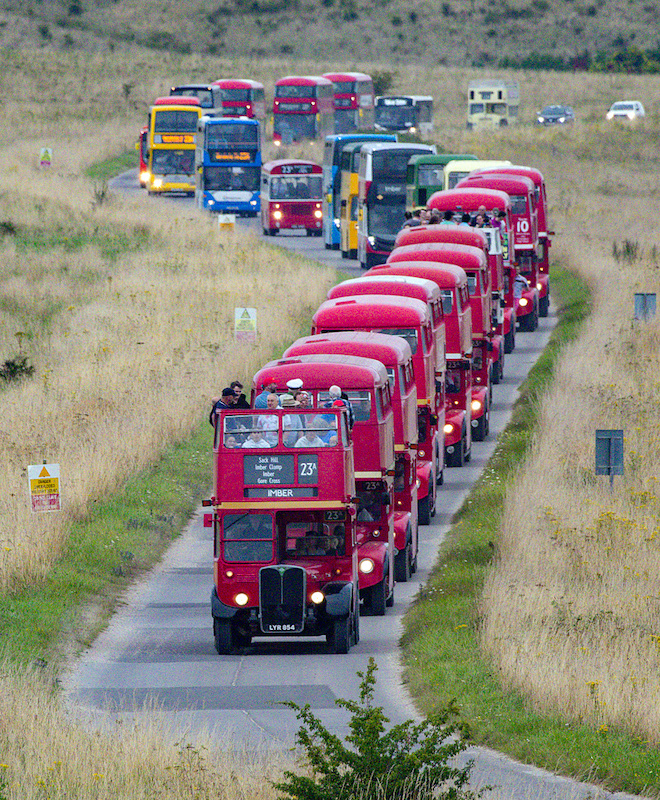
Obviously it just had to be in the Top 10 and very much deserves the coveted top three billing as an absolute sure fire example of Britain’s Quirky Bus Routes. It is of course the annual outing for Wiltshire’s very special bus route, the 23A, which has been providing a quirky way for people to visit the usually isolated village of Imber on Salisbury Plain since 2009.
Like many odd ball bus routes the idea was hatched in a pub (The Raven in Bath) when Peter (now Lord) Hendy and three friends (Michael, Martin and Simon) were chatting about the most unlikeliest place they could run a bus service using their small collection of heritage buses.

At that time the gang all lived in the Bath area and as the beer flowed and the ideas became more bizarre they hit upon running a bus service to the isolated village of Imber because it hadn’t had one since 1943 and even more pertinent it was off limits to the public except for occasional days throughout the year when access to St Giles Church, the only original building left in the village, is open to all to visit.
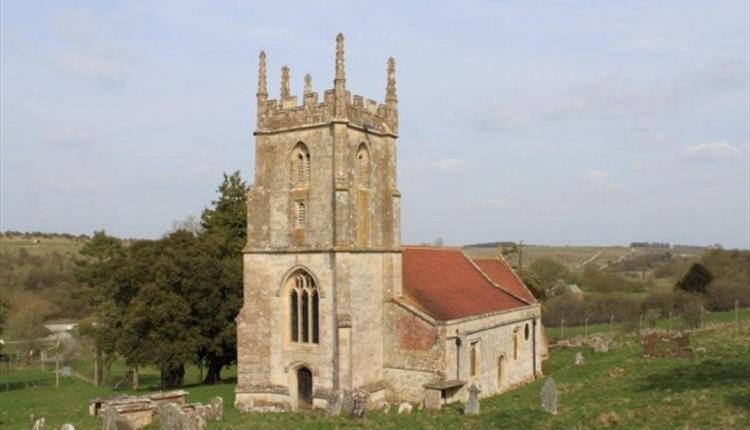
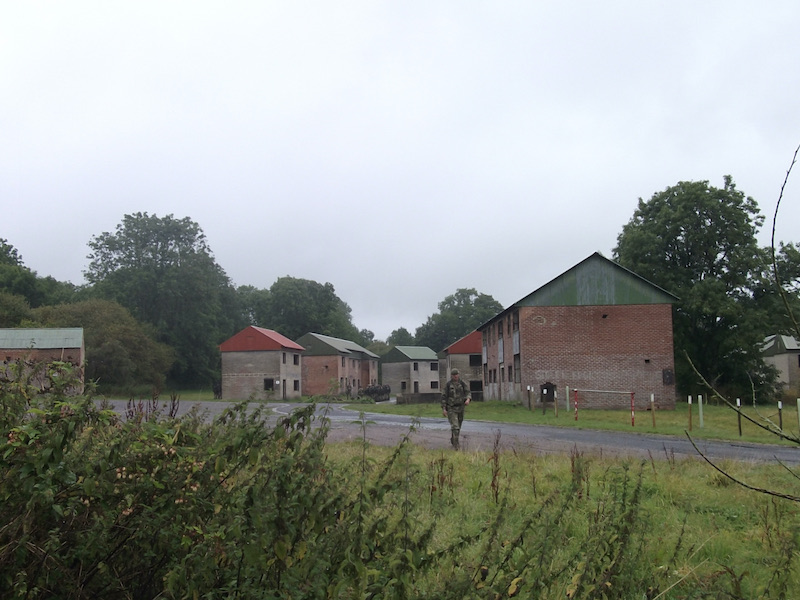
Villagers in Imber had been evacuated at short notice in the Second World War never to return because all the surrounding farms and land on Salisbury Plain had been acquired by the Ministry of Defence over the previous two decades since the First World War and was actively used by the army to practice manoeuvres and combat.
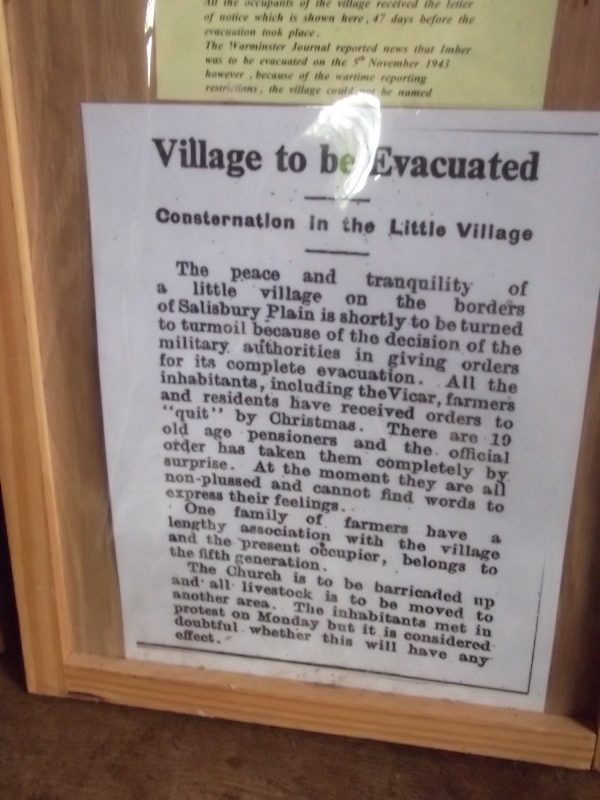
With the outbreak of war it was necessary to move everyone out on a temporary basis but perhaps there wasn’t any surprise when that became permanent.
Pre eviction, Imber’s bus service was provided by Lavington & Devizes Motor Services Ltd and Bath Tramways Motor Co Ltd. A somewhat sparse twice a week route ran in the 1930s on Thursdays and Saturdays to Devizes (from Codford and Warminster) but this obviously had ended by 1943 when all the residents moved out.

With the beer still flowing plans for this once a year bus service grew with Martin (Curtis) at that time General Manager of the Bath Bus Company, with its ‘O licence’, enabling the service to be properly registered and run with fares being charged.
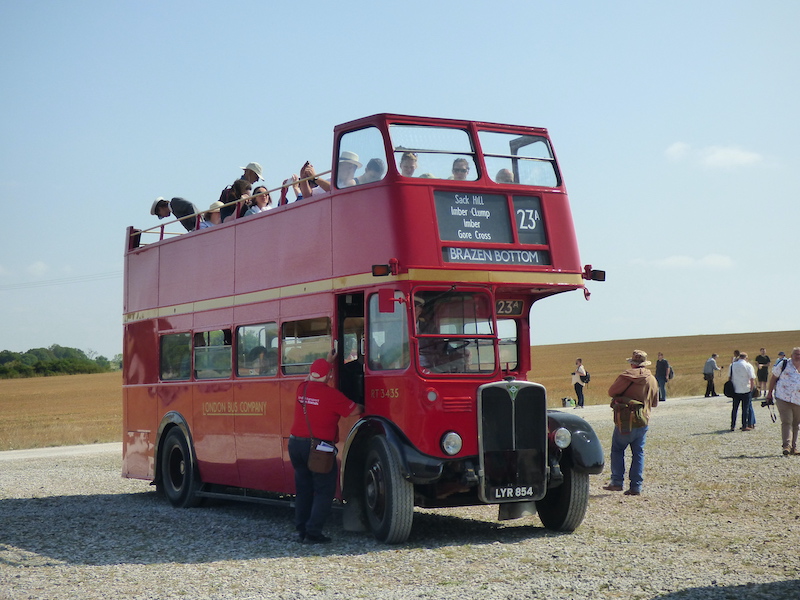
Initially the Army were understandably suspicious of the whole idea but Peter used his powers of diplomacy and persuasion and soon got permission and the gang-of-four set about organising the very first event with five former London Transport Routemaster buses in 2009.

Peter gave a fascinating talk explaining the background to Imberbus to the London Transport Museum Friends in 2018 which can still be viewed via this link on YouTube.
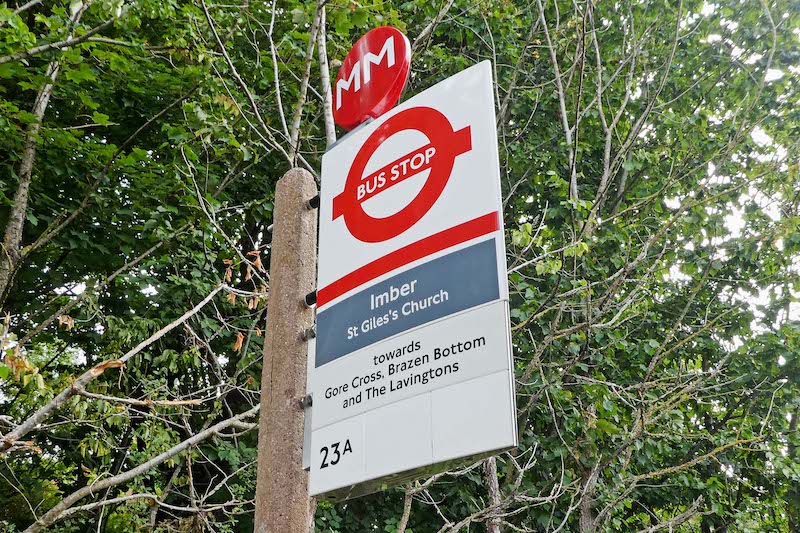
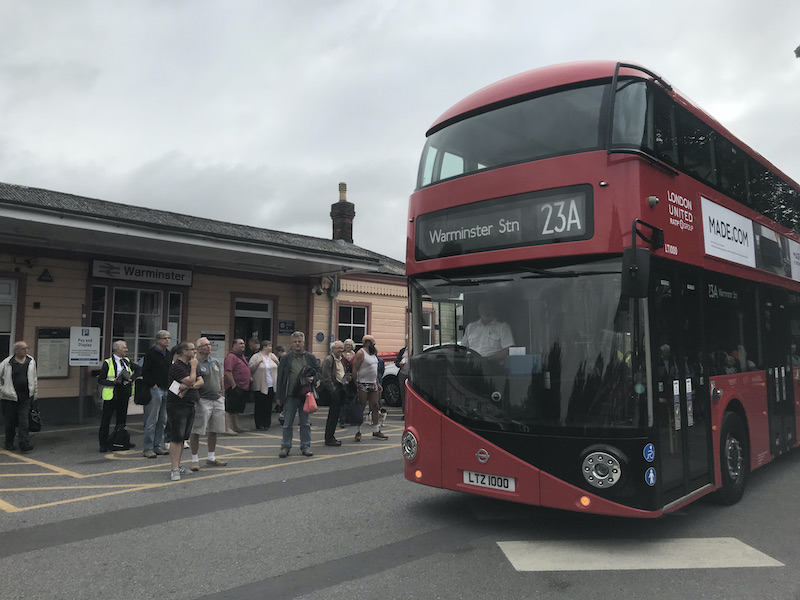
Route 23A is a neat little network which connects Warminster (with a lovely London Transport style bus stop right outside the station)…
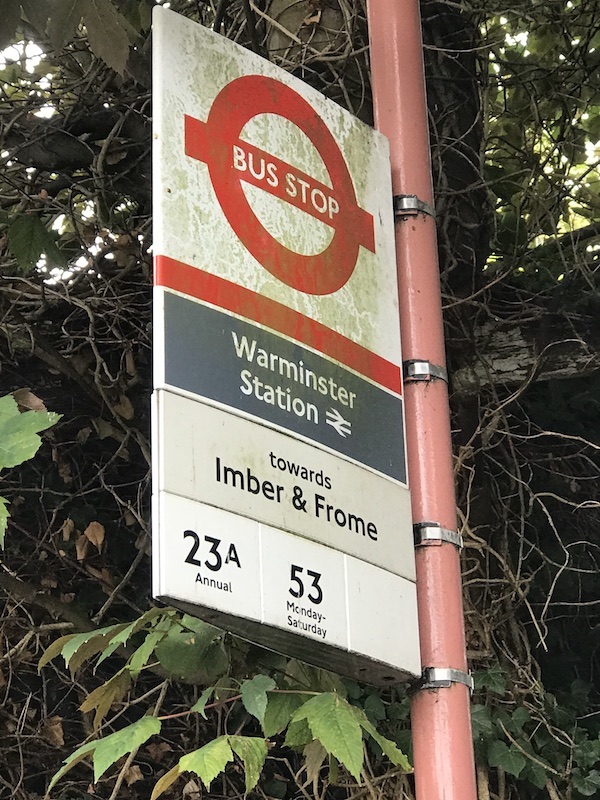
… with St Giles Church, in the centre of the former inhabited village of Imber, and then across the Plain to three other termini, as Peter describes it…“all of which is in good London Transport country area practice using the same route number with the same via blind for three different routes”.
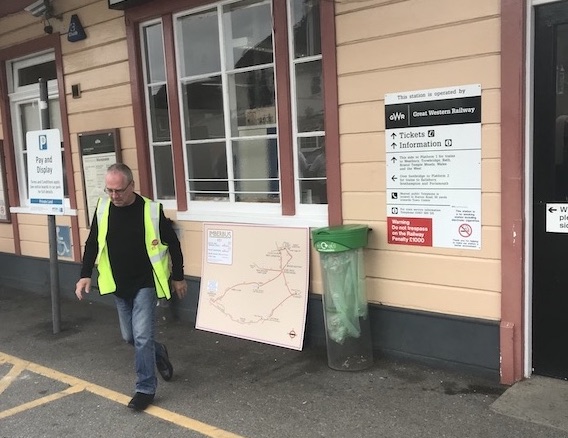
Hence how route 23A was born and applies to all variations of the network helpfully explained on a traditional London Transport style route map (ah, those were the days) produced by Doug Rose.
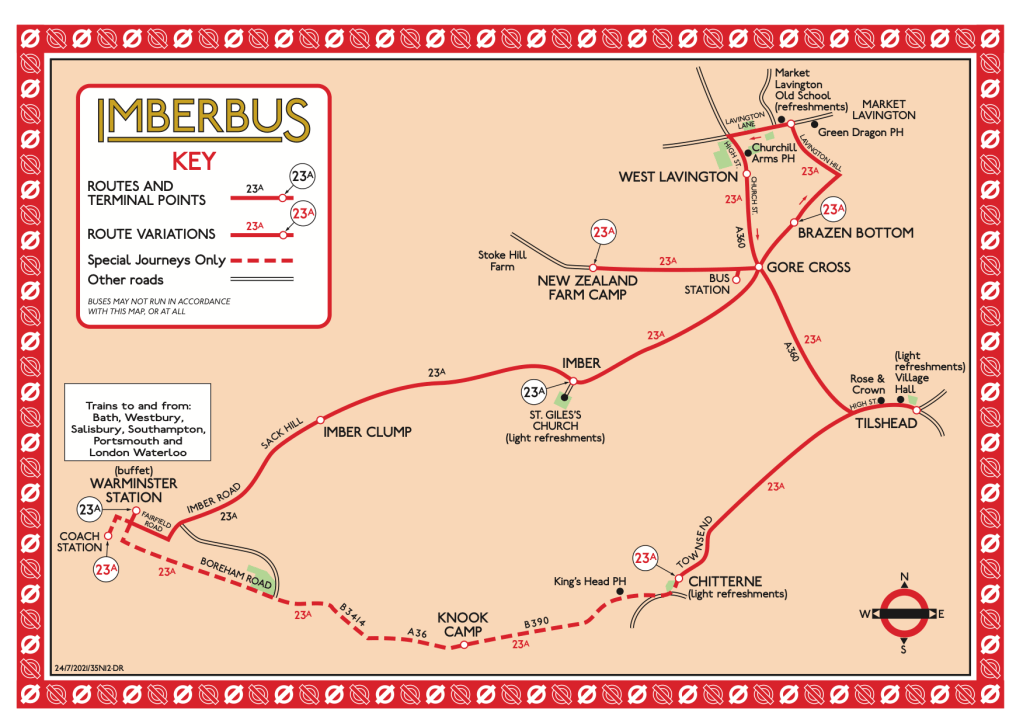
The number 23 itself was chosen as it was at one time the number of the route between Warminster and Stonehenge which, as Peter explains, “shared about 100 yards in common with the proposed route to Imber” so led the team to logically number Imberbus as 23A, perhaps as London Transport country buses would have done too.
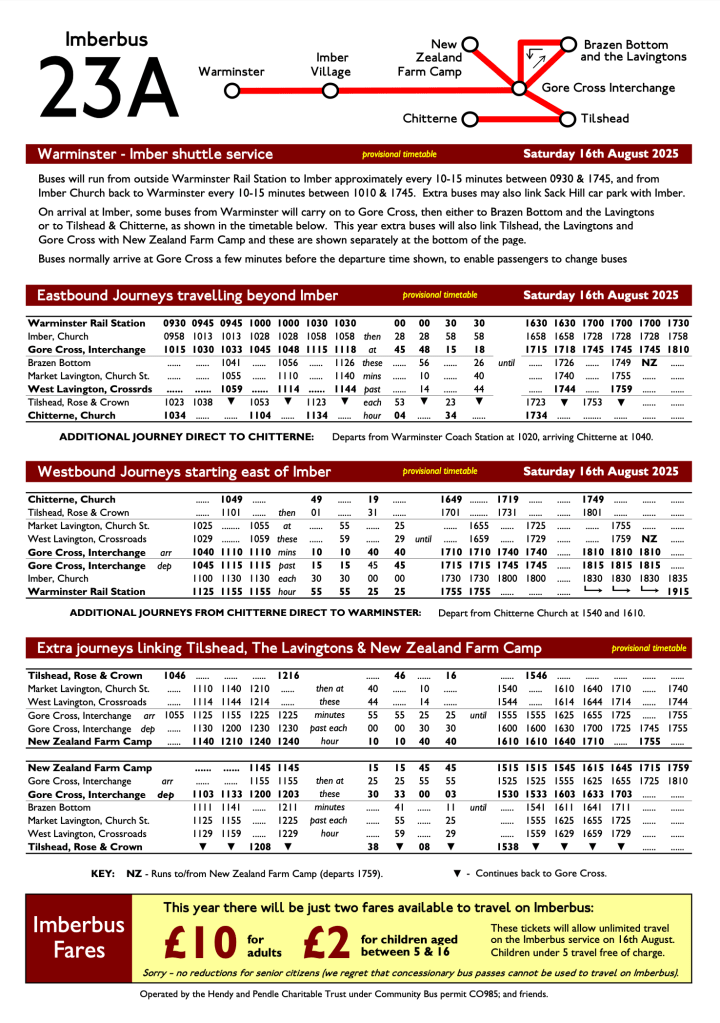
The network provides for interchanges between buses every half an hour at Gore Cross Interchange which lies a 17 minute journey time east of Imber itself and where a supervised bus station is installed for the day.
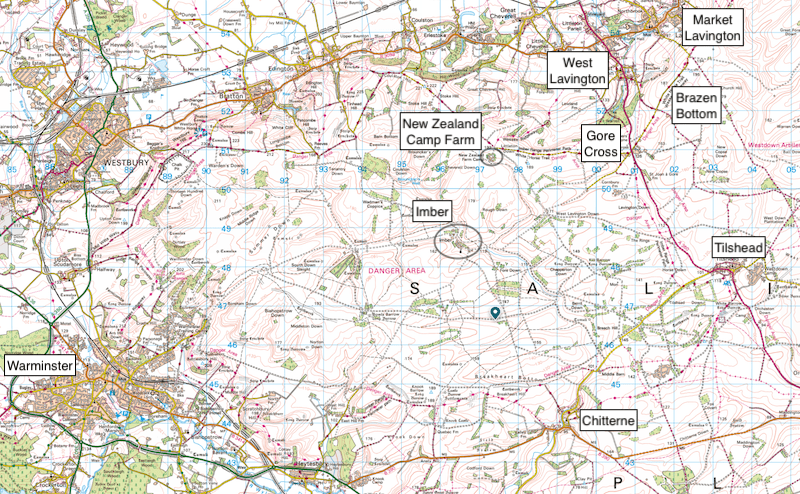
From Gore Cross…
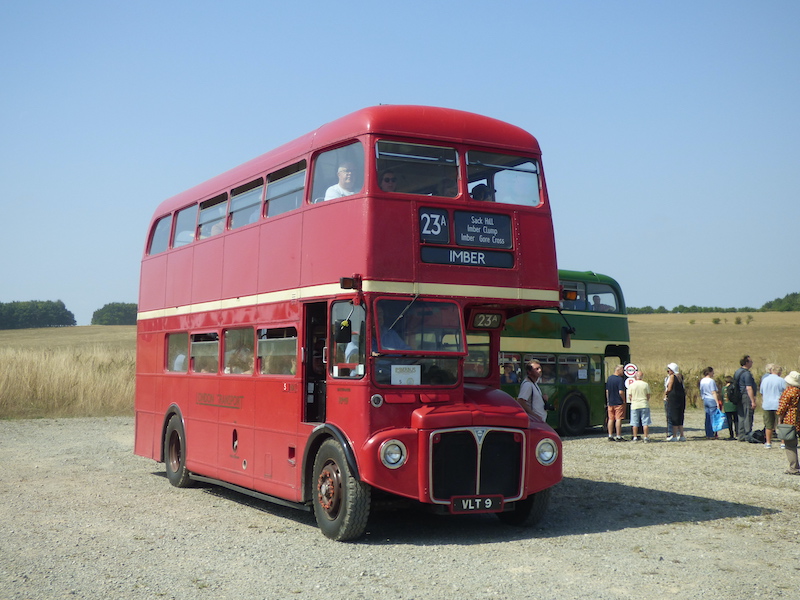
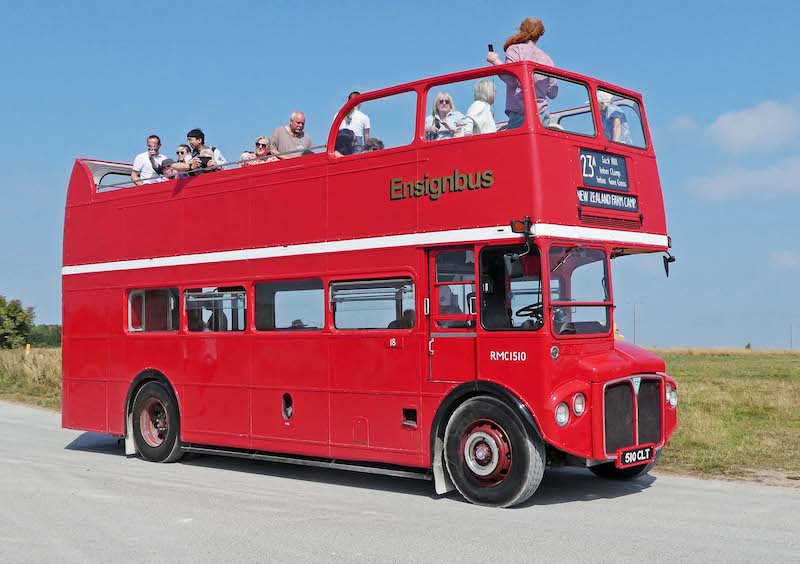
… buses take one of three different routes – to New Zealand Farm Camp (home of Britain’s Loneliest Bus Stop, as it’s in the middle of nowhere)…
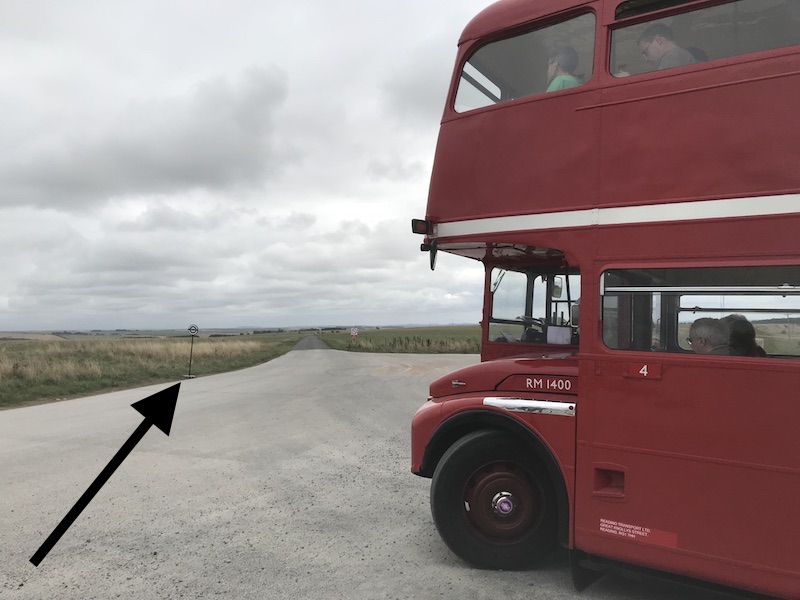
…Brazen Bottom on a one-way loop via the Lavingtons and thirdly to Tilshead and Chitterne.
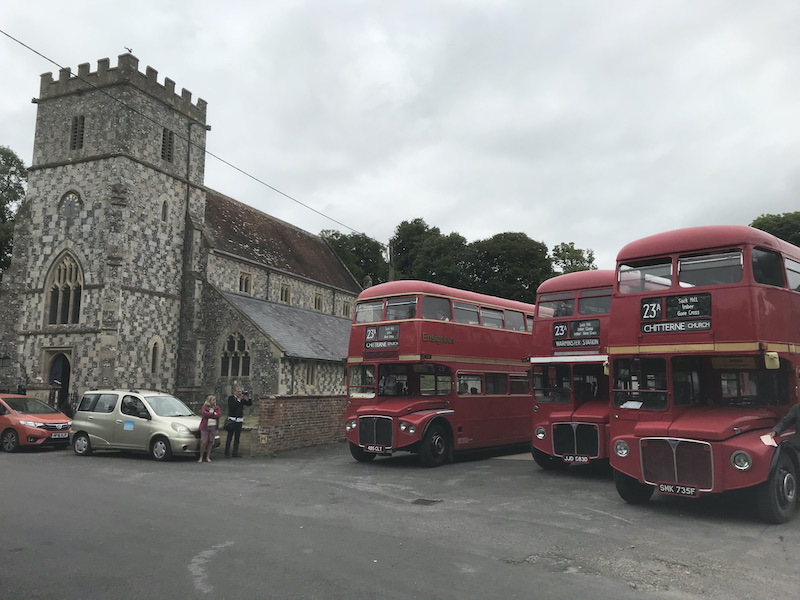
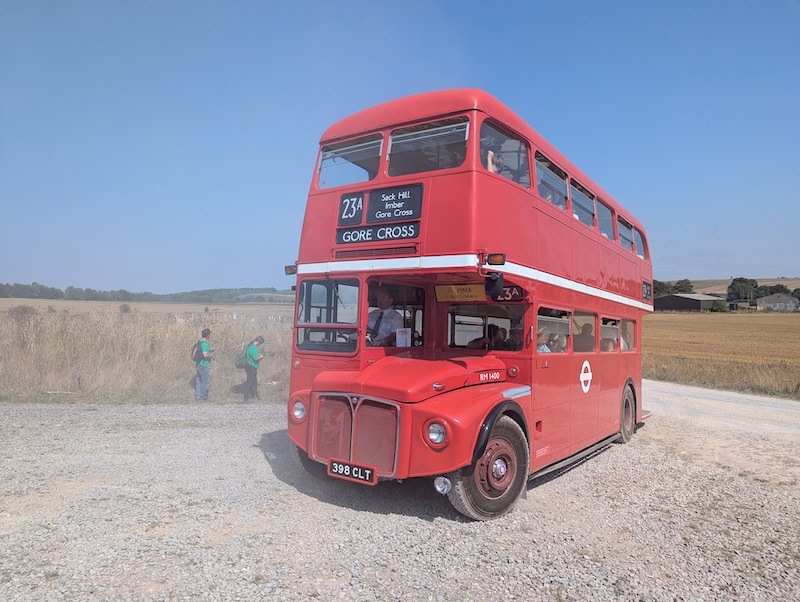
Peter’s always been keen to ensure old style traditional London Transport high standards of information and infrastructure are in place for route 23A. He personally oversees the placing of temporary bus stops as well as a map at Warminster railway station. And you’ll notice from all the photographs, every bus is kitted out with correct destination blinds for the route.
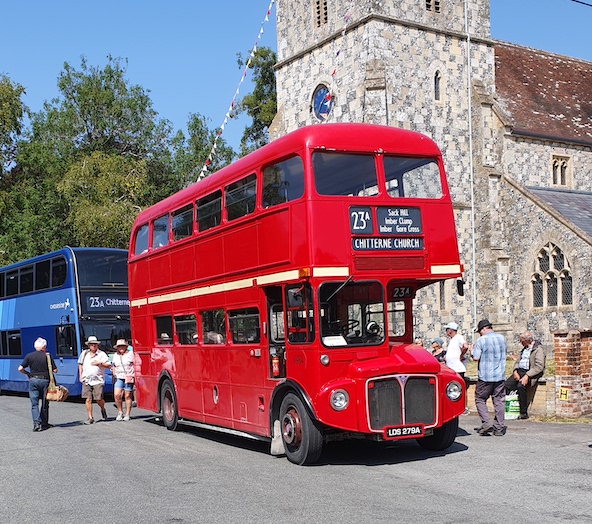
In Imberbus’s early years the buses were mostly RMs with the odd RT, but once the New Bus for London was around that joined in to provide low floor access…
… and now the event even sees electric battery powered buses in service as shown below with a BYD BD11 bus from Go-ahead London this year.

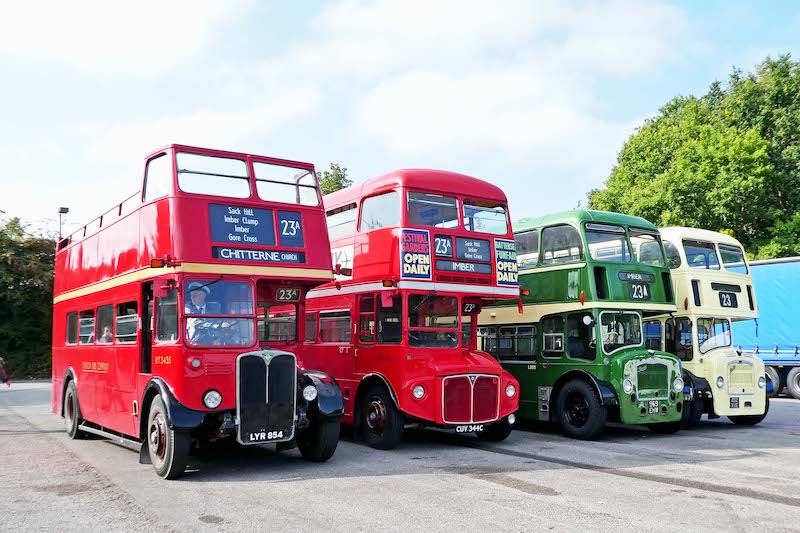
In the last few years since the Covid pause and particularly with national media coverage of the event, numbers attending have grown exponentially with more and more of the buses (preserved and modern) coming from diverse fleets all over the country providing a colourful variety for those enthusiasts attending. This year three Bristol Lodekkas were supplied by the Bristol Omnibus Vehicle Collection, for example.

But, it’s not just a service used by enthusiasts. And Peter is always keen to emphasise it’s not a Bus Rally. It’s a bus service for everyone.
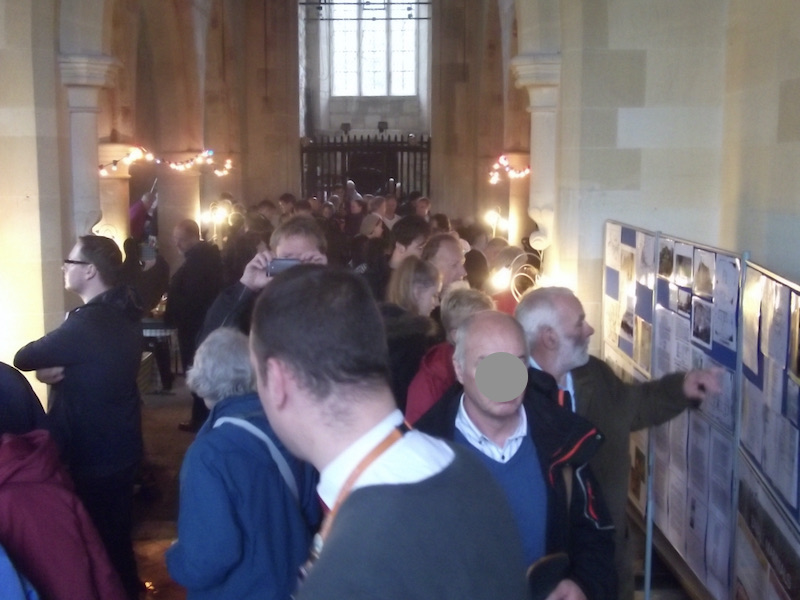
Many people living in the local area as well as further afield take the opportunity to attend, not least as they may have connections with the church as well as many just wanting a fun day out.
From this year I understand cars have been banned so the only way to access the church on the August date is by route 23A.

Local villages served by the bus routes outside the Ministry of Defence owned land (eg Chtterne and the Lavingtons) join in by providing refreshments and facilities, as can be seen at the terminus (Royal Forest Hotel, Chingford style) at Chitterne seen below.

As you can see from the image of the timetable, there’s a day ticket for £10 and all money collected (less some minor direct expenses) goes to charity including helping with the upkeep of the church.
All the drivers and conductors provide their services on a voluntary basis which adds to the delight of the day.

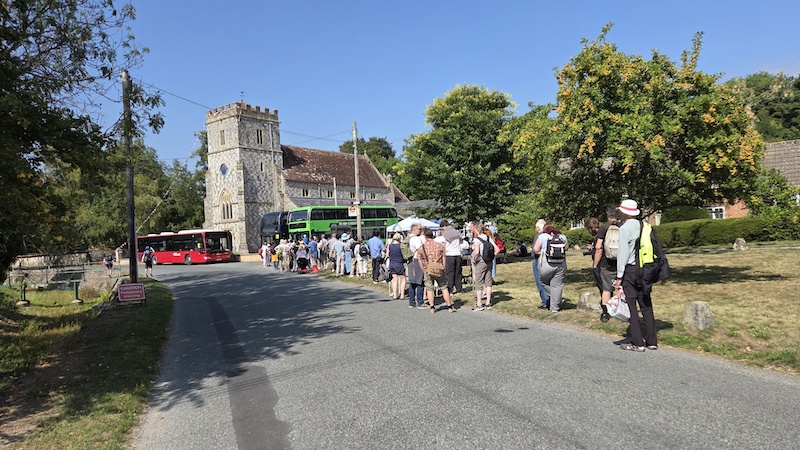
My grateful thanks to everyone who replied to my request for photographs of the 2025 event which you can see capture route 23A in all its glory.
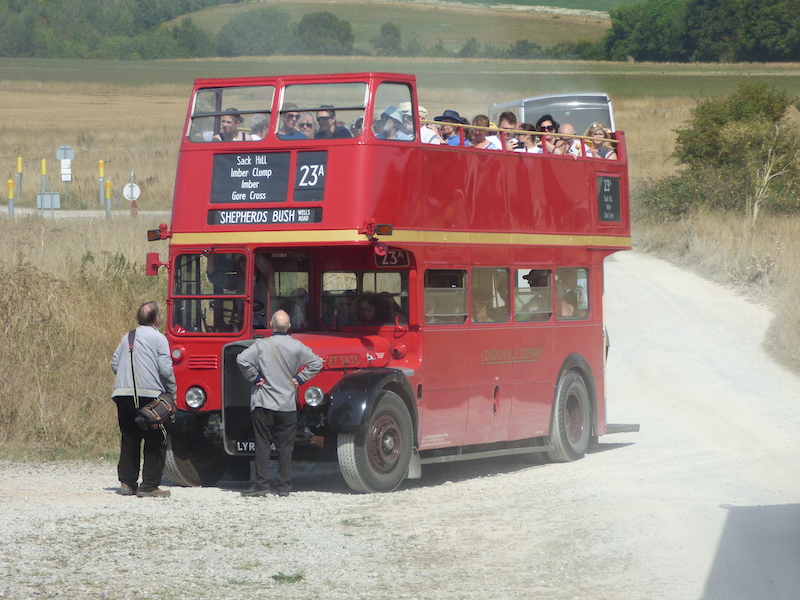
I hope you enjoy seeing them with thanks to Brian Bell, Peter Brooks, Don Constance, Steve Hutchings, Richard Kemble and Alan Sutton.
Here are some of those non London Transport heritage vehicles in action….
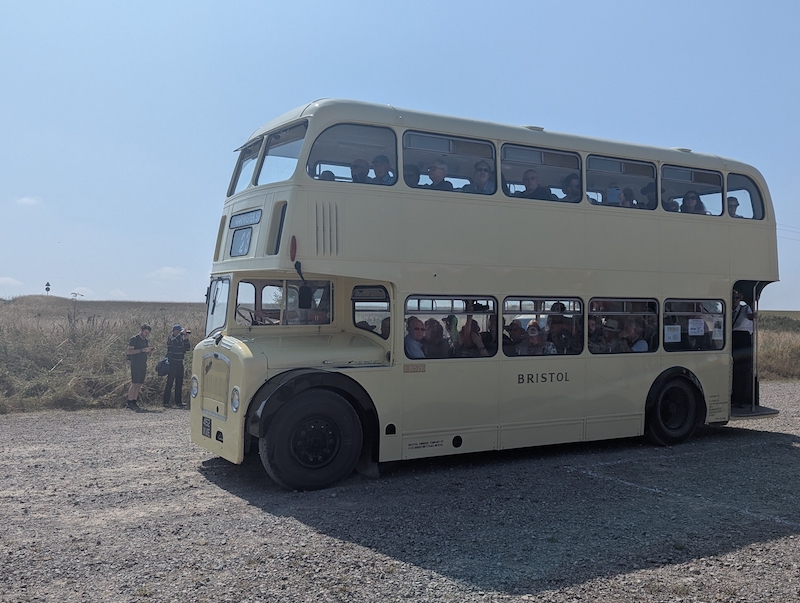
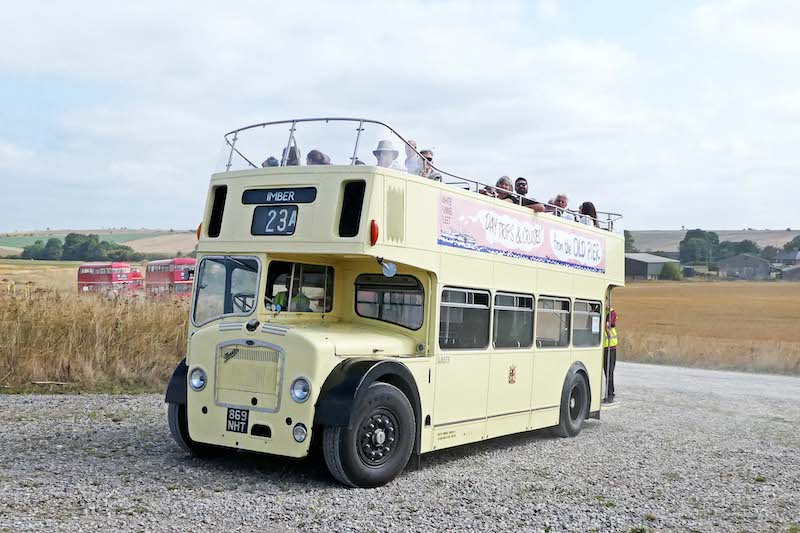

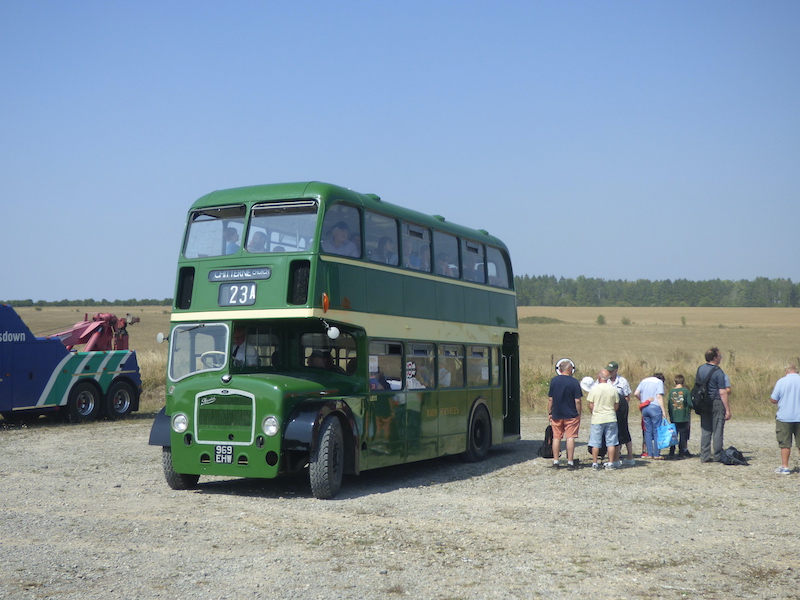
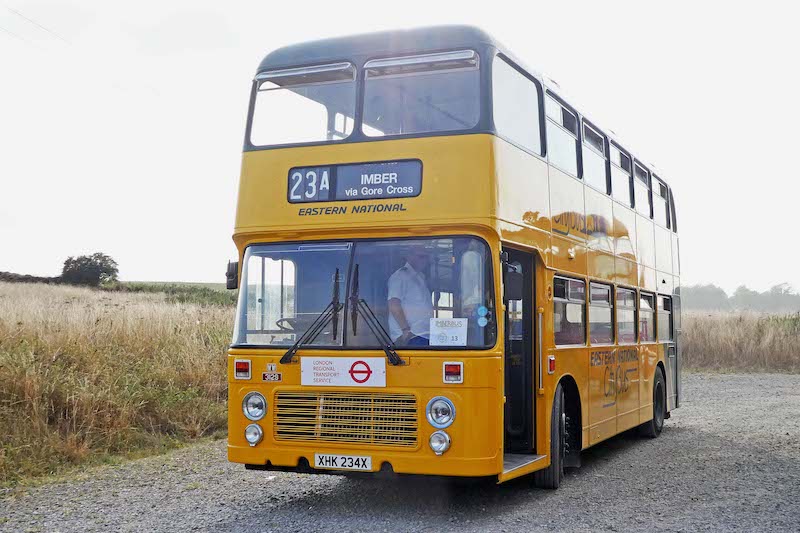
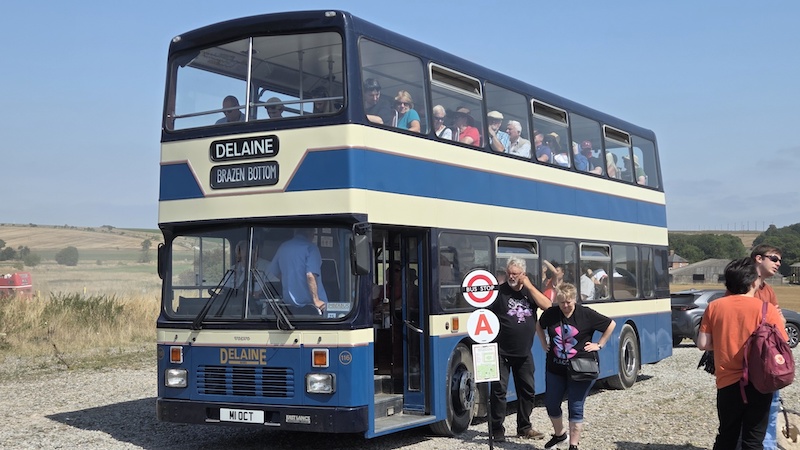
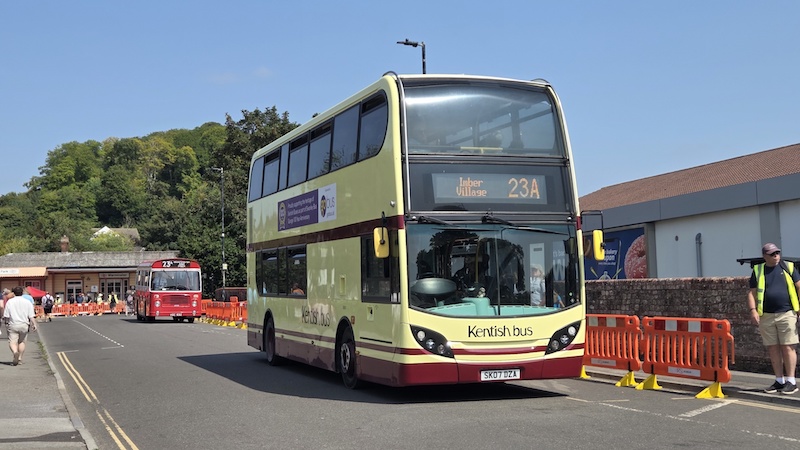
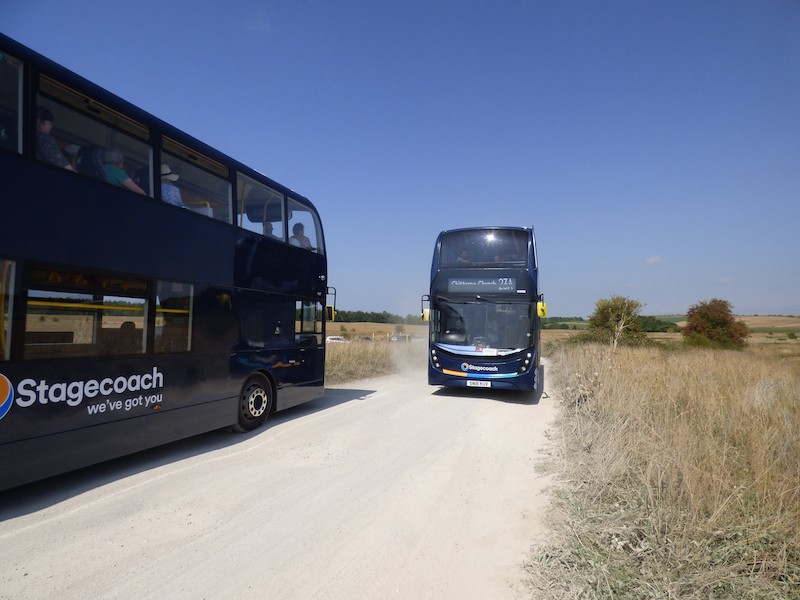
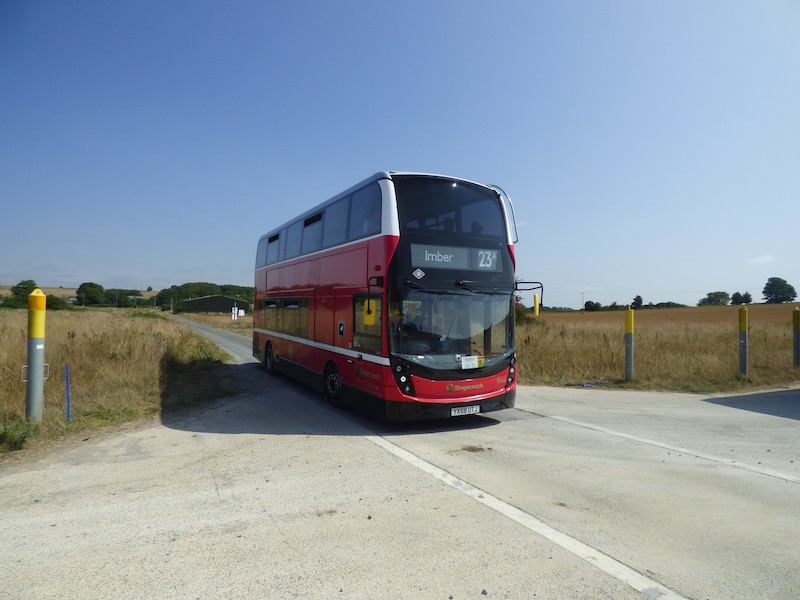
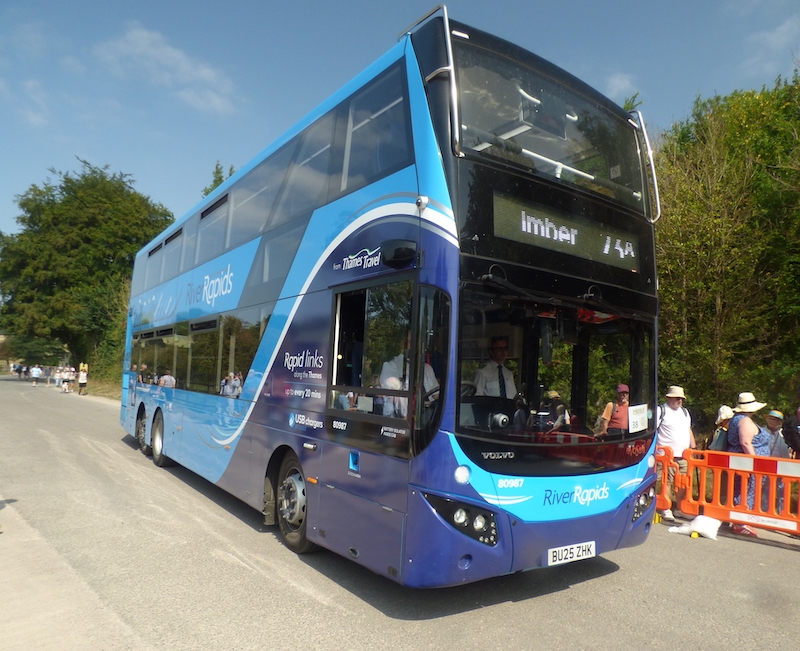

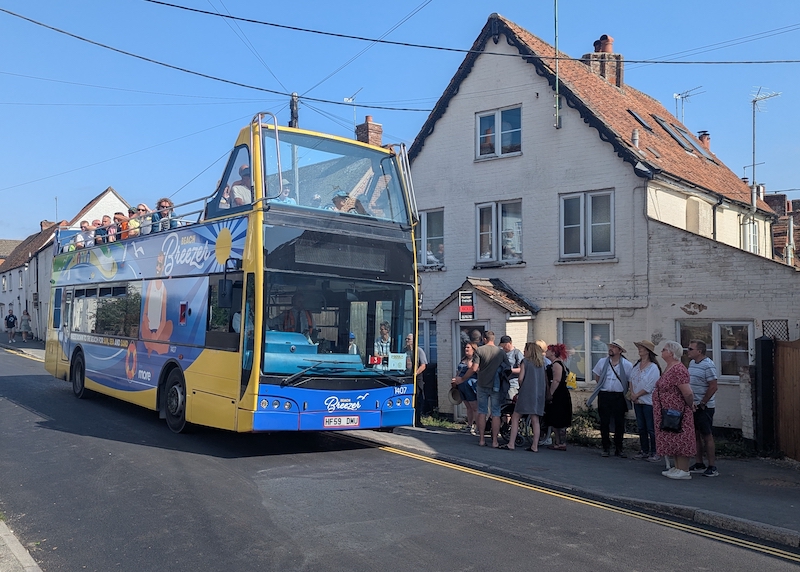
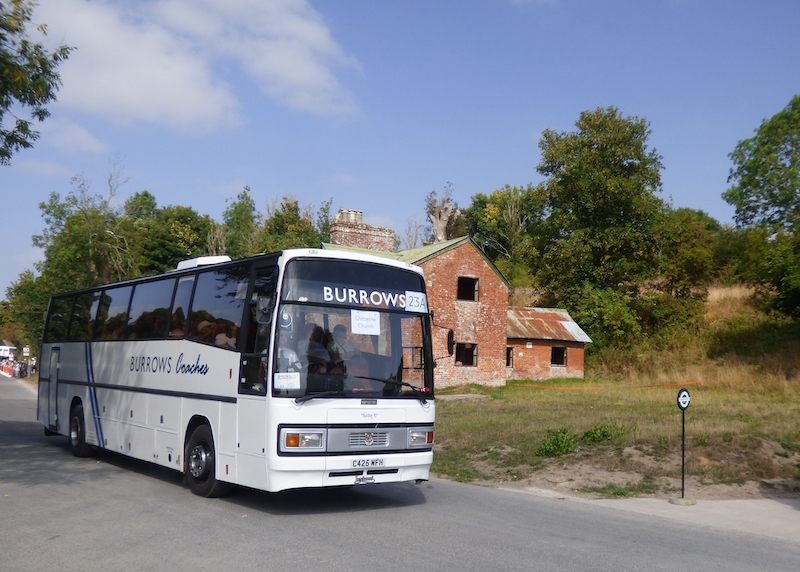
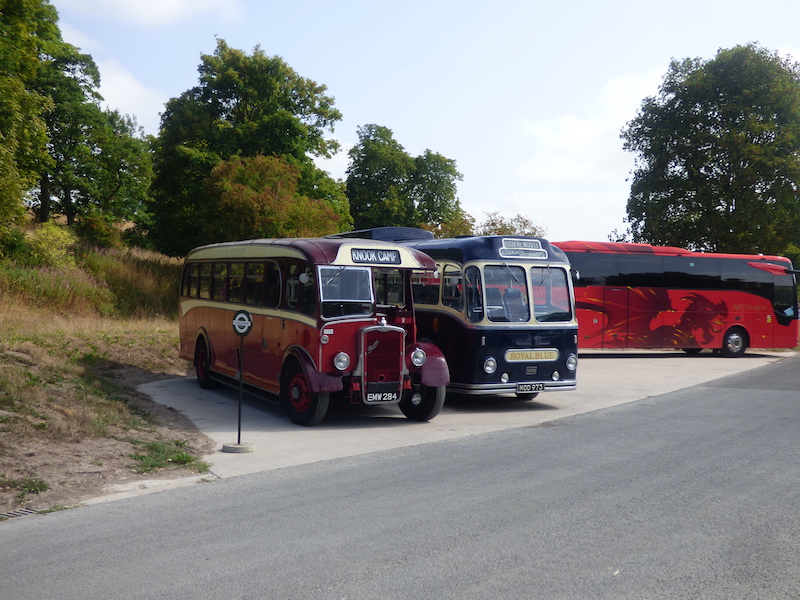
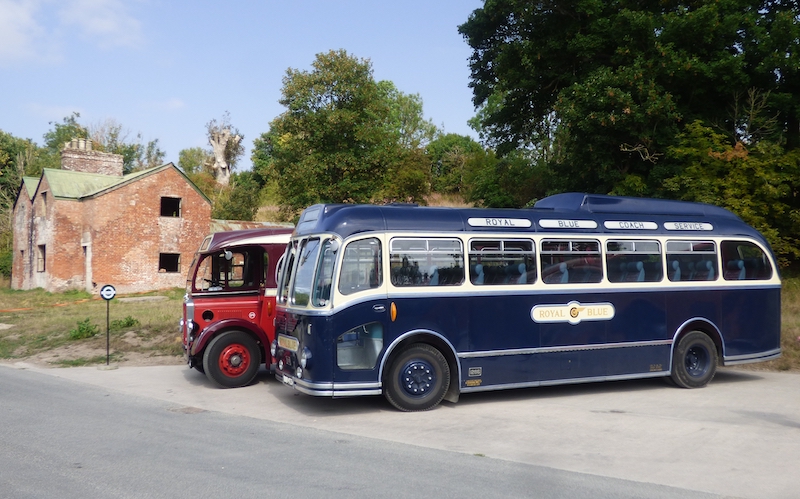
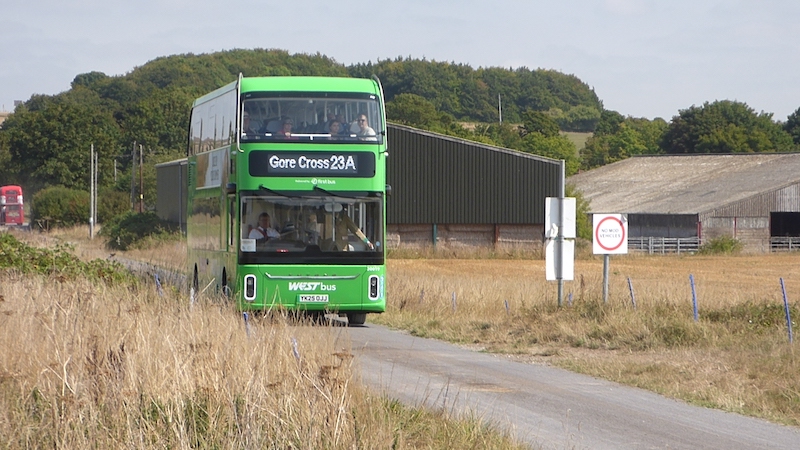
If you haven’t experienced Imberbus’s route 23A it’s certainly a bucket list bus route to ride. There’s no doubt its popularity is taking away some of the exclusivity that gave it it’s quirkiness in the early years, but thanks to the superb organisation and the many hours of hard work put in by the organising team it always runs smoothly and has one other unique quality, especially boarding London’s buses … and that’s old style queuing in a disciplined manner is the order of the day.
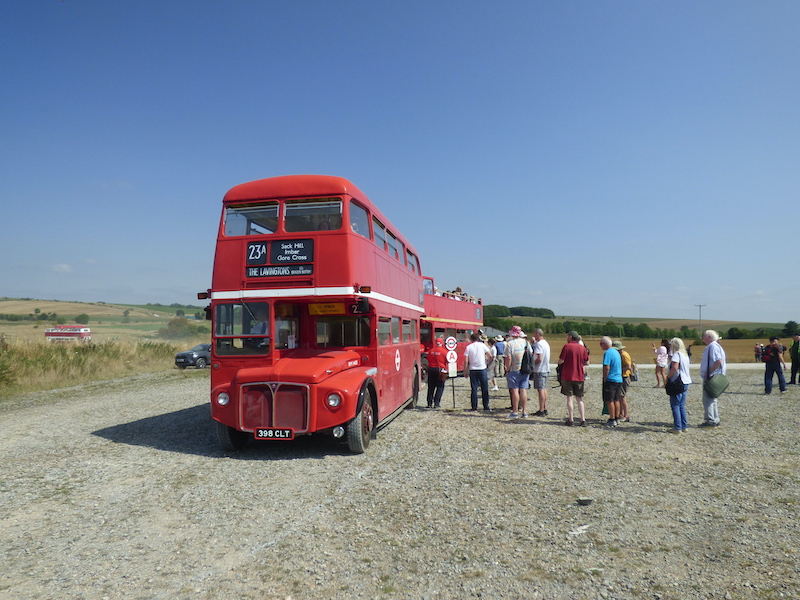
Long may route 23A continue and a huge thanks and credit to Peter, Michael, Martin and Simon for launching the service back in 2009 and seeing it go from strength to strength.
And finally, I’m grateful to Richard Windley who sent me a list he compiled of the 41 buses which attended this year’s Imberbus with their running numbers for route 23A so readers can get an idea of the sheer volume of organisational work that goes into running this service as it grows each year…
1 RM1400 (398CLT); 2 RML2344 (CUV344C); 3 GSC Morebus 1407 (HF59DUM), open top, Beach Breezer; 4 Transport UK LT620 (LTZ1620); 5 RM9 (VLT9); 6 Metroline ST812 (LTZ1812); 7 RM1978, ALD978B; 8 Open top Bristol Lodekka, L8579 (869NHT); 9 Stagecoach West 10988 (SN18KUV) – ADL E400MMC, Stagecoach 2025; 10 Go Ahead Fastrack MEC50 (BT09GPJ) – Mercedes Citaro; 11 Cream Lodekka, 452XVE; 12 Stagecoach East Kent 11817 (SK24CKO , ADL E400MMC, Stagecoach 2025; 13 Eastern National VR, XHK234X; 14 RT3435 (LYR854); 15 Burrows Coaches C425WFH; 16 RM848 (WLT848); 17 RML2318 (CUV318C), open top; 18 RMC 1510 (510CLT), open top; 19 RM54 (LDS279A); 20 Bath Services L8515 (969EHW), Bristol Lodekka; 21 First West of England 30019 (YK25OJJ), Yutong DD, Westbus green; 22 Metroline LT558 (LTZ1558); 23 RML2317 (CUV317C); 24 East Kent AEC Regent V with Park Royal body (MFN946F); 25 Delaine 116 (M1 OCT), double deck; 26 RM1005 (5CLT); 27 RML2735 (SMK735F) ;28 Possibly a Leyland Lynx that broke down on the way and didn’t attend; 29 Stagecoach London 11066 – ADL E400MMC, Selkent Diplomat, Bromley Garage; 30 RML2699 (SMK699F); 31 RM, KGJ602D, BEA white and blue; 32 Go Coach Kentish Bus ADL E400, SK07DZA; 33 Stagecoach South 10944 (SN18KNH), ADL E400MMC, Coastliner; 34 GSC Thamesdown 145 (JAM145E), Daimler; 35 GSC Bluestar 6944 (LX58CYF), Olympus; 36 Chaseside Propulsion 204 (MR06CSP), ADL E400; 37 GSC Wilts & Dorset 4413 (BFX666T), Bristol VR; 38 Thames Travel 80987 (BU25ZHK) – Volvo MCV EvoSeti, River Rapids X40; 39 Bristol LHS (VGC932); 40 Stagecoach London 12511 (SN16OJA); 41 Transport UK 3124 (LV25CVF) – Electric Wright d/d; 42 Go Ahead London EBD111 (LF25SGV) – Electric BYD d/d
Roger French
Did you catch the previously featured Top 10 Quirky Bus Routes? 10: White Bus route 01, 9: Borders Buses route 477, 8: TfL/Transport UK route 969, 7: Tavistock Country Bus route 112, 6: Royal Parks RP1, 5: Cumbria Classic Coaches 572, 4: Stephensons 14.
Watch out for No 2 in this Top 10 Quirky Bus Route listing next month.
Blogging timetable: TThS
 BusAndTrainUser
The Wandering Busman helped drive RM1400 to and from Imber along with RMA 2(BEA RM) At Imber event I was the Conductor on RM1400 several times A very good and busy day indeed.
Thankyou Lord Hendy and the team.
LikeLiked by 1 person
Until 1964 British Army matters were governed by the WAR OFFICE as some of my archive London street atlases will testify. The Ministry of Defence took over in 1964. During WWII my partents worked for the War Office at ROF Chorley. My father was a Labour Officer and my mother a Pharmacy Dispenser in the factory’s Infirmary. He from Essex (Loughton), she from Middlesex (Hounslow) both sent north by the Ministry of War Labour which is where they met and married three days before D-Day. My sister arrived in 1948 in Chorley and me in 1953 at the family home at 279 Park Road, Kingston upon Thames as a result of my fathers removal south because of a job change.
LikeLike
Going to have to summon VAR for this one. Is it really a route or just a bus rally?
LikeLike
From experience I’d say the majority of people using the buses are not enthusiasts. They’re travelling to visit Imber and the normally out of bounds military training area.
LikeLike
Always a brilliant event. Cars have been banned for a few years. It’s not a new thing for this year.
What was new this year was that the bus stop at Warminster Station was a Bee Network one.
Steve
LikeLike
How about a trip to Osea Island ?
LikeLike
Quite Clearly this is a route. The objective indeed to serve the Church predominantly for persons with ancestors in graveyard and so on. The use of modern buses by local operators to present day standards now allows this one day to be car free which gives more space for people.
Operated I note under a Community Bus Permit, enabling fares to be charged ( Bus Rallies will only have “free” services which are not registered under any detail – Cobham Bus Museum may be different on its connecting services ) .
As to maintaining of Quirkyness. Irregular service ticks one box on that bingo card, serving a place named Brazen Bottom another.
St Giles, a Greek by birth, ironically also had legends about him growing bigger by the year with large patronage to the abbey where his remains were interred in modern day France, Fittingly for the charity , Saint Giles is the patron saint of people with disabilities, And the church is very similar to one of the Tri-ang model railway churches.
I am interested for the Electric Buses attending where charging facilities were provided, as operating an electric vehicle to the middle of nowhere is meant to be at best , challenging.
JBC Prestatyn
LikeLike
On the e-charging question, I today travelled on part of the X17 route from Chesterfield, now operated by electric double-deckers. The full route is Barnsley to Wirksworth, almost three hours. I’m not familiar with their charging arrangements, but the Imber mileage would appear to be much less.
LikeLike
The quality of the publicity, timetables, bus stops and blinds puts TfL to shame.
Compare that with the extra buses put out by the major operators during this week’s tube strikes. Arriva fared worse with paper slips in the front windows on routes which they are contracted to run.
Martin W
LikeLike
The organisers of Imberbus take plenty of time to plan the event – and it shows, through the attention to detail including blind displays. Full credit to them.
Ideally, we would see the same attention to detail when extra buses are put on during strikes on rail networks. However, the people tasked with organising those extra buses have nowhere near the lead time – just a couple of weeks’ notice to find operators who can make vehicles and drivers available, having to do this on top of the normal “day job”, and not knowing whether all that extra work might be for nothing if the strike gets called off at a late stage.
Malc M
LikeLike
Some of the small operators who’s vehicles were used made the effort to display proper blinds albeit electronic. Extras on the 27s carried properly printed destination boards in their windscreens. Arriva who should have buses fully blinded for the 19 and 38 couldn’t even manage to dress their vehicles and relied on pathetic A4 labels in some cases showing the destination in the wrong direction. Two tier operators?
Martin W
LikeLike
Roger, a very minor typo in the caption to the penultimate picture – it was taken at Warminster Services not at the station.
Richard K.
LikeLike
Thanks Richard; now corrected.
LikeLike
re the LT style bus stop at Warminster Station. I thought all bus stops, except in London, had to be of the standard DfT black single deck bus silhouette style. Is this still the case, in which case, how come there is an LT style bus at Warminster Station?
MotCO
LikeLike
A modern day myth – bus companies use a number of bus stop designs and are freely permitted to do so. Wiltshire Council’s new design doesn’t use that pictogram, and Ray Stenning as an avowed hatred of it as his designs for firms like (Yorkshire) Coastliner and Trent Barton show.
LikeLike
GoAhead South Coast doesn’t use the DfT style at all.
LikeLike
Nor does Cardiff Bus: these are being rolled out across the city: https://tinyurl.com/2td7js7w. Other operators use different flags.
LikeLike
A bit difficult if route numbers change
LikeLike
Wilts and Dorset used an almost standard – must have been a BET / Tilling and BAT design ? Small Square cast metal “BUS STOP” atop a single metal pole. This sometimes carried a timetable. Some were augmented with “Both Sides” They tended to come with a white background with Green . Red or Black lettering depending on company preference. Timetables were often mounted separately on a fence or bus shelter and carried many services or adverts , on inspection most of the services were once or twice a week or once or twice a day tied into market days and similar. Sometimes there was a trunk route that would pass with regular service others were SDO. The timetable board was of the “Church Notice” style with a apex over a glass in a frame openable with descreete locks . The apex would carry the name of the main operator = Western National eg and painted I can recall Green or Red or some dark blue (royal blue coaches at some popular calling points). Over time the hedgerows would cover up the poles. sometimes becoming visible in the late summer hedge trimming local council – contracted often to farmers – flail of the hedgerow.
Route numbers were not carried on the stops.
Of course today we expect better , Service Numbers, days of operation, operator, local logo for operator service , terminal and at lease one principle place served, for each route. But the EEC / international Bus stop never fully eradicated any of the other styles , despite, in my opinion, being a classic of design.
LikeLike
I grew up in Great Wishford, a village in the Wylyle Valley between Warminster and Salisbury which has Wiltshire’s other St Giles’ church, so there was always an interest in the link from our village church to Imber’s.
My dad worked for the highways department of what was then Wiltshire County Council. For several years in the 1980’s his job involved posting up the notices advising the public of the opening and closing of public rights of way – roads and footpaths across south Wiltshire and this included the whole of the military area of Salisbury Plain. These had to be displayed for several weeks ahead of roads re-opening to the public on location and included the roads to Imber. At this point in time, it was the local authority responsible for this as the body responsible for all public rights of way, rather than the military.
Due to live firing etc during the week, the notices in the ranges were done by my dad as weekend overtime, suitably paid at double time. Armed with an MOD issue ordnance survey map in the days before GPS, maps etc, we would navigate our way around the military land, including the Imber area with Dad putting up the notices. It always involved a stop at The Bustard, where he knew the landlord and swapped a dead pheasant from our freezer at home for a pint!
In his talk mentioned by Roger, Peter describes the largely white space of the map in earlier days. Dad’s army issue had everything marked on it and we did a few diversions, seeing what little was left of the village, the modern training village which Peter describes in his talk and further to the east of the ranges the mock German village erected during the cold war, the rooves of which can just be seen near Tilshead on the top deck of a Salisbury Reds service 2 on one of their few double deck operated runs. At the time cruise missiles and weapons convoys were making the UK headlines, we went to have a look at what would have been the site these nuclear weapons would be launched from which wasn’t far from there. A sobering sight.
There were rarely any military personnel around at the weekend and Dad’s bright yellow Ford Transit truck with the flashing light he always turned on (because it was there and he could!) made an interesting sight!
Some aspects of life seemed simpler then and on one occasion when there was heavy snow, he was despatched to RAF Boscombe Down, the experimental and testing airbase, to borrow their snowblower!
LikeLiked by 1 person
As a postscript, Wiltshire Connect DRT expanded into the Warminster area at the beginning of September. How about trying to book a journey to Imber on one of the days it’s open to the public?!!!
LikeLiked by 1 person
Great article thank you.
Mike C
LikeLike
I’m surprised that the LT style appeared, as TfL seems to guard its roundels etc with zeal. Maybe nobody asked them?
LikeLike
Peter Hendy was Commissioner For Transport in London in 2009 so he probably approved use of roundel.
As a result of rail disruption in 2024 Imber is also served by National Express service 23X direct from Victoria.
LikeLike
Just to say that Metrobus run a once-a-day 23X service between Crawley and Worthing, interleaved with the normal 23 but a slightly different route. I have no idea why – shopping?
LikeLike
The 23X avoids a low bridge and allows deckers to be used.
LikeLike
I visited Imberbus for the first time last year. As you say Roger the event is very well organised & the sight of LT/TfL bus stop flags in the Wiltshire countryside seemed quite surreal. Apart from sampling rides on a Bath Services Lodekka & ex.London Routemasters my personal highlight was sitting on the top deck of B340 (Ole Bill) & admiring the surrounding comings & going of the various buses at the event. I was hoping to visit again this year but a family birthday party took precedence. Oh well, hopefully I’ll make it again in 2026. The event is certainly a credit to all concerned.
LikeLiked by 1 person
Bow about the quirky 721 to Zero 2 bus museum
LikeLike
Disagree, as a route it is not very exciting, although guess the vehicles will be much more so. But it actually gives a Sunday service over a Konnect route that only runs m-s.
LikeLike
I see from the 2025 webpages of imberbus that beyond Routemasters were intended to be selected vehicles of interest that had not been to imber before. That does give elements of Bus Rally / Motor Show about the event , but the vehicles in the display area tend to be typical of what served that kind of area in the past , and those in service the modern vehicles which help with capacity and accessibility. I assume similar will happen in 2026 with new reg vehicles in service.
Also “feeder” coaches operated commerically , have expanded from various directions making the location even more accessible over the years.
For persons wanting to visit by car there were two park and ride locations, but the following (full bank holiday) weekend did allow cars to the area presumably parking closer to the church. I dont know if there is a further internal bus service or park and ride on other days , maybe one day there will be and the 23A become less unique over time.
JBC Prestatyn
LikeLike
The only other day the 23A operates, and even then only as a free service, is to get patrons to the annual carol concert at Imber Church in December. But be quick to get concert tickets as they go like gold dust, and you can’t get on the bus without one for security reasons.
LikeLike
Well if this is only 3 there must be 2 belters still to come!
LikeLike
Even stranger are the bus routes that operate in one direction only
LikeLike
Incorrect. When each bus reaches their outward terminus they then return either to Imber or Warminster Station.
LikeLike
Idea is fab, views are excellent, but I’ve passed the event for 2 years running now because waiting to board anything for an hour is of no appeal to me. And the event is so popular the 20-odd buses attending are no longer sufficient to meet the demand.
I bet the Warminster Lidl car park looked like half of Wiltshire had converged onto it again!
LikeLike
An additional note about mapping ought to be made. My two A-Z Road Atlases (of two different scales) show Imber but with road blocks also shown on roads which lead there. My AA atlases do not show Imber at all with the roads leading there just “finishing”. My “Philip’s” Street Atlas of Wiltshire certainly shows Imber and the church with numerous nearby topographical features also named along with a predictable “DANGER AREA”. The same atlas also shows an “HMS Royal Arthur”, near the Box Tunnel, better known to historians as BURLINGTON which WAS a government war headquarters of which I have a 216 page book of colour pictures. As well as internal & external telephone lines the internal communication system used Lamson pneumatic tubes more usually used in departmental stores between counters and the central cash office.
LikeLike
Our friend that has been concerned about 20 buses being insufficient should note that about 39 vehicles were in operation at the 2025 based on the list above. Most departures were intended to be run with duplicates and modern double deck single door buses have a large carrying capacity.
The timetable was the minimum intended service I presume there may have been some departures running at intermediate times so a full 30 min wait to board would be unlikely, maybe to the obscure destinations a mental note that there may be too many people for a specific journey has to be considered in all of this , hopefully difficulties and disappointments ,if any, from 2025 will scope what can be practically provided for 2026
Incidentally have any of London’s bendy buses entered preservation status yet ?
JBC Prestatyn
LikeLike
I don’t think I’d agree that St Giles’ Church is the only original building left in the village, There are several other original buildings that are still standing but derelict, including Imber Court, the ‘big house’, of which only the lower two floors remain and are used by the Army for some purpose. The house was rebuilt in the 1920s after having been damaged by fire during renovation. The original house was built by the Wadman family who were Lords of the Manor during the 17th and 18th centuries, but probably weren’t any relation (https://www.flickr.com/photos/michaelwadman/30481587421/in/album-72157625591471610 ); and The Bell Inn (https://www.flickr.com/photos/michaelwadman/30015738243/in/album-72157625591471610 ). Of course we should have expected that the Army would leave the village pub intact.
MW
LikeLike
Was the service commenced when London Transport were removing letter suffix route variations, preferring either a full three number for slightly lesser journeys or just not really running a variant (other than some journeys extended to additional calling points or SDO intermediate coverage – and a few peak hour enhancements to a general timetable – again mainly SDO using the main route number.
So if Peter Hendy was eliminating As in London it becomes quirky for one to escape in retirement to Wiltshire
LikeLike
Herre’s a quirky route you might be interested in, on the Wirral there is a 129 Liscard-Frankby Cemetery which operates one round trip on Sundays & Bank Holidays only, its been operating since the 1940s but no one uses it, its funded by Merseytravel, no one would miss it if it was withdrawn.
SM
LikeLike
I’ve used the 129 at least three times, even took a friend with me in the early 1980s when Seaview Road, Wallasey operated the route with Leyland Atlanteans which he photographed amongst the gravestones. After all to this day the route starts from outside the site of Seaview Road garage which closed at deregulation in 1986 and the site has become ….. ASDA!
John Nicholas
LikeLike
Now that would be a journey for somebody to attempt, Liskeard to Liscard.
Petras409
LikeLike