
Thursday 14th August 2025
An open letter to Martijn Gilbert, Managing Director Arriva UK Bus
As you begin your exciting new role next Monday I thought I’d drop you a line with a few thoughts based on impressions I’ve gained from extensive travel experiences with Arriva over the last few years.
Let me say from the outset I’m absolutely delighted you’ve been appointed to this important position in the Arriva Group. It’s a well deserved promotion to a very key role in the bus industry.
I know from our friendship over many years just how passionate you are about providing an excellent standard of service for commercial success and, crucially, what it’s like from the passenger’s point of view to travel by bus as well as the all important need to maintain excellent relations with a well motivated staff through first class communications.
Your skills are just what Arriva UK Bus has been crying out for for many years.
At this time It must feel like a daunting task with so much needing attention but I have every confidence you’ll soon be making an impact with improvements evident to both passengers and staff.
As you will also know from our experiences with the Young Bus Professionals network, Arriva is blessed with having a team of young, dedicated, keen, enthusiastic managers and I always note the bus drivers I meet when travelling around have always been interested in their work when I’ve had a brief chat with them when boarding and alighting or at termini.
What it seems to me has been lacking is strong leadership from the top from someone who absolutely understands what the bus industry is all about. So, at last that’s been put right.
I get the impression following the sale of the Group to I Squared Capital finally being completed last summer there’s now more scope to try commercial initiatives than under those last few uncertain years of DB ownership. If so, my first suggestion is a rather radical one, but I reckon the time is now right to ditch the Arriva brand for the Group’s UK bus operations and reintroduce much more meaningful localised branding.
Frankly, I don’t think the name ‘Arriva’ resonates with bus passengers at all. It sounds like an insurance company and I seem to recall was chosen as a word that would apply in multiple languages across the European continent but making it irrelevant to the many localised markets being served, especially in England and Wales.
Whereas First Bus and Stagecoach are currently obsessing about their new corporate identities, investing huge sums on a refreshed national livery and brand devised and justified by creative agencies using marketing gibberish that makes the fictional Perfect Curve agency in BBC’s spoof WIA comedy look sensible, I believe in contrast to this misguided approach, Arriva has a golden opportunity to truly relate to the communities it serves.
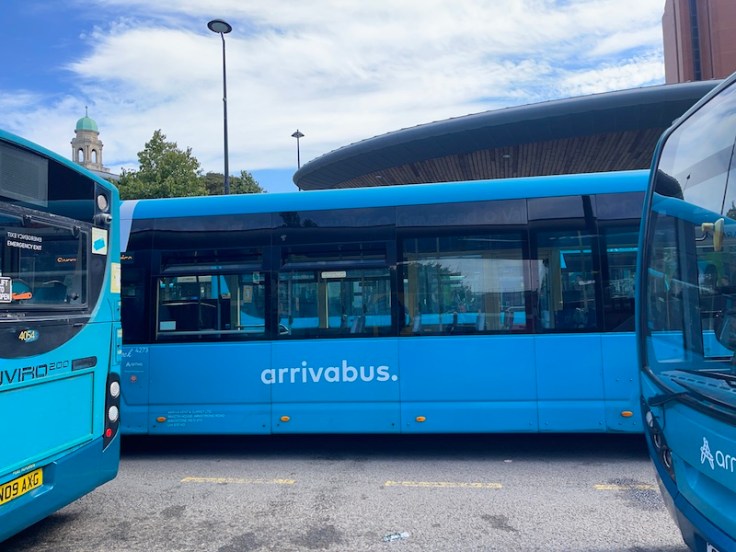
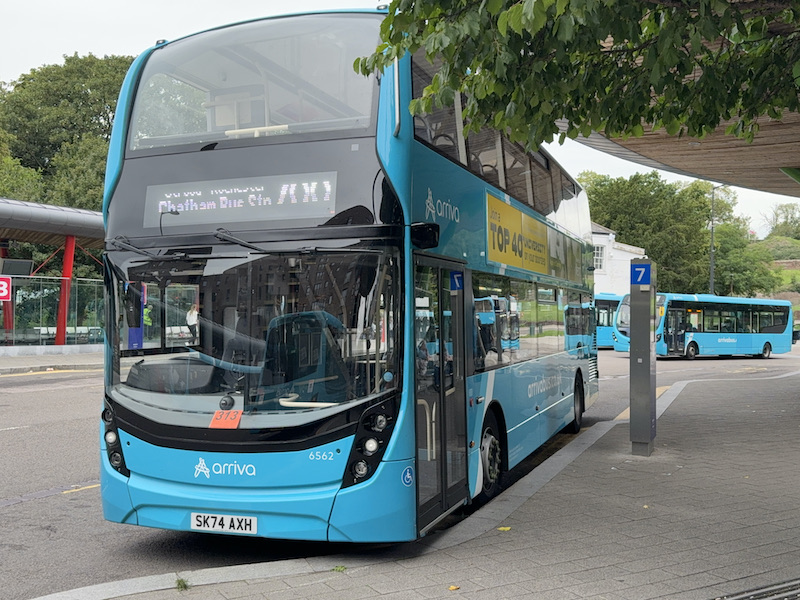
You couldn’t get a more bland livery than Arriva’s current pale blue colour scheme. It famously promotes its website rather than the company on the side of every bus, yet that website is the worst abomination across the whole public transport industry.
Indeed, a revamped website must be a top priority along with the rebranding of the business into local identities.
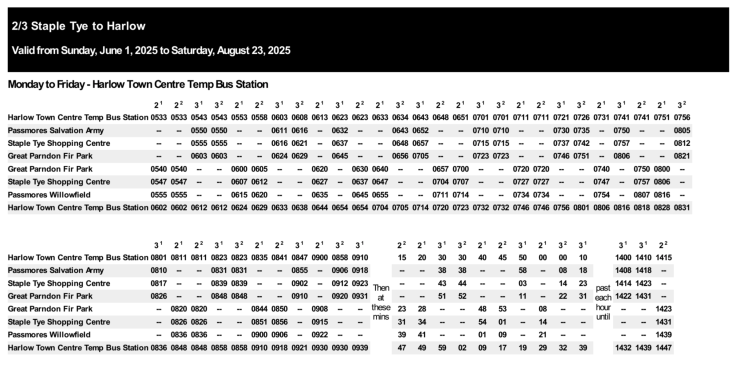
I’m sure you’re well aware of the embarrassing shortcomings from the current website, I’ve featured them in this blog over the last few years, but just try and find any bus timetable for any route and marvel at the complex presentation rendering it completely useless for passengers trying to work out how to get from A to B.
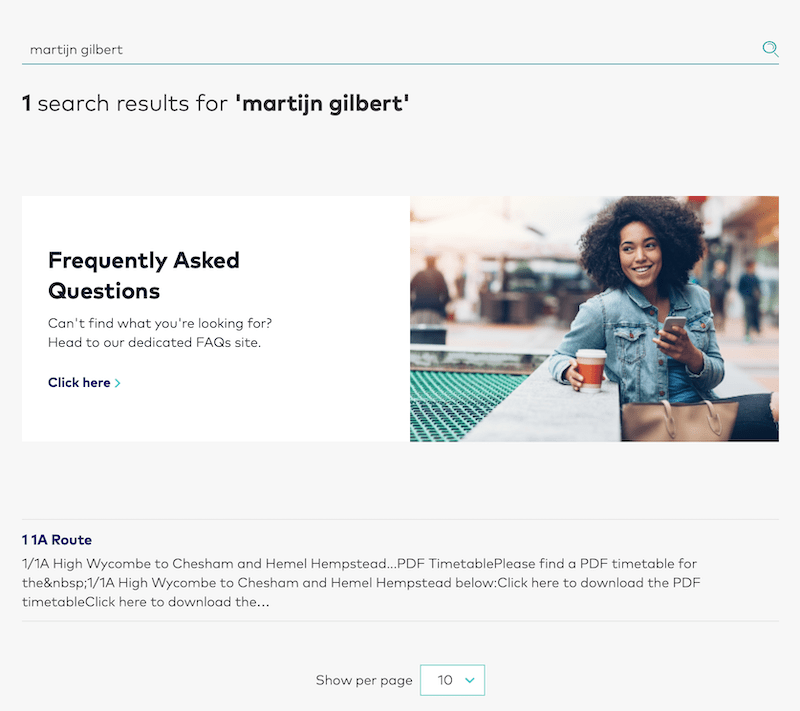
As evidence of its complete uselessness I thought I’d check out the announcement of your appointment so typed your name into the search box under the section called ‘News’, which seemed a logical place to find it, only to be presented with news about routes 1/1A between High Wycombe and Hemel Hempstead as the one result available.
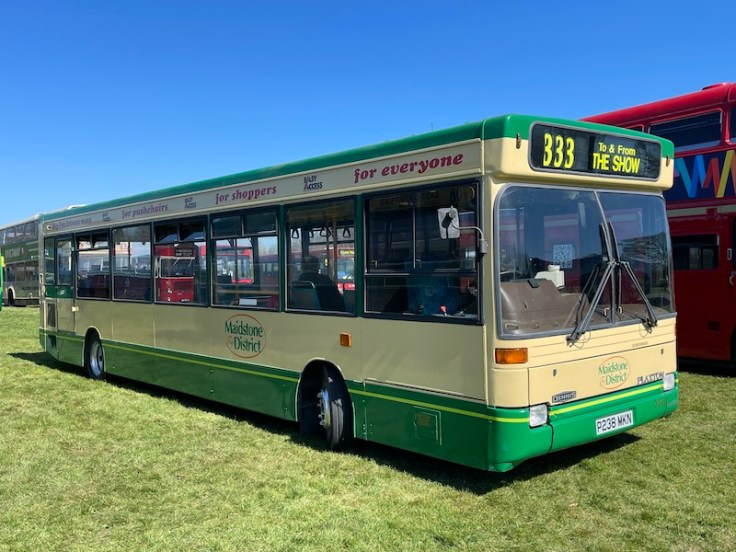
You’ll know from your time at the Go-Ahead Group just how much goodwill is generated by local company names and brands. The very thought of names such as Brighton & Hove, Oxford Bus, Southern Vectis and others being ditched in favour of ‘The Go-Ahead Group’ is just inconceivable, and in similar vein I reckon it’s time to bring back much loved and respected names such as Maidstone & District, Southend Transport, London Country, Luton & District, Derby City Transport, Crosville and United for the appropriate operations within the Arriva portfolio. Maybe even Midland Red, if the name is still available, and MK Metro sounds just right for operations in the Milton Keynes area.
Go-Ahead uses Passenger for its websites. They’re clear and easy to navigate to a tried and tested format which takes account of regional branding and even areas within those regions – eg Oxford Bus/Thames Travel/Carousel. Both First and Stagecoach’s websites suffer from trying to show detailed localised information within one national corporate presentation – it just doesn’t work.
Seven years ago I wrote a similar blog to this one with an open letter addressed to Arriva’s then Chief Executive Manfred Rudhart urging him not to proceed with a plan for more centralised management and control within the UK Bus operations. Seven years on I have to say I’ve been proved right with the advice I gave at that time. Arriva has had to cede ‘territory’ and given up swathes of operations since that time, often because of a lack of locally based managers with the motivation and autonomy to take, or recommend, decisions to improve the commercial basis of the business. You can’t control localised bus operations with centralised commands.
That was back in 2018 before we had a National Bus Strategy, Bus Service Improvement Plans, a Buses Bill, franchising and Covid. In 2025 it’s even more important to have a team of locally based managers with the right status who can engage with local authorities and stakeholders and are part of the communities in which they live and work.
Arriva’s significant operations in the North East, West Yorkshire, Merseyside and North Wales will be subject to franchising over the next two to three years with the (non) distinctive Arriva brand disappearing in any event, as it has in London and Leicester, so now is a golden opportunity to grasp the nettle and reintroduce localised branding for the rest of the UK Bus portfolio along with a high profile presence in those communities with plentiful supplies of leaflets, timetables, a relevant, easy-to-use website and a manager.
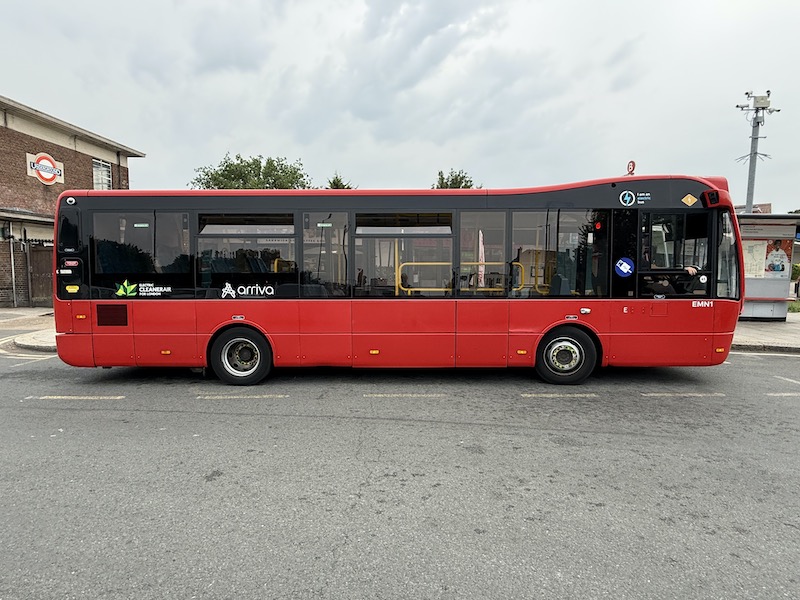
I have every confidence in you Martijn and I know you’ll be up for the challenge.
All the very best to you.
Roger French
Summer blogging timetable: 06:00 TThSSu


I boarded an Arriva bus in Birkenhead holding up my day ticket. Driver looks at me, picks up his mobile phone, looks at it and says that’s the right date. I said I am a mystery customer but for a really good bus company. Driver replied “well that can’t be f*cking Arriva then” and everyone fell about laughing!
John Nicholas
P.S. Arriva buses are my cup of tea!
LikeLike
Wise words! I hope Mr Martin listens to you.
Lee
LikeLike
Any chance he could find out why the 168 from Castleford to Leeds is late (or fails to show) every single time I try to use it?
LikeLike
and North Western.
LikeLike
Roger is correct, the Arriva brand nationally is worthless and needs to go as a customer facing brand (it can be kept as the holding company brand, but since Arriva is owned by I Squared Capital and not retail shareholders that’s not as important as it was). However, saying “London Country” is well loved seems well off the mark as someone who lived through that era, but at least some of the legacy brands are worth reusing.
Arriva has to get a rolling programme of fleet replacement in place, at least for the areas where franchising is not on the cards. The age profile and lack of investment in many of the fleets is dire, the fact that Arriva handed back its Zebra funding for Stevenage says it all.
Roger is also correct that Arriva’s web site is literally useless, which is especially crazy when there are off-the-shelf packages available. But that is hiding a deeper problem that the timetables themselves are often deeply customer unfriendly, with trunk routes having different SDO and NSD times.
The endless tinkering with timetables needs to stop as well, for example the St Albans – Watford – Rickmansworth – Uxbridge corridor was changed on the 20th April, 1st June, 29th June, 27th July and will be changed again on the 31st August.
LikeLiked by 3 people
Bar the 29th June date, the rest of those dates align with when Arriva can make service changes in Essex for which the 724 reaches at its eastern end.
I was initially skeptical but seems the Travel Essex scheme is proving it’s worth, especially for co-ordinating timetable changes between operators.
https://www.travelessex.co.uk/about-timetables-maps/bus-timetable-changes
Pete
LikeLike
I’m unlucky enough to have Arriva as my main local operator, and it’s common for timetables to change two or three times a year – rarely anything substantial, just piddling about with a few minutes here or there, supposedly to make them now reliable. So how come 20 years on and 40 new timetables later, they are no more reliable or punctual in 2025 than they were in 2005? So many timetables include excessive padding, which means drivers dawdling along to the frustration of passengers on board and everyone in cars stuck behind them.
With the coming of more widespread franchising, I don’t know how much it is worth investing in local branding until decisions have been made for definite that some areas are definitely not going to be franchised – no point in developing lots of new/revived brands if they’re going to disappear into the local equivalent of Bee or Weaver in a year or two.
LikeLike
Yes, I agree about London Country, having lived and tried to use buses whenever possible in the Sevenoaks area since the late 1950s.. The handover from London Transport (Country buses) to ‘London Country’ was marked by a general downgrade of service, linked with the general replacement of crews with OPO. The livery too, was not liked – the relatively tasteful ‘gold’ being replaced with a rather garish yellow (cheaper, no doubt), and the comfortable RTs succeeded by rattly Merlins. Rationalised services – i.e. cuts – were introduced, fewer evening services, together with above inflation price increases, and ridiculous attempts at publicity: e.g. they discovered return tickets, which were marketed as ‘Out-backs’. No attempt of course to integrate timetables with rail, or to take advantage of the general desire to travel more often and further which had been generated by increased car ownership.
Handover to the NBC brought something of a welcome – at least M&D buses were allowed to serve Sevenoaks station, though they didn’t do that a lot, and a National Wanderbus ticket was good for all buses! The advent of Kentish Bus (part of British Bus) was heralded by a revision of the route network, leading to a better service on some roads. We even got some minibuses for a bit, with a co-ordinated, relatively frequent local timetable, But it all ended in Arriva’s blue and cream.
I honestly don’t think anyone in the Sevenoaks area remembers ‘London Country’ with any warmth! ‘Maidstone and District’ maybe – the only commercial Arriva route in Sevenoaks now is the 402 to Tunbridge Wells; that’s an old LT route number, but the service is really part of the ex-M&D Tonbridge-Tun.Wells service-bunch. But most of the minimal buses left in the area are run by Go-Coach.
LikeLike
When I had a job interview at Arriva Midlands last year, the interviewer (a very pleasant guy), said tongue in cheek with a smile on his face, “They’re not buses, they’re assets.” Therein might lie a summary of the problem!
LikeLike
What role was this for, a bit of context goes a long way!
LikeLike
What a great opportunity to put right so much that is wrong within a bus company. Let’s hope that Martijn is backed fully, the task is daunting, but having the right person at the top is a good start.
Martin Smith
LikeLike
I really do hope Martjin can rescue Arriva now they have left the DB era. With strong ties to their Essex operations, seeing their downfall and missed opportunities has been gut wrenching.
It has been interesting even this year seeing the Colchester ops making route changes. Introducing a Sunday service 1 (albeit for 2 months) and even more recently starting service 3 in competition with First. There is hope for life in the iSquared era of Arriva.
I can only hope Martjin has an open inbox and will invite suggestions and thoughts from passengers.
Pete
LikeLike
Let us hope that the backing is there. Appointing Gilbert is a statement of intent, but without the right backing it will not work. Giving time and some funding is essential to not just stop the decline but turn the ship around. I am confident that if this is provided this will be an inspired appointment.
Gareth Cheeseman
LikeLike
Hear him.
Easily the worst large bus company.
If a bus company cannot produce a readable timetable, it plainly can’t run a decent passenger-focused business.
James
LikeLike
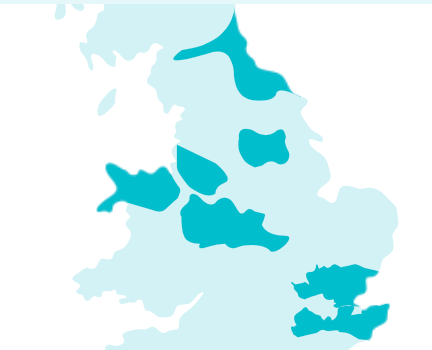
The decline in operating area has overtaken the curious, out of touch with reality, map. It appears to include several areas Arriva no longer serve, such as Surrey, the Thirsk / Ripon area and the strange “finger” pointing towards Carlisle. And did they ever serve East Kent?
LikeLiked by 1 person
Would the disparate “Southern Counties” operation be better off split up and in different hands?
I’d agree with the previous poster about London Country though. I think you’ll need to thank British Bus for its part in its downfall…
Darryl in Dorset.
LikeLike
Bland livery and Brighton & Hove literally copy their colour scheme.. terrible choice. All they did was stick some jelly babies on the side.
LikeLike
Erm… Have a look at the colour of things like taxis, street furniture etc in Brighton and Hove and then the buses. Think you’ll find the colour is much closer to those than Arriva!
BW2
LikeLike
Arriva Sapphire to be more precise. The point is Red and Cream was the company’s identity. There’s nothing left, everything Roger did is gone. External adverts, bus lane removals in the city centre, championing knowledgeable local drivers with career opportunities instead of people with a degree in something irrelevant to the industry, no knowledge of the city and no driving experience. So much more has been lost. It’s merely a name.
LikeLike
In my opinion Go-Ahead is currently making the same mistakes Arriva, First and Stagecoach did a decade or more ago, listening too much to the merry-go-round, buses-today-different-industry tomorrow managers who just view buses (and, for that matter, trains) as another slot filled on their CV and ignoring the need for committed, whole-career public transport professionals.
I know Roger has a soft spot for them as his former employer, but they’re not the same organisation as he worked for, and it would be quite ironic if a resurgent Cowie/Arriva “British Bus” became the new home of those committed whole-career public transport people.
LikeLike
BW2, I admit I was shocked when Brighton & Hove Buses announced their new livery. But on reflection I quite like it, as you say there’s a synergy with the local taxis and the promenade Street furniture so it does make sense. I like the multicoloured jelly babies, which I believe represent the city’s diverse population.
Peter Brown
LikeLike
Would Go-Ahead ever consider getting rid of the traditional red & cream Brighton livery colours dating back to Tilling days? Oh wait, they did!
LikeLike
Local journalists haven’t a clue either. Why a Thames Travel bus is used to illustrate the article about Somerset. That’s nearly all the services in Somerset!
https://www.somersetcountygazette.co.uk/news/25375723.82-bus-routes-somerset-subsidised-council/
LikeLike
Years ago a Lincolnshire online “news” site illustrated a story about a dodgy local operator ending up in court with a picture of a Stagecoach bus.
I emailed them and asked if they would illustrate a story about a dodgy vape shop being taken to court with a picture of a Tesco supermarket and they said “no, of course not”. Why then, I asked, use a picture of a Stagecoach bus on the story of the dodgy bus operator? The reply: “It’s just a bus, what difference does it make?”.
Says it all about their own level of journalistic competence.
LikeLiked by 1 person
It would have been interesting to know what Stagecoach would have said (and, perhaps, done) about that particular misuse of their identity – assuming that they found out about it!
RC169
LikeLike
At least it wasn’t a Routemaster, a very popular go-to image for mainstream media articles.
Peter Brown
LikeLike
The return of “MIDLAND RED ” Roger ?
I wasn’t aware that Midland Red didn’t exist anymore with ;
First Midland.Red Buses Limited
and
Midland Red (South) Limited
continuing to operate in Worcestershire & Warwickshire
Or am I missing something here?
LikeLike
A novel thought on branding.
If Arriva is serious about local partnerships then perhaps it should ditch its corporate brand – along with other local operators – and get behind an independent local network partnership brand.
Surely the way to go in area such as Leicester where several operators make up the core network?
With your honourable exception, bus travellers rarely travel outside their local area so don’t relate at all to a corporate brand.
Andy Gibbons
LikeLike
“Leicester Fox”, a nod to the pre Arriva/Cowie brand Midland Fox would be a good brand for the Leicestershire network if a co-ordinated franchised network happens. Though given relations between the Leicester Mayor and Leicestershire County Council are not good franchising may not happen there.
LikeLike
I wonder if the “errors” in the operating area shown on the map are what is to come? I joke! But Arriva certainly need a new Broom sweeping clean, and from looking at his past record, Mr. Gilbert seems a very good choice. But does have a habit of moving-on after a couple of years as is the fashion this century and all good work undone by a Successor.
“Local Identities” may sound great, but I note that even Go North East who took it to the extreme are thankfully returning to a standard livery in many places. Branding is a nightmare for operating staff, an expensive nuisance when vehicles need to be re-deployed (frequently) and look out of place when obviously working beyond their territory on long routes. Stagecoach (in the Souter era) successfully worked buses from the Highlands to Cornwall in one livery and passengers were not confused. In Oxford to this day (and many other places) a variety of dabs and dawbs in a range of colours (often with wrong branding anyway) on non-electric services just looks a mess!
Unlike Northern territories, Mr Gilbert may like to look at why passengers are crammed into the lowest possible vehicle capacities on many services in the Southern Counties. It is one of the few places I have seen (in Watford on several occasions) “Bus Full” on destination indicators for a long time, whereas a double-decker should have been working such duties.
Terence Uden
LikeLiked by 1 person
It’s worth remembering that I squared is a global infrastructure investor, they have no interest in any of their businesses other than getting an adequate return on investment.
I understand that Stagecoach now require a hurdle rate of 14%, eg every new investment must make a 14% return. Traditionally Manchester and Newcastle both met this, but will be franchised. Removal of underperforming bits is clearly what Stagecoach are doing, eg the 54 Eastbourne service, Powys, Dumfries etc.
Many of Arriva’s businesses are poorly performing, the fleet needs massive investment, and whilst there have been service changes many seem poorly thought out such as the Rhyl-Llandudno coach which takes twice as long as rail, and the Loop in Milton Keynes which serves areas where there never were any passengers.
One should also look at Go Ahead North East where extensive service revisions and excellent marketing did not lead to financial success.
It will be interesting to see how this unfolds.
LikeLike
Interesting that you mention the Stagecoach reverses. Dumfries had nothing to do with hurdle rates and everything to do with an open ended liability that no major business would accept.
No mention of the success in winning the Callywith College work from Go Ahead (in Cornwall) or the Bicton College stuff in Devon (from First) so the hurdle rate isn’t precluding the winning of work?
BW2
LikeLike
14% ! Jeez , I work in a business where 6% is the norm for the industry , and 8% is exceptional .
LikeLike
Yes, by all means dump the Arriva brand but please, please don’t go to the other extreme and throw money in the Shepherds Bush direction for glitzy “brandings” without getting the underlying PRODUCT right.
LikeLiked by 1 person
That was my Impression! 🙂
LikeLike
No one throws money at Best Impressions (have the balls to mention us by name). Clients ask for a highly skilled, professional creative service that they pay for.
LikeLiked by 1 person
Oh dear! However, like it or not, sometimes the “creatives” do not have the balls to stand up and say “get the product/proposition right BEFORE throwing money at us for branding etc.”
LikeLike
this one does👍
LikeLike
I salute you, Sir!
LikeLike
How do you know what Ray Stenning of Best Impressions discusses with his clients? Given their successful collaboration with the transport industry over the years I would think starting with how the product can be improved would be a logical starting point in any discussion/negotiation. Marketing is all about raising awareness but ultimately, it’s down to good management to deliver the end product.
LikeLike
Marketing is about setting and meeting (or exceeding) customer expectations.
Sadly, there are all too many examples in the bus industry of marvellous “brandings” (not all of which emanate from Best Impressions) which have accompanied dismal failures in delivery to the customer.
Take Arriva for example … and Yorkshire Tiger R.I.P, Sapphire R.I.P. ….
Marketing is far more than a glitzy livery.
LikeLike
While Go-Ahead have maintained local identities for their fleets, they haven’t necessarily kept the traditional names.
Wilts & Dorset is now Salisbury Reds and Morebus (with Swanage operations using the Purbeck Breezer and Jurassic Breezer sub-brands) – but then, the W&D depots at Ringwood and Lymington were never in Wiltshire or Dorset. Neighbouring Solent Blueline, admittedly dating only from 1987-ish, is now Bluestar.
Rather than reviving the M&D and London Country names, I wonder whether “Kentish” might be a better choice for the former Kentish Bus and M&D territory, noting that places such as Gravesend and the Medway towns are neither in Maidstone nor in London.
Malc M
LikeLike
Martin is a man who clearly relishes a challenge!
I read this blog shortly after learning that my local 395 bus was cancelled (all of two buses are required to run this service, so 50% failure rate this morning peak). This from the Arriva app., so it’s anyone’s’ guess whether it was really cancelled or not….
I agree with much Roger says, but I do need to take issue with the local branding recommendation. For this to work, Arriva (like any operator) needs to have a strong presence in its local markets. It has this in Luton, Harlow and Milton Keynes but elsewhere market share has shrunk where more ambitious operators have been on manoeuvres. Hint for Martin: it would help if Arriva actually tendered for local authority work…
On a positive, the shackles of DB seem to have encouraged more of an entrepreneurial approach; the 310 between Hertford and Waltham Cross goes up to every 30 minutes commercially on Sundays/public holidays from September, and the extension of Herts BSIP-supported 725 route to Heathrow Airport to give a 30 minute frequency on the Heathrow – Watford – St Albans corridor appears to be a good move.
Then there’s the vehicle age and presentation that needs addressing. There has been mild excitement of late when Arriva went shopping for buses, albeit second-hand, six or seven year old examples. This must surely be the definition of ‘kicking the can down the road’. Incidentally, I had to do a double-take when in Stevenage this week when I spied a vehicle in the original Cotswold Stone and Aquamarine livery!! This is a remarkable feat (though probably not one to be proud of), given we’ve had the ‘Interurban’, ‘Max’ and ‘Sapphire’ treatment before the current re-incarnation.
LikeLike
The 395 is being replaced by an extension to 323 meaning Ware will have a 2nd direct bus to Welwyn, it appears to serve everywhere the 395 currently serves. Whether the service is cut overall, I’m not sure. Frequency is every 30 minutes.
I’m really looking forward to the increased Sunday frequency on the 310 but it needs to be half hourly and run later on weekdays too. It’s too limited right now.
I’m really indifferent to Arriva to be honest, they just don’t seem to care about the service they offer. Would require some big changes to change that feeling.
Aaron
LikeLike
I Dont mind Arriva’s blue livery. And many Local Bus Operator names have faded from present day memory. I found the Latest News section of the website – announcing route changes in advance – at least correct but it was clunky to use particularly when actual changes in the past couple of weeks are pages back as announced much earlier – there needs at least management to separate out “planned upcoming” from “recent actual changes” ideally with some kind of logical geographical grouping – even if that might mean a (search) repeat result for Herts and for Essex when services cross both.
NBCs VNP/MAP and London Countries similar projects introducing a local identity might be a thought area with just really a few vynals on a bus , and more long term static on the timetables and stops
NBC was supposed to earn the treasury a real rate of return of 10percent on capital employed (I dont think property was revalued for that). Given an investor will be hard pushed to find a risk free rate of return elsewhere in industry of 6percent or more I think 14percent on historic is optimistic. What 14percent (before Tax ?) would allow is for risk bumps – like govt messing with employer NIC for example and may be does not include full development costs in the capital assessment so it allows for contribution to overheads not directly attributable to the procurement price, which is a fair rule of thumb at least for an initial project view threshold.
Does Arriva look to working only Franchised chunks or services, or look at routes which are independent of daily mayor responsibility. Arrivas operating areas came about more by accident with the management and mergers of direct post deregulation and now there are a lot more UK wide challenger groups potentially – First, Go-Ahead,Stagecoach, NatEx, Transport UK, even Rotala and Diamond Bus.
The obvious is to attempt to grow with revenue guarantees – so more bus partnerships including investment in higher capacity and Herts Bucks Essex Kent do give scope for that these days. North Wales depends on the Welsh Govt. Merseyside and Newcastle effectively will depend on Mayor. I think looking to acquire Diamond Bus might be a good long term move giving West Midland and Manchester opportunities . East Essex has lots of other group’s competition but the alternative is a duopoly of GoAhead to the East and First to the West, Perhaps Stephenson’s recent restructure to a employee “owned” structure gives scope for acquisition there as the employees liquidate out the future profits which would give a good geographical match along with coach / schools contracts .
JBC Prestatyn
LikeLike
The quoted figure of 14% return on capital employed will have been determined in relation to the general level of returns on other investments in the stock market. Whether the business runs buses, builds power stations, makes breakfast cereals, etc, is irrelevant – the investors want to get the best return on their investment. In the long term, they will take their money away from businesses that do not achieve those rates, and move it other ones that do.
I would not disagree that it seems to be difficult for the bus operating industry to achieve the level of returns that the stock market requires. It seems that even where there is some form of “revenue guarantee” (e.g. contracted or tendered services), bus operators seem rarely able to achieve the level of returns required by the stock exchanges.
RC169
LikeLike
Actually if Arriva did acquire Diamond the logical thing could be key interurbans marketed as “Diamond” with local town services as “Sapphire” . The 725 should revert to Green Line and perhaps the Kent services “Autocar”
JBC Prestatyn
LikeLike
I always thought the Assets in a bus operating business are the employees
JBC Prestatyn
LikeLike
No, that’s the Train Operating Companies, but only because they have no actual physical assets given that everything is leased.
Otherwise train and bus companies alike in general unfortunately seem to view their employees as liabilities rather than assets.
LikeLike
if “London Country” isn’t deemed a positive maybe they could go for London Transport instead. After all TfL couldn’t wait to get rid of any reference of that name!
LikeLike
London Regional Transport, maybe? Given that we’re going for the 1980s vibe… 😉
LikeLike
If we dont like Arriva Essex the idea of Laindon Transport seems interesting (or maybe is Town and Country actually available ? )
LikeLike
or Luxton & District!
LikeLike
Arriva – a company more concerned with changing it’s management structures than understanding it’s product.
AG
LikeLike
The exact same could be said for First.
LikeLike
I would say that Mr Gilbert’s first move needs to be sorting out the structure of the “Arriva Group” itself. Arriva North East seems to have a reasonably sensible set-up. as does Arriva Merseyside; Arriva Yorkshire, and Arriva Cymru. Arriva Midlands feels, quite simply, to be too big, stretching from Luton to Shrewsbury as it does . . . perhaps adjusting this group into smaller units would be a logical start. And then there’s Arriva Kent Thameside, with all its disparate bits and pieces . . . quite how to proceed there is the big one!
Merseyside; Yorkshire (and possibly Cymru) will largely need to await the progression of franchising in those areas . . . if they follow the Manchester model, then there is not much that can be done there . . . simply waiting for the inevitable and keeping costs under control should be enough.
I recall that even NBC kept a couple of small units; Provincial in Gosport and Fareham being one; where the company was kept small deliberately as a sort of “nursery” for junior managers . . . James Freeman being one that went on to a successful career in the bus industry. Southern Vectis was another, where the General Manager, whilst not quite a Managing Director, was given considerable freedom to “get on with it” . . . Matt Kitchin, again progressing to MD level at Stagecoach Yorkshire.
Perhaps the Kent business should be left alone, and given to a young Manager to “cut their teeth” on. That leaves Harlow / Ware; Southend and Colchester, and poor lonely Hemel Hempstead – which “could” go back to Arriva the Shires . . . Luton; Hemel and Milton Keynes is almost contiguous geographically. For the sake of brevity, the Essex group could sit together for now with another young MD as a first appointment.
There’s nothing wrong with an MD also taking responsibility for finance or engineering . . . indeed, Luke Marion at Oxford was originally the FD there until Phil Southall moved upwards to Group level. Some of the privatised NBC companies also did that initially.
Sort out the basic structure, and the local branding can follow naturally. I very much agree about the website . . . that desperately needs dealing with, and the “Passenger” style is easy to use and more importantly, available quickly . . . don’t re-invent the wheel!! It’s interesting that providing a good website, WITH additional printed publicity, seems to be working in Swindon; a good example of “internet only” versus “internet plus”.
None of this will be quick, as it will still be necessary to seek financial backing from I-Squared. This stage in Martijn Gilbert’s working life might well become “career-defining” . . . whether a pinnacle or a nadir is yet to be seen. Good Luck to him . . . he’ll need it!!
LikeLike
This man ‘left’ his position as MD of First’s open access train operations but oversaw the sacking of a train driver who raised a legitimate safety issue. A year on and Hull Trains are still running services using management to drive them and the real drivers are still in dispute.
Mr Gilbert didn’t have the autonomy to resolve this issue swiftly and was shown the door. Hopefully his new role won’t be the poisoned chalice he’s just come from too.
LikeLike
Shades of Peter Hendy and the Euston whistleblower who still hasn’t got an apology despite it turning out that pretty well everything he said was correct. Can’t help thinking we’d do well to look at some of the industry’s leaders a little more critically.
LikeLike
Few senior “managers” in the UK passenger railway, whether DfT contracted or open access, are genuine leaders of the sort that you;d trust to have your back and would therefore do your best for.
They’re generally either bland suits you wouldn’t recognise if they stood in front of you or smiley non-entities providing a vaguely human face to a culture of corporate disinterest (or even corporate nastiness). And if they weren’t those people in other industries, they soon become them in the wonderful world of the UK railways.
I find it telling that so many of those lauded as amazing in the bus industry sell their integrity, and possibly their souls, for a first class train pass and a railway pension (although they’re not what they used to be).
LikeLike
Perhaps Martijn’s thinking should reference this IPPR survey into what people actually want from transport.
https://www.ippr.org/articles/everyday-concerns-what-people-want-from-transport
Peter Brown
LikeLike
Couldn’t agree more.
It is perplexing that so many commentators are preoccupied by “branding”, “local identities”, “liveries”, “traditional names” etc. What is worse, is industry leaders’ preoccupation with these at the expense of getting the boring old basics as near-right as they possibly can. The tail wagging the dog.
Wasn’t this what went wrong at Go North East?
Having said that, the Go Ahead Group otherwise does generally manage to provide a quality product with “branding” used in a appropriate way. Other groups: not so much.
LikeLike
Well said Roger! Mind you, I would fight against local identities until the product is something to be proud of, which it patently isn’t in Essex where I’m based. I certainly wouldn’t want to see Southend Transport on the side of their current local fleet (and in any event, as I own the company Southend Transport Ltd and hence the legal rights to that name, they couldn’t anyway!).
Richard Delahoy
LikeLike
I like the Arriva name and livery. It is strong in some countries in Europe too, like Holland, North Italy, Sweden, Croatia, Slovenia, Czechia and Slovakia. But it does not always have the Arriva blue – often the local county or regional livery. I dont look at its website but go to Bus Times.
But why so many footling changes in a year? In Europe it is normal to make changes on 1st September or the nearest Monday, to coincide with the school year. Stagecoach are doing the same in Aldershot depot this year – but they made many changes in July too.
malcolm chase, Buses Worldwide
LikeLike
Is this the same bloke who hacked off shed loads of Go Ahead drivers into strike action over in the North West? Is this the same bloke who oversaw Go Ahead North East turn into a nightmare of a company to work for? If so then I can see a hell of a lot of Arriva staff going!
LikeLike
No.
LikeLike
No he’s a different bloke, [Nigel Featham] who has caused mass walk outs everywhere he’s been, & has a current dispute at Go North East with seemingly belligerent style of management.
SM
LikeLike
oh ok, it’s hard to keep up nowadays as managers switch companies every nanosecond lol
LikeLike
None of the three operators in the South West is in a good financial position, Stagecoach Devon lost over £2m. But the new college contracts could be making 14%. The existing operators wanted to increase their margin so jacked up prices, to Stagecoach there is no change to overheads and no new proper depots and a load of cascaded old buses from the other operating companies with nil value, so they could budget 14% margin . That’s until the maintenance costs on a load of old junk roll in, it’s all been seen before.
No doubt the top guard at Stagecoach will not have seen that before as they are not bus people
LikeLike
Oh my goodness. That’s put Martijn on the spot.
As a well-respected industry professional, he is now in the position that if he doesn’t jump to Roger’s tune, he’ll very likely find himself appearing in this blog at a future date and being lambasted for not listening. If Roger’s comments are acted upon, I fancy we know who will take the credit for highlighting the issues.
Something tells me that Martijn is probably more than well aware of the issues, and, bit by bit, will be sorting things out. I doubt he needs a longstanding friend to point everything out in such a public way.
Oh the joy of blogs!
LikeLike
Rule number one, Assume nothing.
LikeLike
I wondered whether Roger would do this post with Martijn starting his now role next week.
I do think this is the final roll of the dice for Arriva and will either make or break Martijn’s career.
The biggest challenge will be to get the freedom to make the changes that are required and whether David Martin and Alistair Hands will relinquish their power. Not sure about ISquared either, maybe they hope to make money from the compulsory sale of depots in franchised areas? That should give Arriva some money to spend to get their house in order.
One reason I left Arriva was because I didn’t believe in the direction they were taking and particularly the poor website. There are plenty of others available but Arriva decided to reinvent the wheel with disastrous results.
I do wish Martijn the very best of luck and hope he has not boarded the Titanic just after hitting the iceberg!
Richard Warwick
LikeLike
Arriva actually did announce that the new managing director of Arriva UK Bus would be Martjin Gilbert on their website. The only issue is that they only mentioned it on their PLC website, when it should go on their Arrivabus website, with a form or email address for suggestions, as you’ve said.
These are good proposals, although I wouldn’t propose moving to Passenger website software, instead they should take the already open-source Bustimes.org website, and integrate it into the Arriva app for the purposes of bus ticketing and timetable management; At least Arriva uses Ticketer machines, unlike TfL, who still require the use of 30-year old Wayfarer ticket machines.
LikeLike
ISquared sounds like it has come straight out of W1A !
Martin W
LikeLike
Sadly Go North East has comprehensively dismantled his wonderful legacy at the company, which has gone seriously downhill after he left. Random brands and buses on random routes, significant breakdowns, a 2 month all out strike incredibly unreliable and all the rest
Since his departure they have gone from the best big operation in the North East to the worst it’s very very sad
Good luck at Arriva I’m sure you will make a huge difference
LikeLike
Please don’t do a Stagecoach with their truly awful We’ve got you which sounds like a hostage call! They have a perfectly good strap line on drivers uniforms with Proud to Serve which is what it should be.
Peter D
LikeLike
It would be great to welcome Arriva back to Aylesbury.
LikeLike
To draw on some of the comments regarding dergulation. Looking at the map, it seems the bulk of the Arriva UK bus business will be impacted by franchising (at least Wales, Merseyside, Yorkshire, North East), which one would assume that any company let alone Arriva would not want to invest resource & capital into. Rather just maintain status quo with minimal effort until a mayor gives them a wad of cash for their assets.
Therefore it seems the article maybe overstating the case to transform the business.
LikeLike
I’d completely forgotten about W1A. I’ve added on my ‘rewatch’ list because I need a really good laugh!
Thank you Roger.
LikeLike
My only contact with Martijn Gilbert was when he kindly gave up his Saturday morning to show an enthusiasts group around the depot at Reading Buses. I seem to remember that he picked up some random pieces of litter in the garage which I guess you would call “leading from the front”
While it would be nice to see individual company liveries return, that would only be effective if you increase the maintenance budget to ensure that any little dents or scratches are repaired at once. Otherwise you will just end up with the same scruffy buses but just in a different colour.
Nigel Turner
LikeLike
If you sign up to the Arriva UK Bus website for updates, etc., it still states that it is “a DB company”, which is quite a while ago?
Arriva Kent and Medway Adult Day tickets cost £11.00, or you can buy the ‘Discovery’ ticket, with far more validity, valid on other operators, for £10. That means having to share all the ticket revenue with the other operators, and losing you own revenue share you could have kept!
If they can’t get these basics right, you wonder what a state the rest of company is in?
Mystery Shopper
LikeLike
@Mystery Shopper – Discovery revenue isn’t pooled; the operator of the bus on which the ticket is bought retains the revenue.
LikeLike
Unfortunately marketing and route branded buses does not always bring financial success
Go North East had a turnover of about £100m in 2017 with a profit of £5.8m
6.19 accounts show a profit of £2.8m, 6.20 a loss of £4.6m, 7.21 a loss of £1.1m, 7.22 a loss of £4.3M, and 12.23 a profit of £3.8m for an 18 month period, with turnover falling to £91m annually.
Of course much of the period from 3.20 was affected by COVID, but HMG grants were supposed to cover any loss.
MJG was appointed Director on 6.9.18, and resigned on 26.8.22
LikeLike
as shown by “why all bus companies should follow their lead” Transdev Blazefield. Poor financial performance in recent years and would likely not exist if French owner didn’t keep pumping money in to keep them afloat.
LikeLiked by 1 person
Arriva Jent And Thamesside mad a =£500K loss and gave hih levels of debt
LikeLike
Arriva have created bad feeling and lost many, many customers and employees in their operating areas.
Regardless of any determination to improve reliability, I think they would have to change their name if they were to continue operating.
LikeLiked by 1 person
In west kent you see the occasional bus in green, advertising that Arriva an Maidstone and District celebrate 90 years! Still hanging on to the old company to make Arriva look better.
LikeLike
I’ve been contemplating this one. Would my letter to Martijn be any different?
Firstly, I am very pleased to see a bus person in such a big job, and especially one who combines experience, vision, passion and proven transformation results. So much better than a generic corporate bod that would wheel out predictable initiatives and sound bites that aren’t industry relevant. This problem is far from confined to the transport sector. I should add that I encourage cross-fertilization of ideas from other sectors, but there is a need to know which ideas to apply.
Going back to the content of the post and questions of the Arriva name and brand. I’m not sure how the Arriva name is perceived vs. First or Stagecoach but I would commission that study before doing anything. I suspect it varies widely depending on how good the local operations are and the extent to which the service offering and reliability has fared in a given town in recent years. Only with the diagnosis can the treatment be determined.
I would not be changing the base colour even if I happen to think there is too much blue out there. It’s costly and there is very long lead time to do the lot, especially if you want the interiors and other corporate materials to sit alongside it. As others have said, the extent to which the operator livery will be relevant to the public in a franchised environment is too uncertain. I might invest in some standardisation (time to get rid of the meaningless and diluted ‘max’ and ‘sapphire’ variations) and add some recognisable eye-catching embellishments.
On localisation, let’s break this into behind the scenes and externally facing. Internally, a change of local management influence and culture is clearly required. Local knowledge leads to the ability to adapt and innovate, but my sense is that this is patchy at best with the norm tending to be remote with cost containment and managed decline as first priorities. Martyn can’t do this on his own like he might have done elsewhere. Leading the change of structure and ethos is what’s needed. Externally, I’m not convinced that going back to names that were used 40 years ago would have real resonance today, or that those names would have better brand value than Arriva, or even be better than a single national standard, especially if that standard improves itself. The combination of national identity and local names or strapline is also not convincing, but one thing is for sure is that expecting a group name created for operational convenience to resonate with the public (such as Arriva East Herts and Essex or go back further to things like Oxford South Midland) is folly.
Where I’m 100% in agreement with Roger is on the website. Even in a world where prospective passengers increasingly use generic platforms (google, bustimes, chat GPT and the like), every piece of information put out there needs to be up to date, reliable and usable. A prospective passenger can be put off before they get to the stop so easily! I’d go further; this same applies to every item of publicity – online, at stop, on bus, in print. All are do or die moments in the customer experience. The timetables on the existing site are a joke, but then, even presenting timetables in the old-fashioned form is probably lost on the travelling public now. A totally clean sheet is needed.
In summary:
Website and everything else the customer might use in deciding whether to travel – do it now!
Local management – start a complete change of culture.
Brand – fix the operations, proceed with caution.
LikeLike
“proven transformation results” ….?
See numbers quoted above (August 15, 2025 at 5:08 pm) for Go North East.
LikeLike
I hate to take the wind out of your sails Roger, but I have it on good authority that Arriva have already signed up Passenger to provide their new app and website and that this was a done deal before Martian was even interviewed.
Apparently they’ve been desperate to get away from their current platform but were tied to it with a multi year contract.
LikeLike
Looking at Telford Area X10/11/12 there is a new timetable layout that’s actually readable, still on the old website.
LikeLike
Useful background reading to inform an Arriva resurgence.
https://www.route-one.net/features/the-regions-and-operators-leading-the-bus-patronage-comeback/
Peter Brown
LikeLike
This feels like an excellent ‘signing’ for Arriva, and really does complete what has been a much-needed rethink of the organisational structure. As a post-Covid entrant into the business, it was clear that bloat, duplication and top-heavy structures weren’t the optimal operating environment. Equally, the manufacturing-style model categorised by task, rather than by functional output, created poor accountability and confusing managerial layers that simply didn’t get things done. That’s now firmly in the past – the new structure is far more in line with what I’ve experienced in other bus operations elsewhere, with the right functions in the right baskets.
Martijn’s leadership also brings back a much-needed degree of entrepreneurialism – something the industry as a whole has arguably been missing for some time. I’ve always admired figures like Harry Blundred and Andrew Wickham, who understood both their product and customer behaviour in equal measure. Arriva has a strong foundation that isn’t always recognised in the wider industry, but as someone still relatively new to the company I can see the loyalty, pride and sheer effort across our local teams. They’ve delivered in spite of significant financial constraints, and with iSquared now opening the door to investment and growth, there’s real momentum behind trying new things, expanding networks, and basing decisions on solid data interpreted in a way that drives action.
For us, the priority now is finishing the process of steadying the ship. Arriva today is almost unrecognisable from the business it was five years ago – in a very positive sense. It’s a place which many are proud to work, and I hope Martijn captures and nurtures the intangible shift in mood we’ve all felt recently: excitement about the future, and confidence in the opportunities ahead. His track record – whether leading transformation at Reading Buses or his time at Yorkshire Tiger where local focus and breaking the mould were the order of the day – makes him well placed to bring a fresh, valuable perspective.
On a practical point, the callout about the website is well-made, but I’d add that work on a full replacement has been in development for some time, with a new site expected by late 2025/early 2026. Everyone recognises the flaws of the current platform, and the new version will be a major step forward.
One area where I’d respectfully offer a different view is on localised branding. The enthusiasm for restoring local identity is shared by many of us, but commercial sustainability must come first. The immediate priority has to be getting the basics absolutely right – delivering reliable, punctual services with the right foundations in place. Once that is secured, we’ll be in a far stronger position to look at identity and presentation in a way that reflects a commercially sustainable product.
Matt King
Network Manager – Arriva
LikeLike