Thursday 7th August 2025
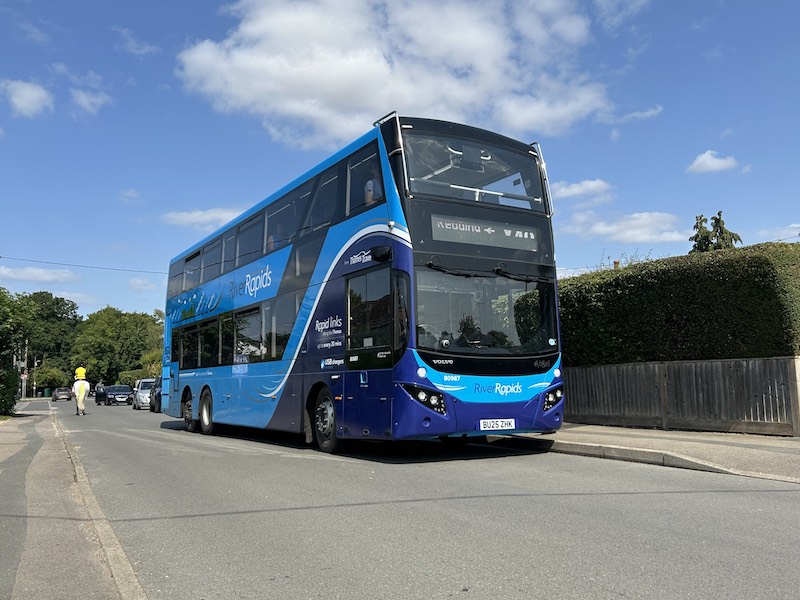
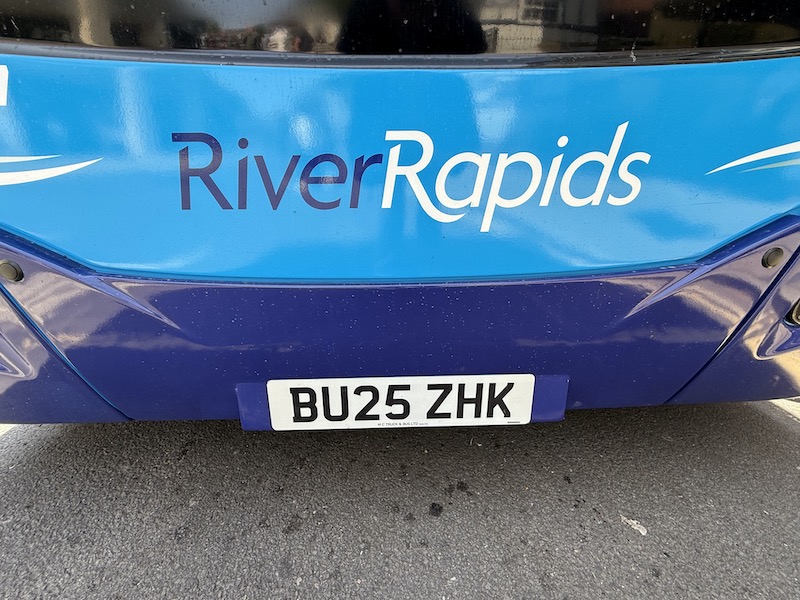
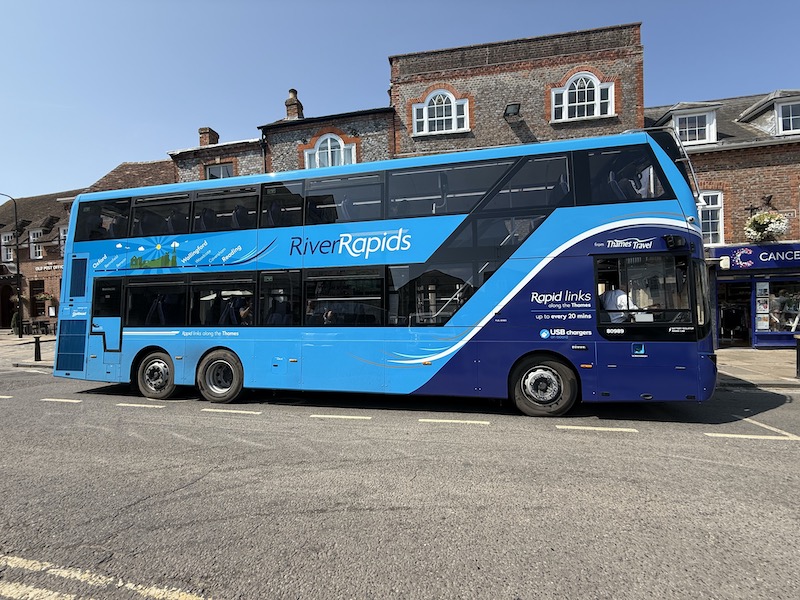
A much welcome upgrade to the bus route between Reading and Oxford launched this week. Not only has the timetable for Thames Travel’s River Rapids branded route X40 been improved from half hourly to every 20 minutes with new late night journeys added on Fridays and Saturdays but a £3 million fleet of 10 new MCV EvoSeti bodied Volvo B8L tri-axle double deck buses has also been introduced on the service.

Well, that’s what the 15th July announcement confirmed and it’ll all happen from Sunday 3rd August…
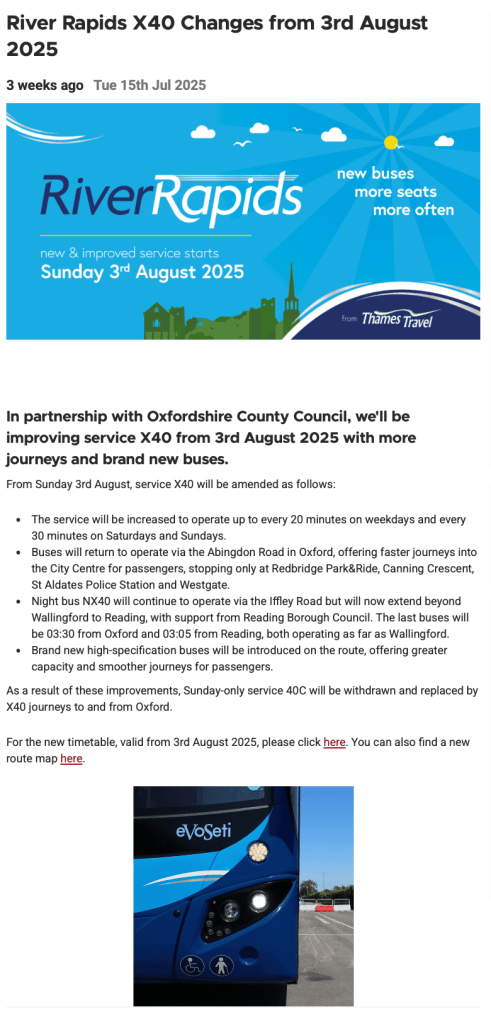
… so always ready to be impressed by a complete route upgrade I set off on Tuesday morning to take a ride and try out the “brand new high specification buses ….introduced on the route”.
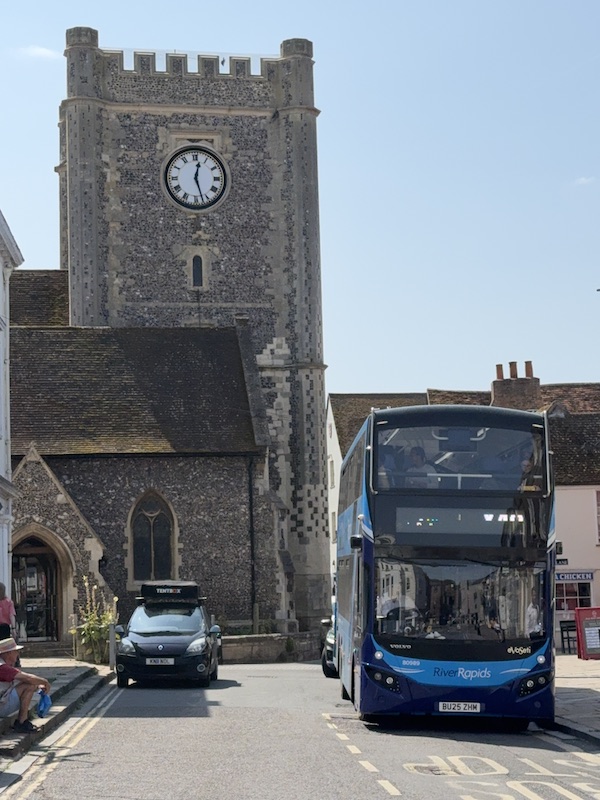
Silly me. I took the word “introduced” at face value and before setting off from home forgot to check online the new buses were actually in service. It was only when I arrived in Reading I found nine of the ten buses operating the service were the usual hand-me-downs from the parent Oxford fleet mostly of 2009 vintage and the only new bus out on the road had left for Oxford just before I arrived.

Never mind, I thought, a trip out to Pangbourne would be nice as an alternative – have a look at the station and take a ride on Reading Buses operated route 43 to that delightful town on the River as well as the oddly named village called Upper Basildon, three miles further west. And as a bonus, that bus would get me back into Reading just in time to catch the next departure of the new Volvo/MCV EvoSeti on its next journey from Reading.
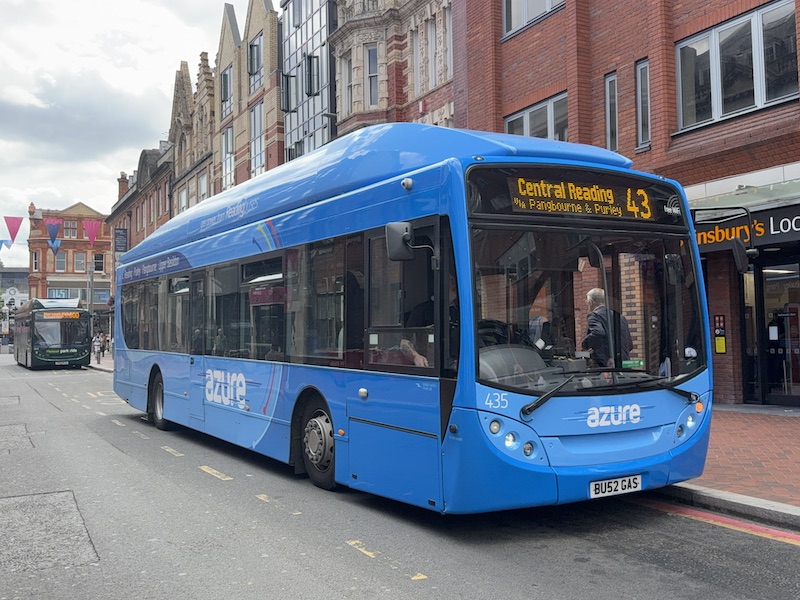
It didn’t quite work out though, with the 43 running 10 minutes late, due to 3-way temporary traffic lights in the centre of Pangbourne, it arrived into Reading just as the X40 was leaving.
Tuesday obviously wasn’t my day,
Never one to give up I returned to Reading yesterday having checked the vehicle allocation before leaving home this time and was delighted to see three of the new buses out in service including two offering conveniently timed consecutive late morning departures from outside Reading Station.
It looked like a blogpost would happen after all.
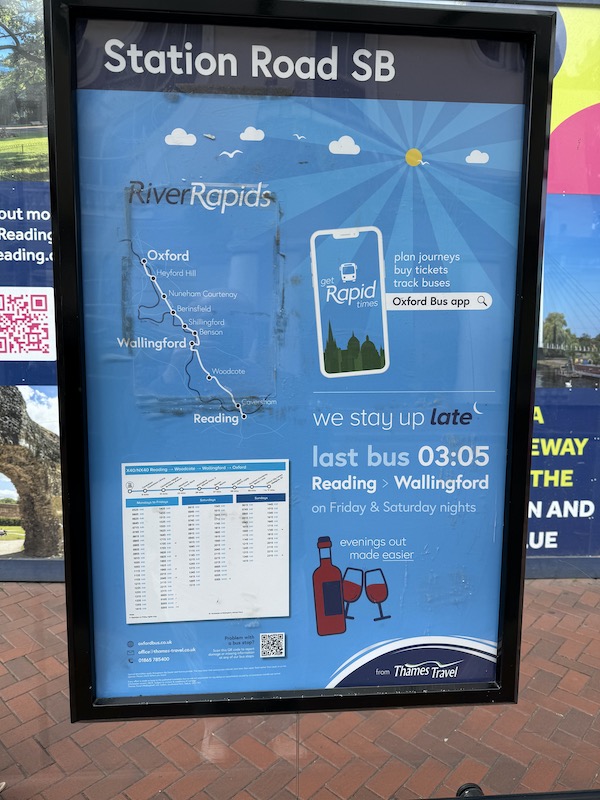
It was good to see the bus shelter in Reading’s Station Road is displaying an updated departure listing, as expected, and the bus arrived from Oxford at 11:31, four minutes late and four minutes before its 11:35 departure. The daytime cycle on the new timetable is quite tight with eight minutes stand time in Reading and five in Oxford but with the benefit of four or five minutes pause (depending on direction) at the halfway point in Wallingford.
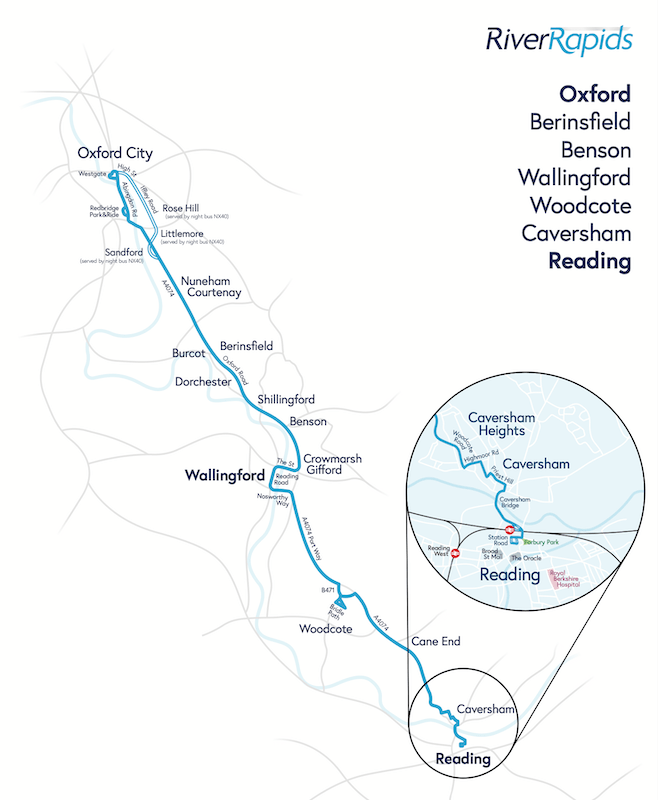
First impressions of the new buses are very favourable with a bright livery showing off the updated route branding highlighting significant places served along the route.
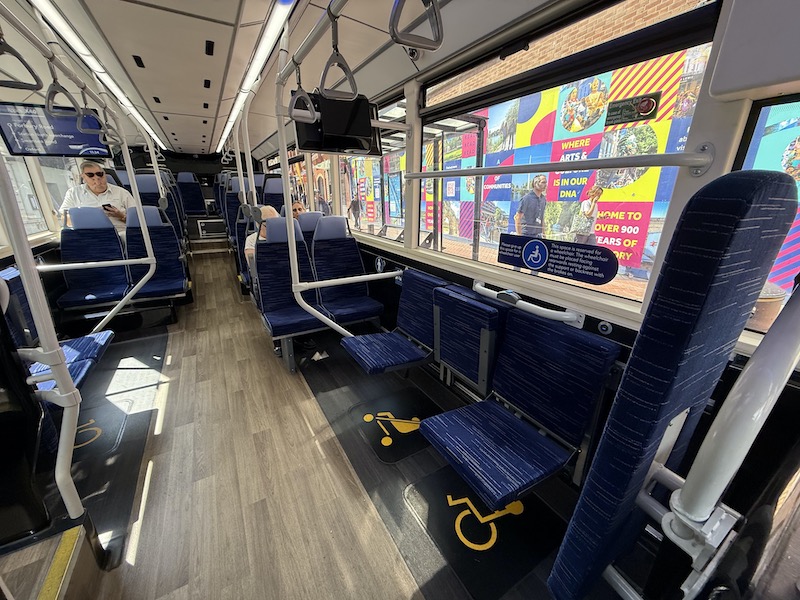
Inside they’re kitted out with a smart dark blue moquette offset by light blue headrests – colours that fit in with the overall brand for the service.
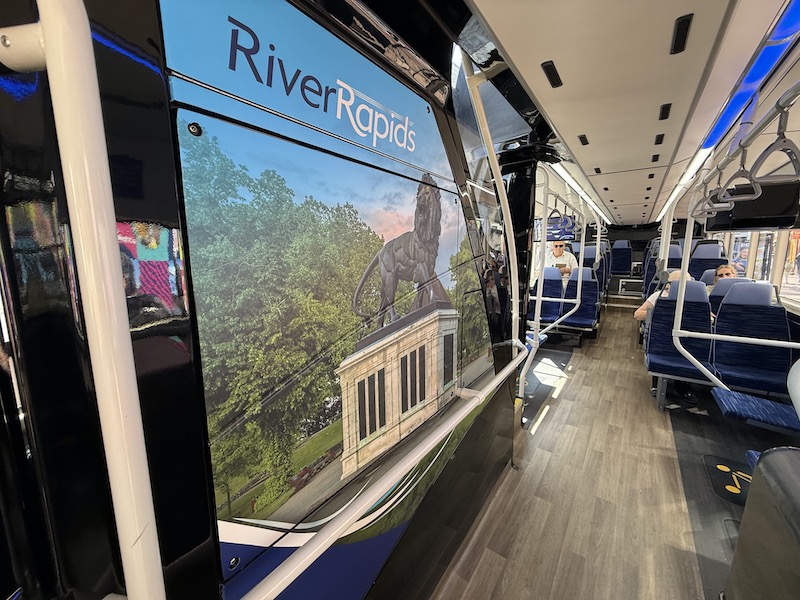
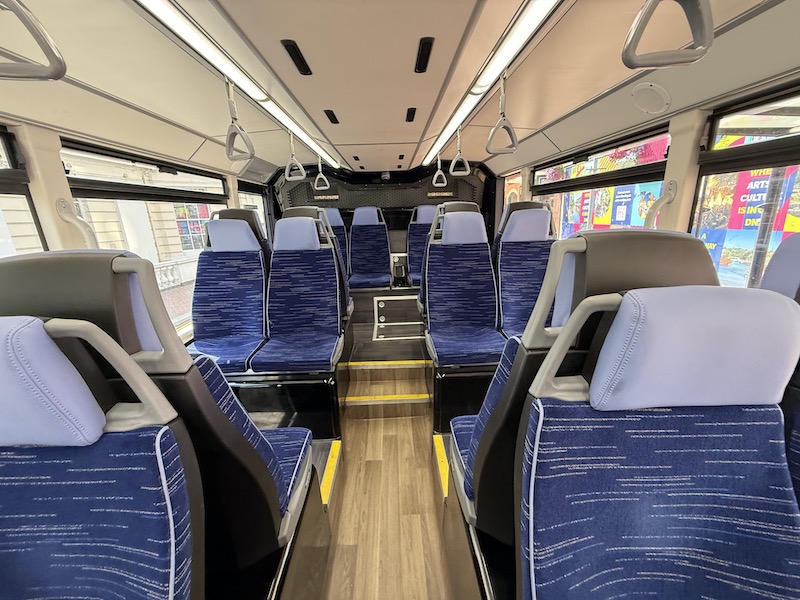
The seats are comfortable and the lower deck has a double set of four seats over the wheel arches on both the offside and nearside which is a sensible use of the space but is always characterised by the restricted leg/feet room it offers.
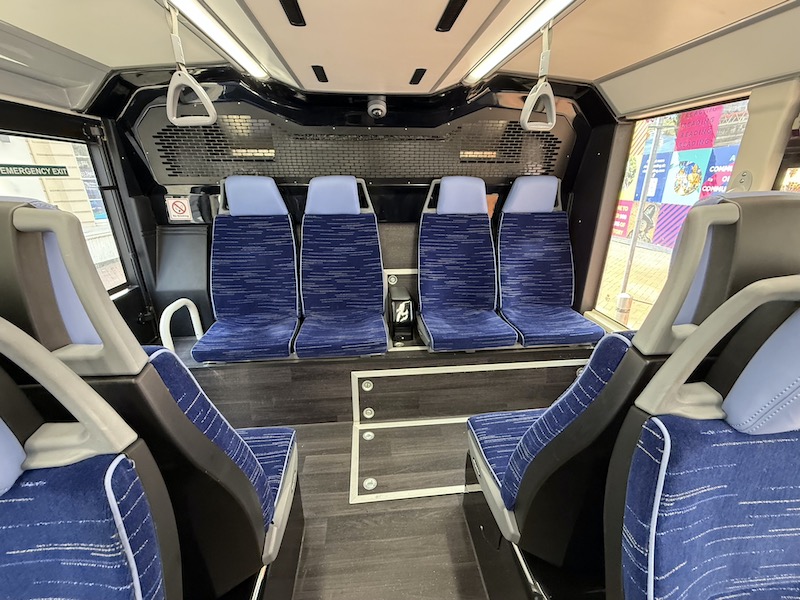
The back row has four seats sensibly spaced with a gap in the middle and on the offside for the emergency exit.
Overall the bus has 89 seats and on the upper deck I found the front pair of seats right up close to the front windscreen restricting leg room a little.
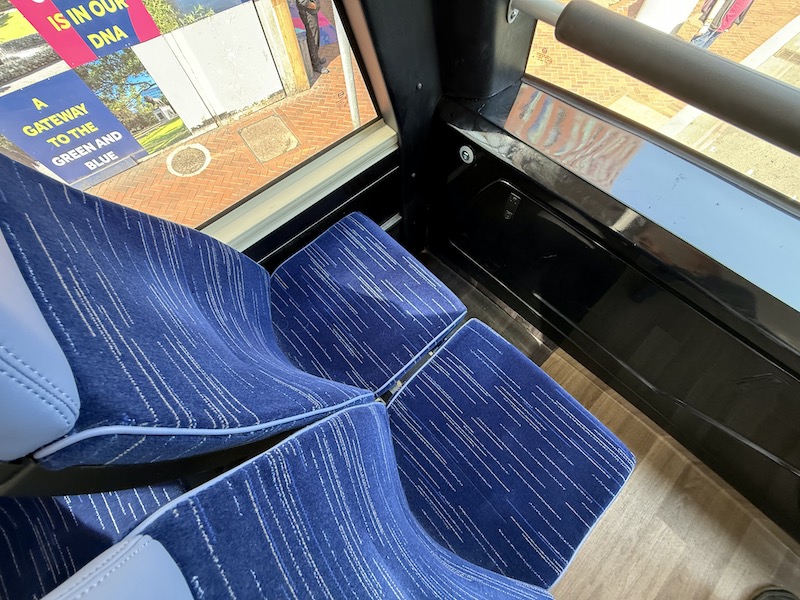
The front seats also seemed to be more upright than the others.

Two other minor oddities were the posting of a ‘No Smoking’ notice either side of the upper deck front windscreen …

… and the bus stop buttons located in the roof of the upper deck rather than the backs of seats which is the usual practice by other bus manufacturers these days.
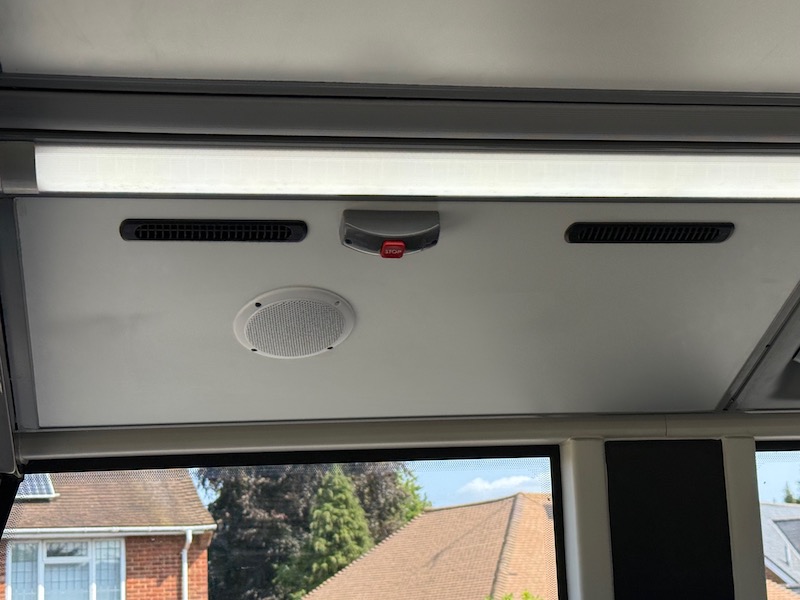
Oh, and oddly the WiFi was branded for Carousel rather than. Thames Travel…

… and takes you to the Carousel website.

The buses give a comfortable ride and with 89 seats offer lots of capacity, not least taken together with the 50% increase in frequency on the route. It looks as though a big uplift in passengers is expected.
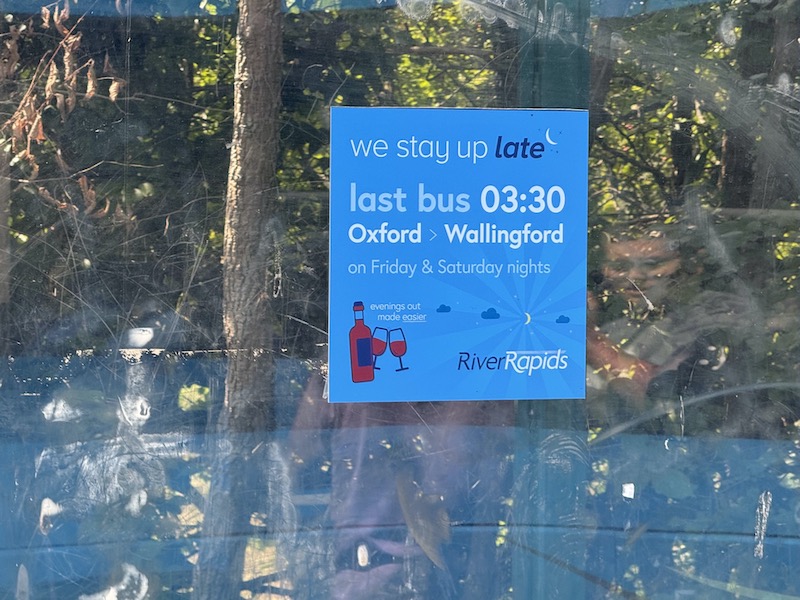
This will be helped by an attractive 24 page timetable booklet with enticing details of attractions to visit along the route (as well as Reading and Oxford themselves, of course) and details of the timetables, including highlighting those new late night journeys on Friday and Saturday nights leaving Reading at 00:05, 01:05 and 02:05 (to Oxford) and 03:05 (to Wallingford) and from Oxford at 00:30 and 01:30 (to Reading) and 02:30 and 03:30 (to Wallingford).
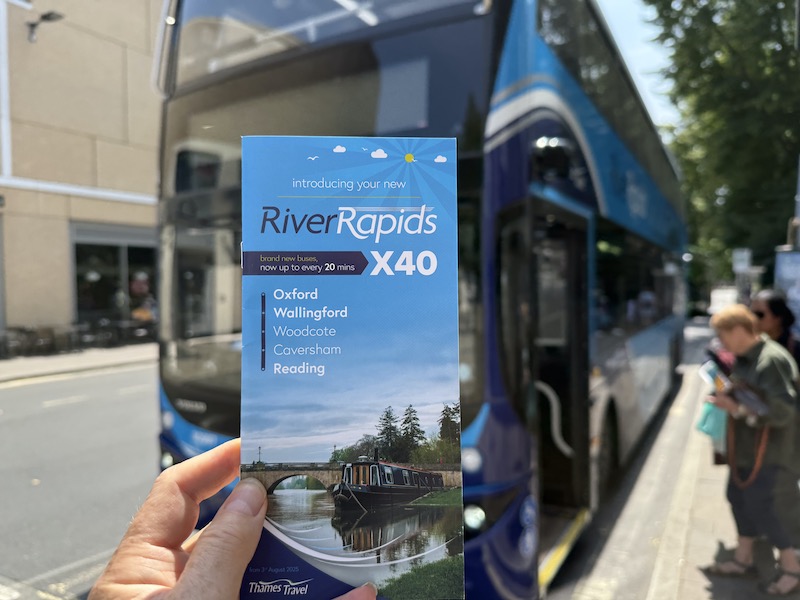
The booklets didn’t seem to be available to help yourself to on the bus – I had to ask the driver for one. I didn’t notice any dispensers.
It was also good to see some of the bus shelters along the route have had notices added…
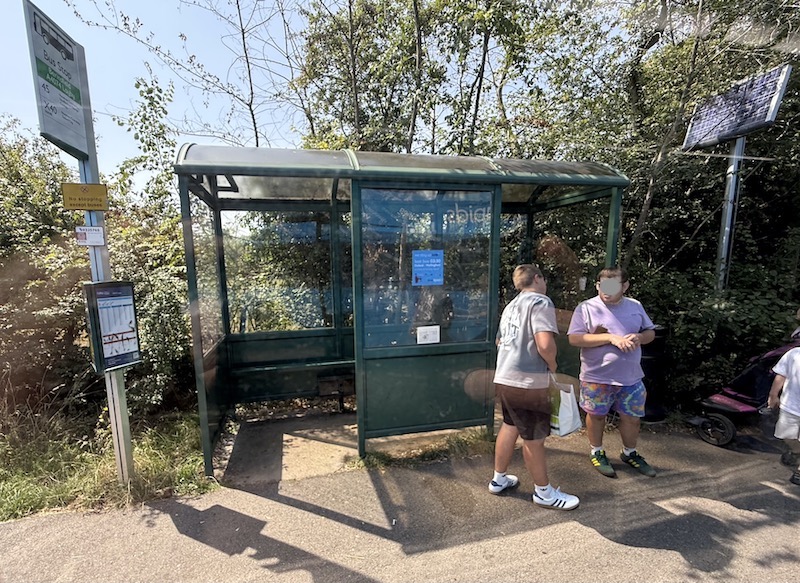
… promoting the late night journeys.
Back to yesterday’s travels and around ten passengers alighted as the bus arrived into Reading with, in addition to myself, six boarding, so plenty of room for us among the 89 seats.
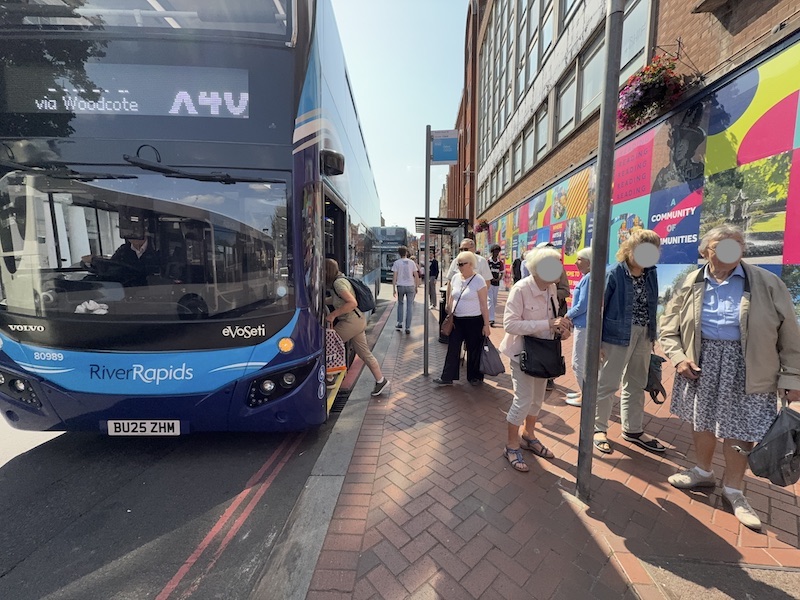
We gained another passenger by Caversham Bridge…

… that’s Emma who kindly supplied the first two photos above and, like me, was also trying out the new buses – making for eight of us on board – and soon another joined but five alighted as we continued through the twisty turns of Caversham and Caversham Heights.

I can understand why the route into and out of Reading serves the rather affluent Caversham area but it rather goes against the ‘Rapids’ descriptor in the branding as you do feel you’re never going to get out of Reading’s built up area and on to the open road to Oxford.
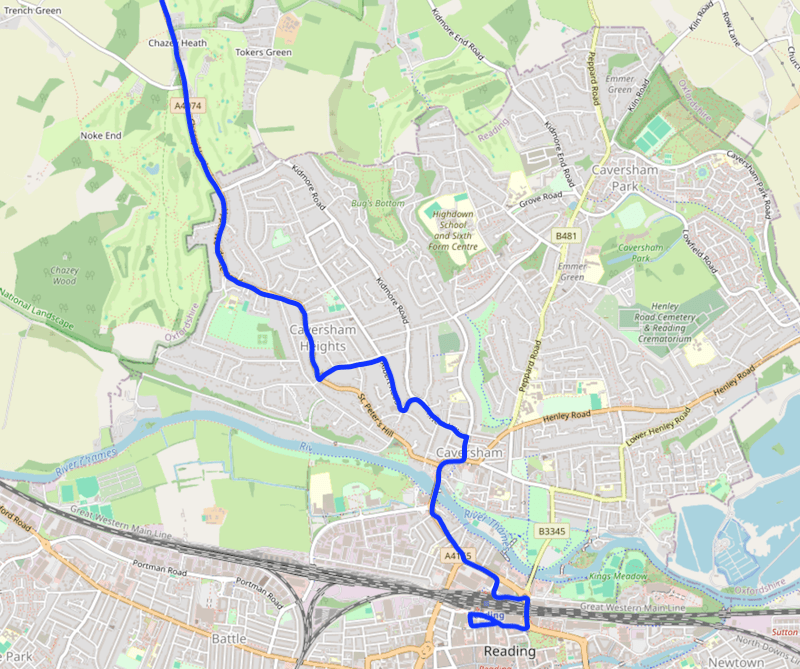
But, once you do, it’s a lovely journey with some great views of the Oxfordshire countryside.

As we joined the main road towards Woodcote and Wallingford a mum and youngster came on board and on our tour of Woodcote we gained one and lost one, maintaining our on board total of five adults and one youngster.

The circuit of Woodcote is another detour that makes sense but obviously adds to the time which, for the end to end journey from Reading to Oxford, is 90 minutes (97 minutes southbound).
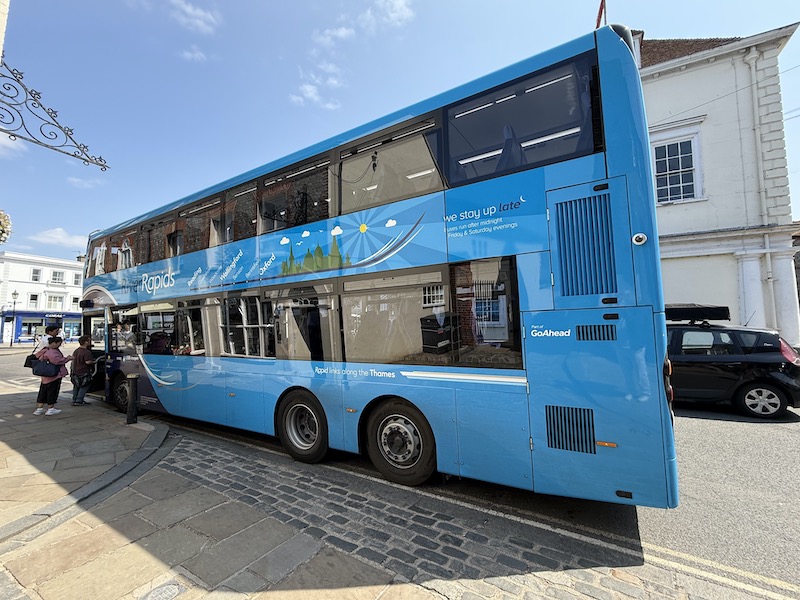
I took a break when we reached Wallingford – almost exactly the halfway point on the route – and caught the bus 20 minutes behind which was also one of the three newbies out on the road yesterday.
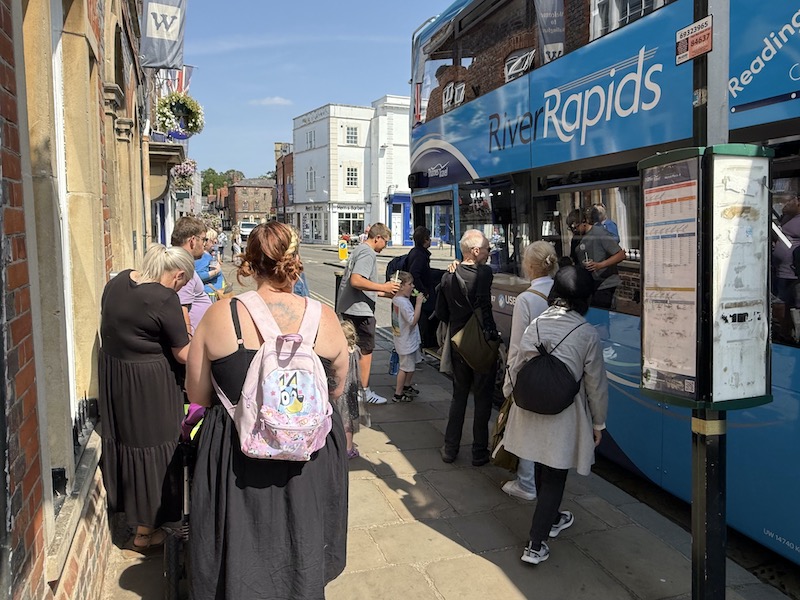
Having changed drivers, both my original bus and the next one left Wallingford with a new cohort of around a dozen passengers and it was noticeable how the northern half of the route was a bit busier.
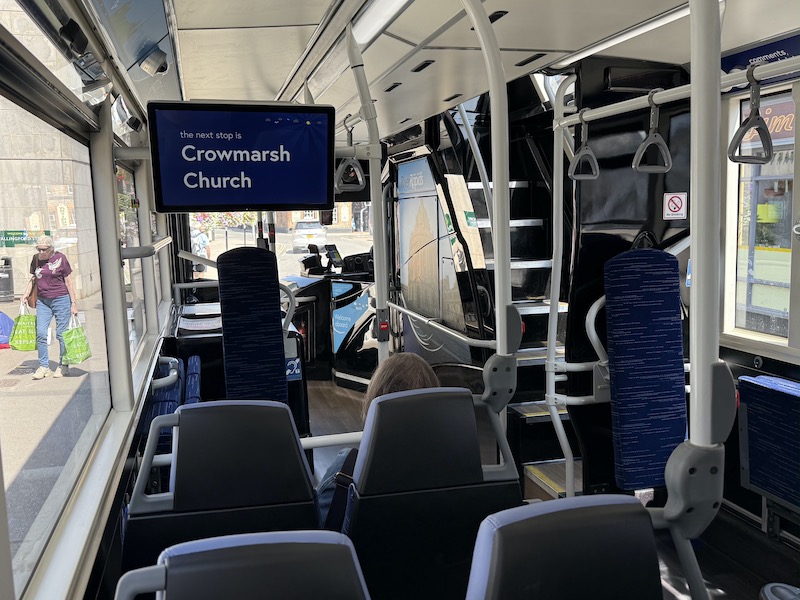
Unlike in Caversham, the route entering Oxford has been amended to speed up the journey with buses now using the Abingdon Road instead of Iffley Road…
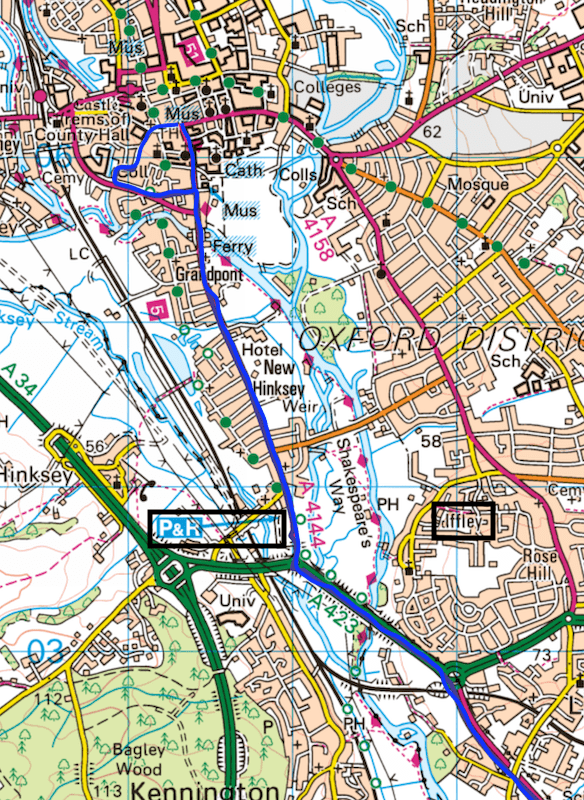
… including a non-stop section after serving the Redbridge Park and Ride site.
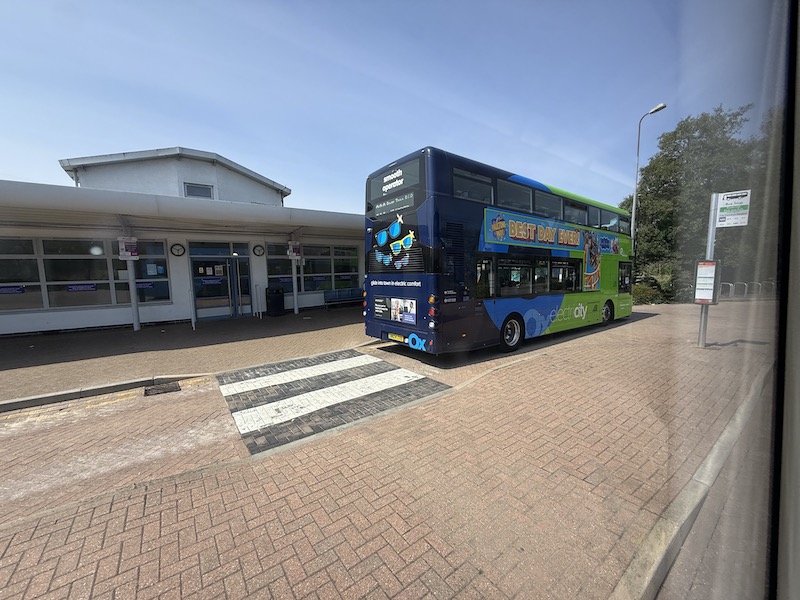
It’s been shown elsewhere inter-urban routes offer great potential for market growth and after some years of stagnation it’s really good to see investment in a reinvigorated River Rapids brand not only by Thames Travel/Oxford Bus but also Oxfordshire County Council and Reading Borough Council, both financially supporting the late night journeys with the former also committing £1.5 million from Section 106 and BSIP funds to support the frequency uplift over the next four years.
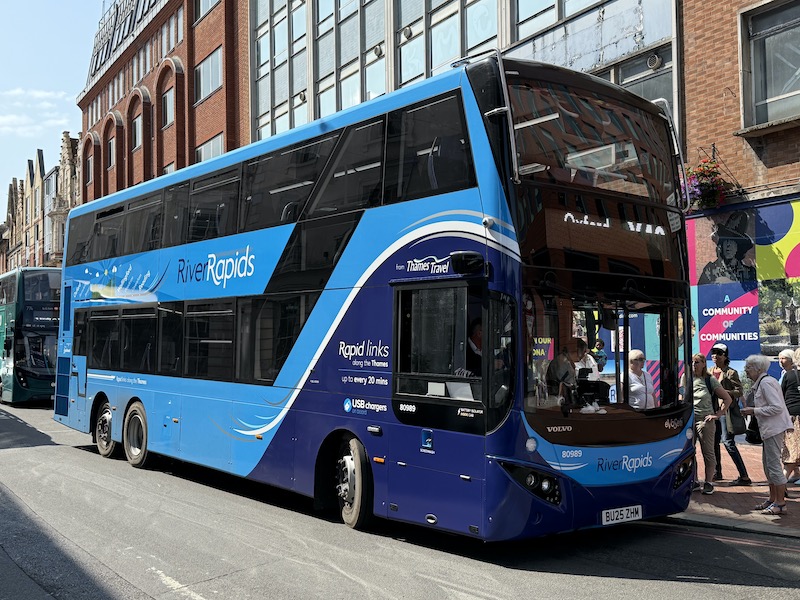
Let’s hope the investment pays off.
Roger French
Summer blogging timetable: 06:00 TThSSu


Down the road, there’s also a whole series of improvements from Carousel from the 31st including the High Wycombe and Beaconsfield corridor going up to every 10 minutes. A new 105 will run between High Wycombe, Beaconsfield, Amersham and Chesham, while Chesham to Hemel will double to every 30 mins using Herts Country BSIP money. After a long run of tender gains, Carousel loses the 149 / 194 shoppers’ journeys.
LikeLike
About a fortnight before my motorcycle era began, I had a fantastic day out on the buses, Christmas Eve 1976. From Hersham I accompanied my father into Guildford in the family car (he worked for F W Woolworth & Co Ltd). I then bought an AlderValley day ticket (99p) and then thrashed the miles. 220 to Aldershot, 71 to Farnborough, 203 back to Aldershot, 243 to Farnham, 207 to Basingstoke where I had a lunch break. Then: 6 to Reading, 5 to Oxford, 5 back to Reading (same bus, probably staying aboard), 275 to Bracknell, another 275 to Guildford, LCBS 463 to Weybridge (50p) and then 219 back home to Hersham. No early closedown on that Christmas Eve gladly, as seems the norm now! The 275 was shown on the timetable as a through service from Reading to Guildford but I was told by the first driver that a change of vehicle was necessary in Bracknell for operational reasons, and I fancy that the change of bus was inside the Bracknell Bus Garage rather than at the current Bus Station. I cannot remember the vehicle types apart from the second 275 which was a National and the 463 would have been a Swift. I held a GAYP ticket so my final ride home on the 219 was “free”. The driver of the 5 told me that he kept his Setright machine “permanently” unlike in London where a Gibson is allocated a set Duty within a route’s Schedule.
LikeLike
A route I frequently use and am always impressed by the numbers carried. Thus not surprised by the vehicle upgrade, but to also increase the service to a 20′ headway really did surprise! I am not sure this may last through the darker days of Winter perhaps a couple of years down the line.
The tortuous route through Caversham is really not suited to the new vehicle sizes and with so few ever boarding and alighting on this section, I am surprised that, as in Oxford, has not been rerouted more directly.
But who needs “taking back control” when we see what has been happening the last couple of years in this region!
Terence Uden
LikeLike
The situation in Caversham is a great example of why closer co-operation between operators or local authority co-ordination is needed.
As Caversham appears not to be a trip generator for the X40, the best approach would almost certainly be to speed-up the X40 and restore Reading Buses’ 22 to a half hourly all day frequency to handle the local traffic. As well as making the X40’s trip times more attractive, this would add some resilience to the timetable through longer layover times at Reading.
There’s a simialar situation at Henley where despite the entire Reading – Henley – High Wycombe corridor now being served by more buses than ever, cross Henley travel options are actually fewer than they were when Arriva was running the route with lower frequencies.
LikeLike
The route in Caversham has evolved because of traffic congestion on the A4074. I used to work in Reading and I parked at the top of St Peter’s Hill and walked down, such were the delays. It is more sensible than it might look.
Remember that the 850 under Carousel did go to Reading 3 times per hour for a while. Not enough demand, so it has been pared back. Not everyone wants to cross Henley.
LikeLike
Bell pushes on the ceiling…. Whatever next?!
LikeLike
Almost certain that London Transport STLs, certainly those I encountered in the Country bus areas, had ceiling bell pushes upstairs. But then we didn’t have micro-managing and people on fat salaries from nanny-state government organisations then.
LikeLike
Bell pushes, or a string to pull?
What’s that got to do with anything?
Although I’m amused by your apparent belief that London Transport wasn’t a government organisation and didn’t micro-manage anything. Or that the army of middle-management desk-dwellers in such a bureaucratic organisation weren’t on fat salaries for the time.
LikeLiked by 1 person
I have childhood memories of Reading Transport Bristol VR “Jumbos”, these had ceiling strips.
Peter Brown
LikeLike
when we walked the Thames Path, we used this service when Thames Travel was an independent. It was a council contract every 2 hours. Now evey 20 minutes! Partnership is everything. Ray Wilkes
LikeLike
BC (before Covid) there was a X39 variant which omitted the loop around Woodcote. Perhaps one journey an hour could return to doing that, although it would then mean an uneven frequency at the Reading end of the route.
The twisty routeing in Caversham was initially inbound only. It allows buses to miss out the narrow stretch of St Peter’s Hill, which was (and still is) prone to traffic delays particularly inbound in the morning peak and is an awkward stretch of road for large vehicles to navigate. Buses on the X40 are able to take advantage of the bus-only gate alongside Caversham Library which is also used by Reading Buses routes 22 and 23.
Talking of Reading Buses, their website is trailing ‘exciting enhancements to the buses in Caversham in September’ so perhaps a return to a half-hourly 22 is on the cards. The news of more buses is welcome after years of service reductions, with passenger numbers on the Caversham routes having fallen contrary to the general trend of growth on Reading Buses.
Julian Walker
LikeLike
Caversham has long been a problematic area for Reading Buses, possibly because of lower housing density than much of the rest of the town (and no students). The former Reading Buses MD once said that if everyone from Caversham who signed the petition against their bus cuts used the bus once a week, there wouldn’t need to be any cuts!
LikeLike
Caversham Passenger reductions probably due to post covid kill off of the over 65s with reluctance to travel.
Carousel 25 years this year are any special celebrations planned, and its probably no bad thing they get more “trunk” work leaving oddity shoppers times to others.
At sometime Oxford-Reading rail services will get extended (and enhanced ?) over East West Rail to Banbury , Cambridge, and Milton Keynes so the attempt to get bus passengers while one can seems a good idea
Tri Axle Double Deckers – Still refused by TfL for services (wouldnt they be good on the Superloop routes )
Bell Pushes on Ceiling – are they actually DDA compliant ? I remember Bell Strips in Brighton Leyland Double Deckers, a trip out from London and a bit of a trip around Brighton and I am used to sticking a hand up grabing the non-existant cord wondering what had happened, the finger extension just got to make contact for the correct stop I wanted
JBC Prestatyn
LikeLike
Carousel celebrated 25 years with a special event at their High Wycombe depot. Article from the Carousel buses website here and further pictures from the Oxford and Chiltern Bus Page here.
Tony G
LikeLike
Why use tri-axle double-deckers on Superloop? It’s a fair question.
I imagine the reason for not doing so is that using two-axle double-deckers at higher frequencies means passengers have shorter waiting time. This provides a tangible benefit to passengers, as well as making the service more attractive and increasing revenue, which make the extra cost worthwhile.
There probably is a “tipping point”, where frequency is so high that increasing it any further delivers little further benefit, at which point increasing the size of the buses makes greater sense. Are any of the Superloop routes yet at that frequency?
On a separate note, if the Merlins were (allegedly!) “too big and unwieldy” for London’s suburban streets, would tri-axle double-deckers fare any better?
Malc M
LikeLike
So a very substantial investment in new buses on a route which apparently has high potential. Excellent.
So why ruin it with cheese paring decisions about the interior layout?
Those top deck front seats look excruciatingly uncomfortable for anybody with adult sized legs. The main effect of adding the third axle is to increase the number of seats which force undue intimacy with the people sitting opposite.
And for what? If these buses are expected to be standing room only on a regular basis, well maybe. But if they are not, there is no real revenue loss in not cramming in quite as many seats – and a huge potential gain from passengers who might find the bus journey pleasant.
LikeLike
Indeed. They had the option of creating a really comfortable vehicle which would retain any new customers who decided to give the bus a go.
Instead, as you say,
and how is that supposed to compare positively with a car?
I find myself wondering if they were originally ordered by Go Ahead Group to be used on school contracts where the high density seating would be needed, but those contracts were lost too late for the order to be cancelled and they’ve been shifted to “River Rapids” to make use of the vehicles.
LikeLike
Thanks for this bit of good news. Yes, I would expect it to be mainly a route of two halves; people actually travelling from Oxford to Reading will mostly take the train. But I wonder how many other towns of around 12000 population have a bus every twenty minutes to two main destinations? Newhaven comes to mind, being on the Brighton & Hove 11-12-13-14 route group: better than 20 minutes in fact, plus half-hourly trains. Probably more typical are Haslemere and Hurstperpoint, both reliant on hourly buses. If Thames Travel – plus helpful local authorities – can make the X40 work for Wallingford, there really is hope for hundreds of places!
It would be good if it could extend to Oxford station. I know 90% of the users as the route stands want to travel to Oxford city centre for jobs/education/shopping. But that doesn’t mean that none of them want to get to Worcester, say or Birmingham. This is where I feel sure the blockage is with the rail people – who would actually make most of the money on a through journey, but – as it seems – are unwilling to look at ways and means of sharing income generated by through-ticketing.
Your blog made me look at the 133-134 bus route from Wallingford to Goring & Streatley station – which arrives there (and departs from there) at a real mess of times – not connecting with the trains, and thoroughly unmemorable! I then checked the train timetable and found the the AI brain-worm seems to have infected First’s GWR, with a messy mix of trains-times at all the stations between Didcot and Reading. At least the River Rapides run at fairly regular times!
LikeLike
134 is changing from 1st September to be operated by Thames Travel and will meet the trains.
LikeLike
Main purpouse of the X40 is Woodcote & Wallingford which are couple of miles from the nearest station, not many would travel end to end which can take anything from around 1 hour 30 minutes, to 2 hours in the peak.
SM
LikeLike
Given your experience of travelling on this revised service & the number of people you witnessed using it, suggests that the Volvo B8/MCV EvoSeti combination maybe too big for it or that the seating (as already referred to) needs to be re-thought. Looking at the photo of the front seats reminded me of so many journeys I’ve undertaken on various makes of contemporary double deckers where too many seats (not always comfortable either) are crammed in, particularly at the front. Never-the-less, full marks to Thames Travel for this initiative, it deserves to do well.
LikeLike
From my experience of the route as an irregular visitor Rogers trips were not in any way typical of loadings though over a day & week there will always be peaks and troughs. I’ve had many trips out of Wallingford towards Oxford that were pretty full and it was common to see significant numbers of people waiting. The Reading end appears slightly quieter, though I use that less often, but still when I have used it you would still see decent loadings though 10 may be more typical at the bottom end.
Dwarfer
LikeLike
These new tri-axle buses appear to be tarted up school buses! The increased seating capacity can’t be needed for an increased frequency, and such large buses are not suited to the narrow roads in Caversham. MCV bodywork has a worse reputation than the British options.
Whilst it is always nice to have increased frequencies, I can’t help wonder whether if this simply an attempt to soak up developer and BSIP funding, and to abstract patronage from the highly regarded Reading Buses operation to make the sums add up, without due consideration to long term viablity or overall desirability.
LikeLike
They’re 12 metres long, which is the same length as the buses Reading Buses use on the 22 and other services through Caversham.
LikeLike
In many ways these are actually down-specced private hire buses as most of these type are bought for private hire work (often for schools but not day to day travel to/from school but their days out) and these are the shorter version so are a similar footprint to a standard single-deck bus. For diesel double-deckers there are really only 2 options on the market at the moment, these or Enviro 400MMCs and possibly for the intensive interurban nature they wanted the greater engine power of the Volvo B8.
MCV, in terms of single-deckers, actually has a better reputation than British options for build quality and there is no indication their deckers are any worse. They don’t rattle even as they are aging and have quickly gained a good reputation amongst operators.
There is very little duplication of the Reading network so there is little intention to abstract from anyone and this route is very busy in my experience with impressive loadings regularly appearing, particularly at the top end. Whether it can support the step up to 20-mins will be seen but it is a logical step seeing the trend it was showing and how it has performed.
Dwarfer
LikeLike
Hi Roger
A great write up as always. Just to clarify that we are providing £1.5m of financial support over 4 years for the overall frequency uplift, not just limited to the late night journeys.
This is mostly coming from S106 payments from large developments in Benson and Wallingford, as well as a top-up from our BSIP.
Best wishes
Dave Harrison, Oxfordshire County Council
LikeLiked by 1 person
Many thanks for that David – will update the text.
LikeLike
I’ve just got off one. Asked the driver if he liked the new buses. “Love it” was the reply.
Regarding a fast run down the Abingdon Road. That was the original route, but as we were coming out of COVID, with low numbers, the bus was merged with the 3 on the Iffley Road. A clever way to keep up services with fewer buses. However, as X40 numbers have started increasing again, Wallingford folk have been complaining: “It gets me to Oxford fast, then becomes a very slow local bus down the Iffley Road”.
Although the timings are tight at the ends, as I understand it, the powerful engines mean some delays can be recovered on the long rural parts. This is especially true on the Wallingford-Reading part, where there are long climbs at quite high gradients.
And for anyone visiting Oxfordshire, don’t forget our great daily £6.50 “My Bus Oxfordshire” ticket. It covers all routes, so it’s like a London Travelcard, but for Oxfordshire. It can also be used on the full route of some journeys that extend beyond Oxfordshire. And that includes the X40 to Reading.
Well done all at Thames Travel and Oxfordshire County Council at getting this really major upgrade. It deserves to do very well indeed.
CH, Oxford
LikeLike
Can it be bought on an X40 in Reading?
On the S6 from Swindon Stagecoach West won’t sell them until the bus has entered Oxfordshire (or wouldn’t when I tried to buy one last year), even though they’re accepted for the entire journey.
LikeLike
I’ve asked around today, and you should be able to buy a “MyBusOxfordshire” ticket on the X40 at Reading, despite your trip actually starting in Berkshire. CH, Oxford
LikeLike
Thanks for checking up on that. 🙂
LikeLike
Great news! Just a shame the X38 remains dead, with nothing linking Oxford and Henley direct.
LikeLike
Oxford-Reading was Thames Valley 5, hourly. Services to Woodcote were Chiltern Queens, less than hourly with a motley collection of vehicles. Both Reading and Oxford have been pro-bus for at least 40 years. Accepting there has been a lot of residential development a 20 min service over the whole route is a significant achievement.
It does show that with consistent pro bus policies with everyone working together over a long period , what can be achieved. And a £6.50 day ticket in Oxfordshire considering fare levels in the area is a real bargain.
The whole project deserves success, but it needs to generate a lot of extra passengers to remove the just under £400k subsidy.
LikeLike
It’s above the current maximum price of two singles and below three, which I usually take as a ball-park figure for day tickets.
I know some companies charge much more (looking at you Stagecoach East and Midlands!) but I think it’s carefully set a price level which makes it extremely attractive – as long as people know about it.
I just wish there were more, similar multi-operator tickets around the country.
LikeLike
It is always difficult on longer journeys to work out where routes should overlap or meet end on. So going to places north of Oxford may interesting but was thinks that Oxford did Jointly with Midland Red. Given the road works around Oxford rail station alas its a place best avoided on wheels. Likewise the now tight entrance roads to Oxford bus station. Perhaps extending up to the Northern Park and Ride, which is near a rail station or even that built but rather unused one on the Witney Road would give connections – depends how more residences or workplaces develop
JBC Prestatyn
LikeLike
Oxford – Stratford was jointly operated by City of Oxford MS and Stratford Blue (service 44) until Stratford Blue was swallowed by Midland Red on the instructions of NBC (it’s generally accepted that Midland Red had kept Stratford Blue as a subsidiary as BET wanted a small company to train up senior managers. NBC, with its Tilling heritage, did things differently…)
The service was then operated jointly by City of Oxford MS (as Oxford-South Midland) and Midland Red, as 544 and then extended through to Birmingham as the X50, and subsequently by South Midland and Midland Red South until it all fell over after deregulation.
Today there’s neither joint nor through operation, with Oxford – Chipping Norton being Stagecoach West’s S3 and Chippy-Stratford Stagecoach Midlands’ 50. There’s no longer a direct service from Stratford through to Brum.
LikeLike
I went on the route yesterday the vehicles are impressive . I would like to see the route risk assessment for the section in Caversham .
LikeLike
Kinchbus have just launched
new vehicles on their Derby
Skylink service with refreshed
livery. Roadshows were held in
town centres followed by
Facebook message posted by
Team Leader that they would
enter service last Sunday.
which they did.
Red Arrow has also been
refreshed with new vehicles
and livery but likewise retains
the instantly recognisable
brand feel for the individual
route.
Handy when standing outside
QMC where the real time
shows the next three
departures on section of route
that has upto 40 buses per
hour.
All workings on both routes
have brand new vehicles as I
write this.
Happy commercial travels!
John Nicholas
LikeLike
Roger might be interested to know that B&H are taking over the 54 Eastboune-Ukfield route from Stagecoach in September.
Following Stagecoach’s announcement that they will be withdrawing route 54, Brighton & Hove Buses will take over this service and operate it under the Regency brand from 21st September 2025.
The route links Eastbourne, Polegate, Hailsham, Golden Cross, East Hoathly, Halland and Uckfield. The route will remain the same as at present except in north Hailsham where it will run along London Road and will not serve Battle Road and Hawkswood Road (route 28 will continue to serve these roads every 30 minutes). The level of service will be similar to present, mainly on a commercial basis without local taxpayer subsidy.
https://www.buses.co.uk/route-54-update
SM
LikeLiked by 1 person
If Subsidy is £400k for one year= 300 days = £1333 per day 20 departures per day = £60 per journey at £3 extra per new passenger is only less than 20 passengers per journey ( which given my maths is very crude and on the high side per journey seems a not impossible uplift in patronage)““““““““`
LikeLike
Anonymous at 1.49 am, when you take into account children, students and OAP’s plus period tickets, plus local journeys in Reading and Oxford I think a £2.00 average fare more likely, so 30 passengers a journey, 180 passengers each hour. I wish them luck,many of us would die for 30 passengers a journey in total.
But absolutely worth a try, nothing ventured, nothing gained . And that’s what Deregulated networks and partnerships are all about.
LikeLike
I always say that any new initiative, be it a new route, a relaunch or an upgrade, in effect a degree of investment or risk being taken, is to be applauded and the participation of the relevant local authorities welcomed and recognised. This case is no exception, but as with so many other similar ventures, it’s been done in a well-intended but sadly half-hearted way, and the outcome is a compromise which likely means it will only partially achieve its objectives and probably be reversed when the funding runs out.
Roger has highlighted that the publicity piece – on-line, on-bus and roadside – seems to have been done quite well. That itself is to be congratulated as it’s relatively rare! But then there are such glaring own-goals:
The vehicles should all have been ready for day 1 in order to have impact. Impact is needed for the change to be a talking point. The impact is not just the livery. What passengers think when they get inside is, if anything, more important. That is lost if the allocation of new vehicles is partial or scattered across the garage’s other routes, now or in the future.
Why were the seat positions not tested out? Depending on the market that is being sought, if you can get people on the bus on the basis that the frequency is more attractive and the vehicles are externally appealing, then the last thing you want is for people to say that one of the more desirable seats is uncomfortable. The route is hardly capacity constrained. Let’s face it, it’s unlikely this will be changed now.
The public will see the X in the route number and the publicity and assume the journey is reasonably quick. It’s great that this has been thought of at one end but why not also at Caversham and Woodcote? Which new market is being sought? If it’s those who might otherwise travel by rail, then the frequency and lower cost may not be considered worth the extra time. The X, is in effect, a false promise.
Finally, I know the Thames is blue, and even putting aside the lack of a consistent brand actually appearing on the first day, how is a two-tone blue bus distinctive when Arriva are in the area and Reading Buses Azure and Sky Blue buses are both two-tone blue? Far too many operators are falling over themselves for two-tone blue without looking to make themselves stand out.
Why does this all happen time and time again? I’m not in the industry, but it seems to me that even 40 years after deregulation it barely understands marketing in its broadest sense and by that, I mean; market analysis, campaigning, customer segmentation, market building, customer experience, brand positioning and brand perception. Producing a leaflet and painting the outside of some of the buses on the route barely starts. A lot of people say that you need to have bus people running buses. I say that experience shows that alone is not enough.
LikeLiked by 1 person
Dah, I can see some of this. But I live on the route. I think four new buses are out there today, so the numbers are building up. They really are a massive improvement. Another nice point, not mentioned by others, is engine noise intrusion is very low indeed.
It’s a sunny weekend in Oxford, and which timetabled service the new buses are on can be found on Google as “Oxford bus company fleet list” and searching on “Evoseti”. Click on the buses in that list and it should point to the service it is operating. How about making a trip on one in to Oxford?
CH, Oxford
LikeLike
Arriva aren’t in the area, they closed their local operations and don’t serve either Reading or Oxford anymore (the closest they get is Aylesbury) and since Reading have colours for individual routes you would be hard pressed to find a colour that didn’t exist in the Reading Buses fleet in some form. The previous branding for the route, the River Rapids, was also blue based so this is just carrying on an established image.
There is the reverse question, if you have the resources why delay such a major service improvement because the new buses aren’t all ready yet? Particularly as for a route like this the summer holidays could actually be a busy period and as it is a quieter period for other sectors of the business with schools & Unis off you risk less distractions during that promotional period. And whilst the vehicles are new, they aren’t spectacularly high spec over the previous branded buses (though older & general fleet members seem to have been more common recently possibly due to many of the batch that used to cover this having gone to High Wycombe to replace Arriva routes there) that their presence is the most important part of the relaunch rather than the timetable improvements (the promotional literature merely refers to new buses with more seats in the header but the entire text is devoted to the service improvements which highlights what is seen as most significant).
Roger mentioned two minor things that caught his eye around the front seats and you assume this means everyone will find them uncomfortable. Just today I caught a high spec E400MMC and sat in one of the front seats and thought it felt a little more upright than normal, not uncomfortable even for a 90-min journey, just slightly different rake – probably caused the the presence and position of the stairs restricting the seat. For the majority of passengers, young or female, a restricted foot space that Roger or myself may note will probably not register as they tend to have smaller feet. I’ll be interested to experience them myself when I next get down to Oxford to see how they feel as only very rarely has this actually been a comfort issue even where you feel the seats are a little close to the front (there was one batch a few years ago I rode on where I couldn’t fit my feet between the moulding under the seat and the front bulkhead and occasionally you find yourself feeling a little close to the front bulkhead even if not uncomfortable in normal use).
Dwarfer
LikeLike
Thanks for the comments. Fair point about Arriva having vacated the area and Reading Buses using every colour known to man, but my feeling still is that you have to create something distinctive somehow. Blue/green in combination is still rare, as an option.
On the reverse question, it’s about making impact. The vehicles should all have been purchased to be available for the launch for maximum impact.
The seats issue is, I agree, probably a minor one, but my point really was that when making such a huge investment, to really get the return, everything needs to be right.
LikeLike
Actually managed to get down to Oxford to ride one this weekend. The front legroom is a little tighter than is common but I, a 6’2 male, didn’t find it uncomfortable (noticeably different but not uncomfortably tight). Equally the seats are a little more upright than is common but again not uncomfortably so, I sat in them noticed they felt different but within minutes forgot all about it and never felt uncomfortable.
I don’t think 2-tone blue is becoming that common, you have mentioned two operators adopting it but that is about it (though single block is a bit more though the Stagecoach dark blue is so close to black as to be a different ball game). Liveries with green in are actually becoming more common due to the adoption of electric buses so sticking with the established blue base (River Rapids have been so for several years already) seems more logical.
Dwarfer
LikeLike
Thanks for the comments. I’m pleased to read that the ride at the front was comfortable for you, meaning that it’ll likely be more than acceptable for the vast majority of people, considering the average height in the UK.
On blue liveries though, I stand by my comment that it’s overused and not distinctive. The national picture is that Arriva is light blue (variations in 2-tone blue), First’s new purple is a quite blue and even though Stagecoach’s new blue livery is a very dark, if you stand in Oxford today, most of the fronts of their vehicles are, to most people’s eye, Arriva blue! Also in Oxford there are buses with blue schemes for the 280, X5, Brookesbus and Airlink Services . Further afield, Central Connect, Shearings, Brighton and Hove and even Northstar have adopted blue liveries.
My bigger point really was that the industry is poor at launching new brands and it’s not uncommon for the application of a new livery not to be completed before the next “refresh”, to say nothing of the lack of operational ability to keep a certain brand or dedicated livery to its intended route or area. Then there is the fact that a new livery on the outside, even a distinctive one, is wasted if the interiors are not upgraded, not consistent, nor a consistent vehicle type used. I would give credit to Arriva for one thing, which is that the interiors have felt generally standardized, similar and distinctive for 20 years
LikeLike
Considering Reading Buses have a bus in almost every colour, what colour would you pick for the historically blue-and-green Thames Travel routes?
LikeLike
I think you’ve answered your own question in mentioning the historic blue/green in combination. Point is, it has to be distinctive. I think I was more reflecting on just how many 2-tone blue liveries seem to be emerging, Brighton and Transport Made Simple groups as recent examples, but I recognise neither of those are in the area.
LikeLike
It is quite an impressive uplift in service, remembered previously was using mid-life Scania. Given the higher op cost should be the driver, is there any significant difference in purchasing a tri-axle bus compared to a conventional double decker? So there would be some saving to reduce the possibility that overcrowding that may need to be addressed by more departure?
LikeLike
Does it matter what colour it is? Passengers rate reliability, frequency,fares in that order.
What is probably more important is not to keep chopping and changing. Look at the mess both Stagecoach and First have created for themselves, and I am sure in both cases the passenger could not care less
LikeLike
Didn’t think Upper Basildon was an odd name for a village. There is a neighbouring Lower Basildon after all. Whether one is higher than the other I couldn’t tell you! What is odd is that Lower Basildon in West Berkshire only has a bus service once a week which is operated by… Oxfordshire County Council.
LikeLike