
Saturday 14th June 2025

It’s the biggest contrast yet. One station at the end of a single track branch line with an hourly shuttle service with a 17 minute journey time and the other a four platform affair with two entrances/exits, two footbridges, lifts, 10 southbound trains and six northbound trains an hour including direct trains to London, Kent and the Sussex coast.

Welcome to St Albans, the Hertfordshire cathedral city hosting both St Albans Abbey and St Albans City railway stations. Neither station is particularly convenient for the town centre with St Albans Abbey an 18 minute walk south of St Peter’s Street (the main retail centre) and St Albans City an 11 minute walk east.
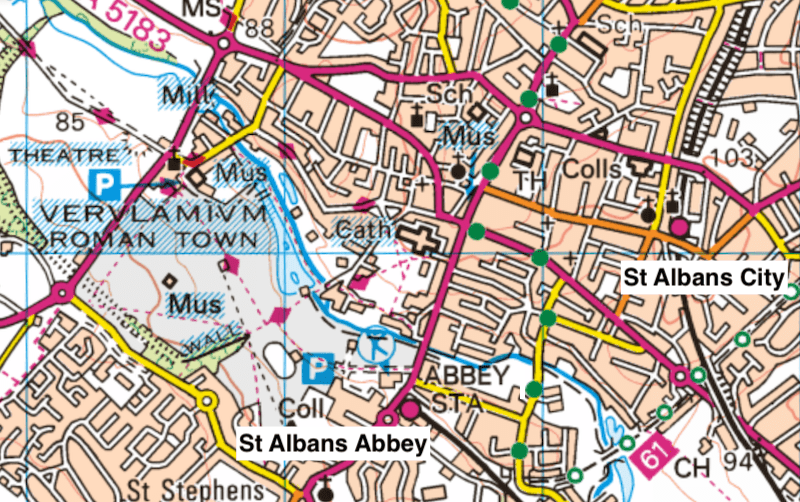
Surprisingly St Albans Abbey came on the scene first being opened in 1858 by the London and North Western Railway. It’s always been a terminus station with LNWR’s plans for an extension northwards to Luton and Dunstable never materialising. However after 10 years, in 1868, Great Northern Railway opened a branch line also terminating at St Albans Abbey running eastwards to Hatfield. This closed to passengers in 1951 and to goods in 1968, exactly 100 years after it had begun. The tracks were lifted and a cycle and pedestrian route called Alban Way opened on its path – you can see the beginning of it in the above map by the number 61 in the bottom right hand corner going from south west to north east.
St Albans City also opened in 1868 being part of the Midland Railway’s extension to St Pancras, sitting as it does on the Midland Main Line and obviously much busier as a result. In 2023/24 it saw 6,318,690 passengers enter and exit whereas St Albans Abbey saw 118,000.

At St Albans Abbey its shuttle connecting single track line to Watford is blessed with having a very active Abbey Line Community Rail Partnership.

Formed in 2005, the Partnership works to increase use of the line by enhancing station environments, be involved in community support and engagement, encourage local economic development and work with schools and youth organisations on rail safety and travelling with confidence.
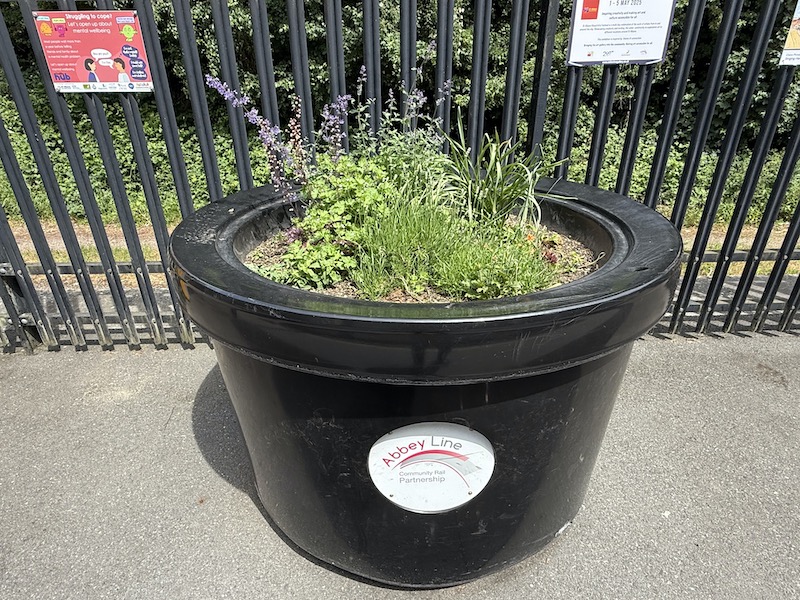
You can see this work in practice at the station with well kept flower tubs on the platform…
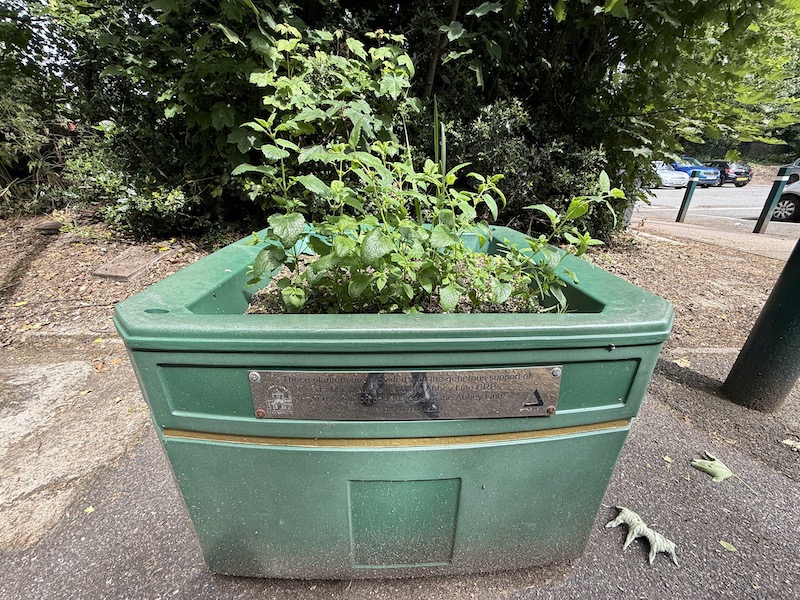
… as well as artwork along the fence…


… and at other stations along the line with posters at Watford Junction promoting its use as you walk to and from the line’s dedicated platform 11.

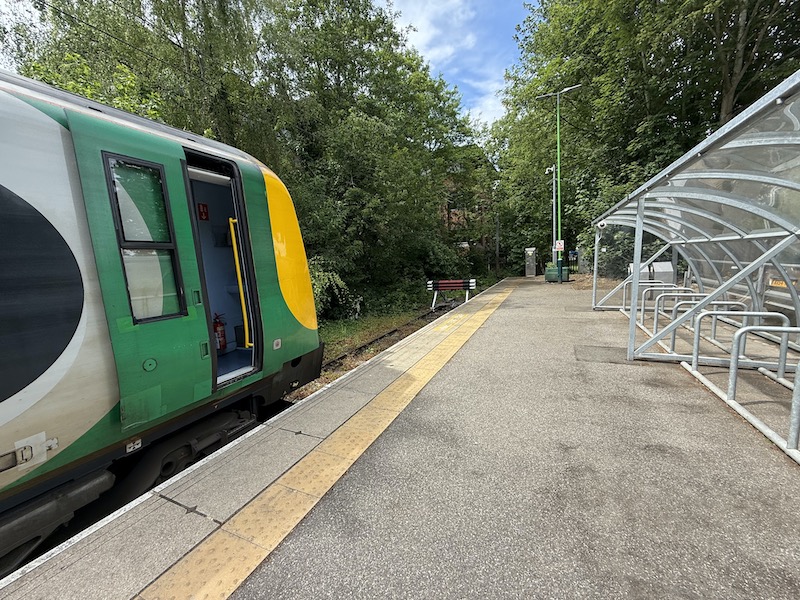
As well as the flower tubs and posters, St Albans Abbey’s platform has a couple of bench seats…
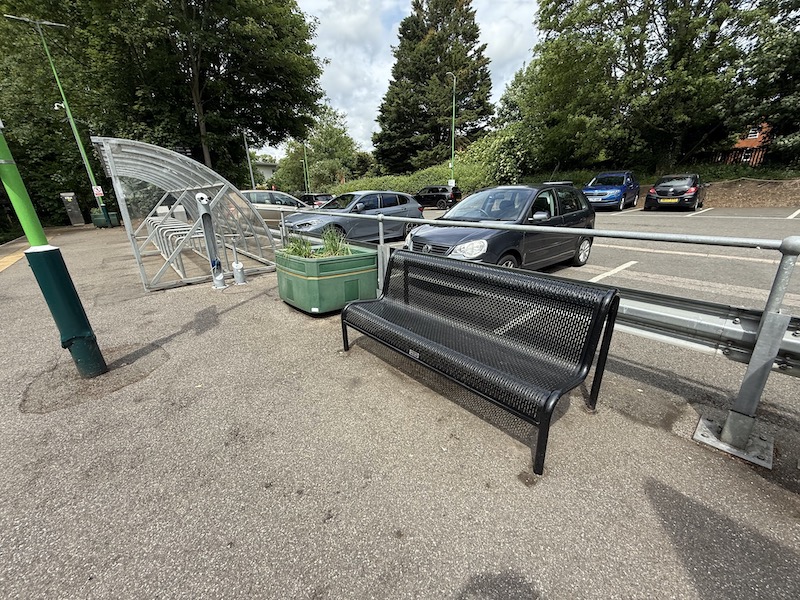
… a couple of shelters…

… some cycle racking…

… and importantly a Harrington Hump – it was the second station on Britain’s rail network to gain one.
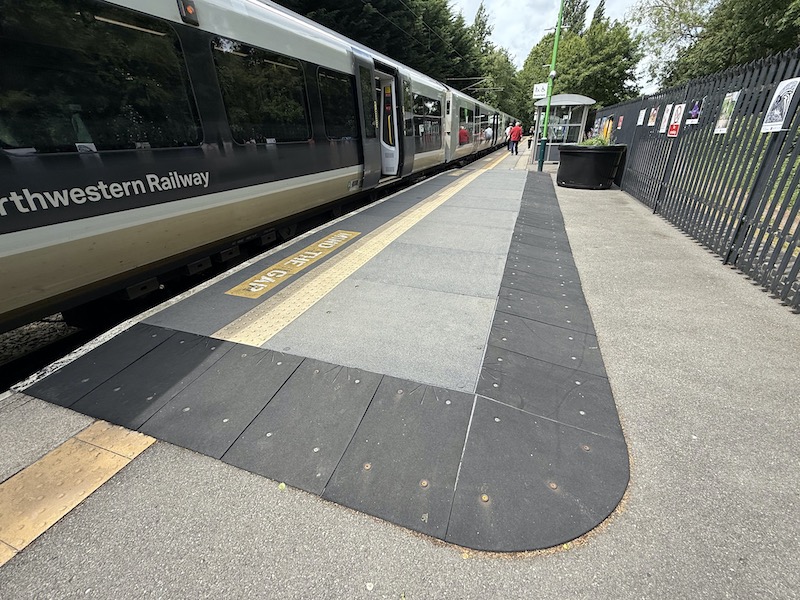
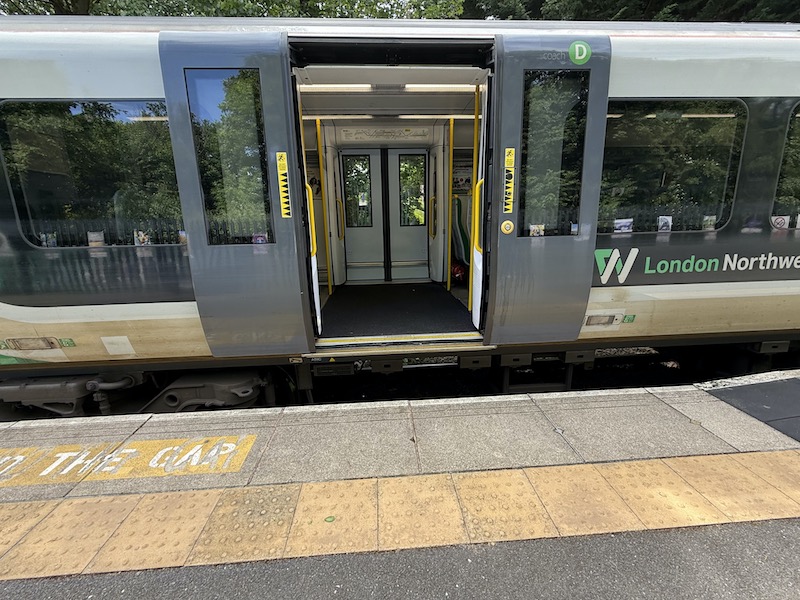
And it’s just as well as the step up and down to the trains is quite formidable.
There’s a ticket machine and two contactless pads to tap in/out….
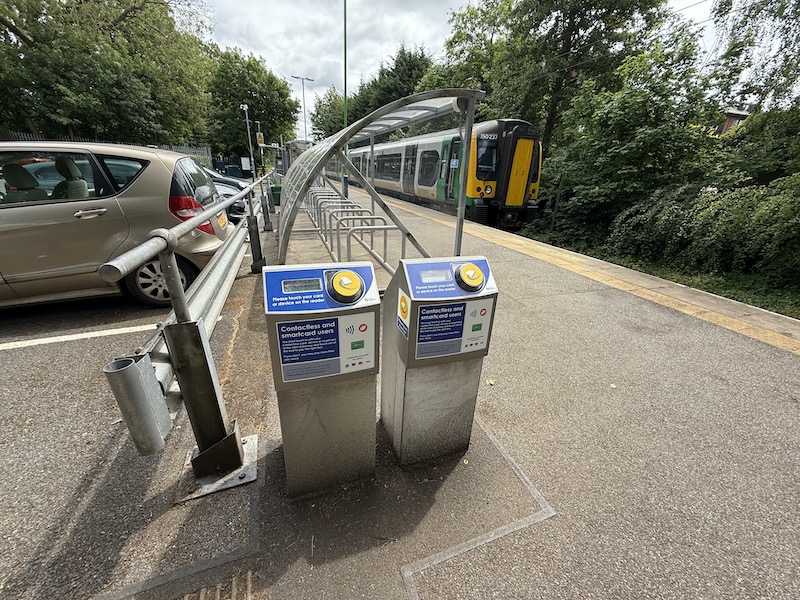
… and there’s also a very small car park right by the platform…
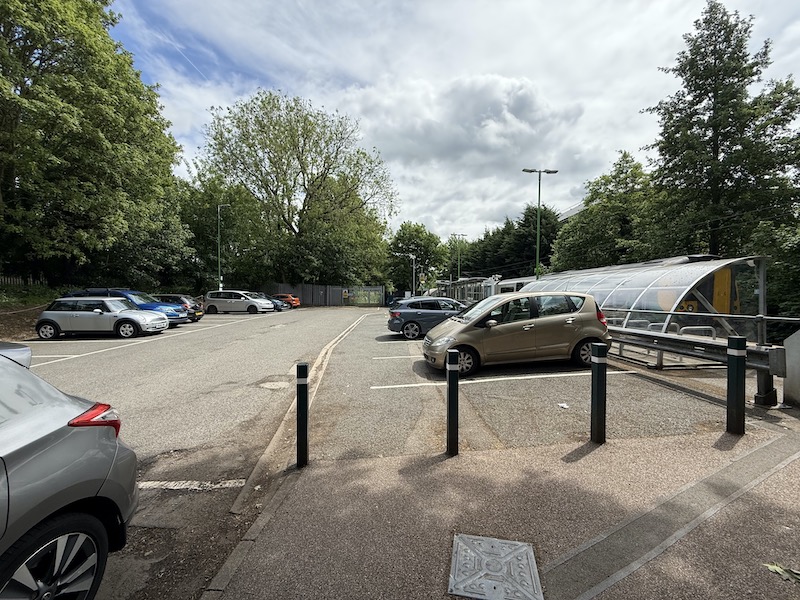
… which is accessed through a rather nice entrance from the main road.

As already mentioned, the shuttle runs hourly and takes 17 minutes to reach Watford Junction where the timetable shows connections either south to Euston or north to Milton Keynes making for an overall time to Euston of 41-45 minutes. The frequency increases to 45 minutes at peak times.

Over the years there’s been talk of installing a passing loop at Bricket Wood to facilitate two trains running a half hourly service. The proposal was included in the last Government’s Restoring Your Railway list of projects, but this has now been abandoned by the current Government.
A return from St Albans Abbey to Euston costs £23.60 in the peak and £17 off-peak whereas over at St Albans City it’s £27.20 in the peak to St Pancras (and through to London Bridge) and £20 off-peak.
Thameslink trains from St Albans City also offer quicker journey times to London with the half hourly service (from Bedford) to Three Bridges taking just 21 minutes for its non-stop run to St Pancras and the half hourly (also from Bedford) to Brighton stopping at West Hampstead Thameslink takes just a minute longer at 22 minutes. The semi-fast half hourly (from Luton) to Rainham takes 31 minutes (stopping at five stations) and the 15 minute frequency trains which commence at St Albans and run around the Sutton/Wimbledon loop stop at all eight stations and tale 35 minutes to St Pancras, so all are quicker into London than from St Albans Abbey.
St Albans City also sees three additional Thameslink trains in the peaks to and from East Grinstead (from and to Bedford) and it’s also noteworthy an hourly service to and from Brighton calls at St Albans City right through the night.

Trains to and from Rainham and the Sutton/Wimbledon loops use the slow lines (platform 1 southbound) and platform 2 (northbound) which also give access to the turn back siding located between these two lines, north of the station, where terminating trains from Sutton/Wimbledon enter from platform 2 before returning to platform 1 for the journey south.
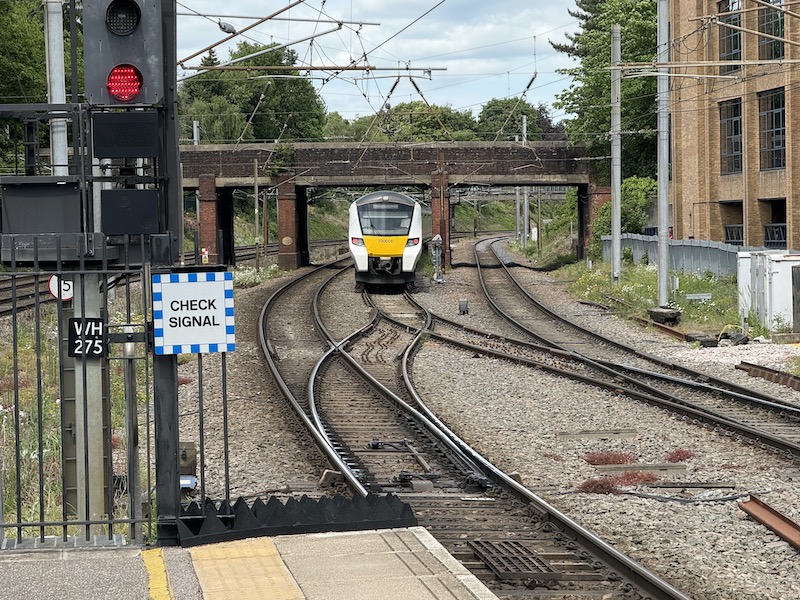
Platforms 3 (southbound) and 4 (northbound) are on the fast lines for trains to and from Bedford and Three Bridges/Brighton and are also used by East Midlands Railway trains to and from the East Midlands. none of which stop at St Albans City.
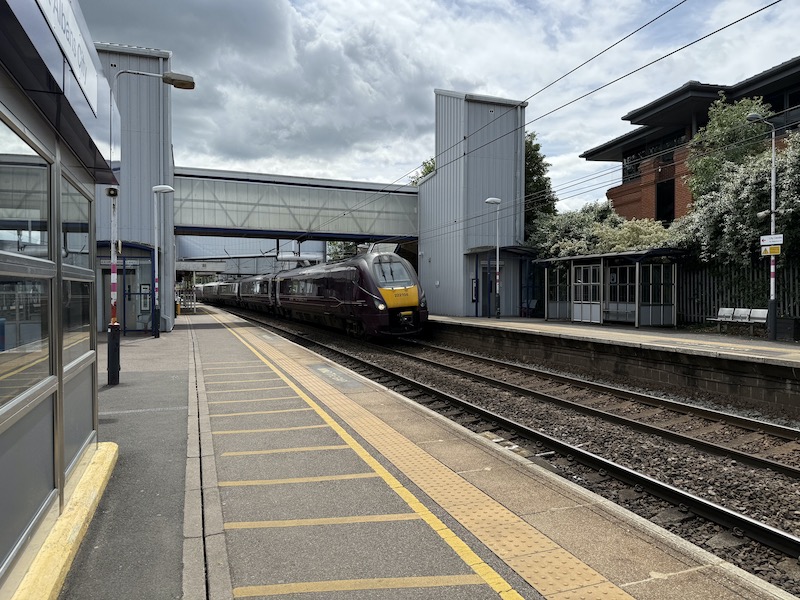
The main entrance/exit to the station is on the east side on Station Way where there’s also a three bay bus station immediately outside…

… while a secondary entrance/exit is on the western side off Ridgmont Road at the extreme southern end of platform 4.
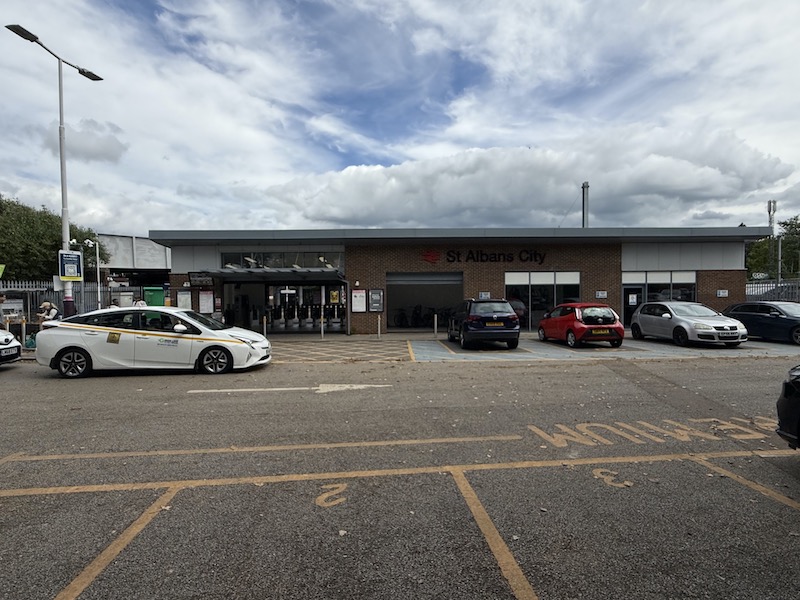
There’s no ticket office here but there are plenty of ticket machines…

…and remotely controlled ticket barriers.

The station underwent a major refurbishment at the beginning of this decade which included a rebuild of the retail unit fronting the main entrance to the station which is now a Sainsbury’s Local.

A second footbridge was also added. It’s very imposing from the Victoria Street bridge……

…and from platform level…
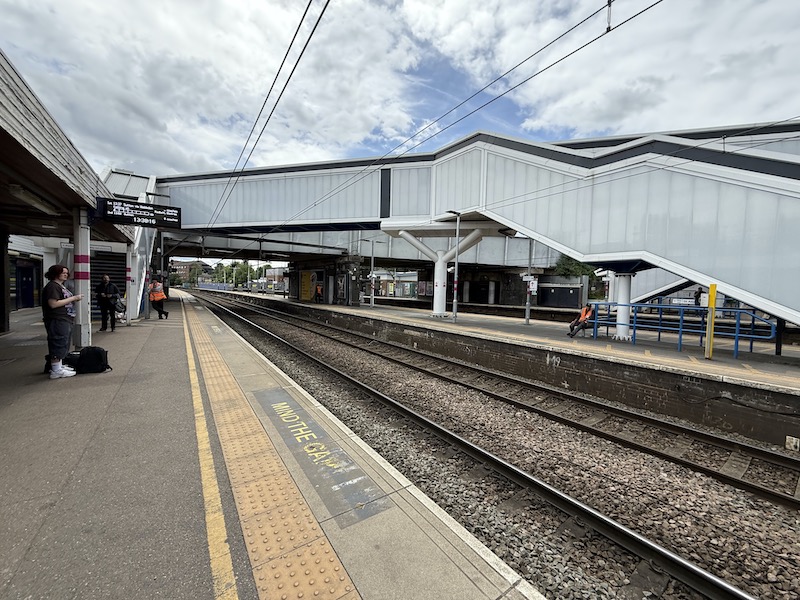

… and feels even more imposing when using it on the inside.
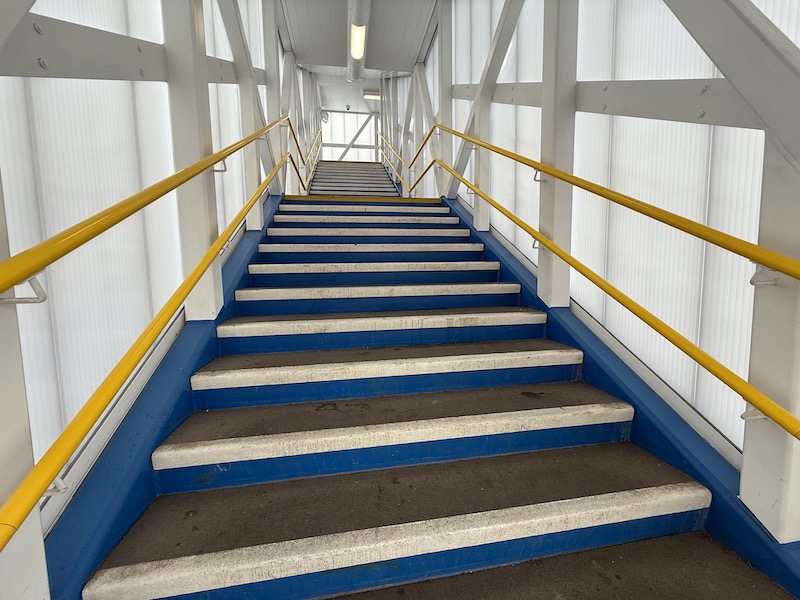


This new addition supplements the longer standing footbridge further north along the platforms…
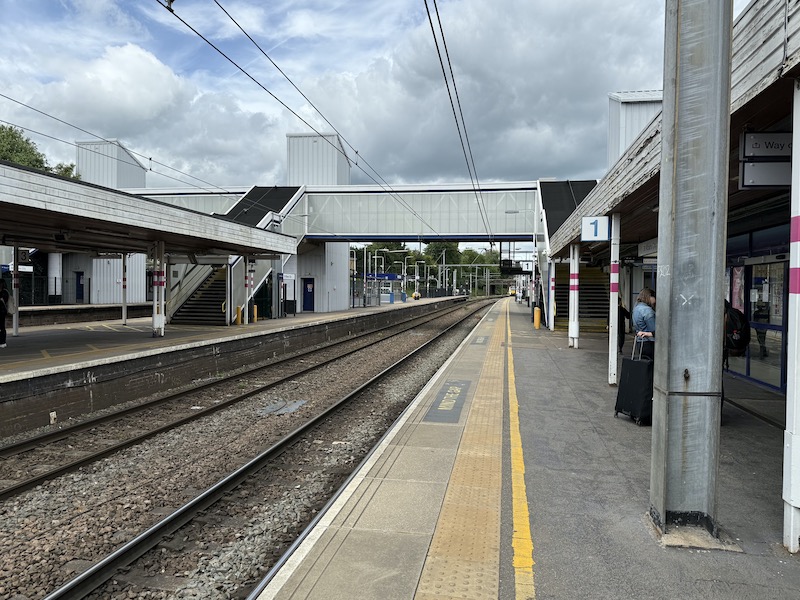
… which also has lifts.

There’s a five window ticket office in the main entrance hall although I can’t conceive there’s ever a time when more than two are in use…

… and as well as the five ticket machines by the Ridgemont Road entrance, shown in an earlier photo, outside the main entrance there’s a bank of four machines (although one was covered over)…

… and inside there’s a bank of three to the left of the ticket office windows….
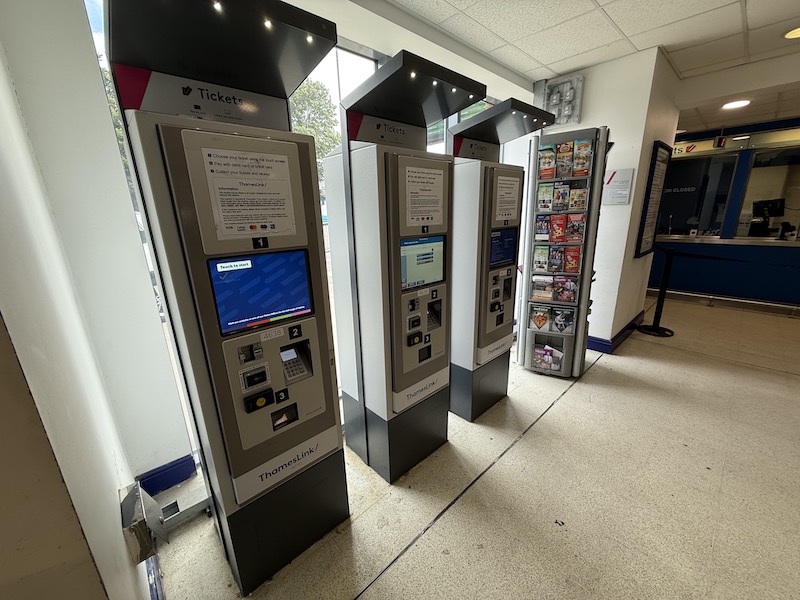
and another three to the right …
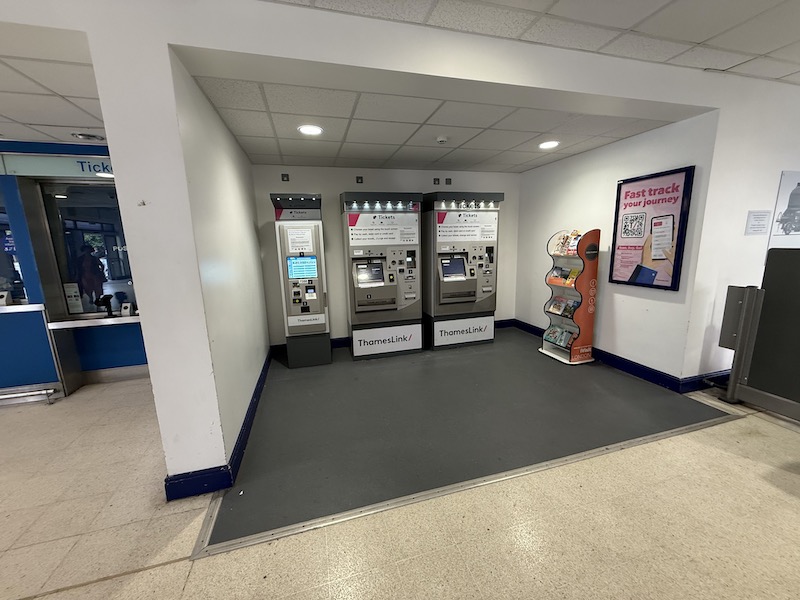
… which makes 15 ticket machines in total which seems a lot for today’s age when many passengers buy online and download tickets to mobile phones.
There’s a double width ticket barrier which looks as though it was extended during the recent refurbishment…

… and retail units can also be found on platforms 1 and 4 including a Costa which is now rather hidden aweay behind that imposing footbridge.
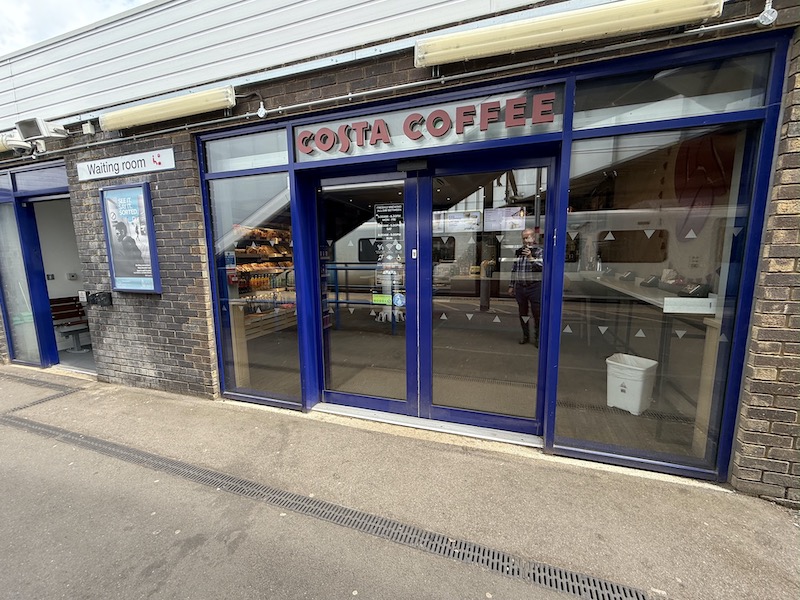
Next to Costa is a waiting room…

… which is very linear…
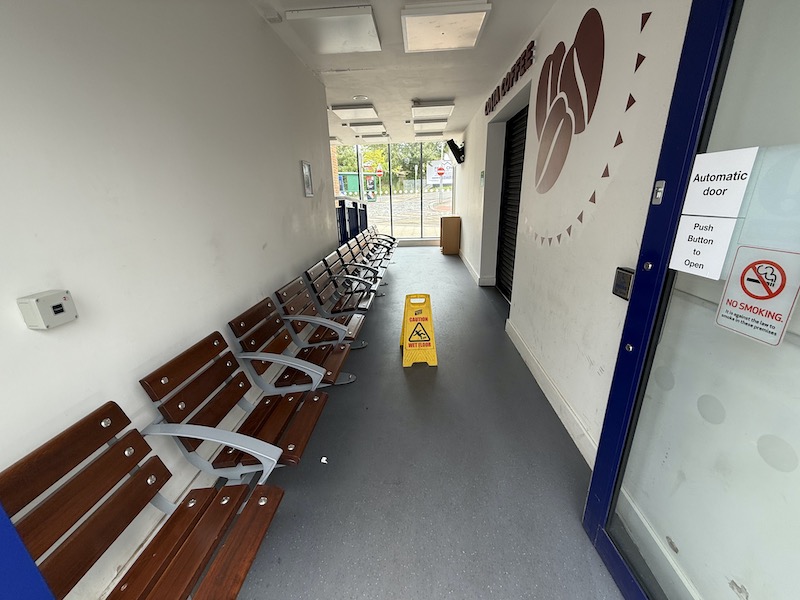
… while out on platforms 2/3 there’s a new looking shelter with a button controlled door…

… supplementing a traditional style shelter with another traditional shelter on platform 1…

… and two on platform 4.
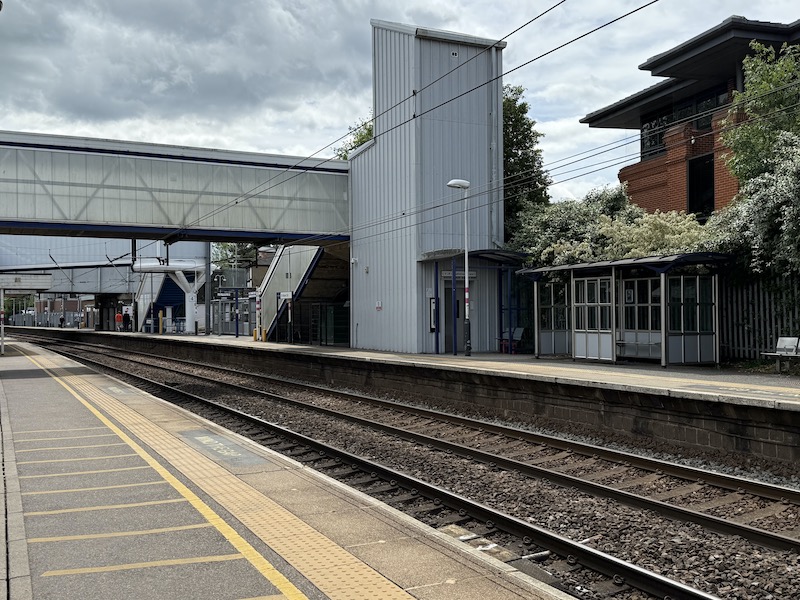
Finally, in this whistle stop tour of the delights of St Albans City, toilets can be found on plaform 1.

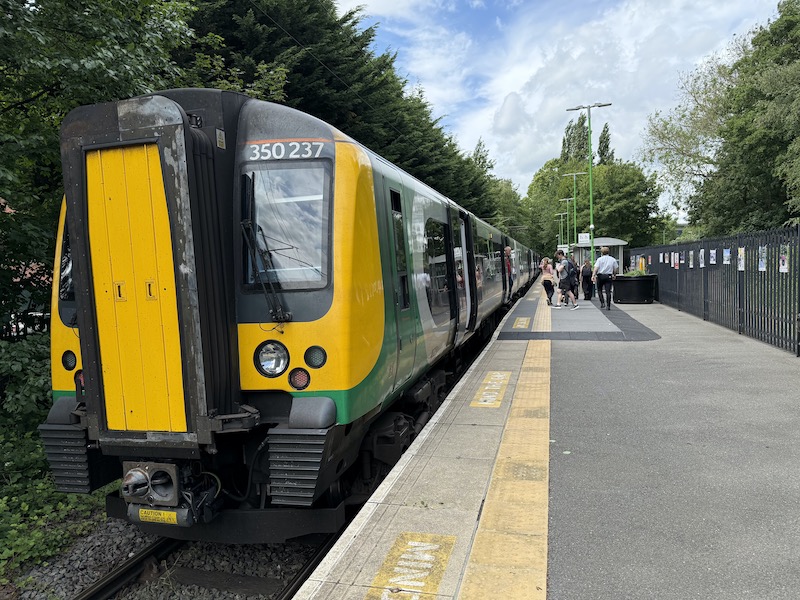
It all makes for quite a contrast…

… with St Albans Abbey.
Roger French
Did you catch the 11 previous blogs in this series? 1: Hertford; 2: Canterbury. 3: Wigan, 4 Dorchester, 5 Windsor, 6 Wakefield, 7 Reddish, 8 Yeovil, 9 Newark-on-Trent, 10 New Mills, 11 Tyndrum.
Blogging Summer timetable 06:00 TTHSSu
 BusAndTrainUser
“St Albans City also opened in 1968”
Give or take 100 years…
LikeLiked by 1 person
Corrected; thanks.
LikeLike
Many thanks for this – an interesting contrast. so good that the Community Rail is active, and supported by the rail company/ies. Such a shame (though I don’t know why I should be surprised – it’s been like this all my life) that rail managers appear to have no interest in making sure that there are good, well-publicised bus links between the stations and to the city centre. You’d have thought that that would generate as much extra rail travel as flowers and art exhibitions …
LikeLike
it’s not always straightforward to link bus services with train timetables. People living along a bus route want a service at regular intervals throughout most of the day, and fitting in with train arrivals and departures is unlikely to provide this. It only really works where there are high frequency bus services creating a turn up and go scenario.
Keep up the flowers and art please, it creates a softer environment and often raises a smile (while you’re waiting!)
LikeLike
There’s ten buses an hour between the Abbey Station and the City Centre (321 * 2, 361, 601, 721 * 2, 724, 725, S4 and S8/S9), but the reality is that the Abbey Line has always been pretty useless as a link to St Albans given that the 321, 724 and 725 run parallel to it with a much great frequency and penetrate the City Centre.
LikeLike
My father grew up in Harpenden but won a scholarship to St Albans School. Unusually his scholarship included a train season ticket to cover the costs of him getting to school which I haven’t heard of anywhere else. You haven’t mentioned the extremely steep hill between the two stations or between St Albans Abbey and the town centre. My father always said how learner drivers were kept well away from Holywell Hill for their own safety and others.
LikeLike
I lived in Mill Hill and had a scholarship to Haberdashers’ School, this included the cost of a season ticket from Mill Hill Broadway and Elstree & Borehamwood. My older sister went to St Albans High School for girls – when she started the trains were still steam-hauled, then the diesels came in. Incidentally City station in the 60s must have been one of the shabbiest on the whole network!
LikeLike
From memory it used to link up with the Hatfield to St Albans line, I think it may have linked up with the Hertford to Hatfield line as well
HCC have proposals for a rapid transport system between Harlow and Watford which sounds as if most of it would broadly follow the route of those old railway lines
Improving passenger transport – Hertfordshire Essex Rapid Transit | Hertfordshire County Council
LikeLike
Several attempts have been made over the years to connect the two stations … all have failed.
There are plenty of buses from St Peters Street to the City Station, and half a dozen per hour to the Abbey Station … plenty for the passengers offering.
LikeLike
There is not a great scope for demand between the two stations unless you are going or coming north to St Albans, unless West Coast Mainline services have better connections with East West Rail at Bletchley etc the way to get to say Market Harborough from Watford is tricky or expensive.
Perhaps the St Albans Abbey line is worth trying VLT on ?
JBC Prestatyn
LikeLike
Speaking of Brighton I see Flixbus are doing a twice a day coach from London, which might be worth investigating and comparing with any NatEx offers remaining from the days of Southdown
JBC Prestatyn
LikeLike
I have always thought that the Abbey Line would be a good candidate for conversion to a tram provision, with extensions eastwards into St Albans city centre and westwards into Watford, with a loop around the town centre
LikeLike
Conversion of the Watford to St. Albans Abbey line to trams was one of Lord Adonis’s bright ideas. It never happened because Hertfordshire County Council, although quite keen, didn’t feel able to take on liability for the structures on the route.
Stuart S
LikeLike
Also, an extension from Watford towards Croxley and Rickmansworth has been mooted.
LikeLike
If you check out old maps you’ll see that there was a link between the LNWR Abbey line and the Midland one. If that had been reinstated you could have diverted the Abbey line trains to the City station which would be the best solution for connections.
Such opportunities were missed in the 1960s when it was simpler to close rather than develop a joined up network.
Richard Warwick
LikeLike
I’m not sure regarding the status of the “Park Street Branch” (as it is named on the Midland Rly Distance Diagrams, which note it as ‘not laid’), from (approximately) Park St on the LNWR St Albans branch to Napsbury on the MR – I have a feeling that it was only used as a contractor’s link, during construction of the MR London extension, and was never open to normal traffic. For many years the trackbed was blocked by Radlett aerodrome.
A couple of other observations:
Brickett Wood station did have a crossing loop – which I think was taken out in the 1970s or then abouts.
St Albans City station has been rebuilt (don’t know date), with the new/current main entrance and station building on the up side on Station Way – I think the site of the former goods yard; the former (main) entance/station building was on the down side, on Ridgmont Road. The new station building is the other side of Victoria Street, and the Ordnance Survey have changed the marked location for the station to match!
St Albans did have a third station, on the GNR branch from Hatfield, on London Road – which, according to the Disused Stations website, was adopted as its distinguishing name 1951, but neither Quick, nor summer 1951 Bradshaw (which shows one train each way daily) list this, just using GNR, LNER or ER to distingish it. (Abbey and City were adopted by the LMSR in 1954)
It is interesting to note that, since Thameslink came on the scene, the Midland has changed having one of London’s poorest suburban service (the new diesel service of 1960 offered, off peak, one an hour to Bedford (fast St P. to Elstree), and one an hour all stations to Luton), to one of the best, with ten an hour at St Albans.
LikeLike
Hi Rodger. Are you doing Lichfield, Warrington or Cardiff?
LikeLike
I still have a flexible plan but probably not those three – Warrington now has three stations and Cardiff does too (including Bay) so don’t really qualify!
LikeLike
In the mid 60s I lived in the parental home in Sandpit Lane, parallel to and north of Hatfield Road, and worked in the Aldersgate area of London. I remember there was a rather convoluted route on foot to the City station, but to my shame can’t recall any details of what it was like then or what the train service was, presumably just St Pancras terminators? Nor whether any were any steam-hauled. What I do remember is silver Metropolitan trains to Aldersgate tube station, now Barbican of course.
LikeLike
Trains also ran to Moorgate via the City Widened Lines until circa 1978, when it was closed for the BedPan electrification to take place.
KCC
LikeLike
There were through trains from the Midland to Moorgate via the Widened lines – peak hours only from post war reinstatement (1945/46) until electrification in c1980.
LikeLike
Trains to Moorgate continued after electrification. A 1986 timetable shows the service running to Moorgate all day on Mondays to Saturdays. The service pattern was half-hourly Moorgate <> Luton calling all stations, and half-hourly St Pancras <> Bedford, running non-stop from St Pancras to St Albans then all stations northwards. The service to/from Moorgate was more intensive in the peaks.
Once the Thameslink connection was reinstated, Moorgate was once again served peak hours only.
I think it was the “Thameslink 2000” project which put an end to the Moorgate service. Thameslink 2000 required platforms at Farringdon to be lengthened across the junction just south of the station, severing the Moorgate branch.
Malc M
LikeLike
The silver Metropolitan trains from Amersham (and Chesham in the peaks) ran beyond Aldersgate to Moorgate. Later they reached Liverpool Street, and later still Aldgate, when trains from Uxbridge were also extended there from Baker Street – if I remember correctly!
I don’t think Aldersgate ever laid claim to being a “tube station”, as that term was not used on the Circle and related lines until much more recently.
Ian McNeil
LikeLike
Looking at Table 52 in the National Rail Timetable, it seems anyone wanting to travel north of Bedford from St.Albans City on the MML faces a bit of an arduous journey. To get to Nottingham you have to change at Bedford and then Kettering; to get to Derby, Chesterfield or Sheffield you have to change yet again at Leicester. St.Albans being on the same main line as all these and a thriving place, you would think there would be plenty of custom for one or two expresses in each direction stopping there.
I had a few days in St.Albans a few years ago, using both stations. City is very busy, entirely functional and totally characterless (in my humble opinion), whilst Abbey is a delightfully peaceful backwater with a semi-rural air despite being just down the hill from the city centre. But that hill is definitely steep if you are going up it!
Whilst there, I traced the start of the trackbed of the Hatfield branch from where the junction would have been, and also caught the bus to Wheathampstead (on the old Welwyn-Harpenden line) where a good attempt has been made to replicate the old station, with various railway memorabilia.
I also made a day trip to Bishops Stortford (where I once lived), by catching a bus (was it a Greenline? Did it go on to Harlow?) to Hertford bus station, walking round the corner to Hertford East, catching a train to Broxbourne and changing there for BS (for which there was a through fare). It worked like clockwork!
Brian Musgrave.
LikeLiked by 1 person
I’ve too always been surprised none of the EMR services have ever called at St Albans. It doesn’t feel quite a big place not to have an Intercity service.
LikeLike
I often think how south of the Thames was more successful in keeping at least some of its orbital railways. Maybe Cambridge-Oxford direct reopening will help restore some balance. (CH, Oxford).
LikeLike
The crayonists periodically suggest converting the Abbey Line to light rail and linking it the Hatfield line, but I’ve never seen a remotely credible solution for running LRVs up and down the hill from the Abbey Station to the City Centre. And if you can’t do that, the whole idea is dead in the water commercially.
Probably the best solution (if you could get the safety case sorted) would be add-on order to the Stadlers going to Cardiff and then strip out as much signalling as possible and drive on line of sight. With a passing loop in the middle of the line protected by signals, the track on each side of the loop would effectively be a single block with only one tram in it at anytime.
LikeLike
The Abbey station was originally intended to be further on and near St. Michael’s village. The area round the car park was earlier a mass of tangled undergrowth. The current landscaping was carried out by local charity Groundworks.
There was a dedicated bus service,SC1,between the two stations operated by Lucketts of Watford between 25 January 2017 and 3 March 2018 bit was poorly used because of poor advertising and bad timekeeping, caused by traffic congestion, resulting in missed train connections at the Abbey station.
At the City station the left hand group of gates on to platform 1 were added later than the original group. The original station building and bus terminus were on the down side. When the “new” station was opened on the present site, the old entrance was closed except for a manned gate only open in peak hours. This was replaced with a gated entrance with ticket machines when gates were installed at most stations along the line. The current entrance is a rebuild of this. When the station was gated ticket office receipts increased by 25%. The 4 bay bus interchange replaced the 2 parallel stops adjacent to the car park. These were numbered 19 and 20 and were the last of the LT numbered stops in the city.
LikeLike
Another attraction next to City station is the signal box museum (occupying the original signal box)
open at least one Sunday per month by volunteers, with additional openings in holiday periods and spring to autumn.
Sigbox.co.uk
milest
LikeLike
An interesting sign on the ‘waiting shelter’ door picture at City station – ‘Automatic Door, Press Button to Open’. How can it be an automatic door if a button has to be pressed?
LikeLike
Thanks for this. This brings back memories of going to School and College by train from Radlett. I still have a student season ticket from my days of “commuting”. City station has certainly changed
LikeLike