
Tuesday 27th May 2025
The following blogpost has been brought forward from its intended slot this Saturday as it describes the perfect place to reflect on the weekend’s sad news.…..
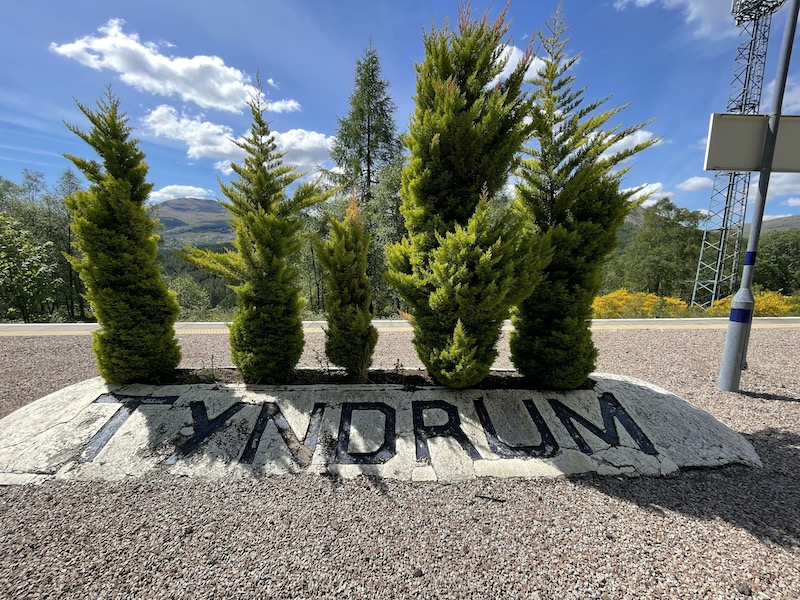
So here I am in the tiny hamlet of Tyndrum in Stirling, exploring its two lovely stations: Tyndrum Lower on the line to Oban and Upper Tyndrum on the line to Fort William and Mallaig.
These two separate lines diverge at the previous station, Crianlarich, 5 miles south east of Tyndrum.

Three trains a day from Glasgow Queen Street split at Crianlarich continuing to either Oban via Tyndrum Lower or to Fort William and Mallaig via Upper Tyndrum. Another three trains go direct from Glasgow to Oban without splitting at Crianlarich meaning Lower Tyndrum has six westbound departures to Oban while Tyndrum Upper has just the three to Mallaig although also sees the once a day Caledonian Sleeper as far as Fort William.
In the Glasgow direction Tyndrum Lower has seven trains a day with Upper Tyndrum just three and the Sleeper.
It’s quite something that, by a quirk of location, such a tiny hamlet (Tyndrum’s population is just 167) has two stations offering a fair number of departures including a direct train service to and from London. Obviously it helps to be on the way to one of Britain’s most beautiful scenic areas.

Tyndrum Lower opened first in 1873 being the line’s original terminus until the Caledonian and Oban Railway extended the track as far as Oban four years later in 1877. See the map below for context.
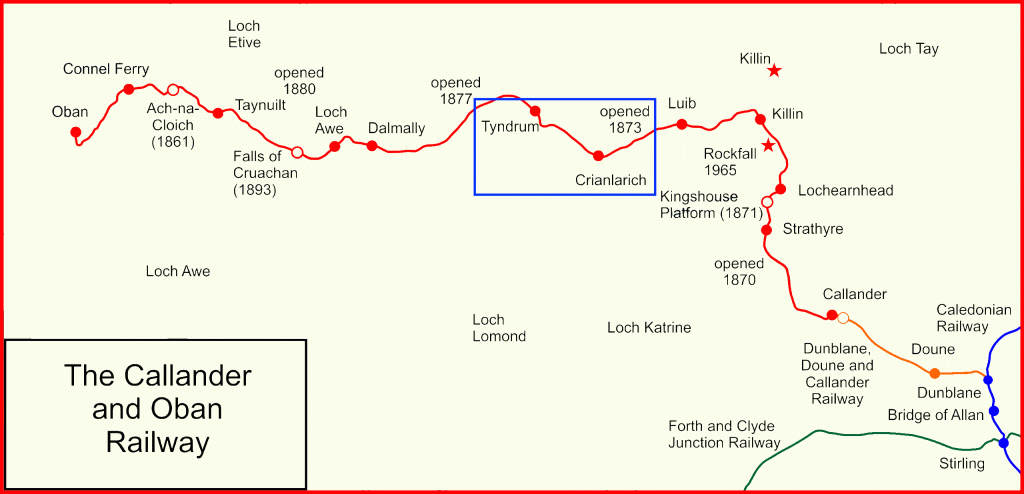
The section of line between Callander and Crianlarich, closed in 1965.

Upper Tyndrum came on the scene in 1894 thanks to the West Highland Railway running between Glasgow and Fort William and on to Mallaig.

Initially both stations were called Tyndrum but were renamed in 1956 to Tyndrum Lower and Tyndrum Upper with the latter renamed again in 1988 to Upper Tyndrum – I’m not sure why.
Tyndrum Lower is the busier of the two stations seeing 6,382 passengers in 2023/24 with Upper Tyndrum hosting 5,878 but tickets, from say Glasgow, can be purchased to either station so these figures must be broad estimates.
It’s not surprising Tyndrum Lower is busier as it has almost double the number of trains and is more conveniently sited at a lower altitude near the main A85 road whereas Upper Tyndrum, as its name implies, is at the top of a steep hill.
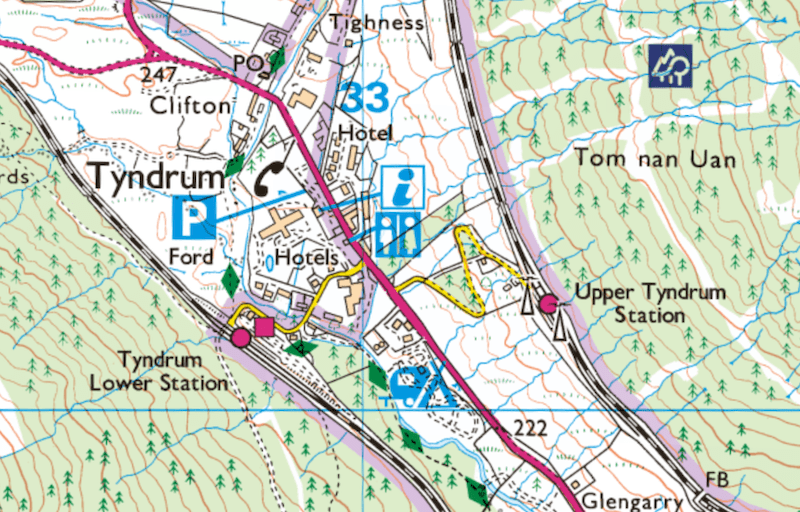
Despite the rail lines diverging significantly after Crianlarich (see earlier map), by the time they reach Tyndrum they’re under a 1,000 yards apart. It took me little more than 10 minutes to walk between the two…
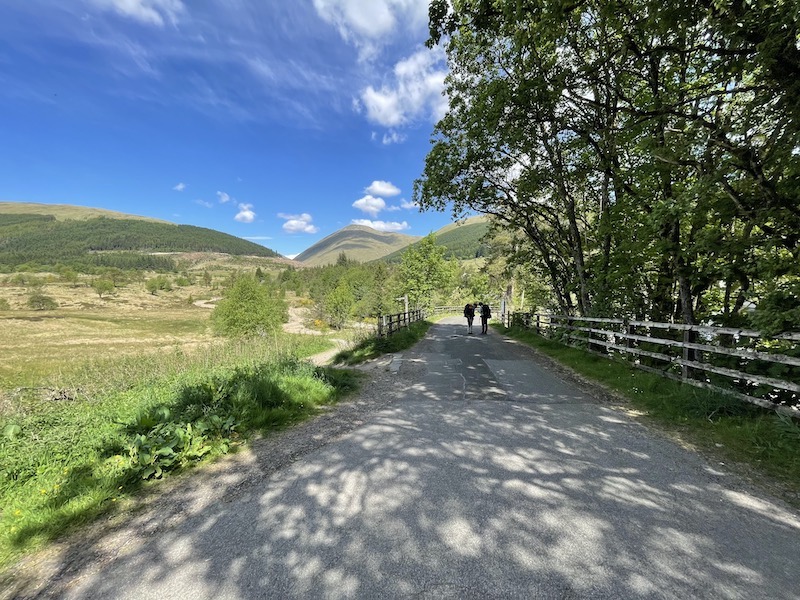
…albeit I chose to go from Lower (above) to Upper (below)…


… so had to stop for breath a couple of times going up the steep incline! And what a lovely walk it is. The best I’ve yet had between station pairs in this fortnightly explorative blog series.

Tynrdum Lower has just one platform on the single track line to Oban with some plant tubs…

… a couple of bench seats…

… a shelter…

… a cycle rack and dot matrix departure sign…

… and a small car parking area.

There’s also an onward travel poster; but that’s about it.

But it is a wonderful setting and such a peaceful and quiet spot to wait and contemplate, especially on a lovely sunny day, as it was when I visited last Tuesday.

Upper Tyndrum offers even more wonderful views of the amazing scenery in this part of the country.
It’s a typical West Highland Line station comprising an island platform accessed via a subway…

… and stone staircase…
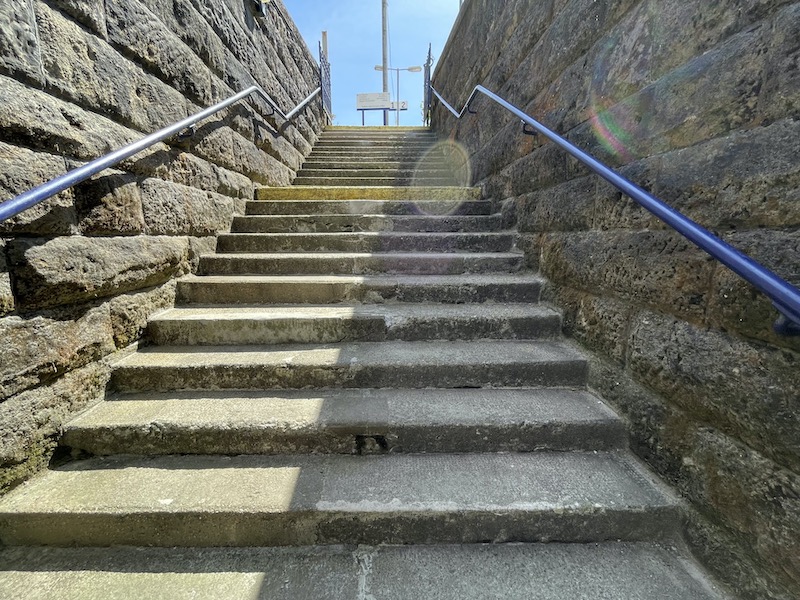

… with the single track becoming double and passing either side so allowing trains to cross if needed….
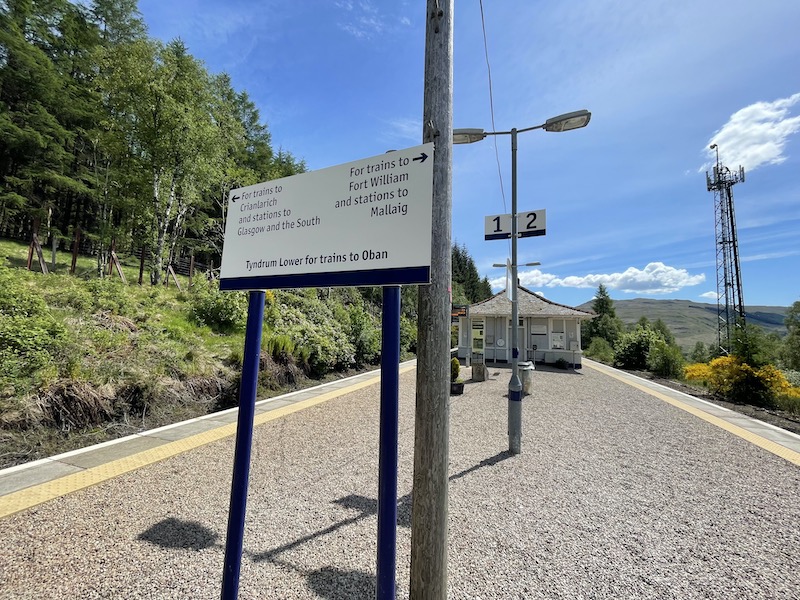
…. and one of the usual Swiss chalet style of buildings which characterise this line can be found on the island.
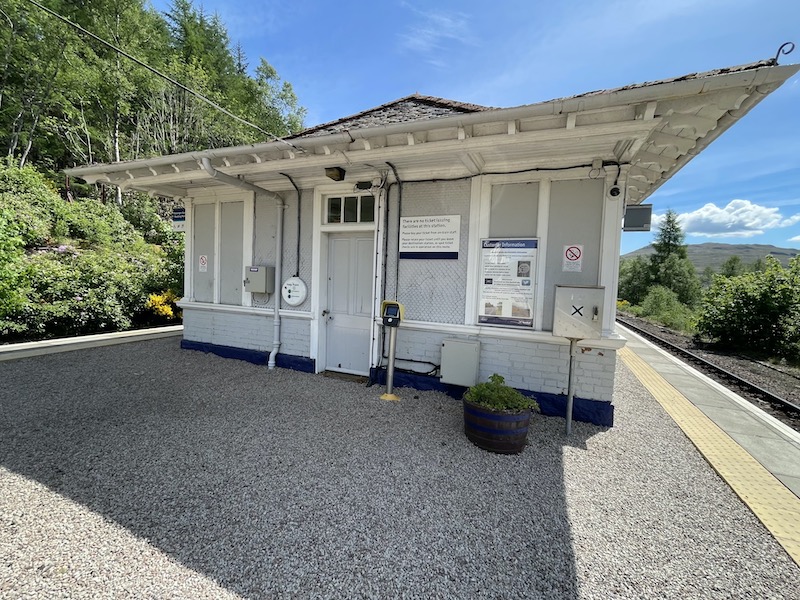

This building doesn’t look as though it’s found any alternative uses so remains locked up.

There’s a bench seat on platform 2

… bur not on platform 1…

… and there are some well kept trees and plants at the southern end of the station.

As with Tyndrum Lower, there’s a very small car park…
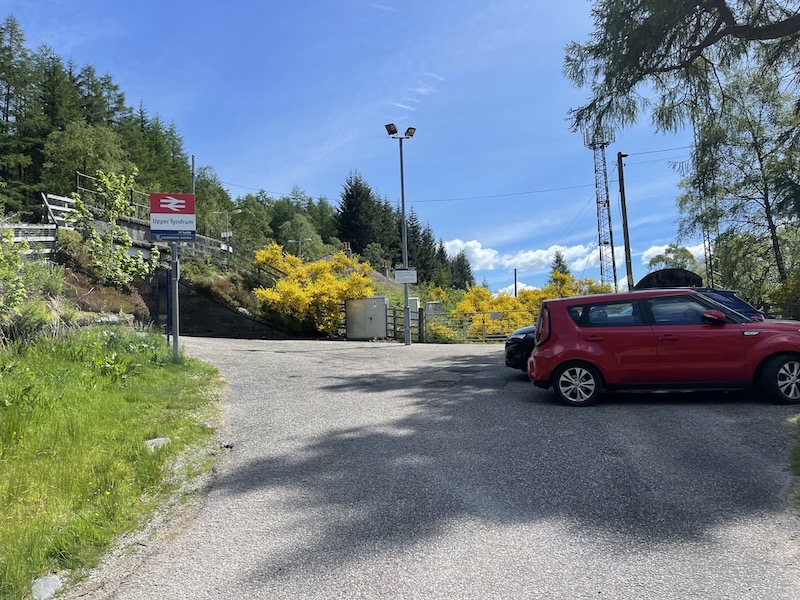
… and some cycle stands…
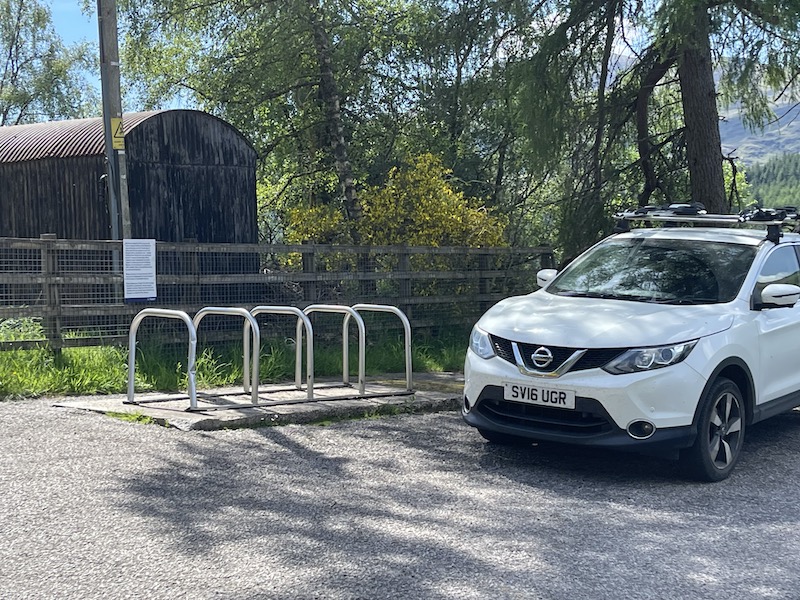
… and an Onward Travel poster.

But most of all there are some spectacular views.

And, of course, trains. Well, just a few.

Tyndrum is just the place to sit, enjoy the views and soak up the atmosphere of two idyllically located stations for that all important and precious peace and quiet, and time for reflection.
Tyndrum’s 167 residents are truly blessed with railway gold.
Roger French
Did you catch the ten previous blogs in this series? 1: Hertford; 2: Canterbury. 3: Wigan, 4 Dorchester, 5 Windsor, 6 Wakefield, 7 Reddish, 8 Yeovil, 9 Newark-on-Trent, 10 New Mills.
Blogging timetable: 06:00 TThS
 BusAndTrainUser
“Bench sheets” at Tyndrum Lowwr? I think not!
LikeLike
Corrected; thanks. (Lower not Lowwr!)
LikeLike
So sorry to read of Andrew’s passing, he obviously meant a great deal to you.
LikeLike
Roger, what a lovely blogpost as a way to contemplate the sad news from Sunday.
Regarding the change of name at Upper Tyndrum in 1988 I believe this coincided with the introduction of radio signalling on the West Highland routes (Radio Electronic Token Block – RETB] – to reduce the risk of any confusion when drivers radio in their location – ‘Tyndrum Lower’ and ‘Upper Tyndrum’ being sufficiently different to achieve this.
Thanks for these fascinating ‘two station’ blogs. .
David
LikeLiked by 3 people
That makes sense David; many thanks for the explanation.
LikeLiked by 1 person
I agree with David re the station name change Mallaig Junction nr Fort William was renamed to Fort William Junction for the same reason. Glyn
LikeLiked by 2 people
Looks like those flowerbeds and tubs at Lower need a bit of TLC! Graham L.
LikeLike
I used to travel the West Highland Line through Upper Tyndrum to Fort William for the Skyways bus to Uig once a year. While I never alighted at the village, I did use the facilities at Crianlarich to pick up refreshments prebooked by phone on the run out from Glasgow. I wonder if it is still possible to do this.
John
LikeLike
This made me think that perhaps Helensburgh is due a visit, having a similar stiff climb from Central to Upper, created by the West Highland Railways need to gain a lot of elevation in a short distance.
Stuart S
LikeLiked by 1 person
No, the tearoom at Crianlarich has been closed down now for at least three years.
LikeLike
Tyndrum Lower and Tyndrum Upper were the only two places I could afford to visit when stuck in the village, almost penniless, for 48 hours and unable to hitch a lift out due to the constant, pouring rain. I was reluctant to spend any of my meagre money in the village cafe so, with low-lying clouds obscuring all scenery, the stations were my only diversion – and I didn’t need to buy a platform ticket for either.
LikeLike
Part of the old Callander line is a popular and spendid section of the Rob Roy Way. Ray Wilkes
LikeLike
Thank for the great blog about Tyndrum and for the lovely pictures.
How wonderful that you had such amazing weather but sorry you had to endure such an awful journey home from Glasgow.
Robert
LikeLiked by 1 person
Stunning location – a beautiful place in which to contemplate the world. Thank you Roger for bringing this one to us.
BW2
LikeLiked by 1 person
Thank you for this cheering blog. Re ‘Onward Travel’ I cast my eye over the bustimes.org entry for Tyndrum, wondering what the 167 inhabitants get (and the visitors, of course). In fact, being on the main road to Oban (and Fort William), there are quite a lot of routes – two covering the disused part of the old Scottish C&O. Most routes call at ‘Tyndrum, Public Toilets’ – sad for a village to be known for this, rather than an old coaching inn, perhaps, but it’s good to know that the toilets are at least regarded as some kind of permanent fixture!
LikeLike
Perhaps I’m missing something, but why does Tyndrum Lower have 6 westbound and 7 eastbound trains? Does one split before returning, or is there a secret train building plant somewhere on the way to Oban?
LikeLike
Anonymous , maybe check the timetable , perhaps a westbound train skips the station.
For the Ticket Stats, depending on train times the logical thing if in the area is to walk to Tyndrum Lower if going to Glasgow – as it is down hill, then return from Glasgow to Upper Tyndrum to walk down to ones home , thus avoiding the puff of the hill.
The two stations do sound as if they belong on the Island of Sodor though
LikeLike
New bus services in Tyndum started in the last few weeks by Ember. 3 x daily Glasgow to Fort William and 4 x daily Edinburgh to Fort William
LikeLike
For the record Tyndrum is pronounced as in the river Tyne and not Tindrum like the dreadful scotrail auto announcement.
LikeLike
It was a surprise to look up Real Train Times for today and discover that, at 11.51 am, a train is scheduled to pass Lower formed of “High Speed Train” with a maximum speed of 110 mph! This is of course the faux Midland Pullman on a rail tour. Somehow I suspect it will not achieve that speed in the western Highlands.
LikeLike
A nice line but the subsidy has to be massive
LikeLike
Scotland’s Railway receives some of the highest public subsidy anywhere in the UK:
LikeLike
Do the on train announcements advertise interchange opportunities of the other Tantrum?
For comparison, the SWML trains announce the interchange at Farnborough with a very verbose announcement something like “trains available at Farnborough North which is a 20 min 1600 meter walk with changes in gradient”. I think this announcement is fairly recent and is a odd mix of encouragement and discouragement, and not in simple language either (“changes in gradient” probably should say “challenging to those with restricted mobility” or “with highly sections”)
I don’t know if there is an equivalent announcement on the trains serving Farnborough North, guess we have to wait for our roving reporter to find out!
MilesT
LikeLike
I don’t mean to be picky or rude but Tyndrum is in Stirlingshire, it’s actually a fair distance from the actual (small) city of Stirling. A beautiful part of the world where this little hamlet sits. I do enjoy these blogs. As I say I don’t mean to be rude etc but as a native of Scotland I thought was worth pointing out in case anyone ever seeks to visit. Thanks again for all the informative blogs and I wish all readers and Roger well. Thanks.
LikeLike
Re. Srirling(shire), it’s far too late to wibble on about historic counties v local authority areas, that horse flew a long time ago. Where, for example, would Anonymous put Musselburgh? Traditionally in Midlothian,, many years ago it was transferred to East Lothian. Barnoldswick? Wantage?
Not a typo in the article itself, but it’s a pity that the Callander and Oban Railway map shows Bridge of Alan just north of (yes) Stirling.
Garry Brown
LikeLike
Clydebank has three stations
Clydebank
Singer
Yoker
LikeLike