
Thursday 27th March 2025

The latest issue of Passenger Transport fortnightly magazine is leading on a story originally covered in The Times newspaper that “Ministers saw how Greater Manchester’s Bee Network rebrand changed public perceptions almost overnight – and want the same bounce for rail”.

It goes on to report “the government is set to unveil a new Great British Railways logo in May. The rebranding aims to restore pride in Britain’s railways, with the Union Flag expected to feature prominently” adding “officials are currently finalising the new GBR branding, which will gradually replace the names and logos of existing private operators as services are brought back under public control.”

This means it’ll be farewell to South Western Railway, c2c and Greater Anglia as their current contracts expire over the next few months with those companies and staff transferring to the Government controlled DfT Operator Ltd (previously known as DfT Operator of Last Resort Holdings Ltd).
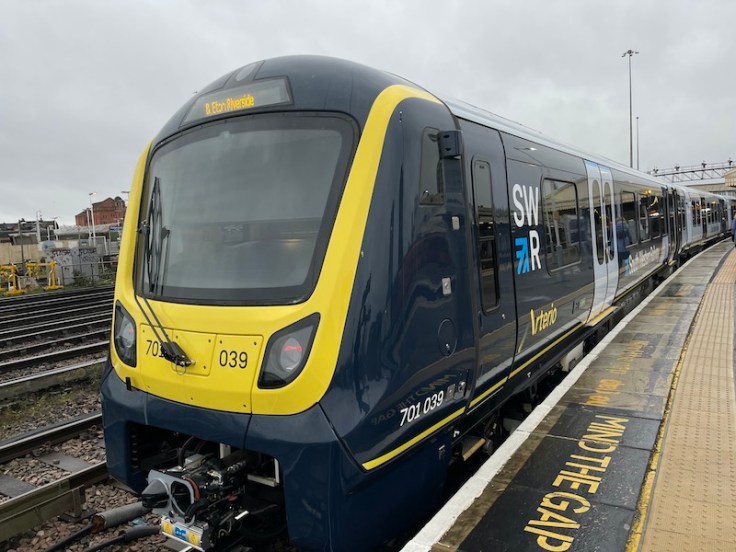
I think it’ll be a big mistake to sweep away many of the train company identities and brands we’ve become familiar with over the last few years, especially those which succinctly convey the area of the country served by the trains.
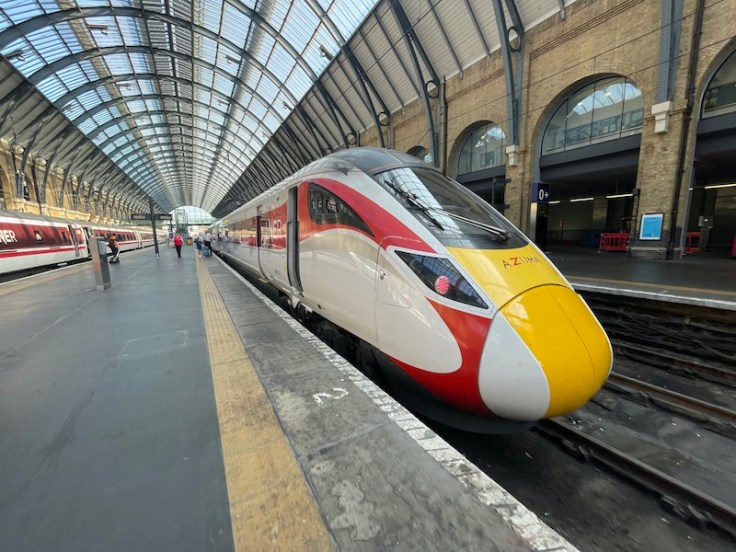
LNER, Southeastern, Northern and TransPennine Express have been under Government control for some time but the individual companies still exist, employing the staff running the service and act as the all important interface with the passenger.
It’s said the aforementioned seven companies, and in due course all the other Train Operating Companies, will later become part of Great British Railways. But does that imply doing away with the individual company structures? And if so, why?
In National Bus Company (NBC) and Scottish Bus Group days each individual bus company continued to exist, run by a management team, employing staff and negotiating localised operating arrangements with trade unions albeit within a national structure of agreements which included basic pay rates and conditions.
Bus passengers identified with long standing localised company branding until this was outlawed in the early 1970s by NBC in favour of a nationally applied livery style using either uninspiring red or green colours. This was regarded as a retrograde step which lost much public goodwill particularly as buses very much serve a local market and a national livery is irrelevant, a lesson Arriva, First Bus and Stagecoach still haven’t learnt even now.

The Train Operating Company brand names and liveries we’ve come to know (and love or hate) don’t have such a long heritage as a lot of those original bus company liveries but my view is many of them will be missed by passengers if they’re ditched in favour of a nationwide ‘one size fits all’ Great British Railways branding and livery.
Because one size doesn’t fit all.
Even in British Rail days a single nationwide branding wasn’t around for long as managers realised the power of using separate identities for InterCity and Network SouthEast for example.

During the privatisation years many brands have come and gone as franchises have been reorganised – Thames Trains being a good example of local trains ‘doing what it says on the tin’ before it was subsumed into First Great Western, which became GWR.

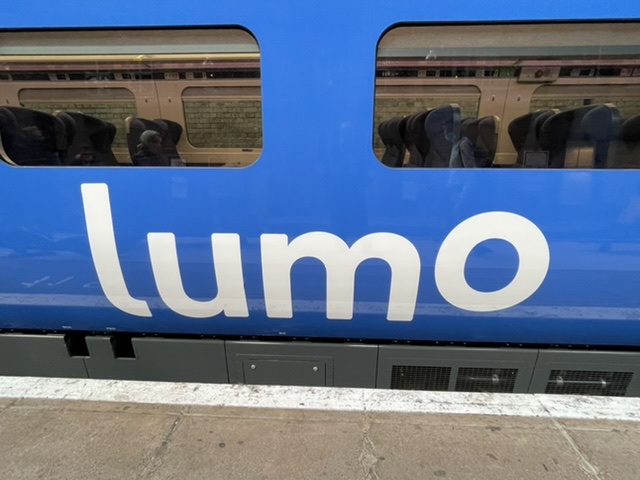
The East Coast main line has seen a number of brands but LNER, as well as the original GNER, have proved what a strong brand can deliver not least on a line that now sees three open access operators (Grand Central, Hull Trains and Lumo) which will continue with their individual identities and will become even stronger if all other trains are branded the same.
I would like to see the strongest brands which resonant with a particular market segment retained under an overarching GBR branding.
Perhaps the model adopted by the Go-Ahead Group for its bus companies would work best; ie use strong local branding for each bus company outside of London, but with a subtle ‘Part of Go-Ahead’ tagline underneath.

I’d keep the GWR, EMR and LNER names and come up with a snappier brand for the West Coast main line – perhaps just ‘West Coast’ and ditch ‘Avanti’.

I’d also retain the Cross Country brand to denote the main links between the south west and south with the north west and north east/Scotland, which after all “cross” the “country”. I’d also retain it for the Stansted Airport/Birmingham and Nottingham/Cardiff runs. And of course, Cross Country are just starting to roll out a brand new branding for its Turbostar fleet with the first train recently completed. If the brand is about to be swept away, why on earth is this expense being approved by the DfT?

I think Southeastern, Southern, Thameslink, SWR and Chiltern are strong brands for south east commuters and should continue along with the resurrection of Thames Trains as a brand and something new that’s more appropriate for trains in Essex than c2c.

Thameslink very much “does what it says on the tin” as a brand and, of course, denotes cheaper fares for commuters than those using Southern. If Thameslink were lost, you can bet it’ll mean those reduced fares being withdrawn – which won’t endear any new Great British Railways brand to Sussex commuters.
Stansted Express could usefully retain its brand but not Gatwick Express which is effectively Southern these days anyway. The deeply unpopular and confusing rip-off premium fares on Gatwick Express can finally be dispensed with too.
Greater Anglia has really made its mark under Transport UK with its fleet wide investment in new trains and has rightly won a number of awards. The company has built up considerable goodwill and it would be foolish to ditch this in favour of a nationwide bland brand which has all the vibes of politicians merely wanting their egos stroked.

As for Northern and TransPennine Express I’d merge them into something like ‘Transport for the North’ (TfN) so as to make a powerful statement about railways in the north, which everyone keeps going on about – and, after all, both companies have already been in public ownership for quite some time (five years for Northern and two years for TransPennine Express).
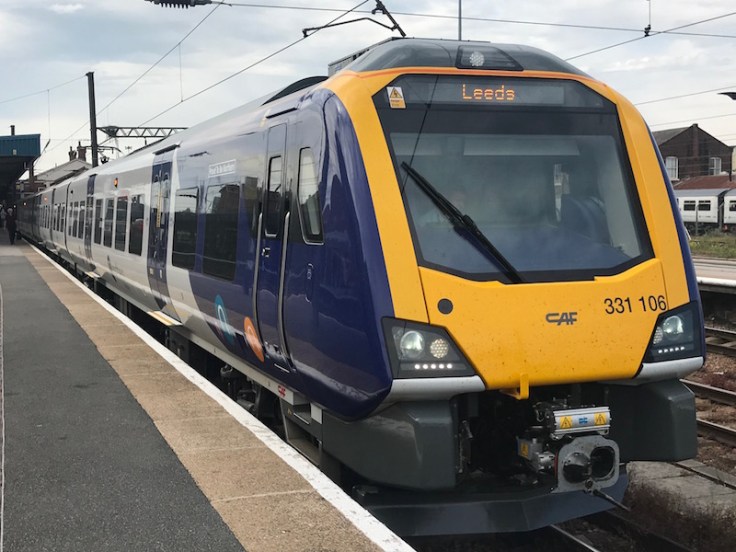
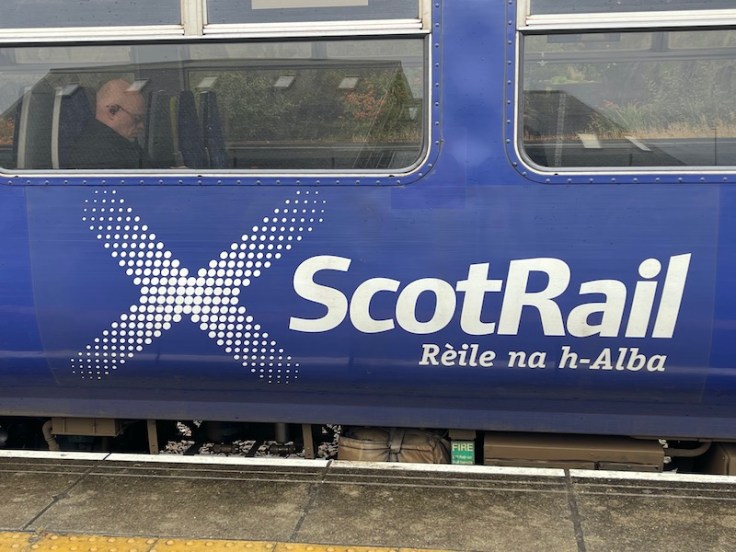
It goes without saying ScotRail and Transport for Wales will retain their individual identities and of course so will Caledonian Sleeper, London Overground and Merseyrail with West Midlands Railway already having developed an identity which links trains with buses and trams in that Combined Authority.
With Mayoral aspirations in Greater Manchester for local control it makes sense for those routes and local trains within the area to receive Bee Network branding so they appear “integrated” with the buses and trams.

I can see similar Mayoral desires in West and South Yorkshire which will turn the clock back to when those PTEs had influence and some trains appeared in a localised livery with appropriate logos.
One other brand, Great Northern, probably needs splitting with the Moorgate lines handed over to the London Mayor as part of an expanded London Overground (and introducing more individual line names) together with Dartford loop services on Southeastern and possibly the Hayes branch. The rest of Great Northern (including Kings Lynn) could be branded as Greater Anglia while it Hertford East line could be London Overground.
Maybe the Euston to Tring shorts and the St Albans Abbey line run by London Northwestern could also be part of an expanded London Overground with the rest of LNWR becoming ‘West Coast’?
Just to complete the picture, both Elizabeth Line and Heathrow Express would stay unchanged and the new East-West Rail due to start later this year (Oxford – Bletchley/Milton Keynes and later subsuming the Bletchley/Bedford branch and on to Cambridge) should be branded as exactly that, East-West Rail, and not GBR (or the operator, Chiltern Railway). I don’t know if it’s the intention to brand it as East-West or whether it’ll be the very first GBR branded operation when it starts up. That will be interesting to see.
The aforementioned ideas on branding don’t necessarily need to fall in line with company structures which could remain unchanged aside from obvious merging of back office functions and doing away with all the hundreds of people deployed on delay attribution etc. The thought of moving all staff into one huge GBR company with the multitude of complex trade union agreements and restrictive practices would be a nightmare. I understand there are still legacy issues with different working practices within Northern and various parts of West Midlands Trains following previous mergers and reorganisations of past franchisees.
I realise a significant objective of creating GBR is to bring track and train back together and the foregoing would do nothing to integrate Network Rail staff into the train operating environments. But British Rail was able to reorganise itself into sectors, most notably Network South East, in the 1980s and Scotrail has been run as one integrated railway for some time with its managing director responsible for train operating staff as well as Network Rail staff. If the objective is to have common management across other areas, there’s no reason why an appropriate structure can’t be established.
And keeping different brand names doesn’t mean ticket simplification can’t happen. Inter availability of tickets across whatever brands are used should be the norm albeit with open access operators obviously wanting to retain their independence. The GBR brand can do the heavy lifting on communicating integration of ticketing.
Right, I’ll put my colouring crayons away now and look forward to reading readers’ views.
Roger French
Blogging timetable: 06:00 TThS


Back in 1988, when London Country was privatised, I worked for the North West part of the company.
We saw what Kentish Bus had done, and wondered if we should do the same. We employed a “marketing consultant”, and asked for advice.
They went out on the streets of Slough and Watford and asked passers-by, not just passengers. They reported that, whilst the name London Country itself wasn’t particularly well regarded, it was very well recognised by all.
Our decision was to stay with the name, and work on improving the product. It was interesting that LCNE and LCSW took the same view.
I’ve no problem with a “national” rail identity, but haven’t we got one already …. the 1960s double arrow. Just another excuse to spend money on yet another rebounding exercise …. money that we haven’t got, according to the Chancellor yesterday.
LikeLike
London Country North East didn’t hold onto the name for long. In 1989 the company split into County Bus and Sovereign, but using localised brand names (ThameSide, TownLink, Lea Valley, StevenageBus and HertsRider).
Malc M
LikeLike
The major thing is though in this day and age where the government keeps bleating on that the country is broke and cut backs have to be made, what the hell are they playing at doing an entire re-branding exercise which no doubt will involve expensive consultants and will mean entire train fleets, uniforms, stationary etc will need changing? That costs billions and is not needed, what’s needed is getting the basics right, run the dam trains on time every time!
LikeLike
Longer term, don’t you think having a single brand will save money? Who do you think ultimately pays for the repainting of trains when they get transport from one operator to another? Is this really value for money when the majority have no choice as to the train they have to ride on?
You could invest what you save in repainting into lower fares. Just a thought.
Dan Tancock
LikeLike
The problem at present in my view is both bus and tail are tun as competing services rather than as an integrated network and that’s the core of the problem
Im London both rail and buses operated as an integrated network which in general work better, The change to the Bee network outside of London has improved service so it seems to work
If you go just outside of London the services are in general a sorry mess
LikeLike
If you believe that the service in GM has been improved by the imposition of bee Network, you must be doing a different daily commute. Since Metroline took over from Stagecoach in my area, the service performance has got considerably worse. Burnham has moved on to the next stage of his masterplan to become Prime minister and the passengers are left with a very poor operator who bid on costs and delivers a dire service.
LikeLike
I would hope that TfGM has appropriate provisions in its franchise contracts to enable it to deal with an under-performing operator. These might include, for example, not being paid for mileage not operated, formal warning notices which could result in termination of contract if the operator fails to improve to an acceptable level.
Malc M
LikeLike
I agree with you in general. But one of the successes (financially as well as in how passengers saw it) was Intercity. Today, I find it confusing that different lines have different rules for e.g. what is a peak time service. How much simpler to combine all the long distance services, so that passengers know about what first class means, whether they can get breakfast etc. whenever they are on a ‘GBR InterCity’ train.
Re Transport for the North, there is already an organisation called that (there is also a ‘Transport for the South East’, and doubtless others), so – as well as running all the trains, perhaps this could also co-ordinate the bus services in the region: that would be popular, as well as ticking the ‘Integration box’. It doesn’t have to paint everything the same livery, but the sooner people get used to the idea that when they get off a train, the local buses will be easy to understand and use, and in most cases will connect and rail staff will know about the buses and vice versa, the more they will use public transport.
LikeLiked by 2 people
Even under the old British rail there was a common brand but still regional liveries
LikeLike
There were all sorts of different time rules under BR and within Inter City. If anything it is simpler now than it was then. There was a huge stack of fares manuals and it relied on the booking office knowing their stuff.
LikeLike
First put the time and effort into improving reliability and punctuality – the number one drivers of customer satisfaction. RC
LikeLike
One change in yesterday budget announcement is slightly few free bus passes will be issued
LikeLike
If ministers believe Andy Burnham’s propaganda department that a bit of yellow or any other colour paint is going to transform passengers current perception of the rail industry it shows how naive they are, ditto anyone else who believes branding consultants.
Greater Anglia has a simple functional livery, and has won awards because it’s very very reliable and run by competent managers at Transport U.K. GBR is going to sweep this away, and may cause talented people to leave as they will not work for a state owned business.
The whole GBR thing is a long running farce, we currently have a railway system that needs no reorganisation, and if Labours political dogma says you have to get rid of the private sector then do that to save allegedly £150m and carry on with the current structure, all state controlled , which is what it currently is anyway. Figures show that rail reliability continues to deteriorate, along with the finances.
GBR will fail unless there is a credible plan to sort out labour relations and reduce the subsidy requirement, and no where in any of the current legislation are either of these issues being addressed.
LikeLike
Meanwhile EMR, which is also owned by Transport UK, demonstrates that just because one company owned by Group A is good it doesn’t follow that all companies owned by Group A will be equally as good.
If you believe that the current railway set up is fit for purpose then you definitely don’t work in the railway industry and you’re blinded by your own dogma. Please remember that GBR is a Conservative invention, as they also recognise that the current set up is not working, so it’s strange to try to blame Labour for it.
LikeLike
If this government is so clearly entranced by the “Burnham success factor” (costs no problem apparently), then hang onto your hats Boys, as it won’t just be bland old BR/GBR being resurrected but probably the National Bus Company too given time.
Terence Uden
LikeLike
I completely agree.
Bring back Liz Truss!
Terrance
LikeLike
Whilst you make good points Roger, I do feel the identification with local brands is less pressing on national rail compared to the bus system. The simplification benefits of one broad national brand I feel outweigh the negatives IF produced in tandem with ticketing reform. A (mostly) single national brand works in almost every other country. When international visitors travel in the UK, I can’t imagine how perplexed they are getting to grips with the existing brands and how to book tickets for them (no doubt misunderstanding that it is essentially one system already).
LikeLike
Completely disagree about retaining the TOC liveries with the possible exception of TfW and ScotRail which are “national” operators. The intercity TOCs should be put back together as a single brand with a standard offer, that way GBR can start generic advertising and marketing which is desperately needed to grow leisure traffic. Likewise, we need a son of NSE covering all the London operators. Nonsense like individual TOC using different colour schemes to identify first class seating needs to be stamped out as rapidly as possible.
LikeLike
Intercity services at the very least need a common livery so that trains can be shared across the network where appropriate rather than run in inefficient regional silos. For example, EMR’s class 810 fleet will have about 4 services per day that actually need the diesel engines once the Midland Main Line electrification is completed if they remain in an ‘EMR silo’. The vast majority of Intercity services on the MML could then be handled by a 9-car straight-electric version, while the bi-mode class 800, 802, 810 etc. fleets would be really useful on what are currently XC services to/from Devon and Cornwall.
We don’t need to build any more driving cars for 125(+)mph trains – there are plenty already if electrification progresses as it should and they were deployed efficiently as a single nationwide fleet rather than seperate regional ‘silos’ with their own maintainance spares. Going back to the likes of the Melton Mowbray to London services (EMR’s few residual non-electrified trips following electrification), these should be served by a class 800 or 897 from what would currently be thought of as LNER’s but should in future simply be the GBR INTERCITY fleet.
There’s probably some merit in retaining existing regional brands (don’t bother paying to design new ones) for more-local services though. Indeed, you might get away with it for some of the larger fleets of Intercity EMUs (for example GWR to Oxford, Bristol and Swansea if and when the GWEP is revived). At the very least however, all the bi-mode Intercity units running west of Exeter (eg. Paddington-Penzance (currently GWR) and Plymouth-Edinburgh (currently XC)) should beome a common pool with a common livery, prefrably with BR’s INTERCITY swallow logo featuring in that design.
The obvious compromise is to start with a set of basic themes* and have a standard paintjob for each. Any large self-contained fleets could then have regional brand elements added on top of this using small vinyls/stickers.
* one for long-distance, one for outer-suburban and one for inner-suburban (as per Stagecoach’s SWT and EMT TOCs) plus perhaps one for rural services. I really think the long-distance livery should be a white/light-grey lower bodyside with the upper bodyside and doors being a dark(er) colour (but I guess this could be green on GWR, dark red on the WCML and dark blue on the ECML for any stock that doesn’t need to be shared across regional boundries). In other words, basically the WCML would have something similar to the base version of LNER class 800/801 livery, but with the doors being red too instead of grey, and on the ECML the doors and upper bodyside would be dark blue (similar to the GNER colour). This would only be applied if and when stock is actually due to be repainted as part of the maintainance cycle though, not just for the sake of rebranding.
LikeLike
I agree with you Roger but would say why do we need to change the double arrow sign as to update the totems will be very expensive for no real change. If local units are branded Bee network and Meto for West Yorkshire the units will run way outside the area.
LikeLike
The old Regional structure was reasonably sensible
Eastern Region
Midland Region
Southern Region
Scottish Region
Western Region
For some reason they never had a Welsh Region
LikeLike
Plus the Anglia and the North Eastern Regions! And Northern Ireland was nominally in the London Midland Region for one year!
LikeLike
If you exclude the SE Metro, most Welsh rail services run into or through England, so it’s not really possible to make a self-contained Welsh Region.
You only really have the SE Metro, Conwy Valley Line and Pembrokeshire/Carmarthen to Swansea/Cardiff that would work as Wales-only services at the moment.
LikeLike
SWR have never repainted a lot of the 159s, the previous livery still looks smarter than the new gloomy grey!
LikeLike
Yes SWR came late to the party with its rebrand. Took two years into the franchise to get new uniforms and the 455s are still running in Stagecoach livery ! GBR is already costing the taxpayer a fortune. What are all their staff doing ? They’re not running anything.
Martin W
LikeLike
Whilst the original batch of 22x 159/0 have been repainted, the later conversions classified as 159/1 still retain Stagecoach livery. It’s my understanding that they haven’t been due for repaint yet, but this could be incorrect.
LikeLike
And the brand is toxic too, having made pretty much every element of the service worse since taking over from Stagecoach.
LikeLike
I tthink you’re perhaps reading too much into one article.
No one is saying that there won’t be sub-brands of GBR developed in the future. That’ll be a decision for the GBR management team when the organisation is established in a couple of years.
it’s already been stated by Lord Hendy that GBR will have a vertically integrated regional structure, but none of that precludes sub brands. After all, Intercity operated for a couple of decades purely as a brand name, before it became a business unit in its own right in the late 80s. Then it was vandalised by privatisation.
Steve
LikeLike
This.
I find it amusing that Roger proposes keeping or removing brands based on little more than how much he likes or dislikes them. That’s trainspotterish in its naiveté.
LikeLike
Here in Wales it is I think quite useful to at least differentiate between TfW trains and “English” ones as there can be a fare differential between them.
LikeLike
One of the worst features of privatisation was the break-up of a single, integrated, national system, and the emergence of single company-only tickets, connections not being held, etc. Surely anything which brings the network back together, through common branding or whatever, will be a strength. And some TOCs are more toxic than loved – I don’t really see Cross Country, withi ts high fares and horrible overcrowded Voyagers, as being a brand worth keeping. Roger rightly points out that some of the old NBC companies enjoyed some local brand value, but they were old-established; few of the current TOCs have such a heritage. This wouldn’t stop MCA areas and the like having local identities. In Switzerland there are several local brands to reflect cantonal involvement, but everyone understands that they are a part of the national network.
Phil D
LikeLiked by 1 person
Roger seems to have worked his entire NBC life in companies that were essentially single entities for a long time. Try the ones that were smashed together by NBC – Hants and Dorset Wilts and Dorset and Provincial and I think that might be another story. National Welsh managed to have Western Welsh and Red and White with different union agreements , but throw in Rhondda and Porth Depot retained the NUR from memory as the union , never mind the quirk that was Jones. Thankfully much negiotiation was at national level so it only left generally local issues to be dealt with and most were without strife but changing out long standing differences i dont think ever happened.
The big reason for privatising rail was to avoid national strikes with the idea private companies could run if another was out of the scene as well as fares competition to some destinations.
c2c could become LTSR again which would be nice , but generally it does its own thing for its own market and nowadays seems to do it well, no point muddling it in with a Anglia region as the overlap is not a lot passenger wise.
London is not as integrated train/bus/tube as one might like, even oyster fares differ to contactless and a Zone 2-6 journey on SW Trains is different price to similar on The Hertfords (and even more so on extra zones beyond), and can be different to the advertised tube zone fares one sees at tube stations.
Is actually having Trans Pennine Express a good idea as a brand , it implies that not all stations will be served to give faster key journeys, Northern one would expect to be the all stations connector services, and certainly re-casts of some services are needed for more comprehensive service hopefully with small increases in times as rail improvements get carried out.
Overall the present franchise area names and localities make the best sense to me, but allowing for some services to pass to PTA / Mayors and TfL
As to a premium fare going for arrivals at Gatwick Express platforms, not a chance.
Unless GBR are looking at fares, liveries, brands, passenger offerings now with a view to hit the ground running I cannot see any significant benefit for passengers just by changing the notepaper.
Proper Planning for Driver/staff training and cascade and new build and refurb programmes should be better controlled by one single authority though.
JBC Prestatyn
LikeLiked by 1 person
When I had an interview at what then became Salisbury Reds, back in late 2011, they were just closing the Romsey outstation. Andrew Sherrington told me the staff there were on different agreements and they had been trying to bring them into line.
LikeLike
What does seem strange in all this to me is that the government is wanting to get rid of rail franchises whilst at the same time encouraging new franchises for buses at the same time. Surely for an integrated system both should be run in the same manner.
Richard Warwick
LikeLike
If we are to aim for the utopia of a fully integrated transport system, then it would make sense to use a single livery and brand for everything – buses and trains. After all, major business in retail, accommodation and other use brands nationally – like Tesco, M&S, Boots, Travelodge & Premier Inn.
The reason being both economy and also so customers recognise a consistent standard and know what to expect. Transport has a way to go with this but if that is what is wanted then it is what is needed.
Richard Warwick
LikeLike
Tesco has multiple brands; for example, it has F&F for clothing, all its various “not Tesco honest” food brands (the most obvious being the discount Stockwell brand), and its franchised operation One Stop.
It’s quite likely that many customers don’t realise those brands are all Tesco.
I do agree with you that the single national brand for rail is the way to go, albeit with identifiers for discrete business sectors within the brand. I see no reason why we shouldn’t see long distance express services identified as GBR Intercity, for example.
LikeLike
I can see difficulties for operator-specific ticket holders at stations where more than one TOC operates. At the moment, you would know that you have to catch a green train or a blue train etc for your ticket to be valid. But if all trains were grey (for example), how would you know if you were catching the correct train?
MotCO
LikeLike
As I understand it GBR will have a common fare structure so the cost of a ticket fore a particular journeys will be the same regardless of the operating company
LikeLike
Please not that red white and blue version of the BR logo! Just because it’s called GBR doesn’t mean it has to use the national flag. And red, white, and blue look hideous in transport liveries.
The original BR logo is fine, and it is used to sign railway stations and road signs so just leave as is.
I disagree about keeping the ephemeral TOC branding as they were too short lived. South Western Railway (the first to be renationlised) is still operating trains in the South West Trains livery.
My preference would be regional colour variations of a national GBR brand for inter City services. Local services should adopt the brand of the controlling integrated transport authorities as they are created. Scotland and Wales to determine their own course.
Peter Brown
LikeLike
Some interesting ideas and I agree that regional identities are a good thing. But I’d suggest to few tweaks to what you propose.
The key thing with all of this, is that from a passenger perspective we really need to get rid of operator-specific tickets, which cause confusion and results in a lot of “buck-passing” in the industry (e.g. delay repay claims etc.)
Al Holmes
LikeLike
Hertford has always been spliy6. Hertford East comes under Greater Anglia and Hertford North by Great Northerm
LikeLike
As the former “Keeper of the Double Arrows” at the SRA, I was fascinated by the (disparate) views regarding branding.
Clearly, the Double Arrow would remain essential for the identification of the location of a railway station (whoever actually provides the service(s)), but, once on / in the station, all the passenger wants to know is which is their train (having previously bought a ticket appropriate to their finances).
Once GBR has fully bedded in, there should be no need for branding (apart, perhaps, from Open Access operators. Until then, electronic display screens will need to show a train’s destination, departure time, and operator – in accordance with the passenger’s individual ticket.
LikeLike
I wouldn’t assume that reunifying railway operations under GBR will put an end to delay attribution.
Having clear data on the causes of delay ais the first step in understanding where to target initiatives to reduce them, and supporting business cases for investment. I understand London Underground analyses and attributes delays for that very reason.
Malc M
LikeLike
No, but hopefully it will end the use of delay attribution for buck-passing and the money-go-round.
It would be nice to see delay attribution used to identify where the timetable needs tweaks and to identify trends such as station dwells extending overtime to enable action to be taken to deal with those issues – even if it is only adding an extra half minute or minute to the dwell.
Unfortunately I can’t see that happening.
LikeLike
Be surprised if anything changes over delays and stupidly high fares.
if what was said yesterday is carried through nothing should be spent on rebranding or incurring unnecessary costs but expect the budget will end up being massively overspent followed by lots of tears leading to closure of stations and lines on cost grounds.
Tony
LikeLike
Having all the rail stations under GBR would be sensible at present some are network rail and some are the train operating company
LikeLike
Keep SWR as a brand? No thanks! As some others have pointed out it isn’t a coherent brand anyway and if it is it’s a toxic one. Realise just dumping the brand won’t stop irritating management practices like missing out stations as soon as a train is 5 minutes late or get long delivered new trains into service any sooner, but no point in keeping short lived identities that are unloved.
LikeLike
Agreed, as a resident of South West London, the SWR brand is worthless at best and toxic at worst. It’s an organisation which completely failed to undertake its core franchise commitment of introducing what should have been a follow-on order to a stable train design and which on a day-to-day basis is way worse than SWT. Rumours continue to persist that almost all issues with the new trains are self inflicted due to changes made to the spec from the previous orders of the same platform.
LikeLike
Greater Anglia is doing a lot of social media advertising for a company that is soon to be restructured
MilesT
LikeLike
Pedantic observation on the “Greater Anglia” brand: “Anglia” means “England”. The region is “East Anglia” (old kingdom of the “East Angles”). I realise Anglia TV never realised that either, or the former short lived train brand “West Anglia”. Incidentally, a current bus brand which is also historically incorrect is Go Ahead company East Yorkshire’s “North Riding” for buses linking York (not in any of the three Ridings) with Boroughbridge and Ripon, which were I think in the West Riding (albeit now in North Yorkshire).
LikeLike
North Riding is meant to be humorous. Riding around North Yorkshire. A play on words. People take it way too seriously.
LikeLike
Boroughbridge was in the North Riding but you are correct Ripon was in the West Riding. They really need IMO to merge Proctors bus fleet into the North Riding brand so then when a Pocklington based vehicle fails in/nr Ripon a quicker arriving replacement can be sourced and less services cancelled.
LikeLike
Should the bus services in England be organised on a regional basis
LikeLike
We are, somewhat, getting away from the subject of Roger‘s original post, however, as regards bus organisation/reorganisation…
That very much depends upon what you mean by “regional“. And, also upon who is doing the organising.
I’d be very hard to convince that civil servants based in London would be able to define “regions” throughout the whole of England let alone the United Kingdom and also to “organise” bus services within those regions.
That doesn’t necessarily imply that I would implicitly trust the Metro mayors – Andy Burnham, Tracy Brabin, et cetera – but they’re local, and you can meet them, and shake their hand, and call them out if they’re not doing their job properly, as well as vote them out if they don’t deliver.
There might be different solutions throughout England.
In large conurbations like Greater Manchester, Merseyside, West Yorkshire, South Yorkshire, the regions are well-established.
In all of those referenced in the paragraph above, there were good, co-ordinated bus services often with inter-availability ticketing with rail services before the ideological-based privatisation of bus and rail services. Putting back together that fractured system, in a way that encourages the intended traveller to think of their local public transport system as one system is important.
Elsewhere…?
The excellent bus service provision in Brighton and Hove, and the surrounding areas, provided by Roger‘s, (former) company requires only the lightest touch in regulation, being so well run. I cannot comprehend how setting up a “region” that covers the area from Portslade through Brighton and along the whole of the south coast and round to the Isle of Thanet with some civil servants in Whitehall “organising” the bus services therein would improve anything for anybody.
If you were to design a payment system to discourage car drivers in the way that public transport uses are discouraged, you would not have a single annual VED (“road tax”) charge and standard rate of fuel duty, but you would have entirely differential payments depending on whether you were using motorways, for which you would be able to buy a daily, weekly, monthly or annual pass; A roads, similarly B roads and, of course, Regional Rovers covering all A and B roads – but not, of course, motorways, – within whatever Whitehall had decided was your “region”.
LikeLiked by 1 person
There are some “informal” regions used by governmental organisations of all types. e.g. East of England (sometimes called BENCHS-Bedfordshire/Essex/Norfolk/Cambridgeshire/Hertfordshire/Suffolk).
And many of the rail franchises are practically regional–and a better outcome might be to group buses along similar lines with a charter to be “intermodal” (a bit of a fault of the GBR concept; in many cases what is important to the customer is the journey, not the mode)
And some councils club supporting services together for scale e.g. Westminster/Fulham/RBKC)
MilesT
LikeLike
If, and it’s a big if, regional identities go it means so the end of operator specific tickets, a disguised fare rise nationally, especially Southern and Thameslink, but a fare reduction on Gatwick Express
LikeLike
Interesting post here Roger, I have recently started my own blog sharing my ideas and thoughts on transport locally. Merseyrail & the Metro Mayor of Liverpool have big plans to transform the current network of Trains & Buses like in Manchester with an integrated transport system.
Bringing buses & Trains into one operator which they have dubbed Transport for the Liverpool City Region which in my opinion is a big mouthful unlike Transport for Greater Manchester or Transport for London, TfTLCR Is just TOO long I think Trasnport for Merseyside is bette!
It will be interesting to see how all this plans out with services being brought into Public ownership and local authorities operating places like Merseyside, Manchester. Hope this makes any sense.
LikeLike
To pick up on Roger’s suggestion of transferring Southeastern’s Dartford and possibly Hayes services to TfL control.
This was proposed about a decade ago, with other inner suburban services of Southeastern. It makes a lot of sense as apart from three stations (Dunton Green, Sevenoaks and Dartford), they operate entirely within Greater London. Then politics got in the way.
Kent County Council objected. At the time, I understand Kent were none too pleased at the then Mayor of London, who was banging on about a new airport in the Thames Estuary. Then the Transport Secretary vetoed the proposal, as he didn’t want to risk a Labour Mayor getting control over those train services.
Malc M
LikeLike
It would be sensible to bring back most of the old London country are under TfL. Probably don’t need to go out to Luton or Hitchin etc as t London Country only went that far for Greenline services
LikeLike
I’m surprised that the Tories didn’t propose replacing the toothless GLA with a London & South East Authority which would ensure an inbuilt Conservative (and maybe Reform) majority. After all, it worked for a number of years when they turned the LCC into the GLC.
LikeLike
You do realise that LT had depots at Luton and Hitchin and for regular bus services as well as Green Line?
LikeLike
Germany is facing the same rail troubles
German rail woes: How can Deutsche Bahn turn things around?
Germany‘s railway system was once a source of national pride. But the network and its operator, Deutsche Bahn (DB), have become a major source of frustration for train travelers in recent years. Passengers are increasingly confronted with overcrowding, delays and cancellations, as well as regular closures of large sections of track for maintenance and repair works.
DB’s finances are also in bad shape. In the first half of this year, the company reported a loss of over €1.2 billion (roughly $1.3 billion). Its total debt now amounts to around €34 billion.
LikeLike
Germany is facing significantly worse rail troubles. We don’t see it from here in the UK (and you certainly wouldn’t believe it from the way UK media reports railways) but DB today is reminiscent of BR in the early 1980s with horrendous punctuality, significant infrastructure issues after a two-decades-long BR-style ‘maintenance holiday’, and cancellations. It’s basically slowly collapsing, but the politicians don’t want to bite the bullet and sort it out because it’s just too big a problem.
British enthusiasts who travel to Germany and report their trips on UK groups have taken to calling DB the Bunglesbahn but apparently the locals call it the Scheissebahn.
My last trip to Germany was a few years ago, but even then I had a local tell me in all seriousness that in Britain we would never accept the atrocious level of delays that were happening on DB. He didn’t believe me when I told him it was just as bad in the UK.
LikeLike
For all the cheering in certain circles about the discount rail card in Germany, it’s ravaged DB’s finances and might well turn out to be the final straw in the company’s financial collapse.
LikeLike
I’m fed up with jingoistic names like Great British Railways and Great British Energy. The should have stuck with either Network Rail or National Rail. Easy.
LikeLiked by 1 person
As something who worked on the railways for over 40 years kicking these cowboy privateers out of our industry can’t come soon enough!
LikeLike
It’s that word “Great”. Get rid of that word and the names are just descriptive, which makes them perfectly acceptable.
That “Great”, what is it supposed to mean? Is it that the company is great (nope!), that the service provided is great (nope!), that Britain is great (is it nowadays?). What does it actually mean, especially when the organisations don’t actually serve all of Great Britain.
I’d say it’s just bombastic.
“Great British Railways” will just get called GBR by everyone anyway, assuming they don’t just call it British Rail. I still get (British) passengers calling the current operators “British Rail”, and they’re usually people who weren’t even born when BR existed.
LikeLiked by 1 person
Sorry, slightly off topic although it does concern wanton neglect of branding. Someone isn’t doing their job!
Peter Brown
LikeLike
Sack Lord and co!
LikeLike
Whatever the merits of Mayors having control of local networks, how do you brand a train that passes through. Take West Midlands – Cross City line no issue as self contained even though it does stray into adjoining counties. Same for the Snow Hill lines. Probably acceptable on the Hereford to Birminghams. Real issue is the biggest corridor of the lot Wolverhampton – Birmingham New Street – Birmingham International – Coventry. It is made up of the fast and slow London services, Cross Country, Transport for Wales and the Birmingham to Liverpool service plus some more local trains.
LikeLike
There are some longstanding railway identities that have stood the test of time, even pre-dating the 1994 restructuring. Thameslink, Crosscountry (an Intercity sub-sector) and Chiltern immediately come to mind. It would be shame if they were lost in an attempt to simply write them off as representing the imagined disreputable old order. Similarly, how politicians and some in the media associate British Rail with the cliché of curled-up sandwiches so it has to be the less than snappy Great British Railways, at least as a starting position. Whatever, after five years or so, the next set of branding consultants will come along and it will change again.
Steven Saunders
LikeLiked by 1 person
Hi, Thank you for your ongoing blogs, they are invariably really interesting. I would like to suggest an idea and ask you a question please? The idea, could you maybe do an article on UKs most profitable bus routes, if that information is accessible, and maybe on the routes with the biggest subsidy perhaps? Secondly a question. I am trying to find Brighton and Hove Buses timetables for route 229 (Rottingdean/Brighton to West Worthing) from 1981-86, particularly the details of the West Worthing end of the route,.Would you have any suggestions as to how I might access these, given your role with tbe Company. Is there Company archive or similar? I have found little on Ebay or other sites and the Southdown Enthusiasts Club don’t have any relevant timescales. Thank you,
Regards,
Nick Kennedy
LikeLike
Hi Nick, I can help you with this, drop me an email on busandtraintickets@yahoo.com.
Nigel Tarrant
LikeLike
That attempt at merging the logo and Union flag was terrible.
Just keep the double arrow and have a strong set of guidelines on applying it in combination with local liveries and signage. Simple.
LikeLiked by 1 person
The results of random brands on random services is well illustrated by the appallingly run and unreliable Go North East Buses once one of the best in the country. Now they struggle to put on a service at all, (and frequently fail) with random buses on random routes which still have dedicated route branding on them from other services.
LikeLike