Saturday 22nd March 2025

I first became familiar with Wakefield’s two railway stations, Westgate and Kirkgate, 50 years ago when embarking on my full time bus industry career in 1975 with the National Bus Company’s West Riding subsidiary based in the city.

I recall arriving, carrying a heavy suitcase (no wheeled suitcases in those days), as a fresh faced 21 year old at Wakefield Westgate having travelled up from Kings Cross to what, at that time to a born and bred Londoner, was an alien Yorkshire county and which, I hasten to add, soon became a great friend and a part of the country I fell in love with.
Like other main line stations in the 1970s, Westgate had received a makeover in the 1960s when its 19th century heritage had been demolished in favour of pretty basic and austere facilities which even by 1975 gave the appearance of having seen better days, becoming tired looking and dated.

But nothing prepared me for a return journey from a weekend back down south a few weeks later on a dark and wet Sunday evening when engineering works meant London main line trains were diverted after Doncaster via Wakefield Kirkgate to Leeds and I alighted at what I found to be the most uninviting station of all time. I still recall feeling very inhibited by the uncared for nature of the station, it’s dark and dingy platforms and awful subway towards the exit.
Indeed, over thirty years later in 2009, after even further deterioration in its condition, Wakefield Kirkgate was awarded the accolade of being Britain’s worst station by Lord Adonis, Secretary of State for Transport, such was its deplorable state and unkept nature. However, the Grade II listed station, which had originally opened in 1840, thankfully, was fully restored between 2013 and 2015 in a £5.6 million refurbishment and is now regarded as something of a case study for retaining railway heritage architecture with a modern twist.

Meanwhile, Westgate which originally opened in 1867, was also given a much welcome modernisation between 2009 and 2013 as part of a regeneration project of the wider area. The entrance was moved further north so instead of at the southern end of platform 1 was relocated towards the north end with access off Mulberry Way instead of Westgate.

The rebuild also included a new footbridge and lifts as well as an attractive new pedestrian entrance/exit, ticket office, waiting area and retail units.

It was, and still is, a huge transformation on what went before.

Westgate is by far the busier of the two stations.

Run by LNER, it saw 2,057,000 passenger journeys in 2023/24 compared to Northern Rail run Kirkgate with 539,000 passenger journeys.

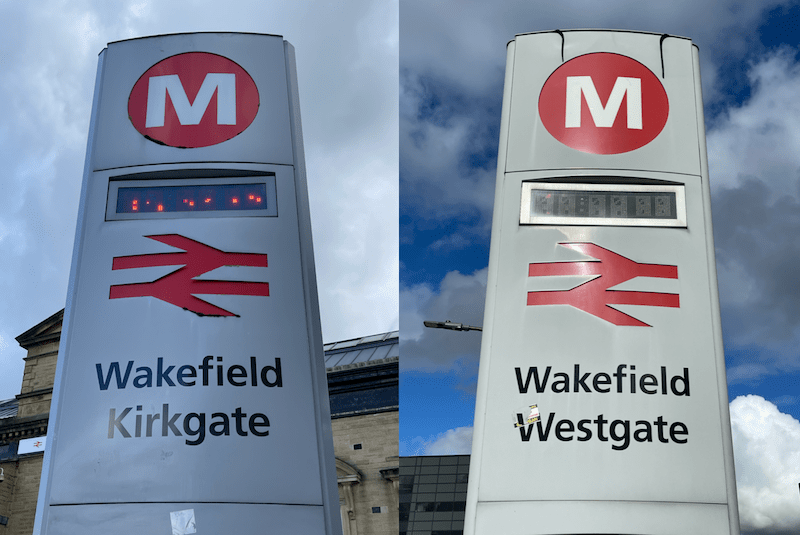
The two photographs above featuring the passenger entrance/exit to each station confirms Westgate has a very attractive wide area beyond the gateline whereas Kitkgate has a narrow gateway with no gateline giving quite a contrast, but it’s actually Kirkgate which has the more impressive exterior…
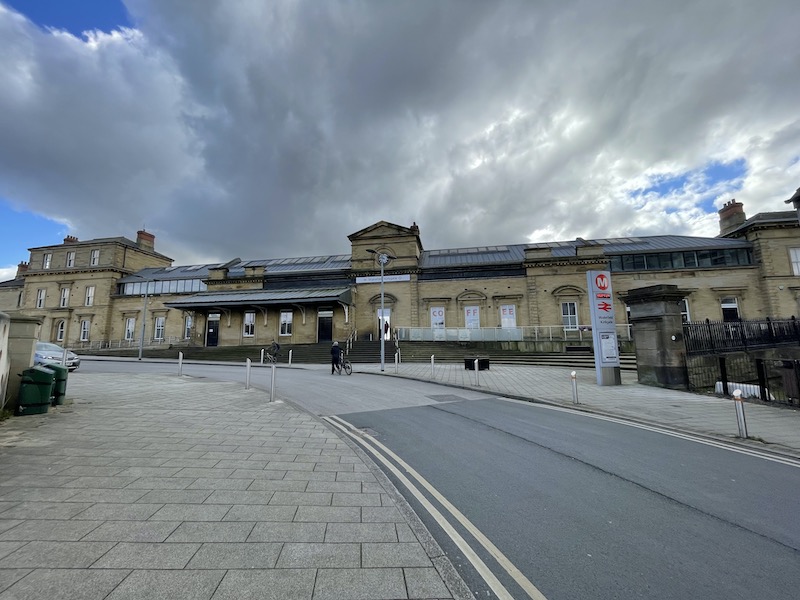
… particularly for an unstaffed station. Although, Grand Central has the use of some of the ground floor offices for a reception area for its passengers…
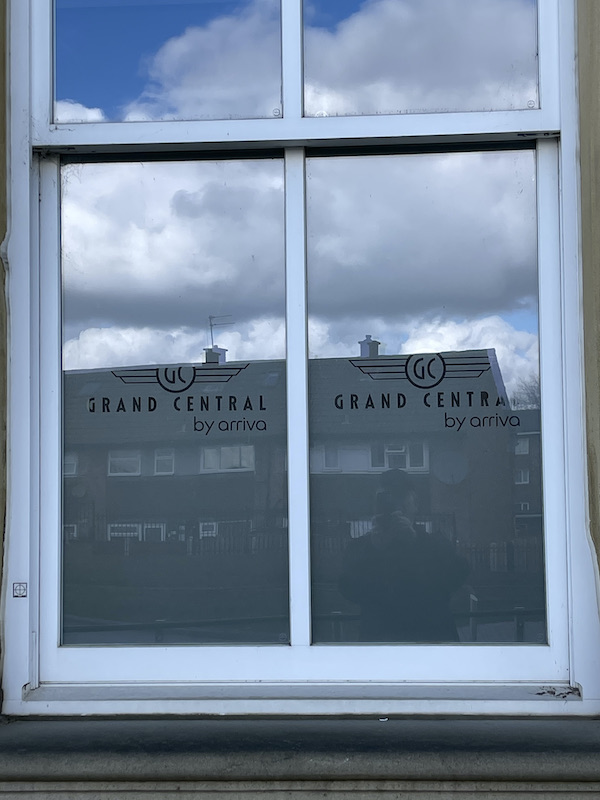
… but it wasn’t open on the day of my recent visit.

Westgate lies on the main line between Leeds and Doncaster which sees LNER (half hourly – Mondays to Fridays – Kings Cross to Leeds with extensions to Harrogate) and Cross Country inter-city trains linking stations from as far afield as Edinburgh and Plymouth (hourly) as well as Northern trains on local services between Leeds and Doncaster, Leeds and Sheffield and between Leeds and Knottingley.
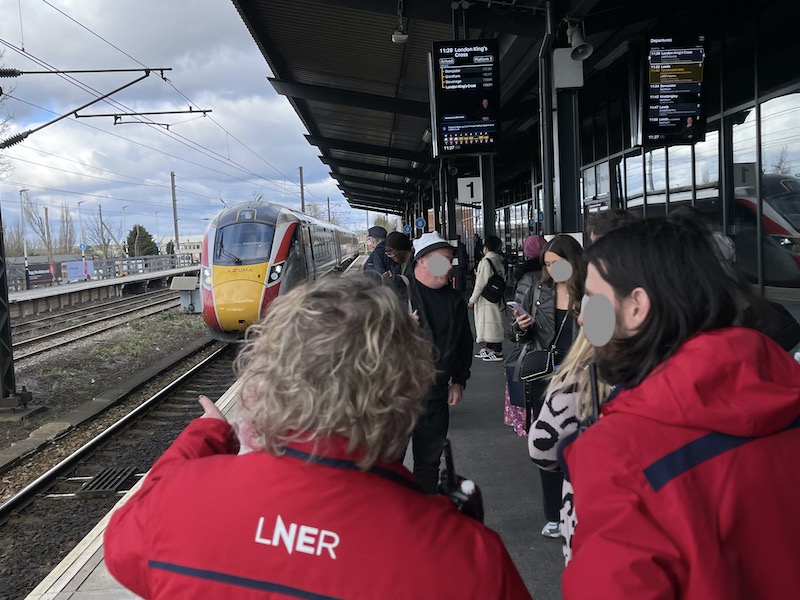

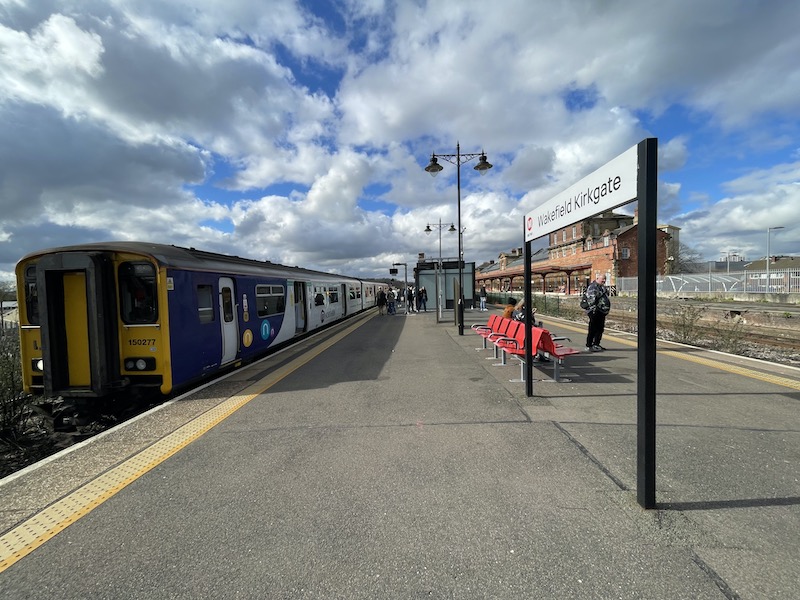
Kirkgate is mainly served by Northern trains (Leeds to/from Sheffield, Nottingham and Lincoln, as well as Knottingley) but also sees Grand Central’s four journeys a day between Bradford Interchange and Kings Cross and also a relatively new Trans Pennine Express hourly service between York and Manchester Piccadilly.

This is the first pair of stations featured in this series where there’s a direct connection between them.
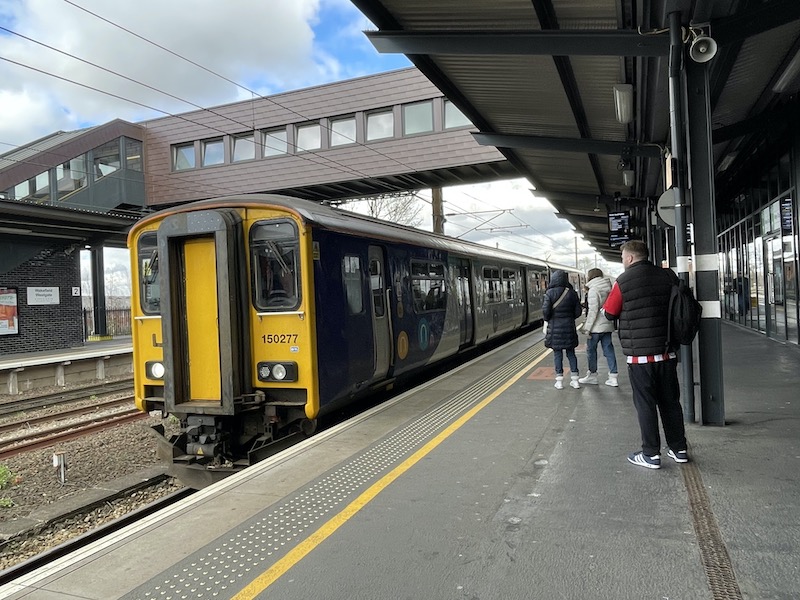
Northern’s hourly service between Leeds and Knottingley uses a single track section of line between the two.
There’s also a West Yorkshire Metro free city circular bus route…

… which runs from outside both stations linking Kirkgate with Westgate but takes a bit of a circuitous route.
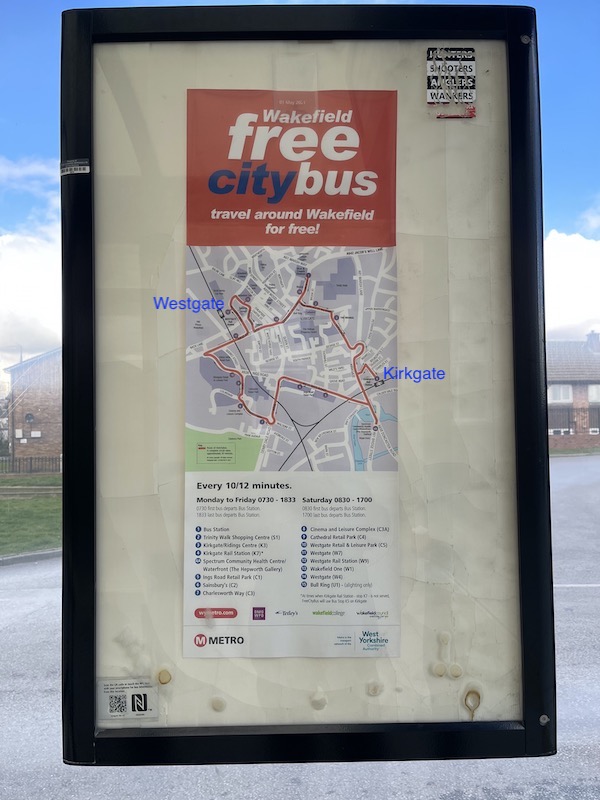
The bus stop at Kirkgate is right outside the station…
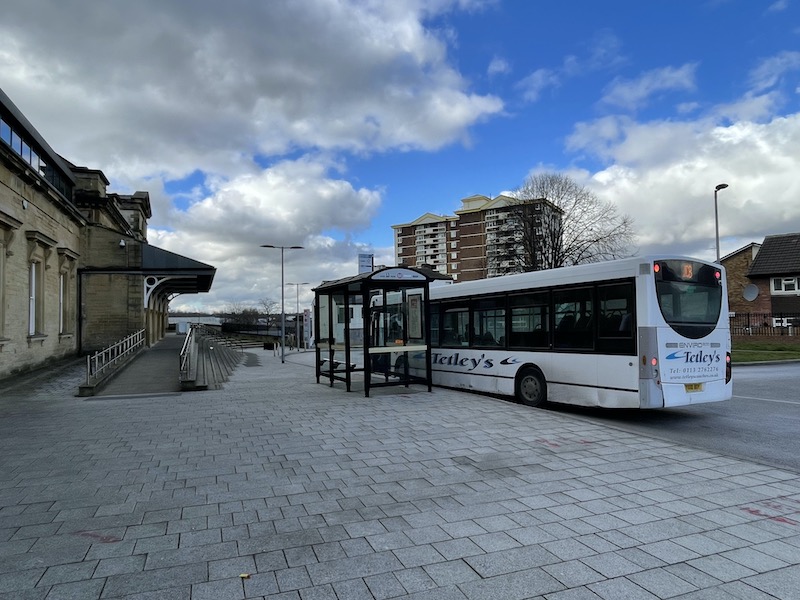
… and is very close at Westgate too.

It takes about 20 minutes to walk between the two.
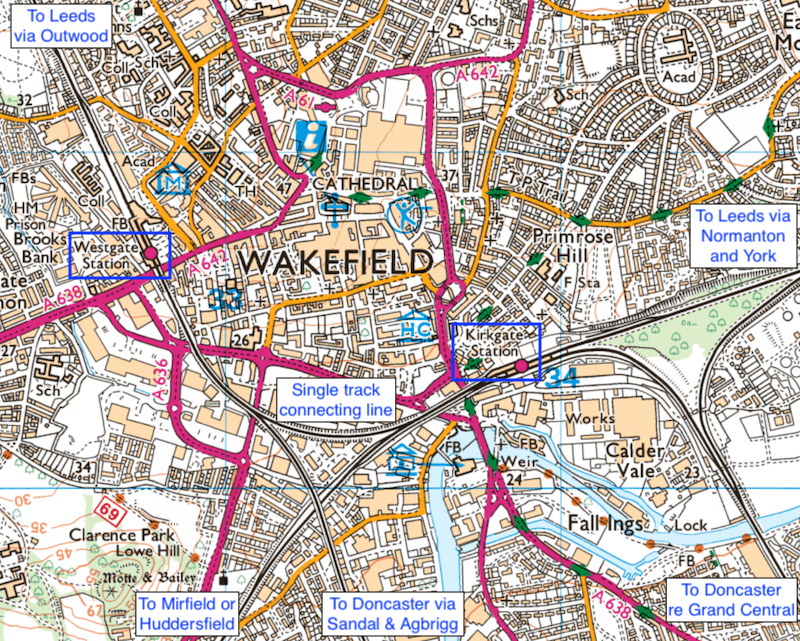
The two stations offer a great contrast. Kirkgate has three platforms with platform 1 being adjacent to the main building through which passengers enter and exit…
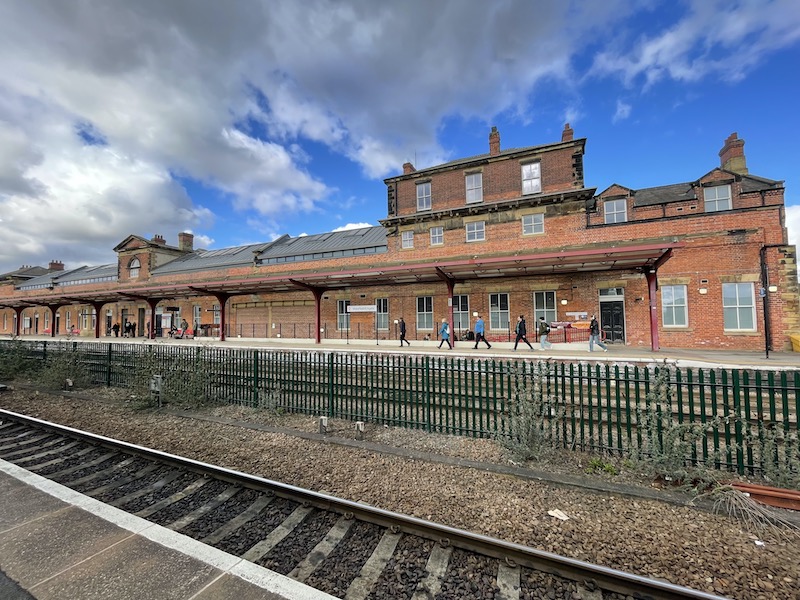
… from here there’s the aforementioned subway which was given a major refurbishment during the station’s restoration…
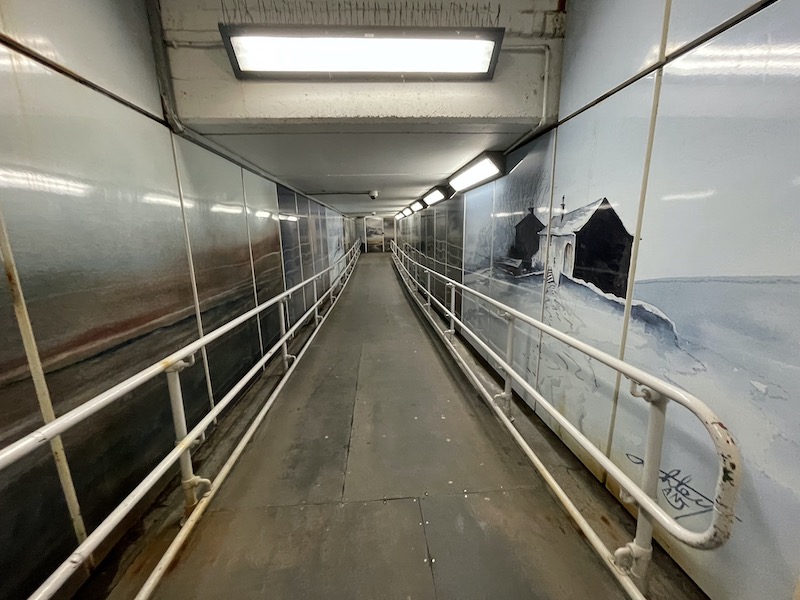
… and is now a pleasant facility to use with landscapes featured on the walls painted by a local artist…

… albeit it is quite a trek down and up the slopes…
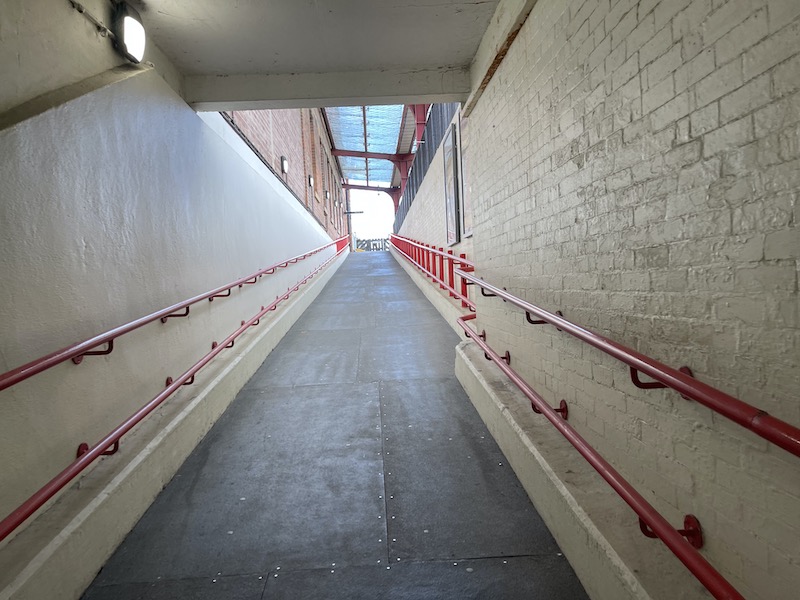
… and then you have to walk along platform 1 to and from the entrance/exit.

Platforms 2 and 3 have the remains of what was part of the dilapidated building…
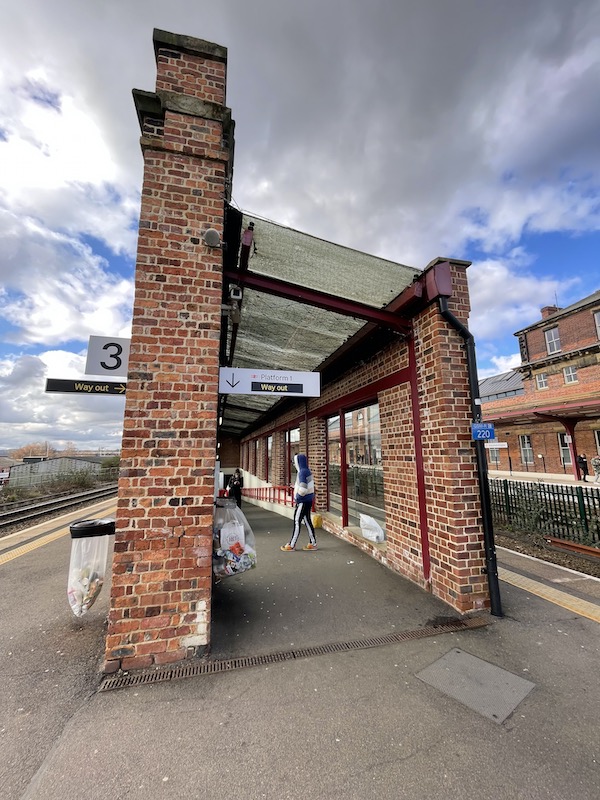
… which I assume was part of the deal to retain some of the Grade II listing during the restoration.

It makes for a rather unique structure.

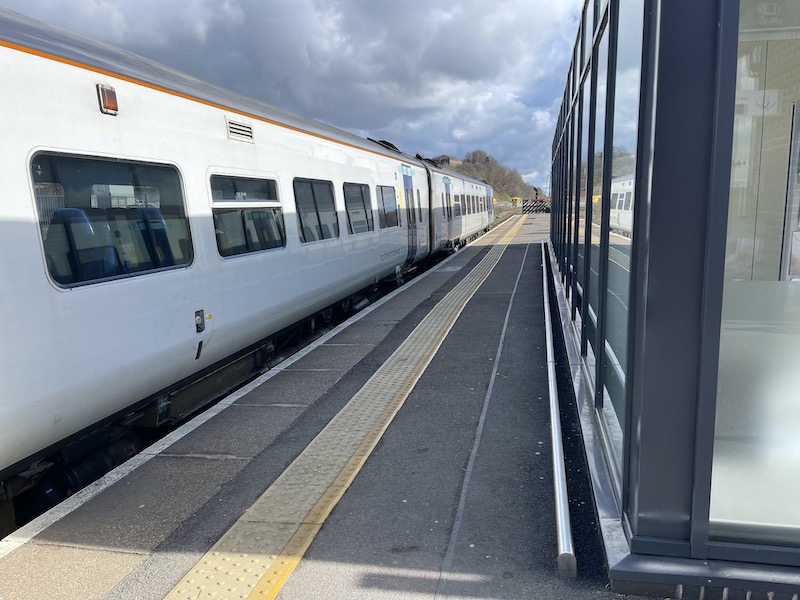
Next to this structure is a building housing an enclosed waiting area for passengers…

… and what looked like a facility for staff at the unstaffed station.
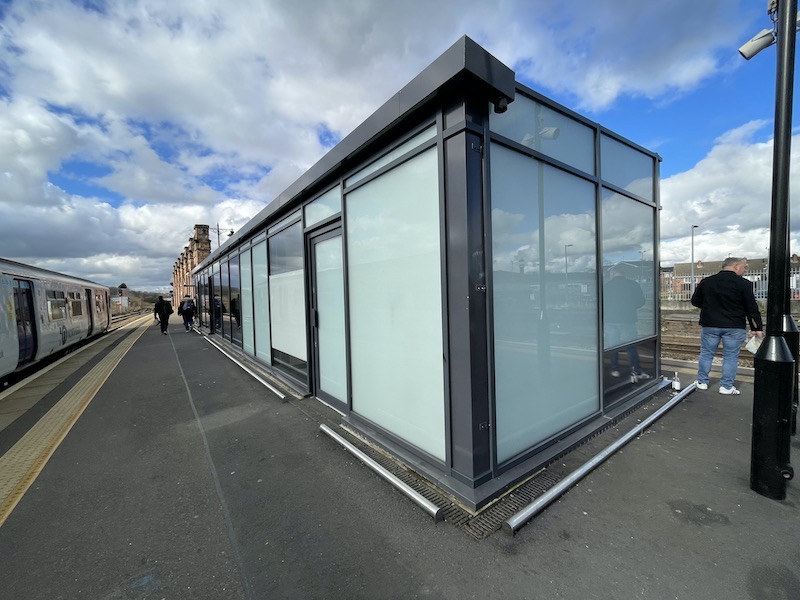
There’s not a lot of room on the island platforms 2 and 3…
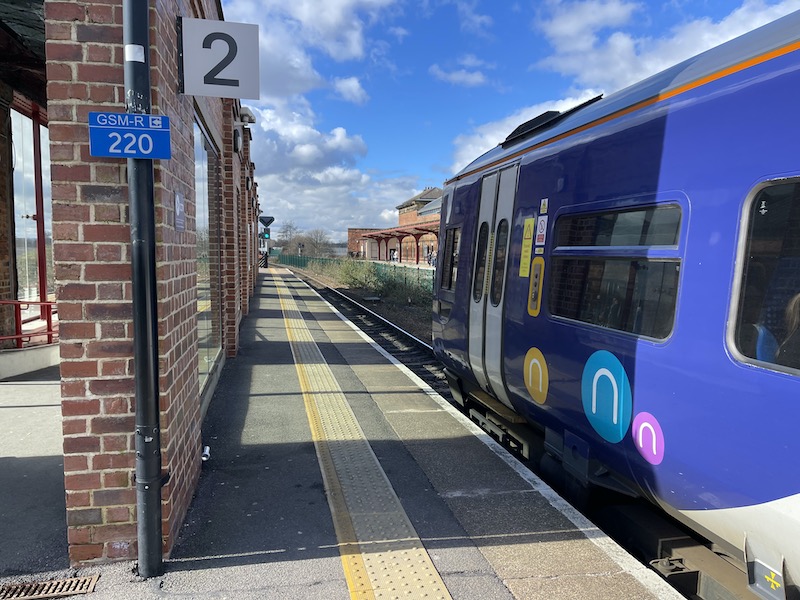
… with minimal space for passengers to wait behind the yellow line, particularly on platform 2.
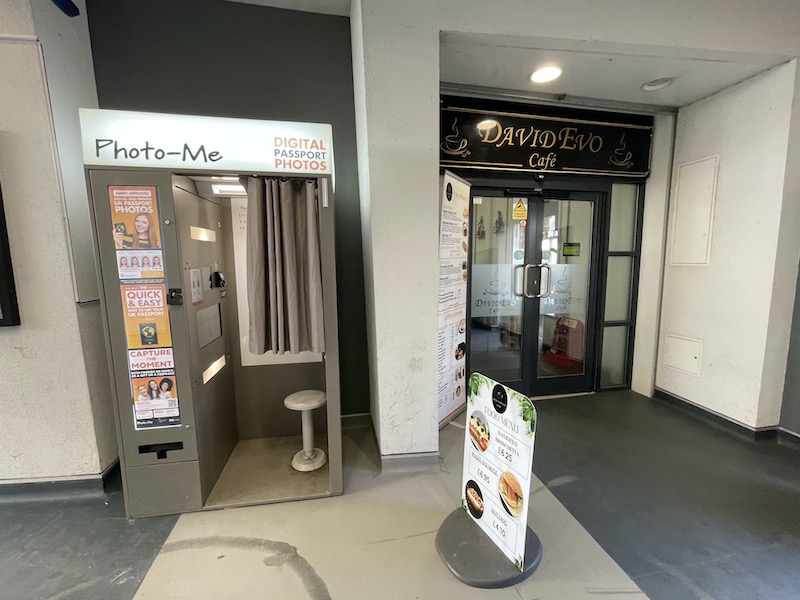
Back over on platform 1 there are plenty of empty offices…

… and in the small entrance area a drinks/snacks machine and two of Northern’s giant sized ticket machines…

… together with a Photo-Me booth as well as a rather nice independently run café.
Although not as busy as Westgate there were quite a lot of passengers using the station during my visit, especially waiting for TransPennine’s train to York.

Not surprisingly Westgate has a lot more facilities for passengers. There’s a rather nice original waiting room on platform 2…
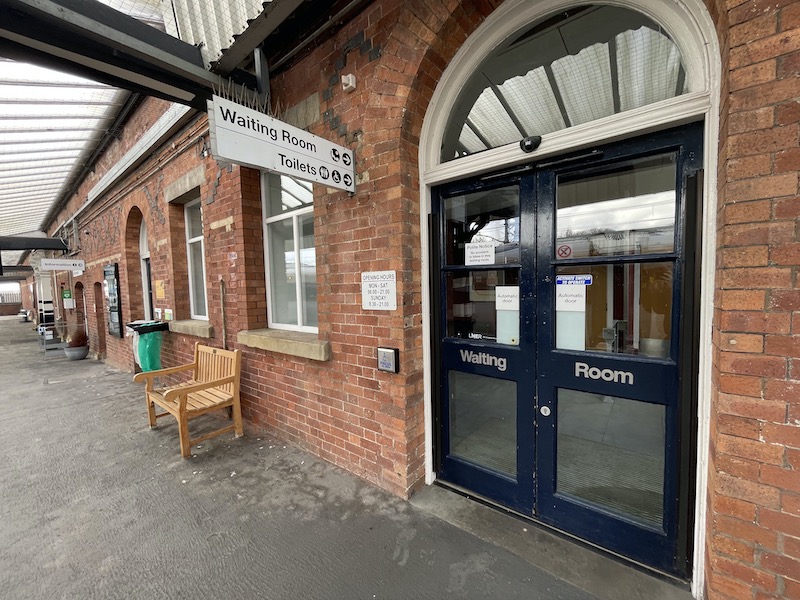
… with subtantial seating…

… and both an accessible and ordinary toilet.

The waiting area on platform 1 is at the southern end where the old entrance/exit used to be…

There’s also a room marked ‘Information’ on platform 2, but it was closed when I visited…
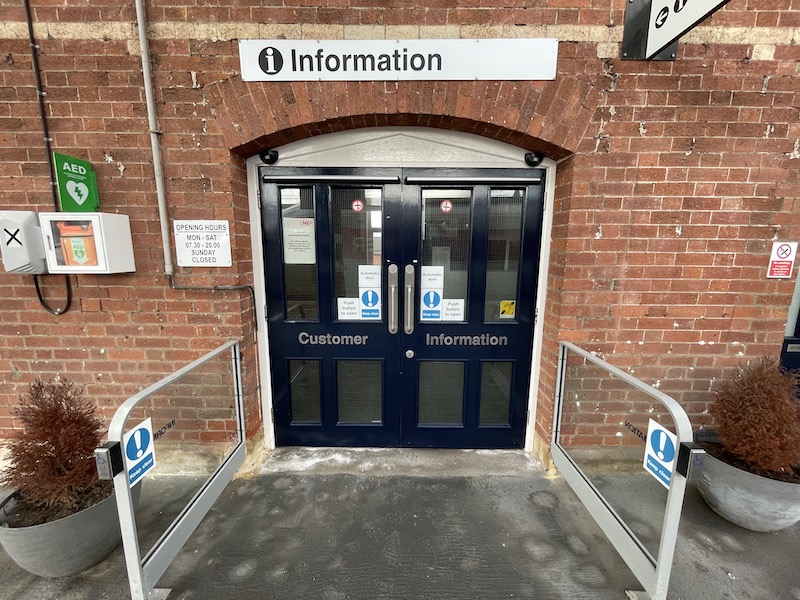
… maybe because there’s another smart looking ‘Customer Information Point’ in the foyer area by the gateline.
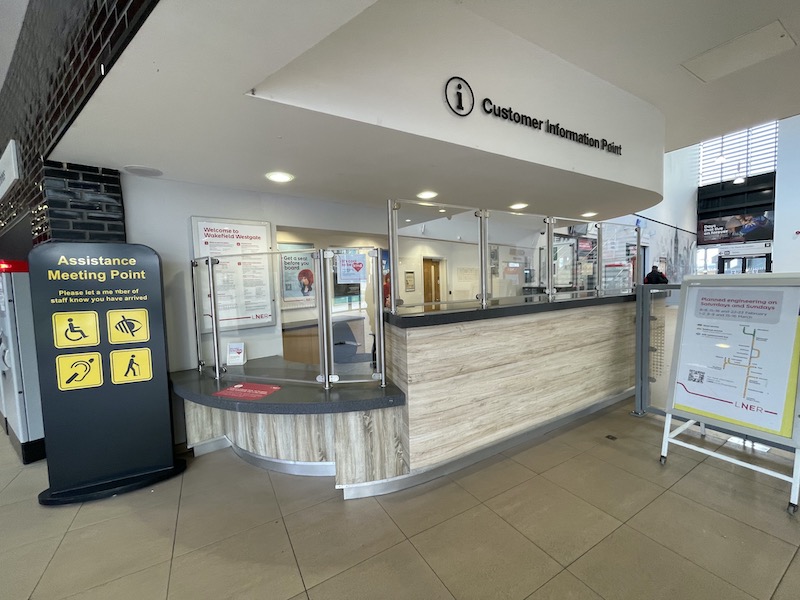
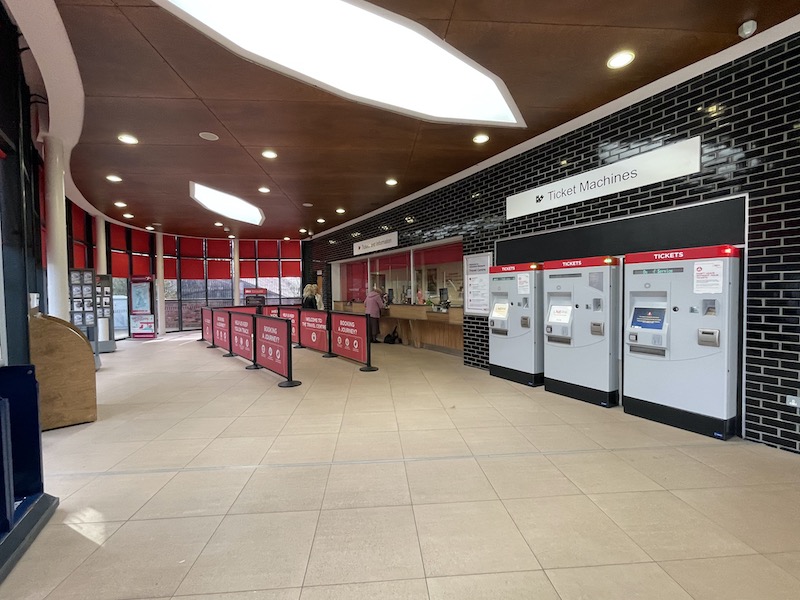
Next to that is a bank of three ticket vending machines and a three position ticket office, but only one was open when I visited last week.
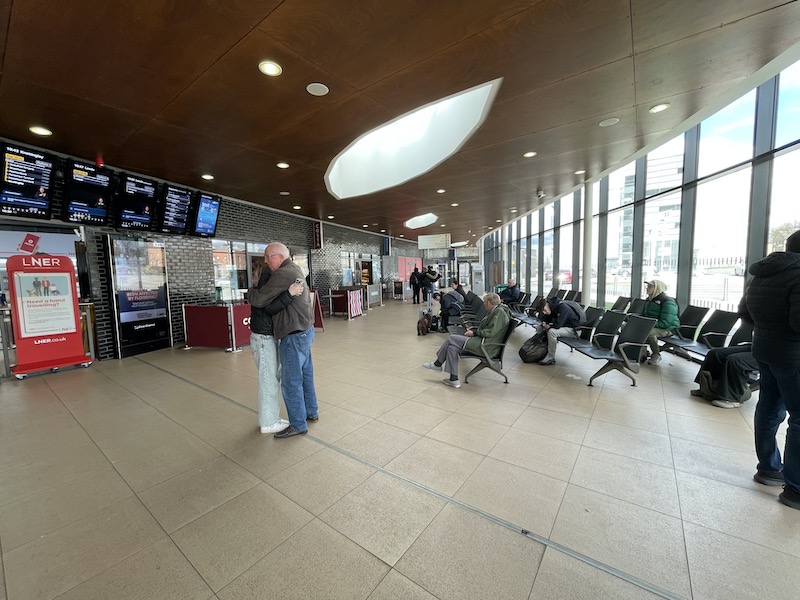
As well as the two waiting rooms on both platforms, there’s a waiting area in the entrance foyer…
… and a first class lounge just beyond the gateline next to the ‘Station Management Centre’ alongside a machine where anyone without a ticket can purchase one…
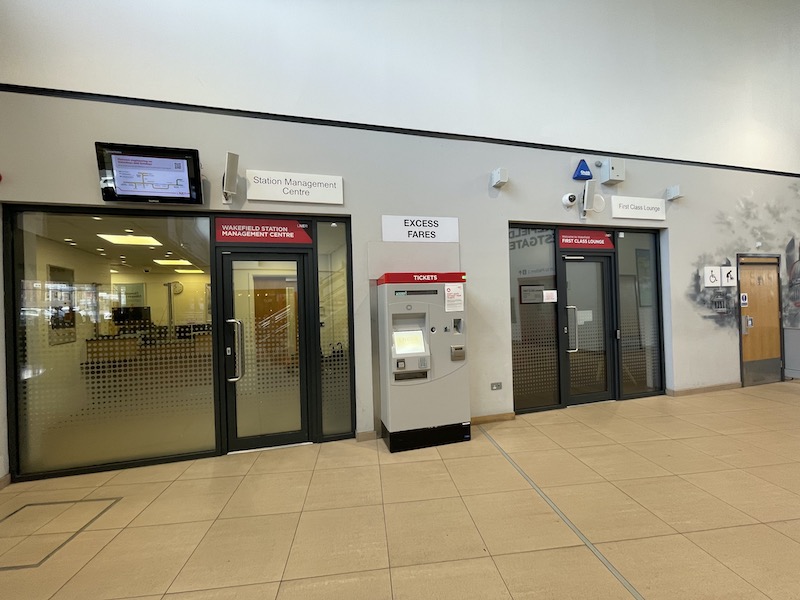
… before exiting through the gateline which is at the bottom of the stairs from the footbridge from platform 2.

Retail facilities include a WH Smith, Greggs and Costa Coffee making it the most substantial station yet visited in this series…

… and, I must say, very clean and presentable too.

More toilets can be found on platform 1…

… with more seats liberally located along the platforms including a bank of eight in a recess not under the canopies by the footbridge on platform 2 where it’s nice to sit and soak up the sun … on a sunny day.

Other facilities include a water bottle refill machine on platform 1…

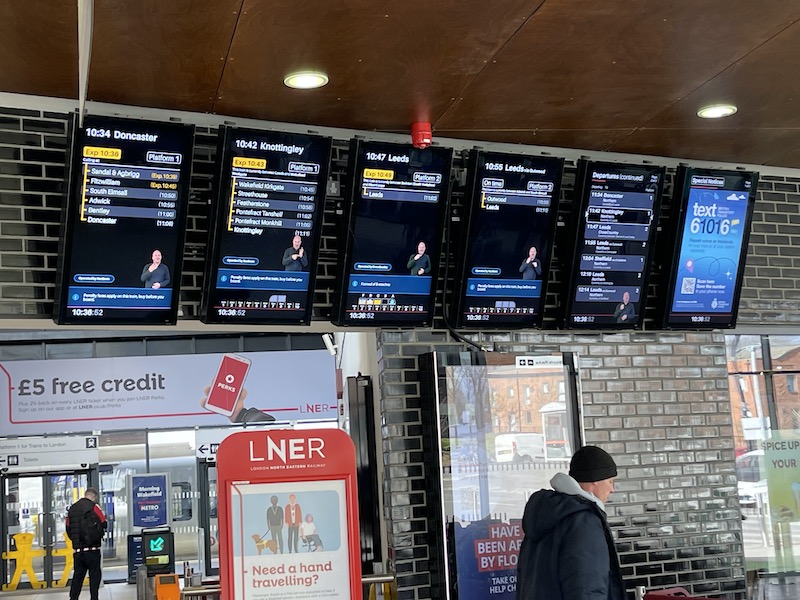
… the now standard excellent LNER displays showing the next train departures, complete with sign language…
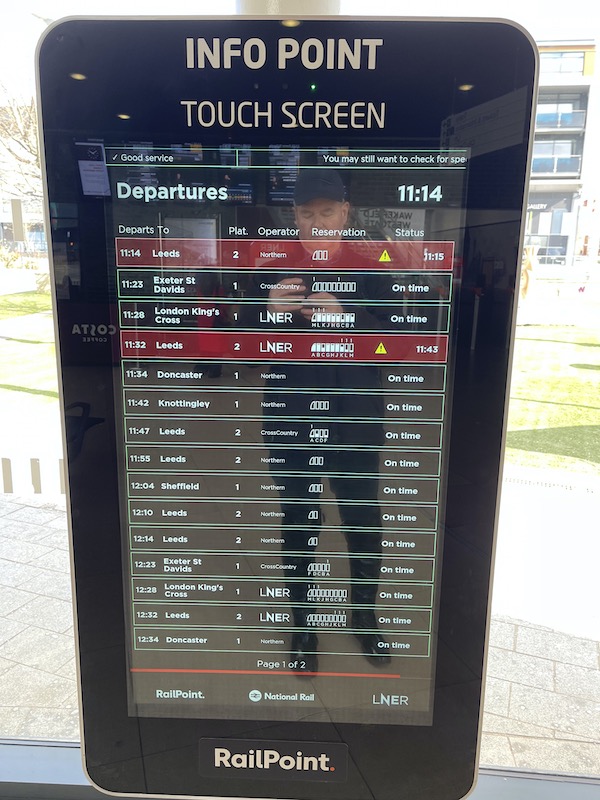
… and an inter-active touch screen display showing departures which is ideal for taking background selfies too.
Both Westgate…

… and Kirkgate have a track through the middle so trains can be bypassed while stopping in the platform.
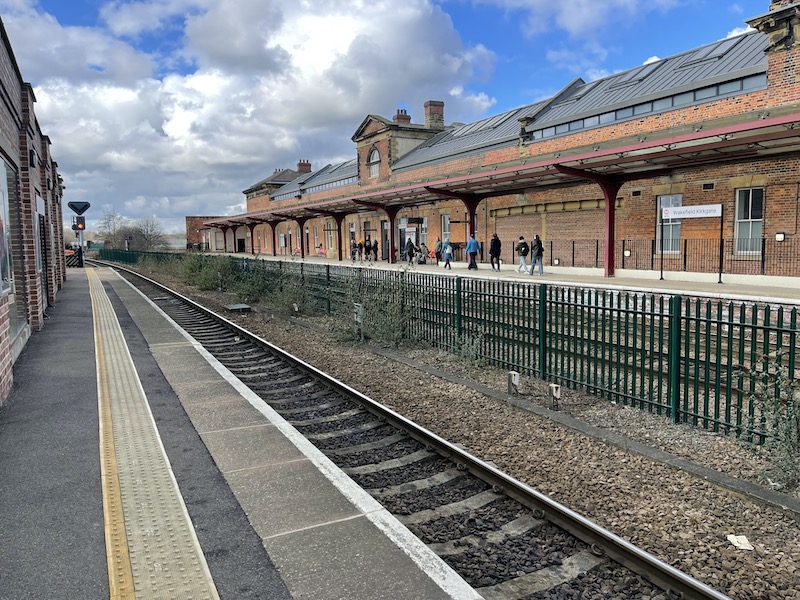
And, finally, I think I spotted where the entrance to the subway used to be at the southern end of platform 2 at Westgate…

… and which I passed through 50 years ago.
Roger French
Did you catch the five previous blogs in this series? 1: Hertford; 2: Canterbury. 3: Wigan, 4 Dorchester, 5 Windsor.
Blogging timetable: 06:00 TThS
 BusAndTrainUser
I also remember the stark contrast between the two station back in the 1980s, when I first visited Wakefield. I remember thinking that, behind the squalor, there must lurk the spirit of quite a magnificent station at Kirkgate.
I hope they have not closed off the old entance at Westgate – as it’s much more convenient for most bus connections – apart from the WCB circular.
LikeLike
An odd arrangement, seeing a fence along the six-foot between tracks although the distance in this case is considerably more than six feet.
LikeLike
It’s sad how little of the money spent on the refurbishment of Kirkgate actually benefits passengers – and on my last few visits the subway has lost it’s background rendition of ‘Jerusalem’ to accompany the artwork.
If you ventured out from Kirkgate you may also have seen the sorry state of the former West Riding head office and garage, now condemned as unsafe to use and partially supported by scaffolding while the majority of vehicles have been shipped out elsewhere. After an unsuccessful attempt to sell the site a few years ago, it seems that Arriva is simply letting the place crumble.
LikeLiked by 1 person
I notice that the Huddersfield to Wakefield Westgate service no longer operates; this used to reverse at Kirkgate and use the single-line curve to reach Westgate. Changing at Westgate was the usual route for travel between Huddersfield and London and v.v., I assume most people travel via Leeds now.
There have been proposals over the years to run a direct open-access service between Huddersfield and London but these have never cone to fruition, and seem never likely too.
Julian Walker
LikeLike
The new Manchester-YorkTPEX service connects Wakefield with Huddersfield and some of the smaller stations en route.
LikeLike
For Huddersfield to London journeys, there is now the option of changing at Mirfield or at Wakefield Kirkgate onto Grand Central. I don’t know how well the connections work.
John M.
LikeLike
As always, a good informative read. Thanks.
LikeLike
Although I rarely use Kirkgate, I am surprised at the passenger figures quoted, now at 10,000 per week. Much busier than a couple of decades ago, and even more surprised it remains unstaffed considering some stations are positively heaving with platform staff. And that Bus Link is very welcome…….
Terence Uden
LikeLike
It’s a Northern-operated station, and they don’t generally staff their stations beyond (at most) a ticket office window.
Basically platform staff only appear at InterCity and London/South East (the former Network South East) stations; at Regional stations they’re usually conspicuous by their absence.
There are, as always, exceptions of course.
LNER in particular do seem to like having a large amount of platform staff even for only a five-car Nozoomy thing.
Having been a BR guard, I find it quite amusing watching some LNER guards get slightly stressed by having to self-despatch at Regional stations where there are no platform staff. Lord alone knows how they’d cope with a six- or nine-car suburban DMU with eight unlocked doors in each carriage. Mind you, the whole modern railway would probably have a melt down if faced with one of those – let alone a Southern region 12-car slammer EMU!
LikeLike
OT bus related to the Windsor Park Bus Service.
From Saturday, April 5 the 462/463 service will have a dedicated bus stop at RHS Wisley. Being a revision to the Wisley Shuttle from Woking to a full Woking-Guildford via Old Woking Wisley Clandon regular bus service. the service will be operated by White Bus Service .
LikeLike
I used to travel between Nottingham and Leeds regularly on Sunday evenings. Initially this was a change at Chesterfield but once Northern introduced their direct service I had my first introduction to Kirkgate as the service would wait time there. I used to find that wait unsettling – the obvious dereliction, unsavoury characters and debris caught in the canopy flapping around. It was a horrible place. Never used it until
after the refurb, thankfully.
LikeLike
If you have a chance on Monday or Tuesday to go and ride Hulleys for the last time, I would do!
LikeLike
Is that definite I know there are rumours and DCC has been scoping for possible replacements. Announcement expected on Wednesday.
Richard Warwick
LikeLike
Lost DCC contracts for four routes according to the local press:https://www.derbyshiretimes.co.uk/news/people/derbyshire-council-scraps-four-bus-service-contracts-after-provider-found-to-be-continually-unreliable-5042840
LikeLike
It has been announced that Hulleys are to close completely after operation on Wednesday, as formally announced to staff at 10.40 on Monday 24 March – see discussion at
Hulley’s of Baslow | Page 61 | RailUK Forums and subsequent pages.
DCC tendered services are to be taken over by various operators – see
https://www.derbyshire.gov.uk/council/news-events/news-updates/news/we-find-bus-operators-to-take-on-7-supported-routes.aspx
Of the commercial services, the only announcements so far have been from High Peak and Stagecoach, both of whom are to operate a daytime service, the latter operating daily and more directly, omitting Holymoorside – see Stagecoach announcement re 170 and tendered 63 at
https://www.stagecoachbus.com/promos-and-offers/yorkshire/new-chesterfield-services
and High Peak announcement of their M-S version at
https://www.highpeakbuses.com/bus-services/170/
LikeLike
Can anyone explain why you need a signer as well as written words for the destination screens? I thought signers were to aid deaf people, and if you can see the signer, you can also see the written destinations.
MotCO
LikeLike
AIUI, it’s because people fluent in sign language aren’t necessarily so in written English. There isn’t a 1:1 correspondence between the two, with the syntax and grammar being substantially different. I can’t think of an obvious analogy, but it’s a bit like trying to read English written phonetically in the Cyrillic or Greek alphabet. Or maybe this: https://www.researchgate.net/figure/Polish-version-of-a-Soviet-map-1957-from-Davies-and-Kent-The-Red-Atlas_fig3_323959019
LikeLike
That make no real sense. Destination screens use very basic English
Having signing as well reduced the available space meaning less information and or a smaller font
LikeLike
Some of the station names in this country definitely aren’t what could be considered basic English. My partner has English as their second language and is practically fluent – place names and their pronunciation are probably the most difficult thing they come across while travelling here.
Are you the erstwhile ray of sunshine known as “Bob” perchance?
LikeLike
How an earth does signing help with pronunciation. Place names are what it says on the tin, Place names. How you pronounce a place name can depend on the locality, You can have fluent English and not know how a place name id pronounced locally. I can think of many where the pronunciation is very different to the spelling so should the displays tell English speaker how to pronounce the place name ?
LikeLike
Please read my post again, Bob, rather than taking it out of context.
My point is that place names are not what could be considered “basic english”, hence why signing is done for those fluent who may struggle with comprehending the written word.
But don’t let that get in the way of you having yet another flatulant moan.
LikeLike
There is an issue with the video screens that offer signing, in that they only offer BSL, and do not offer ASL (US) and the similar signing used in Europe. ASL is apparently sufficiently different to BSL that it may as well be a different language!
I appreciate that BSL is likely the most useful option in parts of the country, but in more touristy areas it might make sense for the sign to either have an ability to request a temporary language change to ASL, or alternate ASL every so often.
MilesT
LikeLike
If you started at West Riding in 1975 you would have become familiar with the blue buses of United Services (by then only Bingley’s and Cooper’s I think) which ran hourly to Doncaster via South Elmsall (interspersed from there with the No 11 “Tracky” from Barnsley) along a route now largely abandoned by regular bus services.
LikeLiked by 1 person
I used Westgate quite a lot during my short time in Wakey in the mid eighties, but by God it was a grim shock using Kirkgate to get to and from Barnsley for a football match one winter Saturday, and it felt decidedly fearful arriving back late at night having stayed on in Barnsley for a few beers with mates after the game .
I lived very near the main line , and didn’t need an alarm clock as the sound of the HSTs accelerating after leaving Westgate headed for London woke me every morning .
GT
LikeLike
My only visit to Wakefield was on 19/07/1978, during one of my long-distance motorcycle holidays whilst still on L-Plates driving a Honda CD175. I was a cathedral addict at the time, but Wakefield’s is very low key. Only souvenirs bought: several postcards (black & white with one of the outside rather faded). This on a day when I started from Sheffield to finish at Orton Malborne driving 171 miles during that day, with the ruins of Kirkstall Abbey another ecclesiastical highpoint.
LikeLike
From either station in Wakefield you can catch through trains to Leeds, Sheffield, Doncaster, London, Bradford and York.
NPIan
LikeLike