Thursday 9th January 2025
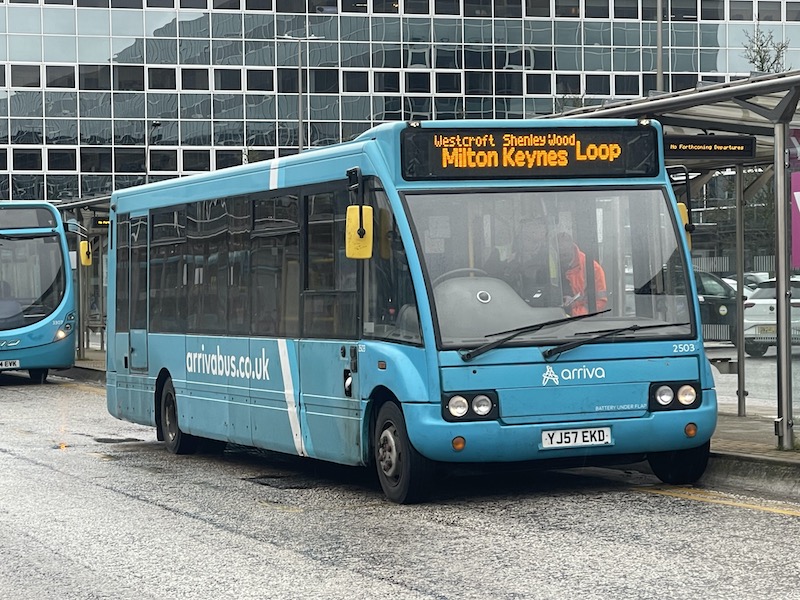
In the current era of BSIP funding for exciting new developments you don’t find many brand new bus routes being introduced on a purely commercial basis these days, but Milton Keynes is getting a nice helping thanks to the Arriva commercial team’s continued much welcome policy of seeking out new markets to develop.
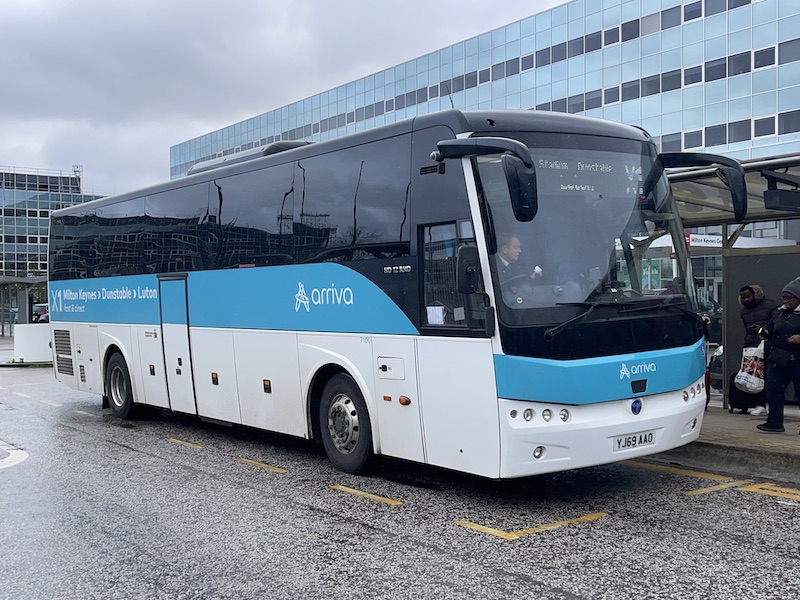
Last July’s introduction of route X1 linking the city with Dunstable and Luton is reportedly going very well with changes introduced last weekend to now provide a coordinated frequency with routes X4 and F70/F77 between Milton Keynes and Bletchley offering a quick journey via the city’s Hospital and Stadium every 15 minutes.
As part of a number of changes to the city’s bus network last weekend Arriva also began a new hourly circular service called ‘Loop’, which, as its name implies, operates a large circular route linking the city centre with District Centres in the east, south and west as well as Woburn Sands, Bletchley and the city’s Hospital, Stadium and Open University campus. A map shows how the Loop connects with some of the City’s existing bus routes.
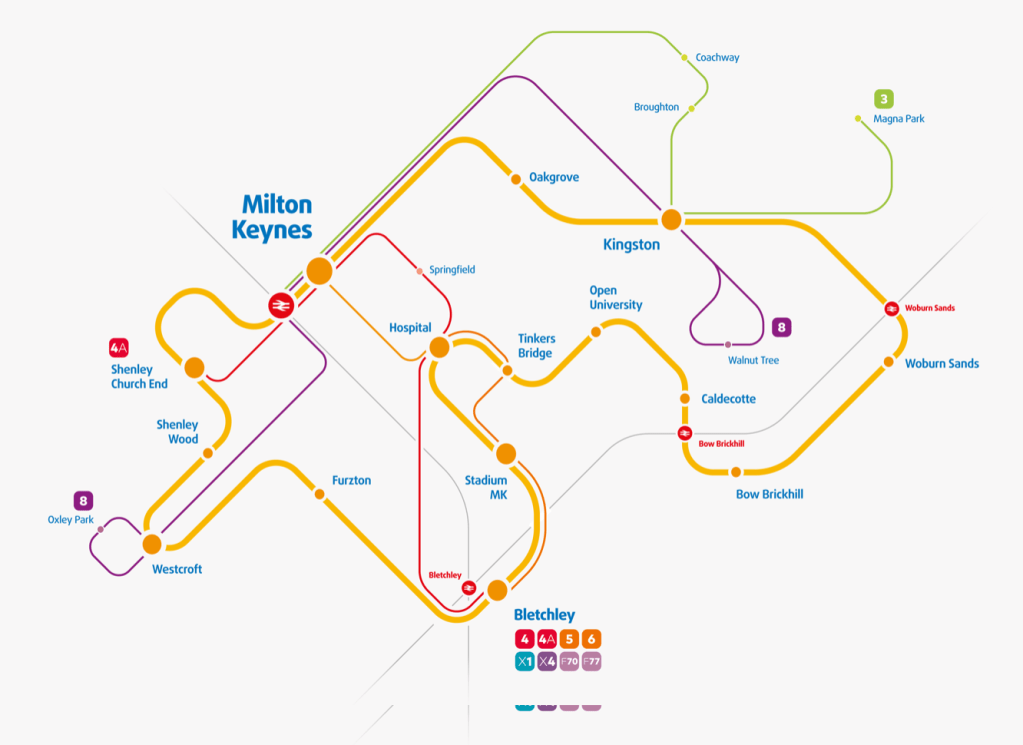
The Loop is a bold commercial move on Arriva’s part with no public funds supporting the operational costs although the service has been developed over many months through close partnership working with the City Council.
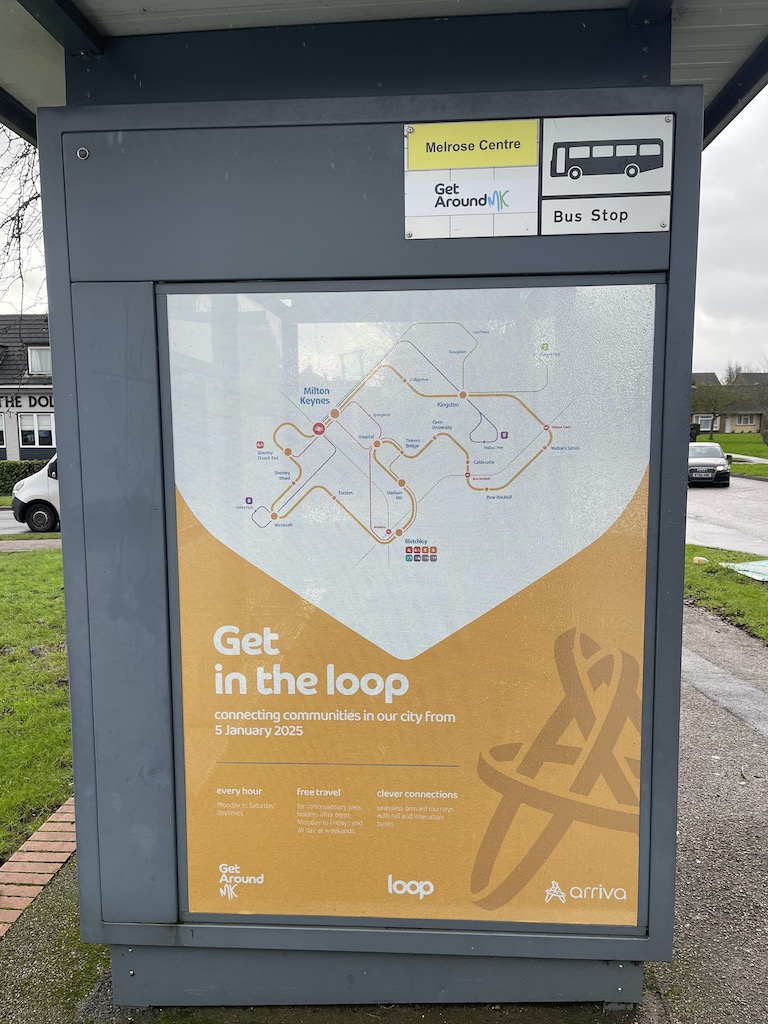
Indeed the Council has shown its commitment and support in a number of tangible ways including promoting it through prominent posters displayed at 80 bus shelters around the city showing the map….
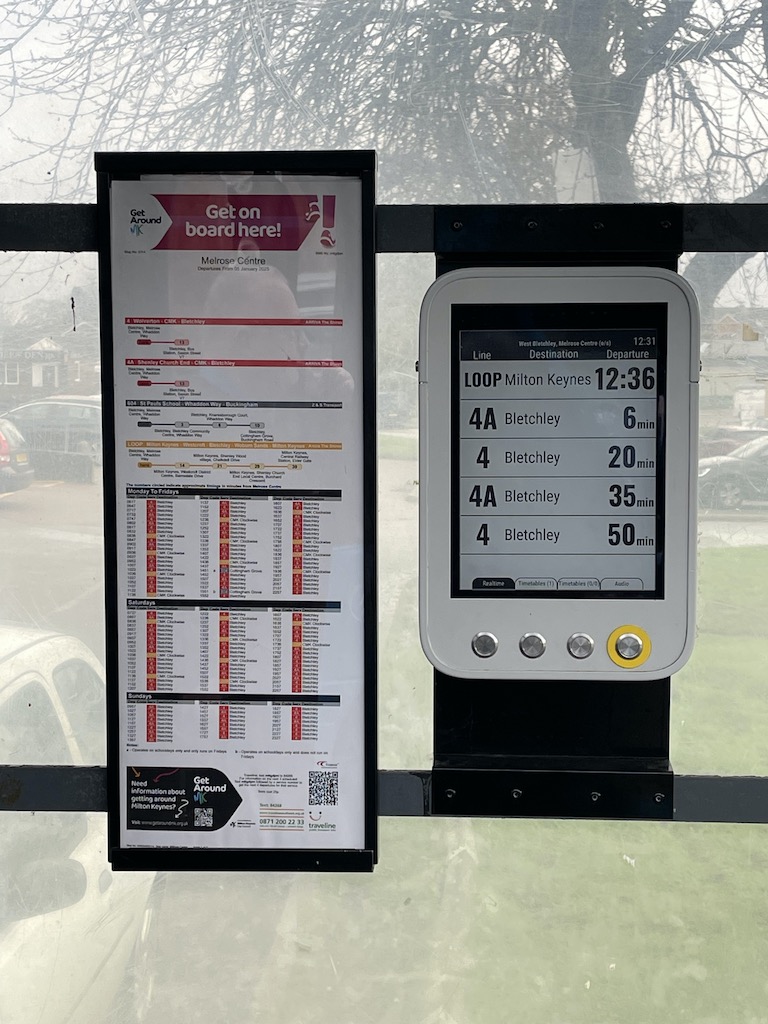
…. and all bus stops have received updated departure lists with the Loop also displayed on electronic signs at bus stops too, albeit not yet with ‘real time’.
A printed leaflet with timetable and map is also in hand but has been held up over the Christmas break but it’s hoped will be available for distribution by tomorrow or early next week.
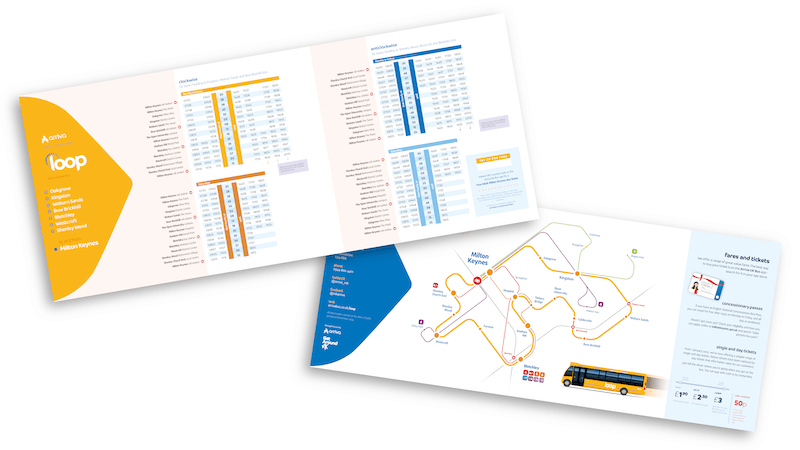
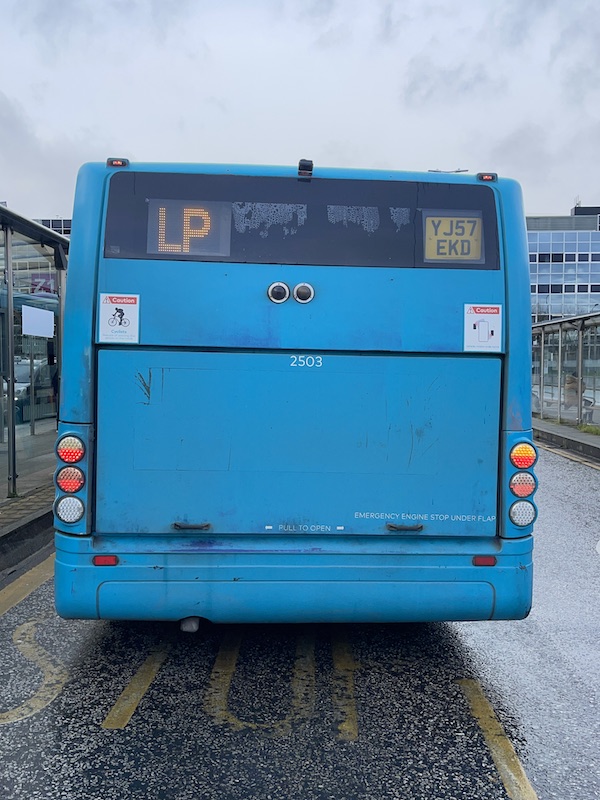
Awareness of the route’s existence will also be helped by a vinyl wrap of the two Optare Solos allocated to run the service featuring a bespoke yellow Loop livery and logo which will distinguish them from vehicles on other Arriva bus routes in the city, although during the off-peak two additional buses operate on the service having been used on other peak work to make for the Loop’s hourly timetable which gets going from 08:30 (anticlockwise) and 09:20 (clockwise) with two earlier journeys at 06:30/07:20.
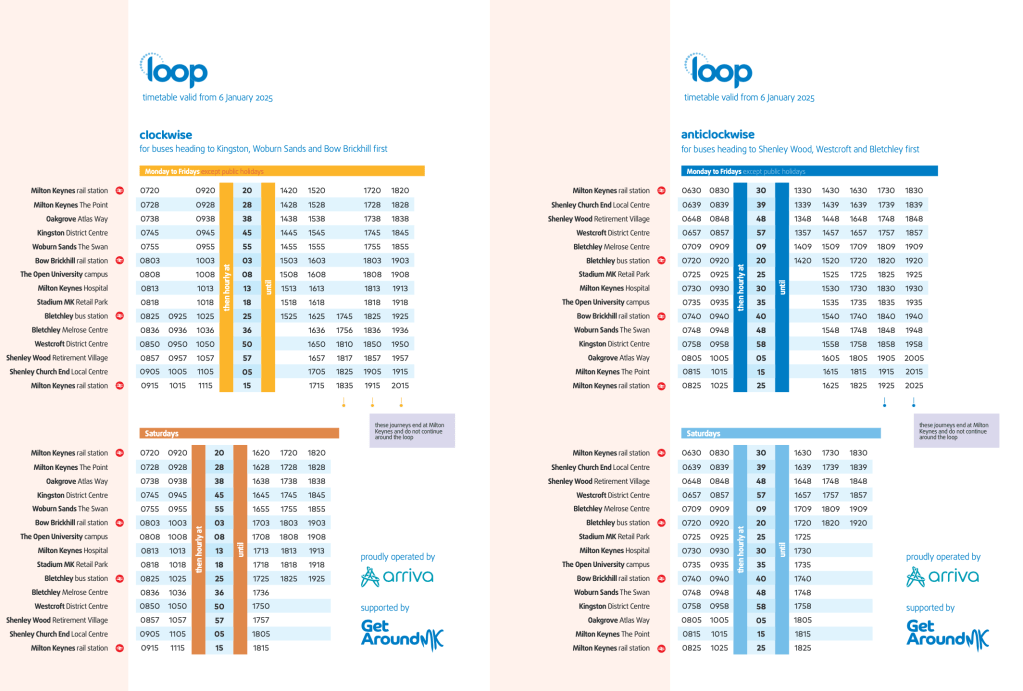
I took a ride around the Loop on its first morning on Monday (there’s no Sunday service) and it was good to see Matt, Toby and John (Arriva’s enterprising commercial team) out and about travelling on the buses, talking to passengers and garnering their initial feedback and suggestions. Passengers were understandably delighted with this new service with a positive reaction clearly evident among everyone travelling for the first time.
I caught the 11:25 clockwise journey from outside Milton Keynes railway station where a new arrangement for departure stands commenced on Sunday at the instigation of the City Council.
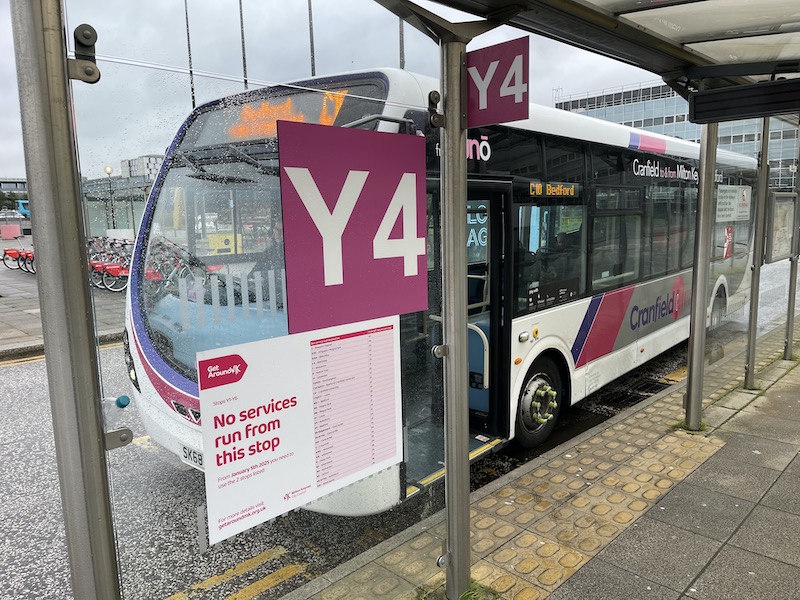
Buses on all routes now use stands lettered Y to the right (as you exit from the station building) to set down passengers…
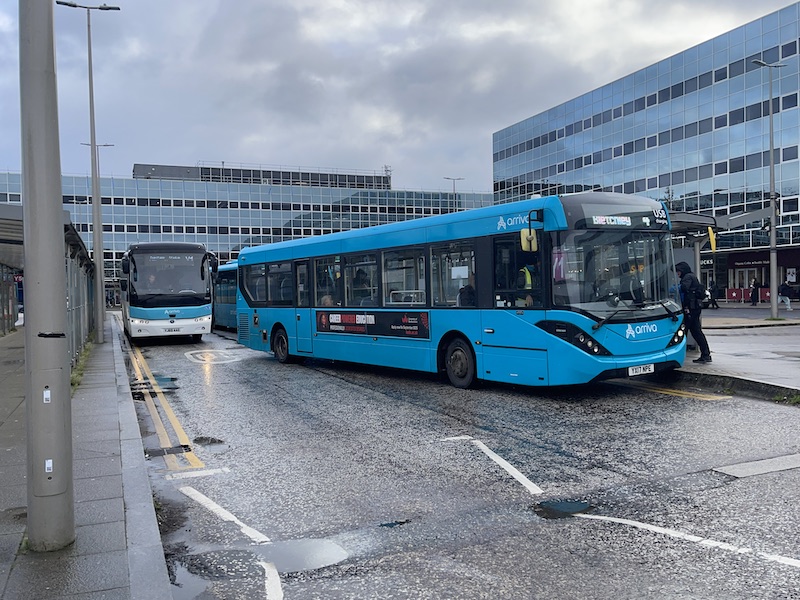
… and then pull forward to stands lettered Z to the left (as you exit from the station building).
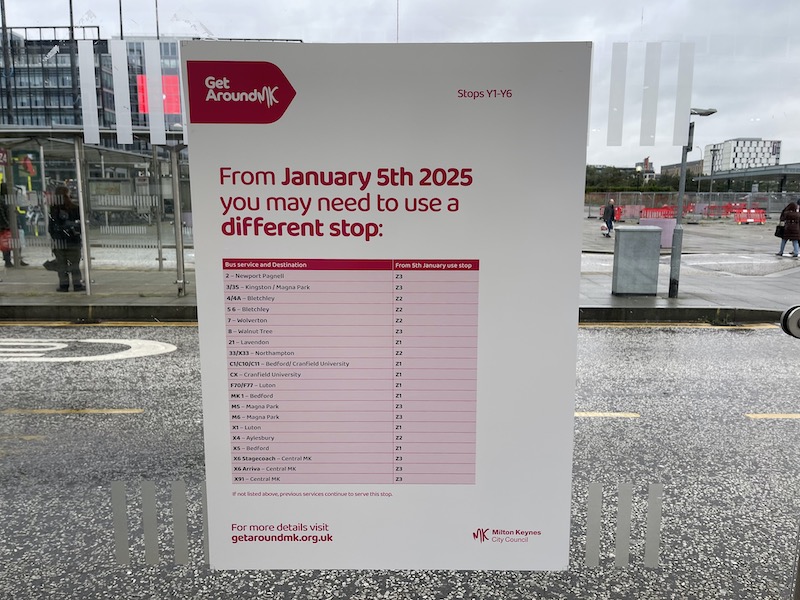
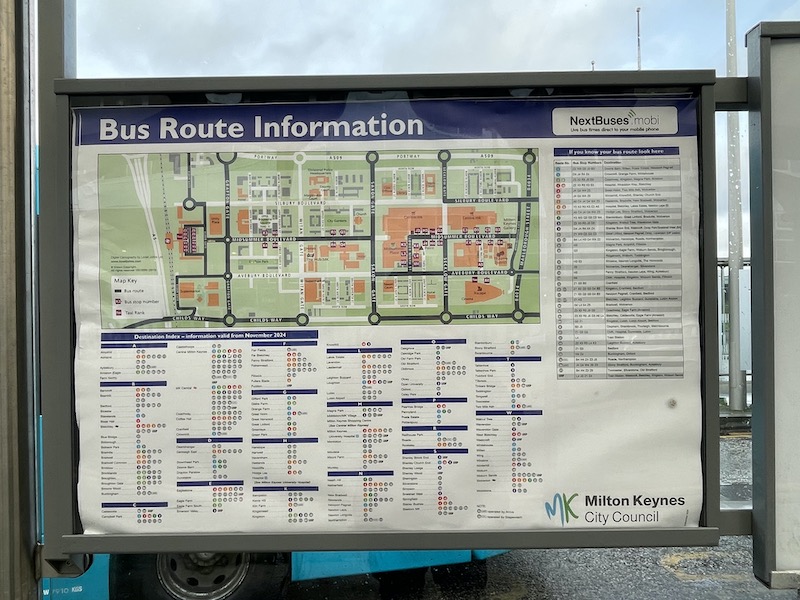
To its credit, the City Council had updated all the departure information including posters explaining things and I also saw an employee helping bewildered passengers find their newly located departure stand.
My Loop bus arrived from its previous journey setting down three or four passengers then pulled forward to departure stand Z1 and I received a very cheerful “welcome to the Loop” greeting from driver Paul who was obviously very excited about the new service he was driving, if not the age of the bus.
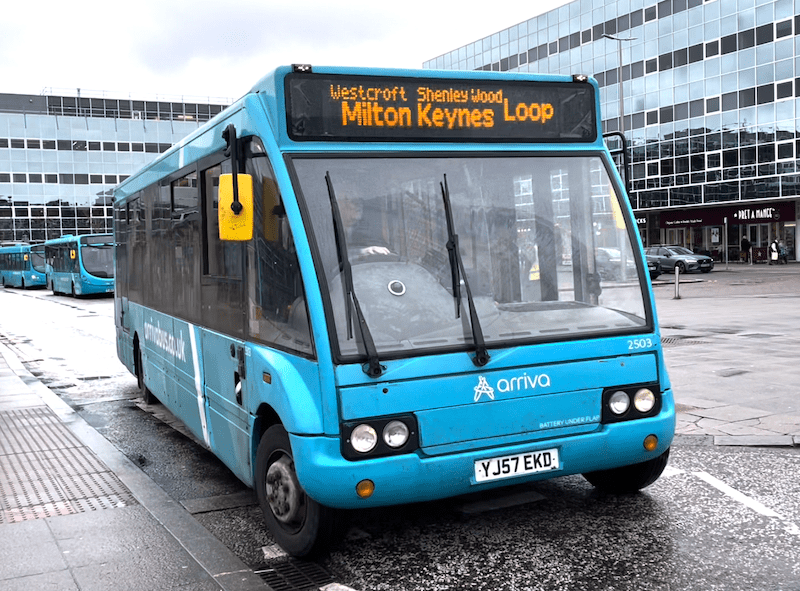
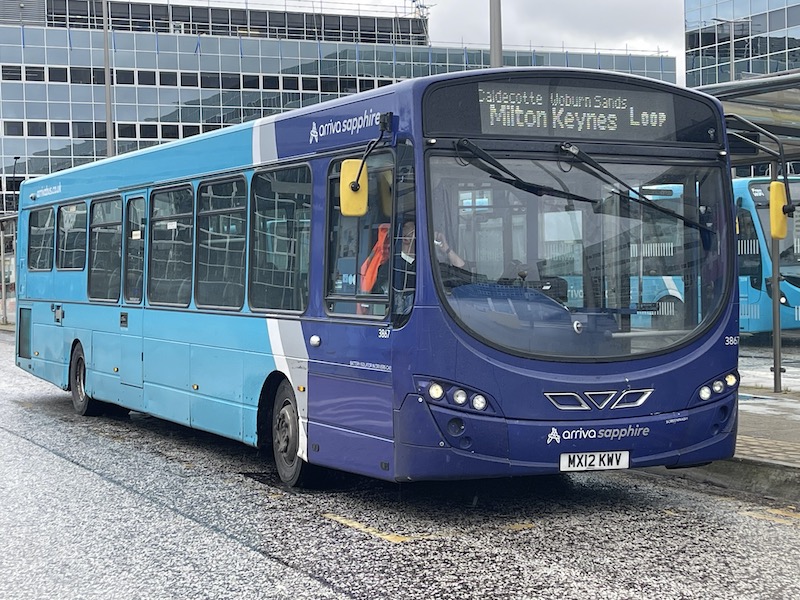
Running 17 year old buses on a brand new route is not ideal but the upside is the two allocated buses are fully depreciated so bear no financial costs, which will certainly keep the Arriva Accountants happy. This, coupled with the operation of two younger buses from the fleet during the off-peak period, including one I saw with the erstwhile Sapphire upmarket standard, makes for a very low cost basis from which to grow revenue on a new route such as this and stand a chance of commercial success.
Along with a whole bunch of other drivers, Paul had been out on Sunday on a special staff bus learning this quite complex route which takes almost two hours to complete a round trip so he was naturally a tad apprehensive as he was about to undertake his very first journey with passengers.
Paul really was the life and soul of the journey and brightened up everyone’s day as we pulled up at bus stops and passengers looked quizzically at the bus or hopped on board to experience this new phenomenon for Milton Keynes.
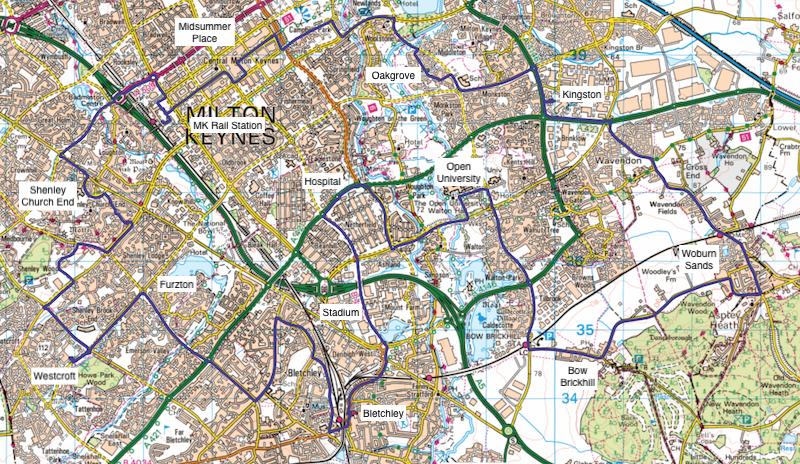
A lot of thought has obviously gone into the actual route taken by the bus. Matt tells me the team had the benefit of data from the City Council’s MK Connect DRT operation to identify significant passenger flows not catered for by the existing bus network to incorporate into the Loop. So, at last, DRT has found a use. Interestingly, one passenger on board was damming in his critique of MK Connect and was hugely enthusiastic about the Loop which would at last give him certainty of a bus taking him to where he wanted to travel at a fixed time.
After leaving the railway station and picking three passengers up at Midsummer Place, the City’s central retail Mall, we headed off via Oakgrove, the first residential area the clockwise Loop passes through, and one which is relatively new and had previously been served by bus route 301 which was withdrawn in favour of the Council’s MK Connect DRT…
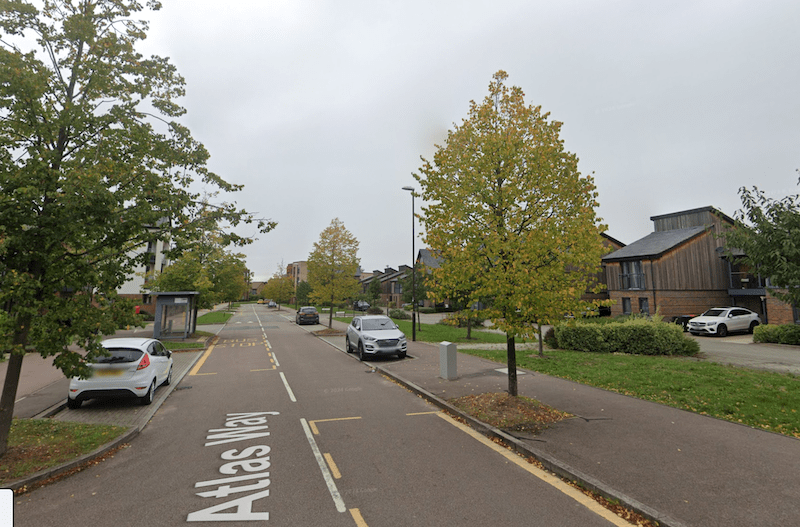
… but there were no takers so we headed on to Kingston where we pulled into the District Centre hub where there’s one of those extensive ‘warehouse style’ retail offers (and a gym, of course). Our three passengers all alighted here and we picked a new passenger up who was heading home to Woburn Sands having done her shopping and enjoyed a visit to these retailers which would have previously been off limits for her.
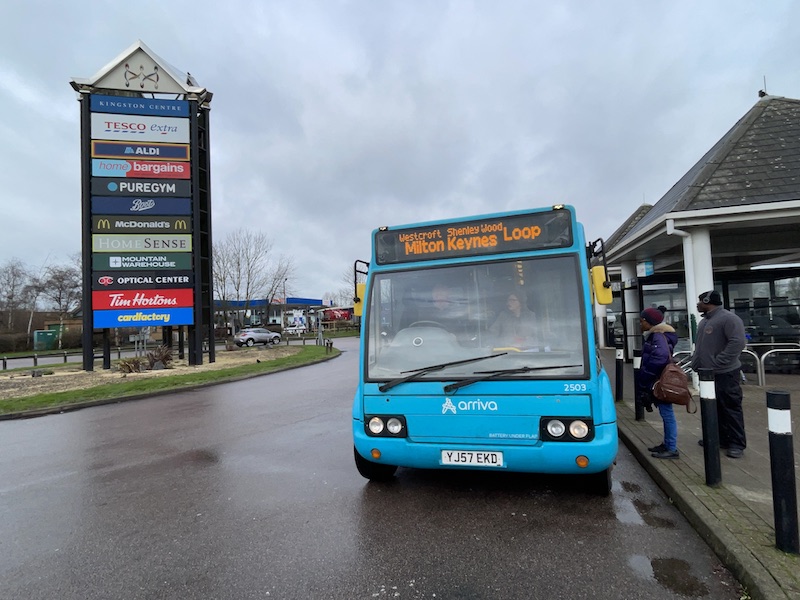
It became evident in Kingston the Loop’s running time is quite generous as, although only 25 minutes into our two hour tour, we had a five minute pause before heading off and passing through some nice rural scenery towards Woburn Sands. First up we went past the railway station (on the Marston Vale line) which is almost three quarters of a mile from the main village High Street and where we picked up Matt, Toby and John who’d been out early, sampling other journeys around the route.
Woburn Sands is one of those places that’s been cut off from regular bus routes for many years, only having once or twice a week shopping journeys serving the village so I’m sure the arrival of the Loop will be a great boon to those who, like the passenger we carried, want to do shopping in either the Kingston Centre or Midsummer Place.
The route continues through more Buckinghamshire countryside before passing the next station on the Martson Vale line, Bow Brickhill, on the edge of the City’s built up area and from where the Loop makes it to the Open University campus where we picked up another passenger who travelled to Bletchley.
After passing Stadium MK we headed into Bletchley and had time for another few minutes pause in the bus station and a chance for Paul to do more Loop salesmanship and give explanations to intrigued passengers.
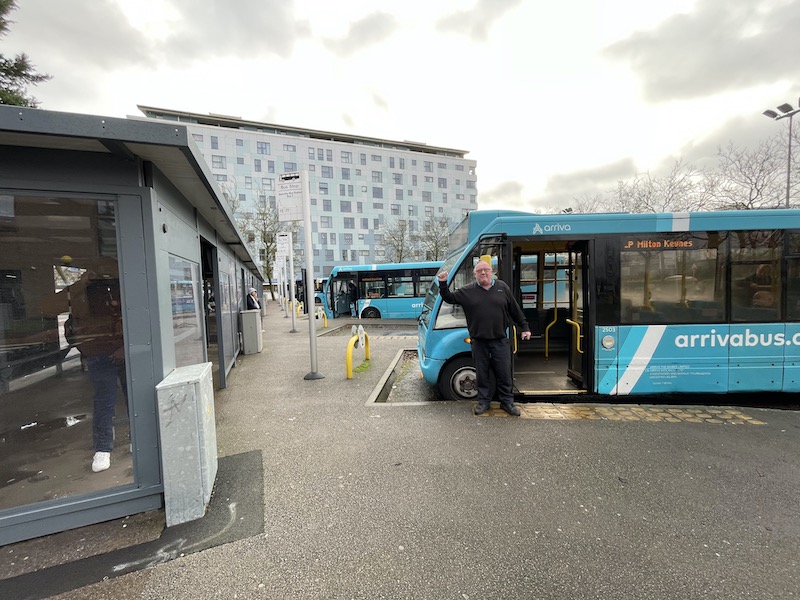
A passenger boarded in Bletchley who is active in the local community and was taking a trip to see where the route goes so he could spread the word among his neighbours and contacts at various groups for senior citizens. He was a useful contact for Team Arriva who were still on board and who keenly engaged with him to hear his suggestions and observations.
We’re now 65 minutes into our circuit and headed off from Bletchley on the west side of the City, first off serving the small retail area at the Melrose Centre where we paused for another six minutes to keep to time, such is the slackness of the timetable.
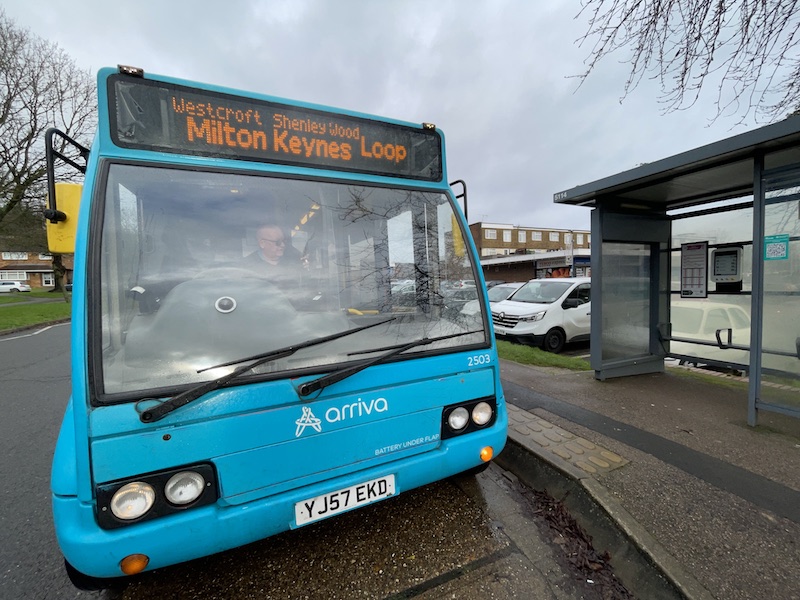
After that it was on through Furzton which is another of those residential areas previously served by a tendered bus route withdrawn in favour of MK Connect (DRT) when that scheme was introduced in April 2021. Now the residents must be overjoyed at not only getting a scheduled bus back but one that’s even more frequent than the service they lost in that shake up.
Next up is the District Centre at Westcroft where we had another seven minute pause and Paul did his bit explaining to passengers waiting for route 8 which would take them into the city centre on a more direct route, what the Loop was all about.
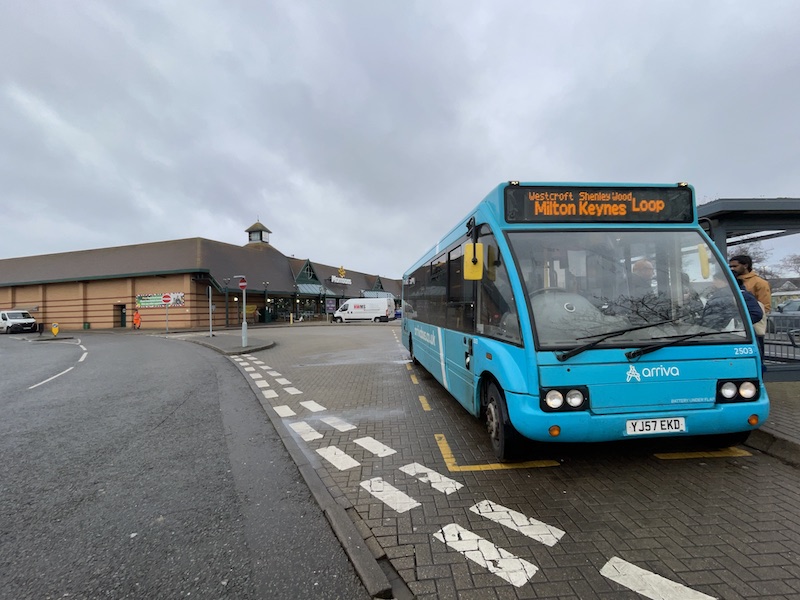
Toby, Matt and John left us as we passed through Shenley Wood but soon after that we had another five minute pause by the Shenley Church End Local Centre where two passengers boarded…
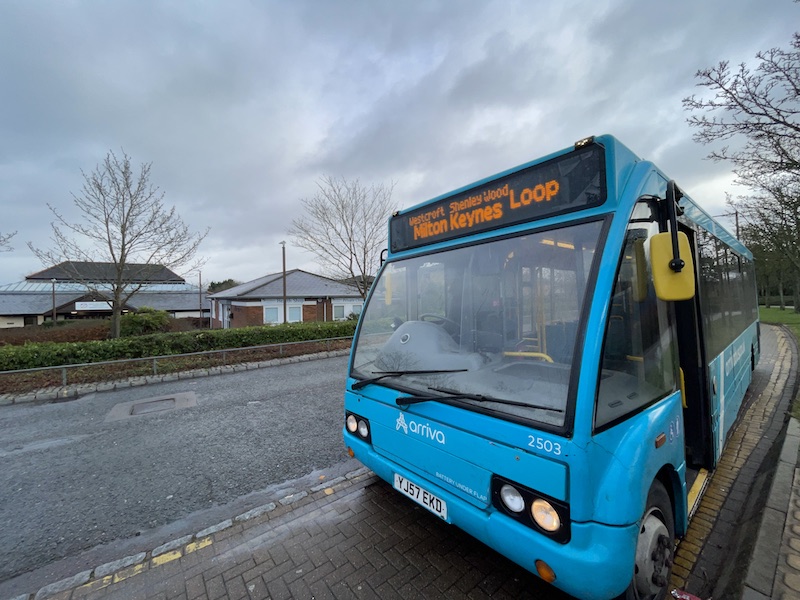
… and then it was a fairly short ride back to Milton Keynes railway station, having picked a third passenger up, and where we arrived four minutes ahead of the scheduled time of 13:15 and I bid fond farewells to Paul who prepared for his next rounder.
Two things came through to me as I travelled around. Firstly there’s no doubt this route has considerable potential. It was heartening to hear such positive feedback from those travelling on the first morning and in numbers which although low, were very impressive for a first morning, and it won’t need huge numbers on board to be a commercial success bearing in mind the judicious juggling of peak/off-peak vehicles and using two fully depreciated buses.
Secondly, the timetable could lose at least 15, if not 20 minutes on a round trip. But, the downside of that would be passengers arriving at the station and wanting to travel across the “terminus” to reach Midsummer Place for the shops (or vice versa on the anti-clockwise circuit) would face a long inconvenient wait between journeys whereas as it is, it’s only five minutes. And, not many (if any) passengers will do what I did, and travel the whole way round so will only experience one, two or maybe three of the pauses evident during a full circuit.
The Loop is a great initiative and well done to Matt, Toby and John for the great work they’ve done and working with the City Council in bringing this to fruition. It might even save the Council money by not needing so much DRT resource now there’s a proper bus service to many parts previously poorly served.
And finally, a special shout out to Paul. He is a great ambassador not only for Arriva but for bus travel in Milton Keynes. I wish him and the Loop every success.
Roger French
Blogging timetable: 06:00 TThS
 BusAndTrainUser
The Wandering Busman requests you to give him a call next time you are in the MK or Oxford area Very interesting article. The Stagecoach S5 to and from Oxford using Bicester Village P&R is a very good service. We have used it several times.
Regards JK
LikeLike
This new service seems to be on traveline.info, but not yet on bustimes.org(?)
LikeLike
Bustimes seems to be struggling to update new or revised routes recently, numerous changes have not been picked up at all, or done late.
LikeLike
Bustimes has been struggling for a long time with Stagecoach routes in my part of the world, with them quite often showing as having no journeys on any given day.
It’s a shame if they’re having problems, because it’s an extremely useful website – and one which many smaller operators seem to rely on for live tracking.
LikeLike
I really hope it succeeds. Hopefully with the support of the Community it will as it serves quite a few places that were abandoned in favour of MK Connect. There are those annoying 2 hour gaps in the peak hours which if it’s successful would be good to address.
On Facebook a few people have commented it doesn’t go into their estate, but obviously that just adds to the journey time. Maybe if there is so much slack in the timetable something could be achieved.
One thing I’d find off putting if I was a women travelling is the amount of bus shelters with no working lights. The grid roads are a pretty desolate place to wait, and not great if you are in darkness. It’s no wonder why people want the buses in the estates.
A couple of corrections, it’s Oakgrove, not Oakham. Also there was a bus for a while there. The 301 which also served Woburn Sands, but got withdrawn when MK Connect came along.
LikeLiked by 1 person
Many thanks Richard – Oakgrove now corrected and the text amended reflecting your helpful clarification re route 301.
LikeLike
Another minor correction, you mean damning rather than damming.
My phone’s autocorrect tries to change damning to damming, along with quite often trying to enforce American spellings despite being set to English (UK). I wonder if the latter is the reason for the former? American English seems to find the strangest words unacceptable.
LikeLike
Fascinating place is Milton Keynes, and after fifty years making numerous journeys to/from and through it, am never quite sure where I am! Welcome positive move by Arriva, but I thought they had rejected a “mass-electrifying” scheme in conjunction with the City Council (as in Stevenage) and thus may not be there long-term. Perhaps this has changed?
What a pity the Council have abandoned the impressive timetable book (and the even more impressive map that went with it). My confusion as to where I am is thus ever more confounded.
Terence Uden
LikeLike
Surely the reason that the electric bus schemes for MK and Stevenage were axed was because of the parlous state of parent Deutsche Bahn and the lack of capital that was available? Having been sold to I-Squared, that is one issue that is being addressed but the damage done to Arriva through a lack of investment over the last ten years will take a long time to repair and indeed, some operations were beyond redemption (e.g. Cheshire).
It already looks like under new auspices, there is a bit more commercial latitude and investment in new fleet.
BW2
LikeLike
This seems an excellent idea, and I do hope it succeeds. I wasn’t aware that the big bus groups actually took into account things like buses being fully written down (i.e. considered to have earned enough revenue (during their working lives to date) to have covered their purchase costs, as well as running costs). If that is so, perhaps the three enterprising managers you name might consider keeping a pool of such buses, for ‘seed-corn’ ventures like this.
LikeLike
I seem to recall a lot of the “cancelled” services mentioned (eg Woburn Sands) were due to Arriva requesting an over onerous subsidy from MK council as those places could not be served on a commercial basis. And thus we were left with the farce that is MK Connect.
Seems Arriva may have had a change of heart.
MKIan
LikeLike
Arriva have a new owner who seem to have a very different attitude to the business than their previous owners (Deutsche Bahn) had.
I think those of us with an interest in the industry are hoping that this is the start of a brighter period for the Arriva businesses – and their passengers!
LikeLike
Hi Roger
I was introduced to your e-mails last year and find them very informative reading. As someone with obvious experience and knowledge of the economics of buses can I ask your thoughts regarding senior bus travel?
I received my bus pass a couple of years ago and now regularly use buses, I did use them previously but less so due to cost. I am lucky enough to live on the 91 route in Woking that provides a regular service to Woking and Knaphill all day until well past the 11pm limit for free travel. I also venture out on trips to far flung places less frequently. I’m planning a trip on Surrey CC’s DRT service soon, a friend organised a trip using this last autumn which went well. My question really is a lot of bus passengers seem to be senior pass holders who probably wouldn’t travel if they had to pay, is this financially viable? Perhaps this might make a theme for one of your blogs.
Keep up the good work, best regards
Ian Johnson
LikeLike
Ian,
The straight answer to your question is that the English National Concessionary Pass (free bus pass) is not, never has been and never will be financially viable.
The theory behind the ENCP scheme was that the bus companies would be neither better nor worse off than before it was introduced but, although it’s a national scheme, it’s paid for by the county councils and as we all know they get less funding every year, which means that the amount the bus companies get for each passenger has similarly reduced, so the bus companies are basically losing money for each ENCP passenger they carry***.
However, it would be politically almost impossible to withdraw it – see the media circus over winter fuel payments becoming means tested for an example of how such a withdrawal would be portrayed.
As far as I can tell it’s one of the reasons that the big bus groups such as Stagecoach have gone from being absolutely against franchising to a cautious acceptance; the ENCP has significantly altered the financial balance of bus operation, and not in a positive way.
*** As an example, at a bus industry event just before Covid I spoke to a director of the Stagecoach East Midlands bus company who told me that if one of their double-deck buses left Lincoln on the trunk inter-urban route to Skegness with a full load of concessionary passholders, all of whom went all the way to Skegness, the reimbursement from Lincolnshire County Council would only just cover the cost of the fuel used by the bus.
The bus company were relying on people making shorter journeys (such as Lincoln – Wragby, Wragby – Horncastle, Horncastle – Spilsby or Spilsby – Skegness) so the seats were used by multiple passengers during the journey in order to cover the daily operating costs. As he acknowledged, that’s not really a viable long-term business strategy.
LikeLike
Very interesting article and I have often thought many visits and towns could benefit from circular (loop) routes.
LikeLike
There is or was a Loop Route run by Stagecoach South East on the Isle of Thanet. I used it once from Ramsgate Station to the sea front.
LikeLike
Still running and very sucessfull. Stagecoach also have one in Eastbourne. But Arriva’s attempt in Medway seemed a step too far as the route was too comlex for people to understand.
LikeLike
Should Bow Brickhall be Brickhill?
LikeLike
Corrected, thanks.
LikeLike
Another interesting and useful post, Roger, thanks. It occurs to me that the route has a lot of similarities to the old tendered 25/26 that were operated by Z&S International, but lost after MKC withdrew subsidies for conventional bus routes. Reinventing the wheel (or lop) perhaps?
LikeLike
Absolutely, although quite a different routeing in many parts. My trips on 25/26 had been busy (more so than the first day of loop), but very poor reliability was killing it off, even before DRT ended it.
LikeLike
“A lot of bus passengers seem to be senior pass holders who probably wouldn’t travel if they had to pay.” As one of them, I wonder how, and how much, the bus operators are reimbursed for accepting them. I believe it’s a percentage of the adult single fare, but what percentage, does it alter when fares are “revised”, is that percentage negotiable, and if so nationally or locally?
Sorry, this has drifted away from the topic of the MK Loop, but the subject (can of worms?) has been raised.
V Saltash
LikeLike
Unfortunately it is not a simple answer and it varies between authorities. The base recommendation in the guidance is that operators receive a payment per passenger that is calculated on a basket of fares basis (this means standard adult single/return/day & sometimes week tickets are included with the cost per trip calculated by dividing the price by the assumed trips – 1/2/3 or 4/6 to 10 respectively depending on decisions by the authority) which is then adjusted by the ‘generation factor’ (an entirely arbitrary figure, as far as anyone really can tell, that is supposed to reflect the number of extra passengers free bus travel will generate) to give a fixed fee per passenger. Economic theory, based on real data, would give a result that reimbursement should be around 70% of adult fare but few places get close to that with many around 50% and some as low as 30%.
The most common alternate method is to use a fixed pot, this was more common in the past and faded away but has become more common again after COVID where passenger numbers were uncertain, where the council works out its budget and then splits that between the operators and agrees a fixed payment for a fixed period for acceptance of passes though often the share will be worked out based on usage & fares.
Generally speaking such agreements last for 1 year, sometimes longer, and are calculated based on fares in place at the time and are rarely re-negotiated during the year unless the operator can show real hardship. Whether free passes are covering costs will vary but I know that often those with the lowest reimbursement can mean that even a full bus of free passes will lose money as the income is less than the cost of operation. Free passes have not recovered as fully after COVID than fare payers, for my employers concessionary passengers have only recovered to around 80% whilst fare payers are running, on average, over 100% of pre-COVID.
Dwarfer
LikeLike
“even a full bus of free passes will lose money as the income is less than the cost of operation”
Stagecoach East Midlands told me this was the case in Lincolnshire even before Covid, so I suspect it’s even worse today.
LikeLike
Interesting post, hopefully the Loop will be a success and become more frequent. Only when it’s frequency matches the radial routes it crosses will the connections be attractive enough to make more complex journeys possible. This is where the real growth potential lies.
Peter Brown
LikeLike
The loop feels a bit like this board game (which has a looped playing track)
https://www.amazon.co.uk/Orchard-Toys-Bus-Stop-Game/dp/B0006HBERA
MilesT
LikeLike
Glad to see Woburn Sands, or Hogsty End, as it was originally known, get a “proper” bus service back! When I lived there back in 2011 there was both the half hourly 3 to CMK Station Square via Kingston Centre/OU/Oakgrove and the 18 which ran either hourly or 2-hourly, both of which were well patronised but suffered punctuality issues. It also suffered from years of not having a reliable rail service on the Marston Vale Line due to bustitution, nor the long-promised direct trains to MKC. As a former member of the excellent MK Bus Users Group, employee of London Midland, Parish/Town Councillor and member of the Milton Keynes Transport Partnership, it broke my heart to see impressive ridership growth up to 2015 being thrown away with smaller buses, reduced frequencies, and then the final straw being MK Connect. Let’s hope this is the light at the end of a very dark tunnel recently for buses and trains in this part of one of the fastest growing parts of the UK.
Charles Ashbury
LikeLiked by 1 person
Here here Charles. Most definitely a positive improvement. As you say, we moved here in 2012 and the transport was superb. Fast forward 10 years and we didn’t have the train or bus to CMK
LikeLike
“Here here”
I think you mean “hear, hear”, as in “I hear you and agree with you”. Sorry for being a pedant, but that one’s a bugbear of mine!
LikeLike
Interesting to see “supported by Get Around MK” on the timetable. If the route is purely commercial, I am wondering what support is being provided by “Get Around MK” (which appears to be a brand for Milton Keynes Council’s transport function). Is anyone able to shed any light?
Malc M
LikeLike
Production of all the posters on the bus shelters that Roger mentioned, perhaps?
LikeLike
@A Nony Mouse – possibly, although if it means if the (publicly-funded) local authority is doing stuff and incurring costs, it stretches the definition of “purely commercial” somewhat.
I guess it is a matter of opinion whether a service provided with support from the local authority (whatever that support may be) can be described as purely commercial.
Malc M
LikeLike
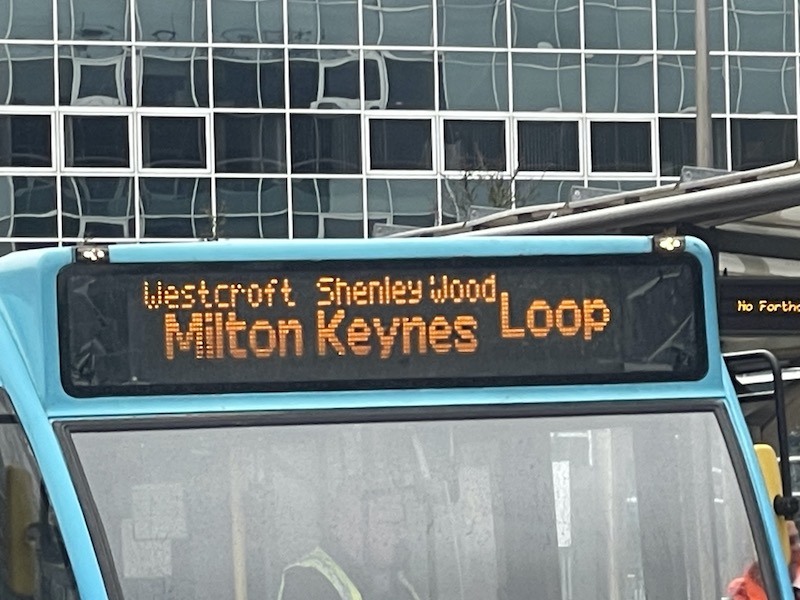
I’d change the destination board to show something more prominent like L1 or LP as shown above. The word loop on the LED screens is small and messy.
LikeLike
Milton Keynes is a fascinating place, one of the post war new towns. A shame it didn’t follow Runcorn and build out around a busway network. For me the most interesting period was the high frequency minibus era.
Peter Brown
https://en.m.wikipedia.org/wiki/Buses_in_Milton_Keynes
LikeLike
I remember those days well. Moved to the area in 1992. Was full of pretty old Mercedes Minibuses serving the estates frequently and Bristol VRs, ex West Mids Metrobuses and Leyland Nationals on the Grid Roads. Happy times even if all the old buses were old
LikeLike
I remember those days well. Moved to the area in 1992. Was full of pretty old Mercedes Minibuses serving the estates pretty frequently and old Bristol VRs, ex West Mids Metrobuses and Leyland Nationals on the Grid Roads. Happy days and the routes were much more frequent than they are now.
LikeLike
I think minibuses penetrating the estates was the best way. Although every home is supposedly c400m from a grid road bus stop, those stops will not be pleasant places to wait with fast traffic passing by, and vegetation screening the housing beyond, so quite pedestrian hostile.
Peter Brown
LikeLike
The problem with the minibuses going into the estates Peter, was the journey times were so long. There is that fine balance. Some estates are much more busy friendly than others I guess…
LikeLike
Rather loose terminology that becomes apparent when you get to the illustration! Also why is “mass transit” cropping up in every local authority announcement, this isn’t the USA.
https://www.miltonkeynes.co.uk/news/people/pioneering-new-tram-system-is-planned-for-milton-keynes-with-trams-every-10-minutes-on-key-routes-4895374
Peter Brown
LikeLike
Looks like a very nice new service.
I’m surprised that Arriva didn’t design a custom loop-symbol ➰, or import the infinity symbol ∞ into their Mobitec software for use onto their LED displays for use as branding for the service. The branding on the advert posters at bus shelters look really good.
Stagecoach’s loop service in South Kent(?) Thanet(?) seems to have been a success, so I wouldn’t be surprised if Arriva’s attempt in Milton Keynes also eventually becomes a success.
LikeLike
I have lived in Milton Keynes without a car for over 40 years and during that time have had an on-off relationship with the local bus service.
I remember bus deregulation back in 1986 when the National Bus Company and it’s large green buses (mostly Leyland Nationals) disappeared over night to be replaced by a ‘street shuttle’ service operated by Mercedes vans (minibuses). According to the exciting new timetable my half-hourly bus service along the grid roads would be replaced with a minibus through the estate ‘every 5-6 minutes’. On the first day I waited 40 minutes before giving up and walking the 2 miles to the city centre. I assumed there must be a strike but in fact the the new timetables were completely unrealistic.
Over the next few years a more realistic 20 minute timetable was introduced and then back to every 30 minutes. But the buses were uncomfortable, slow and inaccessible to even a young person when you had to fight your way through the other passengers and their shopping. The over-crowding gradually resolved as many passengers found other ways to get around (walk, cycle, car share or buy a car).
Over the years larger buses have returned and most routes are back on the grid roads and the network feels like a logical extension of the original NBC service.
I agree with others that MK Connect (the DRT service) is hopeless. I have tried to use it several times but even though I was given some free promotional credits the journeys it offered were were deeply unattractive and I preferred to walk the 3 mile journey instead.
Having studied the council’s bus map which shows the new LOOP route (Arriva ought to include a link from their site) I can see myself using it especially when the weather improves. Woburn Sands & Bow Brickhill are great for walks across Woburn Golf Course & Aspley Heath. Woburn Sands also boasts a couple of garden centres previously not accessible to the bus user. And although it’s not obvious, the stop in Whalley Drive is really close to Screwfix and other DIY retailers that will now be very accessible to LOOP customers,
I agree with comments further up that LOOP does not stand out on the destination displays. I also appreciate the comments about a lot of padding in the timetable which seem to have been recently been introduced into other local routes, presumably to keep the services more reliable. It’s a difficult balancing act I guess but I think Arriva need to look at making sure this does not result in early running or perceived early running when intending passengers rely on intermediate timings that are no longer realistic. As far as most passengers are concerned, a bus that leaves early before they reach the bus stop did not run and they will soon give up on it.
Finally in an era when passengers increasingly expect to be able to track their bus, Arriva need to look at why so many do not. I have observed at least one cause when the driver has to take a rest room break and turns the bus off. After a few minutes the bus drops of the displays and it is easy for intending passengers to assume it has been cancelled and give up on it.
LikeLike
I did the full route on Friday started at 13 20 very interesting total of 15 passengers over hole route
LikeLike