

Thursday 5th December 2024
It’s something that’s happened since I retired so it’s a bit baffling and a struggle to keep up with, especially the tech side, but although the Bus Open Data Service has been a huge thing in the industry for some years it’s still having many ‘settling in’ issues.
It’s important, as not only is BODS responsible for providing data to the likes of Google maps, bustimes.org.uk, real time bus stop departure signs and bus companies’ own apps and websites showing the position of every bus with its expected departure times from bus stops along the route for the benefit of passengers, but the punctuality data is also used by Traffic Commissioners to determine whether bus companies are complying with laid down standards. BODS also includes timetables, fares and ticket information too, but these don’t vary hour by hour as vehicle location does.
For over two decades the Traffic Commissioners’ standard has stated 95% of departures from timing points along a route must fall within a ‘window of tolerance’ of no more than one minute early and five minutes late. For routes registered as frequent (defined as every ten minutes or better) the standard requires at least six departures within any period of 60 minutes with the interval between consecutive buses not exceeding 15 minutes.
The absolute minimum standard which an operator is expected to achieve is 70% of buses departing within the ‘window of tolerance’. Back in 2004 when the scheme was set up, failure to comply with this minimum could see a penalty imposed of £550 per licensed vehicle in the registered fleet with a graduated scale of penalty for better compliance rates – eg 80% compliance would lead to a £400 penalty per licensed vehicle. Despite being set 20 years ago I’m not aware these penalties have been changed. Perhaps they’re aligned to fuel duty paid by motorists!
Traffic Commissioners must take account of any ‘reasonable excuse’ for failure to comply, not least if there are circumstances outside the operator’s control, but it’s expected known regular traffic delays are taken into account when timetables are drawn up.
The crucial thing BODS has done is make available thousands and thousands of data records on punctuality which a bus company can use to hone its timetables and schedules to better reflect actual experience on the road. As we’ve seen, some bus companies are now taking this to an extreme and using AI to produce detailed variations, journey by journey, to reflect minute by minute changes between timing points across a day taking account of all the data thrown up.
This plethora of data has also meant bus companies now have their punctuality monitored by the regulator at a level never seen before.
In the old days VOSA bus monitors would undertake spot checks on street corners (aka sitting in café windows) manually writing down the registration number, bus route number and time of every departure observed and then ask the bus company to explain and justify variations from the required standard. That’s the system I was familiar with and was pleased never to be called to a Public Inquiry by the Traffic Commissioner even though our compliance was always below 95%.
That’s because in the real world of operating buses in a city prone to congestion with road conditions varying according to the weather, utilities digging holes, motorists parking indiscriminately, delivery drivers needing to stop a millimetre away from the delivery point even if it blocks the road, traffic lights malfunctioning, passengers needing extra assistance to board or alight etc etc etc it is simply impossible to achieve 95% compliance – a figure originally set from an arbitrary ‘finger in the air’ target by the Senior Traffic Commissioner of the day over 20 years ago and even in those days bearing no relationship to reality.
I lost much faith in the credibility of the Traffic Commissioners the day that arbitrary target was set, not least as we, along with all other like minded bus companies keen to grow the number of passengers travelling, were working our socks off to provide the most reliable and punctual service possible. We didn’t need a regulator to impose an arbitrary hypothetical target or a compliance officer sitting in a café taking notes, thanks very much.
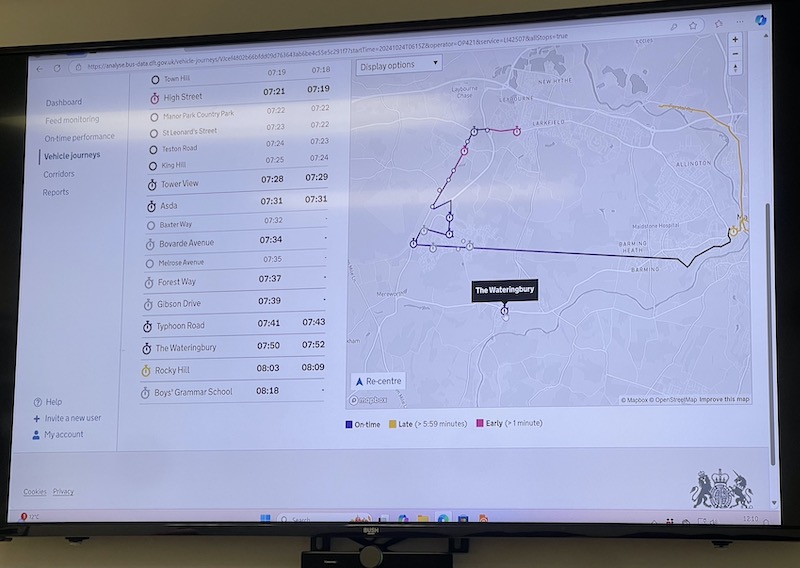
Now, thanks to Open Data, the location of every bus is publicly available with its punctuality measured against published timetables meaning a punctuality score for a company is established day by day, hour by hour and minute by minute using, what can be, up to thousands of data inputs.
So what’s the problem? Why is it taking months, and years even, to ‘settle in’.
As the old saying goes about any system: Garbage in, garbage out.
Whereas DfT officials proclaimed information about the railway would be open data many years ago leading to many third party apps becoming available showing up to the minute details of train departure times and websites such as realtimetrains, opentraintimes and traksy being established, I don’t think they realised the same principles may not easily transfer over to making information about buses equally ‘open’.
I’m guessing there are well over 400,000 bus stops in Britain compared to just under 2,600 railway stations and roughly 250,000 miles of road compared to 10,000 miles of track with around 37,000 buses compared to, I would guess again, about 3,000 trains. So we’re talking about a completely different scale of data and, in particular, the issues surrounding satellite technology and the reliability and consistency of signal accuracy – which can make all the difference.
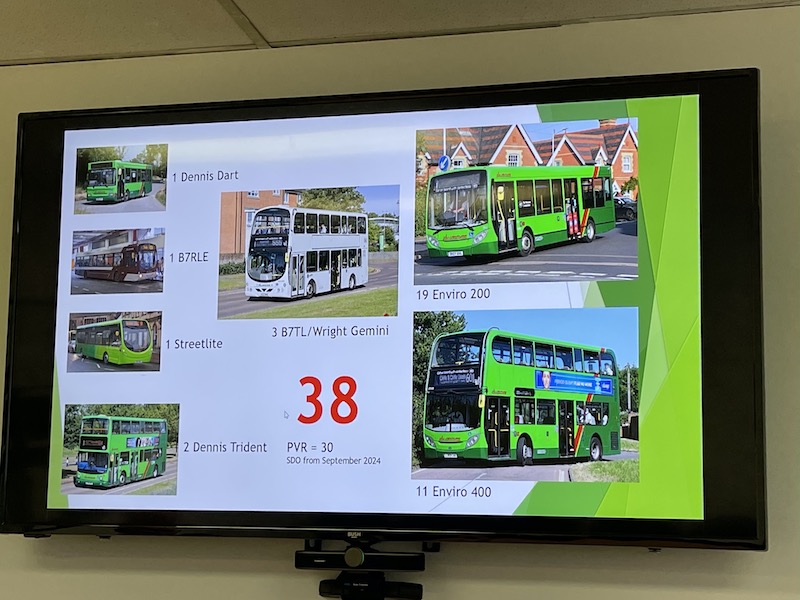
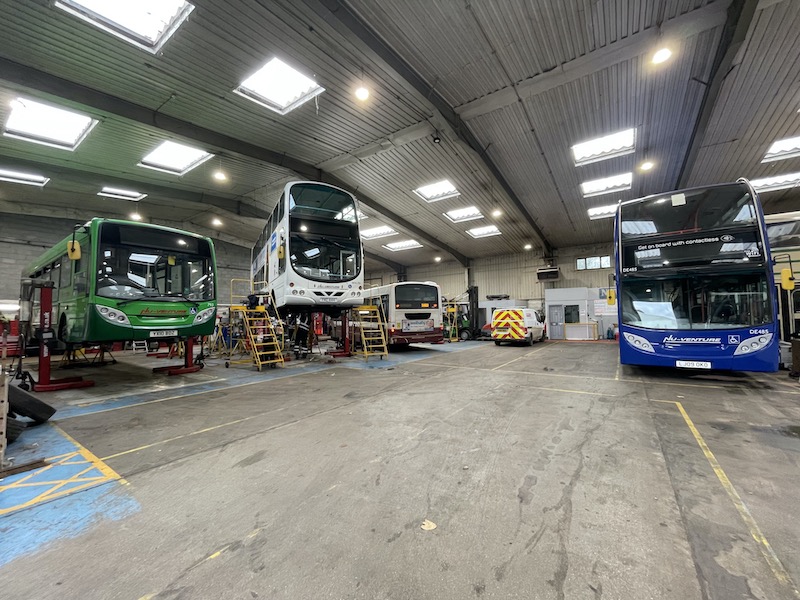
I recently spent some time with Norman Kemp and his team at Nu-Venture who have become very involved in BODS development in recent times with the DfT (and its consultants, KPMG) now keen to involve expertise at bus companies to make the BODS analysis tool known as ABODS more effective than its predecessor.
KPMG had been commissioned to establish the original BODS and did so without involving the bus industry so unsurprisingly, it came with many flaws. Thankfully this is now being refined with the help of a number of cross industry working groups.
Norman paid tribute to the enthusiasm of the suppliers, operators, data-consumers, local authorities and DfT/DVSA who now participate in the working groups, including the Operator Digital Initiative Group (OPDI) led by the much respected John Birtwistle from First Bus, the CPT’s own group aimed particularly at SME operators, and the work being done by Traveline. The Nu-Vetnure team are very pleased to be part of the effort to help find practical solutions.
During my visit I was shown many examples of issues thrown up by the current system and heard how these might be resolved. A fundamental underlying weakness has been the unreliability of bus stop locations through the NaPTAN (National Public Transport Access Nodes) system which allocates coordinates to all bus stops but is not as accurate as it could be. This Government database is overseen by local authorities and should be updated whenever a bus stop is moved, even slightly, following traffic management schemes, new lay-bys or other changes. All parties should use the same name for each bus stop too, but this doesn’t always happen.
Imagine adjusting coordinates of over 400,000 bus stop locations to ensure they’re accurate so satellite tracking can give timely and meaningful information to passengers waiting along the route as well as being used by the regulators to monitor company performance.
Another issue can be the positioning of GPS Adapters on the bus. The team at Nu-Venture have been trialling repositioning these devices with variable results.
A glaring issue demonstrated by Chris, Nu-Venture’s Admin Manager and a regular school-time bus driver, was a bus stop terminal point where the geo-fencing defining its location for BODS was far too restricted such one morning he was unable to park exactly level with the stop sign due to minor roadworks, so parked a short distance further along the road, but the satellite beaming down recorded his bus as having departed early as it could no longer detect the bus at what it had as the coordinates of the bus stop location, yet Chris was still very much present.
On occasions no data or incomplete data is recorded skewing the punctuality statistics and potentially misleading passengers as to the location of their bus. Chris gave an example of school children using an app to monitor where their bus is, spending extra time at home believing it was still on its way, yet it was already passing their bus stop due to inaccurate tracking data. It was only because Chris knew they are regular passengers he waited for them to appear at the bus stop.
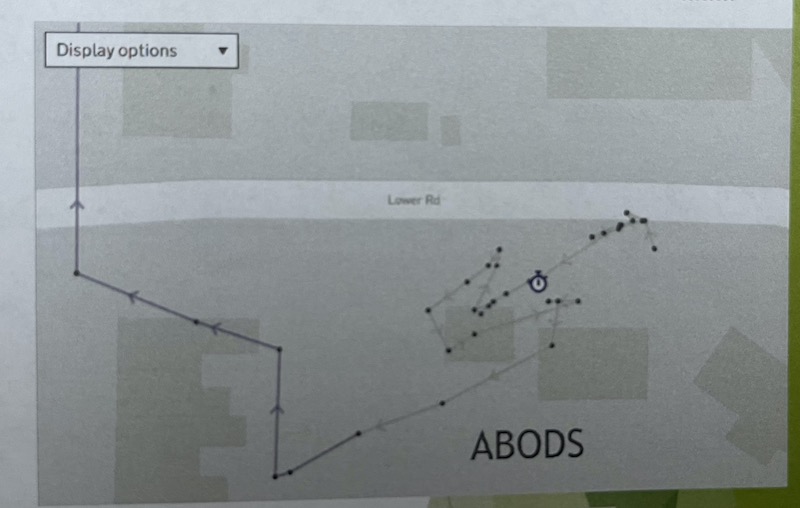
Many bus companies now use Ticketer which comes with a vehicle tracking system yet Chris is able to demonstrate many examples where the BODS tracking..
… Ticketer tracking…
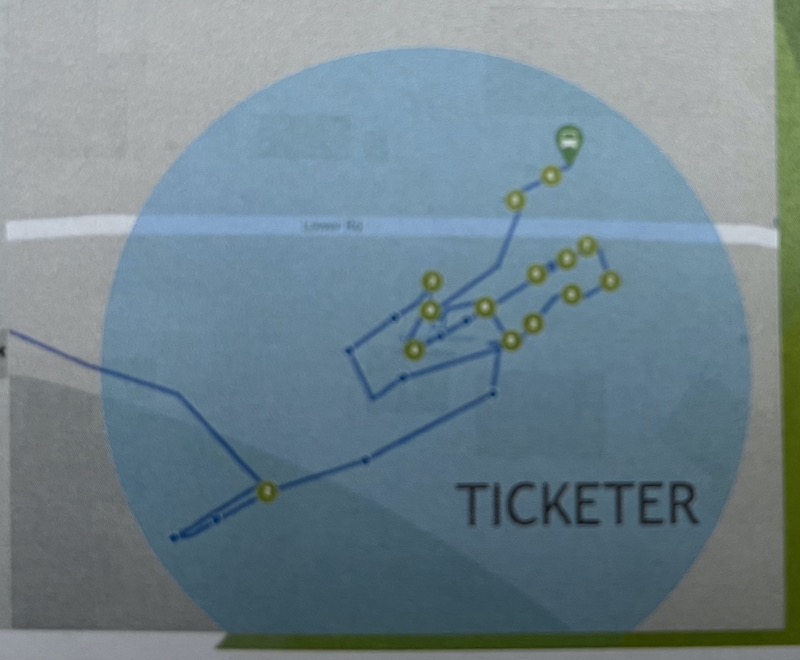
… and the GPS location used by bustimes.org all vary for the same bus on the same journey.

He showed me an example of a bus due to depart at 15:29 loading school children at 15:30 yet BODS shows the bus as ‘drifting’ (ie not stopped at the stop) and departing four minutes early at 1525, and because Ticketer is satellite-based, it shows the bus ‘drifting’ from its location until 15:30 and only bustimes .org accurately showed no drift and a departure at 15:30, as was the case.
Incomplete data can vary significantly during a day’s record of activity. Chris showed how it can be as high as up to 25% bringing into question the accuracy and therefore the relevance of the punctuality data.
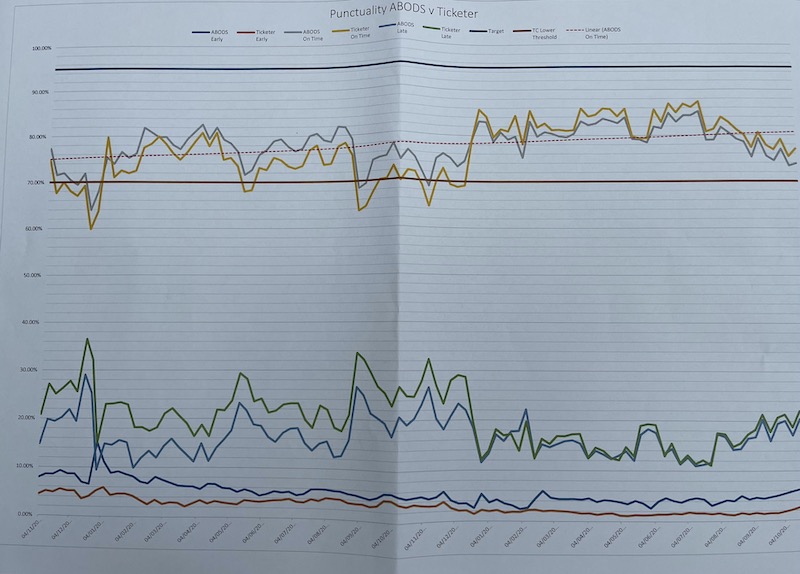
This is pertinent when it comes to identifying issues at bus route level where knowledgeable managers need to interpret what might be inaccurate data but it also has implications where such data is made public.
Generally, the industry hasn’t been making this punctuality performance data public – not surprising bearing in mind the issues with its accuracy – but that was before Mayor Burnham’s Bee Network began issuing weekly reports claiming its yellow buses were far more punctual than the predecessor multi-coloured privately run buses. But have you noticed they’re trumpeting weekly punctuality results consistently below 80%? Back in the day, I wouldn’t have dared to publicly promote a result like that (even though it was what we were achieving) for fear of being called to a Public Inquiry by the Traffic Commissioners and being fined up to £120,000.
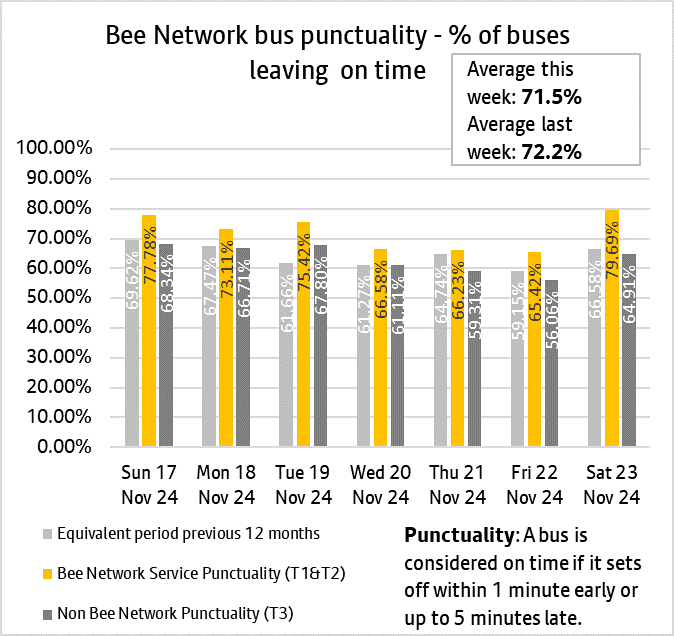
How times change, but despite BODS and all its data, noBODy can yet accurately report what is actually happening. And when it comes to punctuality that matters. To the minute. Especially for passengers monitoring when their bus is going to arrive at the bus stop from their nearby home. And also those DVSA bus monitors checking up on punctuality.
Here’s hoping Norman and Chris as well as all the others working hard to find resolutions to these issues are successful and passengers, and the Traffic Commissioners, can rely on the information and data that’s now openly available. It might also be the right time to review that arbitrary 95% figure.
Roger French
Blogging timetable: 06:00 TThS
Comments on today’s blog are welcome but please keep them relevant to the blog topic, avoid personal insults and add your name (or an identifier). Thank you.
 BusAndTrainUser
When Stagecoach Devon were being hauled over the coals a couple of years ago for punctuality, once the errors in the system had been explained to the Traffic Commissioner he concluded BODS was not fit for purpose and ordered the Dft to sort it out. I wonder if he ever received a satisfactory response.
The punctuality reported weekly by the Bee network shows the reality of attempting to run a bus network with traffic congestion and uncontrolled roadworks. Tranche 2 always seems far worse than Tranche 1, and neither number has improved much since the start of the network despite 20 extra buses being added to Tranche 1 to improve punctuality.
Interestingly Bee network does not publish reliability statistics i e journeys not operated, even though they will have the figures
LikeLiked by 1 person
Fascinating post, thanks Roger.
I frequently use the wonderful bustimes.org on my journeys all over the UK, and its tracking ability has got better and better. Two issues I’ve noticed:
a) When a bus is waiting for departure at the first stop on a route it shows as if it has departed that stop early, when in fact the time will change later when it actually departs
b) On a ‘lollipop’ route where there is only one set of timing points rather than an out and back journey the bus logs an early departure at stops on the return leg on its way out on the outward leg, presumably as the geofencing for the return leg stops covers the outward path of the bus (totally understandable given the narrow width of a road). A good example of this is Sullivan Buses route 306 Watford-Borehamwood. Presumably the only solutions to this involve either registering the route as two legs (with the consequent issue of how to show the loop part in the public timetable) or somehow linking a record of the direction the bus is travelling.
Stephen H
LikeLike
I forgot to add to point b) that, like with point a), the data on the return times gets overwritten (I think) when the bus actually passes those stops on its return, so the issue is temporary and hopefully doesn’t affect punctuality data, but it is confusing in real time.
LikeLike
It’s important to remember that timetable and route data has been provided for use in platforms like Google, Traveline, etc. for many years before BODS was ever thought up. It’s unclear if KPMG understood that the Traveline National Dataset (TNDS) already existed when they planned the new system. TNDS doesn’t include bus tracking, so it’s inferior in that regard, but the dataset could have been developed rather than being sidelined. Because TNDS data is largely supplied by local authorities, and some have being doing so for over twenty years, the timetable information can sometimes be more accurate. The data on Google and Bustimes.org is a mixture of the two sources. It’s a shame that the DfT/KPMG didn’t think there was value in talking to the industry, rather than “solving” the problem themselves.
LikeLike
Once BODS data was available to the public it revolutionised my use of public transport. I found it through the apparently independent UK Bus Checker app which I still use alongside the map in Bustimes.org.
It enabled me to plan country walks which weren’t always circular! My gripe in those early days was that it seemed to be patchy in it’s adoption by rural bus routes, especially the independents, but the app did at least show their stops and timetables. A massive improvement in scratching around for independent websites, or even leaflets in bus stations! (I do value the katter, Roger, but they didn’t help me plan a trip in Wiltshire from my home in Hampshire).
There is definitely an issue with start points of routes. I’ve seen buses disappear from displays on stops (as if departed) when they then appear a few minutes later. There also ought to be a way of transmitting the fact that a timetabled trip has been cancelled. Often they show as the timetabled time up to that time, when they then just disapoear.
LikeLike
The bustimes.org site has been really useful but now seems to have endemic problems especially in London:
The 217 hasn’t tracked since Sullivan gave it up.
The 257 tracks well to the east of where it should be.
The 18 tracks only westward, with the eastbound buses being shown on the 222 and 176 which are run in different areas by different companies.
I had thought that these errors were related to the TfL hack in the autumn, but there’s also the quirky disappearance of all Stagecoach East’s Peterborough routes (except the 37) which are now reinstated but with timings stated to be effective from 22 December.
Ian McNeil
LikeLike
I think you’ve solved a puzzle for me! We have a bus stop near our home and I frequently check our operator’s website to see where the buses are. However the information displayed there doesn’t always parallel the information displayed at the stop. I know that the bus tracking on the operator’s website is powered by Ticketer and I assumed that was the case for the bus stop displays – but perhaps this is derived from BODS? There is also something amusing. We’re near the start of the route; buses beginning their journey have first to negotiate a large roundabout which means that the “countdown” actually increases by a minute as they set off! There’s also a zig zag in the road which seems to have the same effect.
LikeLike
I work for a local authority in England. We are unable to update NaPTAN because to do so requires a paid four or five figure annual subscription to one of a choice of I understand four pieces of proprietary software on the market, in order to output data in the DfT’s obscure, prescribed file type. We had to give up that spending as a saving years ago, and our NaPTAN just languishes.
It really should be the case that updating NaPTAN moves to being a simple web based form on gov.uk. It would mean it actually gets done, and also save council bus teams significant money they can spend on supporting bus services and street infrastructure.
Further, the sister database to NaPTAN – NPTG, which NaPTAN draws data on place names from – can no longer be updated by local authorities other than by writing to the DfT with a specific request. This extra step is almost certainly throttling work nationally to keep that database tidy and relevant.
I wish the DfT team and consultants well, they are everything you would want them to be – approachable, intelligent and hard working. I fear the issue is that there is no interest in or understanding of NaPTAN / NPTG at senior level in DfT, no true direction or urgency, and it really shows.
LikeLiked by 3 people
Can’t speak for Stagecoach in Peterborough, but some of the TfL issues are definitely due to the Cyber attack. Until a few weeks ago TfL couldn’t upload schedules. However, that link is now restored and up to date schedules are once again showing on the TfL website. What doesn’t appear to have happened yet is re-establishment of the open data link from these because the timetables on Bustimes.org are still frozen in time as at 2 September. This is why when you click on a bus on the map the journey history is complete gibberish.
But as you say there are several routes on Bustimes.org which are not tracking correctly although on other London-specific apps they’re working fine. So no idea on that one!
Steve
LikeLike
With no printer at home, I willingly pay printing charges at public libraries to print off “Bus Times” maps of journeys I have made which go on interesting diversions. (1) With Kingston upon Thames gridlocked owing to the closure of Queen Elizabeth Road, the SL7 I was on from Teddington to New Malden went via Hampton Court Bridge, Scilly Isles and then the A309 and A3. (2) When the driver of a Falcon 461 got hopelessly lost in Thames Ditton owing to an unexpected closure of the A307 at Giggs Hill Green. (3) Falcon Route 461 entering Kingston upon Thames via Thames Ditton to avoid previously mentioned gridlock!
LikeLike
Absolutely fascinating thank you. Real time data has been a game changer in millions of bus journeys. It really should have top level support and if it did there is no doubt bus trips would increase. The obvious answer is that local authorities should be tasked with making all bus infrastructure work and be properly funded to enable this. Sadly I note the comment above from the local authority officer who explains they can’t even afford the web subscription to do this in their area. Terribly sad and counterproductive. Let us hope things change and get better. Excellent real time information is an open goal being missed.
MikeC
LikeLiked by 1 person
Whilst I am about twenty years behind everyone else when it comes to technology, I certainly appreciate the recent advances both from a passenger and enthusiast point of view. The ability to track 95% of UK’s buses has transformed my life for the latter.
As pointed out, it is almost comical that Mayor Burnham feels the need to trumpet figures that would have seen his operations subject to scrutiny by Traffic Commissioners in the recent past, or is Manchester, like London, now exempt from such scrutiny? My observations, particularly in the afternoon school out-muster time, is that Manchester’s bus schedules fall apart (with missing journeys I might add, buses presumably short-turned) just the same as elsewhere in the UK.
Unfortunately, one of the side-effects of harvesting such data and the ever-watchful eye of the Traffic Commissioners, is that bus companies are padding out services with yet ever more running times. The problem is that some Drivers simply drive more slowly than others, particularly recently with so many new staff now on the road. Thus a journey taking 59 minutes one day may take 46 minutes with a more experienced Driver the next, even with the same prevailing traffic conditions. And schedules get adjusted to err on the side of caution to the detriment and extra cost for all.
In London we constantly hear the “buses are getting slower” claim, but some of this can be firmly laid at the padded schedule rather than traffic conditions. The TfL route 11 before the recent changes was actually timed at little more than walking speed on some journeys which of course was only necessary on bad days. And I would imagine that Manchester buses do double the mileage within a Driver’s working day than that achieved on many TfL routes.
Terence Uden
LikeLiked by 1 person
To answer your question, Bee Network services are not registered with the Traffic Commissioner and are therefore not monitored by them.
Jim Davies
LikeLiked by 1 person
”This Government database is overseen by local authorities and should be updated whenever a bus stop is moved, even slightly, following traffic management schemes, new lay-bys or other changes.”
In our area, the main issue is that the locations have never been correct right from when the stops were first put in when NAPTAN first started! A huge task to sort out – but it does look like things are going in the right direction. We have spent a considerable amount of time moving stops to the correct locations in our own back office systems to avoid the issues of early running being recorded when the bus stop is well after NAPTAN thinks it is for example, but of course ABODS uses the default NAPTAN information so doesn’t reflect that.
Poor GPS accuracy on the current generation of ticket machines also doesn’t help.
LikeLiked by 1 person
Thank you, Roger, for an interesting and informative blog.
I agree with Stephen H’s observations on frying pan routes and buses appearing to leave a terminus early. I do find some inaccuracies in bustimes.org in that a bus can be shown as being 2 or 3 stops away when, in fact, it is bearing down on my stop. It can also happen the other way and the bus takes 5 minutes to arrive on a clear road when it is also shown as 400 yes away.
Another hiccup is a bus disappearing when drivers change over. If the relieving driver fails to switch in the transponder, the bus disappears completely although it isn’t actually cancelled.
The advantage of this publicly available information is that it is possible to check if a bus s off route due to a diversion or the driver pulling a fast one. The latter does occasionally happen.
John Crowhurst
LikeLiked by 1 person
Thank you Roger for highlighting and trying to explain this most complicated of subjects which was the pain of my bus career in the last 20 years.
The origins go back to the late John Prescott in 1999 when money was made available for the creation of Traveline, Transport Direct, NaPTAN and the TransXchange schema to move the data around.
Right from the start it was difficult to get operators and LAs to engage in this. NAPTAN was flawed by the lack of commitment to it or the use of legacy data that was not suitable. Suitable scheduling systems were not available to begin with and with schedulers asked to add lots and lots of extra data – but still get the schedules out –
it was very difficult to get things set up accurately. This is now beginning to improve as management in bus companies finally begin to understand the importance of this – rather than just scheduling it is now the core of the commercial department.
When BODS arrived it seemed crazy that the DfT ignored what was in Traveline. I know some operators worked with Traveline as part of getting the data to BODS as this made the most sense, especially for SMEs.
As with everything in the UK these days, we want (and expect) a Rolls Royce but we are only prepared to pay for a Reliant Robin!
Richard Warwick
LikeLiked by 2 people
Very informative post from Roger. Personally I’ve found that Bustime.org has transformed my bus stop experience by removing the doubt as to whether the bus is going to turn up or not.
Talking of operators padding out running times to achieve compliance with the on time margin, I noted in the media this week that Edinburgh Trams has had to do this for the Newhaven extension. Apparently someone built a tramway without traffic signal priority! Mustn’t delay the motorists with pesky public transport priorities must we!
Peter Brown
LikeLike
Very interesting to know how this works. Being able to track where buses are has completely transformed how I use them, particularly as I live in a part of Greater Manchester where a fairly good bus service during the day thins out and dramatically and becomes unreliable evenings and weekends, and I now no longer have to stand in the cold, dark and wet waiting for an hourly or half-hourly service which then doesn’t turn up.
Depending where I am, I use bustimes.org, the Arriva app, or the Bee Network app, and I find bustimes to be far the most reliable in terms of where a bus actually is. The two apps tend to show buses as being further ahead than they are, and in TfGM trying to make the Bee Network one as simple as possible, late-running buses can disappear entirely.
Speaking as a regular passenger, some of the recent reliability issues with the Bee Network seem to be down to new operators not managing driver changeovers at all well, existing unnecessarily long and tortuous routes (eg 41 Sale to Middleton through the city centre) which are bound to run into congestion somewhere, and staff shortages.
I’ve also found an increase in drivers who perhaps aren’t really suited to a customer-facing role, even by usual standards of driver surliness, and there has been an alarming increase in buses crashing into things and each other (painting them yellow hasn’t seemed to make them more visible) both of which may point back to the shortage of experienced staff.
LikeLiked by 1 person
Although, as an operator, the Traffic Commisioners reliability expectations were unrealistic, as a passenger, many operators timetables are blatently unrealistic, and a lot of operators poor performance on the road is firmly within their control. In this area, our ‘award winning’ local operator interworks two 30 minute frequency local urban routes that can progressively run later and later, through the day, until a trip is dropped, to restore punctuality, leaving a one hour gap in service. The TCs staff now have far more data than when bus monitors undertook a one day sample. It is disappointing that there is no evidence of action being taken against the worst performing operators that might encourage others to up their game! The high level of driver turnover means that operators are employing less suitable drivers and a higher proportion of the workforce are inexperienced and less able to maintain the timetable. Operators have also lost staff with the appropriate scheduling skills and experienced managers with a high level of local knowledge with planning functions undertaken in distant locations.
LikeLiked by 1 person
| many operators timetables are blatantly unrealistic
I agree they’ve become more and more unrealistic over the years, although I do recall that way back in the 1980s it was generally believed by Midland Red drivers that routes were timed by two inspectors going out in the noddy van, driving the route as quickly as they could(*) then adding a couple of minutes to the resulting time to allow for stopping to actually let people on.
Given how buses had to be thrown around back-road rural routes to maintain time, you could have been forgiven for thinking they were right.
.
(*) in order, drivers believed, they could get back to the more important role of trying to catch drivers out, although in reality it was more likely so they could get back to dealing with all the paperwork they had piled up. This was still (just) the era when you could give your name and address on a Midland Red bus and two inspectors would call round a couple of days later to collect your fare.
LikeLike
Small point Roger. It’s Public Inquiry not Enquiry.
LikeLike
Many thanks – corrected
LikeLike
I think people conflate BODS and ABODS.
BODS is undoubtedly a good thing with tracking data and timetable data readily avaliable.
ABODS is bit more or a mixed bag. Whatever algorithm DaFT use sometimes bears not relevance to realty. It paints a picture rather than to be relied on like gospel. Scarily it can differ from operators own tracking data, even though it’s the same source!
LikeLike
As someone working for a bus company trying to get our stops in the right places, I can confirm how frustrating the whole thing is. Our punctuality stats are a shambles because two thirds of our bus stops are in the wrong place. Months have gone by and our new data hasn’t gone live yet. Very annoying.
LikeLiked by 1 person
Hmm. I wonder the “Senior Traffic Commissioner” who came up with the half-baked idea was the one a senior manager of a local Stagecoach Group subsidiary used to refer to as “Ding-dong”? Not well liked by the industry as a whole, it seems.
I have much sympathy with operators and local authorities trying to cope with broken software and no budget to pay for things that earlier managers signed up for at the cheapest option regardless of future costs, as it’s something my own railway industry employers struggle with.
However, some bus companies and authorities don’t help themselves in some respects. I was on a Transdev bus in West Yorkshire where multiple stops along the route had one name on the ‘next stop’ display, a different name being announced by Mr Robot, a third shown on the ‘all stops’ list used by bustimes.org and a fourth, usually completely different, name on the bus stop flag.
Mr Robot also had an annoying habit on that route of announcing roughly every fifth stop as we were driving past it rather than with enough time for people to ring the bell and the driver to stop safely. Not good.
As for punctuality… I don’t think that any bus company has yet to “better” the punctuality stats BR managed on the Birmingham – Walsall line around 1990/91. For one month punctuality was at the dizzy heights of 42% and reliability, the number of trains actually run, was barely above 60%. So, you only had a three-in-five chance of your train running at all and if it did actually run, you had a three-in-five chance of it being 5 minutes or more late!
LikeLike
I echo those comments which say that BODS has transformed travel. It’s doubtless contributed significantly to attracting new passengers, probably the younger ones on average, post covid. Because of its use by Google and Bus Times is why I regularly say that printed timetables and clockface frequencies matter a lot less than they once did. It may not be perfect yet, but it’s probably correct far more often than any other source than we had to rely on before and it does so much more. Think of the bus stops without up to date, if any, information, of the post deregulation era.
LikeLiked by 1 person
Roger, just a quick note to say thank you for a highly informative post. As someone with a keen interest but who doesn’t work within the industry, I love these kinds of ‘how bus operations actually work’ posts. Hopefully there will be plenty more.
LikeLiked by 2 people
Fascinating. Thank you.
LikeLiked by 1 person
Thanks, Roger. Like you in Brighton, when I was lead director in Glasgow for those 8 years, I was delighted that we AVOIDED any Public Inquiry (PI) relating to punctuality. And I believe that this success was largely attributable to our taking the Senior Commissioner’s 95% compliance standard (for departures occurring within the ”window of tolerance”) very seriously indeed (at least as far as ”journey START time adherence” was concerned). In fact, after significant rescheduling work, we were able to demonstrate to the Commissioner that we consistently achieved something at (or close) to this reasonable standard of punctuality for ”journey starts” (for all the many routes in the city – including those registered as ”frequent”). Moreover, we were justly rewarded with a ”punctuality dividend” (as passengers responded favourably to better trip quality – even in those cases where trip quantity was reduced at the margin). As for the en-route stops, whilst we we inevitably did not achieve anywhere near the 95% standard, at least we were on the moral high ground (usually being able to demonstrate that an ”on-time” departure occurred from the terminus). Those were the days! Mark
LikeLiked by 1 person
As I sit here on a train that is short tripped at Birmingham International, the Network Rail app already reflects this and also the effect on the following journey.
Britains railways aren’t perfect but it’s information systems derived from National standards for station names, conventions and causes are a country mile ahead of buses.
This undoubtedly has its roots in expectations being imposed on a bus industry looking over its shoulder worrying about the headmaster rather than being honest about what has to done to cure the causes, seeking help and being honest with its users.
It will interesting to see what happens as Valley Gardens 3 works progresses in Brighton on how information systems will be utilised to challenge those responsible for any disruption that occurs to services in the next few years.
John Nicholas
LikeLiked by 1 person
I now understand why Arriva split so many routes in Maidstone to achieve better timing but also resulting in passengers paying twice as much for the same journey. Why can’t we have a system used in many countries that the ticket is valid for an hour when changing buses. Good to see such a good report showing Norman’s team working hard on this. We know they try to run the best service in mid Kent. Can you come back and do a report on what we have to put up with trying to use the other buses in West Kent please. Keep up the excellent work.
LikeLiked by 1 person