Tuesday 19th November 2024
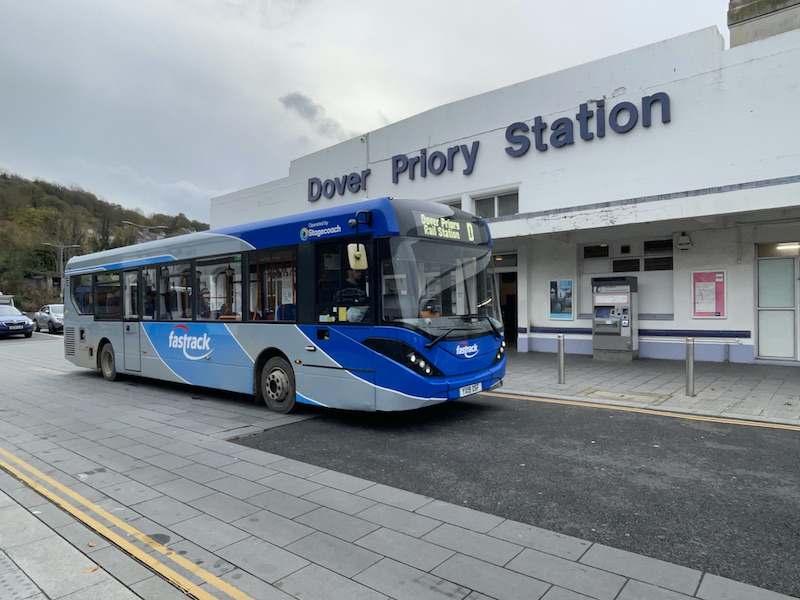
I was back in Kent yesterday for a ride on the brand new Dover Fastrack service which began on Sunday. It’s been designed to provide a quick link from the expanding Whitfield area, north of the town, with the town centre and Dover Priory railway station where route D (as it’s known) terminates.
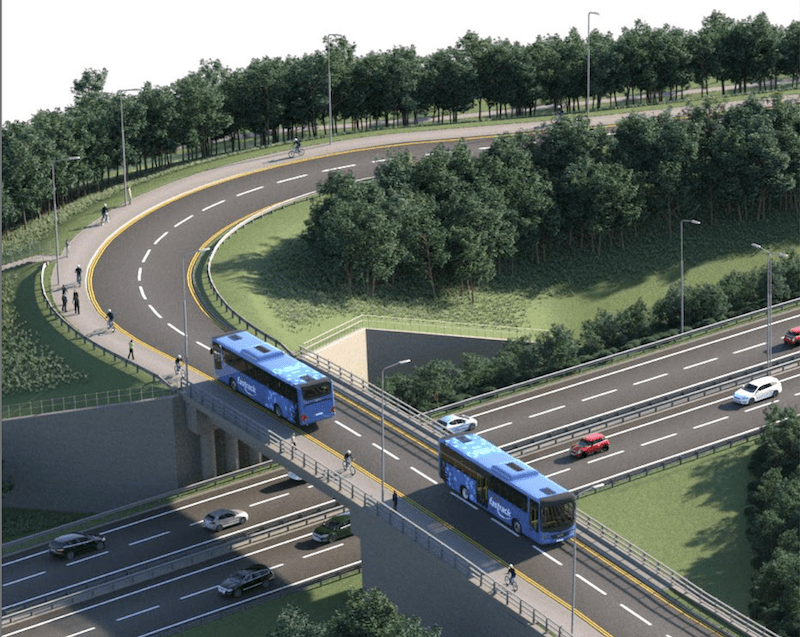
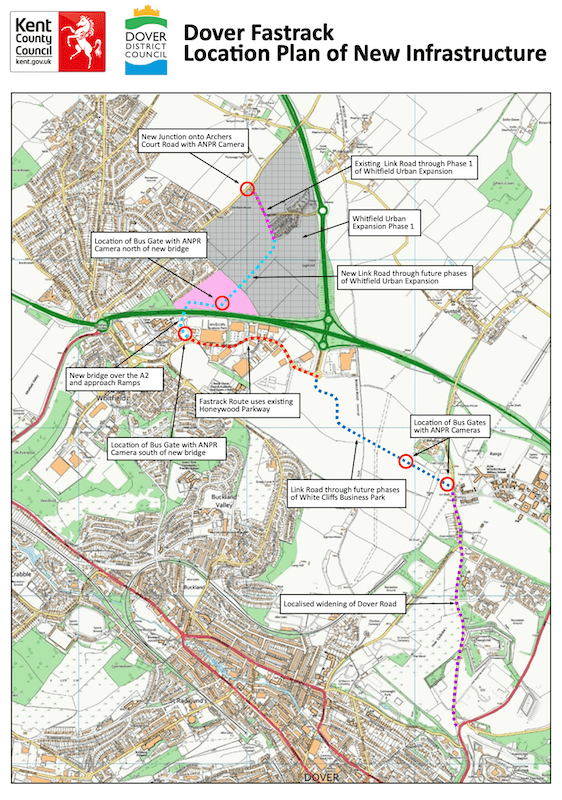
Like its Thameside sibling, this Fastrack is also overseen by Kent County Council and benefits from extensive bus priority and exclusive bus only roads, all newly built, including a bridge over the A2 as that road skirts around north of Dover.
It’s been funded by £22.9 million which Homes England awarded to Dover District Council through the Housing Infrastructure Fund designed to help stimulate new housing growth in Whitfield as well as the former Connaught Barracks site not far from Dover Castle. Dover District Council also chipped in £1.42 million with the original plan to use a further £9.5 million from the DfT’s ZEBRA scheme, secured by Kent County Council, for 28 Irizar ie Tram electric buses for both Dover and Thameside, five of which were going to be allocated to Dover. However, since uploading this blog, it’s come to light Stagecoach will be using Volvo BZL electric buses as the Irizars are too long and not suitable for the roads in ‘old’ Whitfield.
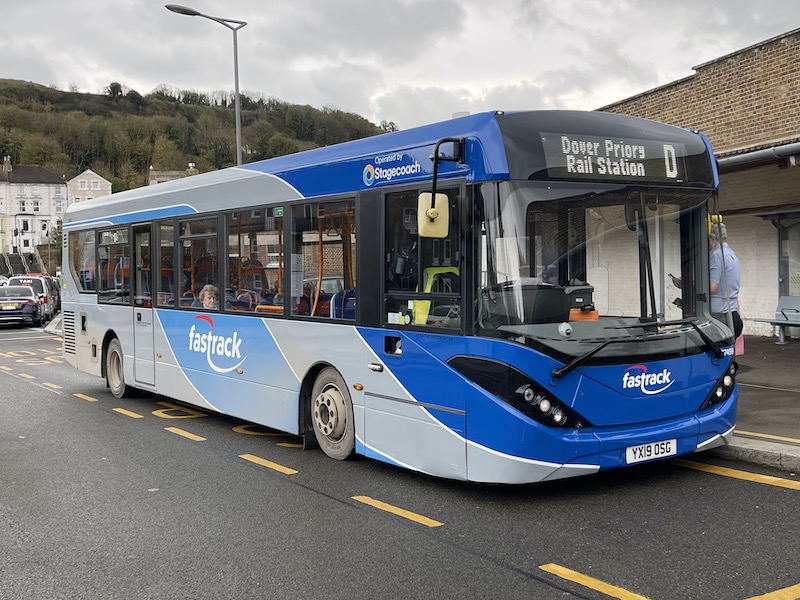
In the meantime Stagecoach, which gained the contract to run the service, is operating smart looking five year old Envrio 200 buses painted in an updated version of the Fastrack livery used by Arriva in Thameside until last week.
This Fastrack is another project that’s taken much longer to bring to fruition than planned. The original aim was for planning approval in December 2020 with construction starting mid 2021 and completion and the service commencing in early 2023.
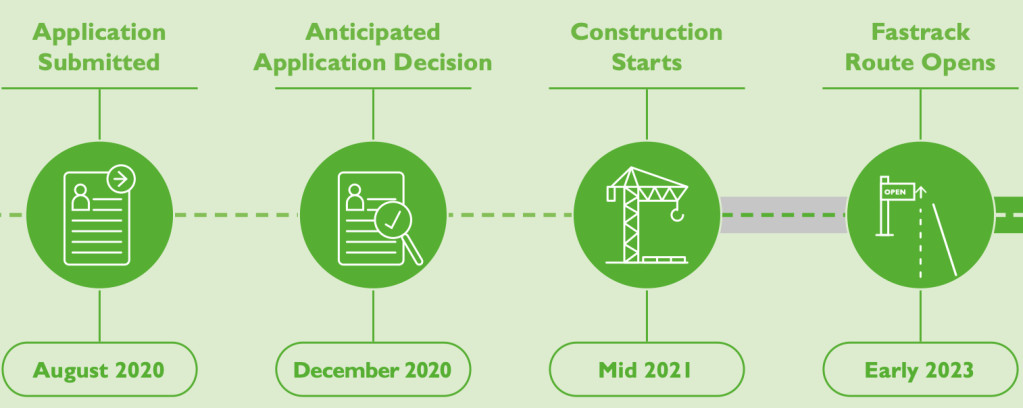
Delays of eighteen months or more seem to be integral to such projects these days so I guess Sunday’s launch is more or less on time taking that into account.
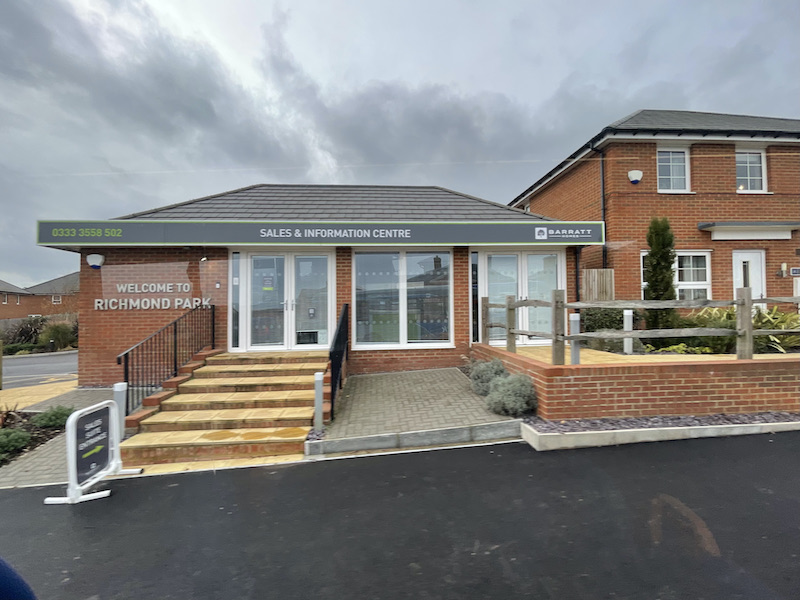
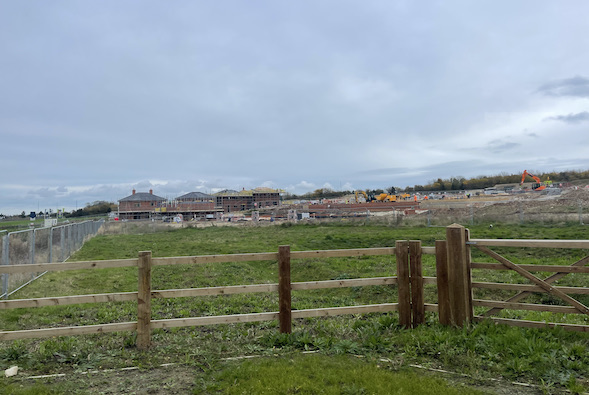
Whitfield has already seen a fair amount of house building in what’s being called Richmond Park but there’s still much more coming so there’s time to catch new residents before they get car dependent.
Stagecoach are providing three buses on a 20 minute frequency (the return journey time rounds in an hour) with a somewhat early evening finishing time with the last bus returning from Dover at 19:20.
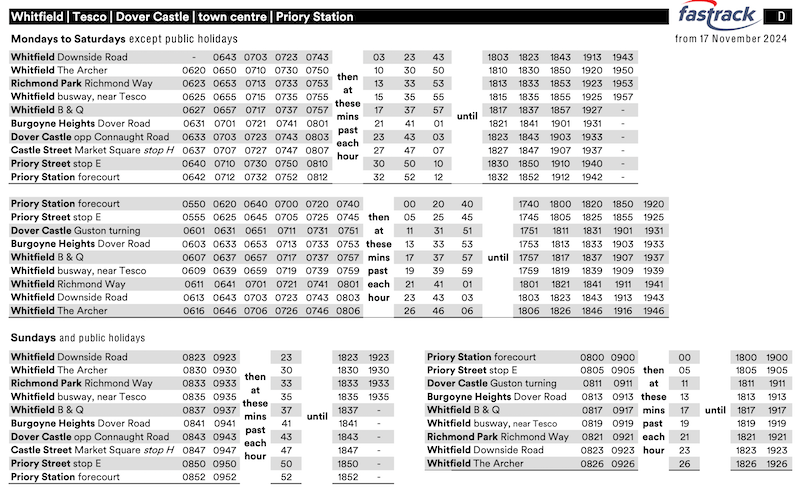
This, and the hourly frequency on Sundays, is disappointing for a high profile new service and means London commuters need to be on the 18:07 from St Pancras or 17:36 from London Bridge to be on that last bus – and that with a tight six minute connection at Dover Priory.
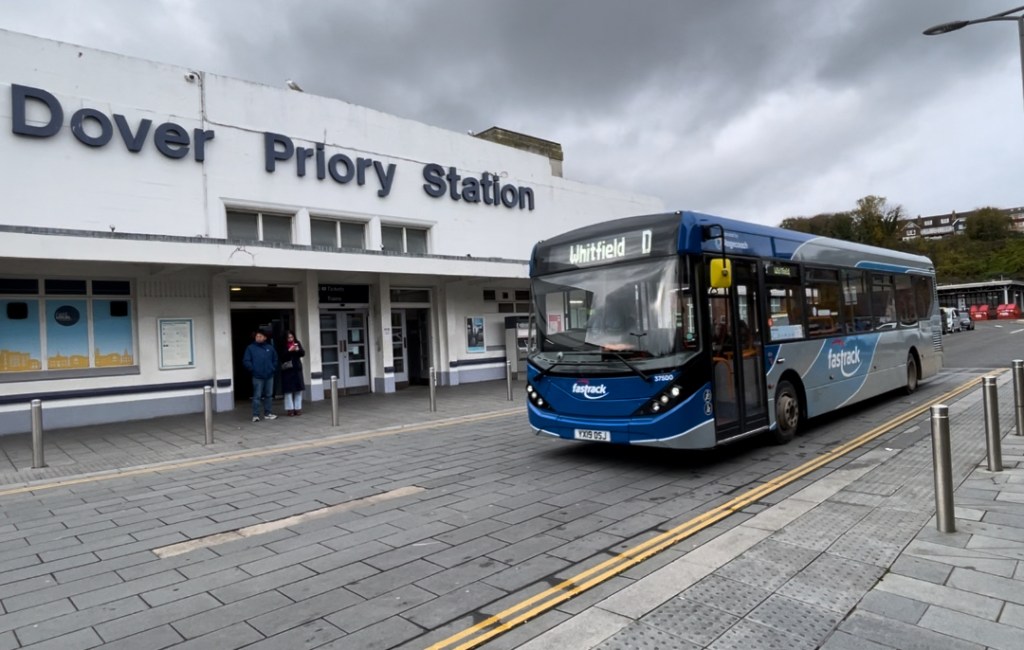
I popped over to Dover yesterday lunch time to try out the new route, catching the 12:20 from outside Dover Priory.
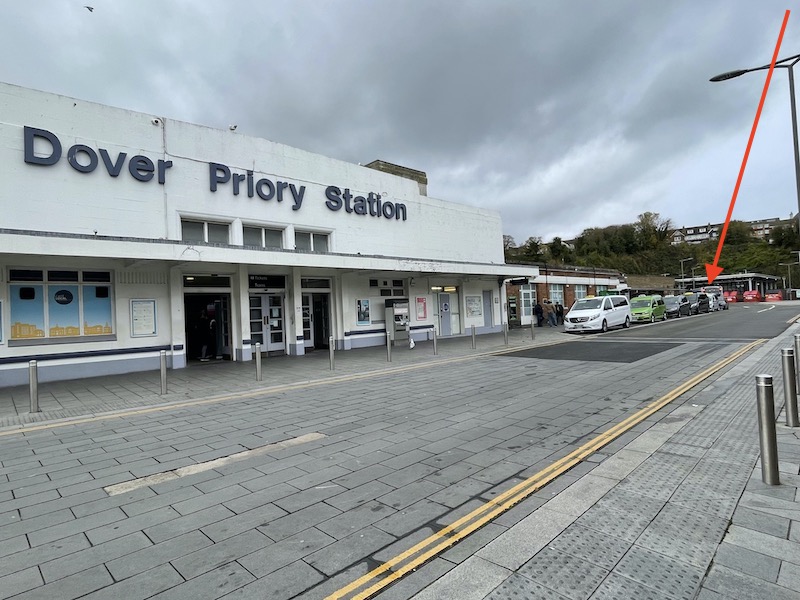
Well, when I say ‘outside’, the bus stop is a short walk from the station exit at the end of the no through road with a turning circle at the end.
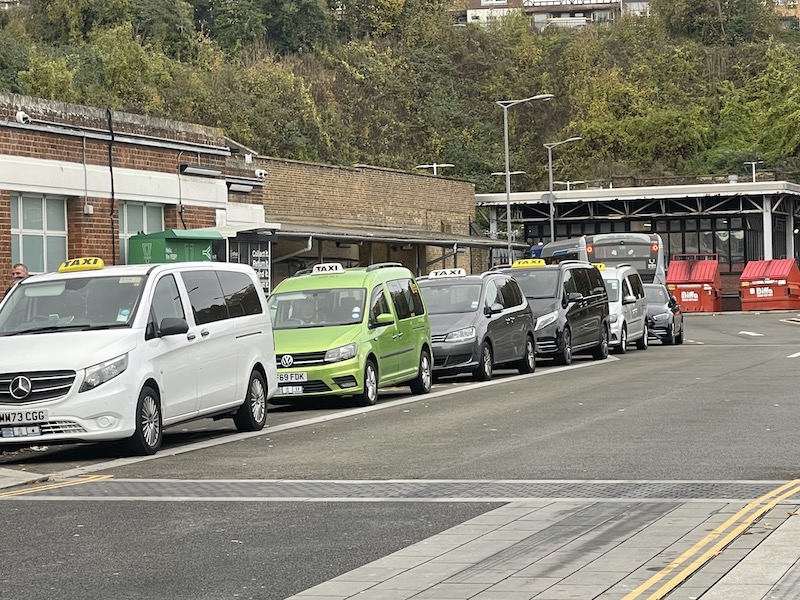
I’m guessing it would have been too controversial to move the taxi rank further back so the bus could stop closer.
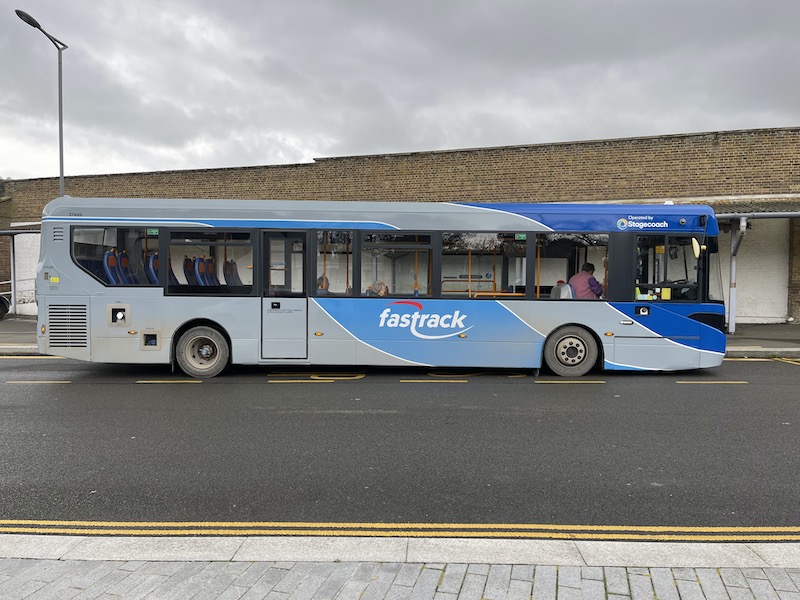
The bus arrived on time from its previous journey at 12:12 with four passengers on board, one of whom was an off duty Stagecoach driver learning the route and the other three were residents of the old part of Whitfield who were interested enough in the new route to take a ride into Dover to find out where it went and were heading straight back home again.
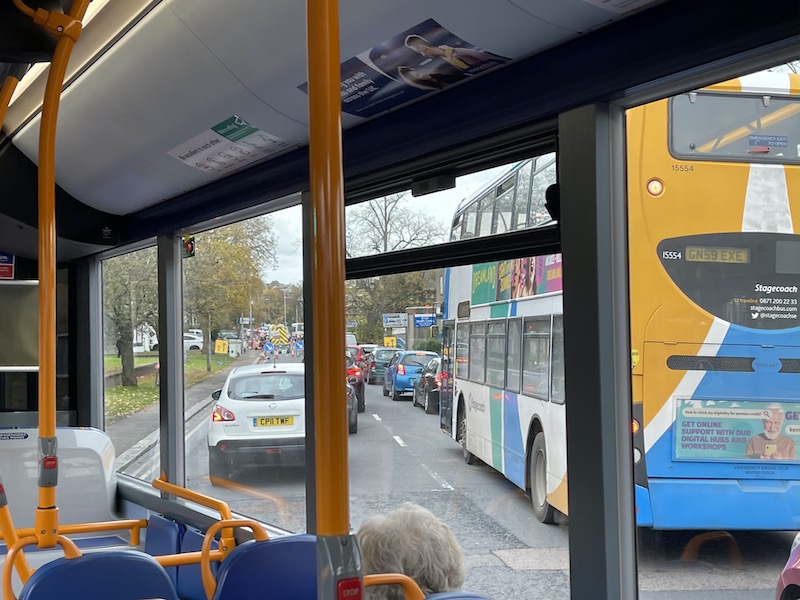
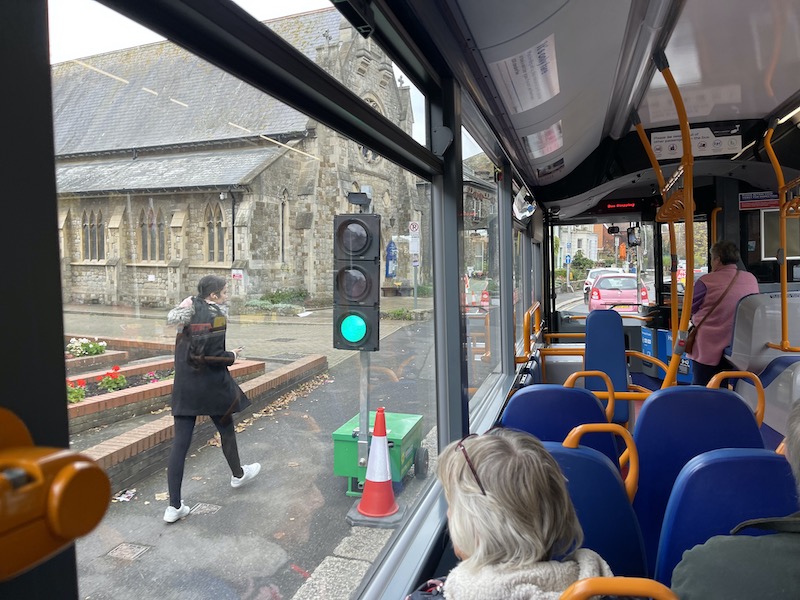
No one boarded at the station but two got on in the town centre after we’d struggled to get through some congested traffic caused by inevitable temporary traffic lights due to roadworks in Maison Dieu Road..
Adding to the challenges faced by Stagecoach is the closure of Pencester Road (used by most of Dover’s bus routes) from yesterday for more works.
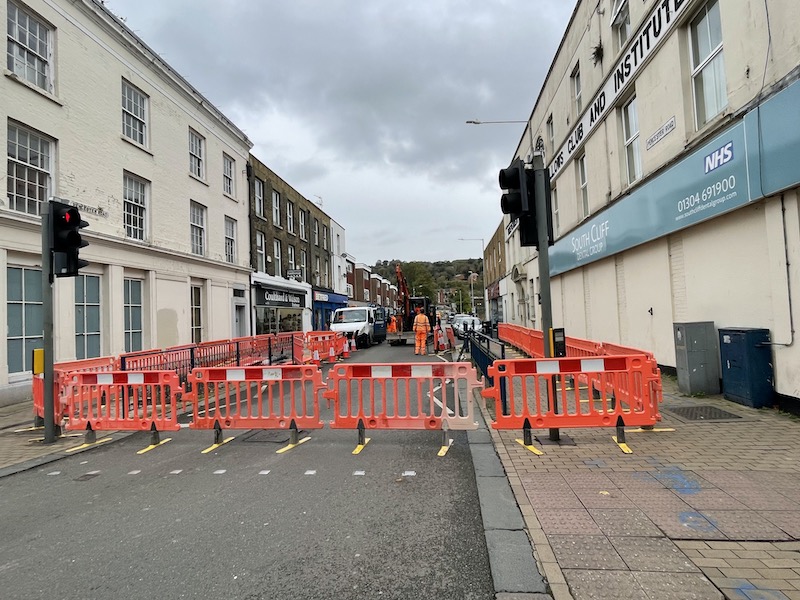
Despite losing about three or four minutes struggling through this bottleneck we soon picked up time as we headed north towards Whitfield indicating the timetable is fairly robust as part of its convenient hour’s rounder.
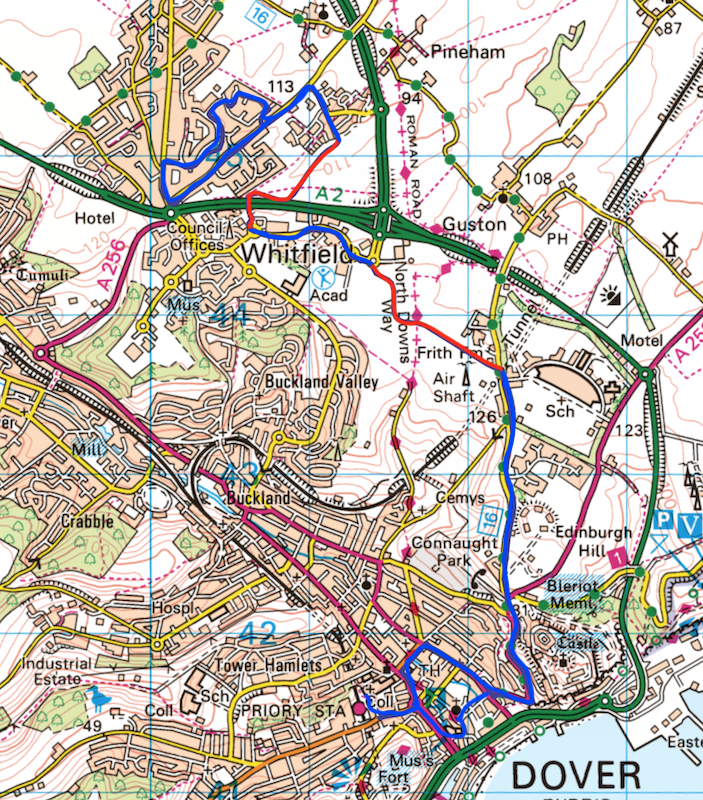
The route strikes out north climbing up a steep minor road, albeit called Dover Road, towards Guston passing the Castle and the former Connaught Barracks
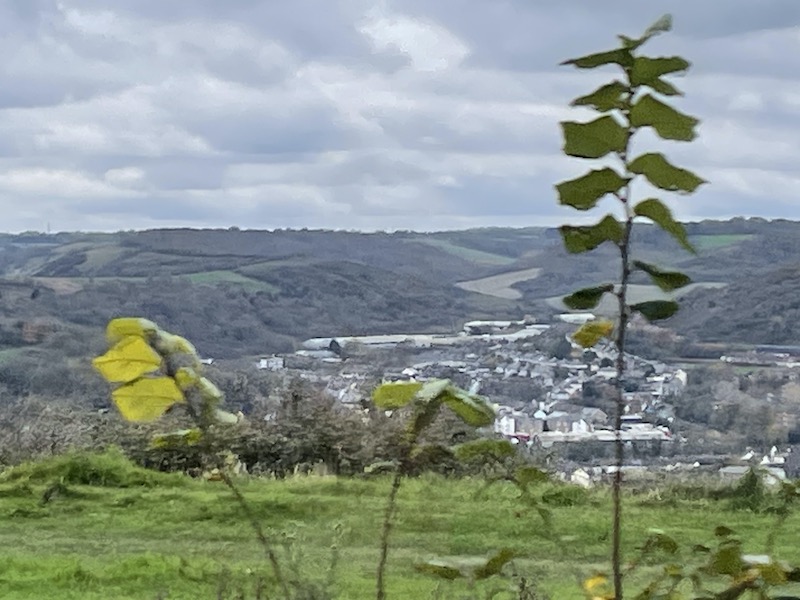
You get some great views overlooking the town as the bus reaches the top of the hill.
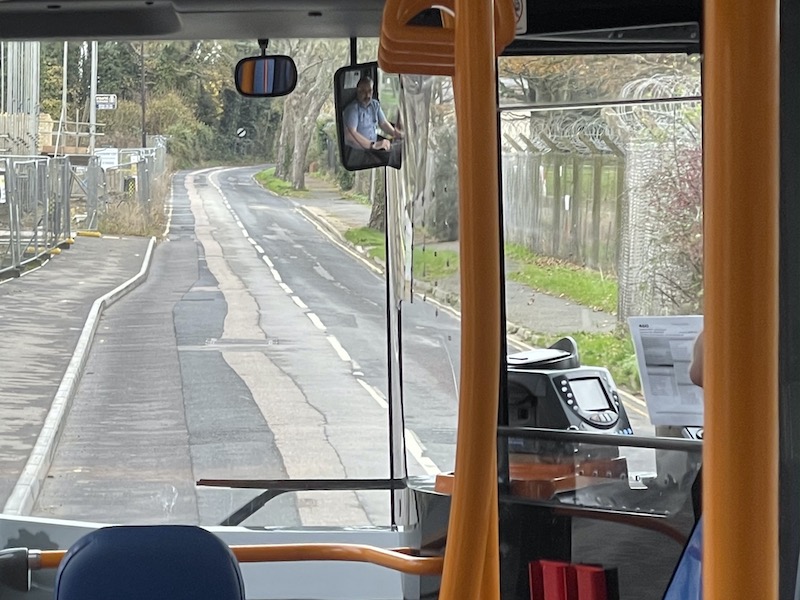
Some of the money has been spent on “localised widening” of this road to make it suitable for buses but some narrower sections are still evident in places.
After a mile the first new section of bus only road comes into view and buses turn left to head over to Whitfield on this new connection.

It’s around 0.8 miles long and brings buses out on to Honeywood Parkway where Whitfield Leisure Centre and a large number of retail shed type outlets can be found culminating in a Tesco Extra.
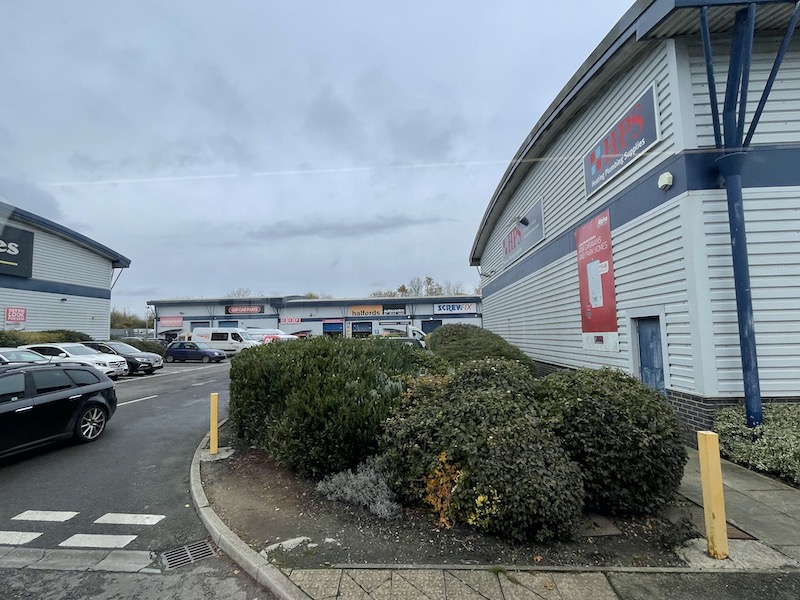
Readers may recall I visited this earlier in the year to check out Fastrack building progress…
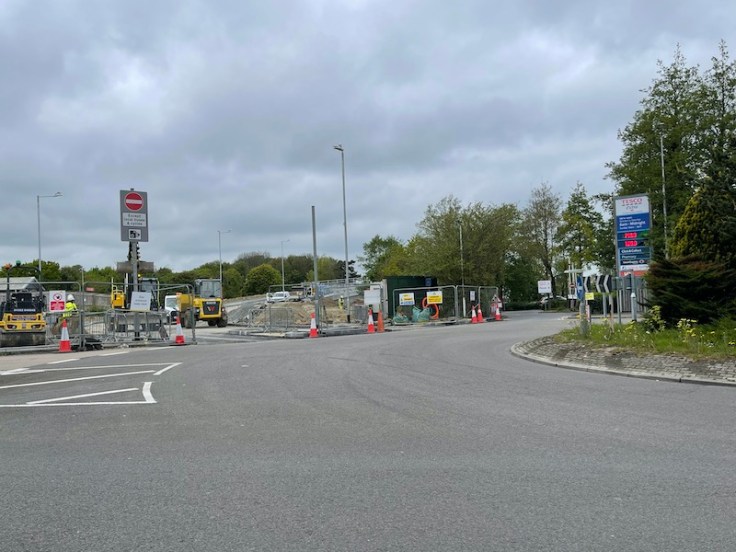
… and I hadn’t twigged that Fastrack buses wouldn’t divert into the bus turning area at the front of this huge store as buses on other routes do…
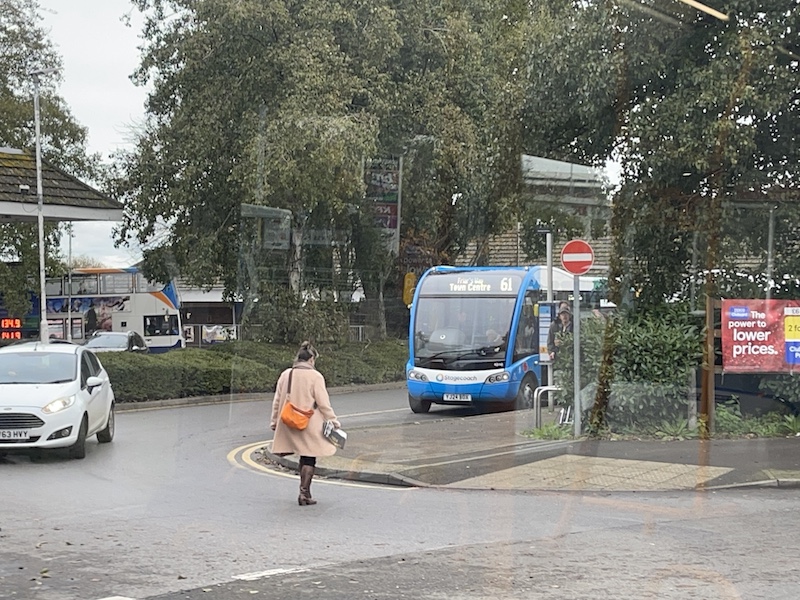
… but instead two bus stops and shelters have been placed at the start of the next section of exclusive bus road.

Buses aren’t able to make the left turn from the new bus only road into the Tesco entrance as it’s too acute, although a full circuit of the roundabout would make that possible, because it does seem a shame to make bus passengers walk further than they’ve been used to catching route 61 which used to serve Whitfield and still goes as far as Tesco on its modified route.
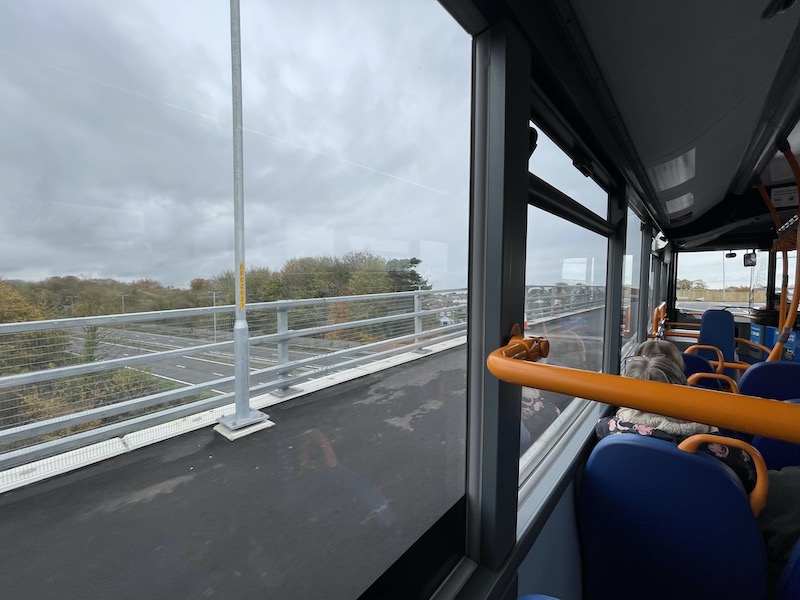
This next section of new bus only road, around half a mile in length, takes you over the A2 as it skirts round the north of the town and soon brings you into the area where much of the house building is taking place…

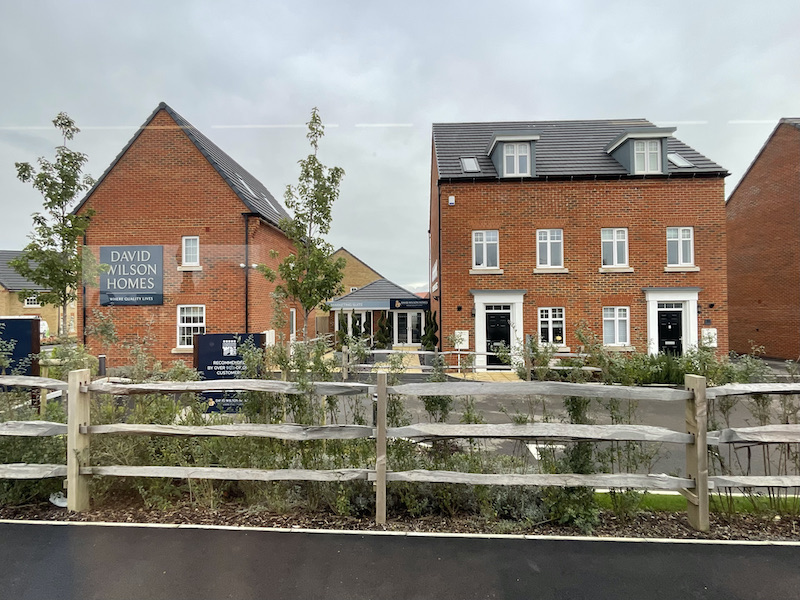
… as well as the new houses already completed.
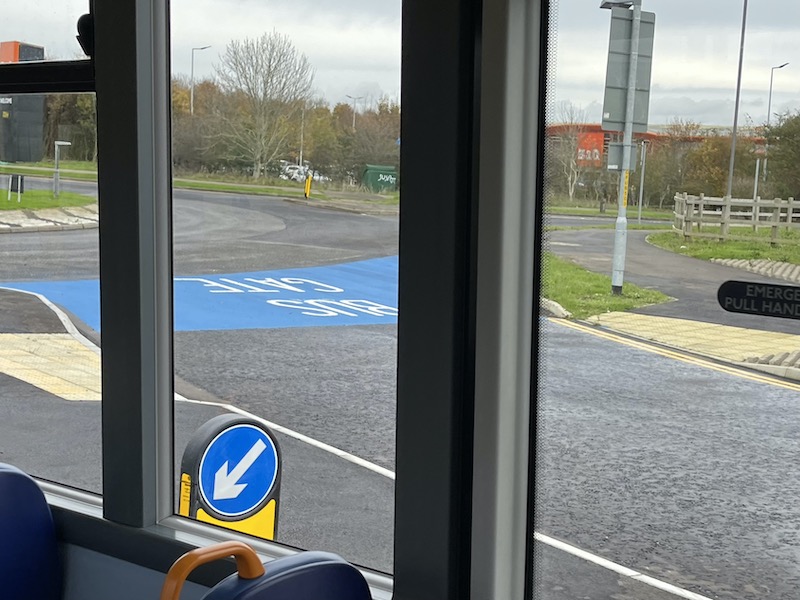
It’s good to see very clear signs at each end of these new bus only roads which no motorist could misunderstand and, along with cctv monitoring, should ensure excellent compliance.
After emerging on to Archers Court Road the bus then does a circuit serving the twisty narrow residential roads of ‘old’ Whitfield, as previously served by route 61 (but only half hourly and with a similar early evening finish), before emerging by the Archer pub to take a few minutes stand time and retracing the route back down to Dover.
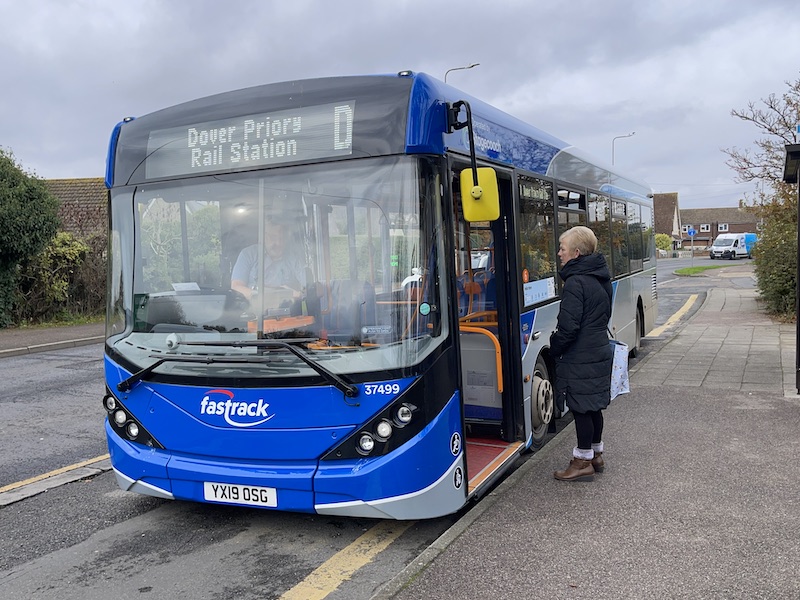
The five passengers we’d brought from Dover all alighted in this older part of Whitfield and on the return journey we picked up a couple from the new part.
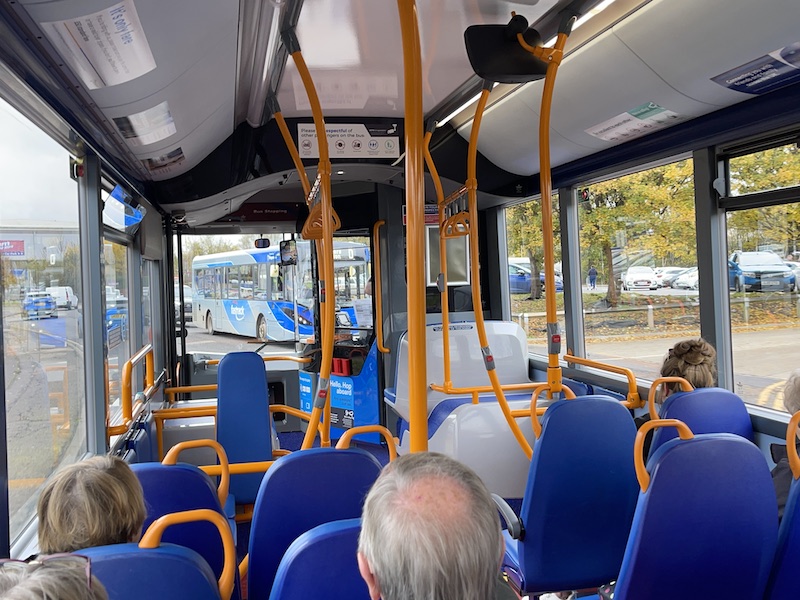
Observing the two other buses we passed on the route, they were also carrying around five or six on board. Bus stops along the route had all been changed to sport the Fastrack logo…
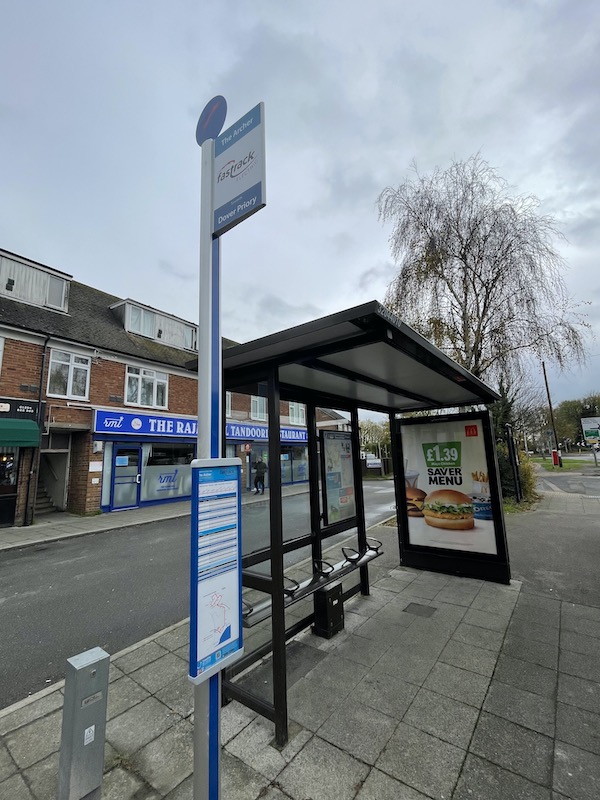
…. and in anticipation of next Spring, adding the word “ELECTRIC”.
Timetable cases had also all been updated with clear departure lists together with a …
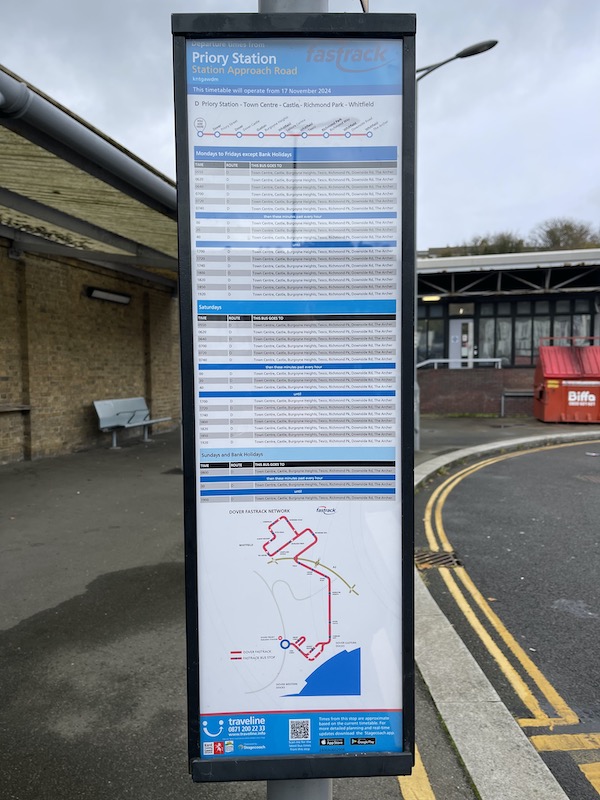
… nice route map.
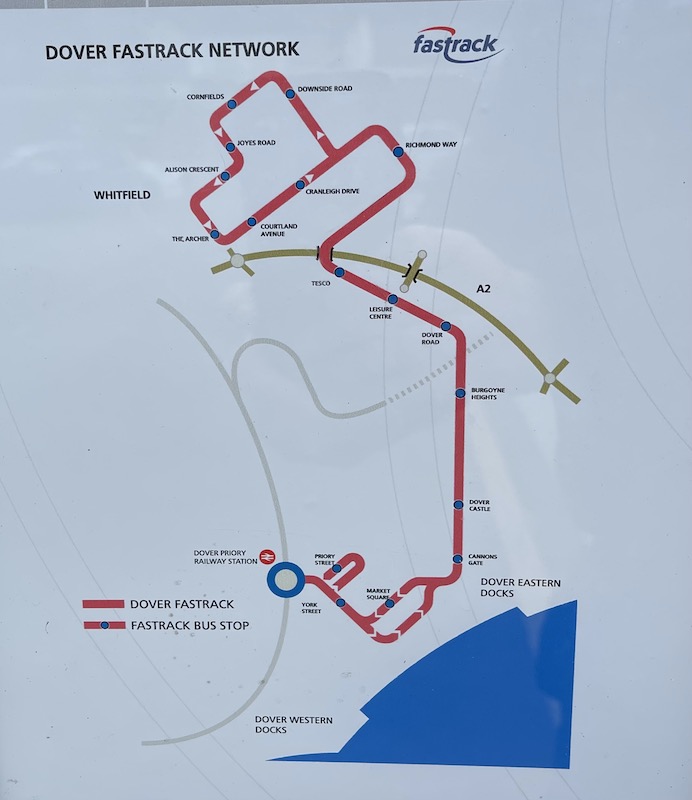
I asked the driver I travelled with if he had any printed leaflets but he gave the inevitable answer that “they don’t do those any more”. A great shame, as a house-to-house distribution around Whitfield would do wonders to encourage new passengers. As it was, the five travelling home were all discussing the route and journey times, but doing it based on speculation. They’d have been very receptive to picking up a leaflet. In the grand scheme of the cost of this project, it would be petty cash to print and distribute a timetable leaflet.
Fastrack D obviously won’t reach its full potential until the houses are all built and occupied but in the meantime it’s good to see buses in place before many new residents move in with Stagecoach operating very well turned out and comfortable buses to travel in pending the arrival of the new electric Volvos.

Roger French
Blogging timetable: 06:00 TThS
Comments on today’s blog are welcome but please keep them relevant to the blog topic, avoid personal insults and add your name (or an identifier). Thank you.
 BusAndTrainUser
Kent is now getting an extra £23M of claimed new funding whilst Medway is getting £4M
LikeLike
Dover Fastrack will be getting Volvo BZL electrics, not Irizars.
Not sure where ‘North Downs Way’ is in Dover. The pictures look like they were taken in Maison Dieu Road?
Darryl in Dorset.
LikeLike
Thanks for that Darryl – will correct the road name. I thought I’d seen that KCC had ordered five Irizars for Dover but may have misread it.
LikeLike
This article from Kent County Council’s own website may also be of interest:
https://news.kent.gov.uk/articles/kent-county-councils-statement-on-dover-fastrack
Darryl in Dorset.
LikeLiked by 1 person
Interesting; thanks.
LikeLike
Ah so that’s why with the revised Dartford area Fastrack there is no route D (there’s A, B, C & E!)
LikeLike
why oh why do public transport planners consistently come up short when it comes to deciding where the bus stops are going to be? Why place them so far from the station entrance and from Tesco? Just because it is easier is not a satisfactory answer for bus users.
Buses are the optimal public transport mode for those who have mobility issues. A short walk for the able bodied is often out of reach if you are not so nimble.
If you do your supermarket shopping by bus you don’t want to have to haul your bags down the street to a bus stop.
Would a bus stop outside the station entrance or outside the Tesco doors encourage more passengers to use the service? I think it would but maybe that is bus user bias!
LikeLike
I agree with your points, though I’d say the Dover Priory bus stop is still quite close to the station exist. There is also a large shelter built into the station building in that location which will be handy with the British weather. The local authorities in Kent always seem very reluctant to provide bus shelters, so the I’d say it’s good they have utilised that space.
The Tesco stop is awkward, though having the buses enter the Tesco site could cause delays to the service – that particular Tesco gets very busy, with buses that serve the site often getting stuck in traffic caused by queues to the supermarket and its petrol station.
Though shoppers will have to cross the road, and I think it can be dangerous crossing roads at roundabout junctions, which may put some people off.
AB
LikeLike
This new route also provides a useful link between the railway station and the castle. EH please note, for next year’s handbook.
You are right to highlight the shortcomings of the short operating day of the new route, for the significant numbers of people who travel to / from London. KCC should be well aware of the situation, 60 years after electrification of the railway to Dover and 15 years after the opening of HS1.
Re “very clear signs at each end of these new bus only roads which no motorist could misunderstand”: What’s a “bus gate”? I don’t see a gate across the road. Why is that term used, rather than simply put “buses only” on the road and on signs? It won’t be many years before the writing on the road is too worn or faded to be legible (or covered with leaves, rubbish, dug up by roadworks, etc.)
Man of Kent
LikeLiked by 1 person
I do hope the direct connection between Priory Station and Dover Castle will be promoted. I believe many visitors arriving by train often use taxis instead to reach the Castle, as there was no direct bus link before Fastrack.
Hopefully the Dover-bound bus stop will gain a flag, as it’s currently just a marking on the road, and I’m not sure if drivers are aware it’s an official stop.
AB
LikeLike
1920 is far far too early a finish. Hopefully a temporary measure whilst demand ramps up and the route beds in.
LikeLike
All buses in Dover, apart from the 15 to Canterbury, finish around 7pm. This is far too early to make buses a reasonable option for working people in my opinion. Many people in Dover do not work an ordinary 9-5 – supermarkets close late for example. Even people doing the ordinary 9-5, they won’t really be able to do a shop or visit the pub after work unless they use a taxi.
Dover’s biggest employer, the Eastern Docks, doesn’t even have a bus route.
AB
LikeLike
Good to see a review of the New Barratt Express. The early finish is disappointing; when will the planners realise that buses are used as part of longer journeys and so need to run early and late. The 4 minute recovery time at the Archer on the final trip that terminates just after looks like an annoyance, although it may not be observed.
Putting buses in during the development gives people the chance to use the service from when they move in, rather than attempting to persuade people to change from cars. Presumably the demand from shoppers is less than the desire for a fast trip to town, hence the lack of deviation from the main road; such loops are frustrating when nobody boards or alights, but it is frustrating carrying heavy shopping some distance to the bus stop, especially if tight for time.
Gareth Cheeseman
LikeLike
Residents in North Whitfield are unhappy on losing their bus route 61 which has been curtailed at Whitfield Bus Garage. See BBC local news item Kent: Concerns people left vulnerable after bus service changes – BBC News
LikeLike
So they spent £25 million approximately upfront?
The tangible result for that so far is a twenty minute interval bus service with a Priory Station stop that is not even conveniently sited and no real evening service. Additionally, no one can be bothered to issue printed leaflets either (maybe a door to door drop would be a good idea….).
I am hoping that either I misunderstood or that the investment will eventually be leveraged far more effectively and the service will become more popular.
Very interesting article, as always. Thanks.
Stephen
LikeLiked by 1 person
I’d say the Priory Station bus stop is conveniently located. It’s just to the left after leaving the station exit, and no roads have to be crossed.
Most bus stops by railway stations I use tend to be on the main road or quite long walk away.
AB
LikeLike
As it is a new housing development is there a plan to go further into the housing area or all the roads complete in advance of house building? If the former then what impact might that have on timing, vehicle requirements etc?
John
LikeLike
The new busways go right through the middle of the two new development areas, so I doubt the Fastrack route will deviate from that.
AB
LikeLike
There seems to be a small crowd waiting at the Tesco stop on GSV.
https://maps.app.goo.gl/XozMy9L6NSMbtHja7?g_st=ac
BTW the 12 looks like an interesting route, Deal to Canterbury bypassing Dover but threading through Whitfield with fast non stop runs up the A2.
LikeLike
I really do think a quick chat with the bus operator or local town planners would improve these article Roger. A few examples 1: Tesco. Apparently for anyone who knows local traffic, you would know the loop road that serves the bus stop gets snarled up with traffic getting to the petrol station. A private site which is unpredictable and on balance seems the right call not to go in but stop adjacent. This is BRT after all. 2. It was never the plan to use IEtrams on Dover Fastrack because shorter buses are needed because of the road sizes and therefore dual door is not an option. I do agree that it would have cost pennies in the grand scale of things to produce paper timetables for the launch and hopefully when the service goes electric and starts running to midnight they will consider this. Although the sums quoted were virtually all spent on the infrastructure with little consideration for operating costs. I rode it yesterday and had a good chat with the manager. He is smart young man and has a clear passion and understanding of what is required but is also very realistic about what is achievable with the funding constraints and timescales. Apparently this service was never meant to be electric at all originally. The fact he was out there speaking to everyone spoke volumes and he was writing down everything that was fed back good and bad. I wish staff on my local services were as commited. I had a great day out and well done to all involved. This has to be mark down as a win for buses.
CL
LikeLiked by 1 person
I think that your criticism of Roger’s article rather misses the point. Although he was a bus company manager, he writes these articles from the perspective of the user ( i.e. passenger ). The blog is called “Bus and train user” which also makes his standpoint clear.
His comments about the location of the stop at Tesco are valid points, even if a better solution would be difficult to achieve, and potentially costly.
RC169
LikeLiked by 1 person
Perhaps that should be official government advice for all intending passengers,
“Thinking of catching a bus? Make sure to speak to your local bus operator or town planner first”
They can then enlighten you about why the service is run for the operators benefit not the passengers.
X12 user
LikeLiked by 1 person
when you are going to write about it yes. It’s important to have the fundamental facts correct. That’s good journalism. Doesn’t need to change his view on what he sees however. I think Chan’s point is very valid.
LikeLike
Except Roger isn’t a journalist, this is a blog of one man’s experiences as a user of public transport and consequent thoughts about that experience provided for free by one retiree who is doing so unpaid in his spare time as what is effectively a hobby. It would seem unreasonable to expect this to involve a pre visit interview with multiple people to get background information as if he is a paid journalist which wouldn’t impact on a review of the experience of something as a casual user. Even where there is a reason which makes logical sense in one way doesn’t mean a user won’t feel that it is the wrong decision or a shame it has had to be made and will say so.
Dwarfer
LikeLiked by 1 person
If this had been a rail station opening there would have been goody bags, pens. leaflets . badges. Time to step up marketing of new routes and yes to me the service – unless there are other local usable ones – finishing at 1920 should really be half hourly after that until 2220 , with the sunday service at half hourly , possibly doing on sundays call into tesco, as it is all you need are trolley bays at the bus stops for folk to push a trolley out from the superstore which is quite achievable for most – tesco also offer a “carry to car” service – perhaps all surperstore operators should be compelled to offer “carry to bus stop” service as part of planning consent ?
JBC Prestatyn
LikeLike
I would guess that Tesco would be quite willing to “carry to bus stop”. There’s no difference in terms of the staff effort required.
LikeLike
In Gloucestershire the Highways Dept has introduced a points system to ensure maximum disruption is caused by road works. Contractors are awarded points on the basis set out below, with the highest-scoring contractors getting priority for the following round of works. It’s a very effective system and is readily seen in operation all over the county!
20 points per day for 2-way temporary lights
30 points per day for 3-way lights
40 points per day for 4-way lights
50 points per day for road closures
10 points added to each of above for each bus route affected
10 points added if there was actually space for two-way traffic and/or a traffic lane is used simply as parking space for the contractors’ vans
10 points added for weekend days or other times when no work is being undertaken (This one is very popular with the contractors!)
Be patient everyone 😂.
JP, Cheltenham UK
LikeLike
Sight of Dover Priory Station reminded me of two situation which disgraced British Railways. In 1972 and 1977 I used Seaspeed Hovercraft (SRN4) to visit Boulogne for a short visit and Paris for a long weekend respectively. Our side of the Channel BR laid on shuttle buses between the Priory Station in Dover and the Hoverport which at that time was next to the Eastern Docks which was a thoroughly rudimentary affair before more appropriate accommodation for the facility removed to being next to the Western Docks. At Le Portel (the Boulogne Hoverport) the SNCF built a purpose built single platform station and a single track line from the main tracks which required the burrowing of a tunnel. All this transient technology which comes and goes merely leaves one to reflect how transport has changed massively over the years.
LikeLiked by 1 person
Re. Boulogne: while I’m sure you’re right about the Hoverport station, I’m not so sure about the line itself, which continued to a large (and now disused) goods yard. We were waiting at the Hoverport in, I think, 1969 when a lengthy steam-hauled freight train burst out of the tunnel and clattered past – most impressive. Incidentally the hovercraft, having arrived late, didn’t then return to England as the sea was too rough – we had to catch the regular ferry.
Andrew Kleissner.
LikeLike
It is being suggested by the government that multiple franchising models will be introduced and the process simplified to allow further areas to franchise their bus services
LikeLike
I echo the comments about the early finish. Public transport should be available throughout the day, if that requires subsidy then so be it. A service designed to link a new suburb to the main railway station should match the railway operating hours to catch the returning commuters.
Peter Brown
LikeLike
The tram buses are reported to have entered service in London
LikeLike
in addition to the missed opportunities of the poor bus stop siting at Dover Priory and the lack of publicity leaflets I’d add the morning connections from bus to train. It seems there are HS1 departures at 6.48, 7.18 and 7.48 then hourly. The first two have 6 minute connections from bus to train the latter 16 minutes. Are these optimal? Has anyone even looked at the train times? The first two seem tight – this is England after all not Switzerland – and the latter too long. I hope it gets ironed out. This could be an important piece of infrastructure if it’s exploited properly.
LikeLike
Interesting that bus companies will spend money on repainting buses. i.e. as the Dover Fastrack, but not spend someone round inside the bus to remove the previous use notices – e.g good luck getting Fastrack updates if you follow the instructions to use Stagecoach WScotland on Twitter!
LikeLike
Very interesting! This looks like a really good BRT operation – almost as good as a tramway!
LikeLike
seems to do better than the go ahead bus routes. I like the colours they chose for the bus.
LikeLike