
Saturday 5th October 2024
Hello blog readers. I need your help. In the coming weeks and months I’ve been invited to make a couple of online presentations about the state of bus and rail integration in Britain and what can be done to improve things.
I’m enormously grateful to Britain’s renowned rail fares expert Barry Doe for his assistance in providing comments on a draft of this blog as well as adding further information.
I’m aware of many through ticketing schemes and in some places, some deliberate timetable co-ordination between buses and trains, but there must be many more out there so do let me know in the comments of other “joined up” and “integrated” arrangements that work well as well as ideas where new ones could be introduced.
Tickets

Obviously the most well known scheme – albeit perhaps not as well known as it could be – is PlusBus. This began in October 2002, initially at 35 railway stations, administered by a not for profit partnership called Journey Solutions set up by the privatised Transport Groups, Confederation of Passenger Transport and Rail Delivery Group.
Prior to 2002 there were individual schemes in certain parts of the country, one familiar to me because I was involved in setting it up was called RailBus in the Brighton & Hove area, which essentially did the same thing as PlusBus – ie was an add on ticket that rail passengers could show to bus drivers giving unlimited bus travel in a defined geographical area from the arriving station. Brighton, and other towns in Sussex were also pioneers of area wide Travelcards dating back to National Bus Company/British Rail days giving unlimited bus and train travel in defined geographic areas for periods of a week and longer.
PlusBus is now available in almost 300 towns and cities outside of London and offers bargain prices such as £4.90 for bus travel across a huge area centred on Manchester Piccadilly/Victoria stations. Railcard holders pay a discounted price of just £3.25 and children £2.45.
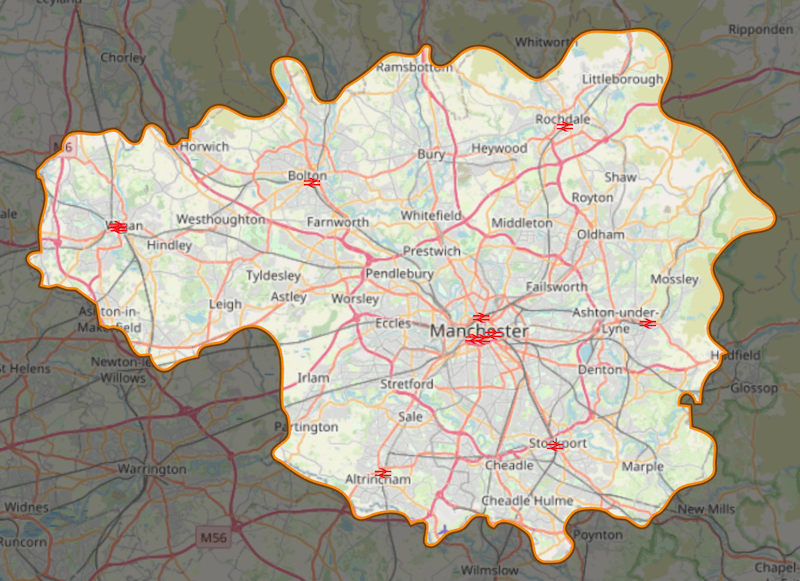
These prices compare with stand-alone day ticket prices for unlimited bus travel on the Bee network of £5 (adults) and £2.50 (child). I wonder how many people arrive in Manchester by train and buy a day ticket on the bus, not realising it would have been cheaper to buy a PlusBus with their rail ticket? The same applies in those areas offering 7-day tickets for commuters.
PlusBus tickets are now available from most Ticket Vending Machines as well as from Train Operating Companies’ online booking pages. If a passenger is able to book and pick up their tickets in advance then a PlusBus ticket can be added for both the origin and destination stations (if in the scheme) but it’s likely they won’t need unlimited travel to get to the origin station, probably just one single journey which will be cheaper to buy from the bus driver.
Which brings me to a radical suggestion that’s been talked about in the past by proponents such as Leon Daniels, as well as myself from time to time, and that is whether the default arrangement should be any rail fare includes an assumed PlusBus element to it. This could be achieved at the time of a rail ticket price increase by adding a small amount on to the price of each rail ticket to a PlusBus destination (subject to a minimum ticket price) which could then be divi’d up among participating bus operators. PlusBus’s market share in many towns and cities at the moment is minimal and although such a move would increase the take up of passengers travelling by bus when reaching their destination station, I doubt there would be hoards doing so and that’s why you’d only need to add a very small amount – probably no more than 5p – to the price of every rail ticket to adequately reimburse bus operators.
But, in any event, since the public sector is relishing taking the revenue risk for running bus services in large conurbations and other Combined Areas I’m sure Metro Mayors will be only to pleased to support what would be the ultimate integrated ticket – bus travel thrown in with your rail ticket.
Leon Daniels spearheaded a three month trial in Bristol in April 2010 called “SuperBus” whereby “all rail tickets costing more than £25 where the destination is Bristol (Temple Meads or Parkway) will be valid for a direct journey on one of our buses commencing at either of those stations (and returning to it if it is a return ticket). The trial will seek to establish what modal shift can be achieved (from taxi or car pick-up) if the bus travel is “free” and included in the ticket.”
Leon went on to explain “in a full scheme, our aim is to see whether every rail ticket to every non-London destination over a certain price cannot include this bus travel. It would be funded by a token increase in the rail ticket price and the pot would be divided between the operators using the same mechanism as is currently used for PlusBus. A token increase is almost unnoticeable on the rail ticket prices but generates sufficient cash to compensate bus opertors for what is generally off-peak marginal extra business. We see passengers arriving at unfamiliar rail destinations hesitant to use local bus services. We are sure that if it is “free” many more will take the opportunity to use them.”
Barry has made very pertinent observations on this idea that firstly, no matter how small the additional price added on, passengers not wanting to use a bus, or unable to because there isn’t one, would object to the idea of paying anything extra no matter how small, and secondly, the apportionment of rail ticket revenue is a fiendishly complicated process through what’s known as ORCATS and he questions whether bus companies would want to be involved in that as well as incurring the cost of doing so.
Barry gave an example to illustrate his point that “there have always been fares from Bournemouth to Exeter and beyond via Dorchester and Yeovil Pen Mill/Junction. It’s the cheapest route – BUT, you have to make your way between Pen Mill and Junction by bus or pay for a taxi. ATOC (RDG) considered making the rail ticket valid on the bus by adding an amount to the existing fare and giving that to the bus operator. It immediately came up against problems such as what if the passenger didn’t want to use the bus (perhaps a taxi instead?). He/she wouldn’t be happy to find out they’d paid for the bus anyway. It was ruled out before it even got started – and that would have been as simple a system as you could possibly get!”
A more recent PlusBus trial is with eTicketing in Cambridge and seven stations in West Yorkshire. This began in June with passengers able to buy a barcode enabled PlusBus “via leading ticketing apps”. During the trial the PlusBus remains as a flash pass to bus drivers but “we are working with bus operators to scan tickets” which will obviously be a sensible next move. Once scanning becomes the norm and there are more downloaded QR enabled tickets on smartphones or printed off at home, the vexed question of revenue share between bus operators can be reviewed in line with actual use which is recorded hy ticket machines rather than assumptions and occasional surveys.
Next up on the integrated ticket front are those towns off the rail network where you can purchase a combined rail and bus ticket to reach such destinations. Keswick is a contemporary example where Avanti West Coast has recently been giving prominence to a scheme Virgin Trains first implemented way back with Stagecoach whereby you can book a rail ticket from any station in Britain to that Lake District tourist hotspot, which at the moment is priced at £2 more than the fare to Penrith from where Stagecoach’s X4/X5 half hourly service runs to Keswick.

Like many schemes of this kind it had been kept quiet for a number of years receiving no publicity.
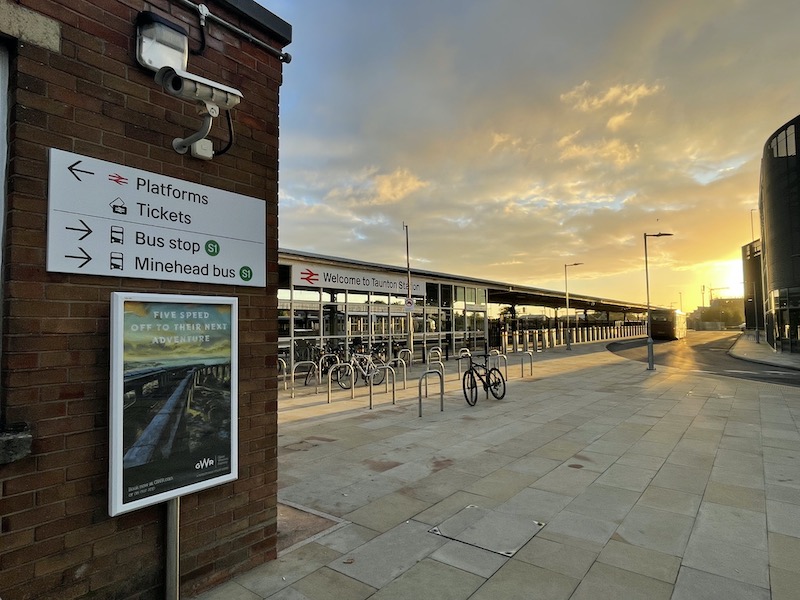
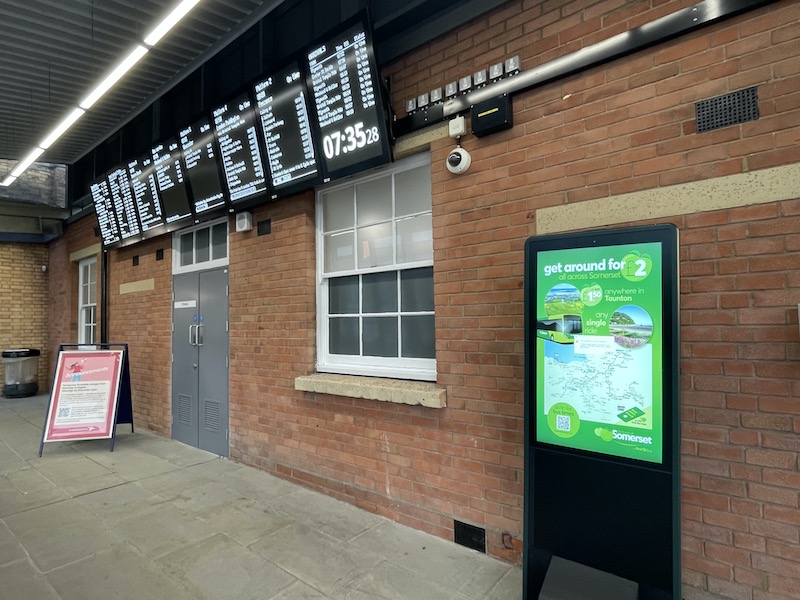
Another long standing example is through tickets from any station to MInehead which includes bus travel on First Bus route 28 from Taunton which even appears on departure boards at Taunton station. This also happens at Peterborough with the bus link on the excel route to Dereham but where else do bus departures appear on rail departure boards like this?
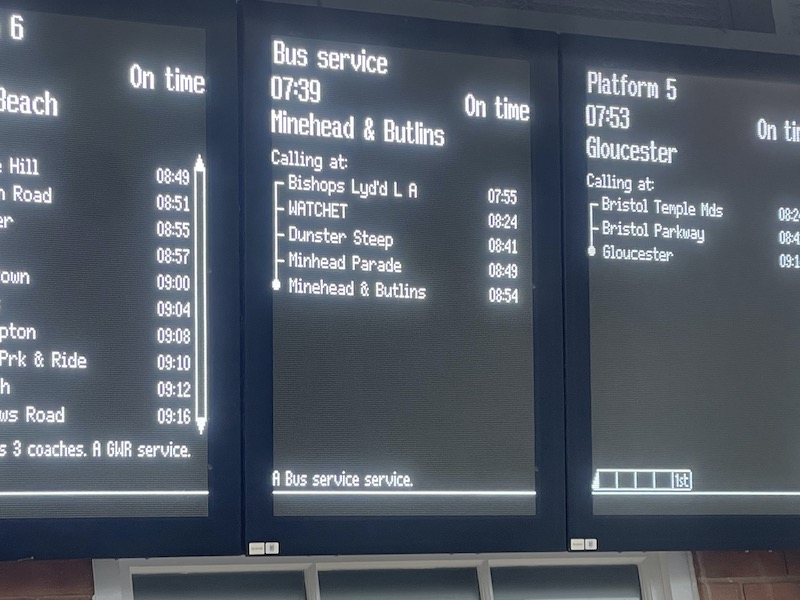
One of the problems with these long standing arrangements is they don’t acknowldege the £2 fare cap so it’s currently cheaper to just buy a ticket to Taunton and pay on the bus rather than the £4.50 extra it would cost for a rail and bus combined ticket to Minehead.
Historically there are many examples of this genre and Barry told me deep inside the National Rail internal website are details of what are called ‘bus link’ tickets available for passengers travelling from a nearby rail station. In many cases this add on fare is also available for the public to see using the brfares website. For example take Alfriston in East Sussex. An add-on fare is available (pre the current £2 capped bus fare) from either Polegate (£7.20) or Seaford (£6.00) stations on routes 125/126 operated by Compass Bus and Cuckmere Buses. But I bet passengers aren’t aware. Nor bus drivers. Nor rail staff. Nor, even, bus company managers.
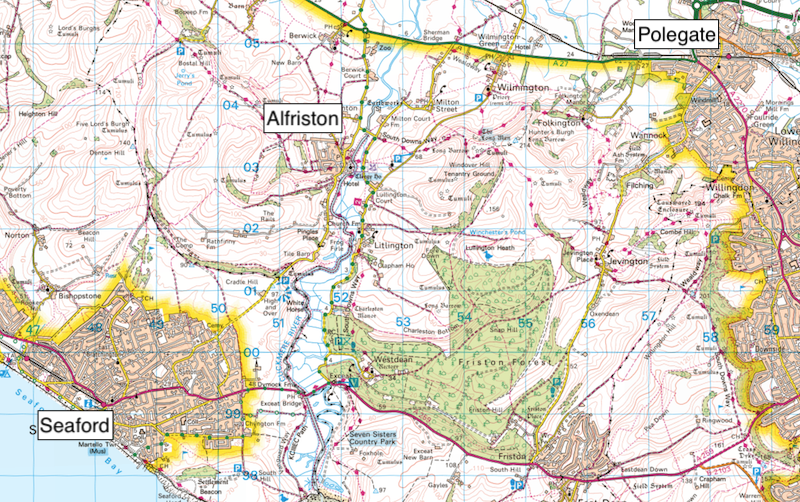
And I bet most readers will be surprised to hear there are 239 such destinations listed in alphabetical order in the National Rail database from Abaraeron to Ystradgynlais. From Dartmouth to Dunster. From Fakenham to Fraserburgh. From Lands End to Lyme Regis. From Padstow to Portree. There’s town after town, yet, aside from Barry and a few fares experts at the Rail Delivery Group and National Rail, few know about them.
Aside from the current £2 bus fare cap, it would make sense to find a way of promoting these ‘buslink’ fares and also establish whether the prices are still pertinent. I wonder when they were last reviewed? Bus company managers are responsible for this but with the number of company reorganisations over the last few years I doubt many, if any, realise this.
The interesting thing with rail ticketing is once something is in the “system” it stays there – which is why there are so many rail fares and everything appears so complicated.
For example, many years ago (probably in the mid 1990s) Brighton & Hove Bus Company introduced one-day SouthernSAVER and ThameslinkSAVER tickets in conjunction with Southern and Thameslink train companies. These still exists today and costs £23 and £24 respectively. Passengers can buy the ticket on the bus which includes unlimited bus travel within the city of Brighton and Hove and a day return rail journey (leaving Brighton after 10:00) to stations on the Brighton Main Line, East Coastway and West Coastway lines as well as stations through to Bedford (but not Cambridge as that was added to the Thameslink network much later, in 2018). There’s an evening peak restriction from Victoria and Clapham Junction but it’s an amazing ticket in that it costs less than the Super Off-peak rail ticket purchased at a rail station or online. And a huge bargain if travelling to Luton or Bedford, for example, where rail only prices are £41.40 or £45.90 respectively in the week or £24.40 or £27.10 at weekends. It would be cheaper for a passengers to hop on a bus outside Brighton railway station, buy the ticket from the driver and hop back off again.
The tickets are advertised on Brighton & Hove’s website but I doubt anyone buys it nor staff know about it. And I can just imagine the look on faces of gateline staff at Bedford, Southampton, Ashford, Victoria and any other station when presented with a bus ticket, or on board rail Revenue Protection Officers in their combat uniforms. I must buy one and try it one day!

Brighton & Hove and Metrobus also have a keyGo facility with Southern and Thameslink whereby the “key” branded smartcard used for Pay A You Go on GTR rail companies can be used on buses in defined zones in Eastbourne and Lewes for a single fare subject to a price equating to the PlusBus price for those towns if you’ve used the train.
A good example of integrated tickets with confusing availability is in Wales where Transport for Wales has recently changed the bus routes on which passengers can use the Explore Wales Pass. No longer available on First Bus or Stagecoach routes it’s now limited to TrawsCymru routes, but apparently not all of them and there’s no definitive list of those included or excluded. No one seems to know.
Similar confusion surrounds the availability of the Spirit of Scotland ticket but thankfully clear details of those bus routes included is posted online.
Finally when it comes to fares and tickets I’ve referred to Travelcards already, and obviously the London example is the most famous, but many of the other large Metropolitan conurbations also have modal integrated Travelcards available, and of course before contactless bank cards became a thing, Oyster in London had historically been the much sought after integrated bus and train arrangement for paying for travel, with extensions into the South East rail network now underway. One can see in the future the possibility of using smartcards/mobile phone apps to extend the availability of Travelcard type tickets to include bus and rail use in given areas and using QR codes to ensure fair revenue apportionment.
“Integrated” Timetables
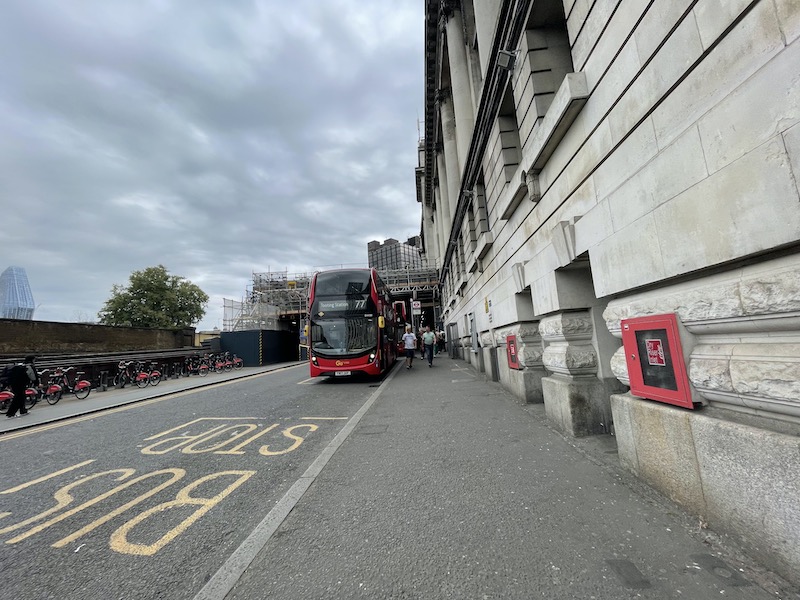
When it comes to “integration” of timetables, passengers most often complain at a perceived lack of coordination between trains and buses with buses timetabled to depart a few minutes before the train is scheduled to arrive or the train leaving before the bus arrives.
In many large conurbations and urban areas buses are frequent enough that it doesn’t matter if timings don’t marry up precisely, and in any event, delays on both the roads and tracks can make tight connections impractical. In a number of towns and cities the railway station is not sited conveniently to route buses from different areas to serve it in any event.
Brighton is a classic case where the station is at the north end of Queens Road, 600 metres away from the Clock Tower where many city bus routes cross on an east-west axis linking Hove with east and north Brighton. It would inconvenience far too many passengers, not wanting the station, to divert buses up Queens Road and back again as well as adding to costs. However, there are plenty of other bus routes which do run along Queens Road including the frequent cross-city route 7, and route 6 terminates at the station from the west as do coast road bus routes from the east.
In lower density and smaller towns or in rural areas the challenge to coordinating timings between modes is often that trains are fixed by complex pathing issues elsewhere on the rail network and buses are tied to school start and finishing times to create an even frequency headway throughout the day (assuming no AI interference).
A good example local to me is in Hassocks where Thameslink trains leave for London during the day at 08 and 38 past each hour (arriving from Brighton) and arrive from London at 02 and 32 past each hour (when they continue to Brighton). The hourly bus route 33 linking the station with the nearby communities of Keymer (east of Hassocks) and Hurstpierpoint (west of Hassocks) passes by at 02 from Hurstpierpoint towards Keymer (and on to Burgess Hill and Haywards Heath) and 31 from Keymer to Hurstpierpoint. So you can appreciate, arriving from London at 02 and 32 makes for an inconvenient half hour wait from the former if travelling to Hurstpierpoint and the latter to Keymer. Going to London there’s a tight six minute connection coming from both Hurstpierpoint and Keymer.

The problem is it takes the bus 11/12 minutes to travel to Hurstpierpoint (and take a layover of eight minutes) and back again so if you move it in one direction for a better connection, you worsen it in the other. And, as already said, the principal determinant is school times.
This is typical of the conundrum of achieving timetable integration in many places.
However, there are examples of bus times being arranged specifically to connect with trains, not least in Okehampton where Devon County Council’s financially supported route 118, operated by Dartline, provides two-hourly connections from Tavistock with nine minutes between bus and train in the Exeter bound direction and 15 minutes from trains arriving in Okehampton from Exeter before the bus leaves. Barry makes the point “this only happens because Devon County Council is keen on integration and specifies timetables like this. Sadly hardly any bus operators would do this without being told to”.

I’m wondering if there are other examples around the country like the 118?
Timetable information

When it comes to the availability of timetable information, rail stations are the obvious places for printed bus timetables to be available yet so many are bereft of such provision. There are some notable stand-out examples such as Nottingham and in the Lake District where Stagecoach ensure timetables are available at stations on the West Coast Main Line and Windermere branch, but other examples from recent years such as Reading and York sadly no longer offer this useful facility.
But as Barry observes “if a bus operator lacks interest to even print timetables for its own customers do you imagine it’s going to worry about not having them in stations? “

A shout out to Northern for its excellent timetable book for Coast, Lakes, Dales & Fells which as well as details of rail, as reported in previous blogs, also contains bus timetables for Stagecoach’s principal routes in the Lake District. But, again as Barry points out, this happens “only because one man maintains them and he no longer works for Northern”. Take a bow Lee.

There’s no reason why this example couldn’t be followed in many other areas, not least those where there are strong tourist markets.
Just think, bus and train timetables readily available at rail stations and joined up integrated tickets. From the foregoing examples, these do exist. What’s the problem of making these the rule rather than the exception?
Answers on a postcard in the comments, please.
To kick off, Barry’s observations on that last question are: “That is the nub of the whole problem with the bus industry. Where areas have good bus services it is invariably down to one or two people at the top who are very keen. That’s why Devon County Council works so well, and Morebus and Southern Vectis and Compass and Cuckmere … and in the past, Brighton &Hove! In my Bus Directory website I show details for 275 British bus operators and in the Best Bus Timetables section I only rate SIX as providing good publicity. Similarly I detail 61 local authorities who publish timetables and rate 11 as being good quality. How can we expect universal joined up quality and adventurous thinking from a low quality industry like this?”
Roger French
Blogging timetable: 06:00 TThS.
Comments on today’s blog are welcome but please keep them relevant to the blog topic, avoid personal insults and add your name (or an identifier). Thank you.
 BusAndTrainUser