Saturday 18th May 2024

It’s a measure of the impact of the Elizabeth line on London’s public transport that yet another station that sees purple trains calling has a place in the Top 10 chart of Britain’s busiest railway stations.
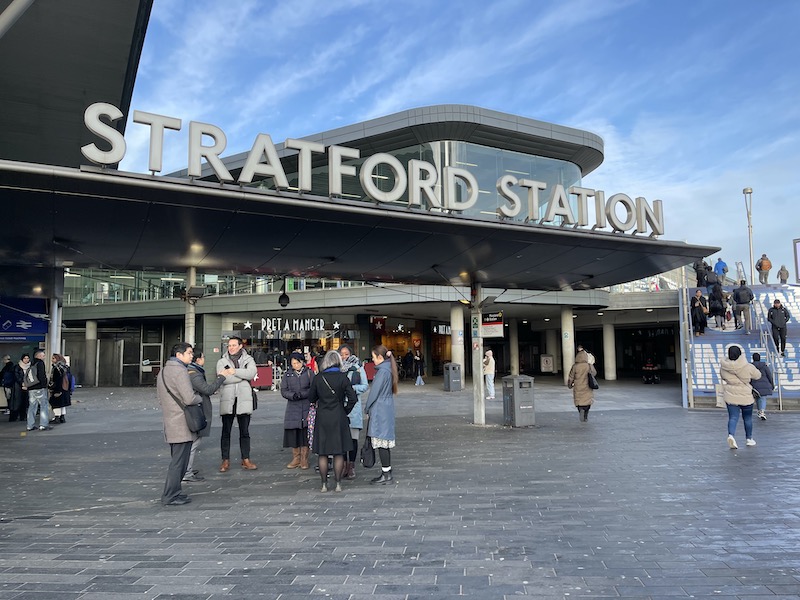
Stratford appears at sixth place having clocked up 44,136,784 passenger entries and exits in the year ended March 2023 thanks not only to the Elizabeth line but also the presence of Greater Anglia, London Overground and half hourly journeys on c2c at weekends. And not forgetting passengers interchanging between those Train Operating Companies and the Central and Jubilee Underground lines as well as two of TfL’s DLR lines and a myriad of bus routes at two adjacent bus stations along with express coaches to Stansted Airport.
Goodness knows how the Office of Rail and Road compile the station usage statistics of passenger journeys on National Rail from that melee, but they do.
By a strange quirk of oddball statistics, during Covid lockdowns, Stratford actually achieved the coveted top spot as Britain’s busiest railway station for year ended March 2021 with 13,985,162 entries and exits, thanks to many workers living within its catchment area in East London who continued to work during that strange period, particularly those in the construction and service industries.

But sixth place is still an impressive result for a non Zone 1 station particularly, as we’ll see in future blogs in the coming months, the top five busiest stations are all central London main line termini, whereas although Stratford does see some terminating trains, most are stopping trains on a longer journey.
Destinations served directly from Stratford include Norwich, Ipswich, Colchester, Braintree, Clacton-on-Sea and Southend-on-Sea as well as Bishops Stortford, Heathrow Airport and, at weekends Shoeburyness, on Sundays and weekday peaks Hertford East, and, of course, London Liverpool Street and London Paddington.
When I wrote about St Pancras a couple of months ago it was easy to describe the station’s layout with its compartmentalisation into four easily defined areas for trains operated by Thameslink, Southeastern, East Midlands Railway and Eurostar (as well as the shared London Underground complex next door with Kings Cross).
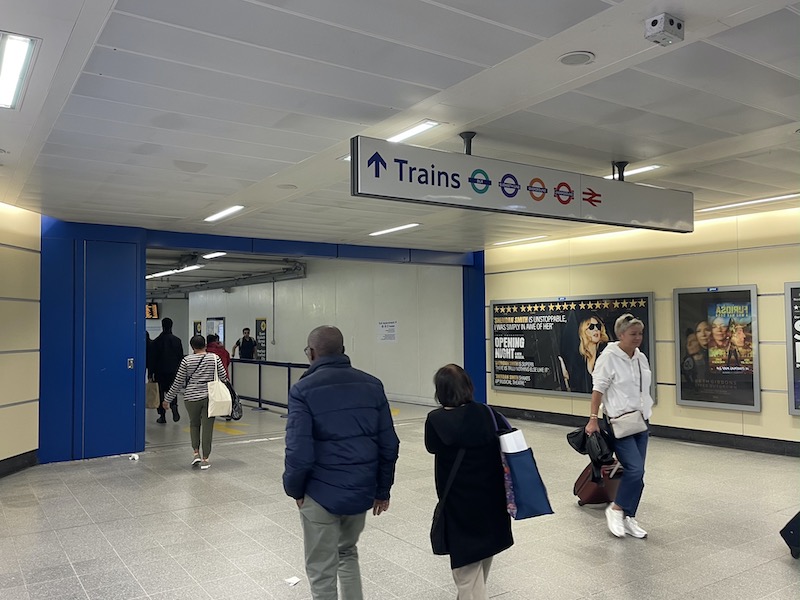
Stratford is the complete opposite. It’s probably as far from a neat and logical compartmentalised station as is possible to achieve.
Indeed it must rank as Britain’s most confusingly laid out station with illogically located numbered platforms including a missing platform number, two that are seldom used, others with an A or B suffix, what seems like a maze of subways, and even two railway tracks passing right through the middle of the complex at ‘ground level’ leading to some platforms at low level and others at high level along with two ticket offices, one at the south and the other at the north of the station, and two separate adjacent bus stations.
There used to be diagrams to help strangers navigate the labyrinthine corridors and subways but they seem to have disappeared in recent times. I found this poster as I wandered around the maze of corridors which helpfully describes what each platform does, but it’s noteworthy for being out of date in its references to TfL Rail rather than the Elizabeth line.

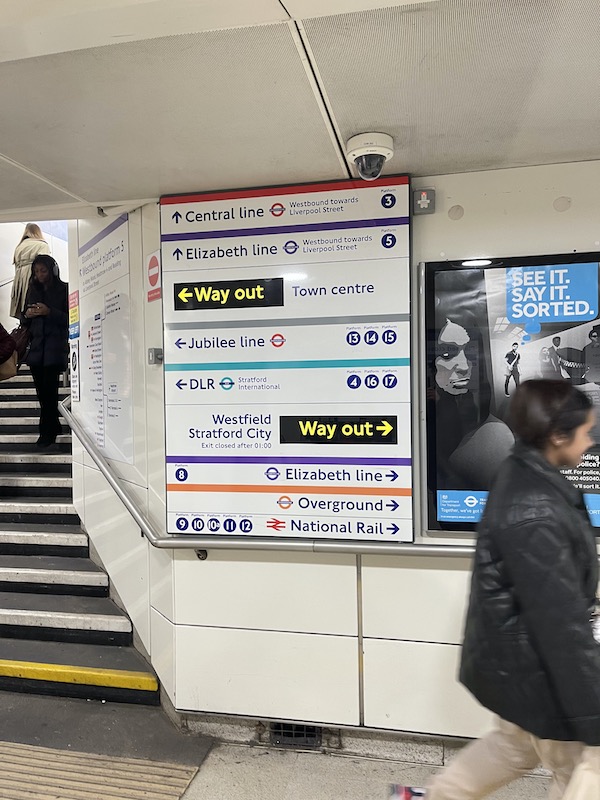
Plenty of other directional signs can be found along the subways which containing essential information but can be rather overpowering at first sight.

Let’s try and unpack what goes where.
Here’s Network Rail’s diagram of the station layout which helpfully shows the two levels as well as the three subways at ‘Lower Level’ including the eastern most one which takes you to a dead-end, while the other two are located either side of the railway tracks used by the DLR which go through the middle of the station.

Taking the platforms from the top, as shown on the diagrams, we find an island platform numbered 1 and 2 with access from the north end of the middle subway…

… where there’s a little used corridor which takes you to the eastern most subway that gives access to other platforms (3, 5, 6, 8, 9, 10, 10A, 11, 12)…

… before ending in a dead end.
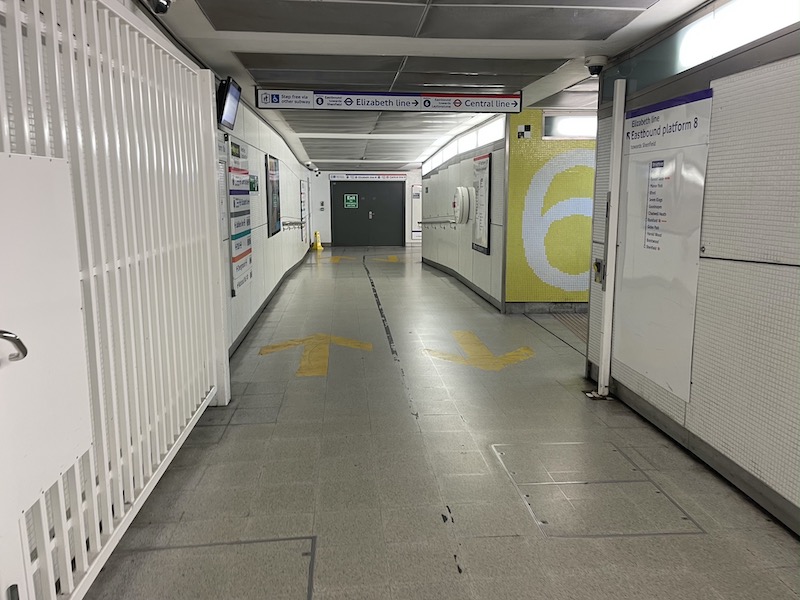
Platforms 1 and 2 are where trains on London Overground’s Mildmay Line (formerly known as the North London line) depart every 7-8 minutes via Highbury & Islington and Willesden Junction to Richmond or Clapham Junction.

Next down from these are platforms 12 and 11 mostly used for Greater Anglia’s half hourly service via Tottenham Hale to Bishops Stortford…

… supplemented by half hourly stopping journeys as far as Meridian Water from the same platforms. Trains head to Hertford East rather than Bishops Stortford on Sundays as well as extra peak hour trains on weekdays.
Just to keep passengers on their toes Mildmay line trains to Richmond or Clapham Junction sometimes also depart from platform 11. If they left from platform 12 it would be better as there’s direct pedestrian access from platforms 1/2 to 12 via either steps or a ramp at platform level.

Next comes platform 10a which sits all on its own at the far eastern end of the station complex and sees occasional eastbound Greater Anglia trains stopping.

Until the 1990s this was numbered plain 10 but a reconfiguration of platform 9 turned it into an island platform with buildings demolished to create a new platform 9 on the southern side of the island where previously there was no platform. The old platform 9 was renumbered 10 and the old 10 became 10A.
It’s quite a trek to reach platform 10A with access via a lift/stairs from the dead end eastern most subway or from the far end of platform 10.
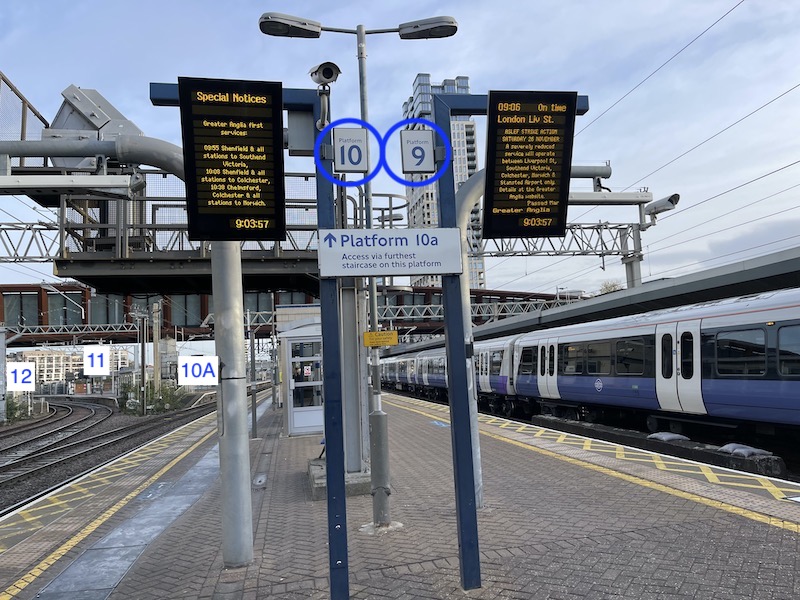
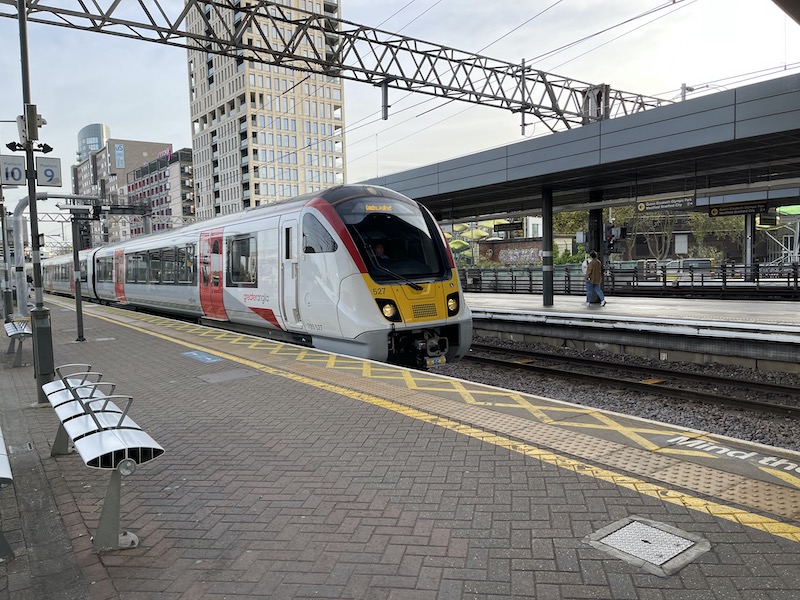
In the main, eastbound Greater Anglia trains tend to use platform 10 for the hourly Norwich and an hourly stopping train to Ipswich, along with trains heading for Essex (Southend-on-Sea three-per-hour; Colchester Town and Braintree, both hourly).
In the London direction these trains – around seven/eight an hour – stop at the adjacent, relatively new, platform 9.
Next comes another island with platforms 8 and 6. There’s now no platform numbered 7. Many years ago it was a bay platform alongside platform 4 on the western side of the station having been built when there were plans to run a shuttle train from Fenchurch Street to Stratford after the Shenfield line was electrified in the 1940s; but it never materialised and the platform remained abandoned and has now been swallowed up into a larger platform 4 as we’ll see shortly in this tour.
Platform 8 is used by Shenfield bound Elizabeth line trains every 7-8 minutes with handy cross platform interchange with eastbound Central line Underground trains bound for Epping or the Hainault loop on Platform 6.

Shoeburyness bound trains operated by c2c also use platform 8 at weekends.

Then we have island platforms 5 and 3 (platform 4 is on the west side of the station as explained above) which see westbound Elizabeth line trains for Paddington and Heathrow Airport on 5 with cross platform interchange with westbound Central line Underground trains to West Rusilip and Ealing Broadway on 3.

And just to make it interesting for Central line passengers there’s also a platform 3A which was created as recently as 2010 to relieve overcrowding on platform 3. It’s located on the south side of westbound Central line trains such that drivers open both doors giving passengers the choice of alighting on 3 and heading down to the subways or on 3A…
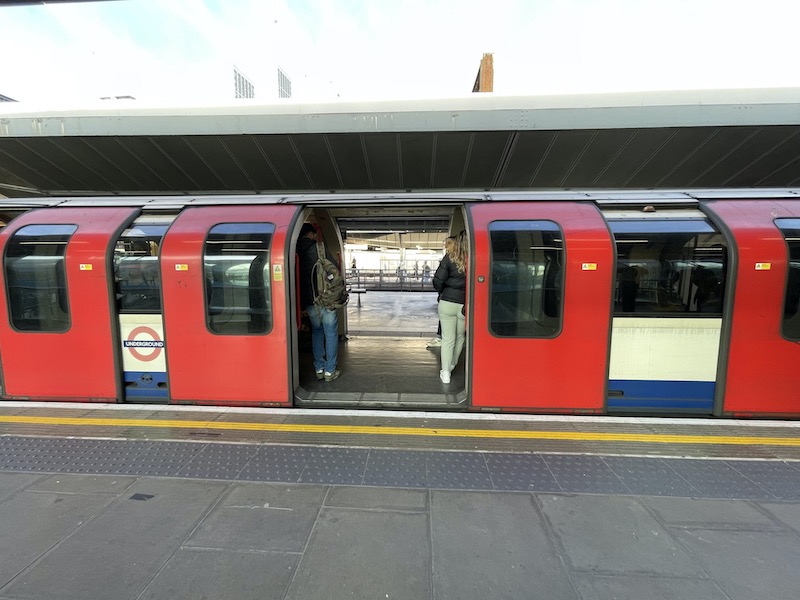
… and taking the ‘upper level concourse’ route to platforms 4a and 4b or down to the lower level for platforms 13, 14, 15, 16 and 17 and the station’s southern exit.

Some regulars have worked out a good way to avoid the crowded subways if alighting or boarding an Elizabeth line train on 5 is to wait for a Central line train and dive through both sets of open doors as it waits in 3/3A and use the upper level concourse.
This would be particularly so if interchanging to/from platforms 4a and 4b, located at the far western side of the station along that upper level concourse…
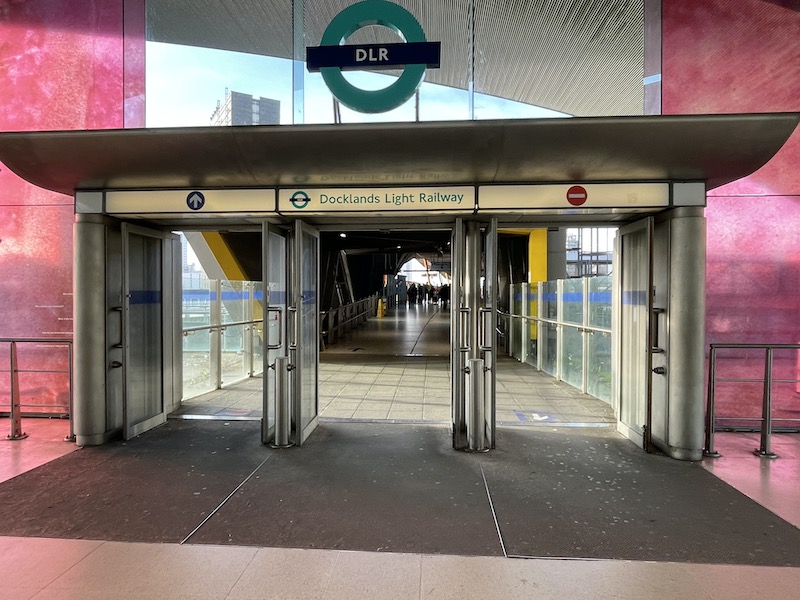

… where DLR trains terminate…

… having arrived from Lewisham via Canary Wharf and the line through Bow Church.
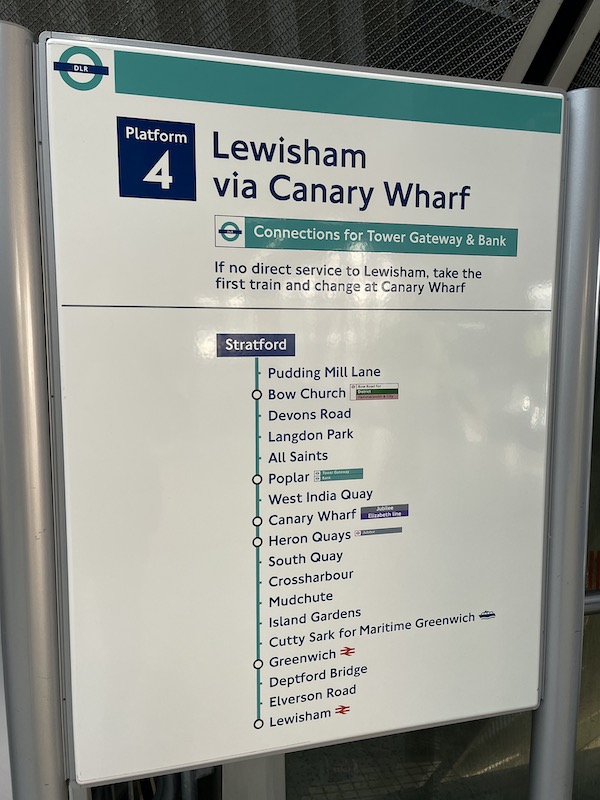
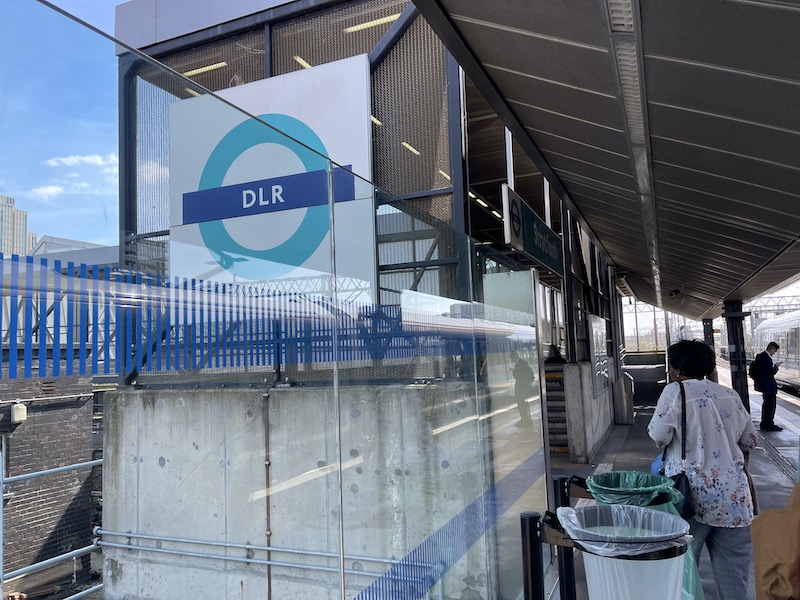
Platforms 4a and 4b can also be accessed from the extreme western end of platforms 3 and 5 via a footbridge which takes passengers over the westbound Central line track as it dives down into a tunnel.
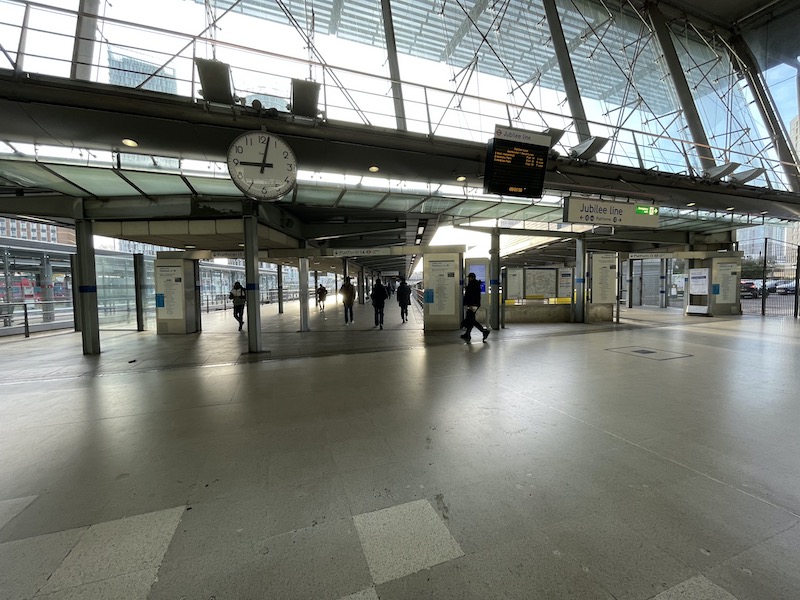
Another option from the upper level concourse is to head down the stairs to the three platforms used by terminating Jubilee line Underground trains, numbered 13, 14 and 15 except 13 (on the far right of the photo below) isn’t often used these days.
And just to complete the picture at ground level we have platforms 16 and 17…
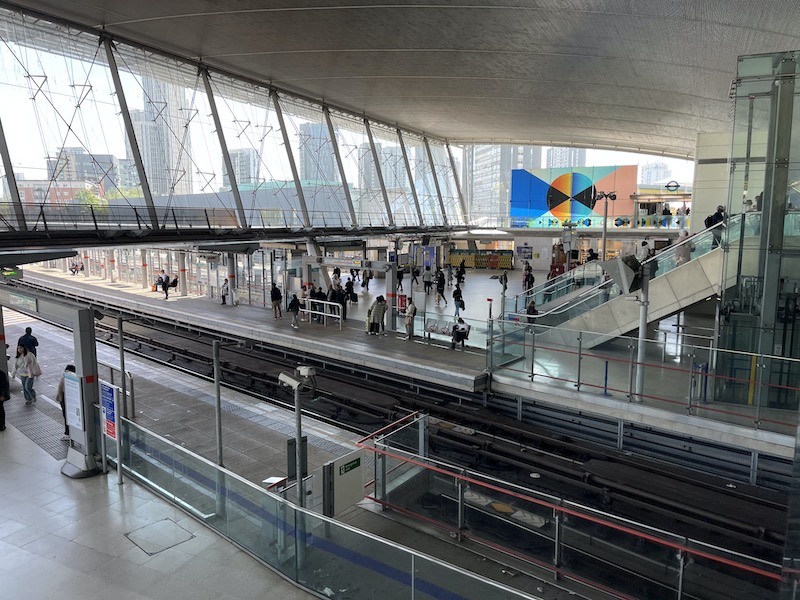
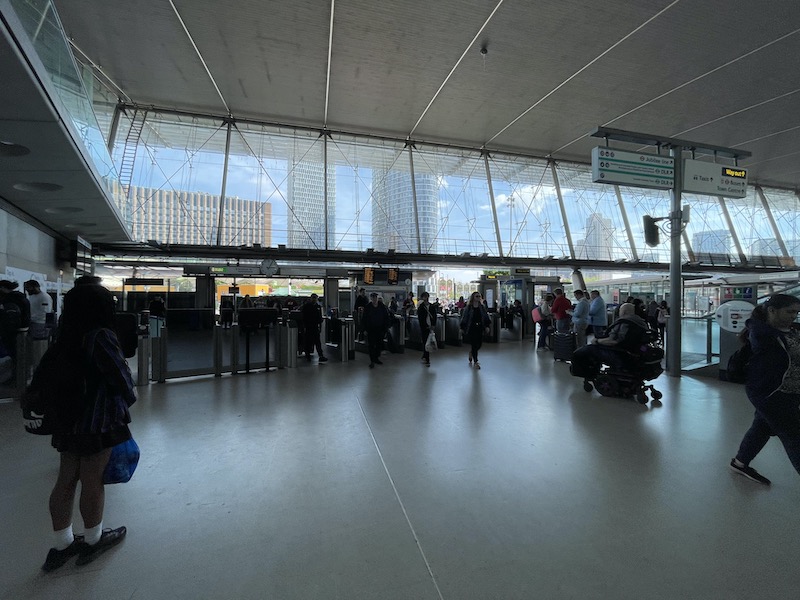
… with the former taking DLR trains northwards to Stratford International (to the right in the above photo) passing underneath the whole station complex, which as you can see divides the lower level into two, while platform 17 (in the foreground in the above photo and the photo below)…

… sees trains heading south to Canning Town (also served by the Jubilee line), London City Airport and under the River Thames to Woolwich Arsenal.
The main gateline to the station’s south exit/entrance is alongside platform 17.
Setting aside Underground and DLR trains, there are 44 train departures classified as National Rail in a typical off-peak hour with 12 more trains arriving and terminating making for 56 train movements each hour – almost one a minute, perhaps explaining why Stratford is at number six in the Busiest Stations chart.
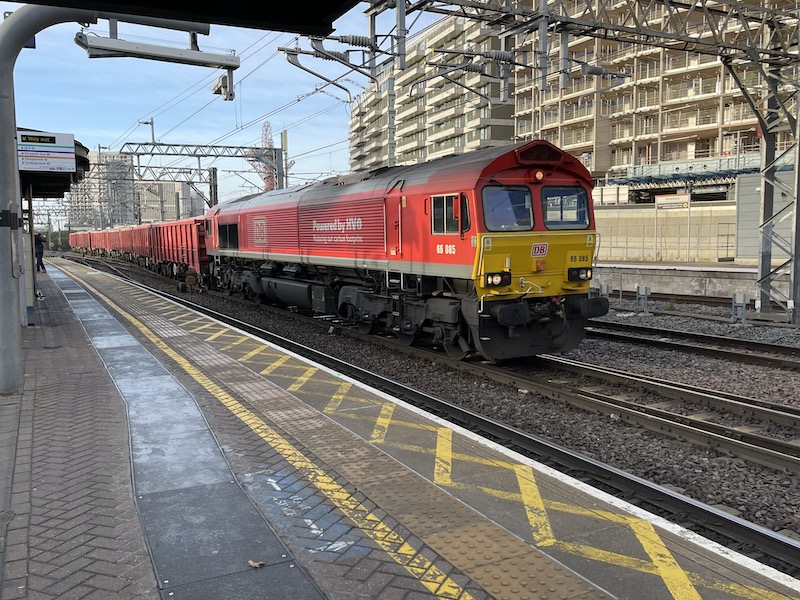
Alongside passenger trains there are also frequent appearances of freight trains making the station’s platforms popular for spotters.
That’s the platforms, now what about those subways?
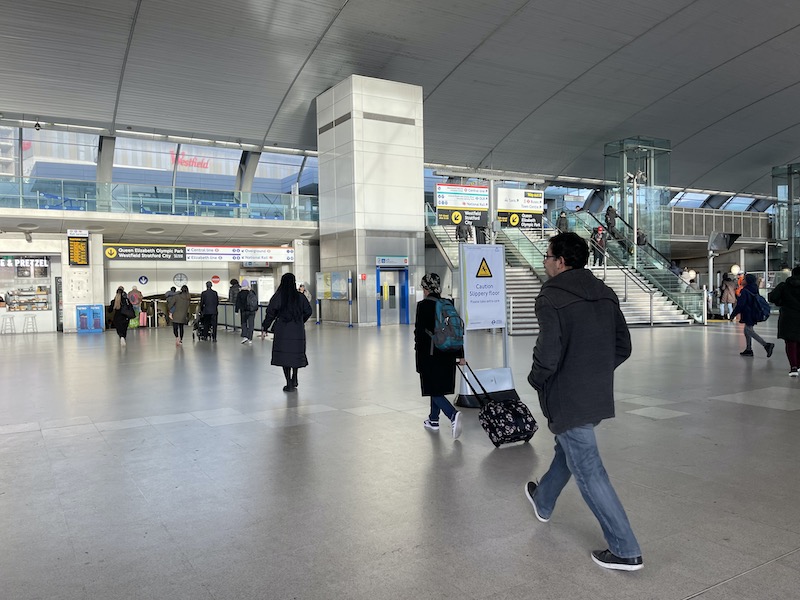
The western most subway is the widest with direct access to and from the Jubilee line platforms.
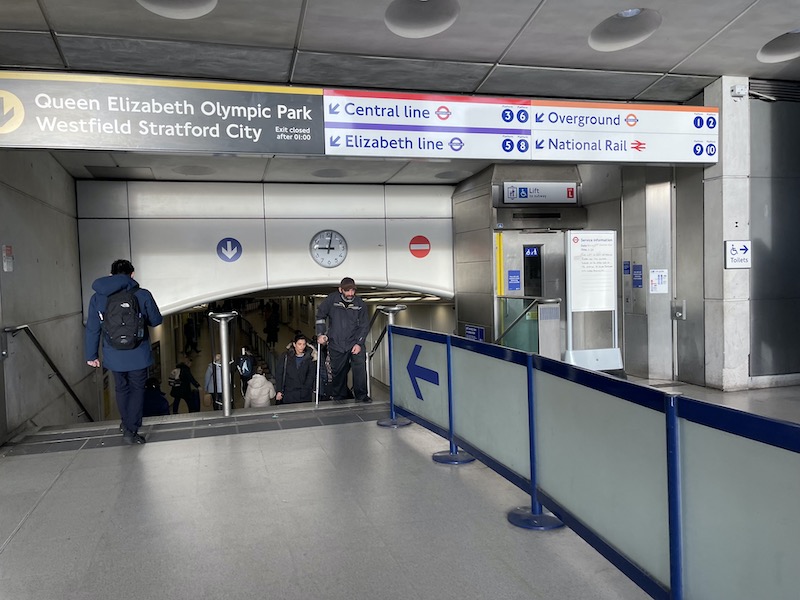
It’s wide enough to try and impose a one-way system for passengers, but many choose to ignore this although at busy times you have to comply simply by sheer weight of numbers.

The central subway is much narrower. This can be found to the east of the DLR tracks which carve through the station and is immediately after the main gateline.

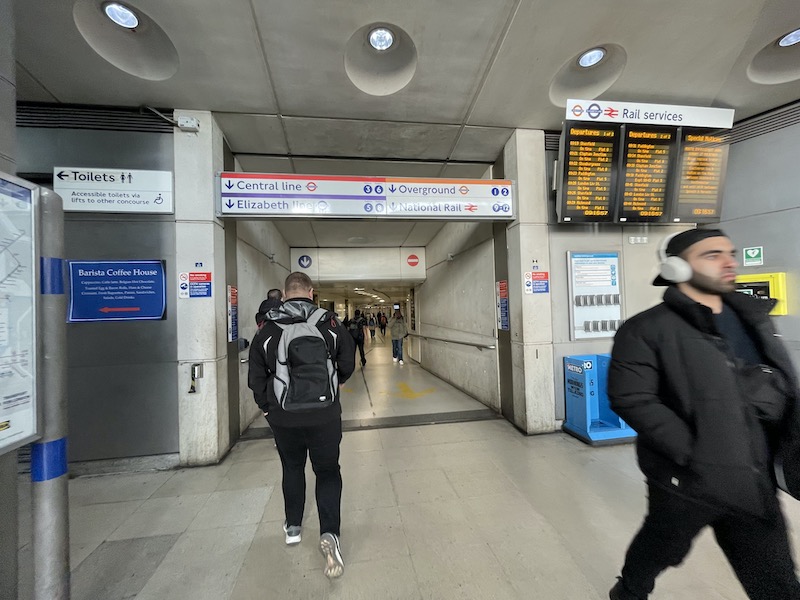
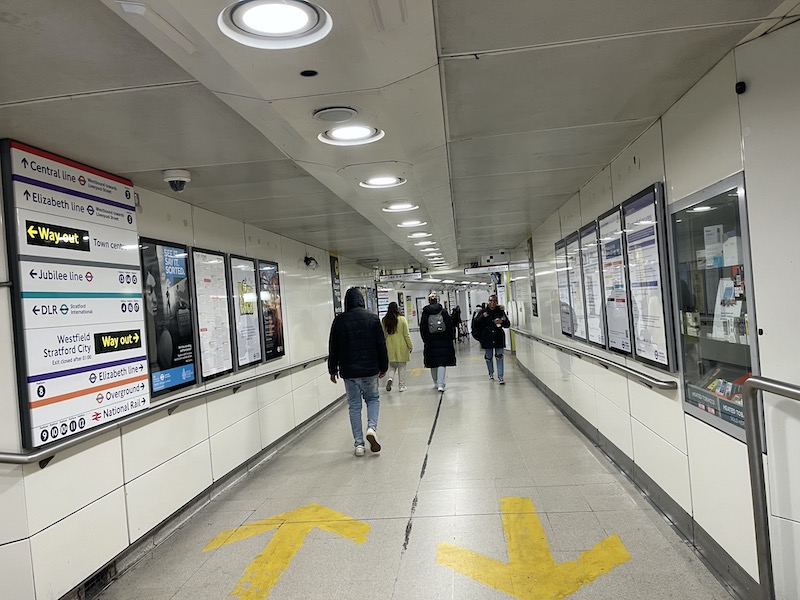
It’s worth knowing when changing from a National Rail train arrival on to the Jubilee line to use the western most subway which saves having to double back over the upper concourse if using the central subway as that brings you out on the eastern side of those DLR tracks.
Stratford has two ticket offices, or should I say ‘windows’. One is to the right of the main entrance at the southern end of the station…

… and the other is at the northern end of the station…
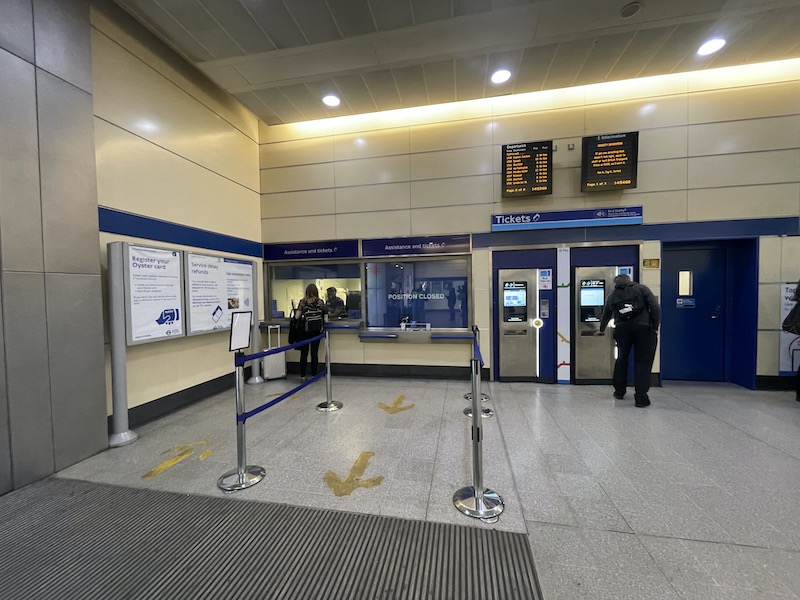
… by the main entrance to the Westfield shopping centre.
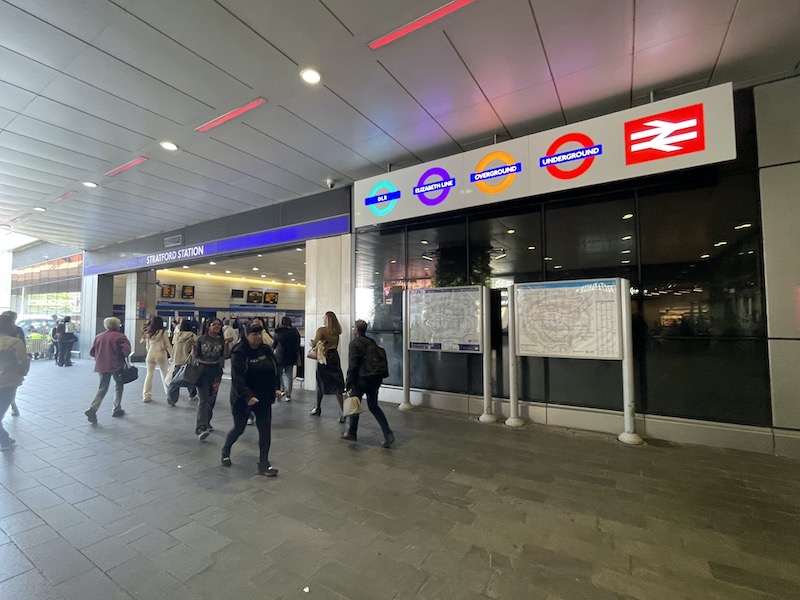
Shoppers can also access Westfield by using the footbridge that goes over all the platforms just described…
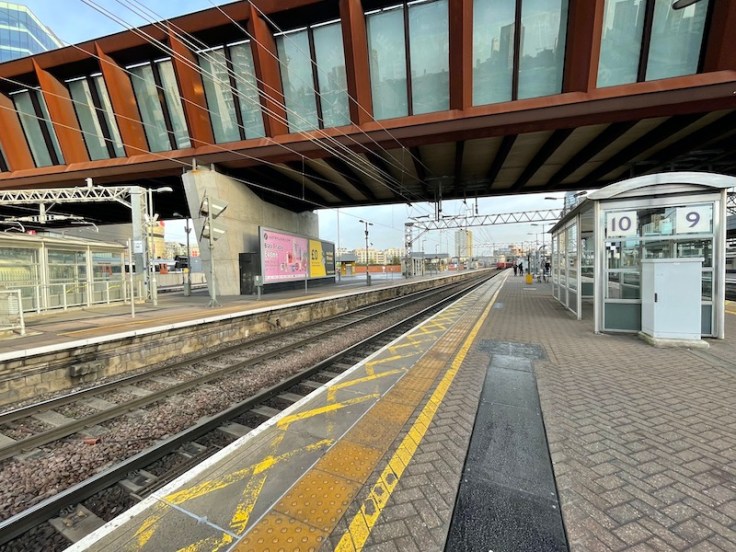
… from the southern bus station.
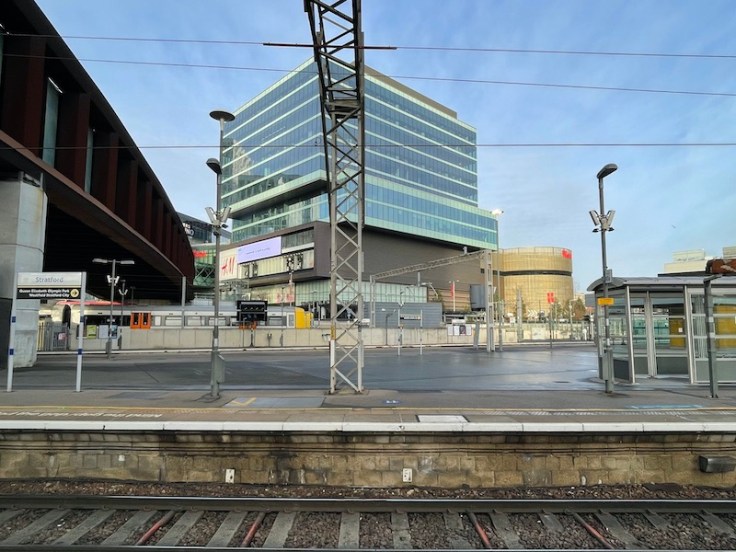
If you know which subway to use there are some well hidden toilets to be found just inside the main southern entrance by platform 17….

… albeit helpfully identified by a white board displaying the word TOILET on one of my visits.

But the minimalist facilities could best be described as basic and as evidence they’re often out of use, here’s a sign ready prepared to be rolled out.
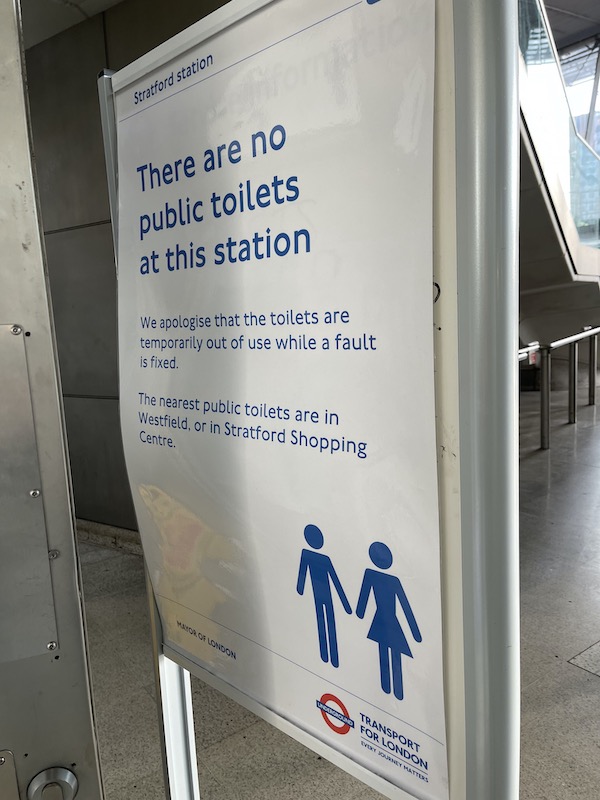
For a top ten busiest station the toilet provision is, frankly, a disgrace.
Catering outlets are available on the station side of the southern gateline as shown here at the exit from the three Jubilee line platforms.

As already mentioned Stratford station also offers interchange with TfL buses and express coaches (for Stansted Airport). The main bus station is outside the southern entrance to the station and has quite an impressive roof structure..


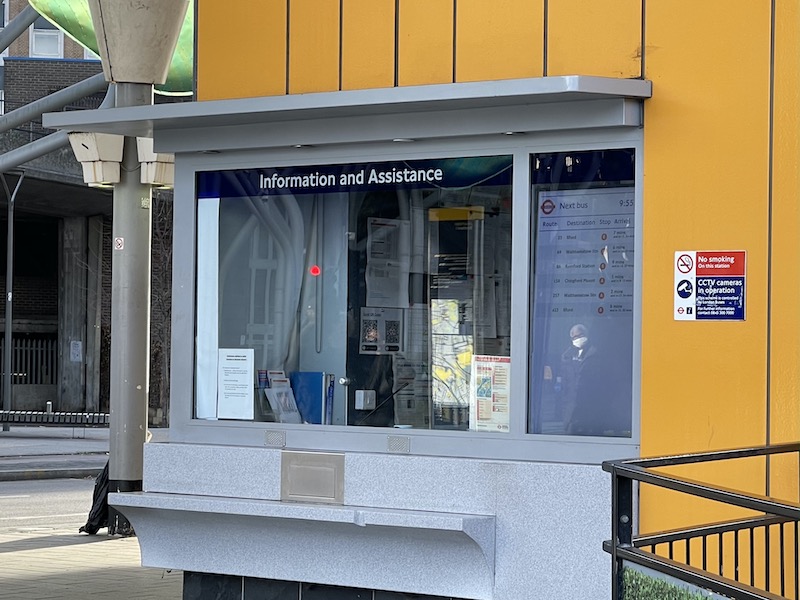
… as well as an Information and Assistance window that’s often open too.
At the northern end of the station complex alongside the entrance to the Westfield shopping centre is the smaller Stratford City Bus Station,,,
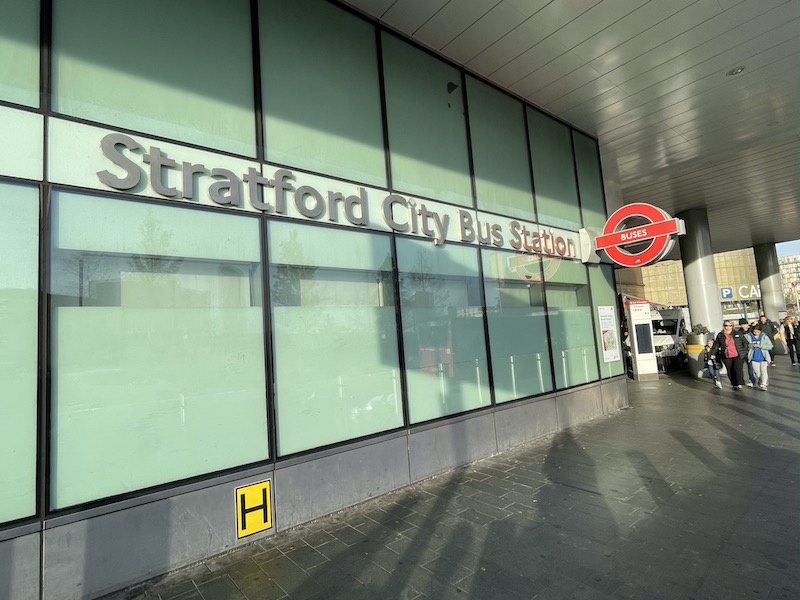

… and where, alongside, express coach departures can be found.

I hope you’ve enjoyed this little tour of Stratford. Before closing I’d also like to mention its neighbour, Stratford International station, just a few minutes walk to the north, either through Westfield or around the road bordering the shopping centre.

Obviously, although termed International, it’s never seen an International arrival or departure in its existence but it does see Southeastern High Speed trains between St Pancras and Kent.
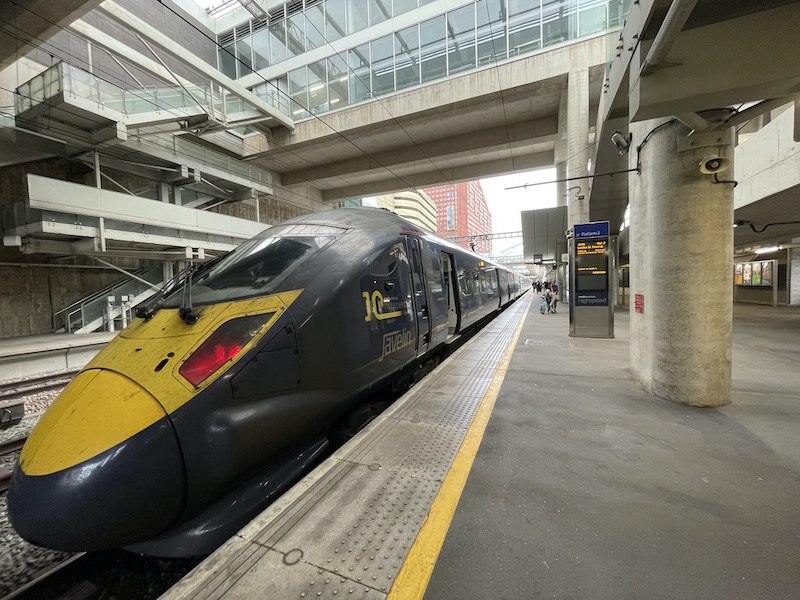
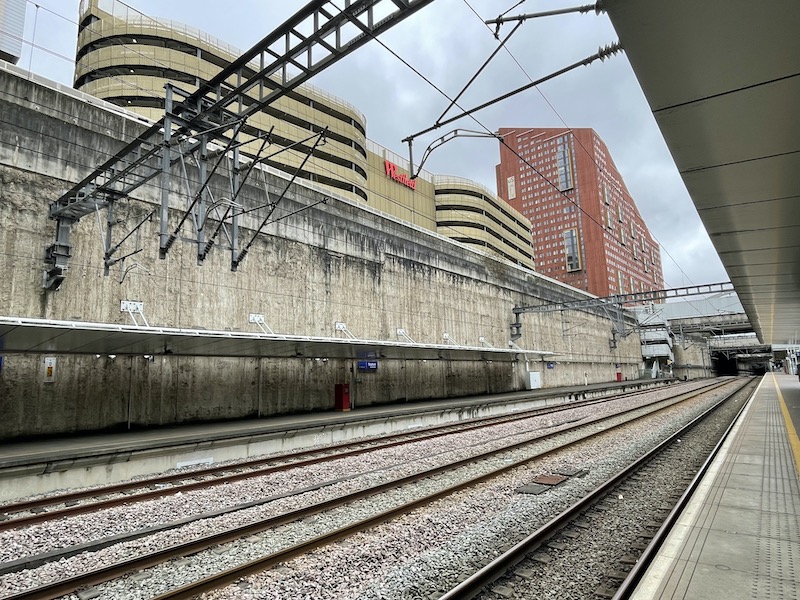
If Stratford is Britain’s most confusing station, then its neighbour, Stratford International, has got to be Britain’s most brutalist depressing and uninspiring station. Here are some photos taken from the only two platforms in use (2 and 3) to illustrate my point.
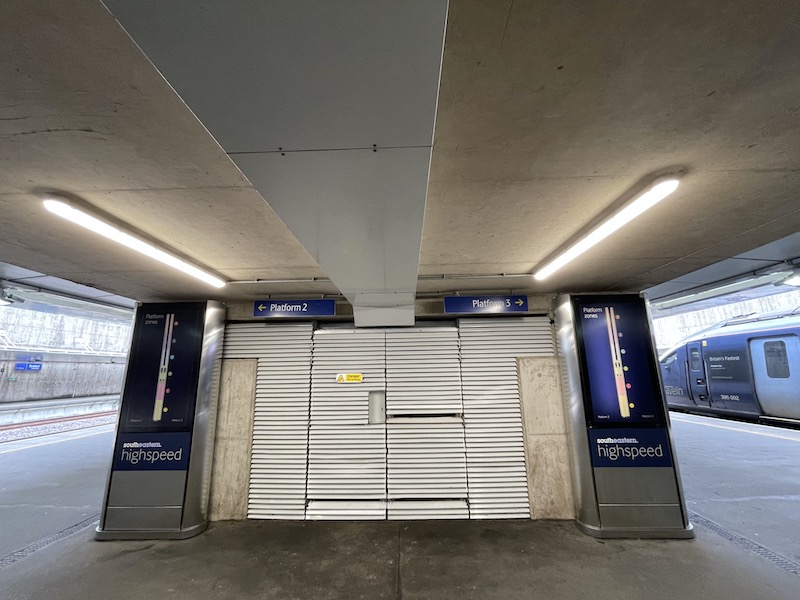


It’s a bit brighter on the upper concourse level but the massive space has never reached its potential and I doubt that W H Smiths sees much trade.

Watch out for Britain’s fifth Busiest Railway Station next month.
Roger French
Previous blogs in this Britain’s Busiest Railway Stations series: No 10 Euston; No 9 Farringdon; No 8 St Pancras International; No 7 Tottenham Court Road.
Blogging timetable: 06:00 TThS with a Su Bonus Book Review Blog coming tomorrow.
Comments on today’s blog are welcome but please keep them relevant to the blog topic, avoid personal insults and add your name (or an identifier). Thank you.


I believe that only one of the eight stations labelled ‘International’ (i.e. St. Pancras) currently serves destinations outwith Great Britain.
Roger G, Oxford
LikeLike
“Birmingham International” is only so-named due to its proximity to the airport which was previously known as ‘Birmingham International Airport’. (The ‘International’ was dropped some years ago)
Not sure about any others!
Stu – West Midlands Bus Users
LikeLike
Many are (air)ports – Harwich International sits adjacent to Harwich Port for ferries to Holland and not because they have international trains
LikeLike
If you include the underground Kings Cross is probably the UK’s busiest station
LikeLike
I believe the reason for the chaotic platform numbers at Stratford (and elsewhere at other stations) is that, with the advent of electronic signalling, the ability to renumber platforms logically is in the “too difficult” pile now …. there are so many lines of computer code involved that ensuring that, for example, “9 becomes 12 and 14 becomes 8” cannot be correctly undertaken. One spurious number could create a collision between train movements.
And that’s without any PIS code as well, both on-train and at stations.
I use the toilets in Westfield or the Stratford shopping centre …. the station facilities are grotty at the best of times …. well overdue for replacement.
As far as catering outlets are concerned, I’ll mention “Deano’s” by the main exit …. the best “dog” baguettes in London!!!
LikeLike
I haven’t used Stratford for some time – but I’d like to make some comments on Platform 10A which can, indeed, be difficult to find! It seems to me that it’s main benefit lies in enhancing line capacity for eastbound trains on the slow lines. Previously trains were often stopped just short of the station waiting for the service in front to vacate platform 10 (I think); now a train can be allowed into 10A even before the train in front has departed. It therefore comes into its own at the evening rush-hour.
Andrew Kleissner
LikeLike
Yes, Stratford is certainly not for the fainthearted! Just a minor point but Hertford East trains are directly served in the peaks during the week from Stratford.
Dan Tancock
LikeLiked by 1 person
Thanks Dan; didn’t realise that. Have updated the text.
LikeLike
I would say the direct trains from Stratford to Hertford East are quirky: the M-F service comprises 05:52 from Liverpool Street via Stratford, 06:36 from Stratford (neither of which is really peak time) and 16:30, 17:17 and 18:17 from Stratford; and from HFE there are just 3 trains to Stratford at 06:21, 07:21 and 07:51. Saturdays see only an 05:51 from Liverpool Street via Stratford.
But it’s still quite different from when I commuted from the HFE branch in the 1970s, and the connection from Tottenham Hale to Stratford was an occasional lightly-loaded DMU. Oddly my season tickets to Liverpool Street covered that as well as direct GE trains between Liverpool Street and Stratford.
Ian McNeil
LikeLike
As a regular user of Stratford (main) I can only agree that it is confusing and parts of it are inadequate for modern usage. The facilities on platforms 9 and 10 have got to be the some of the worst for long distance passengers anywhere on the network. Due to the lack of awnings when it’s wet passengers congregate on the stairways hardly the safest situation. When you add the frequent freight trains in to the mix squeezed between passenger services the use of 9, 10 and 10A is very impressive unless it results in very short notice platform changes, the worst being 10 to 10A, which some times can result in passengers being left behind. Ironically Greater Anglia’s headquarters is located in the tower block in Westfield that overlooks the north side of the station!
Sorting it out however would be an enormous challenge and hugely expensive with the rabbit warren of lines, subways and tunnels, as a consequence minor tinkerings seem to be the only short term solution!
LikeLike
Thank you for attempting to bring Stratford (London) station into he realms of the understandable. To get a visual handle on why it is so complex, it’s helpful to look at Google Maps – particularly the layout of the northern part of the station, where the aerial photograhy shows why the three north-south subways don’t all access every platform.
It is a mess. Considering the elaborate works for the 1946 Central Line eastern extension platforms (which, as you note, provide the only cross-platform interchange on the whole Elizabeth Line) it is shameful that, in the more prosperous eras in which the Jubilee Line, DLR and Overground were brought into Stratford, the designers did not come up with some more passenger-friendly arrangements: the north-south parallel Jubilee and DLR, for example, could have been on a pair of island platforms, with mutual cross-platform interchange, and going the whole way under the east-west platforms so as to give quick stairs/lift interchanges (possibly even including to 1 & 2 – though 10a, 11 & 12 might have been out of reach). And bus interchange could have been via a bus station sited over the southern part of the DLR-Jubilee platforms.
LikeLike
I’m sure I read something at some point that the Jubilee extension platforms at all stations were designed to be self contained as it makes it easier for crowd management when long passageways string out interchanging passengers Vs a throng transferring cross platform from one to another.
A case of computer modelling of the 1% extreme events killing usefulness for the 99% normal journeys
LikeLiked by 1 person
Stratford can easily be now be best described as a ‘kit bash station’ given all the bits of transformations over the years; there was an ideal opportunity to do a proper renumber of the station when it was remodelled with the NLL diversion to ‘upstairs’ from ‘downstairs’ and DLY to Stratford International as part of the whole Olympic developments.
Renumbering can be done but it’s the will to actually do it; hence all the platform Zeros that now pop up.
But for now, unless you know the short cuts, the Customer Experience will always be a bad one – exasperated now given the fact the station is now under Elizabeth Line management – which in turn take their lead via TfL standard and not the actual landlord thats Network Rail – and in reality should have remained with GA.
LikeLike
The original DLR platform (presumably platform 4) was a single bay platform – I think it was at the western end of platforms 3 and 5 although my memory is hazy. It was replaced by the current platforms 4A and 4B, possibly as part of the project to enable 3-car trains. It has the added advantage of enabling two trains to be at Stratford simultaneously, giving the ability for one to depart just as another arrives, enabling an intensive 4-minute frequency over the single line section to Pudding Mill Lane since the latter station was resited.
The low level DLR platforms 16 and 17 were, I think, previously used by the Silverlink service to and from North Woolwich until around 2006. The trackbed from Stratford to Canning Town was reused for the DLR to Stratford International.
Malc M
LikeLike
The originally 1987 DLR platform was of course one of the two separate west-facing bays at Stratford provided in 1949 for a Fenchurch Street – Stratford 1500v DC shuttle service via Bow that in the event never materialised.
Kim Rennie
LikeLiked by 1 person
Your memory is correct! There was also a separate gateline for the Jubilee line along the top of platforms 13/14/15 – I’m not sure if the Central line ever had one before the entire station was enclosed.
It’s due to gain a new entrance imminently, near the top of platform 13 (providing easier access to the Carpenters Estate), and I think another was mooted on Montfichet Road giving additional access to the Western ticket hall, to deal with crowds from events at the London Stadium.
Martin D
LikeLike
There is a plan to reopen the long-closed east-west ‘Central Subway’ that once linked the 1940s LNER/BR(E) entrance and the LT and DC local platforms. It’s still hidden away and complete with 1940s cream LNER 6″sq tiles.
PS – Does anyone actually use Khan’s new Overground names? It’s all gone quiet, no doubt as TfL weigh-up the cost of putting up literally thousands of new signs and diagrams (or rather ordering vinyl stickers). Surprised Hall didn’t promise to abolish these too “on day 1”, but then that campaign was never credible in the first place, given that London and the Tories have mutually given up on each other it seems.
Kim Rennie
LikeLike
40 years ago, stratford was merely an interchange between the then crosstown linkline between north Woolwich and Camden Road, central line and Liverpool Street – shenfield/southend/Witham services and everything else bolted 🔩 on ad-hoc where they can cram it in. Hence the confusing layout and even though I frequently use the station and know the layout, it’s very confusing for the uninitiated
Very very confusing
LikeLiked by 1 person
Indeed more confusing if you are trying to find the step free access routes. Overcrowded in peaks. Others have said what / how the present situation has arisen – and the interchange from the Docklands Silvertown DLR Route to the Overground service has to be improved for foot passengers. So what (ignoring track capacity) could be improved or changed?
The Elizabeth to Central Line Change for passengers is a crowded mess, given it is probably NOT possible to route any other service to Leytonstone perhaps a relief could be accomplished by modifying the Central Line at Ilford, to run into a bay platform (with extra station at Ley Street – maybe even in a tunnel, by running a Y shaped service Gants Hill-Ilford via the old alignment (noting housebuilding and allotments) and Ilford-Hainualt Loop to Woodford, giving a rail connection back Ilford Central Area to North Ilford this would take a few passenger who want the Gants Hill/Newbury Park area.
Create TfL Rail (or overground) to run the Hertfords /Bishops Stortfords at a more regular frequency – Half Hour on Each 7 days a week , hourly extended to Liverpool Street ?
Extended Overground from Barking Riverside – Barking – Woodgrange Park etc Stratford Liverpool Street Half Hourly 7 Days a Week Replacing or alternating additionally weekends with the c2c service from Lakeside route. This would give a useful Barking interchange to the Central Line / Elizabeth Line. (alternatively extend Elizabeth Line same route to Barking Riverside ? _
Replace the entire DLR Line to King George V/Woolwich with Overground (from Highbury and Islington etc) and extend to Thamesmead ( and Dartford ?) Extending and running over in part Jubilee Line with JL going to Stratford International (and calling at Stratford Market and Star Lane – the JL service is all a bit stop start anyway so the additional time schedule shouldnt be a problem).
Possibly look at a street level tramway system for Leyton/Stratford area maybe using reserved tracks – this could have been done with better planning in the olympic site – extending to Clapton/Lea Valley/Walthamsow . Would this remove some passengers fighting for Leyton ?
Related too as possible better interchange out along the EL to the Overground Goblin Line with the Goblin getting full step free access ? again this could help reduce some interchange to central line if it is easier to get to bits of Leyton/Leytonstone travelling on a bit then coming back on the Goblin?
JBC Prestatyn
LikeLike
The lines into Liverpool street and the station are pretty much at capacity
LikeLike
The blue station maps omit some key items (if trying to optimise your route on station/train)
(and there are not enough “general” displays on Anglia platforms 9/10–if you arrive more than a few mins early for your train, to confirm it’s not been moved to a different platform)
The signage is also not great, and while you can start a TfL journey on a pink, you can’t end on a pink (signs don’t explain that you must start on a yellow/white when going to the Overground/tube/Lizzie).
Needs clearer signage in the underground to allow navigation between platforms using lifts (heavy luggage as well as less able).
MilesT
LikeLike
I arrived at Stratford one Saturday recently at around 13:00. Wanting to use the toilet, I asked a member of staff where the nearest toilet was, and was told to go to the (Westfield) shopping centre. A walk down stairs and along a very crowded passage and up a flight of stairs to find that my paper travelcard wouldn’t open the gate, so in had to ask the staff to let me out. Into a very busy shopping centre, looking for where the toilets were, and finally made it. I noticed a queue outside the ladies, so they have an even harder time to spend a penny.
How on earth do many people make it when carrying luggage, children or a very slow walker?
Jim.
LikeLike
trust me, you don’t want to use the loos in Stratford station. Grimmest in London.
you also don’t want to arrive just as a West Ham game has finished – we did once, and had to get from the Jubilee line to Stratford City bus station, with kids in tow. I’ve just about recovered from the experience. Be glad the MSG Sphere didn’t get approval!
LikeLike