Saturday 16th September 2023

The Public Transport North 2023 conference held in Manchester on Tuesday and Wednesday included some fascinating presentations.
Tuesday was devoted to rail with bus on Wednesday for this second joint conference initiative from Modern Railways and Buses magazines published by Key Publishing. The first conference of this kind was held in Glasgow back in March.

As you can see, Tuesday’s agenda included speakers from Transport for the North, Network Rail, Great British Railways Transition Team, Transport for Greater Manchester, Northern, Merseyrail and others.
I’m always struck by just how many organisations are involved in overseeing and providing our railways. Also getting a mention during the presentations were the Northern Powerhouse Partnership and Northern Rail Partnership as well as Northern Powerhouse Rail but these might be different aliases for the same thing. They certainly all sound similar.
There were frank acknowledgments of the stagnant state of the rail industry from Jon Fox, Strategic Advisor with the Great British Railways Transition Team (GBRTT) while Nick Donovan, Managing Director of Northern Trains Ltd set out some stark challenges his company faces.

Jon likened the post Covid rail industry’s position to a patient out of intensive care but still needing lots of out-patient appointments with revenue hovering around 85% of pre Covid levels. He noted the previous franchise based business model was now firmly bust but no-one had a clear picture of what the long term replacement will be with ‘rail reform’ (as per the 2018 Williams Review) stalled in the political long grass.
To add to the gloom the current industrial relations impasse shows no sign of resolution any time soon with continuing questions over what the industry can afford and the Government seemingly content to just let the strikes continue.
It seemed to me the patient was still very much on a hospital ward rather than at home recovering with the current lack of decision making in the industry obviously damaging short to medium term prospects. Despite the DfT ministerial team confirming a commitment to rail reform Jon acknowledged there were significant doubts whether the necessary legislative changes will be included in the King’s speech due on 7th November, meaning it may not even happen before a General Election.
Despite all this malaise and uncertainty an army of people are employed by GBRTT and one might well ask ‘what on earth are they all doing?’.
Jon explained the work falls into three headings. Work needed pre any legislation; work needed post any legislation and work needed irrespective of whether there’s any legislation or not.
Some things are progressing such as work on fares and ticketing reform to see what can be rolled out such as the recent extension of single journey pricing (ie no return tickets) on the East Coast Main Line. There’d also been the Great Rail Sale and Northern’s Flash Sale to fill off peak empty seats and Jon highlighted work taking place regionally with TfGM and TfWM on various ticketing plans including greater integration and the aspiration for pay-as-you-go planned for Greater Manchester in 2025 as part of the Bee Network with full integration of the local network by 2030.

It just all seemed rather depressing. And Nick Donovan’s presentation added to the feeling of a dysfunctional railway with the frank admission that 95% of the publicly owned company’s Sunday network west of the Pennines depends on staff volunteering to come to work on overtime. This is currently even more of a challenge than usual with sickness absence higher than before Covid as the turbulent industrial relations climate saps morale and motivation as Ministers show no signs of allowing managers to end the disputes any time soon.
Other fascinating statistics from Nick included 83% of Northern’s services are on an hourly timetable, 80% are operated by a single unit of either two or three cars (meaning fixed, track and staff costs per seat are high) and between 10-15% of passenger journeys are connecting to the wider network. Another frank admission was the need to modernise many work practices not least in some locations where fax machines are still in use to communicate key information.

But it wasn’t all doom and gloom. We heard about the considerable investment in the north of England, not least the Transpennine Route Upgrade (TRU), including relocating Morley station, hopefully opening soon, and restoring passenger trains to the Ashington line in Northumberland. Also getting a mention in the morning presentations were plans to electrify Wigan to Bolton and bring ETCS (European Train Control System) to signalling on the West Coast Main Line between Warrington and Carlisle which I made a note needs sign off from the Office of Rail and Road (another organisation involved in the railways).

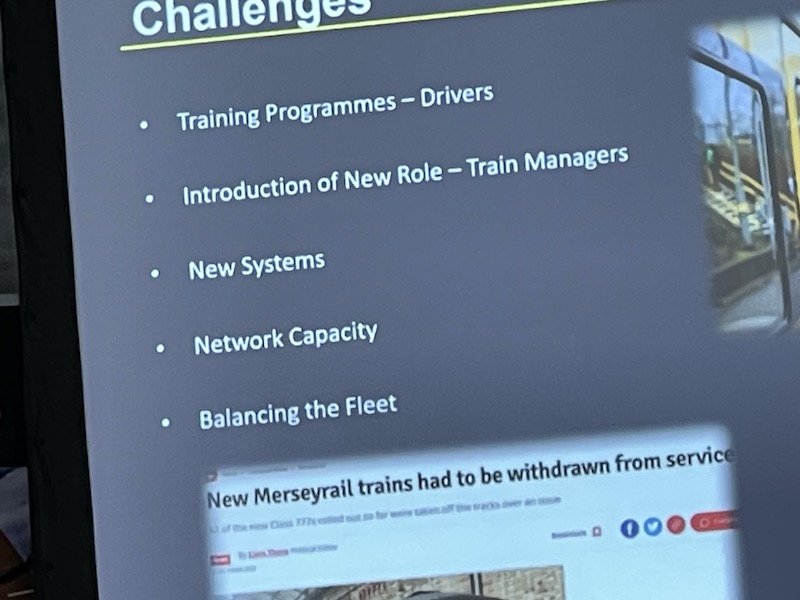
We were given a fascinating presentation on the TRU by Hannah Lomas of Network Rail as well as an upbeat and positive story around the mobilisation arrangements for Merseyrail’s new ‘game changing’ fleet of Class 777 trains by Steve Dodd, the company’s Chief Operating Officer.
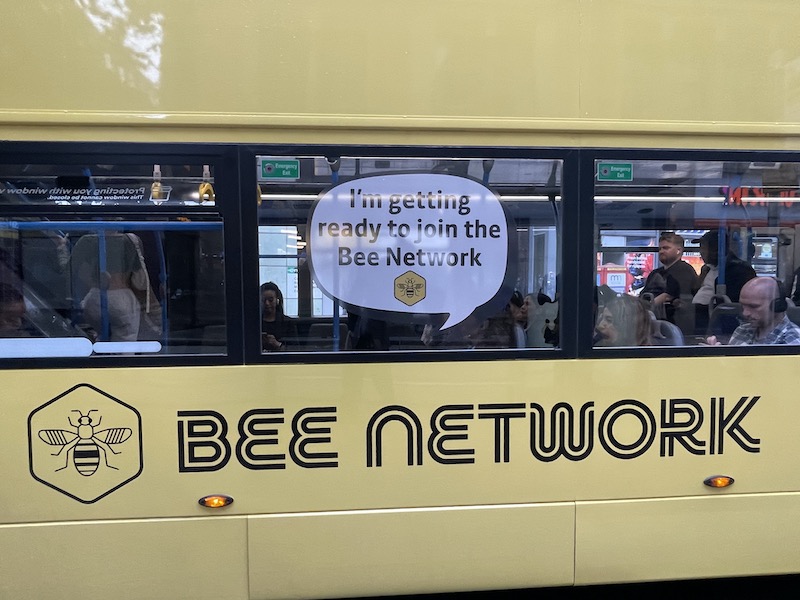
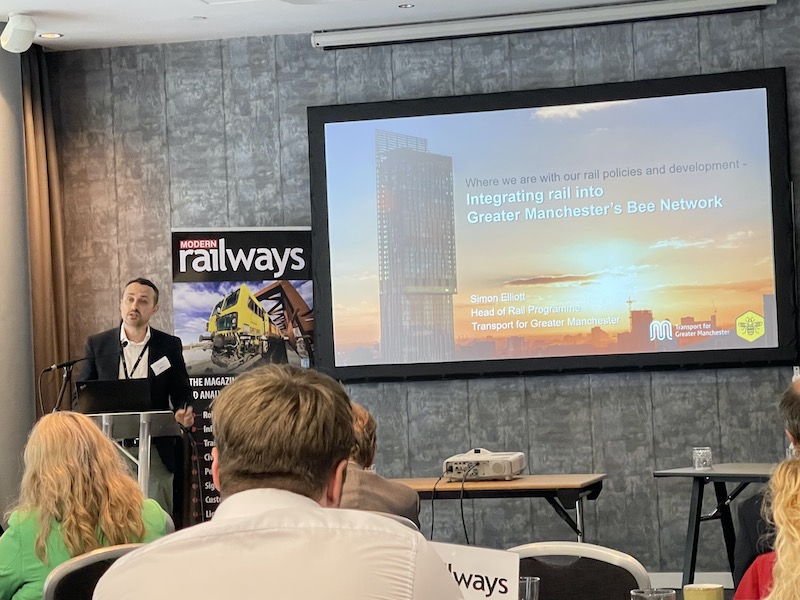
Simon Elliot, Head of Rail at Transport for Greater Manchester (TfGM) also gave a very positive report on aspirations to integrate local rail into the Bee Network acknowledging the challenges of doing so where tracks are already congested with wider regional and inter-city trains and admitted we won’t be seeing yellow liveried trains any time soon but there is a target for pay-as-you-go integration with a pilot encompassing Glossop and Stalybridge being worked on for 2025.
Which brings home to me the wildly different timescales between anything happening on rail compared to bus.

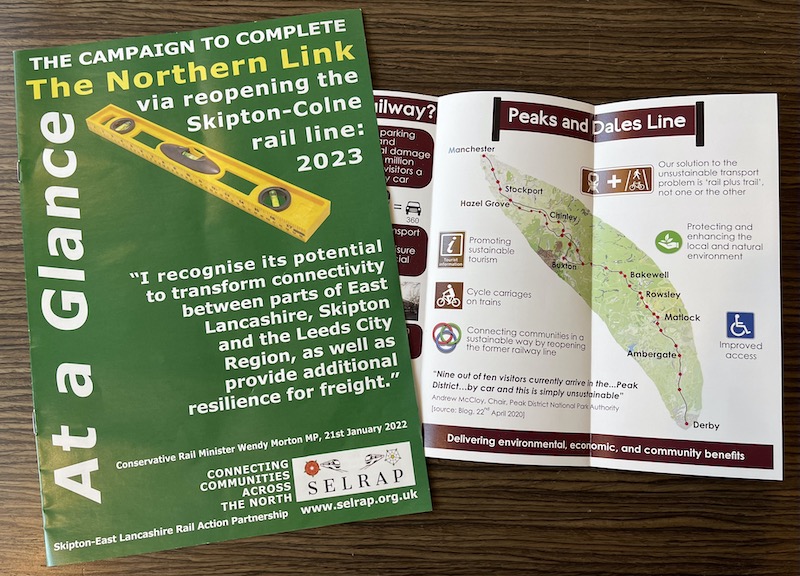
And in that context it was interesting to see campaigners for the reopening of the Skipton to Colne line as well as Derby to Manchester (Peaks and Dales) attending and handing out literature to promote their causes.
In all we heard from nine speakers who all gave interesting and thought provoking presentations with pertinent input from the audience during the discussion sessions.
It was my pleasure to chair the second day devoted to buses with a packed agenda of 14 speakers timed to a very tight schedule but thankfully some slack had been built into the generous layover time over lunch so we were able to keep to time not least as our first speaker, Andy Burnham, Mayor of Greater Manchester, kindly stayed longer than scheduled to answer questions from delegates.
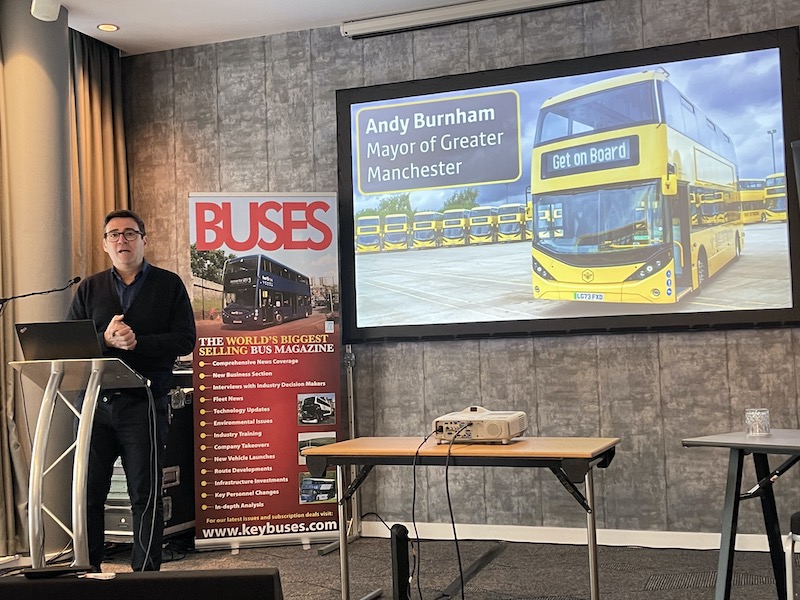
You can’t cut short a Mayor who’s excitedly on the cusp of proudly introducing his long aspired for Bee Network and nor would anyone have wanted to with a very positive story including an acknowledgement that past disagreements on the merits or otherwise of the regulatory regime were now firmly in the past and he very much appreciated the positive partnership approach (yes, he mentioned the P word) now evident with bus operators who he praised for their huge and effective mobilisation arrangements to ensure the new era beginning next weekend is a success.
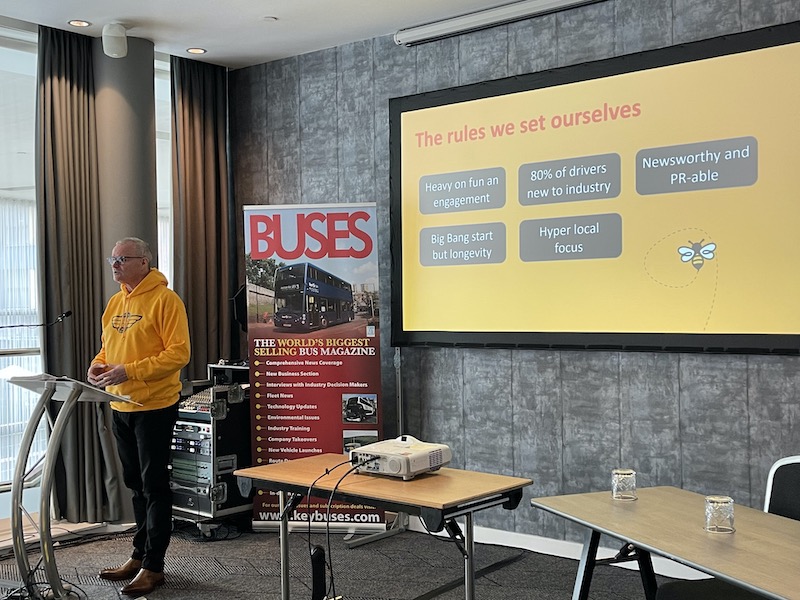
Indeed we heard from Nigel Featham, managing director of Go North West about the lengths the company has gone to recruit large numbers of new drivers to ensure the company is fully staffed from day one of the new contracted regime when the company takes over Bolton depot from Diamond and Wigan from Stagecoach.
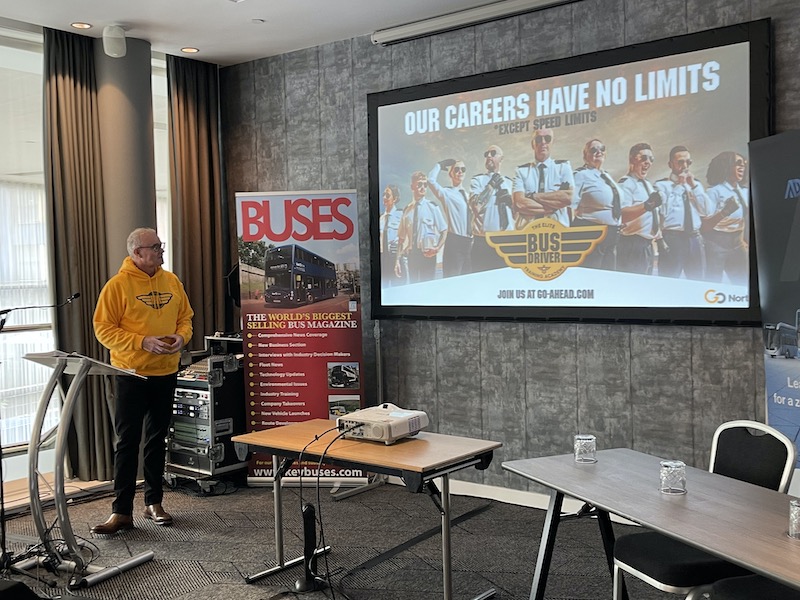
The company pursued an unprecedented and innovative high profile media campaign to encourage applicants which has led to a target of 300 recruits joining so far and during the first 12 months.

TfGM staff have also been busy mobilising all the back office functions as explained by Stephen Rhodes (Director of Bus) and Anne- Marie Purcell (Bus Reform Director), not least a Bee Network website and app which are launching on Monday (18th September) as well as technical matters such as CCTV and customer facing matters such as lost property.

I’ve written more about the Bee Network in Buses magazine due out in a month’s time and will also be blogging about it after the official launch on Monday 25th September so I’ll leave it there for now except to say there’s no doubting the huge efforts that have gone into the new regime for buses in Greater Manchester with a huge commitment to make it work.
All eyes will be on Greater Manchester over the next few months. I hope it all goes well as we all want to see buses succeed.
We also heard from Matt Goggins (Assistant Director Bus) about plans to reform buses in Liverpool City Region with an announcement expected very soon from the Metro Mayor (Steve Rotheram) confirming future arrangements for bus operation in the Combined Authority following a recent public consultation on plans. The safe money is on a franchise regime similar to Great Manchester not least as the Authority already oversees the local rail network.
Other fascinating presentations included from Zach McAskill at Stagecoach on “inspiring the next generation of young people to join the industry”; Ben Wakerley at Warrington’s Own Buses telling us not only about the company’s fantastic new depot but exciting plans to introduce a whole new fleet of battery electric buses, also covered in a presentation from Phil Kershaw of E O Charging, the company installing and maintaining the charging infrastructure.
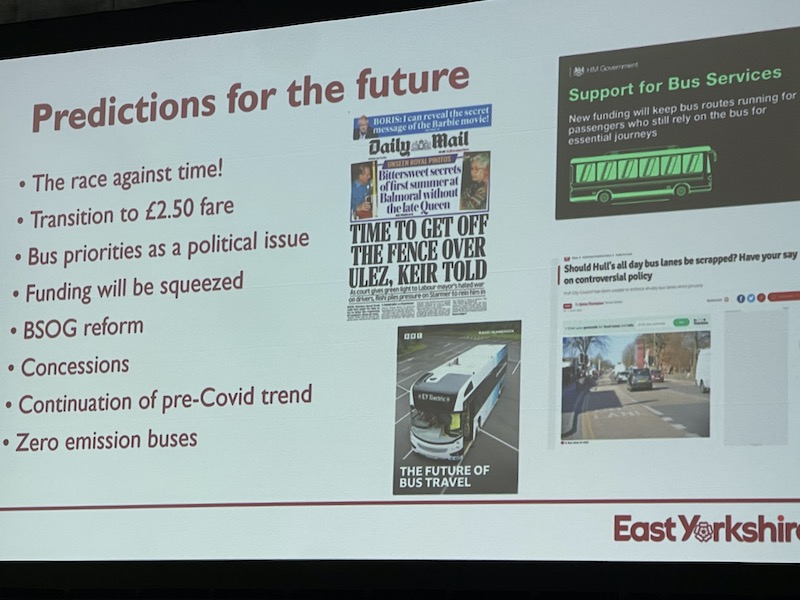
Ben Gilligan gave a hugely informative presentation of how his East Yorkshire company has adapted post Covid and the challenges it, and all other bus operators, face (which makes you realise why a franchised regime where the local authority takes all the revenue risk is now becoming an appealing prospect for many) and Andreas Schörling (Managing Director UK) of FlixBus told us of his company’s significant recent expansion with more to come across the north.
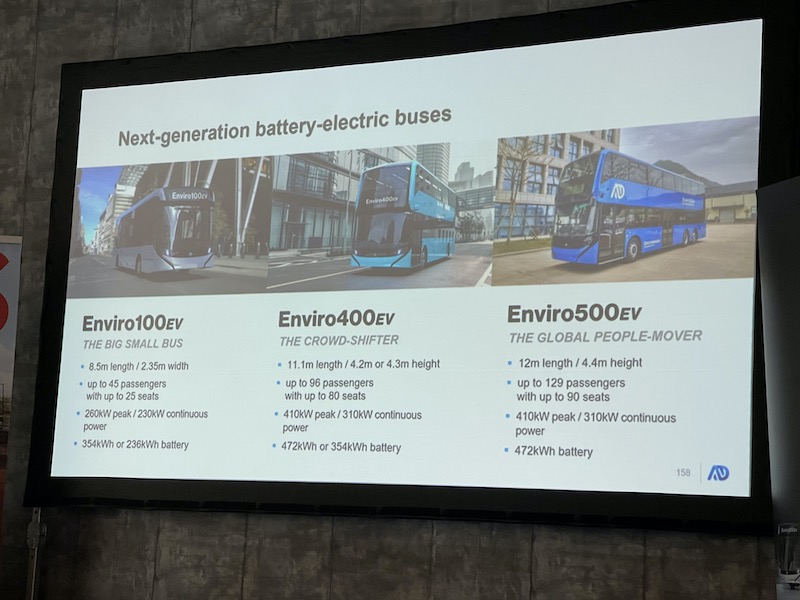
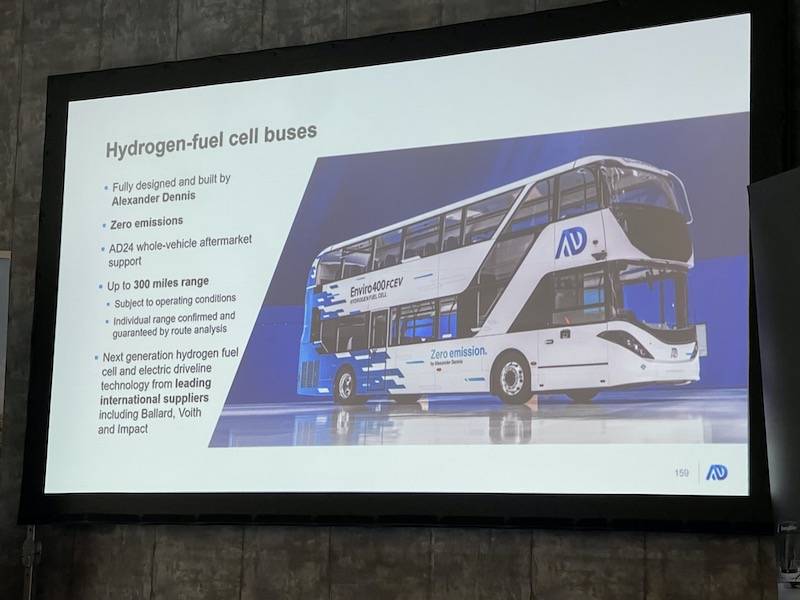
We also heard from Matt Lawrence of Alexander Dennis on the company’s exciting new zero emission fleets as well as keeping production of Euro 6 buses going and Adam Cross and Lee Sands from Hexagon ALI and Sapphire Systems talked about the importance of “Digital Asset Management” which resonated with anyone struggling with data overload.
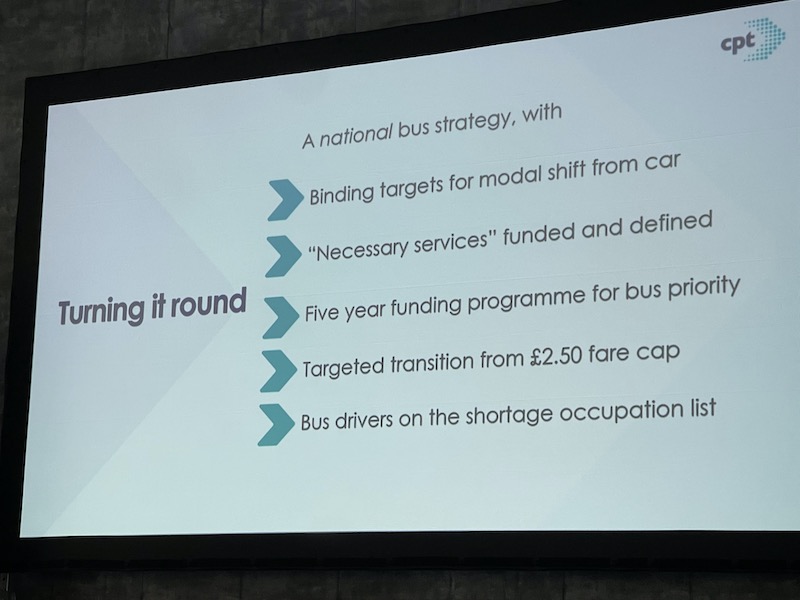
The final speaker was the much respected Graham Vidler, CEO of the Confederation of Passenger Transport (CPT), who left us with “five keys to improving bus services, whatever the regulatory mode” and which I will similarly leave blog readers with, not least with a General Election in the offing in the foreseeable future CPT’s expert lobbying skills will once again be to the fore to promote to aspiring politicians what the bus industry can deliver.
It was a very enjoyable two days.

Roger French
Blogging timetable: 06:00 TThS


Very many thanks for all this information. Interesting, if a little disappointing, that the whole thing seems to have been segregated into Bus OR Rail – nothing apparently about the passenger experience which the whole co-ordinated network was supposed to herald. I wonder if any of the ‘bus people’ – apart from yourself – attended the rail events, or vice versa.
I’m also a little disappointed, if not really surprised, that the CPT’s action list – good in itself – made not reference to through-ticketing for bus+train journeys, or to solving the blight which road-works sometimes casts on the passenger experience of travel by bus.
It’s great though that Public Transport North happened, and hopefully the people, including yourself, who made it happen will see some fruits and action from the getting together of minds.
Rick Townend
LikeLike
Not sure where they are hiding the 300 extra new “Bee” Drivers, but perhaps some could be loaned to cover service gaps all over North West Manchester this week. A reminder of the 70s and 80s when crew services were run down badly just prior to OMO introduction. Thus, the far slower, and often reduced capacity of newly introduced one man service looked far better than the previous offering.
It appears that Mayor Burnham has toned down his language toward Manchester’s bus operators, realising that their co-operation in his expensive vision was necessary after all. If it all works and Manchester Council tax payers don’t mind the hike in their bills just to have the service they now get for nothing, presumably the change in paint colour will have been worth it.
LikeLike
On the day it appears HS2 will end at Birmingham
HS2 terminating at Old Oak Common is not really a problem. Few passengers end their journey at Euston they carry on by bus or tube
Old Oak Common will be a major rail Hub with 14 platforms serving :-
HS2
North London Line
West London Line
New West London Orbital Line
Elizabeth LIne
Avanti West Coast
Great Western Line
Terminating HS2 at Birmingham will save costs but the North will still benefit from faster links from Old Oak Common which gives as faster and more direct service to Heathrow, Central London and Docklands
At the moment getting to Heathrow from Euston is painful. It is either a walk to Kings Cross and a very slow journey on the Piccadilly line or a walk to Euston Square then Euston Square to Paddington
LikeLike
Back to Basics? Anything about printed timetables and maps. How’s about introducing a country-wide standard that all bus co’s / local authorities must provide them? I notice the invisible Bus Users UK are not at these meetings (not that they represent bus passengers like me in any meaningful way)
LikeLiked by 1 person
A friend wrote to TfGM who said paper timetables are going to be produced.
The attached hyperlink has Bee service changes which has link to new timetable in conventional TfGM format.
They do not state the name of contractor operating route.
https://tfgm.com/public-transport/bus/service-changes
Bolton is the only bus station with leaflets on display at all times. Sensibly timetables were not reprinted just for lowered numbered routes for three weeks.
As for paper bus maps…..
LikeLike
Wigan – Bolton is not a ‘plan’ – it has been well underway for months.
LikeLike
Is the presentation on the class 777 available in the public domain?
Also the presentation on Northern please.
Lots of presentations here. No doubt a fair amount of what was in the presentation was already known in parts to some attendees, so having all this information presented, how does this take anything forward for the better? Any workshops? Any informal discussions/ networking, etc.
Thank you very much for sharing all of this to those of us who were not able to attend or not in the invited circle of attendees.
LikeLike
Hope the anonymous business gets resolved soon as I forgot to sign the above comment.
LikeLike
That CPT slide reminds me of Father Ted trying to work out how to get Dougal off of a runaway milkfloat.
“And that’s your answer is it, *another* national bus strategy…”
LikeLike
I was one of the few non-professionals to attend the “Buses” day. I expected the Manchester speakers to be bullish, but was surprised by how upbeat Ben Gilligan was given that there are still lots of challenges for operators outside the PTE areas.
If I may add a few points from my notes:-
Andy Burnham suggested that the government should fund a rolling programme of franchising – there are enough enthusiastic mayoral authorities to make this work;
Stephen Rhodes was more cautious than his boss about the major transformation about to take place in Greater Manchester and said to expect “bumps in the road”;
Nigel Featham’s excellent presentation was made more effective by being given wearing an “elite driver” sweatshirt as given to his trainees.
I think that Graham Vidler’s five points can be taken up by anyone campaigning for buses, be they politician, council officer, operator or passenger.
On a lighter note, I was amused that Warrington’s new depot is next to the Rugby League ground and that they won’t be able to charge buses when the floodlights are on! Whilst the presentation on “Digital Asset Management” made me glad I’ve retired.
Jim Froggatt
Derbyshire Transport Action
LikeLike
I attended the “Buses” day having used the previous “Rail” day to explore GM working my way across to Liverpool via Warrington travelling through four counties. Thank goodness for the £2 fare.
I had intended to visit Hull but found websites impenetrable to reveal whether a multi operator day ticket was available so didn’t go.
My expectations as a bus user are Safety, Reliability and Convenience.
My expectations of those who provide bus services are Inspirational Leadership, Taking Responsibility when things go wrong and Open and honest Communication.
Andy Burnham is an inspiration leader with a clear vision for a yellow wall of zero emission buses stretching from West Kirby to York backed by government funding. He stated that his campaign for a third term as GM mayor will include a vision to attract younger folk to front line transport roles with progression from bus driver to tram driver to train driver.
I believe that a proper customer charter with the face of the accountable leader outlining users expectations is the route to deal with the “rocky” road ahead rather than a faceless QR code to rate my journey which I would encourage readers to use when they going “Buzzing”.
A great deal of effort has been put into communicating the Bee Network.
My first encounter with the live Bee Network will be en route back from Edinburgh enabling comparison between Transport for Edinburghs excellent App and the Bee Network App that went live today and is now on my phone.
The buck really will stop with Transport for Manchester for those poor souls I witnessed on a couple of days waiting in vein at Piccadilly during the morning peak for Bolton bound Diamond routes 36 and 37 being advised by a Stagecoach inspector to catch their route 38.
I’m sure those bus users would concur with the sentiments of the blog that the Bee Network needs to succeed and my expectations that buses should be safe, reliable and convenient.
John Nicholas
LikeLike
What the, why can’t Warrington charge buses at the new depot when the floodlights are on at the Rugby Ground, that’s bonkers considering it’s 2023?
LikeLike
National Grid Capacity
LikeLike
This is the UK. Don’t expect sensible long-term planning and construction of national infrastructure as “we can’t afford it”. (but France, Germany and Spain can).
LikeLike
Hmmmm, don’t know about France or Spain, and you may be right in saying that Germany could afford it. But getting around to actually building it is an entirely different matter!
Nigel Frampton
LikeLike
I’m surprised that a throwaway comment has produced such a reaction. The reason is simply to save money by having a shared feed of electricity, bearing in mind that the buses will be charged overnight after the rugby games have finished. The floodlights need the largest amount of power, so there is plenty to use when they are off.
Jim Froggatt
LikeLike
The grid was built around distributed power stations and needs to be totally rebuilt to cope with wind farns and EV’s and thar a major task that will take at least a decade
LikeLike
They can charge when the lights are on – it was a joke
LikeLike
I will be watching the tender programme in Manchester (and other cities) with interest. Hopefully they won’t go down the London route where operators get bonuses for slowing buses down to maintain gaps and passengers and journey time don’t count. Looking forward to a further blog on this . Perhaps there will be lessons for London to learn here.
Martin W
LikeLike
Am I the only one who is thoroughly depressed by the whole Bee Network thing? All the money that is being thrown at this as if it is the panacea of buses. I’m old enough to remember the hash that some councils made of borough owned bus companies – that was one of the things that brought me to the conclusion that you don’t want councils trying to run a bus service (amongst other things). And this seems to be Labour’s big idea for buses. Lord help us.
Delenn
LikeLiked by 1 person
At least in London Andy Byford (the Liz Truss of commissioners) promised proper printed maps prior to his scuttle.
LikeLike
The North? Yet again more insular thinking that the North is Manchester and it’s the bee (ahem) and end all. No mention of Newcastle, Leeds, Middlesbrough, Carlisle or Sunderland.
Compared to other areas in the north, Manchester and its conurbations have a wonderful network already (which isn’t saying much)
This is yet more insular aren’t we great approaches from an industry which is so out of touch with its customers (or lack of) clinging onto franchising being a return to the glory days when it’s just more of the same private companies raking it in with identikit best impressions liveries under the orders of 8neot local authorities
Perhaps if Nigel Featham spent less time at back patting nonsense like this and more time on Go North East he wouldn’t be facing into chronic unreliability, nonsensical branding (thanks to the Martijn Gilbert legacy) and an upcoming all out strike.
LikeLike
As Arriva have thier Cross Country contract renewed I think it should be noted on Rogers excellent blog that Class 43s made thier final appearance on the Cross Country network yesterday bringing an end to a wonderful piece of British engineering and it was marked late at night by hundreds of wellwishers on platforms along the route giving the HST 125s the farewell they richly deserved.
LikeLike
Nothing whatsoever discussed about West Yorkshire, where the bus network gets cut further and further by First and many bus services are unreliable to the point of being unusable.
There is much more to the North than Greater Manchester. West Yorkshire is being left behind by its ineffectual PTE, mayor and local authorities.
LikeLike
On the rail piece – was freight included or was it passenger rail only ?
LikeLike