Saturday 5th August 2023

After our enjoyable trip from Hertford to Guildford the Retracing Green Line Routes Gang (RGLRG) recently reassembled for another cross London jaunt, this time reliving the wonderful RF, RC and RCL operated 705 which in the network’s heyday linked Sevenoaks in Kent with Windsor in Berkshire.
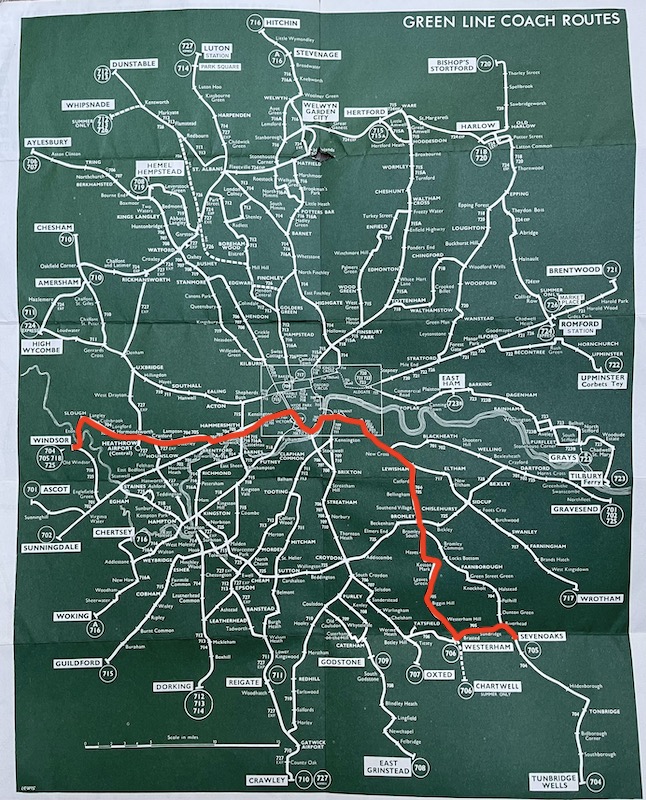
The half-hourly 705 had a parallel sister route in the half-hourly 704. That started its Windsor bound journey further south than Sevenoaks in Tunbridge Wells where London Transport famously had a very small exclusively Green Line crew operated bus garage – we think with a PVR of just six buses, all on the 704. Located centrally in Lime Hill Road the land value far exceeded any financial return Green Line could offer so it was no surprise the garage closed in December 1967 although it took some years, even into London Country’s era in the 1970s, before it was sold.
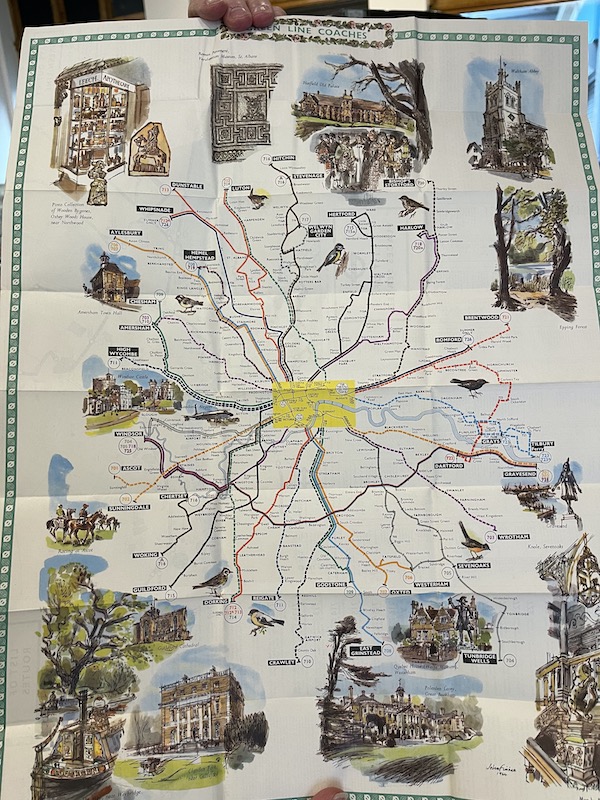
From Tunbridge Wells the 704 operated via Tonbridge to Sevenoaks and from there, whereas the 705 went via Westerham, Biggin Hill, Keston and Hayes to Bromley, the 704 operated more direct via Knockholt and Farnborough before the routes met up again in Bromley to provide a combined joint frequency of every 15 minutes north to Victoria and west to Windsor.
There’s no longer a bus between Sevenoaks and Knockholt – the last vestiges of this route ended when Arriva withdrew its route 402 in 2017, so we opted to retrace the 705 rather than the 704 so we could be more faithful in keeping to the original route.
As we weren’t aiming to beat any marathon bus riding endurance records we opted to once again split the retracing across two sessions with part one from Sevenoaks to Victoria and part two from Victoria to Windsor, including an intriguing stop off half way along the Great West Road.
Day one began at Sevenoaks bus station where the 705 set out on its two hour 57 minute journey to Windsor. It was going to take us more than double that over the two days and that included using the formerly branded Green Line branded 702 operated by Reading Buses for part of the way.
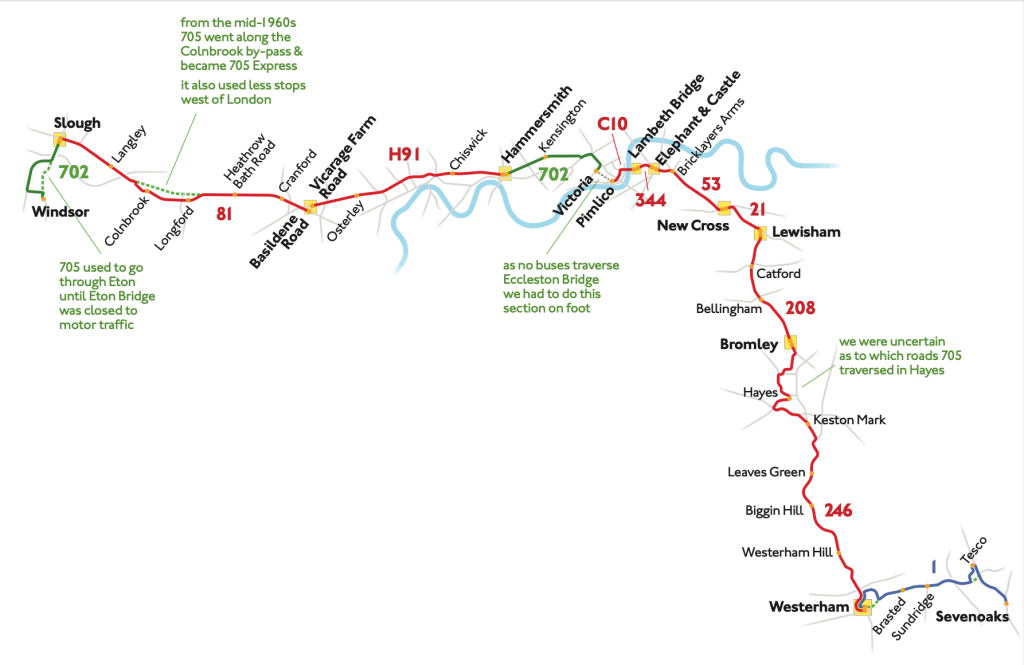
In original Green Line days the 705 was operated from bus garages in Dunton Green and Windsor, both obviously no longer with us and pre war, when the network was designated by route letters rather than numbers Sevenoaks to London was route X and London to Windsor route Z in the 1930s while after a re-lettering route X became a route D and extended across London to Staines.

Today, Sevenoaks is home to Go Coach Hire which has established itself as the go to bus operator in this part of north west Kent including looking after the small bus station in the town adorned with its purple and yellow branding.
The first section of route 705 was along the A25 west to Westerham. Back in the day, as well as the half hourly 705, this pre M25 busy road also saw the hourly LT Country Bus route 403 on its way from Tonbridge to Croydon and Wallington. When we travelled last month the timetable had just three off peak return journeys on Go-Coach route 1. Quite a come down, although that timetable is supplemented by Go Coach Hire’s Go2 branded DRT service for those partial to such operations.
However, the good news is that from earlier this week the timetable was doubled to six return journeys on Mondays to Fridays.
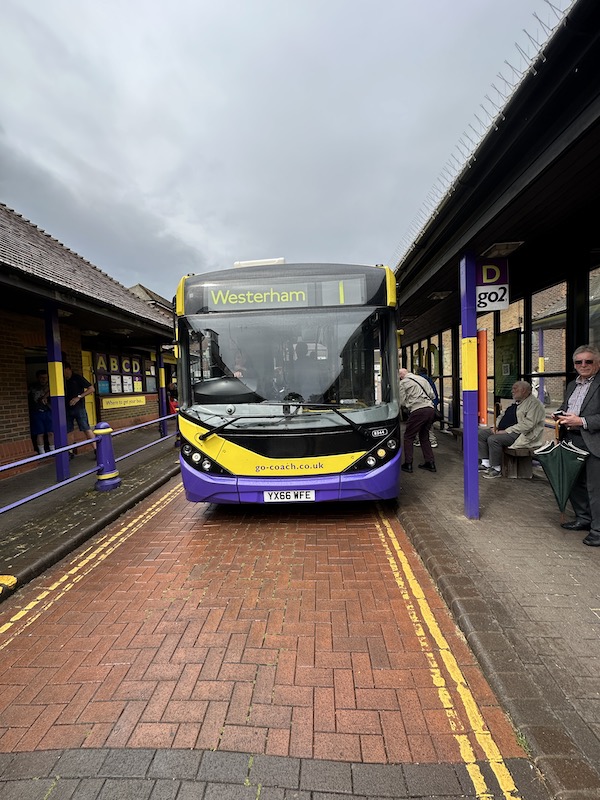
We caught the second of the three departures of the day, the 11:15 from Sevenoaks as did quite a few other passengers returning home from shopping, with the bus emptying out as we progressed towards Westerham. Leaving Sevenoaks buses on route 1 serve Riverhead north of the town via a slight deviation along Bullfinch Lane which the 705 wouldn’t have done and approaching Westerham the bus makes an anti-clockwise loop but otherwise it was a faithful recreation of how it would have been a few decades ago.
We arrived in Westerham at 11:41, having taken 26 minutes from Sevenoaks (the 705 did the journey in 18 minutes), and where LT style bus stop flags can still be found, because it’s the southern outpost of TfL route 246 from Bromley, although on Summer Sundays buses continue further south to Chartwell. There’s now a half hourly service between Westerham and Bromley but back in the day the half hourly 705 was joined by half hourly LT Country Bus trunk route 410 between Reigate, Westerham and Bromley which, like the 705, ran via Biggin Hill.
After an 18 minute wait the Stagecoach operated 246 finally arrived to pick us, and the other nine waiting passengers, up at 11:59 for its scheduled 11:53 departure to Bromley North. It took 56 minutes on what was another busy journey to reach Bromley North station whereas the scheduled time was 50 minutes and the 705 would have taken 38 minutes.
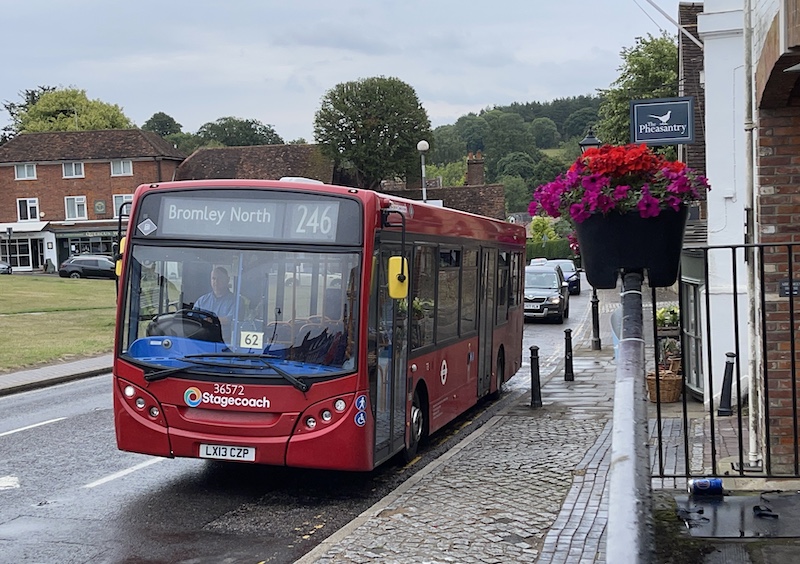
Route 246 is operated with four Enviro 200s from the Stagecoach bus garage in Bromley and includes another deviation along residential roads between Hayes and Bromley which would never have seen a Green Line route back in the day.
Back in the 1960s, the furthest south an LT red bus would have ventured in this area was Downe with route 146 running via Keston and Hayes to Bromley North and was one of the first bus routes to be tendered being awarded to Crystals Coaches in August 1985. However, going even further back in time, pre-War, a few peak hour journeys on route 137 from Archway ventured as far south as Westerham Hill as did weekend journeys on route 146 from Lewisham.
We took a little break to wander around Bromley’s town centre and enjoy some refreshments before continuing northwards planing to take either a 208 or 320, whichever arrived first. In the ‘old days’ aside from routes 704/705 it would have been a choice between routes 1 and 47, both now very changed. There was a long gap on the 320 and after a ten minute wait, a bus on Go-Ahead operated route 208 arrived which took us on the 35 minute journey via Catford to Lewisham. Unbelievably the 705 did that segment in just 15 minutes.
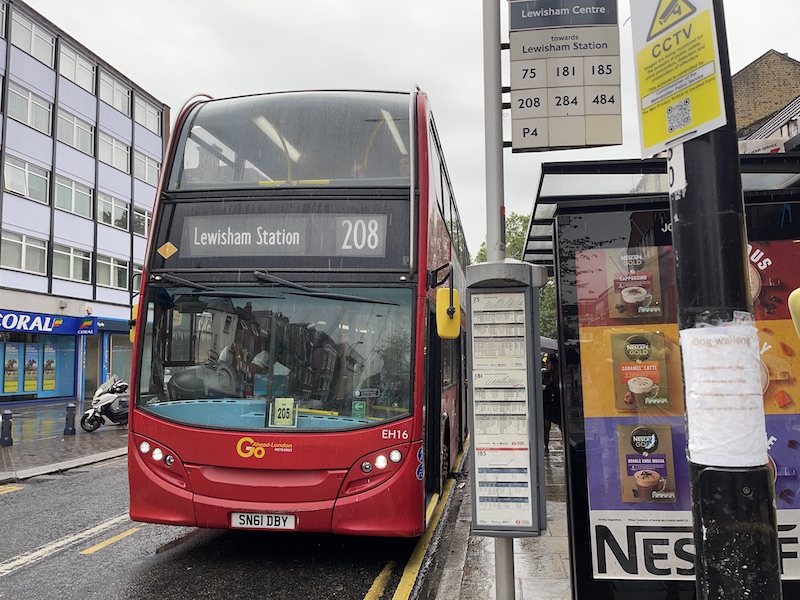
It was another busy bus with lots of passengers boarding and alighting along the way but luckily no driver changeover as we passed by Stagecoach’s bus garage in Catford because the route is operated by Go-Ahead London with 18 Enviro 400H from its garage in Orpington.
From Lewisham we could have caught a bus from a choice of the 21, 136, 321 or 436 offering a combined 25 buses an hour to our next staging post at New Cross. Just a few minutes after alighting from the 208 a 21 and 136 arrived together and we opted for the former and remind ourselves just how claustrophobic a busy New Bus for London type bus feels compared to the Enviro 400 we’d in which we’d travelled on the 208.
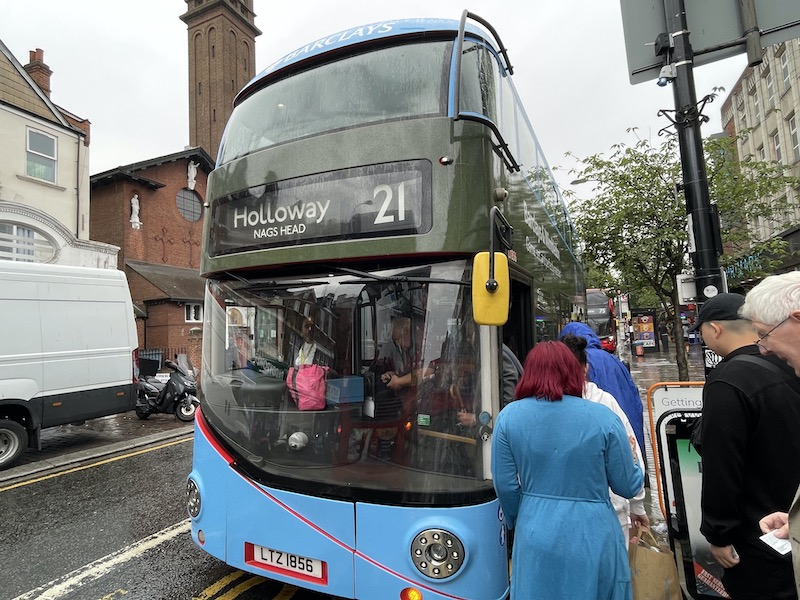
The short leg to New Cross on a 705 would have taken just seven minutes whereas our 21 took 17 minutes. Obviously traffic was much less in those days and the 705 stopped at far fewer bus stops.
We changed buses outside Go-Ahead London’s New Cross bus garage which operates the 21 with 24 LT class vehicles on to our next route – the 53 – another Stagecoach operated route with 27 Enviro 400 buses from Plumstead garage and which at one time went as far north as Camden Town but now only reaches Lambeth North.
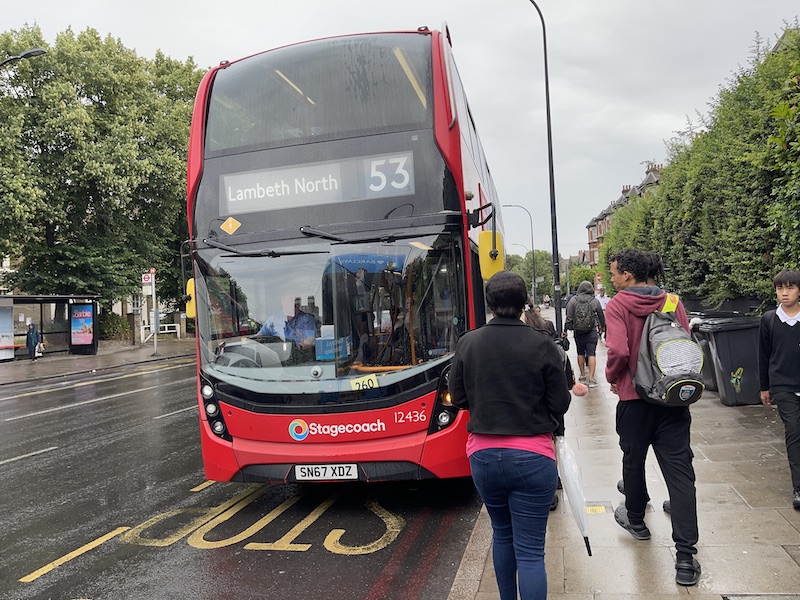
This took us along the Old Kent Road, past the Bricklayers Arms, to Elephant & Castle where the remodelled roundabout and demolished shopping centre is rapidly being replaced with a new building.
As we alighted the 53 a bus on our next route, the 344, was just pulling away from the same bus stop but only a minute later another one arrived which took us on the seven minute journey to Lambeth Palace. It’s an Abellio operated route from Battersea garage taking 21 Enviro 400 buses between Liverpool Street and Clapham Junction stations.

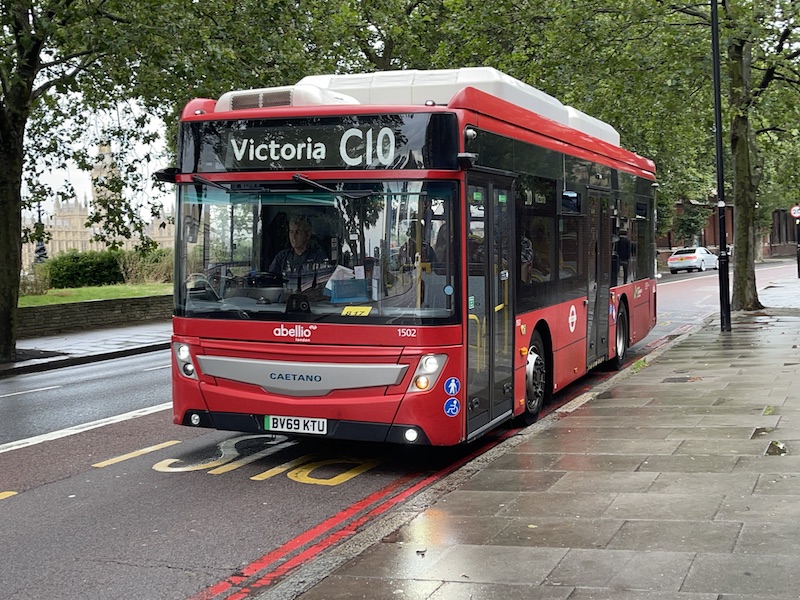
Our invitation for afternoon tea with the Archbishop had got lost in the post so we abandoned that idea and walked past the Palace entrance to the stop round the corner in Lambeth Palace Road where one of Abellio London’s smart 22 electric Caetano E-City Gold buses from Walworth bus garage on route C10 (Canada Water to Victoria station) arrived instantly to take us for our final seven minute leg of part one across Lambeth Bridge and past Tate Britain to Pimlico Underground station.
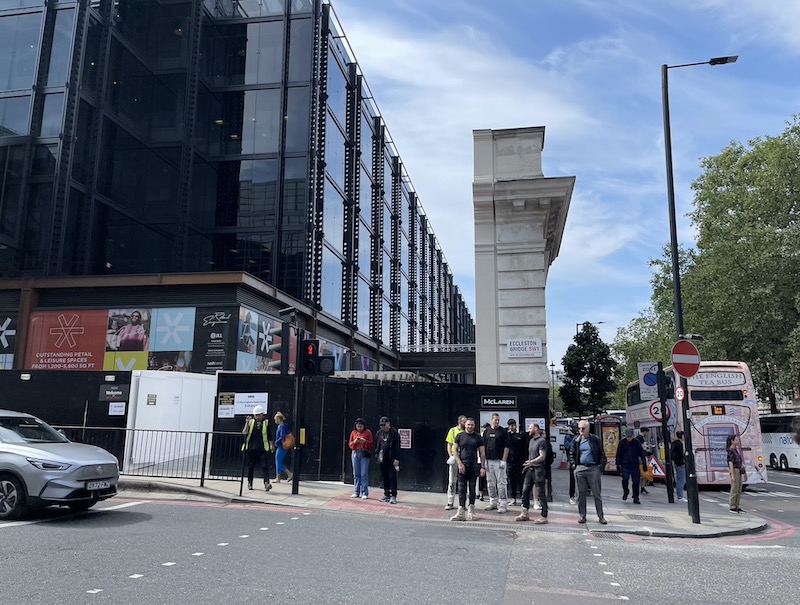
From Pimlico buses on Green Line routes headed north along Belgrave Road towards Eccleston Bridge. We could have caught a route 24 for just one stop but as there wasn’t one arriving for nine minutes we walked along Belgrave Road and soon reached the famous Eccleston Bridge.
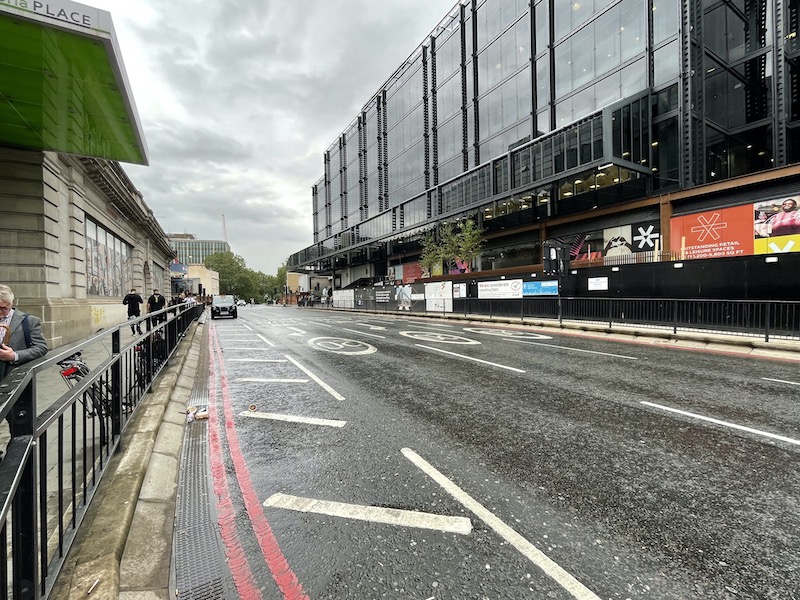
Eccleston Bridge has been completely transformed over the last few decades from the days when it was Green Line’s central London hub with bus shelters on either side of the bridge on a two way road as well as a small enquiry office at the western end of the shelter on the northern side of the road where you’d often find an Inspector with an impressive badge on his (no female inspectors in those days) peaked cap overseeing operations as buses came and went to and from Home Counties’ destinations all around London.
Eccleston Bridge marked the halfway mark of our journey so we admired the facade of the original building fronting Buckingham Palace Road then parted and regrouped a week later to continue the retracing westwards to Windsor.
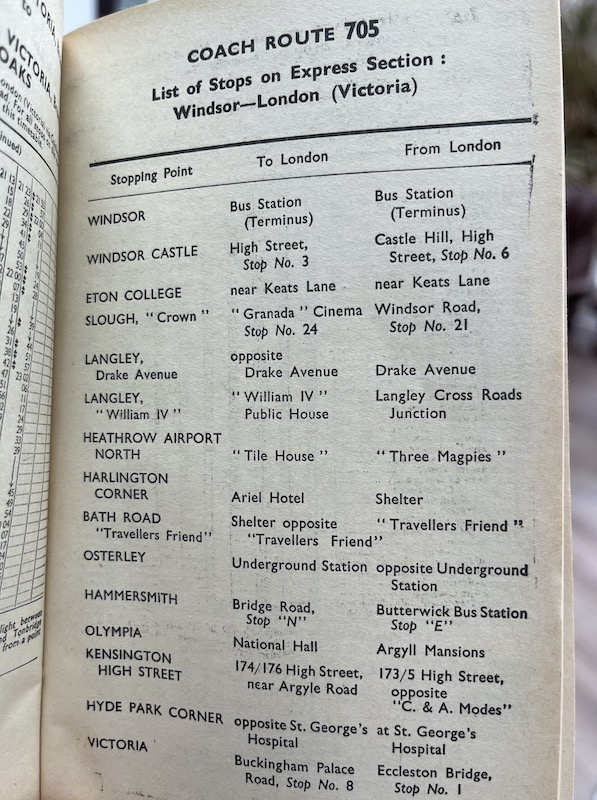
In the mid 1960s route 705 was altered to run ‘express style’ between Victoria and Windsor stopping at only 13 other bus stops on the journey as well as using the Chiswick fly-over and Colnbrook by-pass while sister route 704 continued serving all the normal Green Line bus stops. This cut 19 minutes off the journey time to Windsor with the 705 doing it in an hour and the 704 taking 79 minutes. We decided to follow the pre-change route, not least because today’s route 81 which we’d be using is routed through Colnbrook rather than the by-pass.
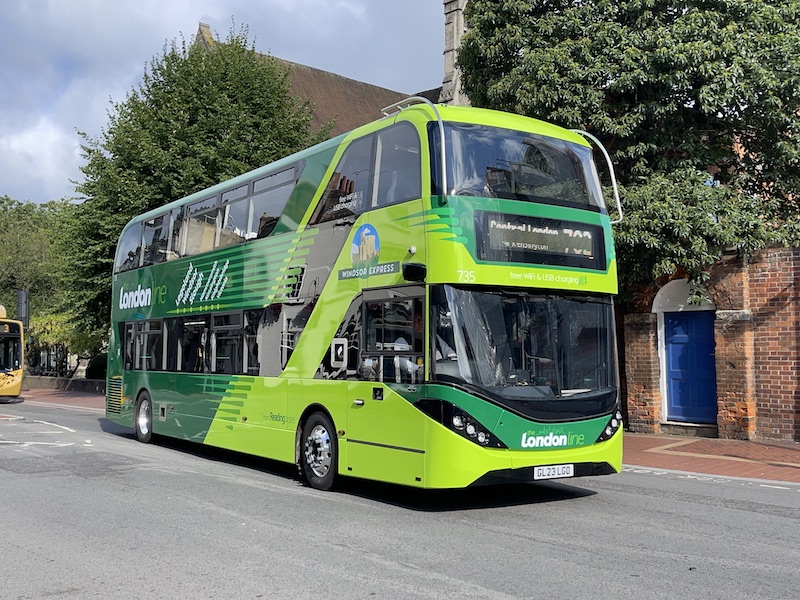
From Victoria today, Reading Buses has been running hourly route 702 to Windsor since First Bus gave the route up in December 2017. At the end of this month the company is relinquishing use of the Green Line branding for this route and its compatriot 703 route (Arriva, which owns the Green Line name, wanted to charge too much) with a fleet of seven brand new Enviro 400 buses being introduced sporting a new livery using a new The London Line name under an overarching Windsor Express brand to promote the routes key features.
For our purposes in retracing the 705, the 702 only worked as far as Hammersmith because from there it continues along the A4 before joining the start of the M4 at Chiswick which it uses to Langley.
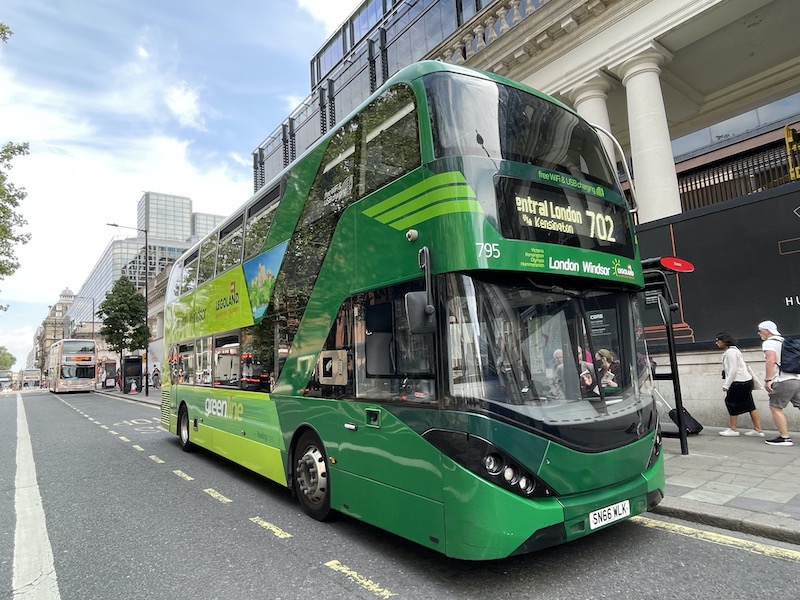
We caught the 11:00 from Victoria’s Buckingham Palace Road as far as Hammersmith which was good to see carried a good number of passengers.
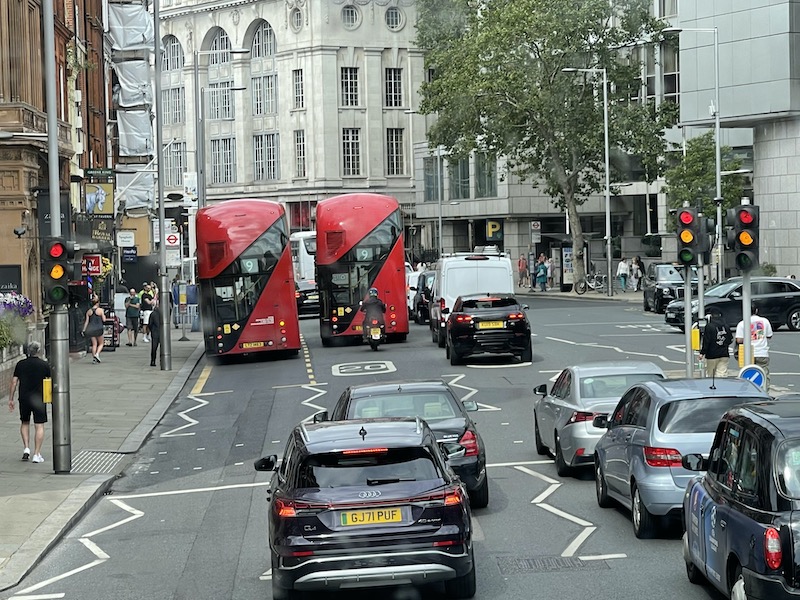
It took just over the scheduled 30 minutes to reach Hammersmith which wasn’t bad going considering the heavy traffic on some of the route and all the developments taking place not least the rebuilding of Olympia 2.

The 702 doesn’t call into Hammersmith bus station which back in the day was called Hammersmith Broadway Butterwick and was quite a hub for Green Line routes. As well as route 705, also calling were routes 701, 702, 704, 714 and 716.
We walked round to King Street in Hammersmith to catch TfL’s route H91 to take us along the 705’s historic route via Stamford Brook, Turnham Green and Gunnersbury to Chiswick and then along the Great West Road towards Osterley.
We didn’t have to wait long for an H91 which sees buses running every 12 minutes and back in 705 days was the preserve of Central Bus route 91 which ran from Wandsworth Bridge to London Airport Central (as Heathrow was called) so it’s nice to see the tradition of a 91 number still appearing on today’s truncated route H91 along the same stretch of road.

Metroline operate the H91 with 14 LT class buses from its Brentford garage although as you can see the bus that arrived taking us towards Osterley was a Wright Eclipse Gemini bodied Volvo B5LH, which to be honest, we all preferred as we enjoyed passing such icons as Stamford Brook bus garage, the former Turnham Green bus garage, Chiswick bus works and the famous Gillette factory on the Great West Road.
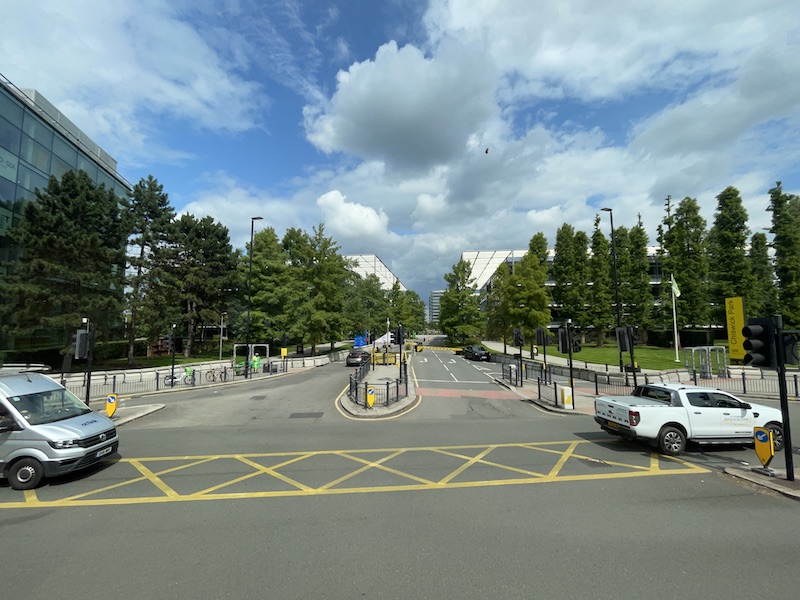
We decided to break our journey at Osterley library in Thornbury Road to partake of some refreshments at the delightful Osterley Park café but also to visit the Osterley Book Shop located in the former ticket office of Osterley Spring Grove Underground station on the Piccadilly line.

That station was resited from Thornbury Road further west to the Great West Road in 1933 but you can still see where the platforms existed from the road bridge and the book shop itself is an absolute treasure trove of second hand books including transport titles and books about London as well as a collection of old London Transport and Ordnance Survey maps. A visit is highly recommended and it was definitely worth the stop off for us and also the book shops which did brisk trade among our map loving party.

After that we returned to the H91 and this time had an LT Class …
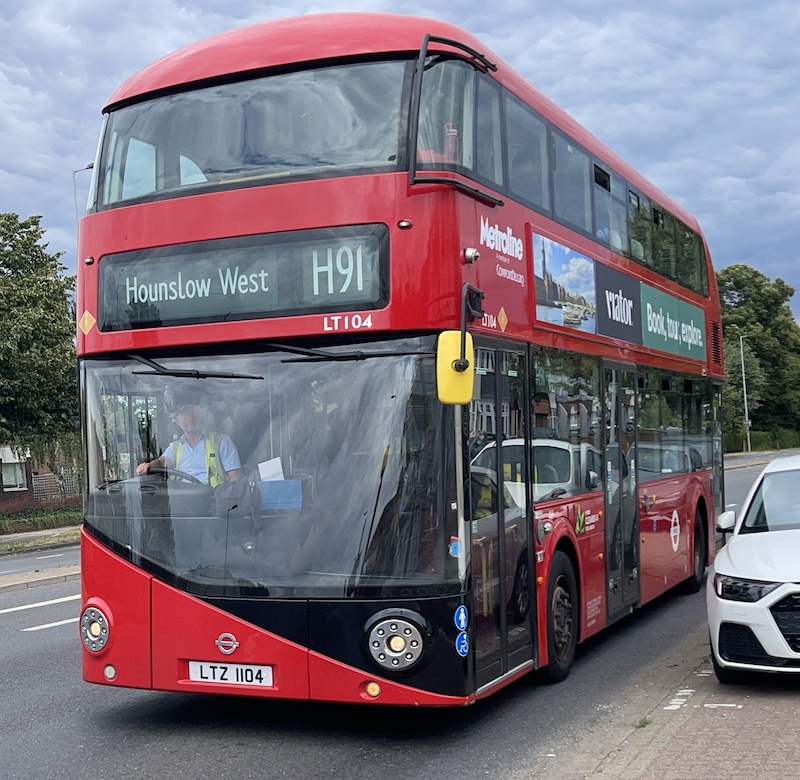
… to take us on to the bus stop at Vicarage Farm Road, Hounslow where buses turn left to reach Hounslow West Underground station.

Being pedantic in our retracing, the 705 didn’t serve Hounslow West but carried along the Great West Road for 750 yards to Henlys Roundabout before joining Bath Road so we decided to walk that stretch of bus-less road before catching our next bus, on route 81 at the Basildene Road stop to take us onwards to Slough.

Ignoring the break we had in Osterley and the extra wait for the second H91 it had taken us 55 minutes from Hammersmith to reach the bus stop for the 81 but that included a 12 minute walk of course. Added to that was the half an hour to Hammersmith and ten minutes to change from the 702 to the H91 and we’d notched up a travel time of 95 minutes.
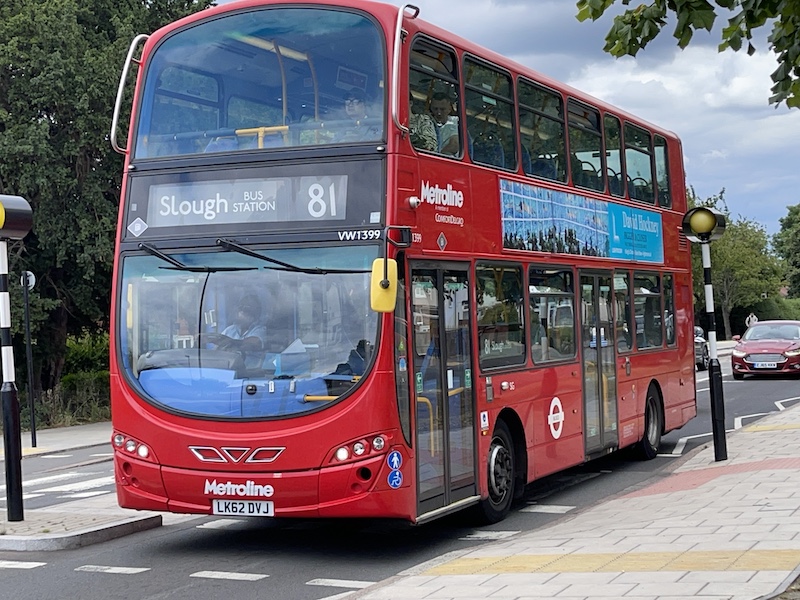
Route 81 is a very long standing LT route now operated by Metroline with 16 Wright Gemini bodied Volvo B9TL buses every 12 minutes between Hounslow and Slough from its garage at Lampton. It was yet another busy journey as we passed along the northern boundary of Heathrow Airport before taking the original Bath Road route through the delightful Colnbrook having passed through the bus gate preventing through traffic which uses the well established by-pass as those 705 express journeys did.

After continuing through Langley we were soon approaching Slough with “this bus terminates here” played out on the bus PA speakers as we reached the huge Tesco Extra store in Wellington Street as Slough’s bus station is still closed following last year’s arson attack. It had taken us 50 minutes to reach Slough.
From Slough we had a choice of either the 702 again – or the Thames Valley operated 703 from Heathrow Terminal 5 – or Thames Valley’s route 2 or First Bee Line route 8 to take us on the final leg to Windsor. Back in LT Country Bus days as well as the 704 and 705 we could have caught a bus on a number of routes which connected the two towns including the 335, 353, 417, 441, 457 and 457A. But once you leave the southern fringe of Slough on the A332 there’s nothing until you reach central Windsor.
As it happens the first bus to arrive was another 702 so we ended part two as we’d began it, and fittingly on a route that until very recently was branded Green Line.
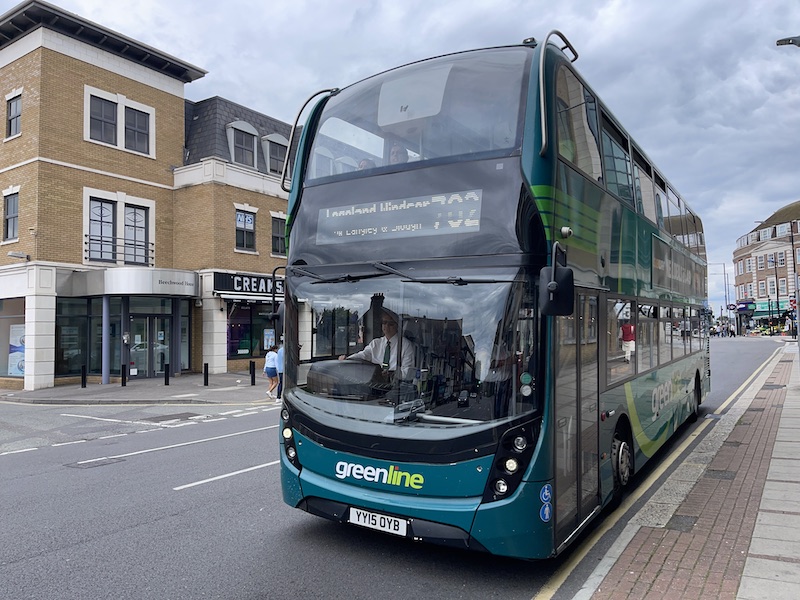
The journey from Slough to Windsor took us 17 minutes – the 705 took 11 minutes but went via Eton College – which brought part two’s overall journey time to two hours and 42 minutes which with part one brought the total to six hours and 17 minutes, only just over double the pre-express speeding up of the 705 which took just under three hours.
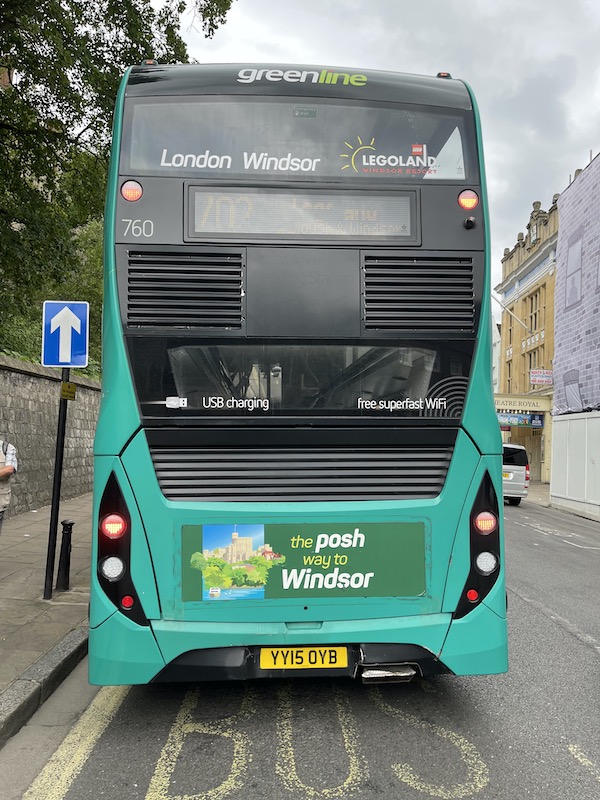
And that’s another Green Line route retraced.
Roger French
Blogging timetable: 06:00 TThS with DRT Su extras.
 BusAndTrainUser
The 208 looks like a Go-Ahead bus rather than Stagecoach!
LikeLike
as is made clear in the next paragraph!
LikeLike
Corrected; thanks Ian.
LikeLike
Thank you for the fascinating description. It brought back memories from many moons ago of expeditions with a Weekender ticket. If I have remembered correctly these were the only “rover” tickets that gave access to the Green Line network.
LikeLike
In London Transport days, yes, the “Weekender” was the only ticket (a fantastic bargain at the time!) which gave unlimited Green Line travel. Of course, immediately into London Country days from 1970, the “Golden Rover” at 75 pence (!!) covered all of their services including the Green Line.
Tunbridge Wells (TW) actually had a PVR of seven vehicles, but used eight crews on each shift, the extra one each shift required to cover the Windsor crew meal break. Same for Windsor of course in reverse. Even more interesting is that the small garage never saw a one man bus, nor a Conductor on duty. The Drivers signed on and off at the garage, but the Conductors at the small coach station in Lime Hill road, thus working a 20 minute shorter day than their Drivers. I believe the only such instance on any LT operation.
During Biggin Hill RAF and Display days, the 705 often required up to twenty extra double-deck workings from and return to London. This involved a massive “lending” operation, sometimes requiring RML/RCL vehicles (and Crews) from as far afield at Grays and Northfleet. This practice continued for some years up to around 1978 long after the route had suffered conversion to one man operation and spare Conductors were available. In earlier days, it was not unknown for even red RT/RTLs, being used to supporting the equally massive 410 “Extras” on the Bromley-Airfield, being switched at the Airfield to become a “705” mopping up the last passengers to South London and Victoria.
For the Windsor crews, who, unlike their Dunton Green counterparts, had no travelling to/from their bus, thus meaning a shorter working day, made even shorter in the years the Express section was working. As a result, the late turns on all days of the week normally carried an hour or so of bus work before heading off to Sevenoaks. A visit to Datchet on the 445 or an Old Windsor Hospital-Slough rounder on the 417/441 was the normal fare. The schedules office would have dearly liked to upped the work content on the early turns too, but unpredictable late running back from Kent precluded this.
LikeLike
Just a bit of clarification on the garage situation in Tunbridge Wells. The Lime Hill Road terminus was the ‘Green Line Coach Station’, which I seem to recall was also shared, as a terminus, with buses on routes 119/219 up from Brighton.
The bus garage, which closed in 1967 was further to the north. It was a small garage in Whitefield Road, a mainly residential road to the west of, and parallel with, the main A26 St Johns Road to Tonbridge.
LikeLike
Lovely! I grew up in Sevenoaks, and I remember the 704 and 705 very well from the 1950s and 60s. Is it correct to say that the 704 served Knockholt? Well, it went past Knockholt station – but, hey, if it’s ok for a railway to say it serves a place when the station is two and a half miles away (or six miles in the case of Gatehouse of Fleet in Scotland), why should it be wrong for a coach?
My main memory is of smart RFs, with different seating, overhead luggage racks, and the external side destination boards like an express train. In the mid 1960s some rather longer (what we would call a standard single decker, these days) coaches appeared on the 705, which they said were to test them on a difficult turn (must have been in Westerham) before using them to replace the RFs generally. They had a silver-grey livery, with a green stripe.
I do hope that Go-Coach are successful in bringing back a better service to Westerham – I’m sure better rail connections in Sevenoaks would bring more custom. And the A25 corridor has never had one consistent through service (maybe one of the faults of territorial bus companies); many people in Sevenoaks drive to Oxted and Redhill/Reigate for shopping. Maybe the 1 could be extended?
LikeLike
At one point in the late 90s (I don’t have the exact dates to hand) my recollection is that the 410 was extended from Westerham through to Sevenoaks, thus providing a through corridor from Redhill for the first time. This arrangement was no doubt due to the common ownership of London & Country and Kentish Bus at the time.
LikeLike
The 119/219 only started to share the “Coach Station” (a slab of wide concrete!) after the 119/122 services had been converted to one man operation, split at Tunbridge Wells and no longer worked through to Gravesend (122). Prior to that, the terminating 119s used Church Road (with Brighton bound 122s also calling), although the normal War Memorial/Opera House stops used northbound.
And the 704 (after OMO) was diverted through Knockholt Pound on a few Sunday journeys, although not to actual Knockholt proper. Thus the Pound and Halstead regained Sunday buses. Shamefully, after the abandonment of Go-Coach 431, a daytime three journey replacement for the withdrawn hourly 402, there are no links for these Kent villages to Sevenoaks.
In the pioneering East Surrey days, the main service did operate from Reigate to Sevenoaks, Westerham Hill being considered far too steep to tackle for several years, although buses managed to climb the similarly steep Titsey Hill en route to Croydon.
LikeLike
From memory, I thought Go-Coach operated more than three 431’s a day – maybe as many as seven, at least initially? I also think it was renumbered 3 before its final demise.
With regards to the 705, Interland Coaches operated a commuter route to London, using a Bedford Duple SYU7425S, but I’m not sure if the route was numbered – I have a picture of it parked showing _0_ in the blind. Interland ceased operating the route, and Metrobus took over from 1st June 1988, running route 705 from Biggin Hill to London Victoria. In April 1992, it was back projected to Dunton Green, and cut back to Westerham in 1998, before being completely withdrawn a year later.
LikeLike
It may have been a modest construction, Terence, but the slab of concrete was accompanied by a nice 1930s LT building, topped by the bold sign ‘GREEN LINE COACH STATION’ in white letters.
When it ceased to be used by buses, the site was used by a taxi operator and the building became a booking office and waiting room. The proprietor rearranged the lettering, so that it now read ‘STAR LINE TAXIS’, still in the LT style. The word ‘Line’ was presumably left in place and the other letters were re-used around it. The only ‘new’ letter neeeded was an ‘X’, which might have been made out of one of the surplus ‘N’s.
LikeLike
I wonder what the longest Greenline route was excluding specials like the London to Warwick and Stratford upon Avon plus National Express work?I use to see the 290 in Oxford which use to run Oxford to London via High Wycombe.I’d guess it was run by the predecessor to Arrival the Shires.The buses on the 290 still had the NBC reflected arrows on them into the 1990’s but must have long been in private ownership by then.
LikeLike
The Cambridge green line routes must be in with a shout as the longest, id guess?
LikeLike
Here’s the summer 1986 Green Line services taken from the “Local Express” (LE) guide published by National Express. Take your pick from these:
[“London” means Victoria or Eccleston Bridge unless otherwise specified]
290/790 London – High Wycombe – Oxford (790 via Heathrow) [Joint with COMS (Oxford-South Midland)]
700 London – Windsor – Safari Park
701-702 London – Slough – Windsor (701 also via Windsor, 702 extends to Dedham)
705-706 London – Sevenoaks – Tunbridge Wells (705 Sundays only via Biggin Hill, 706 all week via Dunton Green)
707/717 London – St Albans – Luton – Luton Airport (707 via M1, 717 via Borehamwood)
708 London – Hemel Hempstead – Aylesbury
713 Kingston – Cobham – Horsley – Guildford
714 London – Kingston – Dorking – Horsham
– by 1987 714 ran Kingston – Dorking – Horsham – Worthing – Brighton
715 London (Oxford Circus) – Kingston – Cobham – Guildford (peak hour “express” journeys ran as 710)
716 Croydon – Kingston – Weybridge – Woking (Mon-Sat)/Staines (Sun)
718 London – Kingston – Hampton Court – Windsor
719 London – Watford – Hemel Hempstead
720 London – Gravesend
723 London – Barking – Grays – Tilbury
724 Windsor – Heathrow – Watford – St Albans – Hertford – Harlow (not shown in the LE guide, but I have a timetable for it and of course it’s now the sole surviving Green Line route!)
725 Croydon – Bromley – Bexleyheath – Dartford
726 Windsor – Slough – Heathrow – Kingston – Croydon – Bromley – Bexleyheath – Dartford
– Core section now of course the TfL x26, soon to be the “Superloop” SL7.
727 Luton Airport – Watford – Heathrow Airport – Kingston – Gatwick Airport – Crawley (the original inter-airport link. Guess why the number 727 was chosen!)
733 Hitchin – St Evenage – St Albans – Watford – Heathrow Airport (in 1983 joint with Alder Valley and ran to Reading rather than Heathrow)
734 London – Hatfield – Stevenage – Hitchin (Sundays only in 1986, see 797 for weekdays)
735 London (Oxford Street) – Enfield – Waltham Cross – Hertford
737 Slough – Heathrow – Gatwick – Brighton (joint with Brighton & Hove)
740 London – Guildford – Tongham
747 ‘Jetlink’ Gatwick – Heathrow (some journeys – Watford – Luton Airport – Stevenage)
– Extended in the 1990s as a pseudo-National Express link Norwich-Brighton, but it wasn’t really Green Line by then.
750 ‘Speed Line’ Hemel Hempstead – Luton Airport – Stevenage – Hertford – Ware
757 ‘Flightline’ London – Luton – Luton Airport
758-759 London – Hemel Hempstead estates (via M1)
(760 Northampton – Milton Keynes – Hemel Hempstead – Heathrow (joint with United Counties, I thought this lasted until deregulation but it’s not shown in the LE guide so I guess it was withdrawn when UCOC introduce their ‘Coachlinks’ “selected stop” network.)
767 ‘Flightline’ London – Heathrow Airport
773 ‘Sealine’ Guildford – Dorking – Gatwick – Brighton (Joint with Brighton & Hove) [I seem to recall it running as far west as Reading for a while, which would probably make it a contender for the longest route]
777 ‘Flightline’ London – Gatwick Airport non-stop then Crawley
(788 London – Amersham – Aylesbury: infrequent in 1983, may have been withdrawn by 1986 as not in the LE guide)
795 Brighton – Gatwick – Sevenoaks – Orpington – Dartford – Grays – Basildon – Southend (joint with Eastern National and Southend Transport, one vehicle each; timetable implies that GL only ran Gatwick-Southend with EN and ST providing the two Brighton journeys)
797 London – Stevenage – Royston – Cambridge
798 London – Enfield – Ware – Royston – Cambridge
799 London – Stratford – Harlow – Stansted Airport – Cambridge
– (797-799 joint with Cambus)
Speedlink “luxury inter-airport service” Gatwick-Heathrow
That list doesn’t feel complete to me, but it’s what is in the Local Express guide. I think there are probably more, although by summer 1986 LCBS had been split up and the new companies were perhaps less interested in Green Line than they were in figuring out how to survive in the upcoming deregulated environment – and British Rail were starting to sort themselves out, so Network SouthEast trains became serious competition for Green Line coaches in a way they hadn’t been for a decade or more. It’s not traffic congestion which killed Green Line; it was the railway getting it’s act together. Traffic congestion has simply ensured that even as the ‘privatised’ railway slowly collapses, coaches aren’t the viable alternative they once were.
LikeLike
Part of the reason for the Greenline disappearance was down to them in general not being included in the TfL ticket and passes scheme so withing London they got very view passengers
If TfL and the bus companies in the home counties’ got together I think a network of limited stop buses could be revived. The chances of TFL and other bus companies and LTA’s working together though is in my opinion close to zero
LikeLike
They weren’t intended or designed to carry local passengers within London; they were a longer-distance links to the Home Counties.
Swamping them with short distance LT passengers would have done them no good.
I disagree that a network of limited stop Home Counties services could be revived. None of the limited stop services which used to operate into London exist today: Maidstone & District’s Invictaway, Alder Valley’s Londonlink, Oxford Citylink, United Counties’ Coachlinks, Eastern National’s Highwayman, and yes, Green Line too (bar two routes): they’ve all gone and for the simple reasons that much improved rail services and hugely worsened road traffic congestion have destroyed their raison d’etre.
The same applies across the country; the few remaining limited stop services across England and Wales simply draw attention to the huge number which have been lost over the past 40 years since their creation after coach service deregulation.
LikeLike
It’s a wet Saturday afternoon, so I have time to answer a few questions . . .
In re Tunbridge Wells Garage: I didn’t know those snippets, so thanks TU! I’d be surprised if many WR duties covered bus work prior to coach work . . . the Agreement provided for no more than 90 minutes bus work to be scheduled prior to coach work, so it was usually only duties that worked into London and back that had the opportunity. WR to TW and back on 704 would have been quite heavy duties, as would WR – SK and back on 705. After TW closed, all WR duties took relief at SK bus station, with a DG “tango” crew for the TW end. I have the DG duties . . . I’d love to see those TW duties!
In re Route 290: I can’t locate the precise date ATM, but certainly before 1986 LCBS and CoXMS shared Route 290/790 . . . possibly around 1983? GL had started with commuter coaches from Thame into London, and expanded this to include Oxford-London journeys. CoXMS had three London routes: 190 was fast via bits of the M40; 290 was the “old road”, basically via the A40; 390 was via Henley and ?Maidenhead? before Heathrow and into London. The 390 changed routes several times before being abandoned in the 1990s. 190 became X90, and was finally withdrawn about 7 years ago?
In re route lengths: Oxford was about 68 miles; Cambridge was about 60 miles; 724 Orbital (to High Wycombe) was about 72 miles, but the daddy of them all was 727 Orbital . . . a tad short of 80 miles when the various deviations around the three airports served, plus Watford; Uxbridge and Kingston were included.
Drivers never worked the full 727 route . . . SA always worked SA-LA-RG-SA or reverse, although later duties (after about 1983) could be SA-CY-SA, with a tango driver covering SA-LA-SA. RG never covered RG-CY-LA-RG, but would do either RG-CY-SA-RG or RG-LGW-LA-RG, that was the longest possible, and only possible because of the limited stops.
ISTR that Route 410 was extended to Sevenoaks in the 1990s as well, but I don’t think it lasted very long. The diversion of 410 to Bromley in the late 1920s also created the (in)famous 2-minute connections at Westerham between Routes 403 and 410 . . . by the 1960s and certainly the 1970s these connections were not to be relied on, as I found on several occasions!!
Sorry for the length of this post . . . all so long ago now!!
LikeLike
There was a 490 too run by Oxford and it only went at peak times going to,I think Aldgate, the City of London and was designed for folks that worked there.I never went on the 490 myself but I knew someone who use to catch it.The 290 I only ever saw Greenline vehicles on it and never Oxford ones but I only went to Oxford in 1989 so don’t know what happened before.With the 390 it was run by Oxford and around the 1991 Thames Transit took it over but used a big Oxford Tube coach on it.I don’t think that the 390 survived long enough for Thames Transit to become Stagecoach Oxfordshire.
LikeLike
COMS and LCBS went joint with the 290/790 in 1983; prior to that the 790 had been GL only but hadn’t run west of High Wycombe. I have a feeling it headed off toward Amersham instead…
290 was COMS route 70 renumbered; when the M40 motorway opened they added duplicate (unscheduled) express journeys which ran as 190 before adopting that number for a scheduled motorway express service. Whilst COMS X90 has been withdrawn a spiritual successor still runs in the form of the Oxford Tube, operated by Thames Transit (trading nowadays as Stagecoach) who had bought out the South Midland country operation which had been extracted from COMS before deregulation.
COMS’s main Oxford – London route was the 35 via Henley and Maidenhead, which was renumbered 390 to fit into the -90 series.
The 290 spawned a host of LCBS commuter workings (291-296) at varying times according to the timetables I have. Nowadays I suppose those commuters would either jump on Chiltern’s trains or drive to a tube station on the edge of London.
LikeLike
Hmm. COMS (Oxford/South Midland renumbered their London services much earlier than I realised.
I’ve just found a copy of a July 1976 COMS timetable, at which point what had been the 70 was running as the 290 but via the M40 (Oxford – M40 – Stokenchurch – High Wycombe – M40 – London) rather than via Wheatley, and “Service 190 relief journeys are operated according to traffic requirements non-stop via motorway”.
The route via Henley had already been renumbered 390 by then as well.
I’ve also found a COMS timetable for the joint 290/790 dated 01 November 1981 which is issue 2 of that leaflet, so I think it’s safe to assume that the 290/790 were certainly in operation by summer 1981.
For Kevan, in that 1981 timetable COMS (Oxford/South Midland) operated journeys leaving Oxford at 0615 (790), 0705 (290), 0750 (790), 1105 (290), 1215 (790), 1305 (290), 1415 (790), 1705 (290), 1805 (790), 2015 (290) and 2215 (290) to London. LCBS (Green Line) had four journeys filling in the gaps at 0905 (290), 1015 (790), 1505 (290) and 1605 (790) plus a couple of short workings to High Wycombe (continuing to Amersham garage) in the evening.
LikeLike
Not all of the Oxford bus 90’s series fitting in with the Oxford London direction (190/290/390/490)as City of Oxford ran a 90 to which went west from Oxford to Witney and probably to Carterton as well.This ran probably until the early 2000’s I’d guess.I caught that 90 a few times as I had a friend who lived in Witney usually a double decker.
LikeLike
The 90 you’re thinking of was the western end of the 190 split off into a bus service.
The 190 service in the 1980s was Carterton – Witney – Oxford – M40 – London, with the infrequent extensions from Oxford to Abingdon or Stratford being exceptions to the base pattern.
LikeLike
That 90 you’re thinking of was the western end of the 190 split off into a local bus service. In the 1980s the 190 ran London – Oxford – Carterton, with occasional journeys heading elsewhere from Oxford such as Abingdon or Stratford.
LikeLike
The Go-Coach 431, later 3 (shades of Kentish Bus re-numbering in the 1980s which confused just about Everybody including themselves), only had three daytime journeys, the seven you (MotCo) speak of being for Scholars and still running under “S” numbers. Thus useless for non-school periods and shoppers.
After TW closed, the 704 Windsor crews indeed took their breaks at Sevenoaks, but AFTER they were meant to return from Tunbridge Wells, although only half the service went through from that date. However, there was an element of resistance by certain crews who declined to make up for late running. This unfortunate attitude was replicated on the 718 when the Epping to Harlow extension had occurred. Thus “tango” crews from Dunton Green often had to be used, and it became so bad that although the Windsor schedule remained unaltered, there was indeed a special “tango” set of duties for Dunton Green, which took the Windsor coach over at Tonbridge Station while the WR crew took their break in the Maidstone and District garage at times as well as Sevenoaks.
The 705 WR duties were considerably shorter, than both the 704 and 718 with only around a seven hour day, thus making the additional bus work as described on virtually every late turn. Dunton Green duties only contained odd bus bits such as a morning 404 from Twitton (using the vehicle they were going off to Windsor) and a few short 402s
The Tunbridge Wells duties appeared in a recent article I wrote concerning this garage, published by the London Historical Research Group.
The longest proper Green Line route in LT days was never actually revealed, but I think it was a tie between the 706 (Westerham-Aylesbury) and 716 (Chertsey-Hitchin).
LikeLike
I remember catching the last (of the day) 704 when it was reduced to being a stub, from Tonbridge to Bromley. I was the only passenger, but the driver (old school) was giving a trainee a running commentary: one pearl of wisdom was “there’s every reason on earth for being late, but no reason on earth for being early”.
LikeLike
I hope you don’t mind me pointing out that the map of your 2023 route shows an H93, not H91.
LikeLike
Many thanks for spotting that Steven; now corrected.
LikeLike
Someone who posts on here recreated part of the 705 for a significant birthday using a preserved RCL. The section from Victoria to Elephant, which was scheduled for 10 minutes in the 1960s, took over half an hour…
LikeLike
Ah Kim that would have been me. For my 50th in 2009, we borrowed RCL 2260 for the day and tried to keep to the scheduled 1960’s timetable which had very tight timings even then, but 40 odd years later we simply couldn’t keep to our timetable and arrived at Tunbridge Wells 40 minutes late where our party decamped to the local Wetherspoons (Royal opera house) and RCL 2260 was parked up in the M&D depot for the afternoon ( now sadly demolished as is the former Green line Garage a little further down the road
LikeLike
From various LOTS year review books.
790 – introduced 1st October 1977 between Victoria and Amersham, replacing part of the withdrawn 711 (High Wycombe – Reigate) as part of the revisions when High Wycombe garage closed, the southern section was covered by new limited stop 422 between Reigate and Sutton.
From 20th July 1980 the existing 790 was replaced by the Victoria – Oxford version along with the 290 plus the joint operation with City of Oxford Motor Services.
The 790 still had live garage journeys to/from Amersham, levaing/joining at High Wycombe.
There were more changes from 12th June 1983 with most of the service using the A40, but the 290 served Beaconsfield but the 790 ran via the M40.
Then changed again from 3rd December 1983, the 790 was cut to Oxford – Heathrow only Mon-Sat apart from one early Saturday journey, and one evening journey Mon-Sat.
The 790 wasn’t registered on deregulation – but the 290 and 291 were.
Other long Green Line routes, most joint operation and short lived.
795 – Southend – Brighton, joint with Eastern Nation, Southdown & Southend Transport
765 – Stevenage – Brighton
762 – Reading – Brighton, joint with Alder Valley and Southdown
760 – Heathrow – Northampton, joint with United Counties, London Country not Sundays
737 – Slough – Brighton, joint with Brighton & Hove, April to October ’86
733 – Hitchin – Reading from July 1983 with Alder Valley added
LikeLike
762! I knew there was something which went Reading-Brighton… that was it.
I blame old age and deteriorating memory cells for not remembering. That and GL wasn’t really my territory. 😉
LikeLike
The number of short lived long distance, shoppers specials and tourist attraction routes that operated as ‘Green Line’ in the early 80’s would test most people’s memories, for example, even if you’re only interested in the ‘Central Area’ operations, how good would your knowledge be of Mobility Bus routes or the MCW Metrorider be?
We are lucky that because it’s ‘London’, far more of the history was recorded and photographed, as well as published.
LikeLike
Anyone know what’s going o with Arrive Kent and Surrey. They have so far failed to file their annual accounts which were due last year
Companies house generally allows 9 months to file them before it issues the First compulsory strike off notice
LikeLike
TfL reaches 1,000 zero emission buses milestone. I suppose that these will eventually end up with provincial operators after their contracted London service age is reached? This should help with ebus adoption nationally.
https://www.route-one.net/news/london-surpasses-1000-zero-emission-buses-milestone/
LikeLike
I seem to remember the small enquiry office on Eccleston Bridge was at the western end of the shelter on the northern side of the road. I was a regular visitor to the office to purchase the area timetable books and subsequent GL timetable leaflets.
LikeLike
You could have used a historical Greater London Bus Map to check the routeing of the 705 through Hayes 😉
LikeLike